The thought of an interview can be nerve-wracking, but the right preparation can make all the difference. Explore this comprehensive guide to Cosmetology Education interview questions and gain the confidence you need to showcase your abilities and secure the role.
Questions Asked in Cosmetology Education Interview
Q 1. Describe your experience teaching cosmetology techniques.
My experience in cosmetology education spans over 10 years, encompassing a wide range of techniques. I’ve taught everything from fundamental hair cutting and styling, including various techniques like blunt cuts, layering, and graduated bobs, to advanced coloring methods such as balayage, ombre, and corrective color. My expertise also extends to advanced skincare treatments, including chemical peels, microdermabrasion, and customized facial treatments. I’ve also instructed students in nail art, manicures, pedicures, and artificial nail application. I’ve had the privilege of mentoring students from all levels, from complete beginners to those pursuing specialized certifications. One particularly rewarding experience was guiding a student who initially struggled with freehand hair coloring to become a confident and creative colorist.
Q 2. How do you assess student learning in a cosmetology classroom?
Assessing student learning in cosmetology requires a multifaceted approach. It goes beyond just written exams. I use a combination of methods:
- Practical Examinations: Students regularly perform techniques on mannequins and live models, allowing me to observe their skill, precision, and client communication.
- Portfolio Review: Students maintain portfolios documenting their work. This allows me to track their progress and identify areas for improvement.
- Written Tests and Quizzes: These assess theoretical knowledge of products, techniques, and safety protocols.
- Client Feedback: Where possible, I gather feedback from clients who receive services from my students, providing valuable real-world perspective.
- Observations during class: I continuously monitor student participation, problem-solving abilities, and understanding of concepts during practical sessions.
This holistic approach ensures a comprehensive evaluation of each student’s capabilities.
Q 3. What teaching methods do you utilize to enhance student understanding?
I believe in a dynamic and engaging learning environment. My teaching methods emphasize a blend of:
- Demonstrations: I begin by clearly demonstrating techniques, using a step-by-step approach.
- Hands-on Practice: Students get ample opportunities to practice techniques under my supervision, allowing for immediate feedback and correction.
- Interactive Workshops: These focus on specific techniques and allow for peer learning and collaborative problem-solving.
- Visual Aids: I use videos, images, and diagrams to illustrate concepts effectively.
- Guest Speakers: Industry professionals share their expertise and insights.
- Real-World Case Studies: Analyzing client challenges and successful solutions helps students build problem-solving skills.
This diverse approach caters to various learning styles and ensures comprehensive understanding.
Q 4. Explain your approach to managing a diverse student body in a cosmetology program.
Managing a diverse student body is crucial. My approach centers on creating an inclusive and respectful classroom where every student feels valued and supported. I:
- Foster open communication: Creating a safe space for students to voice their concerns and perspectives.
- Utilize diverse learning materials: I incorporate resources that reflect different cultural backgrounds and experiences.
- Employ differentiated instruction: Tailoring teaching methods and materials to cater to individual learning styles and needs.
- Promote collaboration: Encouraging peer learning and teamwork, fostering mutual respect and understanding.
- Address cultural sensitivities: I remain mindful of cultural differences in communication styles and practices.
I strive to create an environment where diversity is celebrated, leading to a richer learning experience for all students.
Q 5. How do you incorporate current industry trends into your cosmetology curriculum?
Staying current with industry trends is paramount. I incorporate these trends by:
- Attending industry events: Conferences, trade shows, and workshops allow me to stay informed on the latest techniques and products.
- Following industry publications and blogs: I regularly read publications like Modern Salon and American Salon to stay abreast of new trends and techniques.
- Inviting guest speakers: Industry professionals share their expertise and experience, providing firsthand insights.
- Integrating new techniques into curriculum: Regularly updating lesson plans to reflect current trends, such as new coloring methods or nail art styles.
- Utilizing current product lines: Ensuring students work with products used in professional salons, aligning them with real-world practices.
This ensures that my students are prepared for a rapidly evolving industry.
Q 6. Detail your experience creating and implementing cosmetology lesson plans.
Creating effective lesson plans involves a detailed process. I begin by identifying learning objectives, aligning them with state board requirements. I then select appropriate teaching methods and materials, ensuring diversity to cater to different learning styles. For example, a lesson on balayage would start with a demonstration, followed by guided practice on mannequins, concluding with students working on live models. Each lesson plan includes:
- Learning objectives: Clearly defined goals for the lesson.
- Materials list: Detailed list of necessary supplies and equipment.
- Step-by-step instructions: Clear, concise instructions for each activity.
- Assessment methods: Strategies for evaluating student understanding.
- Time allocation: Realistic time frame for each activity.
This structured approach ensures effective and engaging learning experiences.
Q 7. Describe your experience with cosmetology state board regulations and licensing.
My experience with state board regulations and licensing is extensive. I am thoroughly familiar with all requirements for cosmetology licenses in my state, including:
- Curriculum requirements: Ensuring my curriculum meets all mandated hours and subjects.
- Safety and sanitation protocols: Rigorously enforcing these protocols in my classroom.
- Licensing exams: Preparing students for the state board exams by providing comprehensive review and practice.
- Continuing education requirements: Keeping myself updated on changes in regulations and best practices.
I am committed to fostering a culture of compliance, ensuring my students are well-prepared to meet all licensing requirements and practice safely and ethically.
Q 8. How do you handle student misconduct or disciplinary issues?
Addressing student misconduct requires a fair and consistent approach. My first step is to understand the situation fully. I’d speak with the student privately to ascertain their perspective, aiming for open communication and active listening. The severity of the infraction dictates the response; minor issues might be addressed with a verbal warning and a discussion about expectations. More serious breaches, such as safety violations or harassment, necessitate more formal procedures, involving written warnings, parent/guardian contact (if applicable), and potentially suspension or expulsion, following the school’s established disciplinary process. Documentation is key throughout this entire process, ensuring transparency and a clear record of events. For example, if a student consistently arrives late, I would first address it verbally, then move to a written warning if the behavior continues, finally involving the school administration if the issue persists. This tiered approach ensures fairness and allows for opportunities for improvement.
Q 9. How do you provide constructive feedback and critique student work?
Constructive criticism is vital for student growth. I focus on providing specific, actionable feedback, separating the technique from the student’s inherent abilities. Instead of saying ‘That haircut is messy,’ I might say, ‘The layering in this section could benefit from more precision; let’s focus on using the shears with a more controlled grip and smaller sections.’ I always start with the positive aspects of their work, building confidence before addressing areas for improvement. I encourage self-assessment by prompting students to identify what they feel they did well and what they’d improve upon. Demonstrations, visual aids, and one-on-one tutorials are often used to reinforce correct techniques. I also believe in providing regular feedback, both during the process and upon completion, to ensure students understand the learning objectives and their progress towards mastering the skill. For example, during a perm procedure, I would offer continuous guidance on proper sectioning, rod placement and neutralizing time, not just at the end of the service.
Q 10. What are your strategies for maintaining a positive and productive learning environment?
Maintaining a positive and productive learning environment is paramount. I foster this by creating a respectful and inclusive classroom culture where students feel safe to ask questions and learn from their mistakes. This begins with establishing clear expectations from day one, covering classroom rules, safety procedures, and professional conduct. I encourage collaboration and teamwork through group projects and peer learning. I also create opportunities for students to express their creativity and individual styles, recognizing that different approaches can lead to equally successful outcomes. Regularly celebrating student successes, whether it’s mastering a new technique or helping a classmate, boosts morale and motivates everyone. Open communication channels, regular classroom meetings, and anonymous feedback mechanisms provide avenues for addressing concerns and improving the overall learning experience. I always try to create a ‘studio’ atmosphere – mimicking the professional environment they will encounter in their future careers.
Q 11. How do you adapt your teaching style to meet the needs of different learning styles?
I recognize that students learn in diverse ways, so I employ a variety of teaching methods to cater to different learning styles. Visual learners benefit from demonstrations, videos, and well-illustrated textbooks. Auditory learners respond well to verbal instructions, discussions, and explanations. Kinesthetic learners require hands-on practice and experimentation. I incorporate all three approaches into my lessons, providing ample opportunities for practice and experimentation, whether it’s through individual practice, group work, or real-client scenarios (under supervision). For example, I might demonstrate a specific cutting technique, explain the underlying principles, and then have students practice the technique in small groups, providing personalized guidance.
Q 12. Describe your experience with cosmetology salon equipment and safety procedures.
My experience with cosmetology salon equipment is extensive. I’m proficient in using and maintaining a wide range of tools and appliances, including clippers, shears, curling irons, hair dryers, styling tools, chemical processing equipment (perming rods, color bowls, etc.), and sterilization equipment (autoclaves). I’m intimately familiar with safety procedures related to their operation, emphasizing proper handling, cleaning, sanitization, and storage to minimize risks of injury and infection. I have a thorough understanding of electrical safety, chemical safety (SDS sheets and proper handling), and ergonomic principles. I have worked in several salons and trained extensively in the proper maintenance of these tools, often troubleshooting small issues to keep the equipment running smoothly and efficiently.
Q 13. How do you ensure the safety and hygiene of your cosmetology classroom?
Maintaining a safe and hygienic classroom is non-negotiable. We follow strict sanitation protocols, including regular disinfection of workstations, tools, and equipment after each use. Students are trained in proper handwashing techniques and the use of disinfectants. Sharps disposal containers are readily available, and all students are trained in their correct use. The classroom is well-ventilated, and appropriate personal protective equipment (PPE) like gloves and masks is always available and used appropriately. Regular cleaning schedules, including floor cleaning and waste disposal, are meticulously followed. We frequently review safety regulations and hygiene practices, ensuring adherence to all local, state, and national guidelines. For example, we conduct regular inspections of our autoclaves to ensure that they are functioning correctly and that sterilization procedures are consistently effective.
Q 14. How do you evaluate student competency in various cosmetology skills?
Evaluating student competency involves a multi-faceted approach. Practical exams, where students perform specific cosmetology services on mannequins or (under strict supervision) real clients, are crucial. Written tests assess theoretical knowledge of products, techniques, and safety procedures. Observations during class activities and projects allow for continuous assessment of skills and progress. I use checklists to ensure that all aspects of a skill are evaluated, using rubrics to provide objective feedback. Grading is transparent and fair, reflecting both technical skills and professionalism. I also provide opportunities for students to demonstrate their skills in simulated salon settings, allowing them to showcase their client interaction skills and professional demeanor. For instance, students might receive grades based on their execution of a haircut (precision, technique), client consultation (communication, needs assessment), and salon professionalism (hygiene, time management).
Q 15. Explain your experience with cosmetology industry software and technology.
My experience with cosmetology industry software and technology is extensive. I’m proficient in scheduling and client management systems like Phorest Salon Software and Vagaro, crucial for running a successful salon. I also utilize digital marketing tools such as Instagram and Facebook for promoting student work and connecting them with potential clients. In my teaching, I integrate various digital resources, including online learning platforms like Moodle or Canvas, for delivering course materials, assignments, and interactive learning experiences. Furthermore, I’m familiar with digital imaging software, such as Adobe Photoshop, for enhancing student portfolios and showcasing their skills. Finally, I understand the use of virtual reality (VR) and augmented reality (AR) applications for creating immersive learning experiences, which can significantly improve skill development in areas like hair cutting and coloring techniques.
For instance, I’ve successfully implemented a system using Vagaro to manage student appointments during our practical sessions, allowing them to gain experience handling real-world client interactions while learning essential client management practices. This has proven very beneficial in preparing our students for their future careers.
Career Expert Tips:
- Ace those interviews! Prepare effectively by reviewing the Top 50 Most Common Interview Questions on ResumeGemini.
- Navigate your job search with confidence! Explore a wide range of Career Tips on ResumeGemini. Learn about common challenges and recommendations to overcome them.
- Craft the perfect resume! Master the Art of Resume Writing with ResumeGemini’s guide. Showcase your unique qualifications and achievements effectively.
- Don’t miss out on holiday savings! Build your dream resume with ResumeGemini’s ATS optimized templates.
Q 16. Describe your familiarity with different cosmetology licensing requirements.
My understanding of cosmetology licensing requirements is thorough, as it’s fundamental to preparing students for successful careers. I’m familiar with the variations in licensing across different states, understanding that requirements for hours of training, practical exams, written tests, and the specific areas of expertise (e.g., hair braiding, esthetics, nail technology) can significantly differ. I’m adept at navigating state boards of cosmetology websites to access the most up-to-date information for my students. I regularly incorporate this information into my curriculum, ensuring that all our teaching aligns with the specific requirements for each student’s chosen state.
For example, I recently helped a group of students intending to practice in California understand the state’s specific requirements for their cosmetology license and even helped them identify resources for the licensing exam preparation.
Q 17. How do you build strong relationships with students and encourage their success?
Building strong relationships with students and fostering their success is a priority. I believe in creating a supportive and encouraging learning environment where students feel comfortable asking questions and seeking guidance. This involves open communication, active listening, and providing individualized support based on each student’s learning style and challenges. I often use mentoring techniques, providing regular feedback and constructive criticism to help students improve. I also organize regular group projects to foster collaboration and teamwork. I celebrate student successes, both big and small, to boost morale and create a positive learning environment.
One example is the time I noticed a student struggling with a particular hair coloring technique. I dedicated extra time to work with them individually, offering personalized instruction and encouraging them to practice. This extra effort helped build their confidence and ultimately led to their success in mastering the technique and earning a high grade on the assignment.
Q 18. How do you stay current with the latest advancements in the cosmetology field?
Staying current with the latest advancements in cosmetology is crucial. I achieve this through several methods. I subscribe to professional journals like ‘Cosmetology Today’ and ‘Beauty Launchpad’, attend industry conferences and workshops, and actively participate in online professional development courses offered by organizations like the National Cosmetology Association. I also engage with industry influencers on social media platforms, following industry trends and news. This continual learning ensures that my teaching remains relevant and incorporates the most up-to-date techniques and technologies.
For example, I recently attended a workshop on the latest trends in balayage techniques and incorporated that new knowledge into my advanced hair coloring class, enriching the curriculum and benefiting my students.
Q 19. How do you handle challenges and conflicts within the cosmetology classroom?
Handling challenges and conflicts in the classroom requires a proactive and fair approach. I strive to address issues promptly and constructively. My strategy involves open communication with the involved parties, active listening to understand their perspectives, and facilitating a respectful discussion to find a mutually acceptable solution. I also emphasize the importance of professionalism and respect in the classroom setting. For more serious conflicts, I may need to involve the school administration. However, I always prioritize maintaining a positive and supportive learning environment.
For example, I once had a conflict between two students regarding the use of equipment. Through a facilitated discussion, I was able to identify the root cause, address their concerns, and establish clear guidelines for equipment usage, preventing future conflicts.
Q 20. How do you incorporate practical application and hands-on learning into your classes?
Hands-on learning and practical application are cornerstones of my teaching methodology. I believe that practical experience is paramount in cosmetology education. My classes heavily emphasize practical exercises, simulations, and real-world projects. I organize regular salon-style practical sessions where students get to practice on each other and, where applicable and with appropriate permissions, on real clients. This provides valuable experience in client interaction and time management, in addition to technical skill building. I also incorporate demonstrations and step-by-step instructions, allowing students to observe and replicate techniques.
For instance, our hairstyling unit involves a series of practical sessions where students work on each other’s hair, gradually progressing from basic styling to advanced techniques like updos and formal styles. This allows students to build their skills while getting comfortable working in a salon-like environment.
Q 21. Describe your experience with developing and administering cosmetology exams.
My experience in developing and administering cosmetology exams is extensive. I design exams that comprehensively assess students’ understanding of both theoretical concepts and practical skills. Exams typically consist of written components testing their knowledge of safety procedures, product chemistry, and anatomy, combined with practical assessments where students demonstrate their competency in techniques like hair cutting, coloring, styling, manicures, and pedicures. I ensure that the exams are aligned with the curriculum and industry standards, and I strive to make them fair and accurate. I utilize various assessment methods, including multiple-choice questions, short-answer questions, and practical demonstrations, to ensure a thorough evaluation of student skills.
I meticulously review each exam to ensure accuracy and fairness, providing detailed feedback to students to help them improve their understanding and technique. Furthermore, I maintain detailed records of exam results, adhering to the school’s assessment policies and procedures.
Q 22. How do you promote professional development among your students?
Promoting professional development in cosmetology education is crucial for equipping students with the skills and mindset needed for success in a dynamic industry. My approach is multifaceted, focusing on both technical proficiency and soft skills development.
Continuing Education Opportunities: I regularly inform students about workshops, seminars, and online courses offered by industry leaders like Redken, Aveda, or L’Oréal Professionnel. These opportunities allow them to explore specialized techniques, update their knowledge on the latest trends, and earn certifications that enhance their resumes.
Mentorship Programs: I connect students with successful cosmetology professionals who can serve as mentors. These mentors provide guidance on career paths, networking strategies, and building a professional portfolio. For instance, I recently connected a student passionate about makeup artistry with a renowned freelance makeup artist who offered personalized feedback and portfolio review.
Industry Competitions and Events: Encouraging participation in local, regional, or national cosmetology competitions fosters their skills, confidence, and networking. The experience of preparing for and participating in these events is invaluable for their professional growth.
Building a Professional Online Presence: I guide students in creating professional social media profiles (Instagram, LinkedIn) to showcase their work and network with potential clients and employers. We also discuss building a strong online portfolio, vital in today’s digital landscape.
Q 23. What are your strategies for addressing student learning difficulties or challenges?
Addressing student learning difficulties requires a personalized and empathetic approach. It’s crucial to identify the root cause of the challenge before implementing appropriate interventions.
Individualized Learning Plans: I conduct regular assessments to gauge each student’s understanding and identify areas where they struggle. This allows me to create tailored learning plans that address their specific needs, whether it’s extra practice with a technique or additional explanations of complex concepts.
Differentiated Instruction: I utilize a variety of teaching methods, such as visual aids, demonstrations, hands-on practice, and group work, catering to diverse learning styles. For example, a student who struggles with written instructions might benefit more from visual demonstrations and hands-on guidance.
One-on-One Support: I provide dedicated one-on-one time to address individual challenges. This allows for personalized feedback, focused practice, and the opportunity to ask questions in a comfortable setting. I also maintain open communication channels, encouraging students to reach out if they need extra help.
Collaboration with Support Services: If a student’s learning difficulties stem from underlying issues (e.g., learning disabilities, anxiety), I collaborate with school counselors or special education staff to provide additional support and resources.
Q 24. How do you create and maintain a positive rapport with parents or guardians?
Maintaining a positive rapport with parents or guardians is paramount. Open communication and transparency are key to fostering trust and collaboration.
Regular Communication: I schedule regular parent-teacher conferences or utilize email/phone calls to provide updates on student progress, achievements, and areas for improvement. I make sure to highlight both successes and areas where support is needed, emphasizing a collaborative approach.
Progress Reports and Portfolios: I provide regular progress reports that include both quantitative (grades, test scores) and qualitative (observations on skills, attitudes, and work ethic) data. Students also maintain portfolios showcasing their work, which are shared with parents during conferences.
Accessibility and Responsiveness: I ensure that parents can easily contact me with questions or concerns and respond promptly. I believe in creating an open and welcoming environment where parents feel comfortable sharing their thoughts and insights.
Positive Reinforcement: I celebrate student achievements and communicate them to parents, fostering a sense of shared pride and accomplishment. Celebrating small wins builds positive momentum and motivates students.
Q 25. Explain your understanding of the ethical considerations in cosmetology education.
Ethical considerations in cosmetology education are crucial, encompassing aspects of client safety, professional conduct, and maintaining ethical standards within the industry. These include:
Client Confidentiality: Students must understand the importance of maintaining client confidentiality, respecting their privacy, and never disclosing personal information without consent.
Safety and Hygiene: Strict adherence to safety and hygiene protocols is paramount. Students must be thoroughly trained in sanitation practices, proper handling of chemicals, and infection control to protect both themselves and their clients.
Honesty and Integrity: Students must maintain honesty and integrity in all aspects of their work, including accurate representation of their skills and experience, and refraining from making false promises to clients.
Professional Boundaries: Students must understand and maintain appropriate professional boundaries with clients, avoiding inappropriate conversations or behaviors.
Respect for Diversity: Creating a learning environment that respects the diverse backgrounds, beliefs, and experiences of both students and clients is essential.
Responsible Product Use: Educating students on the proper use and safety considerations of various cosmetology products is crucial. This includes understanding product labels, potential allergic reactions, and safe disposal practices.
Q 26. How do you facilitate effective communication and collaboration among students?
Effective communication and collaboration among students are vital for creating a positive learning environment and fostering teamwork. My approach includes:
Group Projects and Activities: I incorporate collaborative projects and activities that require students to work together, learn from each other, and develop their teamwork and communication skills. For example, students might work together to create a themed salon look or collaborate on a client makeover.
Peer Learning and Feedback: I encourage peer learning by having students share their work, provide feedback, and learn from each other’s strengths and weaknesses. This helps students develop their communication skills and build confidence in their abilities.
Classroom Discussions and Debates: I create opportunities for students to engage in respectful discussions and debates about different techniques, trends, and ethical considerations. These discussions help them to articulate their ideas, listen to different perspectives, and develop critical thinking skills.
Social Events and Networking: Organizing social events and networking opportunities allows students to build relationships outside the classroom and learn from each other’s experiences.
Q 27. How do you maintain accurate records and documentation of student progress?
Maintaining accurate records and documentation of student progress is essential for ensuring accountability and tracking individual development. My approach relies on a combination of methods:
Digital Portfolio System: Students maintain digital portfolios showcasing their work, progress, and achievements. This allows for easy tracking of their development and provides a comprehensive record of their skills.
Grading Rubrics and Checklists: I use detailed grading rubrics and checklists to assess student work consistently and objectively, ensuring fair and transparent evaluation.
Attendance Records: Accurate attendance records are kept to track student participation in classes and practical sessions. This data is important for both evaluating performance and ensuring student compliance with program requirements.
Progress Reports and Evaluations: Regular progress reports and evaluations are generated, documenting student performance, highlighting strengths and weaknesses, and providing recommendations for improvement.
Secure Digital Storage: All student records are stored securely, adhering to privacy regulations (FERPA, etc.).
Q 28. Describe your experience working with industry professionals and guest speakers.
Collaborating with industry professionals and guest speakers significantly enriches the learning experience, providing students with real-world insights and connections. I have a long-standing relationship with several leading salons and stylists in the area.
Guest Lectures and Workshops: I regularly invite successful cosmetologists to conduct guest lectures and workshops, sharing their experiences, expertise, and advice. These sessions often focus on current trends, business management, and advanced techniques.
Salon Tours and Apprenticeships: I organize salon tours to allow students to observe professional work environments and interact with stylists. I have also facilitated short-term apprenticeships with select salons for high-performing students.
Networking Events: I help arrange networking events where students can connect with industry professionals and learn about job opportunities. These events often include resume reviews and interview practice sessions.
Industry Feedback: I actively solicit feedback from industry professionals regarding the curriculum and teaching methods to ensure the program remains relevant and meets industry standards.
Key Topics to Learn for Your Cosmetology Education Interview
Ace your interview by mastering these key areas of cosmetology education. Remember, showcasing your understanding of both theory and practical application is crucial.
- Safety and Sanitation: Understanding and applying strict sanitation protocols in a salon environment. This includes proper disinfection techniques, handling of chemicals, and maintaining a hygienic workspace.
- Hair Care Principles: Demonstrate knowledge of hair structure, growth cycles, and common hair problems. Be prepared to discuss different hair types and their specific needs.
- Hair Cutting and Styling Techniques: Explain your understanding of various cutting techniques (e.g., layering, blunt cuts) and styling methods (e.g., updos, blow drying). Be ready to discuss your practical experience and problem-solving skills in these areas.
- Color Theory and Application: Show your expertise in color mixing, understanding color wheels, and applying different coloring techniques (e.g., highlights, balayage). Discuss your knowledge of chemical reactions involved in hair coloring.
- Skin Care and Makeup Application: Explain your understanding of skin types, common skin conditions, and appropriate makeup application techniques for different occasions and skin tones. Highlight your knowledge of product selection and application.
- Client Communication and Consultation: Discuss your approach to understanding client needs, providing effective consultations, and managing client expectations. Explain how you build rapport and trust.
- Business Acumen (if applicable): Depending on the role, you may need to demonstrate understanding of salon management, inventory control, and customer service strategies.
Next Steps: Launch Your Cosmetology Career
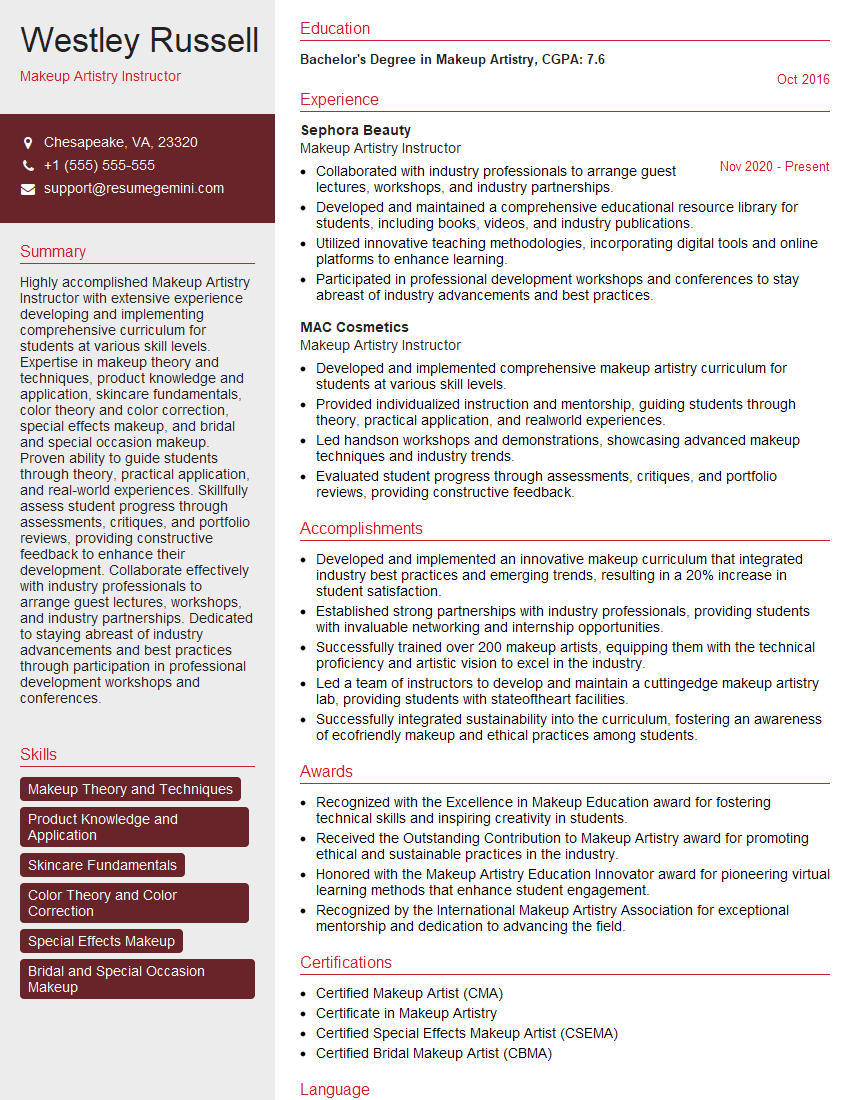
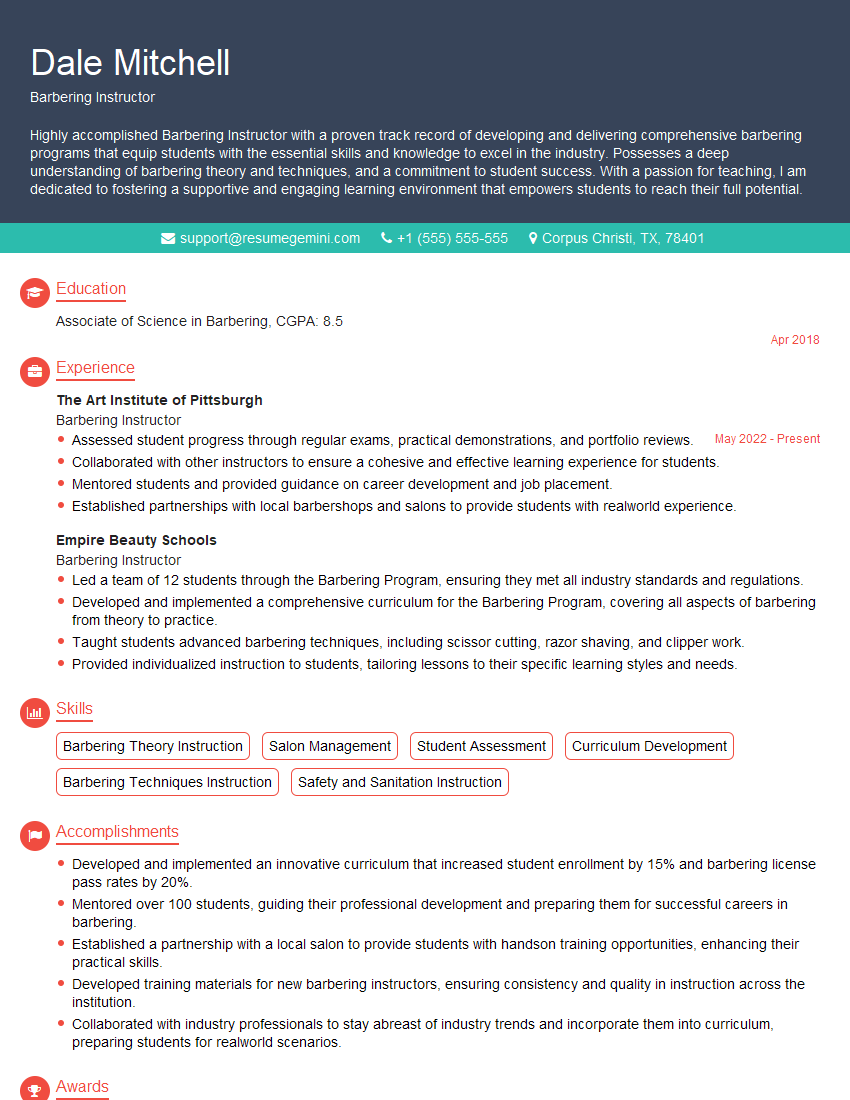
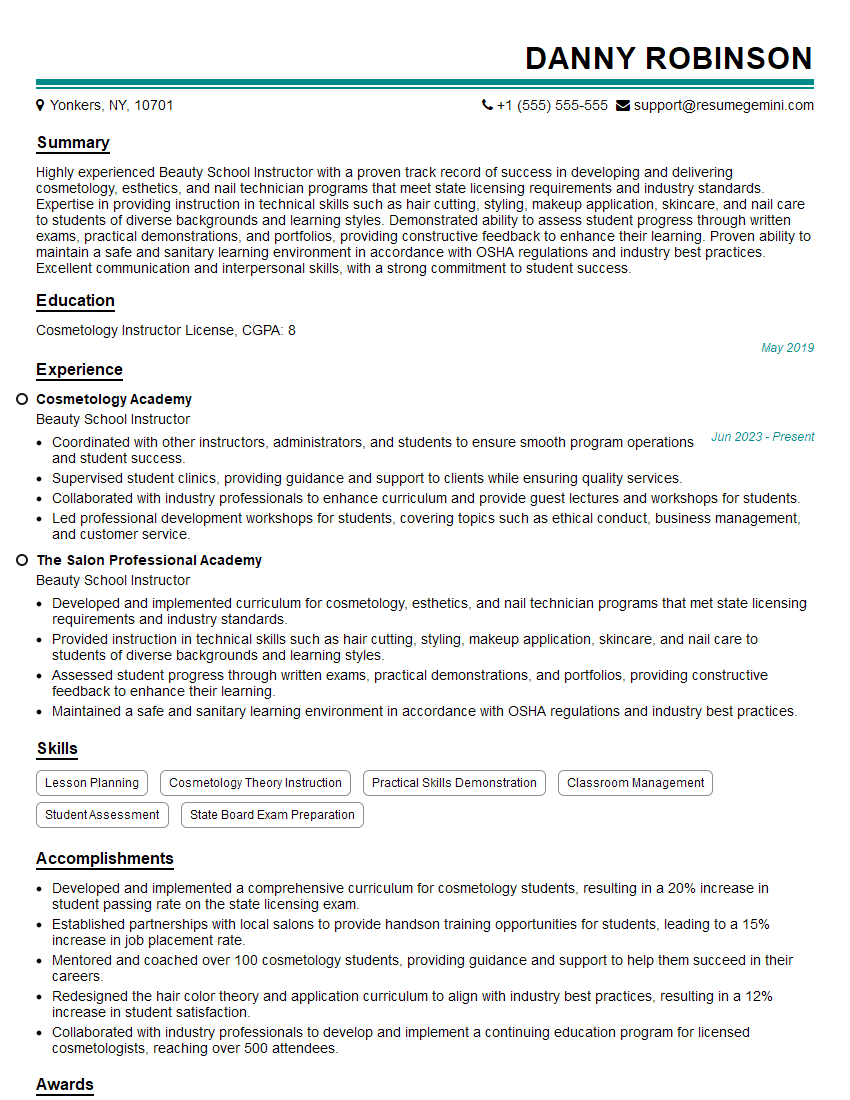
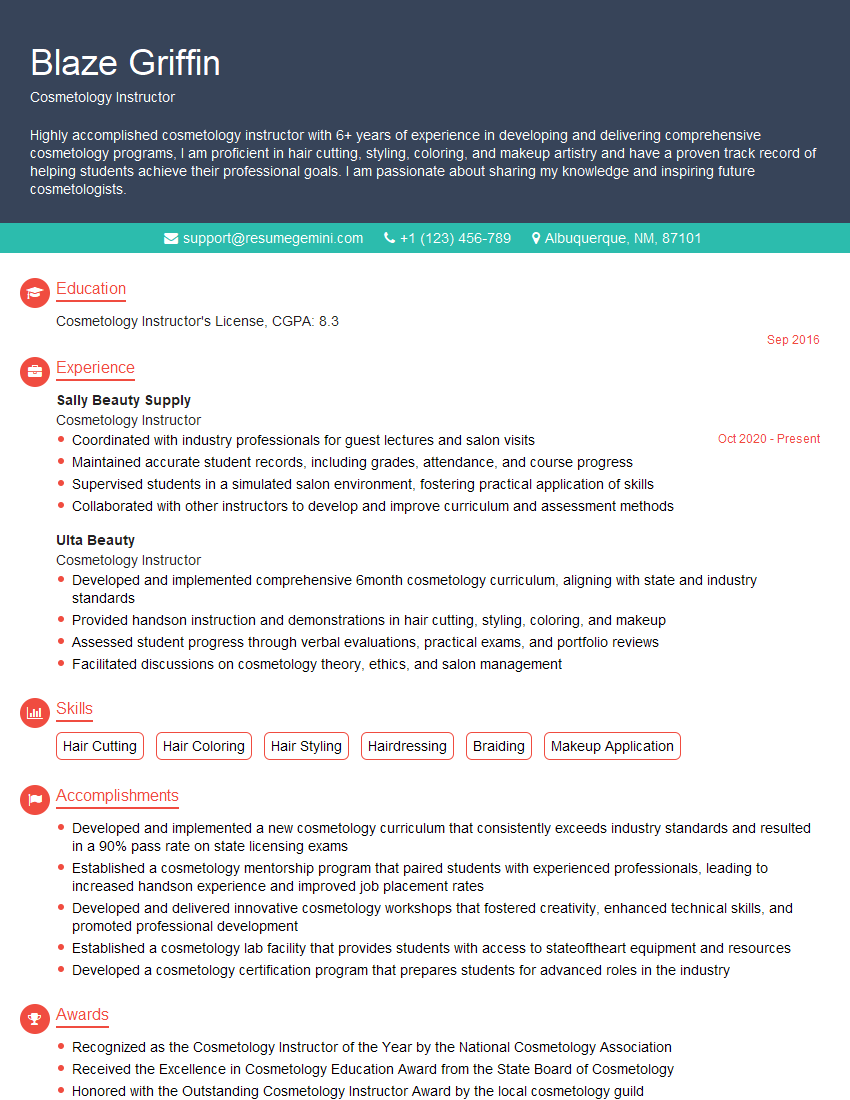
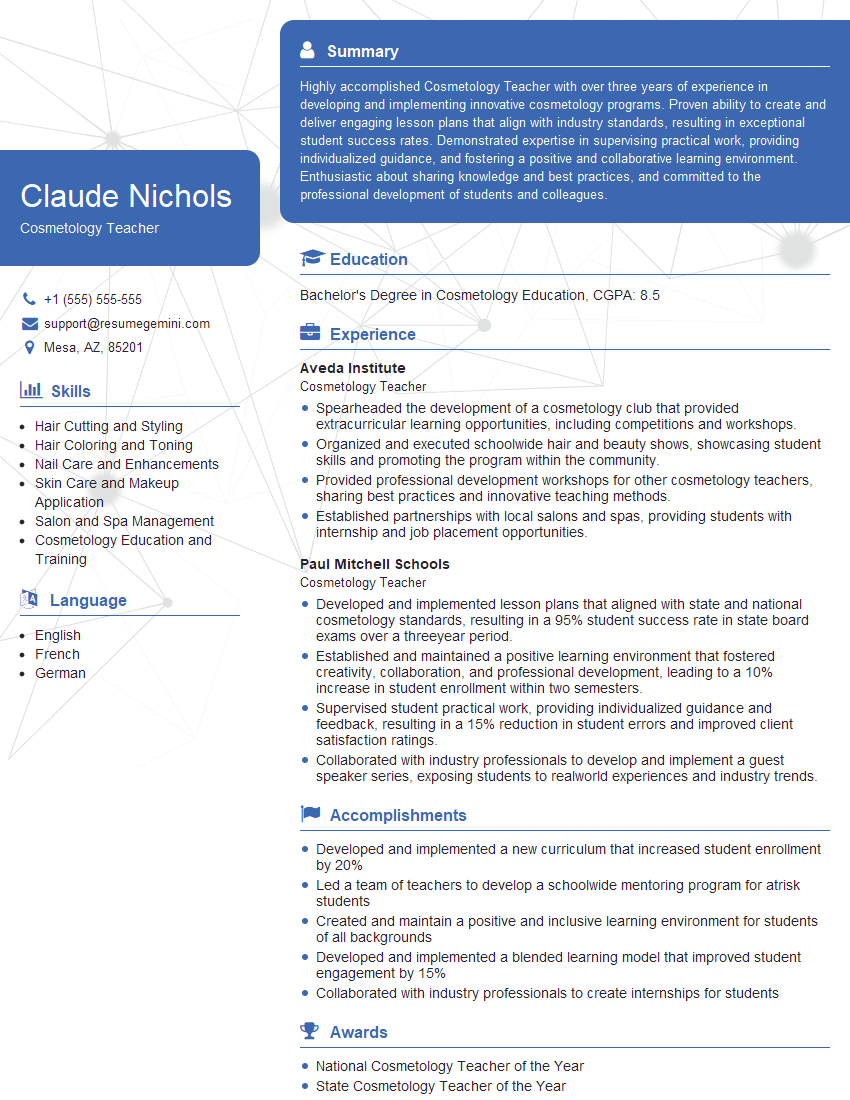
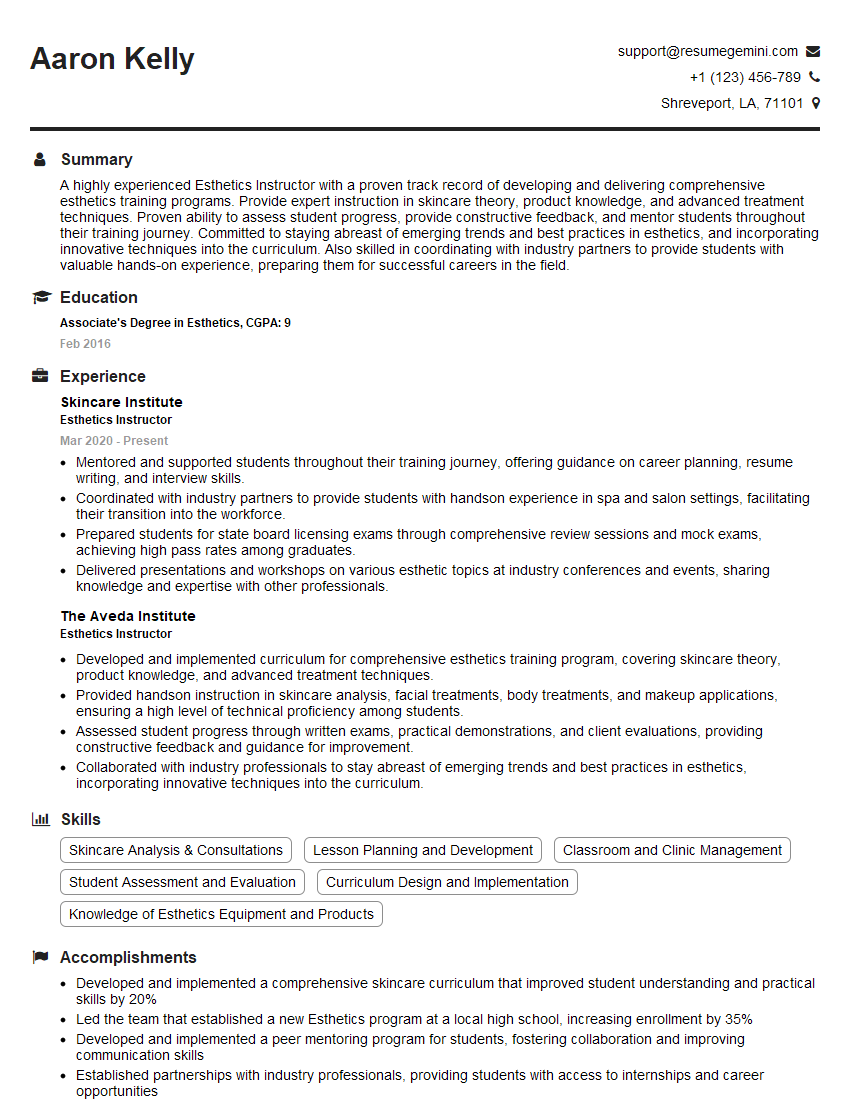
Mastering these key areas of cosmetology education will significantly boost your chances of landing your dream job. A strong, ATS-friendly resume is your first step towards showcasing your skills and experience to potential employers. To create a truly compelling resume that highlights your unique qualifications, leverage the power of ResumeGemini. ResumeGemini provides a user-friendly platform to build professional resumes, and we offer examples specifically tailored to Cosmetology Education to help you get started. Invest in your future – build a resume that reflects your passion and expertise.
Explore more articles
Users Rating of Our Blogs
Share Your Experience
We value your feedback! Please rate our content and share your thoughts (optional).
What Readers Say About Our Blog
I Redesigned Spongebob Squarepants and his main characters of my artwork.
https://www.deviantart.com/reimaginesponge/art/Redesigned-Spongebob-characters-1223583608
IT gave me an insight and words to use and be able to think of examples
Hi, I’m Jay, we have a few potential clients that are interested in your services, thought you might be a good fit. I’d love to talk about the details, when do you have time to talk?
Best,
Jay
Founder | CEO