Unlock your full potential by mastering the most common HMI Operation and Troubleshooting interview questions. This blog offers a deep dive into the critical topics, ensuring you’re not only prepared to answer but to excel. With these insights, you’ll approach your interview with clarity and confidence.
Questions Asked in HMI Operation and Troubleshooting Interview
Q 1. Explain the difference between HMI and SCADA.
While both HMI (Human-Machine Interface) and SCADA (Supervisory Control and Data Acquisition) systems manage industrial processes, they differ significantly in scope and functionality. Think of SCADA as the brain and HMI as the face of the operation.
HMI focuses primarily on presenting process data and allowing operators to interact with equipment locally. They often control a single machine or a small group of machines. For example, an HMI on a packaging line might display the speed of the conveyor, the number of items packaged, and allow the operator to adjust parameters like the sealing temperature.
SCADA, on the other hand, manages a much wider geographical area and a larger number of devices. It provides supervisory control, often involving remote monitoring and control of distributed systems like an entire factory or a network of oil wells. It might incorporate many HMIs at various locations, aggregating data and providing a centralized view. A SCADA system controlling a water treatment plant, for example, might manage multiple pumps, valves, and sensors across several miles.
In short: HMI is localized control and monitoring; SCADA is centralized supervisory control and monitoring across a wide area and numerous devices.
Q 2. Describe your experience with different HMI platforms (e.g., Wonderware, Rockwell, Siemens).
Throughout my career, I’ve worked extensively with various HMI platforms, each with its own strengths and weaknesses. My experience includes:
- Wonderware InTouch: I’ve used InTouch to design and implement HMIs for complex manufacturing processes, leveraging its scripting capabilities (e.g., using VBA or VBScript) for customized applications and automation. One project involved integrating InTouch with a PLC to monitor and control a high-speed bottling line, where efficient alarm handling and real-time data visualization were critical.
- Rockwell FactoryTalk View SE/ME: This platform excels in integration with Rockwell PLCs (like Allen-Bradley), streamlining the development process. I’ve utilized FactoryTalk View’s powerful graphics editor to create intuitive operator interfaces for diverse applications, from industrial ovens to robotic assembly lines. A notable project involved migrating an outdated HMI system to FactoryTalk View, improving efficiency and enhancing data accessibility.
- Siemens WinCC: I have experience with WinCC in process automation projects, appreciating its robust security features and its ability to handle large datasets. I’ve worked on applications requiring high-availability setups, ensuring continuous process monitoring even during system maintenance. A significant project involved the design and implementation of a WinCC-based HMI for a chemical plant, where precise process control and data integrity were crucial.
My expertise encompasses the entire HMI development lifecycle – from requirements gathering and design to implementation, testing, and deployment. I am adept at selecting the appropriate platform based on project-specific needs and client requirements.
Q 3. How do you troubleshoot a HMI communication error?
Troubleshooting HMI communication errors requires a systematic approach. It’s like detective work; you need to systematically eliminate possibilities.
- Check the Obvious: Begin by verifying basic connectivity. Is the HMI powered on? Are network cables connected and functioning properly? Are there any obvious physical obstructions?
- Network Diagnostics: Use network monitoring tools (like ping, tracert, or network analyzers) to determine whether the HMI can communicate with the PLC or other devices. Check for IP address conflicts, DNS issues, or network latency.
- Driver and Communication Settings: Verify that the correct communication drivers are installed and configured correctly in the HMI software. Check the baud rate, parity, and other communication settings to ensure they match the PLC or device settings. Incorrect settings are a common cause of communication problems.
- PLC/Device Status: Examine the PLC or other devices to ensure they are functioning correctly and communicating on the network. Check for any error messages or status indicators on the PLC itself.
- Firewall and Security Settings: Check firewalls and network security settings to ensure that they are not blocking communication between the HMI and the PLC or other devices.
- HMI Software Logs and Error Messages: Check the HMI application logs and error messages for clues about the nature of the communication problem. These logs often contain detailed information about the error.
- Restart and Reboot: If all else fails, try restarting the HMI, the PLC, and even the network switch. This can resolve temporary glitches or software errors.
Remember to document each step taken and the results obtained. This systematic approach will help you efficiently isolate the problem and find a solution.
Q 4. What are common HMI security concerns and how do you address them?
HMI security is paramount, especially in industrial environments where unauthorized access can have severe consequences. Common concerns include:
- Unauthorized Access: Gaining unauthorized access to the HMI can allow malicious actors to alter process parameters, compromise data integrity, or even cause physical damage.
- Data Breaches: Sensitive process data stored or transmitted by the HMI can be a target for cyberattacks. This data could reveal valuable intellectual property or proprietary processes.
- Malware Infections: Malicious software can infect the HMI system, potentially disrupting operations or compromising data security.
- Denial-of-Service Attacks: These attacks can overwhelm the HMI system, rendering it unusable and preventing access to critical process information.
Addressing these concerns requires a multi-layered approach:
- Strong Passwords and Authentication: Enforce strong password policies and utilize multi-factor authentication to protect against unauthorized access.
- Network Security: Implement network segmentation to isolate the HMI network from other networks. Use firewalls and intrusion detection/prevention systems to monitor and protect the HMI network from external threats.
- Regular Software Updates and Patches: Maintain the HMI software and all connected devices with the latest security updates and patches to address known vulnerabilities.
- Access Control: Restrict access to the HMI system based on the principle of least privilege. Only authorized personnel should have access to sensitive functions and data.
- Regular Security Audits: Conduct regular security audits to identify and address potential vulnerabilities.
A robust security plan, implemented and regularly reviewed, is crucial for safeguarding the HMI system and the processes it controls. It’s not just about technology; it’s about processes and people.
Q 5. Explain the concept of alarming in an HMI system.
Alarming in an HMI is a critical function that alerts operators to abnormal conditions or potential problems in a process. It’s the system’s way of saying, ‘Hey, something’s not right!’.
An HMI alarm system typically involves:
- Alarm Triggers: These are pre-defined conditions that, when met, trigger an alarm. These might be based on process variables exceeding thresholds (e.g., temperature too high, pressure too low), equipment malfunctions, or communication errors.
- Alarm Acknowledgement: Operators must acknowledge alarms to confirm they have been seen and addressed. This prevents the system from being overwhelmed by repeated alerts for a persistent issue.
- Alarm Prioritization: Alarms are often prioritized based on their severity. Critical alarms require immediate attention, while less severe alarms might allow for a delayed response.
- Alarm Logging: All alarms are logged, providing a historical record of events. This is essential for troubleshooting, analysis, and regulatory compliance.
- Alarm Presentation: Alarms are displayed visually, typically using flashing indicators, audible signals (beeps, sirens), and text messages, drawing the operator’s attention quickly.
Effective alarming is crucial for safe and efficient operations. A well-designed alarm system ensures that critical issues are addressed promptly and efficiently, preventing accidents and optimizing process performance. Poorly designed alarm systems, however, can lead to alarm fatigue, where operators ignore alarms due to excessive or irrelevant warnings.
Q 6. How do you handle a HMI system crash?
A HMI system crash can disrupt operations and cause significant losses. The response depends on the severity and cause of the crash.
- Immediate Actions: If the HMI crashes completely, the first step is to check if the system is responsive. If not, try restarting the HMI hardware. If there are multiple HMI servers in a redundant configuration, check the failover mechanisms to ensure that a secondary server has taken over.
- Identify the Cause: Investigate the reason for the crash. Check event logs, application logs, and system logs for error messages and clues. Common causes might include software bugs, hardware failures, insufficient resources, or communication problems.
- Data Backup and Recovery: If data is lost, recover from the most recent backup. The frequency and method of backups are critical for effective recovery.
- Troubleshooting and Repair: If a hardware issue is suspected, inspect the hardware components (e.g., the computer, network cards) for any signs of damage. If a software issue is identified, reinstall the software or apply patches.
- Preventative Measures: After resolving the crash, implement measures to prevent future occurrences. This might involve upgrading hardware, implementing redundancy, regularly backing up data, or improving software maintenance practices.
A well-documented process and regular system checks, including backups, is critical. Think of it like a fire drill: You plan for the worst, hoping you never have to use it, but you’re better prepared if you do.
Q 7. Describe your experience with historical data logging in HMI systems.
Historical data logging in HMI systems is essential for analyzing process performance, identifying trends, and troubleshooting issues. This data provides insights that go beyond real-time monitoring. It acts as a detailed record of the past.
My experience encompasses various methods of historical data logging, including:
- Database-Based Logging: Many HMI systems integrate with databases (such as SQL Server, Oracle, or MySQL) to store historical data. This allows for structured storage and efficient querying and analysis of large datasets.
- File-Based Logging: Some systems use file-based logging, storing data in CSV, XML, or other file formats. This is often simpler to implement but can be less efficient for large datasets and complex queries.
- Third-Party Data Historians: Specialized data historian software (like OSIsoft PI) can be integrated with HMI systems to provide advanced data storage, analysis, and visualization capabilities.
In my projects, I’ve used historical data logging to:
- Identify process inefficiencies: By analyzing historical data, I’ve helped identify periods of low production and determined root causes.
- Improve product quality: Historical data analysis has helped identify correlations between process variables and product quality, leading to improvements in manufacturing processes.
- Compliance Reporting: Historical data is often required for regulatory compliance reporting, providing a verifiable record of process operations.
The choice of logging method depends on the project’s scale, data volume, and analytical needs. Properly implemented historical data logging provides invaluable insights that are crucial for ongoing optimization and problem-solving.
Q 8. How do you create and manage user accounts and permissions within an HMI?
Managing user accounts and permissions in an HMI is crucial for security and operational efficiency. Think of it like managing access to a building; you wouldn’t want everyone to have access to every room. Most HMIs have a built-in user management system. This typically involves creating user accounts, assigning them roles (e.g., operator, supervisor, administrator), and defining permissions for each role.
- Creating Accounts: You’ll usually provide a username, password (often with complexity requirements), and potentially other details like an employee ID.
- Assigning Roles and Permissions: Roles group users with similar access needs. For instance, an ‘operator’ might only have read-only access to process data, while a ‘supervisor’ could have read/write access and the ability to adjust setpoints. Administrators have full control.
- Implementing Permissions: Permissions determine what actions each user can perform within the HMI. This could include accessing specific screens, modifying parameters, downloading data, or even changing passwords for other users. Many HMIs offer granular control, allowing you to restrict access down to individual buttons or data points.
For example, in a pharmaceutical manufacturing environment, operators might only see process values and alarms, while engineers might have access to detailed diagnostics and configuration screens. This layered approach ensures data integrity and prevents unauthorized modifications.
Q 9. Explain your understanding of different HMI communication protocols (e.g., Ethernet/IP, Modbus, OPC UA).
HMI communication protocols are the lifelines connecting the HMI to the controlled equipment and data sources. Think of them as the ‘languages’ the HMI speaks to understand and control the process.
- Ethernet/IP: A widely used industrial Ethernet protocol, commonly employed in Allen-Bradley PLC environments. It’s known for its speed and efficiency in handling large amounts of data, making it suitable for complex systems.
- Modbus: A robust and widely adopted serial communication protocol known for its simplicity and open standard. It’s frequently used in smaller, simpler systems and is compatible with many different PLC brands. There are variations like Modbus TCP (for Ethernet) and Modbus RTU (for serial communication).
- OPC UA (Unified Architecture): A platform-independent, secure, and interoperable protocol rapidly becoming the industry standard. It handles a wide variety of data types and excels in complex, multi-vendor environments. Its security features are especially valuable in sensitive industrial settings.
Selecting the appropriate protocol depends on factors like the PLC type, existing infrastructure, network topology, and the need for security and interoperability. For instance, a large-scale manufacturing plant might use OPC UA for its high level of interoperability, while a smaller facility might opt for the simpler Modbus due to existing equipment. Proper protocol selection is crucial for reliable and efficient HMI operation.
Q 10. How do you perform HMI screen design and development?
HMI screen design and development is an iterative process focusing on creating intuitive, user-friendly interfaces that effectively communicate process information. It’s a blend of art and engineering, ensuring both visual appeal and functional clarity.
- Requirements Gathering: The process begins by understanding the needs of the operators and engineers who will interact with the HMI. What information do they need to see? What actions do they need to perform?
- Screen Layout and Design: Using HMI development software, I would design the layout, select appropriate visual elements (buttons, gauges, graphs, etc.), and organize information logically for optimal readability and ease of use. The goal is to minimize operator errors and improve efficiency.
- Data Binding and Tagging: I would then connect the visual elements to data points (tags) in the PLC or other data sources. This allows the HMI to display real-time data and respond to changes in the process.
- Testing and Refinement: Thorough testing is essential. This involves simulating various process conditions to ensure the HMI performs correctly and provides operators with the information they need in a timely manner. Feedback from operators is incorporated during the refinement process.
For example, creating an alarm display requires careful consideration of alarm prioritization, clear messaging, and acknowledgment mechanisms. A well-designed HMI can significantly improve operational efficiency and reduce reaction times to critical events. Poor design can, however, lead to errors, confusion, and even safety hazards.
Q 11. What are the benefits of using a virtual HMI?
Virtual HMIs offer several advantages over traditional, hardware-based solutions. Think of them as a digital twin of your HMI system.
- Cost-Effectiveness: Reduces the need for expensive hardware, licensing fees, and physical space.
- Flexibility and Scalability: Easily adaptable to changing requirements. Adding new screens, functionalities or users is significantly easier.
- Enhanced Testing and Simulation: Provides a safe environment for testing various scenarios and configurations without risking the actual process.
- Remote Access and Collaboration: Allows operators and engineers to access and control the process remotely, enhancing troubleshooting and maintenance.
- Reduced Downtime: In case of failures, virtual HMIs can be easily restored from backups or migrated to another environment.
Imagine a situation where you are testing a new control algorithm. Using a virtual HMI, you can simulate different process conditions without affecting the physical equipment. This can save significant time and resources, and minimizes risk. They are particularly useful in training simulators, where operators can practice handling various scenarios in a risk-free environment.
Q 12. How do you ensure HMI data integrity?
Ensuring HMI data integrity is paramount for reliable process control and decision-making. It’s like ensuring the accuracy of a financial ledger – incorrect data leads to wrong conclusions and actions.
- Data Validation: Implement checks to ensure the data received from the PLC or other data sources is within acceptable ranges and formats.
- Redundancy and Backup: Employ redundant communication paths and data storage mechanisms to prevent data loss in case of hardware or software failures. Regular backups are critical.
- Data Logging and Auditing: Maintain detailed logs of all HMI activities, including user actions, data changes, and alarms. This is crucial for troubleshooting and regulatory compliance.
- Security Measures: Implement robust security measures such as user authentication, access control, and encryption to protect against unauthorized access and data modification.
- Regular Data Reconciliation: Periodically compare the HMI data with data from other sources to detect discrepancies and resolve inconsistencies.
For example, in a chemical process, incorrect temperature readings could lead to dangerous conditions. Data validation, redundancy, and regular checks help prevent such scenarios, ensuring the HMI provides a reliable picture of the process.
Q 13. Describe your experience with HMI scripting or programming.
HMI scripting and programming allow for customized functionality beyond the standard HMI features. Think of it as adding specialized tools to your toolbox. My experience includes using various scripting languages and development environments provided by different HMI vendors, such as:
- VBA (Visual Basic for Applications): Used in some HMI platforms for creating custom functions, automating tasks, and interacting with external systems.
- Python: Increasingly used for data analysis, visualization, and integration with other systems. Its extensive libraries are valuable for creating complex HMI applications.
- C# or C++: Utilized in more advanced scenarios for developing custom HMI applications or integrating with complex control systems.
For instance, I’ve used VBA to create custom alarm handling routines that automatically send email notifications to relevant personnel based on alarm severity. In another project, I utilized Python to develop a data analysis module that visualized process trends and provided early warnings of potential problems.
Proficiency in HMI scripting allows for creating tailored solutions that meet specific needs and improve the efficiency and effectiveness of the human-machine interface.
Q 14. Explain your process for diagnosing HMI hardware failures.
Diagnosing HMI hardware failures requires a systematic approach. It’s like detective work, systematically eliminating possibilities until you find the root cause.
- Visual Inspection: Start with a visual check for obvious signs of damage, such as loose connections, damaged cables, or physical defects on the HMI screen or panel.
- Power Supply Check: Verify that the HMI is receiving the correct power supply voltage and current. A simple multimeter check is often sufficient.
- Communication Checks: Verify that the HMI is communicating properly with the PLC and other devices. Check network connections, cables, and communication settings. Tools like network analyzers can help identify communication problems.
- Software Diagnostics: Use the HMI’s built-in diagnostic tools to identify any software-related errors or issues. Look for error logs, and if possible, check the status of communication drivers and connections.
- Component-Level Troubleshooting: If the problem persists, you may need to perform a more in-depth analysis, potentially replacing components to identify faulty hardware (e.g., replacing the touch screen, network card, or other modules).
For example, a flickering screen might indicate a problem with the backlight or a faulty LCD panel. Slow response times could suggest a CPU or memory issue. A systematic approach combined with the use of appropriate diagnostic tools and experience in interpreting error messages and logs greatly speeds up the process and minimizes downtime.
Q 15. How do you troubleshoot slow HMI performance?
Troubleshooting slow HMI performance involves a systematic approach, starting with identifying the bottleneck. Think of it like diagnosing a car problem – you wouldn’t start by replacing the engine if the problem is a flat tire. We need to isolate the source.
- Network Issues: A slow network connection is a common culprit. I’d start by checking network bandwidth, latency, and packet loss using network monitoring tools. A simple ping test to the HMI server can reveal connectivity problems. For example, if the ping times are consistently high, it points to a network bottleneck.
- Server-Side Performance: If the network is fine, the problem might lie with the HMI server itself. This could involve high CPU utilization, low memory, or database issues. Server monitoring tools provide insights into resource usage. Imagine a server trying to run multiple demanding applications simultaneously – it’ll slow down. We need to optimize resource allocation.
- HMI Application Issues: Inefficiently written HMI applications can impact performance. This could involve complex graphics, excessive data polling, or poorly optimized scripts. Profiling tools can pinpoint performance bottlenecks within the application itself. For instance, a screen with hundreds of constantly updating animated elements is a recipe for slowdowns.
- Client-Side Performance: The client device (e.g., a panel PC) can also contribute to slow performance. Factors include insufficient processing power, limited memory, or outdated drivers. Checking the client’s specs and upgrading where necessary is crucial. Think of it as trying to run a high-resolution video game on a low-end computer.
By methodically investigating these areas, I can pinpoint the root cause and implement appropriate solutions, such as upgrading hardware, optimizing the HMI application, or improving network infrastructure.
Career Expert Tips:
- Ace those interviews! Prepare effectively by reviewing the Top 50 Most Common Interview Questions on ResumeGemini.
- Navigate your job search with confidence! Explore a wide range of Career Tips on ResumeGemini. Learn about common challenges and recommendations to overcome them.
- Craft the perfect resume! Master the Art of Resume Writing with ResumeGemini’s guide. Showcase your unique qualifications and achievements effectively.
- Don’t miss out on holiday savings! Build your dream resume with ResumeGemini’s ATS optimized templates.
Q 16. How do you ensure HMI compliance with relevant safety standards?
Ensuring HMI compliance with safety standards, such as IEC 61508 or ISA-88, is paramount. It’s not just about checking boxes; it’s about safeguarding personnel and equipment. This requires a multifaceted approach throughout the HMI lifecycle.
- Standards Selection: First, we need to identify the relevant safety standards applicable to the specific industry and application. These standards define requirements for functional safety, including HMI design, testing, and documentation.
- Design Considerations: The HMI design itself must adhere to safety principles. This includes using clear and unambiguous graphics, providing adequate alarm management, and implementing robust error handling. For instance, a poorly designed screen could lead to operator confusion and potentially unsafe actions.
- Testing and Validation: Rigorous testing is vital to validate that the HMI meets the specified safety requirements. This includes unit testing, integration testing, and potentially independent safety assessments. Thorough testing ensures that the HMI behaves predictably under various conditions, preventing unexpected behavior.
- Documentation: Maintaining comprehensive documentation is critical. This includes design specifications, test results, and safety assessments. Good documentation allows for traceability and helps ensure compliance throughout the system’s lifecycle.
- Regular Audits: Periodic audits are essential to ensure ongoing compliance and to identify any potential issues or necessary updates.
Throughout this process, collaboration with safety engineers and adherence to strict procedures are key to ensuring the safety and reliability of the HMI system.
Q 17. What are your preferred methods for documenting HMI configurations?
My preferred methods for documenting HMI configurations emphasize clarity, traceability, and ease of access. I utilize a combination of techniques to ensure comprehensive documentation.
- Screen Shots and Annotated Diagrams: Visual documentation, such as screenshots of each screen with annotations explaining the purpose of each element, provides a clear understanding of the HMI layout and functionality. This is like having a blueprint for your HMI.
- Database Schemas and Data Flow Diagrams: For complex HMI systems, documenting database structures and data flow diagrams helps in understanding data interactions and dependencies. This ensures that data is handled consistently and accurately.
- Tag and Variable Lists: Maintaining a complete list of all tags and variables, including their descriptions and data types, ensures consistency and simplifies troubleshooting. This is like a glossary of terms for your HMI.
- Configuration Files and Scripts: Keeping a version-controlled repository of all configuration files and scripts ensures traceability and allows for easy restoration to previous configurations. This is your system’s memory, allowing for easy retrieval and rollback.
- User Manuals and Procedures: Providing well-written user manuals and operation procedures helps operators understand the HMI’s functionality and perform their tasks effectively. This makes the HMI user-friendly and reduces errors.
By using this multifaceted approach, I can create a comprehensive and maintainable set of documentation that is easily accessible to all stakeholders.
Q 18. Describe your experience with HMI system backups and restorations.
HMI system backups and restorations are critical for maintaining operational continuity and data integrity. My experience involves employing a robust backup and recovery strategy.
- Regular Backups: Implementing a schedule for regular backups, preferably using automated tools, is paramount. This ensures that we have recent backups available in case of system failure. The frequency of backups depends on the criticality of the system – for a mission-critical system, daily backups, or even more frequent, might be necessary.
- Backup Strategies: I employ different backup strategies, including full backups and incremental backups, to optimize storage space and backup time. For example, a full backup is done weekly, and incremental backups are performed daily. This ensures efficient backup management.
- Testing Backups: Regularly testing the restoration process is crucial to validate the backup integrity and the restoration procedure. This ensures that backups are functional and can be quickly restored if needed. This reduces the risks associated with system downtime.
- Secure Storage: Storing backups in a secure location, ideally offsite, safeguards against data loss due to local incidents such as hardware failures or natural disasters. This mitigates risk and ensures data protection.
- Version Control: Using version control systems for configuration files allows for easy rollback to earlier versions if problems arise after a system update or configuration change. This is like having a history of all changes made to the system.
A well-defined backup and restoration plan minimizes downtime and data loss in case of unforeseen events.
Q 19. How do you handle HMI integration with other systems?
HMI integration with other systems is a common requirement in modern industrial environments. This integration often involves using various communication protocols and data exchange methods.
- Communication Protocols: Understanding and implementing various communication protocols such as OPC UA, Modbus TCP/IP, Profibus, and Ethernet/IP is crucial. Each protocol has its strengths and weaknesses and the choice depends on the specific systems being integrated. Selecting the right protocol ensures seamless data transfer.
- Data Exchange Mechanisms: Efficient data exchange is essential. This often involves using message queues, databases, or other data exchange platforms to ensure reliable data transfer between the HMI and other systems. This ensures that data arrives accurately and reliably.
- Data Mapping and Transformation: Often, data needs to be transformed or mapped between different systems. This requires a thorough understanding of the data structures and formats used by each system. Proper mapping avoids data inconsistencies and errors.
- Security Considerations: Security is paramount when integrating systems. Implementing appropriate security measures, such as firewalls and authentication mechanisms, is essential to protect the HMI and other systems from unauthorized access or cyber threats. This prevents unauthorized data access and system manipulation.
- Testing and Validation: Thorough testing is crucial to ensure that the integration is seamless and reliable. This includes testing data exchange, error handling, and security measures.
Successful HMI integration requires careful planning, a strong understanding of communication protocols, and rigorous testing.
Q 20. Explain your experience with HMI system upgrades and migrations.
HMI system upgrades and migrations require careful planning and execution to minimize downtime and ensure a smooth transition. My approach involves a phased process.
- Assessment and Planning: Begin with a thorough assessment of the current HMI system, including hardware and software components. This helps identify compatibility issues and potential problems during the upgrade or migration. A proper assessment prevents unforeseen issues.
- Proof of Concept: Conducting a proof of concept (POC) on a smaller scale allows for testing the new system and identifying potential issues before a full-scale deployment. This helps minimize the risk of failure.
- Phased Rollout: A phased rollout, starting with a pilot project, allows for incremental implementation and minimizes the impact of potential problems. This reduces the risk of widespread system failure.
- Training and Support: Providing adequate training to operators and maintenance personnel is critical for a successful transition. This ensures users understand the new system and can effectively use its features. User training is critical for system adoption.
- Documentation and Knowledge Transfer: Updating documentation to reflect the new system is vital. Knowledge transfer ensures that expertise is maintained throughout the process. Updated documentation helps with future maintenance and troubleshooting.
A well-planned upgrade or migration minimizes disruption and ensures a smooth transition to the new system.
Q 21. What are the different types of HMI displays and their applications?
HMI displays come in various types, each suited for different applications. The choice depends on factors such as the application’s complexity, environmental conditions, and required functionalities.
- Panel PCs: These are self-contained units with a display, processor, and input/output capabilities. They are versatile and commonly used in industrial settings where a combination of processing power and visualization is needed. Think of them as mini-computers dedicated to HMI functions.
- Thin Clients: These devices rely on a central server for processing and only display information, reducing local processing demands. They are suitable for applications where a central management system is desired or in scenarios with limited local processing power.
- Operator Panels: These dedicated HMI devices are designed for rugged industrial environments. They have simplified interfaces tailored to specific industrial tasks. They are built to withstand harsh conditions.
- Mobile Devices: Smartphones and tablets offer portability and convenient remote access to HMI systems. They are useful for remote monitoring and control. This allows operators to oversee systems from a distance.
- Large-Screen Displays: Large-screen displays offer excellent visualization and collaboration capabilities for complex processes, control rooms, or training purposes. They provide a detailed overview and allow for improved collaboration.
Selecting the appropriate display type is crucial for optimizing HMI functionality and ensuring effective operation within the specific industrial environment.
Q 22. How do you ensure HMI system scalability?
HMI system scalability refers to its ability to handle increasing amounts of data, users, and devices without compromising performance or stability. Think of it like building a house: you wouldn’t build a small house and then try to cram ten families into it! Ensuring scalability involves careful planning and selection of hardware and software.
- Choosing scalable hardware: This includes servers with sufficient processing power, memory, and storage capacity, as well as a network infrastructure that can handle the increased data traffic. We often use virtualized environments to allow for flexible resource allocation and easier expansion.
- Employing a client-server architecture: This separates the HMI application logic from the presentation layer, allowing for easy scaling of both components independently. More clients can connect to the server without overwhelming the server itself.
- Utilizing database optimization techniques: Efficient database design and querying are critical for handling large datasets. Techniques like indexing, data partitioning, and caching can significantly improve performance as the system grows.
- Employing a modular design for the HMI application: Breaking down the HMI application into smaller, independent modules allows for easier maintenance, upgrades, and expansion. If one module needs more resources, you only need to scale that module, not the entire system.
For example, in a large manufacturing plant, we might start with an HMI system designed for a few hundred tags and a dozen users. As the plant expands, we can seamlessly add more tags, users, and even integrate new machines without needing to replace the entire HMI infrastructure, thanks to proper scalability planning.
Q 23. How do you handle HMI system redundancy and failover?
Redundancy and failover are crucial for ensuring HMI system uptime, especially in critical applications where downtime can be costly or dangerous. Redundancy involves having duplicate hardware and software components, so if one fails, the other takes over seamlessly. Failover is the process of switching to the backup system.
- Redundant servers: We typically use two or more servers running the same HMI application, with a load balancer distributing the workload. If one server fails, the load balancer automatically redirects traffic to the other server.
- Redundant network infrastructure: Using redundant network switches, routers, and communication lines ensures continuous connectivity, even if one component fails. A ring topology or dual paths are common solutions.
- Redundant HMI clients: In some applications, redundant HMI clients are used, so if one client fails, the operator can still access the system through another client.
- Database replication: Replicating the HMI database to a secondary server ensures data availability even if the primary database server fails. This involves regular synchronization of data between the two servers.
Imagine a power plant – a failover system is absolutely necessary to prevent catastrophic failures. Redundancy and failover mechanisms are designed to ensure continuous monitoring and control, preventing accidents and minimizing production downtime.
Q 24. Describe your experience with HMI remote access and support.
Remote access and support for HMIs are increasingly important, especially given the prevalence of geographically dispersed industrial sites. I have extensive experience providing remote access using various technologies.
- VPN (Virtual Private Network): This creates a secure connection between the HMI server and remote users, enabling secure access as if they were locally connected.
- Remote Desktop Protocol (RDP): This allows for direct control of the HMI server from a remote location. This is useful for troubleshooting or performing configuration changes.
- TeamViewer or similar software: These provide a convenient way to access and troubleshoot HMI systems remotely, without requiring complex VPN configurations. They are particularly useful for quick diagnostics and temporary access.
- Web-based HMI interfaces: Some HMI platforms offer web-based interfaces, allowing access from any device with a web browser and internet connection. This greatly improves accessibility and convenience.
I have used these techniques to support clients across different time zones, resolving issues promptly and efficiently. For example, I once remotely diagnosed and resolved a communication problem between an HMI and a PLC in a remote oil rig, avoiding costly and time-consuming on-site visits.
Q 25. How do you troubleshoot HMI graphic display issues?
Troubleshooting HMI graphic display issues requires a systematic approach. It’s like detective work – you need to gather clues and systematically eliminate possibilities.
- Check the HMI hardware: Begin by ensuring the HMI screen is properly connected, powered, and functioning correctly. Test the screen’s resolution, brightness, and color settings.
- Verify communication with the PLC/data source: Ensure that the HMI is properly communicating with the Programmable Logic Controller (PLC) or other data source providing the process data. Check communication cables, network connectivity, and communication settings. Use diagnostics tools provided by the HMI and PLC manufacturers.
- Examine the HMI application: Review the HMI application for errors in the graphic design or scripting. Look for issues such as incorrect tag assignments, faulty scripts, or conflicts between different graphic elements.
- Check driver and software versions: Make sure that all drivers and software versions (HMI software, PLC drivers, OS) are up-to-date and compatible. Outdated software can often cause display problems.
- Inspect the HMI project settings: Review the HMI project settings, looking for incorrect scaling, resolution settings, or other configuration errors.
A common issue is incorrect tag addressing. If a tag in the HMI is not pointing to the correct data point in the PLC, the graphic elements associated with that tag will display incorrect or no data. For example, a tank level indicator might display an empty tank even though it’s actually full.
Q 26. Explain your understanding of HMI alarm management strategies.
HMI alarm management is critical for ensuring operator awareness and timely response to process events. A well-designed alarm system prevents alarm floods and ensures operators can efficiently manage the alarms.
- Alarm prioritization: Categorize alarms based on severity, allowing operators to focus on critical events first. Use alarm classes or severity levels (e.g., critical, major, minor).
- Alarm filtering and suppression: Implement mechanisms to filter out irrelevant alarms or temporarily suppress alarms during scheduled maintenance. This prevents alarm fatigue.
- Alarm acknowledgement: Require operators to acknowledge alarms, providing a record of alarm response time and ensuring that alarms are not ignored.
- Alarm history and reporting: Maintain a comprehensive alarm history log for analysis and reporting. This data is invaluable for identifying trends, potential issues, and improving alarm strategies.
- Alarm notification: Integrate with other systems to provide remote alarm notifications via SMS, email, or other communication methods.
A poorly designed alarm system can overwhelm operators, leading to missed critical alarms and potentially hazardous situations. Effective alarm management is about providing the right information at the right time, without overwhelming the operator.
Q 27. How do you perform HMI testing and validation?
HMI testing and validation is essential to ensure the system functions correctly and meets user requirements. It’s analogous to test-driving a car before buying it.
- Unit testing: Verify individual components (screens, scripts, etc.) work as designed. This is usually done by developers.
- Integration testing: Test the interaction between different HMI components and the PLC or other devices. Does data flow correctly between screens and devices?
- System testing: Test the entire HMI system to ensure all functionalities work together as intended. Does the complete system meet specifications?
- User acceptance testing (UAT): Allow end users to test the system in a realistic environment to ensure it meets their needs and expectations. Does the interface meet ergonomic requirements?
- Performance testing: Evaluate the system’s performance under various loads to ensure it remains responsive and stable. Can the system handle peak loads and many users?
A thorough testing process, including different testing phases, ensures that the HMI meets its operational requirements, is user-friendly, and reliable. We often use test scripts to automate many of these tests, increasing efficiency and repeatability.
Q 28. Describe a challenging HMI troubleshooting experience and how you resolved it.
One challenging experience involved an HMI system experiencing intermittent graphic corruption on a specific screen in a large chemical plant. The display would randomly show distorted images or blank areas, rendering critical process data unreadable. This was happening only on a particular screen, seemingly unrelated to any specific data point or alarm condition.
My troubleshooting approach was systematic:
- Rule out hardware: I first checked the HMI hardware, including the screen itself, connections, and power supply. Everything seemed fine.
- Network investigation: I examined network traffic and connectivity. No unusual network issues were detected.
- Software review: I reviewed the HMI application’s graphic elements and scripts associated with the problematic screen. Initially, no apparent errors were found.
- The Solution: After a careful review of the HMI project settings, I discovered that the problematic screen was using a resource-intensive graphic element (a high-resolution background image). This element, combined with other graphic elements on the screen and the processing power limitations of the HMI hardware, caused intermittent overload, leading to the graphic corruption. By simplifying the screen’s background and optimizing some graphic components, the issue was resolved completely. The resolution was simple but uncovering the root cause took meticulous debugging.
This experience highlighted the importance of thorough system testing and understanding the limits of the HMI hardware. It taught me the value of a systematic, step-by-step approach in complex troubleshooting scenarios, as well as the hidden impact of seemingly small graphic elements on overall system performance.
Key Topics to Learn for HMI Operation and Troubleshooting Interview
- HMI Software & Hardware Fundamentals: Understanding different HMI platforms (e.g., SCADA, WinCC, FactoryTalk), hardware components, and communication protocols (e.g., Ethernet/IP, Modbus).
- Data Acquisition and Visualization: Interpreting data displayed on HMIs, configuring alarms and trends, and understanding the relationship between HMI data and process variables.
- Troubleshooting Techniques: Systematic approaches to identifying and resolving HMI issues, including using diagnostic tools and logs, and understanding common error messages.
- Process Understanding: Demonstrating a thorough understanding of the industrial processes controlled by the HMI, and how HMI interactions affect overall system performance.
- Security Considerations: Knowledge of HMI security best practices, including user access control, network security, and data integrity.
- Networking Concepts: Understanding network topologies and communication protocols relevant to HMI systems, and troubleshooting network related issues impacting HMI functionality.
- Programming and Scripting (if applicable): Familiarity with HMI programming languages (e.g., VBA, ladder logic) and scripting for automation and customization.
- Regulatory Compliance: Awareness of relevant industry standards and regulations pertaining to HMI design and operation (e.g., safety standards).
- Practical Application: Describe scenarios where you’ve successfully diagnosed and resolved HMI issues, highlighting your problem-solving skills and technical expertise.
Next Steps
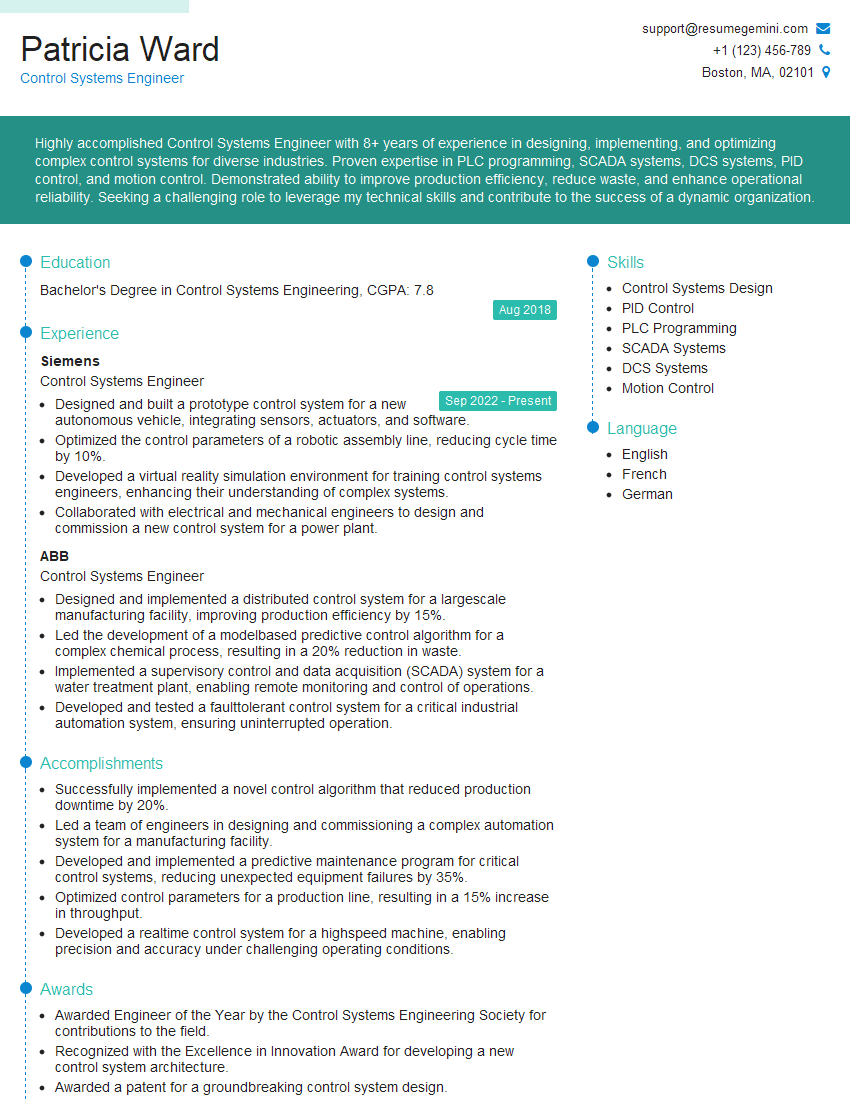
Mastering HMI Operation and Troubleshooting is crucial for career advancement in industrial automation and control systems. A strong understanding of these concepts opens doors to exciting roles with increased responsibility and earning potential. To maximize your job prospects, focus on building an ATS-friendly resume that clearly showcases your skills and experience. ResumeGemini is a trusted resource to help you create a professional and impactful resume. They provide examples of resumes tailored to HMI Operation and Troubleshooting roles to give you a head start. Invest the time to craft a compelling resume; it’s your first impression on potential employers.

Explore more articles
Users Rating of Our Blogs
Share Your Experience
We value your feedback! Please rate our content and share your thoughts (optional).
What Readers Say About Our Blog
I Redesigned Spongebob Squarepants and his main characters of my artwork.
https://www.deviantart.com/reimaginesponge/art/Redesigned-Spongebob-characters-1223583608
IT gave me an insight and words to use and be able to think of examples
Hi, I’m Jay, we have a few potential clients that are interested in your services, thought you might be a good fit. I’d love to talk about the details, when do you have time to talk?
Best,
Jay
Founder | CEO