Feeling uncertain about what to expect in your upcoming interview? We’ve got you covered! This blog highlights the most important Costume Design for Theatre interview questions and provides actionable advice to help you stand out as the ideal candidate. Let’s pave the way for your success.
Questions Asked in Costume Design for Theatre Interview
Q 1. Describe your process for translating a director’s vision into a costume design.
Translating a director’s vision into costume design is a collaborative process that begins with deep understanding. I start by having extensive discussions with the director, exploring their interpretation of the script, the overall aesthetic they envision, and the specific character arcs. We’ll look at mood boards, production design sketches, and even analyze relevant films or artwork to solidify a shared understanding. Then, I’ll begin to create initial sketches and mood boards of my own, exploring different design directions. This iterative process involves presenting these designs to the director, getting feedback, revising, and refining until we arrive at a design that reflects both their vision and my expertise.
For example, in a production of Hamlet, the director might want to emphasize the decaying nature of Elsinore Castle by using muted, earthy tones in the costumes. My designs would then reflect this, utilizing fabrics with a worn look and incorporating elements of decay into the designs. However, if the director prioritized a more modern, minimalist interpretation, my designs would reflect that aesthetic choice, possibly opting for simpler silhouettes and contemporary fabrics.
Q 2. Explain your experience with different fabric types and their suitability for stage costumes.
My experience encompasses a wide range of fabrics, each with unique properties impacting stage wearability. For example, heavy brocades are visually stunning but can restrict movement, making them unsuitable for fast-paced scenes. Lighter fabrics like silk or chiffon flow beautifully but can be delicate and prone to damage, requiring careful handling. I consider durability, drape, texture, and cost when selecting fabrics. Wools are excellent for period pieces, offering structure and warmth, while cottons are versatile and relatively easy to maintain. Synthetics like polyester offer durability and easy care, valuable in large-scale productions, but might lack the visual richness of natural fibers.
In a recent production of A Midsummer Night’s Dream, I used lightweight linen for the Athenian characters to create a sense of airy grace, while heavier velvets and brocades were employed for the fairy characters to emphasize their otherworldly presence. The choice of fabric drastically impacted the overall look and feel of each character, underscoring their role within the play.
Q 3. How do you manage a costume budget effectively?
Managing a costume budget effectively necessitates meticulous planning and resourceful decision-making. I start by obtaining a clear budget from the production team, then create detailed cost breakdowns for each costume, including fabric, trims, construction, alterations, and potential rentals. This involves researching fabric suppliers, comparing prices, and identifying cost-effective solutions without compromising quality. Prioritization is key—I focus on creating the most visually impactful costumes first, allocating funds strategically to ensure that the most critical aspects of the production meet their budgetary expectations. I also explore options like renting costumes, sourcing materials from secondhand shops or fabric remnants, and working closely with the construction team to manage labor costs. Careful planning and open communication prevent unexpected overruns.
Q 4. Describe your experience working with period costumes.
My experience with period costumes is extensive. It requires in-depth historical research to achieve authenticity. This involves studying period paintings, engravings, and written accounts to understand the silhouettes, fabrics, and embellishments appropriate to a specific era and social class. I’ll consult historical pattern books and relevant scholarship to recreate period garments accurately. For instance, designing costumes for a production of Pride and Prejudice would entail meticulous research into Regency-era fashion, accurately recreating the styles, fabrics, and silhouettes prevalent during that period. This ensures the costumes are historically accurate and contribute to the overall authenticity of the production. The level of detail, from the correct type of buttons to the placement of specific trims, significantly impacts the believability of the period setting.
Q 5. How do you ensure costume designs are both aesthetically pleasing and practical for actors?
Balancing aesthetics with practicality is crucial for successful costume design. I strive to create costumes that are visually stunning while remaining comfortable and functional for the actors. This involves choosing fabrics that allow for ease of movement, incorporating practical closures (like zippers or hook-and-eye fastenings instead of complicated lacing), and ensuring that costumes allow actors to perform physical actions without hindrance. I always involve the actors in fittings, actively seeking their feedback on comfort, mobility, and ease of costume changes. For instance, a long, elaborate gown might look magnificent but could impede an actor’s ability to run or sit comfortably. I would then modify the design, perhaps by using a lighter fabric, altering the skirt length, or incorporating hidden panels for greater ease of movement.
Q 6. What software programs are you proficient in for costume design (e.g., CAD)?
I am proficient in several software programs vital for costume design. I utilize Adobe Photoshop and Illustrator for creating initial sketches, mood boards, and detailed technical drawings. These programs allow me to experiment with colors, fabrics, and textures before production. I also use industry-standard CAD (Computer-Aided Design) software like CLO3D, which helps me create 3D models of garments, allowing for virtual fittings and modifications before actual construction. This drastically reduces errors and speeds up the design process. Knowing these software packages significantly reduces potential issues and allows for a more efficient workflow, ensuring that design decisions are well-informed and accurate.
Q 7. How do you handle unexpected issues or alterations during a production?
Unexpected issues are inherent in theatre productions. My approach emphasizes proactive problem-solving. I always have contingency plans, including extra fabric, buttons, and basic sewing supplies readily available. If an actor damages a costume, I can quickly repair it. If a costume doesn’t fit properly, I can perform quick alterations or create a temporary replacement using existing materials. Clear communication with the stage management team is vital for addressing unexpected problems promptly. Open communication, preparedness, and quick thinking are key to ensuring the show goes on. For example, if a crucial costume rips during a performance, having extra fabric and a skilled seamstress on standby can resolve the issue swiftly and discreetly.
Q 8. Explain your experience with creating and fitting custom costumes.
Creating and fitting custom costumes is a multi-stage process requiring meticulous attention to detail and a deep understanding of both design and the human form. It begins with the initial design, often involving sketches and draping on a dress form to achieve the desired silhouette. Then, I take precise body measurements of the actor to create a pattern tailored specifically to them. This ensures a comfortable and accurate fit. I then cut the fabric according to the pattern, paying close attention to grain lines for optimal drape and minimizing fabric waste. The construction involves a range of techniques depending on the costume’s complexity, from simple hand-sewing to using industrial sewing machines. Several fittings are crucial throughout this process, allowing adjustments to be made for a perfect fit and to ensure the costume moves well with the actor’s body. For example, during a recent production of Hamlet, I designed a custom doublet for the lead actor. The initial fitting revealed the sleeves were too tight, restricting his movements during the sword fights. I immediately adjusted the pattern and recut the sleeves, ensuring a more comfortable and appropriate fit for the demands of the role.
Q 9. How do you collaborate effectively with other members of the production team (e.g., director, actors)?
Effective collaboration is paramount in costume design. I begin by attending initial production meetings with the director to fully understand their vision for the play and the overall aesthetic. This allows me to create costume designs that complement the director’s interpretation of the script and the set design. Early communication with the actors is vital, gathering information about their comfort levels, mobility requirements, and any concerns they might have. For instance, I’ll discuss potential issues with restrictive necklines or cumbersome headdresses, finding solutions that balance aesthetic demands with the actors’ needs. I regularly provide sketches and fabric swatches for approval, ensuring that everyone is on the same page. Open communication throughout the process is crucial; I strive to create a collaborative environment where feedback is welcomed and incorporated. A successful collaboration on A Midsummer Night’s Dream saw me work closely with the actors to create whimsical, yet practical, fairy costumes that didn’t hinder their movement during the many comedic chase scenes.
Q 10. Describe your process for sourcing fabrics and materials.
Sourcing fabrics and materials is a crucial aspect of my work, influencing both the aesthetic and budget of a production. My process usually starts with researching the design’s requirements. For historical pieces, this involves delving into historical records and studying period-appropriate textiles. For contemporary designs, I consider the desired texture, drape, and overall look. I utilize various resources, including fabric stores, online suppliers, and even vintage shops. Building strong relationships with suppliers is essential, ensuring access to a wide range of quality fabrics and trims at competitive prices. When sourcing, I meticulously consider factors like the fabric’s durability, washability, and suitability for the production’s environment. Recently, while designing costumes for a play set during the Victorian era, I spent several weeks researching authentic fabrics, ultimately sourcing silk and wool from a specialist supplier to maintain historical accuracy.
Q 11. How do you manage a team of costume assistants or technicians?
Managing a team of costume assistants or technicians involves clear communication, delegation, and a collaborative spirit. I begin by clearly outlining the roles and responsibilities of each team member, ensuring they understand their contribution to the overall production. I delegate tasks based on individual skill sets, providing training and support as needed. Regular meetings are held to track progress, address challenges, and maintain open communication. I emphasize teamwork and a supportive environment, fostering a sense of shared accomplishment. For example, during a large-scale musical production, I divided the team into groups responsible for specific tasks such as pattern cutting, sewing, and alterations. Each group had a designated leader to whom they could report. This structure ensured efficiency and high quality output, leading to a successful production.
Q 12. How do you maintain the integrity and condition of costumes throughout a production run?
Maintaining the integrity and condition of costumes throughout a production run is crucial. This involves meticulous care during rehearsals, performances, and storage. Before each performance, I conduct a thorough inspection of all costumes, making any necessary repairs or adjustments. A dedicated quick-change team is essential for assisting actors during costume changes, preventing damage and ensuring timely transitions. After each performance, costumes are carefully cleaned and stored in designated areas, protected from dust, moisture, and damage. Proper storage techniques, including using acid-free tissue paper and garment bags, prevent deterioration. A detailed inventory system ensures that all costumes are accounted for and that any damages can be quickly addressed. During a recent production of Les Misérables, a meticulous cleaning and repair schedule kept the costumes in excellent condition despite the demanding nature of the show’s choreography and the number of performances.
Q 13. What are your preferred methods for documenting your design process?
My preferred method for documenting the design process is a multi-faceted approach. I begin by creating detailed sketches and mood boards, capturing the initial design concepts and aesthetic direction. These are supplemented with digital renderings using design software, often including fabric swatches and texture samples. Thorough notes accompany each stage of the process, detailing fabric choices, construction methods, and any specific challenges or solutions encountered. Photography is a key element; I document each fitting, highlighting alterations and the final costume on the actor. This comprehensive documentation serves as a reference for future projects, aiding in replication or adaptation of designs, and also provides a valuable record of the creative journey.
Q 14. Explain your experience with historical costume research.
Historical costume research is fundamental to my work, particularly when designing for period pieces. My research methods involve a multifaceted approach combining scholarly sources with practical investigation. I begin by consulting historical texts, paintings, and photographs, analyzing the silhouettes, fabrics, and construction techniques of the time period. Visits to museums and historical sites offer invaluable insights into the details and nuances of period clothing. Furthermore, I delve into primary sources such as pattern books and fashion plates to understand the patterns and techniques used by historical tailors. For example, while designing costumes for a production of Henry VIII, I spent months researching Tudor fashion, examining portraiture, studying surviving garments in museums, and even consulting original pattern books. This meticulous research ensured historical accuracy and authenticity in the final designs.
Q 15. How do you create a cohesive visual style for a group of characters?
Creating a cohesive visual style for a group of characters involves establishing a clear visual vocabulary that unites them while allowing for individual character expression. This is achieved through careful consideration of several factors:
- Color Palette: A consistent color palette, perhaps using analogous or complementary colors, can visually connect characters, even if their costumes are vastly different in style. For example, a Shakespearean play might use earthy tones for the commoners and richer jewel tones for royalty.
- Fabric and Texture: Using similar fabrics or textures, even in varying colors or patterns, creates visual unity. Think of a futuristic play where all characters might wear garments made of a similar metallic-looking material, but in different shades and cuts.
- Silhouette and Line: Similar silhouettes (e.g., all characters wearing flowing robes) or recurring lines (e.g., repeating geometric patterns) can create an underlying visual harmony. Consider a period piece where the overall shape of the garments reflects the fashion of the time, but individual characters’ outfits vary in detail.
- Historical Period or Setting: If the play is set in a specific time period, using historically accurate costumes (or stylized versions) provides inherent visual unity. A Western might use various denim and leather garments, yet they all tie to the setting.
- Social Hierarchy or Group Identity: Costume can reflect social standing or group affiliation. A play about a rebellion might feature similar garments for the rebels, contrasting sharply with the costumes of the ruling class.
Ultimately, the key is balance. A cohesive visual style shouldn’t be monotonous; it should enhance the storytelling by subtly unifying the characters while allowing their individuality to shine through.
Career Expert Tips:
- Ace those interviews! Prepare effectively by reviewing the Top 50 Most Common Interview Questions on ResumeGemini.
- Navigate your job search with confidence! Explore a wide range of Career Tips on ResumeGemini. Learn about common challenges and recommendations to overcome them.
- Craft the perfect resume! Master the Art of Resume Writing with ResumeGemini’s guide. Showcase your unique qualifications and achievements effectively.
- Don’t miss out on holiday savings! Build your dream resume with ResumeGemini’s ATS optimized templates.
Q 16. Describe your approach to designing costumes for different body types and sizes.
Designing for diverse body types and sizes is crucial for inclusive and authentic representation. My approach involves:
- Avoiding One-Size-Fits-All: I never design based on a single ideal body type. Instead, I start with a range of body measurements and create patterns that can be adjusted.
- Pattern Drafting: I’m proficient in traditional pattern drafting, allowing me to create garments that fit various shapes and sizes accurately. This involves understanding the principles of draping and making adjustments based on measurements.
- Body-Positive Design: I focus on creating costumes that are flattering and comfortable for all body types. This involves understanding different body proportions and how fabrics drape on different bodies.
- Collaboration: I work closely with the actors during fittings, ensuring that they are comfortable and that the costume supports their movement and performance. Feedback is essential!
- Customization: I tailor the costumes to each actor’s unique body shape through alterations and adjustments during fittings. No two actors are the same, and neither should their costumes be.
For example, a seemingly simple gown might have different seam placements and adjustments for a plus-size actor to ensure the garment sits well and doesn’t distort the actor’s body.
Q 17. How familiar are you with different draping techniques?
I am highly familiar with various draping techniques. Draping is a crucial skill for a costume designer, enabling the creation of unique and bespoke garments. My expertise includes:
- Basic Draping Techniques: I’m skilled in fundamental draping techniques, including using muslin to create basic forms and then translating those forms into patterns.
- Advanced Draping Techniques: I’m experienced with more complex draping techniques, like using multiple layers of fabric, creating gathers and pleats, and shaping the fabric on a dress form to achieve specific silhouettes.
- Different Fabric Types: I understand how different fabrics drape and how to manipulate their drape to create the desired effect. A heavy velvet will drape differently than a lightweight chiffon, requiring different techniques.
- Historical Draping Styles: I possess a strong understanding of historical draping techniques and how they varied across different eras and cultures.
- Modern Draping Techniques: I’m also versed in contemporary draping methods used for both avant-garde and more mainstream designs.
Draping allows for a level of creative expression and fit that is often difficult to achieve through pattern drafting alone. It’s invaluable for creating unique and bespoke garments.
Q 18. How do you adapt your designs for different stage lighting conditions?
Adapting designs for stage lighting is essential for ensuring the costumes look their best and tell the story effectively. My process involves:
- Understanding the Lighting Design: I work closely with the lighting designer to understand the planned lighting scheme, including color temperature, intensity, and the use of spotlights and washes.
- Fabric Selection: I choose fabrics that interact favorably with the lighting. Darker fabrics might appear muddy under dim light, while some shiny fabrics can reflect light unevenly. Experimentation is key.
- Color Consideration: I consider how colors will appear under different lighting conditions. Some colors can appear dull or washed out under certain lighting, while others may become unexpectedly vibrant.
- Texture and Detail: I use texture and detail to add visual interest, as some details might be lost under darker lighting conditions. Embroidery or beading can help costumes stand out.
- Testing and Adjustments: I conduct lighting tests with the costumes to ensure they appear as intended. This often involves adjustments in fabric choices, embellishments, or even garment construction.
For example, a costume that looks vibrant in daylight might need adjustments to compensate for the darker, cooler tones of a night scene. The interplay between costume and light is crucial for a successful production.
Q 19. What are your strengths and weaknesses as a costume designer?
My strengths as a costume designer lie in my meticulous attention to detail, ability to visualize and execute complex designs, and strong collaboration skills. I excel at translating the director’s vision into tangible costumes, always considering the overall production aesthetic. I am highly proficient in pattern drafting, draping, and historical costume research. I find great satisfaction in problem-solving within the limitations of budget and time.
However, like any artist, I also have areas for continued growth. I am constantly striving to improve my speed in design execution, particularly when facing exceptionally tight deadlines. I sometimes overthink details, which can occasionally slow down the process. I actively seek feedback to mitigate this and improve my efficiency while maintaining my commitment to quality.
Q 20. Explain your experience working under pressure and tight deadlines.
Working under pressure and tight deadlines is part and parcel of theatre costume design. I’ve honed my skills in managing these challenges through several strategies:
- Effective Time Management: I meticulously plan my workload, breaking down large tasks into smaller, manageable steps. This ensures progress is made continuously.
- Prioritization: I prioritize tasks based on urgency and importance, focusing on what needs to be completed first. This helps maintain focus and avoids feeling overwhelmed.
- Proactive Communication: I maintain open communication with the director, other designers, and the production team to address potential challenges promptly.
- Resourcefulness: I’m adept at finding creative solutions to unexpected problems, such as sourcing alternative materials or adapting designs when necessary.
- Teamwork: I value collaboration and readily delegate tasks when appropriate, leveraging the skills of the costume crew to meet deadlines effectively.
For instance, during one particularly challenging production, we had to replace a significant portion of a costume’s fabric due to unforeseen supply issues. By quickly communicating the problem and finding a suitable alternative, we managed to complete the costume on time without compromising the overall quality.
Q 21. How do you handle conflicting creative opinions?
Handling conflicting creative opinions is a common occurrence in collaborative projects. My approach involves:
- Active Listening: I listen carefully to all perspectives, ensuring I fully understand each point of view before responding.
- Open Dialogue: I encourage open and respectful dialogue, creating a safe space for expressing differing opinions.
- Finding Common Ground: I focus on finding common ground and building consensus by exploring alternative solutions that address everyone’s concerns.
- Compromise: I’m willing to compromise and make adjustments to my designs where appropriate, while maintaining the integrity of the overall vision.
- Documentation: I keep detailed records of design decisions and revisions, ensuring everyone is on the same page.
In one instance, the director and I had differing opinions on the color palette for a specific character. Through open discussion, we explored various color options, ultimately compromising on a palette that incorporated elements from both our initial ideas, resulting in a more nuanced and compelling costume.
Q 22. Describe your experience with creating special effects for costumes (e.g., aging, distressing).
Creating believable aging and distressing effects on costumes is crucial for portraying character authenticity and historical accuracy. My approach involves a multi-faceted technique, going beyond simply tearing fabric. I begin by thoroughly researching the desired level of wear and tear, considering the character’s lifestyle, occupation, and the time period. For example, a working-class character from the Victorian era would have a drastically different level of wear than a wealthy aristocrat.
Techniques I employ include:
- Chemical Aging: Using tea, coffee, or other dyes to create a faded or stained look. I often experiment with layering different dyes to achieve a nuanced and realistic effect. For instance, applying a diluted tea wash followed by a concentrated coffee stain can simulate years of exposure to the elements.
- Mechanical Distressing: This involves physically manipulating the fabric to create tears, fraying, and wrinkles. I might use sandpaper to create a worn look on leather or rub fabric vigorously against a coarse surface to create a fuzzy texture. I also utilize specialized tools like seam rippers to create controlled tears.
- Fabric Manipulation: Techniques like heat-setting wrinkles, strategically placing patches, or strategically using embroidery can enhance the aged look. For a historically accurate medieval costume, I might incorporate visible mending techniques as a sign of resourceful patching.
- Paint and Pigment Application: Using carefully selected paints and pigments to simulate dirt, grime, or other types of staining is a critical aspect. I carefully consider the type of paint (e.g., acrylic, fabric) to ensure it is durable and stage-appropriate.
I always test my techniques on fabric swatches before applying them to the final costume piece to ensure the effect is consistent and doesn’t damage the material. The final result should appear convincingly aged, but also maintain the structural integrity of the garment.
Q 23. How do you ensure costumes are comfortable and functional for the actors?
Comfort and functionality are paramount in costume design. An uncomfortable actor will inevitably deliver a less compelling performance. My process begins with careful consideration of the fabric choices, prioritizing breathability, flexibility, and ease of movement. I avoid restrictive fabrics or complex constructions that might impede an actor’s performance.
Specific strategies include:
- Fabric Selection: Opting for natural fibers like cotton, linen, or silk whenever possible, especially for undergarments or garments worn for extended periods. If synthetics are necessary, I choose breathable options.
- Pattern Adjustments: Collaborating closely with the actors to ensure the patterns allow for a full range of motion. This may involve adding darts, pleats, or gussets to provide extra room for movement without compromising the aesthetic design. For example, a sword-fighting scene may require additional space in the arms and legs.
- Layering and Undergarments: Using layers to address potential temperature fluctuations or provide additional support for heavier costumes. I meticulously design and source appropriate undergarments to enhance comfort and maintain the silhouette of the costume.
- Fasteners and closures: Selecting easy-to-use fasteners, like hook-and-eye closures or Velcro, to minimize the time actors spend adjusting their costumes backstage.
Regular fittings are essential. I schedule multiple fittings throughout the design process to make necessary adjustments and ensure the costume fits perfectly and allows for the actor’s full movement and expression. I always seek direct feedback from the actors during these fittings to address any concerns promptly.
Q 24. What are your strategies for troubleshooting costume malfunctions during a performance?
Troubleshooting costume malfunctions during a performance requires quick thinking and preparedness. My strategy relies on a combination of proactive measures and a well-defined response plan.
Proactive Measures:
- Durable Construction: I prioritize robust construction techniques to minimize the risk of malfunctions. This includes using high-quality materials and reinforcing stress points.
- Redundancy: Incorporating backup systems wherever possible. For example, having extra buttons sewn in, or employing double stitching on critical seams.
- Quick-Fix Kit: Maintaining a readily accessible kit containing needles, thread, safety pins, fabric glue, and any other necessary repair items.
Response Plan:
- Designated Quick-Change Crew: Collaborating with the stage manager to identify a dedicated team skilled in making quick repairs.
- Communication: Establishing clear communication channels between the costume crew and stage management to immediately report and address malfunctions.
- Simple Repairs: Training the quick-change crew to perform simple repairs effectively, focusing on securing loose parts or mending minor tears.
- Backup Costumes: Having a backup costume ready in case of severe damage, such as a major tear that cannot be quickly repaired.
A calm and efficient response to malfunctions minimizes disruption and allows the performance to continue without interruption. My experience has taught me that having a prepared team is key. During a recent production, a significant tear developed in a lead actor’s gown during the first act. Our well-coordinated backstage crew managed to mend the tear efficiently and discreetly, ensuring a smooth continuation of the show.
Q 25. Explain your understanding of safety regulations related to costume construction and use.
Safety is paramount in costume construction and use. I adhere strictly to relevant safety regulations, including fire safety standards and those relating to the handling of potentially hazardous materials. This starts with a thorough understanding of the materials used.
Key Safety Regulations and Considerations:
- Flame Retardant Fabrics: Utilizing flame-retardant fabrics for costumes used in performances involving fire or pyrotechnics. I thoroughly research and select fabrics meeting appropriate safety standards.
- Proper Ventilation: Ensuring adequate ventilation when working with potentially harmful chemicals or dyes. I always wear appropriate personal protective equipment (PPE), such as gloves and masks.
- Sharp Objects: Storing and handling sharp objects (needles, scissors, etc.) with caution to prevent accidents. I maintain a well-organized workspace free of hazards.
- Proper Fitting: Ensuring costumes fit correctly to prevent tripping hazards or restricted movement that could lead to injury.
- Safe Storage: Storing costumes correctly to avoid damage and maintain cleanliness, especially costumes made of delicate materials. I label all costumes for easy identification and organization.
- Jewelry and Accessories: Taking precautions with jewelry and accessories to prevent potential injury, including ensuring that loose or sharp pieces are properly secured.
I regularly review and update my knowledge of safety regulations to ensure compliance with the latest standards and best practices. Safety is not just a procedure, but a mindset that permeates my entire design and production process.
Q 26. How do you incorporate sustainability into your costume design process?
Sustainability is becoming increasingly important in all aspects of theatre production, and costume design is no exception. I strive to incorporate sustainable practices throughout the entire design process.
My strategies for sustainable costume design include:
- Source Sustainable Fabrics: Prioritizing organic, recycled, or upcycled fabrics whenever possible. I research suppliers committed to ethical and environmentally friendly production methods.
- Reduce Waste: Creating efficient patterns to minimize fabric waste. This often involves careful planning and collaboration with the pattern maker to optimize fabric usage.
- Upcycling and Repurposing: Reusing existing garments or materials to create new costumes. This can involve transforming old clothing, finding creative uses for discarded fabrics, or incorporating vintage elements.
- Costumes for multiple productions: Where possible, designing costumes adaptable to different productions, or designing costumes with components reusable in multiple productions.
- Rentals and Borrowing: Exploring options for renting costumes or borrowing from other theatre companies to reduce the need for new fabric purchases.
- Proper Disposal: Developing a plan for the responsible disposal or recycling of costumes at the end of a production’s run, instead of sending them to landfill.
For instance, I recently designed costumes for a historical drama using primarily upcycled vintage fabrics sourced from local thrift stores. This not only reduced the environmental impact but also added a unique character and texture to the costumes, enhancing their storytelling capabilities.
Q 27. Describe your experience with creating and maintaining a costume plot.
A costume plot is a crucial organizational tool in theatre, providing a comprehensive overview of every costume required for a production. My experience in creating and maintaining costume plots involves meticulous detail and clear communication.
Creating a Costume Plot:
- Character Breakdown: Beginning with a detailed breakdown of each character, noting their role, scene appearances, and any specific costume needs mentioned in the script.
- Costume Design: Documenting the design for each character, including sketches, fabric choices, construction details, and accessory specifications.
- Detailed Inventory: Creating a detailed inventory of each costume item, including identification numbers, measurements, and relevant information for construction and alterations.
- Quick Reference Guide: Compiling a readily accessible quick-reference version for backstage use, clearly indicating costume changes and quick-change locations.
Maintaining the Costume Plot:
- Regular Updates: Keeping the plot updated throughout the rehearsal and production process, reflecting any changes in design or requirements.
- Collaboration: Collaborating with the director, actors, and other members of the production team to ensure accuracy and address any questions or concerns.
- Digital Organization: Using digital tools and software to manage the costume plot, streamlining updates and facilitating easy access for relevant personnel.
A well-maintained costume plot is essential for the smooth running of a production. It provides clarity, facilitates efficient communication, and helps to prevent potential issues during performances.
Q 28. How do you prioritize tasks and manage your time effectively in a fast-paced environment?
Working in theatre often requires juggling multiple tasks under pressure. Effective time management is essential. My approach involves combining strategic planning with adaptable flexibility.
Prioritization Strategies:
- Project Breakdown: Breaking down large projects into smaller, manageable tasks. This approach allows for better tracking of progress and more realistic deadlines.
- Prioritization Matrix: Using a prioritization matrix (like Eisenhower Matrix) to identify urgent and important tasks, ensuring that critical tasks are addressed first.
- Time Blocking: Allocating specific time blocks for different tasks, ensuring focused effort on each task and minimizing distractions.
- Delegate where appropriate: Identifying tasks that can be delegated to other members of the costume crew.
Adaptable Flexibility:
- Contingency Planning: Building in buffer time to accommodate unexpected delays or challenges. This approach reduces the stress caused by unforeseen circumstances.
- Regular Review: Regularly reviewing my schedule and adjusting priorities as necessary, reflecting changes in the production schedule or unexpected challenges.
- Communication: Maintaining open communication with the production team to ensure everyone is informed of progress and any potential delays.
In a recent production, the lead actor requested a significant costume alteration just days before opening night. By quickly assessing the situation and re-prioritizing my tasks, I managed to complete the alteration on time without compromising the quality or causing any delays to the overall production schedule.
Key Topics to Learn for Costume Design for Theatre Interview
- Research & Development: Understanding the play’s themes, director’s vision, and historical/cultural context to inform design choices. Practical application: Analyzing a script and creating initial concept sketches based on your interpretation.
- Character Analysis & Design: Developing distinct and believable costumes that reflect each character’s personality, social standing, and journey throughout the play. Practical application: Creating mood boards and character profiles to guide your design process.
- Fabric Selection & Drapery: Demonstrating knowledge of different fabrics, their properties (drape, texture, weight), and appropriate techniques for achieving desired silhouettes and effects. Practical application: Sourcing fabrics and creating sample swatches to showcase your understanding of material choices.
- Construction & Techniques: Understanding various construction methods, including pattern making, sewing, dyeing, and altering garments. Practical application: Describing your experience with different sewing techniques and your ability to adapt to various construction challenges.
- Budgeting & Sourcing: Demonstrating awareness of cost-effective solutions, sourcing materials, and working within budgetary constraints. Practical application: Explaining your approach to balancing artistic vision with practical limitations.
- Collaboration & Communication: Highlighting your ability to collaborate effectively with directors, actors, and other members of the production team. Practical application: Providing examples of your communication skills and ability to articulate your design choices and resolve conflicts constructively.
- Technical Aspects: Understanding quick changes, safety regulations, and the practical considerations of on-stage movement and lighting. Practical application: Demonstrating familiarity with the technical aspects of costume design within a theatrical production.
- Portfolio Presentation: Effectively showcasing your work through a well-organized and visually appealing portfolio that demonstrates your skills and creative vision. Practical application: Prepare to discuss your design choices and the creative process behind each piece in your portfolio.
Next Steps
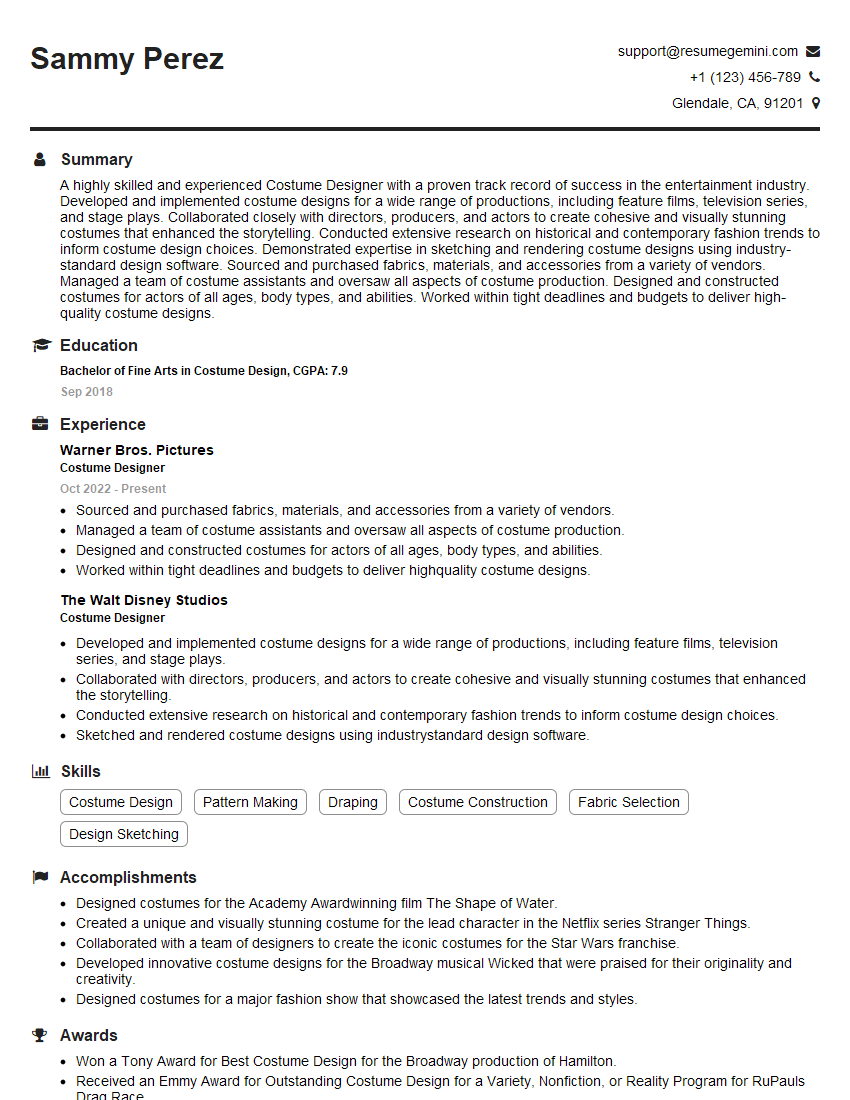
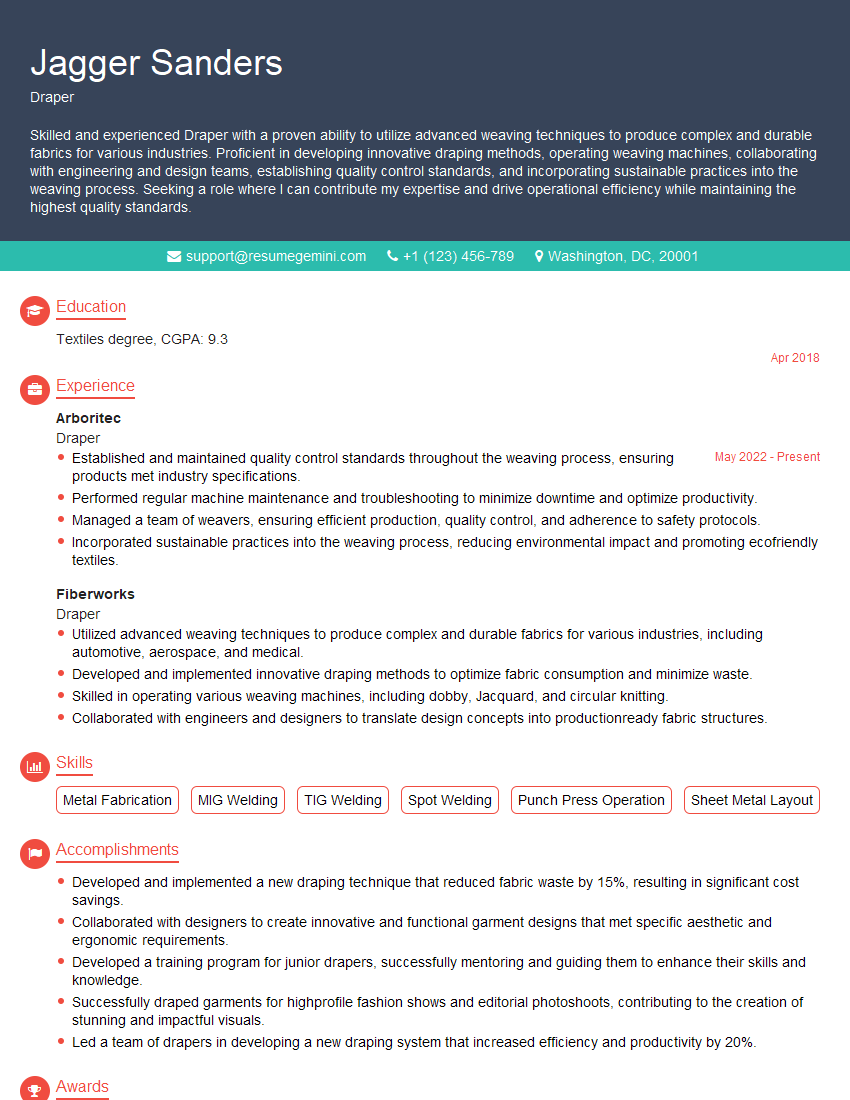
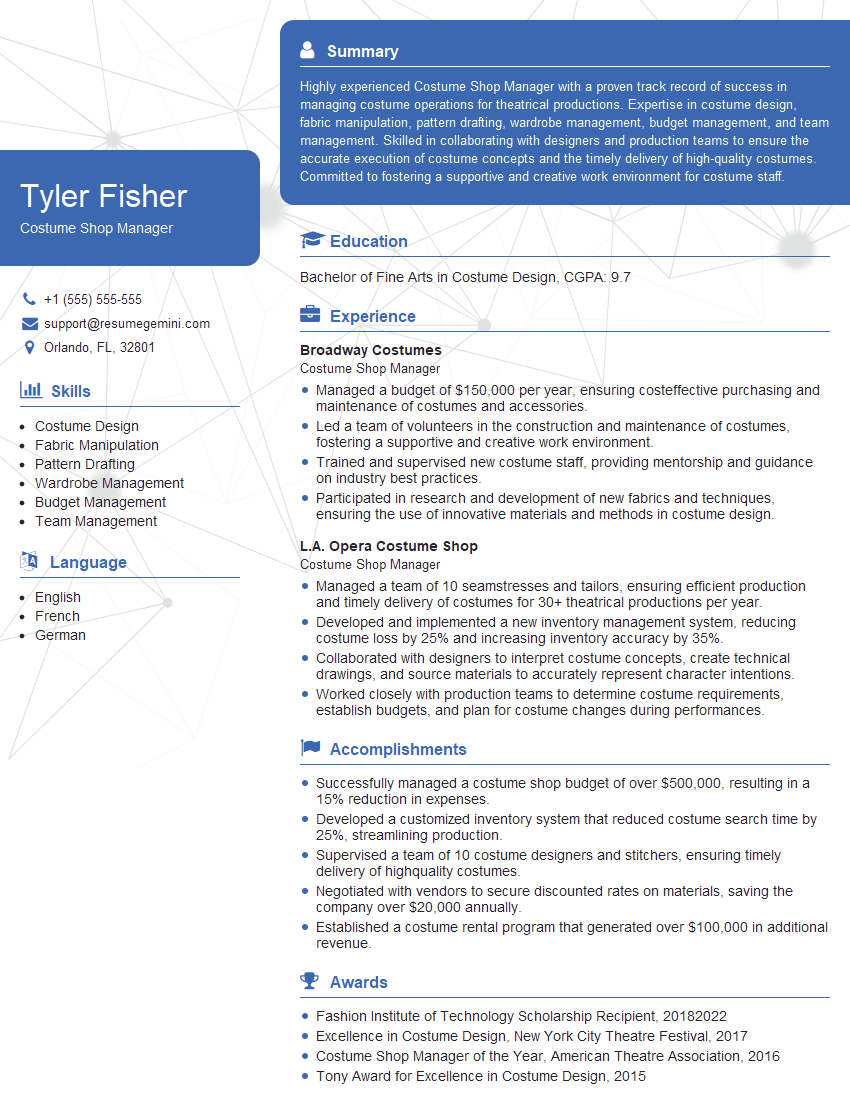
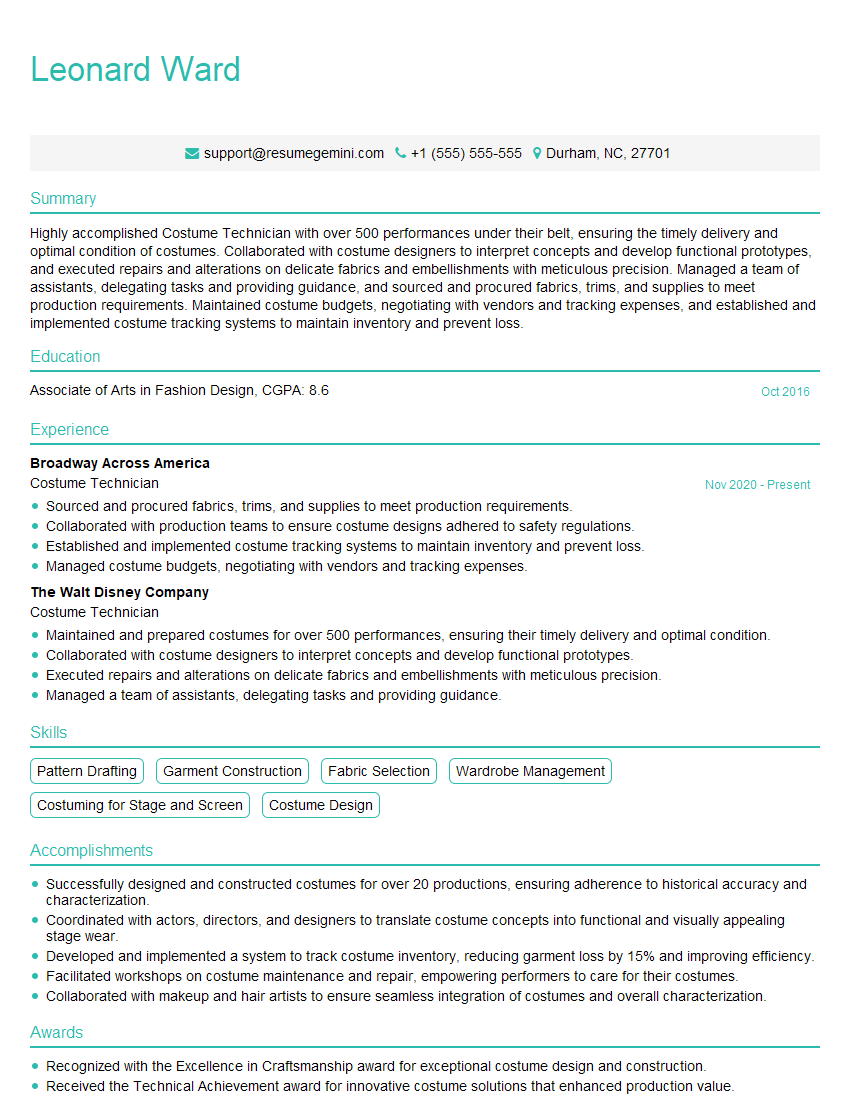
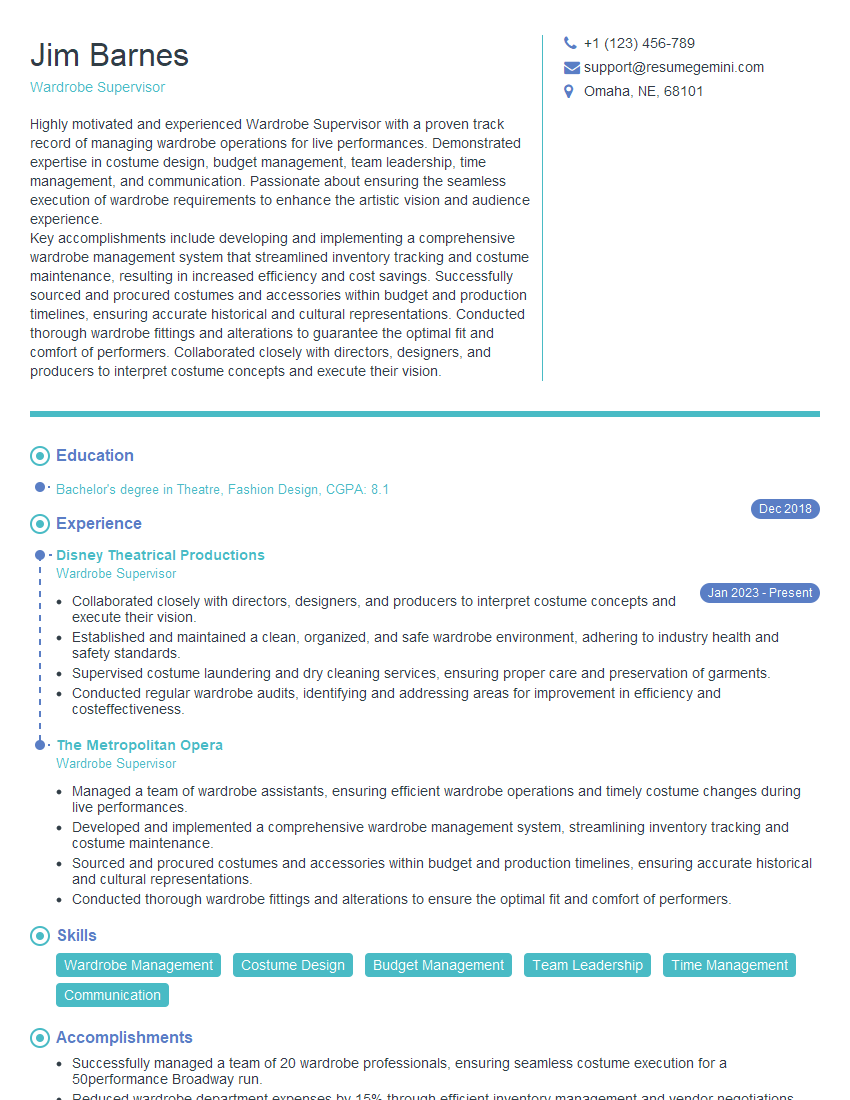
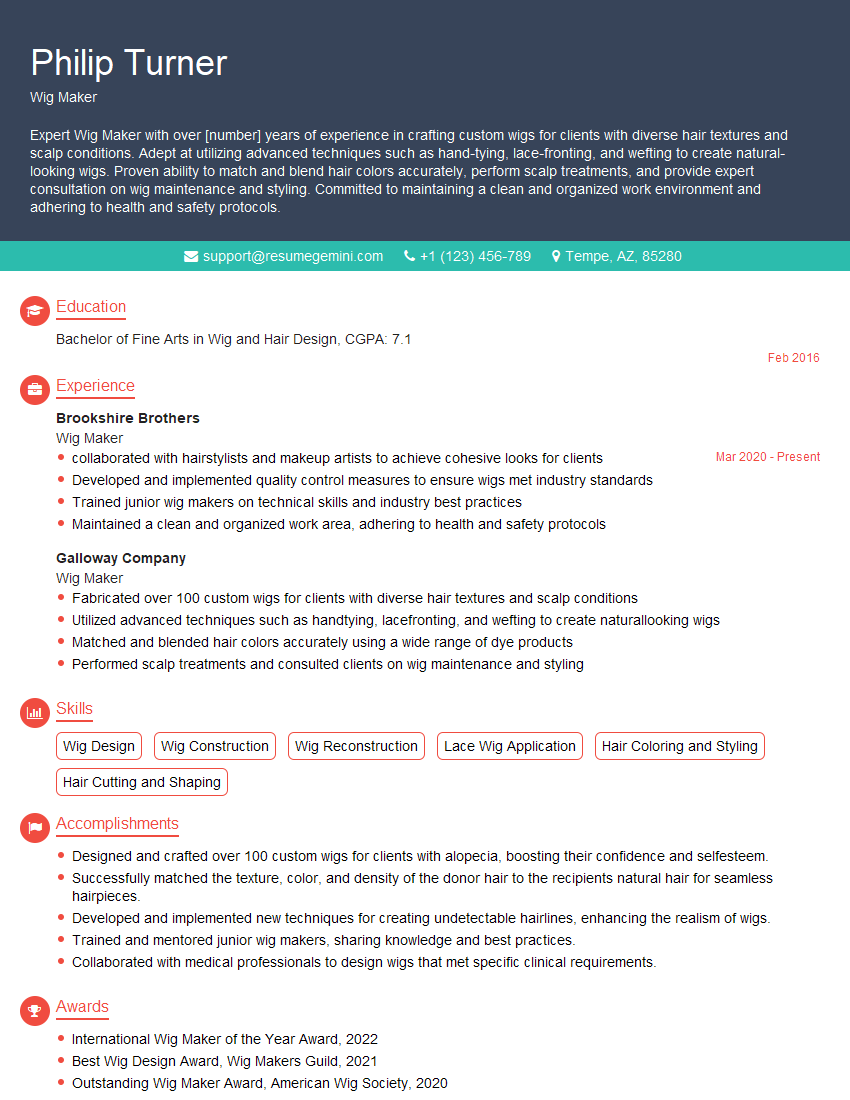
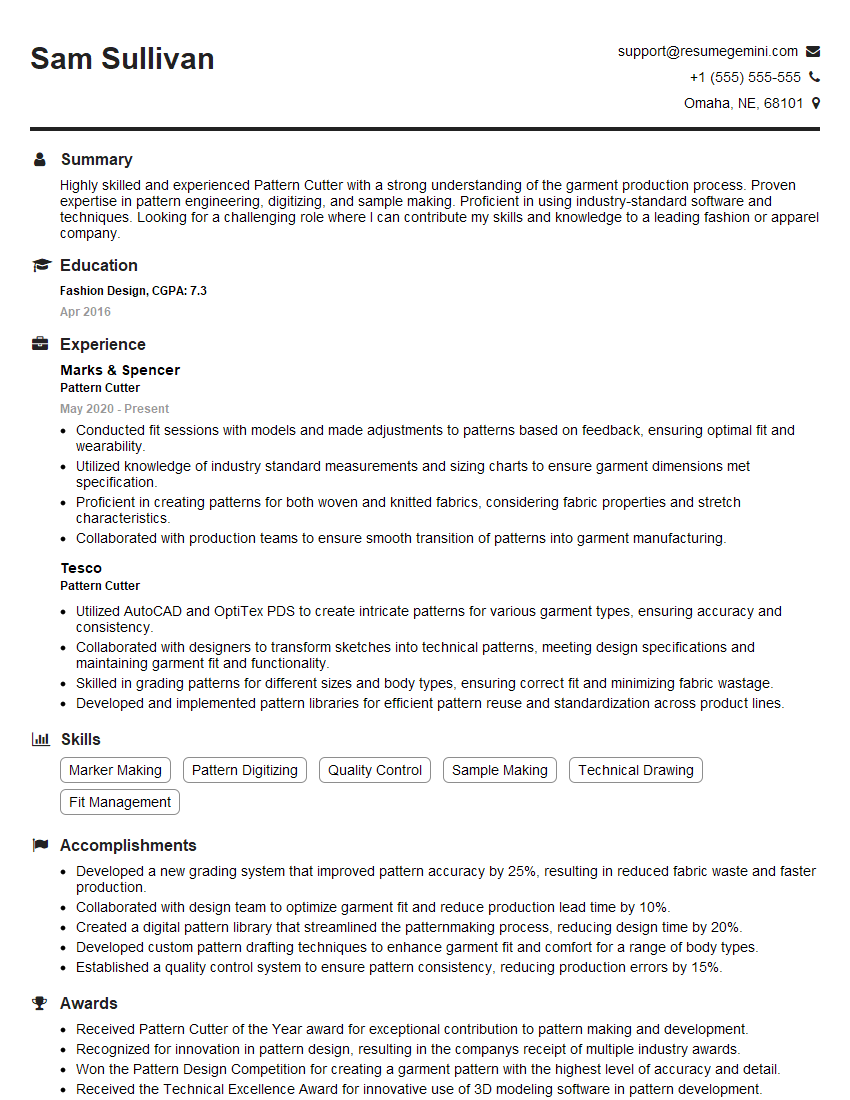
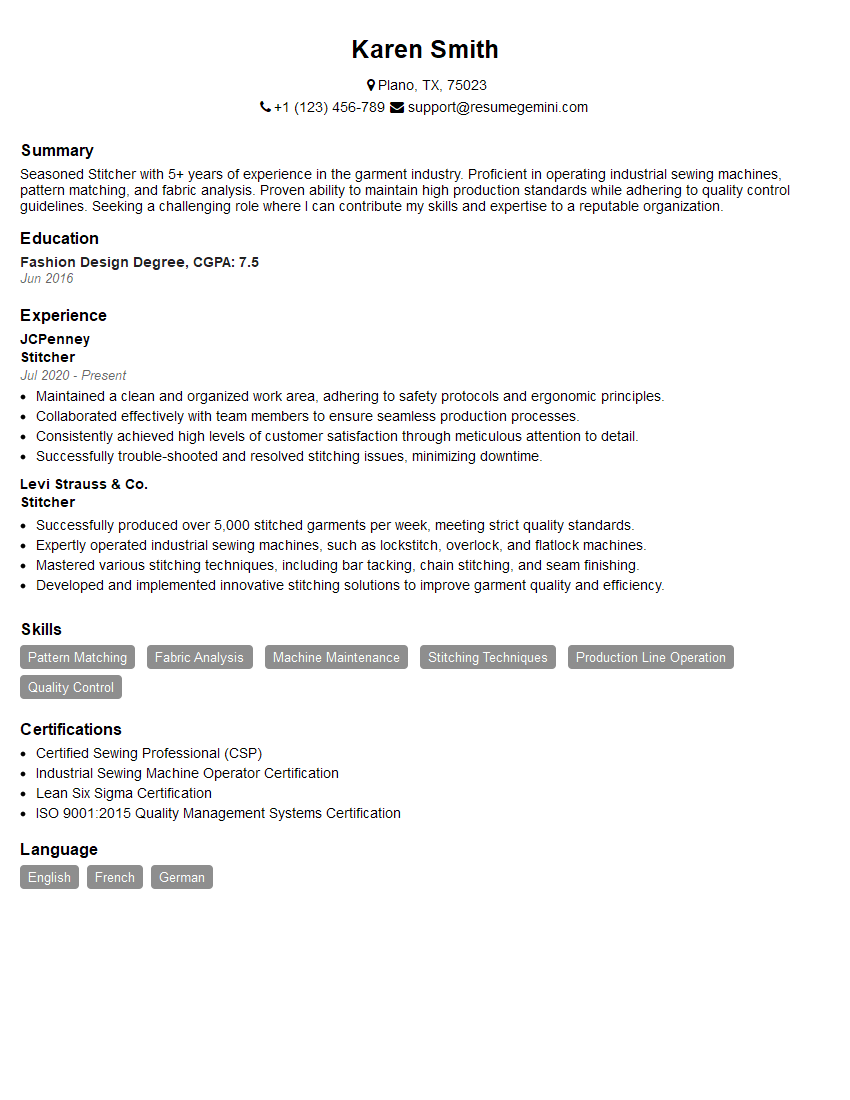
Mastering Costume Design for Theatre opens doors to exciting career opportunities in a dynamic and creative field. Building a strong professional network and showcasing your skills through a well-crafted resume is crucial for success. An ATS-friendly resume significantly increases your chances of getting your application noticed. To help you create a compelling resume that highlights your unique talents and experience, we recommend using ResumeGemini. ResumeGemini provides a user-friendly platform to build professional resumes, and examples of resumes tailored to Costume Design for Theatre are available to guide you. Take the next step in your career journey today!
Explore more articles
Users Rating of Our Blogs
Share Your Experience
We value your feedback! Please rate our content and share your thoughts (optional).
What Readers Say About Our Blog
I Redesigned Spongebob Squarepants and his main characters of my artwork.
https://www.deviantart.com/reimaginesponge/art/Redesigned-Spongebob-characters-1223583608
IT gave me an insight and words to use and be able to think of examples
Hi, I’m Jay, we have a few potential clients that are interested in your services, thought you might be a good fit. I’d love to talk about the details, when do you have time to talk?
Best,
Jay
Founder | CEO