Unlock your full potential by mastering the most common Knowledge of Bending Roll Machine interview questions. This blog offers a deep dive into the critical topics, ensuring you’re not only prepared to answer but to excel. With these insights, you’ll approach your interview with clarity and confidence.
Questions Asked in Knowledge of Bending Roll Machine Interview
Q 1. Explain the different types of bending roll machines.
Bending roll machines are categorized primarily by the number of rolls they utilize and their configuration. The most common types are:
- Three-Roll Bending Machines: These are the most prevalent and versatile. They consist of two lower rolls and one upper roll, allowing for both conical and cylindrical bending. They’re ideal for a wide range of materials and thicknesses.
- Four-Roll Bending Machines: These machines offer more precise control, particularly for thicker materials and complex shapes. They typically have two upper and two lower rolls, enabling more advanced bending techniques. They are often preferred for very large or heavy pieces.
- Pyramid Roll Bending Machines: These are specialized machines used for bending very thick and heavy plates, offering a robust and efficient process for highly demanding applications.
- Rotary Draw Bending Machines: These machines use a rotating roll to draw and bend the material, often used for smaller diameter bends with precision.
The choice depends on the material’s properties (thickness, strength, ductility), the desired bend radius, and the production volume. For example, a small fabrication shop might use a three-roll machine for general purposes, while a large-scale metalworking facility may need multiple machines specialized for different applications.
Q 2. Describe the process of setting up a bending roll machine for a specific job.
Setting up a bending roll machine involves several crucial steps:
- Material Selection and Preparation: Ensure the material is suitable for bending and free from defects. The material’s thickness will dictate the roll gap setting.
- Roll Gap Adjustment: This is the most critical step. The gap between the rolls determines the final radius of the bend. The gap is usually calculated based on the desired bend radius and the material’s thickness. This often requires reference to charts or formulas provided by the machine manufacturer.
- Backstop Positioning: Correctly position the backstops to control the length of the bent material and ensure a consistent bend along the entire length. The backstops prevent the material from slipping or becoming distorted during the bending operation.
- Pilot Run: It is often beneficial to conduct a short pilot run on a scrap piece of material to check and fine-tune the settings before bending the actual workpiece. This allows for adjustments to the roll gap and backstop positions without wasting valuable materials.
- Bending Operation: This involves carefully feeding the material through the rolls, applying the right amount of pressure and speed. Smooth operation with a steady and uniform feed is crucial.
Incorrect setup can lead to material damage, bending inaccuracies, or even machine damage. A thorough understanding of the machine’s controls and the material’s properties is crucial for successful setup.
Q 3. How do you calculate the bending angle on a bending roll machine?
Calculating the bending angle isn’t a direct measurement on the machine itself. Instead, it’s determined by the bend radius and the material’s length. Several methods exist, including:
- Using Bending Angle Formulae: These formulas usually incorporate the bend radius (R), material thickness (t), and the desired bend angle (θ). The specific formula will vary depending on the machine type and material properties. Manufacturer’s specifications are essential.
- Trial and Error with a Sample Piece: This is often preferred for complex bends, where testing and fine-tuning are more efficient than solely relying on calculations.
- CNC Controlled Machines: Modern CNC bending roll machines often automate the angle calculation and adjustments based on programmed parameters, simplifying the process considerably.
For example, if you know the desired bend radius, material thickness and the length of the material to be bent, you can use a specific formula to calculate the approximate bend angle. Always remember to account for springback; the material tends to slightly unwind after the bending process.
Q 4. What safety precautions must be followed when operating a bending roll machine?
Safety is paramount when operating a bending roll machine. Precautions include:
- Proper Training: Only trained and authorized personnel should operate the machine.
- Personal Protective Equipment (PPE): Safety glasses, hearing protection, and sturdy gloves are essential. Long sleeves and loose clothing should be avoided.
- Machine Guarding: Ensure all safety guards are in place and functioning correctly. Never operate the machine with guards removed.
- Lockout/Tagout Procedures: Always follow proper lockout/tagout procedures before performing any maintenance or repairs.
- Clear Workspace: Maintain a clear workspace around the machine to prevent accidents.
- Material Handling: Use appropriate lifting techniques to avoid injuries when handling heavy materials.
- Emergency Stop: Know the location and function of the emergency stop button.
Ignoring these precautions can lead to serious injuries, including crushing injuries or entanglement in the machine’s moving parts. Regular safety checks and maintenance are vital.
Q 5. How do you identify and address common issues such as material slippage or bending inaccuracies?
Addressing material slippage and bending inaccuracies requires systematic troubleshooting:
- Material Slippage: This often results from insufficient friction between the material and the rolls. Solutions include:
- Using a higher coefficient of friction material.
- Cleaning the rolls to remove any grease or contaminants.
- Adjusting the roll pressure.
- Using specialized gripping devices or coatings on the material.
- Bending Inaccuracies: These can stem from various factors including:
- Incorrect Roll Gap: Recalculate and adjust the gap to match the desired bend radius.
- Uneven Material Thickness: Use a material with consistent thickness or compensate for variations.
- Improper Backstop Placement: Ensure the backstops are correctly positioned to control material length and prevent warping.
- Machine Malfunction: Call a qualified technician to diagnose and repair any mechanical issues.
A systematic approach to troubleshooting, starting with the most likely causes and working through them, is crucial. Maintaining meticulous records of settings and results can help identify recurring issues.
Q 6. Explain the difference between three-roll and four-roll bending machines.
The key difference between three-roll and four-roll bending machines lies in their design and capabilities:
- Three-Roll Bending Machines: Use two lower rolls and one upper roll. They’re simpler, generally less expensive, and suitable for a wide range of bending tasks. They’re well-suited for cylindrical and conical bending.
- Four-Roll Bending Machines: Employ two upper and two lower rolls. This configuration allows for more precise control over the bending process, particularly for thicker materials and complex shapes. They offer better control of bending forces and reduce the risk of material deformation. They can also handle tighter radii bends than three-roll machines.
Choosing between the two depends on the specific application. Three-roll machines are a good all-around choice for many jobs, while four-roll machines provide superior control and capabilities for more demanding tasks.
Q 7. Describe the role of backstops in the bending process.
Backstops are crucial components in the bending process. Their primary roles are:
- Preventing Material Slippage: They securely hold the material in place during the bending operation, preventing it from slipping or moving unexpectedly, which can cause inaccurate bends or damage the workpiece.
- Controlling Bend Length: They define the length of the material that is actually being bent, ensuring consistent bend length and preventing accidental over-bending.
- Supporting the Material: They provide support and stability to the material, reducing the risk of material distortion or deformation during the bending process, especially important when bending longer or thinner pieces.
Proper backstop adjustment is vital for accurate bending. Incorrect placement can lead to inconsistent bends, material damage, and even injury.
Q 8. How do you determine the appropriate roll gap for a given material and bend radius?
Determining the correct roll gap is crucial for achieving the desired bend radius and preventing material damage. It’s not a simple calculation, but rather a combination of factors. Think of it like baking a cake – you need the right ingredients and proportions. Here, the ‘ingredients’ are the material’s thickness, the desired bend radius, and the machine’s geometry.
First, we need to understand the bend allowance. This is the additional length of material required to compensate for the material stretching during the bending process. This is calculated using formulas that consider the material thickness (t), the bend radius (R), and the bend angle (α). A common formula is: Bend Allowance = (π/180) * (R + k*t) * α , where ‘k’ is a factor that depends on the material and bending process. Different materials have different ‘k’ values – for example, mild steel might have a ‘k’ value around 0.33, while stainless steel might be higher.
Once the bend allowance is calculated, we can estimate the required roll gap. A simplified approach would be: Roll Gap ≈ Bend Radius + Material Thickness/2. However, this is a rough approximation, and fine-tuning is needed based on experience and material behavior. We often use a trial-and-error approach, making minor adjustments to the gap until the desired bend radius is achieved.
Finally, machine-specific factors like roll diameter and the type of bending (e.g., pyramid or conical) also affect the final roll gap setting. This is where experience comes in. I’ve often found that slight variations depending on the material’s springback needs to be accounted for.
Q 9. Explain the importance of lubrication in maintaining a bending roll machine.
Lubrication is absolutely critical for maintaining a bending roll machine’s lifespan and operational efficiency. Imagine trying to bend metal without lubricant – the friction would generate excessive heat, potentially leading to material damage and costly repairs. The rolls could even seize up.
Lubrication serves several key purposes: It reduces friction between the rolls and the material, minimizing wear and tear. This extends the life of the rolls, and reduces the energy needed for bending. It also helps prevent scoring and scratching of the material, resulting in a better surface finish. And finally, it helps control the temperature during bending, preventing overheating and material damage, especially for materials susceptible to heat-related changes.
The type of lubricant used depends on the material being bent and the machine’s specifications. For instance, we typically use water-based lubricants for ferrous metals to minimize the risk of fire. However, for specialized materials, we often employ specialized oils or greases to ensure compatibility and optimal performance. Regular lubrication, as per the machine’s manufacturer’s guidelines, is essential, and we need to regularly check for leaks or signs of insufficient lubrication.
Q 10. What are the common causes of machine downtime and how are they resolved?
Downtime on a bending roll machine is costly, so understanding and preventing its causes is crucial. Common issues include hydraulic system failures, electrical malfunctions, roll wear, and material-related problems.
- Hydraulic System Failures: Leaks, pump malfunctions, or filter clogging are typical problems. Addressing this needs a comprehensive check of the hydraulic lines, pump, and filter. Sometimes, a complete system flush and rebuild might be required.
- Electrical Malfunctions: Faulty wiring, motor issues, or control panel problems can cause sudden stoppages. Troubleshooting involves systematically checking each component, often needing a qualified electrician.
- Roll Wear: Over time, the bending rolls wear down, affecting the accuracy and quality of the bends. This requires regular inspection and eventual roll replacement or regrinding.
- Material-Related Problems: Defective or unusually hard materials can cause bending issues or even damage to the machine. Proper material selection and inspection are key to preventing this.
Preventive maintenance is paramount in minimizing downtime. Regular inspections, lubrication, and adhering to the manufacturer’s maintenance schedule are effective measures.
Q 11. How do you perform routine maintenance on a bending roll machine?
Routine maintenance on a bending roll machine is a systematic process that ensures longevity and operational efficiency. It’s akin to regular car servicing, preventing small issues from becoming major problems.
My routine includes daily checks of hydraulic fluid levels, oil pressure, and general machine functionality. Weekly checks involve inspecting the rolls for wear, checking lubrication systems, and cleaning the machine. Monthly maintenance includes more thorough inspections of the electrical systems, safety mechanisms, and hydraulic components. Quarterly maintenance usually involves checking all safety devices, and replacing any worn components.
We also perform more extensive preventative maintenance annually, which might include a complete hydraulic system flush and filter replacement, complete electrical system checks, and thorough lubrication of all moving parts. This comprehensive approach has always ensured optimal operation of the machine and minimized costly repairs.
Q 12. How do you measure the accuracy of a bend?
Measuring bend accuracy is critical for ensuring the quality of the finished product. We use a combination of methods to measure this, depending on the required precision.
Simple checks involve using a protractor to measure the bend angle, and calipers to measure the bend radius. For more precise measurements, we use precision measuring tools like digital angle finders and radius gauges. Often, we use a combination of measurements, as some variations are expected depending on the material’s properties and the machine’s adjustments.
Another important aspect of accuracy involves using a template. For high-volume production, we’ll create a template of the target shape for quick visual checks. The template allows us to quickly identify any significant deviations in bend size or angle.
Q 13. Describe your experience with different types of sheet metal materials and their bending characteristics.
My experience encompasses a wide range of sheet metal materials, each with its unique bending characteristics. Understanding these characteristics is essential for setting appropriate machine parameters and preventing material damage.
Mild Steel: A common material, relatively easy to bend, but prone to springback. We need to carefully adjust the roll gap to account for this. Stainless Steel: More challenging to bend due to its higher strength and work hardening tendencies. It requires more careful control of the bending process to avoid cracking. Aluminum: Relatively easy to bend, but susceptible to scratching. Using proper lubricants is critical here. Brass & Copper: These materials are more ductile and less prone to springback compared to steel. However, they can be softer, and care must be taken not to overbend.
I’ve also worked with various alloys and specialized materials, each requiring tailored bending parameters. The experience has taught me the importance of not just understanding the material properties but also understanding how these properties translate into the practicalities of the bending process. I’ve documented many of these differences for future reference.
Q 14. How do you handle material defects or imperfections during the bending process?
Handling material defects during bending requires a combination of careful inspection and process adjustments. The first step is always a thorough material inspection before bending. This includes visually checking for scratches, dents, or other imperfections.
If imperfections are detected, several strategies can be employed. Minor surface defects might not significantly affect the bending process, but larger ones could potentially cause cracking or other damage. We typically adjust the bending process to minimize stress on the affected area. For example, the speed of bending may need to be reduced or the lubrication might need to be adjusted.
In severe cases, the defective material might need to be rejected to prevent damage to the machine or the creation of a substandard product. Using an effective quality control system is key to keeping defective material from going through the bending process, and avoiding costly mistakes.
Q 15. What are the limitations of a bending roll machine?
Bending roll machines, while incredibly versatile, have certain limitations. One key limitation is the minimum bend radius achievable. The material thickness, its yield strength, and the roll diameter all influence the smallest radius you can create without cracking or otherwise damaging the material. Thicker, stronger materials require larger bend radii. Another limitation is the maximum material thickness and width the machine can handle. This is determined by the machine’s specifications and the power of its hydraulic system. Finally, complex shapes requiring multiple bends or intricate curves are often better suited to other bending methods like press brakes, especially if tight tolerances are needed. Think of it like trying to sculpt a detailed miniature with a sledgehammer; it’s simply not the right tool for the job. For instance, a machine designed for thin sheet metal wouldn’t be suitable for heavy-gauge steel plate. The result would be either an incomplete bend or potential machine damage.
Career Expert Tips:
- Ace those interviews! Prepare effectively by reviewing the Top 50 Most Common Interview Questions on ResumeGemini.
- Navigate your job search with confidence! Explore a wide range of Career Tips on ResumeGemini. Learn about common challenges and recommendations to overcome them.
- Craft the perfect resume! Master the Art of Resume Writing with ResumeGemini’s guide. Showcase your unique qualifications and achievements effectively.
- Don’t miss out on holiday savings! Build your dream resume with ResumeGemini’s ATS optimized templates.
Q 16. How do you program a CNC bending roll machine?
Programming a CNC bending roll machine involves using specialized software to input the desired bend parameters. This typically includes specifying the material type and thickness, the desired bend radius, and the overall dimensions of the finished part. The software will then calculate the required roll positions and movements to achieve the bend. The process usually involves creating a 2D or 3D model of the part, and then translating that model into a program for the machine’s control system. This system will interact with the hydraulics and motors to adjust the rolls accordingly. Many modern CNC bending roll machines have user-friendly interfaces with visual aids to guide the programming process. For example, you might input the desired bend angle and radius, and the software will calculate and display the required roll adjustments graphically before execution. Think of it like using a CAD program to design a house, and then using the design to control a robotic arm to build it.
Q 17. Explain your experience with different bending techniques (e.g., bottom bending, side bending).
My experience encompasses both bottom bending and side bending techniques. Bottom bending, where the material is bent around the lower roll, is commonly used for producing cylindrical shapes. It’s straightforward for simple curves. I’ve extensively used this for applications such as creating large diameter pipes and tanks. Side bending, where the material is bent around the side rolls, allows for creating more complex shapes and contours, often involving a combination of bends. This technique requires more precise control and programming. I’ve applied it to create components with various curves and profiles, for example, intricate architectural elements. The choice between these methods hinges on the desired shape and the material’s characteristics. For instance, a simple round duct would use bottom bending, while a curved chassis component might require side bending.
Q 18. How do you ensure the quality and consistency of bends?
Maintaining consistent bend quality requires a multi-pronged approach. First, accurate calibration of the machine is crucial. Regular checks of roll alignment, hydraulic pressure, and motor synchronization are essential to ensure precise movements. Second, consistent material properties are vital. This means using material from a single batch or source where possible, and verifying the material’s thickness and metallurgical properties before processing. Third, careful selection and maintenance of tooling and dies are critical. Worn or mismatched tools lead to inconsistencies. Regular inspection and replacement are paramount. Finally, proper operator training and adherence to established procedures significantly impact the consistency of the final product. Each bend should be monitored for any deviations from the programmed values. The use of measuring instruments and quality control checks throughout the process is also important. In a real-world example, inconsistencies in a car’s chassis components made with a bending roll machine could lead to problems with the car’s handling and structural integrity. A regular quality check is very important.
Q 19. Describe your experience with troubleshooting electrical or hydraulic problems on a bending roll machine.
Troubleshooting electrical and hydraulic issues requires a systematic approach. I begin with a safety check, ensuring power is disconnected and the machine is locked out before commencing any work. For electrical problems, I start by inspecting wiring, connectors, and circuit breakers. I’ve used multimeters to identify short circuits, open circuits, and voltage drops. Hydraulic problems are often related to leaks, pressure issues, or faulty components such as pumps or valves. Leak detection often involves visual inspection and pressure testing. I’ve used pressure gauges and hydraulic schematics to identify the source of the problem. I also have extensive experience in replacing faulty hydraulic components, such as seals and valves, following established safety procedures. One memorable incident involved a hydraulic leak causing a machine shutdown. By systematically checking each connection, I identified a cracked hose and replaced it quickly, minimizing downtime. This reflects not just expertise but understanding and following strict safety procedures.
Q 20. What is your experience with using various tooling and dies on a bending roll machine?
My experience spans a range of tooling and dies, tailored to the material and desired bend. I’m familiar with different roll materials, such as hardened steel rolls for high-strength materials and polyurethane rolls for softer materials. I have worked extensively with tooling designed for various bend radii and material thicknesses. I’m well versed in the proper selection, maintenance, and storage of these tools to ensure optimal performance and prevent damage. For example, using improper tooling could result in material damage and compromise the quality of the final bend. Improper maintenance could result in premature wear and tear of the expensive tooling. A proper selection and storage procedure is crucial for an operator’s efficient work.
Q 21. Explain your experience with different types of safety devices used on bending roll machines.
Safety is paramount in operating bending roll machines. I’m experienced with various safety devices, including emergency stop buttons readily accessible throughout the machine’s operating area. Light curtains and proximity sensors prevent accidental entry into the danger zone during operation. Two-hand controls prevent accidental activation of the machine. Machine guarding is also vital to prevent accidental contact with moving parts. Finally, lock-out/tag-out procedures are strictly adhered to before performing maintenance or repairs. Regular safety inspections and training sessions are crucial for ensuring a safe work environment. In my experience, neglecting safety measures can lead to serious accidents. Strict adherence to all safety guidelines is non-negotiable.
Q 22. How do you manage material handling and storage in relation to a bending roll machine?
Efficient material handling and storage are crucial for smooth bending roll machine operations. Think of it like a well-organized kitchen – if your ingredients (materials) are scattered, cooking (bending) becomes chaotic and slow. My approach involves several key steps:
- Designated Storage Areas: Raw materials are stored in designated areas based on material type (e.g., steel grade, thickness) to avoid mix-ups and ensure easy retrieval. This is often categorized by size and type of coil.
- Clear Labeling and Inventory Management: Each storage location is clearly labeled with the material specifications and quantity. We use a barcode or RFID system for precise inventory tracking, preventing material shortages or excesses. This helps with efficient ordering and prevents production delays.
- Optimized Material Flow: The storage area is strategically located near the bending roll machine to minimize transport time and effort. We use forklifts or cranes for efficient material handling depending on the size and weight of the coils. This reduces potential damage and speeds up the process.
- FIFO (First-In, First-Out) System: We implement a FIFO system to prevent material degradation or obsolescence. Older materials are used first, minimizing storage time and potential waste. This is particularly important for materials susceptible to rust or other forms of degradation.
- Safety Procedures: Safe lifting and handling procedures are strictly followed to prevent injuries and material damage. All personnel involved in material handling are trained in proper lifting techniques and use of handling equipment.
For example, in a previous role, we implemented a new storage system that reduced material handling time by 15%, improving overall production efficiency.
Q 23. How do you calculate material usage and waste in relation to bending operations?
Calculating material usage and waste in bending operations is essential for cost control and efficient production. It’s like baking a cake – you need to know exactly how much flour you need to avoid wasting ingredients or running short. Here’s my approach:
- Accurate Measurements: Precise measurements of the raw material (coil length, width, and thickness) are crucial. This is often done using calibrated measuring tools. Any inconsistencies can lead to significant errors in calculation.
- Software Calculations: We use specialized software to design the bending process, providing exact material requirements for each part. This software accounts for material allowances for bends and waste generated during cutting and finishing.
- Waste Tracking: We meticulously track waste generated from different operations, such as cutting, trimming and any imperfections. This data is analyzed to identify areas for improvement and reduction in waste.
- Material Allowances: We account for allowances for scrap, cutting tolerances, and possible errors. These allowances are based on historical data and machine capabilities.
- Regular Audits: Regular audits and reviews of material usage and waste data ensure accuracy and allow for adjustments in allowances and production processes.
For instance, by analyzing waste data, we identified a recurring issue in our cutting process and implemented a new tool that reduced scrap by 10%.
Q 24. What is your experience with production planning and scheduling in relation to bending operations?
Production planning and scheduling in bending operations require a systematic approach to meet deadlines and optimize resource utilization. It’s like orchestrating a symphony – each instrument (machine and operator) needs to play its part in harmony to create beautiful music (finished products).
- Master Production Schedule (MPS): We develop an MPS outlining the production quantities and due dates for each bending job. This schedule considers factors such as order priorities and machine capacity.
- Capacity Planning: We assess the capacity of the bending roll machine and other related equipment to determine whether the MPS is achievable. This might involve shift planning or additional resources.
- Job Sequencing: Jobs are sequenced to optimize machine utilization and minimize setup times between different bending operations. This often employs techniques like shortest processing time or earliest due date first.
- Material Availability: Ensuring sufficient material is available on time is vital. We integrate the MPS with our inventory management system to trigger timely material replenishment.
- Monitoring and Adjustment: The production schedule is continuously monitored and adjusted based on real-time data and any unexpected delays or issues. This allows flexibility to accommodate changes in demand or unforeseen circumstances.
In one instance, we successfully implemented a Kanban system to streamline our bending operations, leading to a 20% reduction in lead times.
Q 25. Describe your experience with quality control procedures related to bending.
Quality control in bending operations is paramount to ensure the final products meet specifications and customer requirements. Think of it as a chef carefully tasting the food to ensure it’s perfect before serving it to the customer. My approach involves:
- Incoming Material Inspection: Raw materials are inspected for defects such as surface imperfections, dimensional inaccuracies, and material properties before being used in bending operations. This can involve visual inspection and testing.
- In-Process Inspection: Regular inspections during the bending process, using calibrated measuring tools and gauges, ensure the bends meet specified dimensions and tolerances. This might involve checking angles, radii, and overall shape.
- Final Inspection: Once bending is complete, a thorough final inspection is conducted to ensure the finished product conforms to quality standards. This often includes checking for surface defects, dimensional accuracy and overall appearance.
- Statistical Process Control (SPC): We utilize SPC techniques to monitor the bending process and identify potential deviations from standards. This helps to prevent defects and maintain consistent product quality.
- Documentation: All quality control procedures and findings are meticulously documented to track performance and identify areas for improvement. This creates an audit trail of the manufacturing process.
In a past project, we implemented a new inspection method that reduced our defect rate by 15%.
Q 26. How do you ensure compliance with safety regulations related to bending roll machine operation?
Ensuring compliance with safety regulations is non-negotiable in bending roll machine operation. It’s like following traffic rules – they are in place to protect everyone involved. Our safety measures include:
- Machine Guarding: The bending roll machine is equipped with appropriate safety guards to prevent accidental contact with moving parts. These guards are regularly inspected and maintained to ensure they are effective.
- Lockout/Tagout Procedures: Strict lockout/tagout procedures are followed during maintenance or repair work to prevent accidental machine startup. This prevents accidental injury.
- Personal Protective Equipment (PPE): Operators are required to use appropriate PPE, such as safety glasses, gloves, and hearing protection. The use of appropriate PPE is mandated at all times.
- Operator Training: Operators are thoroughly trained on safe operating procedures, emergency shutdown procedures, and potential hazards associated with the bending roll machine. All personnel undergo rigorous safety training.
- Regular Inspections and Maintenance: Regular inspections and preventive maintenance of the bending roll machine and associated equipment are carried out to ensure safe operation. This prevents potential hazards from developing.
- Emergency Procedures: Clear emergency procedures are established and communicated to all personnel, ensuring quick and effective responses in case of accidents or emergencies.
We conduct regular safety audits and training sessions to reinforce safe work practices and ensure compliance with all relevant regulations.
Q 27. Describe a time you had to troubleshoot a complex bending issue.
One time, we were experiencing inconsistent bend angles on a particular part, despite using the same settings. This was like trying to bake a cake with an inconsistent oven temperature. We initially suspected machine malfunction but a thorough investigation revealed the issue was in the material itself. The steel coils were not as uniformly hardened as they should have been, leading to inconsistent bending behavior.
We systematically approached the troubleshooting:
- Initial Assessment: We examined the bent parts, noting the variations in bend angles and recording the machine settings.
- Material Analysis: We tested the material hardness and uniformity across different sections of the coil using a hardness tester. This revealed inconsistencies in the material’s properties.
- Supplier Contact: We contacted the material supplier to discuss the issue and request an analysis of the coil’s properties. They confirmed a batch inconsistency.
- Solution Implementation: We replaced the faulty coil with a new one from a different batch that met the required specifications. This solved the bending problem.
- Preventive Measures: We implemented stricter incoming material inspection protocols to detect similar issues early on.
This experience highlighted the importance of thorough material inspection and the collaborative approach required to solve complex problems.
Q 28. What are your strategies for continuous improvement in bending operations?
Continuous improvement in bending operations is an ongoing process, much like a gardener tending to their plants. We employ several strategies to enhance our processes:
- Data Analysis: We collect data on various aspects of the bending process, such as production times, defect rates, and material usage. This data is analyzed to identify areas for improvement.
- Lean Manufacturing Principles: We apply lean manufacturing principles to eliminate waste and improve efficiency. This might involve streamlining workflows, reducing setup times, and optimizing material flow.
- Kaizen Events: We hold regular Kaizen events involving operators and engineers to brainstorm ideas for improvements. This fosters a culture of continuous improvement.
- Technology Upgrades: We continuously evaluate new technologies and equipment to improve bending precision, efficiency, and quality. This can include advanced bending machines or software.
- Employee Empowerment: We encourage employees to share their ideas and suggestions for improvement, fostering a culture of problem-solving and innovation. This leads to valuable insights and efficient solutions.
- Benchmarking: We benchmark our performance against industry best practices to identify areas where we can improve. This helps in identifying industry standards and best practices.
For instance, by implementing a new automated loading system, we reduced our production time by 10%.
Key Topics to Learn for Knowledge of Bending Roll Machine Interview
- Machine Operation & Safety: Understanding the various controls, safety protocols, and emergency procedures associated with operating a bending roll machine. This includes pre-operation checks and lockout/tagout procedures.
- Material Properties & Selection: Knowledge of different metal types and their properties (e.g., tensile strength, yield strength, ductility) and how these affect the bending process. Understanding material limitations and selecting appropriate materials for specific bending applications.
- Roll Settings & Adjustments: Mastering the process of setting up the machine for different bending radii, thicknesses, and materials. This involves understanding the relationship between roll position, pressure, and the resulting bend.
- Bend Calculations & Formulas: Familiarity with mathematical formulas used to determine the appropriate roll settings for achieving desired bend angles and radii. This includes understanding the impact of material thickness and springback.
- Troubleshooting & Maintenance: Identifying and resolving common issues encountered during operation, such as material defects, machine malfunctions, and inconsistencies in bends. Understanding routine maintenance procedures to ensure optimal machine performance and safety.
- Quality Control & Inspection: Understanding quality control measures to ensure the accuracy and consistency of bends. This includes using appropriate measuring tools and interpreting specifications.
- Advanced Techniques: Explore specialized bending techniques like reverse bending, multi-radius bending, and the use of different bending dies or tooling.
Next Steps
Mastering the operation and maintenance of bending roll machines is crucial for advancing your career in manufacturing and metal fabrication. It demonstrates a valuable skillset highly sought after by employers. To increase your chances of landing your dream role, focus on building a strong, ATS-friendly resume that highlights your expertise. ResumeGemini is a trusted resource to help you create a professional and impactful resume that showcases your skills effectively. Examples of resumes tailored to showcase expertise in Knowledge of Bending Roll Machine are available within ResumeGemini to help guide your resume creation.
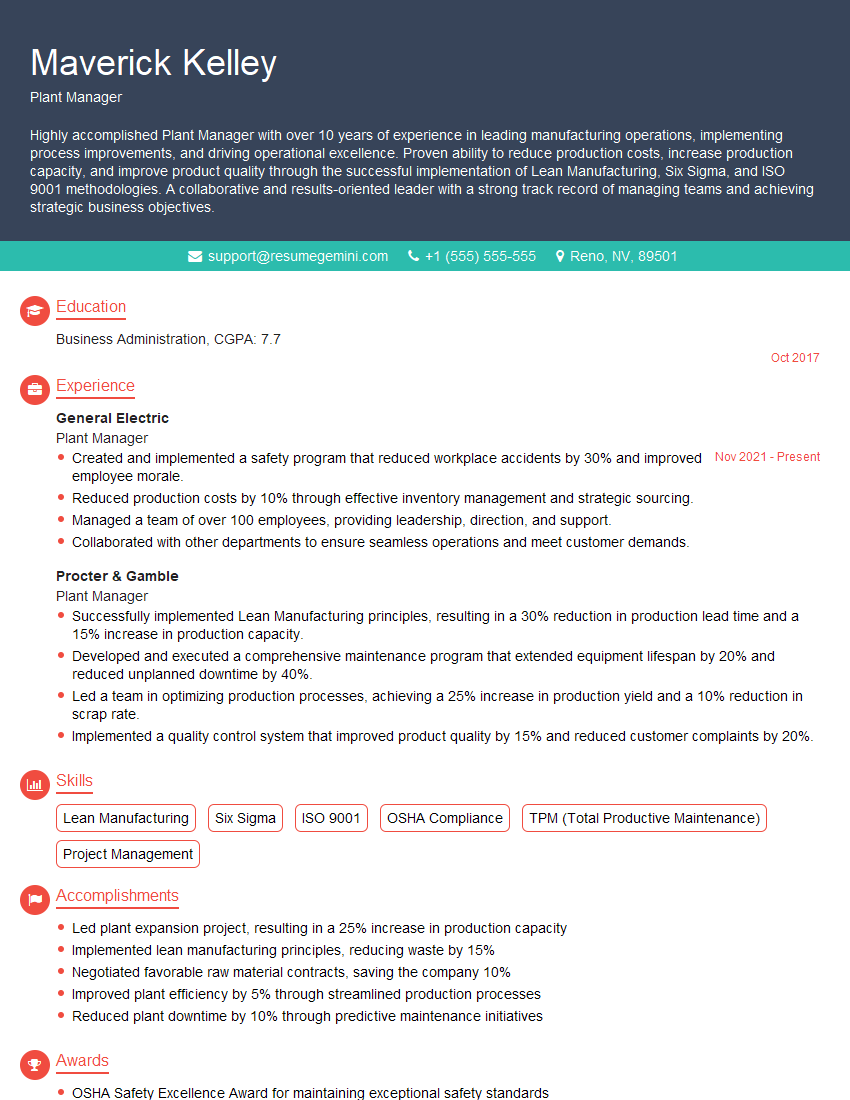
Plant Manager Resume Sample
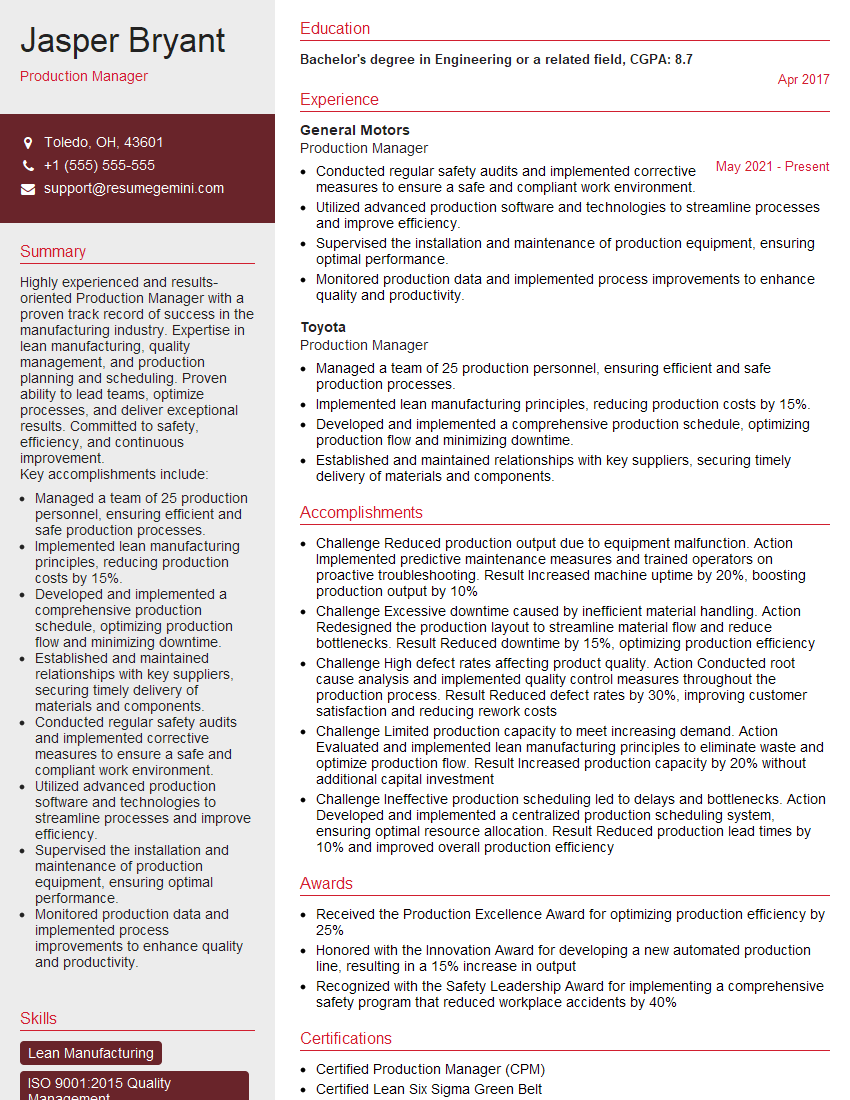
Production Manager Resume Sample

Quality Assurance Manager Resume Sample

Production Supervisor Resume Sample
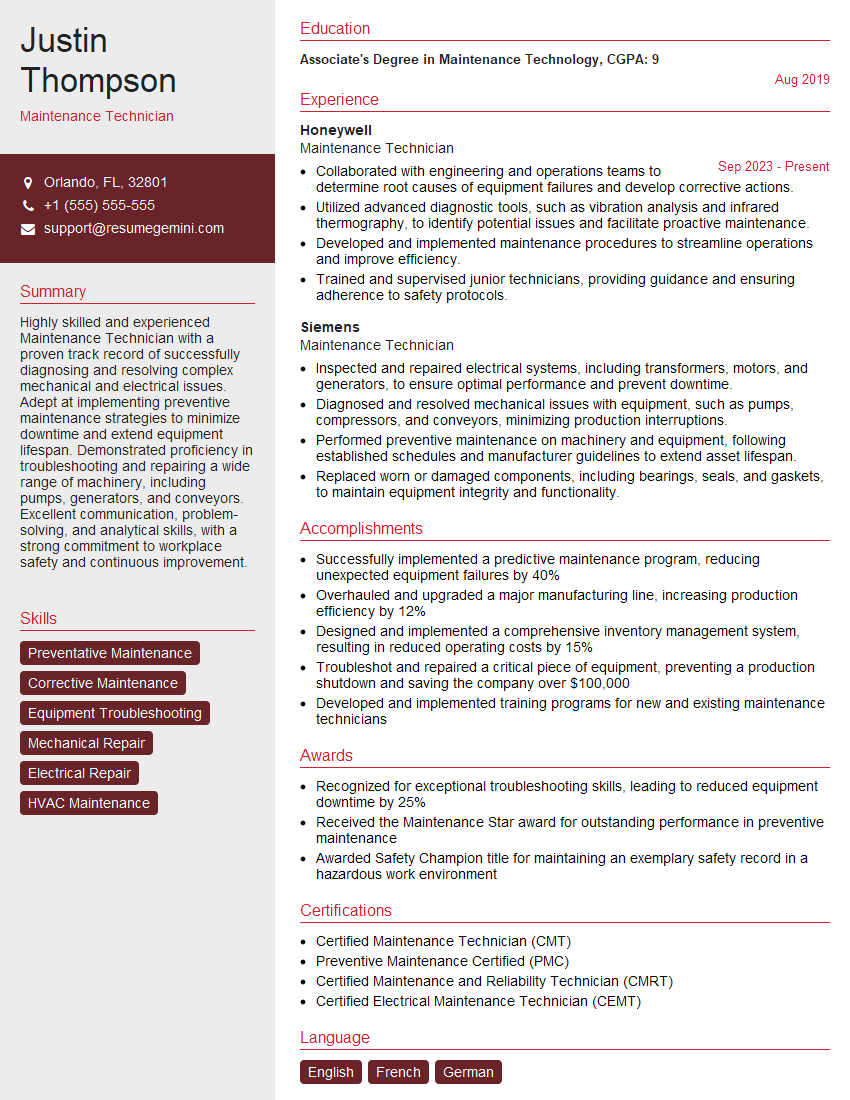
Maintenance Technician Resume Sample
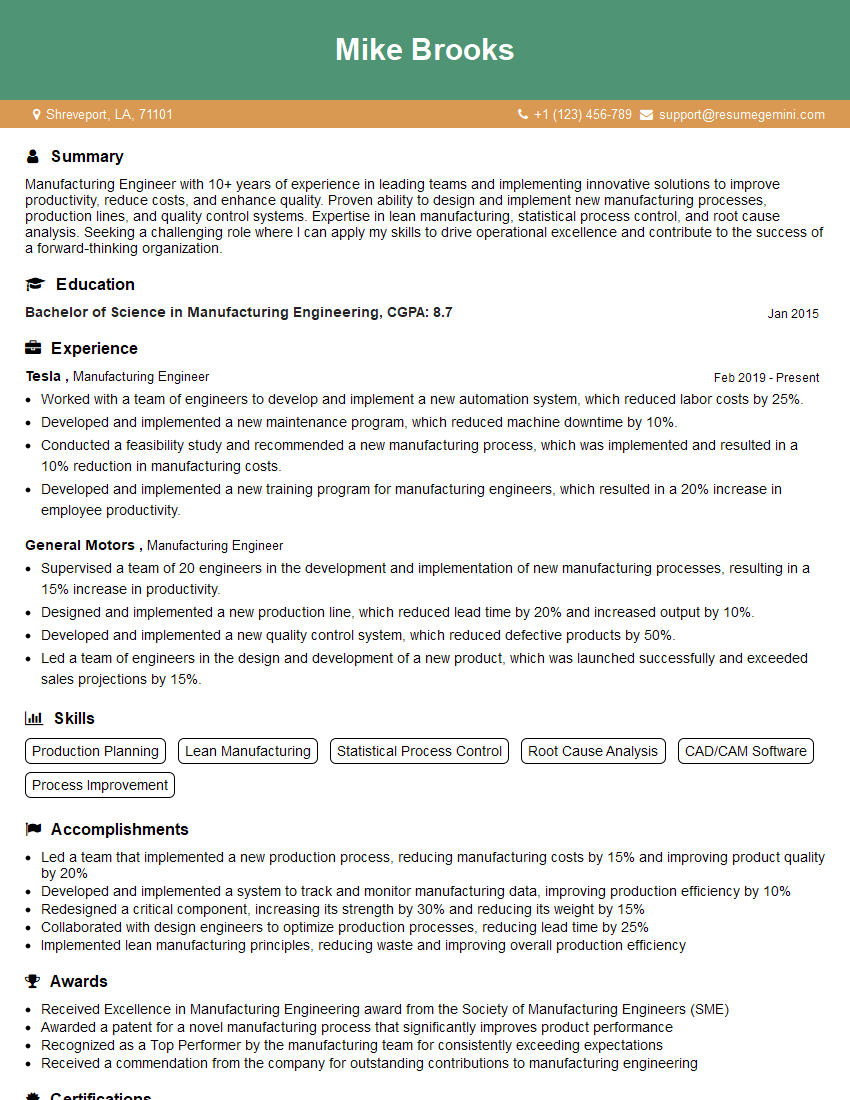
Manufacturing Engineer Resume Sample

Manufacturing Technician Resume Sample
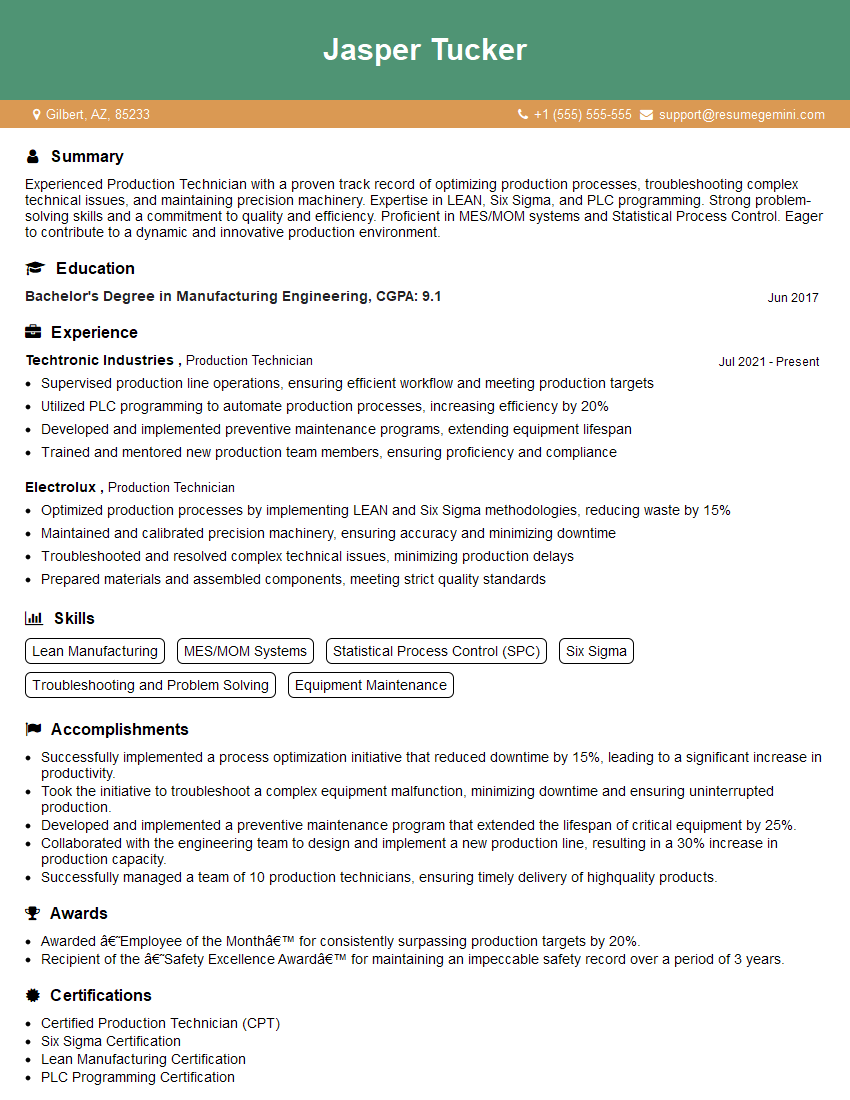
Production Technician Resume Sample
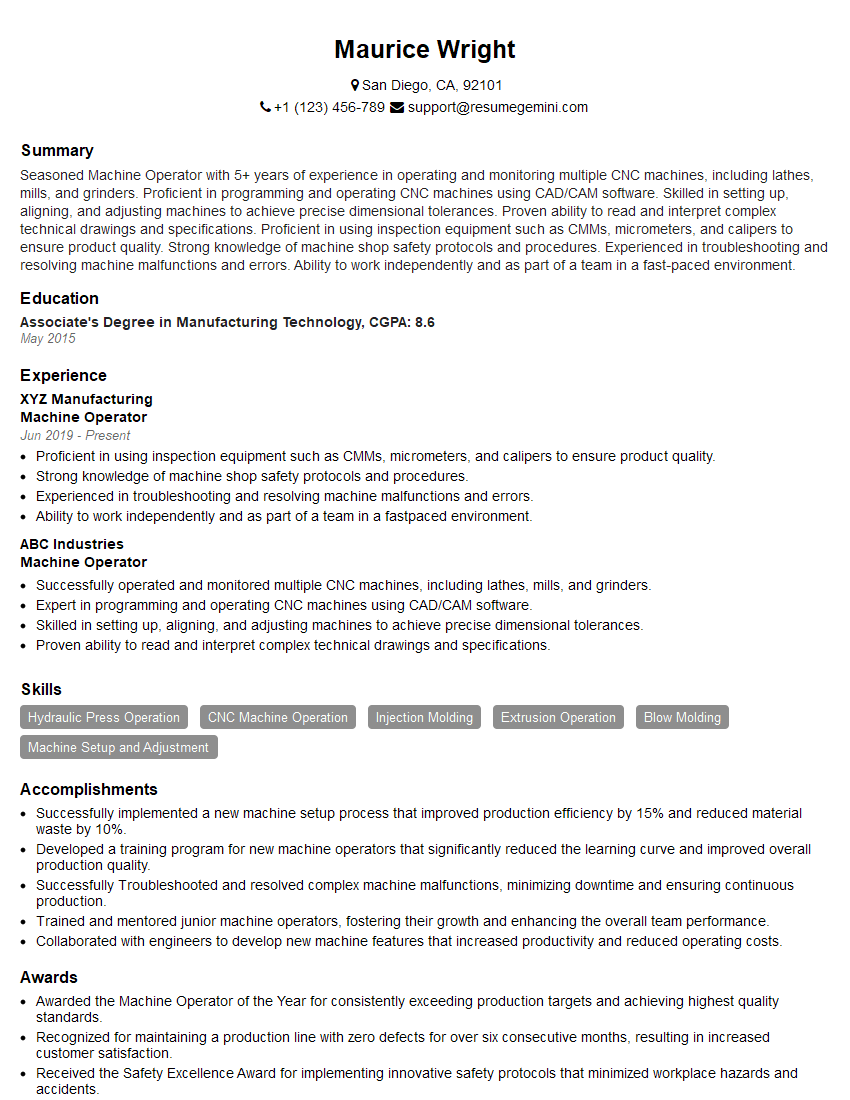
Machine Operator Resume Sample

Sheet Metal Fabricator Resume Sample
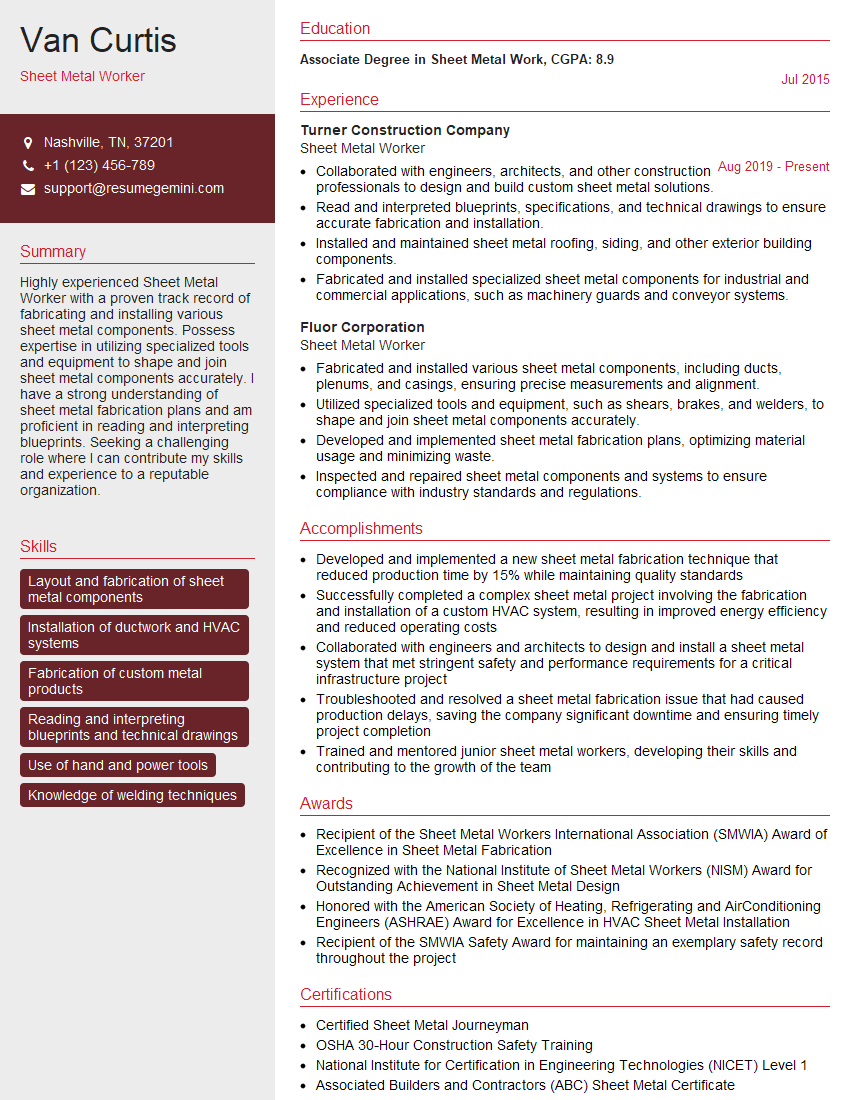
Sheet Metal Worker Resume Sample
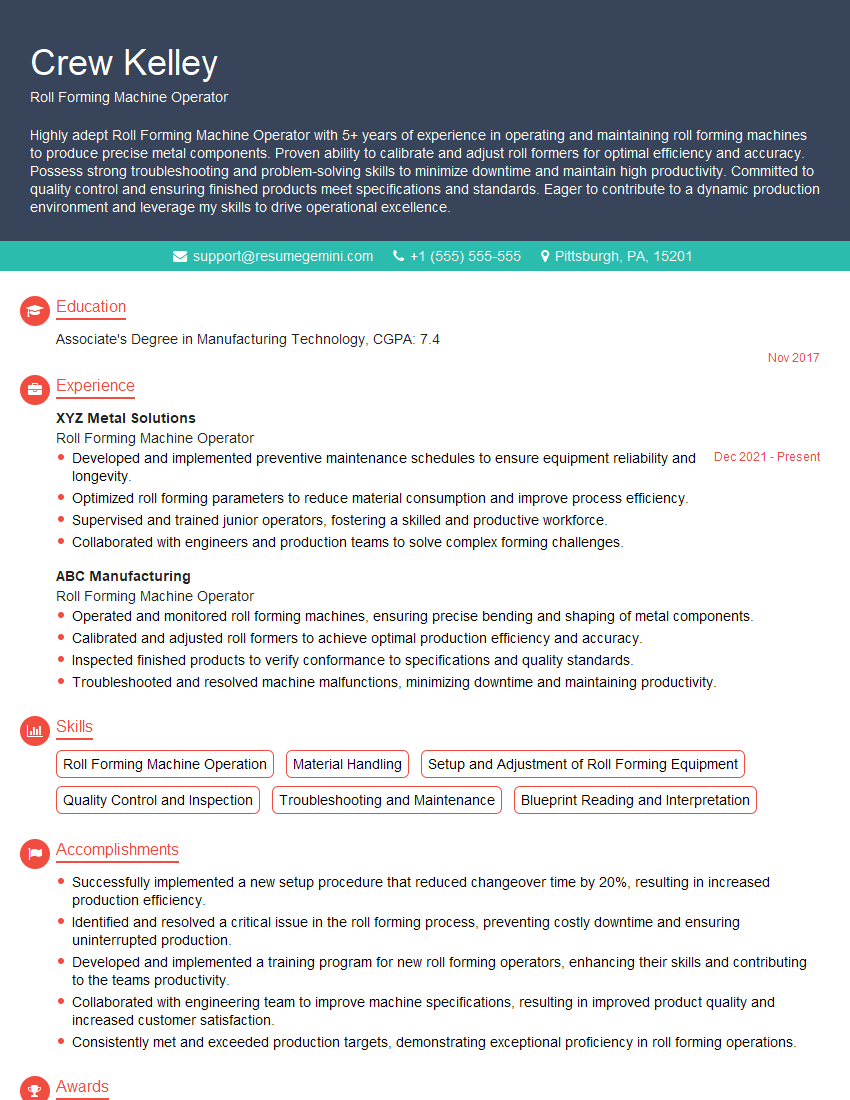
Roll Forming Machine Operator Resume Sample
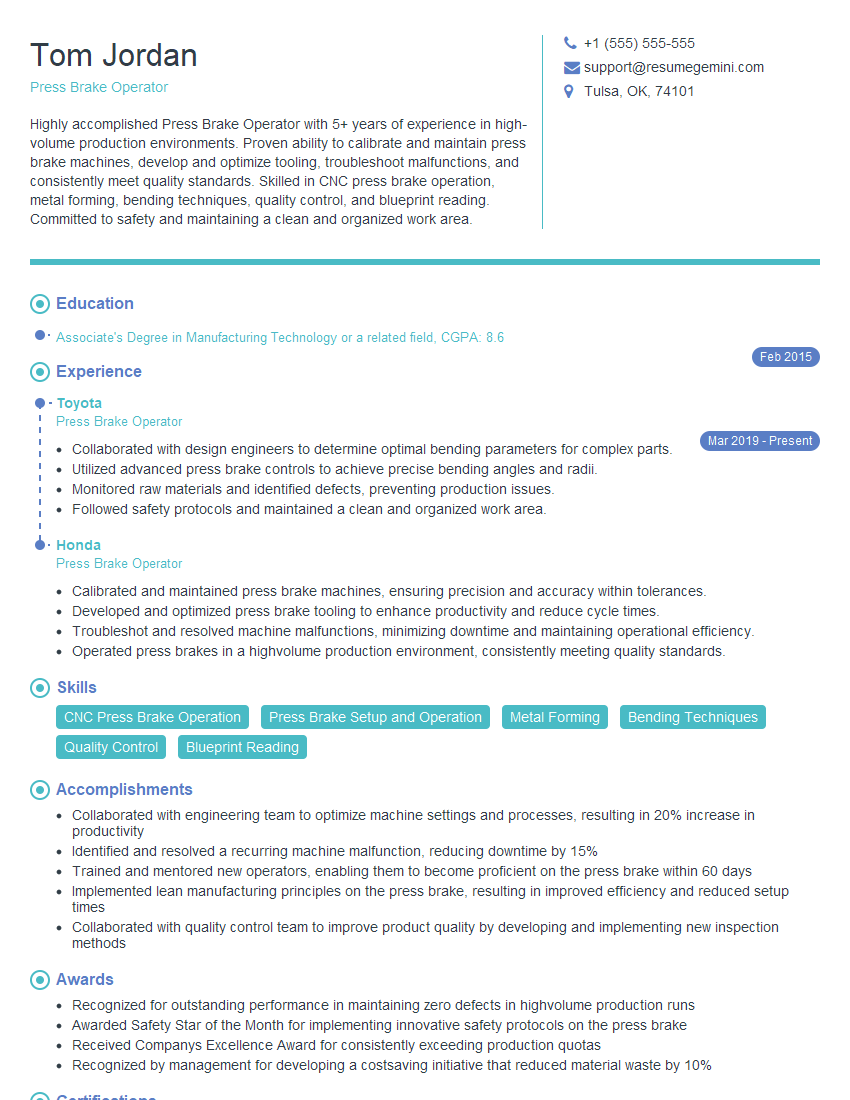
Press Brake Operator Resume Sample

Quality Control Inspector Resume Sample
- Plant Manager
- Production Manager
- Quality Assurance Manager
- Production Supervisor
- Maintenance Technician
- Manufacturing Engineer
- Manufacturing Technician
- Production Technician
- Machine Operator
- Sheet Metal Fabricator
- Sheet Metal Worker
- Roll Forming Machine Operator
- Press Brake Operator
- Quality Control Inspector
Explore more articles
Users Rating of Our Blogs
Share Your Experience
We value your feedback! Please rate our content and share your thoughts (optional).
What Readers Say About Our Blog
I Redesigned Spongebob Squarepants and his main characters of my artwork.
https://www.deviantart.com/reimaginesponge/art/Redesigned-Spongebob-characters-1223583608
IT gave me an insight and words to use and be able to think of examples
Hi, I’m Jay, we have a few potential clients that are interested in your services, thought you might be a good fit. I’d love to talk about the details, when do you have time to talk?
Best,
Jay
Founder | CEO