Cracking a skill-specific interview, like one for Costume Design for Film, requires understanding the nuances of the role. In this blog, we present the questions you’re most likely to encounter, along with insights into how to answer them effectively. Let’s ensure you’re ready to make a strong impression.
Questions Asked in Costume Design for Film Interview
Q 1. Describe your experience with different fabric types and their suitability for various film settings.
Fabric selection is paramount in costume design. Understanding a fabric’s drape, texture, weight, and how it interacts with light is crucial for achieving the desired look and feel. For example, a flowing silk would be perfect for a glamorous gown in a period drama, evoking elegance and sophistication. The shimmering quality would also be beautiful under studio lighting. Conversely, a coarse burlap would be suitable for a peasant character in a historical setting, conveying poverty or rusticity. The choice also depends on the practicality for the actor; a heavy velvet might be stunning but cumbersome for long scenes, while a lighter linen would be more comfortable during hot summer shoots. I’ve used everything from delicate Chantilly lace for a 1920s flapper dress to durable canvas for a rugged adventurer’s costume, tailoring the choice to the character’s personality and the demands of the scene.
- Silk: Luxurious drape, light-reflective, suitable for elegant settings.
- Linen: Breathable, durable, ideal for historical or summer settings.
- Wool: Warm, substantial, perfect for period pieces or colder climates.
- Cotton: Versatile, comfortable, adaptable to various styles and periods.
- Leather: Durable, textural, ideal for rugged or fantasy characters.
The suitability also hinges on the film’s setting. A futuristic film might necessitate the use of modern synthetic fabrics with unique textures and reflective properties, whereas a historical drama might call for natural fibers and traditional techniques to maintain accuracy.
Q 2. Explain your process for interpreting a script and translating it into costume designs.
Interpreting a script involves deep analysis beyond just the dialogue. I delve into character descriptions, motivations, relationships, and the overall tone and style of the film. I look for keywords and visual cues that suggest a particular aesthetic or social standing. For example, if a character is described as ‘powerfully intimidating,’ I might choose strong, bold colors and structured silhouettes. If a character is ‘shy and reserved,’ softer colors and more flowing fabrics might be appropriate.
Once I have a clear understanding of the characters, I begin researching potential looks through historical references, fashion magazines, and even existing film or artwork. I create mood boards collecting images and textures that evoke the desired feelings for each character. Then, I sketch preliminary designs, experimenting with silhouettes, colors, and details. These sketches are further refined through digital illustrations or detailed technical drawings, including fabric specifications and construction details. This process allows me to translate the script’s abstract essence into concrete visual representations.
For instance, in adapting a period piece depicting the Victorian era, I would thoroughly research fashion plates, photographs, and paintings to accurately represent the social hierarchy and style conventions of the time. This involves paying close attention to details like corsetry, skirt volume, and appropriate accessories.
Q 3. How do you manage a costume budget effectively?
Budget management is crucial. It requires a meticulous approach starting from the initial design phase. I start by carefully analyzing the script and creating a comprehensive costume breakdown identifying the number of costumes needed for each character, factoring in costume changes and potential damage. Then, I research fabric and trim costs, keeping in mind the overall budget allocated for costumes. Sourcing affordable fabrics without compromising quality is a skill that comes with experience. It involves knowing where to find cost-effective materials like vintage clothing, rental houses, or fabric wholesalers. I also prioritize making choices that maximize the use of existing garments, adapting and repurposing items to reduce expenditure. I will frequently explore creative alternatives like using inexpensive fabrics and strategically employing trims and accessories to elevate the look.
Regular tracking of expenses and careful cost analysis at every stage is crucial. It involves maintaining a detailed spreadsheet to monitor expenditures, ensuring that we stay on track and avoid overspending. This ensures transparency and allows for proactive adjustments to manage any unexpected cost overruns.
Q 4. Describe your approach to creating a cohesive and historically accurate costume design for a period film.
Creating historically accurate costumes requires extensive research and meticulous attention to detail. My approach begins with thorough historical research, examining primary sources like period paintings, photographs, and written accounts. This is supplemented with scholarly resources on fashion history, social customs, and the technological advancements impacting clothing during the specific era. I delve into the cultural and social nuances to ensure the costumes reflect the characters’ social standing, profession, and personality.
Understanding the historical context allows me to create designs that are not merely visually accurate but also convey the spirit of the time. For example, when designing costumes for a film set in 18th-century France, I need to know the significance of specific colors, fabrics, and embellishments used during that period. This ensures the costume truly enhances the storytelling aspect and avoids anachronisms.
Collaboration with historical consultants and experts is invaluable. They provide critical feedback on accuracy and authenticity. I also carefully select materials and construction techniques that mirror those of the period to ensure that not only the design, but also the fabrication, adheres to historical authenticity. For example, using hand-stitching, period-appropriate dyes and accurately recreating historical patterns and cuts, whenever the budget allows.
Q 5. How do you collaborate effectively with directors, actors, and other members of the costume department?
Effective collaboration is essential. Open communication and a shared vision are crucial. I start by establishing a strong relationship with the director, understanding their artistic vision and how the costumes can contribute to the overall narrative. Regular meetings and discussions help to clarify any uncertainties. With actors, fittings are critical to ensure the costumes fit comfortably and enhance their performance. I actively involve them in the process, considering their comfort, movement, and feedback on the design’s practicality and impact on their portrayal.
Within the costume department, clear delegation and a collaborative spirit are fundamental. I work closely with the assistants, cutters, and makers, ensuring everyone understands their roles and responsibilities. Regular check-ins help track progress, identify potential issues, and maintain a unified vision. This team spirit is essential to overcome challenges and ensure timely delivery within budget and schedule constraints.
Q 6. How do you handle last-minute changes or unexpected challenges on set?
Last-minute changes are an inevitable part of film production. My approach is to remain adaptable and resourceful. I have a contingency plan that includes having extra fabric and trims readily available. This allows for quick adjustments to designs or repairs, especially if damage occurs on set. I maintain strong communication lines with all team members to manage changes effectively. Clear instructions and efficient workflow minimize disruption. If a costume needs alterations, I prioritize quick fixes over completely redesigning a costume. If something unexpected breaks, I have the skills to make temporary repairs on set using available materials. My problem-solving skills are tested daily, demanding creative and efficient solutions to maintain the integrity of the designs while keeping the production running smoothly. In such situations, maintaining calm and focus is as vital as the quick thinking.
Q 7. What software and tools are you proficient in for creating and managing costume designs?
Proficiency in design software is crucial. I’m highly proficient in Adobe Photoshop and Illustrator for creating digital illustrations, mood boards, and technical drawings. These programs allow me to visualize and refine designs, share them with the team, and ensure accuracy in pattern making. I also use dedicated pattern-making software like Optitex or similar tools to create precise patterns and ensure a perfect fit for each garment. For managing the costume inventory and tracking the various stages of production, I use spreadsheet software like Microsoft Excel or Google Sheets. This aids in keeping a thorough record of each costume’s details, costs, and any necessary alterations.
Furthermore, I’m adept at using digital tools for communication and collaboration, utilizing platforms like Dropbox or Google Drive to share design files and updates with the entire team. This ensures everyone is on the same page and makes the collaborative process far smoother and more efficient.
Q 8. Explain your process for sourcing and acquiring costumes and fabrics.
Sourcing costumes and fabrics is a multifaceted process that begins long before filming. It starts with a deep dive into the script and director’s vision to understand the characters, setting, and overall aesthetic. Then, I develop a detailed costume breakdown, outlining each character’s wardrobe needs. This informs my sourcing strategy.
- Vintage Stores and Dealers: For period pieces, I frequently scour vintage shops and specialized dealers, often finding unique and authentic pieces that add character and historical accuracy. For example, finding a specific 1920s flapper dress adds far more authenticity than a reproduction.
- Fabric Retailers and Wholesalers: For custom-made costumes, I collaborate closely with fabric suppliers to source materials that meet the specific requirements of the script and director’s vision. This may involve selecting fabrics with particular textures, weights, and colors, as well as ensuring sustainability and ethical sourcing.
- Costume Houses: Rental houses offer a wide range of costumes, saving time and resources on projects with tight deadlines. However, careful selection and fitting are crucial to ensure the costumes align with the character’s design.
- Online Marketplaces: While online resources can be helpful, I always prioritize quality and authenticity over convenience, exercising caution in verifying the quality of materials and craftsmanship before committing to a purchase.
Acquiring the costumes involves negotiation, budgeting, and careful documentation, ensuring all purchases are tracked and accounted for within the production’s budget and timeline.
Q 9. How do you ensure the costumes maintain their quality and integrity throughout filming?
Maintaining the quality and integrity of costumes throughout filming requires meticulous planning and execution. It’s a constant effort, not just a one-time action.
- Pre-Production Checks: Thorough inspections of all costumes before filming begins help identify potential issues early on. This includes checking for flaws, loose threads, and any damage. This prevents surprises on set.
- Dedicated Costume Assistants: A skilled team is essential. Assistants manage daily costume care, including cleaning, repairs, and alterations. They are crucial for the upkeep of costumes throughout the production.
- Protective Measures: On-set, I implement procedures to protect costumes. This includes using garment bags, costume racks, and avoiding exposure to dirt and harsh weather. Undergarments are also considered to minimize wear on the outer layers.
- Regular Inspections: Daily inspections throughout filming are crucial for early detection of wear and tear. This enables prompt repairs and prevents significant damage.
- Duplicate Costumes (when necessary): For high-action scenes or those demanding multiple takes, duplicating key costumes is vital to avoid wear and tear on originals. It saves time and resources in the long run.
Essentially, proactive planning and dedicated attention to detail throughout the process ensures the costumes look their best on screen, reflecting the director’s vision and maintaining character consistency throughout the film.
Q 10. Describe your experience with tailoring and alterations.
Tailoring and alterations are fundamental to my work. It’s rarely a case of finding a ready-made costume that fits perfectly; adjustments are nearly always necessary to create the desired silhouette and fit for each actor.
My experience encompasses various techniques, including:
- Pattern Making and Draping: I’m proficient in creating patterns from scratch or adapting existing ones to create unique looks and ensure a perfect fit. Draping on a dress form helps visualize the design before cutting into the fabric.
- Hand and Machine Sewing: I possess extensive skills in both hand and machine sewing, enabling precision and attention to detail. Hand sewing often adds final touches of higher quality and precision.
- Altering Existing Garments: Modifying ready-made garments is a common task, involving adjustments to fit, length, sleeves, and other details. I have experience with a variety of fabrics and techniques.
- Working with Special Materials: I’m adept at working with various materials, from delicate silks and laces to heavier brocades and leathers, adapting my techniques to suit each fabric’s unique properties.
For example, on a recent period drama, I had to alter several vintage dresses to fit the actresses while retaining the historical accuracy of the garments. It’s a mix of art and technical skills, making each costume truly unique.
Q 11. How do you manage the fitting and adjustments of costumes for actors?
Managing fittings and adjustments is a collaborative process requiring clear communication and organization. It’s an iterative process involving multiple rounds of adjustments to achieve the desired fit and look.
- Scheduling Fittings: I schedule multiple fittings with each actor, allowing ample time for adjustments. The first fitting is often a ‘muslin’ fitting using inexpensive fabric, allowing for major changes before the final fabric is cut.
- Detailed Notes and Measurements: I take precise measurements and detailed notes during each fitting, documenting all alterations needed. Pictures and video recordings are also used to keep a visual record.
- Collaboration with Actors: Open communication with the actors is key. Their comfort and freedom of movement is paramount, and it is critical they feel comfortable expressing their needs.
- On-Set Adjustments: Even after final fittings, on-set adjustments are frequently necessary. My team and I are always ready to make minor alterations to accommodate unexpected issues.
This structured approach prevents last-minute rushes and ensures the costumes fit perfectly and comfortably, allowing the actors to focus on their performance.
Q 12. Explain your understanding of color theory and its application in costume design.
Color theory is crucial in costume design. Understanding the relationships between colors – their temperature (warm or cool), hue, saturation, and value – helps create mood, establish character relationships, and guide the viewer’s eye.
- Color Psychology: Different colors evoke different emotions. For example, red can symbolize passion or danger, while blue might represent calmness or sadness. I use this knowledge to reinforce the character’s personality and the story’s emotional arc.
- Color Harmony and Contrast: Creating visually appealing costumes often involves using color harmonies (e.g., analogous colors) or contrasts (e.g., complementary colors). Harmony creates a cohesive and balanced look, while contrast draws attention to specific elements.
- Color and Lighting: I consider how lighting will affect the costumes. A costume’s color may appear different under various lighting conditions, so I select colors that will work well in the film’s specific lighting schemes.
- Color and Character Relationships: Using color to visually represent relationships between characters is powerful. For example, dressing two characters in contrasting colors might highlight their conflict, while similar colors can indicate a bond.
In a recent film, I used cool blues and greens for a character representing innocence and calmness, contrasting them with the warmer reds and oranges worn by the antagonist, subtly highlighting the conflict between them.
Q 13. How do you create believable character arcs through costume choices?
Creating believable character arcs through costume choices involves subtle yet impactful changes that reflect the character’s emotional and physical journey throughout the story. It’s not about dramatic transformations necessarily, but rather a series of nuanced alterations.
- Initial Costume Choices: The initial costume establishes the character’s baseline personality and social standing. The fabrics, colors, and style reflect this initial persona.
- Gradual Changes: As the character evolves, subtle changes in their attire mirror their transformation. This could be a shift in color palette, style, or fabric choices. For example, a character shedding their overly formal attire for more casual clothing could signify a release from social constraints.
- Symbolic Changes: Costume can be highly symbolic. The addition of a particular accessory, a change in hairstyle, or a shift from bright colors to more muted tones can suggest deeper character development.
- Consistency and Context: Maintaining a degree of consistency is vital, but the changes should be organic and reflect the character’s evolving circumstances and experiences.
Imagine a character starting out in pristine, structured clothing; as they go through hardship, their clothes become more worn, reflecting their physical and emotional journey. These gradual changes make the arc more believable and resonate deeply with the audience.
Q 14. Describe your experience working with special effects makeup and costumes.
My experience with special effects makeup and costumes involves close collaboration with the special effects team to create believable and seamless illusions.
- Conceptual Design: I work with the special effects team early in the process to conceptualize the look of the character, ensuring the costumes complement and enhance the makeup effects.
- Fabric Selection: Specific fabrics might be required to accommodate prosthetics or special effects. I select durable, easily manipulated, and appropriately textured materials to avoid interfering with the application or longevity of special effects.
- Integration of Effects: The costumes are designed to seamlessly integrate with the special effects makeup, ensuring a cohesive and believable look. For example, a creature costume might need to accommodate moving parts or accommodate the application of prosthetics.
- Durability and Functionality: Special effects costumes often need to withstand rigorous activity. Durability is therefore paramount, along with easy access for makeup application and removal, and mechanisms for any special effects integrated into the costume itself.
In one project involving a creature with extensive prosthetics, we developed a costume with hidden zippers and strategically placed seams to allow for easy access to the prosthetics for maintenance and removal while maintaining the creature’s visual integrity.
Q 15. How do you balance artistic vision with practical considerations (budget, time, availability)?
Balancing artistic vision with practical limitations is the cornerstone of successful costume design. It’s a constant negotiation, much like sculpting with constraints. I approach it through a multi-stage process. First, I develop a detailed mood board and initial designs reflecting the director’s vision and the film’s overall aesthetic. Then, I meticulously budget, considering fabric costs, labor, and potential rentals. This involves researching fabric suppliers, comparing prices, and exploring cost-effective alternatives without compromising quality. For instance, instead of using expensive silk for a period piece, I might opt for a high-quality silk-blend that looks similar at a fraction of the cost. Simultaneously, I assess the production timeline, considering the number of costumes required and the time available for construction and alterations. This might involve prioritizing key costumes that need more intricate detail and using simpler designs for less prominent characters or scenes. Finally, I factor in the availability of resources – specialized artisans, specific fabrics, or even vintage pieces. Often, I have to be flexible and adapt the design, perhaps simplifying embellishments or substituting fabrics, to stay within these limitations. For example, a complex embroidered detail might be replaced with a printed fabric to save time and cost, without losing the overall visual effect.
Career Expert Tips:
- Ace those interviews! Prepare effectively by reviewing the Top 50 Most Common Interview Questions on ResumeGemini.
- Navigate your job search with confidence! Explore a wide range of Career Tips on ResumeGemini. Learn about common challenges and recommendations to overcome them.
- Craft the perfect resume! Master the Art of Resume Writing with ResumeGemini’s guide. Showcase your unique qualifications and achievements effectively.
- Don’t miss out on holiday savings! Build your dream resume with ResumeGemini’s ATS optimized templates.
Q 16. What is your experience with different costume design styles (e.g., historical, contemporary, fantasy)?
My experience encompasses a wide range of costume design styles. I’ve worked on period pieces requiring meticulous research into historical accuracy, from the elaborate gowns of the Regency era to the simple, functional clothing of the American Civil War. For these, I delve into archives, museums, and period paintings to capture the nuances of silhouette, fabric, and construction. In contemporary projects, I focus on creating looks that are both believable and visually engaging, reflecting character traits and the film’s setting. This involves understanding current trends while injecting a unique design sensibility. Fantasy costumes demand a different approach entirely, needing imaginative and often conceptual designs. I work closely with concept artists and the special effects team to ensure that the costumes integrate seamlessly with the world-building, drawing inspiration from mythology, nature, or even futuristic technologies. For example, in a recent fantasy project, I drew inspiration from both Art Nouveau and insect anatomy to create a strikingly original costume for a supernatural character. In each style, however, the core principle is understanding how clothing tells a story, enhances the character portrayal, and serves the narrative.
Q 17. How do you handle discrepancies between your initial designs and the final product?
Discrepancies between initial designs and the final product are almost inevitable in costume design. The process is iterative, and unexpected challenges arise frequently – perhaps a fabric isn’t available, or an actor’s physique changes, or the production schedule shifts. When these occur, I address them proactively and collaboratively. I maintain open communication with the director, the actors, and the costume construction team throughout the process. Often, I use digital mock-ups or draping on stand-ins to visualize alterations and resolve potential issues early on. The key is to find creative solutions that retain the essence of the original design while adapting to the new constraints. I might simplify a detail, substitute a material, or adjust the silhouette to ensure a satisfactory outcome. Sometimes, this may involve compromises, but it’s crucial to maintain the design’s overall integrity and narrative function. For example, on a recent project, a crucial embroidered panel became too costly to produce, so I recreated it using a combination of digital printing and carefully placed embellishments, retaining its visual impact without compromising the budget.
Q 18. Explain your process for creating a mood board for a film project.
Creating a mood board is a crucial initial step. It’s more than just a pretty collage; it’s a visual roadmap for the entire costume design process. I begin by thoroughly reviewing the script, paying close attention to character descriptions, plot points, and setting. Then, I gather visual references – images from magazines, books, artwork, and online resources – that capture the desired aesthetic. This might include photographs of specific garments, historical paintings, fabric swatches, or even nature imagery if it relates to the film’s atmosphere. I organize these images on a digital board, grouping them thematically – for each character, scene, or overall tone. Next, I add notes, color palettes, and fabric samples to build a cohesive visual narrative. The mood board is a collaborative tool; I present it to the director and other key members of the production team to ensure alignment on the visual direction. Any revisions or feedback are then incorporated to refine the design concept, ensuring that the final product reflects the story’s atmosphere and character development fully.
Q 19. How do you ensure consistency in costume design across multiple scenes and characters?
Maintaining consistency across multiple scenes and characters requires meticulous planning and attention to detail. It starts with establishing a clear design language for the film, including color palettes, silhouettes, and stylistic choices. This is reflected in the initial mood board and design documents. I create detailed character breakdowns, outlining the evolution of each character’s wardrobe and how it relates to their arc within the narrative. For instance, a character might start with muted tones and then shift to brighter colors as their personality develops. I create spreadsheets tracking each costume’s appearance in specific scenes, along with detailed descriptions and accompanying sketches. This prevents discrepancies and facilitates efficient construction and wardrobe management. Furthermore, I work closely with the wardrobe department to maintain uniformity in terms of fabric selection, alterations, and overall presentation. Regular fittings and communication with the actors ensure that the costumes are comfortable and properly tailored, preventing inconsistencies on screen.
Q 20. How familiar are you with safety regulations regarding costumes on set?
Safety regulations are paramount on set. I’m thoroughly familiar with all relevant guidelines, including those concerning fire-retardant fabrics, proper footwear, and the avoidance of tripping hazards. All costumes, especially those involving special effects or stunts, are designed and constructed with safety as the top priority. I ensure that all fabrics meet industry safety standards, working with suppliers and manufacturers to confirm compliance. Long trailing fabrics are carefully designed and monitored to prevent accidents. I collaborate with the safety officer and stunt coordinators to address any potential safety issues. For instance, jewelry is assessed for potential harm, loose clothing is fitted properly, and footwear is checked for stability and suitability to the shooting location. Clear communication with the actors on how to handle their costumes safely and a comprehensive safety briefing are crucial elements of my approach.
Q 21. Describe your experience in managing a team of costume assistants.
Managing a team of costume assistants requires strong leadership, organizational skills, and clear communication. I delegate tasks effectively, ensuring that each assistant has specific roles and responsibilities that align with their expertise and experience. I create detailed checklists and organizational systems to keep track of costumes, accessories, and alterations. Regular team meetings ensure communication and address any potential issues. I foster a collaborative and supportive work environment, encouraging feedback and teamwork. I provide constructive criticism and mentorship to help my assistants develop their skills and grow professionally. Moreover, I treat my team with respect and appreciation, recognising their hard work and contributions to the overall success of the project. For example, I’ve implemented a system where assistants are actively involved in the design process, giving them opportunities to contribute creative ideas and learn new skills, thereby boosting morale and productivity.
Q 22. How do you approach the design of costumes for diverse body types?
Designing costumes for diverse body types is paramount to creating inclusive and believable characters. It’s not simply about adjusting sizes; it’s about understanding how garments interact with different body shapes and creating silhouettes that flatter and enhance, not detract.
My approach starts with inclusive casting and body positivity. I prioritize fittings with each actor, using those sessions not only to take accurate measurements but also to discuss their comfort levels and preferences. This builds trust and ensures collaboration. I avoid using ‘standard’ sizes as a starting point, instead using customized patterns and draping techniques to create garments that precisely fit each individual. For example, if an actor has a fuller bust, I’d adjust the bodice pattern to avoid gaping or pulling, potentially incorporating darts or princess seams for a smoother fit. For those with narrower frames, I’d focus on adding detail and texture to prevent garments from appearing shapeless. The goal is always to create costumes that are both visually appealing and comfortable, allowing actors to move freely and embody their roles confidently.
Moreover, I research historical and cultural contexts for clothing appropriate to each body type within those contexts. The historical context of a specific garment is paramount to understanding how it was designed to be worn.
Q 23. How do you maintain detailed records of costumes and their location throughout production?
Maintaining meticulous records is essential for efficient costume management, especially on large-scale productions. My system combines digital and physical components for comprehensive tracking.
- Digital Database: I use a dedicated software, often a customized spreadsheet or a database management system, to record every costume piece. This includes detailed descriptions (fabric, color, embellishments), images, assigned actor, and unique identification numbers. I also document alterations, cleaning, and repairs.
- Physical Inventory: Each costume is tagged with a unique ID corresponding to the database entry. Detailed sketches, pattern pieces, and fabric swatches are carefully archived. I maintain a physical inventory log of costume location – whether in storage, on set, or at the costume shop, constantly updating it.
- Costume Tracking Software: Some productions use specialized software to manage wardrobe and costumes. This can integrate digital and physical aspects of the inventory and tracking.
Regular audits ensure accuracy, preventing loss or damage and ensuring efficient retrieval during filming. This systematic approach eliminates confusion and saves significant time and resources throughout the production.
Q 24. Describe a challenging costume design problem you overcame and how you solved it.
One challenging project involved creating a historically accurate 18th-century gown for a period drama, while adhering to a very tight budget. The design required intricate embroidery and embellishments, typically very expensive to produce.
To overcome this, I collaborated with local artisans and textile schools. Instead of outsourcing the embroidery entirely, I taught a group of skilled students the specific techniques required, providing them with the materials and guidance. This not only reduced costs significantly but also fostered a collaborative relationship, ensuring the resulting embroidery reflected authenticity and creativity. The students were even able to contribute to other aspects of the costume design, assisting with beading and lacework.
The final outcome was stunning – a historically accurate gown with intricate, handmade details, created within budget and showcasing a unique blend of traditional craftsmanship and modern collaboration. This project underscored the importance of resourcefulness, community engagement, and creative problem-solving in costume design.
Q 25. What are your strategies for dealing with difficult actors regarding costume choices?
Managing actors’ opinions on costumes requires diplomacy and clear communication. It’s crucial to remember that costume is a powerful tool that affects their performance.
My strategy involves proactive collaboration. Before fittings, I provide actors with mood boards and design sketches, discussing the character’s backstory and the costume’s role in portraying it. I actively listen to their concerns and preferences, addressing them directly and explaining the rationale behind design choices. If an actor has a genuine issue – like discomfort or practicality – I’m flexible and willing to make reasonable adjustments, whilst being clear about any limitations imposed by the period, the budget or the overall vision.
Sometimes, compromise is key. I might offer alternatives to address their concerns while staying true to the design’s essence. Open communication and a collaborative approach usually lead to positive outcomes, where actors feel heard and are confident in their costumes. If issues remain unresolved, I always liaise with the director to ensure a creative and functional solution.
Q 26. How do you adapt your design process for different filming locations and weather conditions?
Adapting costume design to filming locations and weather conditions is crucial for both practicality and aesthetics.
Before designing, I thoroughly research the locations and weather forecasts. This informs my choice of fabrics. For instance, filming in a hot desert climate necessitates lightweight, breathable fabrics like linen or cotton, possibly with light layers. Conversely, filming in a snowy mountain setting requires warm, durable fabrics like wool, fur, or specialized performance materials designed to wick away moisture and provide insulation. I will also consider practicality of construction for extreme weather, using materials that are resistant to the elements, such as waterproof finishes.
I also consider the practical aspects of how the costumes will be managed on location. Will there be adequate storage for them? Will they need special cleaning or care after filming in harsh weather conditions? A comprehensive plan addressing these aspects ensures a smooth and efficient production.
Q 27. Describe your experience with digital costume design workflows (e.g., using 3D modeling software).
Digital costume design workflows have revolutionized the industry. I frequently use 3D modeling software like Marvelous Designer, CLO3D, and Blender.
These tools allow me to create virtual prototypes of garments, experiment with different fabrics and draping, and visualize costumes on 3D models of the actors. This speeds up the design process, reduces material waste during sampling, and allows for better collaboration with the director and other members of the team. The 3D models enable clients to view and approve designs more easily, saving time and clarifying the intended look.
I use this technology to create detailed renders and presentations for clients. For example, I can create a virtual fitting of a gown in a specific color and with subtle modifications, eliminating the need for multiple expensive physical samples. Furthermore, I’ll often use ZBrush for sculpting elements of costumes that are particularly ornate or detailed, for example, creating a detailed texture for a specific embroidery.
Q 28. How do you ensure the ethical and respectful sourcing and production of costumes?
Ethical and respectful sourcing and production of costumes is a core principle of my work.
- Sustainable Fabrics: I prioritize using eco-friendly and sustainable fabrics like organic cotton, recycled materials, and innovative textiles with minimal environmental impact. I research and select suppliers that adhere to fair labor practices.
- Fair Labor Practices: I ensure that all manufacturers and suppliers I work with comply with ethical labor standards, paying fair wages and maintaining safe working conditions. I conduct due diligence and actively seek out certifications like Fair Trade or GOTS (Global Organic Textile Standard).
- Waste Reduction: I minimize fabric waste through careful pattern making and efficient cutting techniques. Leftover materials are often donated to textile recycling programs or reused in other projects.
- Cultural Sensitivity: When designing costumes that represent specific cultures, I conduct thorough research to ensure accurate and respectful representation, avoiding appropriation and stereotypes. Consultation with cultural experts or representatives is essential.
My commitment to ethical sourcing contributes to a more sustainable and socially responsible film industry, reflecting a commitment not only to aesthetics but also to human rights and environmental consciousness.
Key Topics to Learn for Your Costume Design for Film Interview
- Character Development Through Costume: Understanding how clothing choices reflect character personality, backstory, and social standing. Practical application: Analyzing existing films and identifying how costumes contribute to character arcs.
- Period Research and Accuracy: Mastering the research process to ensure historical accuracy and authenticity in period pieces. Practical application: Demonstrating your research skills and ability to source appropriate fabrics and techniques.
- Collaboration and Communication: Effectively collaborating with directors, producers, and other department heads. Practical application: Highlighting your ability to articulate your vision and negotiate compromises while maintaining artistic integrity.
- Budgeting and Resource Management: Understanding the practicalities of costume design within budgetary constraints. Practical application: Demonstrating your ability to source cost-effective materials and manage a team efficiently.
- Fabric Selection and Construction: Deep understanding of various fabrics, their properties, and appropriate construction techniques for different characters and scenes. Practical application: Showcasing your technical skills in draping, tailoring, and alterations.
- Styling and Visual Storytelling: Using costume to enhance the visual narrative and create a cohesive aesthetic for the film. Practical application: Demonstrating your ability to create mood boards and visual presentations to communicate your ideas effectively.
- Problem-Solving and Adaptability: Handling unexpected challenges on set, such as quick costume changes or damage repairs. Practical application: Providing examples of how you’ve overcome obstacles in past projects.
- Digital Tools and Techniques: Familiarity with relevant software for design and communication (e.g., Photoshop, Illustrator). Practical application: Showcasing your proficiency in relevant digital tools.
Next Steps
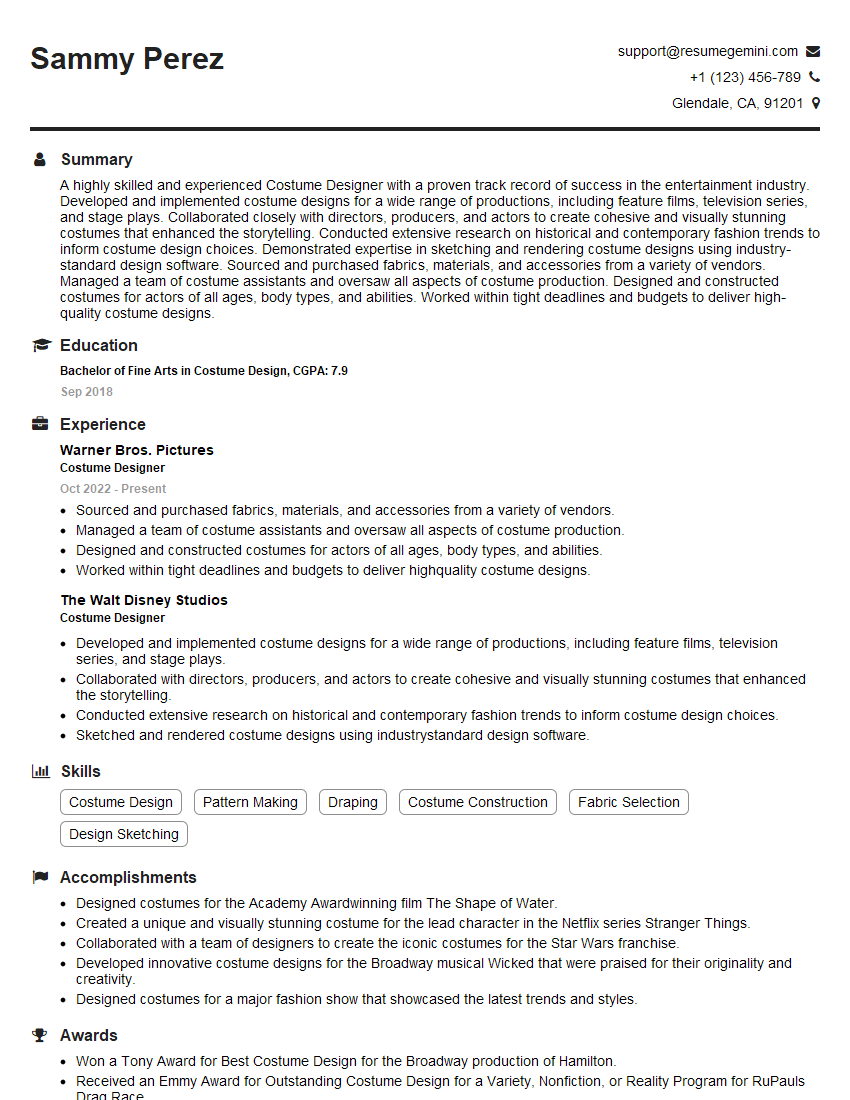
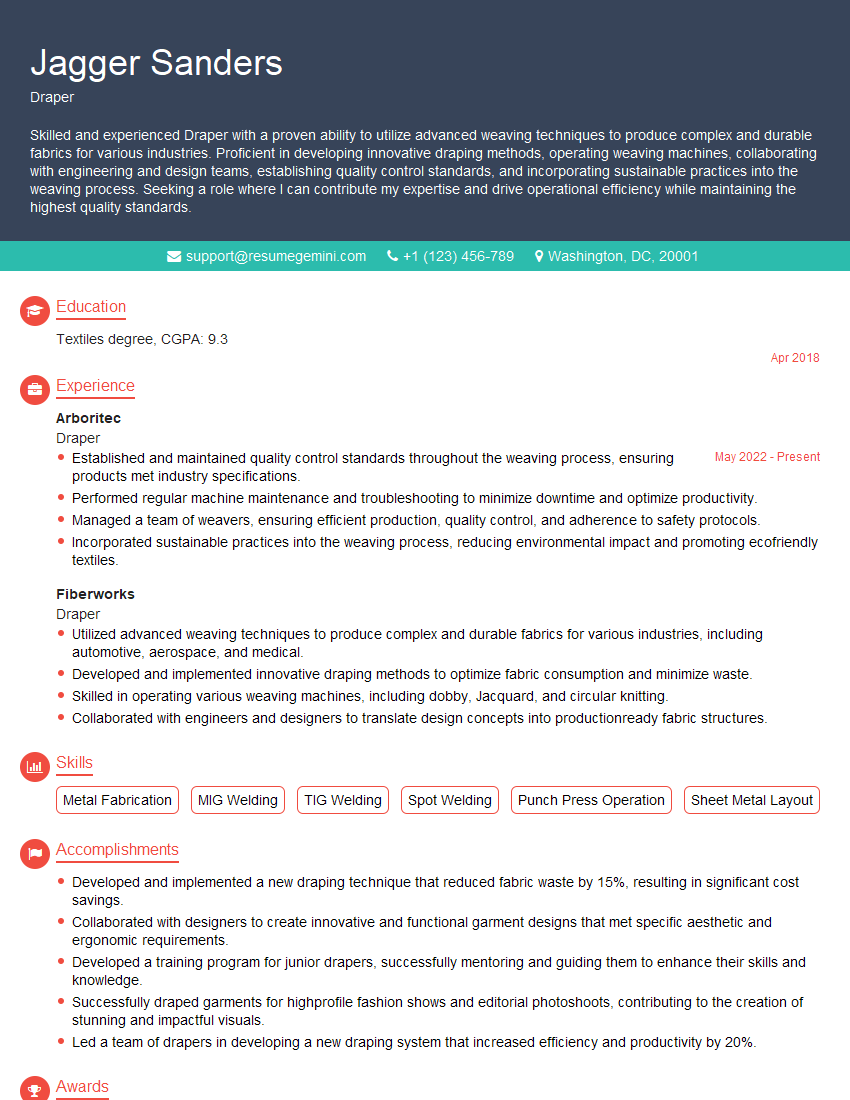
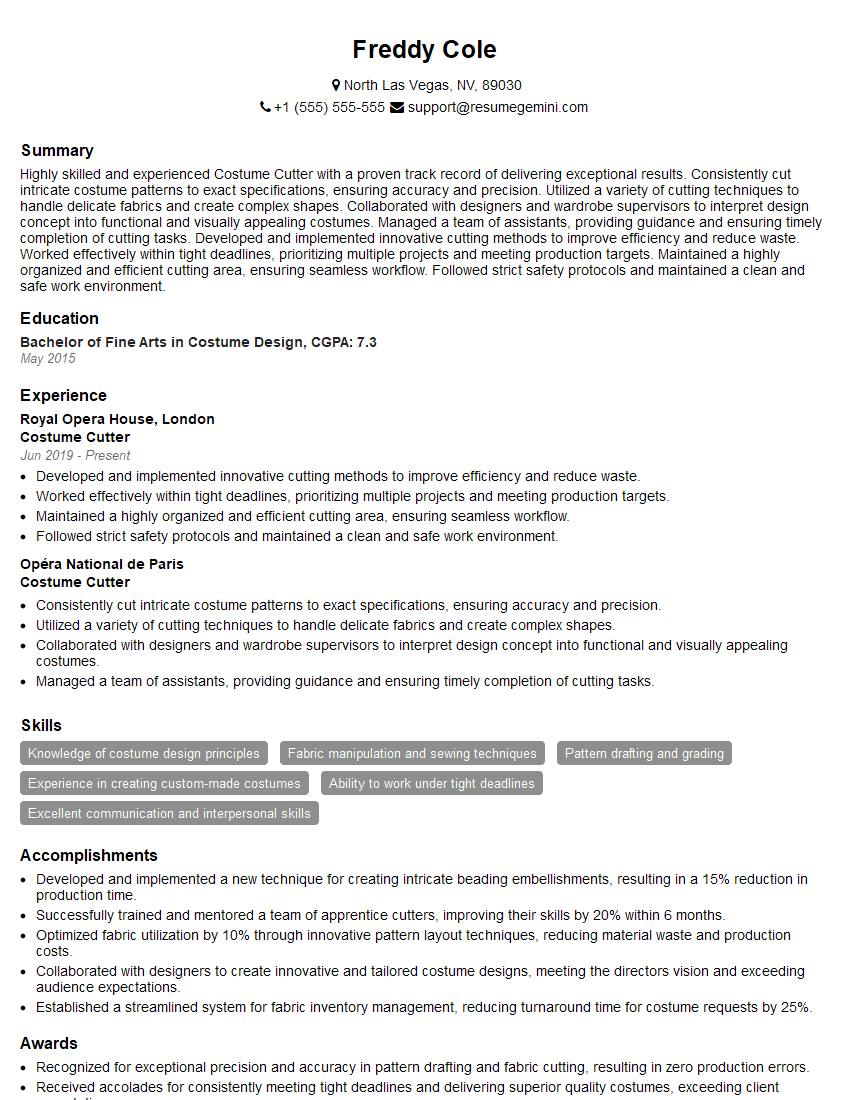
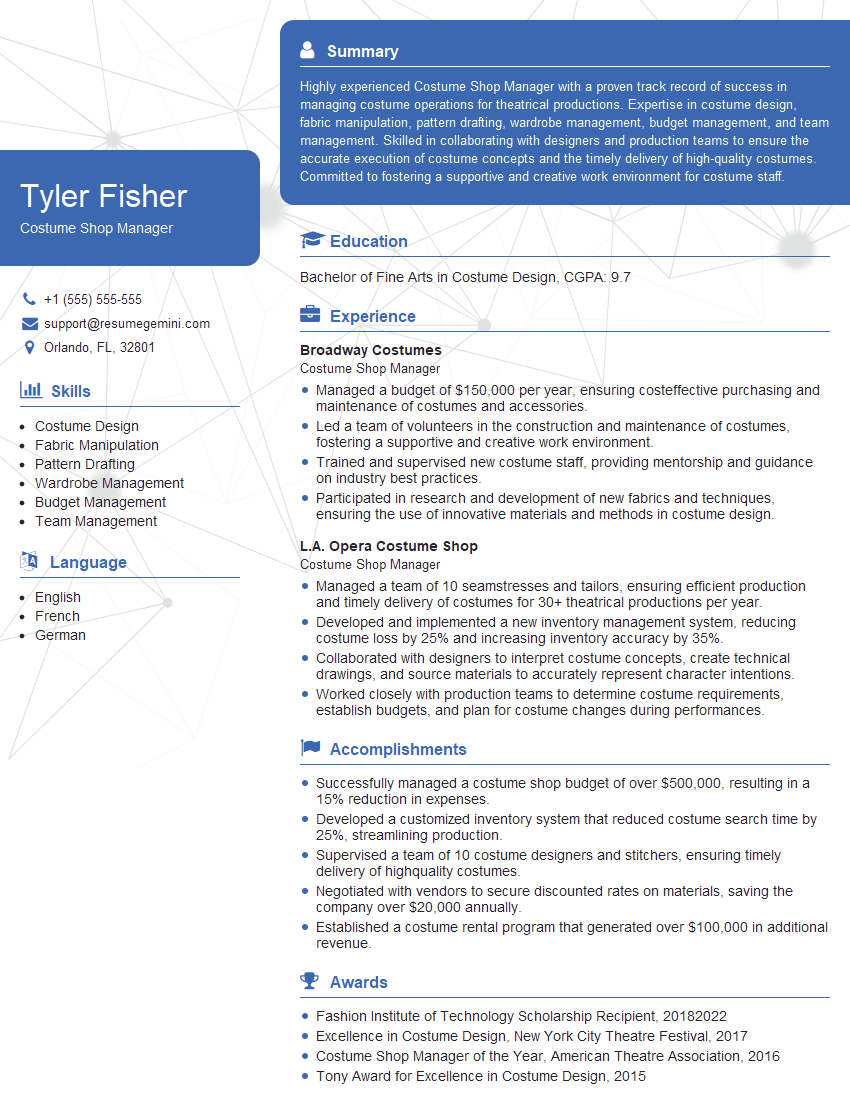
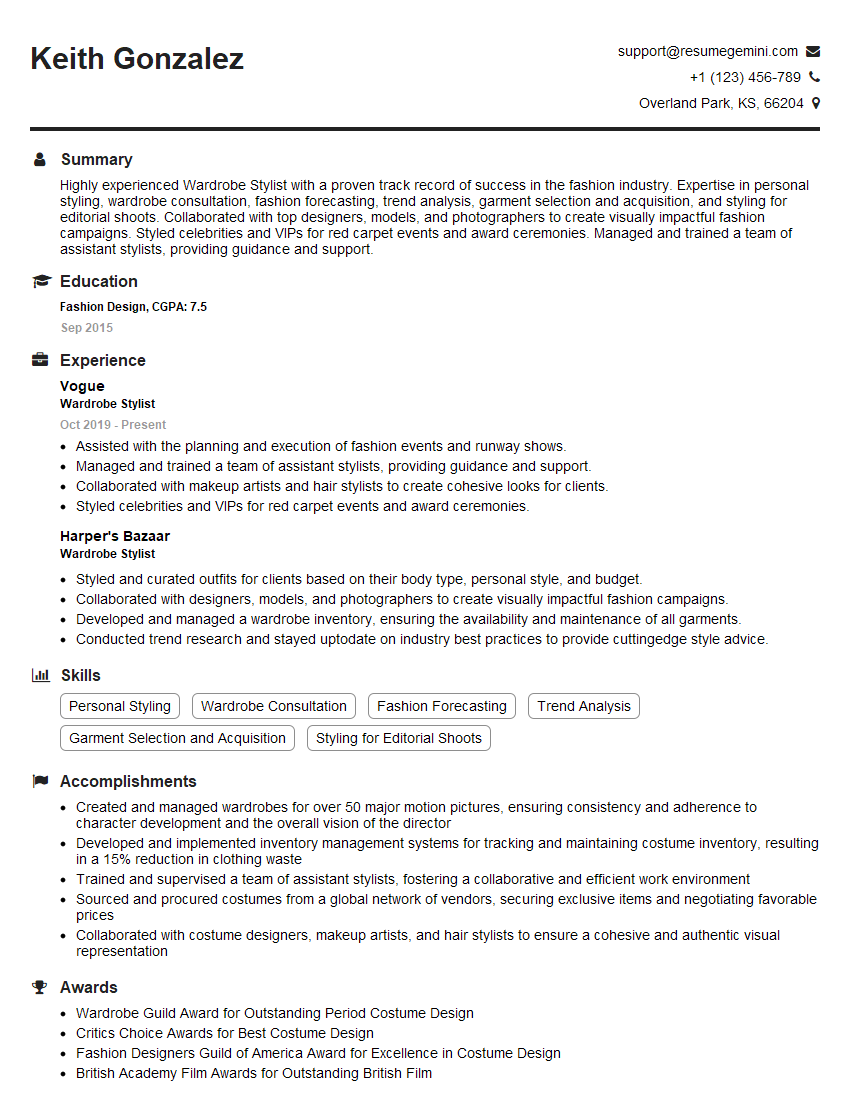
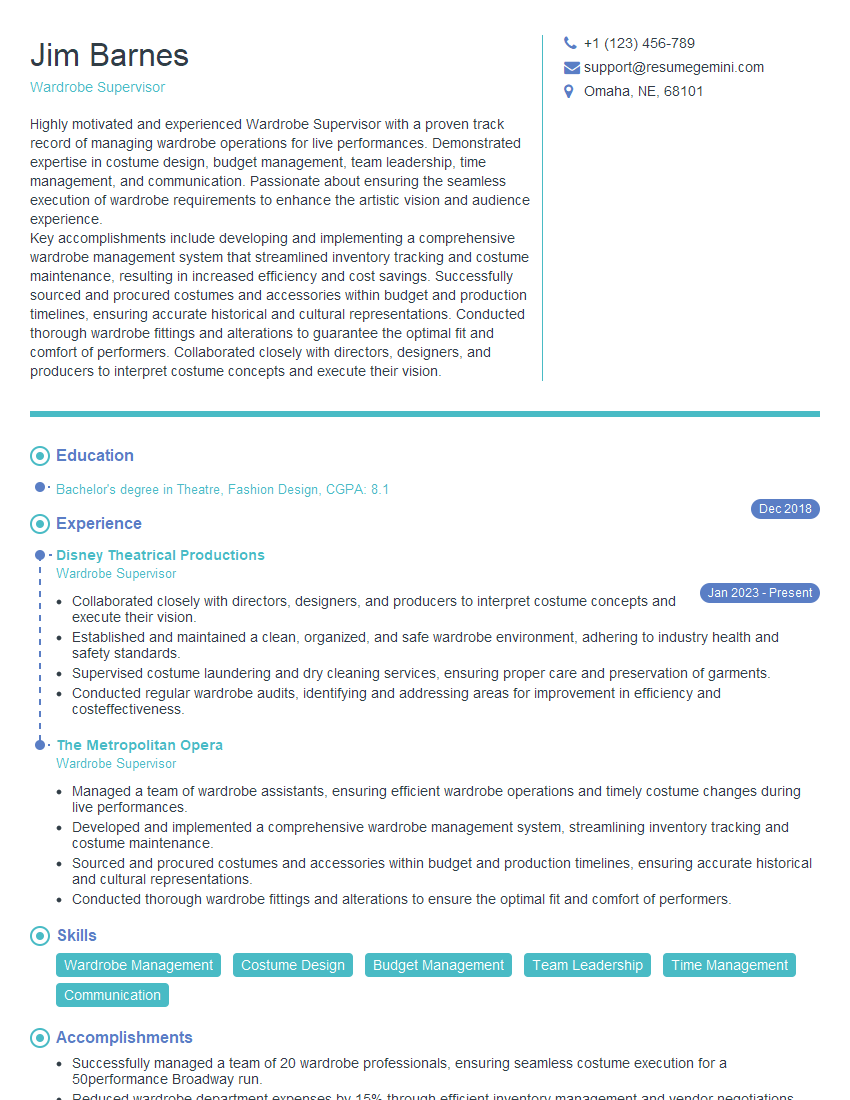
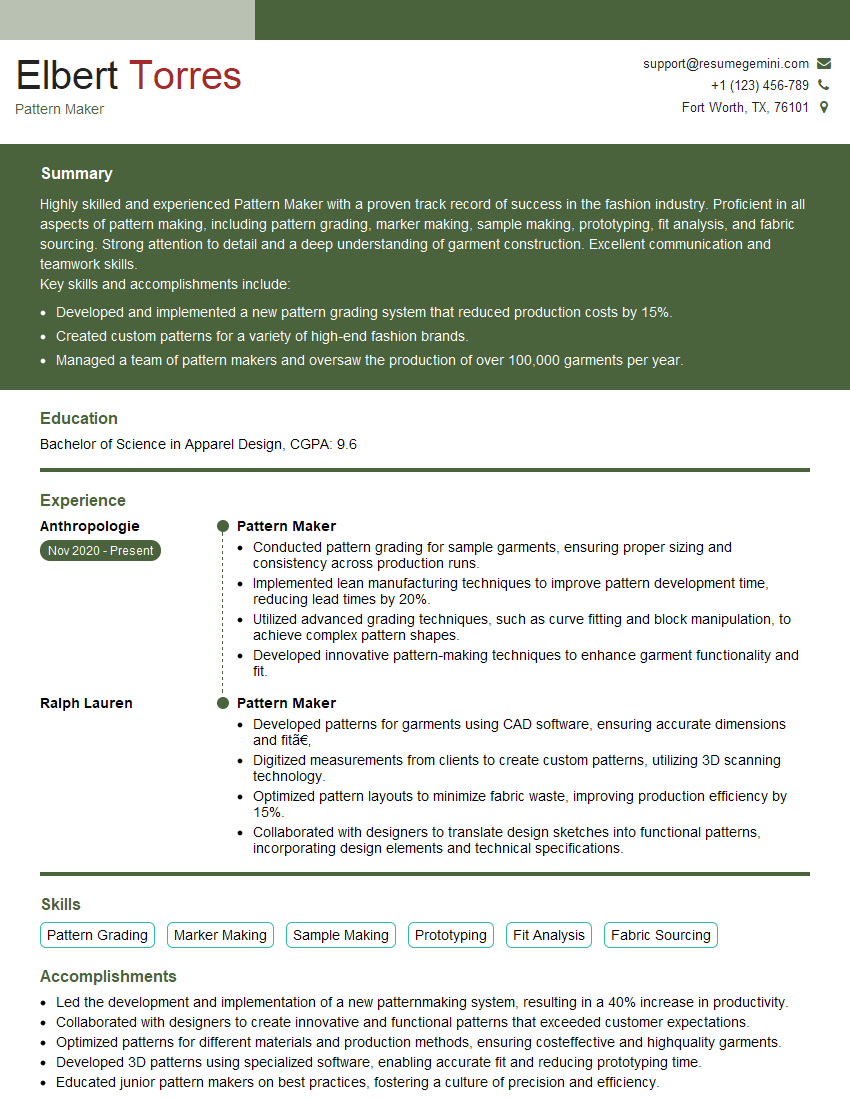
Mastering Costume Design for Film opens doors to exciting career opportunities, from independent productions to major studio films. To maximize your job prospects, creating a strong, ATS-friendly resume is crucial. ResumeGemini is a trusted resource that can help you build a professional resume that highlights your unique skills and experience. ResumeGemini provides examples of resumes tailored to Costume Design for Film, ensuring your application stands out. Take the next step towards your dream career – build your best resume today!

Explore more articles
Users Rating of Our Blogs
Share Your Experience
We value your feedback! Please rate our content and share your thoughts (optional).
What Readers Say About Our Blog
I Redesigned Spongebob Squarepants and his main characters of my artwork.
https://www.deviantart.com/reimaginesponge/art/Redesigned-Spongebob-characters-1223583608
IT gave me an insight and words to use and be able to think of examples
Hi, I’m Jay, we have a few potential clients that are interested in your services, thought you might be a good fit. I’d love to talk about the details, when do you have time to talk?
Best,
Jay
Founder | CEO