Preparation is the key to success in any interview. In this post, we’ll explore crucial CDLA License interview questions and equip you with strategies to craft impactful answers. Whether you’re a beginner or a pro, these tips will elevate your preparation.
Questions Asked in CDLA License Interview
Q 1. Explain the difference between Class A, B, and C CDL licenses.
The Commercial Driver’s License (CDL) classes – A, B, and C – categorize the types of vehicles you’re authorized to operate. Think of it like a tiered system based on vehicle size and hazard potential.
- Class A: This is the heavyweight champion. A Class A CDL allows you to drive any combination of vehicles with a gross combination weight rating (GCWR) of 26,001 or more pounds provided the GVWR of the towed vehicle is in excess of 10,000 pounds. Think of massive semi-trucks hauling trailers filled with goods across the country. This requires extensive knowledge of vehicle dynamics and safe handling of large loads.
- Class B: This is the middleweight contender. A Class B CDL permits operation of vehicles with a gross vehicle weight rating (GVWR) of 26,001 or more pounds, or any such vehicle towing a vehicle not exceeding 10,000 pounds GVWR. Examples include large trucks like garbage trucks, cement mixers, or buses.
- Class C: This is the lightweight class. A Class C CDL is required for vehicles that transport 16 or more passengers (including the driver), or vehicles that transport hazardous materials. This includes smaller box trucks or passenger vans carrying significant numbers of people.
The distinctions are crucial for safety and regulatory compliance. Operating a vehicle beyond your CDL class’s limitations can lead to serious consequences, including fines and license suspension.
Q 2. Describe your experience with pre-trip inspections.
Pre-trip inspections are fundamental to safe operation and are a critical part of my daily routine. It’s not just about ticking boxes; it’s about proactively identifying potential mechanical failures before they become roadside emergencies. My inspection follows a systematic approach, covering everything from tires and lights to brakes and fluids.
- Tires: I check tire pressure, tread depth, and look for any signs of damage or uneven wear. Remember, worn tires are a major safety hazard.
- Lights: I test all lights – headlights, taillights, brake lights, turn signals, hazard lights – to ensure they’re functioning correctly. Poor visibility can lead to accidents.
- Brakes: I inspect brake lines, drums, and pads for wear or leaks. Brake failure is catastrophic.
- Fluids: I check engine oil, coolant, power steering fluid, and brake fluid levels. Low fluids can lead to engine failure or other critical system malfunctions.
- Steering: I check for any play or looseness in the steering wheel.
- Suspension: I visually inspect the suspension components for any damage or leaks.
I meticulously document any issues found in a pre-trip inspection report. This detailed record protects me and my employer by demonstrating a commitment to safety and helps prevent future incidents. If a problem is serious enough, I won’t operate the vehicle until it’s repaired.
Q 3. What are the regulations regarding Hours of Service (HOS)?
Hours of Service (HOS) regulations are designed to prevent driver fatigue, a major contributor to accidents. They set limits on driving time, break periods, and on-duty time. These regulations are crucial for ensuring the safety of drivers and the public.
The key aspects include:
- Driving Limit: A driver can only drive a maximum of 11 hours after being off-duty for 10 consecutive hours.
- On-Duty Limit: A driver can be on duty for a maximum of 14 hours after being off-duty for 10 consecutive hours.
- 34-Hour Restart: Drivers can reset their hours-of-service clock by taking at least 34 consecutive hours off-duty.
- 60/70 Hour Rule: Drivers cannot drive more than 60 hours in 7 days or 70 hours in 8 days.
Exceeding these limits can result in severe penalties, including fines and suspension of driving privileges. Accurate record-keeping, whether through paper logs or electronic logging devices (ELDs), is essential for compliance.
Q 4. How do you handle challenging driving conditions (e.g., inclement weather, heavy traffic)?
Handling challenging driving conditions requires a combination of skill, experience, and sound judgment. Safety always comes first. My approach involves:
- Inclement Weather: Reducing speed significantly is paramount. Increasing following distance and using headlights even during the day enhance visibility. I also take into account reduced traction and adjust my driving accordingly, avoiding sudden maneuvers.
- Heavy Traffic: Maintaining a safe following distance is crucial. I avoid aggressive driving and remain alert for sudden braking or lane changes by other drivers. I anticipate potential hazards and adjust my speed and position accordingly.
In extreme situations, I might choose to pull over and wait for conditions to improve rather than risk an accident. Safety is not just about reaching the destination; it’s about arriving safely.
Q 5. Explain your understanding of the ELD mandate.
The ELD mandate requires most commercial vehicles to use electronic logging devices (ELDs) to automatically record hours-of-service data. This replaces the traditional paper logs, improving accuracy and reducing the potential for manipulation. ELDs automatically track driving time, on-duty time, and off-duty time, creating a verifiable record.
My understanding encompasses the legal requirements for using and maintaining ELDs, ensuring accurate data recording, and understanding the implications of violations. It’s about responsible record-keeping and compliance with federal regulations. Regular checks and maintenance of the ELD are crucial to ensure it’s functioning correctly and providing accurate data.
Q 6. Describe your experience with loading and securing cargo.
Loading and securing cargo is a critical aspect of safety. Improperly secured cargo can shift during transit, leading to accidents or damage. My experience includes understanding weight distribution, proper use of tie-downs, and following best practices for different types of cargo.
- Weight Distribution: I ensure the weight is evenly distributed to prevent imbalance and maintain stability.
- Tie-Downs: I use the appropriate number and type of tie-downs, securing the cargo firmly to prevent shifting. I always ensure the tie-downs are properly anchored and tightened.
- Cargo Type: I adapt my loading and securing techniques based on the type of cargo being transported, understanding the specific requirements for different goods.
Before setting off, I conduct a thorough inspection of the secured load, ensuring everything is stable and secure. This meticulous approach minimizes the risk of accidents caused by shifting cargo.
Q 7. How do you maintain a safe driving record?
Maintaining a safe driving record is a continuous commitment. It’s not just about avoiding accidents; it’s about adopting a proactive approach to safety.
- Defensive Driving: I practice defensive driving techniques, anticipating potential hazards and reacting appropriately.
- Vehicle Maintenance: I ensure regular vehicle maintenance, keeping my truck in top condition to minimize mechanical failures.
- Compliance: I strictly adhere to all traffic laws and regulations, including speed limits and hours-of-service rules.
- Health and Wellness: I prioritize my physical and mental health, ensuring I’m well-rested and fit to drive.
- Continuous Learning: I stay updated on best practices, regulations, and new technologies to enhance my skills and knowledge.
Regular self-assessment and continuous improvement are essential to maintaining a safe driving record. It’s a continuous process, not a destination.
Q 8. What are your strategies for managing fatigue while driving long distances?
Managing fatigue while driving long distances is paramount for safety and compliance with CDL regulations. My strategy is multi-pronged and focuses on proactive measures to prevent fatigue rather than simply reacting to it.
Planned Breaks: I meticulously plan my trips, incorporating regular rest stops every 2-3 hours, even if I don’t feel tired. These aren’t just for bathroom breaks; they’re for stretching, walking around, and giving my eyes a rest from the road. I use apps that remind me of these breaks.
Adequate Sleep: Before any long haul, I ensure I’ve had a full night’s sleep (8-9 hours). I avoid driving when feeling sleepy, tired, or under the influence of medication that could cause drowsiness. I also prioritize healthy sleep habits throughout my work weeks.
Hydration and Nutrition: Dehydration and poor nutrition contribute to fatigue. I always carry plenty of water and healthy snacks like fruits and nuts, avoiding sugary drinks and heavy meals that can lead to a post-meal slump.
Professional Help: If I experience persistent fatigue or sleep issues, I seek advice from my doctor and make sure I’m healthy enough for the demands of long-distance driving.
Thinking of fatigue management as a preventative measure, rather than a reactive one, has significantly improved my safety record and prevented accidents.
Q 9. Describe your experience with different types of trailers (e.g., flatbed, tanker, reefer).
My experience encompasses a variety of trailers, each requiring a unique approach to securement and handling.
Flatbeds: I’m proficient in properly securing various cargo types on flatbeds using appropriate straps, chains, and blocking techniques. I understand the importance of weight distribution and understanding the center of gravity to prevent shifting during transit.
Tankers: Handling tankers requires understanding the specific hazards associated with liquid cargo. I am familiar with proper placarding, pressure checks, and the procedures for handling hazardous materials. I’ve received specialized training in tanker operation and safety protocols.
Reefers: Operating reefer trailers involves monitoring temperature settings, ensuring the unit functions correctly, and understanding the impact of external factors on temperature control. I’m adept at troubleshooting minor issues with the refrigeration unit and know when to call for professional assistance.
The key is knowing the unique challenges of each trailer type and consistently following the best practices for securement and handling to ensure both safety and cargo integrity.
Q 10. How do you handle unexpected mechanical issues on the road?
Unexpected mechanical issues are an unfortunate but common occurrence for long-haul drivers. My response is guided by a structured approach:
Safety First: The initial priority is safety. I activate hazard lights, pull over to a safe location away from traffic, and assess the situation. If the situation is dangerous (e.g., fire, leaking fluids), I immediately call emergency services.
Assess the Problem: I try to identify the nature of the problem. Is it something I can safely address myself with the tools I have (e.g., a flat tire), or does it require professional help? My toolkit is always fully stocked with essential tools and supplies for minor repairs.
Contacting Support: If the issue is beyond my capabilities, I contact my dispatcher or roadside assistance immediately. I provide them with my location, a description of the problem, and any relevant information.
Documentation: I meticulously document the issue, including photos, timestamps, and contact information of anyone involved in the resolution process. This documentation is crucial for insurance claims and operational reporting.
Proactive vehicle maintenance significantly reduces the frequency of mechanical issues, but having a structured plan for handling them when they occur is essential.
Q 11. What are your knowledge of DOT regulations?
My understanding of DOT regulations is comprehensive. I’m familiar with all aspects relevant to commercial driving, including:
Hours of Service (HOS): I meticulously maintain accurate driving logs, adhering strictly to the regulations on driving time, rest periods, and on-duty/off-duty time. I understand the different rules for different types of operations and use electronic logging devices (ELDs) proficiently.
Vehicle Maintenance: I’m aware of the requirements for regular vehicle inspections and maintenance, including pre-trip and post-trip inspections. I know what to check for and how to report any defects.
Hazardous Materials (HazMat): I’ve completed the necessary training for transporting hazardous materials, understanding the specific requirements for handling, securement, and emergency procedures.
Driver Fitness and Health: I’m cognizant of regulations concerning driver health, including medical certifications and the importance of maintaining a healthy lifestyle.
Staying updated on the evolving DOT regulations is a continuous process, utilizing resources such as the FMCSA website and attending relevant training sessions.
Q 12. Explain your experience with GPS navigation systems.
GPS navigation systems are indispensable tools for efficient and safe routing. My experience includes using various GPS devices and software, both in-cab and mobile phone applications.
Route Planning: I use GPS to plan efficient routes, considering factors like traffic, road closures, and weight restrictions. I understand how to enter specific delivery addresses and avoid restricted zones.
Navigation Accuracy: I’m aware of the limitations of GPS technology and how weather conditions and terrain can affect accuracy. I always maintain a backup method of navigation, such as paper maps, to account for potential GPS failures.
Traffic Updates: I utilize real-time traffic information provided by GPS to adjust my routes and avoid delays. This helps to optimize delivery times and ensures on-time performance.
Ultimately, my approach is to use GPS effectively but not depend on it solely. Always having backup navigation and route planning is crucial.
Q 13. Describe your experience with maintaining accurate logs.
Maintaining accurate logs is not merely a regulatory requirement; it’s a critical aspect of responsible and compliant driving. My approach to log maintenance emphasizes precision and thoroughness.
Electronic Logging Devices (ELDs): I use an ELD to automatically record my driving time, including on-duty and off-duty periods. I regularly review the data for accuracy and ensure it aligns with my activities.
Manual Logs (if applicable): In situations where ELDs aren’t required, I maintain meticulously detailed paper logs, ensuring they are accurate, legible, and complete. I carefully record all relevant information, including times, locations, and activities.
Regular Audits: I perform regular audits of my logs to identify and correct any potential discrepancies or errors. This helps to maintain a clean and consistent record.
Understanding Regulations: I have a deep understanding of the specific rules and regulations for logging different types of duty time and rest breaks. This understanding allows me to correctly record all activities.
Accurate logging not only ensures compliance but also assists in efficient trip planning and helps with operational analysis and performance reporting.
Q 14. How do you handle difficult customers or situations?
Handling difficult customers or situations requires a calm, professional, and solution-oriented approach. My strategy is built on:
Active Listening: I actively listen to the customer’s concerns without interrupting, striving to understand their perspective.
Empathy and Patience: I respond with empathy and patience, acknowledging their frustration and validating their feelings.
Clear Communication: I communicate clearly and concisely, providing them with information in a way they can understand. I avoid using jargon and explain any complex information in simple terms.
Problem-Solving: I work collaboratively with the customer to find a solution that addresses their concerns. If I’m unable to resolve the issue myself, I escalate it to my supervisor or the appropriate authority.
Professional Demeanor: I always maintain a professional and respectful demeanor, even when faced with challenging situations. I avoid engaging in arguments or personal attacks.
Ultimately, I view difficult situations as opportunities to build trust and demonstrate my professionalism. By focusing on resolving the issue and maintaining a positive attitude, I aim to leave a lasting positive impression on my customer.
Q 15. Explain your understanding of chain-of-custody procedures.
Chain of custody (CoC) is a crucial process in ensuring the integrity of evidence, particularly important in transporting sensitive or regulated materials. It documents the chronological movement and handling of goods from origin to final destination, proving continuous accountability and preventing tampering or contamination. Think of it like a detailed relay race where each runner (person or entity handling the goods) must sign off, verifying the goods’ condition and handing them off to the next runner.
- Documentation: Every transfer of possession must be meticulously recorded. This includes dates, times, locations, individuals involved, and a description of the goods’ condition (any damage or discrepancies noted).
- Security: Appropriate security measures should be in place throughout the entire process, such as sealed containers, tamper-evident seals, and secure storage.
- Verification: Regular checks and verifications ensure the goods remain unaltered and accounted for. Any discrepancies must be documented immediately.
For example, imagine transporting hazardous waste. A CoC would track the waste from the generating facility, through the transportation company, to the disposal site. Each step, including loading, unloading, and storage, is documented, ensuring the waste is properly handled and its accountability is never broken. Failure to maintain a proper CoC can lead to serious legal and environmental consequences.
Career Expert Tips:
- Ace those interviews! Prepare effectively by reviewing the Top 50 Most Common Interview Questions on ResumeGemini.
- Navigate your job search with confidence! Explore a wide range of Career Tips on ResumeGemini. Learn about common challenges and recommendations to overcome them.
- Craft the perfect resume! Master the Art of Resume Writing with ResumeGemini’s guide. Showcase your unique qualifications and achievements effectively.
- Don’t miss out on holiday savings! Build your dream resume with ResumeGemini’s ATS optimized templates.
Q 16. What is your experience with hazardous materials transportation?
My experience with hazardous materials transportation is extensive. I’ve been involved in the safe transport of various classes of hazardous materials, including flammable liquids, corrosive materials, and certain types of radioactive materials. I’m familiar with all relevant regulations, including the Hazardous Materials Regulations (HMR), and I always prioritize safety and compliance. This includes understanding and adhering to placarding requirements, emergency response plans, and proper handling procedures. I’ve received specialized training in HAZMAT handling and transportation, which includes securement techniques, emergency procedures, and dealing with spills or accidents involving hazardous materials.
For instance, I’ve transported chemicals used in manufacturing processes, ensuring they were properly packaged, labeled, and secured to prevent leakage or spills. This required not only following all regulations but also understanding the specific hazards of each material and taking appropriate precautions, such as using specialized containers and employing specific routes to avoid high-traffic areas.
Q 17. How do you prioritize safety in your driving?
Safety is paramount in my driving. It’s not just about following traffic laws; it’s about creating a proactive safety culture. My approach encompasses several key aspects:
- Defensive Driving Techniques: I am always anticipating potential hazards and adjusting my driving accordingly. This includes maintaining a safe following distance, scanning the road ahead for potential risks, and being aware of blind spots.
- Vehicle Maintenance: Regular vehicle inspections are crucial. This includes checking tire pressure, ensuring proper lighting, and addressing any mechanical issues promptly.
- Weather Awareness: Adjusting speed and driving style based on weather conditions is crucial. I take extra caution during adverse weather like rain, snow, or fog.
- Fatigue Management: I adhere to strict hours of service regulations and always prioritize rest to avoid fatigue-related accidents. Taking breaks, especially on long hauls, is not just a regulation – it’s a responsibility.
An example is how I handle inclement weather. Instead of rushing, I reduce my speed significantly, increase my following distance, and use my headlights even during the day to ensure better visibility.
Q 18. What is your experience with different types of cargo?
I have extensive experience with a wide variety of cargo types, ranging from general freight and oversized loads to temperature-sensitive goods and hazardous materials. This experience has given me the ability to adapt my handling techniques to the specific needs of each shipment. My skills include proper loading and securing techniques for different cargo types, preventing damage during transit.
- General Freight: This includes everything from boxed goods to palletized freight, requiring securement with appropriate straps and dunnage.
- Oversized Loads: These require specialized permits, escort vehicles, and specific routing to ensure safe transport and compliance with regulations.
- Temperature-Sensitive Goods: I’m proficient in handling goods requiring refrigeration or temperature-controlled environments, such as pharmaceuticals or perishable foods. I understand the importance of maintaining the correct temperature throughout the journey.
For example, when hauling refrigerated produce, I regularly monitor the temperature of the trailer to ensure it stays within the required range. If any issues arise, I immediately report them to dispatch and take necessary corrective actions.
Q 19. Describe your experience with using a two-way radio.
I am highly proficient in using two-way radios for communication. Effective communication is critical for safety and efficiency in transportation. I use clear and concise language, following established radio etiquette to avoid confusion or interference. I’m adept at using different channels and understand the importance of listening and confirming messages to prevent misunderstandings.
For example, I clearly identify myself and my location before transmitting and always acknowledge messages received to confirm understanding. I also understand how to use emergency channels and procedures in case of an accident or other critical situations. This includes reporting incidents promptly and accurately, providing essential information such as location, nature of the incident, and any injuries or hazards present.
Q 20. What are your strategies for fuel efficiency?
Fuel efficiency is a major concern for both economic and environmental reasons. My strategies include:
- Proper Vehicle Maintenance: Regular maintenance, including tire inflation, engine tune-ups, and aerodynamic improvements, significantly improves fuel economy.
- Driving Habits: Smooth acceleration and deceleration, maintaining a steady speed, and avoiding unnecessary braking and idling are all crucial for fuel efficiency.
- Route Planning: Choosing routes that avoid congestion and unnecessary stops can help reduce fuel consumption.
- Load Management: Optimizing load distribution to minimize drag and weight reduces fuel usage.
For example, I avoid rapid acceleration and braking by anticipating traffic flow and adjusting my speed accordingly. Maintaining a consistent speed, especially on highways, helps minimize fuel waste. I also regularly check tire pressure, as under-inflated tires increase fuel consumption.
Q 21. How do you handle traffic violations or accidents?
Handling traffic violations or accidents involves a methodical approach that prioritizes safety and compliance.
- Traffic Violations: If I receive a traffic citation, I promptly address it by paying the fine or contesting it if appropriate. I maintain a clean driving record and understand that safe driving habits are essential for avoiding violations.
- Accidents: In the event of an accident, I prioritize safety by ensuring the scene is secure and calling for emergency services if needed. I gather information from witnesses and document the incident thoroughly, including taking photos and exchanging information with other involved parties. I promptly report the incident to my employer and cooperate fully with any investigation.
For example, if involved in an accident, my first step is to ensure everyone’s safety and then call emergency services. I then gather witness information, take photos of the damage, and note the details of the other driver and their vehicle. This documentation helps protect me and ensures a fair assessment of the situation.
Q 22. Explain your experience with route planning and optimization.
Route planning and optimization are crucial for efficiency and profitability in the trucking industry. My experience involves utilizing various tools and techniques to determine the most effective routes, considering factors like distance, traffic patterns, delivery deadlines, and fuel efficiency.
For example, I’ve extensively used GPS navigation systems, route planning software (like those offered by trucking companies or third-party logistics providers), and even relied on my knowledge of regional highways and bypass routes to avoid congestion. I factor in potential delays like construction or accidents by checking traffic reports before departure. My approach is proactive; I often plan multiple routes to account for unexpected circumstances and ensure I arrive on time. I am also familiar with load optimization, which involves strategically sequencing deliveries to minimize empty miles. This reduces fuel costs and increases operational efficiency.
In one instance, I was tasked with delivering multiple loads across a large metropolitan area known for heavy traffic. By strategically arranging the delivery sequence, leveraging less congested routes at off-peak hours, and utilizing real-time traffic data, I was able to complete the deliveries well ahead of schedule, saving both time and fuel costs. This showcases my ability to use available resources for optimal route selection.
Q 23. Describe your experience with backing up a trailer.
Backing up a trailer safely and efficiently is a fundamental skill for any CDLA driver. It requires precision, patience, and a systematic approach. My experience involves utilizing various techniques, including the use of mirrors, spotters, and careful maneuvering. I always start by assessing the area thoroughly, checking for obstructions and ensuring sufficient space. I use my mirrors extensively to understand the trailer’s position relative to the truck and the surrounding environment. When necessary, I utilize a spotter to provide additional guidance, especially in tight or challenging situations.
My backing technique involves slow, deliberate movements, using small steering inputs to guide the trailer. I avoid making sudden or jerky movements, which can lead to accidents. I always check my blind spots before proceeding and regularly assess my progress throughout the entire backing procedure. I practice regularly to maintain proficiency and adapt my technique based on the specific environment and trailer type.
For example, I recall a challenging situation where I had to back a long trailer into a tight loading dock in a busy warehouse. Using a combination of mirrors, a spotter’s guidance, and slow, controlled movements, I was able to successfully complete the maneuver without incident. This demonstrates my expertise and ability to manage complex backing situations safely and effectively.
Q 24. How do you maintain your vehicle’s cleanliness and organization?
Maintaining a clean and organized vehicle is essential for both safety and efficiency. My approach involves regular cleaning, both inside and outside the cab, as well as proper organization of documents and equipment. I regularly sweep and vacuum the cab, wipe down surfaces, and dispose of trash properly. I keep my important documents, such as logbooks and permits, organized in designated folders. Tools and equipment are stored securely and within easy reach.
Outside, I ensure the exterior is clean to maintain visibility and avoid damage from dirt or debris. I regularly inspect for any damage or wear and tear. This organized approach minimizes distractions while driving and allows for quick access to essential items, increasing efficiency. A clean and organized cab contributes to a more professional image, as well. A clean truck reflects a professional driver.
Q 25. What is your experience with managing delivery schedules?
Managing delivery schedules effectively involves careful planning, prioritization, and communication. My experience involves reviewing delivery schedules provided by dispatch, taking into account factors such as delivery windows, distance, traffic, and potential delays. I prioritize deliveries based on urgency and deadlines, often coordinating with recipients to confirm delivery times and address any potential issues beforehand. I actively monitor my progress throughout the day and proactively communicate any potential delays or changes in the schedule to dispatch.
I use various tools and techniques to manage my time effectively. This includes using mobile apps to track my location, monitor traffic conditions, and estimate arrival times. I am also proficient in using electronic logging devices (ELDs) to accurately record my driving hours and ensure compliance with regulations. Proactive communication is key to ensuring all deliveries are made on time and as efficiently as possible.
Q 26. Describe your experience with communicating with dispatchers.
Effective communication with dispatchers is vital for successful operations. My experience involves maintaining clear and concise communication, both verbally and through written reports. I regularly check in with dispatch to provide updates on my location, progress, and any potential issues or delays. I clearly communicate any changes to the schedule and relay any important information promptly and accurately.
I use a professional and respectful tone in all my communications, ensuring that messages are clear and easy to understand. I am adept at clarifying instructions and asking questions when needed. I maintain a positive working relationship with dispatch, fostering a collaborative approach that helps to resolve any issues that may arise.
For example, I once encountered an unexpected road closure that threatened to delay several deliveries. By immediately communicating the situation to dispatch and providing alternative routes, we were able to adjust the delivery schedule and minimize the impact of the unexpected closure.
Q 27. How do you handle stressful situations on the road?
Handling stressful situations on the road requires a calm and methodical approach. My experience involves utilizing several techniques to manage stress, including deep breathing exercises, maintaining a positive attitude, and prioritizing safety. I avoid rushing or making impulsive decisions under pressure. I prioritize adherence to safety regulations and ensure that my driving is always safe and responsible.
In stressful situations, I focus on identifying the problem, assessing the situation rationally, and developing a plan to address it. I often take short breaks when needed to help calm my nerves and clear my head. Prioritizing safety and following established protocols help to alleviate stress and prevent mistakes. I understand that safety is paramount, and I make decisions based on minimizing risk. By maintaining a level-headed approach, I can effectively handle challenging situations and ensure safe operation.
Q 28. What are your long-term career goals in the trucking industry?
My long-term career goals in the trucking industry involve progressing to positions of increased responsibility and leadership. I aim to enhance my skills and expertise in logistics and transportation management. I am interested in pursuing specialized endorsements and certifications to expand my capabilities. In the future, I would like to mentor and train new drivers, sharing my experience and expertise to contribute to the industry’s overall safety and efficiency. My ultimate goal is to become a leader within the trucking industry, helping to foster a culture of professionalism, safety and excellence.
Key Topics to Learn for CDLA License Interview
- Federal Motor Carrier Safety Regulations (FMCSRs): Understanding the key regulations governing commercial driving, including hours-of-service, vehicle maintenance, and driver qualifications.
- Safe Driving Practices: Demonstrate knowledge of defensive driving techniques, pre-trip inspections, and hazard perception to ensure safety on the road.
- Vehicle Maintenance and Inspection: Explain the importance of regular vehicle inspections, identifying potential mechanical issues, and performing basic maintenance tasks.
- Map Reading and Navigation: Discuss effective route planning, understanding of commercial driving routes, and using GPS navigation systems safely and efficiently.
- Logbooks and Record Keeping: Explain the importance of accurate record-keeping, complying with electronic logging device (ELD) regulations, and understanding hours-of-service regulations.
- Cargo Securement: Describe proper techniques for securing different types of cargo to prevent accidents and damage during transit.
- Communication and Customer Service: Highlight the importance of professional communication with dispatchers, clients, and other drivers.
- Emergency Procedures: Demonstrate knowledge of handling emergency situations, such as breakdowns, accidents, and hazardous materials incidents.
- Understanding of Trucking Industry Best Practices: Show awareness of fuel efficiency, minimizing downtime, and effective route optimization for cost savings.
Next Steps
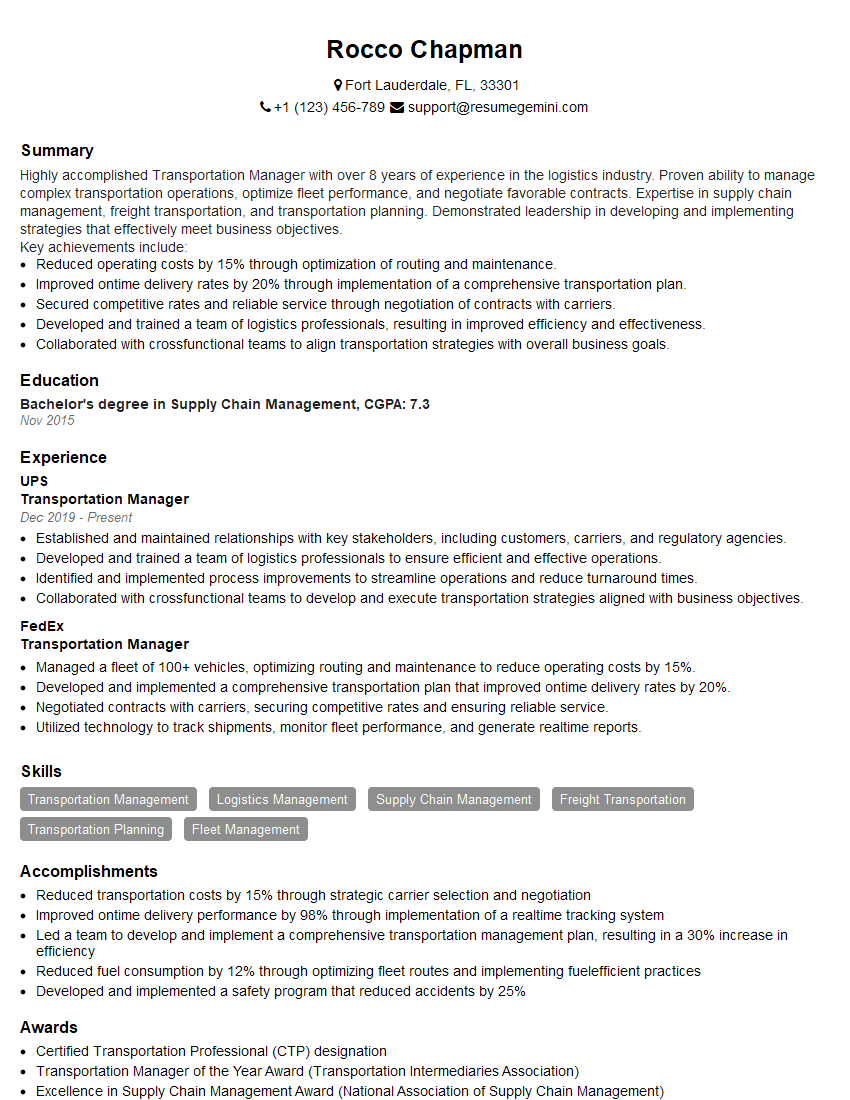
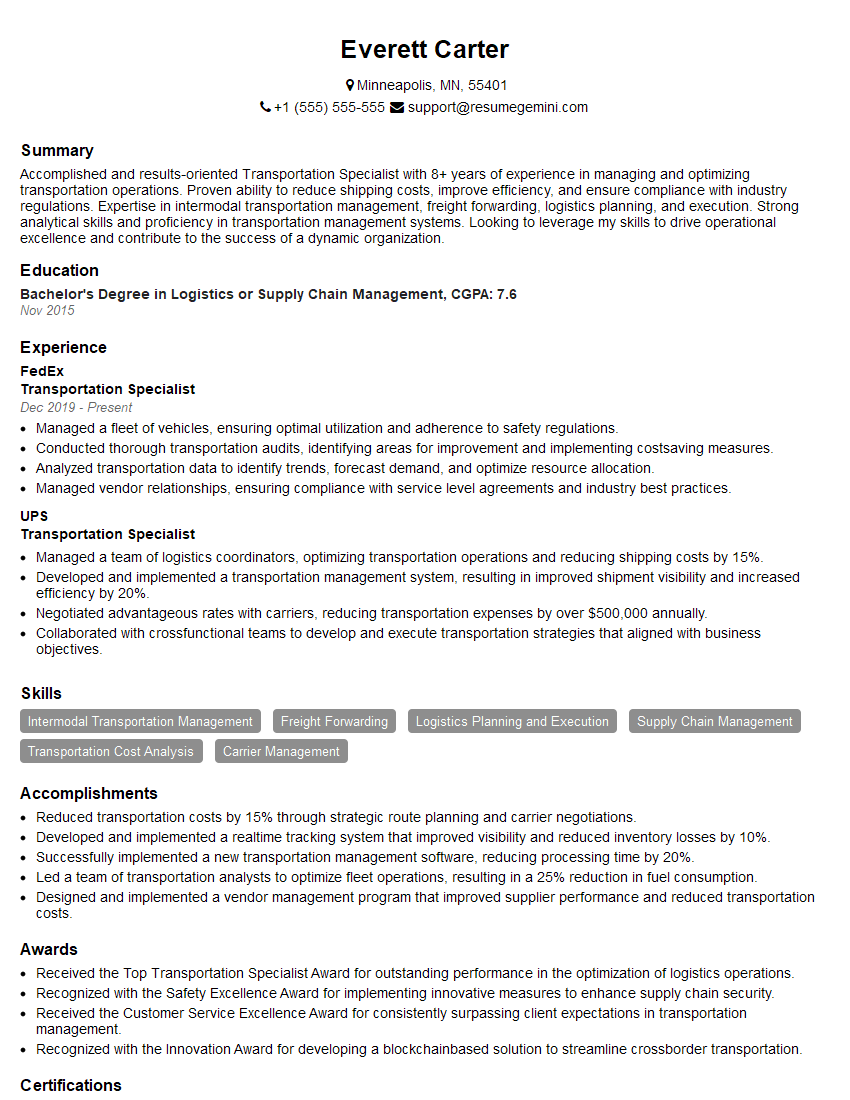
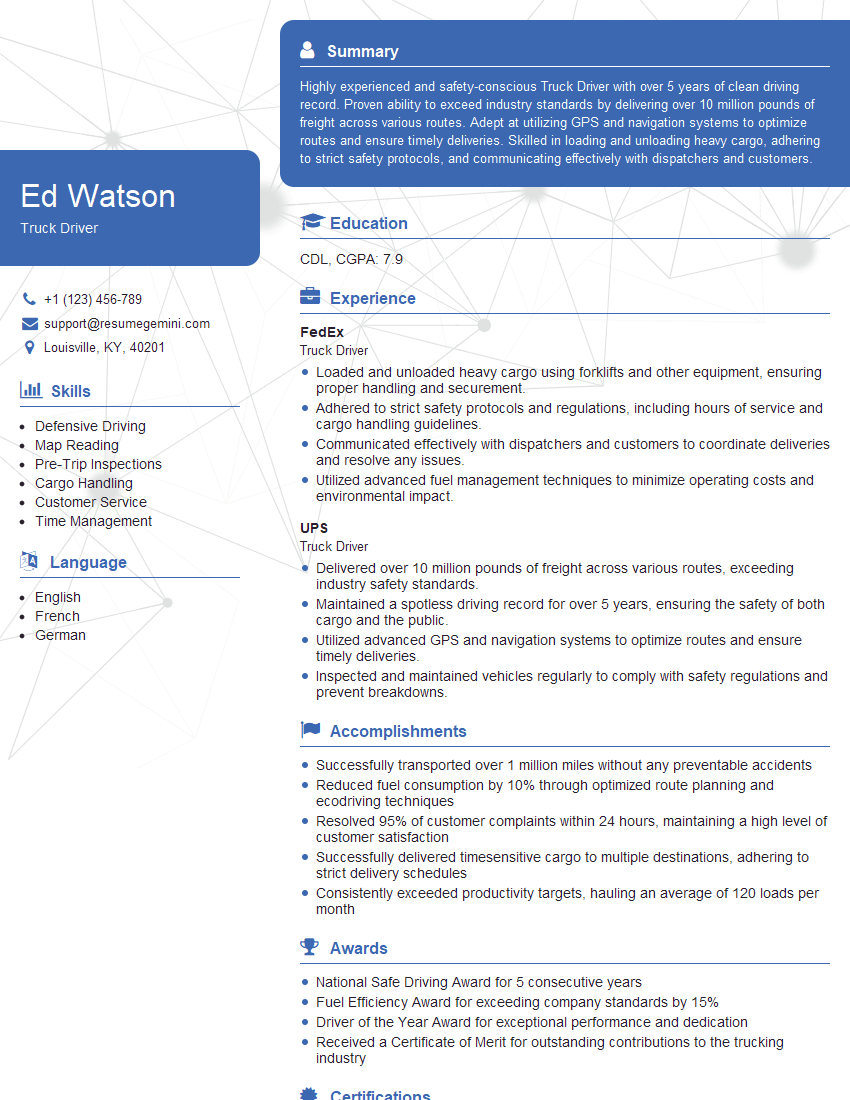
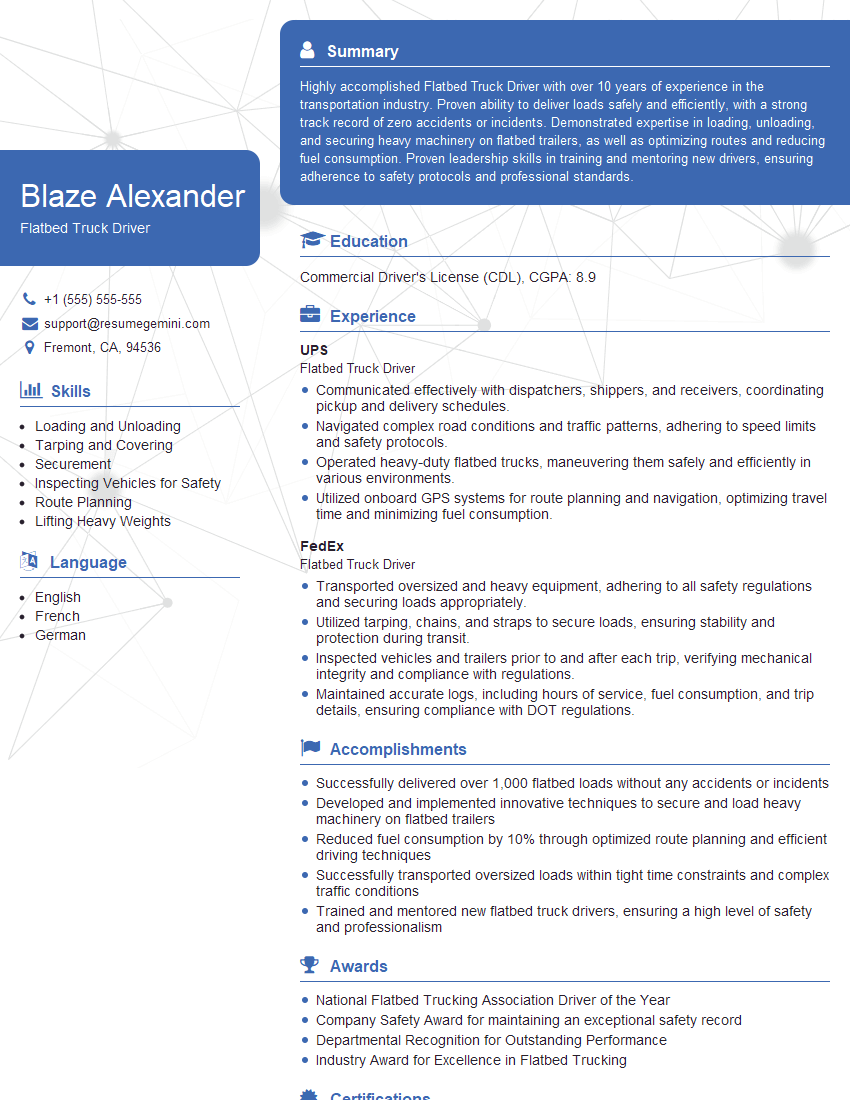
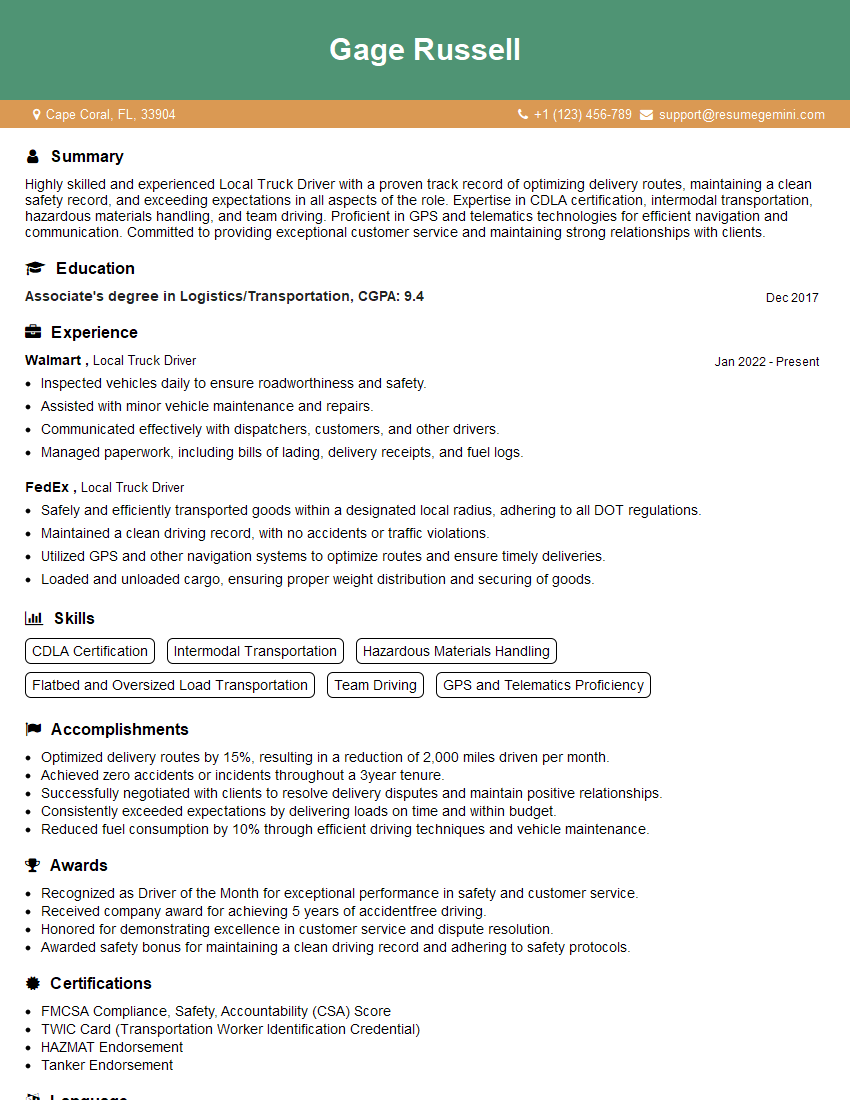
Mastering your CDLA license opens doors to a rewarding career with excellent earning potential and job security. To maximize your job prospects, focus on creating a compelling, ATS-friendly resume that highlights your skills and experience. ResumeGemini is a trusted resource for building professional resumes that get noticed by recruiters. We provide examples of resumes tailored to the CDLA License, ensuring your application stands out from the competition. Invest the time in crafting a strong resume – it’s your first impression on potential employers.
Explore more articles
Users Rating of Our Blogs
Share Your Experience
We value your feedback! Please rate our content and share your thoughts (optional).
What Readers Say About Our Blog
I Redesigned Spongebob Squarepants and his main characters of my artwork.
https://www.deviantart.com/reimaginesponge/art/Redesigned-Spongebob-characters-1223583608
IT gave me an insight and words to use and be able to think of examples
Hi, I’m Jay, we have a few potential clients that are interested in your services, thought you might be a good fit. I’d love to talk about the details, when do you have time to talk?
Best,
Jay
Founder | CEO