The right preparation can turn an interview into an opportunity to showcase your expertise. This guide to Metalworking Mathematics interview questions is your ultimate resource, providing key insights and tips to help you ace your responses and stand out as a top candidate.
Questions Asked in Metalworking Mathematics Interview
Q 1. Explain the concept of tolerance in metalworking.
Tolerance in metalworking refers to the permissible variation in the dimensions of a workpiece. It’s the acceptable range of deviation from the nominal (intended) size. Think of it like baking a cake – you have a recipe (nominal size), but some variation in ingredient amounts or baking time is acceptable and still results in a good cake. Similarly, in metalworking, perfectly achieving the exact specified dimensions is often impractical or too costly. Tolerance defines how much deviation is acceptable and still meets the functional requirements of the part.
Tolerances are typically expressed using plus/minus values (±) or limits (e.g., 10.000 ± 0.005 mm). The smaller the tolerance, the more precise the part needs to be, and typically, the more expensive it is to manufacture. For example, a tolerance of ±0.005 mm implies that the actual dimension can be anywhere between 9.995 mm and 10.005 mm and still be considered acceptable. Larger tolerances are used where precision isn’t critical, while tighter tolerances are needed for parts requiring precise fits (e.g., engine components).
- Example: A shaft designed to fit inside a hole. If the shaft is too small, it will be loose. If it’s too large, it won’t fit at all. Tolerances on both the shaft and hole diameter are necessary to ensure a proper fit within an acceptable range.
Q 2. How do you calculate the volume of a cylindrical workpiece?
The volume of a cylindrical workpiece is calculated using a simple formula that combines the area of the circular base with the height of the cylinder. Imagine a stack of coins – each coin represents the circular base, and the stack’s height determines the overall volume.
The formula is: Volume = π * r² * h
- Where:
π (pi)is a mathematical constant approximately equal to 3.14159ris the radius of the cylinder (half of its diameter)his the height (or length) of the cylinder
Example: A cylindrical workpiece has a diameter of 50 mm and a height of 100 mm. First, find the radius: r = diameter / 2 = 50 mm / 2 = 25 mm. Then, calculate the volume: Volume = π * (25 mm)² * 100 mm ≈ 196,350 mm³
Q 3. Describe different methods for calculating surface area in metalworking.
Calculating surface area in metalworking depends on the shape of the workpiece. Different formulas are used for different geometries. For simple shapes, the calculations are straightforward, but for complex shapes, we often resort to numerical methods or 3D modeling software.
- Cylinder: The surface area of a cylinder consists of the curved surface area and the areas of the two circular ends. The formula is:
Surface Area = 2 * π * r * h + 2 * π * r²(where ‘r’ is the radius and ‘h’ is the height). - Rectangular Prism (block): The surface area is calculated by summing the areas of all six faces:
Surface Area = 2 * (lw + lh + wh)(where ‘l’, ‘w’, and ‘h’ are length, width, and height, respectively). - Sphere: The surface area of a sphere is given by:
Surface Area = 4 * π * r²(where ‘r’ is the radius). - Irregular shapes: For complex parts, numerical methods or CAD software is commonly used to calculate surface area accurately. These tools use techniques like triangulation or surface integration to approximate the surface area.
Practical Application: Surface area calculations are crucial in processes like painting, plating, and heat treatment. Accurate calculations ensure the correct amount of material is used, preventing waste and ensuring consistent results.
Q 4. How do you calculate the cutting speed for a milling operation?
Cutting speed (or surface speed) in milling is the linear speed at which the cutting tool moves across the workpiece’s surface. It’s a crucial parameter influencing the machining efficiency, surface finish, and tool life. A higher cutting speed generally results in higher material removal rate but can lead to increased tool wear. The optimal cutting speed is a trade-off between these factors and depends on the material being machined, the tool material, and the desired surface finish.
The formula to calculate cutting speed (V) is: V = (π * D * N) / 1000
- Where:
Vis the cutting speed in meters per minute (m/min)Dis the diameter of the cutter in millimeters (mm)Nis the spindle speed in revolutions per minute (rpm)
Example: A milling operation uses a 25 mm diameter cutter at a spindle speed of 1000 rpm. The cutting speed would be: V = (π * 25 mm * 1000 rpm) / 1000 ≈ 78.5 m/min
Q 5. What is the feed rate, and how is it calculated?
Feed rate in machining refers to the speed at which the cutting tool advances into the workpiece. It’s usually expressed as the distance the tool travels per revolution (in milling) or per minute (in turning or drilling). A higher feed rate generally increases material removal rate but can also lead to increased tool wear and a rougher surface finish. The optimum feed rate is a balance between productivity and surface quality, depending on factors like material properties, tool geometry, and required precision.
The calculation depends on the machining operation:
- Milling: Feed rate (f) is often expressed in mm/tooth or mm/rev (millimeters per tooth or revolution). The total feed rate is the feed rate per tooth multiplied by the number of teeth on the cutter and the spindle speed.
- Turning: Feed rate (f) is often expressed as mm/rev (millimeters per revolution) or mm/min (millimeters per minute).
Example (Milling): A milling cutter has 4 teeth and a feed rate of 0.2 mm/tooth. If the spindle speed is 1000 rpm, the total feed rate would be 0.2 mm/tooth * 4 teeth/rev * 1000 rev/min = 800 mm/min.
Q 6. Explain the relationship between depth of cut and cutting speed.
Depth of cut and cutting speed have a complex relationship. Increasing the depth of cut generally requires a reduction in cutting speed to maintain tool life and surface finish. A deeper cut puts more stress on the cutting tool, generating more heat and increasing the risk of tool failure. Therefore, reducing the cutting speed compensates for the increased load and heat. This relationship is often determined empirically based on material properties and tool capabilities. Manufacturers often provide recommendations for appropriate speed and feed combinations for different materials and cutting conditions.
Think of it like cutting butter – a shallow cut can be done quickly (high speed), while a deep cut requires a slower, more deliberate motion (lower speed) to avoid tearing the butter. The same principle applies to metal cutting, albeit with much more precise considerations.
Q 7. How do you calculate the material removal rate (MRR)?
Material Removal Rate (MRR) represents the volume of material removed per unit time during a machining operation. It’s a key indicator of machining efficiency. A higher MRR means faster material removal, but it also means greater wear on the cutting tool and potentially a poorer surface finish. Optimizing MRR requires careful consideration of cutting speed, feed rate, and depth of cut.
The formula for MRR varies depending on the machining operation:
- Turning:
MRR = f * d * V(where ‘f’ is the feed rate, ‘d’ is the depth of cut, and ‘V’ is the cutting speed) - Milling:
MRR = w * d * f * N(where ‘w’ is the width of cut, ‘d’ is the depth of cut, ‘f’ is the feed rate per tooth, and ‘N’ is the spindle speed)
Example (Turning): A turning operation has a feed rate (f) of 0.2 mm/rev, a depth of cut (d) of 2 mm, and a cutting speed (V) of 100 m/min. The MRR would be: MRR = 0.2 mm/rev * 2 mm * 100 m/min = 40000 mm³/min (Converting to cubic millimeters per minute for consistency).
Q 8. Describe different types of tapers and how to calculate their angles.
Tapers describe the gradual decrease in diameter or thickness of a workpiece along its length. They’re crucial in many metalworking applications, from creating self-centering features to facilitating assembly. Several types exist:
- Straight Taper: A uniform decrease in diameter along the length. The taper angle is constant.
- Stepped Taper: A series of discrete diameter changes along the length.
- Variable Taper: The taper angle changes along the length, resulting in a non-uniform decrease in diameter.
Calculating the taper angle for a straight taper is straightforward. We use trigonometry. Imagine a right-angled triangle where the opposite side is the difference in diameter (larger diameter minus smaller diameter) and the adjacent side is the length of the taper. The angle (θ) is calculated as:
θ = tan-1((Larger Diameter - Smaller Diameter) / (2 * Length))Example: A workpiece has a larger diameter of 2 inches, a smaller diameter of 1 inch, and a taper length of 10 inches. The taper angle would be:
θ = tan-1((2 - 1) / (2 * 10)) = tan-1(0.05) ≈ 2.86°For stepped and variable tapers, the calculation becomes more complex, often requiring breaking the taper into smaller straight sections or using advanced CAD software.
Q 9. How do you calculate the required horsepower for a machining operation?
Calculating the required horsepower for a machining operation depends on several factors, including the material being machined, the cutting tool, the cutting speed, feed rate, and depth of cut. A common approach uses the following formula:
Horsepower (HP) = (Cutting Force * Cutting Speed) / 33000Where cutting force is typically obtained from empirical data or machining handbooks based on the material and cutting conditions. Cutting speed is expressed in feet per minute (fpm). The constant 33000 converts units to horsepower. There are also more sophisticated formulas considering other factors.
Example: Suppose a cutting force of 500 lbs is required, and the cutting speed is 100 fpm. The required horsepower would be:
HP = (500 lbs * 100 fpm) / 33000 ≈ 1.52 HPIn reality, we often add a safety factor to account for inefficiencies in the machine and variations in material properties. This ensures that the chosen motor has sufficient power to handle the operation reliably. This calculation is critical in selecting appropriate machine tools for a given job and avoiding overloading the system.
Q 10. Explain the concept of gear ratios and their application in metalworking.
Gear ratios describe the relationship between the rotational speeds of two interconnected gears. In metalworking, they are essential for transmitting power and modifying speed and torque in machines like lathes, milling machines, and gearboxes. A simple gear ratio is calculated as:
Gear Ratio = (Number of Teeth on Driven Gear) / (Number of Teeth on Driving Gear)A ratio greater than 1 indicates a speed reduction (increased torque), while a ratio less than 1 indicates a speed increase (reduced torque). This is crucial for various operations:
- Speed Control: Achieving the desired cutting speed or spindle rotation.
- Torque Multiplication: Providing the necessary force for difficult machining operations.
- Synchronization: Coordinating the movement of multiple machine components.
Example: If a driving gear has 20 teeth and the driven gear has 60 teeth, the gear ratio is 60/20 = 3. This means the driven gear rotates three times slower than the driving gear, but with three times the torque.
Understanding gear ratios is crucial for selecting the right gears for a specific application and predicting the resulting speeds and torques. Incorrect gear ratios can lead to machine damage or inefficient operation.
Q 11. How do you calculate the length of a helical groove?
Calculating the length of a helical groove requires understanding its geometry. A helical groove is essentially a spiral wrapped around a cylinder. We can visualize it as the hypotenuse of a right-angled triangle. The calculation involves the lead (axial distance the groove travels in one complete revolution), the diameter of the cylinder, and the number of revolutions.
The length (L) of the helical groove can be approximated using the Pythagorean theorem:
L = √[(πD * N)2 + La2]Where:
Dis the diameter of the cylinder.Nis the number of revolutions of the helix.Lais the axial length of the helix (lead).
Example: Consider a helical groove with a diameter of 2 inches, an axial length of 5 inches, and it completes one revolution. The length would be:
L = √[(π * 2 * 1)2 + 52] ≈ √(39.478 + 25) ≈ 8.06 inchesThis calculation provides a close approximation. The actual length might slightly vary depending on the groove’s width and depth.
Q 12. How do you calculate the area of an irregular shape in a metal workpiece?
Calculating the area of an irregular shape in a metal workpiece can be challenging using standard geometric formulas. Several methods exist:
- Grid Method: Overlay a grid on the shape, count the number of squares entirely within the shape, estimate the area of partially covered squares, and sum the results.
- Planimeter: A mechanical or digital instrument used to measure areas by tracing the shape’s perimeter.
- Numerical Integration: Mathematical techniques (like trapezoidal rule or Simpson’s rule) can be employed to approximate the area using measured coordinates along the shape’s boundary.
- CAD Software: Most CAD software packages provide tools for automatically calculating the area of any shape.
The accuracy of the method depends on the complexity of the shape and the precision of the measurements. For highly irregular shapes, numerical integration or CAD software are preferable for accurate results. The grid method provides a simpler, quick estimation for less precise needs.
Q 13. Describe different methods for calculating the weight of a metal part.
Calculating the weight of a metal part involves determining its volume and multiplying by the material’s density. There are different approaches:
- Geometric Calculations: For simple shapes (cubes, cylinders, etc.), use standard volume formulas. Then multiply by density (found in material property tables).
- Water Displacement: Submerge the part in a container of water, measure the volume of water displaced, and multiply by water’s density to find the part’s volume. Then multiply by the material density.
- CAD Software: CAD software calculates the volume automatically from the part’s 3D model, which is then multiplied by the material density.
- Weighing: The most direct method; simply weigh the part using a scale.
Example (Geometric): A cylindrical part with a radius of 2 inches and a height of 5 inches is made of aluminum (density ≈ 0.098 lb/in³). Its volume is π*(2²) * 5 ≈ 62.83 in³. Its weight is approximately 62.83 in³ * 0.098 lb/in³ ≈ 6.16 lbs.
The best method depends on the part’s shape, the accuracy required, and the available resources. CAD software offers high accuracy for complex parts, while weighing provides a direct and simple approach.
Q 14. How do you use trigonometry to solve problems in metalworking?
Trigonometry plays a vital role in solving various metalworking problems, especially those involving angles, dimensions, and component relationships.
- Taper Calculations: As discussed earlier, trigonometry is fundamental in determining and verifying taper angles.
- Cutting Tool Geometry: Calculating rake angles, clearance angles, and other crucial cutting tool parameters requires trigonometric functions.
- Gear Design: Trigonometry is used to determine the tooth profile, pressure angle, and other important aspects of gear geometry.
- Dimensioning and Tolerancing: Trigonometric functions help calculate distances and angles in complex assemblies.
- Calculating forces and moments: Resolve forces acting on a component into its x, y, and z components using trigonometric principles.
Example (Cutting Tool): If we know the rake angle and the approach angle, we can use trigonometric functions to calculate the cutting force components acting on the tool.
In essence, trigonometry provides the mathematical framework for analyzing and solving geometric problems that are common in metalworking design, manufacturing, and analysis. Mastery of trigonometry is essential for any metalworking professional.
Q 15. How do you calculate the required clamping force in a machining operation?
Calculating the required clamping force in machining is crucial to prevent workpiece movement during cutting, ensuring accuracy and safety. The force needed depends on several factors, primarily the cutting forces generated during the operation and the coefficient of friction between the workpiece and the clamping device. We can’t simply guess; we need a methodical approach.
A common method involves analyzing the cutting forces. These forces can be estimated through various means, including empirical equations based on material properties, cutting parameters (speed, feed, depth of cut), and tooling geometry. Once you have an estimate of the cutting forces (typically resolved into tangential, radial, and axial components), you must consider the coefficient of friction (µ) between the workpiece and the clamp. This coefficient varies depending on the materials in contact and the surface finish.
The clamping force (Fc) needed to counteract the cutting forces and maintain secure holding can be calculated using the following formula, assuming a simple model with the cutting force acting parallel to the clamping surface:
Fc ≥ Fcutting / (µ * n)Where:
Fcis the clamping force.Fcuttingis the cutting force (or the relevant component of the cutting force opposing the clamping).µis the coefficient of friction.nis the safety factor (typically 1.5 to 3, depending on the application and desired level of safety).
Example: Let’s say we have a cutting force of 500 N, a coefficient of friction of 0.2, and a safety factor of 2. The required clamping force would be:
Fc ≥ 500 N / (0.2 * 2) = 1250 NTherefore, a clamping force of at least 1250 N is needed. Remember, this is a simplified model. In reality, multiple clamping points and complex force interactions need to be considered, often requiring finite element analysis (FEA) for intricate geometries or high-precision machining.
Career Expert Tips:
- Ace those interviews! Prepare effectively by reviewing the Top 50 Most Common Interview Questions on ResumeGemini.
- Navigate your job search with confidence! Explore a wide range of Career Tips on ResumeGemini. Learn about common challenges and recommendations to overcome them.
- Craft the perfect resume! Master the Art of Resume Writing with ResumeGemini’s guide. Showcase your unique qualifications and achievements effectively.
- Don’t miss out on holiday savings! Build your dream resume with ResumeGemini’s ATS optimized templates.
Q 16. Explain the concept of work-holding devices and their mathematical considerations.
Work-holding devices are critical in metalworking, providing a secure and stable platform for the workpiece during machining. Mathematical considerations are paramount in their design and selection. The goal is to ensure that the clamping forces are sufficient to prevent any movement or vibration during the machining process, while also minimizing the risk of workpiece damage.
Several mathematical aspects come into play:
- Force distribution: The design must ensure even force distribution across the workpiece to prevent localized stress concentrations. This often involves analyzing the geometry of the workpiece and the clamping mechanism using concepts from statics and mechanics of materials.
- Stress analysis: Finite Element Analysis (FEA) is frequently used to simulate the stress distribution within the workpiece under clamping forces and cutting loads. This helps to identify potential areas of high stress that could lead to deformation or failure.
- Rigidity and deflection: The stiffness of the work-holding device itself must be sufficient to minimize deflection under cutting loads. Calculations involving beam bending and torsion theory may be needed to ensure adequate rigidity.
- Vibration analysis: Workpiece vibration can lead to poor surface finish and dimensional inaccuracies. Modal analysis (often performed using FEA) helps to determine the natural frequencies of the workpiece-fixture system, and design modifications can be made to avoid resonance with the cutting process frequencies.
Example: Consider a vise. Its design relies on the principles of mechanics to translate the applied clamping force into a secure grip. The geometry of the jaws and the clamping mechanism is optimized to ensure even pressure distribution, minimizing the risk of damaging the workpiece. Proper design must account for the material properties of the workpiece to avoid excessive stress.
Q 17. How do you use vectors in metalworking calculations (e.g., force analysis)?
Vectors are indispensable for analyzing forces in metalworking, especially in situations involving multiple forces acting on a workpiece from various directions. Representing forces as vectors allows us to employ vector algebra to determine the resultant force, which is crucial for calculating clamping forces, predicting workpiece deflection, and designing robust fixturing systems.
For instance, in a milling operation, several forces act on the cutting tool simultaneously: the cutting force, the thrust force, and the radial force. Each of these can be represented by a vector with magnitude and direction. Using vector addition, we can find the resultant force vector, which indicates the overall magnitude and direction of the force acting on the tool and workpiece.
Example: Consider a cutting force vector Fc = (500, 0, 0) N, a thrust force vector Ft = (0, 200, 0) N, and a radial force vector Fr = (0, 0, 100) N. The resultant force vector FR is the vector sum of these individual force vectors:
FR = Fc + Ft + Fr = (500, 200, 100) NThe magnitude of the resultant force is calculated using the Pythagorean theorem in 3D space:
|FR| = √(500² + 200² + 100²) ≈ 547.7 NThis resultant force vector and its magnitude provide a comprehensive understanding of the overall force system, allowing for better fixture design and stability analysis.
Q 18. How do you calculate the effect of thermal expansion on metal parts?
Thermal expansion is a critical consideration in metalworking, particularly in precision machining and manufacturing. Changes in temperature can cause dimensional changes in metal parts, potentially leading to inaccuracies and assembly problems. We can calculate the effect using the following formula:
ΔL = α * L0 * ΔTWhere:
ΔLis the change in length.αis the coefficient of linear thermal expansion (a material property, found in material data tables).L0is the original length.ΔTis the change in temperature.
Example: Let’s say we have a steel part with an original length (L0) of 100 mm. The coefficient of linear thermal expansion for steel is approximately 12 x 10-6 /°C. If the temperature increases by 20°C (ΔT = 20°C), the change in length would be:
ΔL = (12 x 10-6 /°C) * (100 mm) * (20°C) = 0.024 mmThis indicates a 0.024 mm increase in length. In precision engineering, this small change could significantly affect the overall dimensions and assembly tolerances. To mitigate this, engineers often employ techniques like controlled environments and materials with lower thermal expansion coefficients.
Q 19. Describe the use of calculus in determining optimal cutting parameters.
Calculus plays a significant role in optimizing cutting parameters in metalworking. By modeling the machining process using mathematical functions, we can use calculus to find the optimal values for parameters like cutting speed (V), feed rate (f), and depth of cut (d) to maximize material removal rate (MRR), minimize tool wear, or improve surface finish.
For instance, the Taylor tool life equation relates tool life (T) to cutting speed (V):
V * Tn = CWhere n and C are constants depending on the tool and material. Using calculus (specifically, differential calculus), we can find the cutting speed that maximizes the material removal rate, which is directly proportional to the product of cutting speed and feed rate. The same approach can be applied to other cutting parameters. Optimization techniques often involve finding the maximum or minimum of a function that describes the performance metric (e.g., MRR, tool wear) as a function of the cutting parameters. This often involves taking derivatives and setting them to zero.
Example: Let’s assume a simplified MRR model: MRR = k * V * f where k is a constant. We might have constraints on V and f due to tool life and machine limitations. Calculus can help us find the values of V and f that maximize MRR while respecting those constraints. This might involve techniques like Lagrange multipliers.
Q 20. How do you apply statistical process control (SPC) in metalworking?
Statistical Process Control (SPC) is essential in metalworking to ensure consistent product quality and to identify and rectify sources of variation. It involves collecting data on key process parameters, analyzing it statistically, and using control charts to monitor the process for stability and identify any deviations from desired targets.
In metalworking, SPC is used to monitor various parameters such as:
- Dimensions of machined parts
- Surface roughness
- Tool wear
- Cutting forces
- Machine vibration
Control charts (like X-bar and R charts, or p-charts for attributes) are created to visually represent the process data and identify patterns. Control limits are established based on the process variability, and data points falling outside these limits suggest a deviation from the norm, potentially due to assignable causes (e.g., tool wear, machine malfunction) that require attention. By continuously monitoring the process, SPC helps proactively identify and address problems before they lead to a significant number of defective parts. The techniques employed rely on statistical concepts like standard deviation, mean, and control limits to assess process capability and stability.
Q 21. Explain how dimensional analysis helps in verifying calculations.
Dimensional analysis is a powerful technique used to verify the consistency and correctness of equations and calculations in metalworking. It ensures that the units on both sides of an equation match, which is a necessary (though not sufficient) condition for the equation to be dimensionally correct. If the units don’t match, there’s an error in the equation.
Example: Consider the formula for the area of a circle: A = πr². Let’s check its dimensional consistency:
A(area) has dimensions of length squared (L²).πis a dimensionless constant.r(radius) has dimensions of length (L).
Therefore, the dimensions on the right-hand side are L², which matches the dimensions of the left-hand side. This confirms the dimensional consistency of the formula. Dimensional analysis can also help detect errors in more complex equations and formulas used in stress calculations, fluid dynamics, heat transfer, and other aspects of metalworking.
Dimensional analysis won’t prove an equation is correct, but it can immediately highlight errors in unit handling, helping to quickly identify and correct mistakes during calculations before they lead to incorrect results and potentially costly errors in the manufacturing process.
Q 22. How do you use linear algebra in metalworking (e.g., coordinate transformations)?
Linear algebra is fundamental in metalworking, particularly in coordinate transformations needed for CNC machining and robotic manipulation. Imagine you’re programming a CNC mill to carve a complex shape. The design is created in a specific coordinate system. However, the machine’s coordinate system might be different, perhaps rotated or translated. Linear algebra, specifically using transformation matrices, allows us to seamlessly convert coordinates from the design space to the machine’s space.
For example, a 3D rotation can be represented by a 3×3 rotation matrix. To rotate a point (x, y, z) by an angle θ around the z-axis, you’d multiply the coordinate vector by the rotation matrix:
[[cos(θ), -sin(θ), 0],[sin(θ), cos(θ), 0],[0, 0, 1]] * [[x],[y],[z]]This results in the new coordinates of the point in the rotated coordinate system. Similar matrices exist for translations and scaling, and combining these allows for complex transformations. This is crucial for ensuring the machine accurately produces the desired part.
Q 23. Explain the role of geometry in designing and manufacturing metal parts.
Geometry is the backbone of metalworking design and manufacturing. Every metal part, from a simple bolt to a complex aerospace component, begins as a geometric model. Understanding geometric principles – points, lines, planes, curves, and solids – is crucial for creating functional and manufacturable parts.
- Design: Geometry dictates the shape, size, and dimensions of a part. This includes defining features like holes, slots, curves, and surface textures.
- Manufacturing: The geometric model guides the manufacturing process. It determines toolpaths for CNC machining, die designs for forging, or casting molds. The accuracy of the geometric model directly impacts the quality and precision of the final product.
- Tolerance Analysis: Geometric tolerances specify the allowable variations in dimensions and shape. Understanding geometric dimensioning and tolerancing (GD&T) ensures that the manufactured part meets the design specifications.
For instance, designing a precisely fitting shaft and hole requires careful consideration of the cylindrical geometry and associated tolerances to ensure proper assembly and function.
Q 24. How do you perform calculations related to stress and strain in metalworking?
Stress and strain calculations are vital for ensuring the structural integrity and safety of metal components. These calculations rely on material properties (like Young’s modulus and Poisson’s ratio) and applied loads.
For simple cases, we use basic formulas like:
Stress (σ) = Force (F) / Area (A)Strain (ε) = Change in length (ΔL) / Original length (L)However, for complex geometries and load conditions, we use Finite Element Analysis (FEA) software. FEA divides the part into numerous smaller elements, allowing for the simulation of stress and strain distribution under various loading scenarios. This helps us identify potential weak points, optimize designs for strength, and prevent failures. For example, analyzing the stress concentration around a hole in a plate subjected to tensile load is crucial to prevent premature fracture.
Q 25. Describe how you would approach solving a complex geometric problem in a metalworking context.
Approaching a complex geometric problem in metalworking involves a structured approach. First, I’d thoroughly understand the problem’s definition, including all constraints and requirements. Next, I’d simplify the geometry where possible, breaking down the complex shape into simpler, manageable components. This could involve using techniques like Boolean operations (union, intersection, difference) in CAD software to build the final shape from basic primitives.
For example, designing a complex curved surface might involve creating a series of simpler surfaces (planes, cylinders, etc.) and then blending them together smoothly using surface modeling tools. I would also leverage CAD/CAM software’s built-in analysis tools to check for interferences and geometric errors during the design process. Finally, I would validate the solution through simulations and prototyping to ensure it meets the functional and manufacturing requirements.
Q 26. How do you use software (CAD/CAM) to perform calculations and simulations?
CAD/CAM software is indispensable in modern metalworking. CAD (Computer-Aided Design) software allows for the creation and manipulation of 3D geometric models. CAM (Computer-Aided Manufacturing) software then uses these models to generate toolpaths for CNC machines.
Many calculations are performed automatically within these software packages. For example, CAD software automatically calculates volumes, surface areas, and centers of gravity, while CAM software calculates toolpaths, feed rates, and machining times, often incorporating sophisticated algorithms to optimize the manufacturing process. Furthermore, many packages offer built-in simulation capabilities allowing to check for collisions, and predict the final part geometry before actual machining takes place. This greatly reduces errors and material waste.
Q 27. What are the limitations of using simplified mathematical models in metalworking?
Simplified mathematical models, while useful for quick estimations and initial designs, have limitations. These models often ignore factors that can significantly impact the final outcome, such as:
- Material Nonlinearities: Simplified models often assume linear elastic material behavior, while real-world metals exhibit plasticity, creep, and other non-linear effects.
- Complex Geometries: Simplified models may not accurately represent complex shapes, leading to inaccurate stress and strain predictions.
- Residual Stresses: Manufacturing processes induce residual stresses in metals. Simplified models often fail to account for these stresses, potentially leading to unexpected failures.
- Temperature Effects: Temperature variations can alter material properties and introduce thermal stresses. Simplified models frequently neglect these thermal effects.
The use of simplified models should be carefully considered, and the results interpreted cautiously. For critical applications, more sophisticated models, such as finite element analysis, are necessary for accurate predictions.
Q 28. Describe a situation where your mathematical skills were critical to solving a metalworking problem.
During the design of a complex die casting mold, we encountered a challenge with the part’s intricate internal geometry. Initial simulations indicated potential warping and cracking during the casting process. By employing advanced finite element analysis, I was able to identify stress concentration points within the mold itself. Using my knowledge of tensor calculus and material science, I revised the mold’s design, incorporating features to redistribute stresses and reduce temperature gradients during casting.
This mathematical modeling, combined with experimental verification, allowed us to successfully produce the part without the expected defects, demonstrating the critical role of sophisticated mathematical techniques in solving intricate metalworking problems and ensuring efficient and successful manufacturing processes.
Key Topics to Learn for Your Metalworking Mathematics Interview
- Geometric Tolerancing and Dimensioning (GD&T): Understand how GD&T symbols define acceptable variations in manufactured parts. This is crucial for ensuring parts fit together correctly and function as intended.
- Trigonometry and Geometry: Mastering trigonometric functions (sine, cosine, tangent) and geometric principles (areas, volumes, angles) is essential for calculating dimensions, angles, and material quantities in various metalworking processes.
- Material Properties and Calculations: Understand concepts like tensile strength, yield strength, and elasticity modulus. Be prepared to perform calculations related to material selection and stress analysis.
- Blueprint Reading and Interpretation: Demonstrate your ability to accurately read and interpret engineering drawings, including dimensions, tolerances, and material specifications. This is fundamental to any metalworking role.
- Shop Calculations: Be proficient in performing calculations related to machining operations such as cutting speeds, feed rates, and depth of cut. Understanding these concepts demonstrates practical application of your mathematical skills.
- Statistical Process Control (SPC): Familiarize yourself with basic SPC concepts and their applications in ensuring consistent quality in metalworking processes. This shows your understanding of quality control and process optimization.
- Casting and Forging Calculations: Understand the mathematical principles behind calculating material shrinkage, mold design, and forging parameters. This showcases your knowledge of specific manufacturing processes.
- Welding Calculations: Learn how to calculate weld sizes, joint strengths, and penetration depths. This demonstrates competency in a specific and critical area of metalworking.
Next Steps
Mastering Metalworking Mathematics is key to unlocking exciting career opportunities in this dynamic field. A strong understanding of these principles demonstrates your technical proficiency and problem-solving abilities, making you a highly sought-after candidate. To further enhance your job prospects, create an ATS-friendly resume that highlights your skills and experience effectively. ResumeGemini is a trusted resource that can help you build a professional and impactful resume. We provide examples of resumes tailored to Metalworking Mathematics to guide you through the process. Take the next step towards your dream career today!

Operations Manager Resume Sample

Manufacturing Manager Resume Sample

Quality Manager Resume Sample

Production Supervisor Resume Sample

Maintenance Engineer Resume Sample
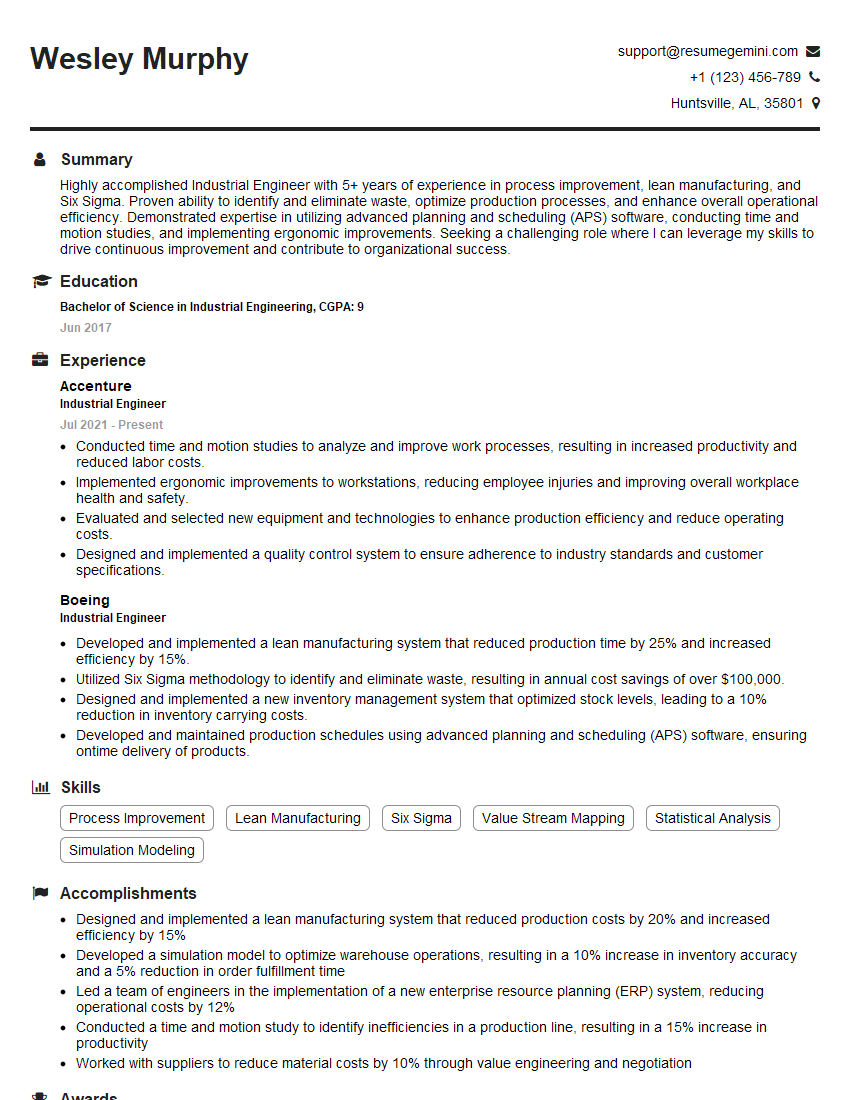
Industrial Engineer Resume Sample

Manufacturing Engineer Resume Sample

Metallurgist Resume Sample

Welding Engineer Resume Sample

Machinist Resume Sample

Sheet Metal Worker Resume Sample
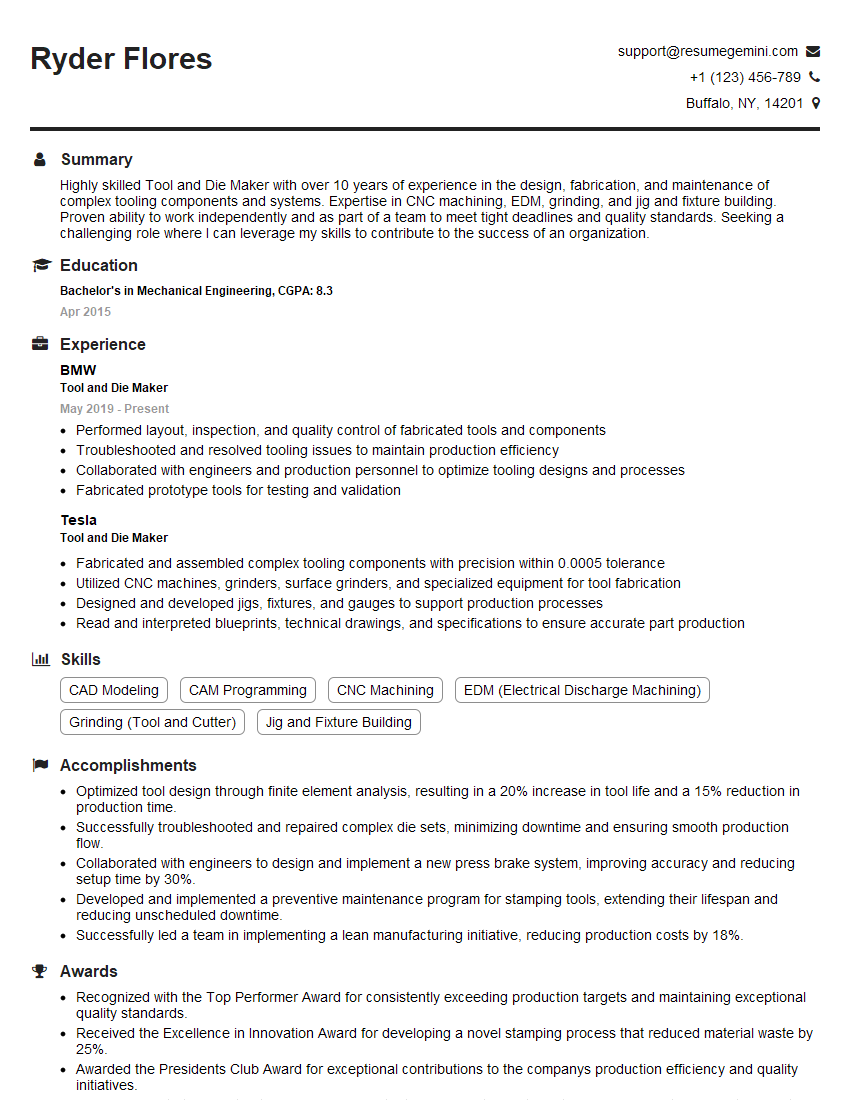
Tool and Die Maker Resume Sample

Quality Control Inspector Resume Sample
Explore more articles
Users Rating of Our Blogs
Share Your Experience
We value your feedback! Please rate our content and share your thoughts (optional).
What Readers Say About Our Blog
I Redesigned Spongebob Squarepants and his main characters of my artwork.
https://www.deviantart.com/reimaginesponge/art/Redesigned-Spongebob-characters-1223583608
IT gave me an insight and words to use and be able to think of examples
Hi, I’m Jay, we have a few potential clients that are interested in your services, thought you might be a good fit. I’d love to talk about the details, when do you have time to talk?
Best,
Jay
Founder | CEO