The right preparation can turn an interview into an opportunity to showcase your expertise. This guide to Welding and Joining Processes interview questions is your ultimate resource, providing key insights and tips to help you ace your responses and stand out as a top candidate.
Questions Asked in Welding and Joining Processes Interview
Q 1. Explain the difference between SMAW and GMAW welding processes.
SMAW (Shielded Metal Arc Welding) and GMAW (Gas Metal Arc Welding) are both arc welding processes, but they differ significantly in their methods and characteristics. Think of SMAW as using a stick electrode coated with flux, while GMAW uses a continuous wire electrode fed automatically. This core difference impacts many aspects of the process.
Electrode: SMAW uses a consumable stick electrode covered in flux that protects the weld puddle from atmospheric contamination and provides shielding gas. GMAW utilizes a continuous solid wire electrode, often requiring a separate shielding gas (like Argon or CO2) supplied externally.
Shielding: SMAW’s shielding comes from the flux coating, which vaporizes during welding. GMAW uses a separate shielding gas supply, offering more precise control over the shielding environment.
Weld puddle control: SMAW offers less control over the weld puddle compared to GMAW. GMAW allows for easier control over the weld bead through adjustments in wire feed speed, voltage, and shielding gas flow. This leads to a greater potential for creating more consistent and aesthetically pleasing welds.
Applications: SMAW excels in outdoor and remote locations due to its portability. GMAW, however, is favored for high-volume production and automated applications due to its efficiency and consistent weld quality.
Cleaning: SMAW requires slag removal after each weld pass, while GMAW typically produces a cleaner weld with less post-weld cleanup needed.
In essence, SMAW is a simpler, more versatile process suitable for diverse applications and environments, while GMAW prioritizes speed, consistency, and automation for higher-volume projects.
Q 2. Describe the various types of welding defects and their causes.
Welding defects are imperfections that compromise the weld’s integrity and performance. They can range from minor cosmetic flaws to critical failures. Identifying and understanding their causes is vital for quality control.
Porosity: Tiny holes in the weld caused by trapped gas during solidification. This can result from moisture in the electrode, shielding gas contamination, or improper welding parameters.
Inclusion: Non-metallic particles (slag, flux) embedded in the weld metal. It typically results from improper cleaning of the weld joint or inadequate shielding.
Undercut: A groove melted into the base metal adjacent to the weld toe. This happens when the arc forces are too high, the travel speed is too fast, or the amperage is too high.
Cracks: Fractures in the weld metal or heat-affected zone (HAZ). They can originate from improper preheat/post-heat, hydrogen embrittlement, or excessive stresses.
Lack of Fusion: Incomplete bonding between the weld metal and the base metal. This is often caused by insufficient heat input, improper cleaning, or contamination.
Lack of Penetration: The weld metal doesn’t reach the desired depth of penetration into the base materials. This is often caused by insufficient heat input or amperage.
Detecting defects often involves visual inspection, radiographic testing (RT), ultrasonic testing (UT), or magnetic particle testing (MT), depending on the severity and the type of weld.
Q 3. What are the safety precautions necessary when performing welding operations?
Welding involves significant safety risks, and adherence to safety protocols is non-negotiable. Here’s a breakdown of essential precautions:
Personal Protective Equipment (PPE): Always wear appropriate PPE, including a welding helmet with the correct shade lens, flame-resistant clothing, gloves, and safety footwear.
Ventilation: Ensure adequate ventilation to remove welding fumes and gases. Use local exhaust ventilation systems when possible.
Fire Prevention: Keep flammable materials away from the welding area. Have a fire extinguisher readily available and know how to use it.
Eye and Skin Protection: Ultraviolet (UV) and infrared (IR) radiation from the welding arc can cause serious eye damage and burns. Always use the appropriate shade welding helmet.
Electrical Safety: Ensure that all electrical connections are properly insulated and grounded to prevent electrical shocks. Use proper lockout/tagout procedures when working on electrical equipment.
Housekeeping: Maintain a clean and organized workspace. Remove any debris or tripping hazards.
Emergency Procedures: Be aware of the emergency procedures and locations of safety equipment (fire extinguishers, first aid kits).
Regular safety training and adherence to company safety policies are crucial for mitigating risks in welding operations. Think of safety as an integral part of the job, not an afterthought.
Q 4. How do you determine the appropriate welding parameters for a specific material and application?
Determining the correct welding parameters requires understanding the base material, the desired weld properties, and the welding process being used. It’s not a one-size-fits-all approach. It often involves a combination of experience, experimentation, and reference to welding procedure specifications (WPS).
Material Properties: Consider the base material’s thickness, type (steel, aluminum, etc.), and mechanical properties. Thicker materials require higher amperage and potentially preheating.
Welding Process: Different processes (SMAW, GMAW, etc.) require different parameter ranges. Consult the manufacturer’s recommendations for the specific equipment.
Desired Weld Properties: The required strength, ductility, and appearance of the weld dictate the parameters. Stronger welds might necessitate higher heat input.
Joint Design: The type of joint (butt, fillet, etc.) influences the heat input and penetration requirements.
Testing and Adjustment: Perform test welds to optimize parameters, evaluating penetration, fusion, and the absence of defects. Adjust voltage, amperage, travel speed, and wire feed speed as necessary.
Welding handbooks, manufacturer specifications, and experience are valuable tools in determining optimal welding parameters. Often, a WPS will specify the exact parameters for a particular material and application to guarantee consistent and quality welds.
Q 5. Explain the principles of weld penetration and fusion.
Weld penetration and fusion are key concepts in achieving a sound weld. They determine the weld’s strength and integrity. Imagine it like gluing two pieces of wood together.
Weld Penetration: This refers to the depth to which the weld metal penetrates into the base material. Sufficient penetration ensures complete fusion and joint strength. Insufficient penetration leads to weakness, while excessive penetration may cause burn-through.
Weld Fusion: This is the complete melting and bonding of the weld metal with the base metal. Proper fusion creates a metallurgical bond, ensuring a continuous and strong joint. Lack of fusion results in a weak point where the weld metal doesn’t adhere to the base metal.
Both penetration and fusion are influenced by parameters like amperage, voltage, travel speed, and preheat temperature. Achieving optimal penetration and fusion requires a balance of these factors. Improper values can lead to defects like lack of fusion, lack of penetration, or undercut.
Q 6. What are the different types of weld joints and when would you use each?
Different weld joints are used depending on the application and the geometry of the components being joined. Each joint type has its strengths and weaknesses.
Butt Joint: Joins two pieces of material end-to-end. Simple but requires precise alignment. Used in pipelines, structural steel, etc.
Fillet Joint: Joins two members at an angle. Easier to execute but less strong than butt joints. Commonly used in framework and box structures.
Lap Joint: Overlaps two members. Simple and easy but not as strong as butt or fillet joints. Used in sheet metal work.
T-Joint: Joins a member at a right angle to another. Versatile but requires careful control to ensure penetration.
Corner Joint: Joins two members at their edges. Similar to a lap joint but less material overlap.
The selection of the joint type depends on factors such as the application’s stress requirements, the ease of welding, and the overall structural design. A structural member might use a butt weld for high strength, while a less critical application might use a fillet or lap weld.
Q 7. What is the significance of preheating and post-heating in welding?
Preheating and post-heating are thermal treatments applied before and after welding to mitigate issues caused by rapid cooling and high heat input during welding. Imagine it as tempering the metal before and after a stressful event.
Preheating: Reduces the cooling rate, preventing the formation of hard, brittle structures (like martensite in steel) that can lead to cracking. It’s particularly important for thicker sections or materials susceptible to cracking. The preheat temperature depends on the base material and its thickness.
Post-heating (Stress Relief): Reduces residual stresses introduced during the welding process. These stresses can cause distortion or cracking over time. Post-heating is usually done at a lower temperature than preheating and for a longer duration.
The need for preheating and post-heating is determined by factors such as the base material, its thickness, the welding process, and the ambient temperature. It’s always best to consult the material specifications and relevant welding codes to determine the appropriate temperatures and durations for these thermal treatments.
Q 8. How do you interpret welding symbols?
Welding symbols are a standardized graphical language used on engineering drawings to communicate all the necessary information about a weld to the welder. Think of them as a concise instruction manual for each weld joint. They convey details such as the type of weld, its dimensions, the location, and any special requirements.
Understanding a welding symbol involves breaking down its components: the reference line, arrow side, other side, and the various symbols and dimensions placed on or near these lines. For example, a symbol with a short vertical line on the arrow side indicates a fillet weld, and the length of that line specifies the weld leg size. A circle on the other side might indicate a weld on the other side of the joint.
Let’s consider a practical example: Imagine a symbol with a filled triangle pointing down, placed on the arrow side, and a number ‘6’ next to it. This indicates a groove weld, with a 6mm depth. The location specified by the arrow shows where this weld should be applied. Mastery involves being able to quickly translate these symbols into the specific actions needed during welding.
Q 9. What are the common non-destructive testing (NDT) methods used for weld inspection?
Non-destructive testing (NDT) is crucial for ensuring the integrity of welds without damaging the base material. Several common methods are employed, each offering unique advantages:
- Visual Inspection (VT): This is the simplest method, involving a thorough visual examination of the weld for any surface imperfections like cracks, porosity, or undercuts. It’s often the first step in any NDT process.
- Radiographic Testing (RT): X-rays or gamma rays penetrate the weld, revealing internal flaws like cracks, inclusions, and lack of fusion. The resulting image shows variations in density, highlighting defects. It’s excellent for detecting internal defects but can be expensive and requires specialized equipment.
- Ultrasonic Testing (UT): This method uses high-frequency sound waves to detect internal flaws. A transducer emits ultrasonic waves, and their reflection patterns reveal defects based on the time of return. UT is highly sensitive and can be used on various weld geometries, but operator skill is crucial for accurate interpretation.
- Magnetic Particle Testing (MT): This method is used for detecting surface and near-surface flaws in ferromagnetic materials. Magnetic particles are applied to the surface, and defects cause leakage of magnetic flux, attracting particles to visualize the flaw. This is a relatively inexpensive and quick method for surface inspections.
- Liquid Penetrant Testing (PT): A liquid dye is applied to the weld surface, penetrating any surface-breaking flaws. After cleaning, a developer reveals the dye, outlining the flaws. This method is suitable for detecting surface cracks in most materials.
The choice of NDT method depends on factors like the type of weld, material, and required sensitivity. Often, a combination of methods is used for a comprehensive assessment.
Q 10. Describe your experience with different types of welding equipment.
My experience encompasses a wide range of welding equipment, from basic to advanced systems. I’m proficient with:
- Shielded Metal Arc Welding (SMAW): I have extensive experience using SMAW machines, including various stick electrodes for different materials and applications. I’m adept at controlling arc length, travel speed, and electrode angle for optimal weld quality.
- Gas Metal Arc Welding (GMAW): I’m skilled in both short-circuiting and pulsed GMAW processes, understanding the nuances of different shielding gases, wire feeds, and travel speeds for various metals. I am comfortable using both manual and robotic GMAW equipment.
- Gas Tungsten Arc Welding (GTAW): I possess significant experience in GTAW, utilizing different filler metals and gas combinations for precise welds on thin materials or applications demanding high cosmetic quality. I understand the complexities of maintaining a stable arc and controlling heat input.
- Flux-Cored Arc Welding (FCAW): I’m comfortable working with self-shielded and gas-shielded FCAW processes, recognizing the benefits of increased deposition rates and reduced spatter compared to other methods. I have experience using different types of FCAW electrodes.
- Resistance Welding (RW): I have familiarity with various resistance welding processes, including spot, seam, and projection welding, understanding the parameters that control weld strength and consistency. I am accustomed to employing appropriate safety measures.
This experience allows me to select the most appropriate equipment and parameters for any specific welding task, ensuring both efficiency and high-quality results.
Q 11. How do you ensure the quality and consistency of welds?
Ensuring consistent and high-quality welds involves a multi-faceted approach that starts before welding even begins and continues through the post-weld inspection.
- Proper Preparation: This includes meticulous cleaning of the base materials, proper joint design, and accurate fitting. A well-prepared joint is crucial for achieving a sound weld.
- Appropriate Welding Parameters: Selecting the correct welding process, electrode, filler metal, shielding gas, and welding current is essential for achieving the desired weld properties. Precise control over these parameters is critical.
- Operator Skill and Training: A highly skilled and trained welder consistently produces welds of superior quality. Ongoing training and adherence to best practices are essential.
- Regular Equipment Maintenance: Ensuring that the welding equipment is well-maintained and calibrated is crucial for ensuring consistent performance and preventing defects.
- Thorough Inspection and Testing: Post-weld inspection, both visual and through NDT methods, is crucial for verifying weld quality and detecting any flaws.
By rigorously following these steps, consistency and quality can be maintained. For example, regularly checking the shielding gas flow rate in GMAW is crucial for preventing porosity. Proper electrode angle and travel speed in SMAW impact the weld penetration.
Q 12. Explain the concept of weldability.
Weldability refers to the ease with which a material can be welded to produce a sound and acceptable weld. It’s not simply about whether a material *can* be welded but also about how easily and reliably a good weld can be achieved. A highly weldable material will produce consistently high-quality welds with minimal effort. Several factors influence a material’s weldability.
- Melting Point and Thermal Conductivity: Materials with low melting points and high thermal conductivity are generally easier to weld, as they are more easily melted and the heat distributes more effectively.
- Chemical Composition: The presence of certain elements can significantly affect weldability. For instance, high sulfur content can cause hot cracking. Certain alloying elements can also significantly affect the material’s melting behavior and its susceptibility to various welding defects.
- Susceptibility to Cracking: Some materials are prone to cracking during welding due to stresses caused by thermal expansion and contraction. This is particularly relevant in high-strength steels and alloys.
- Cleanliness: The cleanliness of the base material is critical. Contaminants such as oxides and oils can interfere with the welding process, leading to poor weld quality. Thorough cleaning before welding is therefore paramount.
Understanding the weldability of a material is crucial for selecting the appropriate welding process, parameters, and filler metal, ensuring the successful production of a high-quality weld.
Q 13. What are the factors affecting the mechanical properties of a weld?
The mechanical properties of a weld are influenced by various factors and can significantly differ from the base metal properties. Achieving consistent and desirable mechanical properties is a primary goal in welding.
- Welding Process: Different welding processes lead to different heat inputs, resulting in varying grain sizes and microstructures in the weld metal. GTAW, for instance, often produces finer grain structures compared to SMAW.
- Heat Input: Higher heat input can lead to coarser grains, reducing strength and toughness. Conversely, lower heat input may lead to increased hardness and susceptibility to cracking.
- Cooling Rate: The rate at which the weld cools after welding significantly impacts its microstructure and properties. Rapid cooling can result in increased hardness but may also increase the risk of cracking.
- Filler Metal: The chemical composition of the filler metal profoundly affects the properties of the weld. Selecting a filler metal with compatible properties to the base metal is crucial.
- Pre- and Post-Weld Heat Treatments: These treatments can modify the weld microstructure and mechanical properties to optimize performance. Stress-relieving heat treatments are often used to reduce residual stresses.
Understanding these factors is crucial for predicting and controlling weld properties. For example, in applications requiring high toughness, a lower heat input welding process and post-weld heat treatment may be employed to optimize the microstructure and mechanical properties.
Q 14. What are your experiences with different filler metals and their applications?
My experience with filler metals is extensive, encompassing various applications based on material compatibility and desired weld properties. I’ve worked with:
- Mild Steel Filler Metals (E6010, E7018): These are commonly used for general-purpose welding of mild steel structures. The choice between these electrodes depends on the position of the weld (vertical, overhead) and the desired weld bead profile.
- Stainless Steel Filler Metals (308, 309): These are crucial for welding stainless steel components, preserving corrosion resistance. The selection depends on the specific grade of stainless steel being welded and the application requirements.
- Aluminum Filler Metals (4043, 5356): I’m adept at welding aluminum alloys, using appropriate filler metals based on the alloy composition. This process demands precise control of the arc and heat input to avoid porosity and cracking.
- High-Strength Low-Alloy (HSLA) Steel Filler Metals: These are used in critical structural applications where high strength and toughness are required. The choice of filler metal must carefully match the base metal’s properties.
- Nickel-based and other specialized filler metals: I have experience with more specialized filler metals, often employed in high-temperature or corrosion-resistant applications. Proper selection is critical to ensure weld integrity and longevity in these specific applications.
My selection of filler metals is always based on a thorough understanding of the base material’s chemistry, the required weld properties, and the specific welding process being utilized. This ensures the successful and reliable joining of various components.
Q 15. Describe your experience with troubleshooting welding problems.
Troubleshooting welding problems requires a systematic approach. I start by carefully examining the weld defect – is it porosity, cracking, undercutting, incomplete fusion, or something else? Then, I consider the welding process used (e.g., GMAW, SMAW, GTAW), the base materials, the filler metal, and the welding parameters (voltage, amperage, travel speed, shielding gas).
For example, if I encounter excessive porosity in a GMAW weld, I might first check for moisture contamination in the shielding gas or the welding wire. I would then verify the correct gas flow rate and check for leaks in the gas lines. If the problem persists, I would investigate other factors, like improper cleaning of the base material, incorrect wire feed speed, or an inadequate heat input.
Another common issue is cracking. This can be caused by several factors including high restraint, rapid cooling, hydrogen embrittlement, or improper preheating. To address this, I would analyze the joint design, consider preheating to control cooling rates, and carefully select a filler metal with low hydrogen content. I always maintain meticulous records of the process and findings for future reference and continuous improvement.
Career Expert Tips:
- Ace those interviews! Prepare effectively by reviewing the Top 50 Most Common Interview Questions on ResumeGemini.
- Navigate your job search with confidence! Explore a wide range of Career Tips on ResumeGemini. Learn about common challenges and recommendations to overcome them.
- Craft the perfect resume! Master the Art of Resume Writing with ResumeGemini’s guide. Showcase your unique qualifications and achievements effectively.
- Don’t miss out on holiday savings! Build your dream resume with ResumeGemini’s ATS optimized templates.
Q 16. How do you handle welding-related emergencies?
Welding-related emergencies require immediate and decisive action. Safety is paramount. My first step is to secure the area, ensuring the safety of myself and others. This includes isolating the power source, extinguishing any fires, and evacuating personnel if necessary. The specific response will depend on the nature of the emergency.
For instance, if a fire erupts, I would use the appropriate fire extinguisher (usually CO2 for electrical fires) and follow established fire safety protocols. If there’s an electrical shock, I would immediately disconnect the power and administer first aid as required, calling for emergency medical services if needed. If a weld fails catastrophically, I would assess the structural integrity of the affected area and take measures to prevent further damage. Post-emergency, a thorough investigation is necessary to determine the root cause and prevent recurrence.
Q 17. What is your experience with different types of brazing and soldering techniques?
I have extensive experience with various brazing and soldering techniques. Brazing involves joining metals using a filler metal with a melting point above 450°C (842°F), but below the melting point of the base metals. Soldering uses a filler metal with a melting point below 450°C (842°F).
- Brazing: I’m proficient in furnace brazing, torch brazing, and induction brazing. Furnace brazing allows for consistent and even heating of large components, while torch brazing offers greater flexibility for smaller or more complex parts. Induction brazing provides fast and precise heating.
- Soldering: I have expertise in soft soldering (using lead-tin alloys) and hard soldering (using higher-melting-point alloys like silver or brass). Soft soldering is ideal for low-temperature applications, while hard soldering provides stronger joints.
The choice of brazing or soldering depends on factors like the required joint strength, the base materials, and the application’s operating temperature. For example, I would choose brazing for a high-strength joint in a structural component, whereas soft soldering might be suitable for electrical connections.
Q 18. Explain the difference between fusion welding and solid-state welding.
Fusion welding and solid-state welding are fundamentally different processes. In fusion welding, the base metals are melted, mixed, and solidified to form a joint. This melting process is essential for creating a strong bond. Examples include GMAW (Gas Metal Arc Welding), SMAW (Shielded Metal Arc Welding), and GTAW (Gas Tungsten Arc Welding).
In contrast, solid-state welding joins metals without melting them. The atoms of the base metals are forced together under pressure and/or heat, creating a metallurgical bond. This avoids the risk of melting and associated issues like distortion or changes in material properties. Examples of solid-state welding processes include friction stir welding, diffusion bonding, and ultrasonic welding.
The choice between these methods depends on the application’s requirements. Fusion welding is generally more versatile but can lead to distortion or heat-affected zones. Solid-state welding is preferred when maintaining material properties is critical or when precise control over the joining process is needed.
Q 19. How do you ensure compliance with relevant welding codes and standards?
Compliance with welding codes and standards is crucial for ensuring the safety and integrity of welded structures. I am familiar with various codes, including AWS D1.1 (Structural Welding Code – Steel), ASME Section IX (Welding and Brazing Qualifications), and ISO 15614 (Welding and Allied Processes – Qualification Test of Welders).
My approach to ensure compliance involves several key steps: using qualified welders and welding procedures, meticulously documenting all welding activities, performing thorough inspections (both visual and non-destructive testing), and maintaining a comprehensive quality control program. I understand that adhering to these codes isn’t just about following regulations; it’s about protecting the safety and integrity of the structure we build. For example, failing to follow the correct preheat and interpass temperature requirements outlined in the code can lead to weld cracking, compromising the entire structure.
Q 20. What is your familiarity with different types of welding fixtures and jigs?
Welding fixtures and jigs are essential for ensuring consistent weld quality and productivity. My experience encompasses a wide range of these tools, from simple clamps and tacking fixtures to complex, automated welding positioners.
I’m familiar with different types of fixtures, including:
- Clamps and Vise: Simple and widely used for holding smaller parts.
- Welding Positioners: Rotate and tilt large workpieces to optimize welding access and reduce operator fatigue. I’ve worked with both manual and automated positioners.
- Fixture Tables: Provide stable mounting points for parts using specialized holding devices. They’re crucial for repeatability and high-volume production.
- Custom Fixtures: Designed for specific geometries. I often collaborate with design engineers to develop custom fixtures for intricate welding tasks.
Proper fixture design is critical for preventing distortion during welding, ensuring repeatability, and increasing overall efficiency. Poor fixture design can lead to inaccurate welds, increased rework, and potential safety hazards.
Q 21. Describe your experience with automated welding systems.
I have significant experience with automated welding systems, including robotic welding and automated guided vehicles (AGVs). Robotic welding offers several advantages, including improved consistency, higher speeds, reduced labor costs, and improved safety. I’m proficient in programming and operating various robotic welding systems, using industry-standard software.
My experience also includes working with different types of automated welding processes, such as automated GMAW, resistance welding, and laser welding. These systems are particularly effective for high-volume production runs where consistent weld quality is paramount. For example, I’ve been involved in projects that utilize robotic welding cells for the production of automotive parts, where precision and high-throughput are essential.
Programming and maintaining these systems requires specialized knowledge of robotics, PLC programming, and sensor technologies. I am also familiar with troubleshooting these automated systems and ensuring that they are operating safely and efficiently.
Q 22. How do you manage a welding team effectively?
Managing a welding team effectively involves a blend of technical expertise, leadership skills, and strong communication. It’s not just about ensuring welds are sound, but also about fostering a safe and productive environment.
- Safety First: Regular safety briefings, ensuring adherence to safety protocols (including proper PPE), and conducting thorough risk assessments for each job are paramount. I always lead by example, demonstrating safe welding practices.
- Skill Development: Regular training and skill assessments are crucial. This involves identifying skill gaps, providing targeted training (e.g., on new techniques or equipment), and encouraging continuous learning through mentorship programs.
- Clear Communication: Open communication channels are vital. Daily briefings, clear job instructions, and proactive feedback sessions prevent misunderstandings and ensure everyone is on the same page. I utilize both formal and informal communication methods to ensure clarity.
- Motivation and Teamwork: Building a positive team spirit through recognition of good work, fostering collaboration, and addressing issues fairly are vital for morale and productivity. I believe in empowering team members and celebrating successes together.
- Quality Control: Implementing a robust quality control system, including regular inspections and documentation, is crucial. This ensures consistently high-quality welds and adherence to project specifications. Statistical process control (SPC) techniques can be invaluable here.
For example, on a recent pipeline project, I implemented a peer-review system where welders inspected each other’s work, leading to a significant reduction in weld defects and a boost in team cohesion.
Q 23. Explain your experience with different types of welding processes used in pipeline construction.
In pipeline construction, several welding processes are employed depending on the pipe diameter, material, and environmental conditions. My experience encompasses:
- Gas Metal Arc Welding (GMAW): Widely used for its speed and versatility, especially on larger diameter pipes. I’m proficient in various GMAW variations like short-circuiting transfer for thinner materials and pulsed GMAW for improved control and bead appearance.
- Gas Tungsten Arc Welding (GTAW): Essential for high-quality welds on critical components or when superior aesthetics are needed. My expertise includes using different filler metals and shielding gases to achieve optimal weld properties.
- Submerged Arc Welding (SAW): A highly productive process used for long, continuous welds on large diameter pipelines, offering excellent penetration and high deposition rates. I’m experienced in setting up and managing SAW operations, including flux selection and wire feed control.
- Flux Cored Arc Welding (FCAW): Often preferred in outdoor conditions due to its self-shielding capabilities. I’m familiar with different flux core types and their suitability for various applications.
The choice of process is dictated by factors like the pipe material (carbon steel, stainless steel, etc.), the required weld quality, the environment (e.g., underwater, offshore), and the project timeline. I always ensure the selected process meets the relevant codes and standards.
Q 24. What is your understanding of the effects of heat input on weld quality?
Heat input is a critical parameter in welding, directly affecting the weld’s microstructure and mechanical properties. It’s defined as the amount of heat supplied to the weld per unit length.
High heat input can lead to:
- Increased heat-affected zone (HAZ): A larger HAZ can cause increased risk of cracking and reduced toughness.
- Coarse grain structure: Leading to lower strength and ductility.
- Potential for porosity: More time at high temperature allows gases to be trapped.
Low heat input can result in:
- Reduced penetration: Incomplete fusion can compromise weld integrity.
- Increased risk of cracking: Rapid cooling can cause residual stresses to build up.
- Higher hardness: This may lead to increased brittleness.
Optimal heat input is crucial for achieving a balanced microstructure and desirable mechanical properties, like high strength and toughness. The required heat input depends heavily on the base material, welding process, and desired weld quality. Understanding the relationship between heat input and weld properties is key to ensuring weld quality.
Q 25. How do you maintain and calibrate welding equipment?
Regular maintenance and calibration of welding equipment are essential for ensuring consistent weld quality, operator safety, and productivity. My approach is based on a preventive maintenance schedule combined with regular checks.
- Preventive Maintenance: This involves regular cleaning of equipment, checking for wear and tear, replacing consumable parts (e.g., contact tips, nozzles), and lubricating moving parts. The frequency depends on usage but often involves daily and weekly checks.
- Calibration: Welding equipment requires periodic calibration to ensure accuracy and consistency. This includes verifying voltage, amperage, and gas flow rates. I use calibrated instruments and follow manufacturer’s guidelines for calibration procedures. Calibration records are meticulously maintained.
- Troubleshooting: The ability to quickly identify and resolve equipment malfunctions is vital. This requires a thorough understanding of the equipment’s operation and common issues. I maintain comprehensive troubleshooting guides and access to technical manuals.
- Safety Checks: Before each use, I always visually inspect the equipment for any signs of damage or defects, ensuring all safety interlocks and grounding systems are functioning correctly. This is a non-negotiable safety step.
For example, I recently identified a slight drift in the amperage output of a GMAW machine during routine calibration. This small discrepancy, if left unaddressed, could have compromised the weld quality on a large project. Addressing it promptly prevented potential issues and delays.
Q 26. What is your experience with resistance welding processes?
Resistance welding encompasses several processes that utilize electrical resistance heat to join metals. My experience includes:
- Spot Welding: Joining sheets of metal by applying pressure and current through electrodes. I’m proficient in optimizing parameters like current, time, and pressure to achieve strong, consistent welds.
- Seam Welding: Creating continuous welds in overlapping sheet metals using rotating electrodes. I have experience setting up and operating seam welding machines, adjusting parameters for different thicknesses and materials.
- Projection Welding: Similar to spot welding, but using projections on one or both sheets to concentrate the current and facilitate the weld. I’ve worked on projects requiring precise projection design for optimal weld strength.
Resistance welding is particularly suitable for high-volume production of sheet metal components. Precise control of the welding parameters is crucial to achieve high-quality welds consistently, and I’m adept at optimizing these parameters based on material type and desired weld characteristics. The selection of the appropriate electrodes and their maintenance are critical aspects for efficient and reliable operation.
Q 27. Explain the importance of using proper personal protective equipment (PPE) in welding.
Proper Personal Protective Equipment (PPE) is non-negotiable in welding. Welding generates intense heat, ultraviolet radiation, and potentially harmful fumes and sparks; PPE safeguards welders from these hazards.
- Welding Helmet/Face Shield: Provides crucial protection for the eyes and face against intense UV radiation, infrared radiation, and sparks. The helmet should have the correct shade filter for the welding process.
- Welding Gloves: Protect hands from burns, sparks, and molten metal. They should be made of heat-resistant material and provide good dexterity.
- Welding Jacket/Apron: Protects the body from burns, sparks, and spatter. It should be made of durable, flame-resistant material.
- Footwear: Safety boots with steel toes protect feet from dropped objects and molten metal.
- Respiratory Protection: When working with certain materials or in confined spaces, a respirator is essential to protect against harmful fumes.
- Hearing Protection: Some welding processes produce significant noise, so hearing protection is often required.
Neglecting PPE can lead to serious injuries, including eye damage, burns, and respiratory problems. It’s not only about individual safety but also about maintaining a safe working environment for everyone on site. Enforcing the proper use of PPE is a critical element of my role as a welding supervisor.
Q 28. Describe a challenging welding project and how you overcame its difficulties.
One challenging project involved welding a complex stainless steel assembly for a pharmaceutical processing plant. The assembly had intricate geometries and required extremely precise welds with minimal distortion. The challenge lay in maintaining the required weld quality while minimizing distortion to exacting tolerances.
To overcome this, I employed a multi-pronged approach:
- Pre-weld planning: Thoroughly reviewed the design specifications and developed a detailed welding procedure that included preheating the material, optimizing welding parameters (heat input, travel speed), and utilizing specialized filler metals.
- Fixture Design: Designed and implemented custom fixtures to precisely position and restrain the components during welding, minimizing distortion.
- Intermittent Welding: Implemented an intermittent welding technique to allow for controlled cooling and reduce the build-up of residual stresses.
- Post-weld Inspection: Implemented rigorous non-destructive testing (NDT) procedures, including dye penetrant inspection and radiographic testing, to verify weld quality and identify any defects early.
- Teamwork: Worked closely with the design engineers and the quality control team to continuously monitor the welding process and make necessary adjustments.
Through careful planning, precise execution, and effective teamwork, we successfully completed the project on time and to the specified standards. This highlighted the importance of a holistic approach to problem-solving in complex welding projects.
Key Topics to Learn for Welding and Joining Processes Interview
- Arc Welding Processes: Understanding different arc welding techniques (SMAW, GMAW, GTAW, FCAW), their applications, advantages, and limitations. Consider the impact of variables like amperage, voltage, and shielding gas on weld quality.
- Weld Joint Design: Knowing how to select appropriate joint designs (butt, lap, tee, corner) based on application requirements and material properties. Analyze the strengths and weaknesses of different joint configurations.
- Welding Metallurgy: Grasping the metallurgical changes that occur during welding, including heat-affected zones (HAZ), and how these changes affect the mechanical properties of the weld. Understand common weld defects and their causes.
- Non-Destructive Testing (NDT): Familiarity with various NDT methods used to inspect welds for defects (visual inspection, radiography, ultrasonic testing, magnetic particle testing). Be prepared to discuss their applications and limitations.
- Safety Procedures and Regulations: Demonstrate a strong understanding of relevant safety regulations and best practices in welding. This includes PPE, hazard identification, and emergency procedures.
- Practical Application: Be ready to discuss specific projects where you applied your welding skills, highlighting problem-solving approaches and the challenges you overcame. Quantify your achievements whenever possible.
- Advanced Welding Techniques: Explore specialized welding processes such as friction stir welding, laser beam welding, or electron beam welding, depending on your experience and the job description.
Next Steps
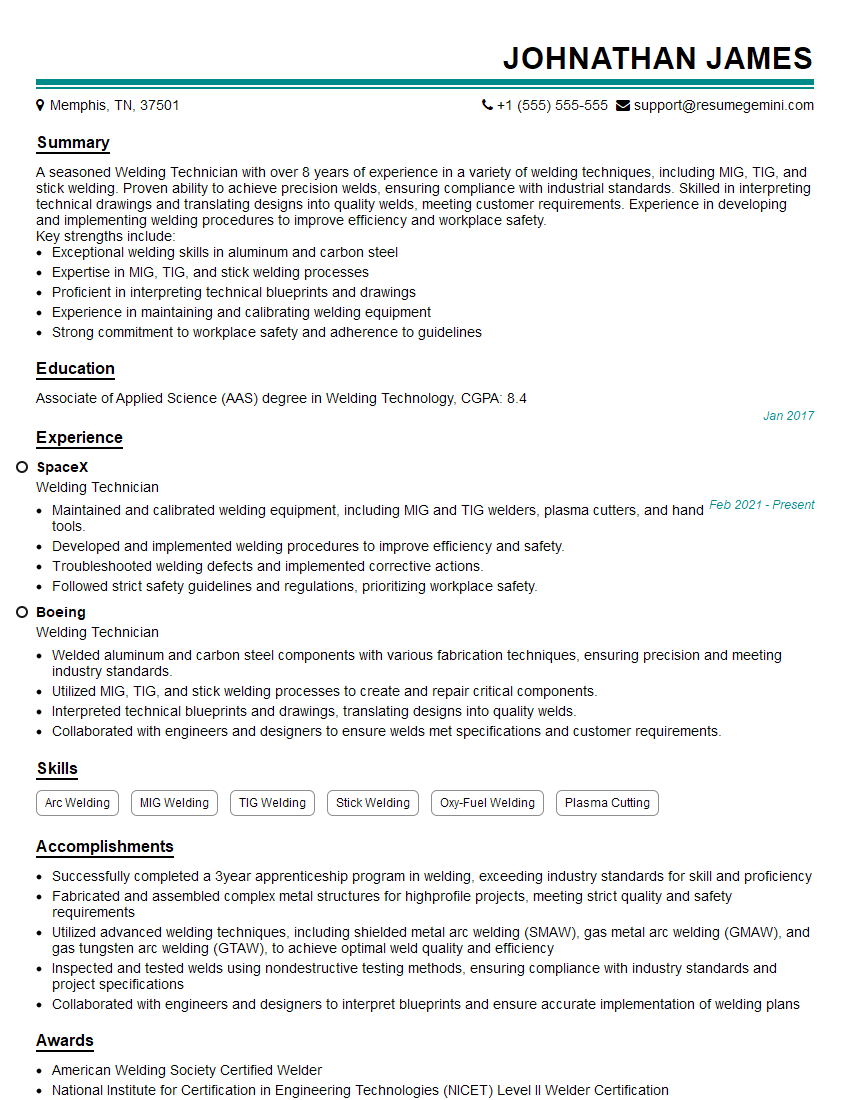
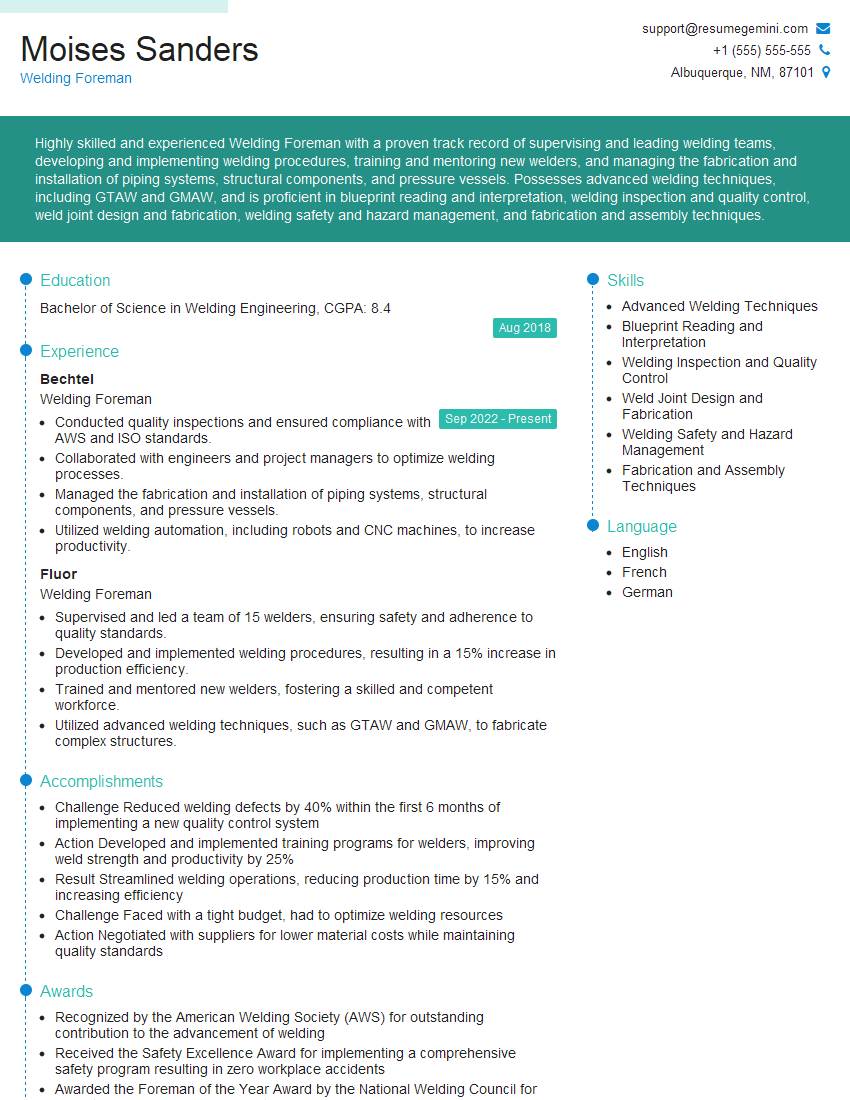
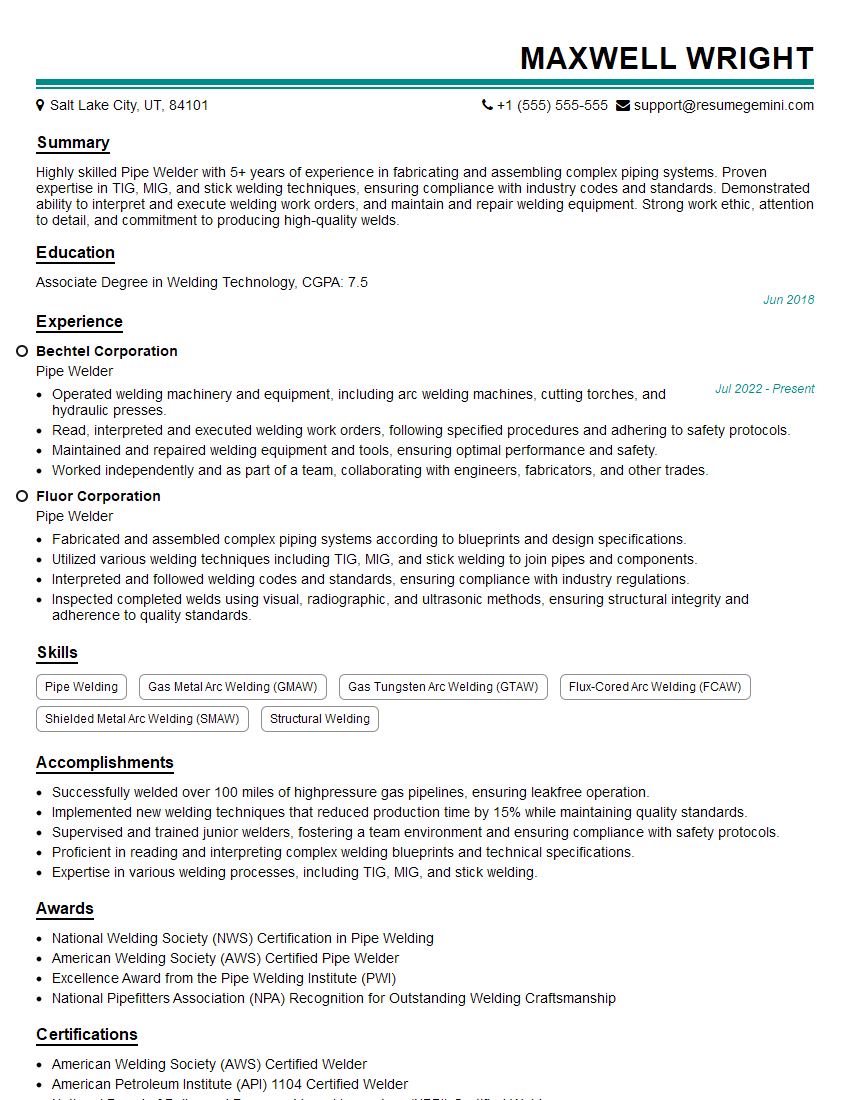
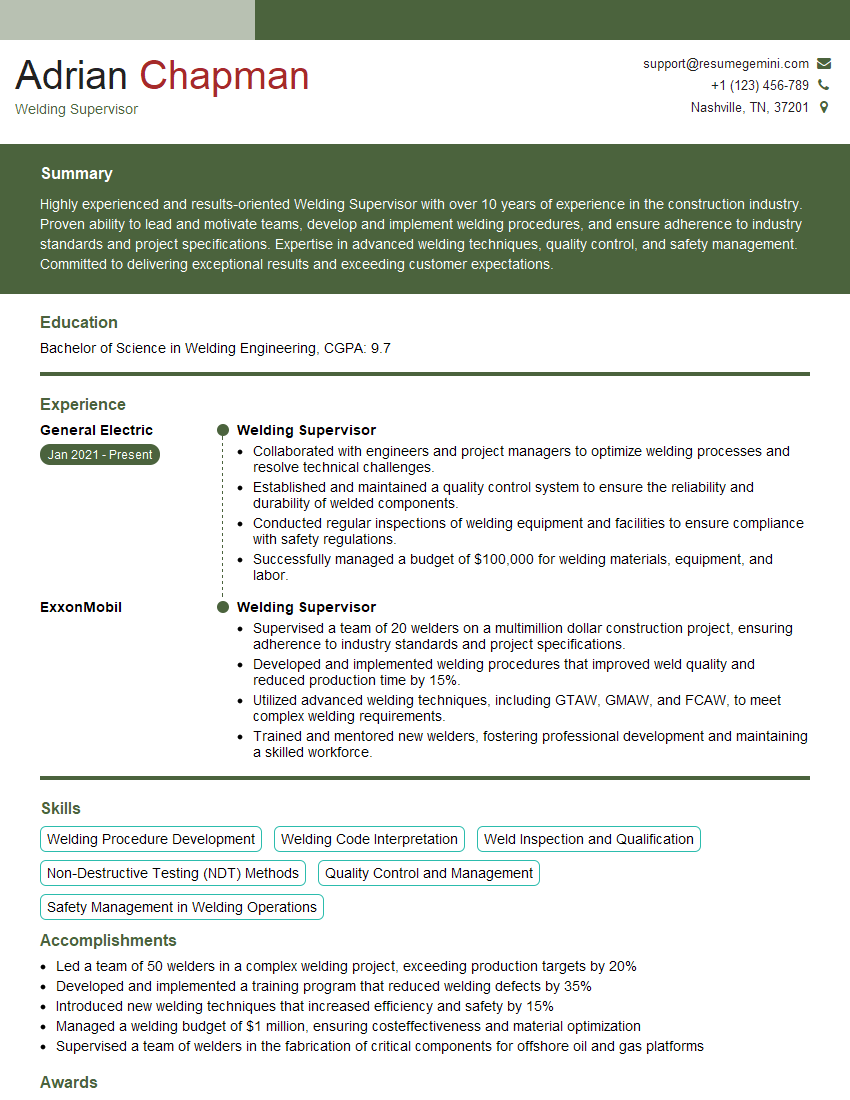
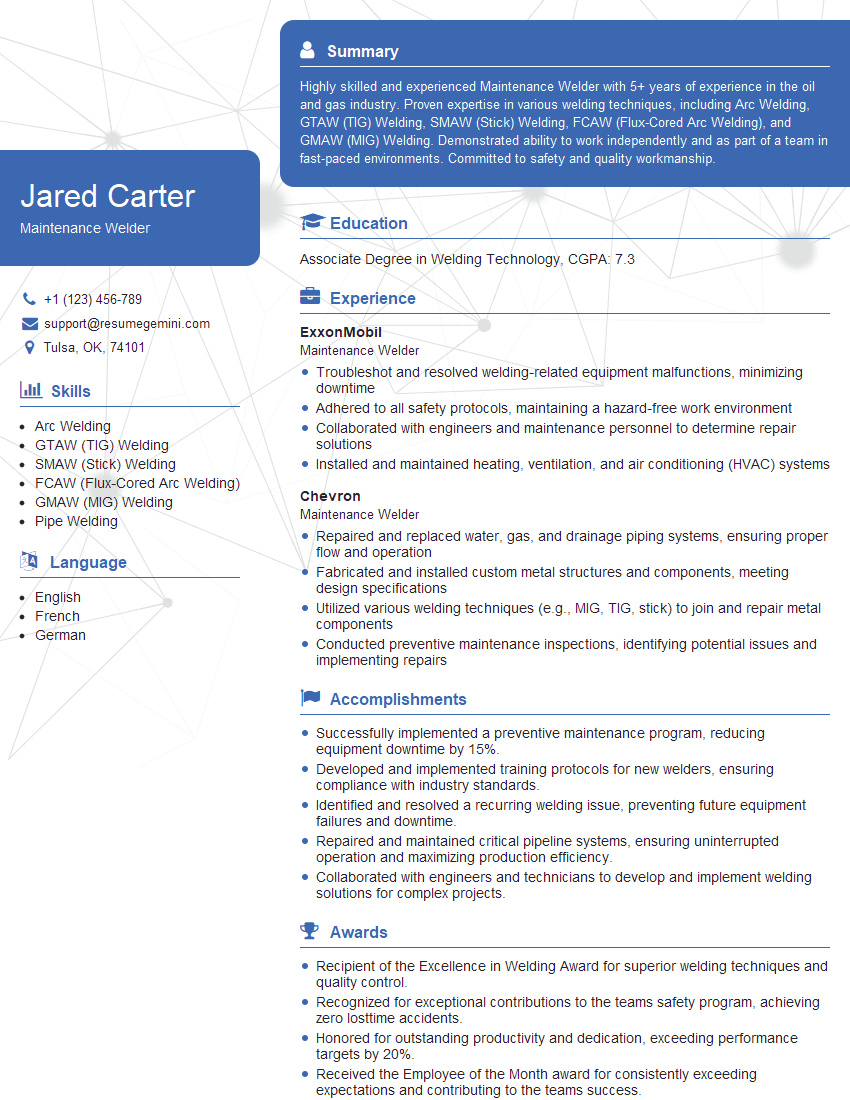
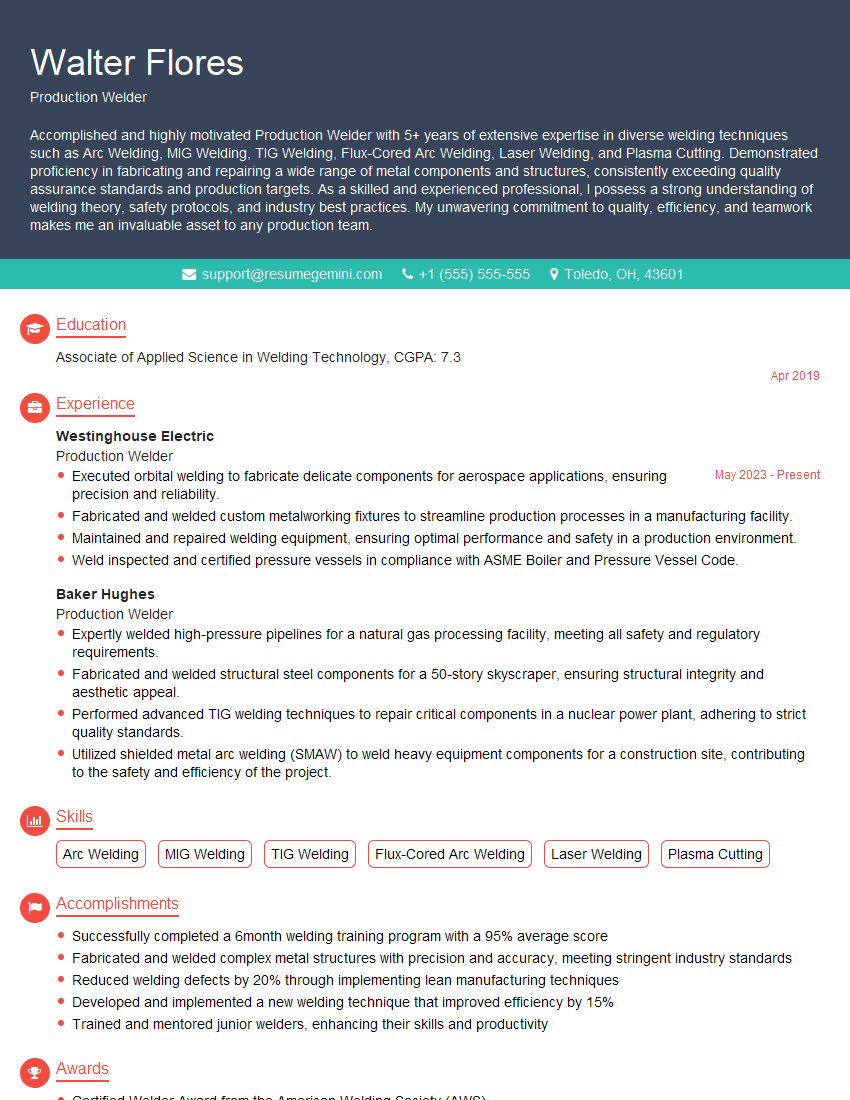
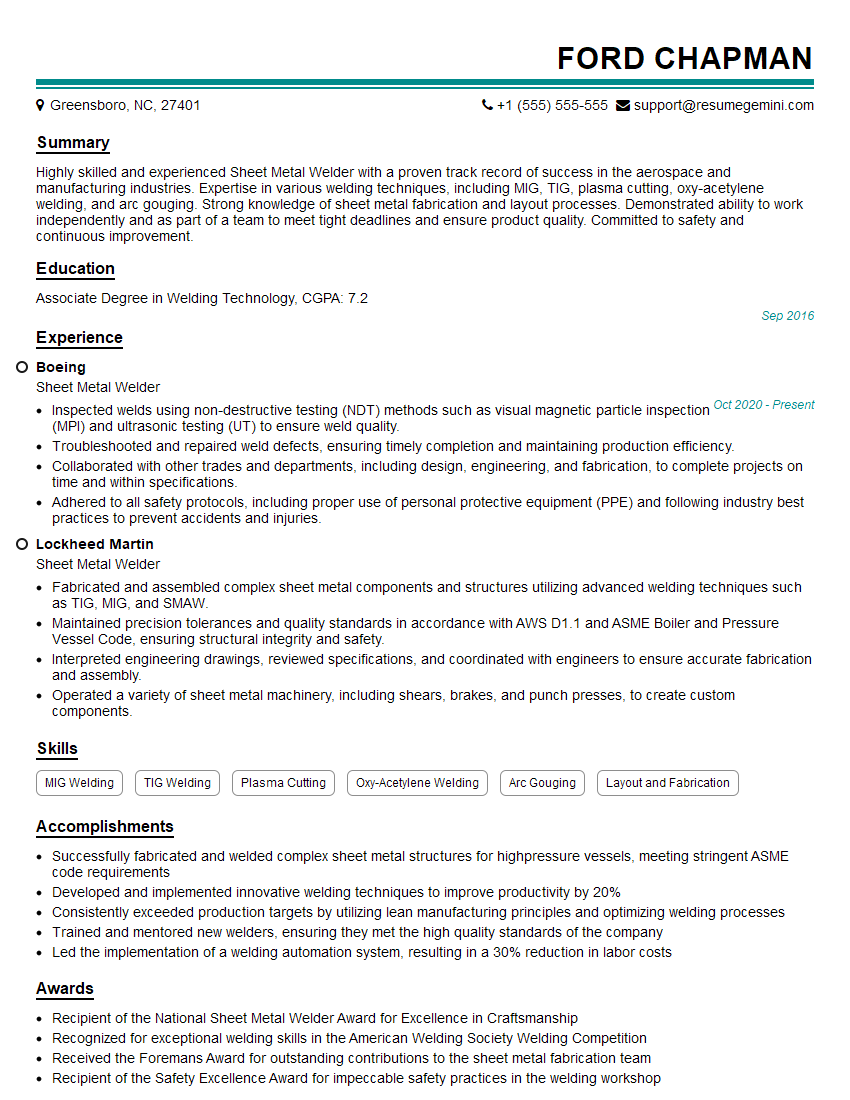
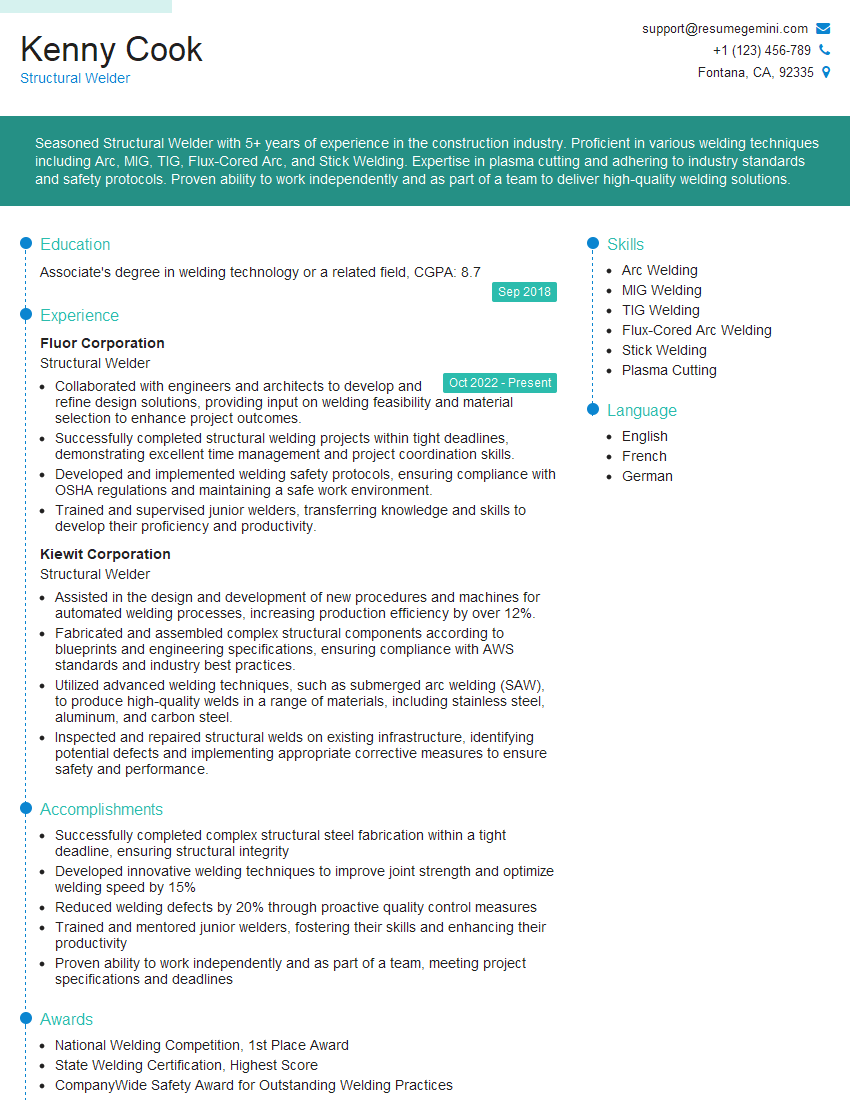
Mastering Welding and Joining Processes is crucial for career advancement in this in-demand field. A strong understanding of these principles will significantly improve your job prospects and open doors to more challenging and rewarding roles. Creating a well-structured, ATS-friendly resume is essential to getting your application noticed. ResumeGemini can help you build a professional and impactful resume tailored to the specific requirements of welding and joining positions. We provide examples of resumes specifically designed for this industry to help you craft a compelling application that showcases your skills and experience. Take advantage of this resource to enhance your job search and land your dream job!

Explore more articles
Users Rating of Our Blogs
Share Your Experience
We value your feedback! Please rate our content and share your thoughts (optional).
What Readers Say About Our Blog
I Redesigned Spongebob Squarepants and his main characters of my artwork.
https://www.deviantart.com/reimaginesponge/art/Redesigned-Spongebob-characters-1223583608
IT gave me an insight and words to use and be able to think of examples
Hi, I’m Jay, we have a few potential clients that are interested in your services, thought you might be a good fit. I’d love to talk about the details, when do you have time to talk?
Best,
Jay
Founder | CEO