Cracking a skill-specific interview, like one for ESG Risk Assessment, requires understanding the nuances of the role. In this blog, we present the questions you’re most likely to encounter, along with insights into how to answer them effectively. Let’s ensure you’re ready to make a strong impression.
Questions Asked in ESG Risk Assessment Interview
Q 1. Describe your experience conducting ESG materiality assessments.
ESG materiality assessments are crucial for understanding which environmental, social, and governance (ESG) issues are most significant to a company’s business strategy, financial performance, and long-term value. I’ve conducted numerous materiality assessments, employing a multi-step approach. First, we identify a broad range of potential ESG issues relevant to the company’s industry and operations. This involves reviewing industry best practices, regulatory requirements, and stakeholder expectations. Next, we assess the relative importance of each issue from both an internal (impact on the company) and external (impact on stakeholders) perspective. This often involves stakeholder engagement – surveys, interviews with employees, customers, investors, and community members – to understand their priorities and concerns. Finally, we prioritize the most material issues, focusing on those that pose the greatest risks or present the most significant opportunities. For example, a clothing manufacturer might find that labor practices (social) and water usage (environmental) are highly material, depending on stakeholder expectations and internal operational impacts. We then visually represent the material issues using a materiality matrix, often mapping the issues’ importance to the company against their importance to stakeholders.
One project involved a large food processing company where we found that water scarcity (environmental) and supply chain transparency (social) emerged as the most material issues after stakeholder engagement. These findings directly influenced their sustainability strategy and reporting.
Q 2. Explain the differences between ESG risks and opportunities.
ESG risks and opportunities are two sides of the same coin, both stemming from environmental, social, and governance factors. ESG risks represent potential negative impacts on a company’s value, financial performance, or operational stability. These could be reputational damage from unethical labor practices, physical damage from climate change events, or regulatory penalties for environmental violations. For instance, a company failing to mitigate its carbon footprint risks hefty fines and potential damage to its brand reputation.
ESG opportunities, on the other hand, are potential positive impacts resulting from proactive ESG management. These could be increased market share from developing sustainable products, cost savings from energy efficiency improvements, or access to lower-cost capital from investors prioritizing ESG performance. A company investing in renewable energy sources not only reduces its environmental footprint, but also potentially lowers its energy costs and improves its investor appeal. The difference lies in whether the factor presents a potential threat (risk) or potential benefit (opportunity).
Q 3. How do you identify and prioritize ESG risks within a company?
Identifying and prioritizing ESG risks requires a systematic approach. First, we conduct a thorough risk assessment, building on the materiality assessment, using qualitative and quantitative methods to gauge the likelihood and potential impact of each identified material ESG issue. We use scenario planning to consider a range of potential future events and their potential consequences. This allows for a more robust risk analysis. For example, we might assess the probability and potential impact of a major supply chain disruption due to extreme weather events (climate risk) for a manufacturing company. We would then weigh those probabilities and impacts against their likelihood, leading to a risk matrix that helps prioritize actions.
Prioritization usually involves a risk matrix, combining the likelihood of an event occurring with its potential impact. Risks are ranked based on their score, with high-likelihood, high-impact risks addressed first. We then develop specific mitigation strategies for each prioritized risk, incorporating them into the company’s overall risk management framework and reporting structure.
Q 4. What frameworks (e.g., GRI, SASB, TCFD) are you familiar with and how have you applied them?
I am proficient in several leading ESG frameworks, including the Global Reporting Initiative (GRI), the Sustainability Accounting Standards Board (SASB), and the Task Force on Climate-related Financial Disclosures (TCFD). GRI provides a comprehensive framework for sustainability reporting, covering a broad range of environmental, social, and governance issues. I’ve used GRI to help organizations structure their sustainability reports and ensure transparency and consistency in their disclosures. SASB focuses on industry-specific ESG metrics that are financially material, helping companies identify the ESG factors most likely to affect their bottom line. I’ve applied SASB standards when assisting companies to improve financial reporting and investor communication about ESG performance. The TCFD framework focuses specifically on climate-related financial disclosures, guiding organizations to assess and report on climate-related risks and opportunities. I have utilized the TCFD framework to assist several companies in conducting climate scenario analysis and developing climate change adaptation strategies. Each framework offers a distinct focus, and the choice depends on the specific reporting needs and objectives.
Q 5. How do you integrate ESG factors into investment decisions?
Integrating ESG factors into investment decisions involves a multi-faceted approach. We use ESG ratings and scores, provided by reputable agencies such as MSCI and Sustainalytics, as screening tools. These ratings assess a company’s ESG performance across various factors. Then, we incorporate ESG data into traditional financial analysis, looking for potential financial impacts of ESG factors. A company with strong ESG performance might have a lower cost of capital or a greater ability to attract and retain talent, impacting its profitability. We also consider ESG risks and opportunities using scenario analysis and other quantitative and qualitative techniques, assessing how ESG factors might affect a company’s future financial performance. This helps inform our investment strategies – we may choose to invest in companies with strong ESG profiles or divest from those with significant ESG risks.
For example, we might favor a company with a strong track record of reducing its carbon footprint and investing in renewable energy, reflecting a reduced exposure to climate-related risks and a proactive approach to ESG.
Q 6. What are the key regulatory and reporting requirements related to ESG?
The regulatory landscape for ESG is rapidly evolving, varying by jurisdiction. In many regions, we’re seeing a push for mandatory ESG disclosures, moving beyond voluntary reporting. For example, the EU’s Corporate Sustainability Reporting Directive (CSRD) mandates ESG reporting for a wide range of companies. Similarly, the SEC in the United States has introduced new rules requiring certain companies to disclose climate-related risks. These regulations typically focus on specific aspects of ESG, such as climate-related risks, greenhouse gas emissions, diversity and inclusion metrics, and human rights impacts. Staying informed about the latest regulations is vital because compliance is not just about avoiding penalties but also about enhancing investor confidence and maintaining stakeholder trust. Non-compliance can lead to significant fines and reputational damage.
Beyond specific regulations, many jurisdictions are developing common ESG reporting standards to improve comparability and reduce the burden on companies. The International Sustainability Standards Board (ISSB) is working towards globally recognized standards that will help to harmonize reporting practices worldwide.
Q 7. Describe your experience with ESG data collection and analysis.
ESG data collection and analysis is a crucial component of any effective ESG risk assessment. My experience involves utilizing various methods for data acquisition, starting with reviewing publicly available information like company sustainability reports, annual reports, and news articles. I also leverage ESG data providers (e.g., Bloomberg, Refinitiv) which offer comprehensive databases on ESG metrics. Additionally, I frequently engage in direct communication with companies, requesting specific data to supplement existing information. This can include surveys, interviews, or site visits. Furthermore, I’m skilled in employing data analytics techniques to analyze the collected data, identifying trends, correlations, and material ESG issues. This process goes beyond simply gathering data; it’s about ensuring the accuracy, reliability, and consistency of the data, addressing potential biases and gaps in information.
For example, when assessing water usage for a manufacturing company, we might combine publicly available data with direct measurements from their facilities and information gained through interviews with operational staff to ensure a complete and accurate picture of their water consumption and efficiency.
Q 8. How do you assess the credibility and reliability of ESG data?
Assessing the credibility and reliability of ESG data is crucial for making informed decisions. It’s like evaluating the ingredients in a recipe – you wouldn’t use questionable ingredients, right? We need to ensure the data is accurate, consistent, and comparable.
- Data Source Credibility: I assess the reputation and expertise of the data provider. Are they independent and recognized experts? Do they have robust methodologies? For example, I prefer data from established providers with transparent methodologies over less-known sources.
- Data Validation: I cross-reference data from multiple sources to identify discrepancies. This triangulation helps reveal inconsistencies and potential biases. Think of it as fact-checking from several reputable news outlets.
- Methodology Scrutiny: I thoroughly evaluate the data collection methodology. Is the sample size adequate? Are the metrics used appropriate and consistently applied? I look for clear definitions and consistent application of standards like the Global Reporting Initiative (GRI) standards.
- Materiality Assessment: I evaluate whether the data is material to the organization’s overall ESG performance and risk profile. Not all ESG data is equally relevant; we focus on the aspects most significant to the business and its stakeholders.
For instance, when assessing a company’s carbon footprint, I wouldn’t rely solely on self-reported data. I’d compare it with industry benchmarks, regulatory filings, and data from independent organizations to validate the claims. The more sources confirm the data, the higher the credibility.
Q 9. Explain your understanding of scenario planning in relation to climate change risk.
Scenario planning for climate change risk involves imagining various plausible future scenarios and assessing their potential impact on the organization. It’s like playing ‘what if’ with the future, but with a structured and analytical approach. This allows us to anticipate and prepare for potential disruptions.
- Identifying Key Climate-Related Risks: We begin by identifying the specific climate-related risks relevant to the organization. This could include physical risks like extreme weather events or transition risks like changes in regulations or consumer preferences.
- Developing Scenarios: We create various plausible scenarios, ranging from optimistic to pessimistic, based on different levels of climate change mitigation and adaptation efforts. For example, we might model scenarios with varying degrees of carbon pricing or temperature increases.
- Assessing Impacts: We assess the potential impacts of each scenario on the organization’s operations, financial performance, and reputation. This could involve quantitative analysis using models or qualitative assessments based on expert judgment.
- Developing Strategies: Based on the scenario analysis, we develop strategies to mitigate or adapt to the identified risks. These strategies could include investments in renewable energy, climate risk insurance, or supply chain diversification.
For example, an energy company might use scenario planning to assess the impact of different carbon pricing policies on its profitability and then adjust its investment portfolio accordingly. A coastal city might use scenarios to evaluate the risk of sea-level rise and plan for infrastructure improvements.
Q 10. How would you measure the effectiveness of an ESG initiative?
Measuring the effectiveness of an ESG initiative is essential to demonstrate progress and identify areas for improvement. It’s like tracking your fitness goals – you need to measure your progress to see if your efforts are paying off.
- Defining Key Performance Indicators (KPIs): The first step is to define clear and measurable KPIs aligned with the initiative’s goals. For example, for a waste reduction initiative, a KPI could be the percentage reduction in waste sent to landfills.
- Data Collection and Analysis: We collect relevant data to track progress against the defined KPIs. This might involve using internal management information systems, external datasets, or conducting surveys.
- Benchmarking: We compare performance against industry benchmarks and best practices to identify areas where the organization is performing well or falling short. This provides valuable context and shows how progress compares to peers.
- Stakeholder Engagement: Measuring effectiveness also involves assessing stakeholder perceptions and satisfaction with the initiative. This ensures that the initiative is meeting the needs of various stakeholders.
- Continuous Improvement: Regularly evaluating the results, identifying areas for improvement, and adapting strategies are key elements to sustain positive impacts.
For example, a company aiming to improve its diversity and inclusion may measure the percentage of women and minorities in leadership positions, employee satisfaction scores related to inclusion, and the number of diversity and inclusion training programs delivered.
Q 11. Describe your experience with ESG reporting and assurance.
My experience in ESG reporting and assurance encompasses all stages, from data collection and analysis to report preparation and assurance procedures. It’s like being a detective, meticulously piecing together evidence to paint a complete picture of the organization’s ESG performance.
- Data Collection and Analysis: I’ve worked extensively on collecting and analyzing ESG data from various sources, including internal databases, third-party providers, and stakeholder engagement sessions. This requires careful attention to detail and the ability to identify and address data quality issues.
- Report Preparation: I have experience preparing comprehensive ESG reports compliant with various frameworks such as GRI, SASB, and TCFD. This includes aligning data with the chosen framework’s reporting requirements, narrative development, and ensuring consistency and accuracy.
- Assurance Procedures: I’ve participated in ESG assurance engagements, applying appropriate procedures to verify the accuracy and reliability of ESG data and disclosures. This involves reviewing internal controls, testing data, and providing an independent opinion on the report’s credibility.
- Framework Selection and Application: I’ve guided organizations in selecting and applying the most appropriate ESG reporting framework based on their industry, size, and materiality assessment, ensuring they report on the most relevant ESG issues.
For instance, I recently worked with a manufacturing company to prepare its first sustainability report under the GRI framework. This included setting up a robust data collection system, engaging stakeholders to gather input, and ensuring that the report accurately reflected the company’s performance on key ESG metrics.
Q 12. How do you communicate ESG risks and performance to stakeholders?
Communicating ESG risks and performance effectively is critical for building trust and driving positive change. It’s about telling a compelling story that resonates with different audiences.
- Tailored Communication: I tailor my communication style and content to the specific audience. A report for investors will differ significantly from a presentation for employees or a community update. For example, investors may focus on financial impacts, while employees may be more interested in working conditions and company culture.
- Data Visualization: I leverage data visualization techniques like charts, graphs, and infographics to make complex ESG information easily understandable. This makes the information more engaging and helps stakeholders quickly grasp key takeaways.
- Transparency and Materiality: I ensure transparency in reporting ESG performance, focusing on material issues relevant to stakeholders. This builds trust and allows stakeholders to evaluate the information critically.
- Storytelling: I weave a compelling narrative around ESG performance, highlighting success stories, challenges faced, and future plans. This makes the information more engaging and memorable.
- Multi-Channel Approach: I use multiple channels to communicate ESG information, including annual reports, websites, social media, and presentations. This ensures broad reach and accessibility.
For example, when communicating about climate-related risks, I might use a combination of charts showing emissions reductions, graphs illustrating the impact of climate change on operations, and narratives highlighting mitigation efforts.
Q 13. How do you identify and manage conflicts of interest related to ESG?
Identifying and managing conflicts of interest related to ESG is paramount for maintaining integrity and trust. It’s about ensuring objectivity and avoiding situations where personal interests could compromise ESG decision-making. It’s like having a referee in a game – they need to be impartial to ensure fair play.
- Disclosure and Transparency: We establish clear policies and procedures for disclosing potential conflicts of interest. This ensures transparency and allows for proactive management of potential biases.
- Independent Oversight: We implement independent oversight mechanisms to review ESG-related decisions and ensure objectivity. This might involve an ethics committee or an independent ESG advisory board.
- Conflict of Interest Management Process: We develop a formal process for identifying, assessing, and managing conflicts of interest. This includes procedures for recusal, disclosure, and mitigation strategies.
- Regular Training: We provide regular training to employees on recognizing and managing conflicts of interest related to ESG. This raises awareness and enhances ethical decision-making.
- Whistleblowing Mechanisms: We establish secure and confidential channels for employees to report potential conflicts of interest without fear of retaliation.
For instance, if a board member has a financial interest in a company providing ESG consulting services to our organization, that interest needs to be disclosed, and appropriate steps taken to ensure the objectivity of any decision related to choosing that service provider.
Q 14. What is your experience with ESG due diligence in mergers and acquisitions?
ESG due diligence in mergers and acquisitions (M&A) is critical for identifying and assessing potential ESG-related risks and opportunities. It’s like a pre-purchase inspection for a car but much more comprehensive – you need to know the ‘engine’ runs smoothly and sustainably.
- Risk Assessment: We conduct a thorough assessment of the target company’s ESG risks and opportunities, covering environmental, social, and governance factors relevant to the transaction. This might involve reviewing ESG reports, conducting site visits, and interviewing management.
- Data Collection and Analysis: We collect and analyze ESG-related data from various sources, including public disclosures, industry benchmarks, and third-party assessments. This helps to verify information provided by the target company.
- Legal and Regulatory Compliance: We evaluate the target company’s compliance with relevant environmental, social, and governance laws and regulations. Non-compliance could lead to significant financial and reputational risks.
- Integration Planning: If the acquisition proceeds, we develop a plan for integrating the target company’s ESG practices into the acquirer’s existing ESG program. This includes aligning policies, procedures, and reporting standards.
- Financial Valuation: We assess how ESG factors may affect the financial valuation of the target company. This might involve adjusting the valuation to reflect potential ESG-related liabilities or opportunities.
For example, during a due diligence process for a manufacturing company, we might investigate potential environmental liabilities related to pollution or waste management, assess the company’s approach to labor standards and supply chain sustainability, and review its corporate governance structure.
Q 15. How do you assess the social impact of a company’s operations?
Assessing a company’s social impact requires a holistic approach, going beyond simple metrics. We need to understand how its operations affect various stakeholder groups – employees, customers, communities, and suppliers. This involves analyzing several key areas.
- Working Conditions: We examine employee wages, benefits, health and safety measures, opportunities for advancement, and the prevalence of harassment or discrimination. For example, a company with high rates of workplace accidents or low employee satisfaction scores would indicate a negative social impact.
- Community Relations: We assess the company’s engagement with local communities. Does it contribute to local initiatives? Does it create jobs and opportunities? Does it address negative externalities like pollution or traffic congestion? A factory, for instance, that pollutes a nearby river and fails to address community concerns about its impacts would clearly demonstrate a significant negative social impact.
- Human Rights: We investigate whether the company respects fundamental human rights throughout its supply chain, ensuring that its products are not linked to exploitation or conflict minerals. For example, a company using child labor in its manufacturing process would have a severe negative social impact.
- Product Responsibility: We evaluate the social implications of the company’s products and services. Does the company’s product cause harm or contribute to societal issues such as obesity or addiction? This could include aspects like the ethical sourcing of raw materials or the environmental impact of the product’s packaging.
Ultimately, a robust social impact assessment requires data collection, stakeholder interviews, and a thorough review of the company’s policies and practices. We use standardized frameworks and methodologies to ensure consistency and comparability across different organizations.
Career Expert Tips:
- Ace those interviews! Prepare effectively by reviewing the Top 50 Most Common Interview Questions on ResumeGemini.
- Navigate your job search with confidence! Explore a wide range of Career Tips on ResumeGemini. Learn about common challenges and recommendations to overcome them.
- Craft the perfect resume! Master the Art of Resume Writing with ResumeGemini’s guide. Showcase your unique qualifications and achievements effectively.
- Don’t miss out on holiday savings! Build your dream resume with ResumeGemini’s ATS optimized templates.
Q 16. Describe your experience with ESG-related stakeholder engagement.
My experience in ESG-related stakeholder engagement is extensive. I’ve led numerous dialogues with diverse stakeholders, including investors, employees, community representatives, NGOs, and government agencies. This engagement is crucial for understanding their perspectives on the company’s ESG performance and identifying areas for improvement.
For example, during a recent project with a manufacturing company, I facilitated workshops with local community members concerned about air quality. These sessions allowed us to understand their concerns, collect data on local pollution levels, and subsequently helped the company develop a comprehensive air quality improvement plan that addressed the community’s legitimate concerns. This resulted in improved community relations and a more sustainable business model.
In other engagements, I’ve used surveys, focus groups, and individual interviews to gather feedback on various ESG topics, ranging from diversity and inclusion programs to supply chain sustainability. The key is active listening, transparency, and a commitment to addressing concerns raised by stakeholders. It is important to foster a culture of collaborative problem solving rather than a defensive posture. This proactive approach helps build trust and strengthens the company’s social license to operate.
Q 17. How do you ensure the accuracy and completeness of ESG disclosures?
Ensuring the accuracy and completeness of ESG disclosures is paramount. It requires a rigorous process combining data collection, verification, and assurance.
- Materiality Assessment: We start by identifying the ESG issues most relevant to the company’s business, considering both their financial and non-financial impacts. This process involves engaging with stakeholders to determine which factors matter most to them.
- Data Collection and Verification: We collect data from various sources, including company records, internal audits, and third-party data providers. This data is then meticulously verified through independent checks and cross-referencing to minimize the risk of errors or omissions.
- Assurance Procedures: To strengthen the credibility of disclosures, we often engage external assurance providers to review and validate the reported data and the company’s ESG management systems. This provides an independent, third-party assessment of the accuracy and completeness of the information.
- Standardized Frameworks: We adhere to recognized reporting frameworks like the Global Reporting Initiative (GRI) Standards, the Sustainability Accounting Standards Board (SASB) standards, and the Task Force on Climate-related Financial Disclosures (TCFD) recommendations. This ensures consistency and comparability with industry best practices.
Finally, clear and concise communication is vital. Disclosures should be easily understandable to a wide range of audiences, and transparency is key to building trust and confidence.
Q 18. How do you identify and mitigate environmental risks, such as pollution or climate change?
Identifying and mitigating environmental risks requires a multi-faceted approach focusing on prevention, mitigation, and adaptation.
- Risk Assessment: We conduct thorough environmental risk assessments, identifying potential threats such as pollution, climate change impacts, resource depletion, and waste generation. This involves analyzing factors like the company’s operations, geographic location, and regulatory landscape.
- Pollution Prevention: We focus on minimizing pollution from various sources, including air, water, and soil. This involves implementing technologies to reduce emissions, treating wastewater, and managing waste effectively. For example, implementing a closed-loop system to recycle water in a manufacturing process.
- Climate Change Mitigation: We help companies reduce their greenhouse gas emissions by optimizing energy efficiency, shifting to renewable energy sources, and implementing carbon capture technologies. This also includes setting science-based targets and monitoring progress towards those targets.
- Climate Change Adaptation: We also assist companies in adapting to the unavoidable impacts of climate change. This might involve measures such as enhancing resilience to extreme weather events, relocating assets to safer locations, or developing drought-resistant crops (for agricultural companies).
- Environmental Monitoring: We emphasize continuous environmental monitoring to track performance and identify emerging risks. Data analysis enables proactive identification of emerging environmental risks.
Ultimately, a robust environmental risk management strategy is proactive, data-driven, and integrated into the core business operations.
Q 19. How do you identify and mitigate social risks, such as human rights violations or labor issues?
Mitigating social risks, such as human rights violations and labor issues, requires a proactive and comprehensive approach.
- Due Diligence: We conduct thorough due diligence across the company’s supply chain to identify potential social risks. This involves reviewing supplier contracts, conducting site visits, and engaging with workers and community members.
- Human Rights Policies: We ensure that the company has robust human rights policies and procedures in place, including policies prohibiting child labor, forced labor, and discrimination.
- Labor Standards: We assess the company’s adherence to international labor standards, ensuring fair wages, safe working conditions, and the right to collective bargaining. Examples include ensuring fair wages, protecting worker health & safety, respecting worker’s right to organize and bargain collectively.
- Grievance Mechanisms: We help establish effective grievance mechanisms so workers can report concerns without fear of retaliation. These mechanisms might include hotlines, independent third-party audits, or dedicated grievance committees.
- Supplier Engagement: We encourage companies to engage with their suppliers, working collaboratively to improve social performance across the entire supply chain. This could include providing training, financial support, or technical assistance to suppliers to improve their social and labor practices.
Addressing social risks is not simply about compliance; it’s about fostering a culture of respect and responsibility. The aim is to build a business model that contributes to social well-being.
Q 20. How do you ensure good governance practices are in place?
Ensuring good governance practices involves establishing a strong ethical framework and implementing robust internal controls.
- Board Composition and Oversight: We promote diverse and independent boards of directors that provide effective oversight of management. A balanced board with expertise in various relevant areas like ESG, finance, risk management, and law is crucial.
- Executive Compensation: We assess executive compensation structures to align incentives with long-term value creation, including ESG considerations. This means ensuring that executive pay is not solely focused on short-term financial gains but also reflects their contributions to ESG performance.
- Risk Management: We help companies implement effective risk management frameworks that incorporate ESG risks, allowing for proactive risk assessment and mitigation. A good risk management framework includes identifying, analyzing, and mitigating risks that could impact the company’s ESG performance and financial stability.
- Transparency and Disclosure: We encourage clear, transparent, and timely disclosure of financial and non-financial information, including ESG data. This fosters accountability and builds trust with stakeholders.
- Ethical Conduct: We promote a strong culture of ethical conduct throughout the organization. This involves establishing clear ethical guidelines, providing ethics training to employees, and implementing effective mechanisms for reporting and investigating ethical violations. An ethical culture is essential for good corporate governance.
Good governance isn’t just a checklist; it’s a continuous process that demands ongoing review, improvement, and adaptation to the evolving expectations of stakeholders and the regulatory environment.
Q 21. What is your experience using ESG rating agencies and data providers?
I have extensive experience utilizing various ESG rating agencies and data providers. These tools provide valuable insights into a company’s ESG performance, but it’s crucial to understand their limitations and use them judiciously.
I regularly utilize data from agencies like MSCI, Sustainalytics, and Refinitiv. These agencies use different methodologies and data sources, leading to variations in ratings. It’s important to compare ratings from multiple agencies and assess the methodologies used before drawing conclusions. Using data from a variety of sources is crucial to receive a well-rounded understanding of ESG performance.
For example, while one agency may focus heavily on environmental metrics, another may place more emphasis on social factors. A comprehensive analysis requires considering the strengths and weaknesses of each agency’s approach. We cross-reference data from these agencies with our own independent research, including direct company engagements and external data sources such as industry reports, to ensure a holistic view of a company’s ESG profile. This careful multi-faceted approach is paramount to ensure the accuracy and reliability of our risk assessments.
Q 22. Explain the difference between ESG integration and ESG impact investing.
ESG integration and ESG impact investing are distinct approaches to incorporating environmental, social, and governance (ESG) factors into investment decisions. ESG integration is a broader strategy where ESG factors are systematically incorporated into the entire investment process, from research and analysis to portfolio construction and risk management. It aims to improve risk-adjusted returns by identifying companies with better ESG profiles. Think of it as a lens through which you view *all* investment opportunities.
ESG impact investing, on the other hand, is a more targeted approach focusing on investments that explicitly aim to generate measurable positive social and environmental impact alongside a financial return. It’s about actively seeking out investments that directly contribute to sustainable development goals. This is a more focused approach, choosing investments based primarily on their positive impact.
Example: An asset manager using ESG integration might screen out companies with poor environmental records across their entire portfolio. An ESG impact investor might specifically target investments in renewable energy projects or sustainable agriculture.
Q 23. How would you address an ESG-related crisis or reputational risk?
Addressing an ESG-related crisis requires a swift, transparent, and proactive response. The first step is to swiftly contain the damage and prevent further escalation. This involves immediately activating a crisis communication plan and conducting a thorough internal investigation to fully understand the situation’s scope and impact. Simultaneously, we need to engage with relevant stakeholders – including affected communities, regulators, investors, and employees – through open and honest communication.
Next, a remediation plan should be developed and implemented, outlining concrete steps to address the root cause of the crisis and prevent recurrence. This might involve policy changes, improved training programs, or enhanced monitoring systems. Depending on the nature of the crisis, legal and reputational remediation might be necessary, potentially involving expert legal counsel and public relations firms.
Finally, a post-crisis review is critical to learn from the experience. This involves objectively assessing what went wrong, identifying areas for improvement in ESG practices, and updating relevant policies and procedures. Transparency throughout the entire process is key to mitigating reputational damage and rebuilding trust.
Q 24. How do you quantify the financial impact of ESG risks and opportunities?
Quantifying the financial impact of ESG risks and opportunities can be challenging, but several methods are used. One common approach is to conduct scenario analysis, which involves assessing the potential financial impact of different future scenarios – for instance, a carbon tax or a major climate-related event – on a company’s valuation. This requires sophisticated models and often involves collaborating with climate scientists and other domain experts.
Another method is to use ESG ratings and data providers to integrate ESG scores into financial models. These scores, while imperfect, can provide a relative measure of a company’s ESG performance and its potential impact on financial returns. For example, a company with a poor environmental record might face higher insurance premiums or regulatory fines, which can be incorporated into financial projections.
Finally, physical risk assessment, which quantifies the tangible financial effects of climate change – such as damage from floods or droughts – and transition risks, which assess the financial impact of changing regulations and market trends related to climate change, are increasingly important. For example, a coal-fired power plant faces a transition risk due to government regulations pushing towards renewable sources.
Q 25. Explain your understanding of the Task Force on Climate-related Financial Disclosures (TCFD).
The Task Force on Climate-related Financial Disclosures (TCFD) is a globally recognized framework developed to help organizations understand, assess, and disclose climate-related financial risks and opportunities. It encourages companies to consider four core elements:
- Governance: How climate-related risks and opportunities are addressed at the board and management levels.
- Strategy: How the organization identifies, assesses, and manages climate-related risks and opportunities in relation to its business strategy.
- Risk Management: How the organization integrates climate-related risks and opportunities into its overall risk management strategy.
- Metrics and Targets: How the organization sets and tracks metrics and targets related to climate-related risks and opportunities.
The TCFD recommendations are not mandatory in many jurisdictions, but they are increasingly becoming a standard for corporate reporting and are often requested by investors and other stakeholders. Compliance with TCFD recommendations demonstrates a company’s commitment to transparency and responsible management of climate-related risks, improving its reputation and potentially attracting investors concerned about climate risk.
Q 26. How do you assess the resilience of a company’s ESG strategy to future changes?
Assessing the resilience of a company’s ESG strategy requires a forward-looking perspective. We need to consider potential future changes in regulations, technological advancements, societal expectations, and market trends that could impact the effectiveness of the strategy. This involves a combination of qualitative and quantitative analysis.
Qualitative assessment involves reviewing the strategy’s flexibility and adaptability. For example, does the company’s renewable energy strategy account for potential technological breakthroughs in energy storage? Does its approach to diversity and inclusion remain relevant in a changing social landscape? A scenario planning exercise could be used here, imagining different future possibilities and assessing the strategy’s resilience in each.
Quantitative assessment might involve stress testing the company’s financial performance under different ESG-related scenarios (e.g., carbon pricing changes). This will demonstrate the financial impacts of the strategy’s robustness under external pressures. Regularly reviewing and updating the ESG strategy based on this analysis is crucial to maintaining its long-term effectiveness.
Q 27. Describe your experience working with ESG ratings and benchmarks.
I have extensive experience working with ESG ratings and benchmarks from providers such as MSCI, Sustainalytics, and Refinitiv. I understand the strengths and limitations of different rating methodologies, appreciating that they are not perfect measures of a company’s overall ESG performance. The ratings provide a useful comparative view of a company relative to its peers in its industry or sector, helping identify outliers and potential risks and opportunities.
I am skilled in using ESG data to inform investment decisions and portfolio construction. This involves not just looking at the overall ESG scores but also diving into the underlying data points to understand the specific ESG strengths and weaknesses of a company. For instance, a high ESG score might mask weaknesses in a specific area (such as supply chain issues), while a low score might be due to a lack of data disclosure instead of actual poor ESG performance. Critical analysis and understanding context are paramount.
Q 28. How do you ensure alignment between ESG strategy and business strategy?
Aligning ESG strategy and business strategy requires a holistic approach integrating ESG considerations into every aspect of the business. It’s not a separate initiative but an integral part of value creation. This starts by clearly defining the company’s purpose and identifying how ESG factors contribute to the achievement of its strategic goals.
Key steps involve incorporating ESG metrics into key performance indicators (KPIs), incentivizing employees based on ESG performance, and integrating ESG considerations into the company’s risk management framework. This may include establishing clear ESG targets aligned with the company’s overall strategic objectives and regular reporting on progress. By demonstrating the connection between ESG performance and financial outcomes, leadership can drive buy-in and ensure that ESG becomes a fundamental part of how the business operates.
Example: A company aiming to increase market share might incorporate sustainable product development as a strategic priority, aligning with environmental goals and attracting environmentally conscious consumers. This integrates ESG considerations directly into the company’s core growth strategy.
Key Topics to Learn for ESG Risk Assessment Interview
- Understanding ESG Frameworks: Grasp the core principles of prominent ESG frameworks like GRI, SASB, and TCFD. Learn how they differ and which metrics are most relevant in different industries.
- Materiality Assessment: Develop your ability to identify and prioritize ESG issues that are most significant to a specific company or organization. Practice using various materiality assessment methodologies.
- Risk Identification & Quantification: Learn to identify potential ESG-related risks (e.g., climate change, social unrest, governance failures). Explore methods for quantifying these risks and their potential financial impacts.
- Scenario Planning & Stress Testing: Develop your skills in conducting scenario analysis and stress testing to assess the resilience of organizations to various ESG-related shocks.
- ESG Data & Reporting: Understand the sources and types of ESG data, and how this data is used in ESG reporting and disclosure. Practice interpreting ESG performance indicators.
- ESG Integration into Investment Decisions: Explore how ESG factors are incorporated into investment strategies and decision-making processes, including impact investing and sustainable finance.
- Regulatory Landscape: Stay updated on relevant regulations and reporting requirements related to ESG, such as the SEC’s climate-related disclosure rules.
- Stakeholder Engagement: Learn about effective strategies for engaging with stakeholders (e.g., investors, customers, employees, communities) on ESG issues.
- Practical Application: Case Studies: Analyze real-world examples of successful and unsuccessful ESG risk management strategies. This will help you demonstrate your understanding of practical applications.
- Problem-Solving Approaches: Practice applying your knowledge to hypothetical ESG risk scenarios. This could involve identifying risks, proposing mitigation strategies, and evaluating their effectiveness.
Next Steps
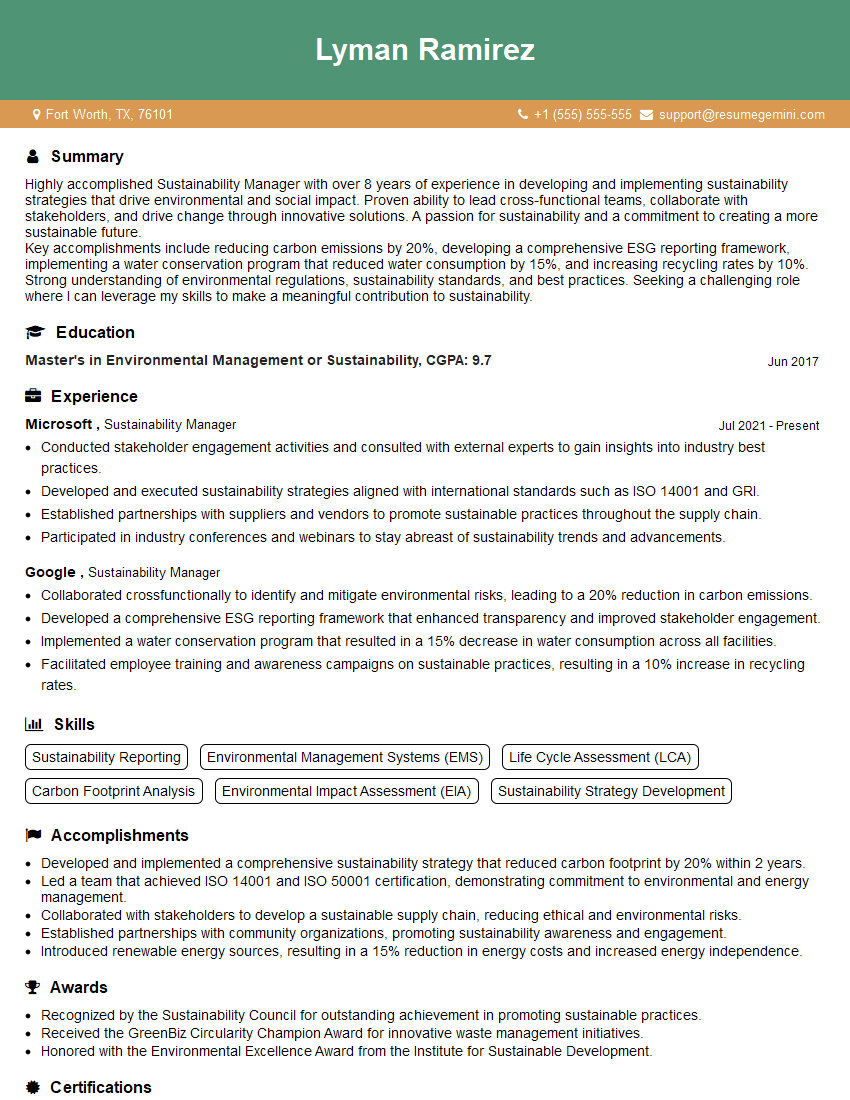
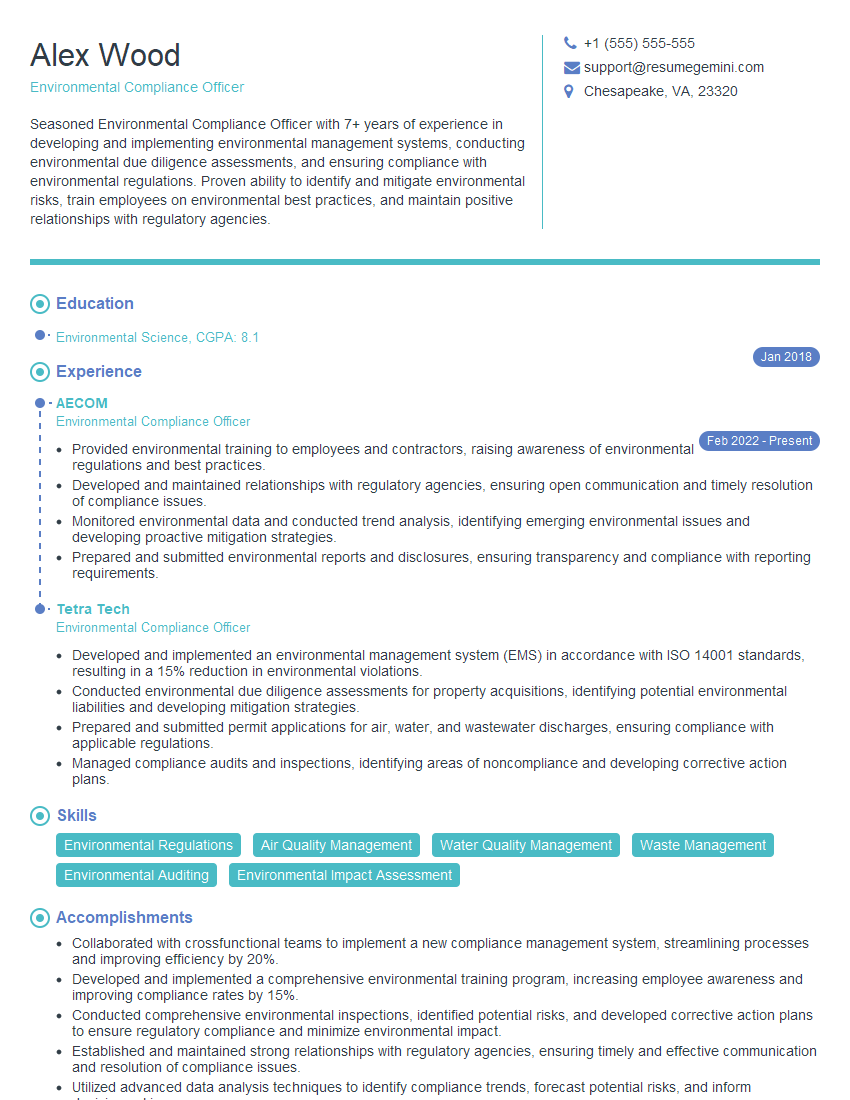
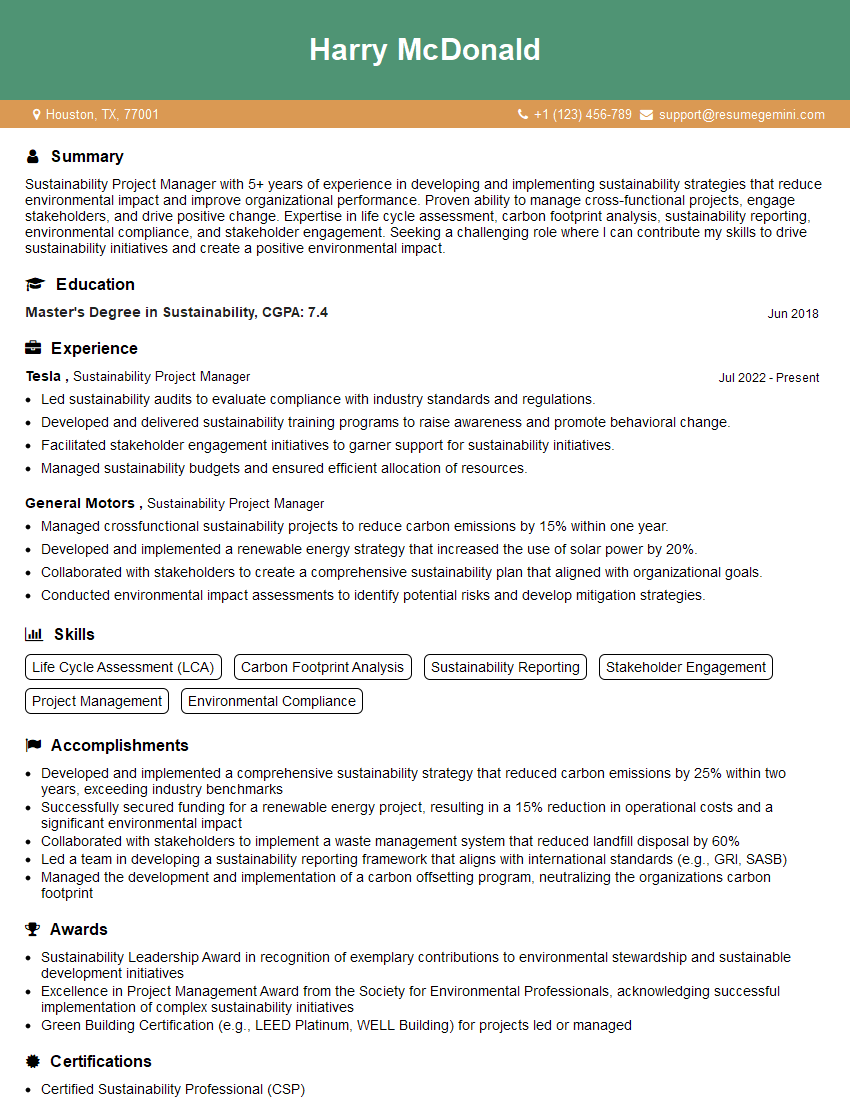
Mastering ESG Risk Assessment is crucial for a thriving career in a rapidly evolving market. It demonstrates a commitment to sustainability and responsible business practices, highly valued by employers. To maximize your job prospects, creating an ATS-friendly resume is paramount. ResumeGemini can significantly enhance your resume-building experience, ensuring your qualifications are clearly presented to potential employers. We offer examples of resumes tailored to ESG Risk Assessment to help you craft a compelling application.

Explore more articles
Users Rating of Our Blogs
Share Your Experience
We value your feedback! Please rate our content and share your thoughts (optional).
What Readers Say About Our Blog
I Redesigned Spongebob Squarepants and his main characters of my artwork.
https://www.deviantart.com/reimaginesponge/art/Redesigned-Spongebob-characters-1223583608
IT gave me an insight and words to use and be able to think of examples
Hi, I’m Jay, we have a few potential clients that are interested in your services, thought you might be a good fit. I’d love to talk about the details, when do you have time to talk?
Best,
Jay
Founder | CEO