Unlock your full potential by mastering the most common Basic Sewing and Construction interview questions. This blog offers a deep dive into the critical topics, ensuring you’re not only prepared to answer but to excel. With these insights, you’ll approach your interview with clarity and confidence.
Questions Asked in Basic Sewing and Construction Interview
Q 1. What types of sewing machines are you familiar with?
My experience encompasses a wide range of sewing machines, from basic mechanical models to advanced computerized machines. I’m proficient with both domestic and industrial machines. I’ve worked with Singer, Brother, Janome, and Bernina models, understanding their unique features and capabilities. For example, I’m comfortable using the differential feed mechanism on machines like the Bernina to control fabric feed on tricky materials like silk or chiffon. I also understand the importance of proper maintenance for each machine type, from basic cleaning and oiling to more complex repairs.
- Mechanical Machines: These are simpler, more robust, and great for learning the fundamentals. They rely on manual adjustments for stitch length and width.
- Computerized Machines: These offer programmable stitches, automated features (like buttonholes), and often have digital displays for easier operation. They provide greater precision and versatility.
- Industrial Machines: These are heavy-duty machines designed for high-volume production. They are powerful but require specialized skills and maintenance.
Q 2. Explain the different types of stitches and their applications.
Sewing stitches are the foundation of garment construction. Different stitches serve different purposes, offering various levels of strength and aesthetic appeal. Think of them like the punctuation in a sentence—each has its own unique role.
- Straight Stitch: The most basic stitch, ideal for seams, topstitching, and basting. Think of it as the period in a sentence.
- Zigzag Stitch: Used for securing edges to prevent fraying, joining stretchy fabrics, and decorative purposes. This is your versatile comma.
- Overlock Stitch (Serger Stitch): Creates a professional, finished seam edge while simultaneously cutting excess fabric. It’s like adding a clean, crisp exclamation point!
- Blind Hem Stitch: Creates an almost invisible hem, particularly useful for trousers or skirts. It’s the subtle pause in your sentence.
- Buttonhole Stitch: Creates functional and neat buttonholes. Essential for closing garments.
The choice of stitch depends entirely on the fabric and the desired outcome. For example, a delicate silk blouse would require a delicate stitch like a straight stitch or a very narrow zigzag, while a durable denim jacket might use a stronger stitch like a zigzag or even a reinforced straight stitch.
Q 3. How do you troubleshoot a jammed sewing machine?
Troubleshooting a jammed sewing machine requires a systematic approach. It’s like detective work! The first step is always to ensure the machine is unplugged for safety.
- Check the Needle: Bent or broken needles are a common cause of jams. Replace the needle if necessary.
- Inspect the Bobbin: A poorly wound or improperly inserted bobbin is another frequent culprit. Ensure the bobbin is correctly placed and wound.
- Clear Fabric and Thread: Remove any tangled fabric or thread from around the needle, bobbin area, and feed dogs.
- Check the Tension: Incorrect thread tension can lead to jams and uneven stitching. Adjust the tension dial as needed (usually there are dials for both the upper and bobbin thread).
- Clean the Machine: Dust and lint can accumulate and interfere with the machine’s mechanisms. Clean the machine using a brush or compressed air.
- Check the Timing: If the problem persists, the timing of the machine might be off. This is a more advanced issue and might require professional attention.
Remember to consult your machine’s manual for specific troubleshooting instructions. If you’re still struggling, it’s best to seek the help of a qualified sewing machine repair technician.
Q 4. Describe your experience with different fabrics (e.g., cotton, silk, leather).
My fabric experience is extensive. Each fabric has its own unique properties that require different sewing techniques. I’ve worked with a vast array of fabrics, from delicate silks to sturdy leathers.
- Cotton: A versatile fabric, easy to sew, but can fray easily. I often use a zigzag stitch to finish seams.
- Silk: Delicate and slippery; requires sharp needles, fine thread, and careful handling to prevent snags. A walking foot on the sewing machine is beneficial here.
- Leather: Strong and durable, but requires specialized needles and often needs adjustments to the machine’s presser foot pressure.
- Woven Fabrics (e.g., linen, twill): These have a more stable weave, making them relatively easy to work with.
- Knit Fabrics (e.g., jersey, interlock): These stretch, requiring specialized needles and stitches that accommodate their elasticity. An overlock stitch is ideal.
I adapt my sewing techniques to each fabric’s characteristics to achieve optimal results and avoid damage.
Q 5. How do you select the appropriate needle and thread for a given fabric?
Choosing the correct needle and thread is crucial for a professional finish and prevents needle breakage and fabric damage. It’s like selecting the right tool for the job.
Needle Selection: Needles are categorized by size and type. The size is usually expressed as a number (e.g., 80/12, where 80 is the European size and 12 is the American size). Smaller numbers are for finer fabrics, while larger numbers are for heavier fabrics. Needle types include:
- Sharp Needles: For woven fabrics like cotton and linen.
- Ballpoint Needles: For knit fabrics to prevent snagging.
- Leather Needles: For leather and other heavy materials.
Thread Selection: Thread should be chosen based on the fabric weight and type. Thinner threads are used for lighter fabrics, and thicker threads for heavier fabrics. The thread’s material also matters. Cotton thread is a common choice for many fabrics, while polyester thread is more durable and less prone to fraying.
Always match the needle and thread type to avoid damage to your fabric.
Q 6. Explain the process of creating a basic seam.
Creating a basic seam is fundamental to sewing. Imagine it as the building block of any garment.
- Prepare the Fabric: Cut two pieces of fabric to the desired size and shape.
- Pinning: Pin the fabric pieces together, right sides facing, along the seam line. Ensure the pins are perpendicular to the seamline to avoid breaking the needle.
- Sewing: Stitch along the seam line using a straight stitch, typically with a 5/8-inch seam allowance. Remove pins as you sew.
- Pressing: Press the seam open or to one side, using a pressing cloth to prevent shiny marks on the fabric. This step is crucial for a clean and professional finish.
Different seam allowances are used depending on the garment’s design and the type of seam being created. A 5/8-inch seam allowance is a common standard for many clothing items.
Q 7. How do you finish seams to prevent fraying?
Finishing seams prevents fraying and adds durability to the garment. It’s like adding a protective layer to the edges.
- Zigzag Stitch: A simple and effective way to finish raw edges. A narrow zigzag works well for lighter fabrics, while a wider zigzag is suitable for heavier fabrics.
- Serging/Overlocking: Uses a serger machine to create a neat, professional-looking finish while simultaneously cutting the raw edges. It’s like adding a decorative trim.
- Pinking Shears: These shears create a serrated edge, which helps to prevent fraying, though not as effectively as the other methods.
- Binding: Applying a bias binding strip encloses the raw edges for a clean and durable finish. This is often used for hems and necklines.
The choice of seam finish depends on the fabric type, garment design, and the desired look. For example, a delicate silk garment might call for a hand-rolled hem, while a sturdy denim garment might use a serger finish.
Q 8. What are different types of seam finishes and when would you use each?
Seam finishes prevent fabric from unraveling and add durability to your garment. The choice depends on the fabric type, garment style, and desired aesthetic.
- Pinked Edges: A simple finish achieved using pinking shears. Best for sturdy fabrics like denim or canvas where the raw edge isn’t overly prone to fraying and a quick finish is needed. Not suitable for delicate fabrics.
- Serged/Overlocked Edges: A serger (overlock machine) creates a professional-looking, neat finish that prevents fraying. Ideal for most fabrics, offering both durability and aesthetics. Especially useful for knits where raveling is a significant concern.
- Zigzag Stitch: A common machine stitch that creates a secure edge. Works well on most fabrics but can be bulky and less aesthetically pleasing than serging. A good option if you don’t have a serger.
- French Seam: A very durable and elegant finish, ideal for fine fabrics like silk or linen where a clean, invisible seam is desired. It encloses the raw edges completely, creating a refined look.
- Hong Kong Finish: A bias binding is stitched around the raw edge. This is incredibly neat and durable, often used in high-end garments. Suitable for many fabrics.
- Clean Finish: Edges are simply pressed and stitched close to the seamline. This is best for lightweight fabrics and those that fray minimally.
For instance, I’d use a serged edge for a cotton t-shirt, a French seam for a silk blouse, and a zigzag stitch for a quick repair on a pair of jeans.
Q 9. How do you read and interpret a sewing pattern?
Reading a sewing pattern involves understanding its different components. It’s like reading a map to construct your garment.
- Pattern Pieces: These are the individual fabric shapes that make up the garment. Each piece is labelled and numbered, corresponding to the instructions.
- Cutting Layout: This diagram shows how to arrange the pattern pieces on the fabric to minimize waste and ensure correct grainlines. Grainlines indicate the direction of the fabric’s warp and weft threads – crucial for a garment’s drape and fit.
- Instructions: These provide step-by-step guidance, detailing the order of assembly, seam allowances, and finishing techniques. Always read through the instructions completely before beginning.
- Sizing and Measurements: Patterns come in various sizes, and the pattern envelope provides body measurements for each size. It’s crucial to choose a size that matches your measurements closely.
- Notches and Markings: These small markings (notches, dots, etc.) on the pattern pieces are essential for precise alignment during assembly. They ensure that the seams match up correctly.
I always start by checking my body measurements against the pattern’s size chart. Then, I meticulously follow the cutting layout, paying close attention to grainlines and pattern markings. I always use a sharp rotary cutter and self-healing mat for precision and efficiency.
Q 10. Explain the process of cutting fabric accurately.
Accurate fabric cutting is fundamental for a well-fitting garment. Here’s my approach:
- Prepare the Fabric: Pre-wash and dry the fabric to account for shrinkage. Press the fabric to remove any wrinkles and ensure it lies flat.
- Lay out the Pattern: Follow the pattern’s cutting layout, placing pattern pieces on the fabric according to the grainlines indicated. Use weights or pins to secure the pattern pieces to avoid shifting.
- Cut with Precision: Use sharp fabric shears or a rotary cutter and cutting mat for clean, accurate cuts. Avoid jagged edges, which can affect the finished garment’s look and feel.
- Mark Notches and Markings: Transfer all notches and other markings from the pattern pieces to the fabric using tailor’s chalk, tracing wheel, or other suitable marking tools. Accurate markings are crucial for assembly.
- Double-Check: Before removing the pattern pieces, always double-check the placement and alignment of all pieces to ensure accuracy. I’ve found it extremely helpful to double-check at every step!
For instance, cutting a curved neckline requires extra care to avoid distortion. I always cut slowly and smoothly to maintain the curve’s integrity. Remember that accurate cutting saves time and frustration later in the construction process.
Q 11. Describe your experience with pattern adjustments.
Pattern adjustments are often necessary to achieve a perfect fit. My experience involves several techniques:
- Full Bust Adjustment (FBA): This addresses fitting issues across the bust, ensuring comfort and a flattering fit. I often use the ‘slash and spread’ method.
- Shoulder Adjustments: Adjusting the shoulder seams is vital for proper fit and comfortable garment movement. This involves altering the shoulder slope to conform to the wearer’s body.
- Length Adjustments: Altering the length of the garment—for example, adding length to sleeves or the bodice—is usually a straightforward process of adding or subtracting fabric at the seamline.
- Ease Adjustments: Adding or removing ease (extra fabric for comfort and movement) is essential for various body types. It is critical to consider the fit and fabric’s drape.
I recently adjusted a dress pattern for a client with a larger bust. I performed an FBA, carefully adding fabric to the bust area without disrupting the rest of the pattern. The final garment fit perfectly, showcasing the value of precise adjustments.
Q 12. How do you use a serger/overlock machine?
A serger, or overlock machine, is a specialized sewing machine that cuts, stitches, and finishes raw edges simultaneously, creating a professional-looking seam.
- Thread Setup: Sergers typically use multiple spools of thread (usually three or four), each serving a different purpose. The thread colors are crucial for the garment and are always chosen to blend well.
- Stitch Settings: Different stitch types and settings are available, depending on the fabric and desired finish. You’ll want to select one for your specific fabric type.
- Differential Feed: Many sergers have a differential feed mechanism to adjust the fabric feed rate, important for working with different fabrics and preventing stretching or puckering.
- Tension Adjustment: Proper thread tension is crucial for a balanced stitch. Improper tension leads to uneven stitches and potential issues with the seams.
- Cutting Blade Adjustment: The cutting blades need occasional adjustment to ensure that they properly cut the fabric’s edge while avoiding accidental cuts on the seam allowance.
Before using a serger, I always practice on scrap fabric to get a feel for the machine’s settings and ensure the correct thread tension. Once I’m satisfied with the test sample, I can proceed with the actual fabric.
Q 13. How do you identify and correct common sewing errors?
Identifying and correcting common sewing errors requires a keen eye for detail and a systematic approach.
- Uneven Seams: This is often caused by inconsistent guiding of the fabric under the presser foot. The solution is to practice consistent feed and using guiding tools if needed.
- Puckering: Often caused by tension issues or improper fabric handling. Check thread tension settings, and ensure that fabric is being smoothly fed under the needle.
- Skipped Stitches: This can be due to a dull needle, improper needle threading, or incorrect tension settings. Replace the needle, double-check threading, and adjust tension accordingly.
- Distorted Seams: Incorrect cutting, stretching of fabric during sewing, or improper pressing are common causes. Pay close attention to cutting accuracy and handle the fabric carefully while sewing.
- Wrong Seam Allowances: Inconsistent seam allowances lead to an ill-fitting garment. Use a seam gauge for precise seam allowance measurements, and pay close attention to seam allowance markings.
For instance, if I encounter skipped stitches, I immediately check the needle for dullness, re-thread the machine, and then check the tension settings. If the problem persists, I troubleshoot further.
Q 14. Describe your experience with different types of zippers.
My experience encompasses several zipper types:
- Invisible Zippers: These zippers are designed to be concealed within the seam, creating a clean, professional finish. Ideal for dresses, skirts, and other garments where a smooth, seamless look is required.
- Metal Zippers: Durable and sturdy, they come in various colors and finishes, and are good for outerwear or items requiring extra strength.
- Nylon Coils: Lightweight and flexible, ideal for sportswear or items requiring less bulk. They are particularly suitable for softer fabrics.
- Separating Zippers: These open and close with a slider that separates. Often used in jackets or bags.
- Non-Separating Zippers: These have a single pull that can only be opened from the bottom of the zipper. Ideal for dresses or skirts.
The choice of zipper depends on the garment and its intended use. For a delicate silk dress, I’d use an invisible zipper for a seamless look. For a sturdy jacket, I’d opt for a metal zipper for its durability.
Q 15. Explain the process of attaching buttons and buttonholes.
Attaching buttons and buttonholes is a fundamental skill in sewing. It involves precision and the right tools for a durable and aesthetically pleasing finish. There are several methods depending on the button type and fabric.
Buttonholes: I typically use a sewing machine’s automatic buttonhole function for efficiency and consistency. This often involves setting the stitch length and width according to the buttonhole’s size and fabric. For hand-stitched buttonholes, I use a neat buttonhole stitch, ensuring even spacing and a clean finish. The buttonhole should be slightly smaller than the button to prevent it from falling through.
Buttons: After creating the buttonhole, attaching the button is straightforward. I generally use a strong thread, typically matching the garment’s color, doubled for extra strength. I then stitch the button through the buttonholes using a simple X pattern or a shank method, creating a small loop between the garment and the button to prevent fabric wear. The shank method (creating space between the button and the fabric) is particularly crucial for thicker fabrics and prevents strain on the button and fabric.
Example: For a delicate silk blouse, I would use a hand-sewn buttonhole and button for better control and prevent damage to the fabric. For a sturdy denim jacket, I’d rely on my machine’s buttonhole function and use stronger thread for the button itself.
Career Expert Tips:
- Ace those interviews! Prepare effectively by reviewing the Top 50 Most Common Interview Questions on ResumeGemini.
- Navigate your job search with confidence! Explore a wide range of Career Tips on ResumeGemini. Learn about common challenges and recommendations to overcome them.
- Craft the perfect resume! Master the Art of Resume Writing with ResumeGemini’s guide. Showcase your unique qualifications and achievements effectively.
- Don’t miss out on holiday savings! Build your dream resume with ResumeGemini’s ATS optimized templates.
Q 16. How do you measure fabric accurately?
Accurate fabric measurement is crucial for a well-fitting garment. It’s not just about using a measuring tape; it’s about understanding the fabric’s drape and potential stretch. I always start with a clean, flat surface and ensure the fabric is unfolded and smooth, free of wrinkles or creases.
Techniques: I typically use a flexible measuring tape, taking measurements along the straight grain (the lengthwise direction of the fabric) and the cross grain (the widthwise direction) and always accounting for seam allowances (typically 5/8 inch or 1.5 cm unless otherwise specified). For patterns with curves, I use tailor’s chalk or pins to mark measurements along the curves to maintain accuracy. For stretchy fabrics, I take measurements while gently stretching the material to account for its give.
Example: When measuring for a skirt, I account for the waist circumference, hip circumference, and desired skirt length. I’d also measure the fabric’s width to determine how many panels I need to cut, considering the pattern pieces’ layout and seam allowances.
Q 17. What is your experience with industrial sewing equipment?
My experience with industrial sewing equipment is extensive. I’m proficient in operating various industrial sewing machines, including single-needle, double-needle, coverstitch, and serger machines. I’m comfortable with high-speed sewing, which is crucial for production efficiency. I’m familiar with different types of industrial presser feet, needles, and their applications.
Troubleshooting: I’m adept at identifying and resolving common issues that arise during industrial sewing such as thread breakage, needle jams, and skipped stitches. I understand the importance of regular maintenance and cleaning of industrial machines to ensure their longevity and optimal performance.
Example: I’ve used industrial machines in a production setting to produce hundreds of identical garments, requiring consistency and speed. My experience extends to working with various fabrics, from delicate silks to heavy denim.
Q 18. Describe your experience with different types of interfacing.
Interfacing is a crucial component in garment construction. It provides support, structure, and stability to fabric. I’m experienced with a wide array of interfacings, each serving a unique purpose.
- Fusible Interfacing: This type uses heat and pressure to bond with the fabric. I use it extensively for collars, cuffs, and button bands. The choice depends on fabric weight; heavier fabrics require heavier interfacing.
- Non-Fusible Interfacing: This is sewn directly to the fabric, offering a bit more flexibility and often better suited for delicate fabrics where heat might damage them.
- Woven Interfacing: This offers structure and stability, making it ideal for tailoring jackets and coats.
- Knit Interfacing: Used for knit fabrics, allowing for stretch and preventing the interfacing from creating unwanted stiffness.
Example: When making a tailored blazer, I would use a woven interfacing for the collar and lapels to maintain crispness and shape. However, for a soft knit t-shirt, I’d choose a knit interfacing to prevent distortion and maintain the garment’s drape.
Q 19. How do you work with different types of closures (e.g., hooks, snaps, Velcro)?
Different closures require different techniques and tools. My experience encompasses a range of methods.
- Hooks and Eyes: I use a needle and thread to carefully sew these in place, often reinforcing the stitches for extra durability.
- Snaps: These are usually attached using pliers or specialized snap-setting tools. Precision is key to ensure proper alignment and secure fastening.
- Velcro: This is generally adhered using its self-adhesive backing or stitched in place, ensuring the edges are neatly finished to prevent fraying.
Example: For a dress, I might use hooks and eyes for an invisible closure at the back neckline. For a child’s coat, Velcro would provide ease of use. Snaps are often used on garments like shirts and blouses where a more secure and traditional closure is required.
Q 20. How do you ensure quality control in your sewing work?
Quality control is paramount in my sewing work. I meticulously check each step of the process to ensure the final product meets the highest standards. This includes:
- Pre-sewing checks: I carefully examine the fabric for imperfections before cutting, and I use pattern weights or pins to keep the patterns in place.
- Stitch consistency: I maintain even stitch lengths and tensions throughout sewing. I check frequently for skipped stitches, broken threads, or inconsistencies.
- Seam finishing: I always finish seams (e.g., serging, zigzag stitching, or pinking) to prevent fraying and improve durability. I pay careful attention to detail during pressing.
- Final inspection: Before packaging, I conduct a comprehensive inspection, checking for any loose threads, puckering, or other flaws.
Example: Before delivering a custom-made garment, I thoroughly examine the garment for accurate fit and finish, paying attention to the details like button placement, even stitching, and overall neatness.
Q 21. What are some common safety precautions when using sewing machines?
Safety is my top priority when using sewing machines. I always follow these precautions:
- Keep fingers away from the needle: I never reach under the needle while the machine is running, and I use a finger guard when working with narrow seams.
- Proper machine maintenance: I keep the machine clean and well-lubricated, regularly checking and replacing the needle as needed. A dull needle increases the risk of breakage and injury.
- Correct needle selection: I always use the correct type and size of needle for the fabric type being sewn.
- Safe speed and tension: I adjust the machine speed and tension to the project’s needs and my comfort level, avoiding excessive speeds that could lead to accidents.
- Proper disposal of needles: I always dispose of used needles in a designated container to avoid accidental injuries.
Example: Before starting a project, I inspect the machine to ensure everything is working properly. I never rush through the sewing process, and I always prioritize safety over speed.
Q 22. Describe your experience with hand sewing techniques.
Hand sewing is the foundation of garment construction, offering precision and control often unmatched by machines. My experience encompasses a wide range of techniques, from basic running stitches and backstitches for seams, to more intricate stitches like the blind stitch for hems, the slip stitch for invisible mending, and various decorative stitches for embellishment.
For example, I’ve used a whip stitch to neatly attach facings to a tailored jacket, ensuring a clean, professional finish. I also frequently employ running stitches for basting, a crucial step in garment construction allowing for accurate fitting before final stitching. My proficiency extends to hand-sewing buttonholes, a skill requiring both precision and patience. The strength and neatness of my hand-sewing are consistently praised.
- Running Stitch: A simple stitch used for basting and gathering.
- Backstitch: A strong stitch used for seams.
- Blind Stitch: A near-invisible stitch used for hemming.
- Slip Stitch: Used for nearly invisible joining of seams or fabric edges.
Q 23. How do you manage your time efficiently when working on multiple projects?
Juggling multiple sewing projects requires a structured approach. I utilize project management tools such as a detailed to-do list, broken down by project and task. Each task includes estimated time and deadlines. This allows me to prioritize based on urgency and complexity. For instance, if I have a wedding dress and a simple alteration, the dress will take precedence due to its complexity and time constraints.
I also employ time-blocking techniques, dedicating specific time slots to particular projects. This prevents multitasking, a common productivity killer. I find short, focused work sessions more effective than long, interrupted ones. Regular breaks also help maintain focus and avoid burnout.
Furthermore, I constantly evaluate my progress and adjust my schedule accordingly. Unexpected delays are inevitable; hence, building in buffer time is vital. This flexible approach allows me to manage multiple projects without sacrificing quality or exceeding deadlines.
Q 24. Explain your understanding of garment construction techniques.
Garment construction is a systematic process involving a series of steps, from pattern creation or selection to the final finishing touches. My understanding spans various techniques, including:
- Pattern Making/Drafting: I’m proficient in adjusting existing patterns and drafting new ones using various methods. This enables me to create custom-fit garments.
- Cutting and Marking: Precise cutting and accurate marking are crucial for a well-fitting garment. I use different marking tools depending on the fabric type.
- Seams and Seam Finishes: I’m skilled in various seam types (French seams, flat-felled seams, etc.) and finishing techniques (serging, pinking, etc.) to create durable and aesthetically pleasing garments.
- Construction of Garment Components: This includes collars, cuffs, pockets, linings, and closures. Each component requires specialized techniques for a flawless result.
- Finishing Techniques: This includes pressing, hemming, and any additional embellishments. Proper finishing elevates a garment from good to excellent.
For example, in constructing a tailored jacket, I meticulously work through each step, paying close attention to details like precise seam allowances and clean finishings for a professional, high-quality result.
Q 25. How familiar are you with different types of sewing machine feet?
I am very familiar with a variety of sewing machine feet, each designed for a specific task. My experience includes using:
- General-purpose foot: Used for most basic sewing tasks.
- Zipper foot: Allows for precise stitching close to the zipper teeth.
- Buttonhole foot: Creates consistent and even buttonholes.
- Blind hem foot: Creates a nearly invisible hem.
- Walking foot: Prevents slippage on multiple layers of fabric.
- Rolled hem foot: Creates a narrow, professional rolled hem.
Understanding the function of each foot significantly impacts the quality and efficiency of my sewing. For instance, using a walking foot on a thick quilted fabric prevents puckering, resulting in a smooth, even stitch.
Q 26. Describe your experience with pressing and finishing techniques.
Pressing and finishing are just as crucial as the construction itself. They are not mere afterthoughts but essential steps in achieving a professional finish. My experience covers a wide range of pressing techniques, using various tools and techniques such as:
- Ironing: For smoothing out wrinkles and creases.
- Pressing: Applying pressure with an iron to set seams and create crisp edges.
- Blocking: Used for shaping delicate fabrics like lace.
- Using a tailor’s ham and point presser: For shaping curved seams and darts.
I understand the importance of using the correct temperature and pressure for different fabric types to prevent damage. For instance, I use a press cloth when ironing delicate fabrics to protect them from scorching. My approach ensures the garment maintains its shape, crispness, and overall professional appearance.
Q 27. How do you handle difficult fabrics or challenging patterns?
Difficult fabrics or challenging patterns require patience, planning, and the right techniques. When working with slippery fabrics like silk, for example, I use a walking foot or spray a light mist of water to help manage the fabric. For stiff fabrics like denim, I use sharp needles and a heavier stitch weight.
Challenging patterns require careful reading and pre-planning. I often make a muslin (test garment) before cutting into the final fabric. This allows me to identify and adjust any fit issues or pattern discrepancies early on. I also use different interfacings to provide support and structure to different areas of the garment, enhancing its shape and longevity. I thoroughly research appropriate techniques for the fabric and the pattern’s complexities, using online tutorials or books as needed. Breaking down a complex project into smaller, manageable tasks also helps to reduce stress and improve the outcome.
Q 28. What are your strengths and weaknesses as a sewer?
Strengths: My greatest strengths lie in my attention to detail, my proficiency in a wide range of sewing techniques, and my ability to adapt to various fabrics and patterns. I’m also a highly organized and efficient worker, capable of managing multiple projects effectively. My problem-solving skills are well-developed, enabling me to overcome challenges that might arise during the sewing process.
Weaknesses: While I’m highly proficient, I always strive to improve my speed. Sometimes, my focus on perfection can slow down the overall process. I’m actively working on developing better time management strategies to balance speed and precision.
Key Topics to Learn for Basic Sewing and Construction Interview
- Fabric Selection and Properties: Understanding different fabric types (cotton, linen, silk, etc.), their drape, weight, and suitability for various projects. Practical application: Knowing which fabric is best for a tailored garment versus a casual one.
- Basic Sewing Machine Operation: Mastering threading, stitch selection, tension adjustment, and basic maintenance. Practical application: Troubleshooting common sewing machine problems and efficiently completing a sewing task.
- Pattern Making and Alterations: Understanding basic pattern construction and making adjustments for different body types. Practical application: Adapting a standard pattern to create a custom fit.
- Hand Sewing Techniques: Proficiency in various hand stitches (running stitch, backstitch, whip stitch) for finishing and repairs. Practical application: Neatly finishing seams and hemming garments.
- Garment Construction Techniques: Understanding and applying techniques like seam finishing, darts, zippers, buttonholes, and closures. Practical application: Constructing a simple garment from a pattern, paying attention to detail and accuracy.
- Measuring and Fitting: Accurate body measurements and understanding fitting adjustments. Practical application: Ensuring a garment fits well and comfortably.
- Sewing Tools and Equipment: Familiarity with essential tools like scissors, needles, pins, measuring tape, and pressing equipment. Practical application: Selecting the appropriate tools for a specific task.
- Safety Procedures: Understanding and adhering to safe sewing practices to prevent injuries. Practical application: Proper needle handling and machine maintenance for safety.
Next Steps
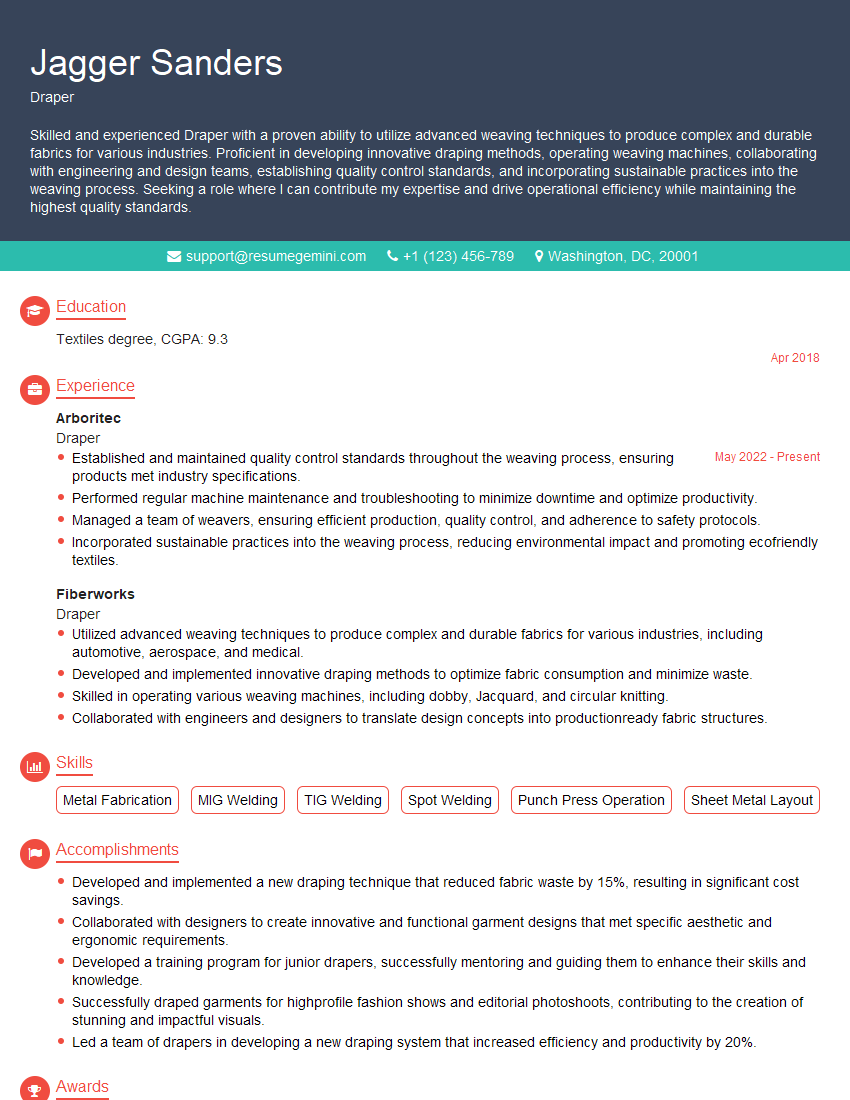
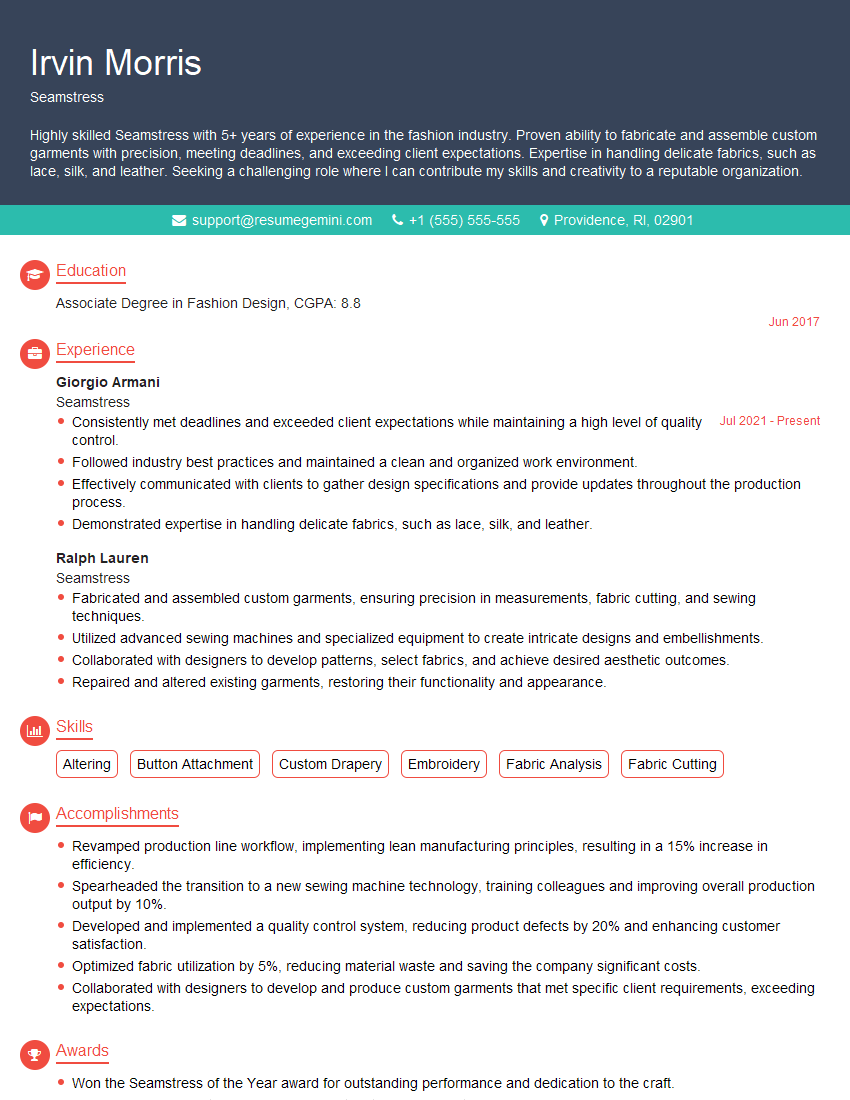
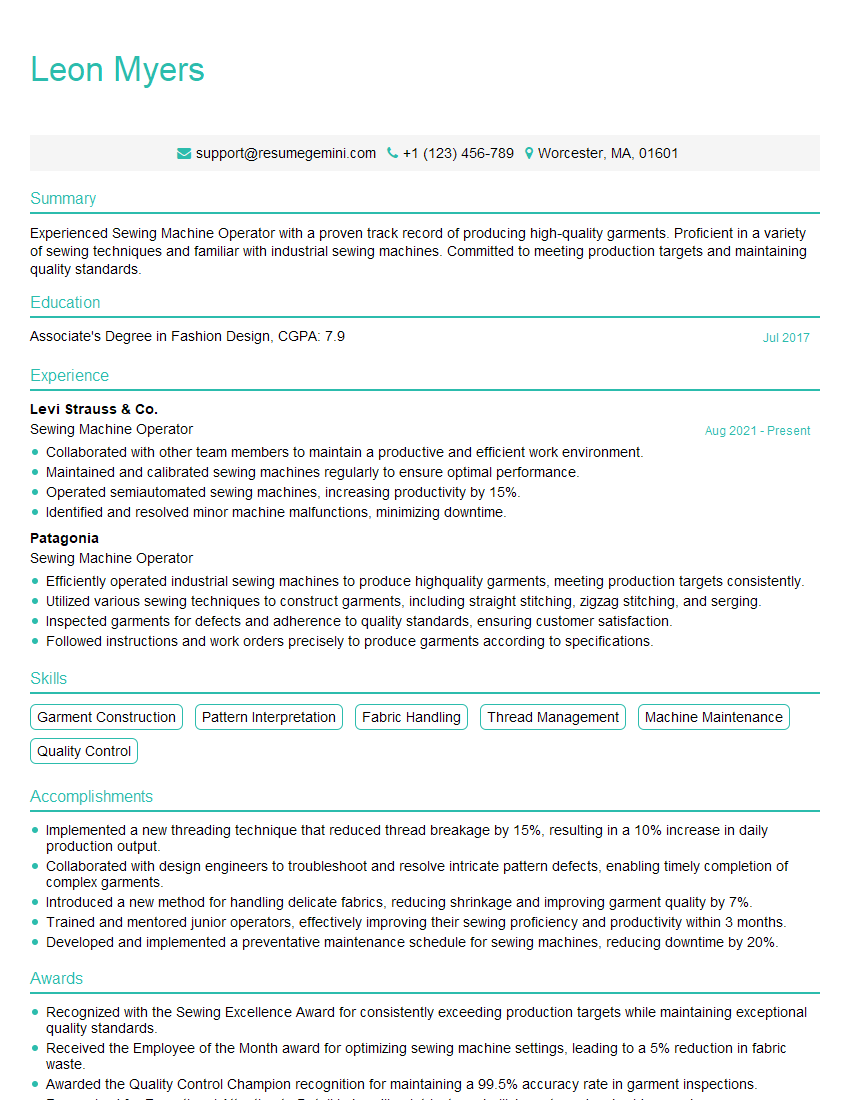
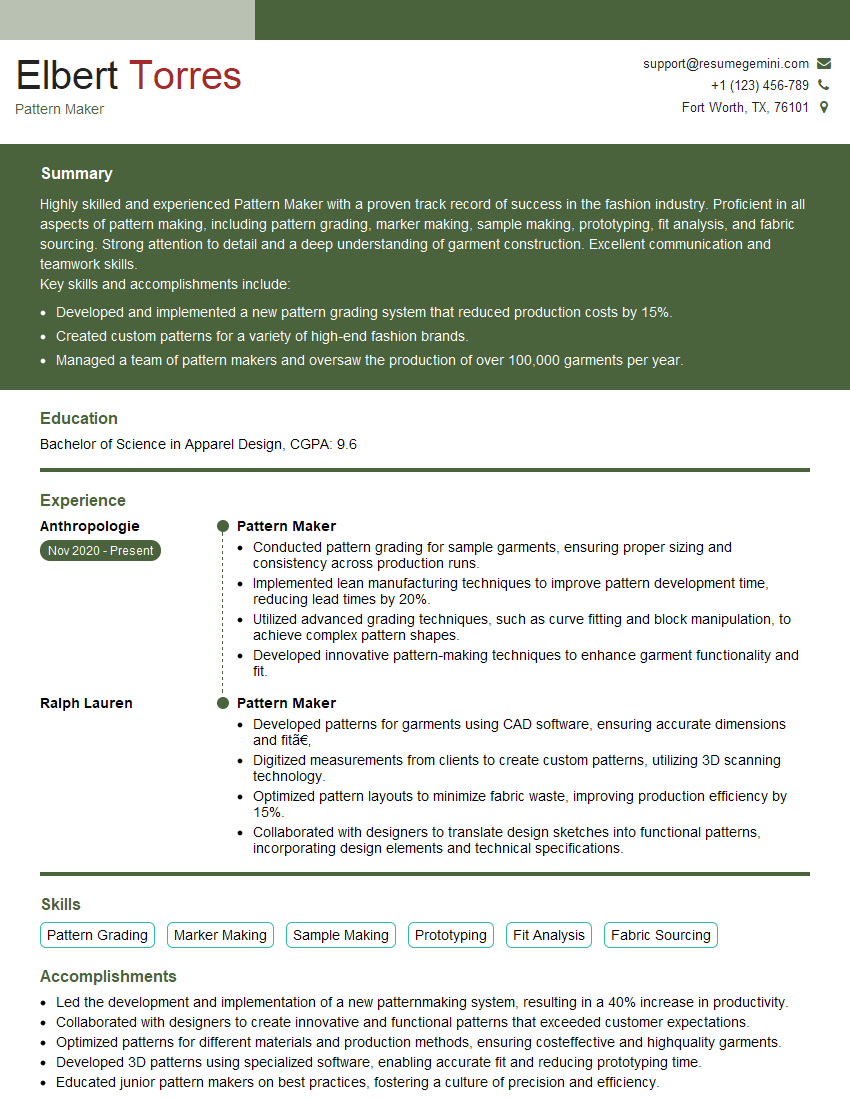
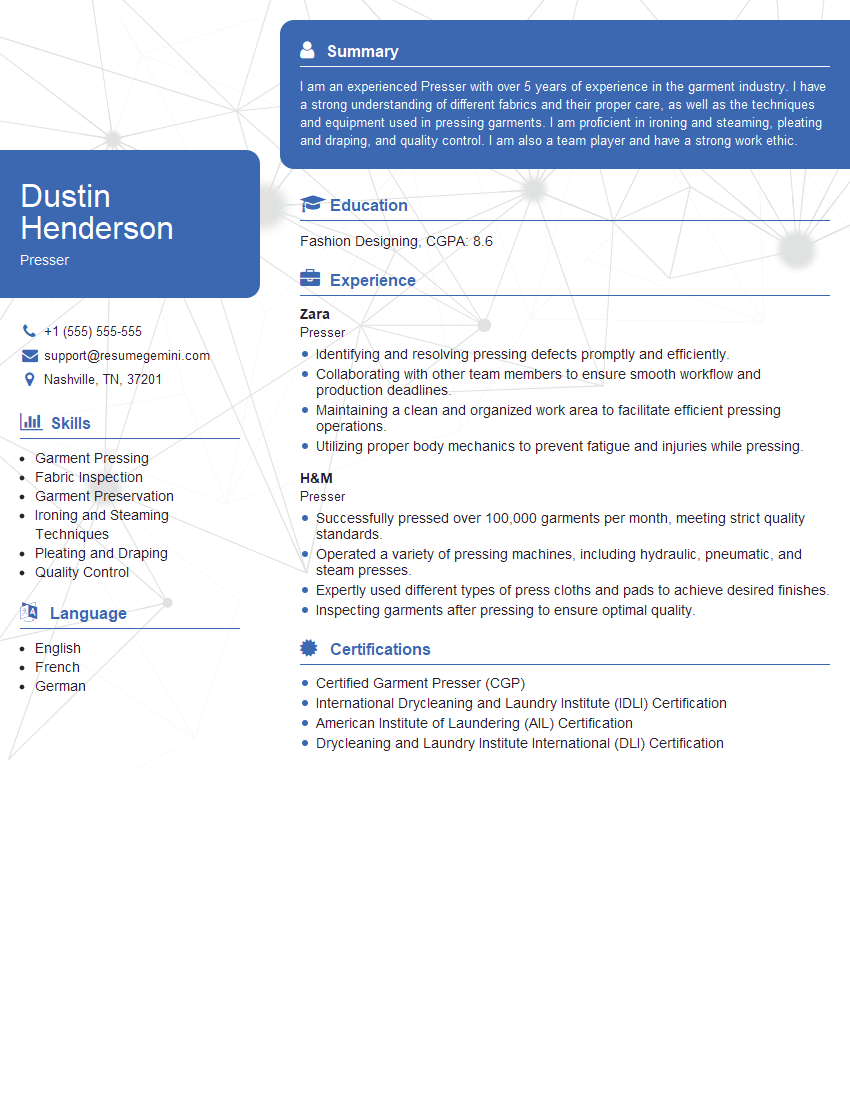
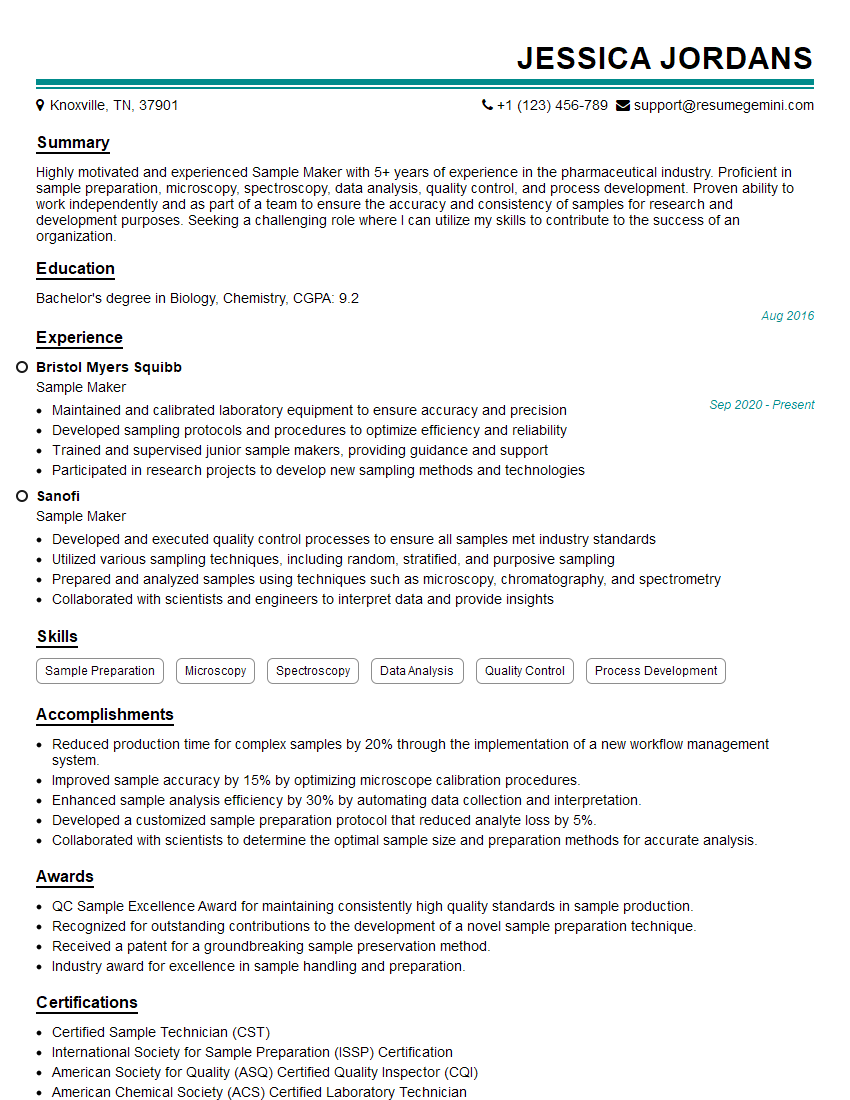
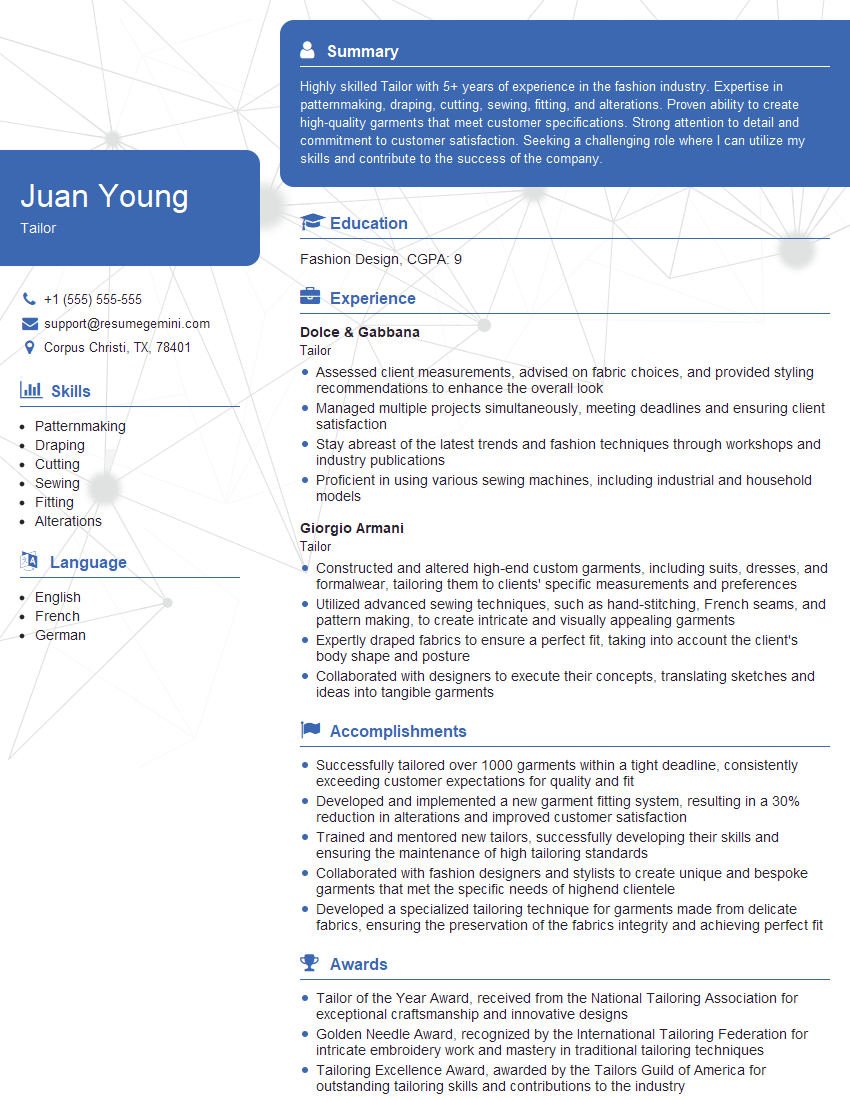
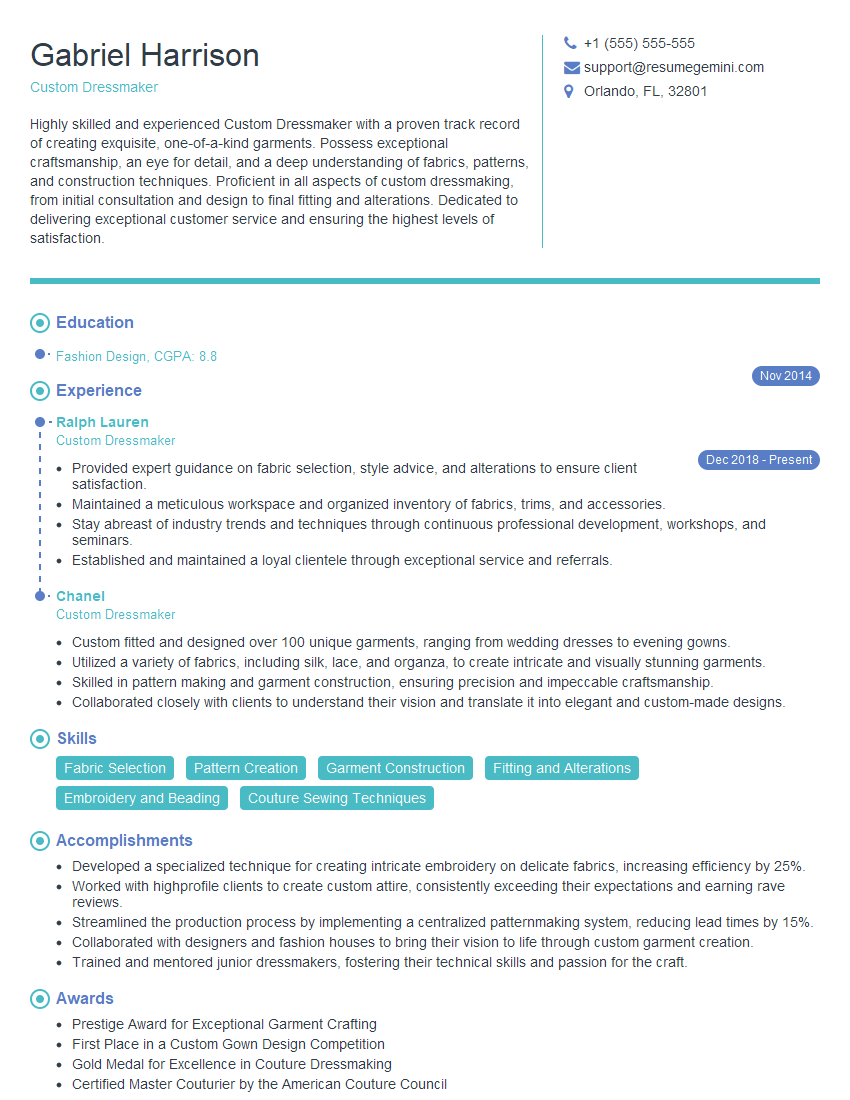
Mastering Basic Sewing and Construction opens doors to exciting career opportunities in fashion, design, alterations, and more! A strong foundation in these skills demonstrates meticulousness, problem-solving abilities, and attention to detail – highly valued attributes in many fields. To significantly enhance your job prospects, invest time in creating an ATS-friendly resume that highlights your skills and experience effectively. ResumeGemini is a trusted resource to help you build a professional and impactful resume. We provide examples of resumes tailored to Basic Sewing and Construction to guide you, ensuring your application stands out from the competition.

Explore more articles
Users Rating of Our Blogs
Share Your Experience
We value your feedback! Please rate our content and share your thoughts (optional).
What Readers Say About Our Blog
I Redesigned Spongebob Squarepants and his main characters of my artwork.
https://www.deviantart.com/reimaginesponge/art/Redesigned-Spongebob-characters-1223583608
IT gave me an insight and words to use and be able to think of examples
Hi, I’m Jay, we have a few potential clients that are interested in your services, thought you might be a good fit. I’d love to talk about the details, when do you have time to talk?
Best,
Jay
Founder | CEO