Interviews are more than just a Q&A session—they’re a chance to prove your worth. This blog dives into essential Exit Counseling interview questions and expert tips to help you align your answers with what hiring managers are looking for. Start preparing to shine!
Questions Asked in Exit Counseling Interview
Q 1. Explain the purpose of exit counseling.
Exit counseling serves as a crucial bridge between a student’s academic journey and their financial responsibilities. Its primary purpose is to prepare students for the realities of repaying their student loans by providing them with essential information and resources. This includes understanding their loan terms, exploring repayment options, and developing a sound financial plan to manage their debt effectively. Without proper exit counseling, many students could face unexpected financial hardship due to a lack of understanding about their loan obligations.
Q 2. Describe the key components of a typical exit counseling session.
A typical exit counseling session covers several key areas. First, we review the student’s loan portfolio, clarifying the total amount borrowed, interest rates, and loan servicers. We then delve into the various repayment plans available, emphasizing the pros and cons of each. This often involves explaining terms like capitalization, deferment, and forbearance. Next, we discuss budgeting and financial planning strategies, helping students create a realistic repayment plan that fits their post-graduation financial situation. Finally, we cover important topics like credit scores, debt management, and the potential consequences of default. We also provide resources and contact information for further assistance.
Q 3. What are the different repayment plans available to borrowers?
Borrowers have a range of repayment plans to choose from, each designed to meet different financial circumstances. The most common federal plans include: Standard Repayment (fixed monthly payments over 10 years), Extended Repayment (longer repayment periods, resulting in lower monthly payments but higher total interest paid), Graduated Repayment (payments start low and gradually increase over time), and Income-Driven Repayment (IDR) plans like Income-Based Repayment (IBR), Pay As You Earn (PAYE), and Revised Pay As You Earn (REPAYE), where monthly payments are calculated based on income and family size. Private loan repayment plans vary significantly by lender, so it’s crucial to review the terms carefully.
Choosing the right plan is a personalized process that depends on factors like income, expenses, and long-term financial goals. For example, a recent graduate with a low starting salary might opt for an IDR plan while someone with a higher income might find a Standard Repayment plan more suitable.
Q 4. How do you explain complex financial concepts to students with varying levels of understanding?
Explaining complex financial concepts to students with diverse backgrounds requires a tailored approach. I start by using plain language, avoiding jargon whenever possible. I often use analogies and real-life examples to illustrate difficult concepts. For instance, to explain compound interest, I might use a simple savings account example, showing how interest earned accumulates over time. I encourage questions and actively listen to understand each student’s level of understanding. I also provide supplementary materials, such as brochures and websites, that offer further explanation and resources. Visual aids, such as graphs and charts, can significantly improve comprehension for visual learners.
Q 5. What strategies do you employ to engage students during exit counseling?
Engagement is key to successful exit counseling. I employ several strategies to keep students involved. Interactive sessions with Q&A periods are crucial. I encourage active participation by asking questions and soliciting their input. Real-life case studies or success stories can also help illustrate the importance of responsible loan management. Using technology, such as interactive presentations or online quizzes, can make the session more dynamic. Finally, providing personalized feedback and addressing students’ individual concerns helps them feel valued and invested in the process. Making the session relatable to their future plans adds importance to their understanding.
Q 6. How do you handle challenging or resistant students?
Handling resistant or challenging students requires patience, empathy, and a flexible approach. I start by actively listening to their concerns and addressing any anxieties they may have. I try to understand their perspective and validate their feelings. If resistance stems from a lack of understanding, I revisit the relevant concepts using different methods, such as visual aids or simpler explanations. I always remain calm and respectful, even when faced with frustration. If necessary, I offer to schedule a follow-up session for further clarification. Sometimes, connecting them with a peer mentor who has successfully navigated similar challenges can be helpful. The goal is to empower them to take control of their financial future.
Q 7. Describe your experience with different student loan programs (e.g., federal, private).
My experience encompasses both federal and private student loan programs. I’m proficient in explaining the nuances of federal loan programs, including their eligibility requirements, repayment options, and the implications of default. I understand the complexities of various federal loan types such as subsidized and unsubsidized loans, Stafford loans, Perkins loans, and PLUS loans. With private loans, I emphasize the importance of understanding individual lender terms and conditions, which can vary significantly. I highlight the differences in interest rates, repayment options, and the lack of federal protections that may exist with private loans. Understanding the differences between these loan programs is key to guiding students toward the best financial choices for their circumstances.
Q 8. How do you address student concerns about loan repayment?
Addressing student concerns about loan repayment starts with empathy and active listening. I begin by acknowledging the daunting nature of student loan debt and validating their anxieties. Then, I systematically break down the repayment process into manageable steps. This often involves explaining different repayment plans (Standard, Graduated, Extended, Income-Driven Repayment) and helping them determine which plan best suits their financial situation. I emphasize the importance of understanding their loan terms, including interest rates, principal amounts, and repayment periods. Real-world examples, such as comparing the long-term costs of different repayment plans, are crucial. For instance, I might show how choosing an income-driven plan can lead to lower monthly payments but potentially higher overall interest paid over time. Finally, I always offer resources for further support and guidance.
Q 9. What resources do you utilize to assist students with loan repayment?
I utilize a variety of resources to assist students with loan repayment. This includes the official federal student aid website, which provides detailed information on repayment plans, loan forgiveness programs, and other relevant resources. I also leverage tools like student loan calculators to help students estimate their monthly payments and total repayment costs under different scenarios. Furthermore, I connect students with non-profit credit counseling agencies that can provide free or low-cost financial counseling services. These agencies can offer personalized advice tailored to individual circumstances and help students create a budget and debt management plan. Finally, I often share contact information for relevant government agencies and local organizations that offer additional support. For example, I might point them toward resources related to job search assistance, career development, or financial literacy programs, as these often indirectly impact their ability to repay student loans.
Q 10. How do you ensure compliance with federal regulations related to exit counseling?
Ensuring compliance with federal regulations regarding exit counseling is paramount. I strictly adhere to the guidelines established by the Department of Education. This involves ensuring that all required information is covered in the counseling session, including details about loan repayment options, interest capitalization, default prevention, and contact information for relevant agencies. I carefully review and update my exit counseling materials regularly to reflect any changes in federal regulations. Maintaining accurate records of each counseling session is vital to demonstrate compliance. I keep a detailed log of every session and ensure that all materials provided to students are compliant with current regulations. Regular training and professional development ensure I stay updated on any changes in policies and procedures. This proactive approach ensures my practices remain legally sound and benefit the students I serve.
Q 11. How do you document exit counseling sessions?
I meticulously document exit counseling sessions to maintain a comprehensive record of each student’s interaction. This typically includes a signed acknowledgment form indicating the student received and understood the information provided. Additionally, I maintain digital or physical records of any handouts, presentations, or other materials distributed during the session. For sessions conducted online, screen recordings or detailed notes can serve as documentation. This rigorous documentation process is crucial for demonstrating compliance with regulatory requirements and provides a valuable resource if any questions or issues arise later. The documentation helps ensure accountability and protects both the student and the institution.
Q 12. How do you track student progress and follow up after the counseling session?
Tracking student progress and following up after the counseling session is a crucial aspect of effective exit counseling. I typically send a follow-up email a week or two after the session to reiterate key points, offer additional support, and check in on how they are doing with understanding their loan repayment options. I may also utilize a student management system to track key data points, including the date of the counseling session, the type of loans they have, and any specific concerns they raised. This information allows for targeted follow-up and the ability to offer additional assistance if needed. By proactively staying in touch, I can address emerging challenges and help ensure students remain on track with their repayment strategies. This personalized follow-up is key to reducing student loan delinquency and default.
Q 13. Explain the process of loan consolidation.
Loan consolidation simplifies the repayment process by combining multiple federal student loans into a single loan with one monthly payment. This can be beneficial in several ways, including potentially lowering monthly payments (though the total interest paid may be higher over the long run) and simplifying the repayment process by having a single point of contact. The process typically involves applying through the federal government’s Direct Consolidation Loan program. Students will need to gather information about their existing loans and complete the application. Once approved, the new loan replaces their existing loans, and repayment begins according to the terms of the consolidated loan. It’s important to carefully consider the implications of consolidation, as it can affect eligibility for certain repayment plans or forgiveness programs. I advise students to carefully weigh the pros and cons before consolidating their loans.
Q 14. Explain the process of loan deferment and forbearance.
Loan deferment and forbearance are temporary pauses in student loan repayment, but they differ in their purpose and implications. Deferment postpones repayment for a specific period, usually due to circumstances like returning to school, unemployment, or military service. Interest may or may not accrue during deferment, depending on the type of loan and reason for deferment. Forbearance is also a temporary postponement, but it’s typically granted due to financial hardship, such as a temporary job loss or illness. Interest usually accrues during forbearance, leading to a larger balance owed at the end of the forbearance period. Both deferment and forbearance are available for federal student loans, but the eligibility criteria and application processes vary. It’s essential to understand that while these options provide temporary relief, they don’t eliminate the debt. The postponed interest and principal will eventually need to be repaid. I work with students to assess whether deferment or forbearance is the appropriate choice given their individual financial situation and circumstances.
Q 15. What is the role of income-driven repayment plans?
Income-driven repayment (IDR) plans are designed to make student loan repayment more manageable by basing your monthly payment on your income and family size. Instead of a fixed monthly payment, your payment is adjusted annually based on your current financial situation. This can be particularly beneficial for borrowers facing financial hardship or who chose careers in public service, where salaries may be lower.
Several IDR plans exist, each with its own eligibility requirements and payment calculation formulas. For example, the Revised Pay As You Earn (REPAYE) plan and the Income-Based Repayment (IBR) plan are two popular options. The key is that after a set period of qualifying payments (usually 20 or 25 years), any remaining loan balance may be forgiven. However, it’s crucial to understand that forgiven amounts are typically considered taxable income.
Example: Imagine a borrower with a significant loan balance and a low-income job immediately after graduation. An IDR plan would allow them to make smaller, more affordable payments, avoiding default while still making progress towards loan repayment.
Career Expert Tips:
- Ace those interviews! Prepare effectively by reviewing the Top 50 Most Common Interview Questions on ResumeGemini.
- Navigate your job search with confidence! Explore a wide range of Career Tips on ResumeGemini. Learn about common challenges and recommendations to overcome them.
- Craft the perfect resume! Master the Art of Resume Writing with ResumeGemini’s guide. Showcase your unique qualifications and achievements effectively.
- Don’t miss out on holiday savings! Build your dream resume with ResumeGemini’s ATS optimized templates.
Q 16. What are the potential consequences of loan default?
Defaulting on your student loans has severe consequences, impacting your credit score, financial stability, and future opportunities. Your credit score will take a significant hit, making it difficult to obtain loans, credit cards, or even rent an apartment. This negative impact can last for years.
The government can also take aggressive collection actions, such as wage garnishment (a portion of your paycheck is seized), tax refund offset (your tax refund is applied to your debt), and even legal action. Furthermore, default can prevent you from obtaining federal financial aid in the future, limiting access to further education. It’s a situation best avoided through proactive planning and communication with your loan servicer.
Example: A borrower who falls behind on payments and doesn’t communicate with their loan servicer could find their wages garnished, significantly impacting their ability to meet basic living expenses.
Q 17. How do you identify students at high risk of default?
Identifying students at high risk of default requires a multi-faceted approach. We look at several factors, both financial and behavioral. Financial indicators include low credit scores, high debt-to-income ratios, and a history of missed payments on other debts. Behavioral indicators include a lack of engagement with financial literacy resources, missed exit counseling sessions, or a lack of awareness of repayment options.
We use predictive modeling and data analytics to analyze this information. For instance, we might identify students who consistently borrow the maximum amount each year, demonstrating a potential lack of understanding of their repayment capabilities. Proactive outreach to these students, offering customized financial literacy resources and guidance on repayment strategies, is crucial.
Example: A student with a low credit score, multiple outstanding loans, and little understanding of repayment plans would be flagged as high-risk, prompting proactive intervention.
Q 18. What are the signs of student loan fraud?
Student loan fraud is a serious issue. Signs can include unsolicited emails or phone calls offering loan consolidation or forgiveness that seem too good to be true, requests for personal information via untrusted channels, or unexpected changes to your loan terms without your consent. Beware of companies that claim they can magically eliminate your debt. Always verify information through official government websites or your loan servicer.
Never share your Federal Student Aid ID (FSA ID), Social Security number, or other sensitive information with anyone unless you’ve initiated the contact through a trusted source. If you suspect fraud, report it immediately to the Federal Trade Commission (FTC) and your loan servicer.
Example: An email promising complete loan forgiveness in exchange for a small upfront fee is a clear indication of potential fraud.
Q 19. How do you handle inquiries related to loan forgiveness programs?
Inquiries about loan forgiveness programs require careful handling. I begin by verifying the individual’s loan type and eligibility criteria for the specific program they are inquiring about. There are several programs, such as Public Service Loan Forgiveness (PSLF) and Teacher Loan Forgiveness, each with stringent requirements. Many borrowers misinterpret the criteria, leading to disappointment.
I clearly explain the eligibility requirements, the application process, and the timeline involved. I emphasize the importance of accurate documentation and maintaining consistent employment in a qualifying role for PSLF. I provide resources and direct them to official government websites for the most up-to-date and accurate information. I always avoid making promises or guaranteeing forgiveness, as the ultimate decision rests with the loan servicer.
Example: I carefully review a borrower’s employment history to determine if their service meets the PSLF requirements of full-time employment for 10 years with a qualifying employer.
Q 20. Describe your experience with different software used in exit counseling.
My experience encompasses several different software platforms used in exit counseling. I’m proficient in using secure, web-based systems designed for delivering and tracking exit counseling completion. These systems typically allow for personalized messaging, automated reminders, and detailed reporting on completion rates. I have also used systems that integrate with student information systems to streamline data entry and ensure accuracy.
These systems often have robust security features to comply with FERPA (Family Educational Rights and Privacy Act) and other privacy regulations. I’ve also worked with systems that allow for customization, enabling us to tailor the counseling materials to specific student populations or loan types. This flexibility is critical for effective communication and improved student outcomes.
Example: I’m familiar with systems that automatically send email reminders to students who haven’t completed their exit counseling and generate reports that show completion rates broken down by institution, loan type, and other relevant factors.
Q 21. How do you maintain confidentiality and comply with privacy regulations?
Maintaining confidentiality and complying with privacy regulations is paramount in my role. I adhere strictly to FERPA, which protects the privacy of student education records. This includes only accessing information necessary to perform my duties and ensuring that all information is handled securely and responsibly.
All software used in exit counseling must meet strict security standards, with data encrypted both in transit and at rest. We conduct regular security audits and training sessions to ensure our team understands and implements appropriate data protection measures. We never share student information with unauthorized individuals or organizations. Any data breaches are reported immediately to the appropriate authorities.
Example: I only access a student’s loan information if I’m directly involved in providing exit counseling or addressing their specific inquiry. I never discuss their personal information with colleagues unless it’s directly related to their counseling needs.
Q 22. What are your strengths and weaknesses in providing exit counseling?
My strengths in providing exit counseling lie in my ability to build rapport with students, explain complex financial information clearly and concisely, and tailor my approach to individual needs and learning styles. I’m adept at identifying potential roadblocks students might face after graduation and providing proactive solutions. For example, I’m skilled at explaining different repayment plans and helping students choose the one that best aligns with their post-graduation financial situation. I’m also proficient in using various technological tools to streamline the process and ensure accurate record-keeping.
However, like everyone, I have areas for improvement. Sometimes, dealing with students experiencing significant financial distress can be emotionally challenging. To address this, I’m actively working on enhancing my emotional intelligence and stress management techniques. I also aim to further develop my knowledge of emerging financial technologies and their application in student loan management.
Q 23. How do you stay updated on changes in federal student loan regulations?
Staying current on federal student loan regulations is paramount. I utilize several strategies to maintain up-to-date knowledge. I subscribe to reputable publications and newsletters from organizations like the National Association of Student Financial Aid Administrators (NASFAA) and the U.S. Department of Education. I regularly attend webinars and professional development workshops focused on student loan regulations and best practices. Additionally, I actively monitor changes announced on the official government websites, paying close attention to any updates related to repayment plans, loan forgiveness programs, and other relevant policy changes. This multi-faceted approach ensures I’m always abreast of the latest information.
Q 24. How would you handle a situation where a student is overwhelmed by their loan debt?
When a student expresses feeling overwhelmed by their loan debt, my approach prioritizes empathy and a structured problem-solving strategy. First, I create a safe and supportive environment where they feel comfortable sharing their concerns without judgment. Then, I actively listen to their situation, asking clarifying questions to fully understand their anxieties and financial circumstances. I would then guide them through a step-by-step process involving exploring available repayment options, such as income-driven repayment plans or deferment/forbearance (explaining the implications of each). We’d work together to create a personalized repayment plan, and I would connect them with relevant resources, such as credit counseling agencies or financial aid professionals, if necessary. Ultimately, the goal is to empower them with knowledge and a clear path forward, mitigating feelings of helplessness.
Q 25. Describe a time you had to adapt your counseling approach to meet a student’s needs.
I once encountered a student who was visually impaired and relied on a screen reader. My initial approach, which heavily relied on visual aids like charts and graphs, was ineffective. I quickly adapted by providing the same information in an accessible audio format. I also slowed my speech pace and used clear, concise language, ensuring the information was easily understood. This experience underscored the importance of flexibility and adaptability in meeting diverse student needs. It highlighted that successful counseling goes beyond simply delivering information; it requires tailoring the delivery method to ensure effective communication and understanding.
Q 26. How do you measure the effectiveness of your exit counseling sessions?
Measuring the effectiveness of my exit counseling sessions involves a multi-pronged approach. First, I use feedback surveys to gather student perspectives on clarity, usefulness, and overall satisfaction. These surveys are anonymous to encourage honest responses. Second, I track key metrics such as the number of students who understand different repayment options, the number of students who utilize the resources provided, and the overall completion rate of the exit counseling process. Finally, I maintain records of follow-up interactions with students to assess whether the counseling has had a positive impact on their loan management practices. Combining quantitative data with qualitative feedback provides a comprehensive understanding of the counseling program’s effectiveness and allows for continuous improvement.
Q 27. What are your salary expectations?
My salary expectations are commensurate with my experience and qualifications in the field of student loan counseling and financial aid administration. I’m confident in my ability to make significant contributions to your organization, and I’m open to discussing a competitive compensation package that reflects my value and aligns with your budgetary considerations.
Q 28. Why are you interested in this position?
I’m deeply interested in this position because of my passion for helping students navigate the complexities of student loan repayment. I believe in the transformative power of education and want to ensure that students can successfully manage their finances after graduation, avoiding potential pitfalls that could hinder their future success. The opportunity to contribute to a supportive and informative exit counseling program aligns perfectly with my professional goals and personal values. I’m also drawn to [Organization Name]’s commitment to [mention something specific about the organization that resonates with you, e.g., student success, innovative practices, or community engagement].
Key Topics to Learn for Your Exit Counseling Interview
- Understanding the Federal Regulations: Grasp the legal framework governing exit counseling, including key regulations and compliance requirements. This foundational knowledge is crucial for effective counseling.
- Effective Communication Strategies: Develop techniques for clearly and empathetically communicating complex financial information to diverse student populations facing varying levels of financial literacy.
- Loan Repayment Options & Planning: Become proficient in explaining the various loan repayment plans (Standard, Extended, Graduated, Income-Driven Repayment), helping students choose the most suitable option based on their individual circumstances.
- Debt Management & Budgeting: Master the principles of responsible debt management and budgeting, enabling you to provide practical advice and resources to students navigating post-graduation finances.
- Identifying and Addressing Student Concerns: Develop strategies for proactively identifying and addressing student concerns, anxieties, and misconceptions related to loan repayment and financial responsibility. Practice active listening and conflict resolution skills.
- Utilizing Technology & Resources: Familiarize yourself with the technological tools and online resources used in exit counseling, demonstrating your ability to leverage technology for efficient and effective delivery of services.
- Ethical Considerations & Professionalism: Understand the ethical obligations and professional standards associated with exit counseling, ensuring you uphold the integrity and trust inherent in the role.
Next Steps
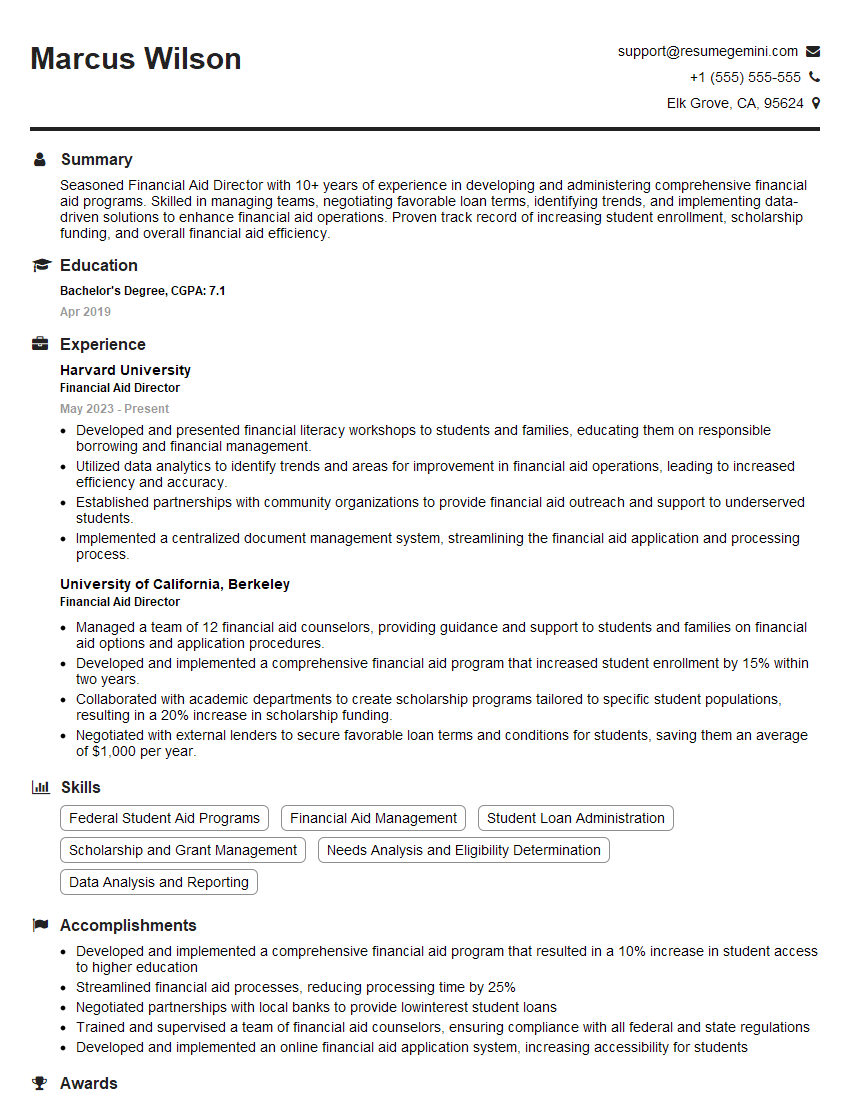
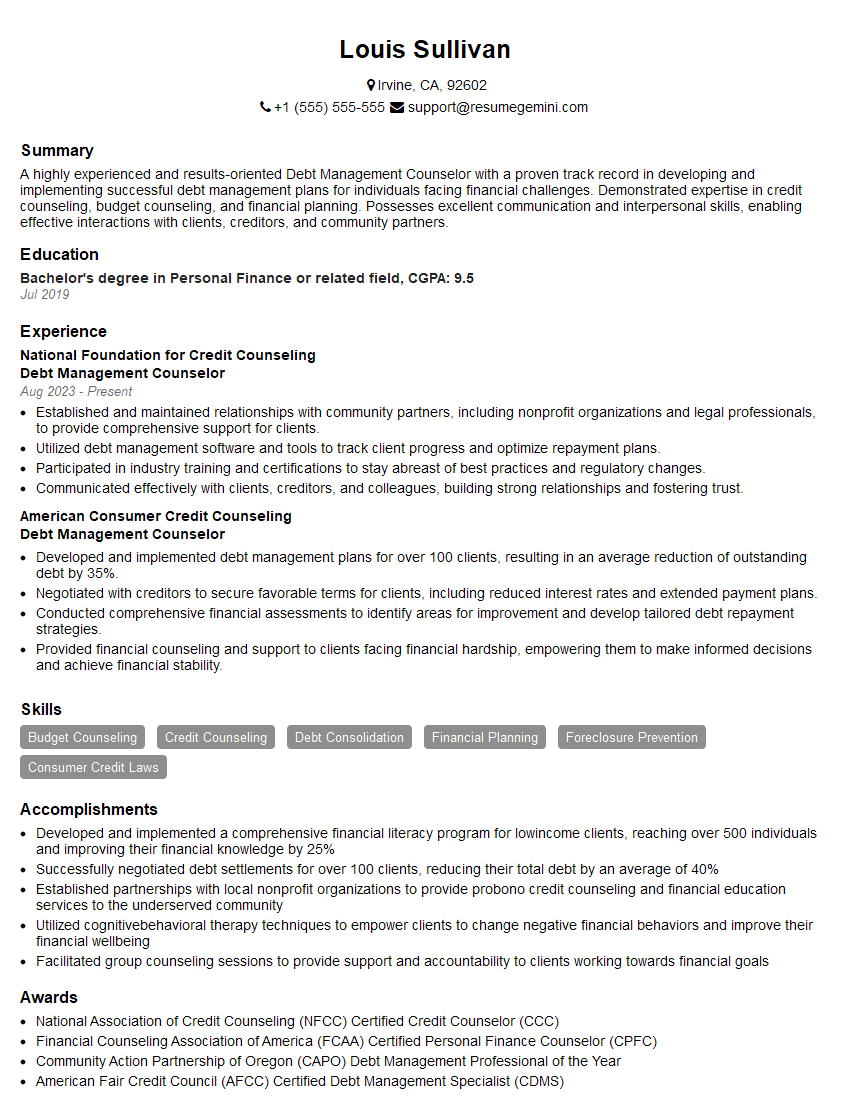
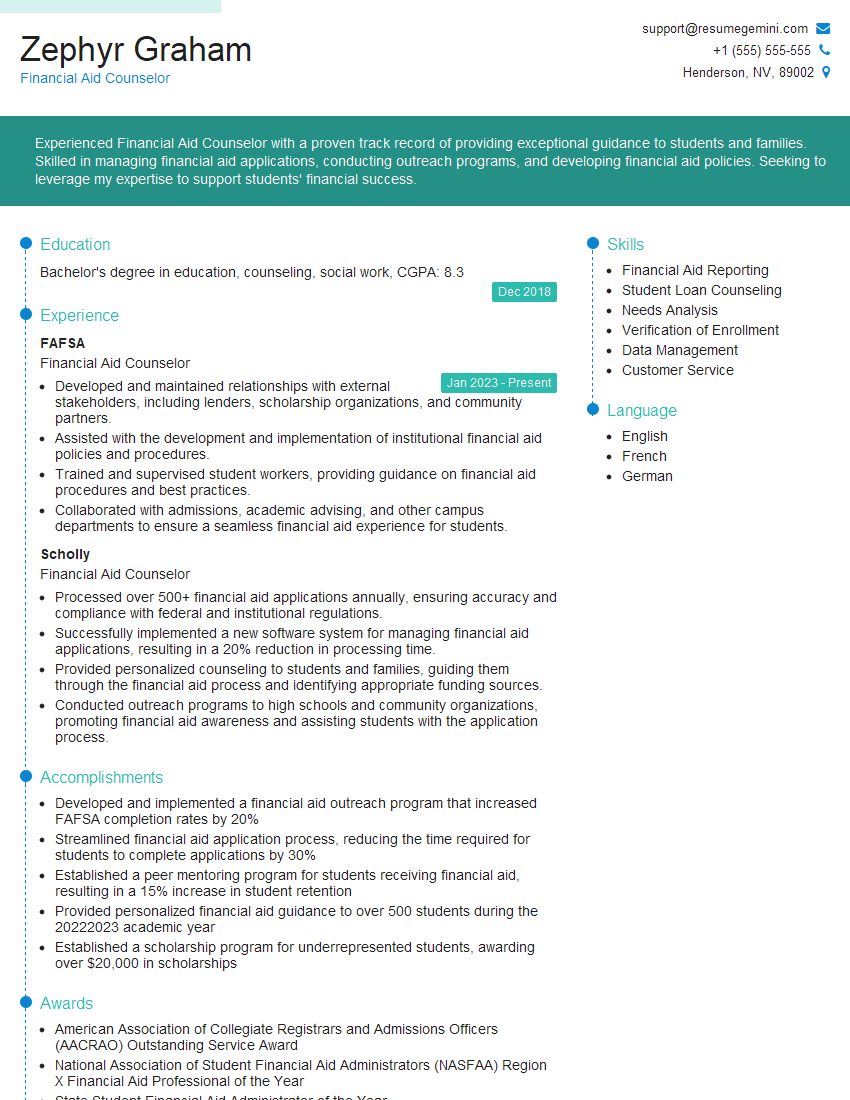
Mastering exit counseling opens doors to a rewarding career in student financial aid and related fields. To maximize your job prospects, a strong, ATS-friendly resume is essential. ResumeGemini is a trusted resource that can help you create a compelling resume showcasing your skills and experience. We provide examples of resumes tailored to Exit Counseling positions to help you get started. Invest time in crafting a professional resume that highlights your qualifications and you’ll significantly increase your chances of securing your dream role.
Explore more articles
Users Rating of Our Blogs
Share Your Experience
We value your feedback! Please rate our content and share your thoughts (optional).
What Readers Say About Our Blog
Really detailed insights and content, thank you for writing this detailed article.
IT gave me an insight and words to use and be able to think of examples