Every successful interview starts with knowing what to expect. In this blog, we’ll take you through the top Aviation Safety Principles interview questions, breaking them down with expert tips to help you deliver impactful answers. Step into your next interview fully prepared and ready to succeed.
Questions Asked in Aviation Safety Principles Interview
Q 1. Explain the principles of a Safety Management System (SMS).
A Safety Management System (SMS) is a proactive approach to managing safety risks within an aviation organization. It’s not just about reacting to accidents, but preventing them in the first place. Think of it as a continuous cycle of identifying hazards, assessing risks, implementing controls, and monitoring their effectiveness. This is all underpinned by a strong safety culture.
- Hazard Identification: This involves actively looking for anything that could potentially cause harm – a faulty piece of equipment, a poorly written procedure, or even communication breakdowns. For example, identifying worn tires on an aircraft before they lead to a failure.
- Risk Assessment: Once hazards are identified, they’re assessed to determine the likelihood and severity of the potential harm. This often uses a risk matrix, considering factors such as probability and impact.
- Risk Mitigation: This is where you develop and implement controls to reduce or eliminate the risks. This could include replacing faulty equipment, revising procedures, providing additional training, or implementing new technologies.
- Safety Assurance: This involves monitoring the effectiveness of the implemented controls. Are they actually working? Are new hazards emerging? Regular audits, safety reporting, and data analysis are crucial here.
- Safety Promotion: A successful SMS requires strong communication and a positive safety culture. Everyone in the organization needs to understand their role in safety and feel comfortable reporting hazards and incidents without fear of reprisal.
Imagine a bakery; an SMS would be like having a system to ensure the ingredients are fresh, the equipment is clean, and the staff follows hygiene protocols to prevent food poisoning. It’s about proactive measures, not just reacting to a customer getting sick.
Q 2. Describe the role of Human Factors in aviation accidents.
Human factors play a HUGE role in aviation accidents. In fact, they are often the underlying cause, or at least a significant contributing factor, in a vast majority of incidents. Human factors encompass the interplay between people and the systems within which they work. Errors can stem from many things, including physiological factors (fatigue, illness), psychological factors (stress, complacency), organizational factors (poor training, inadequate communication), and environmental factors (weather, noise).
- Fatigue: A pilot experiencing fatigue might make poor decisions, leading to a deviation from the flight plan or an incorrect response to an emergency.
- Communication Breakdown: Poor communication between the cockpit crew, air traffic control, or ground crew can result in misunderstandings and potentially dangerous situations.
- Stress: High workload, time pressure, or external stressors can impair cognitive function and lead to errors.
- Normalization of Deviance: This occurs when deviations from standard procedures are gradually accepted as normal, leading to a gradual erosion of safety standards.
For example, the Tenerife airport disaster was largely attributed to human factors, specifically communication failures and misunderstandings between the pilots and air traffic control. Understanding human limitations and implementing mitigation strategies, such as crew resource management (CRM) training, is crucial to improving aviation safety.
Q 3. What are the key elements of a successful aviation safety investigation?
A successful aviation safety investigation aims to determine the facts of what happened, why it happened, and how to prevent it from happening again. It’s not about finding blame, but understanding the sequence of events and underlying issues.
- Fact-Finding: Gathering comprehensive information through witness interviews, flight data recorder (FDR) analysis, cockpit voice recorder (CVR) analysis, and examination of physical evidence.
- Analysis: Identifying the causal factors contributing to the accident, using various investigative techniques, such as the ‘Swiss Cheese’ model to illustrate how multiple layers of defenses can fail.
- Safety Recommendations: Developing recommendations to prevent similar accidents in the future. These recommendations may involve changes to procedures, training, equipment design, or regulatory oversight.
- Transparency and Communication: Sharing the investigation findings and safety recommendations with relevant stakeholders to facilitate learning and improvements across the industry.
Think of it like a detective solving a crime; they need to collect all the evidence, piece together the events, and then identify the root causes to prevent similar crimes in the future. The goal is not to punish but to learn and prevent recurrence.
Q 4. How do you identify and mitigate safety risks in an aviation operation?
Identifying and mitigating safety risks involves a systematic process of hazard identification, risk assessment, and control implementation.
- Hazard Identification: This can involve various methods, including safety audits, hazard reporting systems, proactive risk assessments (e.g., what-if analysis), and reviewing accident/incident databases.
- Risk Assessment: This involves evaluating the likelihood and severity of the identified hazards. Techniques like fault tree analysis or event tree analysis can be employed to model potential accident scenarios.
- Risk Mitigation: This involves implementing controls to reduce or eliminate the risks. Controls can be engineering (e.g., modifying equipment), administrative (e.g., revising procedures), or procedural (e.g., improving training).
- Monitoring and Review: The effectiveness of implemented controls must be continuously monitored and reviewed, and controls updated as necessary.
For instance, if an audit reveals a high rate of runway incursions at an airport, potential mitigation strategies could include improving signage, enhancing communication protocols, or implementing an advanced surface detection system. The key is proactive identification and response, ensuring that risks are managed effectively and safety is prioritized.
Q 5. Explain the concept of Just Culture in aviation safety.
Just Culture in aviation safety focuses on balancing accountability with a commitment to learning from errors. It aims to create an environment where individuals feel comfortable reporting errors without fear of retribution, but where inappropriate actions are still addressed appropriately. The goal is to foster a culture of safety without compromising on accountability.
Instead of focusing solely on blame, Just Culture encourages investigation of systemic issues that may have contributed to errors. It distinguishes between:
- Human Error: Unintentional mistakes made by individuals. This requires learning and improvement but doesn’t necessarily equate to blame.
- At-Risk Behavior: Conscious choices that increase risk, but don’t necessarily violate rules or procedures.
- Reckless Behavior: A conscious disregard for safety rules and procedures that puts others at risk.
- Intentional Behavior: Deliberate actions with intent to cause harm.
A Just Culture promotes a learning environment where individuals are encouraged to report errors, without fear of being unfairly disciplined. However, it also holds individuals accountable for reckless or intentional unsafe acts. This balance encourages a more open and honest reporting system, which leads to better identification of safety issues and ultimately to a safer aviation environment.
Q 6. Describe your experience with conducting safety audits.
Throughout my career, I have conducted numerous safety audits across various aviation operations, ranging from small charter operators to major airlines. These audits have encompassed diverse areas including maintenance programs, flight operations, emergency response procedures, and safety management systems. My approach consistently involves a thorough review of documentation, interviews with personnel at all levels, and direct observation of operational practices.
For example, during a recent audit of a maintenance organization, I reviewed their maintenance records, observed their maintenance procedures, and interviewed mechanics and supervisors. This helped to identify gaps in their maintenance program, which were then communicated through a comprehensive audit report with recommendations for improvement. I always ensure that my audits are constructive and focused on identifying areas for improvement, promoting a collaborative approach with the audited organization. I prioritize fostering a safe and open environment for communication during these audits.
My audit reports typically include detailed findings, observations, and prioritized recommendations for corrective actions. I also follow up with the audited organization to ensure that the recommendations are properly addressed and that the necessary improvements are implemented effectively.
Q 7. How do you use data analysis to improve aviation safety?
Data analysis plays a vital role in improving aviation safety. By systematically collecting, analyzing, and interpreting safety data, we can identify trends, patterns, and potential hazards that might otherwise go unnoticed. This allows for proactive interventions and improvements to safety processes.
- Data Sources: Data comes from various sources, including flight data recorders (FDRs), cockpit voice recorders (CVRs), maintenance records, accident/incident reports, and safety audits.
- Data Analysis Techniques: Statistical methods are applied to the data to identify trends and patterns. This might involve calculating rates of occurrence for specific events, using statistical process control charts to monitor performance, or conducting root-cause analyses. Data visualization techniques like graphs and charts are also employed to aid comprehension.
- Risk Prioritization: The analysis assists in prioritizing safety risks and allocating resources to the most critical issues. This allows for focused efforts to enhance safety where it’s most needed.
- Performance Monitoring: Data analysis helps to track safety performance over time, allowing for evaluation of the effectiveness of safety initiatives and identification of areas needing further attention.
For example, if the analysis of flight data reveals a pattern of near-miss incidents related to a specific type of aircraft in certain weather conditions, this can lead to focused training for pilots, modifications to flight procedures, or revisions to operational guidelines to mitigate the risks.
Q 8. What are the common causes of aviation accidents?
Aviation accidents, thankfully rare events, stem from a complex interplay of factors. They’re rarely attributable to a single cause but rather a chain of events, often categorized as human factors, mechanical failures, and environmental conditions.
Human Factors: This is the largest contributing factor, encompassing pilot error (e.g., poor decision-making, inadequate training, fatigue), air traffic control errors, and maintenance errors. For example, a pilot failing to properly manage fuel levels leading to an engine failure illustrates human error.
Mechanical Failures: These include malfunctions in aircraft systems, engines, or structures. A catastrophic engine failure mid-flight, due to improper maintenance or a manufacturing defect, falls under this category.
Environmental Conditions: Adverse weather, such as severe turbulence, icing, or low visibility, can significantly impact flight safety. Think of a flight encountering unexpected microbursts leading to a difficult landing.
Other Factors: These can include inadequate safety management systems, insufficient training, and regulatory deficiencies. A lack of robust safety reporting system within an airline, leading to the continuation of unsafe practices is one example.
Understanding these contributing factors helps in developing targeted preventative measures and enhances safety protocols.
Q 9. Explain the importance of risk assessment in aviation.
Risk assessment in aviation is paramount. It’s a systematic process of identifying hazards, analyzing their potential impact, and implementing mitigation strategies to minimize risks. Think of it as a proactive approach to safety, rather than a reactive one.
Its importance lies in:
Proactive Safety: By identifying potential risks before they materialize, we can prevent accidents. For example, analyzing the potential for bird strikes at a particular airport and implementing measures like bird scaring techniques.
Resource Allocation: Risk assessment guides resource allocation towards the most critical safety issues. It helps prioritize safety initiatives based on the level of risk involved.
Compliance and Certification: Aviation safety regulations often mandate rigorous risk assessment procedures for aircraft operations, maintenance, and air traffic management.
Continuous Improvement: Regular risk assessment allows for continuous improvement of safety practices, as new hazards emerge and technology advances.
Effective risk assessment requires a multidisciplinary approach, involving pilots, engineers, maintenance personnel, and air traffic controllers.
Q 10. How would you handle a safety-critical situation?
Handling a safety-critical situation demands a calm, methodical, and decisive approach. My response would follow a structured process:
Assess the Situation: Quickly gather information. What’s the immediate threat? Who is at risk? What resources are available?
Prioritize Actions: Determine the most critical actions needed to mitigate the immediate danger. This might involve emergency procedures, contacting emergency services, or directing crew and passengers.
Communicate Effectively: Clearly and concisely communicate the situation and actions being taken to relevant personnel (e.g., crew, air traffic control, emergency services). Clear, concise communication prevents further complications.
Execute Actions: Implement the prioritized actions decisively and efficiently. Delegation is key in such scenarios.
Post-Incident Review: After the immediate danger has passed, a thorough review of the situation is crucial. This helps identify contributing factors, improve future responses, and learn from the experience.
Example: Imagine an engine failure during flight. My immediate actions would involve declaring an emergency, following emergency checklists, contacting air traffic control for assistance, and coordinating an emergency landing.
Q 11. Describe your experience with safety reporting systems.
I’ve extensive experience with safety reporting systems, including both voluntary and mandatory reporting programs. These systems are vital for capturing near misses, incidents, and accidents to identify systemic issues and prevent future occurrences.
My experience encompasses:
Data Analysis: Analyzing safety reports to identify trends, patterns, and contributing factors.
Incident Investigation: Participating in formal investigations to determine root causes and recommend corrective actions. For example, analyzing a series of near misses related to runway incursions to identify deficiencies in communication protocols or signage.
Safety Promotion: Promoting the use of safety reporting systems and fostering a culture of open and honest reporting. This often involves training personnel on the importance of reporting and ensuring anonymity where possible.
System Improvements: Recommending improvements to safety reporting systems to enhance data quality, improve data analysis, and make the reporting process more user-friendly.
I understand that a successful safety reporting system relies on a culture of safety where individuals feel comfortable reporting incidents without fear of retribution.
Q 12. What are the key regulations and standards governing aviation safety?
Aviation safety is governed by a complex web of international, national, and regional regulations and standards. Key players include the International Civil Aviation Organization (ICAO), national aviation authorities (e.g., FAA in the US, EASA in Europe), and industry organizations.
ICAO Annexes: These are international standards and recommended practices covering various aspects of aviation, including aircraft operations, air navigation, and airworthiness.
National Regulations: Each country has its own regulations implementing and often extending ICAO standards. These address specific operational and safety requirements within their airspace.
Aircraft Certification: Aircraft manufacturers must meet stringent airworthiness standards before their aircraft are certified for operation. This involves rigorous testing and verification of design, materials, and systems.
Pilot Licensing and Training: Pilots undergo rigorous training and licensing processes to ensure competency and adherence to safety standards.
Maintenance Regulations: Strict regulations govern aircraft maintenance to ensure the airworthiness of aircraft throughout their operational lifespan.
These regulations and standards work together to create a framework for safe and efficient air transportation. Compliance with these regulations is mandatory for operators to be able to legally operate.
Q 13. Explain the concept of proactive safety management.
Proactive safety management is a holistic approach that shifts the focus from reacting to accidents to preventing them. It emphasizes identifying and mitigating hazards before they cause incidents. Instead of just patching holes after a problem occurs, we address the root causes.
Key elements include:
Safety Culture: Fostering a culture where safety is a priority at all levels of the organization, with open communication and a willingness to report hazards.
Hazard Identification and Risk Assessment: Systematically identifying potential hazards and assessing their associated risks using techniques like hazard analysis and risk matrices.
Safety Promotion: Providing training, education, and awareness programs to enhance safety knowledge and skills.
Safety Performance Monitoring: Tracking key safety indicators to measure the effectiveness of safety management systems and identify areas for improvement.
Continuous Improvement: Using data and feedback to continuously improve safety processes and procedures.
Proactive safety management is not a one-time event but a continuous process of improvement and adaptation.
Q 14. How do you communicate safety concerns effectively?
Effective communication of safety concerns is crucial. My approach emphasizes clarity, timeliness, and appropriate channels:
Clarity: Clearly articulate the safety concern, providing specific details and avoiding ambiguity. For example, instead of saying ‘there’s a problem with the system’, clearly state ‘the autopilot disconnects intermittently during approach, as evidenced by incident reports X, Y and Z’.
Timeliness: Report safety concerns promptly, as delays can increase risk. Urgent issues require immediate attention.
Appropriate Channels: Use appropriate communication channels, considering the urgency and nature of the concern. This might involve informal discussions with colleagues, formal reports to supervisors, or notifications to regulatory authorities.
Documentation: Document all safety concerns, including the date, time, location, involved personnel, and corrective actions taken.
Feedback: Follow up on reported concerns to ensure corrective actions have been taken and to provide feedback on the resolution process.
Open communication and a culture of trust are essential for effective safety reporting and improvement.
Q 15. Describe your experience with safety training programs.
Throughout my career, I’ve been deeply involved in developing and delivering various aviation safety training programs. My experience spans a range of areas, including initial training for new pilots and air traffic controllers, recurrent training for experienced personnel, and specialized training focused on specific safety hazards, such as fatigue management and CRM (Crew Resource Management). I’ve designed and implemented training using various methodologies, including interactive simulations, classroom lectures, e-learning modules, and hands-on workshops. For example, I developed a comprehensive fatigue risk management training module for pilots that incorporated realistic flight simulator scenarios to illustrate the effects of fatigue on decision-making and performance. Another project involved creating a CRM training program that used role-playing exercises to improve communication and teamwork skills within flight crews. My focus has always been on creating engaging and effective training that translates directly to safer operational practices.
Career Expert Tips:
- Ace those interviews! Prepare effectively by reviewing the Top 50 Most Common Interview Questions on ResumeGemini.
- Navigate your job search with confidence! Explore a wide range of Career Tips on ResumeGemini. Learn about common challenges and recommendations to overcome them.
- Craft the perfect resume! Master the Art of Resume Writing with ResumeGemini’s guide. Showcase your unique qualifications and achievements effectively.
- Don’t miss out on holiday savings! Build your dream resume with ResumeGemini’s ATS optimized templates.
Q 16. What are the limitations of using accident data for safety prediction?
While accident data is invaluable for understanding past safety performance and identifying contributing factors, it has limitations in predicting future accidents. One key limitation is the inherent underreporting of incidents. Many near-misses or minor incidents go unreported, creating a skewed view of actual risk. Furthermore, accident data is often retrospective; it tells us what happened, but not necessarily why, or how to prevent similar occurrences in slightly different circumstances. Accident data also represents a small sample size compared to the total number of flights or operations. This can lead to unreliable statistical predictions, particularly for rare events. Finally, the complexity of aviation operations makes it challenging to isolate individual contributing factors from a series of complex interacting events. For example, an accident may be attributed to pilot error, but underlying issues like inadequate training, maintenance lapses, or systemic pressure could also be at play. To improve prediction, you need to combine accident data with other methods like hazard identification, risk assessment, and proactive safety monitoring using tools like safety reporting systems and operational data analysis.
Q 17. Explain the difference between hazard and risk.
The difference between a hazard and a risk is crucial in safety management. A hazard is simply a potential source of harm or damage. It’s anything that *could* cause an accident or incident. Think of it as the ‘what’ – what *could* go wrong? Examples include a faulty aircraft component, adverse weather, or pilot fatigue. Risk, on the other hand, is the likelihood that a hazard will cause harm and the severity of that harm. It’s the ‘how likely’ and ‘how bad’ – what is the probability of it causing harm, and what’s the impact if it does? For example, a faulty component (hazard) might have a low risk if it’s detected during routine maintenance, but a high risk if it goes undetected and leads to a critical failure. Effectively, risk is the product of the likelihood and severity of the hazard’s potential consequences. Risk management involves identifying hazards, analyzing risks, and implementing controls to mitigate or eliminate them.
Q 18. What is your understanding of fatigue risk management?
Fatigue Risk Management (FRM) is a systematic approach to identify, assess, and control fatigue-related risks in aviation operations. It’s not just about ensuring pilots get enough sleep; it’s a holistic strategy. An effective FRM system considers various factors contributing to fatigue, such as work schedules, duty times, sleep patterns, environmental factors (like time zone changes), and individual differences in sleep needs. Key elements of FRM include:
- Fatigue risk assessment: Identifying tasks and operational scenarios with a high risk of fatigue-related errors.
- Crew scheduling and rostering: Optimizing work schedules to minimize fatigue risks.
- Education and training: Educating crew members about fatigue risks, management strategies, and self-reporting mechanisms.
- Monitoring and surveillance: Tracking fatigue-related incidents and adjusting strategies as needed.
- Recovery strategies: Providing adequate rest periods and opportunities for recovery.
Q 19. How do you promote a safety culture within an organization?
Promoting a strong safety culture is paramount in aviation. It’s not just about following rules; it’s about a shared mindset where safety is everyone’s top priority. This involves several key strategies:
- Leadership commitment: Visible and active support from senior management is essential. Safety needs to be a strategic goal, not just an afterthought.
- Open communication: Creating a blame-free environment where individuals feel comfortable reporting errors and near misses without fear of retribution. This often involves using Just Culture principles.
- Proactive safety management: Implementing robust safety management systems (SMS) including hazard identification, risk assessment, and mitigation strategies.
- Training and education: Providing regular safety training and awareness programs that cover all aspects of safety, from operational procedures to human factors.
- Employee empowerment: Empowering employees to stop work if they identify a safety hazard. This requires clear procedures and open communication channels.
- Continuous improvement: Regularly reviewing safety performance, identifying areas for improvement, and implementing corrective actions.
Q 20. Describe your experience with incident reporting and investigation.
My experience with incident reporting and investigation is extensive. I’ve participated in numerous investigations, from minor incidents to serious accidents. My approach is always based on a thorough and systematic investigation using the principles of a just culture, aiming to identify root causes and not simply assign blame. The process typically involves:
- Gathering evidence: Collecting information from various sources, including flight recorders, maintenance logs, witness statements, and operational data.
- Analyzing data: Using various analytical techniques to identify patterns and contributing factors.
- Identifying root causes: Determining the underlying causes of the incident, going beyond immediate contributing factors.
- Developing recommendations: Suggesting corrective and preventive actions to prevent similar incidents from happening again.
- Reporting findings: Preparing a detailed report that summarizes the investigation’s findings, conclusions, and recommendations.
Q 21. How familiar are you with ICAO standards and recommended practices?
I’m very familiar with ICAO (International Civil Aviation Organization) standards and recommended practices. My work consistently aligns with these international standards, which are fundamental to global aviation safety. I understand the importance of adhering to standards like those found in Annex 6 (Operation of Aircraft), Annex 8 (Airworthiness of Aircraft), and Annex 14 (Aerodromes). I have a solid grasp of SMS (Safety Management Systems) principles, as outlined in ICAO’s Doc 9859, and their practical application in improving aviation safety. My understanding includes the framework for a State Safety Programme (SSP) and the importance of continuous monitoring and improvement based on safety performance indicators. I’ve also had experience using ICAO’s procedures for accident and incident investigation and reporting, ensuring consistency with global best practices. Familiarity with ICAO standards is not just about compliance; it’s about participating in a global effort to continually improve aviation safety worldwide.
Q 22. What are the principles of effective safety communication?
Effective safety communication in aviation hinges on clarity, timeliness, and a commitment to a shared understanding. It’s not just about transmitting information; it’s about ensuring the message is received, understood, and acted upon. This involves several key principles:
- Clarity and Conciseness: Messages should be unambiguous, avoiding jargon or technical terms where possible. Think of pilot-to-air traffic control communications – precision is paramount.
- Appropriate Channels: The method of communication should match the urgency and sensitivity of the information. A serious safety incident warrants immediate, direct communication, perhaps a phone call or face-to-face briefing, while routine updates might be suitable via email or internal systems.
- Audience Awareness: Tailor the communication style to the audience. A message to a group of maintenance technicians will differ significantly from a communication to airline pilots.
- Feedback Mechanisms: Incorporate ways to check understanding. A simple ‘do you copy?’ in radio communication or a confirmation email ensures the message was received and understood.
- Open Communication Culture: A safety culture where individuals feel comfortable raising concerns without fear of retribution is essential. This often involves implementing anonymous reporting systems and fostering a blame-free environment for reporting near misses or errors.
For instance, during a pre-flight briefing, the pilot ensures each crew member clearly understands the flight plan, weather conditions, and any potential hazards. Post-incident investigations often reveal communication breakdowns as a contributing factor; therefore, effective safety communication is a continuous process, not just a one-time event.
Q 23. How do you use root cause analysis to identify safety issues?
Root Cause Analysis (RCA) is a systematic process for identifying the underlying causes of incidents, not just the immediate symptoms. It’s about asking ‘why’ repeatedly to delve deeper and uncover the root problems. The goal is to prevent recurrence by addressing the fundamental causes, not just treating the surface-level issues.
I typically use techniques like the ‘5 Whys’ method, fault tree analysis, or Fishbone diagrams (Ishikawa diagrams). Let’s illustrate with an example: An aircraft experiences a hydraulic failure during takeoff.
- Why did the hydraulic failure occur? (A leak in a hydraulic line)
- Why was there a leak? (Corrosion in the line)
- Why was there corrosion? (Insufficient preventative maintenance)
- Why was the maintenance insufficient? (Lack of proper training for maintenance personnel)
- Why was the training insufficient? (Inadequate training program and insufficient oversight)
Through this iterative questioning, we move beyond the immediate failure to the underlying root cause: inadequate training and oversight in the maintenance program. Addressing this root cause through improved training, better inspection protocols, and enhanced oversight will prevent similar incidents in the future. A thorough RCA considers human factors, organizational factors, and technical factors, providing a holistic understanding of the issue.
Q 24. Describe your experience with safety performance indicators (KPIs).
Safety Performance Indicators (KPIs) are crucial for monitoring safety performance and identifying areas needing improvement. In my experience, effective KPIs are specific, measurable, achievable, relevant, and time-bound (SMART). I’ve worked with various KPIs including:
- Incident rates (per flight hour, per 100,000 flight hours, etc.): This measures the frequency of safety incidents, providing an overall view of safety performance.
- Near-miss reporting rates: This reflects the safety culture—a high reporting rate suggests employees feel comfortable reporting near misses without fear of reprisal.
- Maintenance discrepancy rates: Tracking this indicates the effectiveness of maintenance procedures and the condition of the aircraft fleet.
- Compliance rates with safety regulations: This helps identify areas where compliance is lacking and requires attention.
- Timely completion of safety audits and inspections: Ensures proactive identification of potential safety issues.
I’ve utilized these KPIs to track trends, identify areas of concern, and evaluate the effectiveness of safety interventions. For instance, a sudden increase in near-miss reports might indicate a need to review procedures or address crew fatigue issues. Data visualization (charts and graphs) is key to effectively presenting these KPIs to stakeholders and fostering a data-driven safety culture.
Q 25. Explain your understanding of emergency response procedures in aviation.
Aviation emergency response procedures are meticulously planned and rigorously tested to ensure a coordinated and effective response to unforeseen events. These procedures vary based on the specific nature of the emergency (e.g., in-flight emergency, ground emergency) but share common threads:
- Emergency Response Plan (ERP): A comprehensive document outlining roles, responsibilities, communication protocols, and procedures for handling various emergencies. This plan should be regularly reviewed and updated.
- Emergency Response Team (ERT): A designated team trained to handle specific aspects of an emergency, including fire suppression, rescue, medical assistance, and communication.
- Communication protocols: Clear and concise communication channels are critical for efficient coordination among all stakeholders, including air traffic control, emergency services, and airline personnel.
- Emergency equipment and resources: Ready access to fire trucks, ambulances, rescue equipment, and medical supplies is essential. Regular checks and maintenance of this equipment are vital.
- Emergency training and drills: Regular simulations and drills are conducted to ensure the ERT is prepared for various scenarios. This includes emergency evacuation drills for passengers and crew.
For example, in case of a runway incursion, the ERP outlines the steps the air traffic control, the pilots, the ground crew, and the emergency services will take to ensure the safety of those involved and the prevention of collisions. Regular training and drills help make these procedures second nature, optimizing the response time and effectiveness in real-world emergencies.
Q 26. How would you manage a conflict between safety and operational efficiency?
Managing the conflict between safety and operational efficiency is a constant balancing act in aviation. While operational efficiency is important for profitability, safety must always take precedence. There’s no compromise when it comes to safety. However, a well-managed organization seeks synergies between the two.
My approach involves:
- Risk Assessment: Conducting thorough risk assessments to identify potential hazards, evaluate their likelihood and severity, and determine the necessary mitigations. This helps quantify the trade-offs between increased safety measures and potential efficiency reductions.
- Cost-Benefit Analysis: Evaluating the costs of implementing safety measures against their potential benefits (reduction in accidents, injuries, and financial losses). This provides a framework for prioritizing safety initiatives.
- Proactive Safety Management: Implementing a proactive safety management system (SMS) that encourages continuous improvement, hazard identification, and risk mitigation. This includes regular safety audits, safety reporting systems, and proactive training programs.
- Communication and Collaboration: Open and transparent communication between safety personnel, operations management, and other stakeholders is essential for finding solutions that balance safety and efficiency.
- Data-Driven Decision Making: Using safety data and KPIs to inform decisions and justify safety investments. This provides evidence-based support for prioritizing safety.
For example, implementing a more rigorous maintenance schedule might slightly reduce operational efficiency in the short term, but the long-term benefits of preventing potential mechanical failures far outweigh the costs.
Q 27. How do you ensure compliance with relevant aviation safety regulations?
Ensuring compliance with aviation safety regulations is non-negotiable. It requires a multifaceted approach that combines proactive measures with robust oversight. My approach encompasses:
- Knowledge of Regulations: Staying updated on all relevant national and international aviation regulations (e.g., FAA regulations in the US, EASA regulations in Europe, ICAO standards). This includes understanding amendments and updates to these regulations.
- Compliance Programs: Implementing robust compliance programs that integrate regulatory requirements into all aspects of operations. This includes developing and implementing standard operating procedures (SOPs) that align with regulatory requirements.
- Regular Audits and Inspections: Conducting regular internal audits and inspections to identify areas of non-compliance and take corrective action. This includes both self-audits and third-party audits to ensure objectivity.
- Documentation and Record Keeping: Maintaining meticulous records of all safety-related activities, inspections, maintenance, and training. This documentation provides a clear audit trail and supports regulatory compliance demonstrations.
- Training and Education: Providing comprehensive training and education for all personnel involved in aviation operations to ensure they understand and comply with relevant regulations. This includes recurrent training to keep knowledge up-to-date.
- Incident Reporting and Investigation: Having a system in place for reporting safety incidents and conducting thorough investigations to identify root causes and implement corrective actions. This often includes reporting to relevant regulatory bodies.
Non-compliance can lead to severe penalties, including fines, operational restrictions, or even the grounding of aircraft. A proactive approach to compliance is essential not only for legal reasons but also to maintain a high level of safety and public trust.
Q 28. Explain your understanding of the role of technology in enhancing aviation safety.
Technology plays a transformative role in enhancing aviation safety. From advanced navigation systems to sophisticated data analytics, technological advancements are continuously improving safety and efficiency.
- Flight Data Recorders (FDRs) and Cockpit Voice Recorders (CVRs): These devices provide invaluable data for accident investigation, enabling a deeper understanding of the events leading up to an accident and facilitating the identification of potential improvements.
- Traffic Collision Avoidance Systems (TCAS): These systems help prevent mid-air collisions by alerting pilots to potential traffic conflicts.
- Automatic Dependent Surveillance-Broadcast (ADS-B): This technology enhances situational awareness by providing real-time information on aircraft positions and flight data, improving air traffic management and reducing the risk of collisions.
- Weather radar and satellite imagery: Advanced weather technologies provide pilots with comprehensive weather information, enabling them to avoid severe weather conditions and improve flight safety.
- Aircraft health monitoring systems: These systems continuously monitor aircraft systems, alerting maintenance personnel to potential issues before they escalate into serious problems.
- Data analytics and predictive modeling: Analyzing large datasets of flight and maintenance data can identify trends, predict potential safety issues, and proactively implement preventative measures.
For instance, the implementation of ADS-B has significantly improved air traffic management, reducing the risk of collisions and delays. Similarly, predictive maintenance, based on data analysis of aircraft sensor readings, helps minimize unscheduled maintenance and improves operational reliability, contributing to greater safety.
Key Topics to Learn for Aviation Safety Principles Interview
- Human Factors in Aviation: Understanding pilot error, crew resource management (CRM), and the impact of fatigue, stress, and workload on safety.
- Accident Investigation and Reporting: Applying investigative techniques like the SHELL model and contributing to effective safety reporting systems like ASRS.
- Risk Management: Applying probabilistic risk assessment (PRA) methodologies and hazard identification techniques to mitigate risks proactively.
- Safety Management Systems (SMS): Understanding the principles of SMS implementation, including proactive hazard identification, risk mitigation, and safety performance monitoring.
- Regulatory Compliance and Standards: Familiarity with relevant aviation regulations (e.g., ICAO, FAA) and safety standards (e.g., ISO 31000).
- Safety Promotion and Training: Understanding the importance of safety culture, training programs, and effective communication in promoting a safe aviation environment.
- Aircraft Systems and Maintenance: Basic understanding of aircraft systems and maintenance practices relevant to safety, including preventative maintenance and inspections.
- Emergency Response and Procedures: Knowledge of emergency procedures, evacuation plans, and the role of first responders in aviation incidents.
- Data Analysis and Safety Performance Indicators: Using data analysis to identify safety trends, evaluate effectiveness of safety initiatives, and inform proactive risk management decisions.
Next Steps
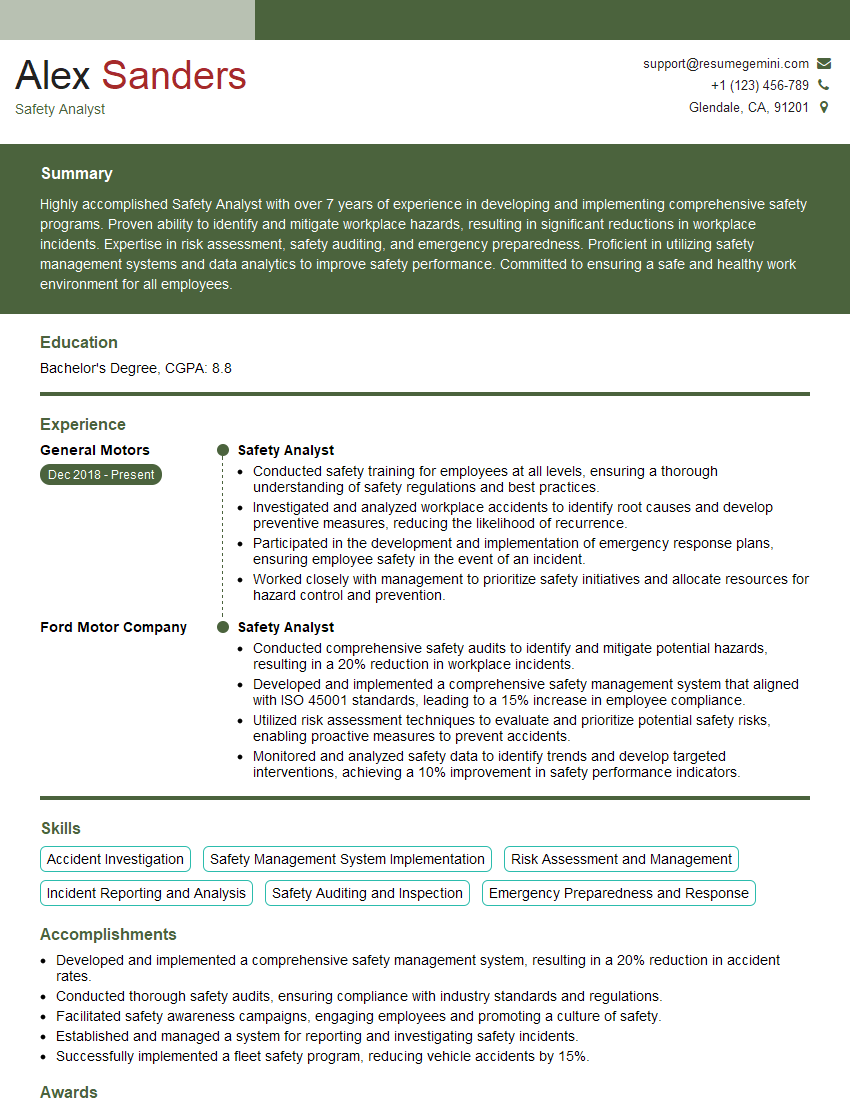
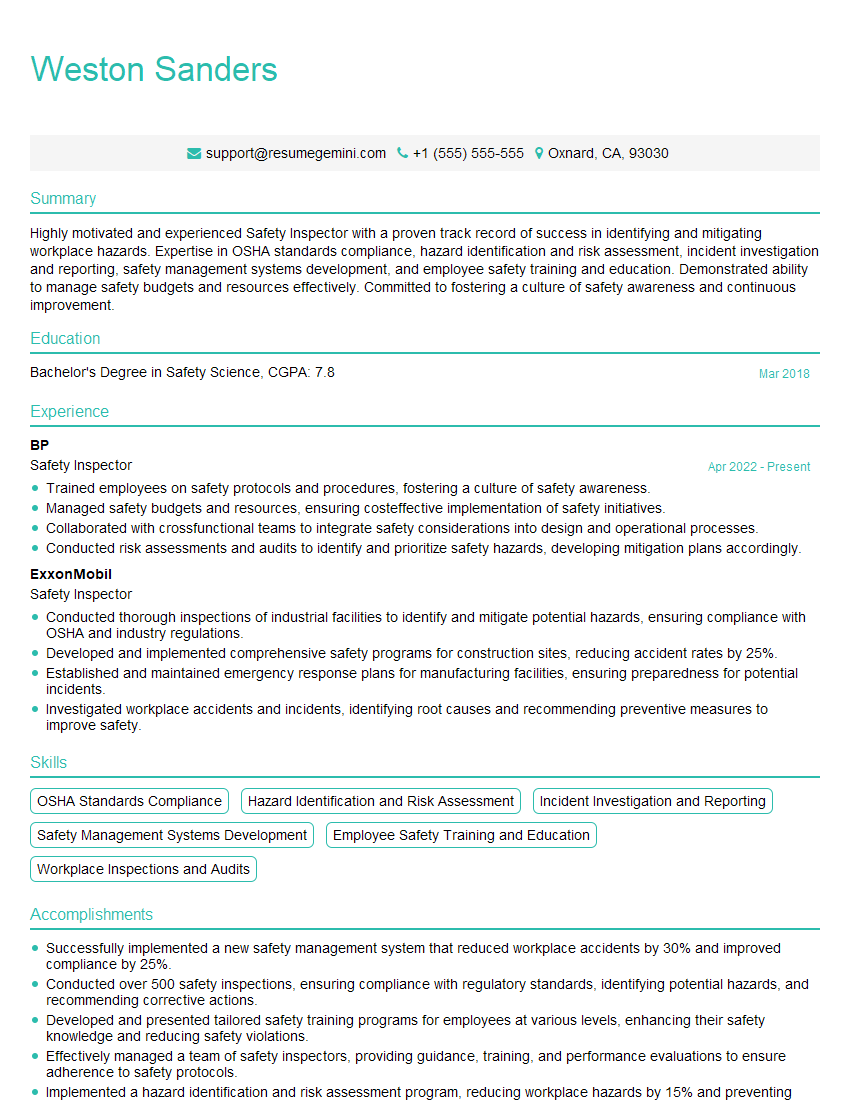
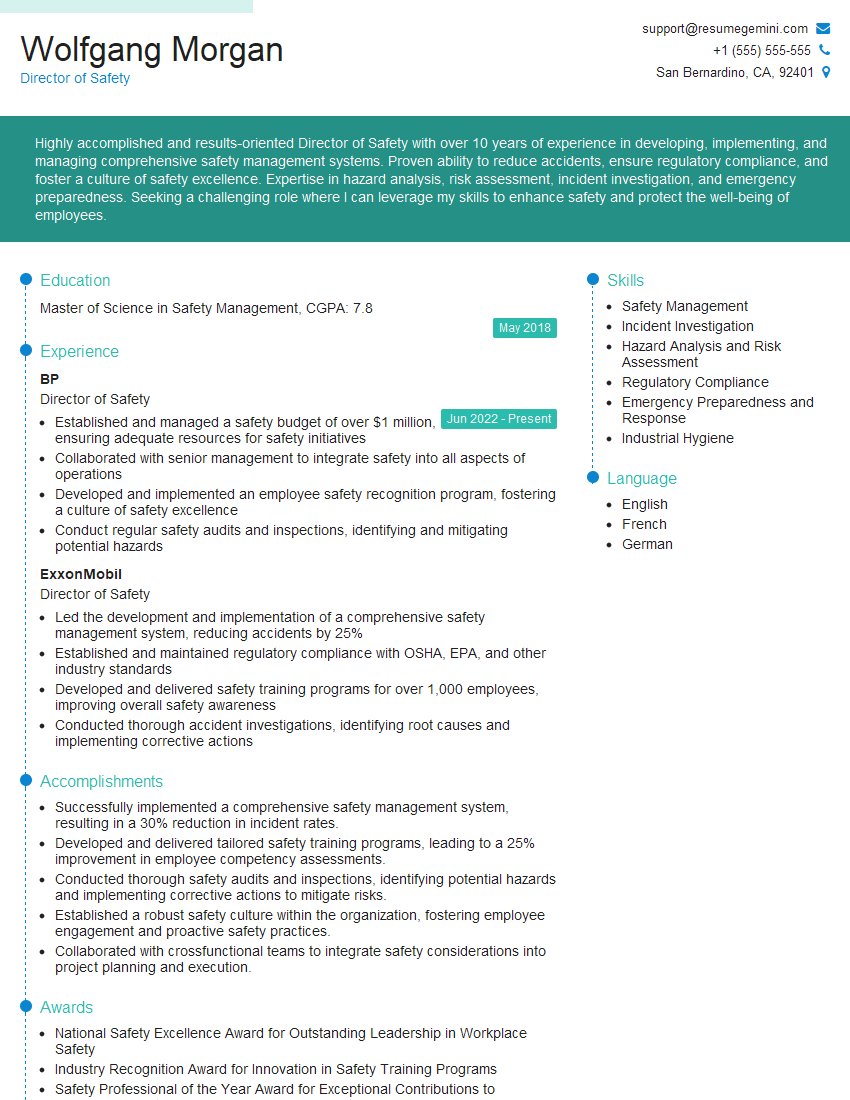
Mastering Aviation Safety Principles is crucial for advancing your career in this vital field. A strong understanding of these concepts demonstrates your commitment to safety and positions you as a valuable asset to any aviation organization. To significantly increase your chances of landing your dream role, focus on building an ATS-friendly resume that highlights your skills and experience effectively. ResumeGemini is a trusted resource that can help you create a professional and impactful resume. We offer examples of resumes tailored to Aviation Safety Principles to guide you in showcasing your expertise. Take the next step in your career journey – build a winning resume with ResumeGemini today.
Explore more articles
Users Rating of Our Blogs
Share Your Experience
We value your feedback! Please rate our content and share your thoughts (optional).
What Readers Say About Our Blog
Really detailed insights and content, thank you for writing this detailed article.
IT gave me an insight and words to use and be able to think of examples