The thought of an interview can be nerve-wracking, but the right preparation can make all the difference. Explore this comprehensive guide to Waste Collection Policy and Regulations interview questions and gain the confidence you need to showcase your abilities and secure the role.
Questions Asked in Waste Collection Policy and Regulations Interview
Q 1. Explain the hierarchy of waste management.
The waste management hierarchy prioritizes waste reduction and resource recovery over disposal. Think of it as a pyramid, with the most preferred methods at the top and the least preferred at the bottom.
- Prevention/Reduction: At the pinnacle, this involves designing products and processes to minimize waste generation. Examples include using less packaging, designing products for durability and repairability, and promoting reusable items.
- Reuse: Giving items a second life before disposal. This could involve donating used clothes, repairing broken appliances, or repurposing materials for crafting.
- Recycling: Transforming waste materials into new products. This is widely used for paper, plastic, glass, and metal. The success relies on efficient collection systems and robust recycling infrastructure.
- Recovery/Energy Recovery: Extracting energy from waste through processes like incineration with energy recovery (where heat is captured to generate electricity) or anaerobic digestion (breaking down organic waste to produce biogas).
- Disposal (Landfilling): The least desirable option, this involves burying waste in designated landfills. This method should be the last resort after exploring all other options due to its environmental impact, including groundwater contamination and greenhouse gas emissions.
Q 2. Describe the key components of a comprehensive waste collection plan.
A comprehensive waste collection plan needs several key components to function effectively:
- Waste Characterization: Understanding the types and quantities of waste generated in a specific area is crucial. This involves waste audits and surveys to inform collection strategies.
- Collection System Design: This includes choosing the appropriate collection method (e.g., curbside bins, communal bins, specialized collection for hazardous waste) and scheduling based on waste generation patterns.
- Infrastructure: This involves providing adequate bins, transfer stations, and transportation vehicles. The infrastructure must be accessible to all residents and businesses.
- Personnel: Training and management of collection crews are essential for efficient and safe operations. This also involves appropriate safety equipment and protocols.
- Public Education and Outreach: Educating the public on proper waste sorting and disposal practices is vital to the plan’s success. Engaging campaigns are crucial for maximizing recycling and reducing contamination.
- Monitoring and Evaluation: Regular monitoring of the collection process and its environmental impact is needed, along with mechanisms for adapting the plan based on collected data.
- Budget and Funding: Securing adequate funding to cover all aspects of the plan is critical for long-term sustainability.
Q 3. What are the main environmental regulations governing waste disposal in your region?
(Note: The specific regulations will vary greatly depending on the region. This answer provides a general overview. You should replace this with your region’s specific regulations.)
Many regions have environmental regulations based on national and international frameworks. These often cover aspects such as:
- Hazardous Waste Management: Strict regulations govern the handling, storage, transportation, and disposal of hazardous materials, aiming to prevent environmental contamination and protect human health.
- Landfill Regulations: Regulations focus on site selection, design, operation, and closure of landfills to minimize environmental impacts. This includes leachate management and methane capture.
- Recycling Targets and Reporting: Many jurisdictions mandate specific recycling rates for various materials and require regular reporting on waste management activities.
- Extended Producer Responsibility (EPR): This places responsibility for end-of-life management of products on the producers. This encourages design for recyclability and waste reduction.
- Wastewater Treatment: Regulations ensure proper treatment of wastewater from industrial and municipal sources to prevent water pollution.
Q 4. How do you ensure compliance with waste management regulations?
Ensuring compliance with waste management regulations requires a multi-faceted approach:
- Regular Audits and Inspections: Conducting regular internal and external audits to identify areas of non-compliance and implement corrective actions.
- Record Keeping: Maintaining detailed records of waste generation, collection, transportation, and disposal activities for traceability and reporting purposes.
- Training Programs: Providing comprehensive training to staff on waste management regulations and best practices.
- Technology Integration: Utilizing technology like GPS tracking of collection vehicles and waste management software for optimized routes and data analysis.
- Collaboration with Regulatory Agencies: Maintaining open communication with regulatory agencies to address any concerns and proactively demonstrate compliance.
- Reporting and Transparency: Regularly reporting waste management data to the relevant authorities and engaging in transparent communication about the organization’s performance.
- Continuous Improvement: Implementing a system for identifying and addressing areas for improvement based on audit findings and performance data.
Q 5. What are the different types of waste collection systems, and what are their advantages and disadvantages?
Several waste collection systems exist, each with its advantages and disadvantages:
- Curbside Collection: Waste is collected from bins placed at the curb. Advantages: Convenient for residents, relatively efficient for large-scale operations. Disadvantages: Requires significant vehicle traffic, susceptible to contamination if not properly sorted.
- Communal Bins: Larger bins are placed at designated locations for shared use. Advantages: Cost-effective for high-density areas, requires fewer collection vehicles. Disadvantages: Potential for overflowing bins, less convenient for residents, higher risk of contamination.
- Automated Collection Systems: Specialized trucks automatically lift and empty bins. Advantages: Improved efficiency, reduced labor costs, less physical strain on workers. Disadvantages: High initial investment cost, limited adaptability to different bin types.
- Drop-off Centers: Residents transport their waste to designated locations for disposal or recycling. Advantages: Allows for greater waste sorting, potentially higher recycling rates. Disadvantages: Inconvenient for residents, requires additional transportation.
- Source Separation: Waste is sorted at the source (e.g., different bins for different materials). Advantages: Maximizes recycling and resource recovery. Disadvantages: Requires resident participation and education.
Q 6. Discuss the role of recycling and composting in waste management.
Recycling and composting play a vital role in diverting waste from landfills and conserving resources.
- Recycling: Reduces the demand for virgin materials, lowering the environmental impact of extraction and manufacturing. It also saves energy and reduces greenhouse gas emissions.
- Composting: Transforms organic waste (food scraps, yard waste) into a valuable soil amendment. This reduces landfill volume, enriches soil, and reduces the need for synthetic fertilizers.
Both practices require efficient collection systems, public education, and processing facilities to ensure success. Ideally, they work in synergy, with a well-designed system incorporating both for optimal waste management.
Q 7. How do you manage hazardous waste?
Hazardous waste management requires strict adherence to regulations and specialized handling procedures. This includes:
- Proper Identification and Segregation: Hazardous waste must be clearly identified and separated from other waste streams to prevent accidents and environmental contamination.
- Secure Storage: Hazardous waste must be stored in designated containers and areas, adhering to specific safety requirements.
- Transportation and Disposal: Specialized transport methods and licensed disposal facilities are required for hazardous waste, ensuring safe handling throughout the process.
- Record Keeping: Meticulous documentation of hazardous waste generation, handling, storage, transportation, and disposal is crucial for compliance and traceability.
- Employee Training: Workers handling hazardous waste must receive specific training to ensure their safety and to prevent accidents.
- Emergency Response Planning: Having a well-defined emergency response plan in place to address potential incidents involving hazardous waste is vital.
Failure to properly manage hazardous waste can lead to severe environmental damage and health risks, highlighting the importance of strict adherence to regulations and best practices.
Q 8. What are the key performance indicators (KPIs) for a waste collection program?
Key Performance Indicators (KPIs) for a waste collection program are crucial for measuring efficiency, effectiveness, and overall success. They provide quantifiable data to track progress, identify areas for improvement, and demonstrate accountability. These KPIs can be broadly categorized into service delivery, operational efficiency, and environmental impact.
- Service Delivery KPIs: These focus on the quality of service provided to residents. Examples include:
- Collection frequency adherence: Percentage of scheduled collections completed on time.
- Missed collection rate: Number of missed collections divided by total collections.
- Customer satisfaction: Measured through surveys or feedback mechanisms regarding timeliness, cleanliness, and overall service experience.
- Complaint resolution time: Average time taken to address and resolve public complaints.
- Operational Efficiency KPIs: These metrics assess the program’s cost-effectiveness and resource utilization. Examples include:
- Cost per tonne collected: Total operational cost divided by the total weight of waste collected.
- Vehicle utilization rate: Percentage of time collection vehicles are actively engaged in waste collection.
- Fuel consumption per tonne: Amount of fuel consumed per tonne of waste collected.
- Employee productivity: Waste collected per employee or route per day.
- Environmental Impact KPIs: These KPIs focus on the environmental sustainability of the waste collection process. Examples include:
- Recycling rate: Percentage of waste diverted from landfills through recycling.
- Landfill diversion rate: Percentage of waste diverted from landfills through all means (recycling, composting, etc.).
- Greenhouse gas emissions: Total emissions associated with collection, transportation, and disposal.
By regularly monitoring and analyzing these KPIs, we can identify bottlenecks, optimize routes, improve service quality, and ultimately achieve a more sustainable and cost-effective waste management system.
Q 9. How do you address public complaints related to waste collection?
Addressing public complaints effectively is paramount to maintaining trust and ensuring a smoothly functioning waste collection program. Our approach is multi-pronged and focuses on prompt response, thorough investigation, and proactive communication.
- Immediate Acknowledgement: All complaints are acknowledged promptly, typically within 24 hours, reassuring the complainant that their concern is being addressed. This initial contact is crucial in de-escalating any frustration.
- Thorough Investigation: A dedicated team investigates each complaint, verifying details, and determining the root cause. This may involve reviewing collection routes, checking service records, and even conducting site visits.
- Resolution and Follow-up: Depending on the nature of the complaint (missed collection, overflowing bin, etc.), appropriate corrective actions are taken. This might involve scheduling a special collection, replacing a damaged bin, or implementing procedural changes to prevent recurrence.
- Communication: We actively communicate with the complainant throughout the process, providing updates and explaining the actions taken. A follow-up communication confirms resolution and seeks feedback on the process.
- Data Analysis: Complain data is analyzed to identify recurring issues or systemic problems. This information is used to improve procedures, staff training, and overall service delivery.
For instance, a consistently high number of complaints about missed collections in a specific neighborhood might reveal an inefficient route or a need for additional collection resources in that area. We use this data-driven approach to proactively address potential problems before they escalate into widespread issues.
Q 10. Describe your experience with waste collection route optimization.
Waste collection route optimization is crucial for maximizing efficiency, minimizing costs, and improving service delivery. My experience involves using advanced software and data-driven methodologies to design and refine collection routes.
In a previous role, I implemented a Geographic Information System (GIS)-based route optimization software. This involved inputting data on factors such as:
- Location of collection points (residential, commercial, etc.)
- Waste generation volumes per location
- Road networks and traffic patterns
- Vehicle capacity and speed
The software then utilized algorithms to create optimal routes that minimized travel time, fuel consumption, and the number of vehicles required. The results were impressive. We saw a 15% reduction in fuel consumption, a 10% decrease in overall travel time, and a significant improvement in the timeliness of collections. We also used GPS tracking on our vehicles to monitor actual routes against the optimized plan, allowing for real-time adjustments and further fine-tuning.
Furthermore, route optimization isn’t a one-time task; it’s an ongoing process that necessitates regular review and adjustment based on changing data (e.g., new residential areas, altered traffic conditions, seasonal fluctuations in waste volume).
Q 11. Explain the concept of extended producer responsibility (EPR).
Extended Producer Responsibility (EPR) is a policy approach that holds producers responsible for the end-of-life management of their products. Instead of solely relying on municipalities for waste disposal, EPR shifts a portion of the responsibility – and associated costs – back to the companies that manufacture or import products.
The core concept is that producers are incentivized to design more sustainable products with longer lifespans, easier recyclability, and less hazardous materials. This is achieved through various mechanisms:
- Product stewardship programs: Producers design and implement programs to collect, recycle, or properly dispose of their products at the end of their life cycle.
- Financial contributions: Producers contribute financially to support waste management infrastructure and recycling programs.
- Take-back schemes: Producers are required to take back used products for reuse, recycling, or disposal.
A practical example would be a manufacturer of electronic devices being responsible for setting up a collection system for e-waste, ensuring proper recycling of components, and covering the associated costs. This encourages manufacturers to design products that are more easily disassembled and recycled, minimizing environmental impact and the burden on public waste management systems.
Q 12. How do you handle waste collection during emergencies or natural disasters?
Handling waste collection during emergencies or natural disasters requires a well-defined contingency plan and adaptability. The primary goal is to protect public health and safety while maintaining essential waste services to the extent possible.
- Pre-Emergency Planning: This involves identifying potential hazards, establishing communication channels, and creating a prioritized waste collection strategy based on risk assessment. Identifying locations for temporary waste storage and disposal is also critical.
- Emergency Response: During an emergency, the primary focus is on life-saving activities. Waste collection may be temporarily suspended or prioritized for critical areas such as hospitals and shelters. Special procedures might be implemented for handling hazardous waste generated by the disaster.
- Post-Emergency Operations: Post-disaster waste collection involves cleaning up debris, handling hazardous materials, and clearing blocked roads to resume regular collection services as quickly as possible. This often necessitates specialized equipment and coordination with other emergency response teams.
- Communication: Keeping the public informed about collection schedules, service disruptions, and temporary disposal options is paramount throughout the emergency response.
For example, during a hurricane, we’d prioritize removing debris obstructing vital infrastructure before regular household waste collection could resume. We’d also have designated sites for the temporary storage of hazardous waste like damaged batteries and chemicals.
Q 13. What are the current trends in waste management technology?
Waste management technology is rapidly evolving, driven by the need for greater efficiency, sustainability, and data-driven decision making. Some current trends include:
- Smart bins: These are equipped with sensors to monitor fill levels, providing real-time data to optimize collection routes and reduce unnecessary trips. Some smart bins even sort waste at the source.
- Automated waste collection vehicles: These vehicles use advanced technologies to automate tasks like bin lifting and emptying, improving efficiency and safety.
- AI and machine learning: AI is used for tasks like image recognition to improve waste sorting accuracy in recycling facilities, reducing contamination and increasing recycling rates.
- Robotics and automation in recycling facilities: Robots are used to automate tasks such as sorting, baling, and material handling, increasing throughput and reducing labor costs.
- Data analytics and predictive modeling: Collecting data from various sources (smart bins, vehicles, etc.) allows us to analyze trends, predict future waste generation patterns, and optimize collection strategies.
These technologies are not only improving the efficiency of waste collection but also enabling more sustainable practices, such as higher diversion rates and reduced greenhouse gas emissions.
Q 14. Discuss the challenges of managing landfill capacity.
Managing landfill capacity is a significant challenge facing many communities worldwide. Landfills have a finite lifespan and pose environmental risks. Addressing this involves a multi-faceted approach:
- Waste reduction and prevention: Reducing waste generation at the source through strategies such as reducing packaging, promoting reuse and repair, and encouraging composting are crucial. This reduces the amount of waste that needs to be landfilled in the first place.
- Waste-to-energy technologies: These technologies, such as incineration with energy recovery, can reduce the volume of waste needing landfill disposal while generating renewable energy.
- Improved landfill design and operation: Advanced landfill designs incorporate technologies to minimize environmental impacts such as leachate collection and gas management.
- Exploring alternative waste treatment methods: This includes anaerobic digestion for producing biogas, which can be used as a renewable energy source.
- Planning and permitting new landfill sites: This involves careful consideration of environmental impacts and community concerns. It requires a transparent and participatory process.
- Extending the life of existing landfills: This can be done through techniques like landfill mining, where valuable materials are extracted from closed landfills.
The challenge requires a long-term perspective, combining technological innovation with robust policy measures and community engagement to ensure sustainable waste management practices.
Q 15. Explain the importance of waste audits in improving waste management practices.
Waste audits are crucial for improving waste management practices because they provide a snapshot of the waste stream, revealing its composition and identifying opportunities for improvement. Think of it like a health checkup for your waste system. By analyzing the types and quantities of waste generated, we can pinpoint areas where reduction, reuse, or recycling programs can be most effective.
For example, a waste audit might reveal that a significant portion of landfill waste consists of recyclable materials. This data then informs decisions on implementing better sorting systems, public awareness campaigns focused on proper recycling, or even exploring different recycling technologies. Another example might be discovering a high volume of organic waste, leading to the implementation of composting programs.
A comprehensive waste audit typically involves weighing and categorizing waste samples, often using a standardized classification system. The data collected is then analyzed to identify trends, quantify waste generation rates, and calculate diversion rates (the percentage of waste diverted from landfills through recycling and composting). The results directly inform the development and refinement of waste management strategies.
Career Expert Tips:
- Ace those interviews! Prepare effectively by reviewing the Top 50 Most Common Interview Questions on ResumeGemini.
- Navigate your job search with confidence! Explore a wide range of Career Tips on ResumeGemini. Learn about common challenges and recommendations to overcome them.
- Craft the perfect resume! Master the Art of Resume Writing with ResumeGemini’s guide. Showcase your unique qualifications and achievements effectively.
- Don’t miss out on holiday savings! Build your dream resume with ResumeGemini’s ATS optimized templates.
Q 16. How do you promote waste reduction and reuse initiatives within a community?
Promoting waste reduction and reuse requires a multi-pronged approach that engages the entire community. It’s not just about putting up posters; it’s about creating a culture of sustainability.
- Public Awareness Campaigns: Engaging and informative campaigns, utilizing various media channels (social media, local newspapers, community events), are essential. We can use catchy slogans, infographics, and real-life examples to illustrate the benefits of reducing waste.
- Community Workshops and Educational Programs: Hands-on workshops teaching composting, repairing items, and upcycling techniques directly empower residents to participate actively. We can also offer presentations on waste reduction strategies in schools and community centers.
- Incentive Programs: Offering rewards, such as discounts or rebates, for participation in recycling or composting programs can significantly boost engagement. Examples include providing residents with free compost bins or offering discounts at local businesses for those who bring their own reusable bags.
- Partnerships with Local Businesses: Collaborating with local businesses to promote reuse and reduce packaging waste, such as implementing a ‘bring your own container’ system or offering discounts for customers who choose reusable packaging, is crucial.
- Infrastructure Development: Providing convenient access to recycling and composting facilities, including clearly labelled bins and drop-off locations, is essential. This includes ensuring adequate facilities and services for all residents, including those in underserved communities.
Q 17. Describe your experience with waste data analysis and reporting.
My experience with waste data analysis and reporting involves leveraging various data sources and analytical tools to produce meaningful insights. I’ve worked extensively with data collected from waste audits, municipal solid waste (MSW) collection records, and recycling facilities.
For instance, I’ve used statistical software (like R or SPSS) to analyze trends in waste generation, identify seasonal variations, and assess the effectiveness of different waste management programs. I regularly create reports and dashboards to visually present key findings to stakeholders, including graphs illustrating diversion rates, landfill usage, and the composition of the waste stream. This data-driven approach helps us to make informed decisions on resource allocation and program optimization.
Moreover, I understand the importance of data visualization in conveying complex information clearly. Using clear and concise charts and graphs ensures that non-technical audiences can easily understand the trends and conclusions drawn from the data. For example, a bar chart comparing recycling rates across different neighbourhoods can readily illustrate the need for targeted interventions in underperforming areas.
Q 18. What are the key elements of a successful waste education and outreach program?
A successful waste education and outreach program must be comprehensive, engaging, and tailored to the specific needs of the community. It should not simply be informational but also behavioral.
- Target Audience Segmentation: Designing materials and activities specifically for different age groups, socioeconomic backgrounds, and cultural contexts is paramount. For instance, a program for children will be vastly different from one aimed at senior citizens.
- Multi-Channel Approach: Utilizing multiple channels like social media, community events, educational materials (brochures, websites), and school programs ensures maximum reach and impact. Think of utilizing fun videos, engaging social media contests, or interactive workshops.
- Interactive and Engaging Content: Avoid dry, technical language. Instead, use storytelling, visuals, and interactive activities to make learning enjoyable and memorable. Think about gamification – rewarding participation and correct waste disposal practices.
- Regular Evaluation and Feedback Mechanisms: Continuously evaluate the program’s effectiveness using feedback surveys, participation rates, and waste data analysis. This allows for adjustments and improvements over time. We need to measure what works and adapt as needed.
- Collaboration and Partnerships: Working with community organizations, schools, and local businesses increases the program’s reach and credibility. Think of joint community cleanups, partnerships with local schools to implement recycling programs, or using local businesses to sponsor educational events.
Q 19. How do you ensure the safety of waste collection workers?
Ensuring the safety of waste collection workers is paramount. This involves a multi-faceted approach focusing on both preventative measures and emergency response procedures.
- Proper Training and Equipment: Providing comprehensive training on safe lifting techniques, hazard identification, and the use of Personal Protective Equipment (PPE), such as gloves, safety boots, and high-visibility clothing, is fundamental. This training should be ongoing and include refresher courses.
- Vehicle Safety: Regular vehicle maintenance, driver training emphasizing safe driving practices, and the use of backup cameras and other safety features in collection vehicles are crucial. Regular inspections of vehicles are also necessary.
- Route Optimization: Planning efficient collection routes that minimize risks associated with traffic and challenging terrain reduces exposure to hazards. This includes avoiding unnecessary risks and potentially dangerous routes.
- Hazardous Waste Management Protocols: Establishing clear procedures for handling hazardous materials and sharps, including appropriate containers, labelling, and disposal methods, is critical. Workers need training on the handling and identification of different hazard classes.
- Emergency Response Plan: Having a well-defined emergency response plan, including procedures for dealing with injuries, equipment malfunctions, and hazardous spills, is essential. This includes regular drills and emergency contact information.
Q 20. Describe your experience with budget management in a waste collection context.
Budget management in waste collection requires careful planning, monitoring, and control to ensure efficient resource allocation. It’s a balancing act between delivering quality services and staying within fiscal constraints.
My experience involves developing and managing detailed budgets, forecasting expenditures, and tracking actual costs against the budget. I’ve utilized budgeting software and spreadsheets to monitor expenses across various categories, including personnel costs, vehicle maintenance, fuel, disposal fees, and equipment purchases. Regular budget reviews and variance analysis helps us identify areas where costs are exceeding projections, allowing for timely corrective action.
Further, I’m adept at identifying cost-saving opportunities, such as negotiating favorable contracts with waste disposal facilities, optimizing collection routes to reduce fuel consumption, and implementing energy-efficient technologies. A key aspect is demonstrating a clear return on investment for any new initiatives or technology implementations.
Q 21. How do you manage conflicts between different stakeholders in waste management?
Managing conflicts between stakeholders in waste management requires effective communication, negotiation, and a collaborative approach. Stakeholders can include residents, businesses, environmental groups, and government agencies, each with their own interests and priorities.
My strategy involves establishing a clear communication framework and creating opportunities for open dialogue. This might involve organizing stakeholder meetings, establishing a dedicated communication platform (online forum or newsletter), and actively soliciting feedback. I use active listening skills to understand each stakeholder’s perspective and identify common ground. When conflicts arise, I facilitate constructive discussion, employing negotiation techniques to find mutually acceptable solutions.
For example, in a scenario where residents object to a new waste transfer station’s location, I would work to gather resident concerns, conduct an environmental impact assessment and transparently share information about the project, and facilitate a meeting between residents and the project developers to address their concerns. The goal is to find a balance between community needs and the broader public interest. Sometimes, compromise and mediating solutions are necessary.
Q 22. What strategies do you use to improve the efficiency of waste collection operations?
Improving waste collection efficiency involves a multi-pronged approach focusing on optimization across the entire system. This includes route optimization using Geographic Information Systems (GIS) software to minimize travel time and fuel consumption. We also leverage real-time data from smart bins equipped with sensors that monitor fill levels, allowing for optimized collection schedules and reducing unnecessary trips. Another key strategy is investing in modern, high-capacity collection vehicles that are both fuel-efficient and capable of handling larger volumes of waste.
For example, in a recent project, we implemented a new routing algorithm based on GIS data that reduced collection time by 15%, leading to significant cost savings and a reduction in our carbon footprint. We also experimented with different vehicle types and found that hybrid trucks offered a good balance between cost and environmental impact.
- Route Optimization: Utilizing GPS and GIS to create the most efficient collection routes.
- Smart Bin Technology: Employing sensors to monitor fill levels and trigger collections only when necessary.
- Modern Vehicle Fleet: Investing in fuel-efficient and high-capacity collection vehicles.
- Crew Training & Performance Management: Implementing regular training programs and performance monitoring to ensure optimal efficiency.
Q 23. Explain your understanding of life cycle assessment (LCA) related to waste.
Life Cycle Assessment (LCA) in waste management is a crucial tool for evaluating the environmental impacts associated with a product or process, from its creation to its disposal. It considers the entire lifecycle, encompassing raw material extraction, manufacturing, transportation, usage, and finally, waste management and disposal. For waste, this means examining the environmental burdens of collection, transportation, processing, and disposal methods. This holistic analysis allows us to identify the most impactful stages and implement strategies to minimize the overall environmental footprint.
For instance, an LCA might compare the impacts of landfilling versus incineration of municipal solid waste, considering factors such as greenhouse gas emissions, energy consumption, water pollution, and resource depletion. The results would inform decisions about the most environmentally sound waste management practices. A detailed LCA should account for things like the energy used in manufacturing collection trucks, the fuel used during transport, and the greenhouse gas emissions produced during decomposition in a landfill.
Q 24. How do you incorporate sustainable practices into waste collection strategies?
Sustainable practices are central to modern waste collection strategies. We aim to minimize environmental impacts through several key approaches. This includes promoting source reduction and waste diversion through public education campaigns that encourage recycling and composting. We also prioritize the use of renewable energy sources to power our facilities and vehicles, and invest in technologies that reduce greenhouse gas emissions. Furthermore, we focus on responsible disposal methods, such as maximizing recycling and composting rates, and minimizing the amount of waste sent to landfills. We actively engage with communities to promote sustainable practices and encourage participation in recycling programs.
For example, one successful initiative involved establishing a robust curbside composting program. We educated residents about appropriate materials and provided them with composting bins. This resulted in a significant reduction in the volume of organic waste ending up in landfills. We also partnered with local businesses to recycle materials that would otherwise have ended up in the trash.
Q 25. What are the legal ramifications of non-compliance with waste management regulations?
Non-compliance with waste management regulations carries significant legal ramifications, varying widely depending on the jurisdiction and the severity of the violation. These can range from administrative penalties, such as fines, to criminal charges, especially in cases involving illegal dumping or hazardous waste mismanagement. Licenses can be revoked, resulting in the cessation of operations. Civil lawsuits from affected parties, like residents or businesses suffering environmental damage, are also a possibility. The specific penalties are defined in statutes and regulations but can include significant financial costs, reputational damage, and even imprisonment in serious cases. Regulatory bodies actively monitor compliance and can conduct inspections and audits to ensure adherence to the rules.
For example, a company that illegally dumps hazardous waste could face massive fines, potential criminal prosecution for its executives, and extensive cleanup costs, in addition to severe reputational damage.
Q 26. Describe your experience with procuring waste collection services.
My experience in procuring waste collection services involves a structured process ensuring both cost-effectiveness and service quality. It begins with a detailed needs assessment to determine the scope of services required, including collection frequency, waste types, and service areas. We then develop a comprehensive Request for Proposal (RFP) outlining these requirements and evaluation criteria. This process includes a thorough review of potential vendors, considering factors such as their experience, financial stability, equipment, and environmental practices. We utilize a scoring system to objectively evaluate proposals based on predefined criteria, ensuring a transparent and fair selection process. The successful vendor is then contracted, with clear service level agreements and performance monitoring mechanisms in place.
In a recent procurement, we utilized a weighted scoring system that prioritized environmental sustainability and safety records along with cost. This ensured we chose a vendor committed to best practices while staying within budget.
Q 27. How do you adapt waste collection strategies to changing community needs?
Adapting waste collection strategies to changing community needs requires ongoing monitoring and responsiveness. This involves analyzing demographic shifts, changes in waste generation patterns (e.g., increased recycling participation, changes in packaging materials), and feedback from residents and businesses. We use data analysis to track trends and identify areas needing adjustments. This might involve adjusting collection schedules, introducing new collection programs (like bulky waste pickup or special events), or altering collection routes to accommodate growth or development. Community engagement through surveys, public forums, and social media is crucial for understanding needs and ensuring strategies are responsive and effective.
For example, when a new residential development was built in our service area, we adjusted our collection routes to include the new addresses. Similarly, a successful public awareness campaign increased recycling rates, prompting us to adjust the collection schedule for recyclable materials.
Q 28. How do you use technology to improve waste collection efficiency and data management?
Technology plays a vital role in enhancing waste collection efficiency and data management. Smart bins with sensors provide real-time data on fill levels, optimizing collection routes and reducing unnecessary trips. GPS tracking of collection vehicles allows for monitoring vehicle locations, optimizing routes, and improving overall efficiency. Mobile applications can empower residents by providing information on collection schedules, accepted materials, and reporting missed pickups. Furthermore, data analytics allow for detailed analysis of waste generation patterns, identifying trends and areas for improvement. This data informs decision-making regarding resource allocation, infrastructure planning, and public education initiatives.
For example, we use a software system that integrates data from smart bins with our GIS system to automatically generate optimized collection routes. This has resulted in a significant reduction in fuel consumption and labor costs.
Key Topics to Learn for Waste Collection Policy and Regulations Interview
- Waste Stream Management: Understanding the different types of waste (residential, commercial, industrial, hazardous), their sources, and appropriate handling methods. Consider the lifecycle of waste – from generation to disposal.
- Regulatory Frameworks: Familiarize yourself with relevant federal, state, and local laws and regulations pertaining to waste collection, transportation, and disposal. This includes permits, licensing, and compliance requirements.
- Waste Reduction and Recycling Programs: Explore the principles and practices of waste reduction, reuse, and recycling. Understand the effectiveness of different programs and their impact on environmental sustainability.
- Collection and Transportation Logistics: Learn about route optimization, vehicle maintenance, and safety protocols for efficient and environmentally responsible waste collection and transportation.
- Landfill Management and Alternatives: Understand the principles of landfill design, operation, and closure. Explore alternative waste management strategies, such as composting, incineration, and anaerobic digestion, and their environmental impacts.
- Environmental Impact Assessment: Gain knowledge of conducting environmental impact assessments related to waste management projects. This includes identifying potential environmental risks and mitigation strategies.
- Public Health and Safety: Understand the potential health and safety risks associated with improper waste handling and disposal and the measures required to mitigate these risks.
- Cost Analysis and Budgeting: Develop an understanding of the financial aspects of waste collection, including budgeting, cost-benefit analysis, and funding mechanisms.
- Stakeholder Engagement and Communication: Understand the importance of effective communication with residents, businesses, and other stakeholders to promote compliance and build support for waste management programs.
- Technological Advancements: Explore the role of technology in improving efficiency and sustainability in waste collection and management (smart bins, waste tracking systems, etc.).
Next Steps
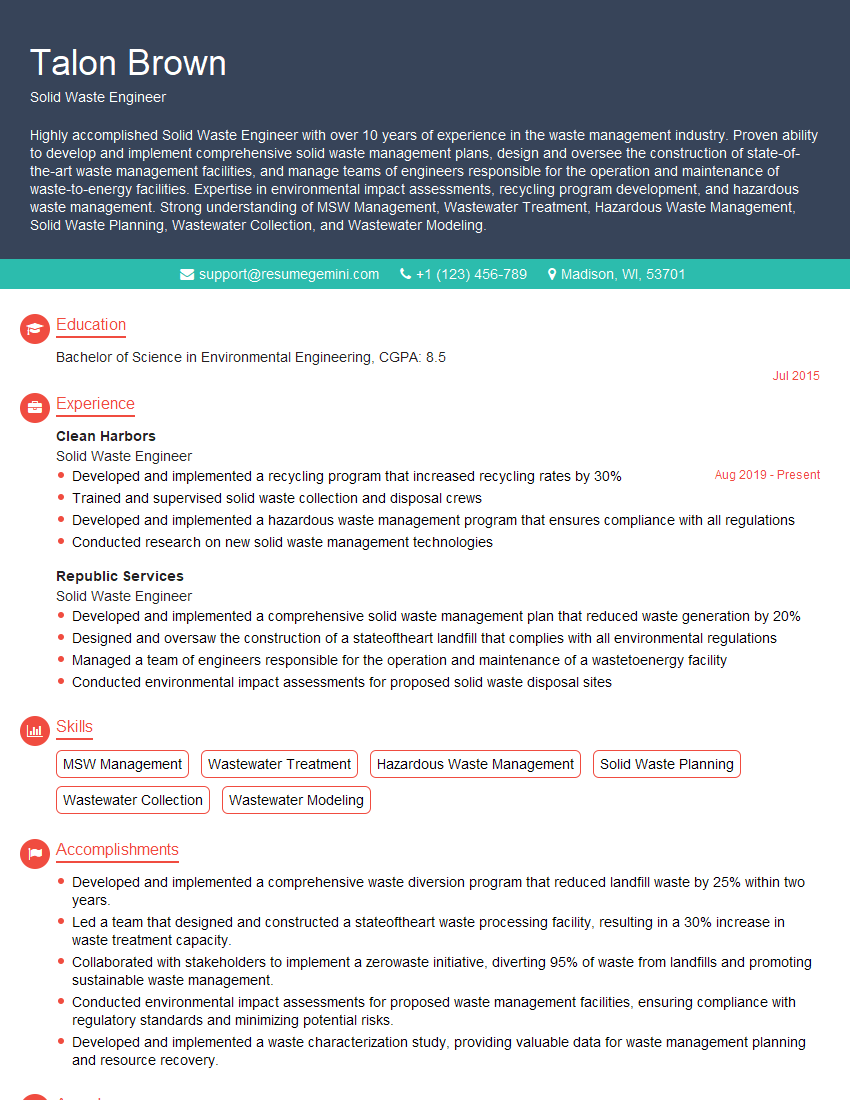
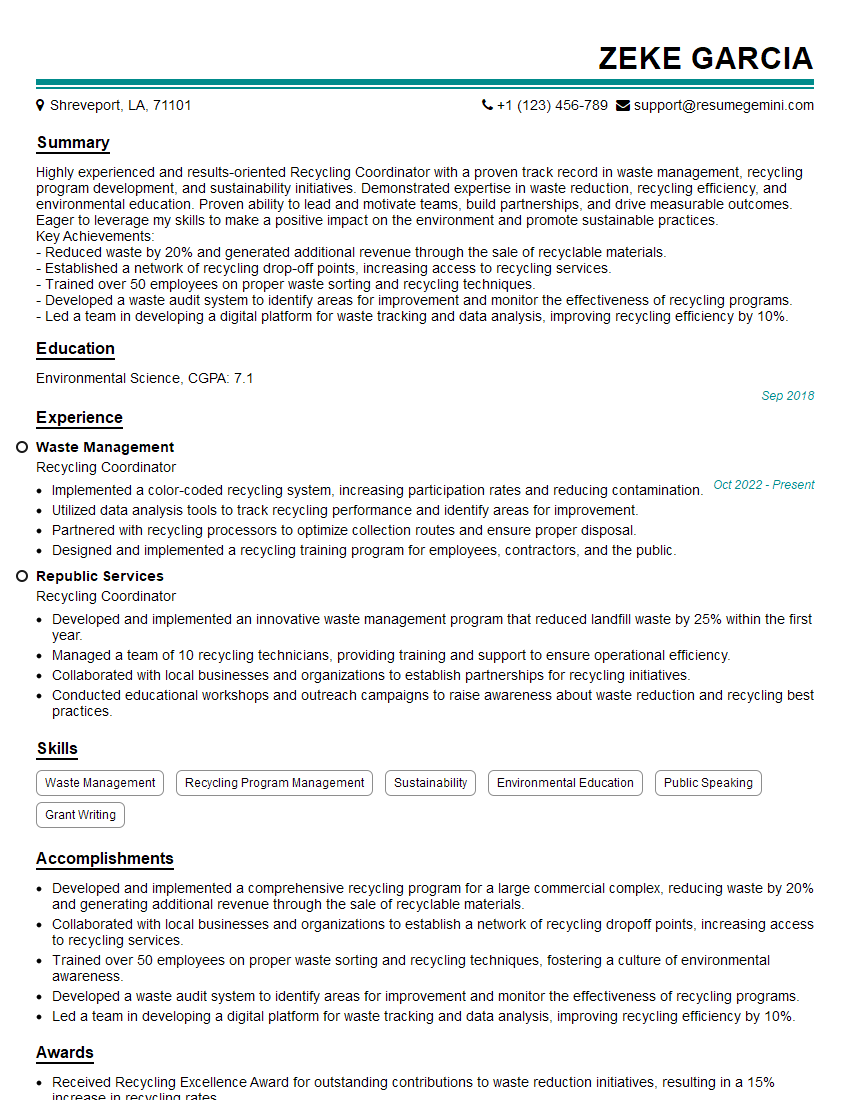
Mastering Waste Collection Policy and Regulations is crucial for career advancement in the environmental sector, opening doors to leadership roles and specialized expertise. A strong understanding of these principles will make you a highly competitive candidate. To significantly improve your job prospects, crafting an ATS-friendly resume is essential. This ensures your application reaches the hiring manager. We recommend using ResumeGemini, a trusted resource, to build a professional and impactful resume that highlights your skills and experience. ResumeGemini provides examples of resumes tailored to the Waste Collection Policy and Regulations field to guide you.
Explore more articles
Users Rating of Our Blogs
Share Your Experience
We value your feedback! Please rate our content and share your thoughts (optional).
What Readers Say About Our Blog
I Redesigned Spongebob Squarepants and his main characters of my artwork.
https://www.deviantart.com/reimaginesponge/art/Redesigned-Spongebob-characters-1223583608
IT gave me an insight and words to use and be able to think of examples
Hi, I’m Jay, we have a few potential clients that are interested in your services, thought you might be a good fit. I’d love to talk about the details, when do you have time to talk?
Best,
Jay
Founder | CEO