Unlock your full potential by mastering the most common Radio Equipment Maintenance and Calibration interview questions. This blog offers a deep dive into the critical topics, ensuring you’re not only prepared to answer but to excel. With these insights, you’ll approach your interview with clarity and confidence.
Questions Asked in Radio Equipment Maintenance and Calibration Interview
Q 1. Explain the process of calibrating a signal generator.
Calibrating a signal generator ensures its output frequency, amplitude, and other parameters meet specified tolerances. Think of it like calibrating a kitchen scale – you need to ensure it’s measuring accurately. The process typically involves using a calibrated reference instrument, often a frequency counter and a power meter.
Here’s a step-by-step breakdown:
- Preparation: Warm-up the signal generator for the manufacturer’s recommended time. This allows the internal components to stabilize. Connect the reference instruments – frequency counter and power meter – to the signal generator’s output.
- Frequency Calibration: Set the signal generator to a specific frequency, and compare its output to the frequency counter’s reading. Adjust the signal generator’s internal controls (usually accessible via a menu) to correct any discrepancies. This is often done across a range of frequencies.
- Amplitude Calibration: Set the signal generator to a specific amplitude (power level), and measure it using the power meter. Again, use the signal generator’s controls to fine-tune the output power to match the desired level. This step might involve multiple adjustments across different frequency points.
- Other Parameters: Depending on the generator’s capabilities, you might need to calibrate other parameters such as modulation depth, output impedance, and harmonic distortion. This involves comparing measured values against the specified tolerances in the generator’s manual.
- Documentation: Meticulously record all measurements, adjustments, and any deviations from the specified values in a calibration log. This forms part of the instrument’s traceability.
For instance, I once worked with a signal generator that had drifted significantly in frequency. By carefully following the calibration process and referencing NIST-traceable standards, I restored its accuracy to within the manufacturer’s specified tolerance.
Q 2. Describe your experience troubleshooting faulty radio transmitters.
Troubleshooting faulty radio transmitters requires a systematic approach, combining theoretical knowledge with practical skills. I’ve handled numerous cases, ranging from simple antenna issues to complex internal component failures.
My process usually starts with visual inspection, checking for obvious damage, loose connections, or burnt components. Then, I use specialized test equipment like spectrum analyzers, oscilloscopes, and RF power meters to diagnose the problem.
For example, I once worked on a transmitter with low output power. Initially, I suspected an amplifier failure. However, thorough testing revealed the problem stemmed from a faulty matching network, leading to significant power reflection and signal loss. Replacing the faulty components resolved the issue.
Another common challenge is intermodulation distortion, where two or more signals mix to create unwanted frequencies. This often requires carefully examining the transmitter’s frequency plan and adjusting signal levels to minimize interference.
In cases where the problem is not easily identifiable, I leverage schematic diagrams and technical manuals to understand the circuit’s functionality and trace signals through the different stages. This allows me to pinpoint the faulty component or circuit and implement the necessary repair.
Q 3. What are the common causes of distortion in radio signals?
Distortion in radio signals degrades the quality of the transmitted information, making it difficult or impossible to receive clearly. Several factors contribute to this:
- Non-linear amplification: Overdriving amplifiers can lead to clipping, creating harmonic distortions. Imagine trying to force more water through a pipe than it can handle – the excess spills over, creating irregularities.
- Intermodulation distortion: When multiple signals mix in a non-linear device, they create new unwanted frequencies, interfering with the desired signal. Think of this as two musical instruments playing out of sync – they create a jumbled sound.
- Multipath propagation: Signals reflecting off multiple objects can arrive at the receiver at different times, causing constructive and destructive interference, which smears out the signal. This effect is often seen in urban areas with many buildings.
- Noise: External sources like atmospheric noise, man-made interference (e.g., from power lines), and thermal noise in the receiver and transmitter components introduce unwanted signals, adding to the distortion.
- Poor impedance matching: A mismatch between the transmitter’s output impedance and the transmission line or antenna impedance causes signal reflection and power loss, degrading the signal quality.
Identifying the cause of distortion requires careful measurement and analysis using specialized equipment like spectrum analyzers and oscilloscopes to identify the type and source of distortion. Once identified, appropriate actions can be taken, such as adjusting amplifier gain, improving antenna matching, or filtering out noise.
Q 4. How do you maintain accurate records of calibration and maintenance procedures?
Maintaining accurate records is crucial for traceability and regulatory compliance. For calibration, I use a dedicated calibration software program that generates certificates of calibration, which document the date, time, equipment used, test results, and the instrument’s compliance with the specified standards. This software also helps manage calibration schedules and alerts us when equipment is due for recalibration.
For maintenance, I use a computerized maintenance management system (CMMS). This system tracks all maintenance activities, including preventive maintenance schedules, repairs performed, parts used, and any associated costs. The CMMS also allows for easy retrieval of past maintenance records for troubleshooting and analysis.
All records are stored securely, both physically and electronically, ensuring data integrity and accessibility. We adhere to strict record-keeping protocols to meet industry standards and regulatory requirements.
Q 5. What safety precautions do you follow when working with high-power radio equipment?
Safety is paramount when working with high-power radio equipment. The primary hazards include high voltages, RF radiation, and potential burns.
My safety precautions include:
- Proper lockout/tagout procedures: Before performing any maintenance, I always disconnect power to the equipment and use lockout/tagout devices to prevent accidental energization.
- Personal protective equipment (PPE): This includes safety glasses, gloves, and in some cases, specialized RF-shielding clothing to minimize exposure to radiation.
- RF exposure monitoring: We use RF power meters and survey meters to monitor the radiation levels in the area and ensure that they remain within safe limits.
- Grounding: Proper grounding of the equipment prevents static electricity buildup and protects against electrical shocks.
- Training and awareness: All personnel are thoroughly trained on safety procedures and are aware of the potential hazards associated with high-power radio equipment.
I always follow manufacturer’s instructions and relevant safety regulations, emphasizing a cautious and methodical approach to every task.
Q 6. Describe your experience with different types of radio modulation techniques.
I have extensive experience with various radio modulation techniques, each with its advantages and disadvantages. These techniques determine how information is encoded onto a radio carrier wave.
- Amplitude Modulation (AM): Simple to implement, but susceptible to noise and interference. Think of it like changing the loudness of a sound to encode information.
- Frequency Modulation (FM): More resistant to noise and interference than AM. It changes the pitch of the sound to encode information, making it ideal for high-fidelity audio transmission.
- Phase Modulation (PM): Similar to FM, but instead of changing frequency, it changes the phase of the carrier wave. Often used in digital communication systems.
- Digital Modulation Techniques: These include techniques like Phase-Shift Keying (PSK), Frequency-Shift Keying (FSK), Quadrature Amplitude Modulation (QAM), and Orthogonal Frequency-Division Multiplexing (OFDM). These are highly efficient for transmitting digital data, offering higher data rates and robustness against interference. OFDM is widely used in Wi-Fi and LTE technologies.
My experience includes troubleshooting issues related to modulation parameters like carrier frequency, modulation index, and symbol rate, ensuring optimal signal quality and efficient data transmission. Understanding the intricacies of these techniques is essential for effective radio system design, maintenance, and troubleshooting.
Q 7. How do you identify and resolve impedance mismatches in radio systems?
Impedance mismatches in radio systems occur when the impedance of the transmitter output, transmission line, and antenna are not properly matched. This leads to signal reflections, reduced power transfer, and potential damage to equipment.
Identification techniques include:
- Using a Vector Network Analyzer (VNA): This instrument measures the reflection coefficient (S11 parameter), which directly indicates the degree of impedance mismatch. A low S11 value (close to 0) indicates a good match, while a high value indicates a mismatch.
- Measuring the SWR (Standing Wave Ratio): An SWR meter measures the ratio of the forward and reflected power. An SWR of 1:1 indicates a perfect match, while higher values indicate a mismatch.
- Observing signal levels: A significant drop in signal power at the antenna or receiver, coupled with possible transmitter overheating, can suggest a mismatch.
Resolution methods include:
- Using matching networks: These networks consist of inductors and capacitors that transform the impedance of one component to match the impedance of another. Their design depends on the specific frequencies and impedances involved.
- Adjusting the antenna tuner: Antenna tuners can be used to match the antenna impedance to the transmission line impedance. This is often a common solution.
- Replacing faulty components: Sometimes, a mismatch is due to faulty connectors, cables, or other components. Replacing these can restore impedance matching.
I frequently use these techniques in diagnosing and fixing impedance mismatches, ensuring optimal power transfer and signal quality within radio systems. For example, I once resolved a significant power loss issue in a high-frequency communication system by carefully designing and implementing a matching network at the antenna interface.
Q 8. Explain the concept of SWR (Standing Wave Ratio) and its significance.
Standing Wave Ratio (SWR) is a crucial metric in radio frequency (RF) systems that indicates how well a transmitter’s power is being transferred to an antenna and matched impedance. Think of it like water flowing through a pipe – if the pipe’s diameter changes abruptly, you’ll get turbulence and some water will bounce back. Similarly, if there’s impedance mismatch between the transmitter and antenna, some RF power reflects back, creating standing waves.
A perfect match results in an SWR of 1:1 (or 1), meaning all power is transferred. Higher SWR values (e.g., 2:1, 3:1) indicate significant power reflection, leading to reduced transmission efficiency, overheating of components (like the transmitter’s final amplifier), and potential damage. In practical terms, a high SWR might mean weak signals, range reduction, or even equipment failure. Regular SWR measurements are essential for maintaining optimal system performance.
For instance, I once encountered a situation where a high SWR was causing intermittent communication failures on a remote repeater site. By carefully checking the coaxial cable for damage and ensuring proper impedance matching at the antenna connection, we successfully reduced the SWR to an acceptable level and restored reliable communication.
Q 9. What is your experience with spectrum analyzers and their applications?
Spectrum analyzers are indispensable tools in radio equipment maintenance and calibration. They allow us to visualize the frequency spectrum, measuring the amplitude and frequency of RF signals. This is critical for identifying signal interference, harmonic distortion, spurious emissions, and verifying channel occupancy. I have extensive experience using various spectrum analyzers, from basic models to sophisticated ones with advanced features like vector signal analysis.
For example, I’ve used spectrum analyzers to pinpoint the source of interference affecting a critical communication link, revealing a nearby device operating on an adjacent channel. By carefully analyzing the spectral signature, I was able to suggest frequency adjustments to minimize interference and ensure reliable communication. I also regularly employ spectrum analyzers to verify that our radio systems comply with regulatory emission standards.
Q 10. How do you test and maintain antennas and coaxial cables?
Testing and maintaining antennas and coaxial cables are crucial for reliable radio communication. Antennas are tested for their return loss (related to SWR), gain, and radiation pattern using specialized equipment like antenna analyzers and network analyzers. We also visually inspect antennas for physical damage, corrosion, or loose connections. Coaxial cables are tested for continuity, signal attenuation, and impedance using Time Domain Reflectometry (TDR) or similar techniques. Any damage, like kinks or water ingress, is carefully addressed.
For instance, during a routine inspection, I discovered a significant attenuation in a coaxial cable connecting a base station antenna. Using a TDR, we pinpointed the location of a break within the cable, enabling targeted repair and preventing further signal degradation. Regular cleaning and inspection of antenna connectors are also key aspects of maintenance, preventing corrosion and signal loss.
Q 11. Describe your experience with different types of radio frequency connectors.
Throughout my career, I’ve worked extensively with various radio frequency connectors, including BNC, N-type, SMA, TNC, UHF, and others. Each connector has specific impedance characteristics (typically 50 ohms) and mechanical designs. Understanding the differences is vital to ensure proper signal transmission and prevent signal degradation or damage. Incorrect connector usage can lead to high SWR, signal reflections, and connection failure.
For example, I’ve encountered situations where improper connector tightening led to signal loss or even connector damage. Training technicians on the correct usage, including torque specifications and proper connector cleaning techniques, is crucial to avoid these issues. I’m adept at identifying various connector types, diagnosing connection problems related to them, and implementing appropriate corrective actions.
Q 12. How do you troubleshoot intermittent radio communication problems?
Troubleshooting intermittent radio communication problems often requires a systematic approach. It involves a combination of observation, testing, and elimination. We start by documenting the symptoms, such as the frequency of the problem, the conditions under which it occurs, and the affected equipment. Next, we check the obvious: antenna connections, cabling, and power supplies.
If the problem is intermittent, we might employ monitoring tools like spectrum analyzers or signal strength meters to capture the issue during its occurrence. I have used logic analyzers and oscilloscopes in more advanced scenarios to investigate deeper into signal integrity issues. For example, I once solved an intermittent communication problem by identifying a loose connector within a junction box that was only affected by vibrations caused by certain weather conditions.
Q 13. Explain your experience with preventative maintenance schedules for radio equipment.
Preventative maintenance schedules for radio equipment are essential for ensuring reliable operation and extending the lifespan of the equipment. These schedules typically include regular inspections, cleaning, and testing of all components, including transmitters, receivers, antennas, and coaxial cables. The frequency of these tasks depends on the equipment type, usage intensity, and environmental factors.
For example, a high-traffic repeater system requires more frequent maintenance compared to a low-power portable radio. Our maintenance schedules are carefully documented, and each task is assigned to responsible personnel. We maintain a comprehensive log of all maintenance activities, which is crucial for tracking performance, identifying trends, and ensuring compliance with regulatory requirements. Preventative maintenance is far more cost-effective in the long run compared to dealing with major repairs or replacements.
Q 14. What software or tools do you use for radio equipment maintenance and calibration?
We use a range of software and tools for radio equipment maintenance and calibration. This includes specialized calibration software for specific equipment models, allowing us to accurately adjust the parameters of transmitters and receivers according to manufacturer specifications. We also use spectrum analyzer software for detailed spectral analysis and data logging. Other tools include network analyzers, TDRs, and various signal generators, all with accompanying software for data acquisition and analysis. Documentation software helps maintain meticulous records of maintenance activities, ensuring traceability and compliance.
For instance, we utilize specialized software to calibrate the frequency response of a receiver, ensuring accuracy across its operational band. The calibration data is then documented and archived to maintain a history of the equipment’s performance over time. We also frequently use spreadsheet software for data management and reporting on maintenance tasks and findings.
Q 15. How do you diagnose and repair faulty power supplies in radio equipment?
Diagnosing and repairing faulty power supplies in radio equipment involves a systematic approach combining visual inspection, multimeter testing, and understanding the power supply’s circuitry. First, I would visually inspect the power supply for any obvious signs of damage, such as burnt components, loose connections, or bulging capacitors. This is like a doctor performing a physical examination before more detailed tests. Then, using a multimeter, I’d check for correct voltage levels at various points within the power supply, comparing them to the specifications provided in the equipment’s documentation. This is where precision is key – I’d ensure the multimeter is correctly calibrated before commencing testing.
If the voltages are incorrect, I’d trace the circuit to pinpoint the faulty component. This could be a damaged rectifier diode, a failed capacitor, or a faulty regulator. For example, a shorted capacitor might cause a short circuit, resulting in abnormally low voltages. Replacing these faulty components carefully – following proper ESD (Electrostatic Discharge) procedures – is then crucial to restoring the power supply’s functionality. Once the components are replaced, I’d re-test the power supply using the multimeter to confirm the voltages are within the acceptable range. Lastly, I’d rigorously test the radio equipment itself to ensure the repaired power supply is operating correctly and hasn’t damaged other parts of the system. It’s vital to document every step of the process.
Career Expert Tips:
- Ace those interviews! Prepare effectively by reviewing the Top 50 Most Common Interview Questions on ResumeGemini.
- Navigate your job search with confidence! Explore a wide range of Career Tips on ResumeGemini. Learn about common challenges and recommendations to overcome them.
- Craft the perfect resume! Master the Art of Resume Writing with ResumeGemini’s guide. Showcase your unique qualifications and achievements effectively.
- Don’t miss out on holiday savings! Build your dream resume with ResumeGemini’s ATS optimized templates.
Q 16. Describe your experience with digital signal processing (DSP) in radio systems.
My experience with Digital Signal Processing (DSP) in radio systems spans several years and various applications. DSP is crucial for modern radio systems, enhancing performance in areas such as signal filtering, modulation/demodulation, and channel equalization. I’ve worked extensively with DSP algorithms implemented in both hardware (ASICs, FPGAs) and software (using platforms like MATLAB and specialized DSP software). For instance, I was involved in a project where we improved the signal-to-noise ratio (SNR) of a VHF radio system by implementing a sophisticated adaptive noise cancellation algorithm using an FPGA. This involved designing the filter coefficients and optimizing them for real-time performance. In another project, I utilized DSP techniques to develop a software-defined radio (SDR) application capable of demodulating various modulation schemes and dynamically adapting to changing channel conditions. This highlights my ability to translate theoretical understanding into practical applications.
Q 17. How familiar are you with different radio frequency bands and their regulations?
I am very familiar with a wide range of radio frequency (RF) bands and their associated regulations. My knowledge encompasses everything from the very low frequency (VLF) bands used in long-range communications to the ultra-high frequency (UHF) and microwave bands employed in satellite communications and radar systems. I understand the international regulatory frameworks, such as those defined by the International Telecommunication Union (ITU), and regional regulations specific to various countries. This includes understanding power limits, channel allocations, and licensing requirements for different bands. For example, I’m well-versed in the intricacies of licensing procedures for the 2.4 GHz band, commonly used in Wi-Fi and Bluetooth applications, and I’m aware of the challenges associated with interference mitigation in crowded frequency bands like this. My practical experience includes working with equipment operating across various bands, ensuring compliance with all relevant regulations. A strong understanding of these regulations is crucial to prevent interference and ensure safe and efficient radio operation.
Q 18. Explain the process of aligning and adjusting a radio receiver.
Aligning and adjusting a radio receiver is a precise process that ensures optimal performance and reception. It typically involves several steps. Firstly, I’d begin with a thorough visual inspection of the receiver, checking for any loose connections or damaged components. Then, I’d use specialized test equipment, such as a signal generator and a spectrum analyzer, to inject known signals into the receiver. This is much like tuning a musical instrument. The spectrum analyzer allows me to visualize the frequency response of the receiver, identifying any anomalies or distortions. Next, using the receiver’s internal controls or external adjustment potentiometers, I’d carefully tune the various stages of the receiver – such as the intermediate frequency (IF) amplifier and the local oscillator – to achieve optimal sensitivity and selectivity. The process involves meticulous adjustments, ensuring that the receiver is accurately tuned to the desired frequency range while minimizing unwanted noise and interference. Once the alignment is complete, I’d perform a series of tests to verify the receiver’s performance, including sensitivity, selectivity, and image rejection. This ensures the alignment process has been effective, and the receiver meets the required specifications.
Q 19. What is your experience with troubleshooting and repairing fiber optic connections in radio systems?
My experience with troubleshooting and repairing fiber optic connections in radio systems is significant. Fiber optics are increasingly common in modern radio systems for transmitting high-bandwidth signals over long distances with minimal signal loss. Troubleshooting fiber optic connections often involves using specialized tools, such as an optical power meter and an optical time-domain reflectometer (OTDR). The OTDR is particularly useful in pinpointing the location of breaks or attenuation within the fiber optic cable – it’s like an X-ray for fiber optics. I’ve dealt with various issues, including fiber breaks, connector problems (poorly terminated connectors are a common source of failure), and bending losses. The repair process depends on the nature of the problem. For example, a simple connector issue might involve cleaning or re-terminating the connector. A broken fiber, however, requires more involved repair, potentially splicing the fiber or replacing the damaged section. Careful handling of fiber optic cables is crucial to prevent damage, and understanding safety precautions like eye protection is essential when working with lasers used in some fiber optic testing equipment.
Q 20. How do you ensure the accuracy of calibration measurements?
Ensuring the accuracy of calibration measurements is paramount in radio equipment maintenance. It starts with using calibrated test equipment. This means that the equipment used for calibration (e.g., signal generators, power meters, spectrum analyzers) must be traceable to national or international standards. Regular calibration of these instruments themselves is essential; typically this is done by an accredited calibration laboratory. Beyond the equipment, the measurement process itself needs to be controlled. This includes factors like environmental conditions (temperature, humidity), the proper use of calibration procedures (following established protocols), and the operator’s skill and experience. For example, when calibrating a power meter, I’d make multiple measurements and calculate the average to minimize random errors. I’d also use appropriate statistical methods to assess the uncertainty associated with my measurements, providing a realistic estimation of the accuracy of the calibration. Thorough documentation of all calibration procedures, including the test equipment used and the results obtained, is vital for traceability and compliance.
Q 21. What are the common causes of noise in radio signals?
Noise in radio signals can originate from various sources, both internal and external to the radio system. Internal noise sources include thermal noise (Johnson-Nyquist noise), shot noise (from the random movement of charge carriers), and flicker noise (1/f noise). These are inherent to electronic components. External noise sources include atmospheric noise (lightning, static), man-made noise (electrical appliances, power lines, other radio transmitters), and cosmic noise (from outer space). Atmospheric noise tends to be most prominent in the lower frequency bands. Man-made noise can be pervasive in urban areas, impacting signal quality. To mitigate noise, various techniques are employed. These include employing effective filtering techniques to remove unwanted frequencies, using shielded cables to minimize external interference, and implementing error correction codes to compensate for data corrupted by noise. The specific approach depends on the type and source of noise, making careful analysis and diagnosis crucial for effective mitigation. This could involve using specialized software tools to analyze the noise spectrum and identify its origin.
Q 22. How do you deal with unexpected equipment failures during a critical operation?
Unexpected equipment failures during critical operations require a calm, systematic approach. My first step is always safety – ensuring the equipment is isolated to prevent further damage or injury. Then, I follow a structured troubleshooting process:
- Immediate Assessment: Quickly identify the nature of the failure. Is it a complete outage? Is there a specific error message? What were the conditions leading up to the failure (e.g., power surge, environmental factors)?
- Check for Obvious Issues: Simple things like loose connections, blown fuses, or incorrect power settings are often overlooked but can be the root cause. I’ll inspect cables, connectors, and power supplies meticulously.
- Consult Documentation: Referring to technical manuals, schematics, and troubleshooting guides is essential. These documents often contain flowcharts or diagnostic tables that guide the process.
- Systematic Testing: Employing signal tracing, multimeter checks, and other diagnostic techniques to pinpoint the malfunctioning component. I might isolate sections of the equipment to test individual modules.
- Escalation & Repair: If the problem can’t be resolved immediately, I escalate to a senior technician or engineer for assistance. Depending on the severity and the availability of parts, repair might involve component-level replacement or even sending the equipment for professional repair.
- Documentation & Reporting: After the issue is resolved, I meticulously document the troubleshooting steps, the cause of the failure, and any corrective actions taken. This information is crucial for future maintenance and preventing similar issues.
For example, during a live broadcast, if the main transmitter failed, my priority would be to swiftly switch to a backup transmitter. While this happens, I’d begin troubleshooting the main unit, following the steps above to determine the cause and facilitate a quick repair or replacement.
Q 23. Describe your experience with different types of radio frequency filters.
My experience encompasses various radio frequency (RF) filters, each designed for specific applications and frequencies. I’ve worked with:
- Low-pass filters: These allow frequencies below a cutoff frequency to pass while attenuating higher frequencies. I’ve used these to prevent unwanted harmonics from interfering with the main signal in transmitter systems.
- High-pass filters: These allow frequencies above a cutoff frequency to pass, blocking lower frequencies. A common application is removing DC bias from an RF signal.
- Band-pass filters: These allow a specific range of frequencies to pass, rejecting frequencies outside that band. Essential for selecting a specific channel in a receiver system and eliminating adjacent channel interference.
- Band-stop filters (notch filters): These attenuate frequencies within a specific band, allowing frequencies outside that band to pass. Used to remove unwanted interference from a specific source, like a strong interfering signal.
- Cavity filters: These high-Q filters, often used in high-power applications, provide very sharp frequency selectivity. Calibration and maintenance require specialized knowledge.
In my work, proper filter selection is crucial. A poorly chosen filter can lead to signal degradation, interference, or even equipment damage. For example, selecting a band-pass filter with insufficient attenuation would allow adjacent channel interference, impacting the signal quality and intelligibility.
Q 24. Explain your understanding of RF shielding and grounding techniques.
RF shielding and grounding are crucial for minimizing electromagnetic interference (EMI) and ensuring reliable radio equipment operation. Effective shielding prevents unwanted signals from entering or leaving the equipment, while grounding provides a low-impedance path for stray currents, preventing voltage buildup and potential damage.
Shielding Techniques: These involve using conductive materials to enclose the equipment or critical components. This can include metallic enclosures, conductive coatings, or even specialized RF gaskets to seal seams. The effectiveness of shielding depends on factors like material conductivity, thickness, and the frequency of the signals being shielded.
Grounding Techniques: This involves connecting the equipment’s metal chassis to a common ground point. This creates a reference point for all electrical signals, minimizing ground loops and noise. Proper grounding requires low-impedance connections and careful consideration of the grounding system’s overall design. This might include bonding straps, grounding rods, and earth connections.
Poor shielding can result in increased noise levels and signal degradation, while inadequate grounding can cause signal distortion, equipment malfunction, and even safety hazards. I’ve seen instances where improper grounding led to intermittent operation of radios, due to fluctuating ground potentials.
Q 25. How do you maintain a clean and organized workspace in a radio maintenance facility?
Maintaining a clean and organized workspace is paramount in a radio maintenance facility for several reasons: safety, efficiency, and preventing errors. My approach involves:
- 5S Methodology: I apply the 5S principles (Sort, Set in Order, Shine, Standardize, Sustain) to organize tools, parts, and equipment. This creates a visually appealing and functional workspace.
- Designated Areas: I maintain separate areas for different tasks – testing, repair, storage. This minimizes confusion and improves workflow.
- Cable Management: Properly labeling and routing cables prevents tangles and facilitates troubleshooting. Using cable ties and organizers keeps the workspace neat.
- Regular Cleaning: I regularly clean the workbench, using appropriate cleaning solutions to remove dust, debris, and solder residue. A clean environment minimizes the risk of short circuits and component damage.
- Tool Organization: I store tools in designated locations, properly maintained and readily accessible. This ensures that the right tools are available when needed.
A clean and organized environment directly impacts efficiency. When everything has its place, finding tools and components takes less time. It also reduces the chances of accidentally damaging components or causing short circuits.
Q 26. Describe your experience working with documentation and technical manuals.
Working with documentation and technical manuals is fundamental to my role. I’m proficient in interpreting schematics, block diagrams, service manuals, and parts lists. I use them for:
- Troubleshooting: Service manuals often contain detailed troubleshooting flowcharts and diagnostic procedures. They guide me towards the solution, saving valuable time.
- Repair Procedures: These documents provide step-by-step instructions for component replacement, board-level repair, and calibration procedures. Following them ensures proper repair and avoids damage.
- Parts Identification: Parts lists are essential for ordering replacement components, ensuring compatibility and proper function.
- Calibration Procedures: Calibration manuals provide specific steps and tolerances for adjusting radio equipment to meet performance specifications.
- Safety Information: Technical manuals contain crucial safety information, including warnings and precautions to ensure safe handling and operation of the equipment.
I’ve often relied on the detailed diagrams and specifications within these documents to solve complex equipment problems. For example, when troubleshooting a faulty receiver, the schematic helped me trace the signal path and identify the problem component.
Q 27. How do you stay updated with the latest advancements in radio equipment technology?
Staying updated with advancements in radio equipment technology is crucial. I utilize several strategies:
- Professional Organizations: I’m a member of [mention relevant professional organizations], which provide access to publications, conferences, and networking opportunities to stay abreast of the latest technologies and best practices.
- Industry Publications and Journals: I regularly read industry publications such as [mention specific publications] to learn about new equipment and trends.
- Manufacturer Websites and Training: I frequently visit manufacturer websites to access technical documents, training materials, and software updates. Attending manufacturer-provided training courses significantly enhances my knowledge.
- Online Resources and Webinars: Online forums, webinars, and tutorials provide a rich source of information and insights on the latest technologies.
- Conferences and Workshops: Attending industry conferences and workshops is invaluable for learning about new technologies and networking with experts.
Continuous learning is essential in this field; new technologies emerge rapidly, and staying current allows me to maintain my expertise and deliver the best possible maintenance and calibration services.
Q 28. Explain your problem-solving approach when dealing with complex radio equipment issues.
My approach to problem-solving with complex radio equipment issues is systematic and iterative:
- Problem Definition: Clearly define the problem. What is malfunctioning? What are the symptoms? What are the performance parameters not met?
- Data Collection: Gather all relevant data: error messages, measurements (using oscilloscopes, spectrum analyzers, etc.), environmental factors, and operational history.
- Hypothesis Formation: Develop possible hypotheses based on the collected data and my experience. This often involves considering potential causes such as component failure, circuit problems, or software glitches.
- Testing and Validation: Test each hypothesis systematically. This might involve isolating sections of the equipment, performing component-level tests, or simulating different operating conditions.
- Refinement and Iteration: Based on the test results, refine the hypotheses and repeat the testing process until the root cause is identified. This is an iterative process.
- Solution Implementation: Implement the solution—this could involve repairing or replacing faulty components, updating software, or making adjustments to the system configuration.
- Verification and Documentation: Verify that the solution has resolved the problem and document all troubleshooting steps, findings, and corrective actions. This is crucial for future reference.
For example, if a radio transceiver had intermittent signal dropout, I’d systematically check for faulty connectors, test the RF path with a signal generator and spectrum analyzer, and finally, potentially check for software glitches before concluding the solution.
Key Topics to Learn for Radio Equipment Maintenance and Calibration Interview
- RF Principles: Understanding fundamental concepts like frequency, wavelength, impedance matching, and signal propagation is crucial. Consider exploring different modulation techniques and their impact on signal quality.
- Troubleshooting Techniques: Develop your ability to diagnose faults in radio equipment using systematic approaches like signal tracing, component testing, and schematic analysis. Practical experience with oscilloscopes, spectrum analyzers, and multimeters will be highly beneficial.
- Calibration Procedures: Familiarize yourself with calibration methodologies for various radio equipment components, ensuring accuracy and compliance with industry standards. Understand the importance of calibration records and documentation.
- Test Equipment Usage: Gain proficiency in operating and interpreting data from various test instruments, including signal generators, power meters, and network analyzers. Practice using these tools to perform accurate measurements.
- Safety Regulations and Procedures: Demonstrate a strong understanding of relevant safety regulations and best practices for working with radio frequency equipment, including proper grounding and handling of high voltages.
- Preventive Maintenance: Learn about routine inspection and maintenance procedures to prevent equipment failures and extend the lifespan of radio systems. This includes cleaning, lubrication, and component replacement.
- Specific Radio Systems: Depending on the job description, focus on the specific types of radio equipment you expect to encounter (e.g., two-way radios, mobile radios, base stations). Research their unique maintenance and calibration needs.
- Documentation and Reporting: Develop clear and concise communication skills to effectively document maintenance procedures, calibration results, and troubleshooting steps. Practice explaining technical concepts to a non-technical audience.
Next Steps
Mastering Radio Equipment Maintenance and Calibration opens doors to a rewarding career with excellent growth potential. A strong understanding of these skills demonstrates your technical expertise and problem-solving abilities, making you a valuable asset to any team. To maximize your job prospects, create an ATS-friendly resume that highlights your accomplishments and skills effectively. ResumeGemini is a trusted resource that can help you build a professional and impactful resume. Examples of resumes tailored to Radio Equipment Maintenance and Calibration are available to guide you through this process. Invest the time to build a strong resume – it’s your first impression on potential employers!
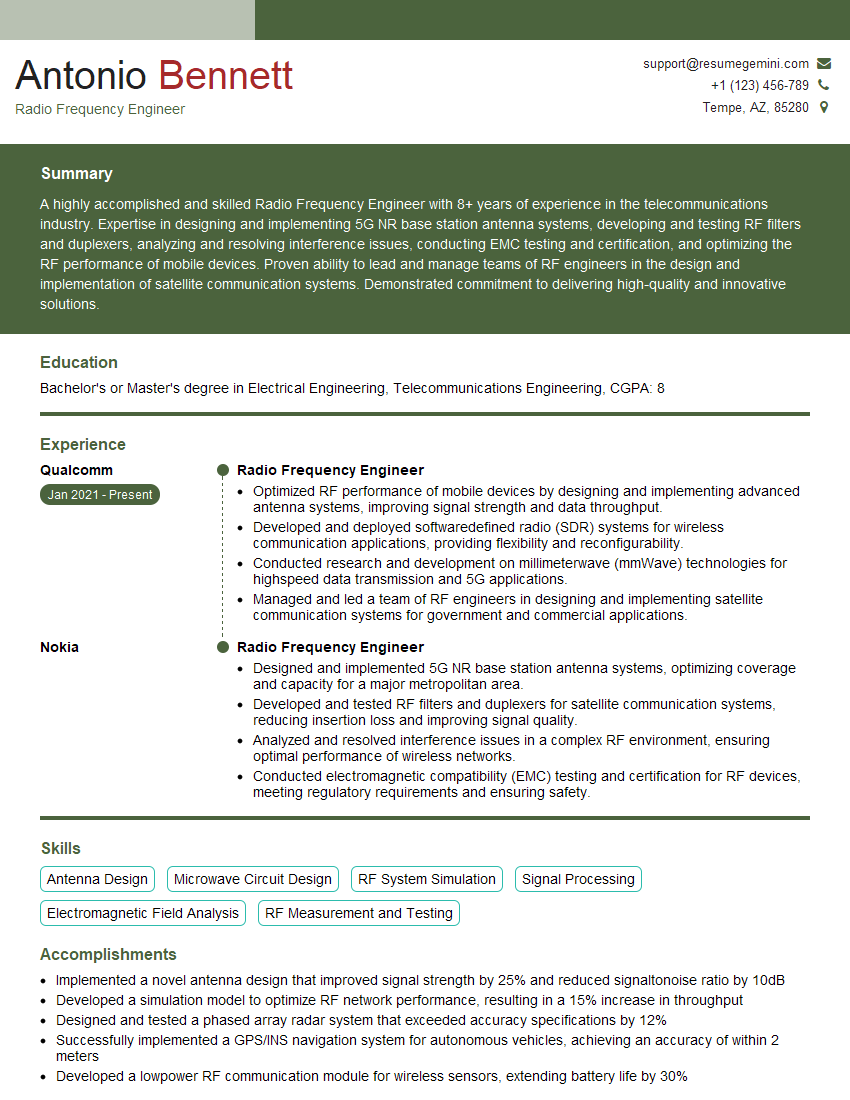
Radio Frequency Engineer Resume Sample
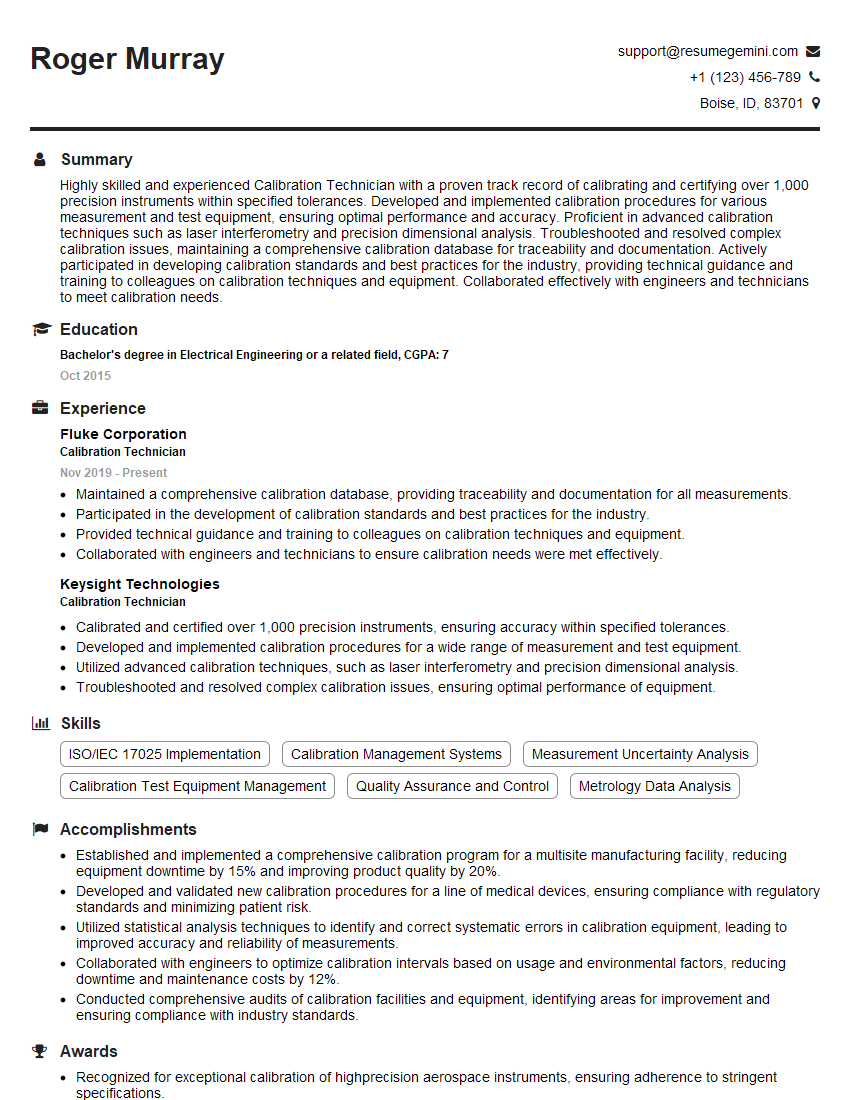
Calibration Technician Resume Sample
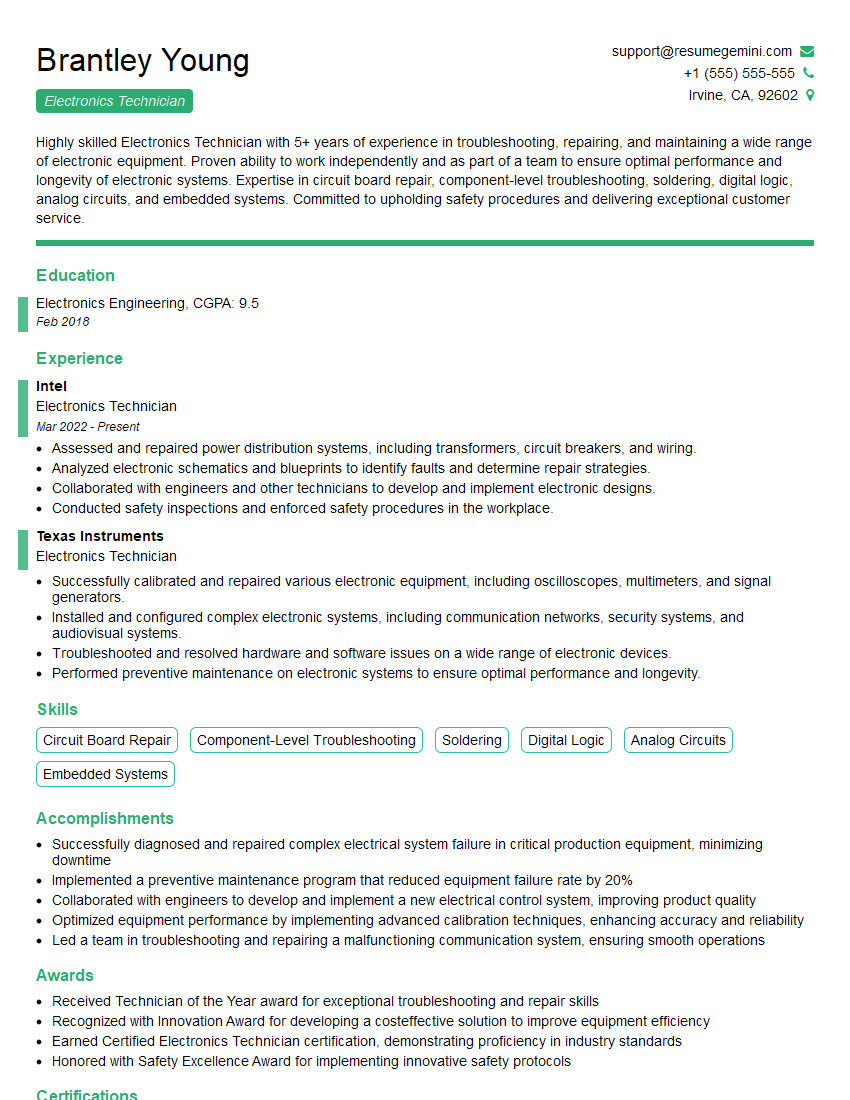
Electronics Technician Resume Sample
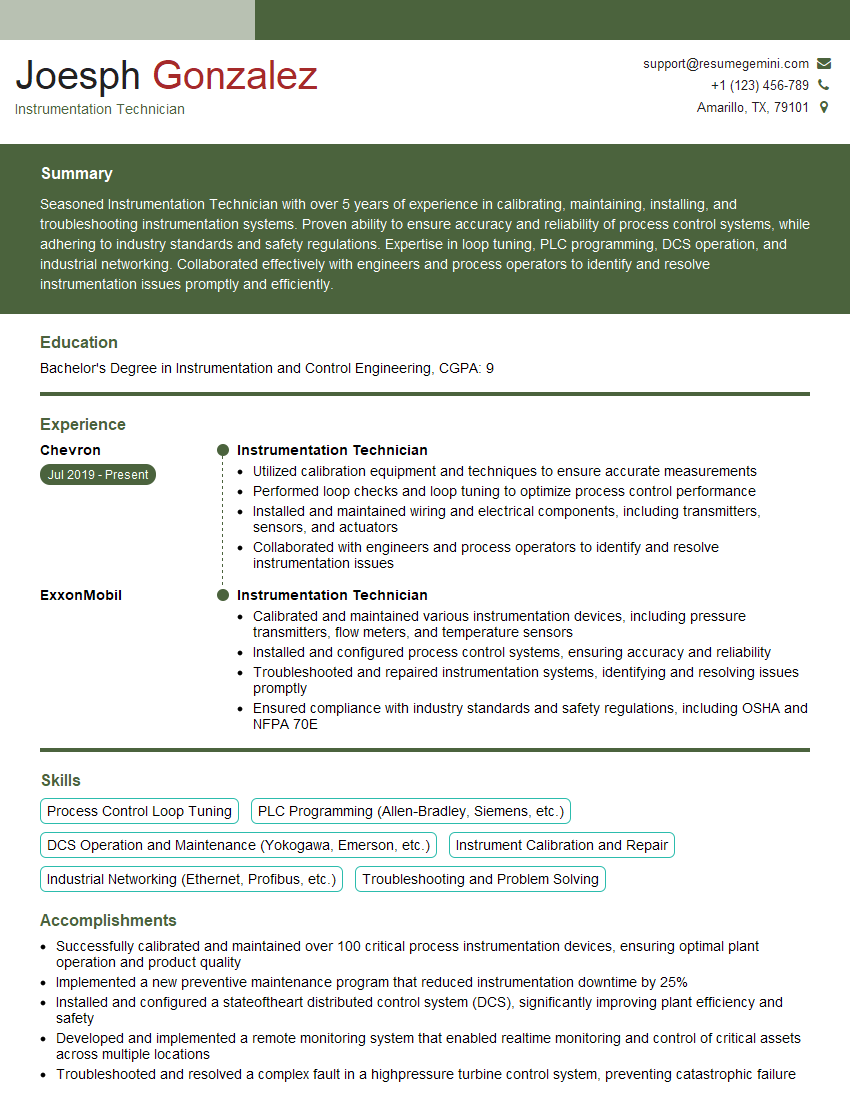
Instrumentation Technician Resume Sample
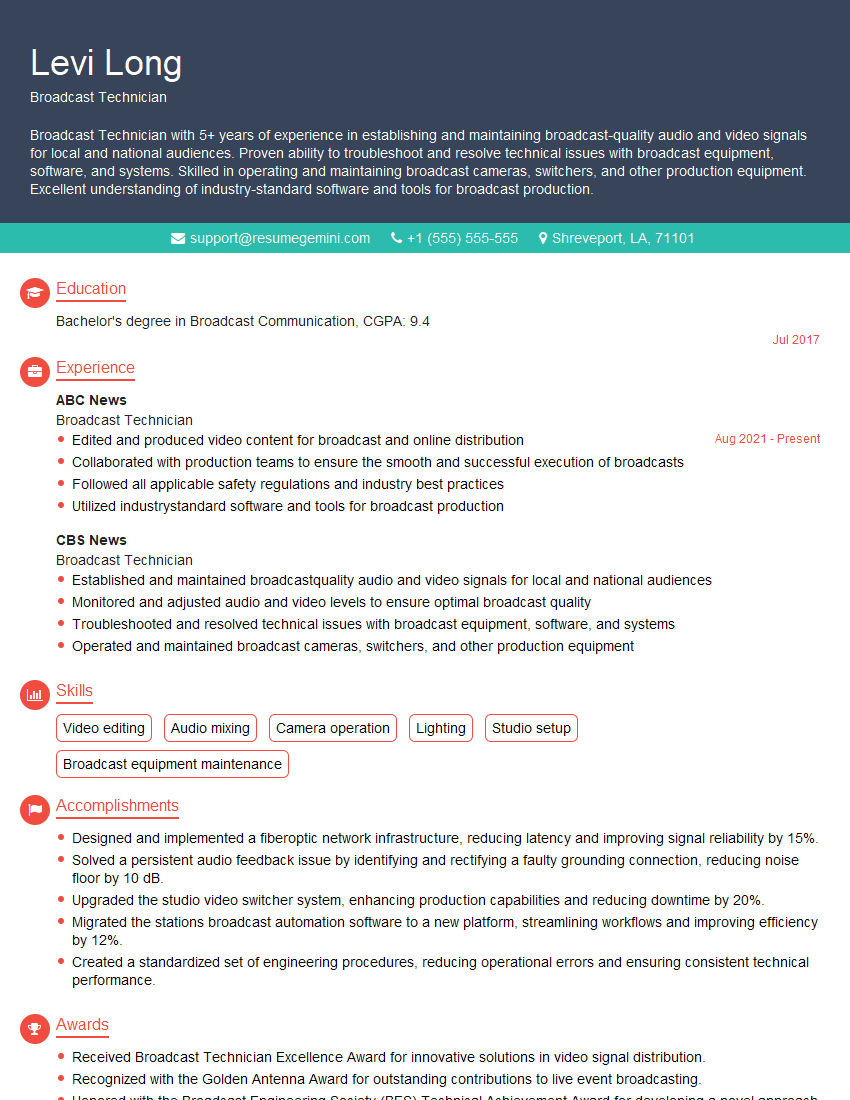
Broadcast Technician Resume Sample
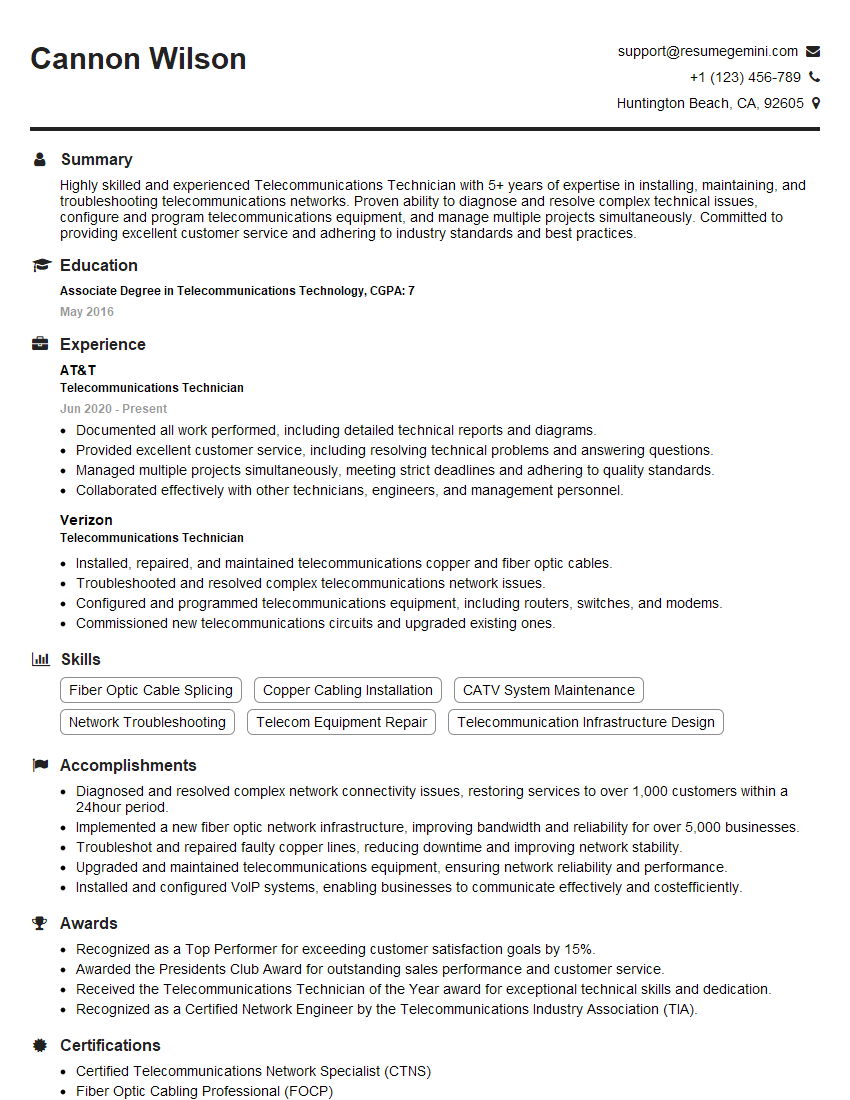
Telecommunications Technician Resume Sample
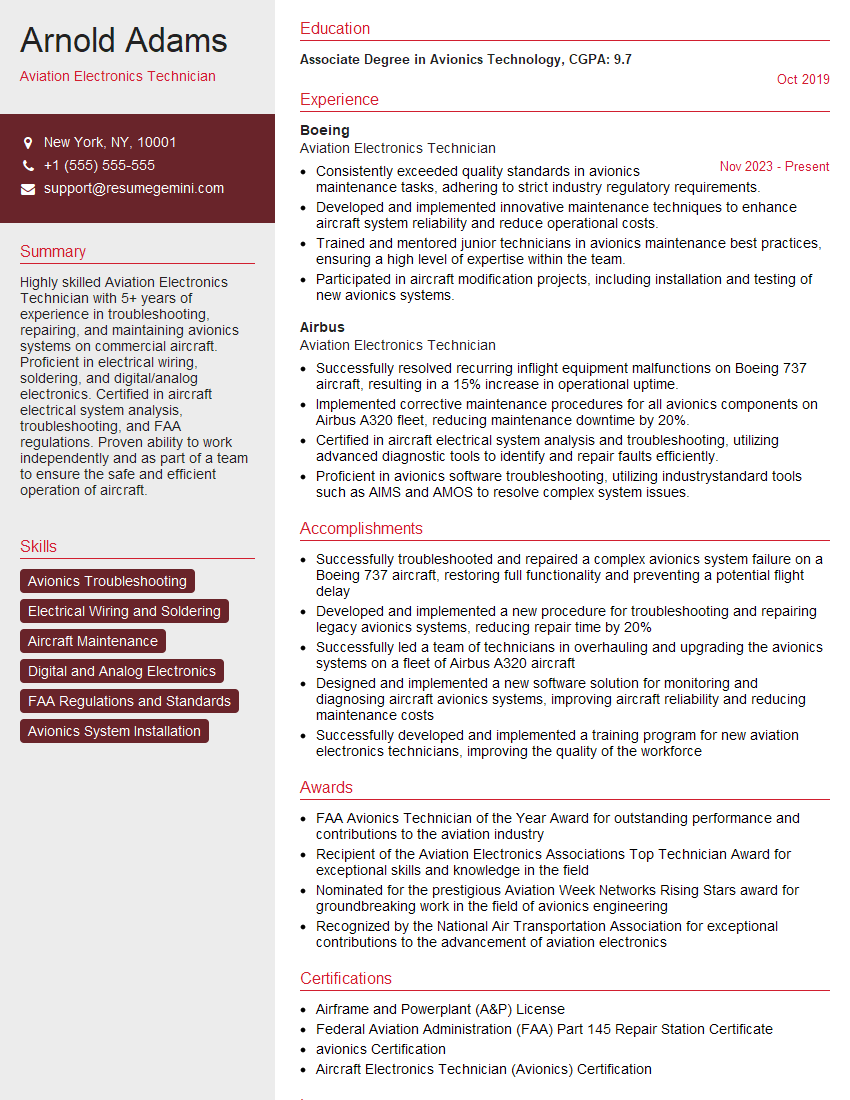
Aviation Electronics Technician Resume Sample
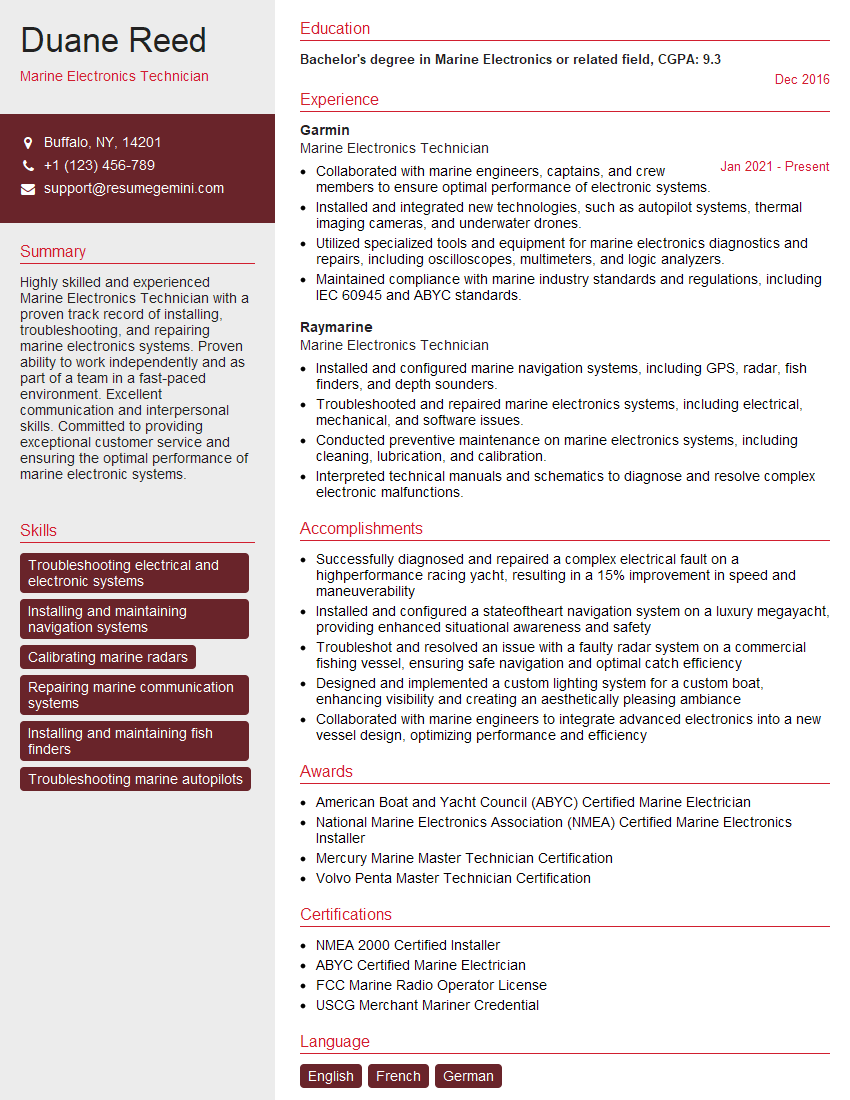
Marine Electronics Technician Resume Sample
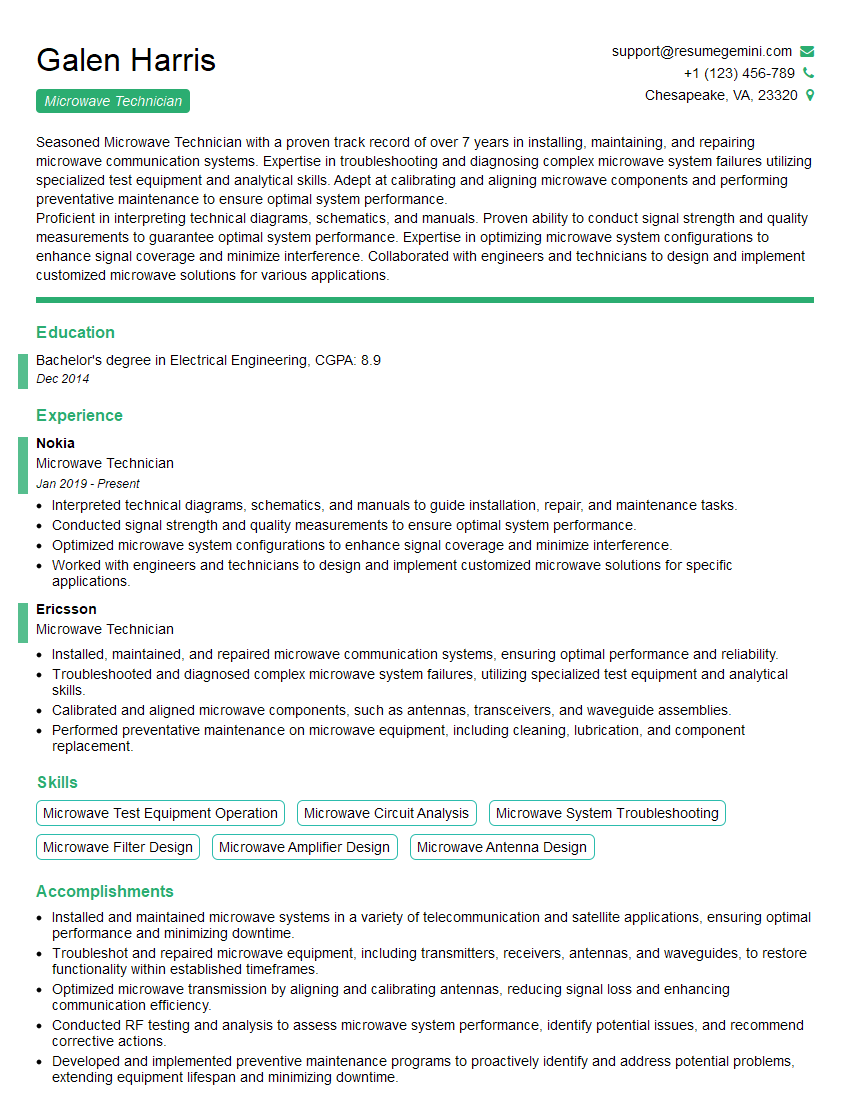
Microwave Technician Resume Sample
Explore more articles
Users Rating of Our Blogs
Share Your Experience
We value your feedback! Please rate our content and share your thoughts (optional).
What Readers Say About Our Blog
I Redesigned Spongebob Squarepants and his main characters of my artwork.
https://www.deviantart.com/reimaginesponge/art/Redesigned-Spongebob-characters-1223583608
IT gave me an insight and words to use and be able to think of examples
Hi, I’m Jay, we have a few potential clients that are interested in your services, thought you might be a good fit. I’d love to talk about the details, when do you have time to talk?
Best,
Jay
Founder | CEO