Unlock your full potential by mastering the most common Directional Guidance and Traffic Control interview questions. This blog offers a deep dive into the critical topics, ensuring you’re not only prepared to answer but to excel. With these insights, you’ll approach your interview with clarity and confidence.
Questions Asked in Directional Guidance and Traffic Control Interview
Q 1. Explain the different types of traffic control devices and their applications.
Traffic control devices are crucial for managing the flow of vehicles and pedestrians, ensuring safety and efficiency. They range from simple signs to sophisticated electronic systems. Here are some key types:
- Signs: These provide instructions or warnings to road users. Examples include speed limit signs, stop signs, yield signs, and directional signs. Their application depends on the specific situation – a stop sign at an intersection, a speed limit sign on a highway.
- Pavement Markings: These markings guide traffic flow, delineate lanes, and provide warnings. Examples include lane lines, crosswalks, and stop lines. They are used in conjunction with signs to enhance clarity and visibility.
- Traffic Signals: These use lights (red, yellow, green) to control the movement of vehicles and pedestrians at intersections or complex road sections. They are essential for managing high traffic volumes and preventing conflicts.
- Traffic Control Devices (TCDs): This is a broader category encompassing cones, barrels, barricades, and other temporary devices used to guide traffic around work zones or incidents. These are highly versatile and are deployed based on the nature and scope of the situation, creating temporary detours or channeling traffic.
- Electronic Signage: These advanced systems display real-time information, such as speed limits, traffic incidents, or recommended routes. They are commonly used on highways and in urban areas to improve traffic flow and driver awareness.
- Intelligent Transportation Systems (ITS): These integrate various technologies, such as sensors, cameras, and communication networks, to monitor and manage traffic in real-time. They can adapt traffic signal timing based on traffic conditions, reroute traffic around congestion, and provide drivers with updated information.
The application of each device depends on factors such as location, traffic volume, speed limits, and the specific needs of the situation. For example, a simple residential street might only need stop signs and pavement markings, while a busy highway intersection requires traffic signals and advanced ITS features.
Q 2. Describe your experience in developing and implementing traffic management plans.
I have extensive experience in developing and implementing traffic management plans for diverse projects, ranging from small-scale road repairs to large-scale construction projects and special events. My approach involves a thorough understanding of the site, identifying potential conflicts, and designing a plan that minimizes disruption while maintaining safety.
For example, during a recent highway widening project, I developed a plan that included temporary lane closures, detour routes, advanced warning signage, and real-time traffic monitoring. This involved close coordination with the construction team, local authorities, and emergency services. The plan utilized a phased approach, progressively introducing traffic control measures as construction progressed. The implementation was closely monitored, and adjustments were made as needed to optimize traffic flow and maintain safety. The project was completed successfully, significantly exceeding initial expectations in terms of traffic flow management and minimizing disruption. Key metrics were tracked – such as delay times and accident rates – to measure the effectiveness of the implemented traffic management plan.
Q 3. How do you ensure the safety of workers and the public during traffic control operations?
Worker and public safety is paramount in any traffic control operation. My approach is multifaceted and incorporates the following:
- Risk Assessment: A thorough risk assessment is conducted to identify potential hazards, including vehicle collisions, worker injuries, and pedestrian accidents. This risk assessment is a crucial first step, and provides the foundation for all subsequent safety measures.
- Engineering Controls: These include implementing physical barriers such as cones, barrels, and barricades to separate traffic from workers and pedestrian walkways. The appropriate level of protection is determined by the risk assessment.
- Work Zone Lighting: Adequate lighting is essential, particularly at night or in low-visibility conditions. High-visibility vests and other PPE are also mandatory.
- Training: All workers involved in traffic control operations receive comprehensive training on safe work practices, emergency procedures, and the use of traffic control devices.
- Communication: Clear communication channels are established between workers, traffic control personnel, and emergency services. This is critical in managing unexpected incidents efficiently and effectively. This also applies to the public, through clearly understandable signage and messaging.
- Monitoring and Enforcement: Regular monitoring of the work zone is essential to ensure compliance with safety procedures and to identify and address any potential hazards. Enforcement of traffic laws within the work zone is equally vital.
- Emergency Response Plan: A detailed emergency response plan is developed and practiced regularly to ensure a quick and efficient response to unexpected incidents.
By combining these strategies, we create a safe working environment that minimizes risks to both workers and the public. We never compromise on safety; it is always the highest priority.
Q 4. What are the key considerations when planning traffic control for a construction site?
Planning traffic control for a construction site requires careful consideration of several factors:
- Site Assessment: This includes determining the location, size, and duration of the project, as well as identifying potential traffic conflicts and hazards.
- Traffic Volumes and Patterns: Analyzing traffic volumes and patterns helps determine the level of traffic control needed. This may involve using traffic counters and observing traffic patterns at various times of day.
- Work Schedule: Coordinating the work schedule with peak traffic times to minimize disruption and identifying suitable work windows is essential.
- Detour Routes: If necessary, clearly marked and safe detour routes must be planned and implemented.
- Signage and Markings: Adequate and clear signage and pavement markings are essential to guide drivers and pedestrians safely through the work zone. This includes advanced warning signs placed well in advance of the work zone.
- Worker Safety: Implementing measures to protect workers, such as using high-visibility clothing and barriers, is critical. Consideration of how workers will move safely within the work zone should be a primary concern.
- Emergency Access: Ensuring access for emergency vehicles is crucial. This may involve designating specific access points or coordinating with emergency services.
- Stakeholder Coordination: This includes working closely with the construction team, local authorities, and the public to ensure that the traffic management plan is effective and well-communicated.
Failing to account for even one of these aspects can lead to significant delays, accidents, and public dissatisfaction. A well-planned traffic management plan for a construction site is proactive, not reactive.
Q 5. How do you handle unexpected incidents or emergencies during traffic control operations?
Handling unexpected incidents or emergencies requires a swift and well-coordinated response. My approach includes:
- Immediate Assessment: Quickly assess the nature and severity of the incident. This may involve dispatching personnel to the scene to visually inspect the situation.
- Emergency Response Team Activation: Activate the pre-planned emergency response team, involving appropriate personnel such as police, paramedics, and fire services as needed.
- Traffic Rerouting: If necessary, immediately reroute traffic around the incident using available traffic control devices. This might involve deploying additional personnel and equipment on the ground.
- Communication: Communicate the incident to relevant parties, including drivers, pedestrians, and emergency services, using various communication methods such as traffic management systems and emergency broadcast systems. This involves relaying information in a timely, accurate, and understandable manner.
- Incident Investigation: Once the emergency is resolved, conduct a thorough investigation to determine the cause of the incident and identify any necessary improvements to the traffic management plan or emergency procedures.
Having well-defined protocols and a well-trained team significantly reduces response time and minimizes disruption. Regular drills and emergency exercises are vital to maintain preparedness.
Q 6. Describe your experience with traffic signal timing and optimization.
Traffic signal timing and optimization is a crucial aspect of managing urban traffic flow. My experience involves using various techniques and software to analyze traffic patterns, identify bottlenecks, and optimize signal timing to improve efficiency and reduce congestion.
I’ve used software such as SYNCHRO and other traffic simulation programs to model traffic flow under different signal timing scenarios. This allows for ‘what-if’ analysis and helps to determine the optimal timing plan. Data analysis plays a crucial role; collecting traffic data – via loop detectors or video cameras – allows for accurate modelling and informed decisions. This data informs the models that predict traffic flow and allow us to optimize signal timing for various scenarios and time periods.
For instance, in one project, we optimized the signal timing at a busy intersection using adaptive traffic control technology. This system uses real-time traffic data to adjust signal timing dynamically, ensuring that traffic flows smoothly even during periods of high congestion. The result was a significant reduction in delays and improved traffic flow, demonstrating the effectiveness of data-driven approaches to traffic signal optimization. This resulted in a measurable improvement in both vehicle throughput and average speed, reducing congestion and improving air quality.
Q 7. What are your methods for communicating effectively with drivers and pedestrians?
Effective communication with drivers and pedestrians is vital for safe and efficient traffic control. My methods include:
- Clear and Concise Signage: Using easily understandable signs with clear instructions and warnings.
- Consistent Messaging: Ensuring that all messages, whether on signs, through public announcements, or via digital platforms, are consistent and unambiguous.
- Multi-Modal Communication: Utilizing various communication channels, including signage, public address systems, social media, and variable message signs to reach a wider audience.
- Community Engagement: Involving the community in the planning process and providing regular updates on traffic control operations improves transparency and understanding.
- Proactive Communication: Providing advanced warnings of planned traffic disruptions, closures, and detours through various channels.
- Accessibility Considerations: Ensuring that communication is accessible to individuals with disabilities.
Clear and timely communication reduces confusion, enhances cooperation, and ensures public safety. It’s about proactively anticipating and addressing potential misunderstandings to ensure that traffic control measures are effective and safe.
Q 8. Explain your understanding of traffic laws and regulations.
Traffic laws and regulations are the backbone of safe and efficient transportation. They dictate how vehicles and pedestrians should behave on roads and highways, ensuring order and minimizing conflicts. My understanding encompasses a broad range, including speed limits, right-of-way rules, traffic signal operation, and the use of various signage and pavement markings. For example, I’m well-versed in the rules governing the placement and use of temporary traffic control devices during construction or maintenance activities. I also understand the legal implications of non-compliance, including penalties and liabilities. This includes knowledge of local, state, and potentially federal regulations, depending on the project scope. A deep understanding allows me to design and implement traffic control plans that are not only effective but also legally compliant.
Beyond the basic rules, I’m familiar with specific regulations pertaining to different road types, weather conditions, and special event scenarios. For instance, I know the stricter requirements for managing traffic in school zones or during emergency situations. This robust understanding ensures the safety of both workers and the traveling public.
Q 9. How do you assess and mitigate risks associated with traffic control operations?
Risk assessment and mitigation are critical in traffic control. I approach this systematically, first identifying potential hazards. These could range from high-speed traffic flow to poor visibility, inadequate signage, or even worker inattention. I then use a risk matrix to analyze the likelihood and severity of each hazard, prioritizing those posing the greatest threat.
Mitigation strategies are tailored to each risk. For instance, if the risk is high-speed traffic near a work zone, mitigation might include deploying advanced warning signs far in advance, reducing speed limits, using lane closures, and employing flaggers or traffic control personnel. Poor visibility might necessitate the use of additional lighting or highly reflective signage. I always consider worst-case scenarios and build redundancy into the plan. Regular site inspections and communication among the traffic control team are essential to identify emerging risks and promptly adjust the plan.
Documentation of the risk assessment and mitigation plan is crucial for accountability and insurance purposes. This documentation becomes a valuable tool for continuous improvement and learning from past experiences.
Q 10. Describe your experience using traffic control software or technology.
I have extensive experience with various traffic control software and technologies, including simulation software such as VISSIM and SYNCHRO. These tools allow me to model traffic flow under different scenarios, optimize traffic signal timing, and assess the impact of various traffic control measures before implementation in the real world. This minimizes disruption and improves the efficiency of the planned intervention.
Furthermore, I am proficient in using GPS tracking systems to monitor the movement of vehicles, especially in dynamic environments like construction zones or during special events. Real-time data from these systems helps to adapt traffic control strategies in response to unexpected congestion or incidents. I also have experience with software that aids in the design and management of temporary traffic control plans, ensuring compliance with relevant standards and regulations. For example, I’ve used software to automatically generate signage plans based on the type and location of work zones.
Q 11. How do you maintain accurate records and documentation of traffic control activities?
Maintaining accurate records and documentation is paramount in traffic control. This includes detailed plans showing the location of signage, lane closures, and work zones, along with the timings and personnel involved. I utilize digital record-keeping systems and software tailored to traffic management. These systems often provide features like incident reporting, automated data logging, and digital plan storage. The information generated facilitates audits, reviews, and contributes to future project planning.
Beyond digital records, I ensure that physical records, such as daily reports from traffic control personnel, inspection reports, and photographs of the site, are meticulously maintained. These records provide a comprehensive history of the traffic control activities, offering valuable insights during post-project reviews and for continuous improvement. This meticulous documentation is critical for legal compliance and for demonstrating responsible adherence to safety protocols.
Q 12. What are your strategies for managing traffic congestion during peak hours?
Managing traffic congestion during peak hours requires a multi-pronged approach. First, a thorough understanding of the traffic patterns during these periods is crucial. This involves analyzing historical data, conducting traffic counts, and identifying congestion hotspots. Then, strategies can be implemented to mitigate congestion.
Some common strategies include optimizing signal timing using adaptive control systems, implementing ramp metering to control the flow of traffic entering highways, and using advanced traveler information systems to guide drivers to alternative routes. In some cases, temporary lane closures or contraflow arrangements might be necessary to accommodate specific needs, such as construction or special events. However, these measures need to be carefully planned and implemented to avoid creating further congestion. Active coordination with public transportation agencies may also prove beneficial.
Real-time monitoring and adjustment are essential. Traffic control personnel and technology like CCTV cameras and traffic sensors play a vital role in identifying and responding to developing congestion, enabling dynamic adjustments to the traffic control plan.
Q 13. Explain your understanding of different traffic control signage and markings.
My understanding of traffic control signage and markings encompasses their various types, meanings, and placement according to regulatory standards. This knowledge is fundamental to creating effective and safe traffic control plans.
- Warning signs alert drivers to potential hazards ahead, such as curves, intersections, or construction zones.
- Regulatory signs mandate specific actions, such as speed limits, lane restrictions, or one-way streets.
- Guide signs provide information, such as directions or mile markers.
- Pavement markings such as lines, arrows, and symbols, further guide drivers and pedestrians, complementing the signage.
The placement and arrangement of these signs and markings are crucial. For example, advance warning signs must be placed at sufficient distances to allow drivers ample time to react, whereas work zone signage requires specific placement based on regulatory guidelines. I am well-versed in these guidelines and understand the importance of using consistent and clear messaging to reduce ambiguity and confusion.
Q 14. How do you adapt traffic control plans to changing conditions or unexpected events?
Adaptability is key in traffic control. Unexpected events, like accidents, severe weather, or equipment malfunctions, can drastically change traffic conditions. My strategy involves having contingency plans in place to address these scenarios. These plans often include alternative routes, communication protocols for emergency situations, and procedures for quickly deploying additional resources.
Continuous monitoring of traffic flow through real-time data and on-site observation helps to identify deviations from the planned operations. Clear communication channels among all parties involved—traffic control personnel, law enforcement, emergency responders, and the public—are essential for coordinated responses. I’m skilled at making informed, real-time decisions based on the specific circumstances, prioritizing safety and minimizing disruption. For example, if a road closure becomes necessary due to an accident, I can rapidly adjust the traffic control plan, diverting traffic and communicating the changes to drivers using variable message signs or other appropriate methods. This proactive approach ensures a swift and effective response to maintain traffic safety and flow.
Q 15. Describe your experience working with different stakeholders in traffic management projects.
Throughout my career, I’ve collaborated extensively with diverse stakeholders in traffic management projects. This includes local authorities, contractors, emergency services, public transport operators, and the general public. Effective communication is paramount. For instance, on a recent highway improvement project, I worked closely with the local council to establish clear communication channels regarding road closures and detours. This involved regular meetings, public consultations, and disseminating information through various media channels such as local newspapers, social media, and even community radio announcements to minimize disruption and ensure community buy-in. With contractors, I focused on establishing realistic timelines and safety protocols, ensuring that their work didn’t compromise the safety and flow of traffic. With emergency services, pre-planning and clear communication channels for emergencies ensured swift response times.
Understanding each stakeholder’s priorities and concerns is crucial. For example, while contractors prioritize project completion, residents prioritize minimal disruption to their daily lives, and emergency services prioritize access and response time. Balancing these competing interests requires diplomacy, active listening, and a collaborative approach. I leverage my strong interpersonal and communication skills to bridge these gaps effectively.
Career Expert Tips:
- Ace those interviews! Prepare effectively by reviewing the Top 50 Most Common Interview Questions on ResumeGemini.
- Navigate your job search with confidence! Explore a wide range of Career Tips on ResumeGemini. Learn about common challenges and recommendations to overcome them.
- Craft the perfect resume! Master the Art of Resume Writing with ResumeGemini’s guide. Showcase your unique qualifications and achievements effectively.
- Don’t miss out on holiday savings! Build your dream resume with ResumeGemini’s ATS optimized templates.
Q 16. How do you ensure compliance with safety standards and regulations during traffic control?
Safety is my top priority. Ensuring compliance with all relevant safety standards and regulations is a non-negotiable part of every traffic control project. This involves meticulous planning, risk assessment, and the implementation of robust safety procedures. I adhere strictly to guidelines set by organizations like the Department of Transportation (replace with relevant local organization). This includes using appropriate signage, traffic control devices like cones, barricades, and temporary traffic signals, ensuring sufficient lighting and worker protection, and adhering to all relevant permits and licensing requirements. Before any work begins, I conduct thorough site inspections to identify potential hazards. I develop detailed traffic management plans (TMPs) that outline every step involved. These TMPs are then rigorously reviewed and approved by all relevant parties, which ensures compliance with current safety standards. For example, in a recent construction project, a specific part of the TMP involved regular safety inspections to ensure that all equipment was up to code and regularly maintained. This included visual inspections, checklists, and documentation. Any non-compliance is immediately addressed to prevent accidents.
Q 17. What are your problem-solving skills when dealing with complex traffic situations?
Dealing with complex traffic situations requires a systematic approach. My problem-solving strategy typically involves these steps: First, I assess the situation, identifying the root cause of the congestion or incident. This might involve analyzing real-time traffic data from sensors, CCTV footage, or reports from the field. Next, I develop several potential solutions, weighing their pros and cons. This often involves considering the impact on different user groups (e.g., cars, buses, pedestrians, cyclists). Then, I select the most effective solution based on factors like safety, efficiency, and feasibility. Finally, I implement the chosen solution, closely monitoring its effectiveness and making adjustments as needed. For example, during an unexpected road closure due to an accident, I quickly implemented a detour route, utilizing real-time traffic data to minimize disruption. I used temporary traffic signals to efficiently manage the traffic flow at intersection points. The real-time data allowed me to constantly monitor and make adjustments to the detour route to better distribute traffic flow.
Q 18. Explain your experience in training others on traffic control procedures.
I have extensive experience in training others on traffic control procedures. My training programs are designed to be both informative and engaging, incorporating a mix of theoretical instruction and practical exercises. I tailor the training to the specific needs and experience levels of the trainees, using a variety of teaching methods, including lectures, demonstrations, and hands-on simulations. For example, I’ve trained construction workers on safe work practices around traffic, emphasizing the importance of following standardized procedures, and using personal protective equipment (PPE). I also conduct refresher courses to reinforce key concepts and address new developments in the field. Trainees are assessed through practical exercises, ensuring a thorough understanding of the procedures. The training manuals I’ve developed include detailed diagrams, illustrations, and case studies to aid understanding, as well as checklists to make sure all safety procedures are followed consistently.
Q 19. Describe your experience in managing traffic flow in various environments (e.g., urban, rural, construction sites).
My experience spans diverse environments, from bustling urban centers to quiet rural roads and complex construction sites. Each environment presents unique challenges. In urban areas, I focus on optimizing traffic flow through strategic signal timing, pedestrian management, and the use of intelligent transportation systems (ITS). Rural environments often require a different approach, focusing on clear signage, safe overtaking opportunities, and accommodating agricultural traffic. Construction sites demand detailed planning and coordination with contractors to minimize disruption to traffic, employing techniques like lane closures, temporary traffic signals, and pilot vehicles. I have experience managing traffic during large-scale events, implementing traffic restrictions and alternative routes. For example, managing traffic flow during a marathon requires a different approach to managing traffic flow during a construction project on a highway. In both scenarios I would apply my expertise of traffic management strategies, utilizing appropriate signage, managing road closures and ensuring traffic continues to flow safely and efficiently.
Q 20. How familiar are you with different types of traffic flow analysis techniques?
I’m proficient in various traffic flow analysis techniques. This includes using fundamental diagrams to understand the relationship between flow, density, and speed; using microscopic simulation models to predict traffic behavior under different scenarios; applying macroscopic models like the cell transmission model to simulate large-scale traffic networks. I also use data-driven approaches, leveraging real-time traffic data from sensors and cameras to analyze current traffic conditions and identify bottlenecks or congestion points. Software packages like (mention specific software) are routinely used to analyze traffic data and design effective traffic control strategies. For instance, I have used these tools to identify optimal signal timings at intersections to minimize delays. These analyses are crucial for optimizing traffic management plans.
Q 21. Explain your experience in using GPS and other navigation technologies for traffic control.
GPS and other navigation technologies are essential tools in modern traffic control. I use GPS data to monitor vehicle movements in real-time, providing insights into traffic flow, congestion patterns, and incident detection. This data is integrated with other traffic data sources to develop a comprehensive picture of traffic conditions. I also utilize navigation technologies to optimize route planning, particularly for emergency vehicles or detour routes during incidents. This involves using software to calculate optimal routes based on real-time traffic data. Moreover, I incorporate GPS technology into driver assistance systems, guiding drivers through temporary traffic changes and providing real-time updates about potential delays or road closures. For example, during a major event, I employed GPS tracking of buses to ensure optimal routing and minimize delays. This coordination allowed us to quickly and safely direct buses to other routes that were less congested.
Q 22. How do you prioritize safety concerns when making decisions related to traffic control?
Safety is paramount in traffic control. Every decision, from signal timing to lane closures, is filtered through a safety lens. My approach involves a multi-layered strategy. First, I meticulously analyze the potential risks associated with any proposed change. This includes considering factors such as pedestrian and cyclist safety, potential for congestion, and the vulnerability of different road user groups. Second, I implement robust mitigation strategies. This could involve deploying additional signage, temporary traffic signals, or even temporary speed reductions. Third, I prioritize clear and consistent communication. Keeping the public informed, through advanced warning signs, social media updates, or even traffic radio announcements, ensures everyone is aware of the changes and can take appropriate precautions. For example, during a road construction project, I wouldn’t simply close a lane without implementing a clearly marked detour route with advanced warning signs placed well in advance of the work zone, ensuring pedestrian safety with clearly marked crosswalks, and using flaggers to guide traffic smoothly.
Q 23. Describe your experience in coordinating traffic control with emergency services.
I have extensive experience coordinating traffic control with emergency services, particularly during major incidents. This involves establishing a clear communication channel and a unified command structure. For instance, during a major accident requiring a road closure, I work directly with emergency responders – police, fire, and ambulance services – to ensure safe and efficient access for them while minimizing disruption to the flow of traffic for other road users. This often means implementing temporary detours, managing traffic flow around the incident scene, and coordinating with the emergency services on the optimal location for their equipment and personnel. Clear communication is key, using radio frequencies and established protocols to ensure everyone understands the evolving situation and their roles in addressing it. A recent example involved a multi-vehicle collision on a busy highway. We established a temporary command post, coordinated the closure of multiple lanes, and ensured that emergency vehicles could access the scene while guiding other traffic away safely.
Q 24. What is your experience with incident management and response plans for traffic incidents?
Incident management and response planning are crucial components of effective traffic control. I’ve developed and implemented numerous plans for various scenarios, from minor accidents to major weather events. My approach involves establishing a clear incident response framework, defining roles and responsibilities, and pre-determining communication protocols. This framework includes: 1) Incident detection and reporting, using a combination of technologies such as CCTV cameras and traffic sensors; 2) Initial response, rapidly deploying personnel and equipment to assess the situation; 3) Incident mitigation, implementing appropriate control measures to minimize disruption and enhance safety; 4) Recovery, restoring normal traffic flow as quickly as possible and assessing the effectiveness of the response. For example, our plan for winter storms includes proactive measures, such as pre-positioning snow removal equipment, communicating potential delays to the public in advance, and setting up a system for real-time reporting and monitoring of road conditions. After the incident, we conduct a thorough post-incident review to identify areas for improvement and update our plans accordingly.
Q 25. How do you measure the effectiveness of your traffic management strategies?
Measuring the effectiveness of traffic management strategies requires a multi-faceted approach. We use a range of Key Performance Indicators (KPIs) to track performance. These include:
- Travel time reduction: Comparing average travel times before and after the implementation of new strategies.
- Congestion levels: Measuring the frequency and duration of congestion using data from traffic sensors and cameras.
- Accident rates: Tracking the number and severity of accidents in the area.
- Public satisfaction: Gathering feedback through surveys or social media monitoring.
- Traffic flow efficiency: Analyzing speed and density data to assess how smoothly traffic is moving.
Q 26. What are your knowledge of different traffic simulation software?
I am proficient in several traffic simulation software packages, including SUMO (Simulation of Urban MObility), VISSIM, and CORSIM. Each software has its strengths and weaknesses; the choice depends on the specific application. SUMO is open-source and excels in large-scale network simulations, while VISSIM is powerful for detailed microscopic simulation of traffic behavior. CORSIM, on the other hand, is well-suited for macroscopic simulations. My experience involves building and calibrating models to simulate different scenarios, testing the effectiveness of various traffic management strategies, and predicting the impact of proposed infrastructure changes. For instance, before implementing a new roundabout, we built a VISSIM model to simulate traffic flow under different conditions, enabling us to optimize the roundabout design and minimize congestion.
Q 27. Describe your experience in analyzing traffic data to improve traffic flow efficiency.
Analyzing traffic data is central to my work. I use various data sources, including loop detectors, CCTV cameras, GPS data from vehicles, and smartphone applications, to understand traffic patterns and identify areas for improvement. I employ statistical methods and data visualization techniques to identify bottlenecks, recurring congestion points, and unusual patterns. This analysis informs our decision-making, helping to design effective strategies to improve traffic flow. For example, by analyzing historical traffic data, I identified a recurring bottleneck on a particular intersection during peak hours. Further analysis revealed that the signal timing was suboptimal for the observed traffic volume. We then used this information to optimize the signal timing plan, leading to a significant reduction in congestion and delays at that intersection.
Q 28. How do you stay updated on the latest advancements and best practices in traffic control?
Staying current in this rapidly evolving field requires a proactive approach. I regularly attend conferences and workshops, participate in professional organizations like the Institute of Transportation Engineers (ITE), and subscribe to relevant journals and industry publications. I also actively follow research papers on cutting-edge technologies, such as connected vehicle technologies and AI-driven traffic management systems. Moreover, I actively engage in professional networking, exchanging knowledge and best practices with colleagues and experts in the field. This continuous learning keeps me informed about the latest innovations and ensures that our traffic management strategies remain at the forefront of best practices.
Key Topics to Learn for Directional Guidance and Traffic Control Interview
- Safety Regulations and Procedures: Understanding and applying relevant safety regulations, including signage, hand signals, and emergency procedures. This is fundamental to the role and will be heavily emphasized.
- Traffic Flow Management: Analyzing traffic patterns, identifying potential congestion points, and implementing strategies to optimize flow. Be prepared to discuss real-world scenarios and your approach to problem-solving.
- Communication and Coordination: Effective communication with drivers, pedestrians, and other personnel is crucial. Practice clear and concise communication techniques. Consider how you would handle difficult or stressful situations.
- Equipment Operation and Maintenance: Familiarity with various traffic control equipment (e.g., signals, cones, signs) and their proper use and maintenance. This shows practical experience and attention to detail.
- Incident Response and Management: Knowing how to respond effectively to unexpected events (accidents, breakdowns) while maintaining safety and traffic flow. Demonstrate your problem-solving skills and ability to remain calm under pressure.
- Legal and Regulatory Knowledge: Understanding the legal framework governing traffic control and directional guidance. This displays a professional and responsible approach.
- Technological Applications: Familiarity with any relevant technologies used in modern traffic management (e.g., intelligent transportation systems). This shows you are adaptable and up-to-date.
Next Steps
Mastering Directional Guidance and Traffic Control opens doors to a rewarding career with excellent growth potential. Advancement opportunities often involve increased responsibility, specialized training, and higher earning potential. To maximize your job prospects, creating a strong, ATS-friendly resume is paramount. ResumeGemini is a trusted resource that can help you craft a professional and impactful resume tailored to highlight your skills and experience in this field. Examples of resumes specifically designed for Directional Guidance and Traffic Control professionals are available to guide you through the process.
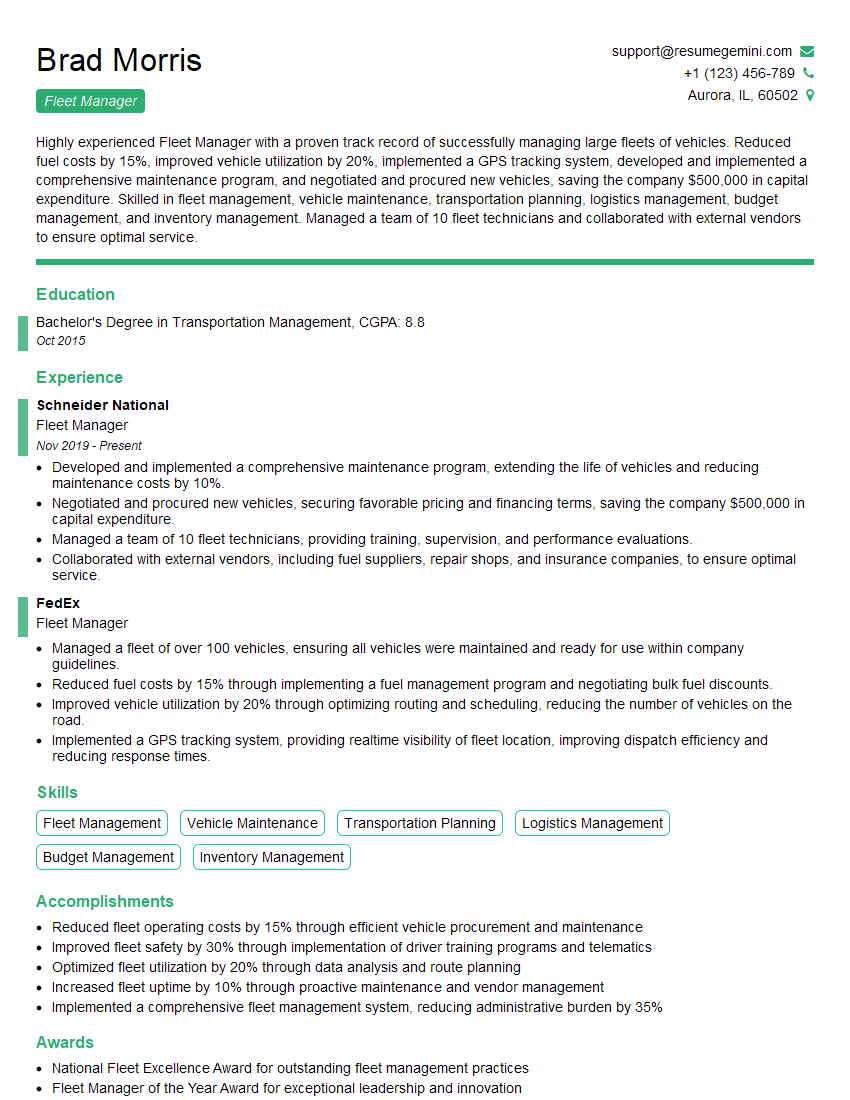
Fleet Manager Resume Sample
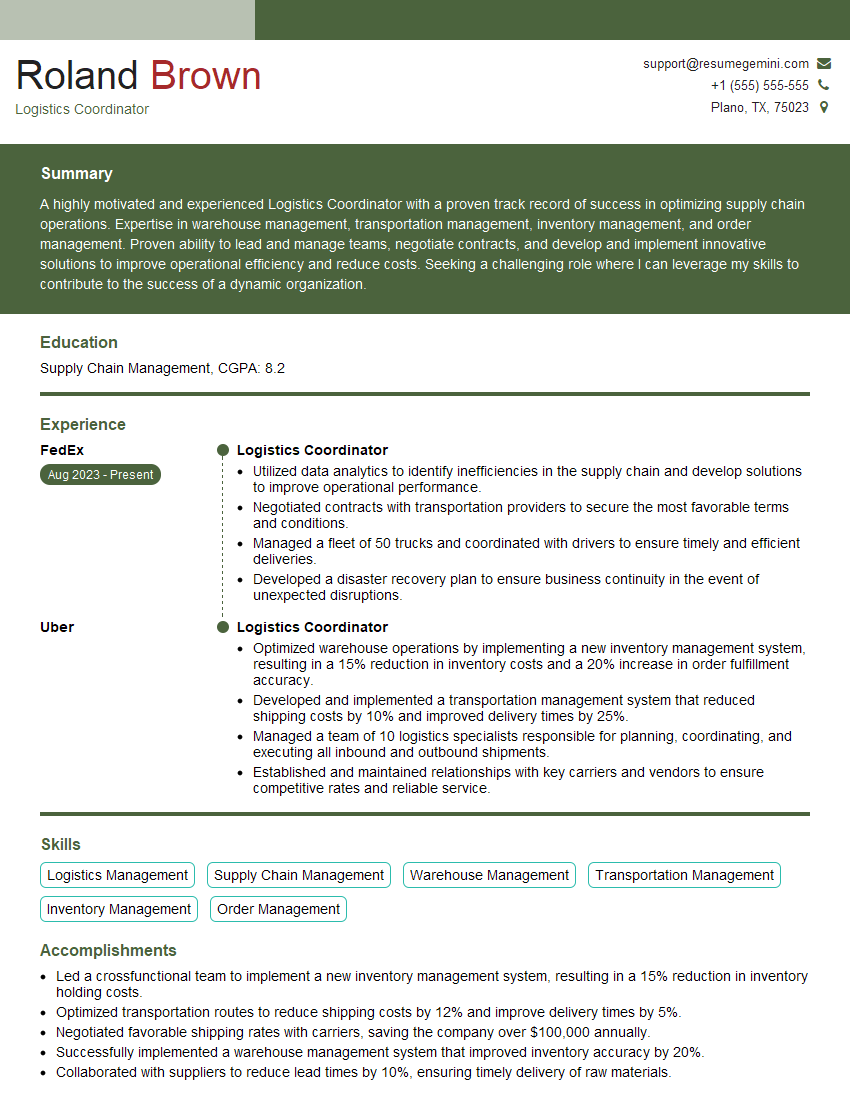
Logistics Coordinator Resume Sample
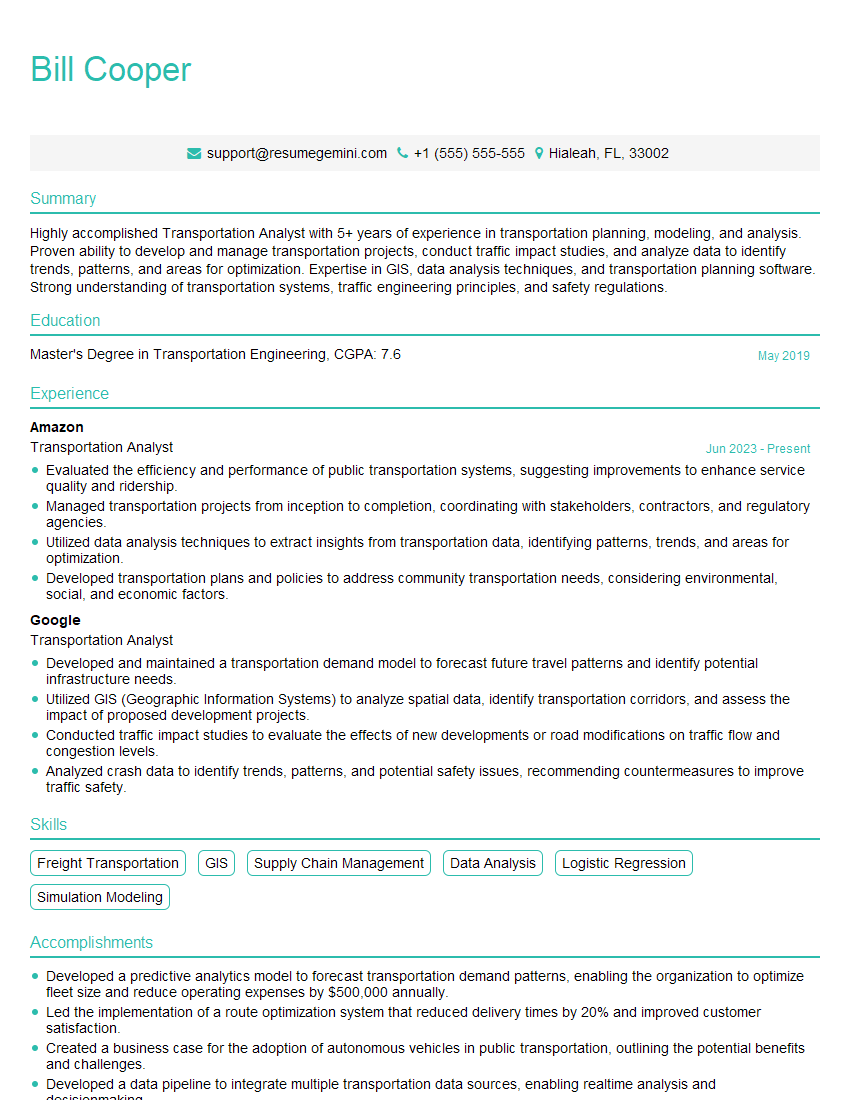
Transportation Analyst Resume Sample
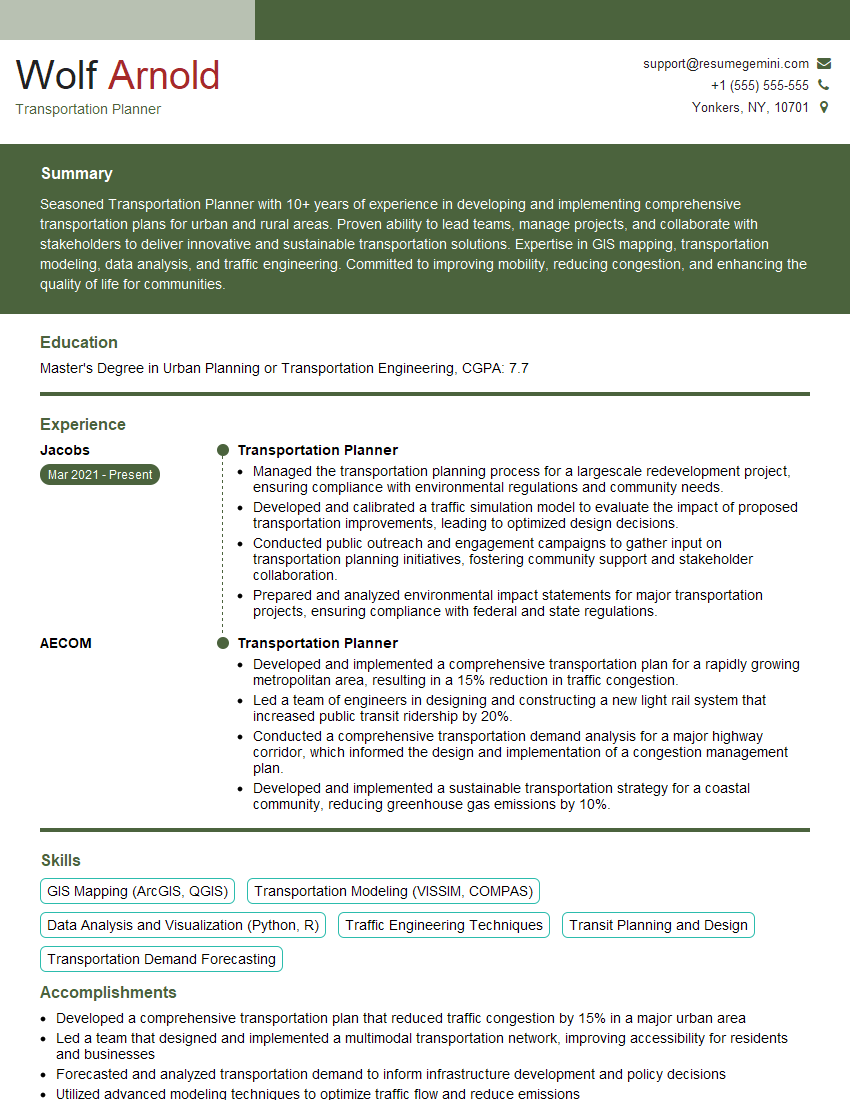
Transportation Planner Resume Sample
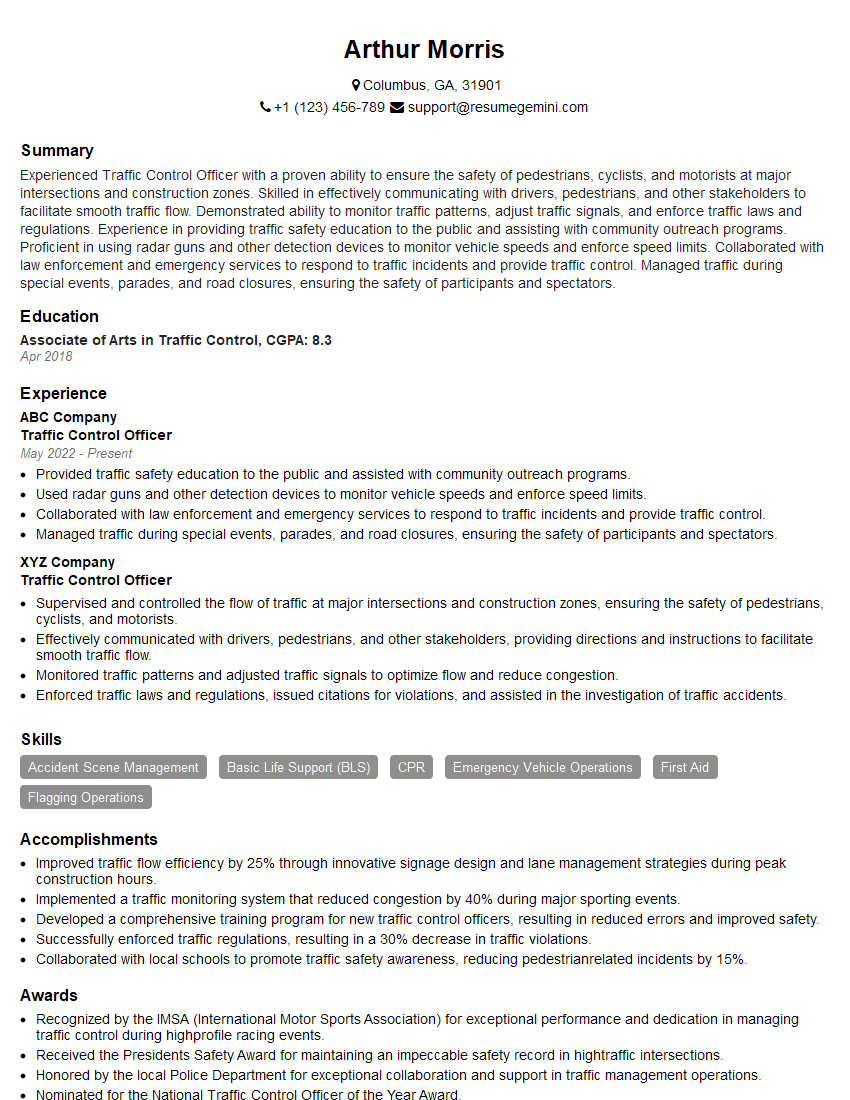
Traffic Control Officer Resume Sample
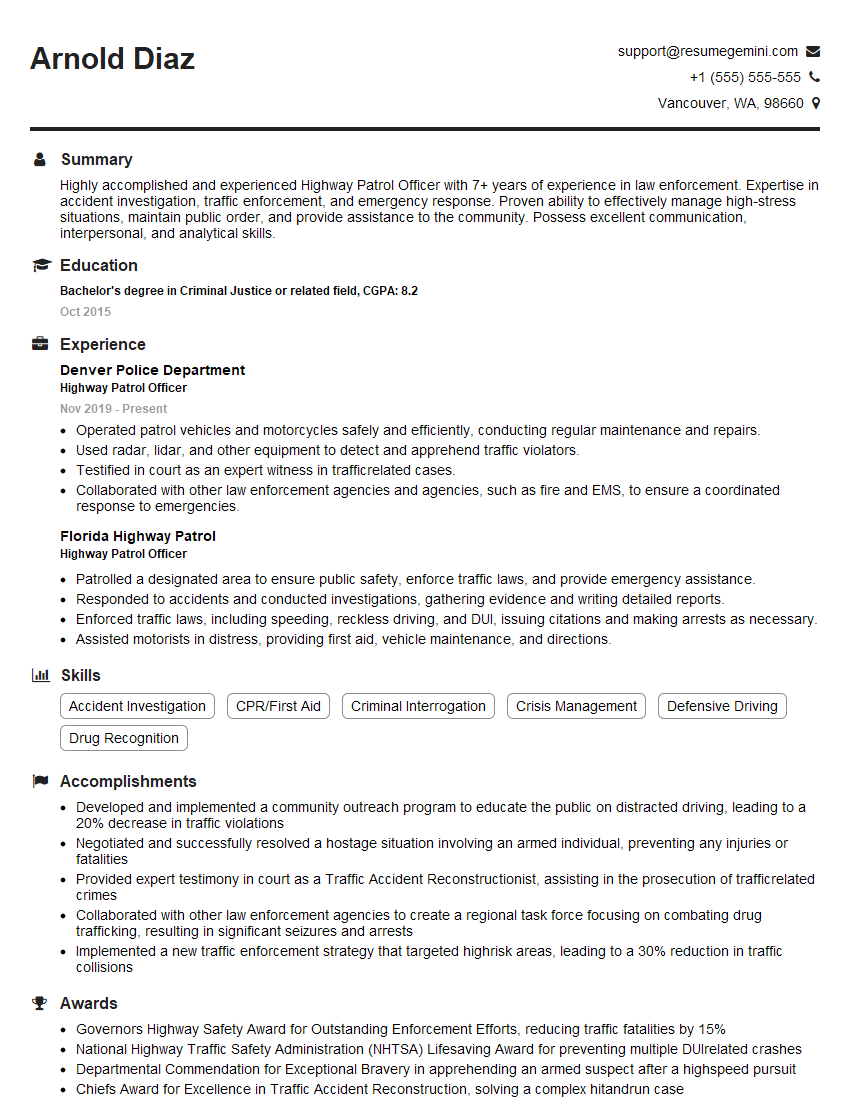
Highway Patrol Officer Resume Sample
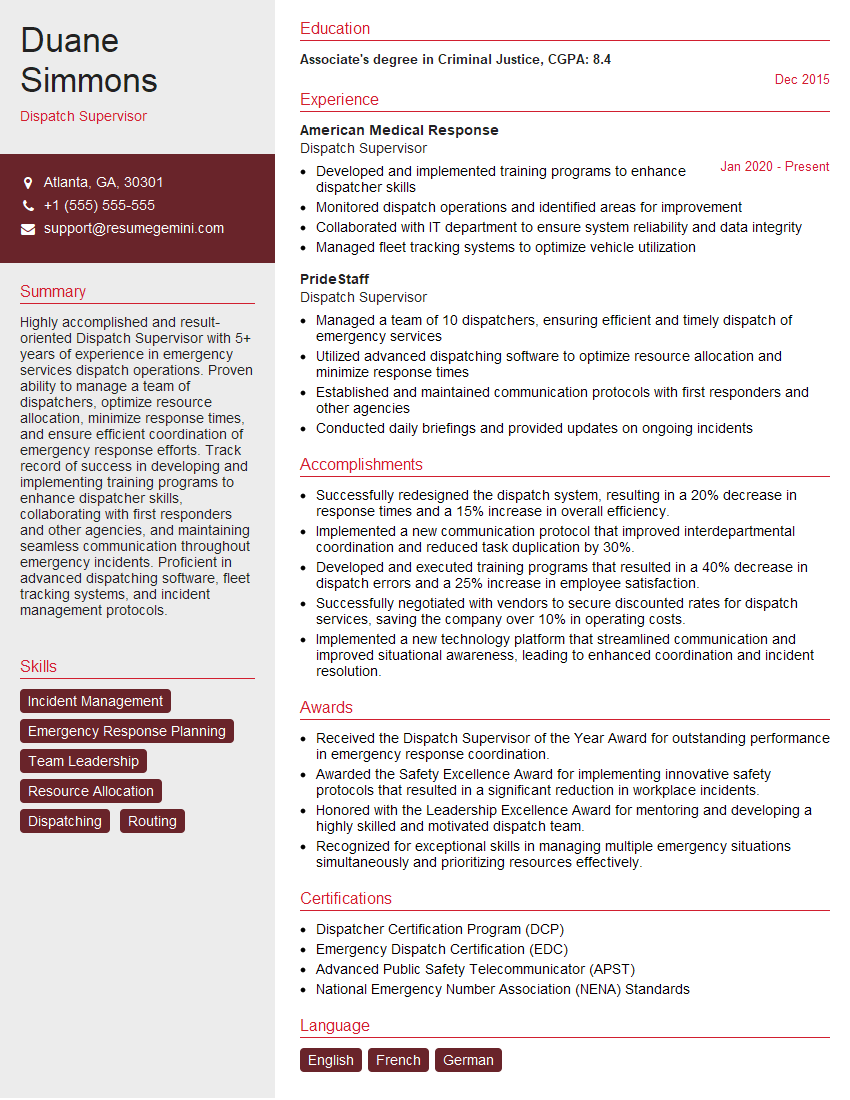
Dispatch Supervisor Resume Sample
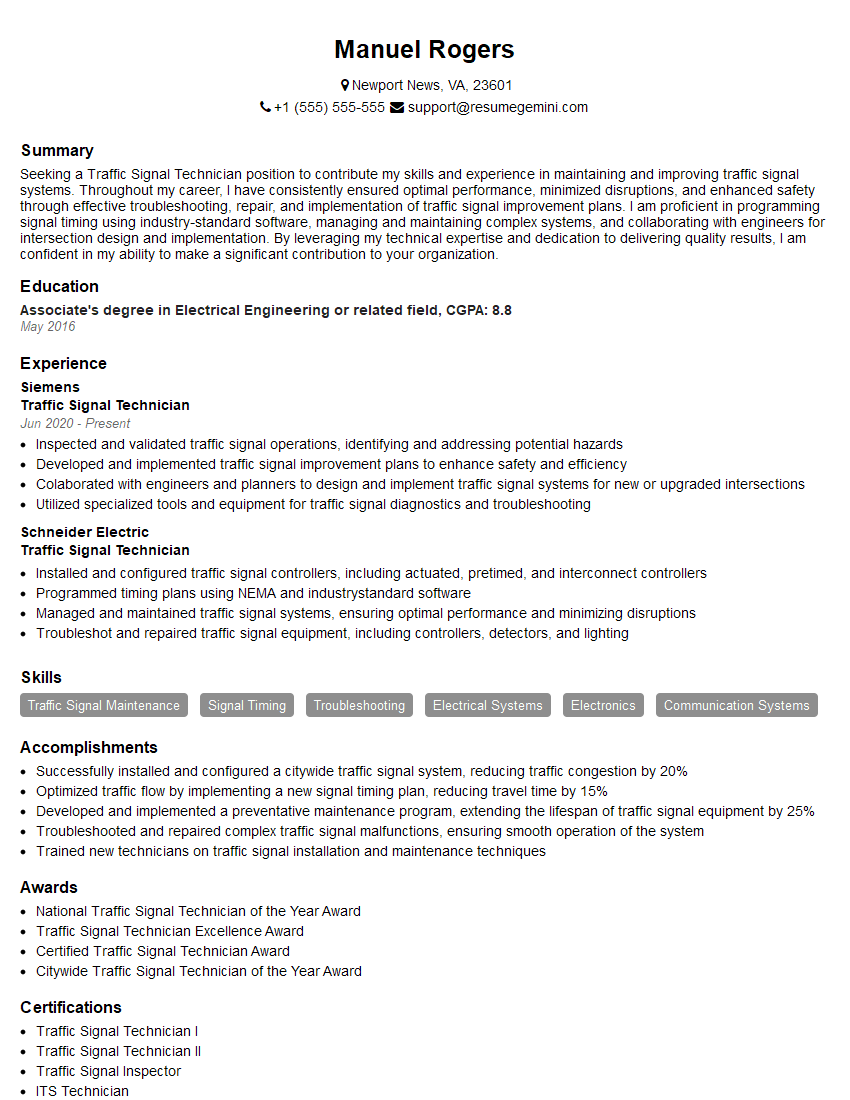
Traffic Signal Technician Resume Sample
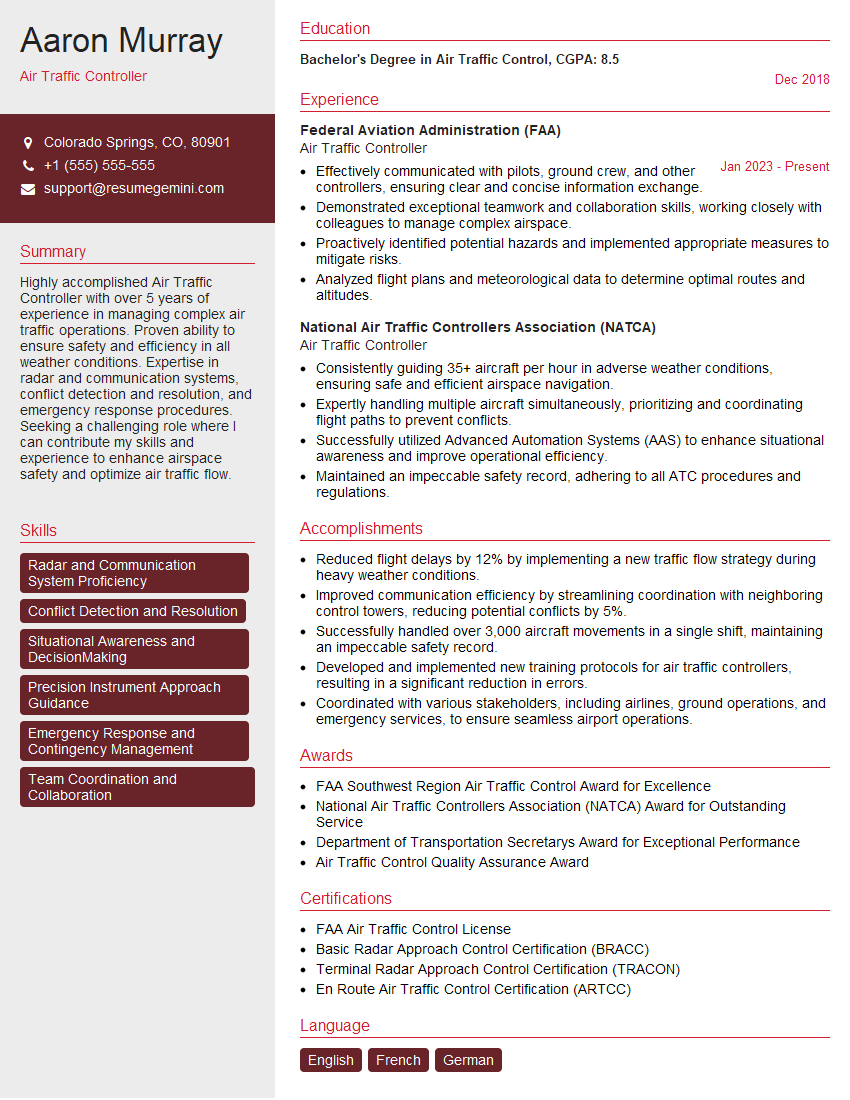
Air Traffic Controller Resume Sample
Explore more articles
Users Rating of Our Blogs
Share Your Experience
We value your feedback! Please rate our content and share your thoughts (optional).
What Readers Say About Our Blog
I Redesigned Spongebob Squarepants and his main characters of my artwork.
https://www.deviantart.com/reimaginesponge/art/Redesigned-Spongebob-characters-1223583608
IT gave me an insight and words to use and be able to think of examples
Hi, I’m Jay, we have a few potential clients that are interested in your services, thought you might be a good fit. I’d love to talk about the details, when do you have time to talk?
Best,
Jay
Founder | CEO