Interviews are opportunities to demonstrate your expertise, and this guide is here to help you shine. Explore the essential Flood Hazard Management interview questions that employers frequently ask, paired with strategies for crafting responses that set you apart from the competition.
Questions Asked in Flood Hazard Management Interview
Q 1. Explain the difference between flood forecasting and flood warning.
Flood forecasting and flood warning are closely related but distinct concepts in flood hazard management. Flood forecasting is the scientific prediction of the timing, magnitude, and duration of a flood event. It involves analyzing hydrological data, such as rainfall, river levels, and snowmelt, using sophisticated models to estimate future flood conditions. Think of it as predicting the weather, but for rivers. Flood warning, on the other hand, is the dissemination of information about an impending or ongoing flood event to those at risk, enabling them to take appropriate action. It’s the crucial step of alerting people to the predicted flood. For example, a flood forecast might predict a river will reach a dangerous level in 48 hours, while a flood warning would be issued to communities in the flood plain when the river reaches a certain critical level, indicating immediate danger. The warning activates emergency response plans.
Q 2. Describe the various methods used for flood risk assessment.
Flood risk assessment employs various methods to understand the potential for flooding in a given area. These methods often combine qualitative and quantitative techniques:
- Hydrological modelling: This involves using computer programs to simulate the movement of water through a catchment area, considering rainfall, runoff, and other factors. This helps predict flood peaks and extents.
- Hydraulic modelling: This focuses on the flow of water within river channels and floodplains, providing detailed information on water depths and velocities during a flood event (explained more in answer 4).
- Statistical analysis: Analyzing historical flood data (river flow data, rainfall records) to determine the frequency and magnitude of past floods. This is crucial for establishing flood probability levels.
- Remote sensing and GIS: Using satellite imagery, aerial photography, and Geographic Information Systems (GIS) to map floodplains, identify vulnerable areas, and assess potential flood impacts. This gives a visual representation of flood risks.
- Vulnerability assessments: This method assesses the susceptibility of people, property, infrastructure, and the environment to flood damage. This considers factors like population density, building type, and the value of assets in flood-prone zones.
In practice, a comprehensive flood risk assessment often integrates several of these methods to provide a robust picture of the overall flood risk.
Q 3. What are the key components of a flood mitigation plan?
A robust flood mitigation plan should incorporate several key components to effectively manage flood risk:
- Flood risk assessment: A thorough evaluation of the flood hazards and vulnerabilities as described in answer 2.
- Structural measures: These are physical structures designed to control or reduce flood damage, such as dams, levees, flood walls, and reservoirs. This is often the most visible aspect of flood management.
- Non-structural measures: These measures don’t involve physical structures but focus on managing land use, improving drainage systems, implementing building codes, and developing early warning systems. Examples include flood zoning regulations, public awareness campaigns, and community preparedness plans.
- Flood forecasting and warning systems: As explained in answer 1, accurate predictions and timely warnings are crucial for effective response.
- Emergency response plans: Detailed plans outlining actions to be taken during and after a flood event, including evacuation procedures, rescue operations, and recovery strategies.
- Land-use planning and zoning regulations: Restricting development in high-risk areas and promoting sustainable land management practices.
- Insurance and financial mechanisms: This aspect helps to mitigate the economic impact of flooding on individuals and communities.
The effectiveness of a flood mitigation plan hinges on the integration of all these components, considering both the physical and social aspects of flood management.
Q 4. How do you utilize hydraulic modeling in flood hazard management?
Hydraulic modeling is a powerful tool used in flood hazard management to simulate water flow in rivers, streams, and other waterways. It uses specialized software (like HEC-RAS or MIKE FLOOD) to solve complex equations that govern fluid mechanics. This allows us to predict water levels, flow velocities, and flood extents under various scenarios, such as different rainfall intensities or dam failures.
In practice, we use hydraulic modeling to:
- Assess flood risks: Determine the potential impacts of flooding on infrastructure and communities.
- Design flood defenses: Evaluate the effectiveness of proposed flood control structures (levees, dams).
- Develop flood inundation maps: Visualize areas that are likely to be flooded under different flood events.
- Evaluate the impact of land-use changes: Assess how changes to the landscape might affect flood behavior.
The process involves creating a digital model of the river system, defining boundary conditions (like rainfall or upstream flow), and running simulations to predict the hydraulic response. The results are then analyzed to understand the flood risks and inform mitigation strategies. For example, we might use hydraulic modeling to determine the optimal height of a levee to protect a city from a 100-year flood event.
Q 5. Explain the concept of a 100-year flood.
The term “100-year flood” is a statistical concept that refers to a flood event with a 1% annual probability of occurrence. It doesn’t mean that such a flood will occur only once every 100 years; it could occur multiple times within a century or not at all. Instead, it indicates the probability. Imagine flipping a coin: there’s a 50% chance of getting heads on any single flip, but you could get tails several times in a row. Similarly, a 100-year flood event has a 1% chance of occurring in any given year, implying that there’s a significant chance (approximately 63%) of experiencing a flood of this magnitude or larger over a period of 100 years. This statistical probability is crucial for establishing design standards for infrastructure in floodplains and setting land-use policies. For example, structures built in flood-prone areas might need to be designed to withstand a 100-year flood event.
Q 6. Describe different types of flood defenses and their limitations.
Various flood defenses exist, each with strengths and weaknesses:
- Levees and embankments: Raised earthworks along rivers to confine floodwaters. Limitations: They can fail during exceptionally large floods, and they can displace floodwaters downstream, increasing risk elsewhere.
- Floodwalls: Concrete or other materials built to contain floodwaters. Limitations: Expensive, can alter river morphology, and may not be suitable for all terrains.
- Dams and reservoirs: Structures that store floodwater, reducing downstream flow. Limitations: Expensive to build and maintain, can have significant environmental impacts (habitat disruption, sediment trapping), and can fail catastrophically.
- Retention basins: Areas specifically designed to temporarily store floodwater. Limitations: Requires substantial land area, and effectiveness depends on the timing and duration of rainfall.
- Floodgates and weirs: Control structures that regulate water flow. Limitations: Requires operation and maintenance, and may not be effective during very large flood events.
- Channel improvements: Modifications to the river channel to increase its capacity. Limitations: Can have significant environmental consequences, potentially leading to erosion and changes to the river ecosystem.
The choice of flood defenses depends on several factors, including the scale of the flood risk, the available budget, and environmental considerations. A combined strategy, often integrating structural and non-structural approaches, usually provides the most effective defense.
Q 7. What are the common causes of flooding?
Flooding can stem from a variety of causes, often acting in combination:
- Heavy rainfall: Intense and prolonged rainfall overwhelms the capacity of drainage systems and river channels.
- Rapid snowmelt: Sudden warming causes rapid snowmelt, leading to a sharp increase in river flow.
- Riverine flooding: High river levels caused by excessive rainfall or snowmelt inundate floodplains.
- Coastal flooding: High tides, storm surges, and tsunamis inundate coastal areas.
- Pluvial flooding: Overwhelming surface runoff from intense rainfall on impermeable surfaces (like roads and buildings) leads to localized flooding.
- Dam failures: Structural failures of dams release large volumes of water, causing catastrophic downstream flooding.
- Glacial lake outburst floods (GLOFs): A sudden release of water from a glacial lake, typically triggered by a landslide or other event, results in severe downstream flooding.
- Deforestation and land degradation: Reduced vegetation cover increases surface runoff, leading to increased flood risk.
Understanding the specific causes of flooding in a particular area is critical for designing effective flood management strategies.
Q 8. How do you incorporate climate change projections into flood risk assessments?
Incorporating climate change projections into flood risk assessments is crucial for future-proofing our communities. We can no longer rely solely on historical data, as climate change is altering rainfall patterns, sea levels, and the frequency and intensity of extreme weather events. This requires a shift towards probabilistic assessments.
We achieve this by using climate models that project changes in precipitation, temperature, and sea level rise under various emissions scenarios. These projections are then input into hydrological models to simulate future flood events. For example, we might use downscaled Global Climate Models (GCMs) to feed into a rainfall-runoff model to predict future river flows. This allows us to estimate the probability of different flood magnitudes under various future climate conditions.
The results are often presented as risk maps showing changes in flood extent and depth under different future scenarios. This informs adaptation strategies, allowing us to design infrastructure and policies that are resilient to a changing climate. For instance, a community might choose to elevate its infrastructure or invest in nature-based solutions like wetland restoration, based on these projections.
Q 9. What are the key indicators of flood vulnerability in a community?
Flood vulnerability is a community’s susceptibility to the damaging effects of a flood. It’s not just about the hazard (the flood itself) but also the community’s capacity to withstand and recover from it. Key indicators include:
- Socioeconomic factors: Poverty levels, access to healthcare and emergency services, age demographics, and the prevalence of vulnerable populations (elderly, disabled) all influence a community’s resilience.
- Infrastructure: The quality of housing, drainage systems, and transportation networks significantly impacts a community’s ability to cope with a flood. For example, older houses built on floodplains without flood defenses are highly vulnerable.
- Land use and planning: Urbanization, deforestation, and encroachment on floodplains increase flood risk. Effective land-use planning and zoning regulations are crucial for mitigating vulnerability.
- Community preparedness: The existence of emergency plans, warning systems, and public awareness campaigns are crucial for minimizing damage and saving lives during a flood.
- Environmental factors: The presence of wetlands, riparian buffers, and other natural features can reduce flood impacts. Conversely, degradation of these ecosystems increases vulnerability.
Assessing vulnerability often involves combining qualitative and quantitative data through techniques like vulnerability indices. This holistic approach provides a comprehensive picture of a community’s preparedness and capacity to manage flood risks.
Q 10. Explain the role of GIS in flood hazard mapping and analysis.
Geographic Information Systems (GIS) are indispensable tools in flood hazard management. They allow us to integrate, analyze, and visualize spatial data related to topography, hydrology, land use, and infrastructure to create detailed flood hazard maps.
GIS helps in:
- Hydrological modeling: GIS integrates elevation data (Digital Elevation Models or DEMs), rainfall data, and river network information to simulate flood inundation using hydrological models. The output is a flood inundation map showing the extent and depth of flooding under different scenarios.
- Risk assessment: By overlaying flood hazard maps with data on population density, infrastructure, and land values, GIS helps assess the level of risk faced by different areas and populations. This information is critical for prioritizing mitigation efforts.
- Mitigation planning: GIS supports the design and implementation of flood mitigation measures by visualizing the impact of proposed interventions (e.g., levees, floodwalls, retention basins). This enables cost-benefit analyses and optimized placement of mitigation structures.
- Emergency response: During flood events, GIS provides real-time tracking of flood extent, enabling effective deployment of emergency services and resource allocation.
For example, we might use ArcGIS or QGIS to create a flood hazard map, incorporating data from LiDAR surveys for high-resolution elevation data, hydrological modeling outputs, and population data from census records.
Q 11. How do you evaluate the effectiveness of flood mitigation measures?
Evaluating the effectiveness of flood mitigation measures is crucial for ensuring that investments yield the desired outcomes. This involves a multi-faceted approach:
- Pre- and post-flood comparisons: Comparing flood extent, depth, and damage before and after implementing mitigation measures provides direct evidence of their effectiveness. This might involve analyzing aerial imagery or field surveys.
- Hydrological modeling: Running hydrological models with and without the implemented mitigation measures helps quantify their impact on flood characteristics (peak flow, flood volume, inundation area).
- Economic analysis: Cost-benefit analysis evaluates the economic benefits of the mitigation measures against their implementation costs. This considers factors like avoided damages, reduced insurance premiums, and increased property values.
- Social impact assessment: Assessing the social impact on affected communities ensures that mitigation measures have positive social outcomes and don’t create unintended consequences. This might involve surveys or community consultations.
- Monitoring and maintenance: Regular monitoring of the mitigation infrastructure is essential to detect any degradation or damage and ensure its continued effectiveness. This requires a maintenance schedule and timely repairs.
A holistic evaluation considers all these aspects, providing a comprehensive picture of the measure’s success. For example, comparing the number of flooded homes before and after the construction of a levee, coupled with an economic analysis of avoided damages, would demonstrate the levee’s effectiveness.
Q 12. Describe the regulatory framework for flood hazard management in your region.
(Note: The regulatory framework for flood hazard management varies significantly by region. This answer provides a general example. Specific regulations must be researched for a particular area.)
In many regions, the regulatory framework involves a combination of national and local laws and policies. This often includes:
- Floodplain zoning regulations: These regulations restrict development in high-risk floodplains, preventing construction of buildings and infrastructure in areas prone to flooding.
- Building codes: Building codes often include requirements for flood-resistant construction in flood-prone areas, specifying elevation requirements, materials, and design features.
- Permitting processes: Development projects in floodplains require permits, often subject to flood risk assessments and mitigation measures. This ensures that development is compatible with flood management objectives.
- Insurance requirements: Flood insurance may be mandatory in high-risk areas, encouraging property owners to invest in flood-proofing measures.
- Emergency management plans: Regional and local authorities are responsible for developing and implementing emergency plans for flood events, including warning systems, evacuation procedures, and post-flood recovery strategies.
The enforcement of these regulations is crucial for ensuring effective flood hazard management. This often involves inspections, penalties for non-compliance, and collaboration between government agencies, communities, and stakeholders.
Q 13. What are the ethical considerations in flood hazard management?
Ethical considerations in flood hazard management are paramount. Decisions about flood risk management can have profound consequences for individuals and communities, raising several ethical dilemmas:
- Equity and justice: Mitigation measures should be equitable and not disproportionately impact vulnerable populations. For instance, costly flood defenses might benefit wealthy areas while neglecting those with limited resources.
- Transparency and participation: Decisions about flood management should be made transparently, with the involvement of affected communities. This ensures that the voices of those most at risk are heard and their needs are addressed.
- Balancing competing interests: Flood hazard management involves balancing competing interests between economic development and environmental protection. This requires careful consideration of the long-term environmental and societal impacts.
- Information accuracy and accessibility: Providing accurate and accessible flood risk information to the public is essential for informed decision-making. This includes ensuring that the information is understandable and accessible to all communities, regardless of literacy level or language.
- Responsibility and accountability: Clear lines of responsibility and accountability are needed to ensure that agencies and individuals fulfill their roles in flood hazard management. This includes addressing negligence or misconduct that leads to increased flood risk.
Addressing these ethical considerations ensures that flood hazard management is just, effective, and sustainable.
Q 14. How do you communicate flood risk information to the public?
Communicating flood risk information effectively to the public is vital for building community resilience. This requires a multi-pronged approach:
- Clear and concise messaging: Use simple language, avoiding technical jargon. Focus on the key risks and what individuals need to do to protect themselves.
- Multiple communication channels: Utilize a variety of channels to reach diverse audiences, including websites, social media, local newspapers, community meetings, and public service announcements.
- Visual aids: Flood maps, infographics, and videos can effectively communicate complex information in a visually engaging way.
- Tailored messages: Develop specific messages targeting different groups, such as homeowners, businesses, and vulnerable populations.
- Community engagement: Engage with communities to understand their concerns and build trust. This can involve workshops, surveys, and consultations.
- Early warning systems: Establish robust early warning systems that provide timely and accurate alerts about impending floods.
- Post-flood communication: Communicate information about recovery efforts, resources, and support services following a flood event.
Effective communication fosters a culture of preparedness and empowers communities to take action to protect themselves from flood risks. For example, using localized flood maps to show individuals whether their property is at risk, combined with clear instructions about evacuation procedures and flood-proofing measures, would significantly enhance community preparedness.
Q 15. Explain the importance of community engagement in flood hazard management.
Community engagement is absolutely crucial for effective flood hazard management. It’s not just about informing people; it’s about building a shared understanding of risk and collaboratively developing solutions. Think of it as a partnership – we, as professionals, bring the technical expertise, while the community brings invaluable local knowledge and buy-in, which is essential for successful implementation of any mitigation strategy.
- Improved Data Collection: Local residents often have detailed historical accounts of flooding events, including locations, severity, and contributing factors, which may not be captured in official records. This anecdotal evidence can significantly improve the accuracy of flood risk assessments.
- Increased Preparedness: When communities are actively involved, they are more likely to understand and prepare for flood events. This might involve participating in evacuation drills, developing community response plans, and raising awareness about personal flood preparedness measures.
- Enhanced Compliance: When people understand the rationale behind flood mitigation measures (e.g., building restrictions in floodplains), they are more likely to comply with regulations, maximizing the effectiveness of these measures.
- Greater Acceptance of Mitigation Measures: Community input can lead to more effective and socially acceptable mitigation strategies. For example, a community might prefer nature-based solutions, such as restoring wetlands, to more intrusive engineering solutions.
For example, during a recent project in a riverside community, we organized public forums and workshops to gather input on flood mitigation options. Local residents’ suggestions led us to incorporate a community-based early warning system that significantly improved response times during subsequent flooding events.
Career Expert Tips:
- Ace those interviews! Prepare effectively by reviewing the Top 50 Most Common Interview Questions on ResumeGemini.
- Navigate your job search with confidence! Explore a wide range of Career Tips on ResumeGemini. Learn about common challenges and recommendations to overcome them.
- Craft the perfect resume! Master the Art of Resume Writing with ResumeGemini’s guide. Showcase your unique qualifications and achievements effectively.
- Don’t miss out on holiday savings! Build your dream resume with ResumeGemini’s ATS optimized templates.
Q 16. How do you prioritize flood mitigation projects based on risk and cost?
Prioritizing flood mitigation projects requires a systematic approach that balances risk and cost-effectiveness. We typically use a multi-criteria decision analysis (MCDA) framework, considering factors such as:
- Risk Assessment: This involves quantifying the likelihood and potential consequences of flooding, considering factors like flood frequency, depth, velocity, and the vulnerability of exposed assets (people, infrastructure, economy).
- Cost-Benefit Analysis: We evaluate the projected costs of implementing different mitigation measures (e.g., levees, floodwalls, nature-based solutions) against their expected benefits in terms of reduced flood damage and improved resilience.
- Social and Environmental Impacts: We assess the broader social and environmental impacts of each project, considering potential displacement of communities, impacts on ecosystems, and other related factors.
The process often involves creating a matrix where each potential project is scored based on these criteria. Projects with high scores (high risk, high cost-effectiveness, and minimal negative impacts) are prioritized. Software tools are sometimes utilized for this, integrating GIS data, flood modelling outputs, and cost estimates to systematically compare potential projects.
Imagine a scenario where we have three potential mitigation projects: building a levee, restoring a wetland, and improving drainage systems. We use MCDA to score each on factors such as cost, effectiveness in reducing flood risk, environmental impact, and community acceptance. The project with the highest overall score, considering all these factors, would be prioritized.
Q 17. Describe your experience with flood modeling software (e.g., HEC-RAS, MIKE FLOOD).
I have extensive experience with both HEC-RAS and MIKE FLOOD, two leading hydraulic modeling software packages. HEC-RAS (Hydrologic Engineering Center’s River Analysis System) is particularly well-suited for modeling riverine flooding, while MIKE FLOOD offers broader capabilities, including coastal and urban flooding. My experience encompasses:
- Model Development: Creating and calibrating hydraulic models using surveyed data, topographical data (LiDAR, DEM), and rainfall-runoff information.
- Scenario Analysis: Running simulations under different rainfall events, sea-level rise scenarios, and potential levee failures to assess the range of possible flood extents and depths.
- Uncertainty Analysis: Incorporating uncertainty in model inputs (e.g., rainfall intensity, roughness coefficients) to assess the reliability of model predictions.
- Visualization and Reporting: Presenting model results through maps, cross-sections, and hydrographs to communicate findings effectively to stakeholders.
For example, in a recent project using HEC-RAS, we modeled the impact of a proposed dam on downstream flooding. The model helped us optimize the dam’s design to minimize potential downstream impacts while still achieving the project’s intended water management goals. In another project using MIKE FLOOD, we successfully modeled complex coastal flooding scenarios, helping to identify vulnerable areas and inform the development of coastal defense strategies.
Q 18. How do you handle uncertainty in flood risk assessments?
Uncertainty is inherent in flood risk assessments. We acknowledge this and handle it through a combination of methods:
- Probabilistic Analysis: Instead of relying on single-point estimates of flood parameters, we use probabilistic methods that consider the range of possible values. This approach often employs Monte Carlo simulations, where we run multiple model simulations with varied inputs to generate a distribution of potential outcomes.
- Sensitivity Analysis: We identify which model inputs have the largest influence on the predicted flood risk. This helps us focus our efforts on reducing uncertainties in these critical parameters, for example, by investing in better rainfall data or more detailed topographic surveys.
- Expert Elicitation: In cases where data is limited, we involve experts to provide informed estimates of uncertain parameters and assess the level of confidence in those estimates.
- Ensemble Modeling: We may use multiple modeling approaches (e.g., combining hydraulic models with statistical models) to increase the robustness of our assessments and to compare the outputs to identify areas of agreement and disagreement.
It’s vital to communicate the uncertainty associated with flood risk estimates transparently to stakeholders. Instead of presenting a single deterministic prediction, we typically provide a range of possible outcomes, along with confidence intervals, so stakeholders can make informed decisions about risk management.
Q 19. What are the economic impacts of flooding?
The economic impacts of flooding are devastating and far-reaching. They include:
- Direct Damages: These are the immediate costs of flood damage to buildings, infrastructure, and personal property. This can include costs associated with repairs, replacement, and demolition.
- Indirect Damages: These are the wider economic losses resulting from business interruption, loss of productivity, and the disruption of supply chains. For example, businesses may need to close temporarily, leading to job losses and decreased revenue.
- Long-Term Impacts: Flooding can also have long-term consequences, such as reduced property values, increased insurance premiums, and the need for extensive community recovery efforts.
- Health Impacts (economic dimension): Increased risk of waterborne illnesses and mental health challenges due to displacement and loss also creates substantial economic strain on healthcare systems and communities.
The economic costs of flooding are often significantly underestimated because they frequently omit indirect losses and long-term effects. Comprehensive economic assessments are essential for justifying investments in flood mitigation and highlighting the overall return on investment.
For instance, the 2017 Hurricane Harvey in Houston resulted in tens of billions of dollars in damages, far surpassing initial estimates due to the extensive indirect economic impacts and long-term recovery costs.
Q 20. Explain the concept of flood insurance and its role in risk reduction.
Flood insurance plays a crucial role in flood risk reduction by transferring risk from individuals and businesses to insurance companies. It’s a critical element of a comprehensive flood risk management strategy. Here’s how it works:
- Risk Sharing: Insurance pools resources from many policyholders to compensate those who experience flood damage. This spreads the risk and prevents catastrophic losses for any single individual or business.
- Incentive for Mitigation: Flood insurance companies often offer discounts to policyholders who adopt flood mitigation measures (e.g., elevating buildings, installing flood barriers). This incentivizes proactive risk reduction.
- Financial Assistance for Recovery: In the event of a flood, flood insurance provides financial assistance to help policyholders rebuild and recover, minimizing the economic burden and speeding up the recovery process.
- Data Collection: Insurance claims data provide valuable insights into flood frequency, severity, and patterns, enhancing the accuracy of flood risk assessments.
However, flood insurance is not a perfect solution. It has limitations, such as affordability and the potential for underinsurance due to the high cost in high-risk areas. There’s an ongoing debate about the appropriate role of government subsidies to make flood insurance more accessible.
Q 21. How do you integrate flood hazard management into land-use planning?
Integrating flood hazard management into land-use planning is fundamental to minimizing future flood risks and protecting communities. It involves considering flood hazards at all stages of the planning process:
- Mapping and Assessment: Creating accurate flood hazard maps that delineate areas at different levels of risk, using data from flood models, historical flood records, and other relevant sources.
- Zoning and Building Codes: Developing zoning regulations and building codes that restrict or regulate development in high-risk floodplains. This might involve prohibiting building construction in certain areas, requiring elevated foundations or flood-resistant construction, or mandating the use of specific materials.
- Infrastructure Planning: Designing and constructing infrastructure (roads, bridges, utilities) to be resilient to flooding, avoiding construction in flood-prone areas and implementing drainage systems to effectively manage stormwater runoff.
- Environmental Protection: Incorporating nature-based solutions into land-use plans, such as restoring wetlands, improving riparian buffers, and enhancing natural drainage systems to reduce flood risks and provide other environmental benefits.
For instance, a well-designed land-use plan might designate high-risk floodplains for parks and open space, avoiding construction in those areas while simultaneously creating valuable green infrastructure that can help mitigate flooding.
This integrated approach prevents future flood damage, safeguards investments, reduces insurance costs, and ensures communities’ resilience. Failure to consider flood risk in land-use planning frequently leads to unsustainable development that increases vulnerability to future flood events, resulting in huge financial and human costs.
Q 22. What are the challenges in managing flood risks in urban areas?
Managing flood risk in urban areas presents unique challenges due to the high concentration of population, infrastructure, and economic activity within a limited space. These challenges can be broadly categorized into:
- Increased impervious surfaces: Concrete and asphalt reduce infiltration, increasing runoff and accelerating floodwaters.
- Inadequate drainage systems: Existing drainage infrastructure may be outdated or insufficient to handle increased rainfall intensity from climate change.
- Development in floodplains: Building in flood-prone areas increases vulnerability and magnifies the impact of floods.
- Complex hydrological systems: Urban landscapes alter natural water flow patterns, making flood prediction more complex.
- Social equity concerns: Flood impacts disproportionately affect vulnerable populations who may lack resources for mitigation and recovery.
- Data scarcity and limitations: Accurate real-time data collection in dense urban environments can be challenging.
For example, a rapidly developing city might experience severe flooding during a storm because new construction has reduced the natural absorption capacity of the land, overwhelming the existing storm drains.
Q 23. Describe your experience with post-flood recovery and reconstruction.
My experience in post-flood recovery and reconstruction spans several projects, focusing on both immediate emergency response and long-term community resilience building. I’ve worked on projects involving debris removal, temporary housing provision, and infrastructure repair. A key aspect of my work is assessing the damage, prioritizing needs, and coordinating with various stakeholders including government agencies, NGOs, and affected communities.
For instance, after a major flood event in a coastal community, I led the development of a comprehensive recovery plan that included temporary shelter solutions, securing funding for infrastructure repairs (roads, bridges, water systems), and designing resilient building codes to prevent similar damage in the future. This involved extensive community engagement to understand their specific needs and concerns, ensuring the recovery process was equitable and sustainable.
Q 24. Explain different types of flood sensors and their applications.
Various flood sensors are used to monitor water levels, flow rates, and other crucial hydrological parameters. These include:
- Water level sensors: These use ultrasonic, pressure, or radar technologies to measure water height. They are crucial for flood early warning systems.
- Flow sensors: These measure the velocity and volume of water flow using acoustic Doppler velocimetry (ADV) or electromagnetic methods. They provide data for understanding flood dynamics.
- Rainfall sensors: These measure rainfall intensity and accumulation, crucial for predicting future flood risk.
- Soil moisture sensors: These help assess ground saturation levels, providing insight into the potential for surface runoff and flooding.
Applications vary depending on sensor type and location. For example, water level sensors are deployed in rivers and streams to provide real-time flood warnings. Rainfall sensors help predict potential flooding downstream, while soil moisture sensors can help manage urban drainage systems more effectively. The data from these sensors feeds into hydrological models to provide more accurate flood forecasts.
Q 25. How do you ensure data quality in flood hazard management?
Ensuring data quality in flood hazard management is paramount. This involves a multi-faceted approach:
- Calibration and validation: Regularly calibrating and validating sensors against established benchmarks ensures accuracy.
- Data cleaning and processing: Raw data often contains errors or outliers. Robust data cleaning and processing techniques are used to remove inaccuracies.
- Quality control checks: Implementing rigorous quality control checks at each stage of data collection, processing, and analysis is crucial.
- Data provenance: Tracking the origin and history of data helps identify and address potential biases or errors.
- Data visualization and interpretation: Visualizing data helps detect inconsistencies and anomalies.
Imagine a scenario where a flood sensor malfunctions. Without proper quality control, this inaccurate data could lead to an ineffective response, potentially resulting in increased damage and casualties. Therefore, robust quality assurance procedures are non-negotiable.
Q 26. Describe your experience with stakeholder coordination in flood management projects.
Stakeholder coordination is crucial for successful flood management projects. My experience involves engaging with diverse stakeholders, including:
- Government agencies: Coordinating with various departments (e.g., emergency management, public works) ensures efficient resource allocation and regulatory compliance.
- Local communities: Engaging with residents is vital for understanding local knowledge, concerns, and preferences. This ensures equitable and community-led solutions.
- NGOs: Collaborating with NGOs provides valuable expertise and resources for community outreach and education.
- Private sector: Collaboration with private companies involved in construction, infrastructure development, and insurance ensures that flood risk is incorporated into planning and design.
In one project, I facilitated a series of community workshops to build consensus on a flood mitigation strategy. This collaborative approach not only ensured a technically sound solution but also fostered community ownership, leading to increased participation and effectiveness.
Q 27. What are the limitations of flood forecasting models?
Flood forecasting models, while invaluable tools, have limitations:
- Data limitations: Models rely on accurate input data, but data availability and quality can vary considerably.
- Model uncertainty: Inherent uncertainties in the physical processes involved lead to prediction uncertainties.
- Simplified assumptions: Models simplify complex hydrological processes, which can affect accuracy.
- Spatial resolution: The spatial scale of models might not capture local variations in topography and land use.
- Climate change impacts: Models may not fully incorporate the impacts of climate change on rainfall patterns and flood frequency.
For example, a model might accurately predict the peak flood level in a river but might underestimate the extent of inundation in a specific area due to variations in ground elevation not captured at the model’s resolution.
Q 28. How do you adapt flood management strategies to changing environmental conditions?
Adapting flood management strategies to changing environmental conditions, particularly climate change, requires a flexible and proactive approach:
- Incorporating climate projections: Updating models with the latest climate change projections helps anticipate changes in rainfall patterns and flood frequency.
- Nature-based solutions: Implementing nature-based solutions like restoring wetlands and improving floodplain connectivity can enhance natural flood defenses.
- Infrastructure upgrades: Investing in climate-resilient infrastructure that can withstand more frequent and intense floods.
- Early warning systems: Improving early warning systems to provide timely and accurate information to communities.
- Community engagement and education: Educating communities about flood risks and building their resilience is critical.
For example, a community experiencing increased rainfall intensity due to climate change may need to invest in larger drainage systems and implement more robust early warning mechanisms. This necessitates a shift from reactive to proactive flood management.
Key Topics to Learn for Flood Hazard Management Interview
- Hydrological Modeling: Understanding rainfall-runoff processes, flood forecasting models (e.g., HEC-HMS, MIKE FLOOD), and their application in predicting flood events. Consider exploring model limitations and uncertainties.
- Hydraulic Modeling: Analyzing flood water movement using software like HEC-RAS. Focus on practical applications such as designing flood control structures and assessing flood inundation areas.
- Floodplain Management: Learn about strategies for mitigating flood risks, including land-use planning, zoning regulations, and the design and implementation of flood control measures (levees, dams, retention basins).
- Risk Assessment and Management: Familiarize yourself with methodologies for assessing flood risk (e.g., probabilistic flood hazard mapping), developing mitigation plans, and communicating risk effectively to stakeholders.
- Flood Early Warning Systems: Understand the components of effective early warning systems, including data acquisition, forecasting, dissemination of warnings, and community preparedness.
- Climate Change and Flooding: Explore the impacts of climate change on flood frequency and intensity, and how adaptation and mitigation strategies can be incorporated into flood management plans.
- Economic Impacts of Flooding: Analyze the economic consequences of floods, including direct and indirect losses, and the cost-benefit analysis of various flood management strategies.
- Data Analysis and Interpretation: Develop your skills in analyzing hydrological and hydraulic data, interpreting results, and presenting findings clearly and concisely. This includes understanding statistical methods relevant to flood analysis.
Next Steps
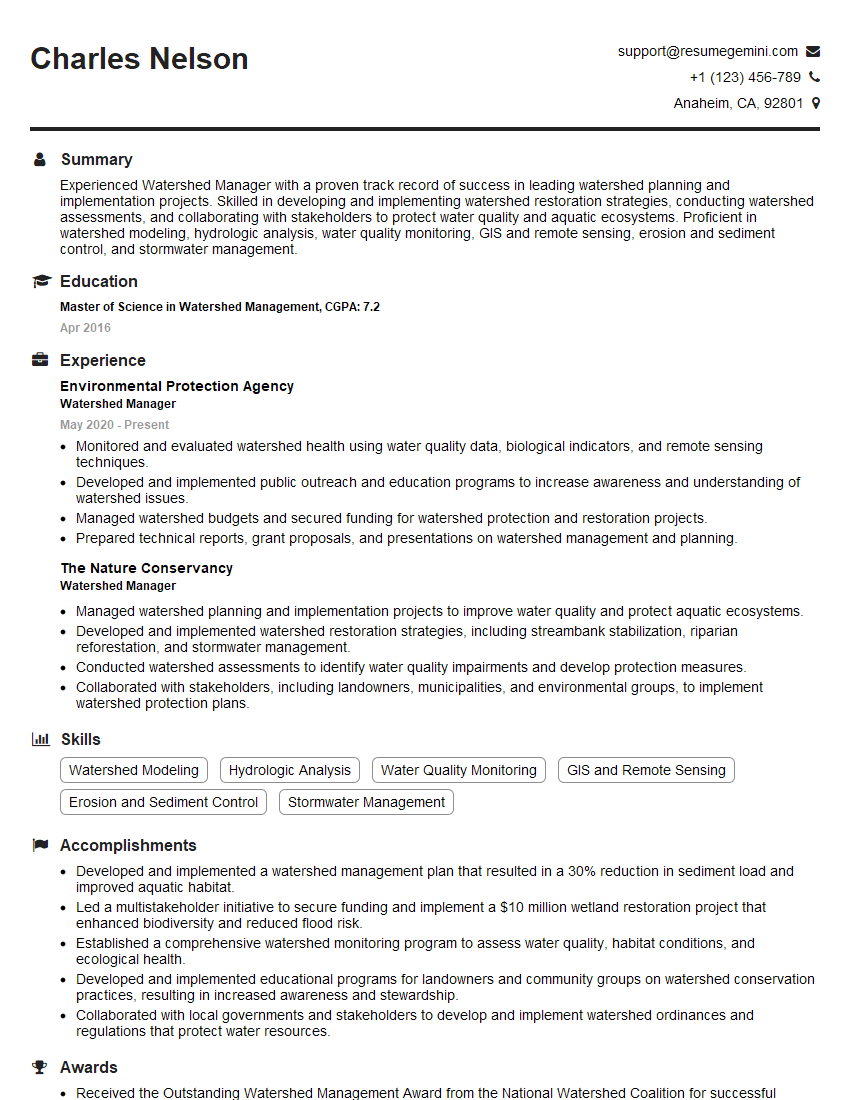
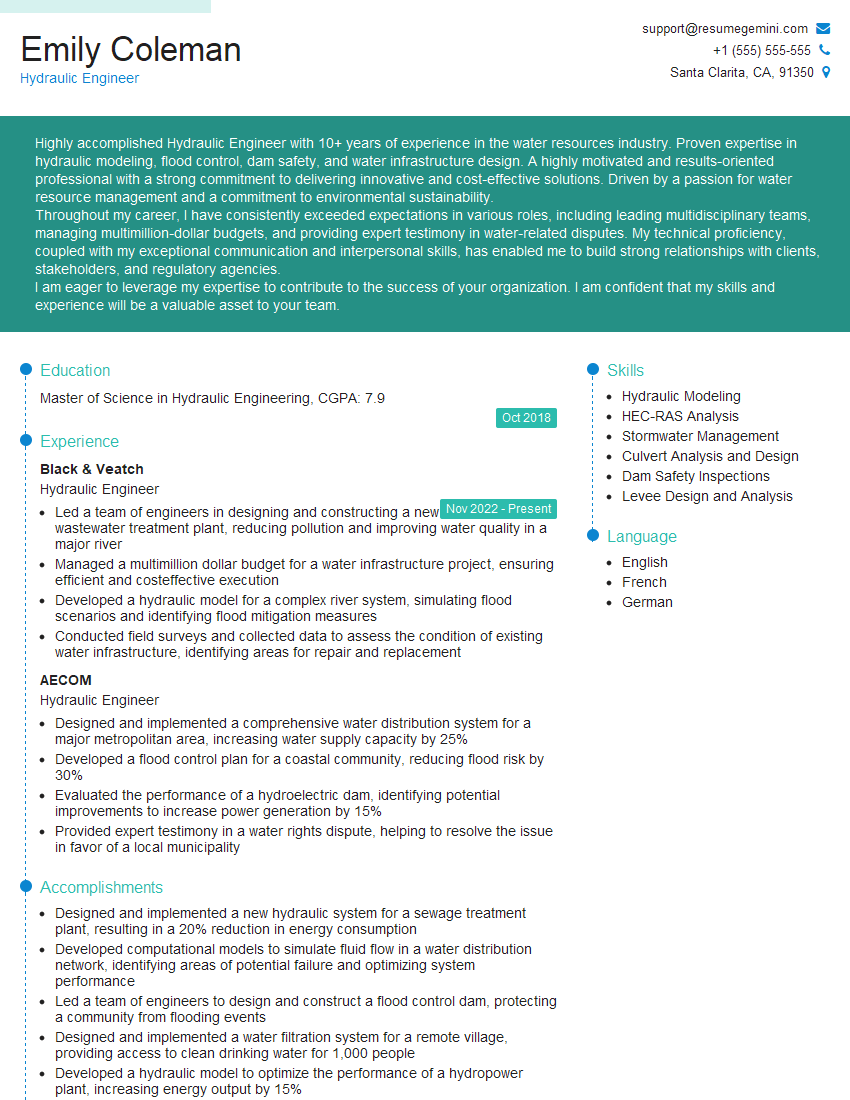
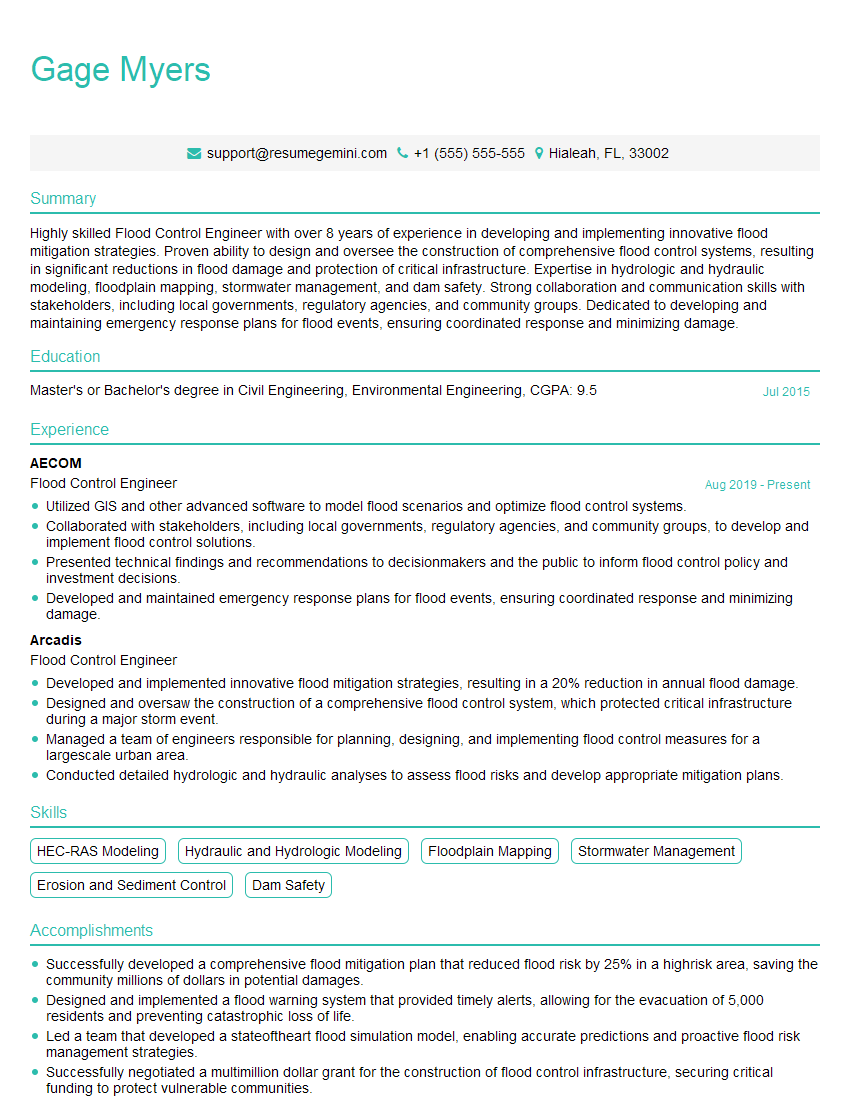
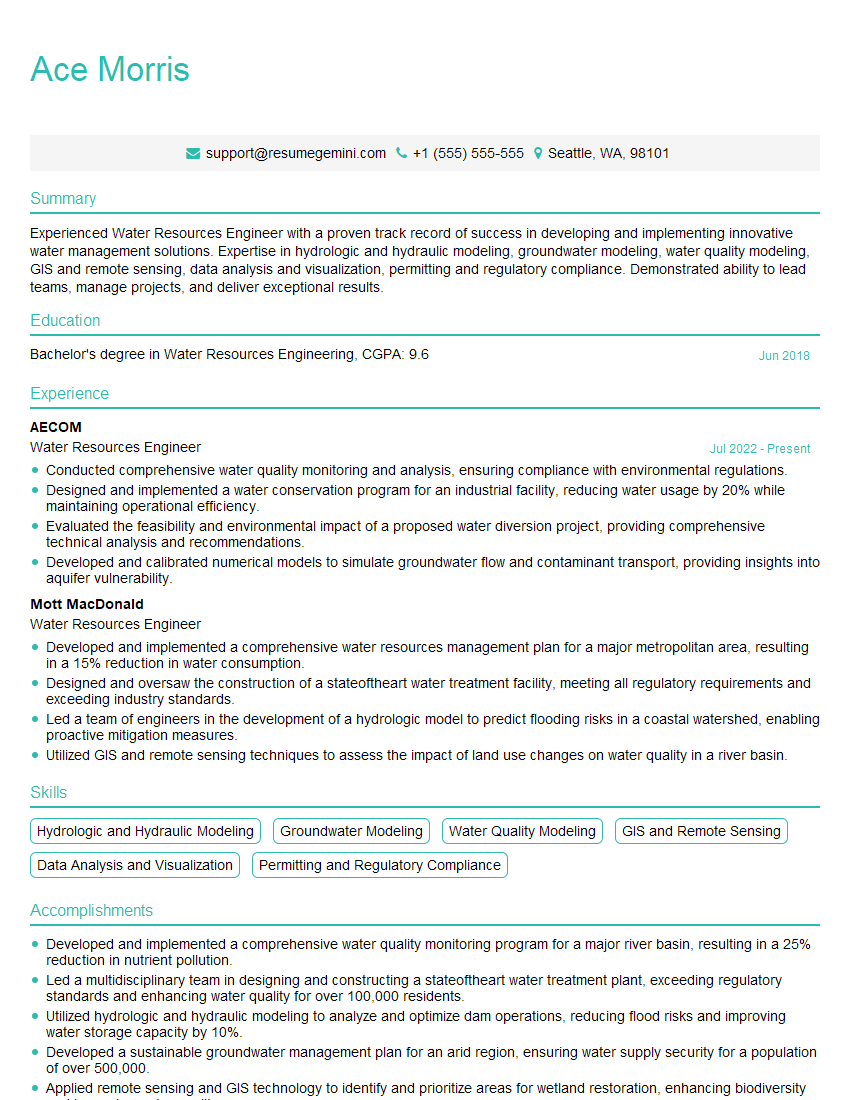
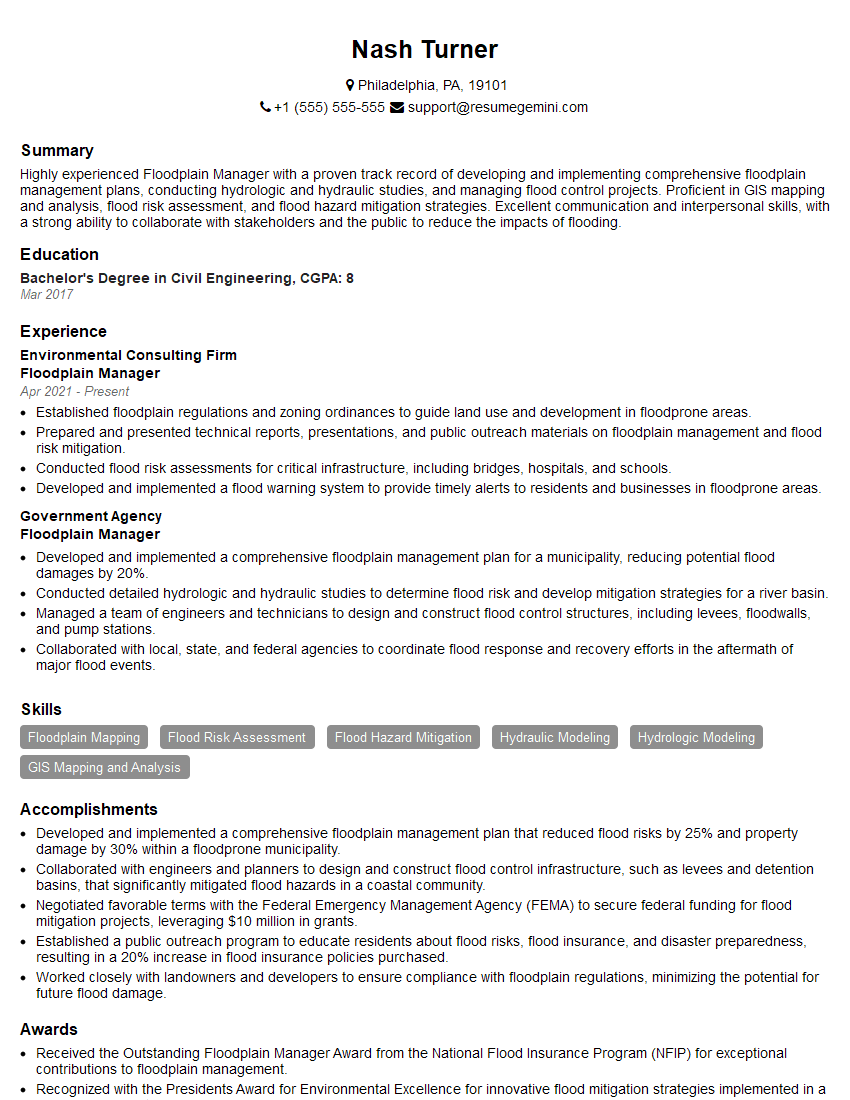
Mastering Flood Hazard Management opens doors to a rewarding career with significant societal impact. You’ll be contributing to the safety and well-being of communities by developing and implementing crucial strategies to protect against devastating floods. To maximize your job prospects, creating an ATS-friendly resume is essential. This ensures your qualifications are effectively communicated to potential employers. We highly recommend using ResumeGemini to build a professional and impactful resume. ResumeGemini provides a streamlined process and offers examples of resumes tailored to the Flood Hazard Management field to help guide you.
Explore more articles
Users Rating of Our Blogs
Share Your Experience
We value your feedback! Please rate our content and share your thoughts (optional).
What Readers Say About Our Blog
I Redesigned Spongebob Squarepants and his main characters of my artwork.
https://www.deviantart.com/reimaginesponge/art/Redesigned-Spongebob-characters-1223583608
IT gave me an insight and words to use and be able to think of examples
Hi, I’m Jay, we have a few potential clients that are interested in your services, thought you might be a good fit. I’d love to talk about the details, when do you have time to talk?
Best,
Jay
Founder | CEO