Interviews are opportunities to demonstrate your expertise, and this guide is here to help you shine. Explore the essential Knowledge of Heavy Equipment Operations interview questions that employers frequently ask, paired with strategies for crafting responses that set you apart from the competition.
Questions Asked in Knowledge of Heavy Equipment Operations Interview
Q 1. Describe your experience operating excavators.
My experience with excavators spans over 10 years, encompassing various models and applications. I’ve operated everything from compact excavators for intricate trenching work in urban settings to larger hydraulic excavators used in large-scale earthmoving projects like road construction and land clearing. I’m proficient in operating both conventional and long-reach excavators, adjusting my technique to suit the job’s specifics, such as soil conditions, project scope, and safety regulations.
For example, on a recent project involving the installation of underground utilities, I utilized a compact excavator’s precision to carefully excavate trenches while minimizing disruption to surrounding infrastructure. On a different project, I used a larger excavator to efficiently load trucks with excavated materials, prioritizing speed and minimizing machine downtime. I am comfortable using various excavator attachments, including buckets, rippers, and hydraulic hammers, to complete a wide range of tasks effectively.
Q 2. Explain the pre-operational checks you perform on a bulldozer.
Pre-operational checks on a bulldozer are crucial for safety and efficient operation. Think of it as a thorough medical check-up before starting a big project! My routine is systematic and covers the following:
- Visual Inspection: I check for any visible damage to the tracks, undercarriage, blade, and ripper. I look for leaks, loose bolts, or any signs of wear and tear.
- Fluid Levels: Checking engine oil, hydraulic fluid, coolant, and fuel levels is vital. Low levels indicate potential problems and need immediate attention.
- Tire Pressure (if applicable): Ensuring correct tire pressure is essential for optimal performance and safety, especially on uneven terrain.
- Operational Systems: I test the steering, blade controls, and throttle response, making sure all functions operate smoothly and correctly.
- Safety Systems: I verify that the horn, lights, and safety alarms are functional. This is non-negotiable for safety.
- Brakes: A thorough check of the braking system is crucial; it ensures effective stopping power.
If any anomaly is found, I immediately report it to my supervisor and refuse operation until the issue is addressed. It’s better to be safe than sorry!
Q 3. What are the safety protocols for operating a crane?
Crane safety is paramount. It involves a strict adherence to procedures and a deep understanding of the equipment’s limitations. Key protocols include:
- Pre-Operational Checks: Similar to the bulldozer, a thorough inspection of the crane’s structure, cables, hooks, and load-bearing capacity is essential before each use.
- Load Capacity: Never exceed the crane’s rated load capacity. This is crucial to prevent accidents. Load charts must be consulted for every lift.
- Proper Signaling: Effective communication between the crane operator and the signal person is critical, especially during lifts and movements.
- Wind Conditions: High winds significantly impact crane stability and should be carefully monitored. Lifting operations should be suspended under hazardous conditions.
- Safe Working Load (SWL): Always refer to the SWL stated on load charts and never exceed it. This is a non-negotiable safety guideline.
- Proper Rigging and Slinging: Correct usage of slings, shackles, and other rigging equipment is critical to prevent load slippage or equipment failure.
- Exclusion Zones: Establishing and maintaining exclusion zones around the crane’s operational area is vital to keep personnel safe from falling objects or swinging loads.
I am a certified crane operator, and I always prioritize safety above all else.
Q 4. How do you handle equipment malfunctions in the field?
Equipment malfunctions in the field are a reality. My approach is systematic and prioritizes safety:
- Immediate Shutdown: If a malfunction occurs, I immediately shut down the equipment and assess the situation, ensuring my safety and the safety of others in the vicinity.
- Safety First: I secure the area to prevent any accidents and inform my supervisor and any relevant personnel about the issue.
- Troubleshooting (if safe and trained to do so): Depending on the nature of the malfunction and my level of expertise, I might try basic troubleshooting steps, like checking fluid levels or loose connections. However, I will only attempt repairs within my capabilities and training.
- Professional Assistance: For complex issues, I always seek help from qualified mechanics or technicians. Attempting to fix something beyond my expertise is incredibly dangerous.
- Documentation: I meticulously document the malfunction, my actions, and any repairs or maintenance performed.
A recent example involved a hydraulic leak in an excavator. I shut down the machine, reported the issue immediately, and the maintenance team quickly repaired it.
Q 5. Describe your experience with different types of loaders.
My experience encompasses various loaders, including wheel loaders, skid steer loaders, and telehandlers. Each type has its unique applications and operational characteristics:
- Wheel Loaders: I’m proficient in using wheel loaders for tasks such as loading trucks, moving materials across large areas, and general earthmoving. The larger size allows for higher throughput.
- Skid Steer Loaders: These are ideal for confined spaces and precise work, thanks to their compact size and maneuverability. I’ve utilized them for tasks such as landscaping, trench backfilling, and smaller-scale construction projects.
- Telehandlers: Their ability to lift and place materials at significant heights makes them crucial in tasks such as placing roofing materials, erecting structures, and working on multi-storied buildings. Safety procedures are especially important here.
I adapt my operating techniques to the specific loader type and the demands of the job site.
Q 6. Explain your understanding of load capacity and stability.
Understanding load capacity and stability is critical for safety and operational efficiency. Load capacity refers to the maximum weight a piece of equipment can safely lift or carry, while stability involves ensuring the equipment remains balanced and won’t tip over. Several factors impact both:
- Weight Distribution: Uneven weight distribution can significantly reduce stability and increase the risk of tipping. The load’s center of gravity must be carefully considered.
- Ground Conditions: Soft or unstable ground reduces stability, especially for heavier loads. The operator must consider the soil type and make adjustments as needed.
- Terrain: Slopes and uneven terrain significantly affect stability and must be carefully navigated.
- Load Center: The position of the load’s center of gravity relative to the machine’s center of gravity impacts both load capacity and stability.
For example, when operating a crane, I always consult the load chart to determine the appropriate lifting capacity for a given radius and avoid exceeding the maximum permitted load. I also carefully assess the ground conditions and adjust my lifting technique accordingly to maintain stability.
Q 7. How do you maintain a clean and organized work area?
Maintaining a clean and organized work area is not just about aesthetics; it’s crucial for safety and efficiency. My approach includes:
- Regular Cleanup: I routinely clear debris, materials, and waste from the work area to prevent accidents and ensure safe movement of equipment and personnel.
- Designated Storage: I utilize designated storage areas for materials and equipment to minimize clutter and improve organization.
- Equipment Maintenance: I keep my assigned equipment clean and well-maintained, which reduces the risk of malfunctions and extends the equipment’s lifespan.
- Proper Fueling and Refueling Procedures: Following safe procedures for handling fuels and lubricants helps prevent spills and potential hazards.
- End-of-Day Cleanup: At the end of each workday, I thoroughly clean the work area and leave it in a safe and organized condition.
A clean and orderly worksite prevents accidents, facilitates efficient workflow, and contributes to a professional image.
Q 8. What are the different types of hydraulic systems used in heavy equipment?
Heavy equipment relies heavily on hydraulic systems to generate powerful and controlled movements. There are several types, each with its own advantages and applications. The most common are:
- Open-center hydraulic systems: These are the most basic and widely used. The pump constantly delivers hydraulic fluid to a reservoir, and the flow is directed to the actuators (like cylinders or motors) only when needed. Think of it like a water hose – the water is always on, but you control the flow by turning the nozzle.
- Closed-center hydraulic systems: In this type, the pump supplies fluid to a closed system of valves and actuators. The flow is precisely regulated by the valves, providing more precise control and potentially higher efficiency. It’s like having a valve on the water hose, allowing for precise control over the water flow.
- Load-sensing hydraulic systems: These intelligent systems only generate the hydraulic power needed for the specific load. This saves energy and reduces wear on components. It’s like a smart water hose that only uses the pressure needed to water the plant, adapting to its size and water requirements.
- Electro-hydraulic systems: These systems integrate electronic controls into the hydraulic system, enabling precise, automated movements and improved efficiency. Think of a robotic arm on a factory assembly line; the precise movements are governed by an electronic control system interacting with hydraulic actuators.
The choice of system depends on the specific application; open-center systems are simpler and cheaper but less efficient, while closed-center and load-sensing systems offer better control and efficiency but are more complex and expensive.
Q 9. Describe your experience with GPS-guided equipment.
I’ve extensive experience operating GPS-guided excavators and bulldozers on large-scale construction projects. This involves using systems like machine control systems that provide real-time positioning data and guidance overlays. These systems dramatically improve accuracy and efficiency, minimizing the need for rework and reducing material waste. For instance, I was involved in a project where we were tasked with precisely excavating trenches for pipeline installation. Using the GPS-guided excavator, we achieved an accuracy of within a few centimeters of the design specifications, a feat nearly impossible without such technology. It saved significant time and reduced the material needed for the project. My experience also includes working with various GPS-based software applications used for site surveying, planning, and data analysis, which allows for better coordination across multiple pieces of equipment and teams.
Q 10. How do you ensure the safety of yourself and others on a job site?
Safety is my paramount concern on any job site. My safety protocols start with a thorough pre-operation inspection of the equipment, checking fluid levels, tire pressure, and the overall condition of the machine. I always ensure I have the proper personal protective equipment (PPE), including hard hats, safety glasses, high-visibility vests, and steel-toed boots. Before starting any operation, I carefully assess the work area, identifying potential hazards like overhead power lines, unstable ground, and other equipment or personnel. I communicate clearly with other workers using hand signals and radio communication, establishing clear boundaries and safety zones. Furthermore, I strictly adhere to all site-specific safety rules and regulations. I’ve also had training in emergency procedures, and I make sure all team members are aware of these procedures and how to use emergency equipment.
Q 11. What are the common causes of heavy equipment breakdowns?
Heavy equipment breakdowns are usually caused by a combination of factors, but some common culprits include:
- Lack of preventative maintenance: Neglecting scheduled maintenance leads to component wear and tear, ultimately resulting in breakdowns. Think of it like skipping oil changes in your car – eventually, the engine will suffer.
- Operator error: Improper operation, overloading the equipment, or ignoring warning signs can cause damage and premature failure. This emphasizes the importance of proper training and adherence to operational guidelines.
- Environmental factors: Extreme temperatures, dust, and moisture can accelerate wear and damage components. Operating in harsh conditions necessitates more frequent maintenance and careful monitoring.
- Hydraulic system failures: Leaks, contamination, and component failures in the hydraulic system are common reasons for downtime. Regular fluid checks and filter changes help prevent these issues.
- Engine problems: Issues such as fuel system malfunctions, worn-out parts, or improper lubrication can lead to engine failure.
Regular inspections, proper operation, and a robust preventative maintenance schedule are essential to minimize breakdowns.
Q 12. How do you troubleshoot engine problems?
Troubleshooting engine problems involves a systematic approach. It starts with gathering information – what symptoms are present? Is the engine difficult to start? Is it overheating? Is there unusual smoke? Once I have this information, I will typically begin with a visual inspection, checking fluid levels (oil, coolant, fuel), looking for leaks, and inspecting belts and hoses. I’ll then utilize diagnostic tools, such as engine diagnostic software, to identify any error codes or malfunctioning sensors. Depending on the findings, I may need to check fuel pressure, compression, or ignition systems. Each step requires a deep understanding of the engine’s operational principles and the associated troubleshooting procedures. For example, if the engine is overheating, I might check the coolant level, the radiator for clogs, the thermostat, and the water pump. If it’s a fuel issue, I may check the fuel filter, injectors, and fuel pump. Finally, I always document my findings and the steps I take for future reference.
Q 13. What are the different types of earthmoving equipment?
Earthmoving equipment is a broad category, encompassing a variety of machines designed for excavating, moving, and shaping earth. Key types include:
- Excavators: Used for digging and lifting materials. They come in various sizes and configurations, from small mini-excavators to massive crawler excavators.
- Bulldozers: Powerful machines with a large blade used for pushing and moving large quantities of earth.
- Loaders (wheel loaders and backhoes): Wheel loaders use a bucket to load and move materials, while backhoes have a bucket at the front and a digging arm at the rear.
- Scrapers: Used for efficiently moving large volumes of earth over long distances.
- Graders: Used for fine grading and leveling surfaces.
- Dump trucks: Transport excavated materials to other locations on the site.
The choice of equipment depends on the specific job requirements, such as the type of soil, the volume of material to be moved, and the distance of transportation.
Q 14. Describe your experience with preventative maintenance schedules.
Preventative maintenance is crucial for keeping heavy equipment operational and safe. I have experience creating and adhering to rigorous maintenance schedules based on manufacturer recommendations and site-specific conditions. This usually involves daily inspections, weekly checks, and monthly or quarterly services. Daily checks might involve fluid level checks, greasing, and a visual inspection for any damage or leaks. Weekly inspections may include more thorough checks of components that see more wear and tear. Monthly or quarterly services usually include more in-depth work, such as filter replacements, lubrication, and more specific component checks and adjustments. I maintain detailed records of all maintenance activities, including dates, services performed, and any necessary repairs. This data is essential for optimizing maintenance schedules, identifying potential problems early on, and ensuring compliance with safety regulations. A well-maintained machine reduces downtime and keeps operation costs to a minimum, increasing efficiency and extending the equipment’s lifespan. I see preventative maintenance as a proactive investment that pays off handsomely in the long run.
Q 15. How do you interpret blueprints and site plans?
Interpreting blueprints and site plans is fundamental to safe and efficient heavy equipment operation. It’s like reading a map for a construction site. I begin by understanding the overall project scope, noting key features such as building locations, utility lines, and existing structures. Then, I meticulously examine the details:
- Scales and Dimensions: I verify the scale of the drawing and accurately measure distances and elevations using the provided scale. For example, a 1:100 scale means 1cm on the plan represents 1 meter on the ground.
- Contour Lines: These lines show changes in elevation, crucial for planning excavation and grading work. I use them to identify potential areas of instability or drainage issues.
- Symbols and Legends: I carefully study the legend to understand the meaning of different symbols, such as those representing utilities (water, sewer, gas, electricity), existing foundations, and proposed excavations. Misinterpreting these symbols can have serious consequences.
- Cut and Fill: I analyze areas designated for cut (excavation) and fill (adding soil). This helps determine the volume of earth to be moved and the best approach for efficient site preparation.
- Setbacks and Clearances: I pay close attention to required setbacks from property lines, existing buildings, and utilities. Safety is paramount, and adherence to these clearances is non-negotiable.
I always cross-reference the plan with site conditions on the ground to ensure accuracy and account for any unforeseen circumstances.
Career Expert Tips:
- Ace those interviews! Prepare effectively by reviewing the Top 50 Most Common Interview Questions on ResumeGemini.
- Navigate your job search with confidence! Explore a wide range of Career Tips on ResumeGemini. Learn about common challenges and recommendations to overcome them.
- Craft the perfect resume! Master the Art of Resume Writing with ResumeGemini’s guide. Showcase your unique qualifications and achievements effectively.
- Don’t miss out on holiday savings! Build your dream resume with ResumeGemini’s ATS optimized templates.
Q 16. What is your experience with different types of soil conditions?
My experience encompasses a wide range of soil conditions, each requiring a different approach to excavation and construction. Think of it like cooking – each ingredient requires specific handling.
- Clay Soils: These are cohesive and can be difficult to excavate, particularly when wet. They can also be prone to slumping, requiring careful attention to shoring and slope stability.
- Sandy Soils: These soils are free-draining and relatively easy to excavate. However, they can be unstable, especially when saturated with water. Proper compaction is crucial after excavation.
- Silty Soils: Silty soils can be unstable when wet, exhibiting characteristics of both clay and sand. They require careful assessment of their bearing capacity before construction.
- Rocky Soils: Excavation in rocky areas requires specialized equipment like rock breakers and rippers. Safety precautions are crucial to prevent damage to equipment and injury to personnel.
- Organic Soils: These soils, often composed of decaying vegetation, can be highly compressible and unstable. They require careful engineering analysis and specific excavation techniques.
I use soil testing reports and on-site assessments to determine the specific soil type and adjust my excavation methods accordingly. This ensures safe and efficient operations while minimizing risks.
Q 17. Explain your understanding of different types of excavation techniques.
Excavation techniques vary greatly depending on factors like soil conditions, depth, proximity to structures, and project requirements.
- Trenching: This involves digging long, narrow ditches, typically for utility lines. I carefully consider shoring and sloping requirements to prevent collapse, especially in unstable soil conditions.
- Mass Excavation: This is used for large-scale projects like building foundations or road construction. Appropriate equipment selection, such as excavators and bulldozers, is crucial for efficient removal of large quantities of earth.
- Selective Excavation: This involves carefully removing specific sections of soil, preserving other areas. This precision is often required near existing structures or utilities to prevent damage.
- Topsoil Stripping: Before major excavation, removing the topsoil separately allows its later reuse for landscaping or other purposes. This method is environmentally friendly and can save costs.
- Blasting: In very rocky areas, controlled blasting might be necessary to break up large rock formations. This requires specialized expertise and strict adherence to safety regulations.
Choosing the right technique is critical for safety, efficiency, and cost-effectiveness. I always prioritize a method that minimizes environmental impact and maximizes worker safety.
Q 18. How do you maintain equipment logs and records?
Maintaining accurate equipment logs and records is critical for ensuring equipment longevity and regulatory compliance. It’s like keeping a detailed health record for each machine. My system includes:
- Daily Inspection Reports: These detail the pre-operational checks performed, noting any issues or required maintenance. This includes fluid levels, tire pressure, and overall mechanical condition.
- Maintenance Logs: These record all scheduled and unscheduled maintenance, repairs, and parts replacements. This allows tracking of maintenance costs and predicting potential future needs.
- Operational Hours Tracking: I meticulously record the operating hours of each machine. This data is crucial for scheduling preventative maintenance based on manufacturer recommendations.
- Fuel Consumption Records: Tracking fuel usage helps identify potential issues like leaks or inefficient operation. It also aids in budgeting and cost control.
- Repair and Parts Inventory: Detailed records of repairs, including the nature of the problem, parts used, and labor costs, are maintained for future reference.
I use both digital and paper-based systems, ensuring data redundancy and easy access for review by myself and supervisors. This detailed record-keeping enables efficient management and extends the operational life of the equipment.
Q 19. Describe your experience working with various attachments for excavators or loaders.
My experience extends to a wide variety of attachments for excavators and loaders, making each machine adaptable to many tasks. It’s like having a versatile toolbox.
- Buckets: These are the most common attachments, used for digging, loading, and transporting materials. Different bucket sizes and types (e.g., ditch cleaning buckets, rock buckets) exist to suit various tasks and soil conditions.
- Hydraulic Breakers: These powerful attachments are used for breaking up rock and concrete. Their effective use requires understanding the machine’s capabilities and the structural integrity of the material being broken.
- Rippers: These are used to loosen compacted soil and rock, making excavation easier. They’re particularly useful in hard-packed earth or rocky terrain.
- Grapples: These are used for handling various materials, including scrap metal, logs, or demolition debris. Different grapple designs exist to fit different materials.
- Augers: These are used for drilling holes, often for placing utility poles or pilings. They come in various diameters and lengths, depending on the job’s needs.
I’m proficient in selecting and operating the appropriate attachments for each task, ensuring safety and efficiency. This versatility allows me to handle a wider range of projects.
Q 20. Explain your understanding of regulatory compliance regarding heavy equipment operation.
Regulatory compliance is crucial in heavy equipment operation. It’s about ensuring safety and minimizing environmental impact. My understanding covers several key areas:
- OSHA Regulations: I’m well-versed in Occupational Safety and Health Administration regulations, including those concerning personal protective equipment (PPE), fall protection, lockout/tagout procedures, and safe operating procedures for various types of equipment.
- Environmental Regulations: I’m familiar with environmental regulations regarding soil erosion control, waste disposal, and the handling of hazardous materials. This includes proper cleanup and minimizing environmental impact.
- Local and State Regulations: I understand and comply with all local and state regulations regarding permits, licensing, and traffic control.
- Vehicle and Equipment Maintenance: I am responsible for maintaining the equipment in compliance with manufacturer’s recommendations and ensuring regular inspections and maintenance checks are completed.
- Site-Specific Requirements: I adapt my understanding of regulations to each site’s specific requirements and make sure all safety measures are properly implemented.
I prioritize safety and compliance above all else, understanding that any lapse can have serious consequences.
Q 21. How do you prioritize tasks when working on multiple projects simultaneously?
Prioritizing tasks when working on multiple projects is a skill honed through experience. It’s like conducting an orchestra – each instrument needs attention, but some are more urgent than others. I use a structured approach:
- Project Timeline Review: I carefully review the timelines for all projects, identifying deadlines and critical milestones.
- Resource Allocation: I assess the availability of equipment, personnel, and materials for each project.
- Dependency Analysis: I determine the interdependencies between tasks. Some tasks must be completed before others can begin.
- Risk Assessment: I identify potential risks and delays for each project. This helps in prioritization, focusing on tasks with the highest risk of failure.
- Communication and Collaboration: Open communication with supervisors and colleagues is crucial to ensure everyone is aware of priorities and potential issues.
I use project management tools like checklists and scheduling software to track progress and adapt to changing priorities. Flexibility and efficient communication are key to managing multiple projects successfully.
Q 22. What is your experience with working at heights or confined spaces?
Throughout my career, I’ve consistently worked in environments requiring adherence to strict safety protocols for working at heights and in confined spaces. This includes extensive training and practical experience with fall protection systems like harnesses, lanyards, and safety nets. In confined spaces, I’m proficient in using atmospheric monitoring equipment to ensure a safe oxygen level and the absence of hazardous gases before entry. For example, while operating a crane to lift materials to the upper floors of a high-rise building, I always ensured my harness was properly secured and inspected, and the crane’s load capacity was well within safe limits. Similarly, when working inside a trench for pipeline repairs, we employed an entry permit system, regular atmospheric testing, and a designated safety officer to monitor our work. I always prioritize safety, adhering to all relevant regulations and company policies.
Q 23. Describe your experience with operating equipment in adverse weather conditions.
Operating heavy equipment in adverse weather conditions demands extra vigilance and skill. My experience includes working in heavy rain, snow, high winds, and extreme temperatures. I understand the limitations of equipment in such conditions and adapt my operating techniques accordingly. For instance, in heavy rain, reduced visibility necessitates slower speeds and increased following distance. In snowy conditions, tire chains or alternative traction devices might be necessary, and careful maneuvering is crucial to prevent skidding or loss of control. Similarly, extreme temperatures can affect both the operator and the equipment; I’m experienced in managing these challenges by utilizing appropriate clothing, and implementing pre-operational checks for things such as fluid viscosity to ensure safe and efficient operation. Safety is paramount, and I prioritize work stoppage if conditions become unsafe.
Q 24. How do you communicate effectively with other team members and supervisors?
Effective communication is essential for safety and efficiency on any job site. I communicate clearly and concisely with team members and supervisors using a variety of methods depending on the situation. This ranges from using hand signals to ensure equipment coordination during lifts to daily briefings to keep everyone informed about the project’s progress and potential hazards. For complex issues, I opt for written documentation to ensure clarity and maintain a record of decisions and adjustments made. I believe in active listening and providing constructive feedback, ensuring that everyone feels heard and understood. For example, during a complex demolition project, I used a combination of hand signals, radio communication, and pre-job briefings to coordinate the movement of multiple excavators and cranes without any incidents. Open communication leads to a safer and more productive work environment.
Q 25. How do you handle difficult or stressful situations on the job site?
Handling stressful or difficult situations requires a calm and methodical approach. My strategy involves first assessing the situation, identifying the root cause of the problem, and then developing a solution. This might involve troubleshooting equipment malfunctions, addressing safety concerns, or managing conflicts within the team. I prioritize safety above all else, and in emergency situations, I follow established protocols and escalate to supervisors as needed. For example, I once encountered a critical equipment failure mid-project. Following safety protocols, I immediately secured the area, alerted the team, and then worked methodically to diagnose the problem, using available resources and my technical knowledge to restore functionality. A calm and organized approach helps to de-escalate stressful situations and effectively find solutions.
Q 26. Explain your understanding of different fuel types and their impact on equipment performance.
Different fuel types significantly impact equipment performance and maintenance. Diesel fuel is the most common type for heavy equipment and its quality directly affects engine efficiency and lifespan. Using low-quality diesel can lead to reduced power, increased emissions, and premature engine wear. Biodiesel, a renewable alternative, can offer environmental benefits but may require adjustments to the equipment and can have varying impacts on performance depending on its blend. Understanding the fuel specifications and their impact on engine performance, including fuel lubricity and cetane number, is critical for efficient and reliable equipment operation. Regular fuel system maintenance, including filtration, is essential to minimize fuel-related issues and prolong engine life. For example, using off-road diesel fuel with lower sulfur content reduces emissions and extends the life of the exhaust aftertreatment system.
Q 27. What is your experience with troubleshooting electrical issues in heavy equipment?
I have extensive experience in troubleshooting electrical issues in heavy equipment. This includes diagnosing problems with starting systems, lighting, electrical components, and control systems. I’m proficient in using multimeters, oscilloscopes, and other diagnostic tools to identify faults within the electrical circuits. My approach involves systematically checking wiring, connectors, fuses, and other components to pinpoint the source of the problem. Safety is paramount when working with electricity, so I always follow lockout/tagout procedures to prevent accidental electrical shocks. For example, I once successfully diagnosed and repaired a faulty wiring harness on a bulldozer, preventing costly downtime and ensuring the safety of the operating crew. I understand the importance of accurate diagnosis to prevent more extensive damage, and ensuring safe working practices when repairing electrical systems.
Q 28. Describe your experience with using specialized tools and equipment for maintenance and repair.
Proficient use of specialized tools and equipment is crucial for effective maintenance and repair. My experience encompasses the use of diagnostic software for computerized systems, hydraulic tools for system repair, welding equipment for structural repairs, and precision measuring instruments for component replacement. I am also familiar with specialized lifting and rigging equipment to safely move heavy components during repairs. Regular maintenance on these tools and keeping them in excellent working order ensures accuracy and safety during repairs. For example, when performing a major overhaul of an excavator’s hydraulic system, I expertly used specialized diagnostic tools to identify the failed components, and various hydraulic tools for disassembly, repair, and reassembly of the system, followed by thorough testing before re-commissioning the machine. Safety and precision are critical when using these specialized tools.
Key Topics to Learn for Your Knowledge of Heavy Equipment Operations Interview
Ace your interview by mastering these essential areas. Remember, demonstrating a blend of theoretical understanding and practical experience is key.
- Equipment Operation Principles: Understanding the mechanics, hydraulics, and operational procedures of various heavy equipment types (e.g., excavators, loaders, bulldozers, cranes).
- Safety Procedures and Regulations: Detailed knowledge of OSHA (or relevant regional) safety standards, pre-operation checks, and emergency procedures. Be ready to discuss practical examples of safe operation.
- Maintenance and Troubleshooting: Explain your familiarity with routine maintenance tasks, preventative measures, and basic troubleshooting skills for common equipment malfunctions.
- Site Awareness and Jobsite Safety: Demonstrate understanding of site layout, potential hazards, and effective communication with other personnel on a job site.
- GPS and Technology Integration: Discuss experience with GPS-guided equipment, machine control systems, and relevant software applications.
- Environmental Considerations: Show your awareness of environmentally responsible practices in heavy equipment operation, including fuel efficiency and waste management.
- Production and Efficiency: Explain how you optimize operations for maximum productivity while adhering to safety regulations and deadlines.
Next Steps: Build Your Winning Career
Mastering the knowledge of heavy equipment operations is crucial for career advancement in this in-demand field. A strong resume is your first step towards securing your dream job. Make sure your resume is ATS-friendly to maximize its visibility to potential employers. ResumeGemini can help you create a professional, impactful resume that highlights your skills and experience effectively. We provide examples of resumes tailored to Knowledge of Heavy Equipment Operations to guide you in creating your own standout application.

Operating Engineer Resume Sample

Crane Operator Resume Sample
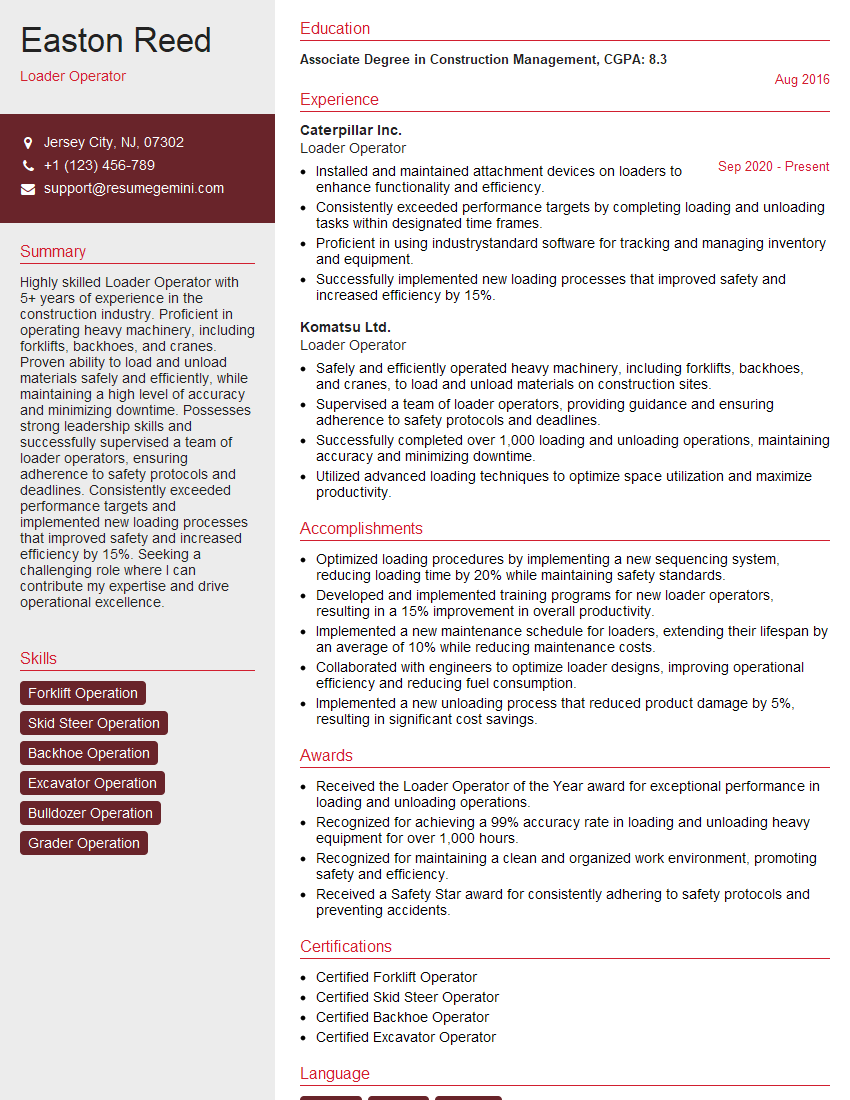
Loader Operator Resume Sample

Heavy Equipment Operator Resume Sample

Backhoe Operator Resume Sample

Bulldozer Operator Resume Sample

Excavator Operator Resume Sample
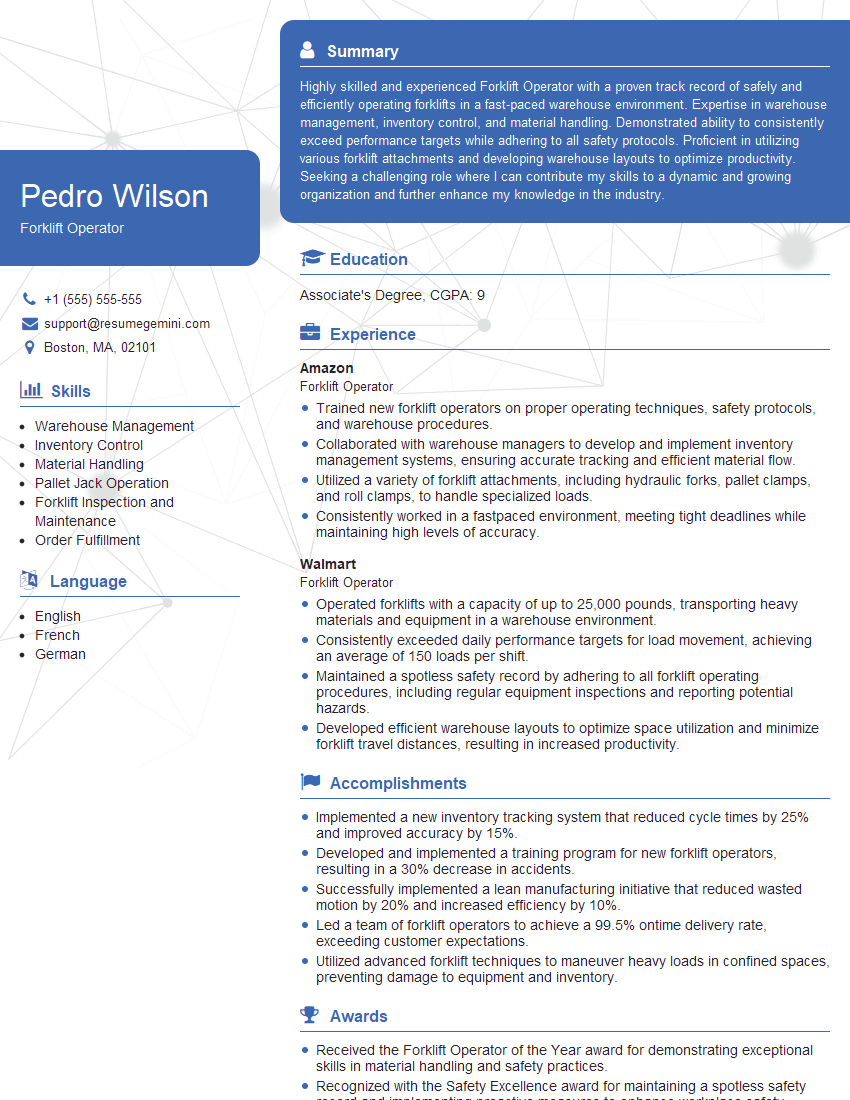
Forklift Operator Resume Sample

Grader Operator Resume Sample

Rigger Resume Sample
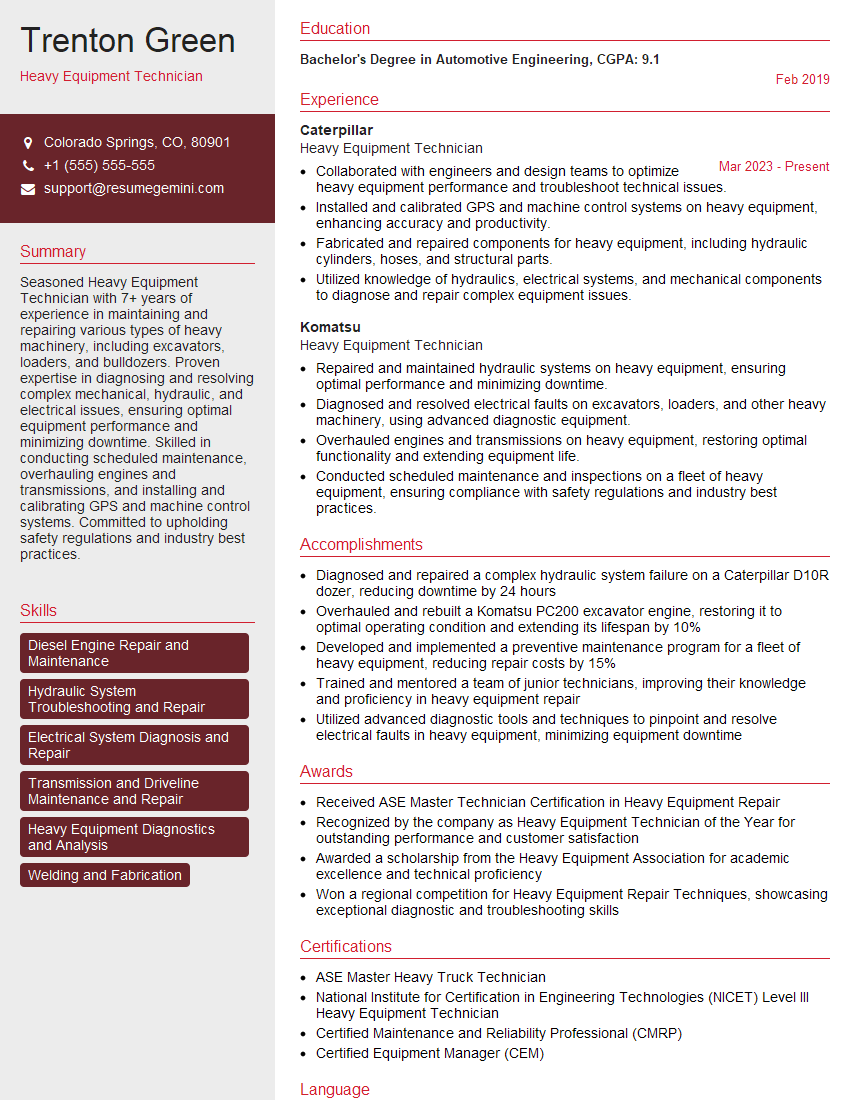
Heavy Equipment Technician Resume Sample

Construction Equipment Mechanic Resume Sample
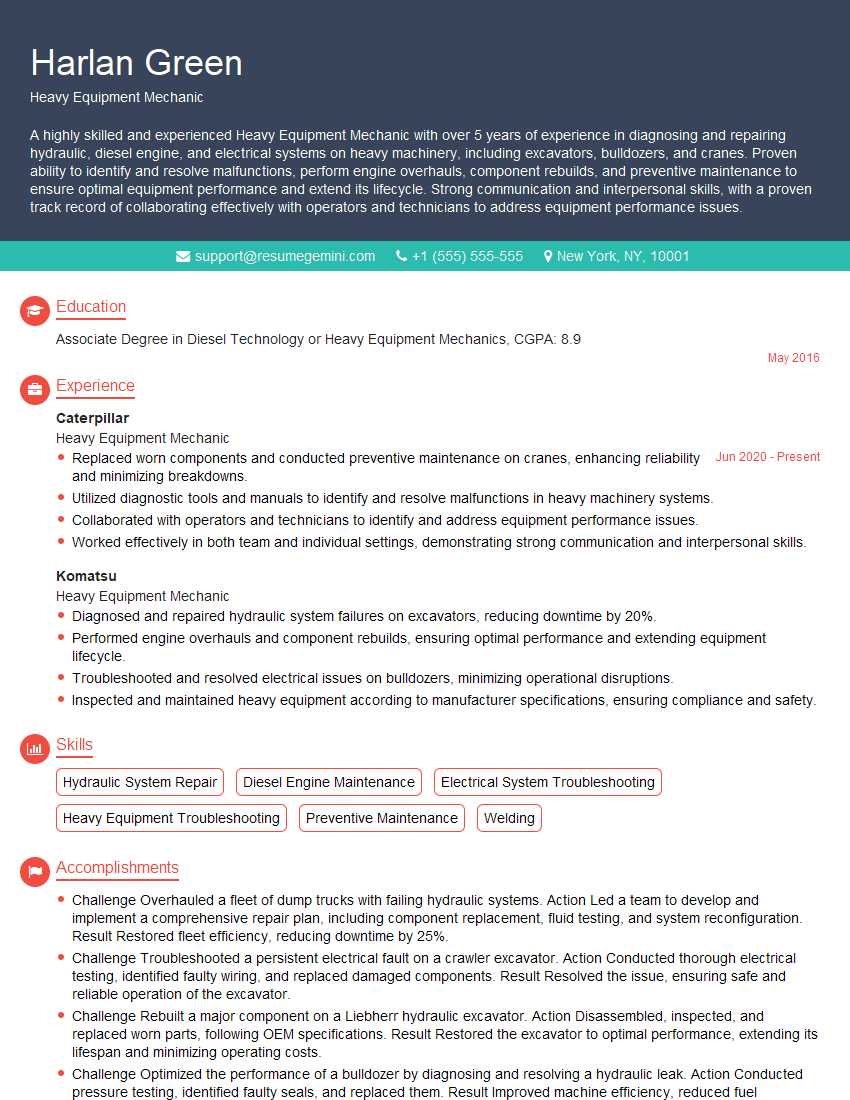
Heavy Equipment Mechanic Resume Sample
Explore more articles
Users Rating of Our Blogs
Share Your Experience
We value your feedback! Please rate our content and share your thoughts (optional).
What Readers Say About Our Blog
Really detailed insights and content, thank you for writing this detailed article.
IT gave me an insight and words to use and be able to think of examples