Cracking a skill-specific interview, like one for Instructional Leadership and Vision, requires understanding the nuances of the role. In this blog, we present the questions you’re most likely to encounter, along with insights into how to answer them effectively. Let’s ensure you’re ready to make a strong impression.
Questions Asked in Instructional Leadership and Vision Interview
Q 1. Describe your experience in developing and implementing a school-wide instructional improvement plan.
Developing and implementing a school-wide instructional improvement plan requires a systematic approach, focusing on identifying areas for growth, creating a shared vision, and fostering collaborative action. I begin by analyzing student achievement data, teacher feedback, and observations to pinpoint specific areas needing improvement. This might reveal, for example, a consistent underperformance in a specific subject area or a lack of consistency in implementing a particular pedagogical approach across grade levels.
Next, I collaboratively develop a plan with stakeholders – teachers, administrators, support staff, and even parents – outlining specific, measurable, achievable, relevant, and time-bound (SMART) goals. For instance, a goal might be to improve student performance in mathematics by 15% within one year. The plan includes strategies like professional development focused on evidence-based teaching practices, new curriculum materials, or improved assessment techniques. Implementation involves regular monitoring, data analysis, and adjustments as needed, using a cyclical improvement model like Plan-Do-Check-Act (PDCA).
In a previous role, we identified a significant gap in students’ writing skills. Our improvement plan included providing teachers with professional development on the writing process, implementing a new writing curriculum aligned to state standards, and establishing a school-wide writing rubric for consistent assessment. We monitored progress through regular assessments and adjusted our strategies based on the data collected. This resulted in a measurable improvement in student writing scores within a year.
Q 2. How would you assess the effectiveness of a new curriculum initiative?
Assessing the effectiveness of a new curriculum initiative requires a multifaceted approach that goes beyond simply looking at test scores. It involves gathering data from multiple sources to obtain a holistic picture of its impact. I would employ a mixed-methods approach, combining quantitative and qualitative data.
Quantitative data might include standardized test scores, classroom assessments, and student performance on specific learning objectives. This data provides a numerical measure of student learning gains. Qualitative data would be gathered through teacher feedback surveys, student focus groups, and classroom observations. This offers valuable insights into the effectiveness of the curriculum’s implementation, teacher experiences, and student engagement.
For example, if implementing a new literacy curriculum, I would compare pre- and post-intervention test scores in reading comprehension. I would also conduct classroom observations to assess student engagement and teacher implementation fidelity. Finally, I’d gather teacher and student feedback on the curriculum’s strengths and weaknesses. By analyzing this data, a comprehensive picture of the curriculum’s effectiveness emerges, allowing for informed decisions about its continued use or modification.
Q 3. Explain your approach to fostering collaboration among teachers to improve instruction.
Fostering collaboration among teachers is crucial for improving instruction. My approach involves creating a culture of trust, shared responsibility, and mutual respect. I believe in building a strong professional learning community (PLC) where teachers feel safe to share ideas, ask questions, and learn from one another.
I facilitate collaborative activities, such as lesson study, peer observation with feedback, and co-teaching opportunities. Lesson study, for example, involves teachers collaboratively planning, teaching, observing, and reflecting on a lesson. This process encourages teachers to analyze their teaching practices, share best practices, and improve instruction together. I also provide time during the school day specifically dedicated to collaborative planning and reflection.
Furthermore, I encourage the use of technology to facilitate collaboration. Platforms like Google Classroom or shared online documents allow teachers to easily share resources, communicate, and collaborate on projects. I also utilize professional development to equip teachers with the skills and strategies needed to effectively collaborate.
Q 4. How do you identify and address teacher performance gaps impacting student learning?
Identifying and addressing teacher performance gaps is a sensitive yet crucial aspect of instructional leadership. It starts with a proactive approach involving regular observation, feedback, and ongoing professional development. I use a variety of methods, including classroom observations using a structured observation protocol, analysis of student achievement data, and teacher self-reflection.
Classroom observations allow me to see teaching practices firsthand, while student achievement data highlights areas where students are struggling. By comparing these two sets of data, potential performance gaps become apparent. For instance, if a teacher consistently uses ineffective strategies (e.g., lecturing without interactive elements) and their students show low performance in a specific skill, this highlights an area needing attention. I would then schedule a private meeting with the teacher to collaboratively discuss the observations and data, focusing on solutions and support.
Teacher self-reflection is equally important. Providing opportunities for teachers to reflect on their practice, through journaling, peer observation, or professional learning communities, can foster self-awareness and identification of areas for improvement. Support might include mentoring, coaching, or targeted professional development aligned to identified needs. The process always emphasizes improvement and growth, not punishment.
Q 5. Describe your experience with data-driven decision-making in instructional leadership.
Data-driven decision-making is central to my approach to instructional leadership. I believe that using data to inform instructional practices leads to more effective and equitable outcomes for all students. This involves systematically collecting, analyzing, and interpreting data to identify trends, pinpoint areas for improvement, and measure the impact of interventions.
This process begins with identifying key indicators of student success, such as standardized test scores, classroom assessments, and attendance rates. Data is then analyzed to identify patterns and trends, allowing for a deeper understanding of student learning. For example, if we observe consistently low performance in a specific subject area for a particular student group, we can investigate the root causes and implement targeted interventions. This might involve adjusting curriculum, providing differentiated instruction, or offering supplemental support services.
In a previous role, we used student achievement data to identify a significant gap in reading comprehension among our English language learners. This data-driven approach led us to implement a new English language development program, resulting in measurable improvement in their reading scores within one academic year.
Q 6. How do you build consensus among stakeholders regarding instructional goals?
Building consensus among stakeholders regarding instructional goals requires open communication, collaboration, and a shared understanding of the school’s vision. I facilitate meetings and discussions where all stakeholders – teachers, administrators, parents, community members, and students – have a voice. I use collaborative techniques, such as brainstorming, surveys, and feedback sessions, to gather input and ensure everyone feels heard.
It’s crucial to establish a clear articulation of the school’s overall vision for student learning and how the instructional goals support this vision. This might involve creating a visual representation of the school’s vision, outlining how instructional goals connect to broader school-wide objectives, and ensuring alignment with district and state standards.
For example, when developing a new school-wide literacy initiative, I organized a series of meetings with teachers, parents, and administrators to discuss the importance of literacy, review the proposed goals, and gather feedback. This collaborative process ensured a shared understanding of the initiative’s purpose and fostered buy-in from all stakeholders. The result was a more effective implementation of the program and greater support for its success.
Q 7. What strategies do you employ to create a positive school culture that supports effective teaching and learning?
Creating a positive school culture that supports effective teaching and learning requires fostering a sense of community, belonging, and shared purpose. This involves building strong relationships, promoting open communication, celebrating successes, and acknowledging challenges. It’s about creating an environment where everyone feels valued, respected, and empowered.
I would focus on several key strategies, including establishing clear expectations for behavior and professional conduct, promoting positive social-emotional learning (SEL) among students and staff, and recognizing and rewarding both individual and collective achievements. I would also create opportunities for social interaction among staff and students, such as school-wide events, team-building activities, and informal gatherings.
Furthermore, I would prioritize open communication and feedback channels, ensuring that all voices are heard and addressed. This might involve regular staff meetings, teacher surveys, and opportunities for informal feedback. Creating a culture of trust and mutual respect is essential for creating a positive and productive learning environment for everyone. When teachers and students feel valued and supported, they are more likely to be engaged and successful.
Q 8. How would you address resistance to change among teachers during instructional reform?
Addressing resistance to change during instructional reform requires a multifaceted approach built on trust, understanding, and collaboration. It’s not simply about telling teachers to change; it’s about working with them to understand the change and its benefits.
Active Listening and Empathy: Begin by actively listening to teachers’ concerns and anxieties. Understanding their perspectives – perhaps they feel overwhelmed, lack confidence with new technologies, or worry about increased workload – is crucial. Emphasize that their input is valued.
Collaborative Planning and Implementation: Instead of imposing changes, involve teachers in the planning process. Form committees or working groups to pilot new methods, provide feedback, and refine the implementation strategy. This fosters ownership and reduces resistance.
Providing Adequate Professional Development: Offer high-quality, ongoing professional development that directly addresses teachers’ needs and concerns regarding the new instructional methods. This should be more than just a one-off workshop; ongoing support and mentoring are essential.
Celebrating Successes and Addressing Challenges: Publicly acknowledge and celebrate early successes. Address challenges openly and collaboratively, focusing on problem-solving rather than blame. This builds confidence and demonstrates a commitment to supporting teachers through the transition.
Clear Communication and Transparency: Maintain open and honest communication throughout the process. Clearly articulate the reasons for the change, the anticipated benefits, and the timeline for implementation. Transparency builds trust and minimizes uncertainty.
For example, when introducing project-based learning, I would start by involving teachers in selecting relevant projects, providing resources and training on project management techniques, and creating a supportive community where they can share best practices and challenges.
Q 9. Explain your process for selecting and implementing effective instructional technologies.
Selecting and implementing effective instructional technologies requires a thoughtful, data-driven approach. It’s not enough to simply adopt the latest ‘shiny’ tool; it must align with pedagogical goals and enhance student learning.
Needs Assessment: First, conduct a thorough needs assessment to identify specific instructional challenges and opportunities that technology can address. This might involve surveys, interviews with teachers and students, and analysis of existing data on student achievement.
Technology Selection: Based on the needs assessment, research and evaluate various technologies. Consider factors such as ease of use, cost-effectiveness, alignment with curriculum goals, technical support availability, and integration with existing systems. Pilot programs with small groups of teachers are invaluable.
Professional Development: Provide comprehensive professional development focused on the effective use of the selected technologies. This should go beyond basic functionality training; it needs to integrate pedagogical strategies and best practices for using technology to enhance teaching and learning.
Implementation and Support: Implement the technology gradually, starting with a pilot program in a few classrooms before expanding school-wide. Provide ongoing technical and pedagogical support to teachers. Establish a system for collecting feedback and making adjustments as needed.
Data-Driven Evaluation: Regularly monitor student learning outcomes to assess the effectiveness of the technology. Use data to inform decisions about ongoing implementation and future technology investments.
For instance, before implementing a new learning management system (LMS), I would involve teachers in the selection process, provide extensive training, and track student engagement and performance metrics to gauge its effectiveness.
Q 10. Describe your understanding of various instructional models and their applications.
My understanding of instructional models encompasses a wide range, each with its strengths and applications. The choice of model depends on the specific learning objectives, student needs, and available resources.
Direct Instruction: This model is highly structured, teacher-centered, and emphasizes explicit teaching of concepts and skills. It’s effective for teaching basic facts and procedures but can be less engaging for all learners.
Inquiry-Based Learning: This student-centered approach emphasizes questioning, investigation, and problem-solving. It fosters critical thinking and deeper understanding but requires careful planning and scaffolding to ensure success.
Project-Based Learning (PBL): Students engage in in-depth investigation of real-world problems or challenges. This model develops collaboration, problem-solving, and communication skills but requires significant time and resources.
Differentiated Instruction: This approach recognizes that students learn differently and tailors instruction to meet individual needs. It requires careful assessment of student learning styles and preferences and the flexible use of various teaching strategies.
Flipped Classroom: Students engage with learning materials (videos, readings) outside of class, freeing up class time for active learning activities and collaboration.
For example, in a science class, I might use direct instruction to teach fundamental concepts, followed by inquiry-based learning to encourage students to design experiments and analyze data. In a social studies class, project-based learning could be ideal for tackling complex historical events or contemporary social issues.
Q 11. How do you monitor and evaluate the implementation of instructional programs?
Monitoring and evaluating instructional programs requires a systematic approach that combines quantitative and qualitative data to provide a comprehensive picture of effectiveness.
Data Collection: Gather data from various sources, including student achievement data (test scores, grades, projects), teacher observations, student feedback (surveys, focus groups), and classroom assessments.
Data Analysis: Analyze data using appropriate statistical methods to identify trends and patterns. Compare student performance across different instructional groups or over time to determine the impact of the programs.
Qualitative Feedback: Supplement quantitative data with qualitative feedback from teachers and students. This can provide valuable insights into the effectiveness of specific instructional strategies or the overall learning experience.
Program Adjustments: Use data and feedback to make informed decisions about program adjustments. This may involve modifying instructional strategies, providing additional professional development, or reallocating resources.
Regular Reporting: Regularly report on the progress and effectiveness of instructional programs to stakeholders, including administrators, teachers, and parents. Transparency and accountability are key.
For instance, I would regularly review student performance data on standardized tests and classroom assessments to track progress towards learning goals. I would also conduct teacher observations and student surveys to gather qualitative data on the effectiveness of instructional methods and identify areas for improvement.
Q 12. How do you provide effective and timely feedback to teachers on their instructional practices?
Providing effective and timely feedback to teachers is crucial for their professional growth and the success of instructional programs. The feedback should be specific, actionable, and focused on improving teaching practices.
Regular Observations: Conduct regular classroom observations, focusing on specific aspects of instruction, such as lesson planning, student engagement, and assessment strategies.
Constructive Criticism: Provide constructive feedback that focuses on strengths and areas for improvement. Avoid generalizations and provide specific examples to illustrate points.
Collaborative Reflection: Engage teachers in collaborative reflection on their teaching practices. Use observations and data to guide discussions and identify areas for growth.
Goal Setting: Work with teachers to establish clear goals for professional development and improvement. Track progress towards these goals and provide ongoing support.
Multiple Feedback Sources: Use multiple sources of feedback, including student work, peer observations, and self-reflection, to provide a comprehensive picture of teaching effectiveness.
For example, instead of simply saying “Your lesson was disorganized,” I would provide specific feedback, such as “The transitions between activities were abrupt, which disrupted student flow. Consider using clear signals or a brief summary to help students transition smoothly between segments.”
Q 13. What professional development opportunities would you provide to teachers to enhance their instructional skills?
Providing professional development opportunities should be a continuous process, tailored to the specific needs and interests of teachers. It should focus on improving instructional skills, building content knowledge, and fostering a culture of collaboration and innovation.
Needs-Based Approach: Conduct needs assessments to identify the specific professional development needs of teachers. This could involve surveys, interviews, or observation of classroom practices.
Variety of Formats: Offer a variety of professional development formats, including workshops, mentoring programs, peer coaching, online courses, and conferences. Choose formats that best suit the learning styles and preferences of teachers.
Focus on Specific Skills: Focus professional development on specific instructional skills, such as classroom management, differentiated instruction, assessment strategies, and the use of technology in teaching.
Actionable Strategies: Provide teachers with practical strategies and tools that they can immediately implement in their classrooms. Avoid overly theoretical or abstract professional development.
Ongoing Support: Provide ongoing support and coaching to help teachers implement new strategies and skills. Create opportunities for teachers to share their experiences and collaborate with colleagues.
For example, I might offer a series of workshops on differentiated instruction, followed by coaching sessions to help teachers implement differentiated strategies in their classrooms, and then create opportunities for teachers to share best practices with each other.
Q 14. How do you ensure equity and access to high-quality instruction for all students?
Ensuring equity and access to high-quality instruction for all students requires a commitment to understanding and addressing the unique needs of diverse learners. This involves a combination of proactive strategies and ongoing evaluation.
Universal Design for Learning (UDL): Implement UDL principles in lesson design to create flexible learning environments that cater to diverse learning styles and needs. This might involve providing multiple means of representation, action and expression, and engagement.
Culturally Responsive Teaching: Incorporate culturally responsive teaching practices that acknowledge and value the diverse cultural backgrounds and experiences of students. This involves creating a classroom environment that is welcoming, inclusive, and respectful of all cultures.
Data-Driven Decision Making: Use data to identify disparities in student achievement and address them through targeted interventions. This may involve providing additional support to students who are struggling or enriching the curriculum for advanced learners.
Collaboration with Families and Communities: Partner with families and communities to create a supportive learning environment that extends beyond the school walls. This can involve inviting parents and community members to participate in school activities or providing resources and support to families.
Equitable Resource Allocation: Ensure equitable distribution of resources across all classrooms and programs. This includes access to technology, high-quality instructional materials, and well-trained teachers.
For example, I would use data on student achievement to identify students who may be falling behind and provide them with targeted support, such as tutoring or small-group instruction. I would also work with teachers to develop culturally relevant lesson plans that connect with the diverse backgrounds of our students.
Q 15. Describe your experience with aligning curriculum, instruction, and assessment.
Aligning curriculum, instruction, and assessment is crucial for effective teaching and learning. It’s about ensuring that what we teach (curriculum), how we teach it (instruction), and how we measure student learning (assessment) are all interconnected and working together to achieve common learning goals. Think of it as a three-legged stool – if one leg is weak, the whole thing collapses.
In my experience, this alignment starts with clear learning objectives. These objectives guide the development of curriculum materials, the selection of instructional strategies, and the design of assessments. For instance, if the objective is for students to understand the principles of photosynthesis, the curriculum would include relevant content on chloroplasts, sunlight, and glucose production. Instruction might involve hands-on experiments, simulations, and group discussions. Assessment would then include tests that assess students’ understanding of these concepts, perhaps through problem-solving activities or lab reports, not just rote memorization.
I’ve successfully implemented this in several schools by working collaboratively with teachers. We use backwards design, starting with the desired learning outcomes and then working backward to design assessments and instructional activities. This iterative process ensures alignment and allows for adjustments along the way based on student performance data. We also use common formative assessments to track student progress and inform instructional decisions, ensuring everyone is on the same page and that the curriculum is effectively supporting student learning.
Career Expert Tips:
- Ace those interviews! Prepare effectively by reviewing the Top 50 Most Common Interview Questions on ResumeGemini.
- Navigate your job search with confidence! Explore a wide range of Career Tips on ResumeGemini. Learn about common challenges and recommendations to overcome them.
- Craft the perfect resume! Master the Art of Resume Writing with ResumeGemini’s guide. Showcase your unique qualifications and achievements effectively.
- Don’t miss out on holiday savings! Build your dream resume with ResumeGemini’s ATS optimized templates.
Q 16. How do you communicate effectively with parents and the community about instructional programs?
Effective communication with parents and the community is vital for building trust and support for our instructional programs. I believe in a multi-faceted approach, combining formal and informal communication channels.
- Formal Communication: This includes regular newsletters, school website updates, parent-teacher conferences, and presentations at community events. These channels provide structured information about curriculum changes, student progress, and school initiatives.
- Informal Communication: I prioritize open dialogue and accessibility. This includes responding promptly to parent inquiries, hosting informal coffee mornings, and actively participating in community forums. Open houses and classroom visits allow parents to see firsthand the learning environment and interact with teachers.
Transparency is key. I’ve found that being upfront about challenges and successes, sharing data responsibly, and actively soliciting feedback builds trust. For example, I once organized a community forum to discuss a proposed curriculum change, inviting parents to participate in the discussion and shape the final decision. This collaborative approach fostered a sense of ownership and ensured buy-in from the community.
Q 17. Explain your vision for creating a high-performing learning environment.
My vision for a high-performing learning environment is one that fosters intellectual curiosity, collaboration, and a growth mindset. It’s a place where every student feels challenged, supported, and empowered to reach their full potential.
This vision is built on several key pillars:
- High Expectations for All: I believe every student, regardless of their background or prior achievement, is capable of success. Setting high expectations and providing the necessary support are crucial.
- Data-Driven Instruction: Regularly analyzing student performance data allows us to identify areas needing improvement and tailor our instruction to meet individual student needs.
- Collaborative Culture: Teachers, students, and administrators work together to create a supportive and engaging learning community. Professional learning communities are vital in this aspect.
- Personalized Learning: Recognizing that students learn at different paces and in different ways, personalized learning strategies cater to individual needs and learning styles.
- Innovation and Technology Integration: Embracing innovative teaching strategies and technology integration enhances learning and prepares students for the future.
Ultimately, my vision is to create a school where students are not just passively receiving information, but actively engaged in their learning, developing critical thinking skills, and becoming lifelong learners.
Q 18. How do you use formative assessment data to inform instructional decisions?
Formative assessment data is invaluable for informing instructional decisions. It provides real-time feedback on student learning, allowing teachers to adjust their instruction while the learning is still in progress. It’s not about assigning grades, but about understanding where students are in their learning journey and identifying areas where they need additional support.
I utilize formative assessment data in several ways:
- Monitoring Student Progress: Regularly analyzing data from quizzes, classwork, and projects helps track student understanding and identify areas where students are struggling.
- Adjusting Instruction: Based on formative assessment data, I work with teachers to modify lesson plans, teaching strategies, and learning activities to address identified learning gaps.
- Differentiating Instruction: Formative assessments help identify students who need extra support or enrichment, allowing for differentiated instruction to meet individual learning needs.
- Providing Feedback to Students: Sharing formative assessment data with students in a constructive manner helps them understand their strengths and weaknesses and motivates them to improve.
For example, if formative assessments reveal that students are struggling with a particular concept, teachers might revisit the topic, use different teaching strategies, or provide additional practice activities. This iterative process ensures that students are mastering the material and making progress towards the learning objectives.
Q 19. How do you create a culture of continuous improvement in a school or district?
Creating a culture of continuous improvement requires a commitment to ongoing reflection, collaboration, and data-driven decision-making. It’s not a one-time event, but a continuous cycle of improvement.
My approach involves:
- Establishing Professional Learning Communities (PLCs): PLCs provide a platform for teachers to collaborate, share best practices, and analyze student data to identify areas for improvement.
- Promoting Reflective Practice: Encouraging teachers to regularly reflect on their teaching practices, analyze student work, and seek feedback from colleagues and students helps identify areas for growth.
- Providing Professional Development Opportunities: Offering ongoing professional development opportunities keeps teachers up-to-date on best practices and new research in education.
- Creating a Culture of Feedback: Establishing a culture where feedback is seen as a tool for growth, both for students and teachers, is essential.
- Utilizing Data for Decision-Making: Regularly analyzing student performance data and using it to inform instructional decisions drives continuous improvement.
For instance, I’ve implemented a system where teachers regularly meet in PLCs to analyze student data from formative assessments. This collaborative process leads to more effective instructional strategies and improved student outcomes. We also utilize student feedback surveys to gather insights into student experiences and identify areas for improvement.
Q 20. Describe a time you had to resolve a conflict related to instructional practices.
In one instance, a conflict arose between two teachers regarding the implementation of a new reading curriculum. One teacher, experienced and comfortable with the old methods, felt the new curriculum was too demanding and time-consuming. The other teacher, enthusiastic about the innovative approach, believed it was necessary for improved student outcomes. This created tension and impacted the consistency of instruction.
To resolve the conflict, I initiated a series of facilitated meetings. I started by actively listening to each teacher’s concerns and validating their perspectives. I then guided them to a collaborative discussion, focusing on the shared goal of improving student reading comprehension. We examined the curriculum’s strengths and weaknesses, explored possible modifications to address the first teacher’s concerns, and developed a phased implementation plan to ease the transition. We established clear timelines and responsibilities, and agreed on regular check-ins to monitor progress and address any emerging issues. The open communication and collaborative problem-solving approach ultimately led to a resolution that satisfied both teachers and ensured consistent curriculum implementation.
Q 21. How would you manage a teacher who consistently underperforms?
Managing a consistently underperforming teacher requires a sensitive yet firm approach, prioritizing both the teacher’s professional growth and the students’ educational needs. My approach would be multi-faceted and focus on support and accountability.
I would begin by:
- Gathering Data: I would carefully collect and analyze student performance data, observations of classroom instruction, and feedback from colleagues and students.
- Meeting with the Teacher: I would schedule a private meeting to discuss the concerns, expressing my support while clearly outlining the performance expectations.
- Developing a Support Plan: Collaboratively create a professional development plan addressing the specific areas needing improvement. This might include mentoring from a more experienced teacher, attending professional development workshops, or accessing additional resources.
- Providing Ongoing Support and Monitoring: Regularly check in with the teacher, provide constructive feedback, and offer assistance. This ongoing support and mentorship is crucial.
- Documentation: Meticulously document all meetings, support provided, and progress made. This documentation is essential for due process.
If the underperformance persists despite these interventions, more formal steps might be necessary, following established district procedures and involving appropriate personnel. The goal is always to support the teacher’s professional growth while ensuring our students receive high-quality instruction.
Q 22. Describe your budget management experience related to instructional resources.
Budget management for instructional resources requires a strategic approach balancing needs with available funds. My experience involves prioritizing needs based on student data, aligning resource requests with school-wide goals, and justifying expenditures to stakeholders. For example, in my previous role, we identified a significant gap in students’ STEM skills based on standardized test results. This data informed our budget request for new robotics kits and software licenses. We developed a detailed proposal outlining the projected impact on student achievement, the cost-effectiveness of the selected resources, and a plan for professional development to support teachers in effectively integrating them into their curriculum. This resulted in a successful budget allocation and ultimately improved student performance in STEM.
Another example involved creatively stretching our existing budget. We established a system for teachers to share and borrow unused materials, minimizing redundant purchases. We also explored grant opportunities and successfully secured funding for supplemental literacy resources, significantly enhancing our library collection without depleting our base budget.
Q 23. How do you build strong relationships with teachers and other school staff?
Building strong relationships with teachers and staff is fundamental to effective instructional leadership. It’s about fostering a culture of trust, collaboration, and mutual respect. I believe in proactive communication, actively listening to concerns, and valuing diverse perspectives. I regularly conduct informal classroom observations, not to evaluate but to engage in meaningful dialogue about teaching practices and challenges. I also organize collaborative planning sessions and professional learning communities where teachers can share ideas, best practices, and support one another.
Personally, I make an effort to know teachers beyond their professional roles, remembering personal details and showing genuine interest in their lives. This creates a sense of camaraderie and strengthens the professional bond. Regular feedback, both positive and constructive, delivered in a supportive manner, is crucial to building trust and improving teaching practice. Finally, celebrating successes, both large and small, further strengthens team cohesion and reinforces a positive school environment.
Q 24. What are your views on differentiated instruction and its implementation?
Differentiated instruction is crucial for ensuring all students reach their full potential. It’s the practice of adapting teaching methods, materials, and assessments to meet the unique needs of individual learners. This isn’t about lowering standards, but rather tailoring instruction to maximize learning for each student, regardless of their learning styles, abilities, or background.
Implementation involves careful planning. This starts with accurate assessment of student needs – understanding their strengths, weaknesses, and learning preferences. This assessment should inform the creation of varied learning experiences: offering different levels of challenge, various modes of instruction (visual, auditory, kinesthetic), and a range of assessment options. For example, some students might benefit from project-based learning, while others may thrive in a more structured, teacher-led environment. Providing choice and flexibility empowers students to engage with the material in ways that suit their learning styles. Furthermore, ongoing monitoring and adjustment of instructional strategies are crucial for ensuring effectiveness and making adjustments as needed.
Q 25. How do you ensure student voice is incorporated in instructional planning?
Incorporating student voice in instructional planning is vital for creating relevant and engaging learning experiences. It fosters a sense of ownership and enhances student motivation. Several strategies can be employed. Regular student feedback sessions, using various formats like surveys, focus groups, or even informal classroom discussions, allow students to share their perspectives on curriculum content, teaching methods, and assessment styles.
Student-led conferences, where students actively participate in discussing their academic progress with parents and teachers, provide a powerful platform for students to articulate their learning goals and challenges. Moreover, involving students in curriculum development, even in a small capacity, by having them help design projects or select topics, can significantly increase their engagement. Analyzing student work and reflecting on their comments and suggestions are essential to understand their preferences and adapt the learning process accordingly. This continuous feedback loop ensures instructional plans are consistently aligned with student needs and preferences.
Q 26. How do you handle challenges related to resource allocation for instruction?
Resource allocation for instruction is often a complex challenge, particularly in environments with limited budgets. Successful management requires a multi-faceted approach. The first step is to prioritize needs based on data. This includes analyzing student performance data, identifying areas requiring improvement, and aligning resource allocation with school-wide improvement goals.
Then, it’s crucial to explore multiple funding sources, including grants, donations, and community partnerships. Creative problem-solving is essential. For instance, we might explore collaborative partnerships with local businesses or universities to access resources or expertise. Finally, transparent communication with stakeholders, including teachers, parents, and administrators, is crucial. Openly discussing resource limitations and collaborative decision-making processes build consensus and ensure equitable resource distribution. This transparent approach builds trust and buy-in from everyone involved in the process.
Q 27. How do you foster innovation and creativity in teaching and learning?
Fostering innovation and creativity in teaching and learning requires a supportive environment that values experimentation and risk-taking. This begins with creating professional development opportunities focusing on innovative teaching strategies, such as project-based learning, inquiry-based learning, and the use of technology. Providing teachers with access to cutting-edge technology and resources, including professional development on how to best utilize them, is essential.
Furthermore, establishing a culture of collaboration and knowledge-sharing through professional learning communities (PLCs) allows teachers to exchange ideas, share best practices, and support one another in experimenting with new approaches. Providing time for teachers to engage in professional development during the school day and creating collaborative spaces facilitates this. Finally, celebrating innovative teaching practices and recognizing teachers’ efforts in fostering creative learning environments through recognition programs and showcasing their successes, encourages continued experimentation and improvement.
Q 28. Explain your experience in developing and implementing a school’s strategic plan.
Developing and implementing a school’s strategic plan involves a collaborative and data-driven process. It begins with stakeholder engagement – gathering input from teachers, staff, parents, students, and community members to identify the school’s strengths, weaknesses, opportunities, and threats (SWOT analysis). This input informs the development of a shared vision and mission, outlining the school’s long-term goals.
Next, specific, measurable, achievable, relevant, and time-bound (SMART) goals are established, addressing areas for improvement. These goals are then translated into actionable steps and assigned responsibilities. Regular monitoring and evaluation of progress are crucial, using data to assess the effectiveness of initiatives and make necessary adjustments. This iterative process involves regular reporting to stakeholders, ensuring transparency and maintaining alignment with the overall vision. In a previous role, this involved leading the development of a five-year strategic plan that focused on enhancing STEM education and improving student well-being. The plan included specific initiatives with clear timelines and budget allocations and involved continuous evaluation using data from standardized tests, teacher feedback, and student surveys. The plan successfully guided the school’s development over the five-year period, leading to measurable improvements in student achievement and overall school climate.
Key Topics to Learn for Instructional Leadership and Vision Interview
- Shared Vision & Goal Setting: Developing and articulating a clear, inspiring vision for teaching and learning; aligning departmental goals with broader institutional objectives; collaborative vision building with stakeholders.
- Instructional Strategies & Curriculum Development: Understanding and applying various instructional models; designing and implementing effective curricula; evaluating the impact of instructional strategies on student learning outcomes; adapting curriculum to diverse learners.
- Data-Driven Decision Making: Utilizing assessment data to inform instructional practices; analyzing student performance to identify areas for improvement; employing data to track progress and measure effectiveness of interventions.
- Teacher Development & Mentoring: Providing effective professional development opportunities; coaching and mentoring teachers to enhance their skills; creating a supportive and collaborative learning environment for educators.
- Building Collaborative Cultures: Fostering positive relationships among teachers, students, and administrators; promoting teamwork and communication; creating a culture of continuous improvement.
- Change Management & Innovation: Leading and managing change initiatives within an educational setting; embracing innovation in teaching and learning; adapting to evolving educational needs and technologies.
- Equity and Inclusion: Creating equitable and inclusive learning environments for all students; addressing issues of bias and inequity in instruction; ensuring access to high-quality education for diverse learners.
- Resource Allocation & Management: Effectively managing resources to support teaching and learning; prioritizing needs and allocating budgets strategically; advocating for necessary resources.
- Communication & Stakeholder Engagement: Communicating effectively with teachers, students, parents, and administrators; building strong relationships with stakeholders; presenting data and proposals persuasively.
Next Steps
Mastering Instructional Leadership and Vision is crucial for career advancement in education. It demonstrates your ability to drive positive change, improve student outcomes, and build a thriving learning community. To significantly enhance your job prospects, creating an ATS-friendly resume is essential. This ensures your qualifications are effectively communicated to hiring managers. We strongly encourage you to leverage ResumeGemini, a trusted resource for building professional and impactful resumes. Examples of resumes tailored to Instructional Leadership and Vision roles are available to help you craft a compelling application that showcases your unique skills and experience.
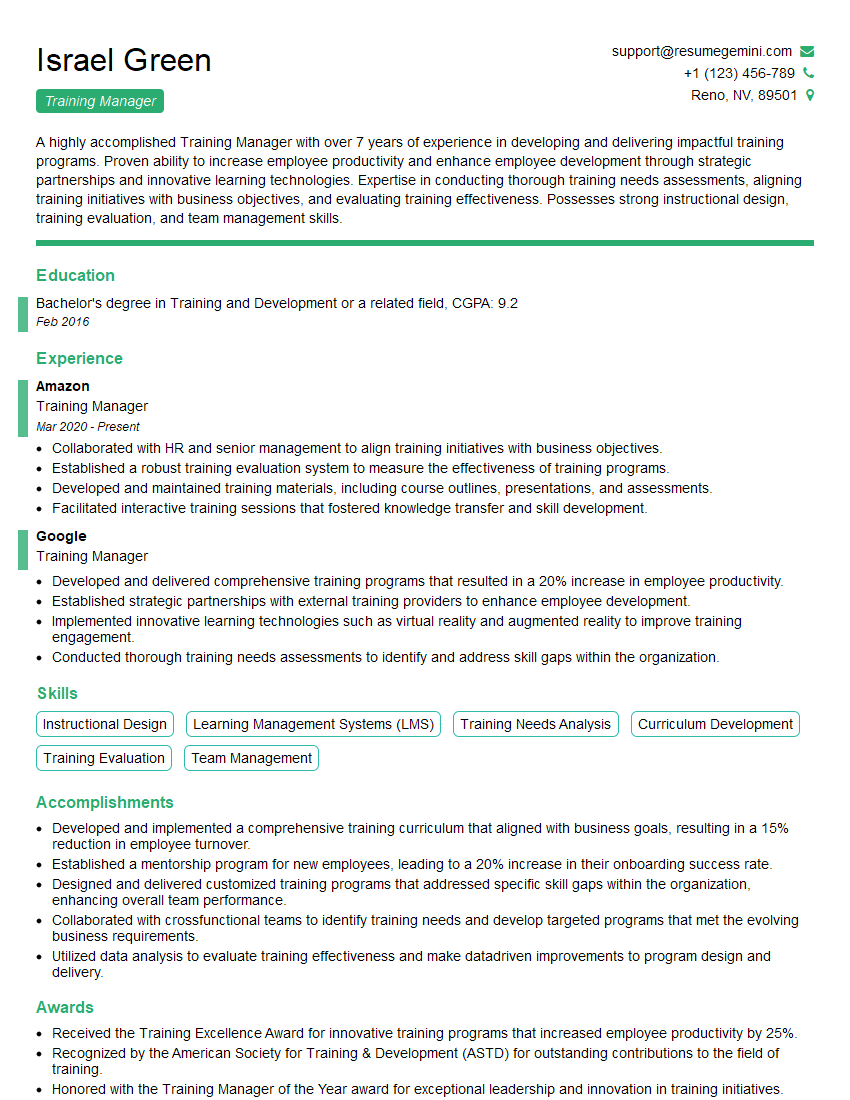
Training Manager Resume Sample
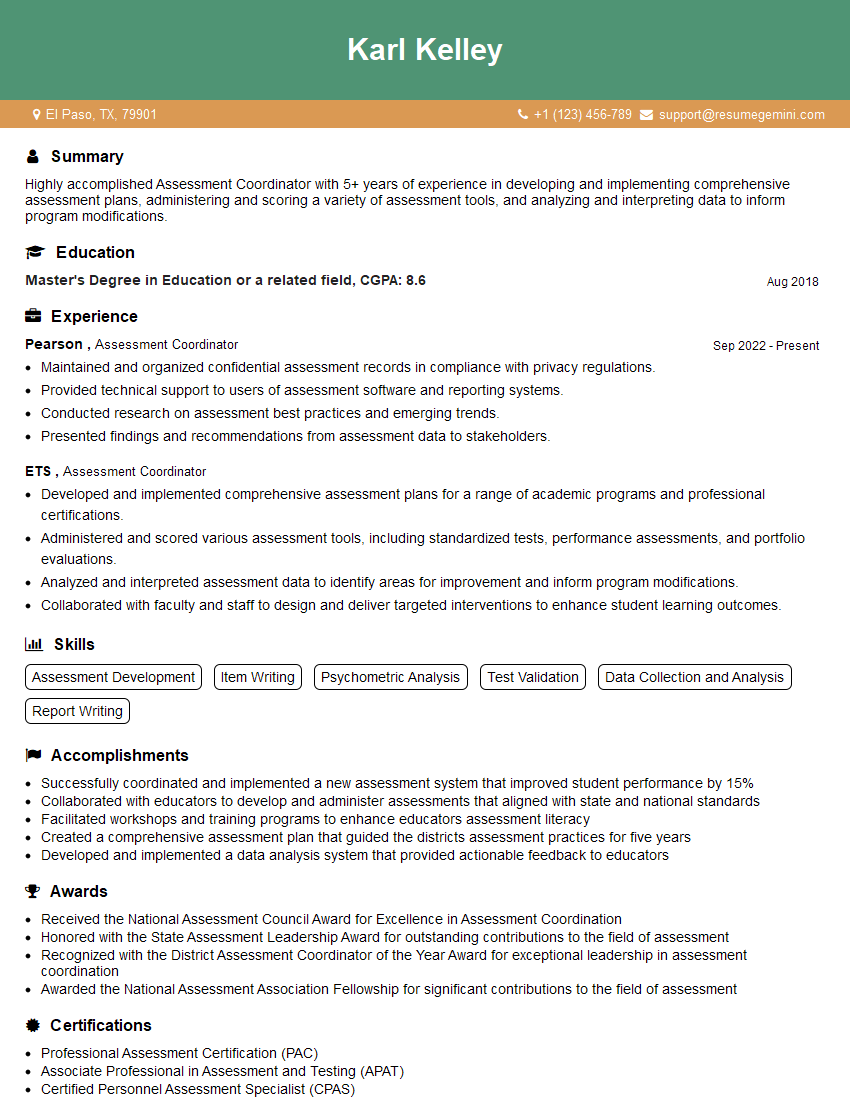
Assessment Coordinator Resume Sample
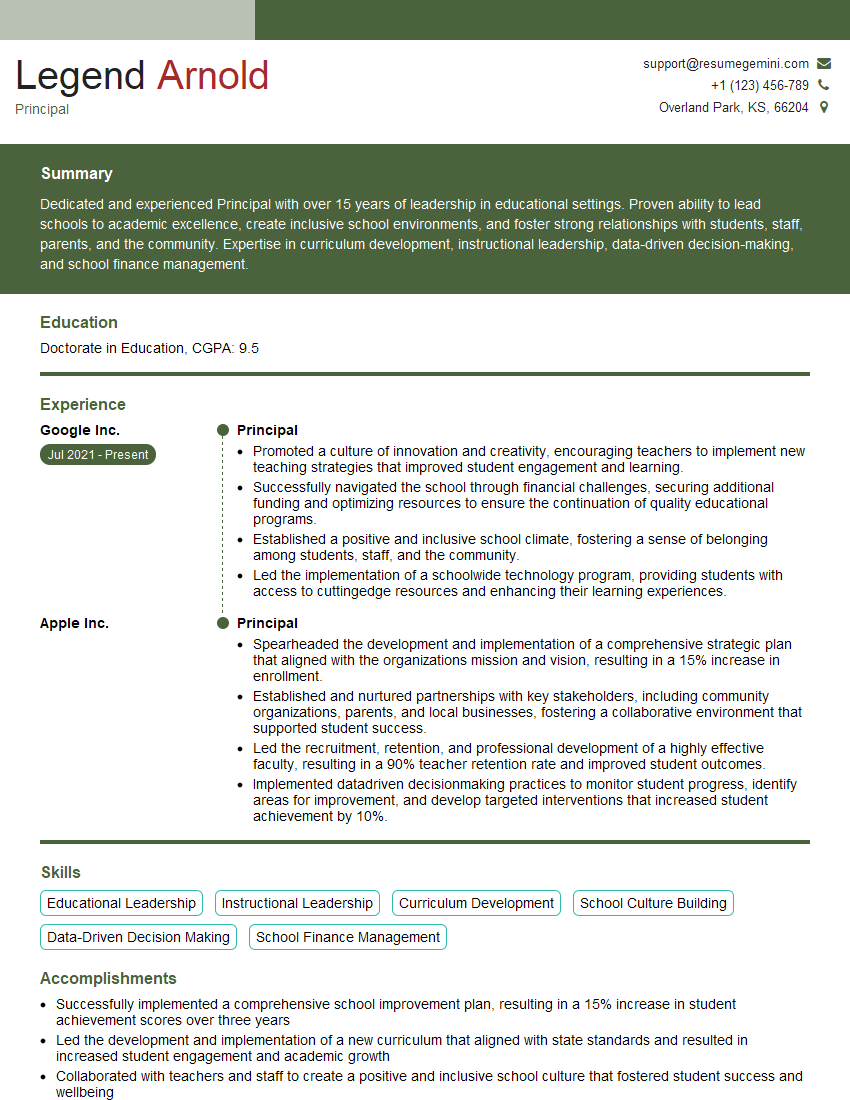
Principal Resume Sample
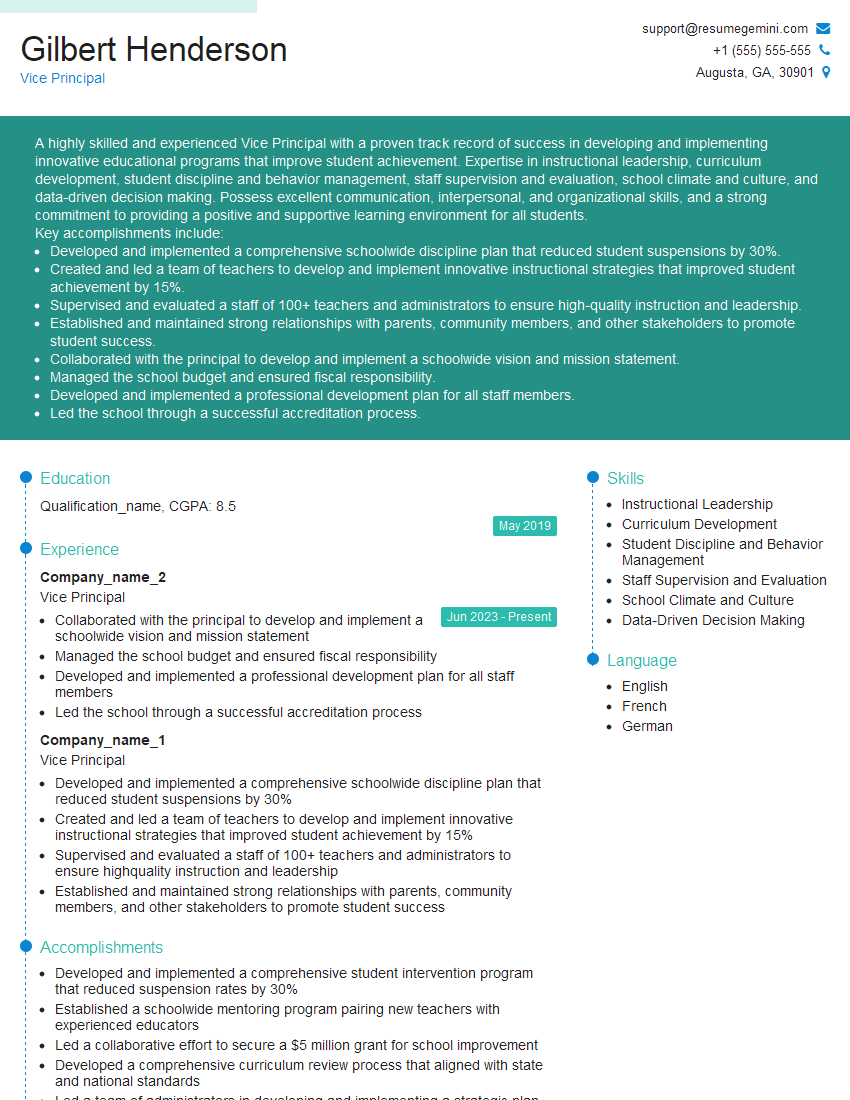
Vice Principal Resume Sample
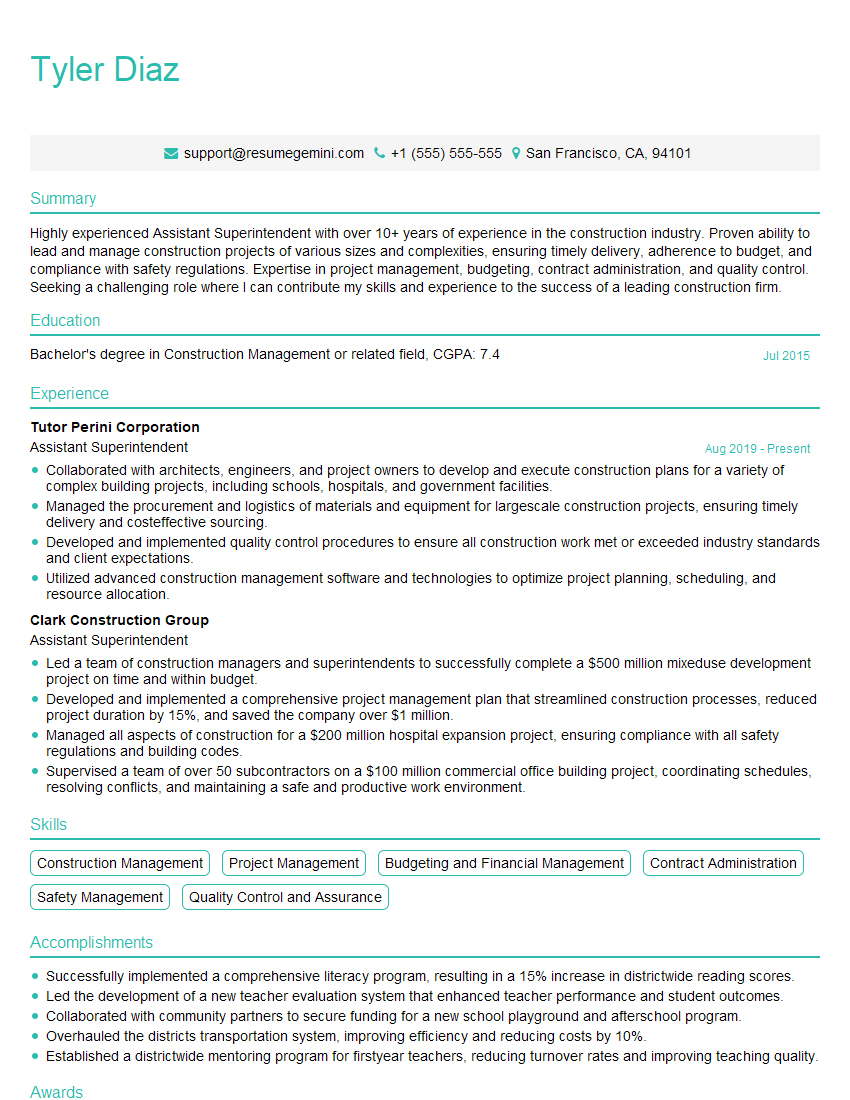
Assistant Superintendent Resume Sample
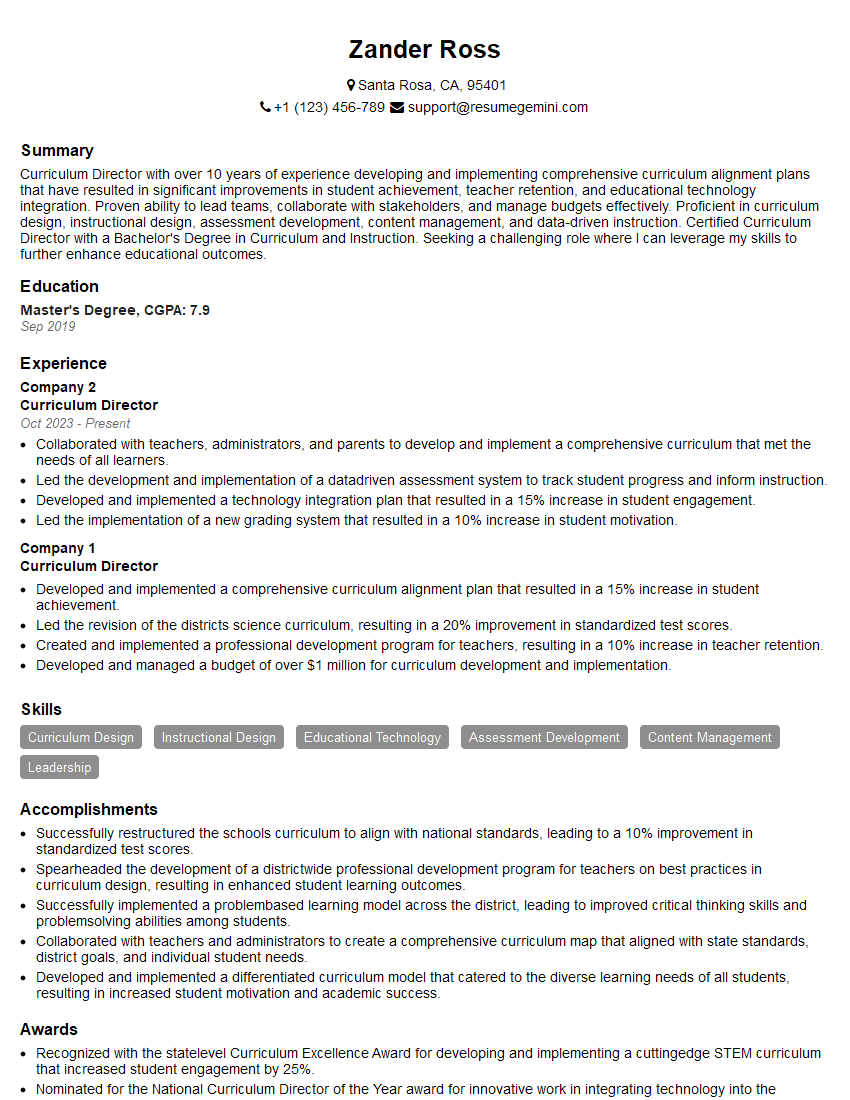
Curriculum Director Resume Sample
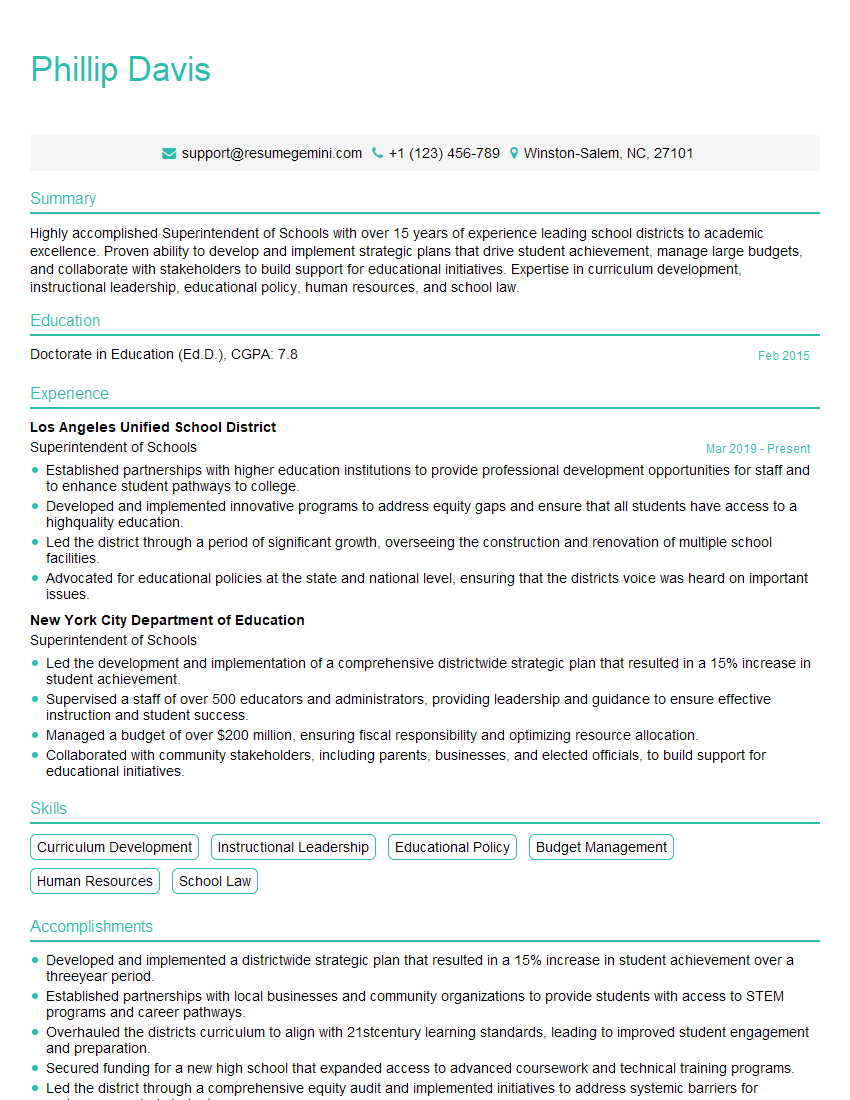
Superintendent of Schools Resume Sample
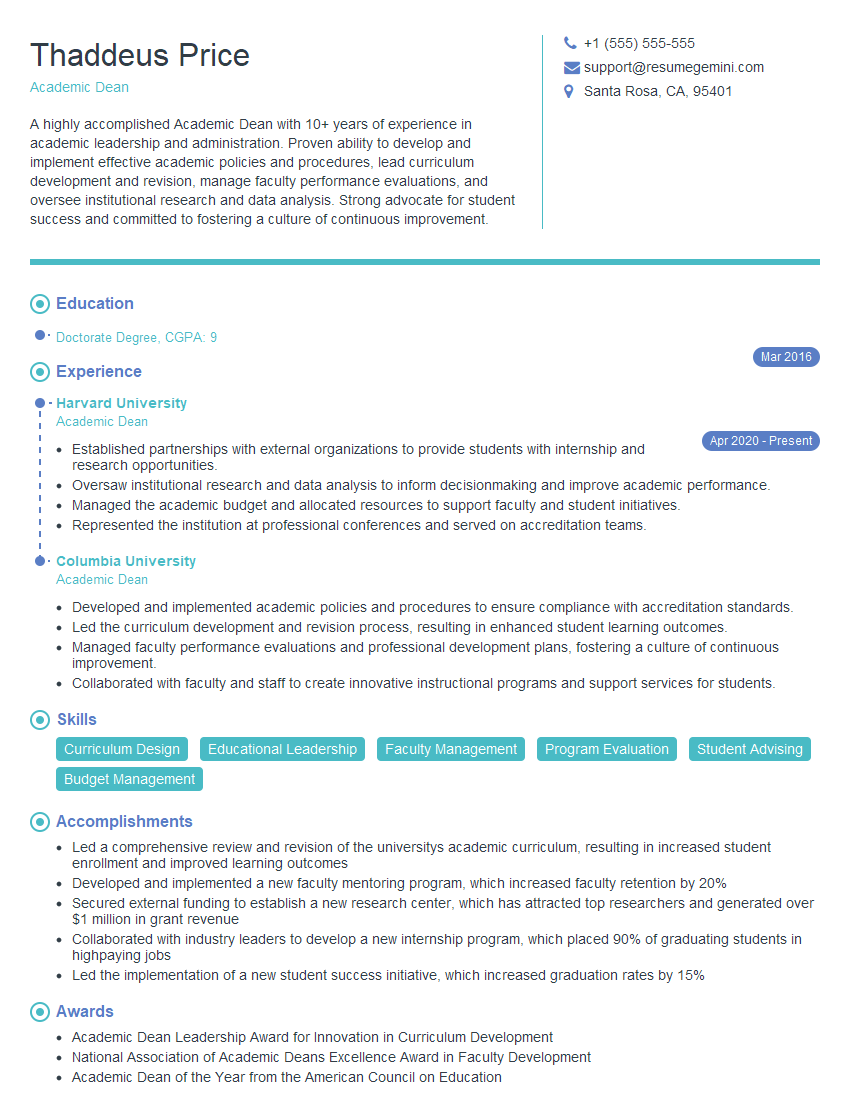
Academic Dean Resume Sample
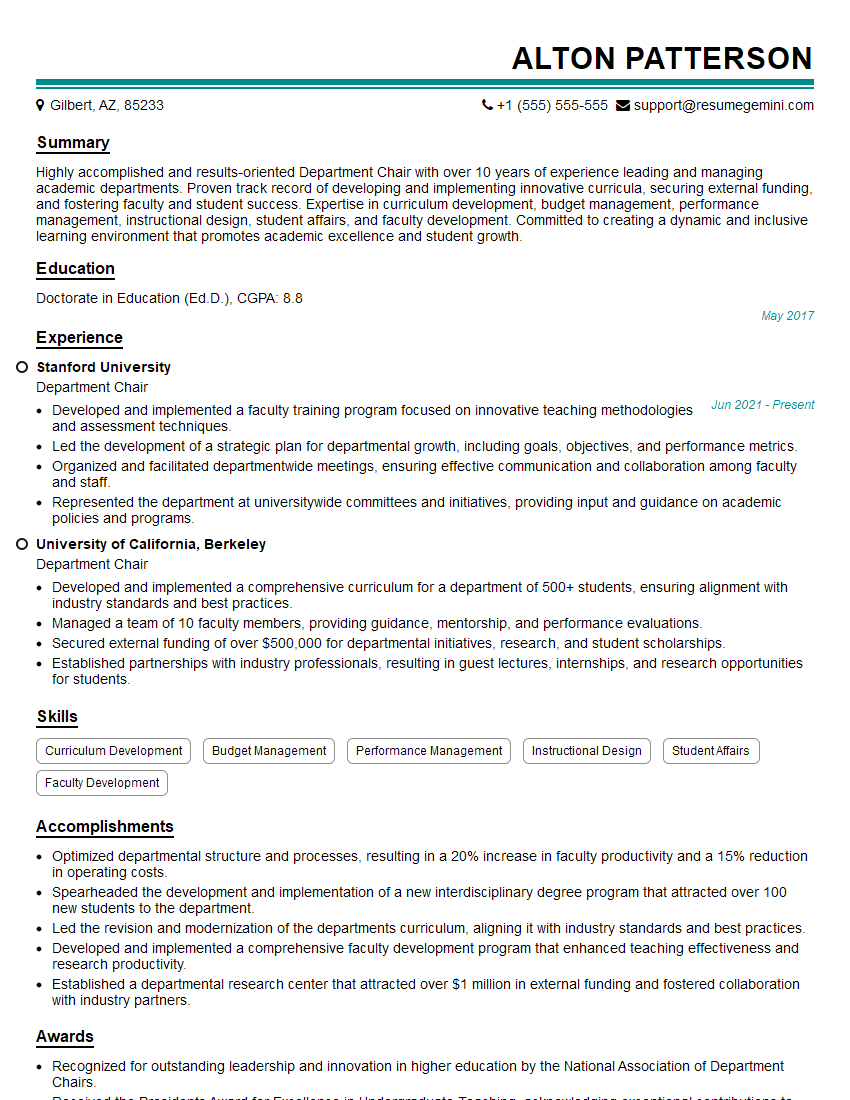
Department Chair Resume Sample
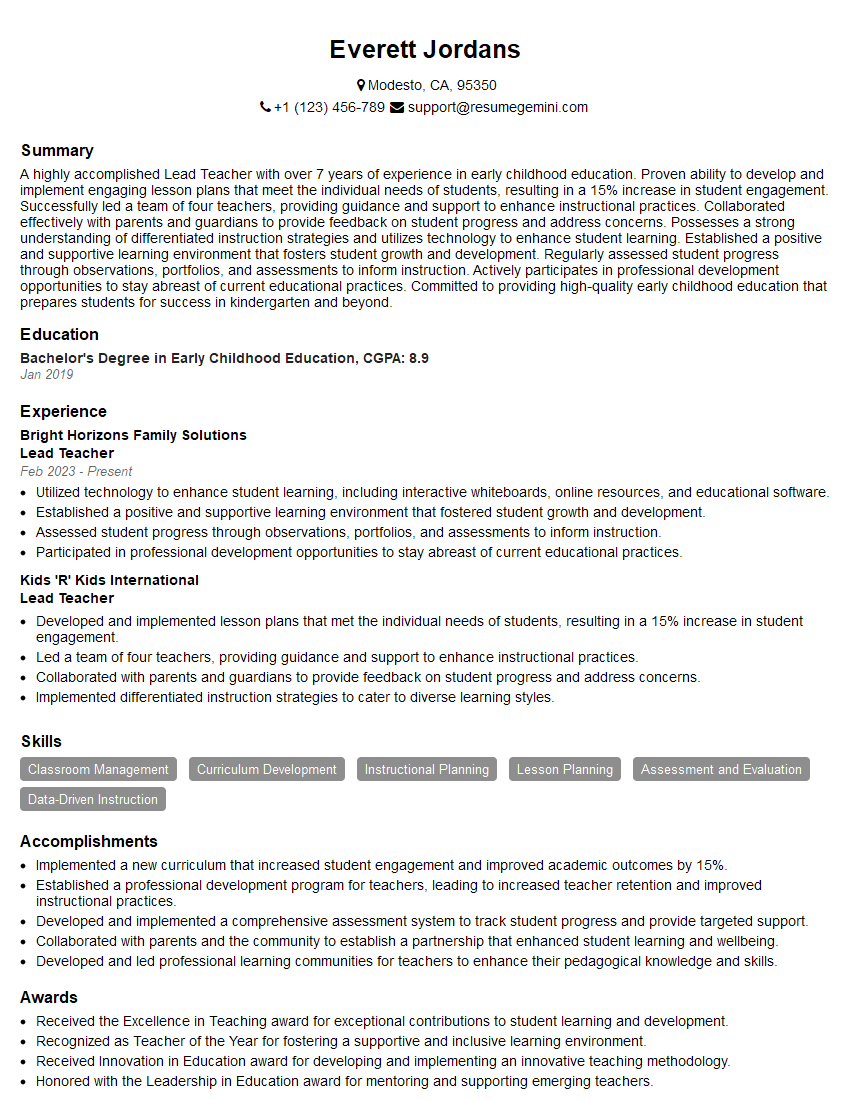
Lead Teacher Resume Sample
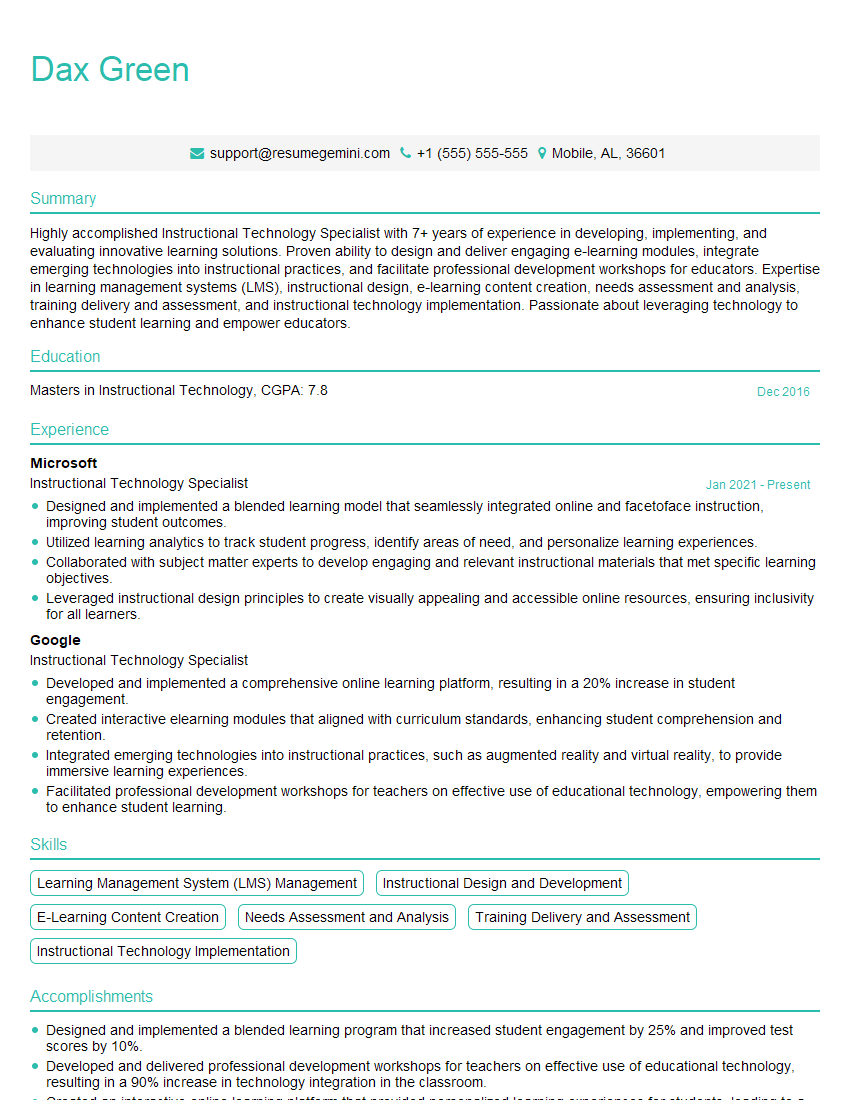
Instructional Technology Specialist Resume Sample
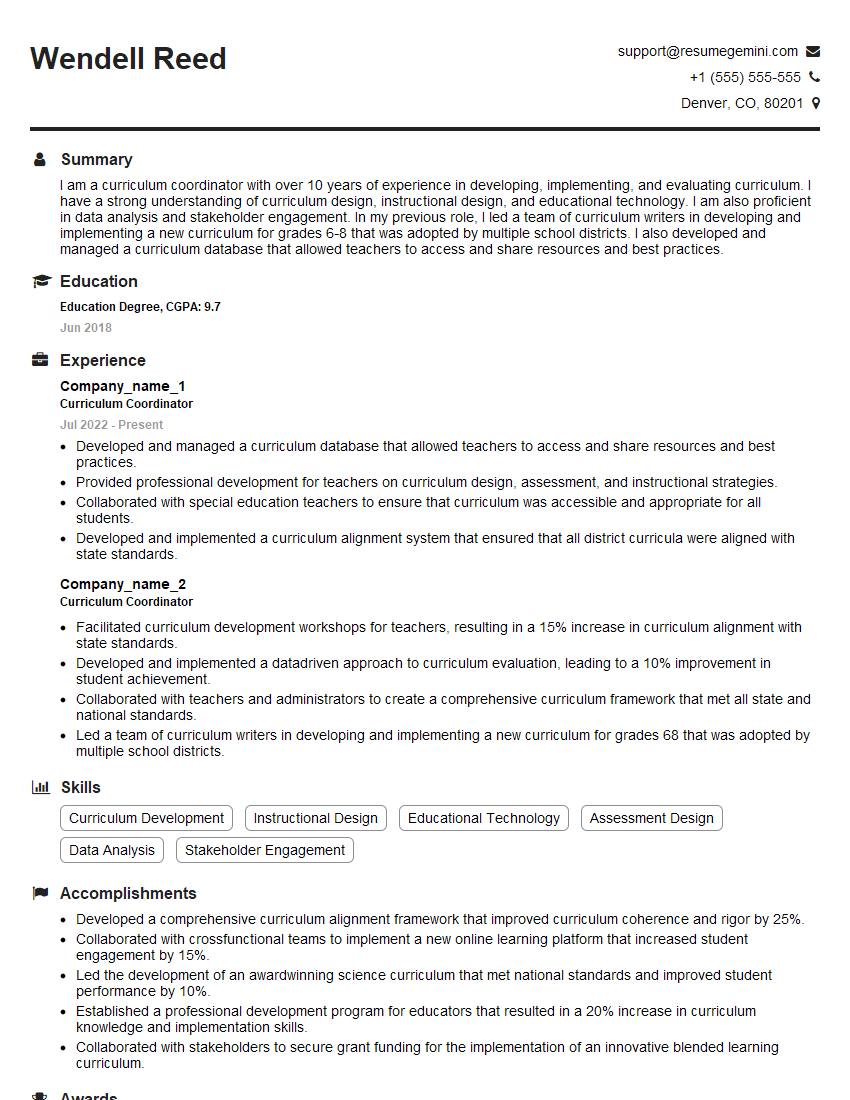
Curriculum Coordinator Resume Sample
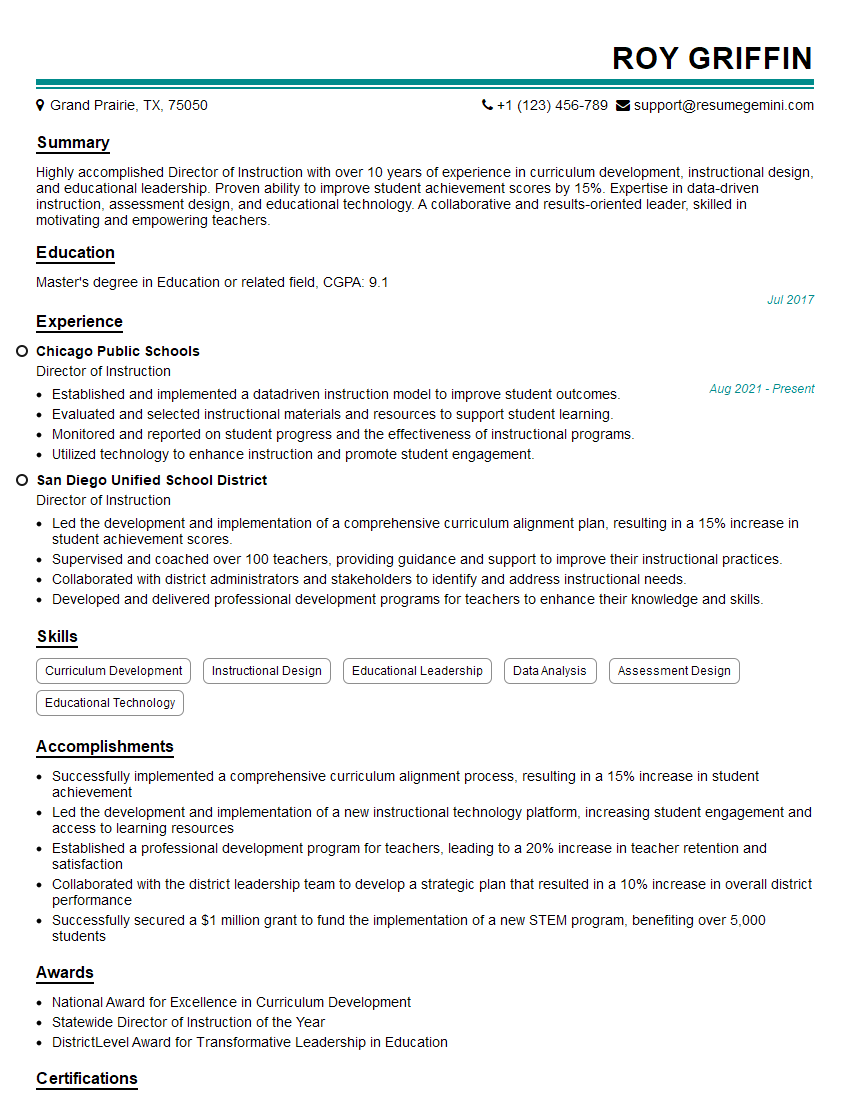
Director of Instruction Resume Sample
Explore more articles
Users Rating of Our Blogs
Share Your Experience
We value your feedback! Please rate our content and share your thoughts (optional).
What Readers Say About Our Blog
I Redesigned Spongebob Squarepants and his main characters of my artwork.
https://www.deviantart.com/reimaginesponge/art/Redesigned-Spongebob-characters-1223583608
IT gave me an insight and words to use and be able to think of examples
Hi, I’m Jay, we have a few potential clients that are interested in your services, thought you might be a good fit. I’d love to talk about the details, when do you have time to talk?
Best,
Jay
Founder | CEO