Feeling uncertain about what to expect in your upcoming interview? We’ve got you covered! This blog highlights the most important Healthcare Information Technology (HIT) Standards interview questions and provides actionable advice to help you stand out as the ideal candidate. Let’s pave the way for your success.
Questions Asked in Healthcare Information Technology (HIT) Standards Interview
Q 1. Explain the differences between HL7 v2 and HL7 v3.
HL7 v2 and HL7 v3 are both messaging standards used in healthcare, but they differ significantly in their architecture and capabilities. Think of HL7 v2 as an older, telegram-style system, while HL7 v3 is a more modern, email-like approach.
- HL7 v2: This is a relatively simple, message-based standard. It uses point-to-point communication, meaning messages are sent directly between two systems. It relies on predefined message structures and segments, making it less flexible but easier to implement initially. It’s still widely used, but its limitations are becoming increasingly apparent.
- HL7 v3: This is a more complex, object-oriented standard that uses XML for message encoding. It employs a richer vocabulary (using SNOMED CT and LOINC) and supports more sophisticated data modeling, leading to improved data integrity and semantic interoperability. It aimed for a more comprehensive, robust approach but its complexity led to slower adoption.
Key Differences Summarized:
- Messaging Structure: HL7 v2 is segment-based; HL7 v3 is XML-based.
- Data Modeling: HL7 v2 is less structured; HL7 v3 is object-oriented.
- Vocabulary: HL7 v2 uses limited vocabularies; HL7 v3 uses richer, standardized vocabularies.
- Complexity: HL7 v2 is simpler to implement; HL7 v3 is more complex and requires significant resources.
For example, imagine sending a patient’s lab results. HL7 v2 might send a series of segments, while HL7 v3 would send a more structured XML document containing the same data in a standardized format, allowing for easier analysis and integration.
Q 2. Describe the core features of FHIR (Fast Healthcare Interoperability Resources).
FHIR (Fast Healthcare Interoperability Resources) is a modern, RESTful API-based standard designed to improve interoperability in healthcare. It prioritizes ease of use and rapid implementation compared to its predecessors. Think of it as a flexible, modern toolkit to easily share health data.
- RESTful API: FHIR uses RESTful principles, allowing systems to interact using standard HTTP methods (GET, POST, PUT, DELETE) making integration simpler and more efficient.
- Resource-Oriented: Data is represented as resources (e.g., Patient, Observation, MedicationRequest), each with its own defined structure and properties. This allows for granular access and sharing of specific data elements.
- Modular Design: FHIR supports modularity; you can choose which resources and profiles you need, making it adaptable to diverse implementation needs. You don’t need to use everything at once.
- Standard Data Types: FHIR includes standard data types and vocabularies (like SNOMED CT and LOINC) ensuring consistency and meaning in shared data.
- Support for Different Data Formats: FHIR supports several data formats, including JSON and XML.
For example, a system can use FHIR to retrieve a patient’s allergy information with a simple GET request to the relevant Patient resource. The response will be a JSON or XML document containing the patient’s allergies in a well-defined format.
Q 3. What is DICOM, and how is it used in medical imaging?
DICOM (Digital Imaging and Communications in Medicine) is a standard for handling, storing, printing, and transmitting medical images and related information. It’s the language medical imaging systems use to communicate. Imagine it as a universal translator for medical scans.
DICOM defines the format for medical images (like X-rays, CT scans, MRIs) and also the information associated with them, such as patient demographics, acquisition parameters, and image annotations. It ensures consistent handling of images across different imaging modalities and vendors.
How it’s used:
- Image Acquisition: DICOM is used by medical imaging devices to store and transmit images.
- Image Storage and Retrieval: DICOM compliant Picture Archiving and Communication Systems (PACS) store and manage images.
- Image Viewing: DICOM viewers display the images.
- Image Sharing: DICOM allows for easy sharing of images between different departments or even different healthcare organizations.
For instance, a radiologist uses a PACS to view a patient’s CT scan, all because both the scanner and PACS are DICOM compliant. The image and its accompanying details are flawlessly exchanged and displayed.
Q 4. What are the benefits and challenges of health information exchange (HIE)?
Health Information Exchange (HIE) refers to the electronic exchange of health information between different healthcare organizations. Think of it as a secure network allowing doctors to quickly access a patient’s complete health record.
Benefits:
- Improved Patient Care: HIE provides a complete view of a patient’s medical history, helping clinicians make informed decisions.
- Reduced Medical Errors: Access to complete information helps avoid medication errors and duplicate testing.
- Enhanced Care Coordination: Facilitates better communication among care providers.
- Increased Efficiency: Reduces administrative burden and speeds up care processes.
Challenges:
- Interoperability Issues: Different systems often use different standards, making data exchange difficult.
- Data Privacy and Security: Protecting patient health information is crucial, requiring robust security measures.
- Technical Complexity: Implementing and maintaining an HIE requires technical expertise and significant investment.
- Legal and Regulatory Compliance: HIE must comply with various regulations like HIPAA.
For example, imagine a patient transferring from a hospital to a rehabilitation center. HIE would allow the rehabilitation staff immediate access to their discharge summary, medication list, and other vital information, leading to a smoother transition.
Q 5. How do you ensure data integrity when integrating different healthcare systems?
Ensuring data integrity when integrating different healthcare systems is paramount to maintain accurate and reliable patient information. It requires a multifaceted approach.
- Data Validation: Implement strict data validation rules at every stage of the integration process. This includes checks for data types, ranges, and consistency with external reference sources like standard terminologies (SNOMED CT, LOINC).
- Data Transformation: Use standardized mapping rules to translate data between different systems. This ensures consistent representation of data across platforms. This may involve the use of ETL (Extract, Transform, Load) processes.
- Audit Trails: Maintain comprehensive audit trails to track all data modifications and access events. This allows for tracing back changes and identifying potential errors.
- Data Reconciliation: Regularly reconcile data across systems to detect and resolve discrepancies. This might involve comparing data in the source system against the target system.
- Hashing or Checksums: Use hashing algorithms to verify the integrity of data during transmission and storage. Any changes to the data will result in a different hash value, indicating corruption.
- Encryption: Encrypt data both in transit and at rest to protect against unauthorized access and tampering.
For example, when transferring patient demographics from an EMR to a claims processing system, data validation rules will ensure that the date of birth is in the correct format and within a reasonable range.
Q 6. Explain the concept of interoperability in healthcare IT.
Interoperability in healthcare IT refers to the ability of different healthcare systems and applications to exchange and use data seamlessly. Think of it as the ability of various tools in a workshop to work together efficiently.
Three main levels:
- Technical Interoperability: This focuses on the ability of systems to exchange data regardless of technical differences. It’s about the technical infrastructure and the use of common standards and protocols (like HL7, FHIR, DICOM).
- Semantic Interoperability: This ensures that the meaning of the data is consistent across systems. It relies on the use of standardized terminologies and ontologies, so everyone understands what ‘high blood pressure’ means in the same way.
- Process Interoperability: This deals with the coordination of clinical workflows across systems. It’s not just about exchanging data, but also about how the data is used in clinical processes.
For instance, a hospital’s electronic health record (EHR) system needs to be interoperable with a radiology information system (RIS) to seamlessly share images and reports. That’s technical interoperability. But further, it must ensure that the terms used for diagnoses are consistent and understood across systems – that’s semantic interoperability. Finally, the systems need to integrate smoothly with a clinician’s workflow – that’s process interoperability.
Q 7. What are some common healthcare data standards beyond HL7, FHIR, and DICOM?
Beyond HL7, FHIR, and DICOM, several other healthcare data standards play crucial roles:
- SNOMED CT (Systematized Nomenclature of Medicine – Clinical Terms): A comprehensive, multilingual clinical healthcare terminology that provides a consistent way to represent clinical findings, diagnoses, procedures, and other medical concepts. It is essential for semantic interoperability.
- LOINC (Logical Observation Identifiers Names and Codes): A standardized vocabulary for identifying laboratory and clinical observations. This ensures consistency when communicating lab results between different systems.
- RxNorm: A normalized naming system for clinical drugs. It helps to identify drugs accurately regardless of their various brand names.
- CDA (Clinical Document Architecture): A standard for structuring and exchanging clinical documents, such as discharge summaries or progress notes, in XML format. It complements HL7 messaging standards.
- OpenEHR: An open-source standard for representing clinical data as archetypes (templates) and associated data structures. This allows for flexible and reusable data models.
These standards work together to create a robust framework for data exchange and interoperability in healthcare.
Q 8. Describe your experience with implementing healthcare IT standards.
My experience with implementing healthcare IT standards spans over eight years, encompassing various roles from analyst to project lead. I’ve been directly involved in implementing HL7 FHIR, DICOM, and LOINC standards within large hospital systems and smaller clinics. For example, in a recent project at a major hospital, we implemented FHIR-based APIs to enable seamless exchange of patient data between the electronic health record (EHR) system and a third-party population health management platform. This involved careful planning, data mapping, and rigorous testing to ensure data integrity and compliance. Another project involved integrating a radiology system using DICOM standards, requiring a deep understanding of image transfer protocols and ensuring compatibility across different vendors’ equipment.
- Successfully implemented HL7 FHIR for improved interoperability between EHR and pharmacy systems.
- Led the integration of DICOM for streamlined radiology image management.
- Facilitated the adoption of LOINC for standardized laboratory result reporting.
Q 9. How do you troubleshoot connectivity issues between healthcare systems?
Troubleshooting connectivity issues between healthcare systems requires a systematic approach. Think of it like diagnosing a car problem – you need to check each component systematically. I typically start by identifying the point of failure. Is the problem on the network, at the application level, or within the data itself? I use a combination of tools and techniques, including:
- Network monitoring: Checking network connectivity, latency, and packet loss using tools like Wireshark or SolarWinds.
- Application logs: Examining logs from both systems to pinpoint error messages and identify the source of the problem. This might involve reviewing HL7 messages for errors or checking API request logs for failure codes.
- Data validation: Verifying the format and content of exchanged data. Incorrect data formatting (e.g., incorrect use of HL7 datatypes) is a common cause of connectivity issues.
- Testing with different data sets: Isolating whether the issue lies with a specific data element or a broader system problem.
For example, a recent issue involved slow response times between two EHR systems. After thorough analysis of the network traffic and application logs, we discovered a bottleneck caused by an overloaded database server. We optimized the database queries and scaled the server resources, which resolved the connectivity issue.
Q 10. What is your familiarity with different data formats used in healthcare (e.g., XML, JSON)?
I’m highly proficient in several data formats used in healthcare. XML and JSON are the most common. XML (Extensible Markup Language) is a structured format often used for HL7 messaging, providing a robust framework for encoding complex medical data. JSON (JavaScript Object Notation) is a lightweight format that is increasingly popular due to its simplicity and ease of parsing. I also have experience with other formats like CSV and HL7v2, each with its own strengths and weaknesses.
Understanding the nuances of these formats is crucial for data interoperability. For instance, XML’s schema-based validation offers a high degree of data integrity, while JSON’s flexibility can simplify integration but requires more rigorous data validation at the application level. I’ve worked extensively with translating data between these formats – for example, transforming XML-based HL7 messages into a JSON format suitable for a mobile application.
Q 11. Explain the role of APIs in healthcare interoperability.
APIs (Application Programming Interfaces) are the backbone of healthcare interoperability. They act as intermediaries, allowing different healthcare systems to communicate and exchange data without direct integration. Think of them as translators, enabling systems that speak different ‘languages’ to understand each other.
In a healthcare setting, APIs allow seamless data exchange between EHRs, pharmacy systems, lab systems, and patient portals. For instance, an API might allow a patient to access their lab results from their patient portal by securely retrieving the data from the hospital’s lab information system (LIS). FHIR APIs are particularly important because they provide standardized ways to access and share data, reducing the need for custom integrations and fostering greater interoperability.
A well-designed API incorporates security measures, such as OAuth 2.0 for authorization, to protect sensitive patient data. Effective API management also involves version control and robust documentation for easy maintenance and integration.
Q 12. How do you ensure compliance with HIPAA regulations in relation to data standards?
Ensuring HIPAA compliance with data standards requires a multi-faceted approach. HIPAA (Health Insurance Portability and Accountability Act) regulations mandate the protection of patient health information (PHI). Data standards, when implemented correctly, significantly contribute to this protection. My approach focuses on:
- Data minimization: Only collecting and transmitting the minimum necessary PHI.
- Data encryption: Encrypting PHI both in transit and at rest to protect it from unauthorized access.
- Access control: Implementing robust access control mechanisms to restrict access to PHI based on roles and responsibilities.
- Audit trails: Maintaining detailed audit trails of all data access and modifications to facilitate accountability.
- Data integrity: Using data standards to ensure the accuracy and completeness of PHI and implement validation checks.
For example, we implemented role-based access control on our FHIR API, limiting access to specific data elements depending on a user’s role. We also implemented strong encryption for all data exchanged through the API. These measures are crucial to ensure compliance and prevent breaches.
Q 13. Describe your experience with data mapping and transformation.
Data mapping and transformation are core skills in healthcare IT. Data mapping involves identifying the correspondences between data elements from different systems. For example, mapping ‘patient name’ in one system to ‘patient_full_name’ in another. Data transformation involves converting data from one format or structure to another. This might involve converting dates from one format to another, standardizing units of measure, or cleaning inconsistent data.
I’ve used various tools and techniques for this, including ETL (Extract, Transform, Load) processes and scripting languages like Python. In a recent project, we had to map data from a legacy EHR system to a new FHIR-based system. This involved developing complex mapping rules to handle data discrepancies and ensuring data integrity during the transformation process. This was crucial for a successful transition to the new system with minimal data loss.
Q 14. What are some common challenges in implementing healthcare IT standards?
Implementing healthcare IT standards presents several challenges:
- Interoperability issues: Achieving seamless data exchange between diverse systems from different vendors remains a significant hurdle.
- Data standardization: Lack of consistent data definitions and terminologies across different healthcare organizations can impede interoperability.
- Legacy systems: Integrating new standards into legacy systems can be complex and costly.
- Cost and resources: Implementing and maintaining new standards requires significant investment in infrastructure, training, and support.
- Complexity of healthcare data: Healthcare data is often complex and unstructured, making it challenging to map and transform consistently.
- Security and privacy concerns: Ensuring the security and privacy of patient data is paramount and requires robust security measures.
Overcoming these challenges often requires a phased approach, prioritizing critical functionalities, and involving all stakeholders throughout the process. Collaborative efforts and a strong focus on data governance are vital for success.
Q 15. How do you stay current with the evolving landscape of healthcare IT standards?
Staying current in the dynamic world of healthcare IT standards requires a multi-pronged approach. It’s not enough to simply read a textbook; active engagement is key.
- Active Participation in Professional Organizations: I regularly attend conferences like HIMSS and participate in working groups of organizations like HL7, contributing directly to standard development and discussions. This provides invaluable insight into upcoming changes and the rationale behind them.
- Subscription to Relevant Publications and Newsletters: I subscribe to journals and newsletters focused on HIT standards, regulatory updates, and best practices. This keeps me informed about the latest research, emerging technologies, and potential challenges.
- Online Courses and Webinars: I continuously update my knowledge through online courses and webinars offered by reputable organizations. These offer structured learning on specific standards and emerging trends.
- Networking and Collaboration: I actively engage with colleagues and experts in the field through professional networks. Sharing experiences and insights during discussions and informal meetings is crucial for staying ahead of the curve.
- Monitoring Regulatory Changes: Staying abreast of changes in regulations from bodies like HIPAA and ONC is critical. These regulations often drive the adoption and evolution of specific standards.
Essentially, my approach is proactive rather than reactive. I don’t just wait for updates; I actively seek them out to ensure I remain at the forefront of the field.
Career Expert Tips:
- Ace those interviews! Prepare effectively by reviewing the Top 50 Most Common Interview Questions on ResumeGemini.
- Navigate your job search with confidence! Explore a wide range of Career Tips on ResumeGemini. Learn about common challenges and recommendations to overcome them.
- Craft the perfect resume! Master the Art of Resume Writing with ResumeGemini’s guide. Showcase your unique qualifications and achievements effectively.
- Don’t miss out on holiday savings! Build your dream resume with ResumeGemini’s ATS optimized templates.
Q 16. Explain the concept of a master patient index (MPI).
A Master Patient Index (MPI) is a centralized database that provides a unique and consistent identifier for each patient across an entire healthcare organization or system, regardless of how many times they’ve been treated or where. Think of it as the ultimate patient directory.
It’s crucial for several reasons:
- Improved Patient Identification: Prevents duplicate medical records, ensuring accurate data and avoiding potential medical errors. Imagine a scenario where a patient’s data is fragmented across multiple systems; the MPI brings everything together.
- Enhanced Data Integrity: A clean MPI means better data quality, crucial for research, reporting, and regulatory compliance. Inconsistent data leads to inaccuracies in treatment, billing, and population health management.
- Streamlined Workflow: Quickly identifying a patient’s complete medical history across different departments or locations improves efficiency and reduces administrative overhead.
- Improved Patient Safety: Accurate patient identification reduces the risk of medication errors, incorrect procedures, and other adverse events.
Maintaining an accurate MPI requires robust data governance policies and processes, including data cleansing, deduplication, and ongoing maintenance. It often involves complex algorithms to identify potential duplicates, considering variations in patient names and identifying information.
Q 17. What are your experiences with different integration engines?
My experience encompasses several integration engines, each with its own strengths and weaknesses. The choice of engine depends heavily on the specific needs of the healthcare organization.
- HL7 based engines: These are the workhorses of healthcare integration, handling HL7 messages (like ADT, ORU, etc.). I’ve worked extensively with Mirth Connect, an open-source engine, as well as commercial solutions like InterSystems Ensemble. Mirth is flexible but requires more technical expertise; commercial solutions often provide more out-of-the-box features and support. These engines are essential for interoperability between different EHR systems and other healthcare applications.
- RESTful API based engines: These are increasingly popular for their agility and simplicity. I’ve used tools like MuleSoft Anypoint Platform and Apigee to integrate systems using REST APIs. These are better suited for modern, cloud-based applications and offer advantages in scalability and ease of development.
- Custom Built Engines: In situations demanding high levels of customization or needing to integrate with legacy systems, we sometimes resort to custom-built engines. This approach requires significantly more development effort but provides optimal control.
My experience allows me to select and implement the best integration engine based on the specific technological environment, budget constraints, and integration complexity. The key is understanding the advantages and limitations of each to optimize the integration process.
Q 18. How do you handle data security concerns when implementing data standards?
Data security is paramount when implementing healthcare data standards. It’s not just a technical problem; it’s a strategic imperative. My approach is multi-layered:
- Data Encryption: Data at rest and in transit must be encrypted using industry-standard algorithms. This protects patient data even if the system is compromised.
- Access Control: Implementing robust access control mechanisms, including role-based access control (RBAC), ensures only authorized personnel can access specific data. This requires careful consideration of user permissions and auditing capabilities.
- Data Loss Prevention (DLP): Implementing DLP tools to monitor and prevent sensitive data from leaving the organization’s control is crucial. These tools can detect attempts to exfiltrate data and block malicious activities.
- Regular Security Audits and Penetration Testing: Regular security assessments, including penetration testing and vulnerability scanning, identify and address potential weaknesses before they can be exploited.
- Compliance with Regulations: Strict adherence to regulations like HIPAA and GDPR is essential. This involves implementing policies and procedures to protect patient privacy and security.
Additionally, I emphasize the importance of security awareness training for all personnel involved in handling protected health information (PHI). A robust security posture requires both technological safeguards and informed, responsible individuals.
Q 19. What is your experience with data governance frameworks in healthcare?
My experience with data governance frameworks in healthcare is extensive. I understand that a successful framework requires a combination of policies, processes, and technology to ensure the quality, integrity, and security of healthcare data.
Key elements I consider:
- Data Ownership and Stewardship: Defining clear roles and responsibilities for data ownership and stewardship across the organization is paramount. This ensures accountability and effective data management.
- Data Quality Management: Establishing processes for data cleansing, validation, and ongoing monitoring. This includes implementing data quality rules and metrics to track performance.
- Data Security and Privacy: Implementing security measures to protect patient data from unauthorized access, use, or disclosure. This aligns with regulatory requirements and best practices.
- Metadata Management: Maintaining accurate and comprehensive metadata, describing the data’s structure, content, and usage. This facilitates data discovery and interpretation.
- Data Governance Committee: Establishing a data governance committee to oversee the framework’s implementation and effectiveness. This committee typically comprises representatives from various departments and stakeholders.
I’ve worked with organizations to develop and implement data governance frameworks based on industry best practices and regulatory requirements, leveraging tools and technologies to support the processes involved. A well-defined framework is critical for achieving data-driven decision-making and ensuring compliance.
Q 20. Describe your understanding of SNOMED CT and LOINC.
SNOMED CT (Systematized Nomenclature of Medicine – Clinical Terms) and LOINC (Logical Observation Identifiers Names and Codes) are crucial healthcare terminologies that enable interoperability and data standardization.
SNOMED CT is a comprehensive, multilingual clinical healthcare terminology that provides a consistent way to code and record clinical findings, diagnoses, procedures, and other relevant information. It’s like a vast dictionary of medical concepts, allowing different systems to understand each other’s data. For example, ‘pneumonia’ isn’t just a word; SNOMED CT provides specific codes to represent various types of pneumonia based on their etiology, location, and severity.
LOINC is a standardized terminology for identifying laboratory and clinical observations. It provides unique codes for thousands of different tests and measurements, ensuring that results from different labs can be seamlessly integrated and compared. For instance, ‘blood glucose’ has a specific LOINC code, preventing ambiguity across different laboratory information systems (LIS).
The combination of SNOMED CT and LOINC is powerful. Using them together allows for precise and consistent representation of patient data, leading to improved data analysis, clinical decision support, and public health reporting.
Q 21. What is your understanding of clinical decision support systems (CDSS) and their integration with EHRs?
Clinical Decision Support Systems (CDSS) are computer-based systems designed to aid healthcare professionals in making clinical decisions. They integrate with Electronic Health Records (EHRs) to provide relevant information and recommendations at the point of care.
Integration with EHRs: CDSS integration with EHRs allows for real-time access to patient data. This integration can be achieved through various methods, such as:
- Direct database access: The CDSS directly accesses the EHR database to retrieve relevant patient data. This method allows for real-time access and updates but requires careful consideration of data security and performance.
- HL7 messaging: The CDSS and EHR communicate via HL7 messages, allowing for asynchronous updates and improved system resilience. This reduces the direct dependence on the EHR database but might introduce slight delays.
- API based integration: Modern EHRs often expose APIs allowing integration using standardized protocols. This approach is more flexible and scalable.
Functionality: CDSS can provide various types of support:
- Alerts and reminders: Alerting clinicians about potential drug interactions, allergies, or contraindications.
- Order sets and protocols: Providing pre-defined sets of orders for common clinical scenarios.
- Clinical guidelines and recommendations: Providing evidence-based guidelines and recommendations based on the patient’s condition.
- Decision support tools: Offering tools to help clinicians assess risk, predict outcomes, or personalize treatment plans.
Successful CDSS integration requires careful planning, considering data flow, security, and usability. It’s crucial to ensure the system’s recommendations are aligned with clinical best practices and don’t overburden clinicians with irrelevant information. A well-integrated CDSS can significantly improve the quality and efficiency of healthcare.
Q 22. Explain the role of healthcare IT standards in improving patient safety.
Healthcare IT standards play a crucial role in improving patient safety by ensuring the consistent and reliable exchange of patient information across different healthcare systems. This reduces the risk of errors stemming from illegible handwriting, lost information, or inconsistent data formats. For example, standardized medication ordering systems can significantly reduce medication errors by automating checks and alerts, preventing potentially lethal prescription discrepancies.
Imagine a scenario where a patient with a penicillin allergy is admitted to a hospital. If the allergy information isn’t consistently recorded and accessible across different departments (e.g., emergency room, pharmacy, inpatient ward), there’s a significant risk of accidental penicillin administration. Standardized data exchange ensures this critical information is available to all relevant healthcare professionals, minimizing this risk. This is achieved through standards like HL7 FHIR (Fast Healthcare Interoperability Resources) which defines the structure and content of exchanged data, ensuring interoperability.
- Reduced Medication Errors: Standardized order entry systems and medication reconciliation processes.
- Improved Diagnostic Accuracy: Consistent data formats enable seamless sharing of lab results and imaging data.
- Enhanced Communication: Standardized messaging reduces ambiguity and facilitates timely communication among care providers.
Q 23. How do you evaluate the effectiveness of a healthcare IT standard implementation?
Evaluating the effectiveness of a healthcare IT standard implementation requires a multi-faceted approach. It’s not just about successful technical integration; it’s about measuring the impact on key performance indicators (KPIs) related to patient safety, efficiency, and clinical outcomes. We need to assess both quantitative and qualitative aspects.
- Quantitative Measures: This includes tracking metrics like the reduction in medication errors, improvements in order turnaround times, decreases in duplicate testing, and enhancement in patient satisfaction scores. We might also analyze data on the number of successful data exchanges, error rates, and response times.
- Qualitative Measures: We also need to gather feedback from clinicians and other stakeholders through surveys, interviews, and focus groups. This helps understand the usability of the system, workflow changes, and user acceptance. We assess how well the new standard integrates with existing workflows and whether it improves efficiency.
For instance, if we implement a new standard for electronic health records (EHRs), we wouldn’t just measure the technical success of the integration but also the impact on physician satisfaction with the EHR system and the speed of charting, as these directly affect patient care and clinical workflow.
Q 24. Describe your approach to resolving conflicts between different healthcare IT standards.
Conflicts between different healthcare IT standards are common, particularly in large, complex healthcare systems. My approach is based on a collaborative and data-driven process, prioritizing patient safety and interoperability.
- Identify the Conflict: Clearly define the clashing standards and the specific areas of incompatibility.
- Analyze the Impact: Assess the clinical impact of the conflict and potential risks to patient safety if not resolved.
- Prioritize Resolution: Based on impact, prioritize resolving the conflicts with the most significant clinical implications.
- Explore Solutions: This might involve mapping data elements between different standards, using mapping tools or employing HL7’s standard message transformation techniques. It also involves discussing with stakeholders to assess the feasibility of adopting a single superior standard or finding a suitable common standard.
- Implement and Monitor: Implement the chosen solution and monitor the impact, both quantitatively and qualitatively.
For example, if one system uses LOINC codes for lab results, and another uses SNOMED CT, we need to establish a clear mapping between these coding systems to ensure seamless data exchange. This often requires a combination of technical solutions and collaborative discussions to agree on a consistent approach.
Q 25. How do you incorporate user feedback into the implementation of healthcare IT standards?
Incorporating user feedback is paramount for successful healthcare IT standard implementation. A system that is technically sound but unusable or inefficient will fail. My approach emphasizes continuous feedback loops throughout the implementation process.
- Early User Involvement: Involve clinicians, nurses, administrative staff, and other users early in the process—during the design and planning stages—to gather requirements and assess usability.
- Regular Feedback Sessions: Conduct regular feedback sessions using surveys, focus groups, and individual interviews. These can be informal discussions or more structured sessions using usability testing methods.
- Iterative Development: Use iterative development methodologies to incorporate feedback throughout the project lifecycle. This allows for adjustments based on user needs and experience.
- Training and Support: Provide adequate training and ongoing support to users. This minimizes frustration and ensures appropriate use of the system.
For example, if users consistently report difficulty navigating a specific module of an EHR system, it should be redesigned or streamlined. This iterative approach ensures the final system meets the users’ needs and improves their workflows and overall experience.
Q 26. Describe your experience with testing and validation of healthcare data integrations.
My experience with testing and validation of healthcare data integrations is extensive, encompassing both technical and clinical validation. I utilize a robust testing framework that includes different stages:
- Unit Testing: Testing individual components of the integration to ensure they function correctly.
- Integration Testing: Testing the interaction between different components to verify seamless data flow.
- System Testing: Testing the entire system end-to-end to ensure all components work together effectively.
- User Acceptance Testing (UAT): Involving end-users in testing the system to ensure it meets their needs and is user-friendly.
- Clinical Validation: Ensuring the accuracy and reliability of the data being exchanged and verifying clinical meaningfulness.
For instance, before integrating a new laboratory information system (LIS) with an EHR, we’d conduct rigorous testing to ensure accurate transmission of lab results, including checking for data type consistency and value mapping. We’d then validate against manual results to confirm accuracy.
Q 27. How do you handle data migration challenges during the implementation of new standards?
Data migration during the implementation of new standards is a critical and complex process. A well-defined strategy is essential to minimize disruption and ensure data integrity. My approach focuses on:
- Data Assessment: Thoroughly assessing the existing data, identifying data quality issues, and creating a data profile.
- Data Cleansing: Cleaning and transforming data to meet the requirements of the new standard. This includes resolving inconsistencies, correcting errors, and standardizing formats.
- Data Mapping: Mapping data elements from the old system to the new system to ensure a seamless transition.
- Migration Planning: Developing a detailed migration plan including timelines, resources, and contingency plans.
- Testing and Validation: Thoroughly testing the migrated data to verify accuracy and completeness.
- Parallel Run: A parallel run of both old and new systems for a period to verify data integrity and identify any unforeseen issues before complete cutover.
For example, if migrating patient data from an older EHR to a new FHIR-based system, we’d map all relevant fields (demographics, medical history, allergies, etc.) ensuring correct data types and values. Rigorous testing would then validate the accuracy and completeness of the migrated data.
Q 28. What are your thoughts on the future of healthcare IT standards and interoperability?
The future of healthcare IT standards and interoperability is bright, but challenging. We’re moving towards a more patient-centric, data-driven healthcare system. This will be driven by several factors:
- Increased Adoption of FHIR: FHIR’s flexibility and API-based approach is fostering greater interoperability, enabling seamless data exchange among different systems.
- Artificial Intelligence (AI) and Machine Learning (ML): AI and ML will play a crucial role in analyzing the vast amounts of interoperable healthcare data, leading to improved diagnostics, personalized medicine, and more effective treatment strategies.
- Cloud Computing: Cloud-based platforms will increasingly facilitate data sharing and interoperability, providing scalable and secure solutions for healthcare organizations.
- Blockchain Technology: Blockchain has the potential to enhance data security and integrity, facilitating trust and transparency in data exchange.
- Focus on Data Privacy and Security: Robust security measures and adherence to regulations like HIPAA will be crucial to protect patient data.
However, challenges remain, such as ensuring consistent adoption of standards, addressing data privacy concerns, and overcoming legacy systems. Successful implementation requires collaborative efforts from stakeholders across the healthcare ecosystem.
Key Topics to Learn for Healthcare Information Technology (HIT) Standards Interview
- HL7 Messaging Standards: Understand the structure and function of HL7 messages (e.g., ADT, ORM, ORU), including message segments, events, and data types. Consider practical application scenarios like patient admission updates or lab result transmission.
- DICOM (Digital Imaging and Communications in Medicine): Learn the fundamentals of DICOM image storage and retrieval, including image formats, metadata, and network communication protocols. Explore real-world examples such as PACS (Picture Archiving and Communication Systems) integration and image sharing between healthcare facilities.
- FHIR (Fast Healthcare Interoperability Resources): Grasp the RESTful API-based approach of FHIR and its advantages for interoperability. Practice applying FHIR in scenarios such as accessing patient data from different electronic health record (EHR) systems.
- Data Security and Privacy Standards (HIPAA, NIST): Become familiar with HIPAA regulations and NIST cybersecurity frameworks related to HIT. Understand how these standards apply to data protection, access control, and risk management within a healthcare IT environment.
- Interoperability and Integration Challenges: Explore the complexities of integrating different healthcare systems and the challenges in achieving seamless data exchange. Consider solutions and strategies for overcoming interoperability hurdles.
- Healthcare Data Governance and Data Modeling: Understand principles of data governance, data modeling techniques, and the importance of maintaining data integrity and quality in a healthcare setting.
Next Steps
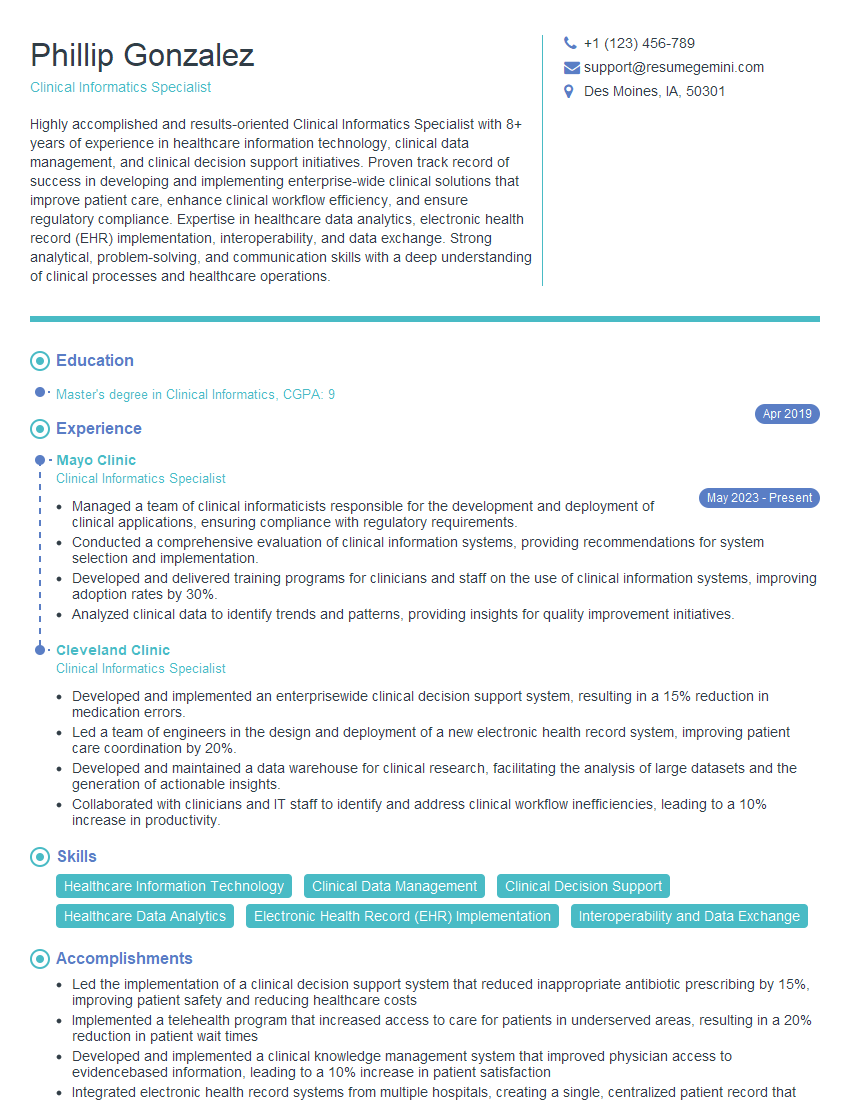
Mastering Healthcare Information Technology (HIT) Standards is crucial for accelerating your career growth in this rapidly evolving field. A strong understanding of these standards demonstrates your expertise and positions you for leadership roles in healthcare IT. To significantly boost your job prospects, crafting an ATS-friendly resume is essential. This ensures your qualifications are effectively communicated to potential employers. We highly recommend using ResumeGemini to build a professional and impactful resume. ResumeGemini offers a streamlined process and provides examples of resumes tailored to Healthcare Information Technology (HIT) Standards, giving you a head start in showcasing your skills and experience effectively.
Explore more articles
Users Rating of Our Blogs
Share Your Experience
We value your feedback! Please rate our content and share your thoughts (optional).
What Readers Say About Our Blog
Really detailed insights and content, thank you for writing this detailed article.
IT gave me an insight and words to use and be able to think of examples