The thought of an interview can be nerve-wracking, but the right preparation can make all the difference. Explore this comprehensive guide to Advanced Stroke Analysis interview questions and gain the confidence you need to showcase your abilities and secure the role.
Questions Asked in Advanced Stroke Analysis Interview
Q 1. Explain the difference between ischemic and hemorrhagic stroke.
The core difference between ischemic and hemorrhagic stroke lies in their underlying cause: blood flow. Ischemic stroke, the most common type (around 85% of cases), occurs when a blood vessel supplying the brain is blocked, depriving brain tissue of oxygen and nutrients. Think of it like a clogged pipe preventing water from reaching its destination. This blockage is usually caused by a blood clot (thrombosis or embolism). In contrast, hemorrhagic stroke happens when a blood vessel in the brain bursts, causing bleeding into the brain tissue. This is like a pipe bursting and flooding the surrounding area. This bleeding can compress and damage brain tissue, leading to potentially severe consequences.
Understanding this distinction is critical for treatment. Ischemic stroke is often treated with clot-busting medications (thrombolysis), while hemorrhagic stroke requires management of the bleed itself, often involving surgical intervention. The symptoms, while sometimes overlapping, can also differ slightly, adding to the importance of rapid and accurate diagnosis.
Q 2. Describe the various neuroimaging techniques used in advanced stroke analysis (e.g., CT, MRI, perfusion imaging).
Advanced stroke analysis relies heavily on various neuroimaging techniques. Computed tomography (CT) is often the first imaging modality used due to its speed and wide availability. It provides excellent visualization of brain structure and can readily identify hemorrhagic stroke, as well as some signs of ischemia (like hypodensity). Magnetic resonance imaging (MRI) offers superior soft tissue contrast and provides more detailed information on brain structure and function. It’s particularly valuable in detecting ischemic changes, as it provides higher resolution and better visualization of subtle abnormalities.
Further enhancing our understanding are specialized MRI sequences like diffusion-weighted imaging (DWI) and perfusion-weighted imaging (PWI), which are essential in acute stroke assessment. DWI highlights areas of restricted diffusion caused by cytotoxic edema, indicating acute infarct. PWI maps cerebral blood flow and perfusion abnormalities which helps identify the penumbra – potentially salvageable brain tissue.
Q 3. What are the limitations of each neuroimaging modality in stroke assessment?
Each neuroimaging modality has its limitations. CT scans have lower sensitivity for early ischemic changes compared to MRI. They might miss small infarcts in the early stages, and the visualization of subtle ischemic changes can be challenging. Further, CT cannot differentiate between early ischemia and other conditions that might cause similar imaging patterns.
While MRI provides more detailed information, it’s slower than CT, and not always readily available. It’s more sensitive to motion artifacts, which can be a problem in acutely ill patients. The interpretation of MRI findings, particularly DWI and PWI, requires considerable expertise and experience. Finally, both modalities can be challenging to interpret in patients with complex vascular anatomy or prior brain lesions.
Q 4. How do you interpret diffusion-weighted imaging (DWI) and apparent diffusion coefficient (ADC) maps in acute stroke?
Diffusion-weighted imaging (DWI) shows the apparent movement of water molecules. In acute stroke, the restricted diffusion of water molecules within ischemic tissue causes areas of high signal intensity, indicating the infarct core. Apparent diffusion coefficient (ADC) maps measure the actual diffusion rate of water. In acute stroke, the ADC values within the infarct core are low, representing restricted diffusion.
By comparing DWI and ADC maps, we can differentiate between acute ischemia and other conditions. In acute stroke, DWI shows high signal intensity, while ADC shows low signal intensity. This helps to confirm the diagnosis of acute ischemic stroke. This combined interpretation provides a more confident assessment, helping differentiate between an acute infarct and other conditions showing similar DWI patterns like tumor or abscess.
Q 5. Explain the principles of perfusion-weighted imaging (PWI) and its role in stroke management.
Perfusion-weighted imaging (PWI) measures cerebral blood flow and blood volume. It maps the ischemic penumbra – the area of brain tissue surrounding the infarct core that is at risk but still potentially salvageable. PWI helps identify tissue with reduced blood flow but still viable, allowing for better treatment targeting and potentially improved outcomes.
PWI’s role in stroke management is crucial because it helps us define the target area for therapies like thrombolysis or thrombectomy. By identifying the penumbra, we can selectively target interventions to maximize tissue preservation and improve patient outcomes. The mismatch between the DWI infarct core and the PWI perfusion deficit helps identify the penumbra, thus guiding treatment decisions in acute stroke.
Q 6. Describe the different types of stroke scales used for assessment and prognosis.
Several stroke scales are used for assessment and prognosis, each with its strengths and weaknesses. The National Institutes of Health Stroke Scale (NIHSS) is a widely used, validated scale assessing neurological deficits across various domains like consciousness level, gaze, motor function, and language. The higher the score, the greater the severity of the stroke. The modified Rankin Scale (mRS) measures functional outcome at various points in time (often at discharge and later follow-up) following a stroke on a scale of 0 to 6, 0 being no symptoms and 6 being death. It helps assess long-term disability and recovery.
Other scales exist, including the Canadian Neurological Scale, which is useful in certain clinical settings. The choice of scale depends on the specific clinical context, the aims of the assessment (acute assessment vs. long-term prognosis), and available resources.
Q 7. How do you differentiate between stroke mimics and true stroke using neuroimaging?
Differentiating between stroke mimics and true stroke using neuroimaging is paramount for timely and appropriate management. Stroke mimics, such as migraine, seizures, tumors, or metabolic encephalopathies, can present with similar symptoms. Neuroimaging is key in distinguishing these.
For example, a CT scan can readily identify hemorrhage in hemorrhagic stroke, distinguishing it from migraine or other mimics. MRI, especially with DWI and ADC, helps identify the characteristic restricted diffusion in acute ischemic stroke, differentiating it from other conditions like metabolic encephalopathy. Careful correlation of imaging findings with clinical presentation and other investigations are essential for accurate diagnosis, ensuring the patient receives the appropriate treatment, which is particularly important considering the time-sensitive nature of stroke management.
Q 8. What is the role of machine learning in advanced stroke analysis?
Machine learning (ML) is revolutionizing advanced stroke analysis by enabling faster, more accurate diagnosis and treatment planning. It excels at processing complex medical images (CT scans, MRIs) and patient data to identify patterns indicative of stroke, predict stroke severity, and even personalize treatment strategies. For example, ML algorithms can analyze diffusion-weighted imaging (DWI) scans to identify the core infarct (dead brain tissue) and the penumbra (at-risk tissue), crucial information for guiding treatment decisions. Furthermore, ML can analyze patient demographics, medical history, and lab results to predict the likelihood of stroke recurrence or adverse outcomes. This allows clinicians to tailor preventative measures and optimize post-stroke rehabilitation.
One example of its application is in the automatic detection of intracranial hemorrhages on CT scans, significantly reducing the time needed for radiologists to review images, allowing for quicker intervention.
Q 9. Describe the challenges in applying machine learning algorithms to stroke data.
Applying ML algorithms to stroke data presents several significant challenges. Firstly, the data itself is often high-dimensional, noisy, and heterogeneous. Different imaging modalities (CT, MRI, perfusion imaging) yield different types of data, requiring sophisticated integration techniques. Secondly, stroke is a time-critical condition, demanding algorithms that are both accurate and computationally efficient for rapid diagnosis. Thirdly, obtaining sufficient, high-quality, labeled data for training ML models is a major hurdle. Accurate labeling requires expertise from neurologists and radiologists, which can be time-consuming and expensive. Moreover, the inherent variability in stroke presentation across patients makes generalizing model predictions challenging. Finally, ensuring the ethical and responsible use of ML algorithms in healthcare is paramount, particularly concerning bias in datasets and algorithmic transparency.
Q 10. How do you ensure the accuracy and reliability of stroke analysis results?
Ensuring the accuracy and reliability of stroke analysis results requires a multi-faceted approach. Rigorous validation using independent datasets is crucial to avoid overfitting to the training data. We use techniques like cross-validation and blind testing to assess the generalizability of the models. Performance metrics such as sensitivity, specificity, and area under the ROC curve (AUC) are used to quantify the accuracy of the algorithms. Regular model updates and retraining are necessary to incorporate new data and improve performance over time. Furthermore, explainability and interpretability of the ML models are essential for clinicians to trust and understand the results. Techniques like SHAP (SHapley Additive exPlanations) values can help reveal the features that contribute most to the model’s predictions, improving clinical understanding and transparency.
Ultimately, a human-in-the-loop approach is crucial, where the ML model acts as a decision support tool rather than a replacement for expert clinical judgment. Radiologists and neurologists remain essential in interpreting the results and making the final diagnosis and treatment decisions.
Q 11. Explain the concept of penumbra and its significance in stroke treatment.
The penumbra refers to the area of brain tissue surrounding the core infarct (the area of irreversible brain damage) in an ischemic stroke. This tissue is critically underperfused (receiving insufficient blood flow), but it’s still potentially salvageable if blood flow is restored quickly. It’s essentially a zone of ‘at-risk’ tissue, existing between the irreversibly damaged core and the healthy brain tissue. Identifying and preserving the penumbra is a critical objective in stroke treatment because successful intervention in this region can significantly reduce the long-term disability associated with stroke. Imaging techniques like perfusion CT and MRI are used to visualize the penumbra, helping clinicians to determine the extent of salvageable brain tissue and guide treatment strategies.
Think of it like this: the core is a burnt-out section of a forest fire, the penumbra is the area of trees still smoldering, and the goal is to prevent the fire from spreading further into the healthy forest.
Q 12. Discuss the role of thrombolysis in acute ischemic stroke.
Thrombolysis is the use of thrombolytic agents (clot-busting drugs) to dissolve blood clots that are blocking blood flow to the brain in an acute ischemic stroke. The most common thrombolytic agent is tissue plasminogen activator (tPA). tPA works by breaking down the fibrin protein that forms the blood clot, restoring blood flow to the affected area of the brain. This is a time-sensitive intervention, as the benefits are maximized when treatment is initiated within the first few hours of symptom onset. The precise time window for tPA administration is determined by several factors, including the patient’s clinical presentation and risk factors. However, there are risks associated with thrombolytic therapy, including intracranial hemorrhage. Therefore, careful patient selection and close monitoring are essential to ensure that the benefits outweigh the risks.
Q 13. Describe different endovascular techniques used in stroke treatment.
Endovascular techniques are minimally invasive procedures used to mechanically remove blood clots from blocked brain arteries in acute ischemic stroke. These techniques are often employed when thrombolytic therapy is contraindicated or ineffective. The most common endovascular technique is thrombectomy, which involves inserting a catheter through a blood vessel in the groin or neck and navigating it to the site of the clot in the brain. Different types of devices are used to retrieve or break up the clot, including stent retrievers, aspiration catheters, and clot-busting agents delivered directly to the site of the occlusion. The choice of device depends on the characteristics of the clot and the location of the blockage. These techniques have shown to significantly improve outcomes compared to medical management alone, especially in patients with large vessel occlusions.
Q 14. What are the criteria for selecting patients for thrombectomy?
Patient selection for thrombectomy is guided by several criteria. The most critical factor is the presence of a large vessel occlusion (LVO) in the anterior circulation (the major arteries supplying blood to the front of the brain). This is typically identified through advanced imaging techniques like CT angiography (CTA) or MRI angiography (MRA). Patients should present within a specific time window (usually within 6-24 hours of symptom onset, but extended time windows are sometimes considered based on imaging findings and patient characteristics). Clinical assessment includes evaluation of stroke severity using scales like the National Institutes of Health Stroke Scale (NIHSS). Furthermore, patient’s age, overall health, and other medical conditions need to be considered in order to evaluate the balance of potential benefits and risks of the procedure. Careful assessment of the potential for intracranial hemorrhage and other complications is also vital in making the final decision. These criteria are constantly being refined based on the latest research findings and evolving treatment guidelines.
Q 15. How do you evaluate the effectiveness of stroke interventions using neuroimaging?
Evaluating the effectiveness of stroke interventions using neuroimaging relies on comparing pre- and post-intervention scans to assess changes in brain structure and function. We use various imaging modalities, such as diffusion-weighted imaging (DWI), perfusion-weighted imaging (PWI), and magnetic resonance angiography (MRA), to quantify these changes.
For example, in a thrombectomy trial, we would compare DWI lesion volumes before and after the procedure. A reduction in the infarct core volume (the area of irreversible brain damage shown on DWI) indicates successful reperfusion and a potential positive treatment effect. Similarly, we might observe improved perfusion in the penumbra (the area at risk of infarction, often seen as a mismatch between DWI and PWI) following intervention.
Beyond volume changes, we also look at functional changes. Functional MRI (fMRI) can track changes in brain activity and connectivity over time, providing a measure of neurological recovery. Improvements in fMRI metrics correlate with better clinical outcomes. Ultimately, we combine neuroimaging findings with clinical assessments to gain a holistic view of treatment efficacy.
Career Expert Tips:
- Ace those interviews! Prepare effectively by reviewing the Top 50 Most Common Interview Questions on ResumeGemini.
- Navigate your job search with confidence! Explore a wide range of Career Tips on ResumeGemini. Learn about common challenges and recommendations to overcome them.
- Craft the perfect resume! Master the Art of Resume Writing with ResumeGemini’s guide. Showcase your unique qualifications and achievements effectively.
- Don’t miss out on holiday savings! Build your dream resume with ResumeGemini’s ATS optimized templates.
Q 16. Explain the concept of mismatch between perfusion and diffusion in stroke.
The mismatch between perfusion and diffusion in stroke refers to a discrepancy between the areas of restricted diffusion (seen on DWI) and reduced cerebral blood flow (seen on PWI). DWI shows the infarct core, representing irreversible tissue damage due to lack of oxygen. PWI, on the other hand, identifies the penumbra, an area of salvageable brain tissue with compromised blood flow but still potentially recoverable.
A large perfusion-diffusion mismatch indicates a substantial penumbra. This is clinically significant because it represents a therapeutic window; patients with a larger mismatch may benefit more from reperfusion therapies like thrombolysis or thrombectomy because a larger area of brain tissue has the potential for recovery.
Imagine a city where a major artery is blocked (stroke). DWI shows the parts of the city already destroyed (infarct core) while PWI shows the areas still receiving limited blood supply but could be saved if the artery is reopened quickly (penumbra).
Q 17. Discuss the challenges of interpreting neuroimaging in patients with complex medical histories.
Interpreting neuroimaging in patients with complex medical histories presents several challenges. Pre-existing conditions like hypertension, diabetes, or previous strokes can alter brain structure and function, making it difficult to isolate stroke-related changes.
For instance, chronic small vessel disease might cause white matter changes mimicking acute stroke lesions. Similarly, previous infarcts may confound the interpretation of new lesions. Furthermore, certain medications or other treatments might have indirect effects on brain imaging, adding further complexity.
To address these challenges, we use a combination of advanced imaging techniques, thorough clinical history review, and potentially additional imaging or testing. Careful comparison with prior images is crucial to differentiate acute changes from chronic conditions. We often collaborate with clinicians across multiple specialties to ensure a comprehensive understanding of the patient’s overall condition.
Q 18. How do you communicate neuroimaging findings to clinicians and patients?
Communicating neuroimaging findings effectively requires clear, concise language tailored to the audience. For clinicians, I provide detailed reports using standardized terminology, including quantitative measurements of lesion volume, perfusion deficits, and other relevant parameters.
For patients, I use plain language, avoiding medical jargon whenever possible. I explain the images using analogies and visual aids, such as simple diagrams or drawings, to help them understand the location and extent of the damage. I also address their concerns, provide realistic expectations for recovery, and answer their questions patiently.
In both scenarios, I emphasize the clinical implications of the findings and how they guide management decisions. Transparency and shared decision-making are critical in this process.
Q 19. What are the ethical considerations in advanced stroke analysis?
Ethical considerations in advanced stroke analysis are paramount. Patient privacy and data security are of utmost importance. We must adhere strictly to HIPAA regulations and other relevant guidelines to protect sensitive health information.
Informed consent is essential before any neuroimaging procedures or data analysis. Patients must be fully informed about the risks and benefits, as well as the potential uses of their data. Furthermore, we need to be mindful of potential biases in algorithms and ensure equitable access to advanced imaging techniques and analyses.
Another key aspect is ensuring the responsible use of AI and machine learning in stroke analysis, mitigating potential risks of algorithmic bias and safeguarding against misinterpretations leading to inappropriate treatment decisions.
Q 20. Describe the role of advanced stroke analysis in clinical trials.
Advanced stroke analysis plays a crucial role in clinical trials by providing objective measurements of treatment efficacy and safety. Neuroimaging helps to define eligibility criteria, assess treatment response, and identify biomarkers of disease progression or recovery.
For example, in a trial evaluating a new thrombolytic agent, DWI and PWI could be used to quantify infarct volume reduction and penumbra salvage. These imaging biomarkers can be used as primary or secondary outcome measures, providing quantitative evidence of treatment success.
Furthermore, advanced analysis techniques, such as advanced statistical modeling and machine learning algorithms, can help to identify subgroups of patients who are more likely to respond to specific treatments, thereby personalizing therapy and enhancing clinical trial efficiency.
Q 21. How do you manage large datasets of neuroimaging data?
Managing large datasets of neuroimaging data requires efficient storage, processing, and analysis techniques. We utilize cloud-based storage solutions to handle the massive volume of data generated by advanced imaging modalities. Data is organized using structured file formats and metadata tagging to ensure data integrity and facilitate retrieval.
For efficient processing, we leverage high-performance computing clusters and parallel processing algorithms to speed up computationally intensive tasks such as image registration, segmentation, and statistical analysis. Tools like FSL, SPM, and specialized machine learning libraries are employed.
Data anonymization and security measures are crucial. Access control mechanisms and encryption techniques are employed to ensure patient privacy and data confidentiality. Regular data backups and disaster recovery plans are implemented to safeguard against data loss.
Q 22. What software packages are you proficient in for neuroimaging analysis?
My proficiency in neuroimaging analysis software is extensive. I’m highly experienced with SPM (Statistical Parametric Mapping), a widely used package for analyzing fMRI and other neuroimaging data. I’m adept at using it for tasks such as spatial normalization, smoothing, statistical modeling (GLM), and visualization of results. I’m also proficient in FSL (FMRIB Software Library), another powerful suite known for its robust tools for diffusion tensor imaging (DTI) analysis, including tractography. Furthermore, I’m comfortable with FreeSurfer for cortical surface reconstruction and analysis, crucial for studying the structural changes associated with stroke. Finally, I have experience with 3D Slicer, a versatile platform that allows for multi-modal image integration and visualization.
Beyond these core packages, I’m familiar with several other tools, including specialized plugins and extensions for specific analyses, depending on the research question. For instance, I’ve used tools for lesion segmentation and volumetry in stroke studies.
Q 23. Explain your experience with statistical analysis in stroke research.
Statistical analysis is fundamental to my work in stroke research. My experience spans a range of techniques, from basic descriptive statistics to sophisticated multivariate analyses. I routinely use general linear models (GLMs) to analyze fMRI data, examining the relationship between brain activity and clinical variables like stroke severity or recovery. I’m adept at correcting for multiple comparisons using methods like False Discovery Rate (FDR) control to avoid spurious findings. I frequently employ mixed-effects models to account for the variability inherent in longitudinal studies, where we track patient outcomes over time.
Furthermore, I’m skilled in survival analysis techniques (e.g., Cox proportional hazards models) to investigate factors that predict time to functional recovery or mortality after stroke. I’m also proficient in applying machine learning algorithms, such as support vector machines (SVMs) and random forests, to predict stroke outcome based on imaging features. For example, in one study, I used a random forest classifier to predict functional outcome six months post-stroke with high accuracy using a combination of lesion volume and diffusion tensor imaging metrics. The application of appropriate statistical methods is always tailored to the specific research question and the nature of the data.
Q 24. Describe your experience working with different types of stroke databases.
My experience encompasses diverse stroke databases. I have worked with large-scale, publicly available datasets like the Stroke Imaging Database, utilizing their pre-processed data and metadata for various analytical projects. I’ve also worked extensively with smaller, institution-specific databases containing clinical and imaging data from patients treated at a particular hospital. This requires careful data management, including anonymization and quality control procedures, which I’ve been trained in.
Working with these different database structures necessitates adaptable data processing strategies. For example, when analyzing data from heterogeneous sources, ensuring data consistency and comparability is vital, often involving careful harmonization of imaging protocols and clinical assessments. I have experience navigating the complexities of handling longitudinal data within these databases, tracking changes over time in a patient’s condition. My expertise extends to extracting specific data subsets for analysis based on patient demographics, stroke type, or other relevant criteria.
Q 25. How do you stay up-to-date with the latest advancements in stroke analysis?
Staying current in the rapidly evolving field of stroke analysis is critical. I maintain an active engagement with the latest advancements through several key strategies. I regularly attend international conferences, such as the International Stroke Conference, to engage with leading researchers and learn about cutting-edge techniques. I closely follow leading scientific journals in neurology and neuroradiology, such as Stroke, Neurology, and Brain. I regularly review published articles to stay abreast of the methodological innovations and new findings in the field.
Additionally, I actively participate in online communities and professional networks related to neuroimaging and stroke research. This allows me to stay informed about ongoing discussions and debates within the field. I also engage in continuous learning through online courses and workshops on specific software or analytical techniques.
Q 26. Describe a challenging case in stroke analysis you encountered and how you solved it.
One challenging case involved a patient who presented with atypical stroke symptoms and an unusual pattern of brain damage on MRI. Initial scans suggested a small infarct in an unexpected location, which didn’t fully explain the patient’s extensive neurological deficits. The standard analysis methods were not providing a clear picture.
To address this, I implemented a multi-modal approach. Besides the standard T1 and T2-weighted images, I incorporated diffusion tensor imaging (DTI) and perfusion weighted imaging (PWI) data. By carefully analyzing the DTI tractography, we identified subtle disruptions in white matter tracts that were not apparent on the initial T2-weighted images. This, combined with the PWI data showing compromised perfusion in a broader area than originally detected, provided a more complete picture of the damage. This integrative analysis ultimately led to a more accurate diagnosis and a revised treatment plan, highlighting the crucial role of sophisticated data analysis in complex cases.
Q 27. What are your strengths and weaknesses in advanced stroke analysis?
Strengths: My greatest strength lies in my ability to integrate diverse neuroimaging modalities and apply advanced statistical techniques to address complex stroke-related research questions. I’m also highly proficient in several key software packages and possess strong data management and analysis skills. I’m a collaborative team player and am adept at communicating complex scientific information clearly to both technical and non-technical audiences.
Weaknesses: While my expertise in fMRI analysis is substantial, I could further enhance my knowledge of advanced techniques in electroencephalography (EEG) analysis. I’m actively working on expanding my skills in this area through ongoing professional development.
Q 28. Why are you interested in this position?
I’m deeply interested in this position because it offers a unique opportunity to contribute to a leading research team focused on advanced stroke analysis. The research focus aligns perfectly with my expertise and career goals. The prospect of collaborating with renowned researchers and working on cutting-edge projects is highly motivating. Furthermore, the opportunity to utilize the advanced computational resources and participate in the development of novel analytical methods is extremely appealing.
Key Topics to Learn for Advanced Stroke Analysis Interview
- Image Processing Techniques: Understanding and applying advanced image processing algorithms for accurate stroke detection and feature extraction. This includes techniques like filtering, segmentation, and registration.
- Machine Learning for Stroke Analysis: Proficiency in using machine learning models (e.g., CNNs, RNNs) for classification, prediction, and segmentation of stroke lesions. Be prepared to discuss model selection, training, and evaluation.
- Quantitative Stroke Analysis: Familiarize yourself with metrics and techniques for quantifying stroke severity, progression, and treatment response. This includes understanding volumetry, perfusion analysis, and other quantitative measures.
- Advanced Segmentation Methods: Deep dive into various segmentation algorithms beyond basic thresholding, including level set methods, active contours, and graph-cut techniques. Be prepared to discuss their strengths and weaknesses in the context of stroke imaging.
- Multimodal Data Integration: Explore how to integrate data from different imaging modalities (e.g., CT, MRI, PET) for a comprehensive stroke analysis. Discuss challenges and solutions related to data fusion and harmonization.
- Clinical Applications and Interpretations: Understand the clinical implications of your analysis and how to effectively communicate your findings to clinicians. Be ready to discuss real-world scenarios and challenges.
- Statistical Analysis and Hypothesis Testing: Master statistical methods for analyzing your results, drawing valid conclusions, and handling potential biases in your data. This includes understanding p-values, confidence intervals, and different statistical tests.
Next Steps
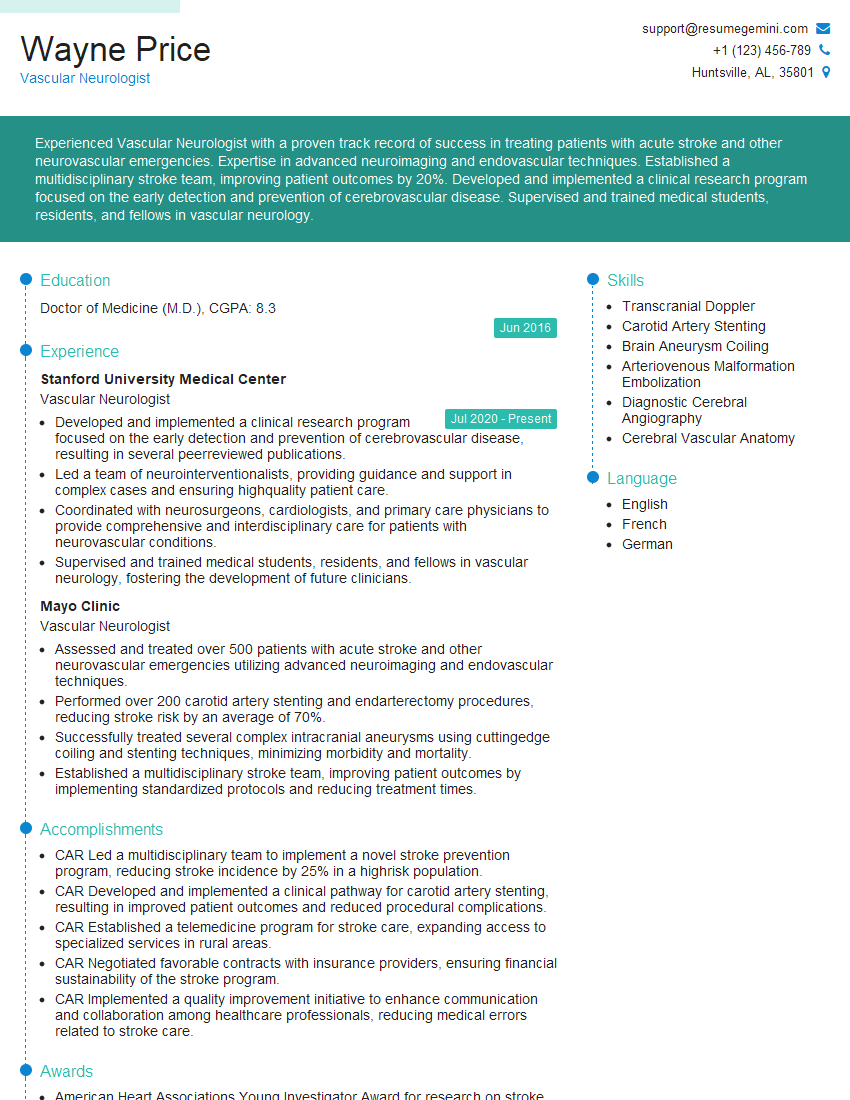
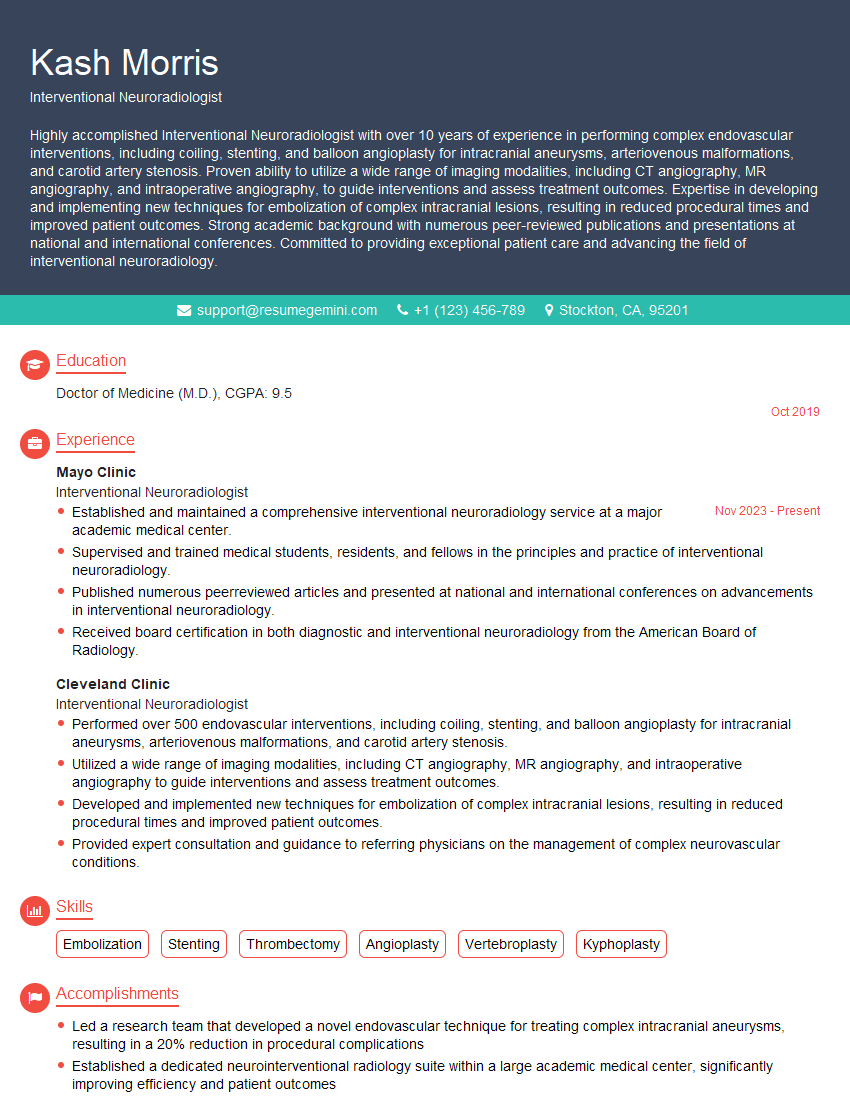
Mastering Advanced Stroke Analysis opens doors to exciting career opportunities in medical imaging, research, and healthcare technology. To maximize your job prospects, create a compelling and ATS-friendly resume that highlights your skills and experience. ResumeGemini is a trusted resource that can help you build a professional resume tailored to the specific requirements of Advanced Stroke Analysis positions. Examples of resumes tailored to this field are available through ResumeGemini to help guide you in showcasing your expertise effectively. Investing time in crafting a strong resume will significantly improve your chances of securing your dream role.
Explore more articles
Users Rating of Our Blogs
Share Your Experience
We value your feedback! Please rate our content and share your thoughts (optional).
What Readers Say About Our Blog
Really detailed insights and content, thank you for writing this detailed article.
IT gave me an insight and words to use and be able to think of examples