Every successful interview starts with knowing what to expect. In this blog, we’ll take you through the top Agricultural Consulting interview questions, breaking them down with expert tips to help you deliver impactful answers. Step into your next interview fully prepared and ready to succeed.
Questions Asked in Agricultural Consulting Interview
Q 1. Describe your experience with soil testing and its interpretation for fertilizer recommendations.
Soil testing is the cornerstone of precision agriculture, providing crucial insights into soil health and nutrient levels. It involves collecting soil samples from various locations within a field, analyzing them in a laboratory for key parameters like pH, organic matter content, and the levels of essential macronutrients (nitrogen, phosphorus, potassium) and micronutrients (iron, zinc, manganese, etc.). This data is then used to develop site-specific fertilizer recommendations, optimizing nutrient application and maximizing yield while minimizing environmental impact.
Interpretation involves understanding the relationship between soil test results and crop nutrient requirements. For example, a low phosphorus level might indicate the need for phosphorus fertilization, while a high pH might suggest the need for liming to improve nutrient availability. I use established nutrient sufficiency ranges and crop-specific nutrient removal rates to determine the appropriate fertilizer type and application rate. I also consider factors like soil type, previous cropping history, and the farmer’s budget when formulating recommendations. I often visualize this data using GIS mapping to identify nutrient deficiencies within a field, allowing for variable-rate fertilization—applying different amounts of fertilizer to different areas based on their specific needs.
For instance, I once worked with a farmer whose soil tests revealed a significant deficiency in potassium in one specific section of their cornfield. By applying potassium fertilizer only to that area, we saved them money compared to blanket application across the whole field, while still ensuring optimal crop growth in that deficient zone. This resulted in a 10% increase in yield in that specific area.
Q 2. Explain different irrigation techniques and their suitability for various crops.
Irrigation is crucial for consistent crop production, especially in arid and semi-arid regions. Several techniques exist, each with varying suitability based on crop type, water availability, and topography.
- Flood Irrigation: Involves flooding the entire field with water. It’s inexpensive but inefficient, leading to significant water loss and potential for nutrient runoff. Best suited for flat, low-lying areas with low-value crops.
- Furrow Irrigation: Water is channeled through furrows between crop rows. More efficient than flood irrigation but still prone to water loss through runoff and deep percolation. Suitable for many crops but requires careful water management.
- Drip Irrigation: Water is delivered directly to the plant roots through a network of tubes and emitters. Extremely efficient, minimizing water waste and maximizing water use efficiency. Ideal for high-value crops and water-stressed environments.
- Sprinkler Irrigation: Water is sprayed over the field using sprinklers. More efficient than furrow or flood but less than drip. Suitable for various crops and terrains. Offers flexibility in water application.
- Subsurface Drip Irrigation (SDI): Similar to drip but with the laterals buried beneath the soil surface. Excellent water use efficiency, reducing weed growth and evaporation. However, can be expensive to install.
The choice depends on factors such as crop water requirements, land topography, water availability, and the farmer’s budget. For example, drip irrigation is ideal for high-value crops like tomatoes and strawberries, whereas furrow irrigation might be suitable for large-scale wheat production in flat terrains.
Q 3. How would you assess the financial viability of a farm operation?
Assessing the financial viability of a farm operation involves a comprehensive analysis of its income, expenses, and profitability. It goes beyond simply looking at the current year’s profit; a long-term perspective is crucial.
My approach involves:
- Developing a detailed budget: This includes projecting all income sources (crop sales, livestock sales, government subsidies) and expenses (seeds, fertilizers, labor, machinery, debt repayments). I use historical data and market forecasts to create realistic projections.
- Calculating key financial ratios: These include net income, return on investment (ROI), debt-to-equity ratio, and operating margin. These indicators reveal the farm’s profitability, efficiency, and financial risk.
- Analyzing cash flow: Cash flow is crucial for short-term survival. I examine the timing of income and expenses to identify potential cash flow gaps and recommend strategies for managing them (e.g., securing loans, implementing efficient payment schedules).
- Assessing market risks: Commodity prices are volatile. I integrate market risk assessments into the analysis by examining historical price trends, future price projections, and considering crop insurance options.
- Evaluating long-term sustainability: This involves considering environmental factors (water use, soil health), labor availability, and succession planning. A financially viable farm must be environmentally and socially sustainable in the long run.
For example, I helped a dairy farm improve their financial viability by optimizing their feed costs, negotiating better contracts with milk processors, and improving their herd management practices. The analysis revealed areas where they could reduce expenses and increase efficiency, resulting in a significant improvement in their profitability within a year.
Q 4. What are the key factors influencing crop yields?
Crop yields are influenced by a complex interplay of factors, broadly categorized as:
- Genetic factors: Crop variety, including disease resistance and yield potential.
- Environmental factors: Climate (temperature, rainfall, sunlight), soil conditions (nutrients, pH, water holding capacity), and pest and disease pressure.
- Management practices: Planting date, planting density, fertilization, irrigation, pest and disease control, weed management, and harvesting techniques.
For instance, selecting a drought-resistant crop variety can significantly improve yields in water-stressed regions. Optimal fertilization based on soil tests maximizes nutrient availability to plants. Effective pest and disease management prevents yield losses from these factors. Finally, proper irrigation ensures adequate water supply during critical growth stages.
It’s a holistic approach. Improving one factor in isolation may not necessarily translate to a significant yield increase. For example, providing adequate nitrogen to a crop, while crucial, won’t compensate for severe drought conditions or a pest infestation. A balanced approach considering all these aspects is critical for maximizing yield potential.
Q 5. Discuss the impact of climate change on agricultural practices.
Climate change presents significant challenges and opportunities for agriculture. The impacts include:
- Increased frequency and intensity of extreme weather events: Droughts, floods, heatwaves, and storms can severely damage crops and reduce yields. Farmers need to adopt climate-resilient practices.
- Shifting climate zones: Changes in temperature and rainfall patterns are altering suitable growing regions for certain crops. Farmers may need to adapt by switching to different crops or implementing new cultivation techniques.
- Changes in pest and disease dynamics: Warmer temperatures and altered rainfall patterns can expand the range of pests and diseases, increasing the need for integrated pest management strategies.
- Water scarcity: Changes in rainfall patterns and increased evaporation rates can exacerbate water scarcity, necessitating efficient irrigation techniques and water conservation strategies.
Adaptation strategies include using drought-resistant crop varieties, implementing water-efficient irrigation techniques, diversifying crops, improving soil health to enhance water retention, and adopting climate-smart agricultural practices. I work with farmers to assess their specific vulnerabilities to climate change and develop customized adaptation plans based on their location and cropping systems. This may involve incorporating climate projections into their farm planning and adopting climate-resilient agricultural practices.
Q 6. Describe your experience with pest and disease management in crops.
Pest and disease management is crucial for protecting crop yields and ensuring food security. My approach emphasizes integrated pest management (IPM), a holistic strategy that minimizes reliance on chemical pesticides.
IPM involves:
- Monitoring: Regularly inspecting crops for pests and diseases, using traps, scouting, and other techniques to detect early infestations.
- Cultural control: Implementing practices like crop rotation, proper sanitation, and appropriate planting density to reduce pest and disease pressure.
- Biological control: Utilizing natural enemies of pests, such as beneficial insects and microorganisms.
- Chemical control: Using pesticides only as a last resort, targeting specific pests, and using them judiciously to minimize environmental impact and the development of pesticide resistance.
For example, I helped a farmer manage an aphid infestation in their potato crop using a combination of biological control (introducing ladybugs) and targeted pesticide application. This strategy controlled the infestation effectively while minimizing pesticide use compared to relying solely on chemical control. This resulted in healthier crops and reduced production costs for the farmer, while also reducing the environmental impact.
Q 7. How do you develop and implement sustainable farming practices?
Sustainable farming practices aim to balance economic viability with environmental protection and social equity. My approach involves:
- Soil health management: Implementing practices like cover cropping, no-till farming, and crop rotation to improve soil structure, fertility, and water retention. This reduces reliance on synthetic fertilizers and pesticides.
- Water conservation: Utilizing efficient irrigation techniques like drip irrigation and rainwater harvesting to minimize water consumption and protect water resources.
- Integrated pest management (IPM): As discussed previously, this minimizes the use of chemical pesticides.
- Biodiversity promotion: Integrating diverse crops, livestock, and natural habitats to enhance ecosystem resilience and support beneficial organisms.
- Reduced reliance on synthetic inputs: Promoting the use of organic fertilizers and biopesticides to reduce the environmental footprint of agriculture.
- Carbon sequestration: Implementing practices that enhance carbon storage in soils, contributing to climate change mitigation.
I work collaboratively with farmers to develop tailored plans, considering their specific context and goals. For example, I helped a farm transition to a no-till system, improving soil health, reducing erosion, and ultimately increasing their yields. Sustainability is not a one-size-fits-all approach; it requires a customized approach tailored to individual farms and their unique circumstances.
Q 8. Explain the principles of precision agriculture and its benefits.
Precision agriculture is all about using technology to tailor farming practices to the specific needs of individual areas within a field. Instead of a ‘one-size-fits-all’ approach, we use data to optimize inputs like fertilizer, water, and pesticides. This leads to significant improvements in efficiency and sustainability.
- GPS and GIS: These technologies allow us to create precise maps of fields, identifying variations in soil composition, topography, and crop health.
- Sensors and Remote Sensing: Drones and satellites equipped with sensors can collect data on things like crop vigor, moisture levels, and nutrient deficiencies. This provides real-time insights into the health of the crops.
- Variable Rate Technology (VRT): This allows for the precise application of inputs based on the specific needs of each area. For example, we might apply more fertilizer to areas with nutrient-deficient soil while using less in areas where levels are already adequate.
- Data Analysis: Powerful software analyzes the collected data to identify patterns and make informed decisions. This helps us optimize resource allocation, increase yield, and reduce environmental impact.
Benefits: Precision agriculture leads to increased yields, reduced input costs (less fertilizer, water, and pesticides), improved environmental sustainability (less pollution), better resource management, and increased profitability for farmers.
For instance, I worked with a farmer who was struggling with inconsistent yields across his cornfield. Using precision agriculture techniques, we identified areas with poor drainage and nutrient deficiencies. By implementing targeted irrigation and fertilizer application, we increased his yield by 15% in the following season.
Q 9. What are the common challenges faced by farmers and how can consulting help overcome them?
Farmers face a multitude of challenges, including unpredictable weather patterns, fluctuating market prices, soil degradation, pest and disease outbreaks, and increasing input costs. Agricultural consulting helps to mitigate these challenges by providing expert advice and guidance.
- Financial Planning and Risk Management: Consultants help farmers develop sound financial plans, manage risk through diversification, and secure appropriate financing.
- Crop Management: We advise on appropriate crop selection, planting strategies, fertilizer and pesticide management, and weed control.
- Soil Health Improvement: Consultants help farmers improve soil health through practices like cover cropping, no-till farming, and nutrient management.
- Pest and Disease Management: We develop integrated pest management strategies to minimize the use of pesticides while maximizing crop protection.
- Water Management: Consultants help farmers efficiently manage water resources through irrigation scheduling and water conservation techniques.
For example, I recently worked with a farmer experiencing significant yield losses due to a soilborne disease. By conducting soil testing, identifying the pathogen, and implementing a tailored disease management program, we were able to significantly reduce the impact of the disease and restore healthy crop yields.
Q 10. Describe your experience with livestock management and disease prevention.
My experience with livestock management encompasses various aspects, from breeding and nutrition to disease prevention and herd health management. I’ve worked with dairy farms, beef cattle operations, and poultry farms.
- Breeding Programs: I assist farmers in developing breeding strategies to improve herd genetics and productivity. This includes selecting superior breeding stock and implementing artificial insemination programs.
- Nutrition Management: Proper nutrition is vital for animal health and productivity. I work with farmers to develop balanced ration formulations to meet the specific nutritional needs of their animals based on age, breed, and stage of production.
- Disease Prevention: Effective disease prevention is essential for maintaining healthy herds. My work includes developing vaccination protocols, implementing biosecurity measures, and promptly responding to disease outbreaks through early detection, diagnosis and treatment.
- Record Keeping: Detailed records are crucial for monitoring animal health, tracking productivity, and making informed management decisions. I work with farmers to establish efficient record-keeping systems.
In one case, I helped a dairy farmer implement a new vaccination program that significantly reduced the incidence of mastitis in his herd, leading to a substantial improvement in milk production and reduction in treatment costs.
Q 11. Explain the importance of record-keeping in farm management.
Record-keeping is the backbone of successful farm management. It allows farmers to track key performance indicators, monitor profitability, and make informed decisions.
- Financial Records: Accurate financial records are essential for tracking income and expenses, calculating profit margins, and making informed financial decisions.
- Crop Production Records: Keeping detailed records of planting dates, fertilizer applications, pesticide use, and yields helps identify areas for improvement and optimize future crop production.
- Livestock Records: Records of animal births, deaths, weights, vaccinations, and health treatments are crucial for monitoring herd health and productivity.
- Inventory Records: Tracking inventory levels of feed, seeds, fertilizers, and other supplies helps prevent shortages and optimizes purchasing decisions.
- Labor Records: Keeping track of labor costs and productivity helps improve efficiency and manage labor resources effectively.
Without accurate records, it’s nearly impossible to identify trends, pinpoint areas for improvement, and make data-driven decisions that are essential for a thriving farm. I often help farmers transition from manual record-keeping to software solutions to improve data accuracy and accessibility.
Q 12. How do you assess the nutritional requirements of crops?
Assessing crop nutritional requirements involves a multi-step process that begins with understanding the specific needs of the crop and the characteristics of the soil.
- Soil Testing: This is the cornerstone of nutrient assessment. Soil samples are collected from various locations across the field and analyzed in a laboratory to determine the levels of essential nutrients like nitrogen, phosphorus, and potassium.
- Crop Tissue Analysis: This involves analyzing samples of plant tissue to determine the nutrient content of the plants themselves. This can reveal nutrient deficiencies that soil testing might miss.
- Yield Goals: The desired yield of the crop influences the nutrient requirements. Higher yields generally require higher nutrient inputs.
- Crop Growth Stages: Nutrient needs change throughout the crop’s growth cycle. For example, nitrogen requirements are particularly high during vegetative growth.
- Climate and Weather: Weather conditions can impact nutrient availability and uptake by plants. Drought conditions, for example, can reduce nutrient uptake.
By combining these data points, we can develop a precise fertilization plan that ensures the crop receives the optimal amounts of each nutrient at the appropriate times. This helps to maximize yield, improve crop quality, and reduce fertilizer waste.
Q 13. Describe your experience with farm machinery and its maintenance.
My experience with farm machinery includes both operation and maintenance. I’m familiar with a wide range of equipment, from tractors and combines to planting and spraying equipment.
- Operation: I’m proficient in operating various types of farm machinery, ensuring safe and efficient operation.
- Maintenance: Regular maintenance is essential to prevent breakdowns and maximize equipment lifespan. This involves routine inspections, lubrication, and repairs.
- Safety Procedures: Ensuring operator safety is paramount. I’m knowledgeable about appropriate safety procedures and regulations related to farm machinery operation and maintenance.
- Troubleshooting: I have experience troubleshooting mechanical problems and identifying necessary repairs.
- Technology Integration: Modern farm machinery is often equipped with advanced technology. I’m familiar with GPS-guided systems, precision application technologies, and data logging capabilities.
For example, I recently assisted a farmer with the diagnosis and repair of a faulty GPS system on his tractor, leading to improved accuracy in field operations and reducing input costs by optimizing fertilizer application.
Q 14. What is your experience with water resource management in agriculture?
Water resource management is crucial for sustainable agriculture. Efficient use of water is essential to reduce costs, conserve this precious resource, and protect the environment.
- Irrigation Scheduling: Determining the optimal timing and amount of irrigation is critical for maximizing crop yields while minimizing water waste. This involves using weather data, soil moisture sensors, and evapotranspiration models.
- Irrigation System Design and Management: I have experience with various irrigation systems, including drip irrigation, sprinkler irrigation, and surface irrigation. Efficient design and management of these systems are crucial for optimizing water use.
- Water Conservation Techniques: Implementing water conservation strategies such as mulching, cover cropping, and efficient irrigation techniques is essential for reducing water consumption.
- Water Quality Monitoring: Maintaining the quality of irrigation water is critical to prevent soil salinity and protect crop health. Regular monitoring of water quality is essential.
- Water Rights and Regulations: Understanding and complying with local water rights and regulations is essential for responsible water management.
In a recent project, I helped a farmer implement a drip irrigation system that reduced his water consumption by 30% while maintaining crop yields. This not only saved him money but also contributed to responsible water resource management.
Q 15. How do you advise farmers on the selection of appropriate crop varieties?
Selecting the right crop variety is crucial for maximizing yield and profitability. It’s a multifaceted process that considers several factors specific to the farmer’s situation. I begin by assessing the farm’s unique characteristics – soil type, climate (including temperature, rainfall, and frost risk), and available resources (water, fertilizer, labor). We then discuss the farmer’s goals, whether it’s maximizing yield, improving quality for a specific market, or enhancing resilience to pests and diseases.
Next, I delve into the available crop varieties, focusing on those adapted to the specific agro-ecological conditions. We consider traits like maturity date, disease resistance, yield potential under different stress conditions (drought tolerance, for instance), and nutritional value. I often use resources like seed catalogs, university extension publications, and government databases to access relevant information on variety performance trials conducted in the region. For example, if a farmer is in a drought-prone area, we’d prioritize varieties with proven drought tolerance. If pests are a major concern, disease-resistant varieties become paramount. Finally, we consider market demand—the price farmers can obtain for a specific variety and the availability of processing or storage facilities if needed. This entire process is collaborative; the farmer’s experience and local knowledge are invaluable.
Career Expert Tips:
- Ace those interviews! Prepare effectively by reviewing the Top 50 Most Common Interview Questions on ResumeGemini.
- Navigate your job search with confidence! Explore a wide range of Career Tips on ResumeGemini. Learn about common challenges and recommendations to overcome them.
- Craft the perfect resume! Master the Art of Resume Writing with ResumeGemini’s guide. Showcase your unique qualifications and achievements effectively.
- Don’t miss out on holiday savings! Build your dream resume with ResumeGemini’s ATS optimized templates.
Q 16. Explain the benefits and challenges of organic farming.
Organic farming, which excludes synthetic pesticides and fertilizers, presents significant benefits and challenges. On the benefits side, it often leads to improved soil health due to the increased use of cover crops, crop rotation, and composting. This results in better water retention and nutrient cycling. Moreover, organic produce tends to have higher nutritional value and a unique flavor profile appealing to specific consumer segments. Environmentally, organic farming reduces pollution from synthetic chemicals, conserving biodiversity and promoting ecosystem health. It also aligns with growing consumer demand for sustainable and ethically produced food.
However, organic farming presents challenges. Yields can be lower compared to conventional farming, especially in the initial years of transition. The lack of synthetic pesticides can make pest and disease management more difficult, requiring more labor-intensive practices and potentially impacting profitability. Furthermore, the costs of organic certification and adhering to strict organic standards can be significant, potentially limiting access for small-scale farmers. Market access can also be a hurdle, depending on the availability of buyers who are willing to pay a premium for organic products. A comprehensive cost-benefit analysis is crucial before adopting organic farming practices.
Q 17. Discuss your knowledge of government agricultural programs and subsidies.
My knowledge of government agricultural programs and subsidies is extensive. I’m familiar with various schemes aimed at supporting farmers financially and technically, including direct payments, crop insurance programs, conservation programs (e.g., those promoting soil health and water conservation), and research and development initiatives. I regularly monitor updates to these programs, as they frequently evolve. For example, some programs offer subsidies for the adoption of conservation tillage practices or the installation of irrigation systems that use water efficiently. Others provide financial assistance for farmers facing crop losses due to natural disasters or pest infestations. I work closely with farmers to identify which programs they are eligible for and help them navigate the application process, ensuring they receive the support they need. Understanding the specific requirements and eligibility criteria for each program is crucial to ensure farmers can effectively leverage these resources.
Q 18. How do you communicate complex technical information to farmers with varying levels of expertise?
Communicating complex technical information effectively requires tailoring the message to the audience. I avoid using technical jargon whenever possible, opting for clear and concise language understandable by all. With farmers who have limited agricultural backgrounds, I use simple analogies and visual aids like diagrams and photos to illustrate key concepts. For instance, explaining nutrient uptake using a simple analogy of plants ‘drinking’ water and ‘eating’ nutrients from the soil can make the idea accessible. I often demonstrate practices hands-on in the field.
For experienced farmers, I can engage in more in-depth discussions, incorporating relevant data and research findings. Active listening is crucial—I encourage farmers to ask questions and share their experiences, fostering a collaborative dialogue. Feedback loops are incorporated so I can assess the effectiveness of my communication and adjust accordingly. The key is to build trust and mutual respect; this enhances communication and facilitates knowledge transfer. Regularly scheduled follow-ups are essential to answer lingering questions and offer continuous support.
Q 19. Describe your experience with data analysis in agricultural settings.
Data analysis plays a vital role in my work. I use various techniques to analyze yield data, soil test results, weather patterns, and other relevant information to identify trends and optimize farm management practices. For example, I might use statistical software (like R or SPSS) to analyze yield data from different crop varieties or fertilizer treatments to determine the optimal combination for a specific farm. I may utilize time-series analysis to forecast crop yields based on historical weather data. I also use data visualization tools to create easily interpretable graphs and charts to communicate insights effectively to farmers.
Recently, I used a dataset of soil nutrient levels across a farmer’s fields to create a variable-rate fertilizer application plan, which significantly reduced fertilizer costs while maintaining high yields. Data analysis helps make informed decisions regarding planting dates, irrigation schedules, and pest management strategies, ultimately leading to increased efficiency and profitability. The ability to interpret and act upon data is increasingly important in today’s precision agriculture landscape.
Q 20. What is your familiarity with agricultural GIS software and its applications?
I’m proficient in using agricultural GIS software, such as ArcGIS and QGIS. These tools are invaluable for analyzing spatial data related to farm management. I use GIS to create maps depicting soil types, elevation, field boundaries, and drainage patterns. This allows for precise planning of field operations, such as irrigation scheduling or variable-rate fertilizer application. I also use GIS to analyze yield data geographically, identifying areas within a field exhibiting higher or lower yields, thus pinpointing areas needing attention.
For example, I recently used GIS to help a farmer optimize irrigation scheduling by mapping areas with different soil moisture levels and adjusting irrigation based on the specific needs of each zone. This resulted in significant water savings and improved crop yields. GIS enhances the precision and efficiency of agricultural decision-making, moving beyond a general approach to more targeted interventions.
Q 21. How do you conduct a farm audit and identify areas for improvement?
A farm audit involves a comprehensive assessment of all aspects of a farm’s operations to identify areas for improvement. It’s a structured process involving several steps. First, I gather information through interviews with the farmer, reviewing farm records (production data, financial records, etc.), and conducting visual inspections of the farm. I assess the farm’s soil health, irrigation systems, pest and disease management practices, crop management strategies, and financial records. I might also use remote sensing data (satellite imagery or drone data) to gain a broader perspective of the farm.
Next, I analyze the collected data, comparing the farm’s performance to benchmarks and best practices. I identify strengths and weaknesses, focusing on areas where improvements could lead to increased efficiency and profitability. For example, I might identify inefficiencies in irrigation practices, suggesting improvements like the installation of drip irrigation. Or I might detect nutrient deficiencies in the soil, recommending a tailored fertilizer plan. Finally, I present a report with clear recommendations, outlining specific steps the farmer can take to address the identified areas for improvement. The audit concludes with a follow-up meeting to discuss the report and create an action plan for implementation.
Q 22. Describe your experience with risk management in agriculture.
Risk management in agriculture is crucial for ensuring the long-term viability of farming operations. It involves identifying, analyzing, and mitigating potential threats that could impact yields, profitability, and sustainability. This includes a wide range of factors.
- Production Risks: These relate directly to crop or livestock production, such as adverse weather (droughts, floods, frost), pests and diseases, soil degradation, and variations in input costs (seeds, fertilizers, feed).
- Market Risks: These involve fluctuations in commodity prices, changes in consumer demand, and competition from other producers. Effective marketing strategies, price hedging, and diversification of products are key to managing these risks.
- Financial Risks: These include debt management, interest rate changes, access to credit, and unexpected expenses. Solid financial planning, budgeting, and risk insurance are essential.
- Legal and Regulatory Risks: Compliance with environmental regulations, labor laws, and food safety standards are critical. Ignoring these can lead to significant penalties and reputational damage.
Example: I once worked with a dairy farmer facing high feed costs. We implemented a risk management strategy that included exploring alternative feed sources, negotiating better prices with suppliers, and diversifying the herd’s diet to reduce dependence on expensive feed ingredients. This significantly reduced their vulnerability to feed price volatility.
Q 23. How do you develop and implement a farm marketing strategy?
Developing a successful farm marketing strategy requires a thorough understanding of your target market, your competitive landscape, and your farm’s unique strengths. It’s a multi-step process.
- Market Research: Identify your target customers (e.g., restaurants, grocery stores, individual consumers). Analyze market trends, prices, and consumer preferences.
- Value Proposition: Determine what makes your farm’s products unique (e.g., organic certification, locally sourced, specific breed of livestock). Highlight these attributes to appeal to your target market.
- Marketing Channels: Choose appropriate channels to reach your customers, such as farmers’ markets, direct-to-consumer sales (e.g., online store, farm stand), wholesale partnerships, and online marketplaces.
- Branding and Packaging: Develop a strong brand identity that reflects your farm’s values and product quality. Attractive packaging enhances the appeal of your products.
- Pricing Strategy: Determine your pricing based on production costs, market prices, and your value proposition. Consider strategies like value-based pricing or competitive pricing.
- Promotion and Sales: Implement effective marketing campaigns to reach your target audience, using methods like social media marketing, website development, local advertising, and participation in agricultural events.
- Evaluation and Adjustment: Regularly monitor sales data, customer feedback, and market conditions to refine your marketing strategy over time.
Example: I helped a small-scale fruit farm transition from solely relying on local farmers’ markets to incorporating online sales and direct delivery services. This expanded their reach, improved profitability, and created a more resilient business model.
Q 24. Explain the concept of integrated pest management (IPM).
Integrated Pest Management (IPM) is a sustainable approach to pest control that emphasizes preventing pest problems and minimizing the use of pesticides. It’s based on a holistic understanding of the agricultural ecosystem.
- Monitoring and Identification: Regular scouting of crops and livestock helps identify pests early on. Accurate identification is crucial for selecting effective control measures.
- Prevention: Implementing preventative measures reduces the likelihood of pest infestations. Examples include crop rotation, using pest-resistant varieties, maintaining healthy soil, and proper sanitation.
- Biological Control: Utilizing natural enemies of pests, such as beneficial insects or microorganisms, can significantly reduce pest populations without the use of synthetic chemicals.
- Cultural Control: This involves modifying farming practices to make the environment less hospitable for pests. Examples include adjusting planting times, adjusting irrigation, and proper weed management.
- Chemical Control: Pesticides are used only as a last resort and only when other methods are insufficient. Emphasis is placed on using the least toxic and most environmentally friendly options.
Example: I guided a vineyard struggling with grapevine aphids to implement an IPM strategy that combined regular monitoring, the introduction of ladybugs (a natural predator), and the strategic use of a low-toxicity insecticide only when necessary. This significantly reduced aphid populations while minimizing environmental impact.
Q 25. What is your experience with farm succession planning?
Farm succession planning is the process of transferring ownership and management of a farm to the next generation or a designated successor. It requires careful consideration of legal, financial, and family dynamics.
- Legal Structures: Establishing the appropriate legal structure for the transfer, such as gifting, selling, or using trusts, is crucial for minimizing tax liabilities and ensuring a smooth transition.
- Financial Planning: Valuing the farm’s assets, developing a transition timeline, securing financing if necessary, and addressing estate tax implications are essential aspects of financial planning.
- Family Communication: Open communication and collaboration among family members are vital for addressing potential conflicts and ensuring a fair and equitable transfer process.
- Mentorship and Training: The incoming generation needs adequate training and support to successfully manage the farm. A gradual transfer of responsibilities can facilitate a smoother transition.
- Business Plan: Developing a comprehensive business plan that outlines the farm’s future goals, strategies, and financial projections ensures the farm remains viable after the succession.
Example: I assisted a family farm in developing a succession plan that involved transferring ownership to the next generation over a five-year period. This included setting up a family limited liability company (LLC), creating a detailed training program, and establishing a clear timeline for asset transfer.
Q 26. Discuss your understanding of agricultural regulations and compliance.
Understanding agricultural regulations and compliance is critical for avoiding penalties and ensuring the safety and sustainability of farming operations. These regulations vary by location and pertain to several aspects.
- Environmental Regulations: These relate to water quality, pesticide use, fertilizer application, and soil conservation. Farmers must comply with regulations set by agencies such as the Environmental Protection Agency (EPA).
- Food Safety Regulations: Regulations such as those set by the Food and Drug Administration (FDA) ensure that agricultural products are safe for human consumption. This includes proper handling, processing, and labeling of food products.
- Labor Laws: Farmers must adhere to labor laws concerning worker safety, wages, and working conditions, often enforced by the Department of Labor.
- Animal Welfare Regulations: These regulations cover the humane treatment of animals raised for food, ensuring their health and well-being.
- Organic Certification: Farmers who choose to produce organic products must follow stringent guidelines to receive and maintain organic certification.
Example: I worked with a farm facing potential non-compliance issues related to pesticide application. We conducted a thorough review of their practices, updated their records, and implemented training to ensure compliance with EPA regulations, preventing potential fines and reputational damage.
Q 27. How do you stay updated on the latest advancements in agricultural technology?
Staying updated on advancements in agricultural technology is essential for maintaining a competitive edge and improving efficiency and sustainability. I utilize several strategies:
- Professional Organizations: Membership in organizations like the American Society of Agricultural and Biological Engineers (ASABE) provides access to publications, conferences, and networking opportunities.
- Industry Publications and Journals: Regularly reading relevant journals, trade magazines, and online publications keeps me informed about emerging technologies.
- Conferences and Workshops: Attending industry conferences and workshops provides opportunities to learn about new technologies and network with experts in the field.
- Online Resources: Utilizing online resources such as university extension websites, government agencies’ reports, and reputable agricultural technology websites offers up-to-date information.
- Networking: Engaging with other agricultural professionals, researchers, and technology providers helps to gain insights and stay abreast of new developments.
Example: Recently, I learned about the use of precision agriculture technologies, such as GPS-guided machinery and sensor-based irrigation, through a combination of attending conferences, reading industry publications, and collaborating with technology providers. This knowledge enables me to advise my clients on ways to improve their operational efficiency and resource management.
Q 28. Describe your experience working with diverse stakeholders in agricultural projects.
Working effectively with diverse stakeholders in agricultural projects requires strong communication, collaboration, and conflict-resolution skills. Stakeholders can include farmers, landowners, government agencies, processors, consumers, and community members.
- Communication: Clear and consistent communication is key to understanding different perspectives and managing expectations. Active listening and providing timely updates are crucial.
- Collaboration: Developing collaborative partnerships built on trust and mutual respect allows for pooling knowledge and resources, ensuring project success.
- Conflict Resolution: Addressing potential conflicts constructively and finding mutually acceptable solutions is essential for maintaining positive relationships and moving forward.
- Cultural Sensitivity: Respecting and understanding the cultural backgrounds and perspectives of all stakeholders is vital for creating an inclusive and collaborative environment.
- Stakeholder Engagement: Implementing stakeholder engagement strategies (e.g., workshops, surveys, focus groups) ensures diverse perspectives are considered throughout the project lifecycle.
Example: In a project involving the implementation of a new irrigation system in a community, I facilitated discussions between farmers, water resource managers, and local residents to address concerns about water allocation and environmental impacts. This collaborative approach led to a solution that satisfied all stakeholders and ensured the project’s successful implementation.
Key Topics to Learn for Agricultural Consulting Interview
- Crop Production & Management: Understanding various cropping systems, irrigation techniques, fertilization strategies, and pest/disease management. Practical application: Analyzing a farm’s yield data to identify areas for improvement in efficiency and profitability.
- Soil Science & Fertility: Knowledge of soil types, nutrient cycling, soil testing interpretation, and sustainable soil management practices. Practical application: Developing a soil health improvement plan for a client’s land, considering both environmental and economic factors.
- Livestock Management: Understanding animal nutrition, breeding strategies, disease prevention, and welfare standards. Practical application: Advising a rancher on optimizing their herd’s productivity and profitability through improved feeding and management practices.
- Agricultural Economics & Policy: Familiarity with market trends, government regulations, farm economics, and risk management. Practical application: Developing a financial plan for a farming operation, considering various market scenarios and risk mitigation strategies.
- Precision Agriculture & Technology: Understanding GPS technology, GIS mapping, remote sensing, and data analysis tools used in modern agriculture. Practical application: Using data analytics to optimize fertilizer application and improve irrigation efficiency.
- Sustainable Agriculture Practices: Knowledge of integrated pest management, organic farming, conservation tillage, and water conservation techniques. Practical application: Designing a farm management plan that incorporates environmentally sound practices while maintaining profitability.
- Communication & Problem-Solving: Excellent communication skills (written and verbal) and the ability to analyze complex problems and develop practical solutions. Practical application: Presenting a detailed report to a client, clearly explaining technical information in a relatable way.
Next Steps
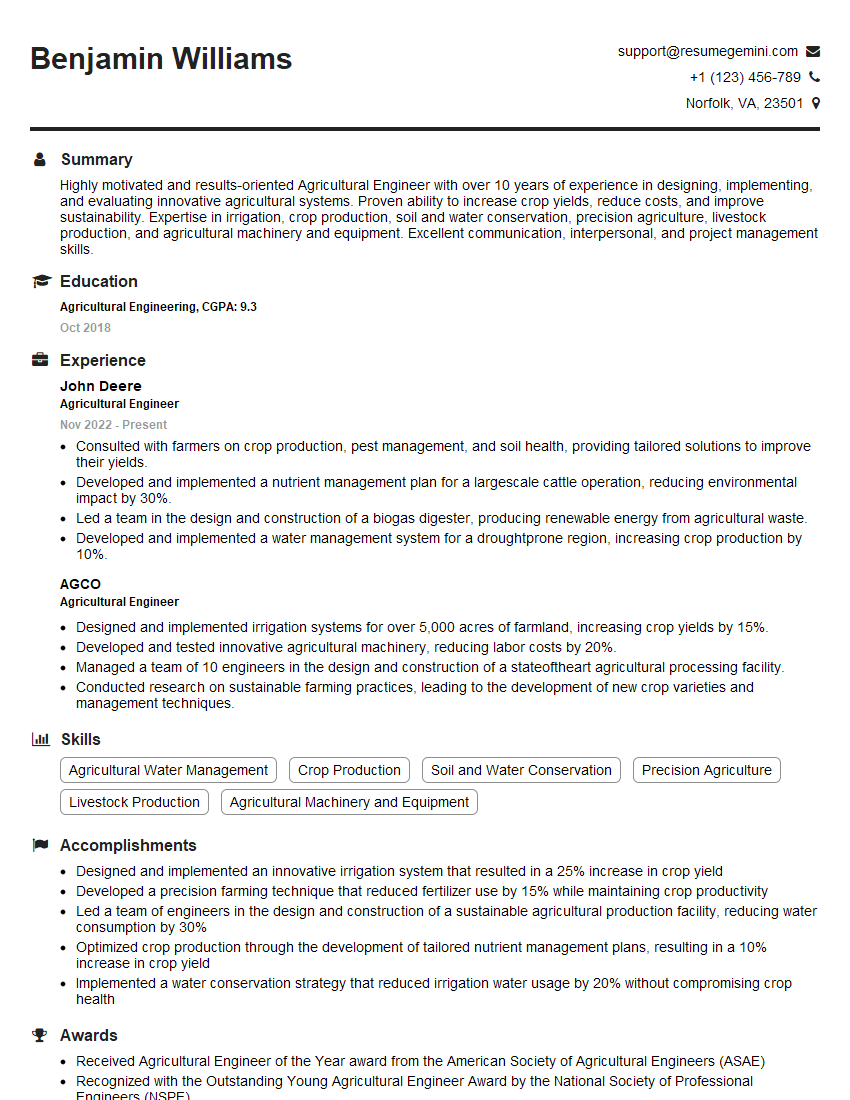
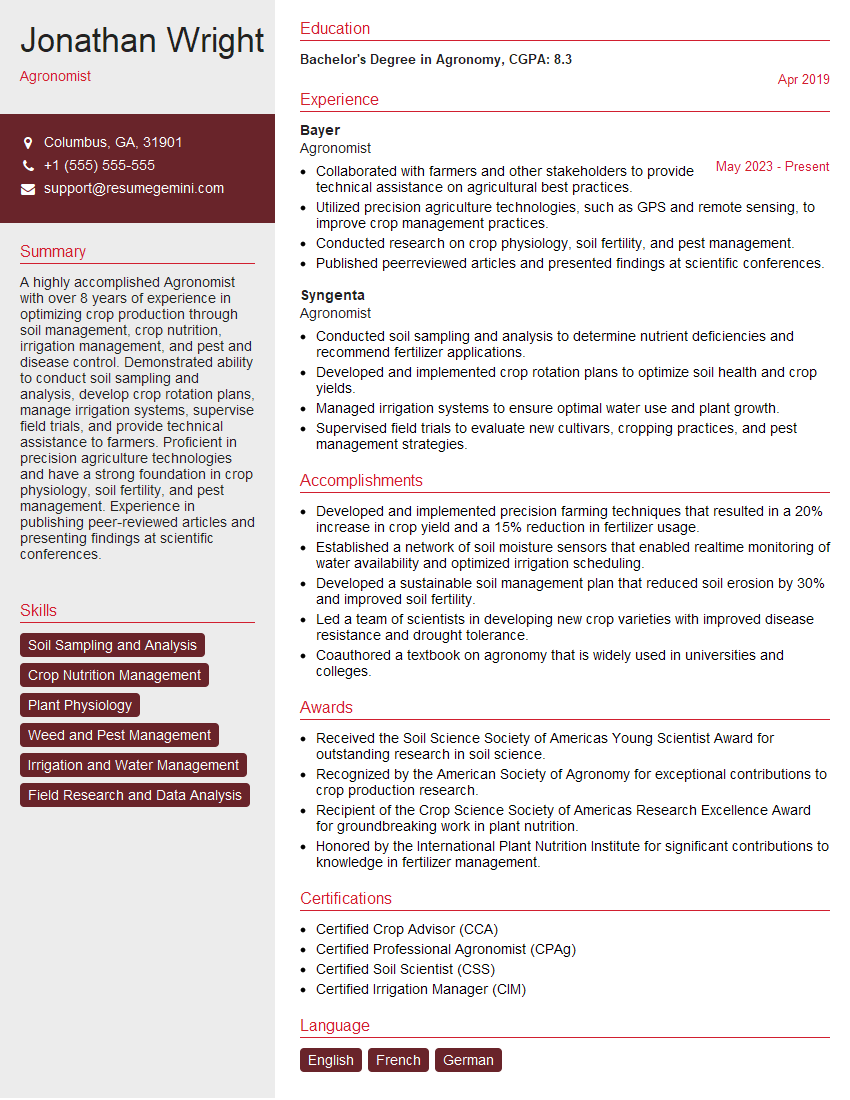
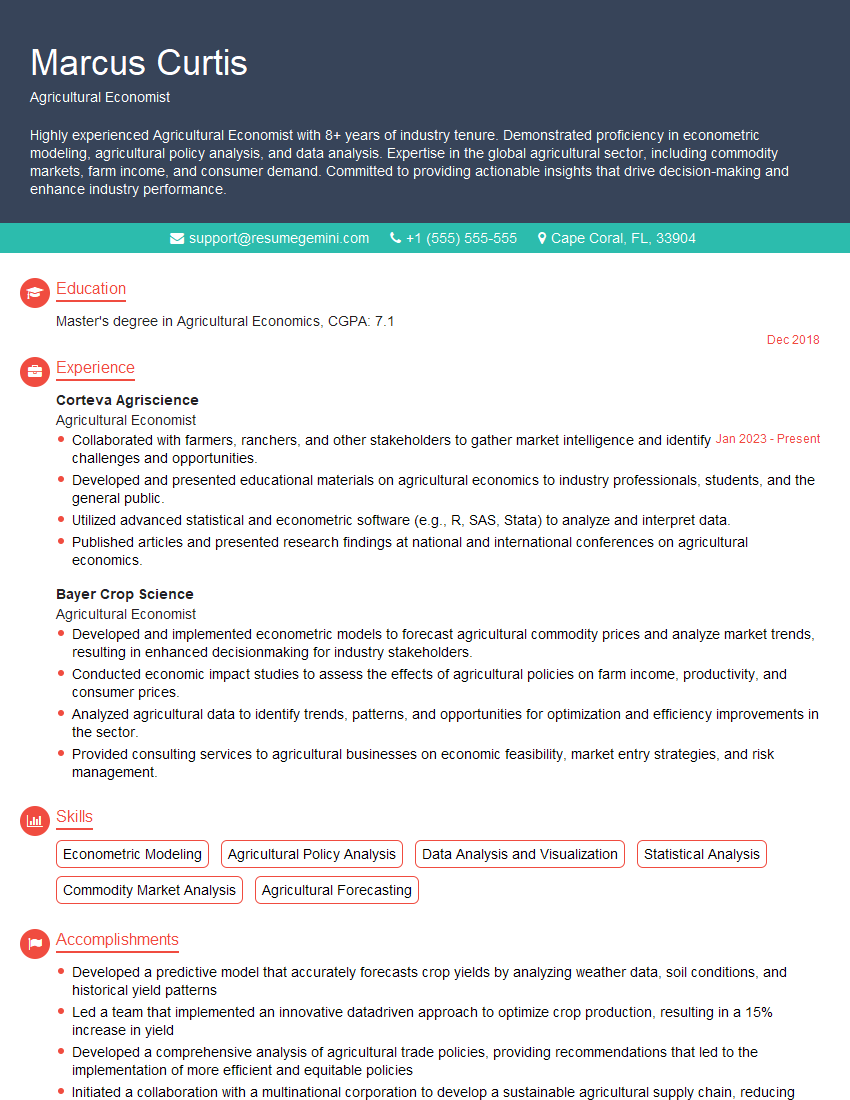
Mastering Agricultural Consulting opens doors to a rewarding career with significant impact on food security and environmental sustainability. To enhance your job prospects, building a strong, ATS-friendly resume is crucial. ResumeGemini is a trusted resource that can help you craft a professional and effective resume tailored to the agricultural consulting industry. Examples of resumes specifically designed for Agricultural Consulting roles are available to guide you. Take the next step towards your dream career – create a resume that showcases your skills and experience effectively.
Explore more articles
Users Rating of Our Blogs
Share Your Experience
We value your feedback! Please rate our content and share your thoughts (optional).
What Readers Say About Our Blog
I Redesigned Spongebob Squarepants and his main characters of my artwork.
https://www.deviantart.com/reimaginesponge/art/Redesigned-Spongebob-characters-1223583608
IT gave me an insight and words to use and be able to think of examples
Hi, I’m Jay, we have a few potential clients that are interested in your services, thought you might be a good fit. I’d love to talk about the details, when do you have time to talk?
Best,
Jay
Founder | CEO