The right preparation can turn an interview into an opportunity to showcase your expertise. This guide to Knowledge of Milk Grading Standards interview questions is your ultimate resource, providing key insights and tips to help you ace your responses and stand out as a top candidate.
Questions Asked in Knowledge of Milk Grading Standards Interview
Q 1. Explain the different classes of milk and their respective grading standards.
Milk is classified into different grades based on its quality and composition. These grades reflect the milk’s suitability for various purposes, from direct consumption to manufacturing dairy products. The specific standards vary slightly depending on the country and regulatory body, but generally, they assess factors such as bacterial count, somatic cell count, fat content, and the presence of any undesirable substances.
Grade A Milk: This is the highest grade, intended for direct consumption. It meets the strictest standards for bacterial count, somatic cell count, and other quality parameters. Think of it as the ‘gold standard’ for milk quality.
Grade B Milk: This grade typically has slightly higher bacterial or somatic cell counts than Grade A milk. It’s usually not suitable for direct consumption without further processing, but it’s commonly used in the manufacture of cheese, yogurt, or other dairy products where the processing steps will eliminate potential contaminants. This is like the ‘silver medal’ – still good, just needs a little extra work.
Manufacturing Grade Milk: This is the lowest grade and is used exclusively for manufacturing purposes. It might have higher bacterial counts or other quality issues that make it unsuitable for drinking.
For example, a specific standard might require Grade A milk to have a bacterial count below 100,000 cfu/mL (colony-forming units per milliliter), while Grade B might allow up to 300,000 cfu/mL.
Q 2. Describe the process of milk testing for somatic cell count.
Somatic cell count (SCC) refers to the number of white blood cells present in milk. An elevated SCC indicates potential mastitis (inflammation of the udder) in the cow. Testing for SCC typically involves using a specialized instrument called a flow cytometer or a direct microscopic examination. The process generally involves the following steps:
Sample Collection: A representative sample of milk is collected, ensuring proper hygiene to avoid contamination.
Dilution (if necessary): The milk sample might be diluted to achieve a concentration suitable for the chosen testing method.
Analysis: The sample is analyzed using a flow cytometer, which counts the cells based on their size and light-scattering properties. Alternatively, direct microscopic examination involves staining the cells and counting them under a microscope.
Result Interpretation: The SCC is reported as the number of cells per milliliter of milk. Higher counts indicate a potential problem with udder health.
Imagine it like this: The flow cytometer acts like a sophisticated cell counter, quickly and accurately determining the number of white blood cells—the ‘soldiers’ fighting infection—in the milk. A high number suggests a battle is raging within the cow’s udder.
Q 3. What are the acceptable limits for bacterial count in graded milk?
Acceptable limits for bacterial count in graded milk are crucial for ensuring safety and quality. These limits are strictly defined by regulatory agencies and vary depending on the grade of milk. Generally, Grade A milk has the lowest acceptable limits, while manufacturing-grade milk allows for higher counts.
For instance, a standard might set the maximum acceptable bacterial count for Grade A milk at 100,000 cfu/mL (colony-forming units per milliliter) or even lower, perhaps below 30,000 cfu/mL depending on the region. Grade B milk would allow for a higher count, perhaps up to 300,000 cfu/mL, and manufacturing-grade milk may have even less stringent limits.
Exceeding these limits indicates potential contamination and could lead to spoilage or health risks if the milk is consumed directly.
Q 4. How does temperature affect milk quality and grading?
Temperature plays a significant role in milk quality and grading. Milk is a highly perishable product, and improper temperature control can lead to rapid bacterial growth and spoilage, affecting its taste, appearance, and overall quality.
High Temperatures: Prolonged exposure to high temperatures can denature milk proteins, causing changes in taste and texture. It also accelerates bacterial growth and reduces the shelf life.
Low Temperatures: While refrigeration slows bacterial growth, extremely low temperatures can also affect the milk’s quality by causing crystallization of fat and other components.
Proper temperature control is essential throughout the entire milk handling process, from milking to processing and storage. Rapid cooling immediately after milking is critical to inhibit bacterial growth and maintain quality. A standard might specify maintaining milk at temperatures below 4°C (39°F) during storage and transport to meet grading standards. Think of it like keeping a delicate flower; you need just the right temperature to keep it fresh and beautiful.
Q 5. Explain the significance of the methylene blue reduction test.
The methylene blue reduction test (MBRT) is a simple and inexpensive method to assess the bacteriological quality of milk. It measures the milk’s reducing capacity, which is closely related to its bacterial load. The test relies on the fact that bacteria in milk consume oxygen and reduce methylene blue dye, causing it to change color from blue to colorless.
The process involves adding methylene blue to a milk sample and observing the time it takes for the dye to decolorize. A shorter reduction time indicates a higher bacterial count, suggesting lower quality milk. A longer reduction time suggests better bacteriological quality. This is a relatively quick and easy test that gives a general indication of the hygienic conditions during milking and handling.
For example, a milk sample that decolorizes the dye within 1 hour might indicate a high bacterial load, while a sample taking 6 hours or more might suggest acceptable bacteriological quality. However, it’s crucial to remember that MBRT is an indicator test, not a precise measurement of bacterial count.
Q 6. What are the common defects found in milk and how do they affect grading?
Several defects can occur in milk, impacting its quality and grading. These defects often arise from poor hygiene practices during milking, storage, or processing. Common defects include:
High Somatic Cell Count (Mastitis): Indicates udder infection and affects the milk’s quality and taste.
High Bacterial Count: Leads to spoilage, off-flavors, and potential health risks.
Acidic Milk: Results from bacterial fermentation, causing souring and curdling.
Salty Taste: Can be due to contamination with salty water or certain illnesses in the cow.
Rancidity: Caused by oxidation of fats, leading to unpleasant tastes and odors.
Abnormal Flavors or Odors: Can be caused by various factors, including feed contamination, illness in the cow, or improper storage.
These defects directly influence milk grading. Higher levels of bacterial contamination or somatic cells automatically reduce the grade of milk and may render it unfit for human consumption depending on the severity. For example, milk with a high acidic level or rancid taste will receive a lower grade or be rejected outright.
Q 7. Describe the role of sensory evaluation in milk grading.
Sensory evaluation is a crucial aspect of milk grading, particularly for assessing aspects not readily measured by instrumental methods. This involves using human senses (sight, smell, taste, and touch) to evaluate the milk’s overall quality. Trained sensory panelists assess characteristics like:
Appearance: Color, clarity, and presence of any sediment or abnormal particles.
Odor: Detection of any off-flavors or unpleasant smells.
Flavor: Assessment of the milk’s taste for any undesirable notes or deviations from the expected profile.
Texture: Evaluation of the milk’s consistency and mouthfeel.
Sensory evaluation provides a holistic assessment of the milk’s acceptability. Although instrumental methods quantify bacterial and somatic cell counts, sensory analysis provides a crucial qualitative assessment of the overall sensory experience. Think of it as the ‘human touch’ in milk quality control, providing insights that go beyond mere numbers.
Q 8. How are milk samples collected and transported for testing?
Milk sample collection for testing is a crucial step ensuring accurate grading. Samples are typically collected aseptically, meaning special care is taken to avoid contamination. This involves using sterile equipment, such as a sterile sampler, and employing proper hygiene practices by the collector. The sample should represent the bulk milk’s quality. For example, a composite sample might be taken by collecting smaller portions from different parts of a bulk tank over several days.
Transportation is equally critical. Samples are usually kept cool (ideally below 4°C) during transport to prevent bacterial growth and preserve the integrity of the milk’s components. This commonly involves using insulated containers with ice packs or refrigerated transport vehicles. Proper labeling with the farm’s identification, date, and time of collection is essential for traceability and record-keeping.
Q 9. Explain the different methods used for determining fat content in milk.
Several methods exist for determining milk’s fat content, each with varying degrees of precision and cost. The most common methods include:
Babcock Test: This is a traditional, widely used method involving the use of a centrifuge to separate the fat from the milk. The percentage of fat is read directly from the graduated neck of the Babcock bottle. It’s relatively simple and inexpensive but requires skilled personnel and can be time-consuming.
Gerber Test: Similar to the Babcock test, this method uses a butyrometer (a special type of graduated glassware) and a centrifuge to separate and measure fat. It’s considered slightly more accurate than the Babcock test but shares similar limitations.
Infrared Spectroscopy (FTIR): This modern technique uses infrared light to measure the milk’s fat content. It’s rapid, automated, and highly accurate, making it suitable for high-throughput testing in large dairies. It directly measures the absorption of infrared light by the milk’s fat molecules. This is much more efficient than the Babcock or Gerber methods.
Q 10. What are the legal and regulatory requirements for milk grading in your region?
Legal and regulatory requirements for milk grading vary by region, but generally aim to protect public health and ensure fair trade practices. These often specify acceptable limits for various quality parameters, such as fat content, protein content, somatic cell count, and bacterial count. For instance, regulations might mandate that milk intended for human consumption must not exceed a certain somatic cell count (indicative of udder health) or bacterial load (indicating hygiene standards during production). Non-compliance can lead to fines, rejection of milk batches, and even the suspension of production permits. Specific regulations are often available through government agencies that oversee food safety and agricultural practices.
In many regions, these regulations are based on internationally recognized standards, allowing for some degree of standardization across countries. These standards help ensure safe and high-quality milk products reach consumers.
Q 11. How does adulteration affect milk quality and grading?
Milk adulteration—the deliberate addition of substances to milk to increase volume or mask poor quality—severely impacts milk quality and grading. Common adulterants include water, urea, detergents, and other chemicals. Water addition dilutes the milk, reducing its fat and protein content and impacting its overall nutritional value. Similarly, adding urea artificially raises the protein level, while detergents or other chemicals can significantly affect the taste and safety of the product. These actions negatively affect the final grading and potentially compromise consumer health. Detecting adulteration requires advanced analytical techniques, and severe penalties are usually imposed on producers who engage in such practices. Examples of testing methods used for adulteration detection include chromatography and spectroscopy.
Q 12. Describe the procedures for handling and processing milk to maintain its quality.
Maintaining milk quality throughout handling and processing requires adherence to strict hygiene and temperature control protocols. Immediately after milking, milk should be rapidly cooled to below 4°C to inhibit bacterial growth. This often involves using efficient cooling systems on the farm. Transport to processing plants should also maintain this low temperature to prevent spoilage. The processing plant itself needs to be meticulously clean and sanitary, with regular disinfection procedures. Milk is usually standardized to achieve a desired fat content, pasteurized to eliminate harmful microorganisms, and then homogenized to prevent fat separation. Proper packaging and storage at appropriate temperatures are vital to extend shelf life and maintain the final product’s quality and safety. For example, Ultra-High Temperature (UHT) processing extends shelf life, often without refrigeration, though this process can sometimes affect the taste slightly.
Q 13. What are the implications of exceeding the acceptable limits for somatic cell count?
Somatic cell count (SCC) measures the number of white blood cells in milk, primarily indicating udder health. High SCC indicates mastitis (inflammation of the udder), a common disease in dairy cows. Exceeding acceptable SCC limits points to suboptimal animal health management, potentially leading to reduced milk quality, altered taste, and potentially increased risk of bacterial contamination. Milk with excessively high SCC might be downgraded or rejected, resulting in financial losses for the producer. In some regions, there might be specific legal regulations that stipulate the maximum acceptable SCC in milk destined for human consumption. Producers might have to cull affected cows or implement better udder hygiene and preventative measures to bring SCC levels down.
Q 14. Explain the importance of hygiene and sanitation in milk production and grading.
Hygiene and sanitation are paramount in milk production and grading. They directly impact milk quality, safety, and shelf life. Maintaining a clean milking environment, regularly disinfecting milking equipment, and ensuring the cow’s udder is clean before milking are crucial steps in minimizing bacterial contamination. This translates to lower bacterial counts and higher-quality milk, which in turn leads to better grading and increased consumer confidence. Processing plants must also adhere to stringent hygiene standards, including regular cleaning and sanitation of all surfaces and equipment that come into contact with the milk. Good sanitation practices greatly reduce the risk of foodborne illnesses and ensure the production of safe, high-quality milk products. Neglecting hygiene can have severe consequences, from product rejection to public health hazards.
Q 15. How do you handle a situation where a milk sample fails to meet grading standards?
When a milk sample fails to meet grading standards, a systematic investigation is crucial. First, we verify the test results through repeat analysis, ensuring accuracy. If the failure is confirmed, we trace the sample back to its origin – identifying the farm, the specific milking session, and any potential processing steps involved. This helps pinpoint the source of the problem. We then thoroughly investigate potential causes such as mastitis in the herd (infection causing abnormal milk composition), improper sanitation during milking or handling, or equipment malfunction. Corrective actions are implemented immediately, which may include improved sanitation practices, animal health interventions (treating mastitis), equipment repair or replacement, and retraining of personnel. The failed milk batch is usually rejected for human consumption, often diverted to animal feed or other non-food uses, depending on the severity of the defect. Strict record-keeping documents the entire process, from sample failure to corrective actions and their effectiveness, allowing for continuous improvement.
For example, if a sample shows high somatic cell count (indicating infection), we’d investigate for mastitis in the cows from that farm. Treatment and improved hygiene protocols would be implemented. Regular follow-up testing is then vital to confirm the effectiveness of our corrective actions.
Career Expert Tips:
- Ace those interviews! Prepare effectively by reviewing the Top 50 Most Common Interview Questions on ResumeGemini.
- Navigate your job search with confidence! Explore a wide range of Career Tips on ResumeGemini. Learn about common challenges and recommendations to overcome them.
- Craft the perfect resume! Master the Art of Resume Writing with ResumeGemini’s guide. Showcase your unique qualifications and achievements effectively.
- Don’t miss out on holiday savings! Build your dream resume with ResumeGemini’s ATS optimized templates.
Q 16. Describe the different types of milk storage tanks and their impact on quality.
Milk storage tanks play a vital role in maintaining milk quality. The type of tank significantly impacts how well this is achieved. Common types include:
- Bulk Cooling Tanks (BCTs): These large tanks are typically found on dairy farms. They rapidly cool the milk immediately after milking, preventing bacterial growth. The cooling capacity and insulation quality directly affect the milk’s temperature stability.
- Farm-to-plant Tankers: Insulated tankers transport milk from farms to processing plants. Maintaining the cold chain is paramount here, as any temperature fluctuation can compromise quality. The tankers are designed with refrigeration systems to maintain a consistently low temperature.
- Storage Tanks at Processing Plants: These tanks are larger than BCTs and hold milk before processing. They are designed for large-volume storage and may include features like agitation to ensure uniform temperature and prevent settling.
The impact on quality is considerable: poorly insulated tanks can lead to temperature increases, promoting bacterial growth and spoilage. Lack of proper cleaning and sanitation can lead to contamination. Effective tank management, including regular cleaning, temperature monitoring, and maintenance, are crucial to safeguarding milk quality.
Q 17. What are the key factors influencing the shelf life of milk?
Several key factors influence milk shelf life. Primarily, it’s the interplay between bacterial load, temperature, and storage conditions.
- Initial Bacterial Count: Milk from a healthy, well-maintained herd will have a lower bacterial count, extending its shelf life. Poor hygiene practices during milking increase bacterial load and reduce shelf life.
- Temperature: Lower temperatures significantly slow bacterial growth. Rapid cooling after milking and maintaining a consistently cold temperature throughout the supply chain are critical.
- Packaging: The type of packaging – carton, bottle, bag – impacts shelf life. Some packaging materials offer better protection against oxygen and light, slowing oxidation and degradation.
- Processing: Pasteurization and ultra-high temperature (UHT) processing extend shelf life by killing most microorganisms. However, UHT processing can alter the flavor profile slightly.
- Storage conditions: Exposure to light and fluctuating temperatures during retail display further shorten shelf life.
For example, milk stored at 4°C (39°F) will have a much longer shelf life compared to milk stored at room temperature due to the significantly slower bacterial growth at lower temperatures.
Q 18. Explain the principles of good manufacturing practices (GMP) in the dairy industry.
Good Manufacturing Practices (GMP) in the dairy industry are a set of guidelines ensuring the production of safe and high-quality milk. They encompass all aspects of production, from raw milk handling on the farm to the final packaged product.
- Sanitation: Maintaining cleanliness throughout the process is paramount. This includes meticulous cleaning and sanitizing of equipment, facilities, and milking equipment. Regular testing for bacterial contamination is critical.
- Personnel Hygiene: Employees must maintain high hygiene standards, including handwashing, wearing appropriate protective clothing, and following established procedures.
- Raw Material Control: Quality control measures are essential to ensure that only high-quality raw milk enters the processing chain. This includes testing for somatic cell count, bacterial count, and other quality parameters.
- Process Control: Careful monitoring of temperature, pressure, and other parameters throughout processing ensures consistent product quality. Regular calibration and maintenance of equipment are crucial.
- Product Testing: Regular testing of the final product ensures it meets safety and quality standards before distribution.
- Traceability: A robust traceability system enables the tracking of milk from farm to consumer, allowing for rapid response in case of contamination or quality issues.
GMP implementation is not merely a checklist; it’s a culture of quality and safety ingrained in every aspect of dairy production. Think of it as a continuous improvement cycle: regular audits, training, and corrective actions are vital to maintaining GMP standards.
Q 19. What is the role of a milk grading inspector in ensuring food safety?
A milk grading inspector plays a crucial role in ensuring food safety by acting as a gatekeeper for the quality and safety of the milk supply. They perform on-site inspections of dairy farms and processing plants, verifying compliance with relevant regulations and standards.
- Sample Collection and Testing: Inspectors collect milk samples and send them to accredited laboratories for testing. This testing covers various parameters, including bacterial count, somatic cell count, fat content, and the presence of antibiotics or other contaminants. They verify that the results are within the acceptable limits defined by standards.
- Facility Inspection: Inspectors evaluate the cleanliness and sanitation of facilities, equipment, and milking procedures. They look for potential hazards or weaknesses that could compromise milk safety.
- Compliance Verification: They check for compliance with GMP guidelines, ensuring proper record-keeping, employee training, and other key aspects of food safety management systems.
- Enforcement of Regulations: Inspectors enforce regulations and take appropriate actions when non-compliance is found. This could include issuing warnings, imposing penalties, or suspending operations if necessary.
- Education and Training: Inspectors often provide education and training to dairy farmers and plant operators on improving their practices and adhering to safety standards.
In essence, milk grading inspectors provide an independent assessment of dairy operations, serving as a vital link in protecting consumers from unsafe or low-quality milk.
Q 20. How are milk quality control records maintained and audited?
Milk quality control records are meticulously maintained and audited to ensure accountability and traceability. These records provide a comprehensive history of the milk’s journey, from farm to consumer.
- Farm Records: Dairy farms keep detailed records of milking procedures, animal health, sanitation protocols, and milk production. This includes records of somatic cell counts, antibiotic treatments, and any other relevant information.
- Processing Plant Records: Processing plants maintain records of all steps in the milk processing chain, including temperatures, pressures, storage times, and equipment cleaning logs. Records of all tests conducted on the milk at various stages are also kept.
- Laboratory Records: Analytical results from milk testing laboratories, including bacterial counts, fat content, and other parameters, are carefully documented and linked to the relevant milk batches.
- Distribution Records: Records of milk shipments, including dates, quantities, and destinations, ensure the traceability of milk throughout the supply chain.
Audits are conducted regularly, both internally by the dairy companies and externally by regulatory bodies. These audits verify the accuracy and completeness of the records and ensure compliance with food safety standards. The frequency of audits depends on factors like company size, risk profile, and regulatory requirements.
Q 21. Describe the different types of milk processing equipment and their functions.
Milk processing involves a range of sophisticated equipment designed to ensure the safety and quality of the final product. Key equipment includes:
- Clarifier/Separator: Removes impurities and separates milk into cream and skim milk.
- Standardizer: Blends cream and skim milk to achieve the desired fat content.
- Pasteurizer: Heats milk to a specific temperature for a specific time to kill harmful microorganisms.
- Homogenizer: Reduces the size of fat globules, preventing cream separation.
- Evaporator: Removes water from milk to create concentrated milk products.
- Dryer: Transforms milk into powder form through evaporation and drying.
- Filler/Packager: Fills and seals milk into containers for distribution.
- Storage Tanks (as mentioned previously): Large tanks for holding milk at different stages of processing.
Each piece of equipment plays a critical role in the overall process, and their proper functioning and maintenance are essential to producing a safe and consistent product. Malfunctions in any equipment could compromise the final product quality or safety.
Q 22. Explain the principles of pasteurization and its impact on milk quality.
Pasteurization is a heat treatment process that eliminates harmful microorganisms in milk, significantly improving its safety and shelf life. It works by exposing milk to carefully controlled temperatures, typically between 63°C (145°F) for 30 minutes (low-temperature, long-time method) or 72°C (161°F) for 15 seconds (high-temperature, short-time method). This heat destroys pathogenic bacteria like Salmonella, E. coli, and Listeria, preventing milk-borne illnesses. The impact on quality is substantial; pasteurization extends the shelf life from a few days to several weeks, preventing spoilage by reducing the number of spoilage microorganisms. While it may slightly alter the flavor profile and reduce some heat-sensitive vitamins, the gains in safety far outweigh these minor changes. Think of it like this: Imagine trying to make a delicious cake with flour containing insects – pasteurization is like removing those insects to ensure your cake (milk) is safe and delicious.
Q 23. How does homogenization affect milk properties and grading?
Homogenization is a process that reduces the size of fat globules in milk, preventing cream from separating and creating a more uniform texture. It involves forcing the milk through a narrow valve under high pressure, breaking down the fat globules into microscopic droplets. This affects milk properties by creating a smoother, creamier texture and preventing the formation of a cream layer on top. In terms of grading, homogenization itself doesn’t directly affect the grade, but the absence of creaming is a quality characteristic often assessed. A homogenized milk product may be preferred by consumers but doesn’t necessarily score higher based on compositional aspects alone. Think of it as a texture enhancer – it doesn’t change the nutritional value or inherent quality, but it does improve the overall sensory experience. Non-homogenized milk is sometimes preferred by those wanting a richer cream layer on top, for example.
Q 24. What are the common challenges faced in maintaining milk quality throughout the supply chain?
Maintaining milk quality across the supply chain presents numerous challenges. These include:
- Temperature fluctuations: Improper cooling and transportation can lead to bacterial growth and spoilage.
- Contamination: Exposure to unsanitary equipment, environments, or improper handling practices can introduce bacteria and other contaminants.
- Storage conditions: Inadequate storage facilities with inappropriate temperatures or humidity can negatively affect milk quality and shelf life.
- Transportation delays: Extended transportation times without proper refrigeration can lead to spoilage and quality deterioration.
- Post-harvest handling: improper milking hygiene practices, inadequate cleaning and sanitizing of equipment, and poor handling techniques can compromise quality.
Addressing these challenges involves implementing rigorous quality control measures at every stage, from farm to processing plant to retail outlet. This includes proper cleaning and sanitizing protocols, efficient cold chains, and thorough training for all handlers involved in the process.
Q 25. Describe the use of quality control charts in monitoring milk quality.
Quality control charts are essential tools for monitoring milk quality parameters over time. These charts, often based on statistical process control (SPC), visually display variations in key factors like bacterial counts, fat content, protein levels, and somatic cell counts. By plotting these data points, we can identify trends, outliers, and potential problems. For example, a control chart for bacterial count might show an upward trend indicating a potential contamination issue or failure in the pasteurization process. This allows for timely interventions to prevent major quality defects. Example: A Shewhart control chart displaying bacterial colony forming units (CFU/ml) over a period of several days could easily show a rise above the upper control limit indicating an issue needing investigation. These charts are vital in proactive management of milk quality, helping to maintain consistency and prevent significant quality issues from developing.
Q 26. Explain the importance of traceability in milk production and distribution.
Traceability is crucial in milk production and distribution, providing a clear path for tracking milk from its origin on the farm to the consumer. This involves meticulous record-keeping throughout the entire supply chain. If a contamination issue arises, traceability allows rapid identification of the source, preventing widespread problems and protecting public health. It also helps to build consumer trust and accountability. For example, a system using unique batch numbers at every stage, from milking to packaging, enables quick tracing of potential contamination sources. Imagine a case where contaminated milk is identified at a supermarket. Traceability would allow authorities to quickly locate the affected batch, identify the farm of origin, and prevent further distribution, thus limiting the scale of potential harm.
Q 27. What are the latest advancements in milk quality testing technologies?
Recent advancements in milk quality testing technologies are constantly improving the speed, accuracy, and efficiency of quality control. Examples include:
- Rapid microbial detection methods: Technologies like PCR (Polymerase Chain Reaction) and ELISA (Enzyme-Linked Immunosorbent Assay) allow for quicker detection of pathogens compared to traditional culture methods.
- Near-infrared (NIR) spectroscopy: This technique provides rapid and non-destructive analysis of milk composition, including fat, protein, lactose, and somatic cell counts.
- Automated analysis systems: Robotic systems and automated analyzers can significantly increase the throughput of milk testing, handling a larger volume of samples in shorter time spans.
- Biosensors: These devices can detect specific contaminants or quality indicators in milk with high sensitivity and specificity.
These advanced technologies ensure better quality control, increased efficiency, and improved safety of the milk supply.
Q 28. How do you ensure compliance with relevant food safety regulations and standards?
Ensuring compliance with food safety regulations and standards requires a multi-faceted approach. It begins with a thorough understanding of all applicable regulations, including those from bodies like the FDA (in the US) or the EFSA (in Europe), amongst others. This includes stringent adherence to Good Manufacturing Practices (GMP) and Hazard Analysis and Critical Control Points (HACCP) principles. Regular internal audits and external inspections are vital for identifying weaknesses and ensuring compliance. Implementation and meticulous record-keeping of all quality control procedures, thorough staff training on safety protocols, and proactive management of potential hazards are crucial. Continuous monitoring of milk quality parameters and prompt corrective actions in case of any deviations are essential for maintaining compliance and ensuring consumer safety. Think of it as a continuous cycle of assessment, improvement, and documentation to ensure the milk production and distribution process is always operating within regulatory guidelines.
Key Topics to Learn for Knowledge of Milk Grading Standards Interview
- Milk Composition and Quality: Understand the key components of milk (fat, protein, solids-not-fat, etc.) and how variations impact grading.
- Microbial Standards and Testing: Learn about common bacteria and their impact on milk quality, including standard plate counts and other relevant tests. Understand the implications of exceeding acceptable limits.
- Sensory Evaluation: Familiarize yourself with the methods used to assess milk’s appearance, odor, and flavor, and how these relate to grading standards.
- Grading Systems and Regulations: Study the specific grading standards used in your region or industry. Understand the different classes of milk and the criteria for each.
- Practical Applications: Be prepared to discuss how you would handle situations involving substandard milk – from identifying the problem to implementing corrective actions.
- Quality Control and Assurance: Explore best practices for maintaining milk quality throughout the production and processing chain.
- Health and Safety Regulations: Demonstrate knowledge of relevant health and safety regulations pertaining to milk handling and processing.
- Troubleshooting: Practice identifying and resolving potential issues related to milk quality, such as off-flavors, abnormal color, or high bacterial counts.
Next Steps
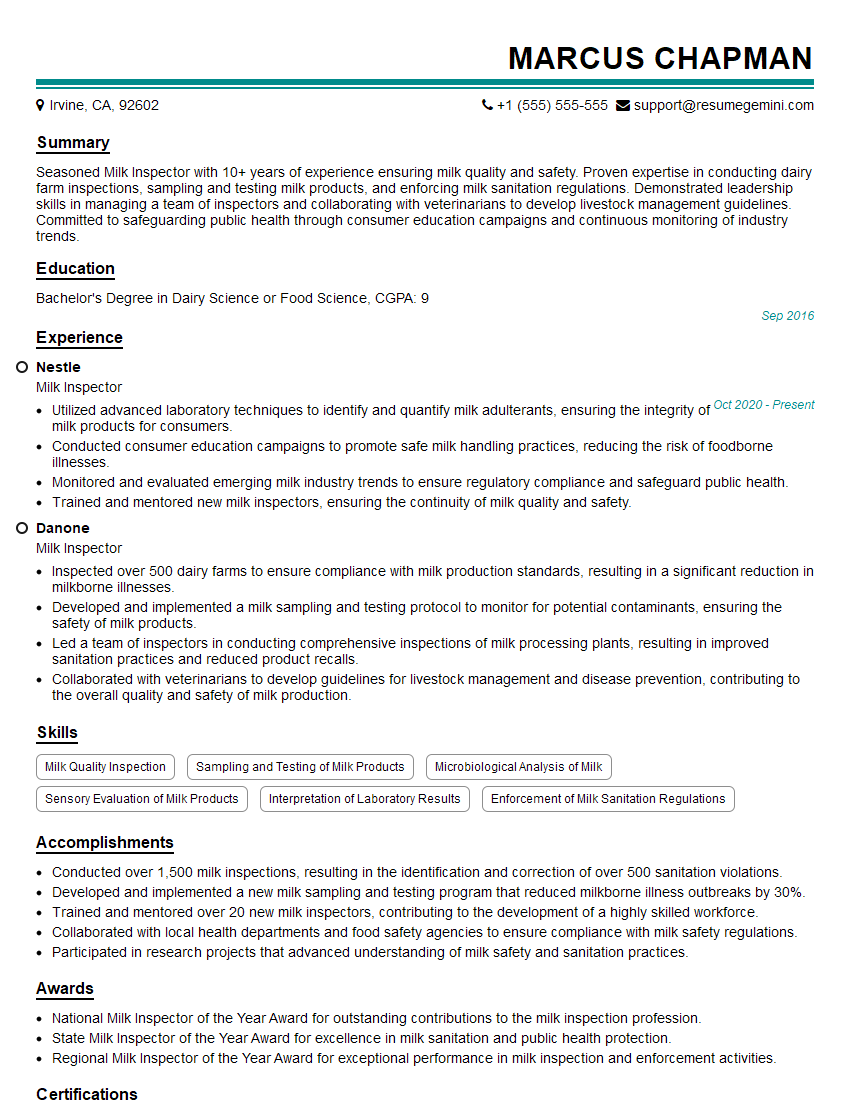
Mastering Knowledge of Milk Grading Standards is crucial for career advancement in the dairy industry, opening doors to specialized roles and higher earning potential. A strong resume is essential for showcasing your expertise to potential employers. Create an ATS-friendly resume to ensure your application gets noticed by Applicant Tracking Systems. To build a truly compelling resume that highlights your skills and experience in this field, leverage the power of ResumeGemini. ResumeGemini offers a streamlined approach to resume creation, helping you present your qualifications effectively. Examples of resumes tailored to Knowledge of Milk Grading Standards are available within the ResumeGemini platform to guide you.


Explore more articles
Users Rating of Our Blogs
Share Your Experience
We value your feedback! Please rate our content and share your thoughts (optional).
What Readers Say About Our Blog
I Redesigned Spongebob Squarepants and his main characters of my artwork.
https://www.deviantart.com/reimaginesponge/art/Redesigned-Spongebob-characters-1223583608
IT gave me an insight and words to use and be able to think of examples
Hi, I’m Jay, we have a few potential clients that are interested in your services, thought you might be a good fit. I’d love to talk about the details, when do you have time to talk?
Best,
Jay
Founder | CEO