Cracking a skill-specific interview, like one for Secure Code Review and Development, requires understanding the nuances of the role. In this blog, we present the questions you’re most likely to encounter, along with insights into how to answer them effectively. Let’s ensure you’re ready to make a strong impression.
Questions Asked in Secure Code Review and Development Interview
Q 1. Explain the OWASP Top 10 vulnerabilities and how to mitigate them.
The OWASP Top 10 represents the most critical web application security risks. Think of them as the biggest threats lurking in your software, waiting to be exploited. Mitigating them is crucial for protecting your users and your data.
- Injection (SQL, NoSQL, OS, LDAP, etc.): Attackers inject malicious code into inputs to manipulate database queries or system commands. Mitigation: Use parameterized queries or prepared statements, input validation, and least privilege access controls.
- Broken Authentication: Weak or improperly implemented authentication mechanisms allow unauthorized access. Mitigation: Implement strong password policies, multi-factor authentication (MFA), and secure session management.
- Sensitive Data Exposure: Failure to protect sensitive data like passwords, credit card numbers, and personal information. Mitigation: Encrypt data at rest and in transit, use strong encryption algorithms, and follow data minimization principles.
- XML External Entities (XXE): Attackers exploit vulnerabilities in XML processors to access external resources or execute code. Mitigation: Disable XML external entity processing in your applications.
- Broken Access Control: Insufficient authorization checks allow users to access resources they shouldn’t. Mitigation: Implement robust access control mechanisms based on roles and permissions, and validate user privileges before granting access.
- Security Misconfiguration: Improperly configured servers, databases, or applications expose vulnerabilities. Mitigation: Follow security best practices for configuration, use least privilege, and regularly update software and libraries.
- Cross-Site Scripting (XSS): Attackers inject malicious scripts into websites to steal user data or hijack sessions. Mitigation: Sanitize user inputs, use output encoding, and implement a Content Security Policy (CSP).
- Insecure Deserialization: Attackers exploit vulnerabilities in deserialization processes to execute arbitrary code. Mitigation: Validate and sanitize serialized data before deserialization, and use secure serialization libraries.
- Using Components with Known Vulnerabilities: Relying on outdated or insecure libraries and frameworks. Mitigation: Regularly update dependencies, use vulnerability scanners, and follow a secure software supply chain.
- Insufficient Logging & Monitoring: Lack of adequate logging and monitoring hinders detection and response to security incidents. Mitigation: Implement comprehensive logging and monitoring, and establish incident response plans.
Addressing these vulnerabilities requires a multi-layered approach involving secure coding practices, security testing, and continuous monitoring.
Q 2. Describe your experience with Static Application Security Testing (SAST) tools.
I have extensive experience using various SAST tools, including SonarQube, Checkmarx, and Fortify. My experience spans across various development lifecycles – from integrating them into CI/CD pipelines for early vulnerability detection to using them for targeted code reviews of critical modules. For instance, in a recent project, we used SonarQube to identify over 100 potential vulnerabilities during the development phase. This allowed us to address them promptly, saving considerable time and resources during later stages. I’m proficient in interpreting their reports, prioritizing findings based on severity and likelihood of exploitation, and working with developers to remediate identified vulnerabilities. I also have experience configuring these tools to adapt to specific project needs and coding standards.
Q 3. What are the differences between SAST, DAST, and IAST?
SAST, DAST, and IAST are all crucial components of a comprehensive application security testing strategy. Think of them as different lenses through which you examine your application’s security.
- SAST (Static Application Security Testing): Analyzes the source code without executing it, identifying potential vulnerabilities based on coding patterns and rules. It’s like reviewing the blueprint of a house before construction to spot potential structural flaws.
- DAST (Dynamic Application Security Testing): Analyzes the running application from the outside, simulating attacks to identify vulnerabilities. It’s like testing the house’s security by trying to break in through the doors and windows.
- IAST (Interactive Application Security Testing): Analyzes the application from the inside, combining aspects of SAST and DAST by instrumenting the running application and monitoring its behavior. It acts as an internal security guard, observing activity from within the application itself.
The key difference lies in their approach: SAST is code-centric, DAST is application-centric, and IAST bridges the gap by combining both.
Q 4. How do you perform a code review for SQL injection vulnerabilities?
Code review for SQL injection involves carefully scrutinizing how user inputs are handled in database queries. The goal is to ensure that no unsanitized user data directly influences the database query construction. Imagine a user input being directly pasted into a query – this is a recipe for disaster.
- Inspect direct string concatenation: Look for instances where user inputs are directly concatenated into SQL queries. This is a major red flag.
//Vulnerable Code
String query = "SELECT * FROM users WHERE username = '" + username + "';" - Check for parameterized queries/prepared statements: Ensure that parameterized queries or prepared statements are used. These separate data from the SQL query, preventing injection.
//Secure Code
String query = "SELECT * FROM users WHERE username = ?";
PreparedStatement statement = connection.prepareStatement(query);
statement.setString(1, username); - Input validation: Validate all user inputs to ensure they conform to expected data types and formats. Avoid allowing special characters and escape sequences.
- Output encoding: When displaying data from the database, ensure proper output encoding to prevent XSS vulnerabilities that could be indirectly linked to SQL injection.
- Least privilege access: Database users should have only the necessary permissions to perform their tasks. Avoid granting excessive privileges that could widen the impact of an injection attack.
I typically use a combination of automated tools and manual review to find SQL injection vulnerabilities. Automated tools highlight potential issues, while manual review helps to assess the actual risk.
Q 5. Explain the concept of secure coding principles.
Secure coding principles are a set of guidelines and best practices that aim to minimize the risk of vulnerabilities in software. It’s about building security into the code from the ground up, not as an afterthought. Think of it as building a house with a strong foundation, rather than trying to patch holes after it’s already built.
- Input validation and sanitization: Never trust user inputs; always validate and sanitize them to prevent injection attacks.
- Output encoding: Encode output to prevent XSS and other cross-site attacks.
- Least privilege access: Grant only the necessary permissions to users and processes.
- Secure error handling: Handle errors gracefully to avoid leaking sensitive information.
- Secure session management: Use strong session IDs, implement timeouts, and protect session data.
- Authentication and authorization: Implement robust authentication and authorization mechanisms to control access to resources.
- Data encryption: Encrypt sensitive data at rest and in transit to protect it from unauthorized access.
- Regular security updates: Keep software and libraries up to date to patch known vulnerabilities.
- Code review: Perform regular code reviews to identify potential security flaws.
- Security testing: Regularly perform security testing to identify vulnerabilities before deployment.
Following these principles helps to build more secure applications, reducing the risk of exploits and security breaches.
Q 6. What are common cross-site scripting (XSS) vulnerabilities and how do you prevent them?
Cross-site scripting (XSS) vulnerabilities allow attackers to inject malicious scripts into websites viewed by other users. These scripts can steal sensitive information, redirect users to malicious sites, or deface the website. Imagine a hidden trap within a seemingly harmless website.
- Reflected XSS: Occurs when user input is reflected back to the user’s browser without proper sanitization. For example, a search query containing malicious script is displayed directly in the results. Mitigation: Encode all user input before displaying it.
- Stored XSS (Persistent XSS): Occurs when malicious script is stored on the server and executed whenever a user accesses the affected page. This could be in a comment field or a database entry. Mitigation: Sanitize all data stored on the server before saving it.
- DOM Based XSS: Occurs when malicious script is executed within the browser’s Document Object Model (DOM) using JavaScript. This often involves manipulating the page content client-side. Mitigation: Use input validation and encode data whenever it’s used to manipulate the DOM.
Preventing XSS requires a layered approach: input validation, output encoding, and using a Content Security Policy (CSP) to control what resources the browser is allowed to load.
Q 7. How do you handle authentication and authorization in your applications?
Authentication verifies the identity of a user, while authorization determines what resources a user is allowed to access. They are two sides of the same coin, ensuring only authorized individuals can access appropriate data and functionalities.
I typically use industry-standard approaches for authentication and authorization, such as:
- OAuth 2.0 and OpenID Connect (OIDC): For secure third-party authentication and authorization using established protocols.
- JSON Web Tokens (JWT): For stateless session management, enabling secure access after initial authentication.
- Role-Based Access Control (RBAC): Assigning users to roles with specific permissions, simplifying access management.
- Attribute-Based Access Control (ABAC): More granular access control based on user attributes and resource attributes.
For example, in a recent project, we implemented OAuth 2.0 for authentication with a centralized identity provider, and used RBAC to define user roles and their corresponding access permissions. This enabled secure authentication and flexible authorization management.
It’s crucial to store credentials securely (hashing passwords, for instance), implement robust session management, and regularly review access controls to ensure they remain appropriate and effective.
Q 8. What are your preferred methods for identifying and remediating vulnerabilities in third-party libraries?
Identifying and remediating vulnerabilities in third-party libraries is crucial for application security. My approach involves a multi-layered strategy. First, I meticulously vet libraries before integrating them. This includes checking for known vulnerabilities on platforms like the National Vulnerability Database (NVD) and reviewing the library’s security documentation and community reputation. Second, I utilize Software Composition Analysis (SCA) tools which automatically scan the codebase to identify the libraries used and alert me to any associated known vulnerabilities. These tools often provide remediation advice such as updating to a patched version or replacing the vulnerable component with a safer alternative. Third, I perform regular security audits and penetration testing to uncover vulnerabilities that might not be flagged by SCA tools. Finally, even after addressing known issues, I monitor security advisories and update libraries proactively. If a critical vulnerability arises in a library after integration, a quick response is vital, often involving patching, upgrading the library, or employing mitigation techniques like input sanitization or output encoding, depending on the vulnerability’s nature.
For example, if an SCA tool flags a specific version of a widely used JSON parsing library with a known remote code execution (RCE) vulnerability, I’d immediately investigate the severity and the specific function affected. I’d then upgrade to the latest version, verify that the RCE vulnerability is resolved, and retest the application.
Q 9. Describe your experience with Dynamic Application Security Testing (DAST) tools.
Dynamic Application Security Testing (DAST) tools are an indispensable part of my security workflow. These tools simulate real-world attacks against a running application to identify vulnerabilities. My experience encompasses using several DAST tools, including OWASP ZAP and Burp Suite. I find them invaluable for uncovering vulnerabilities such as SQL injection, cross-site scripting (XSS), and cross-site request forgery (CSRF) that might be missed by static analysis. I’m proficient in configuring these tools to scan various application components and interpret their findings. I particularly appreciate the ability to customize scans based on the application’s architecture and functionality. Furthermore, I recognize that DAST tools are not a silver bullet; false positives can occur. Therefore, thorough manual verification of reported vulnerabilities is always necessary before implementing remediation steps. I use the findings from DAST scans to inform further penetration testing and to prioritize remediation efforts.
For instance, using Burp Suite, I’ve identified a reflected XSS vulnerability by passively monitoring the application’s traffic and then actively injecting malicious script code into various input fields. Burp Suite highlighted the vulnerability by displaying the reflected script in the response, confirming the reflected XSS weakness.
Q 10. Explain the concept of threat modeling and its importance in secure software development.
Threat modeling is a proactive risk assessment process that identifies potential threats and vulnerabilities in a system before it’s built or deployed. Think of it as a security planning session for your application, where you meticulously map out potential attack paths and vulnerabilities. It’s a crucial element of secure software development because it allows developers to focus security efforts effectively, rather than reacting to issues after they’ve emerged. The process typically involves identifying assets, threats, and vulnerabilities, analyzing the likelihood and impact of various threats, and designing security controls to mitigate them. I’ve employed various threat modeling methodologies such as STRIDE (Spoofing, Tampering, Repudiation, Information Disclosure, Denial of Service, Elevation of Privilege) and PASTA (Process for Attack Simulation and Threat Analysis). In practice, a well-executed threat model helps in producing more secure code by proactively addressing potential security issues throughout the software development lifecycle, leading to reduced costs and improved security posture.
For example, in a banking application, a threat model might identify the risk of unauthorized access to user accounts. Mitigation strategies could include multi-factor authentication, input validation, and robust encryption of sensitive data.
Q 11. How do you perform a code review for cross-site request forgery (CSRF) vulnerabilities?
Code review for Cross-Site Request Forgery (CSRF) vulnerabilities focuses on identifying missing or improperly implemented CSRF protection mechanisms. CSRF attacks exploit the trust a website has in a user’s browser. During a code review, I specifically look for the presence of anti-CSRF tokens (also known as synchronization tokens). These tokens are unique, unpredictable values generated by the server and included in forms submitted by the client. The server then verifies the token’s presence and validity before processing the request. Absence of these tokens is a clear indication of vulnerability. I also check whether tokens are properly handled, including generating new tokens for each request, ensuring the tokens are not predictable, and storing them securely (not in cookies that might be easily accessible). Additionally, I examine the HTTP methods used; POST requests are generally safer, but even these need protection. I also pay attention to whether the application relies on the `Referer` header, which is unreliable for CSRF protection. Finally, I verify the proper handling of user-supplied data that might influence subsequent requests to avoid injection attacks that could modify intended actions.
Example: I’ll scrutinize each form submission, ensuring the existence of a hidden field containing a unique CSRF token generated by the server. If a token is absent, I’ll flag this as a potential vulnerability. I’d also check if the token generation logic is robust enough to prevent predictable token generation.
Q 12. What are your experiences with secure design patterns and best practices?
Secure design patterns and best practices are fundamental to building secure applications. My experience encompasses using various patterns, including input validation and sanitization, output encoding, parameterized queries (to prevent SQL injection), secure session management, authorization and authentication mechanisms (like OAuth 2.0 or OpenID Connect), and the principle of least privilege. I consistently apply the principle of defense in depth, layering multiple security controls to mitigate risks. I’m well-versed in using secure coding guidelines such as OWASP’s Secure Coding Practices and SANS Secure Coding standards. For instance, I avoid using string concatenation for building SQL queries and opt instead for parameterized queries, which prevent SQL injection attacks. I also ensure sensitive data is encrypted both at rest and in transit. I routinely use secure coding practices to prevent common vulnerabilities such as buffer overflows and cross-site scripting.
A real-world example: While working on a payment gateway, I implemented a secure session management system using HTTPS, secure cookies with appropriate attributes (like `HttpOnly` and `Secure`), and a strong session ID generation algorithm to prevent session hijacking and other attacks.
Q 13. How do you identify and mitigate buffer overflow vulnerabilities?
Buffer overflow vulnerabilities occur when a program attempts to write data beyond the allocated buffer size. This can lead to overwriting adjacent memory regions, potentially causing crashes or allowing attackers to execute arbitrary code. To identify buffer overflows, I perform code reviews, looking for functions that handle user-supplied data without proper bounds checking, such as `strcpy`, `gets`, and `sprintf`. I’ll also examine the use of dynamic memory allocation functions (`malloc`, `calloc`, etc.) to ensure sufficient memory is allocated and that memory leaks are addressed properly. Mitigation strategies include using safer functions like `strncpy`, `fgets`, `snprintf`, which provide bounds checking. Additionally, I check for the use of secure coding practices, such as input validation and sanitization. Input validation ensures that the data received is of the expected type and length, thereby preventing overflows. To prevent buffer overflows related to stack memory, I use compiler options that detect buffer overflows and enforce strong type checking. I’ll also use address space layout randomization (ASLR) to make attacks more difficult.
Example: If I see code like strcpy(buffer, user_input);, I’ll flag it as a potential vulnerability because `strcpy` doesn’t perform bounds checking. The safer alternative would be strncpy(buffer, user_input, sizeof(buffer) - 1);
Q 14. Describe your experience with Interactive Application Security Testing (IAST) tools.
Interactive Application Security Testing (IAST) tools provide runtime security testing by instrumenting the application to detect vulnerabilities as they occur. Unlike DAST, IAST tools require access to the application’s internal code or environment, offering a more precise view of the vulnerabilities. My experience includes working with several IAST tools, which I integrate during the development and testing stages. They’re particularly useful for finding vulnerabilities that are difficult to detect with static or dynamic analysis, such as those related to data flow or business logic. They often provide detailed context about the discovered vulnerabilities, including the affected code locations and parameters, facilitating faster remediation. However, similar to DAST, false positives can occur and thorough investigation is still necessary. Furthermore, I consider the performance implications of IAST tools and ensure their use does not significantly impact the application’s performance or usability during regular operation. I use the combined insights from IAST, DAST, and SAST (Static Application Security Testing) to build a comprehensive picture of the security posture of an application.
For example, an IAST tool might detect a SQL injection vulnerability by identifying malicious input being used to directly construct a database query. It might even point to the specific line of code responsible for the problem, significantly aiding the remediation process.
Q 15. How do you handle sensitive data in your applications (e.g., encryption, masking)?
Handling sensitive data requires a layered approach, combining various techniques to minimize risk. Think of it like protecting a valuable jewel – you wouldn’t just leave it lying around!
Encryption: This is the cornerstone. We use strong, industry-standard encryption algorithms like AES-256 to protect data at rest (stored in databases or files) and in transit (during network communication). For example, database fields containing credit card information would be encrypted before storage using a robust key management system.
Data Masking: This involves partially obscuring sensitive data while preserving its utility. For development and testing, we often use masking to prevent real data from being exposed. For example, a credit card number might be displayed as ‘XXXXXXXXXXXX1234’, revealing only the last four digits. We use tools and techniques to maintain data integrity whilst hiding sensitive information.
Tokenization: Instead of storing sensitive data directly, we replace it with non-sensitive tokens. A separate, secure mapping stores the relationship between the token and the actual data. This decoupling protects the original data even if the tokenized system is compromised. Think of it as using a secret code to represent the actual valuable information.
Access Control: Beyond encryption, strict access control is vital. The principle of least privilege dictates that users only have access to the data absolutely necessary for their roles. This is implemented through robust authentication and authorization mechanisms.
Career Expert Tips:
- Ace those interviews! Prepare effectively by reviewing the Top 50 Most Common Interview Questions on ResumeGemini.
- Navigate your job search with confidence! Explore a wide range of Career Tips on ResumeGemini. Learn about common challenges and recommendations to overcome them.
- Craft the perfect resume! Master the Art of Resume Writing with ResumeGemini’s guide. Showcase your unique qualifications and achievements effectively.
- Don’t miss out on holiday savings! Build your dream resume with ResumeGemini’s ATS optimized templates.
Q 16. What is your experience with security frameworks like NIST CSF or ISO 27001?
I have extensive experience with both NIST CSF (Cybersecurity Framework) and ISO 27001 (Information Security Management Systems). They are fundamentally different but complementary frameworks.
NIST CSF: This framework is a voluntary set of guidelines focusing on improving cybersecurity practices across an organization. It’s a practical framework helping to manage cybersecurity risk by outlining a core set of functions and activities across five key areas: Identify, Protect, Detect, Respond, and Recover. In my work, I’ve used it to align our security practices with industry best practices and to demonstrate our commitment to security to clients and stakeholders.
ISO 27001: This is an internationally recognized standard for information security management. It provides a structured approach to implementing and managing an Information Security Management System (ISMS). Unlike NIST CSF, ISO 27001 is a certifiable standard. I’ve been involved in projects that required compliance with ISO 27001, participating in risk assessments, developing security policies, and implementing controls to meet the standard’s requirements.
My experience bridges the gap between these frameworks. NIST CSF guides our overall cybersecurity strategy, while ISO 27001 ensures that our systems meet specific, auditable security requirements.
Q 17. How do you balance security with functionality and performance during development?
Balancing security, functionality, and performance is a constant challenge. It’s a delicate dance, and it’s crucial to involve security considerations early in the development lifecycle—often referred to as ‘shift-left’ security.
Prioritization: We prioritize security risks based on their potential impact and likelihood. High-impact risks warrant more robust security measures, even if they involve some performance trade-offs. Think of it like building a house – you wouldn’t sacrifice structural integrity for aesthetics.
Code Reviews and Static Analysis: Regular code reviews and use of static analysis tools help us identify potential vulnerabilities early, before they make their way into production. This is far cheaper and more efficient than fixing them later.
Optimized Security Mechanisms: We use efficient encryption algorithms and access control mechanisms. We avoid unnecessary security checks and optimize database queries to minimize performance impact.
Security Testing: Penetration testing and vulnerability scanning are vital for identifying and resolving vulnerabilities before deployment. Regular security audits ensure that our security posture remains strong.
Trade-off Analysis: Sometimes, a trade-off is unavoidable. We document these trade-offs, clearly explaining the risks and justifications. For example, we might decide to accept a slightly lower performance in a critical system to achieve a higher level of security.
Q 18. Describe your experience using code analysis tools to detect vulnerabilities.
I have extensive experience using various code analysis tools, both static and dynamic. These tools are invaluable in detecting vulnerabilities before they can be exploited.
Static Analysis Tools (e.g., SonarQube, Fortify): These tools analyze code without actually executing it, looking for common vulnerabilities like SQL injection, cross-site scripting (XSS), and buffer overflows. They provide reports highlighting potential problems with detailed explanations and suggested fixes.
Dynamic Analysis Tools (e.g., Burp Suite, OWASP ZAP): These tools test running applications to identify vulnerabilities that are only apparent during runtime. They simulate attacks to discover weaknesses in the application’s logic and security controls.
SAST vs DAST: Static analysis (SAST) is like proofreading a manuscript before publication; it catches potential problems before they go live. Dynamic analysis (DAST) is like a live performance review – it checks how things actually function under pressure. An effective approach incorporates both.
Example: In a recent project using SonarQube, we identified several SQL injection vulnerabilities during static analysis. The reports detailed the exact location of the vulnerability and provided remediation suggestions, allowing us to fix the issues efficiently and prevent potential data breaches.
Q 19. How do you document security vulnerabilities and remediation steps?
Documenting security vulnerabilities and their remediation is essential for maintaining a secure system and ensuring that lessons learned are applied in the future. We use a structured approach, typically tracking vulnerabilities in a bug tracking system such as Jira or a dedicated vulnerability management system.
Vulnerability Report: Each vulnerability is documented with a unique identifier, severity level (e.g., critical, high, medium, low), description of the vulnerability, location in the code, affected systems, potential impact, and the date discovered. Severity is often based on CVSS (Common Vulnerability Scoring System) scores.
Remediation Steps: The remediation plan details the proposed fix, the steps to implement the fix, the person responsible, the target completion date, and verification steps to confirm the fix is effective. We often include code snippets demonstrating the correct implementation.
Post-Remediation Verification: After implementing the fix, we thoroughly retest the affected code to ensure the vulnerability is fully resolved. We document the verification process and the results, including any residual risks or mitigation strategies.
Knowledge Base: We maintain a centralized knowledge base or wiki of known vulnerabilities and their fixes to ensure that common issues are not repeated in other projects. This institutional memory is crucial for continuous improvement.
Q 20. Explain your understanding of secure coding practices for different programming languages (e.g., Java, Python, C++)
Secure coding practices vary across programming languages, but the underlying principles remain consistent: input validation, output encoding, access control, and error handling are crucial regardless of the language.
Java: Java’s strong typing and built-in security features (e.g., exception handling) provide a solid base. However, developers still need to be mindful of SQL injection (using parameterized queries), cross-site scripting (escaping user-supplied data in HTML output), and insecure deserialization. Proper use of Spring Security framework is essential for authentication and authorization.
Python: Python’s dynamic nature requires extra care. Input validation is critical. Using libraries like SQLAlchemy for database interactions helps prevent SQL injection. Sanitizing user inputs before rendering them on web pages is paramount to avoid XSS vulnerabilities.
C++: C++ requires careful memory management to avoid buffer overflows and other memory-related vulnerabilities. Using secure coding guidelines and employing static and dynamic analysis tools is crucial to find vulnerabilities early. Input validation should be rigorous to prevent many issues.
General Principles: Regardless of the language, consistent use of parameterized queries, proper input validation, output encoding, secure handling of session management, and secure logging practices remain core tenets of secure coding across all languages.
Q 21. What is your experience with vulnerability scanning and penetration testing?
Vulnerability scanning and penetration testing are integral parts of a robust security program. They complement each other, providing a comprehensive assessment of an application’s security posture.
Vulnerability Scanning: This is an automated process that uses tools to identify known vulnerabilities in applications and infrastructure. These scanners analyze code, configuration files, and network traffic looking for common weaknesses. Think of it as a comprehensive health check for your system.
Penetration Testing: This involves simulating real-world attacks to assess the system’s resilience. Penetration testers attempt to exploit vulnerabilities to determine the extent of the damage that could be caused. It’s more like a stress test, pushing the system to its limits to reveal hidden weaknesses. This requires much more human interaction and intelligence than scanning.
Types of Penetration Testing: We often employ different types of penetration testing, such as black-box testing (tester has no prior knowledge of the system), white-box testing (tester has complete knowledge), and grey-box testing (tester has partial knowledge). The choice depends on the specific needs and risk tolerance.
Integration: We integrate vulnerability scanning into our CI/CD pipeline for continuous security monitoring, and schedule regular penetration tests to assess the effectiveness of our security controls. The results from these activities inform remediation efforts and overall security improvements.
Q 22. How do you manage and prioritize security vulnerabilities?
Managing and prioritizing security vulnerabilities involves a multi-step process that balances risk, impact, and remediation effort. It’s not simply about fixing everything at once; it’s about strategically addressing the most critical issues first. Think of it like triage in a hospital – you treat the most life-threatening injuries first.
My approach involves:
- Risk Assessment: I use vulnerability scoring systems like CVSS (Common Vulnerability Scoring System) to quantify the severity of each vulnerability, considering factors like exploitability, impact, and the likelihood of attack. This helps to objectively rank vulnerabilities.
- Impact Analysis: I assess the potential business impact of each vulnerability. A vulnerability in a critical system requiring immediate attention will have a higher priority than one in a less critical system. For example, a SQL injection vulnerability in a customer database warrants far more immediate action than a cross-site scripting (XSS) vulnerability on a marketing page.
- Prioritization Matrix: I often use a matrix that plots severity against likelihood of exploit. This allows for easy visualization and prioritization – high severity, high likelihood vulnerabilities get immediate attention.
- Remediation Planning: Once prioritized, I create a remediation plan, detailing the steps needed to fix the vulnerability, the resources required, and the timeline for completion. This plan includes testing and verification to ensure the fix is effective.
- Regular Monitoring: Post-remediation, continuous monitoring is crucial to ensure that new vulnerabilities don’t emerge and previously fixed vulnerabilities haven’t reappeared due to code changes or updates.
For example, in a previous project, we identified a high-severity SQL injection vulnerability in our payment processing system. This immediately became our top priority. We implemented a fix, thoroughly tested it, and deployed it within 24 hours, minimizing the risk of financial loss.
Q 23. Describe your experience with implementing secure coding standards and guidelines.
Implementing secure coding standards and guidelines is fundamental to building secure software. My experience encompasses a wide range of practices, from enforcing coding style guidelines to integrating static and dynamic analysis tools within the development process.
I’ve worked extensively with standards like OWASP (Open Web Application Security Project) Top 10, SANS Top 25, and industry-specific guidelines. These guidelines provide a structured approach to address common security weaknesses. For example, using parameterized queries to prevent SQL injection is a crucial practice based on these guidelines.
Here’s how I’ve implemented these standards:
- Code Reviews: I conduct regular and thorough code reviews, focusing on security aspects like input validation, authentication, authorization, and error handling. I also pay close attention to the use of secure libraries and frameworks.
- Static Analysis: I utilize static analysis tools (like SonarQube or Checkmarx) that automatically scan code for security vulnerabilities without executing the code. This helps catch issues early in the development process.
- Dynamic Analysis: I leverage dynamic analysis tools (like Burp Suite or OWASP ZAP) to test running applications for vulnerabilities. These tools simulate attacks to identify weaknesses not caught by static analysis.
- Secure Coding Training: I’ve been involved in training developers on secure coding best practices. This includes hands-on workshops and the provision of secure coding guidelines to ensure developers consistently apply secure coding practices.
For instance, in one project, the integration of a static analysis tool resulted in the early identification and rectification of several cross-site scripting (XSS) vulnerabilities, preventing a potential breach before the software went live.
Q 24. How do you stay up-to-date with the latest security threats and vulnerabilities?
Staying current with security threats and vulnerabilities is crucial in this ever-evolving landscape. I employ a multi-pronged approach to ensure I’m always informed.
My strategies include:
- Following Security Researchers and Blogs: I regularly follow reputable security researchers, blogs (like Krebs on Security), and organizations (like OWASP and SANS) to stay informed about emerging threats and vulnerabilities. This helps me proactively understand the latest attack vectors and techniques.
- Security Newsletters and Alerts: Subscribing to industry newsletters and receiving security alerts from vendors of the technologies we use keeps me updated on software patches and security advisories.
- Vulnerability Databases: I regularly consult vulnerability databases such as the National Vulnerability Database (NVD) and exploit databases to understand the vulnerabilities affecting the technologies we use in our projects.
- Participating in Security Communities: Engaging in online security forums and attending industry conferences helps me exchange ideas and learn from other security professionals.
- Reading Security Research Papers: Staying abreast of the latest research papers published on emerging security threats and best practices allows for a deeper understanding of vulnerabilities and mitigations.
For example, learning about the Log4j vulnerability through security alerts and online discussions allowed me to quickly assess the impact on our projects and implement necessary mitigations.
Q 25. Explain your understanding of the software development lifecycle (SDLC) and how security is integrated.
The Software Development Lifecycle (SDLC) is a structured process for developing and maintaining software. Integrating security throughout the entire SDLC, often referred to as Secure SDLC (SSDLC), is critical for producing secure software. It’s not just an add-on at the end; it’s woven into every stage.
My understanding of SSDLC involves:
- Requirements Gathering: Security requirements are identified and incorporated into the initial stages of the project. This includes defining security policies, identifying data sensitivity, and specifying security controls.
- Design: The architecture and design of the software are reviewed from a security perspective. Security considerations, such as authentication, authorization, and data encryption, are incorporated into the design phase.
- Implementation: Secure coding practices are enforced, and developers are trained on secure development techniques. Static and dynamic code analysis tools are used to detect vulnerabilities.
- Testing: Comprehensive security testing is conducted, including penetration testing, vulnerability scanning, and security audits. This aims to identify and address security weaknesses before the software is deployed.
- Deployment: Secure deployment processes are used, including secure configuration management and monitoring of deployed systems.
- Maintenance: Ongoing monitoring and security updates are crucial to address vulnerabilities that might emerge after deployment. Regular security assessments should be part of the maintenance phase.
Imagine building a house – security is like building the foundation securely, not just adding an alarm system at the end. A secure SDLC ensures security is a core consideration at every step, not an afterthought.
Q 26. How do you communicate security risks and recommendations to non-technical stakeholders?
Communicating security risks and recommendations to non-technical stakeholders requires clear, concise, and relatable language. Avoid jargon and focus on the business impact.
My approach involves:
- Use Analogies: I use simple analogies to illustrate complex security concepts. For example, explaining a denial-of-service attack as a crowded store blocking customers from entering.
- Focus on Business Impact: Instead of focusing on technical details, I emphasize the potential financial losses, reputational damage, or legal repercussions of a security breach. Quantifying the risks in monetary terms is particularly effective.
- Visual Aids: Using charts, graphs, and infographics to represent the severity of vulnerabilities and the cost of remediation helps non-technical stakeholders grasp the information easily.
- Prioritize Recommendations: Presenting recommendations in order of priority (critical, high, medium, low) ensures that the most important issues are addressed first.
- Clear and Concise Language: Using plain language, avoiding technical terms whenever possible, makes the information easily understandable.
In one instance, I presented the risks of a vulnerability to the CEO by explaining the potential financial loss due to a data breach using relatable scenarios. This approach helped secure the necessary budget for remediation.
Q 27. Describe your experience with integrating security into the CI/CD pipeline.
Integrating security into the CI/CD (Continuous Integration/Continuous Delivery) pipeline is crucial for automating security checks and ensuring that security is not compromised during the deployment process. This means embedding security at every stage, from code commit to production deployment.
My experience includes:
- Static and Dynamic Analysis Integration: Integrating static and dynamic analysis tools into the CI/CD pipeline to automatically scan code for vulnerabilities during each build. This identifies issues early and prevents them from reaching production.
- Security Testing Automation: Automating security tests such as penetration testing and vulnerability scanning as part of the CI/CD pipeline. This helps to identify vulnerabilities quickly and efficiently.
- Secret Management: Implementing secure secret management solutions to protect sensitive information such as API keys and database credentials. This prevents accidental exposure of sensitive data.
- Software Composition Analysis (SCA): Integrating SCA tools to identify known vulnerabilities in open-source components used in the application. This helps ensure that the application is not vulnerable due to insecure third-party libraries.
- Security Gateways: Implementing security gateways within the CI/CD pipeline that block the deployment of applications with known security vulnerabilities.
For example, in a previous project, we implemented automated security scanning as part of our CI/CD process. This prevented the deployment of a build containing a critical vulnerability that was detected by the automated scan.
Q 28. What are your experiences with using code signing and digital certificates?
Code signing and digital certificates are critical for ensuring the authenticity and integrity of software. Code signing digitally signs software to verify its origin and ensure it hasn’t been tampered with. Digital certificates provide the trust mechanism for this verification.
My experience includes:
- Code Signing Process: I’ve managed the code signing process, including obtaining and managing digital certificates from trusted certificate authorities (CAs). This involves understanding the certificate lifecycle and renewal processes.
- Implementation of Code Signing: I have implemented code signing in various build processes, ensuring that all software artifacts are digitally signed before deployment. This provides a strong assurance to users that the software hasn’t been modified since it left the developer’s hands.
- Certificate Management: I’ve established secure processes for storing and managing digital certificates to prevent unauthorized access or misuse.
- Understanding of Certificate Types: I understand the different types of digital certificates and their appropriate use cases, including choosing the right certificate for the specific application (e.g., code signing certificates, server certificates).
In one project, implementing code signing was critical for ensuring the trust and integrity of our software, especially as it was distributed to users through various channels. This prevented the use of malicious altered versions of our application.
Key Topics to Learn for Secure Code Review and Development Interview
- Static and Dynamic Application Security Testing (SAST/DAST): Understand the differences, strengths, and weaknesses of each approach. Be prepared to discuss specific tools and their applications.
- Software Development Lifecycle (SDLC) Security: Demonstrate knowledge of integrating security practices throughout the SDLC, including requirements gathering, design, coding, testing, and deployment.
- Common Vulnerabilities and Exploits (CVEs): Familiarize yourself with OWASP Top 10 vulnerabilities and other common attack vectors. Be ready to discuss how to identify and mitigate these risks in code.
- Secure Coding Practices: Showcase proficiency in writing secure code by applying principles like input validation, output encoding, and proper error handling across various programming languages.
- Authentication and Authorization: Explain different authentication methods (e.g., OAuth, OpenID Connect) and authorization mechanisms (e.g., role-based access control). Understand the security implications of each.
- Cryptography Fundamentals: Possess a basic understanding of encryption, hashing, and digital signatures. Be able to discuss their application in securing applications.
- Threat Modeling: Demonstrate your ability to identify potential threats and vulnerabilities in a system or application through various threat modeling techniques.
- Code Review Best Practices: Explain effective strategies for conducting thorough and efficient code reviews, including identifying security flaws and suggesting improvements.
- Security Frameworks and Standards: Discuss your familiarity with relevant security frameworks (e.g., NIST Cybersecurity Framework) and standards (e.g., ISO 27001).
- Problem-Solving and Analytical Skills: Prepare to discuss how you approach analyzing code for vulnerabilities, debugging security issues, and proposing effective solutions.
Next Steps
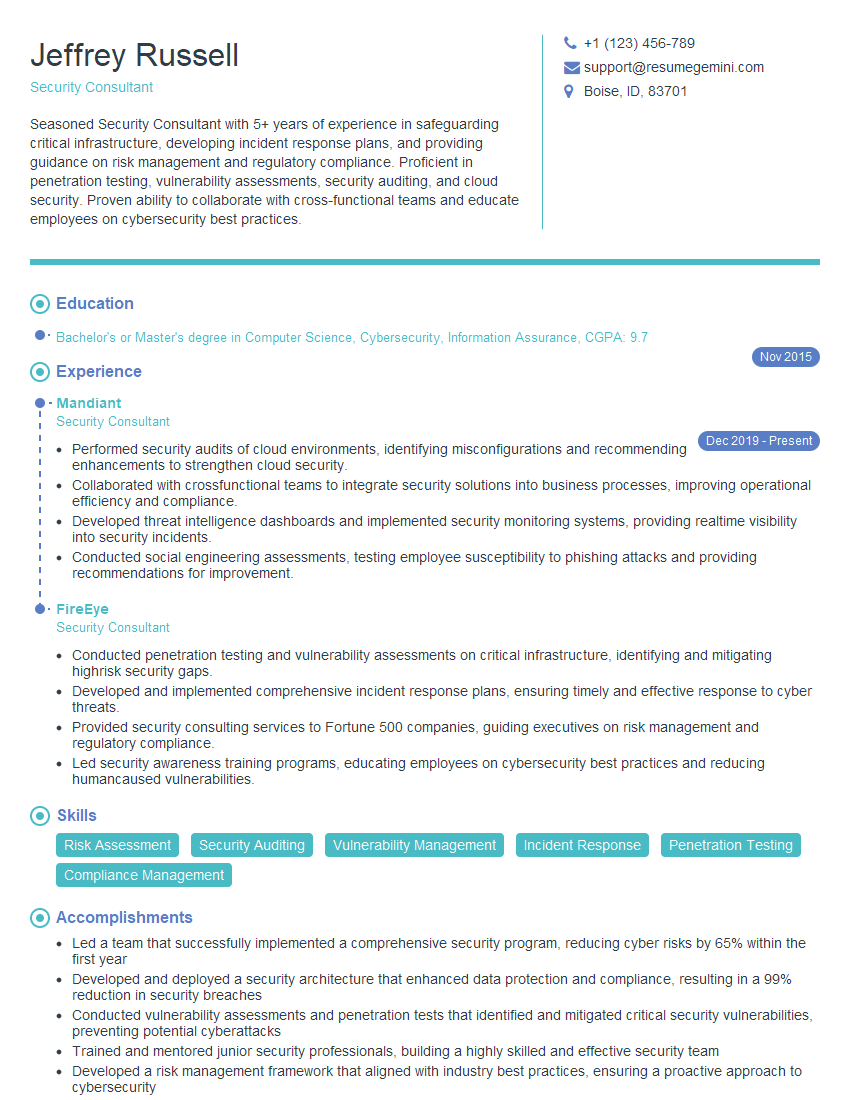
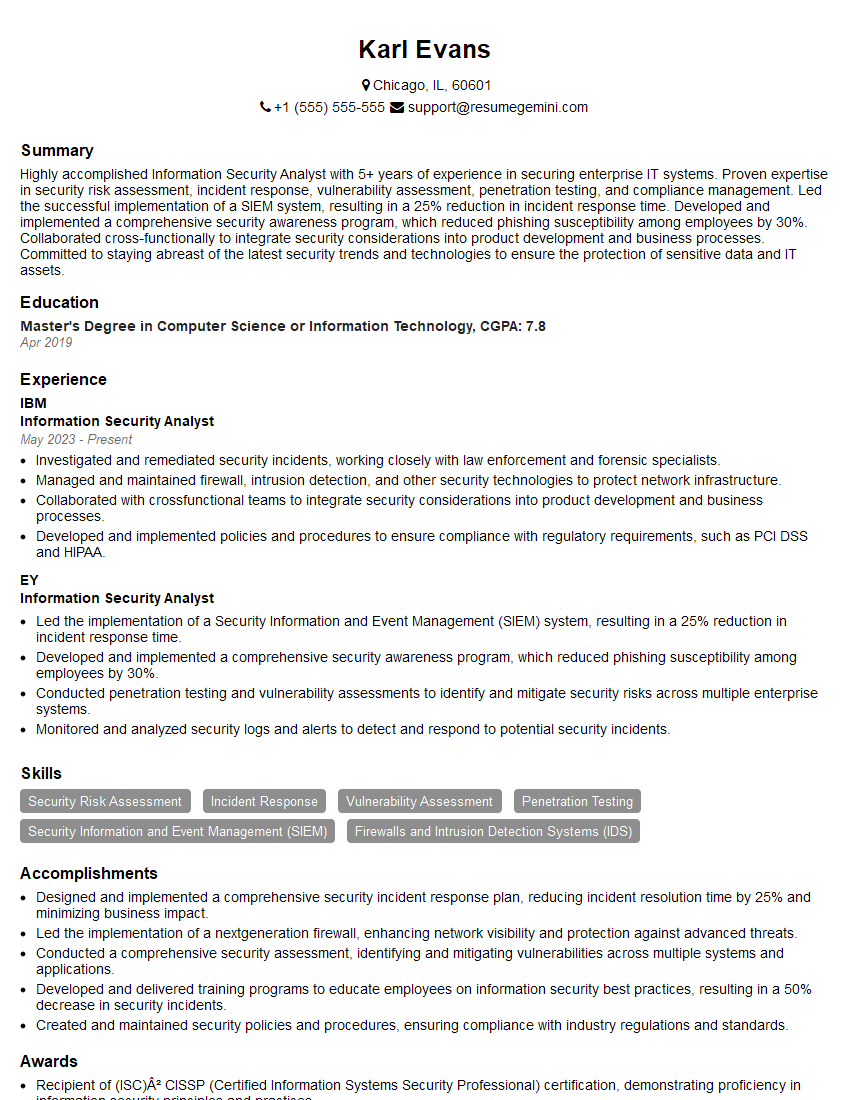
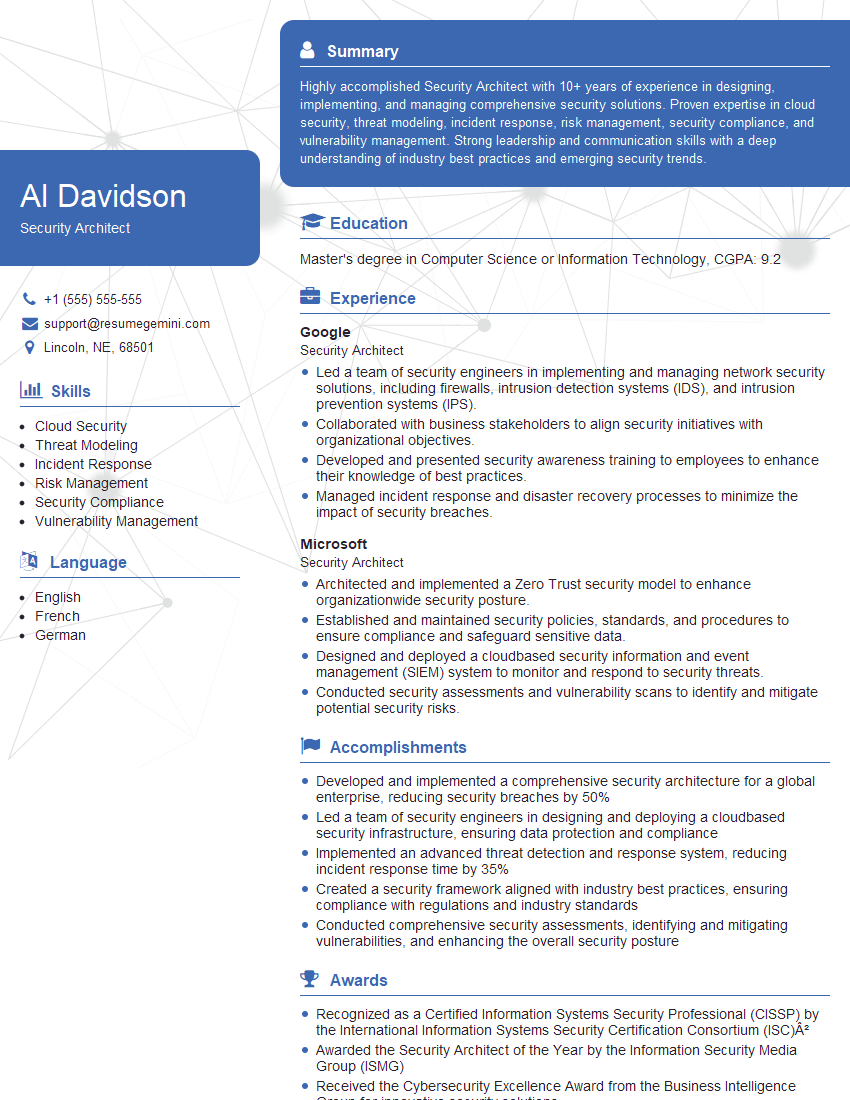
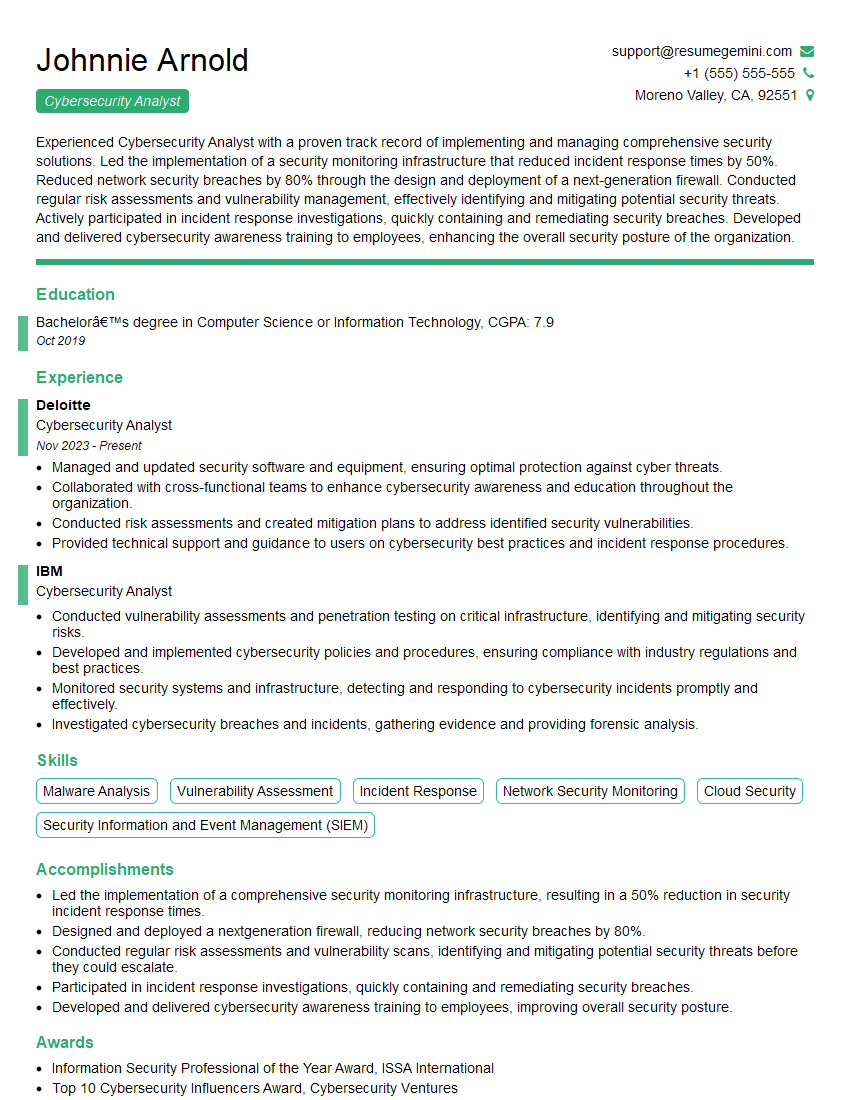
Mastering Secure Code Review and Development is crucial for advancing your career in the ever-evolving landscape of cybersecurity. It demonstrates a commitment to building robust and reliable systems, a highly sought-after skill in today’s market. To maximize your job prospects, creating an ATS-friendly resume is essential. ResumeGemini is a trusted resource that can help you build a professional and impactful resume that showcases your skills effectively. Examples of resumes tailored to Secure Code Review and Development are available to help you get started.
Explore more articles
Users Rating of Our Blogs
Share Your Experience
We value your feedback! Please rate our content and share your thoughts (optional).
What Readers Say About Our Blog
I Redesigned Spongebob Squarepants and his main characters of my artwork.
https://www.deviantart.com/reimaginesponge/art/Redesigned-Spongebob-characters-1223583608
IT gave me an insight and words to use and be able to think of examples
Hi, I’m Jay, we have a few potential clients that are interested in your services, thought you might be a good fit. I’d love to talk about the details, when do you have time to talk?
Best,
Jay
Founder | CEO