The thought of an interview can be nerve-wracking, but the right preparation can make all the difference. Explore this comprehensive guide to Cryptography and Encryption Techniques interview questions and gain the confidence you need to showcase your abilities and secure the role.
Questions Asked in Cryptography and Encryption Techniques Interview
Q 1. Explain the difference between symmetric and asymmetric encryption.
Symmetric and asymmetric encryption differ fundamentally in how they handle encryption keys. Think of it like this: symmetric encryption is like sharing a secret codebook – both the sender and receiver use the same secret key to encrypt and decrypt messages. Asymmetric encryption, on the other hand, is like having two separate keys: a public key for encryption (anyone can use it), and a private key for decryption (only the receiver possesses it).
- Symmetric Encryption: Uses a single secret key for both encryption and decryption. Examples include AES and DES. It’s fast and efficient but requires a secure way to share the secret key. Imagine two spies needing to communicate secretly; they would need to agree on a secret code beforehand.
- Asymmetric Encryption: Employs a pair of keys – a public key for encryption and a private key for decryption. RSA is a prime example. It solves the key distribution problem of symmetric encryption, as the public key can be widely distributed, while the private key remains secure with the owner. Think of it as sending a letter in a publicly available mailbox (public key) that only the recipient with the unique key (private key) can open.
Q 2. Describe the RSA algorithm and its key components.
The RSA algorithm is a widely used asymmetric encryption algorithm. Its security relies on the difficulty of factoring large numbers. Here are its key components:
- Key Generation: Two large prime numbers, p and q, are selected. Their product, n = p * q, forms the modulus. Euler’s totient function, φ(n) = (p – 1)(q – 1), is calculated. A public exponent, e, is chosen such that 1 < e < φ(n) and e is coprime to φ(n). The private exponent, d, is then calculated such that e * d ≡ 1 (mod φ(n)). The public key is (n, e), and the private key is (n, d).
- Encryption: To encrypt a message M, it’s raised to the power of e modulo n: C = Me (mod n), where C is the ciphertext.
- Decryption: To decrypt the ciphertext C, it’s raised to the power of d modulo n: M = Cd (mod n), recovering the original message M.
The security of RSA hinges on the difficulty of factoring n into p and q. If someone could easily factor n, they could compute d and break the encryption. Therefore, the size of n (typically 2048 bits or more) is crucial for security.
Q 3. What are the advantages and disadvantages of using AES encryption?
AES (Advanced Encryption Standard) is a widely adopted symmetric block cipher known for its speed and security. However, like any cryptographic algorithm, it has advantages and disadvantages:
- Advantages:
- Speed and Efficiency: AES is highly efficient, making it suitable for encrypting large amounts of data quickly.
- Security: It’s considered highly secure, with no known practical attacks against properly implemented versions.
- Widely Supported: AES is a standard, integrated into many hardware and software systems.
- Disadvantages:
- Key Management: Secure distribution and management of the secret key remain a challenge. If the key is compromised, the security of AES is broken.
- Vulnerability to Side-Channel Attacks: While the algorithm itself is strong, implementations can be vulnerable to side-channel attacks (e.g., timing attacks, power analysis) that exploit information leaked during computation.
- Fixed Block Size: AES has a fixed block size (128 bits), which can be a limitation in some applications.
Q 4. Explain the concept of a digital signature and its use in authentication.
A digital signature is a cryptographic technique used to verify the authenticity and integrity of a digital message or document. It’s like a handwritten signature, but far more secure. Instead of using ink, it uses cryptography.
Here’s how it works: The sender uses their private key to create a digital signature of the message. Anyone with the sender’s public key can then verify the signature, ensuring the message came from the claimed sender and hasn’t been tampered with. This relies on asymmetric cryptography. If the signature verifies correctly, it confirms the message’s authenticity (the sender is who they claim to be) and integrity (the message hasn’t been altered). Digital signatures are crucial for authentication in many applications, like secure email, software distribution, and digital transactions. It provides non-repudiation: the sender cannot later deny having signed the document.
Q 5. How does a hash function work, and what are its security properties?
A hash function takes an input of any size (e.g., a file, a message) and produces a fixed-size output, called a hash or digest. This output is essentially a ‘fingerprint’ of the input. Even a tiny change in the input drastically alters the hash. Hash functions are one-way functions – it’s computationally infeasible to reverse-engineer the input from the hash.
- Security Properties:
- Collision Resistance: It should be computationally infeasible to find two different inputs that produce the same hash (a collision).
- Pre-image Resistance: Given a hash, it should be computationally infeasible to find the input that produced it.
- Second Pre-image Resistance: Given an input and its hash, it should be computationally infeasible to find a different input that produces the same hash.
Hash functions are essential for data integrity checks, password storage (storing hashes instead of plain passwords), and digital signatures (the hash of the message is signed).
Q 6. What are different modes of operation for block ciphers?
Block ciphers operate on fixed-size blocks of data. Different modes of operation define how these blocks are processed to encrypt messages larger than the block size. Choosing the correct mode is crucial for security and efficiency.
- Electronic Codebook (ECB): Each block is encrypted independently using the same key. This can lead to patterns in the ciphertext if there are repeating blocks in the plaintext, making it vulnerable to cryptanalysis. Generally avoided for most applications.
- Cipher Block Chaining (CBC): Each block is XORed with the previous ciphertext block before encryption. This introduces a dependency between blocks, improving security and preventing patterns. A random Initialization Vector (IV) is used for the first block.
- Cipher Feedback (CFB): The previous ciphertext block is encrypted, and the result is XORed with the plaintext block to produce the ciphertext. It operates like a self-synchronizing stream cipher.
- Output Feedback (OFB): Similar to CFB, but the output of the encryption function is fed back into the input. It also acts as a stream cipher and is particularly useful in noisy channels.
- Counter (CTR): A counter is incremented for each block, and the encrypted counter is XORed with the plaintext block. It allows for parallel encryption and decryption and is efficient for handling random access.
Q 7. Describe the concept of a digital certificate and its role in PKI.
A digital certificate is an electronic document that verifies the ownership of a public key. Think of it as an electronic ID card for a website or an individual. It’s issued by a trusted third party called a Certificate Authority (CA).
Role in PKI (Public Key Infrastructure): PKI relies on digital certificates to manage and distribute public keys securely. When you visit a secure website (HTTPS), your browser verifies the website’s certificate to ensure that the website’s public key truly belongs to the claimed entity. The certificate contains the public key, the owner’s identity, the CA’s digital signature, and validity period. If the CA’s signature verifies correctly, your browser can trust the public key and establish a secure connection. PKI enables secure communication and transactions across the internet.
Q 8. What is key exchange, and how does Diffie-Hellman key exchange work?
Key exchange is the process by which two parties can securely agree on a shared secret key over an insecure channel. This secret key is then used for encrypting and decrypting subsequent communications. The Diffie-Hellman key exchange is a revolutionary method achieving this. It leverages the properties of modular arithmetic to establish a shared secret without ever explicitly transmitting the secret itself.
Imagine two people, Alice and Bob, wanting to share a secret. They publicly agree on two large numbers, a prime number p and a generator g (a number whose powers generate many different values modulo p). Each then secretly chooses a random number: Alice chooses ‘a’ and Bob chooses ‘b’.
Alice calculates A = ga mod p and sends A to Bob. Bob similarly calculates B = gb mod p and sends B to Alice. Crucially, neither A nor B reveal anything about ‘a’ or ‘b’.
Now, the magic happens. Alice receives B and calculates the shared secret: S = Ba mod p. Bob receives A and calculates the same shared secret: S = Ab mod p. Through the magic of modular arithmetic, both arrive at the identical secret S = (gb)a mod p = (ga)b mod p = gab mod p. An eavesdropper, observing A, B, g, and p, cannot easily compute S because computing discrete logarithms (finding ‘a’ from A and g) is computationally infeasible with suitably large numbers.
Example:
Let p = 23, g = 5
Alice chooses a = 6, calculates A = 56 mod 23 = 8
Bob chooses b = 15, calculates B = 515 mod 23 = 19
Alice calculates S = 196 mod 23 = 2
Bob calculates S = 815 mod 23 = 2
Shared Secret: S = 2
Q 9. Explain the concept of perfect secrecy and Shannon’s theorem.
Perfect secrecy, as defined by Claude Shannon, means that the ciphertext reveals absolutely no information about the plaintext. In simpler terms, even with unlimited computational power, an attacker cannot learn anything about the original message from the encrypted version.
Shannon’s theorem mathematically proves that perfect secrecy is achievable only if the key is: 1) at least as long as the message and 2) used only once (one-time pad). Imagine a one-time pad as a random string of bits as long as your message. You encrypt by XORing the message with the pad. Decryption is the same – XOR the ciphertext with the pad. Since the pad is truly random and never reused, every possible plaintext is equally likely given the ciphertext.
This sounds ideal, but the practical limitations are immense. Generating, securely distributing, and managing incredibly long, truly random keys for every message is extremely difficult. Therefore, perfect secrecy is mostly a theoretical concept, valuable for understanding the fundamental limits of cryptography.
Q 10. What are some common vulnerabilities in cryptographic systems?
Cryptographic systems are vulnerable to various attacks. Some common ones include:
- Side-Channel Attacks: These exploit information leaked during the execution of cryptographic algorithms, such as power consumption or timing variations. This information can reveal the secret key or parts of it.
- Implementation Errors: Bugs or flaws in the implementation of cryptographic algorithms can create vulnerabilities. For example, improperly handling memory buffers can lead to information leakage.
- Weak Key Management: Poorly managed keys are a major source of weakness. This includes weak key generation, improper key storage, and insufficient key rotation.
- Brute-Force Attacks: Attempting every possible key until the correct one is found. This is feasible only for systems with short keys.
- Known-Plaintext Attacks: The attacker knows both the plaintext and corresponding ciphertext, which can help deduce the key or algorithm weaknesses.
- Chosen-Plaintext Attacks: The attacker can choose plaintexts and obtain their corresponding ciphertexts. This allows a more targeted attack to uncover weaknesses.
- Chosen-Ciphertext Attacks: The attacker can choose ciphertexts and obtain their corresponding plaintexts.
These vulnerabilities highlight the need for rigorous testing, secure implementation, and robust key management practices.
Q 11. Discuss the importance of key management in cryptography.
Key management is crucial for the security of any cryptographic system. Without proper key management, even the strongest cryptographic algorithms are rendered useless. It encompasses all aspects of handling cryptographic keys, from their generation and storage to their distribution, use, and eventual destruction.
Think of a key as a master password to your digital fortress. If that password is easily guessed, forgotten, or stolen, your fortress is compromised. Key management ensures that keys remain secure throughout their lifecycle. Poor key management leads to vulnerabilities such as:
- Key compromise: If keys are stolen or leaked, the confidentiality and integrity of data are lost.
- Key duplication: Unauthorized copies of keys can lead to unauthorized access.
- Key escrow: Accidental or malicious storage of keys in an insecure location.
Effective key management requires a comprehensive strategy, including secure key generation, robust storage mechanisms (hardware security modules – HSMs are often used), secure key distribution, and procedures for key revocation and destruction.
Q 12. How do you mitigate side-channel attacks?
Mitigating side-channel attacks requires a multi-pronged approach focused on reducing information leakage:
- Regular and thorough code review to identify and fix potential vulnerabilities.
- Using constant-time algorithms: These algorithms execute in the same amount of time regardless of the input data, thus preventing timing attacks.
- Power analysis countermeasures: Techniques like shielding, power regulation, and masking can reduce power consumption variations.
- Software randomization techniques: Varying code execution paths and memory addresses to make it harder to predict behavior.
- Hardware security modules (HSMs): These specialized devices provide secure storage and processing of cryptographic keys, making them less susceptible to side-channel attacks.
- Formal verification: Rigorous mathematical verification of the code’s behavior can catch potential vulnerabilities.
The specific countermeasures depend on the nature of the side-channel attack and the implementation. It’s often a combination of hardware and software approaches that provide the best defense.
Q 13. Explain the difference between confidentiality, integrity, and availability.
Confidentiality, integrity, and availability are the three core principles of information security, often referred to as the CIA triad:
- Confidentiality: Ensuring that only authorized parties can access sensitive information. This is achieved through encryption, access controls, and other security measures. Imagine a confidential medical record – only the patient and authorized healthcare providers should be able to view it.
- Integrity: Guaranteeing the accuracy and completeness of information and preventing unauthorized modification. Digital signatures, checksums, and version control help maintain data integrity. Think of a financial transaction – it must not be altered after it has been completed.
- Availability: Ensuring that authorized parties can access information and resources when needed. This requires redundancy, failover mechanisms, and robust infrastructure. Imagine an online banking system – it must be available to users when they need to access their accounts.
These principles are interconnected. For example, a system with high availability but poor confidentiality is vulnerable to data breaches. A secure system must address all three principles.
Q 14. What is a man-in-the-middle attack, and how can it be prevented?
A man-in-the-middle (MITM) attack occurs when an attacker secretly relays and possibly alters the communication between two parties who believe they are directly communicating with each other. The attacker intercepts the messages, potentially reading, modifying, or even forging them, without the legitimate parties’ knowledge.
Imagine Alice and Bob trying to communicate securely. A malicious Eve performs a MITM attack, intercepting all communication between Alice and Bob. She relays messages between them, making them believe they are communicating directly while she eavesdrops on their conversation. Eve might even alter the messages, potentially causing significant damage.
Prevention strategies include:
- Using encryption with digital signatures: Digital signatures verify the sender’s identity and the integrity of the message, preventing an attacker from modifying it undetected.
- Implementing a secure key exchange mechanism: Techniques like Diffie-Hellman allow Alice and Bob to establish a shared secret key securely, preventing Eve from intercepting it.
- Utilizing a trusted third party: A Certificate Authority (CA) can authenticate identities and help establish secure communication channels. This is often used in HTTPS, where a CA verifies the website’s identity.
- Using HTTPS: This protocol uses TLS/SSL to encrypt communication between a web browser and a server, making it much harder for a MITM attacker to intercept and modify the messages.
By implementing these measures, the chances of a successful MITM attack are significantly reduced.
Q 15. Explain the concept of homomorphic encryption.
Homomorphic encryption allows you to perform computations on encrypted data without decrypting it. Imagine having a locked box (encrypted data) containing a secret number. With homomorphic encryption, you can add two locked boxes together to get a new locked box containing the sum of the two secret numbers, all without ever opening the boxes. This is incredibly powerful for preserving privacy while enabling computations on sensitive information.
There are different types of homomorphic encryption, categorized by the operations they support:
- Additive Homomorphic Encryption: Supports addition. You can add ciphertexts together, and the result, when decrypted, will be the sum of the plaintexts.
- Multiplicative Homomorphic Encryption: Supports multiplication. You can multiply ciphertexts, and decryption yields the product of the plaintexts.
- Fully Homomorphic Encryption (FHE): Supports both addition and multiplication, allowing for the execution of arbitrary computations on encrypted data. FHE is significantly more complex and computationally expensive than the other types.
Real-world application: Imagine a cloud service storing medical records. A researcher could perform statistical analysis on encrypted data to find correlations without ever seeing the individual patient records, ensuring privacy while enabling valuable research.
Career Expert Tips:
- Ace those interviews! Prepare effectively by reviewing the Top 50 Most Common Interview Questions on ResumeGemini.
- Navigate your job search with confidence! Explore a wide range of Career Tips on ResumeGemini. Learn about common challenges and recommendations to overcome them.
- Craft the perfect resume! Master the Art of Resume Writing with ResumeGemini’s guide. Showcase your unique qualifications and achievements effectively.
- Don’t miss out on holiday savings! Build your dream resume with ResumeGemini’s ATS optimized templates.
Q 16. What is elliptic curve cryptography (ECC) and its advantages?
Elliptic Curve Cryptography (ECC) is a public-key cryptosystem based on the algebraic structure of elliptic curves over finite fields. Instead of relying on the difficulty of factoring large numbers (like RSA), ECC uses the difficulty of solving the elliptic curve discrete logarithm problem (ECDLP). This means finding a scalar ‘k’ given a point ‘P’ on the curve and the point ‘kP’ is computationally hard.
Advantages of ECC:
- Smaller key sizes for equivalent security: A 256-bit ECC key offers comparable security to a 3072-bit RSA key, resulting in significant performance and storage benefits.
- Faster computation: ECC operations are generally faster than RSA operations for the same security level.
- Efficient implementation: ECC is well-suited for resource-constrained devices like smartphones and embedded systems.
Real-world application: ECC is widely used in various applications, including securing websites (TLS/SSL), mobile devices (cryptographic authentication), and cryptocurrencies (Bitcoin uses ECC for digital signatures).
Q 17. Describe various types of cryptographic attacks.
Cryptographic attacks aim to compromise the confidentiality, integrity, or authenticity of encrypted data or systems. They can be broadly categorized as:
- Ciphertext-only attacks: The attacker only has access to the ciphertext. Frequency analysis is a classic example of this type of attack, particularly against simple substitution ciphers.
- Known-plaintext attacks: The attacker has access to both the plaintext and corresponding ciphertext. This can help to reveal the key used in the encryption process.
- Chosen-plaintext attacks: The attacker can choose plaintexts to encrypt and obtain the corresponding ciphertexts. This gives them more control over the process and can be used to identify weaknesses in encryption algorithms.
- Chosen-ciphertext attacks: The attacker can choose ciphertexts to decrypt and obtain the corresponding plaintexts. This is a powerful attack that can reveal information about the encryption scheme or key.
- Side-channel attacks: These attacks exploit information leaked from the physical implementation of the cryptosystem, such as timing differences, power consumption, or electromagnetic radiation.
- Brute-force attacks: The attacker tries every possible key until they find the correct one. This attack is effective against algorithms with short key lengths.
Example: A known-plaintext attack on a simple Caesar cipher could involve knowing that the word ‘hello’ encrypts to ‘khoor’. This would reveal the shift of 3, allowing the attacker to decrypt the rest of the message.
Q 18. What are the security implications of using weak random number generators?
Weak random number generators (RNGs) produce predictable or patterned sequences of numbers, which severely compromise the security of cryptographic systems that rely on them.
Security implications:
- Key predictability: If a cryptographic key is generated using a weak RNG, an attacker might be able to predict the key, rendering the encryption useless.
- Vulnerability to attacks: Weak RNGs can make systems vulnerable to various attacks, such as replay attacks or session hijacking, where the attacker can predict the next random number used for session tokens or nonce values.
- Compromised integrity: Weak RNGs can lead to weak digital signatures or message authentication codes, enabling attackers to forge signatures or alter messages without detection.
Example: A system using a weak RNG to generate initialization vectors (IVs) for encryption could lead to the reuse of IVs, which is a serious vulnerability that can allow an attacker to decrypt messages even without knowing the key.
Q 19. Explain the difference between a MAC and a digital signature.
Both Message Authentication Codes (MACs) and digital signatures provide authentication and integrity, but they differ significantly in their properties.
MACs: A MAC is a cryptographic checksum generated using a secret key shared between the sender and receiver. It ensures that a message hasn’t been tampered with and authenticates the sender. However, it’s symmetric; the same key is used for both generation and verification. This means the receiver needs to trust the sender to protect the shared secret key.
Digital Signatures: A digital signature uses a public-key cryptosystem to ensure authentication and integrity. The sender uses their private key to sign the message, and the receiver uses the sender’s public key to verify the signature. This allows for non-repudiation, meaning the sender cannot deny having signed the message, and verification doesn’t require a prior shared secret. Digital signatures are asymmetric.
Key Difference: The crucial difference lies in the key management. MACs require a shared secret, while digital signatures rely on public key infrastructure.
Q 20. Discuss the concept of zero-knowledge proof.
A zero-knowledge proof (ZKP) is a method by which one party (the prover) can convince another party (the verifier) that a statement is true without revealing any information beyond the truth of the statement itself. Think of it like proving you have the key to a door without actually showing them the key. You might demonstrate this by opening the door, proving you have the key, but without sharing the key.
Example: Imagine you know the solution to a Sudoku puzzle. You can prove to someone that you know the solution without revealing the entire solution by interacting with them in a way that proves your knowledge of at least some of the numbers. They can ask you to reveal numbers in specific positions, and the consistency of your answers would demonstrate your knowledge.
Real-world applications: ZKPs are used in various applications requiring privacy, such as authentication protocols, anonymous credential systems, and blockchain technologies where verification needs to occur without revealing personal data.
Q 21. How do you choose the appropriate cryptographic algorithm for a specific application?
Choosing the right cryptographic algorithm depends on several factors:
- Security requirements: What level of security is needed? Consider the sensitivity of the data and the potential threats. Higher security needs often mean using longer key lengths and stronger algorithms.
- Performance requirements: How much computational power and resources are available? Some algorithms are more computationally intensive than others. For resource-constrained devices, lightweight cryptography might be necessary.
- Interoperability: Will the system need to interact with other systems or use standardized protocols? Selecting widely adopted algorithms improves compatibility.
- Implementation complexity: The ease of implementation and maintenance of the chosen algorithm should be considered.
- Legal and regulatory compliance: Some industries or jurisdictions may have specific requirements for cryptographic algorithms.
Decision-making process: A systematic approach involves analyzing the security requirements, evaluating available algorithms based on performance and implementation, and considering compliance aspects before making a well-informed decision.
Example: For securing web traffic, TLS/SSL typically uses algorithms like AES for encryption and ECC for key exchange. These are widely accepted and provide a good balance of security and performance for web browsers and servers. However, for a resource-constrained IoT device, a more lightweight algorithm might be preferred.
Q 22. Explain the security considerations when designing a secure communication protocol.
Designing a secure communication protocol requires meticulous consideration of various security threats. It’s like building a fortress – you need strong walls (encryption), secure gates (authentication), and vigilant guards (integrity checks) to protect the valuable information within (your data). This involves several key aspects:
- Confidentiality: Ensuring only authorized parties can access the transmitted data. This is typically achieved using symmetric or asymmetric encryption algorithms. For example, HTTPS uses TLS/SSL, which employs asymmetric encryption for initial key exchange and symmetric encryption for faster bulk data transfer.
- Integrity: Guaranteeing that data hasn’t been tampered with during transit. Message Authentication Codes (MACs) or digital signatures are used for this. Think of it as a tamper-evident seal on a package.
- Authentication: Verifying the identity of the communicating parties. This often involves digital certificates, usernames/passwords, or multi-factor authentication (MFA) methods. It’s like showing your ID card before entering a restricted area.
- Availability: Ensuring the communication channel remains accessible and operational. This involves robust error handling, redundancy mechanisms, and protection against denial-of-service (DoS) attacks. This is like having backup power generators for your fortress.
- Non-repudiation: Preventing parties from denying their involvement in a communication. Digital signatures are crucial here, providing irrefutable proof of origin and authorship.
A holistic approach encompassing all these aspects, combined with regular security audits and updates, is vital for building a truly secure communication protocol.
Q 23. What are the challenges of implementing post-quantum cryptography?
Implementing post-quantum cryptography (PQC) presents several significant challenges. The goal is to develop cryptographic algorithms resistant to attacks from both classical and quantum computers. This transition is complex and involves:
- Performance Overhead: PQC algorithms generally require more computational resources than their classical counterparts. This can lead to slower performance in applications, especially on resource-constrained devices like embedded systems or mobile phones.
- Key Management: Managing larger keys and more complex key generation processes is a considerable challenge. This adds complexity to existing infrastructure and requires careful consideration of key storage, backup, and rotation.
- Standardization: The field is still evolving, and there’s no single universally accepted standard for PQC algorithms yet. This lack of standardization makes it difficult to integrate PQC seamlessly into existing systems and increases interoperability concerns.
- Algorithm Selection: Choosing the ‘right’ PQC algorithm for a specific application is challenging. Different algorithms offer different levels of security and performance trade-offs, requiring careful analysis and risk assessment.
- Migration Strategy: Migrating existing systems to PQC is a complex and time-consuming process. A phased approach with thorough testing and validation is necessary to avoid disruptions and security vulnerabilities during the transition.
Overcoming these challenges requires collaborative efforts from researchers, developers, and standardization bodies to ensure a smooth and secure transition to a post-quantum world.
Q 24. How does blockchain technology utilize cryptography?
Blockchain technology fundamentally relies on cryptography to secure and verify transactions. Think of it as the glue that holds the entire system together. Cryptography ensures the integrity and trustworthiness of the decentralized ledger.
- Hashing: Every block in a blockchain contains a hash – a cryptographic fingerprint – of the previous block. This chaining ensures that any alteration to a previous block would invalidate the subsequent blocks, making the blockchain tamper-evident.
- Digital Signatures: Transactions are signed using private keys, proving their authenticity and preventing fraudulent activity. This allows users to prove ownership and authorize transactions without relying on a central authority.
- Public Key Cryptography: Public-key cryptography enables secure communication and key distribution. Users possess a public key (for receiving transactions) and a private key (for authorizing transactions). This eliminates the need for a trusted third party.
- Consensus Mechanisms: Cryptographic mechanisms, such as Proof-of-Work or Proof-of-Stake, ensure agreement among network participants on the valid state of the blockchain. This maintains the integrity of the distributed ledger.
Without cryptography, a blockchain would be vulnerable to attacks, rendering it untrustworthy and useless.
Q 25. Explain the concept of a digital wallet and its security aspects.
A digital wallet is a software program or hardware device that stores cryptographic keys used for managing digital assets such as cryptocurrencies or NFTs. It’s essentially a secure container for your digital belongings.
Security aspects are paramount. Think of it like a physical wallet – you wouldn’t leave it lying around! Here are some key security considerations:
- Key Management: Securely storing and managing private keys is crucial. Hardware wallets offer the highest level of security by storing keys offline, while software wallets depend on strong passwords and encryption.
- Password Security: Strong, unique passwords are a must. Using password managers and avoiding password reuse can significantly enhance security.
- Software Updates: Regularly updating your wallet software helps to patch security vulnerabilities that may be discovered.
- Multi-Factor Authentication (MFA): Adding MFA adds an extra layer of protection, making it more difficult for attackers to gain access even if they compromise your password.
- Phishing Awareness: Be wary of phishing scams that attempt to trick you into revealing your private keys. Never share your private keys with anyone.
- Device Security: Keeping your computer or mobile device secure with up-to-date antivirus software and a strong firewall is vital.
Choosing a reputable wallet provider, understanding the security features, and practicing good security hygiene are essential to protect your digital assets.
Q 26. Describe different types of hashing algorithms and their collision resistance.
Hashing algorithms are one-way functions that take an input (of any size) and produce a fixed-size output, called a hash. These are fundamental in cryptography, used for data integrity checks, password storage, and more.
Several types exist, each with varying levels of collision resistance:
- MD5 (Message Digest Algorithm 5): An older algorithm now considered cryptographically broken due to its vulnerability to collision attacks. This means finding two different inputs that produce the same hash is relatively easy.
- SHA-1 (Secure Hash Algorithm 1): Also considered insecure for most cryptographic applications due to discovered collision vulnerabilities.
- SHA-256 and SHA-512 (Secure Hash Algorithm 2): Part of the SHA-2 family, these are widely used and considered more secure than MD5 and SHA-1. They offer stronger collision resistance, though vulnerabilities are always a possibility in the future.
- SHA-3 (Secure Hash Algorithm 3): A more recent algorithm designed with a different structure than SHA-2, offering strong collision resistance and considered a secure alternative.
Collision resistance is the property that it’s computationally infeasible to find two different inputs that produce the same hash. The strength of a hashing algorithm directly relates to its collision resistance; a weaker algorithm is more susceptible to attacks that exploit collisions.
Q 27. Discuss the role of cryptography in securing cloud-based applications.
Cryptography plays a vital role in securing cloud-based applications, protecting data both in transit and at rest. Think of it as the security guard protecting your data in the cloud.
- Data Encryption at Rest: Encrypting data stored on cloud servers ensures that even if the server is compromised, the data remains inaccessible without the decryption key. This is like putting your valuables in a safe within your cloud storage unit.
- Data Encryption in Transit: Using secure protocols like HTTPS and TLS/SSL ensures that data transmitted between the client and the cloud server remains confidential and protected from eavesdropping. This is like having secure delivery for your data.
- Access Control and Authentication: Cryptographic mechanisms, such as digital signatures and public-key cryptography, are used to authenticate users and control access to resources. This acts as the gatekeeper allowing only authorized access.
- Data Integrity: Hashing algorithms are used to verify data integrity, ensuring that data hasn’t been tampered with during storage or transmission. This is like a tamper-evident seal on your data.
- Secure Key Management: Proper key management is crucial. This involves secure key generation, storage, rotation, and access control. This is like having a highly secure vault for your encryption keys.
A multi-layered approach using a combination of these cryptographic techniques ensures robust security for cloud applications.
Q 28. What are your experiences with implementing and managing encryption keys?
Throughout my career, I’ve extensively worked with various encryption key management systems, from simple to highly sophisticated. My experience spans various key types – symmetric, asymmetric, and even hardware security modules (HSMs) – and different deployment scenarios.
I’ve been involved in:
- Key Generation and Storage: Implementing secure key generation processes using industry-standard libraries and best practices. Securely storing keys using HSMs for the most sensitive applications, and employing robust encryption methods for keys stored in software.
- Key Rotation and Lifecycle Management: Implementing automated key rotation policies to mitigate the risk of long-term key compromise. Managing the full key lifecycle, from generation and storage to revocation and destruction.
- Key Access Control: Implementing role-based access control (RBAC) to restrict access to encryption keys based on user roles and responsibilities. Using strict auditing mechanisms to track all key access attempts.
- Integration with existing systems: Integrating key management systems into existing infrastructure, while ensuring compliance with relevant security standards and regulations.
- Troubleshooting and incident response: Troubleshooting key management issues and implementing effective incident response plans to address potential key compromises.
My experience emphasizes the importance of a proactive and rigorous approach to key management. This includes meticulous planning, robust tooling, adherence to industry best practices, and regular audits.
Key Topics to Learn for Cryptography and Encryption Techniques Interview
- Symmetric-key Cryptography: Understand algorithms like AES and DES, including their strengths, weaknesses, and modes of operation (e.g., CBC, CTR). Explore practical applications in data-at-rest and data-in-transit protection.
- Asymmetric-key Cryptography: Grasp the concepts behind RSA, ECC, and Diffie-Hellman key exchange. Be prepared to discuss their use in digital signatures, authentication, and secure communication channels.
- Hashing Algorithms: Learn about SHA-256, SHA-3, and MD5. Understand their properties (collision resistance, pre-image resistance) and applications in data integrity verification and password storage.
- Digital Signatures and Certificates: Comprehend the process of digital signature generation and verification, including the role of public key infrastructure (PKI) and X.509 certificates. Discuss their importance in secure communication and authentication.
- Message Authentication Codes (MACs): Explore HMAC and other MAC algorithms, understanding their role in ensuring both data integrity and authenticity.
- Cryptographic Protocols: Familiarize yourself with TLS/SSL, SSH, and IPsec. Be ready to discuss their underlying cryptographic principles and security features.
- Cryptanalysis and Attacks: Develop a fundamental understanding of common cryptographic attacks (e.g., brute-force, known-plaintext, chosen-plaintext) and how they can be mitigated.
- Key Management: Discuss the critical aspects of secure key generation, storage, and distribution. Understand the importance of key lifecycle management.
- Practical Application Scenarios: Prepare to discuss real-world applications of cryptography, such as secure web browsing, email encryption, blockchain technology, and secure cloud storage.
Next Steps
Mastering Cryptography and Encryption Techniques is crucial for a successful career in cybersecurity, blockchain, and numerous other technology fields. A strong understanding of these concepts significantly enhances your value to potential employers. To maximize your job prospects, create an ATS-friendly resume that highlights your skills and experience effectively. ResumeGemini is a trusted resource that can help you build a professional and impactful resume, ensuring your qualifications stand out. Examples of resumes tailored to Cryptography and Encryption Techniques are available to help guide your creation.
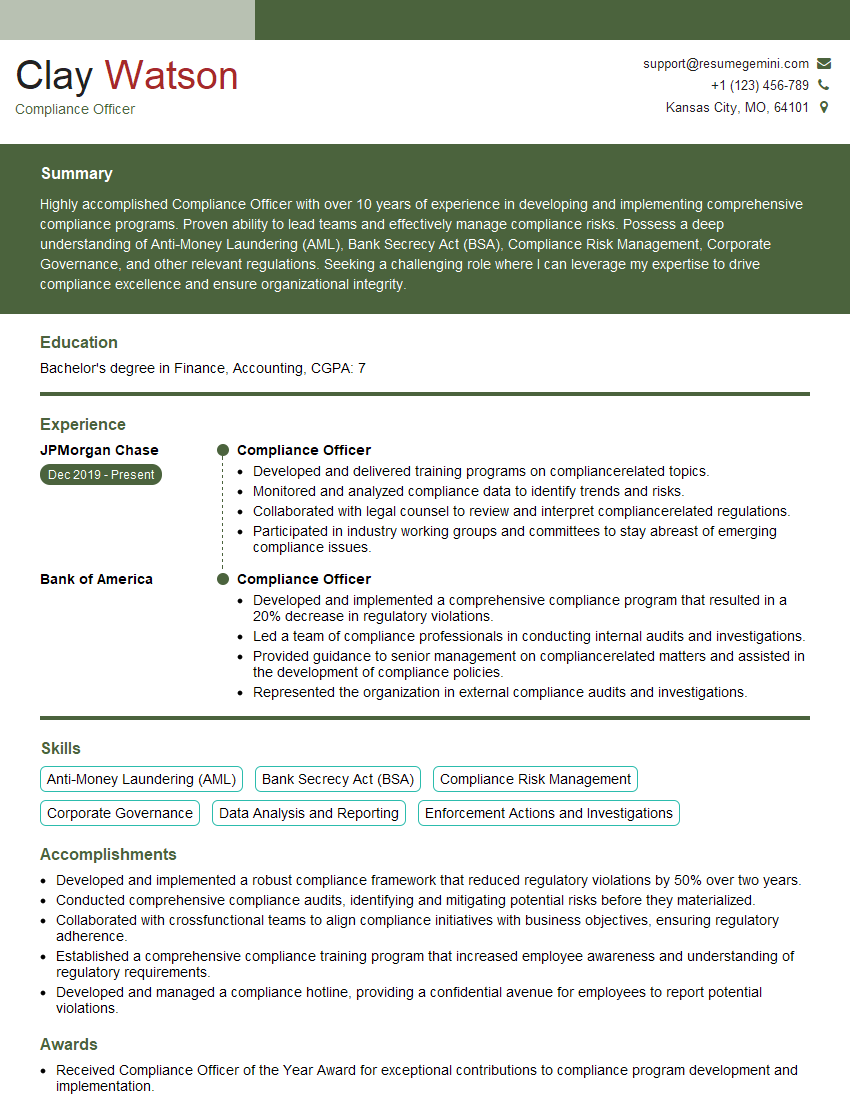
Compliance Officer Resume Sample
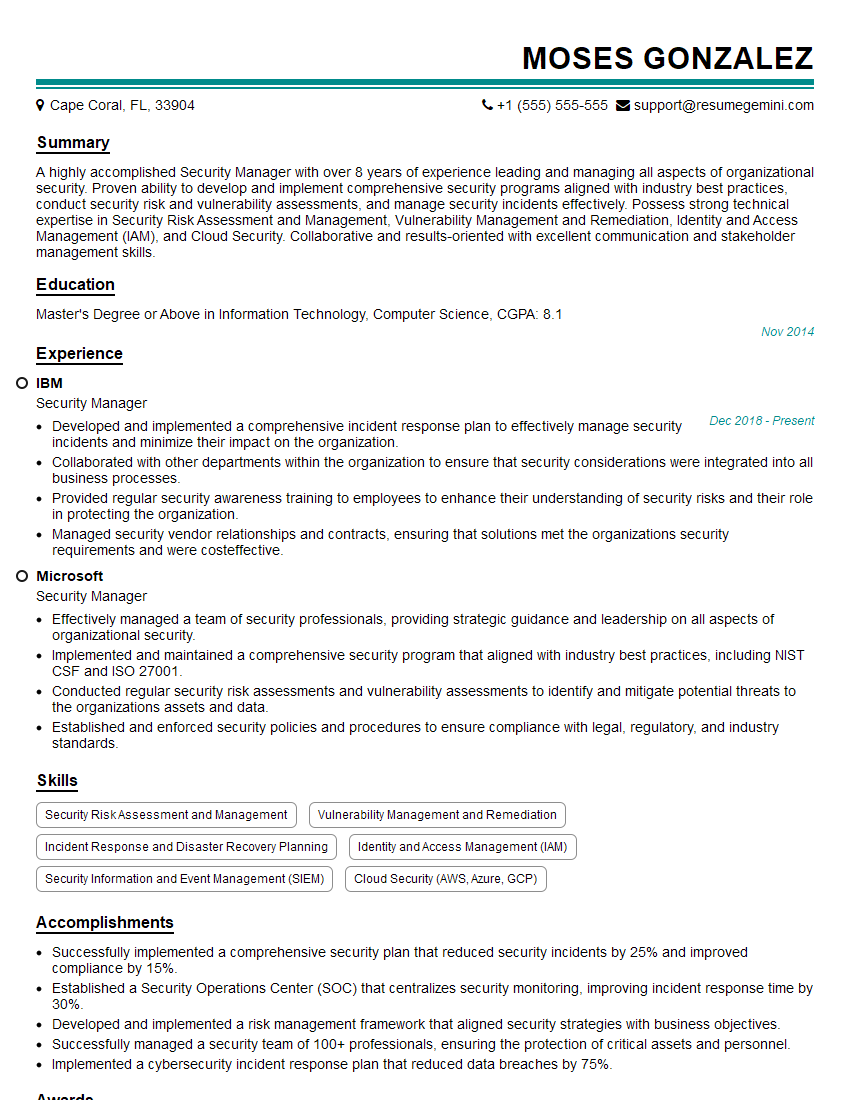
Security Manager Resume Sample
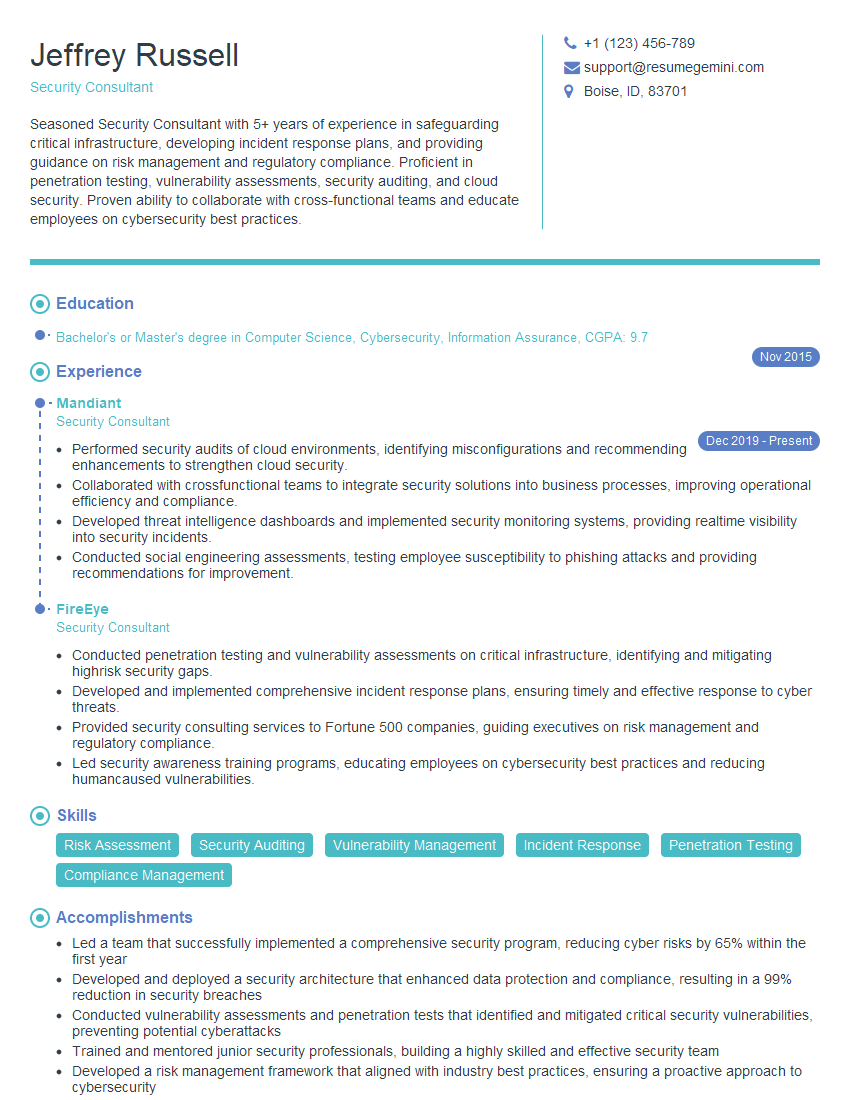
Security Consultant Resume Sample
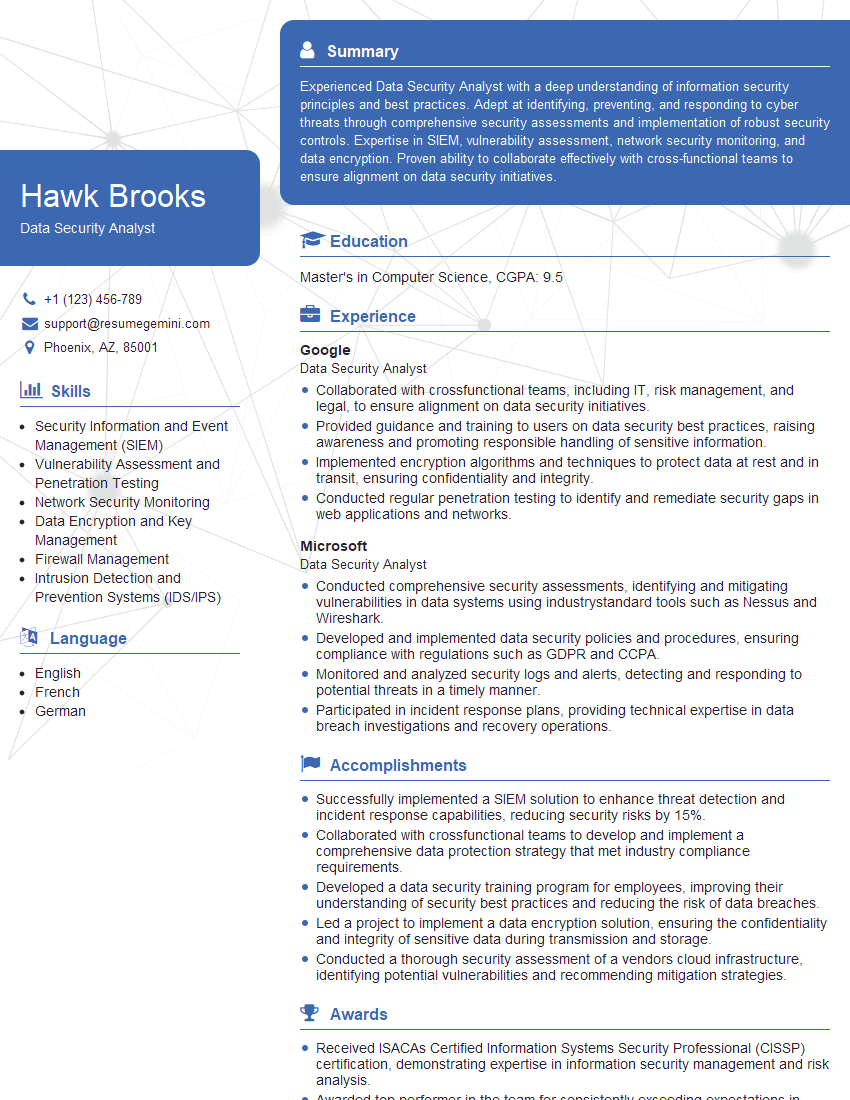
Data Security Analyst Resume Sample
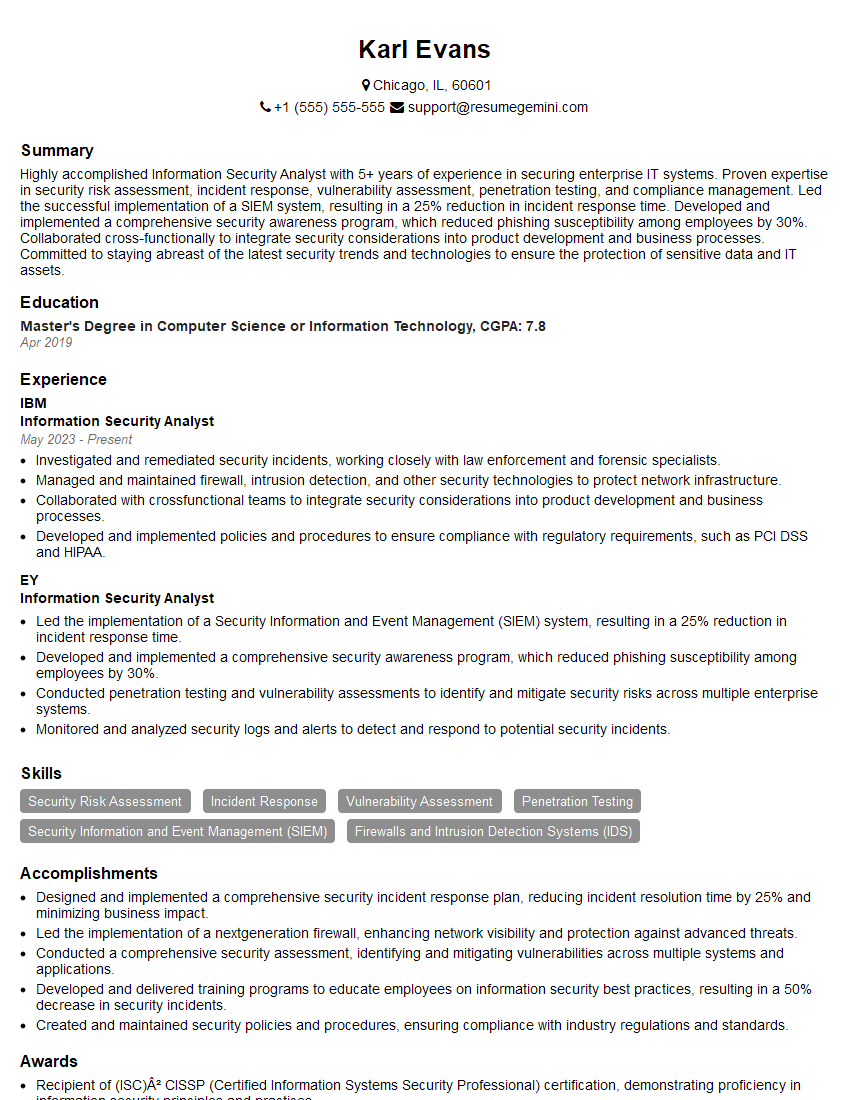
Information Security Analyst Resume Sample
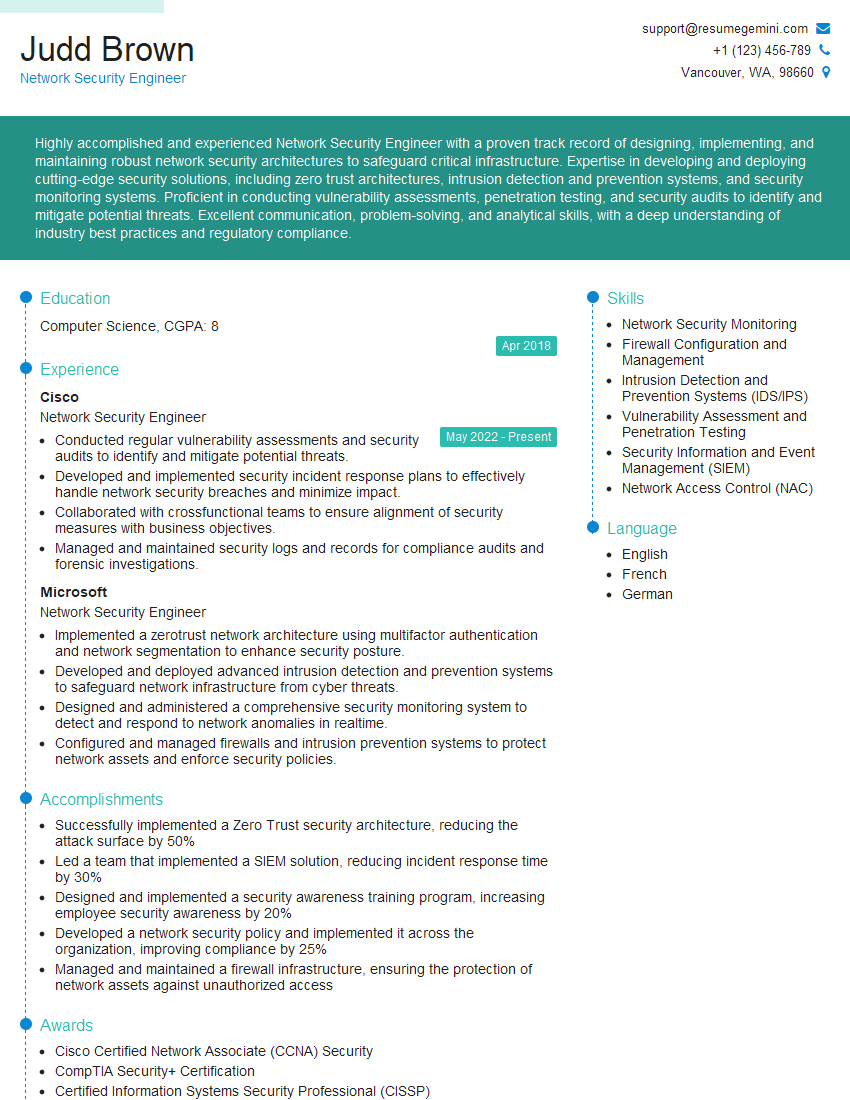
Network Security Engineer Resume Sample
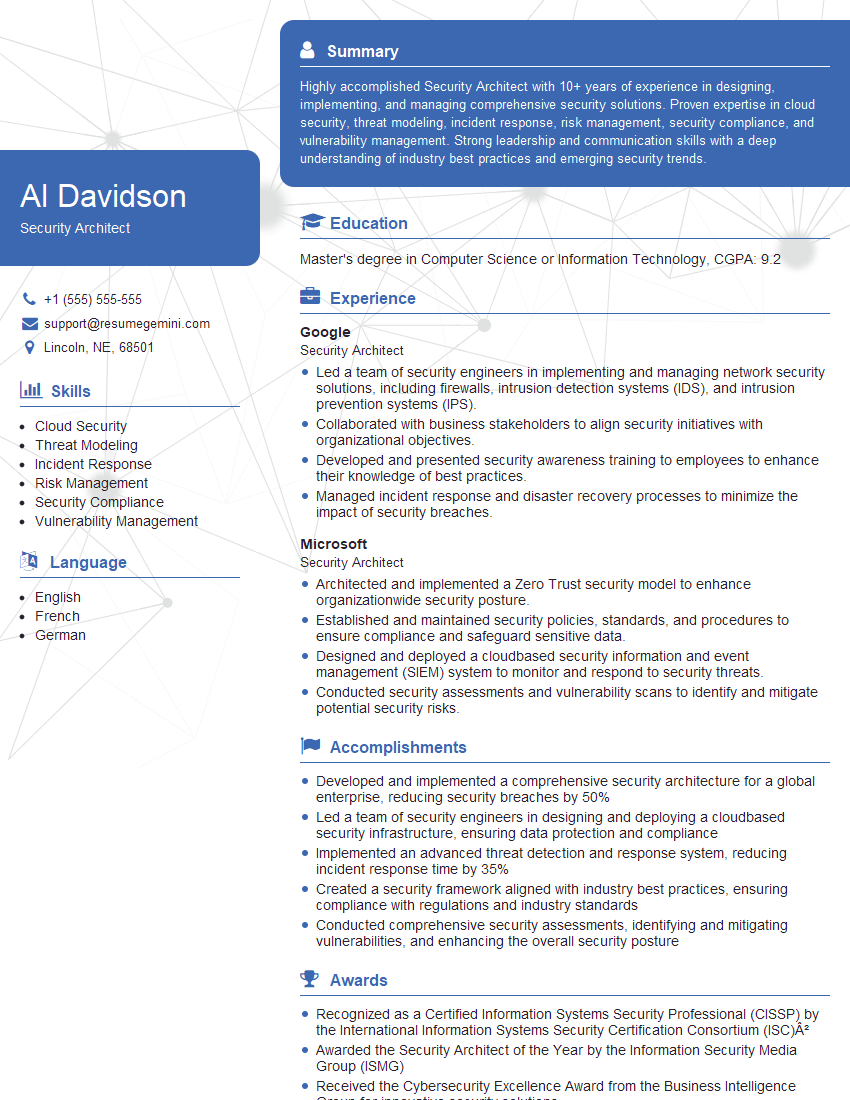
Security Architect Resume Sample

Cryptographer Resume Sample
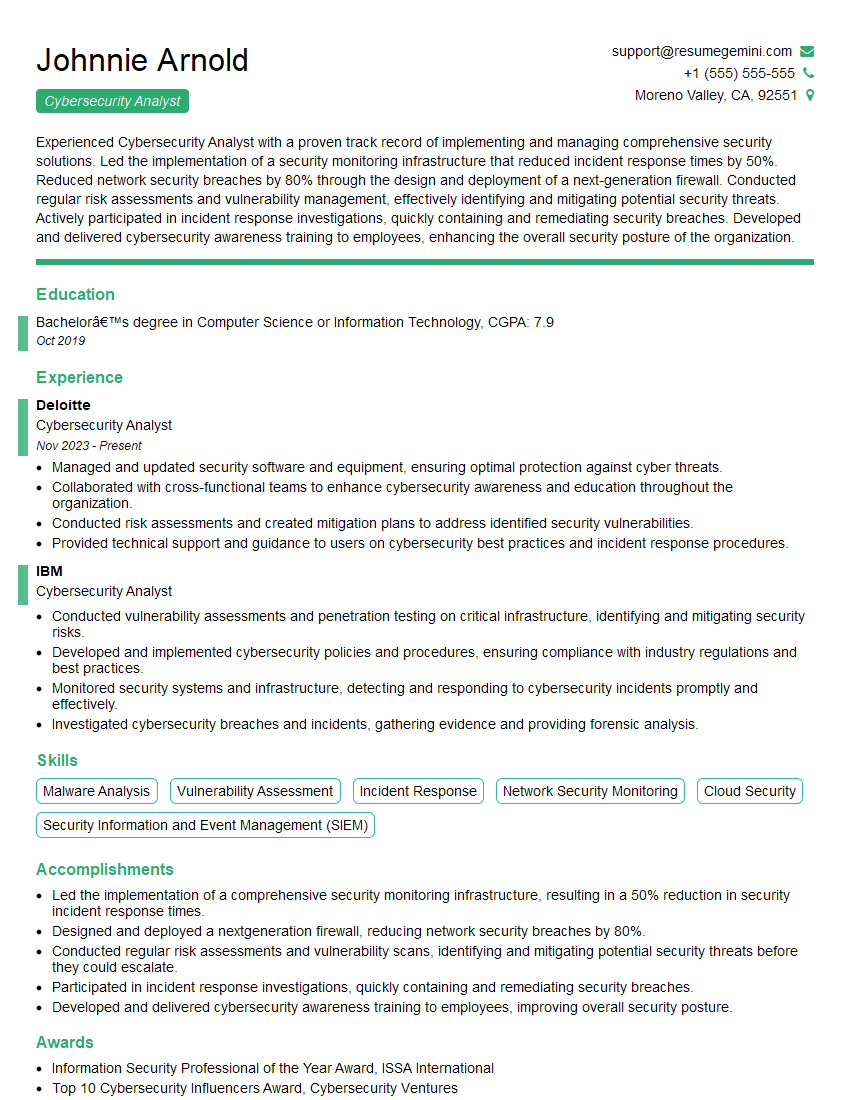
Cybersecurity Analyst Resume Sample
Explore more articles
Users Rating of Our Blogs
Share Your Experience
We value your feedback! Please rate our content and share your thoughts (optional).
What Readers Say About Our Blog
I Redesigned Spongebob Squarepants and his main characters of my artwork.
https://www.deviantart.com/reimaginesponge/art/Redesigned-Spongebob-characters-1223583608
IT gave me an insight and words to use and be able to think of examples
Hi, I’m Jay, we have a few potential clients that are interested in your services, thought you might be a good fit. I’d love to talk about the details, when do you have time to talk?
Best,
Jay
Founder | CEO