Cracking a skill-specific interview, like one for Health Science Advocacy, requires understanding the nuances of the role. In this blog, we present the questions you’re most likely to encounter, along with insights into how to answer them effectively. Let’s ensure you’re ready to make a strong impression.
Questions Asked in Health Science Advocacy Interview
Q 1. Describe your experience advocating for specific health science policies.
My advocacy work has largely focused on improving access to mental healthcare for underserved communities. I’ve been directly involved in advocating for policy changes at both the state and national levels. For example, I spearheaded a campaign to increase funding for community-based mental health services in my state. This involved extensive research into the current funding models, analyzing the needs of the underserved population, and developing policy proposals that addressed these gaps. We collaborated with policymakers, healthcare providers, and community organizations to build a coalition and effectively lobby for legislative changes. The result was a significant increase in funding, leading to the expansion of crucial mental health services in several under-resourced areas.
Another significant project involved advocating for the inclusion of mental health parity in our state’s insurance mandates. This meant ensuring that insurance coverage for mental health services was comparable to that of physical health services. We achieved this through a multi-pronged approach, including public awareness campaigns, direct lobbying efforts, and the strategic mobilization of patient advocacy groups. This campaign successfully resulted in a landmark piece of legislation that significantly improved access to mental health treatment for many.
Q 2. Explain your understanding of the regulatory landscape in the health sciences.
The regulatory landscape in health sciences is complex and multifaceted, encompassing federal, state, and local agencies. At the federal level, agencies like the Food and Drug Administration (FDA), the Centers for Medicare & Medicaid Services (CMS), and the National Institutes of Health (NIH) play crucial roles in regulating pharmaceuticals, medical devices, healthcare financing, and research funding. These agencies operate under specific statutory mandates and regulations, and compliance is critical for all stakeholders.
State governments also have significant regulatory power, particularly concerning licensing of healthcare professionals, healthcare facility standards, and the regulation of insurance companies. Local regulations can further impact issues like zoning for healthcare facilities and public health initiatives. Understanding the interplay between these different levels of regulation is crucial for effective advocacy. For instance, a national policy might set broad standards, but state-level regulations often determine how those standards are implemented in practice, presenting both opportunities and challenges for advocates.
Q 3. How would you measure the success of a health science advocacy campaign?
Measuring the success of a health science advocacy campaign requires a multi-faceted approach. It’s not simply about winning a vote or passing a bill; it’s about achieving tangible improvements in health outcomes. We use both quantitative and qualitative measures.
Quantitative measures might include tracking changes in funding levels for a particular program, analyzing increases in access to services (e.g., number of people receiving treatment, improved insurance coverage rates), or evaluating reductions in disease prevalence or mortality rates. For example, if our campaign aimed to increase access to HIV testing, we’d track the number of tests administered before and after the campaign.
Qualitative measures focus on assessing changes in awareness, attitudes, and policy implementation. This might involve conducting surveys to gauge public opinion, analyzing media coverage to measure the impact of awareness campaigns, or conducting interviews with stakeholders to assess the effectiveness of policy changes on the ground. For example, feedback from community health workers on the accessibility and usability of a new program would be valuable qualitative data.
Q 4. Describe a time you had to influence stakeholders with opposing viewpoints on a health issue.
During the campaign to improve mental health parity, we encountered significant resistance from insurance lobbyists who argued that expanding mental health coverage would be financially unsustainable. Their arguments were rooted in financial projections and a concern about increased premiums. To influence them, we presented counter-arguments supported by robust data. We showed evidence that early intervention and better access to mental health services actually resulted in lower long-term healthcare costs by preventing more serious conditions and hospitalizations. We also emphasized the ethical imperative of equal access to healthcare.
This involved presenting economic models that demonstrated the long-term cost-effectiveness of expanding mental healthcare and collaborating with economists to produce data-driven reports. We also engaged in a series of meetings and presentations to build trust and address their specific concerns in a respectful and collaborative manner. Ultimately, this approach helped shift the narrative and build support among some previously opposed stakeholders. It wasn’t about winning over everyone immediately, but building common ground where possible.
Q 5. What strategies do you use to build consensus among diverse stakeholders in health science advocacy?
Building consensus among diverse stakeholders requires a collaborative and inclusive approach. First, it’s vital to identify all key stakeholders—healthcare providers, patients, insurers, government officials, researchers, and community organizations. Then we facilitate open communication and dialogue. This often involves hosting meetings, workshops, and focus groups to gather input from all parties.
We employ techniques like appreciative inquiry, where we focus on identifying shared values and building on existing strengths and successes rather than dwelling on disagreements. We also utilize mediation techniques if disagreements escalate, facilitating a structured process that allows for respectful negotiation and compromise. It’s about identifying common goals and finding common ground, even when approaches differ. Successful consensus-building often requires finding creative solutions that address the concerns of different groups while staying true to the core objectives of the advocacy campaign.
Q 6. How do you stay current with changes in health science policy and regulations?
Staying current is paramount in this field. I regularly monitor key publications such as the New England Journal of Medicine, the Journal of the American Medical Association, and policy journals focused on healthcare. I also subscribe to relevant newsletters and alerts from organizations like the American Public Health Association and the Centers for Disease Control and Prevention (CDC).
I actively participate in professional networks and attend conferences and workshops to engage with colleagues and learn about the latest developments. I also utilize online databases and legislative tracking tools to monitor legislative activity and regulatory changes at the federal, state, and local levels. Finally, maintaining relationships with key informants within government agencies and advocacy organizations provides valuable insights into emerging issues and policy directions.
Q 7. Explain your understanding of different advocacy approaches (e.g., grassroots, lobbying).
Grassroots advocacy focuses on mobilizing public support for a specific health issue. This involves engaging community members directly through public awareness campaigns, organizing rallies, and encouraging citizens to contact their elected officials. Think of it like building a groundswell of support.
Lobbying, on the other hand, involves direct interaction with policymakers to influence legislative decisions. This can include meeting with legislators, providing testimony at hearings, and engaging in direct negotiations. Lobbying is often more formal and strategic, aiming to directly influence the legislative process. Both approaches are vital and often used in conjunction; grassroots advocacy can help build public pressure to support a lobbying campaign’s success.
Other advocacy approaches include media advocacy (using media to raise awareness), litigation (using legal action to achieve policy change), and research advocacy (using research findings to inform policy decisions). A comprehensive strategy often incorporates several of these approaches to maximize impact.
Q 8. How would you develop a communication strategy for a specific health science advocacy campaign?
Developing a communication strategy for a health science advocacy campaign requires a multi-faceted approach. It begins with clearly defining the campaign’s goals and target audiences. For instance, are we aiming to influence public opinion, educate policymakers, or garner support from healthcare professionals? Identifying the key message – a concise, memorable statement summarizing the campaign’s core argument – is crucial.
Next, we select the most effective communication channels. This might include social media campaigns, targeted advertising, press releases, collaborations with influential health bloggers and journalists, or even community outreach events. The choice depends on the target audience and available resources. For example, a campaign targeting young adults might heavily utilize Instagram and TikTok, while one focused on influencing lawmakers might prioritize direct lobbying and meetings with Congressional staff.
A strong communication strategy also includes a robust monitoring and evaluation plan. We need to track key metrics – website traffic, social media engagement, media coverage, policy changes – to measure the campaign’s effectiveness and adapt our strategies as needed. Think of it like navigating with a GPS: you need regular feedback to ensure you’re on the right track. Finally, effective communication requires consistent messaging and a strong brand identity, ensuring all materials maintain a cohesive look and feel.
- Example: A campaign advocating for increased funding for cancer research might use powerful patient testimonials in social media ads and lobby Congress with data on mortality rates and research breakthroughs.
Q 9. How do you identify and prioritize health science advocacy issues?
Identifying and prioritizing health science advocacy issues involves a systematic process. First, we gather data from various sources: epidemiological studies, government reports, patient advocacy groups, and scientific literature. This data helps to identify areas with significant public health challenges, such as high rates of preventable diseases or limited access to healthcare. We also look at areas where there’s potential for impactful intervention – where policy changes could lead to significant positive changes.
Prioritization often involves a combination of quantitative and qualitative factors. For instance, we might prioritize issues with high disease burden (measured by mortality rates, years of life lost, etc.), but we’d also consider the feasibility of achieving policy change. Is there sufficient public and political will for this issue? Are there powerful vested interests opposed to change? A prioritization matrix can help visualize this – plotting the urgency (impact) against the feasibility (influence) of addressing the issue. Issues in the high-impact, high-feasibility quadrant receive top priority. We may then perform cost-benefit analyses of different intervention strategies to guide resource allocation.
Example: We might find that while heart disease has a larger overall impact, tackling childhood obesity through improved school nutrition might be more feasible in the short term, generating quick wins that build momentum for larger campaigns later.
Q 10. Describe your experience working with government agencies or regulatory bodies.
My experience with government agencies and regulatory bodies includes collaborating with the FDA on clinical trial regulations, working with the CDC on public health campaigns, and assisting the NIH in developing research grant proposals. This involved understanding complex regulatory frameworks, navigating bureaucratic processes, and building strong working relationships with agency staff.
For instance, in a campaign advocating for the approval of a new life-saving drug, I’ve worked closely with the FDA to ensure the clinical trial data met all the stringent requirements. This required deep understanding of statistical analysis and regulatory standards. In other projects, I’ve represented patient advocacy groups during legislative hearings on healthcare funding, presenting evidence-based arguments to influence policy decisions. Building trust and maintaining clear communication are key to effective collaborations in these contexts. We often need to translate complex scientific information into plain language for policymakers who may not have scientific backgrounds.
Q 11. How familiar are you with the legislative process related to healthcare?
I possess a strong understanding of the legislative process related to healthcare, from bill introduction and committee hearings to floor debates and presidential action. I know how to track legislation, identify key players, and build coalitions to support or oppose specific bills.
Understanding the legislative calendar is crucial, as is knowing the appropriate channels for communication at each stage. This includes preparing testimony for legislative hearings, meeting with lawmakers and their staff, and mobilizing grassroots support to contact their representatives. For example, I’ve assisted in drafting amendments to bills, identifying potential compromises, and coordinating efforts with other advocacy groups to build consensus. Success in this area requires a keen understanding of both the scientific evidence and the political landscape.
Q 12. Explain your understanding of health disparities and how advocacy can address them.
Health disparities refer to the systematic differences in health outcomes among various population groups, often linked to social, economic, and environmental factors such as race, ethnicity, socioeconomic status, and geographic location. These disparities manifest in numerous ways, including unequal access to quality healthcare, higher rates of chronic diseases, and lower life expectancy in marginalized communities.
Advocacy plays a vital role in addressing health disparities. This involves identifying the root causes of these inequalities and advocating for policies and programs that promote health equity. Examples include advocating for increased access to affordable healthcare, improving community resources, addressing social determinants of health (e.g., housing, food security, education), and combating systemic racism and bias within the healthcare system. A successful strategy involves partnering with community organizations to ensure programs are culturally appropriate and accessible, and to amplify the voices of those most affected.
For example, I’ve worked with organizations that are focusing on expanding access to mental healthcare in underserved communities, working to remove financial and geographical barriers to accessing this essential service.
Q 13. How would you navigate ethical dilemmas in health science advocacy?
Navigating ethical dilemmas in health science advocacy requires a strong ethical framework. This involves transparency, honesty, and a commitment to putting the interests of patients and the public first.
For instance, conflicts of interest must be carefully managed. Transparency about funding sources and potential biases is crucial. When working with pharmaceutical companies, for example, it’s essential to maintain independence and avoid situations where advocacy is unduly influenced by commercial interests. It also involves making informed decisions about the appropriate use of data and research – avoiding selective reporting or manipulating findings to support a predetermined position. Having a clear ethical code and seeking advice from an ethics committee when facing challenging situations is essential.
Ethical considerations extend to ensuring that advocacy campaigns do not inadvertently stigmatize certain groups or create unintended consequences. Careful consideration should be given to messaging and the potential impact on vulnerable populations.
Q 14. How do you utilize data and research to support your health science advocacy efforts?
Data and research are fundamental to effective health science advocacy. We use data to identify health problems, assess their impact, and evaluate the effectiveness of interventions. This includes epidemiological data on disease prevalence, mortality rates, and risk factors; clinical trial data demonstrating the efficacy of treatments; and economic data on healthcare costs and resource allocation.
For example, in a campaign advocating for universal health coverage, we would use data to demonstrate the high costs of uncompensated care and its negative impact on healthcare access. We’d show the improvement in health outcomes in other countries with universal systems. We might also present modeling studies that project the potential economic benefits of universal coverage. Effective presentation of data requires strong data visualization techniques, statistical expertise, and the ability to tailor the information for the specific audience.
Beyond simply presenting numbers, we utilize data to shape our narrative and demonstrate the urgency and importance of our advocacy goals. Rigorous methodology and transparent presentation of information are crucial to building trust and credibility.
Q 15. Describe your experience working with coalitions or partnerships in health advocacy.
My experience working with coalitions and partnerships in health advocacy has been extensive and deeply rewarding. I believe the power of collective action is paramount in achieving meaningful change within the health science landscape. I’ve been involved in several multi-stakeholder initiatives, including collaborations with patient advocacy groups, research institutions, healthcare providers, and government agencies. For instance, I worked with a coalition comprising patient organizations representing individuals with rare diseases, pharmaceutical companies developing targeted therapies, and regulatory bodies to advocate for streamlined drug approval processes for orphan drugs. This involved coordinating advocacy efforts, aligning messaging, and sharing resources to amplify our collective voice.
- Strategic Planning: We collaboratively developed a comprehensive advocacy strategy, defining clear goals, target audiences, and communication plans.
- Resource Sharing: We pooled our resources, including expertise, funding, and network connections, to maximize our impact.
- Shared Messaging: We worked together to craft consistent and compelling messaging to ensure unified advocacy efforts.
- Lobbying and Public Awareness Campaigns: We engaged in joint lobbying efforts with policymakers and conducted public awareness campaigns to educate the public and raise awareness about the issues.
Through these collaborative efforts, we achieved significant advancements in expediting the approval process for several crucial orphan drugs, leading to improved patient outcomes.
Career Expert Tips:
- Ace those interviews! Prepare effectively by reviewing the Top 50 Most Common Interview Questions on ResumeGemini.
- Navigate your job search with confidence! Explore a wide range of Career Tips on ResumeGemini. Learn about common challenges and recommendations to overcome them.
- Craft the perfect resume! Master the Art of Resume Writing with ResumeGemini’s guide. Showcase your unique qualifications and achievements effectively.
- Don’t miss out on holiday savings! Build your dream resume with ResumeGemini’s ATS optimized templates.
Q 16. How would you address challenges in securing funding for health science advocacy projects?
Securing funding for health science advocacy projects can be a significant challenge. It requires a multi-pronged approach that balances strategic grant writing, diverse funding streams, and compelling narrative development. Think of it like building a strong financial foundation for your advocacy work.
- Grant Writing: This is crucial. You must meticulously research relevant funding opportunities, craft compelling proposals showcasing the project’s impact, and maintain strong relationships with grant-making organizations.
- Diversification of Funding Sources: Don’t rely solely on grants. Explore opportunities like corporate sponsorships, individual donations (through crowdfunding platforms, for example), and philanthropic foundations.
- Strong Narrative Development: Your project’s narrative needs to be powerful, clearly communicating the need, the proposed solution, and the expected impact. Numbers, data, and testimonials are key to demonstrating effectiveness.
- Budget Justification: Demonstrate a clear understanding of your project’s cost, justify every expense, and present a realistic budget.
- Building Relationships with Funders: Cultivating strong relationships with potential funders is as important as a well-written proposal. Networking, attending events, and having conversations can open up previously unknown opportunities.
For example, in one project, we secured funding from a combination of a government grant, a corporate sponsorship from a pharmaceutical company aligned with our mission, and several smaller donations obtained through a successful crowdfunding campaign.
Q 17. How do you build relationships with key decision-makers in the health science field?
Building relationships with key decision-makers, such as policymakers, government officials, and healthcare leaders, is essential for effective health science advocacy. It’s about building trust and demonstrating credibility.
- Networking: Attending industry conferences, joining relevant professional organizations, and actively engaging in online communities are great starting points.
- Targeted Communication: Develop tailored communication strategies for each decision-maker, highlighting aspects of your advocacy efforts that align with their priorities and interests.
- Data-Driven Advocacy: Provide decision-makers with credible, evidence-based information that supports your arguments and demonstrates the impact of your advocacy work.
- Relationship Building: Regular communication, whether it’s brief updates or more in-depth briefings, keeps your advocacy efforts top-of-mind. Building personal relationships fosters trust and mutual understanding.
- Transparency and Integrity: Maintaining open communication and honesty builds confidence in your advocacy work.
For example, I built a relationship with a key senator by providing regular briefings on legislative proposals related to rare diseases. This included data-driven reports, personal stories from patients, and insights from leading researchers in the field. This consistent and transparent approach built trust and resulted in the senator becoming a champion for our cause.
Q 18. Describe your experience using social media or digital tools in health science advocacy.
Social media and digital tools are powerful instruments for health science advocacy. They enable rapid dissemination of information, engagement with diverse audiences, and mobilization of support. Think of them as your advocacy megaphone.
- Social Media Platforms: Utilizing platforms like Twitter, Facebook, LinkedIn, and Instagram to share updates, engage in discussions, and raise awareness about health science issues. This includes using relevant hashtags, creating engaging content (videos, infographics), and actively responding to comments and questions.
- Website and Blog: A dedicated website or blog can serve as a central hub for information, resources, and updates. This provides a platform for publishing in-depth articles, research findings, and policy analysis.
- Email Marketing: Building an email list and using it to share targeted information and calls to action with supporters.
- Online Petitioning and Advocacy Platforms: Utilizing online platforms to gather support for policy changes or raise awareness about specific issues.
For instance, during a recent campaign advocating for improved access to mental health services, we used a multi-platform approach – creating informative videos for YouTube, sharing updates on Twitter, engaging in discussions on Facebook, and using Instagram for visual storytelling – to reach a large and diverse audience, boosting awareness and driving action.
Q 19. How would you respond to criticism or opposition to a health science advocacy initiative?
Responding to criticism or opposition to a health science advocacy initiative requires a strategic and measured approach. It’s crucial to engage constructively while staying true to your core values and evidence-based arguments.
- Active Listening: Carefully listen to and understand the concerns being raised. Acknowledge the validity of some points even if you ultimately disagree.
- Evidence-Based Responses: Address concerns with facts and data, avoiding emotional or ad hominem arguments.
- Transparency and Open Communication: Be open to dialogue and demonstrate transparency in your methods and motivations.
- Collaboration and Compromise: Seek common ground where possible and be willing to compromise on non-essential issues.
- Strategic Partnerships: Build alliances with individuals and organizations who can help counter the opposition and provide support.
For example, when facing opposition to a policy proposal aimed at increasing funding for research on a particular disease, we engaged in respectful discussions with critics, addressing their concerns with data on the disease’s prevalence and the potential impact of the research. By acknowledging their valid concerns while highlighting the potential benefits, we successfully garnered support for the proposal.
Q 20. What are your strengths and weaknesses as a health science advocate?
My strengths as a health science advocate lie in my ability to synthesize complex scientific information into accessible narratives, my strong interpersonal and communication skills, and my commitment to building consensus and collaboration. I’m adept at crafting compelling advocacy strategies and securing funding.
However, like any advocate, I recognize my areas for improvement. While I’m generally effective in building coalitions, I sometimes struggle with navigating highly polarized discussions and maintaining objectivity in the face of intense emotional responses. To address this, I am working on developing strategies for managing conflict constructively and promoting empathy while adhering to evidence-based arguments. This involves seeking feedback, practicing active listening, and improving my conflict resolution skills.
Q 21. Describe a time you faced a challenge in health science advocacy and how you overcame it.
One significant challenge I faced was advocating for the implementation of a new public health program during a time of severe budget constraints. Securing funding for this innovative, yet costly, initiative was extremely difficult. The program, designed to improve early childhood development through nutritional interventions, was met with skepticism due to concerns about its cost-effectiveness.
To overcome this, we adopted a three-pronged approach: first, we meticulously researched and compiled data to demonstrate the long-term cost-savings of investing in early childhood development compared to addressing the consequences of neglect later in life. Secondly, we developed a phased implementation plan, demonstrating how the program could be gradually rolled out with a lower initial investment. Thirdly, we built broad-based coalitions with community organizations, healthcare professionals, and parent advocacy groups to generate public support and lobby effectively. This multifaceted strategy proved successful, leading to securing a portion of the funding necessary to launch a pilot program, proving its effectiveness and paving the way for full implementation. This experience highlighted the crucial role of data-driven advocacy, strategic planning, and collaborative partnerships in achieving success even under challenging circumstances.
Q 22. How do you ensure transparency and accountability in your advocacy work?
Transparency and accountability are the cornerstones of effective health science advocacy. Without them, trust erodes, and progress stalls. I ensure transparency by openly sharing my funding sources, methodologies, and any potential conflicts of interest. This includes publishing reports and data in accessible formats, making presentations available online, and actively engaging with stakeholders to address their concerns. Accountability involves regularly evaluating the impact of my work against established metrics and making adjustments as needed. I track progress, document successes and challenges, and share this information with those who fund or support my efforts. For example, if advocating for increased funding for a specific health program, I would publicly report on how much funding was secured, how many people benefited, and any challenges encountered in the process.
A practical example: In a recent campaign to promote early childhood vaccination, we documented our outreach methods, the number of families reached, and the resulting vaccination rates in specific communities. This transparent reporting allowed us to demonstrate the effectiveness of our efforts and build trust with policymakers and the public.
Q 23. What are your long-term goals in health science advocacy?
My long-term goals in health science advocacy center on creating sustainable, equitable access to quality healthcare for all. This involves a multi-pronged approach. First, I aim to influence policy changes at both the state and federal levels that prioritize preventative care, address health disparities, and improve healthcare access for underserved populations. Second, I want to empower communities to become active participants in shaping their own health outcomes through education and advocacy training. This includes building strong partnerships with community organizations and healthcare providers. Finally, I strive to foster innovation in healthcare delivery by supporting research and development of cost-effective, accessible solutions. Ultimately, my goal is to build a healthier future where everyone has the opportunity to thrive.
Q 24. How do you adapt your advocacy strategies based on the target audience?
Adapting advocacy strategies based on the target audience is crucial for success. What resonates with policymakers will differ from what motivates the general public or specific community groups. For instance, when working with policymakers, I focus on data-driven arguments, cost-benefit analyses, and the legal and regulatory frameworks. When engaging the public, I prioritize clear, concise language, compelling stories, and relatable examples. When working with specific communities, I begin by actively listening and understanding their unique health concerns and cultural contexts. I then tailor my message to address those specific needs and preferences, ensuring that my advocacy efforts are culturally sensitive and relevant. This might involve using different communication channels, partnering with community leaders, and employing culturally appropriate language and imagery.
For example, advocating for increased access to mental healthcare for a specific ethnic group requires understanding their cultural attitudes towards mental illness and tailoring the messaging and outreach strategies to overcome any potential barriers.
Q 25. Describe your experience working with diverse communities in health science advocacy.
My experience working with diverse communities has been transformative. I’ve learned that a one-size-fits-all approach to health science advocacy is ineffective. It’s essential to understand the unique social, cultural, economic, and linguistic factors that shape health outcomes within different communities. For example, working with immigrant communities requires sensitivity to language barriers and cultural norms regarding healthcare. I have collaborated with numerous organizations to address health disparities among various population groups, including those based on race, ethnicity, socioeconomic status, geographic location, sexual orientation, gender identity, and disability. This has involved creating culturally sensitive educational materials, establishing trust-building relationships with community leaders, and advocating for policies that address systemic inequalities. A successful project involved partnering with a local church to implement a diabetes prevention program tailored to the specific cultural and dietary practices of the community.
Q 26. How familiar are you with relevant health science legislation at the state and federal level?
I am very familiar with relevant health science legislation at both the state and federal levels. My knowledge spans areas such as the Affordable Care Act, the Public Health Service Act, and various state-level health regulations. I regularly monitor legislative developments, track proposed bills, and analyze their potential impact on health outcomes. I understand the complexities of the legislative process, including committee hearings, lobbying efforts, and regulatory rulemaking. This understanding allows me to effectively advocate for policies that promote health equity and improve access to healthcare services. I frequently use resources like the Congressional Research Service reports, the Centers for Medicare & Medicaid Services publications, and state legislative websites to stay current on relevant legislation and regulations.
Q 27. How do you measure the impact of your health science advocacy efforts?
Measuring the impact of health science advocacy is crucial for demonstrating effectiveness and securing future funding. I utilize a variety of methods including quantitative and qualitative data collection. Quantitative methods include tracking changes in policy, legislation, funding levels, healthcare access metrics, and health outcomes. For example, we might track the number of people who gained access to a particular health service after a successful advocacy campaign. Qualitative data collection includes conducting surveys, focus groups, and interviews to gauge community perceptions, satisfaction, and experiences. I use a combination of these data sources to build a comprehensive picture of the impact of my work. Reporting this data transparently is vital for maintaining accountability and demonstrating the value of health science advocacy.
Key Topics to Learn for Your Health Science Advocacy Interview
- Understanding Health Policy: Grasp the legislative process and how it impacts healthcare access, funding, and regulations. Explore the influence of lobbying and advocacy groups.
- Advocacy Strategies & Techniques: Learn about effective communication, stakeholder engagement, coalition building, and campaign development. Consider how to tailor your approach to different audiences (legislators, media, public).
- Public Health Issues & Challenges: Develop a strong understanding of current public health concerns (e.g., chronic disease prevention, health disparities, access to care) and their socio-economic contexts.
- Data Analysis & Interpretation: Practice analyzing health data to support advocacy efforts. Learn how to present complex information clearly and persuasively to diverse audiences.
- Ethical Considerations in Advocacy: Explore the ethical implications of health science advocacy, including transparency, conflict of interest, and responsible use of data.
- Health Economics & Resource Allocation: Understand the economic aspects of healthcare, including cost-effectiveness analysis and resource allocation strategies. This will help you advocate for efficient and equitable solutions.
- Effective Communication & Presentation Skills: Practice crafting compelling narratives to advocate for change. This includes written communication (reports, proposals), oral presentations, and engaging with diverse audiences.
Next Steps: Level Up Your Health Science Advocacy Career
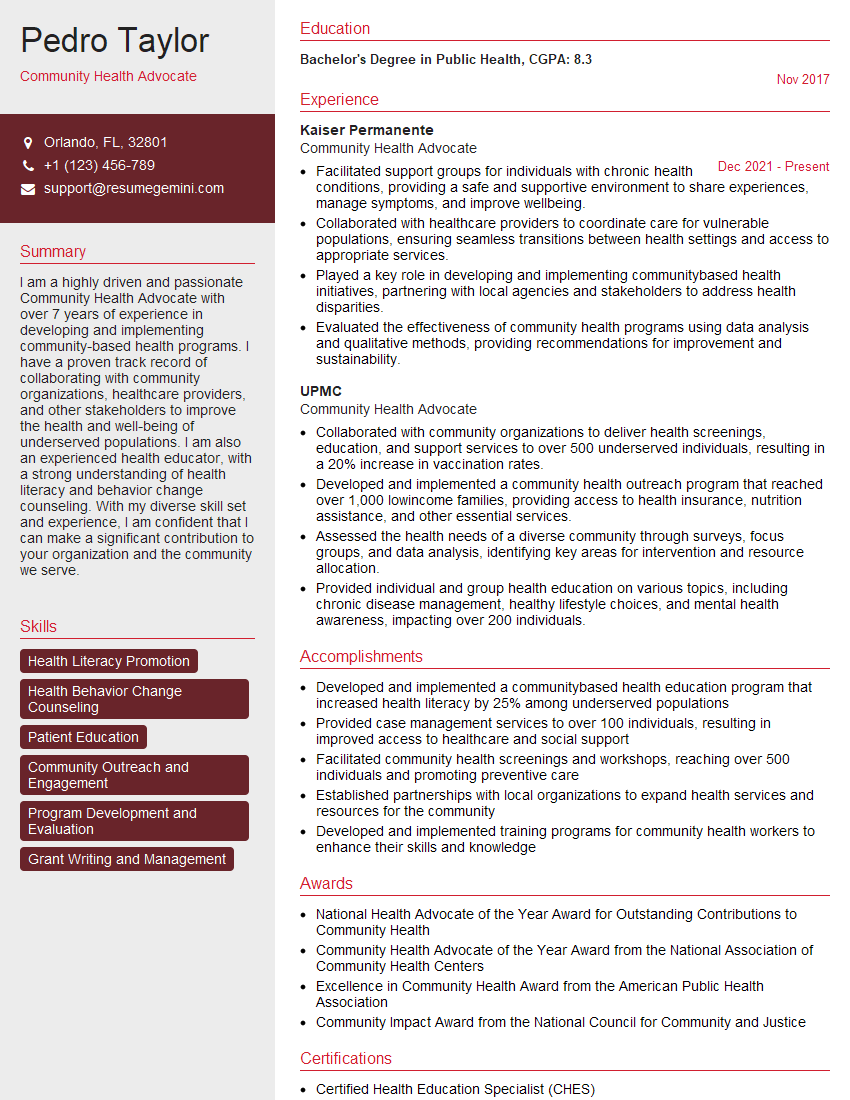
Mastering health science advocacy opens doors to impactful and rewarding careers. To maximize your job prospects, focus on creating a strong, ATS-friendly resume that highlights your skills and experience. ResumeGemini is a trusted resource that can help you build a professional resume that truly showcases your qualifications. We offer examples of resumes tailored specifically to the Health Science Advocacy field to guide you. Invest in your future – invest in a compelling resume.
Explore more articles
Users Rating of Our Blogs
Share Your Experience
We value your feedback! Please rate our content and share your thoughts (optional).
What Readers Say About Our Blog
I Redesigned Spongebob Squarepants and his main characters of my artwork.
https://www.deviantart.com/reimaginesponge/art/Redesigned-Spongebob-characters-1223583608
IT gave me an insight and words to use and be able to think of examples
Hi, I’m Jay, we have a few potential clients that are interested in your services, thought you might be a good fit. I’d love to talk about the details, when do you have time to talk?
Best,
Jay
Founder | CEO