Every successful interview starts with knowing what to expect. In this blog, we’ll take you through the top Experienced in the repair and overhaul of shipboard machinery interview questions, breaking them down with expert tips to help you deliver impactful answers. Step into your next interview fully prepared and ready to succeed.
Questions Asked in Experienced in the repair and overhaul of shipboard machinery Interview
Q 1. Describe your experience with troubleshooting diesel engine malfunctions.
Troubleshooting diesel engine malfunctions requires a systematic approach. It begins with identifying the symptoms – is the engine failing to start, running rough, losing power, or emitting excessive smoke? Once the symptom is identified, I use a combination of diagnostic tools and my experience to pinpoint the cause. This might involve checking fuel delivery (fuel pressure, injector operation), air intake (restriction, filter condition), compression (leakdown test), lubrication (oil pressure, quality), and the engine’s control system (electronic sensors and actuators).
For example, if the engine is running rough, I would first check the fuel injectors for proper atomization and spray pattern using a fuel injector test bench. Low compression in one cylinder might indicate worn piston rings or a cracked cylinder head. Excessive smoke could point to issues with fuel injection timing or the turbocharger. My experience allows me to quickly prioritize checks and efficiently isolate the problem. I’ve dealt with everything from simple fuel filter blockages to complex issues with the engine’s electronic control unit (ECU).
Q 2. Explain the process of performing a main engine overhaul.
A main engine overhaul is a major undertaking, typically scheduled after a certain number of operating hours or when significant wear and tear is detected. The process is methodical and involves several key stages. First, the engine is thoroughly inspected to identify all parts requiring replacement or repair. This often includes detailed measurements and bore scoping to assess the cylinder liner condition. Then, the engine is disassembled, starting with the removal of ancillaries like turbochargers and fuel injectors. Each component is then meticulously cleaned and inspected. Worn or damaged components are replaced with new or reconditioned parts. After reassembly, the engine is meticulously aligned, and various systems, such as lubrication and cooling, are checked and flushed before starting the engine. Final testing involves monitoring parameters like oil pressure, temperature, and exhaust emissions to ensure everything operates smoothly.
For instance, during an overhaul of a large two-stroke diesel engine, we might find that cylinder liners have become worn, requiring replacement. The crankshaft might require grinding and polishing to eliminate wear. The process demands meticulous attention to detail. A missed step can have serious consequences, hence the importance of following strict procedures and utilizing specialized tools.
Q 3. What are the common causes of boiler tube failures?
Boiler tube failures are a serious concern, as they can lead to significant damage and even endanger the crew. Several factors contribute to these failures. One of the most common is overheating, often caused by insufficient water flow, scale buildup, or corrosion within the tubes. Scale acts as an insulator, preventing efficient heat transfer and leading to localized overheating. Corrosion, particularly pitting corrosion and stress corrosion cracking, weakens the tube material over time. Also, vibration, water hammer (sudden pressure surges), and external corrosion can contribute to tube failures. Improper water treatment, using water with high levels of dissolved solids, significantly increases the likelihood of scale formation and corrosion.
For example, I’ve seen numerous cases where neglected water treatment led to heavy scale buildup, causing localized overheating and eventual tube failure. Regular boiler water testing and cleaning are essential to prevent such incidents. Detecting these issues early through regular inspections and monitoring can help prevent catastrophic failures.
Q 4. How do you maintain and repair marine refrigeration systems?
Maintaining and repairing marine refrigeration systems involves a multi-faceted approach. It starts with regular inspections to check for leaks, proper refrigerant levels, and the condition of components such as compressors, condensers, evaporators, and expansion valves. Leak detection is crucial, and various methods, like nitrogen pressure testing, are used to locate and repair leaks in the system. Regular cleaning of condenser coils is essential to ensure efficient heat transfer. Troubleshooting common issues such as compressor failures, refrigerant leaks, and malfunctioning control systems involves systematic diagnostics. This can include using specialized refrigerant leak detectors and pressure gauges.
A practical example involves a compressor failure on a refrigerated cargo vessel. I would isolate the system, recover the refrigerant using appropriate recovery equipment, identify and replace the faulty compressor, recharge the system with the correct amount of refrigerant, and thoroughly test it before resuming operations. Maintaining precise refrigerant levels and temperatures is crucial for the safety and quality of the goods being refrigerated.
Q 5. Describe your experience with propeller shaft alignment.
Propeller shaft alignment is critical for efficient operation and to prevent premature wear and damage to the shaft, bearings, and stern tube. Improper alignment can lead to increased vibration, noise, and ultimately, shaft failure. The process involves precise measurement and adjustment to ensure the shaft is perfectly aligned with the engine and the propeller. This typically involves using alignment tools such as dial indicators and laser alignment systems. The alignment is checked both horizontally and vertically, and adjustments are made to the stern tube bearings and coupling arrangements as necessary.
In one case, we found misalignment due to a slight settling of the engine foundation. This resulted in significant vibration. Using a laser alignment system, we precisely measured the misalignment, adjusted the engine mounts, and then re-aligned the shaft. This resolved the vibration and prevented further damage to the system. Accurate shaft alignment is not only crucial for efficient operation but also for ensuring the safety and longevity of the vessel.
Q 6. What are the safety procedures for working in an engine room?
Safety in the engine room is paramount. Strict adherence to safety procedures is non-negotiable. This includes wearing appropriate personal protective equipment (PPE) such as safety boots, gloves, eye protection, and hearing protection. Before commencing any work, a permit-to-work system should be used, outlining the specific task, the potential hazards, and the necessary precautions. Regular safety inspections and drills are essential. All personnel must be thoroughly trained in emergency procedures, including fire fighting and first aid. Clear communication and a strong safety culture are crucial. Hot work permits are required for any operation involving welding, cutting, or other heat-producing processes. Proper lockout/tagout procedures are followed when working on machinery to prevent accidental start-ups. Ventilation and confined space entry protocols should always be followed to prevent exposure to hazardous materials and conditions.
For example, before entering a confined space such as a void tank, we must ensure proper ventilation, atmospheric testing for hazardous gases, and the use of safety harnesses and lifelines. This rigorous safety approach not only protects individuals but also enhances overall efficiency by preventing costly accidents and downtime.
Q 7. Explain your understanding of marine hydraulic systems.
Marine hydraulic systems use pressurized fluid (typically oil) to transmit power. They are commonly used in steering gears, winches, cranes, and deck machinery. These systems consist of several key components: pumps, which generate the hydraulic pressure; valves, which control the flow and direction of the fluid; actuators, such as hydraulic cylinders and motors, which convert the hydraulic energy into mechanical work; and reservoirs, which store the hydraulic fluid. Understanding the principles of hydraulics, including Pascal’s Law (pressure applied to a confined fluid is transmitted equally throughout the fluid), is crucial for troubleshooting and maintenance.
A common issue is a leak in the hydraulic system. Pinpointing the leak requires careful inspection of all hydraulic lines, fittings, and components. Once the leak is located, it can be repaired by replacing damaged components or sealing the leak. Maintenance includes regular oil changes, filter replacements, and inspection of all components for wear and tear. Understanding the system’s schematic diagrams and operating pressures is vital for effective maintenance and troubleshooting.
Q 8. How do you diagnose and repair electrical faults in shipboard equipment?
Diagnosing electrical faults in shipboard equipment requires a systematic approach combining theoretical knowledge with practical skills. I begin by assessing the system’s overall condition, looking for obvious signs of damage like burnt wires or loose connections. Then, I use specialized testing equipment, such as multimeters, meggers (for insulation resistance testing), and clamp meters (for current measurement), to pinpoint the exact location of the fault. For example, if a motor isn’t running, I’d first check the power supply using a multimeter, then test the motor windings for shorts or opens using a megger. Once the fault is identified, repair involves replacing faulty components, rewiring circuits, or rectifying any underlying issues, always adhering to safety protocols like lockout/tagout procedures to prevent accidental energization.
Troubleshooting often involves interpreting fault codes displayed by the equipment’s control system. Understanding these codes is crucial for rapid diagnosis. I’ve personally dealt with instances where a seemingly simple blown fuse triggered a cascade of errors in a complex automation system. By meticulously tracing the circuit and understanding the system architecture, I managed to quickly isolate and resolve the problem, preventing significant downtime.
Q 9. What experience do you have with preventative maintenance schedules?
Preventative maintenance schedules are the backbone of reliable shipboard operations. My experience involves developing and implementing these schedules based on manufacturer’s recommendations, operational hours, and historical data on equipment failures. This usually involves a combination of routine inspections, lubrication, cleaning, and functional tests. For example, a diesel engine’s preventative maintenance schedule might include daily oil level checks, weekly fuel filter changes, and monthly cylinder compression tests. I’ve successfully implemented a computerized maintenance management system (CMMS) on several vessels, improving efficiency and record-keeping. The CMMS allows for proactive scheduling, automated alerts for upcoming maintenance tasks, and detailed historical records of all maintenance activities, enabling data-driven decision-making on future preventative measures. This also aids in minimizing unexpected breakdowns and extending the lifespan of the equipment.
Q 10. Describe your experience with the repair and maintenance of pumps and valves.
Pumps and valves are critical components in any ship’s systems. My experience encompasses the repair and maintenance of a wide range of pump types, from centrifugal pumps to positive displacement pumps, and various valve designs including globe valves, ball valves, and butterfly valves. This involves tasks such as packing gland adjustments, seal replacements, bearing lubrication, and impeller repairs. For example, I’ve repaired a leaking centrifugal pump by identifying the source of the leak (a worn-out mechanical seal), disassembling the pump, replacing the seal, and reassembling and testing it. Similarly, I’ve dealt with valve malfunctions requiring adjustments, cleaning, or replacement of damaged components. Thorough understanding of hydraulics and pneumatics is key here, allowing for precise diagnosis and effective repairs. The ability to quickly identify and address issues prevents costly downtime and ensures operational efficiency.
Q 11. How do you handle emergency situations involving shipboard machinery?
Emergency situations involving shipboard machinery demand quick thinking and decisive action. My approach involves prioritizing safety, damage control, and restoring essential services. The first step is always to secure the immediate area and prevent further damage or injuries. I’ve been involved in scenarios requiring rapid shutdown procedures to prevent catastrophic failures, like a main engine overheating. After securing the situation, a thorough assessment is necessary to determine the extent of the damage and the required repairs. This may involve engaging additional personnel if the complexity surpasses my individual capabilities. Communication is vital, immediately informing the captain and relevant authorities about the situation and the steps being taken. Following emergency procedures and maintaining clear documentation is crucial for incident reporting and future preventative measures. I’ve always strived to maintain a calm and organized demeanor, ensuring that the team acts efficiently and effectively in high-pressure environments.
Q 12. What is your experience with various types of marine propulsion systems?
I possess extensive experience with various marine propulsion systems, including diesel-electric, geared diesel, and gas turbine systems. This includes in-depth knowledge of their operational principles, maintenance procedures, and troubleshooting techniques. I’ve worked with both slow-speed and medium-speed diesel engines, understanding their specific characteristics and maintenance requirements. For example, I’ve been involved in the overhaul of a large diesel engine, including component replacement, alignment checks, and functional testing. My experience also includes working on shafting systems, propellers, and associated equipment like reduction gears and thrust bearings. I understand the importance of regular inspections and maintenance to ensure the reliability and efficiency of these critical systems, contributing to the safe and efficient operation of the vessel.
Q 13. Describe your knowledge of different types of lubricating oils and their applications.
Different lubricating oils have specific properties suited to various applications in shipboard machinery. I’m familiar with various types, including diesel engine oils, gear oils, turbine oils, and hydraulic oils. These oils are categorized by their viscosity grade (e.g., SAE 30, ISO VG 46), additive packages (detergents, anti-oxidants, anti-wear agents), and performance specifications (e.g., API CF-4, MIL-L-2104). Choosing the correct oil is crucial for optimal performance and equipment longevity. Incorrect oil selection can lead to premature wear, reduced efficiency, and even catastrophic failures. For instance, using an oil with insufficient viscosity in a high-pressure gear system can result in excessive wear and potential gear failure. Regular oil analysis is essential to monitor oil condition and detect potential problems before they escalate, allowing for timely preventative maintenance.
Q 14. How do you ensure compliance with environmental regulations related to shipboard waste?
Compliance with environmental regulations concerning shipboard waste is paramount. My experience involves the implementation of procedures to ensure compliance with MARPOL (International Convention for the Prevention of Pollution from Ships) Annexes I, IV, and V. This includes managing oily water discharge, garbage disposal, and sewage treatment. We adhere to strict record-keeping requirements, maintaining accurate logs of all waste generated and disposed of. I’m familiar with the use of oil water separators, incinerators, and other waste treatment equipment, ensuring proper operation and maintenance to meet regulatory standards. Regular inspections are conducted to ensure that all waste disposal practices are compliant. I’m also actively involved in training crew members on proper waste management procedures, promoting a culture of environmental responsibility onboard.
Q 15. Explain your experience with the use of computerized maintenance management systems (CMMS).
Computerized Maintenance Management Systems (CMMS) are software solutions that streamline maintenance processes. My experience involves utilizing CMMS to schedule preventative maintenance, track repairs, manage inventory, and generate reports. For example, I’ve used a CMMS to schedule regular inspections of main engines, ensuring timely servicing of components like fuel injectors and turbochargers. This prevented costly breakdowns and maximized engine efficiency. The system also allowed for accurate tracking of spare parts, ensuring we had the necessary components on hand when needed, minimizing downtime. I’m familiar with both cloud-based and on-premise CMMS solutions, and I understand the importance of data integrity and user training for effective CMMS implementation. Another example would be using the CMMS to analyze historical repair data to identify recurring issues and implement proactive maintenance solutions, leading to significant cost savings in the long run.
Career Expert Tips:
- Ace those interviews! Prepare effectively by reviewing the Top 50 Most Common Interview Questions on ResumeGemini.
- Navigate your job search with confidence! Explore a wide range of Career Tips on ResumeGemini. Learn about common challenges and recommendations to overcome them.
- Craft the perfect resume! Master the Art of Resume Writing with ResumeGemini’s guide. Showcase your unique qualifications and achievements effectively.
- Don’t miss out on holiday savings! Build your dream resume with ResumeGemini’s ATS optimized templates.
Q 16. Describe your experience with the repair and maintenance of steering gear.
Steering gear maintenance is crucial for safe navigation. My experience encompasses the repair and maintenance of various steering gear types, including electro-hydraulic and hydraulic systems. This includes regular inspections of components like pumps, motors, cylinders, and control systems. I’m proficient in troubleshooting hydraulic leaks, diagnosing electrical faults, and performing overhauls of steering gear components. For instance, I once diagnosed a faulty control valve in an electro-hydraulic steering gear, which was causing erratic steering response. Using a combination of systematic testing and technical manuals, I quickly identified and replaced the faulty valve, restoring the steering system to full functionality and averting a potentially dangerous situation. I understand the importance of following strict safety procedures during steering gear maintenance to ensure the ship’s safety and regulatory compliance.
Q 17. What is your experience with the repair and maintenance of HVAC systems?
HVAC systems onboard vessels require regular maintenance to ensure optimal comfort and prevent equipment failure. My experience includes troubleshooting and repairing both chilled water and refrigerant-based HVAC systems. This involves diagnosing issues like leaks, compressor malfunctions, and control system failures. I’m proficient in handling refrigerant handling and recovery procedures, ensuring compliance with environmental regulations. For example, I once resolved a significant temperature imbalance in a passenger area by identifying and replacing a faulty expansion valve in the chilled water system. This involved careful leak detection, valve replacement, and system purging to prevent further damage. I understand the importance of maintaining proper air quality, using appropriate filters and regularly scheduled cleaning procedures.
Q 18. How do you handle onboard emergencies relating to machinery breakdown?
Handling machinery breakdowns requires a swift and systematic approach. My first step is always to ensure the safety of personnel, isolating the affected equipment and preventing further damage. Then, I conduct a thorough assessment of the situation, focusing on identifying the root cause of the breakdown. This involves analyzing the symptoms, reviewing the machine’s operational history, and consulting relevant documentation. Once the problem is identified, I develop and implement a repair strategy, prioritizing critical repairs to restore essential functions. For instance, during a main engine failure at sea, I quickly mobilized the team to isolate the engine, implement emergency power, and then systematically troubleshoot the issue, working with the Chief Engineer to determine the course of action, which involved a temporary repair and a long-term solution planned once back in port. Effective communication and teamwork are vital during such emergencies.
Q 19. What is your experience with the use of specialized tools and equipment for marine repair?
Marine repair requires specialized tools and equipment. My experience involves the proficient use of tools like hydraulic presses, welding machines, torque wrenches, specialized gauges for pressure and temperature measurements, and various diagnostic equipment. I’m also familiar with the operation and maintenance of these tools, ensuring their safety and accuracy. For instance, I’ve utilized a hydraulic press to repair a severely damaged engine component and used ultrasonic testing equipment to identify cracks in welded joints. Safety is paramount when using such equipment, and I always adhere to strict safety procedures and training guidelines.
Q 20. Describe your experience with the interpretation of technical drawings and manuals.
Interpreting technical drawings and manuals is fundamental to marine repair. I possess a strong ability to understand schematic diagrams, piping and instrumentation diagrams (P&IDs), and component specifications. This involves understanding symbols, dimensions, and technical jargon. For example, I’ve used engine manuals to identify specific component locations, repair procedures, and torque specifications during main engine overhauls. My experience also includes interpreting blueprints of piping systems to trace leaks and troubleshoot flow issues. This ability is critical for accurate diagnoses and efficient repairs, ensuring compliance with manufacturer’s specifications and safety guidelines.
Q 21. Explain your troubleshooting skills with regards to engine room automation systems.
Troubleshooting engine room automation systems requires a methodical approach. I begin by thoroughly reviewing the system’s alarm logs and monitoring data to identify the root cause of the issue. This might involve checking sensor readings, actuator positions, and PLC program parameters. I’m experienced with using diagnostic software and hardware to pinpoint faults within the system, understanding the interaction between various components such as the PLC (Programmable Logic Controller), HMIs (Human-Machine Interfaces), and sensors. For example, I once resolved a recurring fault in the fuel oil system’s automated control by identifying a faulty sensor that was sending incorrect readings to the PLC, resulting in incorrect fuel delivery. I replaced the faulty sensor and thoroughly tested the system, restoring it to full functionality. This process necessitates a good understanding of control systems, programming logic, and electronics.
Q 22. What is your familiarity with different types of marine engine fuel systems?
Marine engine fuel systems vary significantly depending on the engine type and vessel size. I’m familiar with systems ranging from simple gravity-fed systems on smaller vessels to complex, high-pressure systems with multiple fuel pumps, filters, and injectors found on large, modern ships.
- Low-pressure systems: These typically use gravity or a simple pump to deliver fuel to the engine. They are common in smaller vessels and simpler engines. Maintenance is relatively straightforward, focusing on filter changes and leak detection.
- High-pressure systems: These systems, used in larger engines, involve multiple stages of filtration, high-pressure pumps, and precise fuel injection. Troubleshooting requires a detailed understanding of fuel pressure regulation, injection timing, and the potential for fuel contamination. Regular testing of pump pressures and injector spray patterns is crucial.
- Common Rail Systems: Increasingly common, these systems utilize a high-pressure rail to distribute fuel evenly to injectors, enabling precise control over injection timing and quantity. These require specialized diagnostic tools and a deeper understanding of electronic controls.
In my experience, I’ve worked on troubleshooting fuel delivery issues, including clogged filters, faulty pumps, and injector malfunctions across all these system types. Understanding the specific design of the system is key to effective diagnosis and repair.
Q 23. Describe your experience with the use of non-destructive testing methods in marine repair.
Non-destructive testing (NDT) is essential for ensuring the structural integrity of shipboard machinery without causing damage. I’ve extensively used several NDT methods, including:
- Ultrasonic Testing (UT): Used to detect internal flaws in components like shafts, castings, and welds. I’ve used UT to identify cracks, corrosion, and porosity. For example, I once used UT to discover a hidden crack in a propeller shaft before it led to a catastrophic failure.
- Magnetic Particle Testing (MT): Effective for detecting surface and near-surface cracks in ferromagnetic materials. This method has been valuable in inspecting welds and critical engine components for defects.
- Dye Penetrant Testing (PT): Used to detect surface-breaking defects in various materials. I frequently use PT to inspect components for cracks after repairs or to identify leaks in hydraulic systems.
- Radiographic Testing (RT): While requiring specialized personnel and safety precautions, RT allows for the detection of internal flaws in thick components. This method provides detailed images of the internal structure.
Proper interpretation of NDT results is crucial. I am proficient in analyzing test data and formulating repair recommendations based on the severity and location of any discovered defects.
Q 24. What is your experience with the repair and maintenance of sewage treatment plants?
My experience with sewage treatment plants aboard ships is focused on their maintenance and repair, rather than initial design or installation. These systems typically utilize biological treatment processes involving various pumps, valves, and aeration systems.
My tasks have included:
- Troubleshooting pump failures: Identifying the root cause of pump malfunctions (blocked impellers, worn bearings, etc.) and performing necessary repairs or replacements.
- Cleaning and maintaining biological reactors: Ensuring efficient bacterial growth and waste breakdown by regularly cleaning and maintaining the biological reactors. This is critical for preventing blockages and system failure.
- Repairing leaks and blockages: Locating and repairing leaks in piping systems and addressing blockages to maintain proper flow.
- Overseeing regular maintenance: Scheduling and conducting routine inspections, filter replacements, and other maintenance tasks to prevent major failures.
Understanding the principles of wastewater treatment and the interplay between different components of the system is vital for effective maintenance and troubleshooting.
Q 25. How do you manage a team during a complex repair project?
Managing a team during a complex repair project requires clear communication, delegation, and problem-solving skills. My approach involves:
- Clear task assignments: Breaking down the project into manageable tasks and assigning them based on each team member’s expertise. I strive for clear responsibility and accountability.
- Effective communication: Maintaining open communication channels to ensure everyone is informed about project progress, challenges, and changes. Regular team meetings are essential.
- Conflict resolution: Addressing conflicts promptly and fairly, ensuring the focus remains on achieving the project goals.
- Motivation and support: Providing encouragement and support to team members, recognizing their contributions, and addressing concerns proactively.
- Problem-solving: Using a structured approach to troubleshoot and resolve technical problems, often collaborating with the team to brainstorm solutions. I emphasize the importance of learning from mistakes and implementing improvements.
For example, during an emergency repair of a main engine, I successfully coordinated a team of engineers, technicians, and welders, ensuring the repair was completed safely and efficiently, minimizing downtime.
Q 26. Describe your knowledge of different types of marine shaft seals and their maintenance.
Marine shaft seals are critical for preventing leakage between the propeller shaft and the sea. I’m familiar with several types:
- Lip seals: Relatively simple and inexpensive, lip seals rely on a flexible lip to create a seal against the shaft. They require regular lubrication and can be prone to wear and tear.
- Stuffing boxes: Traditional seals that use packing material compressed around the shaft. They require regular adjustment and lubrication to maintain a proper seal.
- Mechanical seals: More sophisticated seals consisting of stationary and rotating faces that maintain contact, creating a leak-proof barrier. These offer superior performance but require precise alignment and careful maintenance.
- Magnetic seals: These are becoming increasingly common, offering a completely leak-free system with no contact between the shaft and the seal faces. They are preferred in environmentally sensitive applications.
Maintenance varies depending on the type of seal but generally includes regular inspections, lubrication, and replacement of worn components. Early detection of leaks is crucial to prevent significant damage.
Q 27. What is your experience with ballast water management systems?
Ballast water management systems (BWMS) are crucial for preventing the spread of invasive aquatic species. My experience includes:
- Understanding BWMS technologies: I am familiar with various BWMS technologies, including filtration, UV disinfection, and chemical treatment. Each has its own operating principles and maintenance requirements.
- Troubleshooting malfunctions: I’ve dealt with troubleshooting issues such as sensor failures, pump malfunctions, and filter clogging. Systematic diagnosis using onboard systems and manufacturers’ documentation is key.
- Compliance with regulations: I understand the international regulations surrounding ballast water discharge and the procedures for ensuring compliance, including record-keeping and reporting.
- Maintenance procedures: I am familiar with regular maintenance procedures such as filter cleaning, UV lamp replacement, and system performance checks.
Effective BWMS operation requires a thorough understanding of its working principles and adherence to strict maintenance schedules to ensure environmental compliance.
Q 28. Explain your understanding of the safety regulations related to working at height in the engine room.
Safety regulations for working at height in the engine room are paramount to prevent accidents. These regulations emphasize the use of appropriate personal protective equipment (PPE) and safe work practices.
Key aspects include:
- Risk assessment: Conducting a thorough risk assessment before commencing any work at height to identify potential hazards and implement appropriate control measures.
- Use of fall protection systems: Using appropriate fall protection equipment such as harnesses, lifelines, and safety nets to prevent falls from elevated platforms or structures.
- Safe access and egress: Ensuring safe access and egress points to and from elevated work areas. This might involve using ladders, scaffolding, or elevated work platforms.
- Proper training and competency: All personnel involved in work at height must receive adequate training and demonstrate competency in using safety equipment and procedures.
- Emergency procedures: Establishing clear emergency procedures in case of falls or other accidents, including rescue plans and communication protocols.
Compliance with these regulations is not only crucial for safety but is also a legal requirement. I always prioritize safety and ensure my team members adhere to these guidelines.
Key Topics to Learn for Experienced in the repair and overhaul of shipboard machinery Interview
- Diesel Engine Systems: Understanding the operation, maintenance, and troubleshooting of various diesel engine types common on ships (e.g., 2-stroke, 4-stroke). This includes fuel systems, lubrication systems, cooling systems, and exhaust systems.
- Turbine Systems: Knowledge of gas turbine and steam turbine operation, maintenance, and repair procedures, including compressor sections, turbines, and associated control systems.
- Auxiliary Machinery: Familiarity with the repair and overhaul of pumps, compressors, generators, and other essential auxiliary equipment found onboard ships. Practical experience with fault diagnosis and repair is crucial.
- Hydraulic and Pneumatic Systems: Understanding the principles of hydraulic and pneumatic systems, including troubleshooting leaks, component failures, and system malfunctions.
- Safety Procedures and Regulations: Demonstrating a thorough understanding of maritime safety regulations, risk assessment, and safe working practices related to shipboard machinery maintenance.
- Preventive Maintenance: Knowledge of implementing and managing preventive maintenance schedules to minimize downtime and optimize equipment lifespan. Experience with condition-based maintenance techniques is a plus.
- Troubleshooting and Diagnostics: Practical experience in diagnosing and resolving complex machinery problems, including using diagnostic tools and interpreting technical manuals.
- Welding and Fabrication: Skills in various welding techniques and metal fabrication, crucial for repair work on shipboard machinery.
- Blueprint Reading and Technical Drawings: Ability to interpret technical drawings and schematics to understand the construction and operation of shipboard machinery.
- Record Keeping and Documentation: Experience in maintaining accurate records of repairs, maintenance, and inspections, complying with industry standards.
Next Steps
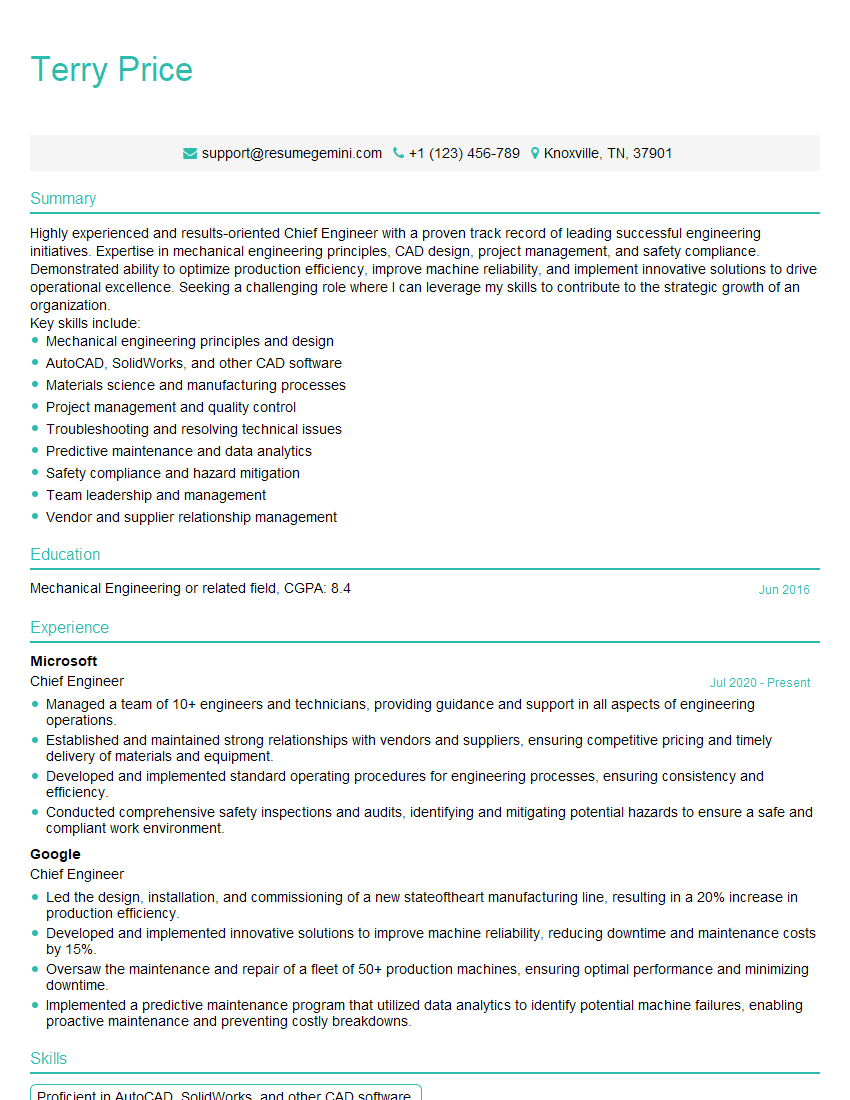
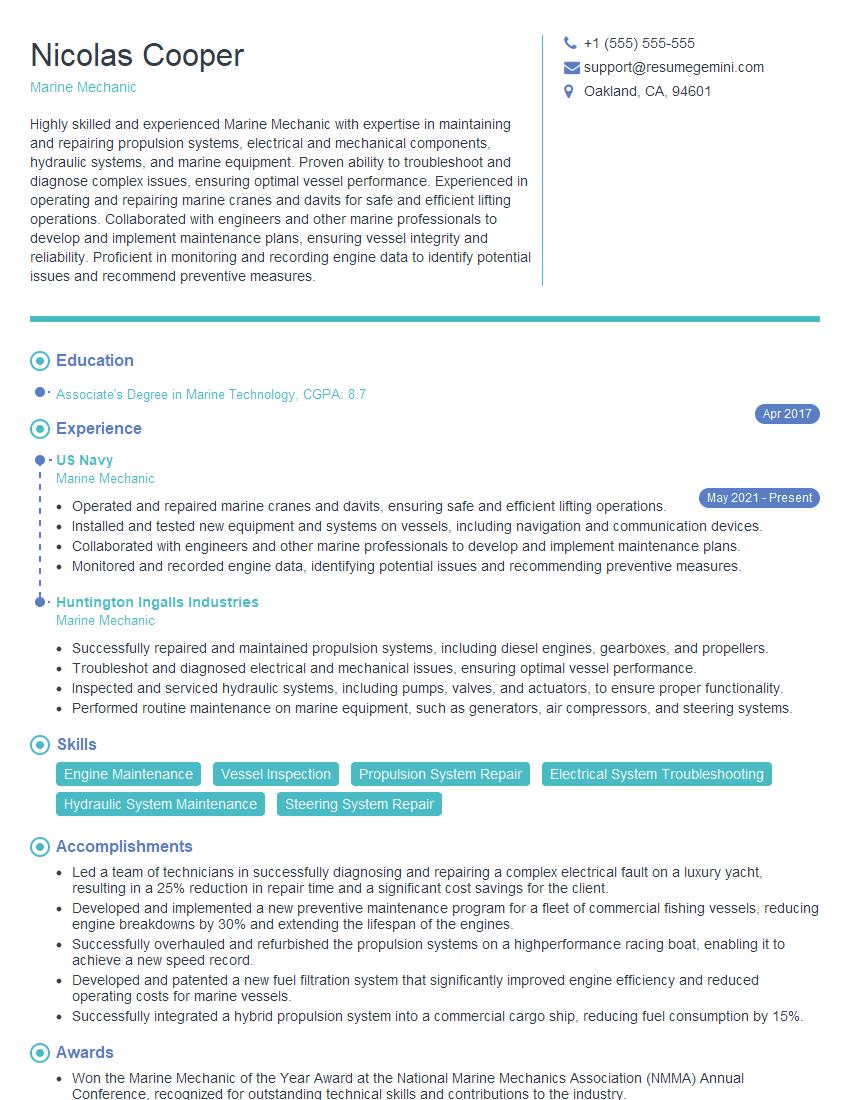
Mastering the repair and overhaul of shipboard machinery is vital for career advancement in the maritime industry, opening doors to higher-paying roles and greater responsibilities. A strong resume is essential to showcase your skills and experience effectively to potential employers. Creating an ATS-friendly resume increases your chances of getting noticed by recruiters and hiring managers. ResumeGemini is a trusted resource to help you build a professional, impactful resume that highlights your expertise. Examples of resumes tailored to candidates experienced in the repair and overhaul of shipboard machinery are available to guide you through the process.
Explore more articles
Users Rating of Our Blogs
Share Your Experience
We value your feedback! Please rate our content and share your thoughts (optional).
What Readers Say About Our Blog
I Redesigned Spongebob Squarepants and his main characters of my artwork.
https://www.deviantart.com/reimaginesponge/art/Redesigned-Spongebob-characters-1223583608
IT gave me an insight and words to use and be able to think of examples
Hi, I’m Jay, we have a few potential clients that are interested in your services, thought you might be a good fit. I’d love to talk about the details, when do you have time to talk?
Best,
Jay
Founder | CEO