Are you ready to stand out in your next interview? Understanding and preparing for Troubleshooting and Repair of Tank Gauging Equipment interview questions is a game-changer. In this blog, we’ve compiled key questions and expert advice to help you showcase your skills with confidence and precision. Let’s get started on your journey to acing the interview.
Questions Asked in Troubleshooting and Repair of Tank Gauging Equipment Interview
Q 1. Explain the different types of tank gauging technologies.
Tank gauging technologies utilize various methods to measure the level of liquid within a tank. The choice depends on factors like tank size, liquid properties, accuracy requirements, and budget.
- Radar Level Sensors: These non-contact sensors emit electromagnetic waves that reflect off the liquid surface. The time it takes for the signal to return determines the level. They’re suitable for various liquids and tank materials, even those with foam or condensation. Think of it like a sophisticated echolocation system.
- Ultrasonic Level Sensors: Similar to radar, but use sound waves instead. They are cost-effective but can be affected by factors like temperature, vapor, and foam, making them less versatile than radar.
- Hydrostatic Level Sensors: These measure pressure at the bottom of the tank. The pressure is directly proportional to the liquid height – the higher the liquid, the greater the pressure. They are simple and reliable for certain applications but are sensitive to changes in density.
- Capacitance Level Sensors: These sensors measure changes in capacitance due to the dielectric constant of the liquid. The higher the level, the higher the capacitance. They are generally suitable for conductive liquids.
- Float Level Sensors: These use a float that rises and falls with the liquid level, connected to a mechanical or magnetic system that transmits the level reading. They are simple and reliable but have mechanical moving parts that can wear out.
Each technology presents advantages and disadvantages; selecting the right one depends on the specific application.
Q 2. Describe your experience with calibrating tank gauging equipment.
Calibrating tank gauging equipment is crucial for accurate readings. My experience involves using both in-situ and laboratory calibration methods. In-situ calibration involves using known volumes of liquid to verify the sensor readings against the actual level. This might involve adding or removing known quantities of liquid and recording the sensor’s response. Laboratory calibration is more precise; it involves testing the sensor in a controlled environment to establish its linearity, accuracy, and repeatability using precision measuring equipment.
I have extensive experience with various calibration procedures, including adjusting zero points, span adjustments, and linearization, ensuring optimal performance and minimizing errors. A recent example involved calibrating a radar level sensor in a large oil storage tank. By meticulously adding measured quantities of oil and carefully documenting the sensor’s readings, we identified a minor offset in the zero point, which was easily corrected, improving the accuracy of the system by over 0.5%.
Q 3. How do you troubleshoot a malfunctioning radar level sensor?
Troubleshooting a malfunctioning radar level sensor involves a systematic approach. I’d start with the basics:
- Check for Obstructions: Ensure there are no obstructions in the sensor’s path, such as build-up on the antenna or interference from nearby equipment.
- Verify Power and Signal: Confirm the sensor is receiving proper power and that the signal is transmitting and receiving correctly. This includes checking cables, connectors, and the sensor’s internal circuitry. A multimeter is essential here.
- Inspect the Antenna: Inspect the antenna for damage, corrosion, or misalignment. Even slight damage can significantly affect performance.
- Check for Interference: Evaluate for electromagnetic interference from other equipment. This might require temporarily disabling nearby devices to isolate the issue.
- Review Calibration: Verify that the sensor is properly calibrated. If not, recalibrate following the manufacturer’s instructions.
- Check the Display or Data Log: Examine the sensor’s display or data logs for error codes or unusual readings, which can provide valuable clues.
If the problem persists, more advanced diagnostics may be necessary, potentially requiring specialized tools and software. For example, analyzing signal strength and waveform characteristics to identify specific issues. Remember that safety is paramount; always follow lockout/tagout procedures when working with industrial equipment.
Q 4. What are the common causes of inaccurate tank level readings?
Inaccurate tank level readings can stem from several sources:
- Sensor Malfunction: A faulty sensor, whether due to damage, wear, or incorrect calibration, is a primary cause.
- Environmental Factors: Temperature variations, pressure changes, or the presence of foam or condensation can significantly affect readings, particularly for ultrasonic and hydrostatic sensors.
- Installation Issues: Incorrect installation, such as misalignment or improper grounding, can lead to erroneous readings.
- Signal Interference: Electromagnetic interference from other equipment can disrupt the sensor’s signal and produce inaccurate data.
- Calibration Errors: Improper or outdated calibration is a frequent source of inaccuracy.
- Liquid Properties: The density and dielectric constant of the liquid can influence the accuracy of certain sensors. For example, a change in the density of the liquid will affect a hydrostatic sensor’s reading.
- Software or Communication Issues: Problems with the data acquisition system, communication protocols, or the software used to interpret the data can result in inaccuracies.
A thorough investigation involving careful examination of each component and the environment is crucial for identifying the root cause of inaccurate readings.
Q 5. Explain the process of repairing a damaged pressure transducer.
Repairing a damaged pressure transducer typically isn’t a simple ‘fix-it’ scenario. Pressure transducers are precision instruments, and most internal components are not user-replaceable. In most cases, a damaged transducer requires replacement. However, if a minor external problem exists, like a damaged cable, I’d repair that.
The process depends on the nature of the damage. If the damage is minor, such as a loose connection or a damaged cable, I would repair the cable or tighten the connection after following appropriate safety precautions. However, if the damage is to the internal components, the transducer should be replaced.
Before replacement, it’s crucial to identify the exact cause of the failure. A detailed inspection often helps discover if there was a surge, physical damage, or a problem with the connected system that might damage a replacement transducer as well. Always refer to the manufacturer’s specifications and safety guidelines during the replacement process. Documenting the process is crucial for record-keeping and warranty purposes.
Q 6. How do you interpret data from a tank gauging system?
Interpreting data from a tank gauging system requires understanding the system’s configuration, sensor types, and potential sources of error. I start by reviewing the raw data from the sensors, checking for any anomalies or outliers. This often involves plotting the data over time to identify trends and patterns.
Next, I analyze the data in the context of the application. For example, a sudden drop in level might indicate leakage, while a slow decrease might reflect normal consumption. I consider environmental factors like temperature and pressure to assess their influence on the readings. I will also compare the data against other sources of information, like historical data or flow meters, to verify its accuracy and consistency.
Finally, I present the interpreted data in a clear and concise manner, often using graphs, charts, and reports to facilitate decision-making. Software applications specifically designed for tank gauging data analysis are invaluable tools in this process. This ensures all necessary information is quickly and clearly available to the end-users.
Q 7. Describe your experience with different communication protocols used in tank gauging systems (e.g., Modbus, Profibus).
My experience encompasses a range of communication protocols common in tank gauging systems. I’m proficient with Modbus, Profibus, and other protocols like HART and Foundation Fieldbus.
Modbus is a widely used serial communication protocol, known for its simplicity and reliability. I’ve extensively used Modbus RTU and Modbus TCP in various tank gauging projects, configuring the communication settings, troubleshooting connectivity issues, and ensuring seamless data transfer between sensors and the control system. I’ve even had to diagnose situations where multiple Modbus devices were interfering with one another on a shared network.
Profibus is a fieldbus protocol primarily used in industrial automation. Its capabilities allow for high-speed, deterministic communication, which is important in some critical applications. I’ve worked with Profibus DP and Profibus PA, configuring the networks and troubleshooting communication errors, including resolving conflicts and ensuring data integrity.
Understanding these protocols is vital because effective communication is fundamental to the reliable operation of any tank gauging system. My expertise allows me to efficiently integrate diverse sensor technologies, ensuring smooth data flow and accurate level measurement, regardless of the chosen protocol.
Q 8. How do you identify and resolve signal interference in tank gauging systems?
Signal interference in tank gauging systems can manifest as inaccurate readings, erratic data, or complete system failure. Identifying the source requires a systematic approach. I start by visually inspecting all cabling for damage, loose connections, or improper grounding. Then, I use a spectrum analyzer to identify the frequency of the interference, helping pinpoint the source – it could be nearby radio transmitters, electrical equipment, or even lightning strikes.
Resolution depends on the source. Shielding cables with metallic braid or conduit often resolves electromagnetic interference (EMI). If the interference is from a specific piece of equipment, relocating it or using filters on power lines might be necessary. Grounding issues are addressed by ensuring proper connection to earth ground using appropriate gauge wire and grounding rods. For particularly stubborn interference, I might consider implementing a differential amplifier to minimize the impact of common-mode noise.
For example, I once worked on a system experiencing erratic readings near a powerful radio station. By shielding the cables and adding a ground loop isolator, we eliminated the interference and restored accurate readings.
Q 9. Explain the safety procedures you follow when working with tank gauging equipment.
Safety is paramount. Before working on any tank gauging equipment, I always follow a strict lockout/tagout procedure to prevent accidental energization or release of hazardous materials. This involves isolating the power supply, grounding the system, and verifying the absence of voltage. I also check for the presence of flammable or toxic vapors using a gas detector before entering confined spaces, such as tank pits. Appropriate Personal Protective Equipment (PPE), including safety glasses, gloves, and steel-toe boots, is always worn. I meticulously follow the manufacturer’s safety guidelines for each specific piece of equipment. Furthermore, I always work with a buddy system, ensuring someone is always aware of my location and activities.
For instance, before accessing a tank’s internal components, I ensure the tank is properly depressurized and purged of any hazardous atmosphere. This preemptive safety measure has been crucial in avoiding incidents throughout my career.
Q 10. What is your experience with preventative maintenance on tank gauging systems?
Preventative maintenance is key to ensuring the longevity and accuracy of tank gauging systems. My experience encompasses a wide range of tasks, from regular calibration checks and cleaning of sensors to lubrication of moving parts and visual inspection of cabling and connections. I create and follow detailed maintenance schedules tailored to the specific equipment and environmental conditions. This often includes documenting all maintenance activities and parts replaced. I also monitor data trends for signs of impending failure, allowing for proactive intervention before problems escalate.
For example, regular cleaning of ultrasonic sensors is crucial to prevent buildup that can affect accuracy. I’ve found that implementing a scheduled cleaning program significantly reduces the frequency of costly repairs.
Q 11. How do you diagnose and repair a faulty float switch?
Diagnosing a faulty float switch begins with a visual inspection. I check for any physical damage, corrosion, or obstructions. Then, I test the switch’s electrical continuity using a multimeter. If the switch doesn’t operate correctly, I’ll check the wiring for breaks or short circuits. If the wiring is fine, the switch itself might need replacement. Sometimes, the problem might not be the switch itself but rather a problem with the float mechanism – it may be stuck or corroded. I’ll carefully examine and clean or replace the float assembly as needed.
For instance, a stuck float switch, caused by buildup of sediment, can lead to inaccurate level readings. By cleaning the float and ensuring smooth movement, I resolve the problem without unnecessary parts replacements.
Q 12. Describe your experience with data logging and analysis from tank gauging systems.
My experience with data logging and analysis from tank gauging systems involves utilizing specialized software to extract, process, and interpret data. I am proficient in identifying trends and anomalies in inventory levels, detecting leaks, and predicting equipment failures. This often requires understanding the specific data formats of various systems and using statistical analysis techniques. I’m comfortable working with various data visualization tools to present findings in a clear and understandable manner to clients.
For example, I once used data logging to identify a slow, persistent leak in a tank that wasn’t immediately apparent through visual inspection. Analyzing the data revealed a gradual decrease in inventory over time, leading to the discovery and repair of the leak.
Q 13. How do you handle emergency situations related to tank gauging system failures?
Emergency situations, such as a complete system failure or a significant leak, require immediate action. My first response is to ensure safety by isolating the affected system and evacuating personnel if necessary. I then assess the situation to determine the extent of the damage and identify the immediate risks. This involves contacting emergency services if needed and implementing temporary measures to mitigate the immediate risks. Next, I begin troubleshooting the system to identify the root cause of the failure and initiate repairs. Detailed documentation of the event and all subsequent actions is crucial for future analysis and prevention.
For instance, during a sudden tank overfill, I quickly implemented emergency shutdown procedures, preventing further spillage and potential environmental damage. Afterwards, a thorough investigation identified a faulty level sensor as the culprit, leading to its replacement and system upgrades to prevent future incidents.
Q 14. What are the common causes of leaks in tank gauging systems?
Leaks in tank gauging systems can stem from several sources. Corrosion of pipes and fittings, particularly in harsh environments, is a common cause. Damaged seals or gaskets around sensors and connections can also lead to leaks. Physical damage from impacts or improper installation can compromise the integrity of the system. Furthermore, improper material selection can contribute to leaks, especially if the materials aren’t compatible with the stored liquid.
For example, I’ve encountered leaks resulting from using inappropriate sealants that degraded over time, leading to leakage. Proper material selection and regular inspection are vital in preventing such issues.
Q 15. Explain your experience with different types of tank configurations and their impact on gauging.
Tank configurations significantly impact gauging accuracy and method selection. I’ve worked with various types, including horizontal cylindrical tanks, vertical cylindrical tanks, spherical tanks, and rectangular tanks. Each presents unique challenges. For instance, a horizontal cylindrical tank requires a different calculation for volume determination compared to a vertical one. The presence of internal structures like baffles or agitators also adds complexity, potentially causing inaccuracies if not accounted for in the gauging system’s calibration. Spherical tanks present the challenge of complex geometry requiring sophisticated calculations. In one project involving a large horizontal tank storing volatile chemicals, we had to account for the effects of vapor pressure on the level measurement, leading us to employ a pressure-compensated level sensor.
- Horizontal Cylindrical: Requires trigonometric calculations to determine volume from level measurement.
- Vertical Cylindrical: Simpler volume calculation compared to horizontal tanks but still sensitive to variations in tank diameter and internal fittings.
- Spherical: Requires specialized software and advanced mathematical models to accurately calculate liquid volume.
- Rectangular: Relatively straightforward but still needs consideration of internal structures or obstructions.
Career Expert Tips:
- Ace those interviews! Prepare effectively by reviewing the Top 50 Most Common Interview Questions on ResumeGemini.
- Navigate your job search with confidence! Explore a wide range of Career Tips on ResumeGemini. Learn about common challenges and recommendations to overcome them.
- Craft the perfect resume! Master the Art of Resume Writing with ResumeGemini’s guide. Showcase your unique qualifications and achievements effectively.
- Don’t miss out on holiday savings! Build your dream resume with ResumeGemini’s ATS optimized templates.
Q 16. How do you troubleshoot problems with the data acquisition system?
Troubleshooting data acquisition system (DAS) problems requires a systematic approach. I start by checking the most basic aspects, like verifying power supply, cable connections, and sensor integrity. Then, I move to more complex diagnostics. This usually involves analyzing the data itself, looking for anomalies like outliers or missing data points. Software diagnostic tools often provide valuable clues, highlighting communication errors or sensor malfunctions. For example, I once encountered a situation where seemingly random data dropouts were occurring. Initially, I suspected a failing sensor. However, after careful analysis using the DAS software and reviewing the communication logs, I traced the problem to intermittent interference from a nearby radio transmitter that was overloading the system. The solution involved implementing improved shielding and implementing a filtering technique within the system’s digital signal processor.
- Power Supply Check: Verify sufficient and stable power to all DAS components.
- Cable Integrity: Inspect cables for damage, loose connections, and correct termination.
- Sensor Calibration: Verify sensor readings against known standards.
- Data Analysis: Identify anomalies and patterns in the acquired data.
- Communication Logs: Examine communication logs for error messages or dropped packets.
Q 17. What software or tools do you use to diagnose tank gauging system issues?
I utilize a variety of software and tools depending on the specific gauging system. This commonly includes dedicated tank gauging software provided by the manufacturer, often equipped with diagnostic features. For example, I routinely employ ‘TankMaster Pro’ software and other similar industry-standard packages. These tools permit real-time data visualization, historical data analysis, and system configuration modifications. Beyond dedicated tank gauging software, I use general-purpose data acquisition and analysis software, such as LabVIEW or similar applications, to process raw data, perform advanced analysis, and create custom visualizations. Additionally, multimeters, oscilloscopes, and communication analyzers are indispensable for isolating hardware problems.
- Dedicated Tank Gauging Software: Provides real-time monitoring, historical data analysis, and diagnostic capabilities.
- General Purpose Data Acquisition Software: Allows for custom data processing and analysis.
- Multimeters: Used to check voltages, currents, and continuity.
- Oscilloscopes: Analyze signal waveforms to detect noise and other anomalies.
- Communication Analyzers: Capture and analyze communication data to identify protocol violations or errors.
Q 18. Describe your experience with different types of tank materials and their effect on gauging.
Tank material significantly affects gauging. The material’s electromagnetic properties influence the performance of certain sensors. For instance, a radar level sensor might experience signal attenuation or reflection issues when used with steel tanks compared to fiberglass reinforced plastic (FRP) tanks. Steel tanks are susceptible to corrosion and buildup, which can affect sensor accuracy. I’ve experienced challenges with corrosion buildup on the internal tank walls affecting ultrasonic level sensors in a chemical storage facility leading to inaccurate level readings. This necessitates regular cleaning and maintenance. The dielectric constant of the tank material also plays a role, especially when using capacitive sensors. The specific material and its thickness need to be factored into the sensor calibration and configuration.
- Steel: Susceptible to corrosion, can affect sensor readings, and has electromagnetic properties affecting certain sensors.
- Fiberglass Reinforced Plastic (FRP): Generally less problematic than steel but still requires careful sensor selection.
- Concrete: Can pose challenges for some sensor types due to its heterogeneous nature.
- Stainless Steel: Offers superior corrosion resistance but can still be affected by buildup.
Q 19. How do you ensure the accuracy and reliability of tank level measurements?
Ensuring accuracy and reliability involves a multi-pronged approach. Regular calibration of sensors against traceable standards is paramount. This requires adhering to a strict calibration schedule dictated by the sensor manufacturer’s recommendations and regulatory requirements. The frequency depends upon factors like the application, the fluid being measured, and the expected accuracy. Environmental compensation is often critical; some sensors require temperature compensation to correct for thermal expansion effects, while others need to adjust for pressure changes. Furthermore, proper sensor installation and maintenance are key to long-term reliability. Regular cleaning of sensors and the surrounding area prevents buildup that could interfere with measurements. In a recent project, we improved accuracy by implementing a redundancy system, where multiple sensors provided independent measurements, allowing us to detect and compensate for potential errors.
- Regular Calibration: Compare sensor readings to traceable standards.
- Environmental Compensation: Account for temperature, pressure, and other environmental factors.
- Proper Installation: Ensure sensors are mounted correctly and securely.
- Regular Maintenance: Clean sensors and surrounding areas to prevent buildup.
- Redundancy Systems: Use multiple sensors for increased reliability and error detection.
Q 20. What are the environmental factors that can affect tank gauging systems?
Several environmental factors can adversely impact tank gauging systems. Temperature fluctuations can affect sensor readings, especially for those that are not temperature compensated. Extreme temperatures can damage sensors or affect the properties of the measured liquid, leading to inaccuracies. Atmospheric pressure changes influence the hydrostatic pressure exerted on the sensor, potentially causing errors in level measurement, particularly in taller tanks. Heavy rainfall, snow, or ice buildup can interfere with radar or ultrasonic sensors, leading to signal attenuation or reflection problems. Electromagnetic interference (EMI) from nearby equipment can disrupt the operation of certain sensors, requiring proper shielding or filtering techniques. I once encountered a situation where a nearby high-voltage power line was causing significant interference with the radar level sensor on a large fuel tank. Implementing a proper grounding system and shielded cabling resolved the issue.
- Temperature Fluctuations: Affects sensor readings and the properties of the measured liquid.
- Atmospheric Pressure: Influences hydrostatic pressure and level measurement accuracy.
- Precipitation: Can obstruct sensor signals and lead to inaccurate readings.
- Electromagnetic Interference (EMI): Can disrupt sensor operation and data acquisition.
Q 21. Describe your troubleshooting methodology when facing an unfamiliar tank gauging system.
When encountering an unfamiliar tank gauging system, my approach is methodical and structured. I begin with a thorough documentation review, including system schematics, manuals, and previous maintenance records. This helps understand the system’s components, functionality, and potential problem areas. I then perform a visual inspection of the tank and all associated equipment, checking for any obvious damage or anomalies. Next, I perform basic tests such as checking power supply, sensor connections, and communication links. I use a systematic diagnostic approach, isolating sections of the system to pinpoint the problem area. If the problem persists, I might employ more advanced diagnostics, like signal tracing or data logging to identify intermittent or subtle issues. It’s crucial to keep accurate records of all observations, tests, and troubleshooting steps throughout this process. This detailed record-keeping is essential for future maintenance and efficient problem resolution.
- Documentation Review: Gather information on system specifications, schematics, and previous maintenance.
- Visual Inspection: Examine all components for damage or anomalies.
- Basic Tests: Check power, connections, and communication.
- Systematic Diagnostics: Isolate sections of the system to identify the problem area.
- Advanced Diagnostics: Employ signal tracing, data logging, or other specialized tools if needed.
- Record Keeping: Document all observations, tests, and troubleshooting steps.
Q 22. How do you document your troubleshooting and repair procedures?
Thorough documentation is crucial for efficient troubleshooting and repair of tank gauging equipment. My procedure involves a multi-step process. First, I create a detailed job sheet noting the client, location, equipment type, and initial reported problem. Then, during the troubleshooting phase, I meticulously record all observations, tests performed (including readings from sensors, data loggers, etc.), and the results. Any replaced components are listed with their serial numbers. I use a combination of digital documentation (with photos and videos using a tablet) and handwritten notes for quick reference. Finally, I create a comprehensive report summarizing the problem, the troubleshooting steps, the repair procedure, and any recommendations for preventive maintenance. This report includes schematics and diagrams where necessary. This ensures traceability and provides a valuable record for future reference and warranty claims. For instance, if I find a faulty pressure sensor, the report details the sensor’s readings before and after replacement, along with images of the faulty and replacement components.
Q 23. Explain your experience with working on different brands of tank gauging equipment.
My experience spans a wide range of tank gauging equipment brands, including industry leaders like Veeder-Root, Emerson, and Endress+Hauser. I’ve worked extensively on their various product lines, from traditional float-type gauges to advanced radar and ultrasonic level sensors, including their associated data acquisition systems and communication protocols. This diverse experience allows me to quickly diagnose issues regardless of the manufacturer, leveraging my understanding of common technical challenges across different platforms. For example, I’ve effectively troubleshot communication problems between a Veeder-Root gauge and an Emerson PLC, demonstrating adaptability and in-depth knowledge of different systems’ interoperability.
Q 24. How do you prioritize repairs based on urgency and impact?
Prioritization of repairs hinges on a risk-based approach. I assess the urgency and potential impact of each issue. Factors considered include: the potential for environmental damage (e.g., a leak in a hazardous material tank), safety risks (e.g., a malfunctioning high-level alarm), operational disruptions (e.g., inability to track inventory), and regulatory compliance (e.g., non-compliance with mandated inspection schedules). I use a simple matrix to prioritize, weighing urgency (high, medium, low) against impact (high, medium, low). A high-urgency, high-impact issue, such as a leak in a flammable liquid tank, will always take precedence over a low-urgency, low-impact problem, like a minor display glitch on a remote monitoring system. This system ensures that the most critical repairs are addressed swiftly and effectively.
Q 25. What are the regulatory compliance requirements for tank gauging systems in your region?
Regulatory compliance varies by region, but in my area, tank gauging systems are subject to stringent environmental protection regulations and safety codes. We must adhere to rules concerning leak detection, overfill prevention, and accurate inventory reporting. These often involve periodic inspections, calibration verification, and documentation of all maintenance activities. Systems must also be designed and maintained to minimize the risk of spills or emissions, compliant with standards like API (American Petroleum Institute) guidelines and local environmental agency mandates. Failure to meet these standards can result in significant penalties. For instance, inaccurate inventory reporting can lead to discrepancies in tax calculations and legal repercussions. I am deeply familiar with these regulations and ensure all my work contributes to full compliance.
Q 26. How do you stay up-to-date with the latest advancements in tank gauging technology?
Keeping current with advancements in tank gauging technology is a continuous process. I actively participate in industry conferences and workshops, attend webinars, and subscribe to relevant trade publications. I also maintain memberships in professional organizations such as [mention relevant organizations if applicable], providing access to the latest research and best practices. Furthermore, I regularly review manufacturer’s updates, explore new software features, and engage in online forums dedicated to tank gauging technology. This multi-pronged approach ensures that my skills remain sharp and I’m well-equipped to handle the newest challenges and opportunities in the field. For instance, I recently completed a training course on the application of IoT sensors in tank gauging systems which allows me to offer clients innovative solutions to improve monitoring and efficiency.
Q 27. Describe a challenging tank gauging repair you completed and how you overcame the obstacles.
One challenging repair involved a seemingly simple issue: a radar level sensor providing erratic readings in a large underground fuel storage tank. Initial checks revealed no obvious problems with wiring or power supply. After a thorough investigation including checking for interference, I suspected a problem with the sensor’s internal components despite passing all initial diagnostic tests. However, the tank was in service and draining it for sensor replacement was deemed prohibitively expensive and time consuming. To overcome this, I devised a solution: I utilized a specialized climbing system to access the tank’s manhole and then used a fiber optic cable camera and a remotely operated inspection device to meticulously inspect the sensor and its mounting bracket. This revealed a small amount of accumulated debris that was interfering with the sensor’s operation. Through clever maneuvering, I was able to remove the debris without emptying the tank, restoring the sensor’s functionality and avoiding significant downtime and costs. The use of specialized tools and my creativity in adapting solutions to the specific constraints proved crucial to successful completion.
Q 28. What are your salary expectations for this role?
My salary expectations are commensurate with my experience and expertise in this field. Based on my understanding of the market rate for senior tank gauging technicians with my qualifications and proven track record, I am targeting a salary range of [State Salary Range]. However, I am open to discussing this further based on the specifics of the role and benefits package offered.
Key Topics to Learn for Troubleshooting and Repair of Tank Gauging Equipment Interview
- Understanding Tank Gauging Systems: Explore the different types of tank gauging systems (radar, ultrasonic, hydrostatic, etc.), their operational principles, and their respective strengths and weaknesses. Consider the various components within each system.
- Calibration and Verification Procedures: Master the techniques for calibrating and verifying the accuracy of tank gauging equipment. Understand the importance of traceability and documentation in this process. Practice performing these procedures in a simulated environment.
- Troubleshooting Common Issues: Develop a systematic approach to diagnosing and resolving common problems, such as sensor malfunctions, communication errors, and inaccurate readings. Learn to interpret error codes and diagnostic messages effectively.
- Safety Procedures and Regulations: Familiarize yourself with relevant safety regulations and best practices for working with tank gauging equipment. This includes understanding potential hazards and implementing preventative measures.
- Preventive Maintenance and Inspections: Understand the importance of regular maintenance schedules and inspections to prevent equipment failures and ensure optimal performance. Learn how to identify potential issues before they become major problems.
- Data Acquisition and Analysis: Gain proficiency in interpreting data from tank gauging systems. Learn to identify trends, anomalies, and potential issues through data analysis.
- Repair and Replacement Techniques: Develop hands-on skills in repairing and replacing components of tank gauging systems. Familiarize yourself with common repair procedures and troubleshooting techniques.
- Understanding of Relevant Instrumentation: Gain a strong understanding of the various instruments and tools used in the maintenance and repair of tank gauging systems (e.g., multimeters, pressure gauges, etc.).
Next Steps
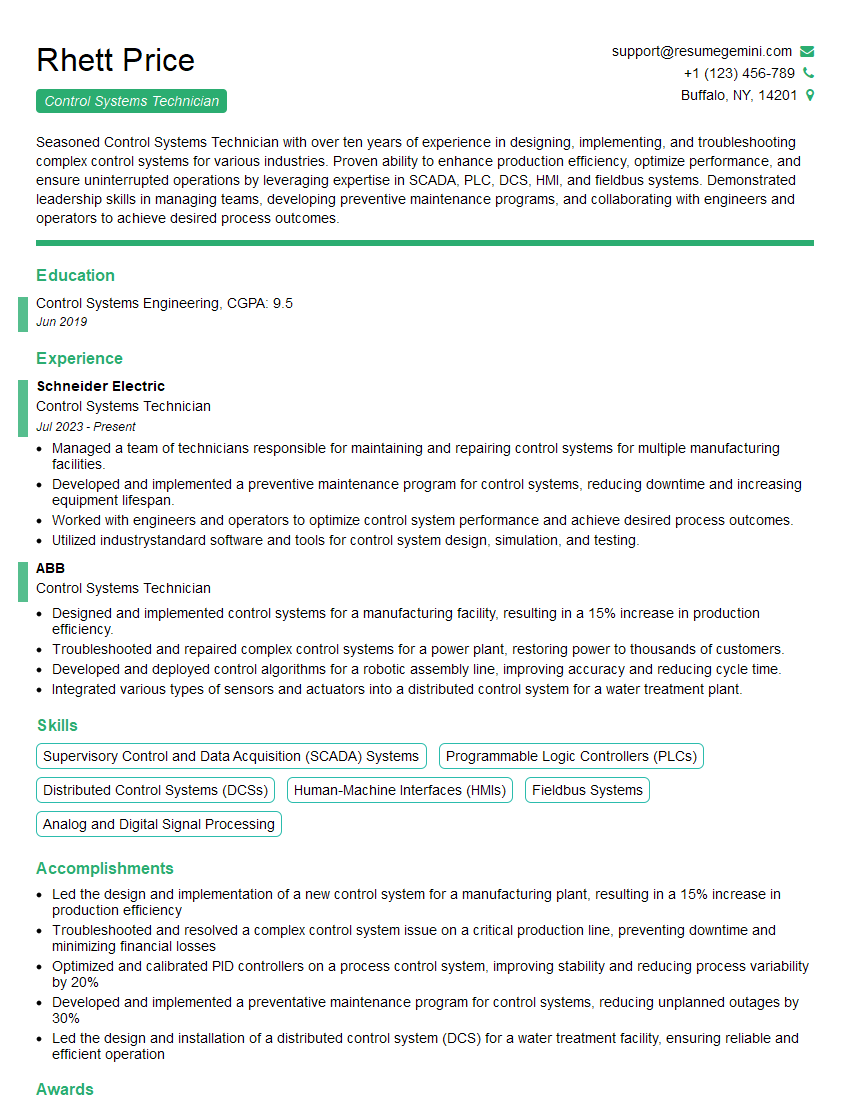
Mastering troubleshooting and repair of tank gauging equipment is crucial for career advancement in the energy, chemical, and manufacturing industries. These skills are highly sought after, opening doors to specialized roles and increased earning potential. To maximize your job prospects, creating an ATS-friendly resume is essential. ResumeGemini is a trusted resource to help you build a professional and effective resume that highlights your skills and experience. Examples of resumes tailored to Troubleshooting and Repair of Tank Gauging Equipment are available, demonstrating how to effectively showcase your expertise to potential employers.
Explore more articles
Users Rating of Our Blogs
Share Your Experience
We value your feedback! Please rate our content and share your thoughts (optional).
What Readers Say About Our Blog
I Redesigned Spongebob Squarepants and his main characters of my artwork.
https://www.deviantart.com/reimaginesponge/art/Redesigned-Spongebob-characters-1223583608
IT gave me an insight and words to use and be able to think of examples
Hi, I’m Jay, we have a few potential clients that are interested in your services, thought you might be a good fit. I’d love to talk about the details, when do you have time to talk?
Best,
Jay
Founder | CEO