Interviews are opportunities to demonstrate your expertise, and this guide is here to help you shine. Explore the essential Endpoint Security Management interview questions that employers frequently ask, paired with strategies for crafting responses that set you apart from the competition.
Questions Asked in Endpoint Security Management Interview
Q 1. Explain the difference between signature-based and heuristic-based antivirus.
Signature-based and heuristic-based antivirus are two different approaches to detecting malware. Think of it like this: signature-based antivirus is like having a photo album of known criminals (viruses), while heuristic-based antivirus is like having a skilled detective who can identify suspicious behavior even without a photo.
Signature-based antivirus relies on identifying known malware through its unique digital fingerprint, called a signature. These signatures are created by analyzing malware samples and extracting identifying characteristics. When a file is scanned, the antivirus engine compares its characteristics against its database of known signatures. If a match is found, the file is flagged as malicious. This method is effective against known threats but is powerless against zero-day exploits (newly created malware).
Heuristic-based antivirus, also known as behavioral analysis, examines the behavior of a file or program to detect malicious activity. Instead of relying on pre-defined signatures, it looks for suspicious patterns, such as attempts to modify system files, unusual network connections, or self-replication. If the program exhibits suspicious behavior, it’s flagged as potentially malicious, even if its signature isn’t in the database. This offers better protection against new and unknown threats but can sometimes lead to false positives.
In practice, most modern antivirus solutions use a combination of both signature-based and heuristic-based techniques for a more comprehensive approach to malware detection.
Q 2. Describe your experience with endpoint detection and response (EDR) solutions.
My experience with Endpoint Detection and Response (EDR) solutions spans several years, working with various enterprise-level deployments. I’ve been involved in the entire lifecycle – from initial assessment and solution selection to implementation, configuration, ongoing monitoring, and incident response. I’m proficient in deploying and managing leading EDR platforms such as CrowdStrike Falcon, Carbon Black, and SentinelOne.
In a recent project, we implemented CrowdStrike Falcon across a large organization. My role included developing a comprehensive security strategy, integrating the EDR solution with existing SIEM (Security Information and Event Management) tools, customizing alerts, and establishing clear incident response procedures. This involved fine-tuning detection rules to reduce false positives while ensuring high threat detection rates. We also implemented automated response capabilities to quickly contain threats and minimize damage.
My expertise extends to leveraging EDR data for threat hunting, proactively searching for indicators of compromise (IOCs) and anomalous activities within the endpoint environment, even in cases where traditional security measures have failed to detect the threat. This proactive approach has significantly improved our organization’s overall security posture and response capabilities.
Q 3. What are the key components of a robust endpoint security strategy?
A robust endpoint security strategy is multifaceted and requires a layered approach. Key components include:
- Antivirus/Antimalware: A foundation for endpoint protection, utilizing both signature-based and heuristic detection methods.
- Endpoint Detection and Response (EDR): Provides advanced threat detection, investigation, and response capabilities, often including behavioral monitoring and threat hunting.
- Data Loss Prevention (DLP): Prevents sensitive data from leaving the organization’s control, whether intentionally or unintentionally.
- Vulnerability Management: Regularly scanning for and patching vulnerabilities in software and operating systems across endpoints.
- Network Security: Firewalls, intrusion detection/prevention systems (IDS/IPS) are crucial to prevent threats from reaching endpoints.
- User and Access Control: Strong authentication mechanisms, least privilege access, and regular security awareness training for users.
- Security Information and Event Management (SIEM): Centralized logging and analysis of security events from various sources, including endpoints, to provide comprehensive visibility into security posture.
- Endpoint Privilege Management (EPM): Restricting user privileges to only what is necessary to prevent lateral movement of threats.
- Regular Security Assessments and Penetration Testing: Identify vulnerabilities and weaknesses in the endpoint security ecosystem.
These components work in concert to provide a strong defense against diverse threats. Think of it like a castle with multiple layers of defense – each component adds another layer to protect valuable assets.
Q 4. How do you handle endpoint security vulnerabilities and patches?
Handling endpoint security vulnerabilities and patches requires a proactive and systematic approach. This involves:
- Vulnerability Scanning: Regularly scanning endpoints for known vulnerabilities using automated tools. This helps identify weaknesses before they can be exploited.
- Patch Management: Implementing a robust patch management system to quickly deploy security updates and critical patches. This should be tested thoroughly in a controlled environment before deploying to production.
- Prioritization: Prioritizing patching based on the severity of the vulnerability and its potential impact. Critical vulnerabilities should be patched immediately, while others can be addressed based on a defined schedule.
- Exception Management: Establishing a clear process for handling exceptions where patching cannot be immediately applied due to compatibility issues or business needs. This requires thorough documentation and risk assessment.
- Automation: Automating the patching process as much as possible to streamline workflows and reduce manual effort. This can involve using configuration management tools and integrating with existing IT systems.
- Monitoring: Monitoring the effectiveness of the patching process and tracking patch deployment rates. This helps identify any issues or delays and ensures optimal coverage.
Consider a scenario where a critical vulnerability is discovered in a widely used application. A prompt and effective patch management process will ensure that all endpoints are updated within a short timeframe, significantly reducing the risk of exploitation.
Q 5. Explain your understanding of the MITRE ATT&CK framework.
The MITRE ATT&CK framework is a globally-accessible knowledge base of adversary tactics and techniques based on real-world observations. It’s a crucial tool for understanding how attackers operate and for improving our defenses. Think of it as a comprehensive playbook of attacker strategies.
The framework categorizes adversary behaviors into tactics (what the attacker is trying to achieve, such as initial access or lateral movement) and techniques (how the attacker achieves those tactics, such as exploiting a vulnerability or using phishing). This allows security professionals to map observed behaviors to specific ATT&CK techniques, facilitating threat detection and response.
Using the MITRE ATT&CK framework helps us to:
- Develop effective threat detection strategies: By understanding the typical attacker techniques, we can tailor our security controls and detection rules to focus on the most likely attack paths.
- Improve incident response: The framework provides a common language and framework for analyzing and responding to security incidents, making collaboration easier.
- Assess security posture: By mapping our existing security controls to the ATT&CK framework, we can identify gaps in our defenses and prioritize remediation efforts.
In essence, the MITRE ATT&CK framework is invaluable for building a more robust and effective security strategy by providing a structured and comprehensive understanding of adversary behavior.
Q 6. Describe your experience with various endpoint security tools (e.g., CrowdStrike, Carbon Black, SentinelOne).
I have extensive hands-on experience with various endpoint security tools, including CrowdStrike Falcon, Carbon Black, and SentinelOne. My experience includes:
- CrowdStrike Falcon: I’ve deployed and managed Falcon across multiple organizations, utilizing its advanced threat detection capabilities, incident response features, and threat hunting functionalities. I’m proficient in customizing the platform’s detection rules and integrating it with other security tools.
- Carbon Black: I’ve leveraged Carbon Black’s comprehensive endpoint visibility and response capabilities for threat investigation and incident handling. This includes analyzing endpoint activity, identifying malicious processes, and utilizing its response actions to mitigate threats.
- SentinelOne: I’ve worked with SentinelOne’s AI-powered threat detection and response capabilities, focusing on its autonomous response features and its ability to proactively identify and neutralize threats.
My experience goes beyond simply deploying and managing these tools. I understand their strengths and weaknesses and how best to leverage their capabilities to build an effective endpoint security strategy that fits an organization’s specific needs and risk profile. I regularly benchmark their performance and explore newer capabilities to ensure optimized protection.
Q 7. How do you prioritize security risks related to endpoints?
Prioritizing endpoint security risks requires a structured approach. I typically use a risk assessment framework that considers:
- Likelihood: The probability of a specific threat exploiting a vulnerability on an endpoint. This is influenced by factors such as the prevalence of the vulnerability, the sophistication of the threat actors, and the security controls in place.
- Impact: The potential consequences of a successful attack. This considers the sensitivity of the data on the endpoint, the criticality of the system, and the potential business disruption caused by an incident.
- Vulnerability Severity: The criticality of the vulnerability itself, often categorized as critical, high, medium, and low based on the potential impact and exploitability.
I utilize a risk matrix that combines likelihood and impact to rank each risk. High-likelihood, high-impact risks are prioritized first, followed by high-likelihood, medium-impact risks, and so on. This allows for a focused and effective approach to resource allocation and risk mitigation efforts. Regular risk assessments and updates to the matrix are crucial to maintain an accurate view of the evolving threat landscape.
For instance, a vulnerability in a system storing sensitive customer data would be considered a higher priority than a vulnerability in a non-critical application due to the greater potential impact on the organization and its reputation.
Q 8. What are some common endpoint security threats and how do you mitigate them?
Endpoint security threats are numerous and constantly evolving. Some of the most common include malware (viruses, ransomware, Trojans), phishing attacks, exploits targeting vulnerabilities in software, insider threats, and physical theft or loss of devices. Mitigating these threats requires a layered approach.
Malware Protection: Employing robust antivirus and anti-malware solutions with real-time scanning and behavioral analysis is crucial. Regular updates are paramount. Think of this as a security guard at the front door.
Vulnerability Management: Regularly patching operating systems, applications, and firmware addresses known security weaknesses. This is like fixing holes in your house’s walls before a burglar can enter.
Endpoint Detection and Response (EDR): EDR solutions provide advanced threat detection, investigation, and response capabilities, going beyond basic antivirus. They act as internal security cameras and investigators.
Security Awareness Training: Educating users about phishing scams and safe browsing habits is vital. This is like teaching your family about fire safety.
Data Loss Prevention (DLP): Implementing DLP tools prevents sensitive data from leaving the organization’s control, whether intentionally or unintentionally. This is like installing a vault to protect your valuables.
Device Control: Managing and restricting the use of external storage devices and USB drives minimizes the risk of infection from malicious files. This is like controlling access to your building.
Network Segmentation: Isolating sensitive systems and data from less critical parts of the network limits the impact of a breach. This is like compartmentalizing your house to prevent fire spread.
Q 9. Explain the concept of least privilege access in endpoint security.
The principle of least privilege access dictates that users and processes should only have the minimum necessary permissions to perform their tasks. This significantly reduces the potential damage from malware or compromised accounts. Imagine a scenario where a malicious actor compromises a user’s account. If that account only has permission to access email, the damage is limited. However, if the account has administrative privileges, the attacker could cause catastrophic damage. In practical terms, this means assigning specific roles with precisely defined permissions, regularly reviewing and revoking unnecessary access rights, and using tools like Active Directory to manage user accounts and groups effectively. For example, a graphic designer shouldn’t need administrator rights to their workstation; only the permissions to run their design software and access relevant files.
Q 10. How do you ensure compliance with relevant security standards (e.g., NIST, ISO 27001)?
Ensuring compliance with standards like NIST Cybersecurity Framework and ISO 27001 requires a comprehensive approach. This involves developing and implementing security policies, conducting regular risk assessments, implementing appropriate controls, monitoring compliance, and documenting everything thoroughly. For NIST, this means aligning with its five core functions: Identify, Protect, Detect, Respond, and Recover. For ISO 27001, a robust Information Security Management System (ISMS) is essential, encompassing risk management, asset management, incident management, and continuous improvement. Key elements include regular vulnerability scanning and penetration testing, detailed audit trails, strong access control mechanisms, and a well-defined incident response plan. Compliance is not a one-time event; it’s an ongoing process that requires constant vigilance and adaptation.
Q 11. Describe your experience with security information and event management (SIEM) systems.
I have extensive experience with SIEM systems, including Splunk, QRadar, and LogRhythm. My experience covers the entire lifecycle, from implementation and configuration to data normalization, correlation, and alert management. I’ve used SIEM systems to monitor endpoint security events, detect anomalies, and investigate security incidents. I’m proficient in creating custom dashboards and reports to visualize security data and identify trends. A specific example involves using Splunk to detect and respond to a suspected ransomware attack by correlating events such as unusual file access patterns, high network activity from a specific endpoint, and changes in system logs. The SIEM system alerted us to the suspicious activity, enabling a timely response and limiting the impact of the attack.
Q 12. How do you investigate and respond to endpoint security incidents?
Investigating and responding to endpoint security incidents is a critical process. It follows a structured approach: First, we contain the incident to limit further damage. This might involve disconnecting the affected endpoint from the network. Then, we analyze logs and other evidence to determine the cause of the incident, identifying the affected systems, the extent of the compromise, and the potential impact. This often involves using EDR and SIEM tools. Once the root cause is identified, we eradicate the threat by removing malware, patching vulnerabilities, and resetting compromised accounts. Finally, we recover the affected systems and data, implementing corrective measures to prevent future occurrences. We also document the entire process for future analysis and reporting, and we might conduct a post-incident review to identify areas for improvement in our security posture. For example, if we detect a ransomware attack, we would first isolate the infected machine, then analyze the ransomware’s behavior and encryption methods to determine the extent of data loss. We’d then try to recover data from backups, and finally, review our security measures to prevent a recurrence.
Q 13. What is your experience with data loss prevention (DLP) on endpoints?
My experience with Data Loss Prevention (DLP) on endpoints includes implementing and managing solutions like McAfee DLP and Symantec DLP. I have used these tools to monitor and control the movement of sensitive data, preventing its unauthorized transfer via email, removable media, or cloud storage. This includes configuring policies to identify and block sensitive data based on keywords, data types, and file formats. I understand the importance of balancing security with usability, ensuring that DLP policies don’t unduly impede legitimate business operations. A specific example involved configuring a DLP policy to prevent the accidental or malicious transmission of customer credit card information via email. The policy scanned outgoing emails for credit card numbers and blocked those containing sensitive data, alerting the sender to the policy violation and providing a mechanism for approved transfers.
Q 14. Explain your understanding of various endpoint security architectures.
Endpoint security architectures can vary significantly based on organizational needs and complexity. Some common architectures include:
Client-Server: A centralized management system controls and monitors endpoint security software deployed on client machines. This is simple to manage but can suffer from latency issues.
Cloud-based: Endpoint security is managed and monitored via a cloud platform, often offering scalability and ease of management. This requires a strong internet connection and raises concerns about data privacy and security.
Hybrid: A mix of on-premises and cloud-based solutions, offering flexibility and the ability to leverage the strengths of each approach.
Agentless: Endpoint security relies on network-based monitoring instead of agents on individual devices. This approach offers reduced resource consumption but can miss events at the endpoint level.
The choice of architecture depends on factors like budget, infrastructure, technical expertise, and security requirements. A large enterprise might use a hybrid approach, while a small business might opt for a cloud-based solution for simplicity and cost-effectiveness. Regardless of the chosen architecture, a layered security approach is crucial to ensure comprehensive protection.
Q 15. How do you balance endpoint security with user productivity?
Balancing endpoint security with user productivity is a delicate act. It’s like finding the sweet spot between safety and convenience – too much security, and users become frustrated and unproductive; too little, and your organization is vulnerable. The key is to implement a layered security approach that’s both effective and unobtrusive.
- Prioritize: Focus on the most critical assets and sensitive data. Implement stricter security measures for these endpoints, while allowing more flexibility for less critical systems.
- Automation: Automate as many security tasks as possible, such as patching and software updates. This minimizes user interaction and disruption.
- Education and Training: Equip users with the knowledge to identify and avoid phishing scams, malware, and other threats. This reduces the risk of human error, a major cause of security breaches.
- Least Privilege: Grant users only the necessary access rights to perform their tasks. This limits the potential damage if a system is compromised.
- Flexible Policies: Implement security policies that are adaptable to different user roles and needs. For example, developers might require more access than administrative staff.
- Regular Reviews: Regularly review and adjust security policies to ensure they remain effective and don’t impede productivity. Get feedback from users to identify areas for improvement.
For example, instead of blocking all USB devices, we might allow only specific approved devices, reducing frustration while maintaining security. Or, instead of requiring complex passwords every time, we could use multi-factor authentication for a smoother user experience.
Career Expert Tips:
- Ace those interviews! Prepare effectively by reviewing the Top 50 Most Common Interview Questions on ResumeGemini.
- Navigate your job search with confidence! Explore a wide range of Career Tips on ResumeGemini. Learn about common challenges and recommendations to overcome them.
- Craft the perfect resume! Master the Art of Resume Writing with ResumeGemini’s guide. Showcase your unique qualifications and achievements effectively.
- Don’t miss out on holiday savings! Build your dream resume with ResumeGemini’s ATS optimized templates.
Q 16. Explain your experience with mobile device management (MDM) and endpoint security integration.
My experience with MDM and endpoint security integration is extensive. I’ve worked on several projects integrating MDM solutions like Microsoft Intune and VMware Workspace ONE with various endpoint security platforms. The integration is crucial for comprehensive mobile device security.
Integrating MDM and endpoint security allows for centralized management and control over company-owned and -managed devices. This includes enforcing security policies, such as password complexity, screen lock timeout, and data encryption, across all devices. We can also remotely wipe devices if they’re lost or stolen. Furthermore, the integration enables unified threat management, where MDM and endpoint protection solutions share threat intelligence and collaborate to enhance security posture.
For example, in one project, we integrated Intune with CrowdStrike endpoint protection. Intune allowed us to enroll devices, enforce security policies, and deploy apps. CrowdStrike provided real-time threat detection and response. If a threat was detected on a mobile device, Intune could automatically quarantine the device or take other corrective actions. This streamlined the incident response process.
Q 17. Describe your experience with vulnerability scanning and remediation on endpoints.
Vulnerability scanning and remediation is a cornerstone of effective endpoint security. I have extensive experience using tools like Nessus, QualysGuard, and OpenVAS to identify vulnerabilities on endpoints. My process typically follows these steps:
- Regular Scanning: Schedule automated scans on a regular basis (e.g., weekly, monthly) to detect new and existing vulnerabilities.
- Prioritization: Prioritize vulnerabilities based on severity, exploitability, and the potential impact on the organization.
- Remediation: Develop and implement remediation plans to address the identified vulnerabilities. This might involve patching software, configuring security settings, or replacing vulnerable hardware.
- Verification: Rescan the endpoints after remediation to verify that the vulnerabilities have been successfully addressed.
- Reporting: Generate reports to track the progress of vulnerability management activities and identify trends.
One challenge is balancing the need for regular scans with the impact on user productivity. We employ techniques like scheduling scans during off-peak hours and using non-intrusive scanning methods to minimize disruption. We also leverage automated patching systems to expedite the remediation process.
Q 18. How do you handle endpoint security in a hybrid cloud environment?
Securing endpoints in a hybrid cloud environment requires a multi-faceted approach. The challenge lies in managing security consistently across on-premises and cloud-based resources. We need a unified security strategy that extends to all endpoints, regardless of their location.
- Unified Endpoint Management (UEM): Implement a UEM solution that can manage and secure endpoints across both on-premises and cloud environments.
- Cloud Access Security Broker (CASB): Use a CASB to monitor and control access to cloud services from endpoints. This helps to prevent data breaches and ensure compliance.
- Extended Detection and Response (EDR): Deploy EDR solutions that provide visibility and control over endpoints in both environments. This allows for early detection and response to threats.
- Network Segmentation: Segment the network to isolate sensitive data and critical systems from less critical ones. This limits the impact of a breach.
- Zero Trust Security: Adopt a zero-trust security model, where all users and devices are authenticated and authorized before access is granted, regardless of their location.
For example, if a user accesses a cloud-based application from a company-owned laptop, the CASB will ensure the user is authenticated and authorized, and that the application is secure. If a threat is detected on a device accessing cloud services, the EDR solution can automatically take action to mitigate the threat.
Q 19. What are your preferred methods for monitoring endpoint security effectiveness?
Monitoring endpoint security effectiveness requires a combination of methods to gain a holistic view. We don’t rely on a single metric, but rather a multi-layered approach:
- Security Information and Event Management (SIEM): SIEM systems collect and analyze security logs from various sources, including endpoints, to identify potential threats and security breaches.
- Endpoint Detection and Response (EDR): EDR solutions provide real-time monitoring of endpoint activity, detecting and responding to malicious behavior.
- Vulnerability Management: Regularly scan for vulnerabilities and track remediation progress. This helps to identify areas where security is weak.
- Security Audits: Conduct regular security audits to assess the effectiveness of security controls and identify areas for improvement.
- Key Performance Indicators (KPIs): Track KPIs like the number of security incidents, mean time to resolution, and the number of vulnerabilities discovered. This provides measurable data on security effectiveness.
A critical aspect is the correlation of data from multiple sources. For instance, a spike in failed login attempts (SIEM) might correlate with a newly discovered vulnerability (Vulnerability Management), pointing towards a potential attack.
Q 20. Describe your experience with implementing and managing endpoint security policies.
Implementing and managing endpoint security policies is a continuous process. I typically follow a structured approach:
- Needs Assessment: Identify the organization’s security needs and risks. This includes assessing the types of devices used, the sensitivity of the data handled, and the regulatory compliance requirements.
- Policy Development: Develop clear, concise, and enforceable security policies that address all identified risks. Policies should be easily understandable by users.
- Policy Deployment: Use appropriate tools and methods to deploy the security policies to endpoints. This might involve using Group Policy, MDM, or other configuration management tools.
- Policy Enforcement: Monitor compliance with security policies and take appropriate action to address any violations.
- Policy Review and Update: Regularly review and update the security policies to address new threats and vulnerabilities, and reflect changes in business needs.
For example, a policy might mandate multi-factor authentication for all users accessing sensitive data, requiring regular password changes, and disabling USB storage devices to prevent malware.
Q 21. How do you stay up-to-date on the latest endpoint security threats and technologies?
Staying current in endpoint security is crucial due to the ever-evolving threat landscape. My approach is multi-pronged:
- Industry Publications and Blogs: I regularly read industry publications and blogs from companies like SANS Institute, KrebsOnSecurity, and security vendors like CrowdStrike, SentinelOne, and Palo Alto Networks. This provides insights into emerging threats and best practices.
- Security Conferences and Webinars: Attending security conferences and webinars allows me to learn from experts and network with other professionals in the field.
- Threat Intelligence Feeds: Subscribing to threat intelligence feeds from reputable sources provides real-time information on new threats and vulnerabilities.
- Certifications and Training: I actively pursue certifications like CISSP, CISM, and CompTIA Security+, keeping my knowledge and skills current.
- Hands-on Experience: Experimenting with new tools and technologies helps me understand their capabilities and limitations.
This ongoing learning helps me adapt to new threats, understand emerging technologies, and design effective endpoint security strategies.
Q 22. What are some common challenges in endpoint security management, and how would you address them?
Endpoint security management faces numerous challenges, primarily stemming from the ever-evolving threat landscape and the increasing complexity of IT environments. Common hurdles include:
- Maintaining consistent security posture across diverse endpoints: Managing a mix of laptops, desktops, servers, mobile devices, and IoT devices requires a unified approach, which can be challenging due to varying operating systems, hardware configurations, and user behaviours.
- Detecting and responding to advanced threats: Sophisticated attacks like ransomware and fileless malware often bypass traditional antivirus solutions. Effective detection requires advanced techniques such as behavioral analysis and threat intelligence.
- Managing endpoint vulnerabilities: Keeping software patched and configurations secure across a large number of devices is a significant undertaking. Manual patching is time-consuming and prone to errors, leading to vulnerabilities.
- Balancing security with user productivity: Overly restrictive security measures can impede user productivity. Finding the right balance between security and usability is crucial.
- Data loss prevention: Sensitive data needs to be protected, both in transit and at rest. This requires robust data encryption, access controls, and data loss prevention (DLP) solutions.
Addressing these challenges requires a multi-faceted approach:
- Implement a centralized endpoint security platform: This allows for unified management, policy enforcement, and monitoring across all endpoints.
- Employ advanced threat detection technologies: Solutions like endpoint detection and response (EDR) and security information and event management (SIEM) are essential for identifying and responding to advanced threats.
- Automate patching and vulnerability management: Automated patching tools significantly reduce the risk of vulnerabilities.
- Develop and enforce strong security policies: Clear policies regarding password management, data access, and acceptable use are critical.
- Regularly conduct security assessments and penetration testing: These activities identify weaknesses in the security posture and highlight areas for improvement.
- Invest in employee security awareness training: Educating users about phishing scams, malware, and other threats is crucial in preventing attacks.
Q 23. Explain your experience with automated endpoint security solutions.
My experience with automated endpoint security solutions centers around leveraging tools that streamline management, enhance threat detection, and provide centralized visibility. I’ve worked extensively with platforms such as CrowdStrike Falcon, SentinelOne, and Carbon Black, utilizing their automated features for tasks like:
- Automated patch management: Scheduling and deploying security updates automatically to minimize vulnerabilities.
- Real-time threat detection and response: Employing machine learning algorithms to identify malicious activity and automatically quarantine or remediate infected endpoints. For instance, I’ve used automated sandboxing capabilities to analyze suspicious files before they execute on endpoints.
- Vulnerability scanning and remediation: Automated vulnerability scans help identify weaknesses in the endpoint’s configuration and software, and automated remediation can often patch or configure the system to mitigate these risks. For example, I’ve automated the process of disabling unnecessary services and accounts that are potential attack vectors.
- Incident response automation: Automating tasks like isolating compromised endpoints, collecting forensic data, and restoring backups.
- Centralized logging and reporting: Consolidating security logs from various endpoints into a central repository for easier monitoring and analysis.
In one particular instance, I implemented an automated endpoint security solution that reduced our mean time to detect (MTTD) and mean time to respond (MTTR) to security incidents by over 50%, demonstrably improving our overall security posture.
Q 24. Describe your experience with securing endpoints against ransomware attacks.
Securing endpoints against ransomware attacks requires a layered defense strategy incorporating multiple techniques. My experience encompasses:
- Employing robust endpoint detection and response (EDR) solutions: EDR tools offer advanced threat detection capabilities, including behavioral analysis, which is vital in detecting ransomware before it encrypts data. I’ve used EDR to identify and block malicious processes attempting to encrypt files.
- Implementing strong endpoint security software: This includes antivirus, anti-malware, and anti-ransomware solutions. Regularly updating these tools and employing advanced features, such as heuristic analysis, helps prevent known and unknown threats.
- Regularly backing up data: Regular, offsite backups are essential for restoring systems and data in the event of a successful ransomware attack. I ensure we have robust backup and recovery strategies with regular testing.
- Implementing strict access controls and least privilege principles: Limiting user permissions reduces the impact of an attack, as a compromised account will have restricted access to sensitive data.
- Employing application whitelisting: This only allows approved applications to run, preventing malicious programs from executing.
- Educating users about phishing and social engineering tactics: Ransomware often spreads via phishing emails. Training users to identify and avoid suspicious emails is critical.
- Network segmentation: Isolating critical systems from less secure ones reduces the potential impact of a ransomware infection.
- Using advanced threat intelligence feeds: To stay ahead of emerging ransomware threats and proactively mitigate risk.
In a previous role, I successfully mitigated a ransomware attack by leveraging our EDR system’s ability to detect and block suspicious file encryption activity in real-time. The rapid response prevented significant data loss and minimized business disruption.
Q 25. How do you use threat intelligence to improve endpoint security?
Threat intelligence plays a crucial role in improving endpoint security by providing proactive insights into emerging threats and vulnerabilities. I integrate threat intelligence in the following ways:
- Leveraging threat intelligence feeds: Subscribing to reputable threat intelligence providers allows us to obtain information on the latest malware, vulnerabilities, and attack techniques. This data is fed into our security tools to enhance their detection capabilities.
- Using threat intelligence platforms: Platforms like ThreatConnect or Palo Alto Networks Cortex XSOAR allow us to centralize, analyze, and correlate threat intelligence from various sources.
- Proactive vulnerability management: Threat intelligence helps prioritize patching efforts, focusing on vulnerabilities that are actively being exploited. This enables us to patch known vulnerabilities before attackers can exploit them.
- Developing and refining security policies: Threat intelligence can inform the development and enhancement of security policies, enabling us to proactively protect against emerging threats.
- Improving incident response: Threat intelligence enriches incident response processes by providing context about the attacker, their motives, and their tactics. This aids in containing the attack and preventing future incidents.
For example, using threat intelligence feeds, we were able to identify a zero-day vulnerability being exploited in the wild and immediately apply mitigations to our endpoints before a widespread attack could occur. This proactive approach helped prevent a significant security breach.
Q 26. How do you perform risk assessments for endpoints?
Endpoint risk assessments are crucial for identifying and mitigating potential security vulnerabilities. My approach involves a systematic process:
- Identifying assets: First, we identify all endpoints within the organization, including laptops, desktops, servers, mobile devices, and IoT devices.
- Classifying assets: We categorize endpoints based on their criticality and sensitivity of the data they process. Critical systems receive a higher priority in security measures.
- Identifying vulnerabilities: We conduct vulnerability scans, utilizing automated tools and manual reviews, to identify software and configuration weaknesses.
- Assessing threats: We evaluate potential threats based on factors like the likelihood and impact of an attack. Threat intelligence feeds are crucial here.
- Analyzing risks: Combining vulnerability and threat information helps determine the overall risk level associated with each endpoint.
- Developing mitigation strategies: Based on the risk assessment, we develop mitigation strategies, including patching vulnerabilities, implementing security controls, and educating users.
- Prioritizing mitigation efforts: We prioritize mitigation strategies based on the severity of the risks identified.
- Monitoring and reviewing: We continuously monitor endpoints for changes and review the effectiveness of mitigation strategies. Regular risk assessments are vital to ensure the security posture remains robust.
A recent risk assessment revealed a critical vulnerability in our web servers. By prioritizing this risk, we were able to patch the vulnerability and prevent a potential breach before it could be exploited.
Q 27. Describe your experience with integrating endpoint security with other security tools.
Integrating endpoint security with other security tools is crucial for a comprehensive security posture. My experience includes integrating endpoint security solutions with:
- Security Information and Event Management (SIEM): Integrating endpoint security logs with SIEM systems allows for centralized monitoring, correlation of events, and improved threat detection. This provides a holistic view of security events across the organization.
- Network Security Monitoring (NSM): Correlating endpoint activity with network traffic analysis aids in identifying and responding to attacks more effectively. For instance, we can identify unusual outbound connections from endpoints, which could indicate a malware infection.
- Data Loss Prevention (DLP): Integrating endpoint security with DLP solutions allows for the monitoring and prevention of sensitive data leaving the organization’s network through endpoints.
- Identity and Access Management (IAM): IAM integration enforces least privilege access control, restricting what users can do on their endpoints.
- Vulnerability Management Systems: This enables automated patching and remediation based on vulnerability scans, improving the speed and efficiency of vulnerability response.
For instance, in a past project, integrating our endpoint detection and response (EDR) solution with our SIEM platform allowed us to detect and respond to a sophisticated phishing campaign much faster than if these systems operated in silos. The integration allowed for automated threat hunting, enrichment, and incident response automation.
Q 28. Explain your approach to securing Internet of Things (IoT) devices within an endpoint security framework.
Securing IoT devices within an endpoint security framework presents unique challenges due to their diverse nature and often limited security capabilities. My approach emphasizes a layered strategy:
- Inventory and segmentation: The first step is to create an inventory of all IoT devices on the network and segment them to isolate them from critical systems. This limits the damage a compromised IoT device could cause.
- Secure configurations: IoT devices often have default passwords and insecure configurations. Changing default passwords, disabling unnecessary services, and applying security patches, where possible, is crucial.
- Network access control: Implementing robust network access control policies limits the ability of unauthorized IoT devices to connect to the network.
- Monitoring and alerting: Monitoring IoT device activity for anomalous behavior is important. This requires tools that can analyze network traffic and device logs to detect suspicious activity.
- Firmware updates: Keeping IoT device firmware updated is essential for patching security vulnerabilities. However, many IoT devices lack automated update mechanisms, necessitating manual intervention.
- Micro-segmentation: Dividing the network into smaller, isolated segments reduces the impact of a compromise. This is particularly important for IoT devices.
- Using security agents (where applicable): Deploying lightweight security agents on IoT devices that support it, to provide real-time threat detection and response capabilities.
In a real-world scenario, I’ve worked on securing a manufacturing facility’s IoT devices by implementing network segmentation, securing their configurations, and establishing robust monitoring systems. This significantly reduced the organization’s vulnerability to IoT-related security threats.
Key Topics to Learn for Endpoint Security Management Interview
- Endpoint Detection and Response (EDR): Understand the core functionalities of EDR solutions, including threat detection, investigation, and response capabilities. Consider practical applications like incident response scenarios and log analysis.
- Vulnerability Management: Explore techniques for identifying and mitigating vulnerabilities on endpoints. This includes patching strategies, vulnerability scanning methodologies, and risk assessment frameworks. Think about how you would prioritize patching in a real-world environment.
- Data Loss Prevention (DLP): Learn about various DLP techniques, including data encryption, access control, and data monitoring. Consider practical applications like preventing sensitive data from leaving the network or being copied to unauthorized devices.
- Security Information and Event Management (SIEM) Integration: Understand how endpoint security data integrates with SIEM systems for centralized monitoring and threat analysis. Explore how to correlate endpoint events with other security logs for effective incident response.
- Endpoint Security Architecture: Discuss different endpoint security architectures, including centralized management, decentralized management, and cloud-based solutions. Consider the trade-offs between different approaches and their suitability for various organizational needs.
- Threat Modeling and Mitigation: Practice identifying potential threats targeting endpoints and devising mitigation strategies. Consider various attack vectors (e.g., malware, phishing, social engineering) and how to defend against them.
- Compliance and Regulations: Familiarize yourself with relevant security standards and regulations (e.g., GDPR, HIPAA) and how they impact endpoint security management.
- Automation and Orchestration: Explore how automation can enhance endpoint security management, such as automated patching, vulnerability scanning, and incident response. Consider using tools for SOAR (Security Orchestration, Automation, and Response).
Next Steps
Mastering Endpoint Security Management is crucial for career advancement in the ever-evolving cybersecurity landscape. It opens doors to high-demand roles with significant responsibility and impact. To maximize your job prospects, crafting an ATS-friendly resume is essential. ResumeGemini is a trusted resource that can help you build a professional and impactful resume, designed to get noticed by recruiters. ResumeGemini provides examples of resumes tailored to Endpoint Security Management to guide you through the process. Invest the time to create a strong resume – it’s your first impression and a key to unlocking your career potential.
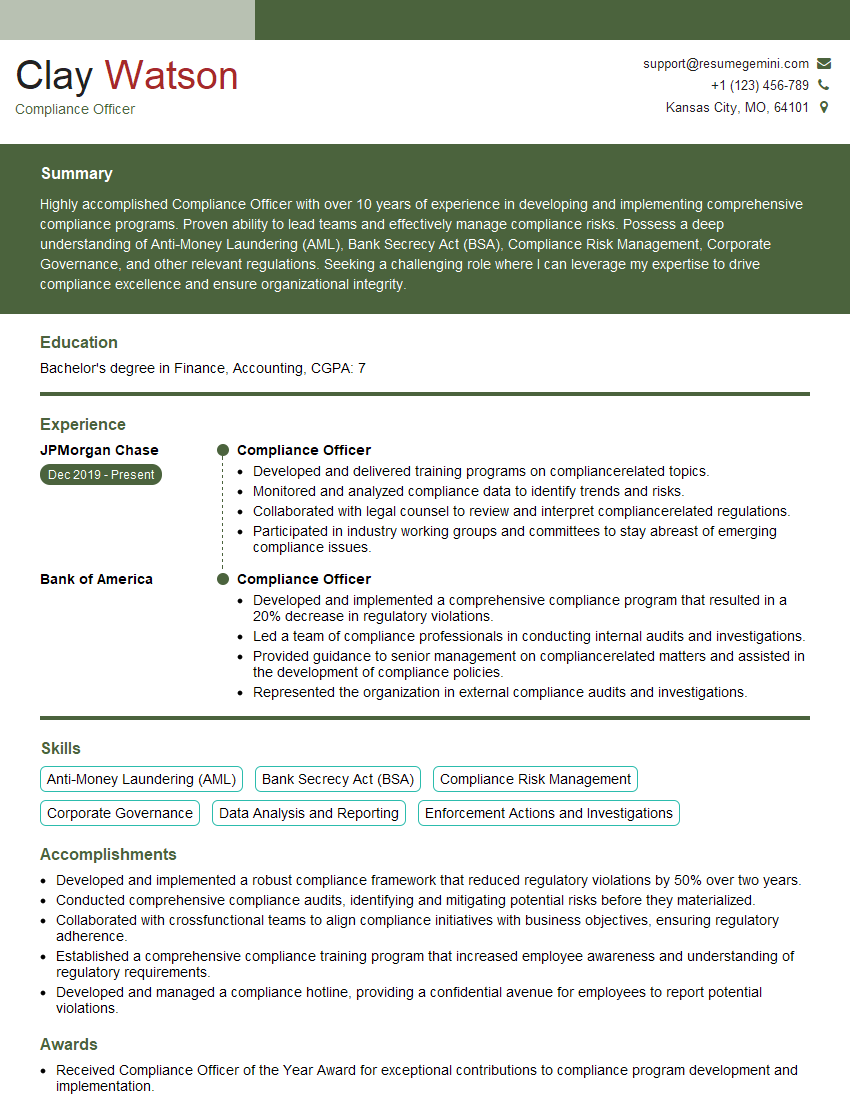
Compliance Officer Resume Sample
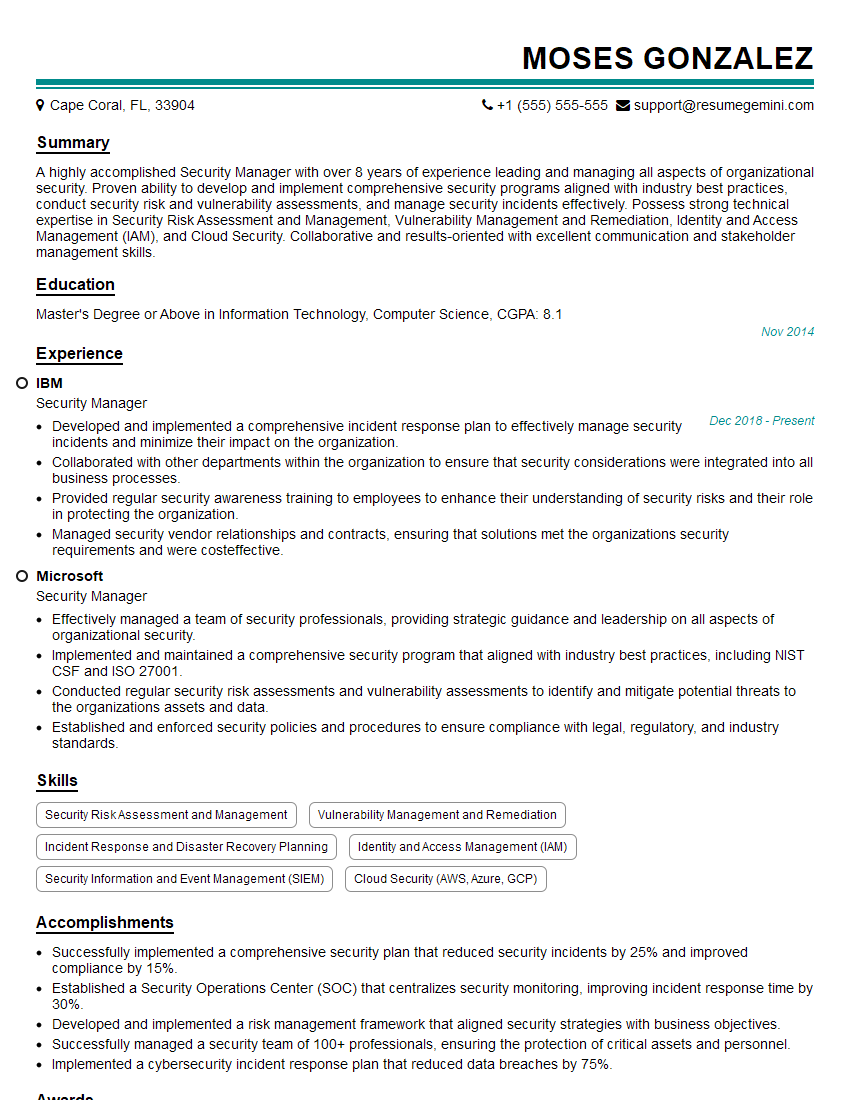
Security Manager Resume Sample

Security Administrator Resume Sample
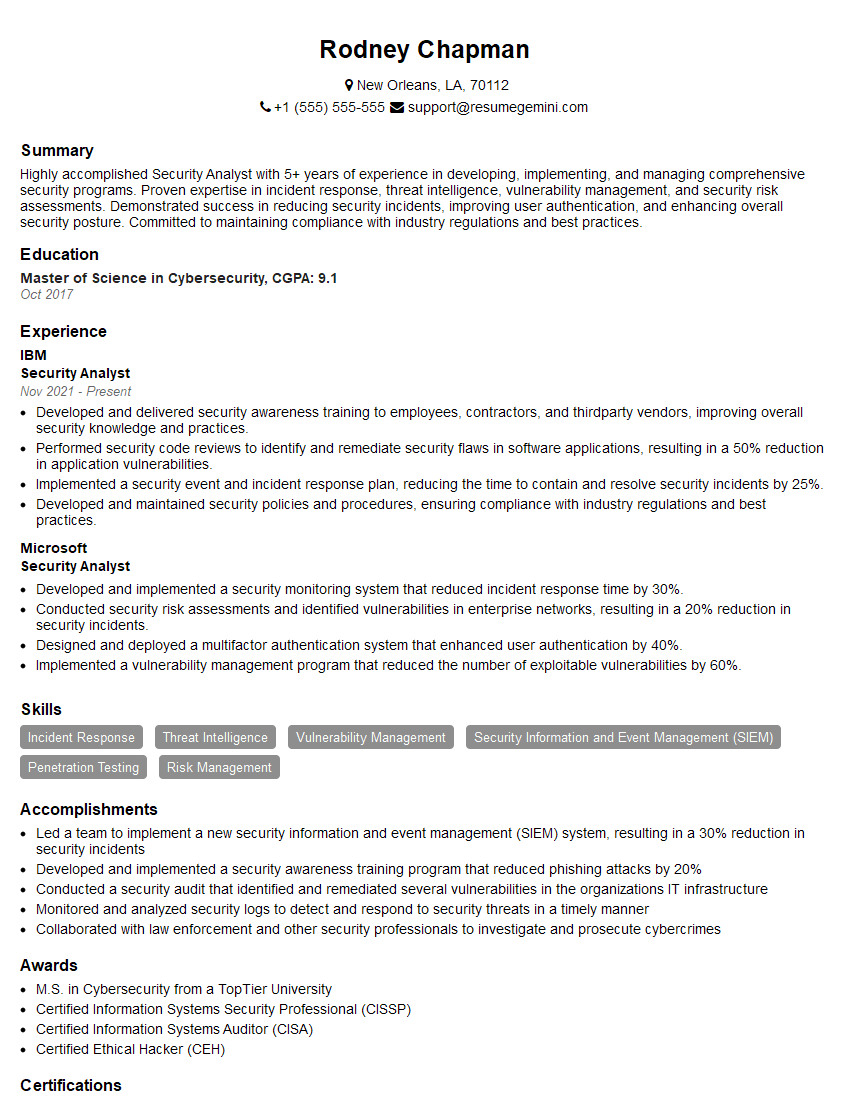
Security Analyst Resume Sample
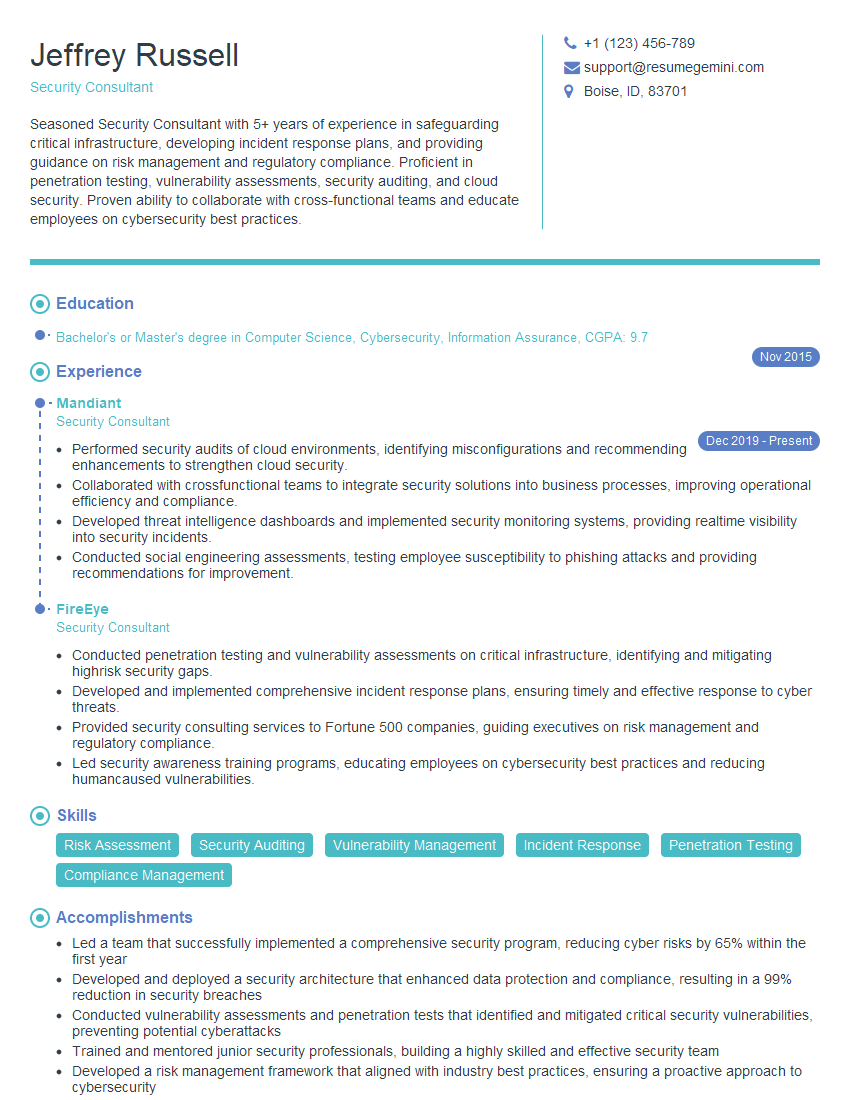
Security Consultant Resume Sample
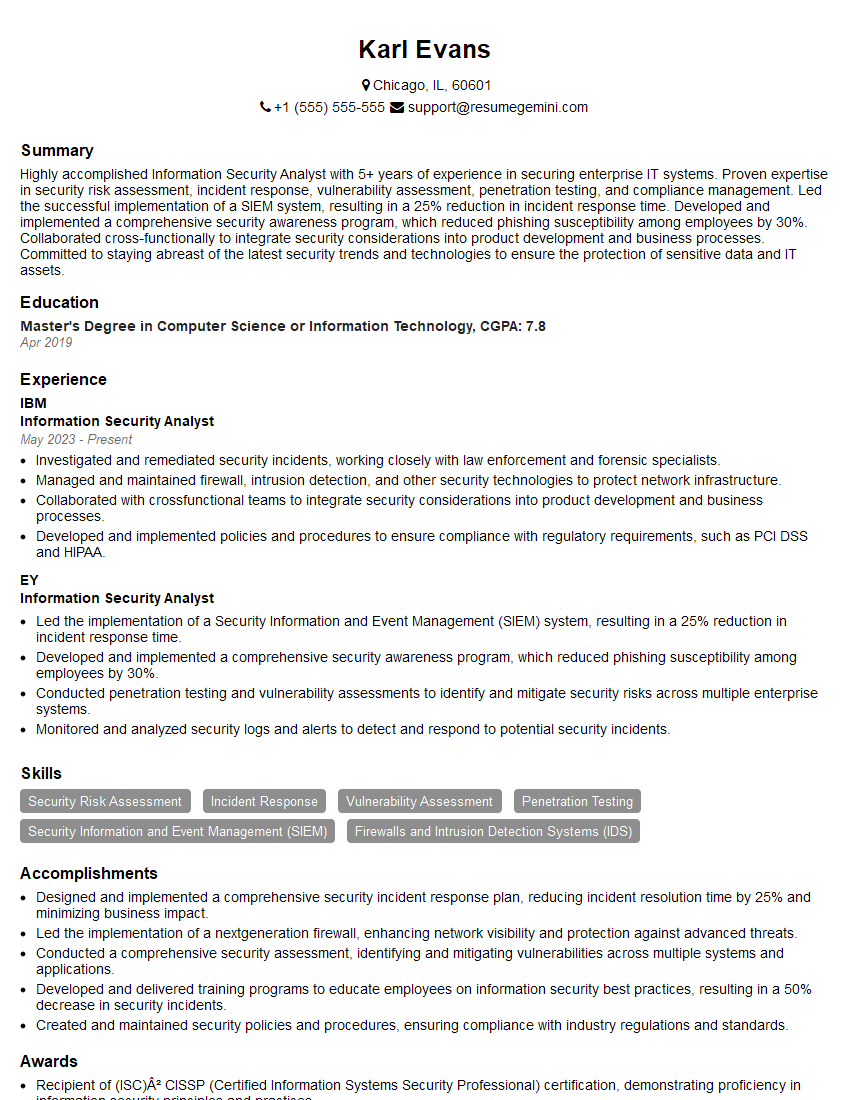
Information Security Analyst Resume Sample
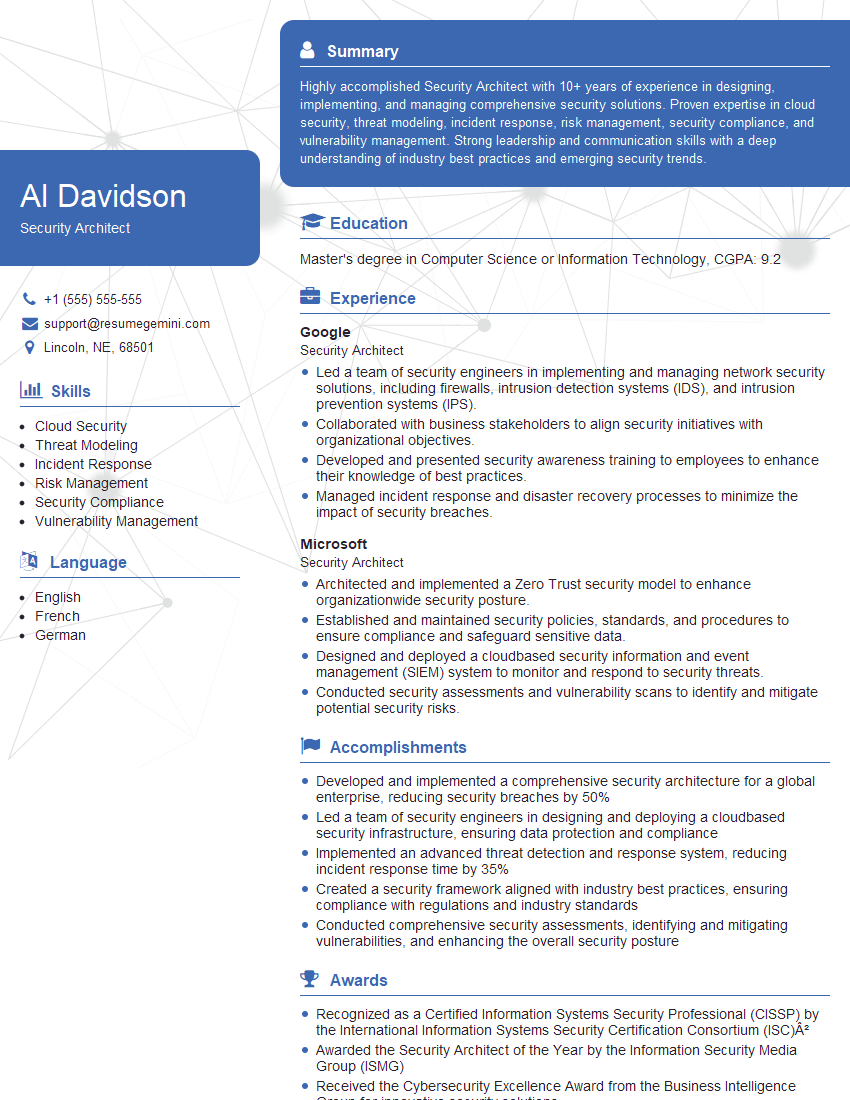
Security Architect Resume Sample

IT Security Specialist Resume Sample
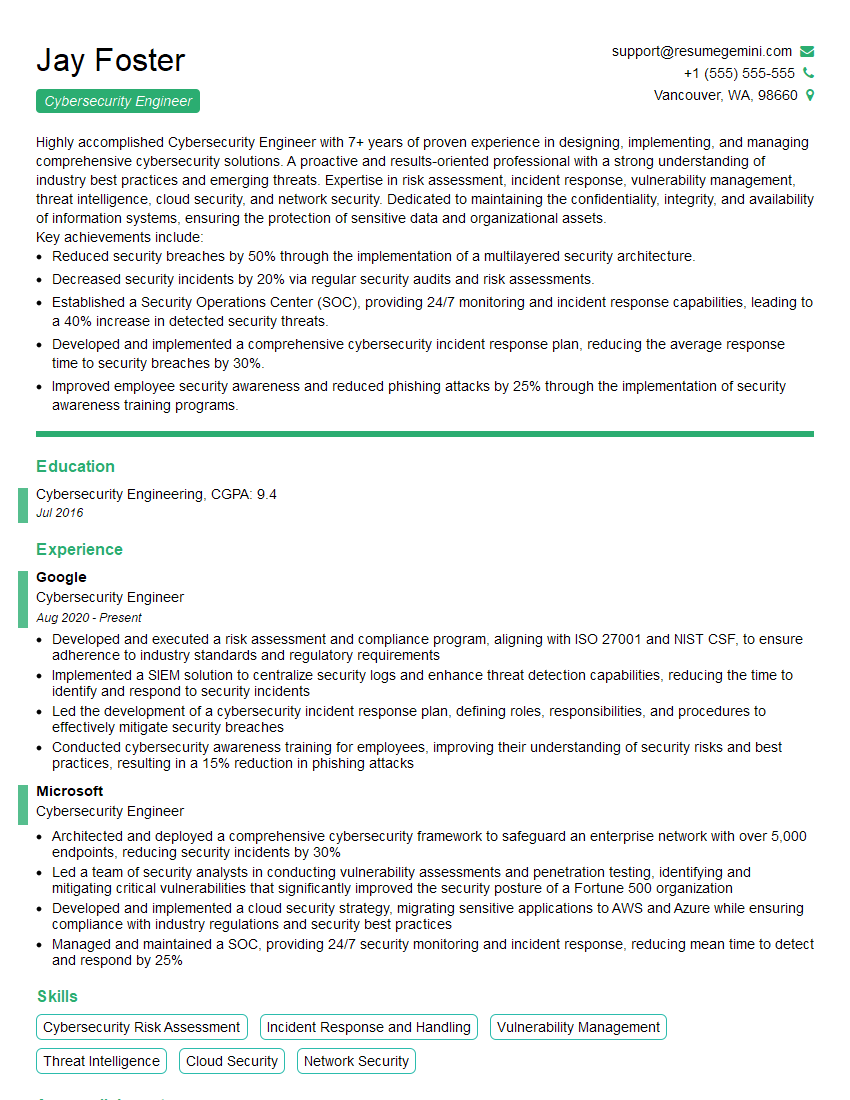
Cybersecurity Engineer Resume Sample
Explore more articles
Users Rating of Our Blogs
Share Your Experience
We value your feedback! Please rate our content and share your thoughts (optional).
What Readers Say About Our Blog
I Redesigned Spongebob Squarepants and his main characters of my artwork.
https://www.deviantart.com/reimaginesponge/art/Redesigned-Spongebob-characters-1223583608
IT gave me an insight and words to use and be able to think of examples
Hi, I’m Jay, we have a few potential clients that are interested in your services, thought you might be a good fit. I’d love to talk about the details, when do you have time to talk?
Best,
Jay
Founder | CEO