Unlock your full potential by mastering the most common Public Key Infrastructure (PKI) Management interview questions. This blog offers a deep dive into the critical topics, ensuring you’re not only prepared to answer but to excel. With these insights, you’ll approach your interview with clarity and confidence.
Questions Asked in Public Key Infrastructure (PKI) Management Interview
Q 1. Explain the components of a Public Key Infrastructure (PKI).
A Public Key Infrastructure (PKI) is a system designed to create, manage, distribute, use, store, and revoke digital certificates and manage public-key cryptography. Think of it as a digital identity system for computers and online services. It’s built on a foundation of trust and relies on several key components working together harmoniously.
- Certificate Authority (CA): The trusted entity that issues and manages digital certificates. Imagine it as a trusted notary public in the digital world.
- Registration Authority (RA): An optional component that verifies the identity of certificate applicants before the CA issues a certificate. This acts like a background check before issuing a digital identity.
- Certificate Repository: A database where certificates are stored and can be accessed. This is where you can find the ‘identity documents’ of digital entities.
- Digital Certificates: Electronic documents that bind a public key to the identity of an individual or organization. This is like a digital passport, proving who you are.
- Certificate Revocation List (CRL): A list of certificates that have been revoked because they’ve been compromised or are no longer valid. It’s a list of ‘cancelled passports’.
- Online Certificate Status Protocol (OCSP): A mechanism to check the status of a certificate in real-time, offering an alternative to CRLs. It’s like a quick online passport check.
- Public Key Infrastructure (PKI) software: The tools and applications needed to manage the components of the PKI system. This encompasses the infrastructure required for certificate generation and verification.
These components interact to ensure secure communication and digital identity verification across various applications.
Q 2. Describe the process of certificate issuance and revocation.
The certificate issuance and revocation process is crucial to PKI’s security. Let’s break it down:
Issuance:
- Certificate Request: An entity (e.g., a website) generates a public-private key pair and submits a certificate signing request (CSR) to a Registration Authority (RA) or directly to a Certificate Authority (CA).
- Identity Verification: The RA or CA verifies the identity of the requestor, ensuring only legitimate entities receive certificates. This might involve document verification or other validation techniques.
- Certificate Issuance: Once identity is verified, the CA digitally signs the CSR, creating a digital certificate that binds the entity’s public key to its identity. This certificate is then issued to the entity.
Revocation:
- Compromise Detection: If a certificate is compromised (e.g., the private key is stolen), it must be revoked immediately.
- Revocation Request: The CA or the entity possessing the certificate initiates the revocation process.
- CRL Update: The revoked certificate is added to the Certificate Revocation List (CRL) or the status is updated via OCSP.
Efficient certificate management, including prompt revocation, is critical for maintaining the integrity and security of the PKI system.
Q 3. What are the different types of digital certificates?
Digital certificates come in various types, each designed for specific applications. Here are some key examples:
- Domain Validation (DV) Certificates: These verify ownership of a domain name. They provide basic identity assurance but don’t verify the identity of the organization behind the domain.
- Organization Validation (OV) Certificates: These verify both domain ownership and the identity of the organization. This offers a higher level of assurance.
- Extended Validation (EV) Certificates: These provide the highest level of assurance, meticulously verifying the identity and legitimacy of the organization. EV certificates are often indicated by a green address bar in web browsers.
- Code Signing Certificates: These are used to digitally sign software, ensuring its authenticity and integrity. This prevents malicious tampering.
- Email Certificates: These are used to encrypt and digitally sign emails, enhancing privacy and authenticity. They help prevent phishing and spoofing.
- Server Certificates: These are used to secure communication between servers and clients, often used for HTTPS websites. They help encrypt web traffic.
The choice of certificate type depends on the level of security and trust required for a given application.
Q 4. What is a Certificate Authority (CA) and what is its role in PKI?
A Certificate Authority (CA) is the cornerstone of a PKI. Think of it as a trusted third party that verifies identities and issues digital certificates. Its crucial role includes:
- Identity Verification: The CA rigorously verifies the identity of certificate applicants to prevent unauthorized certificates from being issued.
- Certificate Issuance: It generates and digitally signs certificates, binding a public key to an identity.
- Certificate Management: The CA manages the entire lifecycle of certificates, including issuance, revocation, and storage.
- Maintaining Trust: The CA is responsible for maintaining trust in the PKI system. Its reputation is critical for the overall security.
Different levels of CAs exist, forming a hierarchy of trust. Root CAs are at the top, followed by subordinate CAs. This hierarchical structure ensures scalability and delegation of responsibilities. Browsers and operating systems pre-install trusted root CAs, forming the foundation of trust for countless online transactions.
Q 5. Explain the concept of a Certificate Revocation List (CRL).
A Certificate Revocation List (CRL) is a publicly available list of certificates that have been revoked by a Certificate Authority (CA). Imagine it as a ‘blacklist’ of invalid digital identities. Revocation is necessary when a certificate’s private key is compromised or the certificate’s validity period ends prematurely.
CRLs are periodically updated and can be quite large, which can impact performance. Checking a CRL involves downloading the entire list and searching for the certificate in question. For this reason, OCSP is often preferred for real-time checks.
The CRL contains information about each revoked certificate, including its serial number, revocation date, and revocation reason. This information allows entities to verify the validity of a certificate before trusting it.
Q 6. What is Online Certificate Status Protocol (OCSP)?
The Online Certificate Status Protocol (OCSP) is a real-time alternative to Certificate Revocation Lists (CRLs). Instead of downloading a large list, OCSP allows you to query a CA directly about a certificate’s status. Think of it as a live database query versus downloading a static file.
An OCSP request is sent to the CA’s OCSP responder, containing the certificate’s serial number. The responder checks its internal database and returns a response indicating whether the certificate is valid, revoked, or unknown. This real-time response significantly improves performance and efficiency compared to CRLs.
However, OCSP can introduce its own vulnerabilities, such as the risk of denial-of-service attacks against the OCSP responder. Careful implementation is crucial.
Q 7. How does a PKI system ensure the authenticity of digital certificates?
A PKI system ensures authenticity through a chain of trust, beginning with the trusted root Certificate Authority (CA). Each certificate in the chain is digitally signed by the CA that issued it. This signature uses the CA’s private key, which is kept secret. Here’s how it works:
- Root CA: Root CAs have self-signed certificates, meaning they are their own certificate’s issuers. Their public key is pre-installed in browsers and operating systems.
- Certificate Chain: When you receive a certificate from a website or application, you can trace its lineage up the chain of trust. Each certificate in the chain is signed by the CA above it.
- Verification: To verify a certificate, you start with the root CA’s public key. Then you use that key to verify the signature of the next certificate in the chain, and so on, until you reach the final certificate. This process verifies the authenticity of each certificate and therefore the entity presenting it.
If any signature in the chain fails to verify, the certificate is considered untrusted, indicating a potential security issue. This chain of trust is the core mechanism by which PKI provides assurance and security.
Q 8. Explain the difference between symmetric and asymmetric cryptography in the context of PKI.
In PKI, both symmetric and asymmetric cryptography play crucial roles, but they differ fundamentally in how they handle encryption keys.
Symmetric cryptography uses the same secret key to encrypt and decrypt data. Think of it like a shared secret code – both parties need the same key to communicate securely. It’s fast and efficient, but key distribution is a major challenge. How do you securely share that secret key? This is where asymmetric cryptography comes in.
Asymmetric cryptography, also known as public-key cryptography, uses two separate keys: a public key and a private key. The public key is widely distributed and used for encryption, while the private key is kept secret and used for decryption. This elegantly solves the key distribution problem; you can publicly share your encryption key without compromising your ability to decrypt.
In PKI, asymmetric cryptography is the backbone. Digital certificates, which are essentially tamper-proof containers for public keys, are used to verify the authenticity of entities. Symmetric cryptography is often used to encrypt the actual data due to its efficiency after the initial secure communication has been established using asymmetric keys. For example, once a secure connection is made using TLS/SSL (which relies on asymmetric cryptography to exchange session keys), symmetric encryption is frequently employed for the bulk data transfer to improve performance.
Q 9. What are the key security considerations when implementing a PKI system?
Implementing a secure PKI system demands careful consideration of several critical security aspects:
- Key Management: This is paramount. Secure generation, storage, rotation, and revocation of keys are vital. Compromised keys can unravel the entire system.
- Certificate Authority (CA) Security: The CA is the heart of PKI; it issues and manages certificates. Its security is non-negotiable. Breaches in CA security can lead to widespread trust issues.
- Certificate Lifecycle Management: A robust system needs clear processes for certificate issuance, renewal, revocation, and archival to maintain trust and prevent expired certificates from being used.
- Hardware Security Modules (HSMs): HSMs provide a highly secure environment for storing and managing cryptographic keys, significantly reducing the risk of compromise.
- Access Control: Strict access control mechanisms are crucial to restrict access to sensitive components of the PKI system, such as the CA and key storage.
- Audit Logging: Detailed audit logs are essential for monitoring system activity and detecting potential security breaches. They provide an auditable trail of all actions.
- Vulnerability Management: Regularly scanning for and patching vulnerabilities in PKI software and hardware is crucial to prevent exploitation.
Q 10. Describe the process of key generation and management within a PKI.
Key generation and management in PKI is a multi-step process that requires meticulous attention to detail:
- Key Generation: Keys are typically generated using cryptographically secure random number generators (CSPRNGs) to ensure unpredictability. The strength of the key depends on its length (e.g., 2048-bit RSA keys are widely used).
- Key Storage: Private keys should be stored securely, ideally in HSMs. Storing private keys on standard servers significantly increases the risk of compromise.
- Certificate Signing Request (CSR) Generation: A CSR is a formal request for a certificate, containing the public key and information about the entity (e.g., domain name, organization).
- Certificate Issuance: The CA verifies the identity of the entity requesting the certificate and then signs the CSR, generating the digital certificate.
- Key Rotation: Regularly rotating keys is a critical security practice. It limits the impact of a potential key compromise. This involves generating a new key pair, obtaining a new certificate, and eventually revoking the old certificate.
- Key Revocation: If a key is compromised or an entity’s certificate needs to be invalidated, the CA revokes the certificate. This is typically done by publishing a Certificate Revocation List (CRL) or using Online Certificate Status Protocol (OCSP).
Think of it as a passport for digital identities. The private key is like your actual passport, while the certificate containing the public key is like a copy you can share to verify your identity without revealing your passport.
Q 11. Explain the concept of a digital signature and its role in PKI.
A digital signature is a cryptographic technique used to verify the authenticity and integrity of data. In PKI, it’s crucial for ensuring trust and non-repudiation.
The process involves using the sender’s private key to create a cryptographic hash of the data. This hash, along with other information, is then encrypted with the private key, producing the digital signature. The recipient uses the sender’s public key to decrypt the signature and verify the integrity of the data. If the hash matches, it means the data has not been tampered with and is from the claimed sender.
In PKI, digital signatures are essential for validating certificates and ensuring that data hasn’t been altered. For instance, when you download software, a digital signature ensures the software is genuine and hasn’t been maliciously modified during distribution.
Q 12. How do you ensure the security and integrity of a PKI system?
Ensuring the security and integrity of a PKI system requires a layered approach:
- Strong Key Management Practices: Following best practices for key generation, storage, rotation, and revocation.
- Secure CA Infrastructure: Implementing robust security measures for the CA, including physical security, access controls, and regular security audits.
- Regular Security Assessments: Conducting penetration testing and vulnerability scans to identify and address potential weaknesses.
- Compliance with Standards: Adhering to industry standards and best practices, such as those defined by NIST and other relevant bodies.
- Incident Response Plan: Developing a comprehensive incident response plan to handle security breaches and minimize their impact.
- Monitoring and Logging: Implementing comprehensive monitoring and logging to detect suspicious activities.
- Employee Training: Educating employees about security best practices related to PKI, such as password hygiene and phishing awareness.
Regularly review and update your security posture to adapt to evolving threats.
Q 13. What are some common vulnerabilities associated with PKI systems?
PKI systems, while powerful, are vulnerable to several threats:
- CA Compromise: If the CA is compromised, the attacker can issue fraudulent certificates, undermining the entire trust system.
- Key Compromise: Stolen or leaked private keys can allow attackers to impersonate legitimate entities.
- Weak Key Generation: Using weak or predictable random number generators to generate keys can significantly reduce security.
- Certificate Revocation List (CRL) Attacks: Attacks can target CRLs, preventing revocation from taking effect.
- Phishing and Social Engineering: Attackers can use phishing or social engineering techniques to trick users into revealing their private keys or accepting fraudulent certificates.
- Software Vulnerabilities: Vulnerabilities in PKI software can be exploited to gain unauthorized access or tamper with certificates.
Implementing robust security practices and staying up-to-date with security patches is crucial to mitigate these risks.
Q 14. Describe different PKI deployment models (e.g., enterprise, cloud).
PKI deployment models vary based on the organization’s size, needs, and infrastructure:
- Enterprise PKI: This is typically implemented within a large organization’s internal network. The organization manages its own CA and issues certificates for internal users and devices. It offers strong control but requires significant expertise to manage.
- Cloud PKI: This leverages cloud-based services to manage certificates. It can reduce the overhead of managing a PKI infrastructure but requires careful consideration of security and compliance aspects associated with the chosen cloud provider.
- Hybrid PKI: Combines elements of both enterprise and cloud PKIs. For instance, an organization might manage its own CA for internal users but leverage a cloud-based CA for external-facing services.
- Public PKI: This model relies on publicly trusted CAs, such as Let’s Encrypt. This simplifies certificate management but can have less control over certificates.
The choice of deployment model depends on factors like budget, technical expertise, security requirements, and scalability needs. A well-designed PKI deployment should align with the specific organizational context.
Q 15. How do you handle certificate lifecycle management?
Certificate lifecycle management is the process of overseeing a digital certificate from its creation to its revocation. Think of it like managing the lifespan of a passport – it has a start date, an expiration date, and needs renewal or replacement when it expires. Effective management involves several key stages:
- Certificate Generation and Issuance: This involves generating a key pair (public and private), creating a certificate signing request (CSR), and then having a Certificate Authority (CA) issue the certificate.
- Distribution: Getting the certificate to the end-entity (the individual, server, or device that will use it) securely.
- Usage and Monitoring: Tracking the certificate’s usage, ensuring it’s used only for its intended purpose and monitoring for any anomalies or security threats. Regular security audits are essential here.
- Renewal: Before the certificate expires, initiating the renewal process well in advance. This ensures uninterrupted service. Automating this process is highly recommended.
- Revocation: If a certificate is compromised (e.g., the private key is stolen), it needs to be immediately revoked to prevent unauthorized access. This involves updating the CA’s Certificate Revocation List (CRL) or using Online Certificate Status Protocol (OCSP) for real-time status checks.
A robust automation system, coupled with well-defined processes and regular audits, is crucial for efficient certificate lifecycle management. This prevents security vulnerabilities and ensures business continuity.
Career Expert Tips:
- Ace those interviews! Prepare effectively by reviewing the Top 50 Most Common Interview Questions on ResumeGemini.
- Navigate your job search with confidence! Explore a wide range of Career Tips on ResumeGemini. Learn about common challenges and recommendations to overcome them.
- Craft the perfect resume! Master the Art of Resume Writing with ResumeGemini’s guide. Showcase your unique qualifications and achievements effectively.
- Don’t miss out on holiday savings! Build your dream resume with ResumeGemini’s ATS optimized templates.
Q 16. Explain the importance of key escrow in PKI.
Key escrow is a process where copies of cryptographic keys are held by a trusted third party. In the context of PKI, it’s a mechanism for recovering access to encrypted data if the original key holder loses access or the key is compromised. Think of it like having a spare key to your house hidden with a trusted neighbor. While it provides a safety net, it introduces security risks if the escrow agent is itself compromised.
The importance of key escrow is multifaceted:
- Recovery: It enables recovery of data if the legitimate key holder loses access or the key is damaged.
- Legal Compliance: In some jurisdictions, regulations may mandate key escrow for specific applications, especially those involving sensitive data.
- Disaster Recovery: In the event of a disaster (e.g., data center fire), key escrow ensures business continuity by allowing the recovery of critical data and services.
However, it’s crucial to carefully consider the security implications. Selecting a highly trustworthy and secure escrow agent is paramount. The security of the escrow system must be as robust as the primary key management system.
Q 17. What are the different types of CA hierarchies?
CA hierarchies organize Certificate Authorities in a hierarchical structure, similar to a corporate organization chart. This enables scalability and trust delegation.
- Root CA: The topmost authority in the hierarchy, its certificate is self-signed and is the foundation of trust. Think of it as the CEO of a company.
- Intermediate CA: CAs that are issued certificates by the Root CA. These CAs issue certificates to end-entities or other subordinate CAs. These are like departmental managers.
- Subordinate CA (Optional): CAs issued certificates by an Intermediate CA. They further distribute certificate issuance, enhancing efficiency and delegation.
The most common hierarchy is a two-level structure with a Root and Intermediate CA. Multi-level hierarchies can be beneficial in large organizations or to isolate different security domains for better risk management. Each level introduces a point of potential compromise, so careful security planning is vital.
Q 18. Describe the role of a Registration Authority (RA).
A Registration Authority (RA) acts as an intermediary between the Certificate Authority (CA) and end-entities requesting certificates. It’s like a gatekeeper verifying the identities of applicants before the CA issues certificates.
The role of an RA includes:
- Identity Verification: This is the core function. The RA ensures that certificate applicants are who they claim to be. This might involve verifying identification documents, checking organizational affiliations, or using other methods to authenticate the applicant.
- Certificate Request Handling: The RA collects and processes certificate requests, ensuring they meet the necessary standards.
- Provisioning: The RA may assist in the distribution of certificates once they’re issued by the CA.
- Revocation Support: The RA may also assist in the certificate revocation process.
Using an RA reduces the workload on the CA, improves security by adding a layer of verification, and enables better scalability of the PKI system. However, its security must be carefully considered, as a compromised RA can weaken the entire system.
Q 19. What are the benefits of using a PKI system?
PKI systems offer numerous benefits, enhancing security and trust in digital interactions:
- Authentication: Verifies the identity of users and devices, ensuring communication occurs with the intended parties.
- Data Integrity: Ensures data hasn’t been tampered with during transmission. Digital signatures, enabled by PKI, confirm authenticity and integrity.
- Non-Repudiation: Prevents parties from denying their actions. Digital signatures provide irrefutable proof of origin.
- Confidentiality: Enables secure communication through encryption, protecting sensitive data from unauthorized access.
- Trust: Creates a framework of trust through the hierarchical structure of CAs and the validation of digital certificates.
In essence, PKI forms the backbone of secure online transactions, communication, and data management, creating a more trustworthy and secure digital environment for individuals and businesses.
Q 20. What are some common challenges in managing a PKI system?
Managing a PKI system presents several significant challenges:
- Complexity: PKI systems are inherently complex, requiring specialized expertise for effective management. Misconfiguration can easily lead to security vulnerabilities.
- Scalability: As the number of certificates grows, managing the system effectively can become difficult, especially for large organizations with distributed infrastructures.
- Key Management: Securely managing private keys is paramount. Loss or compromise of private keys can have severe security consequences. Proper key storage, backup, and recovery procedures are critical.
- Certificate Lifecycle Management: Effectively managing the lifecycle (creation, distribution, usage, renewal, and revocation) of certificates requires automated systems and robust processes to avoid issues like certificate expiry leading to service disruptions.
- Cost: Implementing and maintaining a PKI system can be expensive, including the costs of hardware, software, personnel, and security audits.
Proactive planning, robust automation, and skilled personnel are crucial to mitigate these challenges. Regular security assessments and audits are essential to identify and address vulnerabilities.
Q 21. How do you address certificate expiry and renewal?
Certificate expiry and renewal are critical aspects of PKI management. Failure to renew certificates promptly can result in service disruptions and security breaches.
Addressing certificate expiry and renewal involves:
- Monitoring: Implement a system to monitor certificate expiration dates, providing ample advance warning (e.g., 60-90 days) before expiration.
- Automated Renewal: Automate the renewal process as much as possible. This reduces manual intervention, minimizing human error and improving efficiency.
- Renewal Process: Establish a clear and well-documented process for certificate renewal, including steps for generating new requests, validating identity, and installing the new certificates.
- Backup and Recovery: Maintain backups of certificates and private keys. This is crucial for business continuity in case of unexpected issues during renewal.
- Testing: Thoroughly test the renewed certificates before deploying them to production environments to prevent unexpected outages.
Proactive monitoring and automation are key to managing certificate expiry and renewal effectively. This ensures continuous service availability and maintains the security and integrity of the PKI system.
Q 22. Explain the concept of code signing using PKI.
Code signing, a crucial application of Public Key Infrastructure (PKI), ensures the authenticity and integrity of software. Imagine downloading a program – how can you be sure it hasn’t been tampered with since it left the developer? That’s where code signing comes in. The software developer uses their private key to create a digital signature for their code. This signature is essentially a cryptographic hash of the code, encrypted with their private key. Anyone with the corresponding public key (which is publicly available) can then verify the signature.
If the signature verifies correctly, it proves:
- Authenticity: The code originated from the claimed developer.
- Integrity: The code hasn’t been modified since it was signed.
Think of it like a tamper-evident seal, but far more secure. The process involves using a digital certificate, which contains the developer’s public key and other identifying information. This certificate is issued by a trusted Certificate Authority (CA). When users download the software, their operating system or browser uses the CA’s public key to verify the developer’s certificate, building a chain of trust.
For example, let’s say you download a program from Company X. Company X has a code signing certificate from a trusted CA like DigiCert or Sectigo. When you run the program, your system checks the signature against Company X’s certificate. If they match, you know the software is genuine and hasn’t been altered.
Q 23. How do you secure private keys in a PKI environment?
Securing private keys is paramount in PKI; they’re the cornerstone of the entire system. A compromised private key renders the entire system vulnerable. We employ a multi-layered approach:
- Hardware Security Modules (HSMs): These are specialized hardware devices that securely store and manage private keys. They provide a physically secure environment, isolating keys from potential software attacks.
- Key Management Systems (KMS): These software systems manage the entire lifecycle of keys, including generation, storage, rotation, and revocation. Access controls are strictly enforced, limiting access to authorized personnel only.
- Strong Passphrases and Encryption: Even when stored on HSMs, keys are further protected with strong, unique passphrases and robust encryption algorithms. Regular key rotation is vital to mitigate the impact of potential compromises.
- Access Control Lists (ACLs): Strict ACLs govern who can access the private keys or the systems they’re stored on, based on the principle of least privilege.
- Multi-Factor Authentication (MFA): MFA is essential for any system managing private keys. It adds an extra layer of security, requiring multiple forms of authentication (e.g., password, smart card, biometric) to access sensitive materials.
For instance, in a large enterprise, we might use an HSM to store the organization’s root certificate’s private key, with strict access control via a KMS and MFA. Individual user certificates’ private keys might be stored securely on their workstations with strong encryption and a robust password manager. Regular audits are critical to validate the effectiveness of these security measures.
Q 24. What are some common PKI standards and protocols (e.g., X.509)?
Several standards and protocols underpin PKI’s functionality. X.509 is arguably the most prominent, defining the format of digital certificates. It specifies the structure and content of certificates, including the public key, subject information (like the owner’s name and organization), validity period, and the digital signature of the issuing Certificate Authority (CA).
Other important standards and protocols include:
- PKCS (Public-Key Cryptography Standards): A collection of standards defining various aspects of public key cryptography, including key generation, storage, and exchange.
- SSL/TLS (Secure Sockets Layer/Transport Layer Security): These protocols secure communications over a network, using certificates to authenticate servers and encrypt data in transit (e.g., HTTPS).
- CMP (Certificate Management Protocol): Used for certificate enrollment, renewal, and revocation.
- OCSP (Online Certificate Status Protocol): Allows real-time checking of a certificate’s revocation status.
These standards work together to ensure interoperability and security across various systems and applications. For example, a web server might use an X.509 certificate signed by a trusted CA, secured using TLS, and its revocation status checked via OCSP. This ensures secure and reliable communication between the server and its clients.
Q 25. How do you perform PKI auditing and compliance checks?
PKI auditing and compliance checks are crucial for maintaining security and meeting regulatory requirements. This involves a multi-faceted approach:
- Certificate Lifecycle Management Audits: Regularly auditing the issuance, renewal, and revocation processes to ensure they align with organizational policies and security best practices. This includes verifying the proper authorization and authentication for certificate requests and the timely revocation of compromised certificates.
- Key Management Audits: Verifying the security of private key storage, access controls, and rotation policies. This often involves reviewing logs of key usage and access attempts.
- Compliance Audits: Ensuring adherence to relevant industry regulations and standards, such as PCI DSS, HIPAA, or GDPR. These audits involve verifying that PKI practices meet specific requirements for data protection and security.
- Security Vulnerability Assessments: Regularly scanning the PKI infrastructure for vulnerabilities. This includes checking for weak encryption algorithms, outdated software, and misconfigurations.
- Penetration Testing: Simulating attacks to identify weaknesses in the PKI system’s security. This helps to proactively identify and address vulnerabilities before they can be exploited by malicious actors.
We typically utilize automated tools and manual reviews for these audits, documenting findings and implementing corrective actions. For example, we’d review logs to ensure that only authorized individuals accessed private keys, check for certificates expiring soon, and verify that our systems use strong, up-to-date encryption algorithms.
Q 26. Describe your experience with PKI troubleshooting and incident response.
PKI troubleshooting and incident response require a systematic approach. My experience involves:
- Certificate-related issues: Diagnosing problems like certificate expiry, revocation, or misconfigurations. This often involves analyzing logs, verifying certificate chains, and using tools like OpenSSL to inspect certificates.
- Key management issues: Addressing problems related to key storage, access, or rotation. This includes reviewing access logs, investigating potential compromises, and implementing corrective actions.
- Security breaches: Responding to incidents involving compromised certificates or private keys. This necessitates immediate actions like revoking compromised certificates, changing passwords, and investigating the root cause of the breach.
- System outages: Troubleshooting issues that disrupt PKI services. This might involve investigating network connectivity problems, server failures, or application errors.
One example was a certificate revocation issue which resulted in several applications failing to connect. Using our monitoring systems, we identified the affected certificates, confirmed the revocation status via OCSP, and quickly rotated the certificates. Post-incident, we reviewed our processes to prevent recurrence.
Q 27. Explain how PKI integrates with other security systems.
PKI integrates seamlessly with other security systems to provide a comprehensive security posture. Some key examples are:
- VPN (Virtual Private Networks): PKI is fundamental to VPNs, using certificates to authenticate users and encrypt communication tunnels.
- Email Security (S/MIME): PKI enables secure email communication through digital signatures and encryption, ensuring message authenticity and confidentiality.
- Code Signing (as discussed previously): Verifying the integrity and authenticity of software.
- Single Sign-On (SSO): PKI can be integrated into SSO systems to authenticate users across multiple applications.
- IAM (Identity and Access Management): PKI supports strong authentication mechanisms within IAM systems, ensuring only authorized users can access sensitive resources.
These integrations provide a unified security framework, enabling centralized management and enhanced security throughout the organization. For example, a company might use PKI to authenticate users for both their VPN access and their email clients, creating a cohesive and more secure environment.
Q 28. What are your thoughts on the future of PKI?
The future of PKI is dynamic, driven by evolving technological needs and security challenges. I foresee several key trends:
- Increased automation: Automation will play a larger role in managing the PKI lifecycle, reducing manual effort and improving efficiency.
- Enhanced security features: New cryptographic algorithms and security protocols will enhance the robustness of PKI against emerging threats.
- Integration with cloud environments: PKI will become even more integrated into cloud platforms, enabling secure access and management of cloud resources.
- Quantum-resistant cryptography: As quantum computing evolves, PKI will adapt by adopting quantum-resistant cryptographic algorithms to prevent future attacks.
- Blockchain integration: Potential use of blockchain for certificate transparency and management, enhancing security and trust.
The focus will be on improving usability, scalability, and security. For instance, we’ll see more sophisticated automation for certificate lifecycle management, along with a broader adoption of quantum-resistant cryptography to future-proof our systems.
Key Topics to Learn for Public Key Infrastructure (PKI) Management Interview
- Certificate Lifecycle Management: Understand the complete lifecycle – from certificate generation and distribution to revocation and renewal. Consider the practical implications of each stage and potential points of failure.
- Public Key Infrastructure (PKI) Components: Master the roles and interactions of Certificate Authorities (CAs), Registration Authorities (RAs), and end-entities. Explore different PKI architectures and their suitability for various environments.
- Security Best Practices: Discuss secure key generation, storage, and handling. Familiarize yourself with common vulnerabilities and mitigation strategies within PKI systems.
- PKI Standards and Protocols: Gain a strong understanding of relevant standards like X.509 and protocols like TLS/SSL. Be prepared to discuss their implications on security and interoperability.
- Digital Certificate Formats and Validation: Learn about different certificate formats and the process of verifying digital certificates, including the importance of Certificate Revocation Lists (CRLs) and Online Certificate Status Protocol (OCSP).
- PKI Auditing and Compliance: Understand the importance of regular audits and compliance with relevant regulations and industry best practices. Be prepared to discuss compliance frameworks and their impact on PKI implementation.
- Troubleshooting and Problem Solving: Develop your skills in diagnosing and resolving common PKI-related issues. Think about practical scenarios and how you’d approach troubleshooting them.
- Integration with other Security Systems: Understand how PKI integrates with other security systems like firewalls, intrusion detection systems, and access control systems.
Next Steps
Mastering Public Key Infrastructure (PKI) Management is crucial for career advancement in cybersecurity and related fields. It demonstrates a deep understanding of critical security concepts and opens doors to highly sought-after roles. To maximize your job prospects, it’s essential to create a compelling and ATS-friendly resume that highlights your skills and experience effectively. ResumeGemini is a trusted resource that can help you build a professional and impactful resume tailored to your specific career goals. We provide examples of resumes specifically tailored to Public Key Infrastructure (PKI) Management to give you a head start.

Compliance Officer Resume Sample

Security Administrator Resume Sample
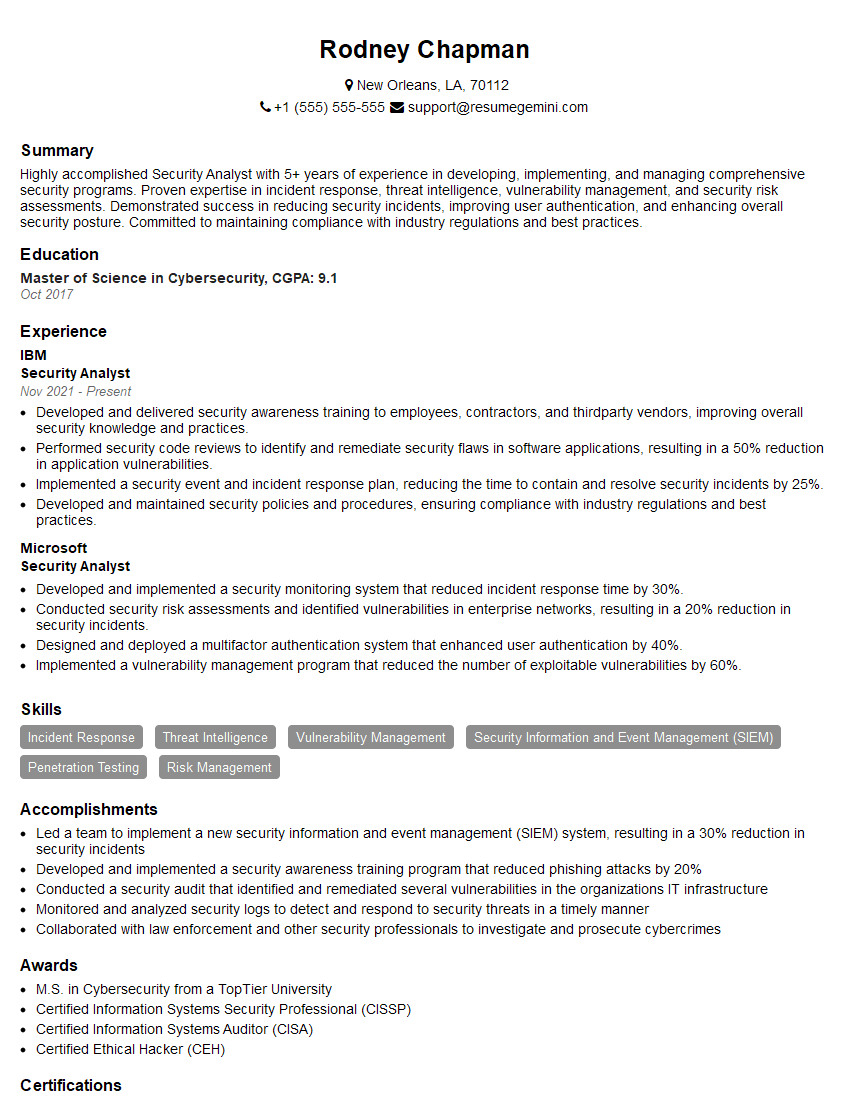
Security Analyst Resume Sample
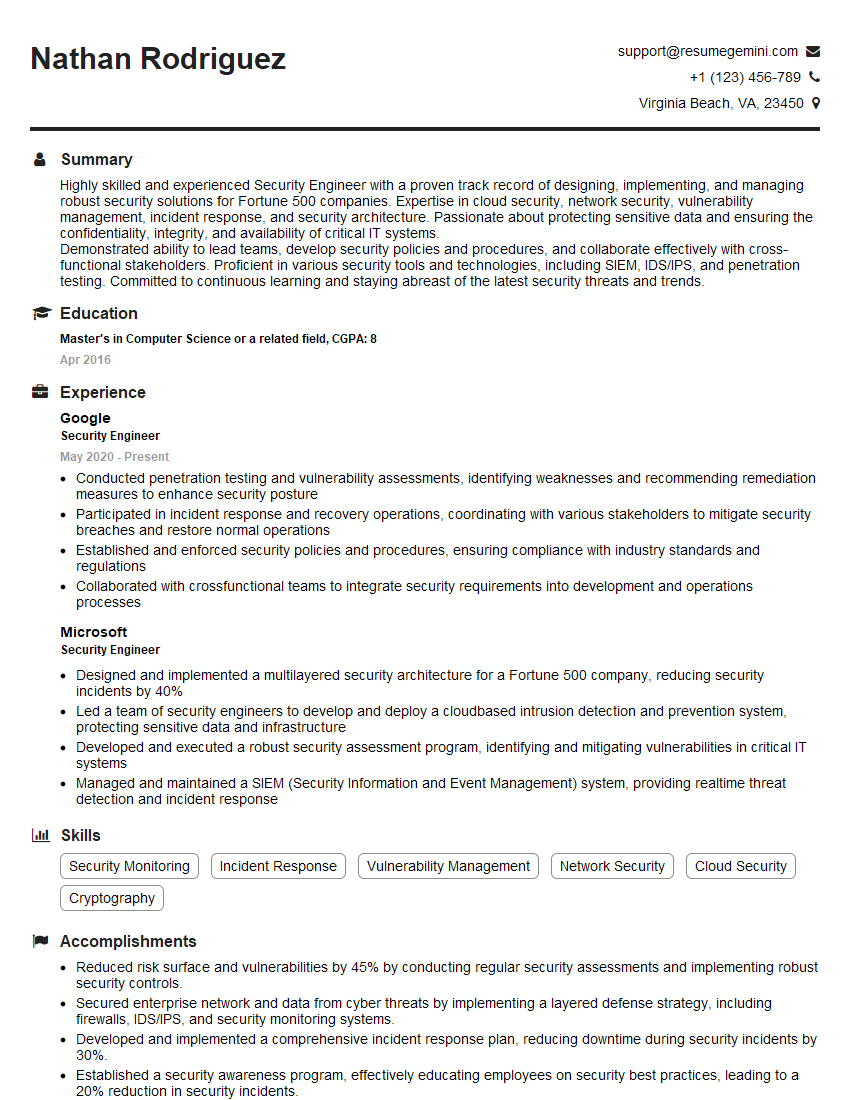
Security Engineer Resume Sample
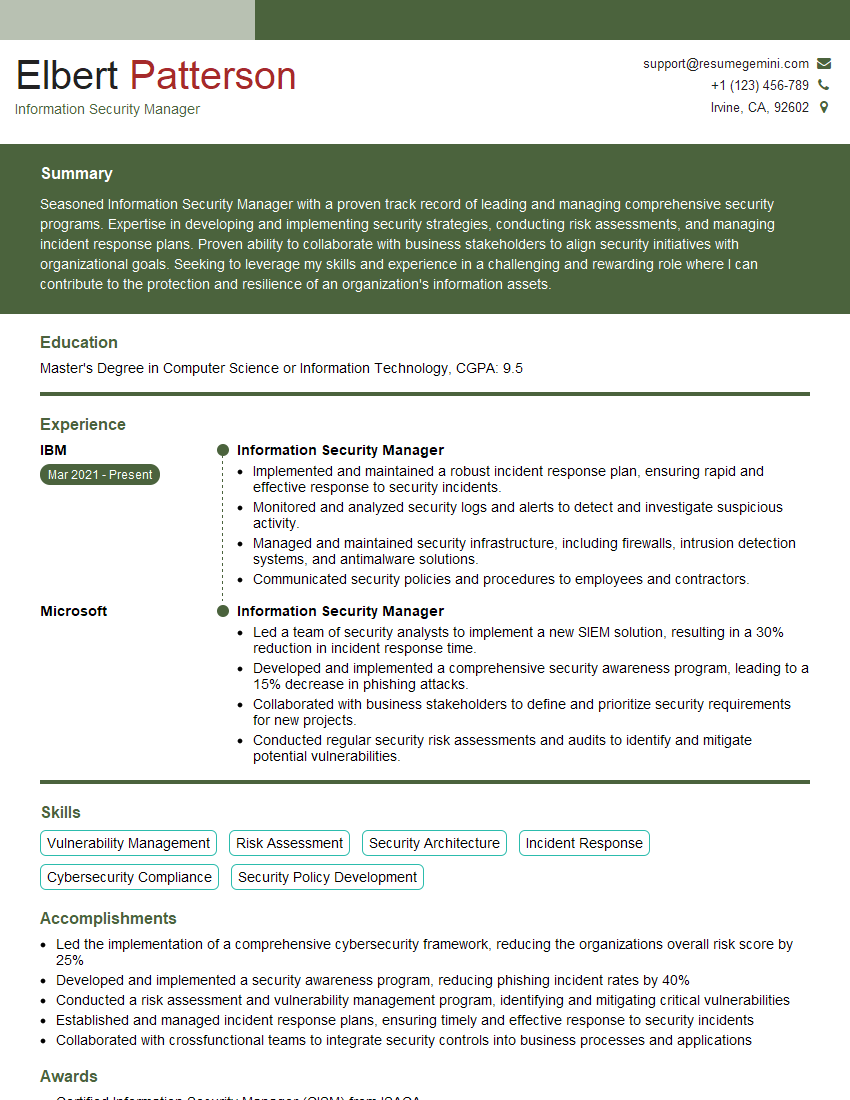
Information Security Manager Resume Sample
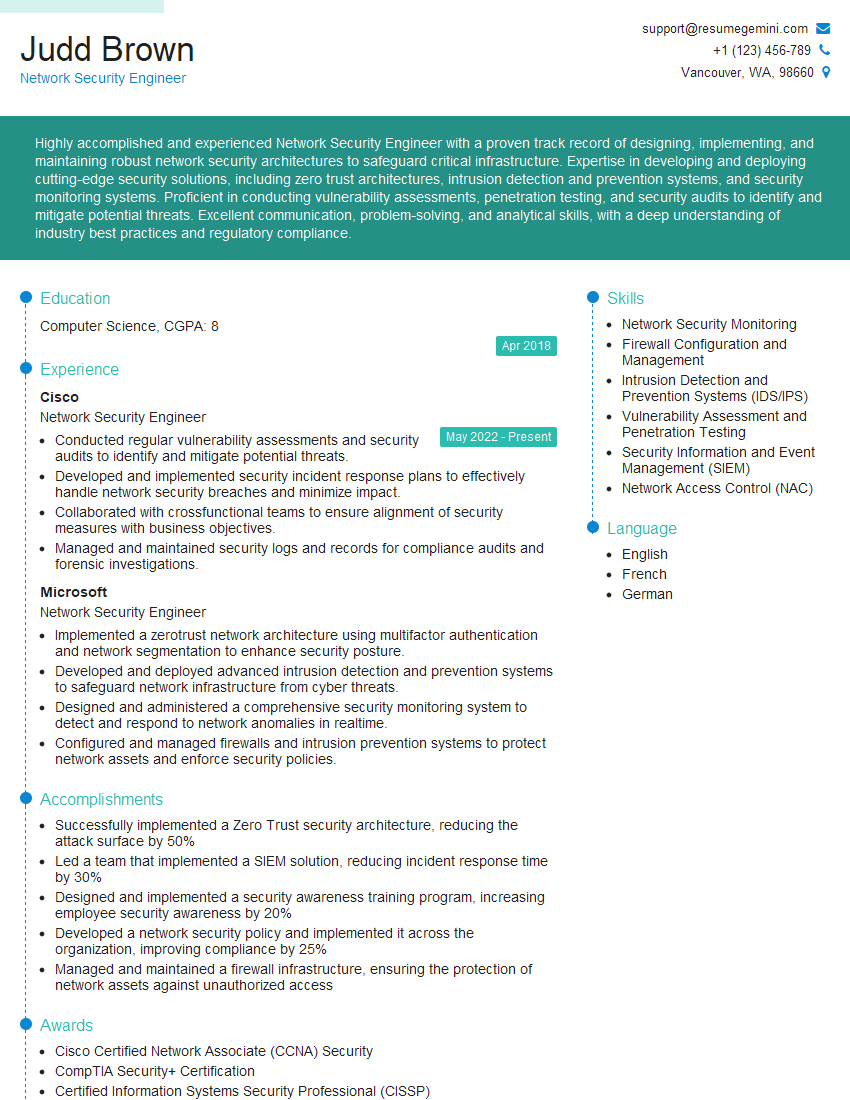
Network Security Engineer Resume Sample
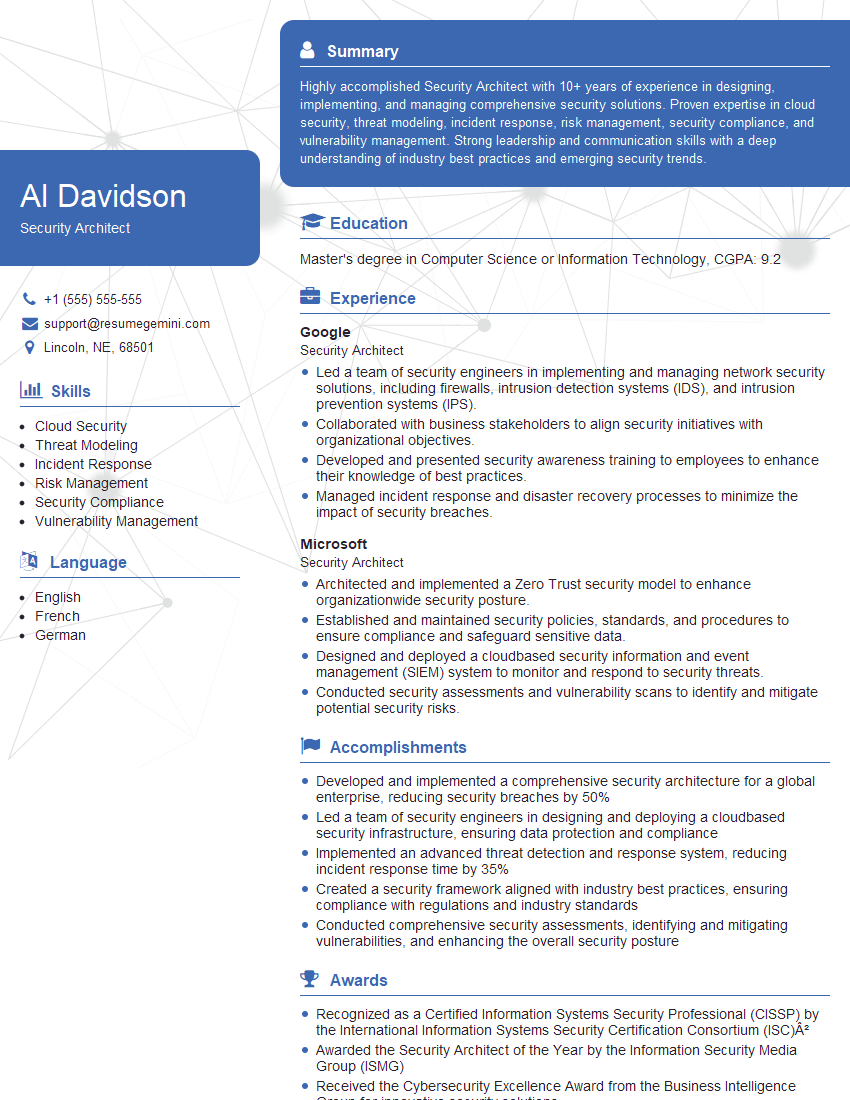
Security Architect Resume Sample
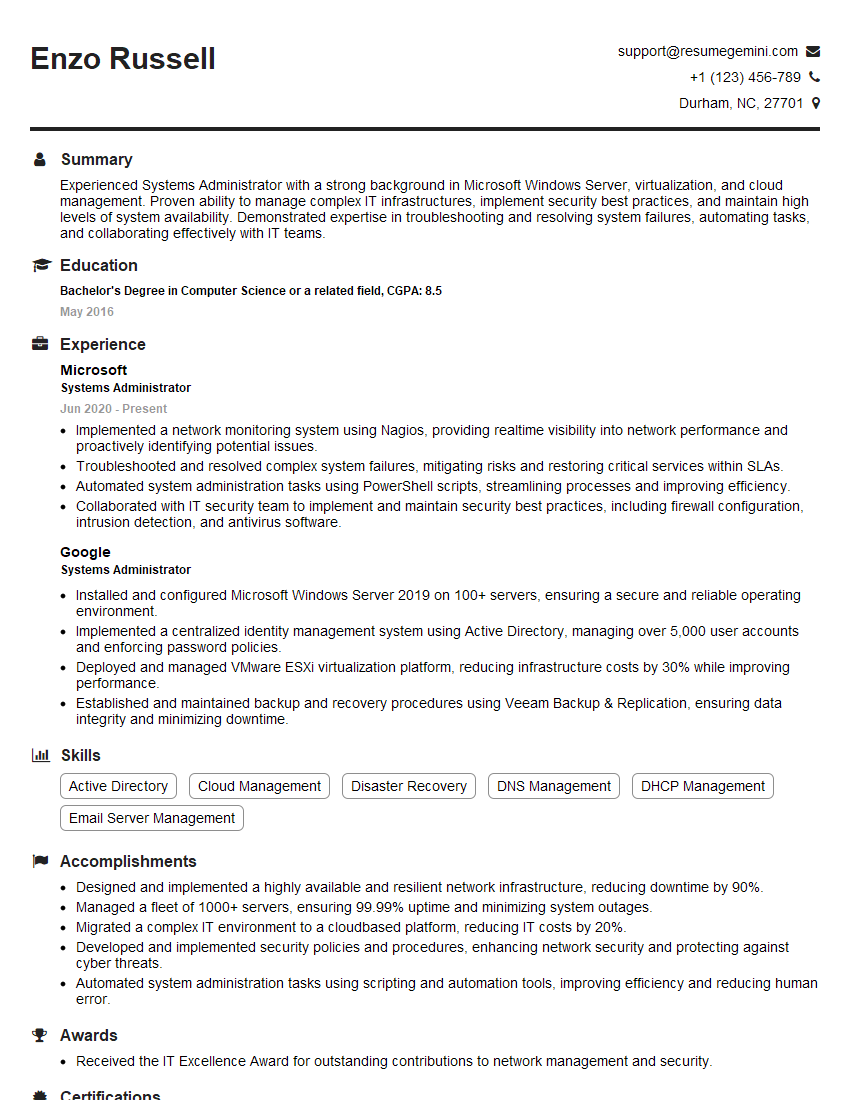
Systems Administrator Resume Sample
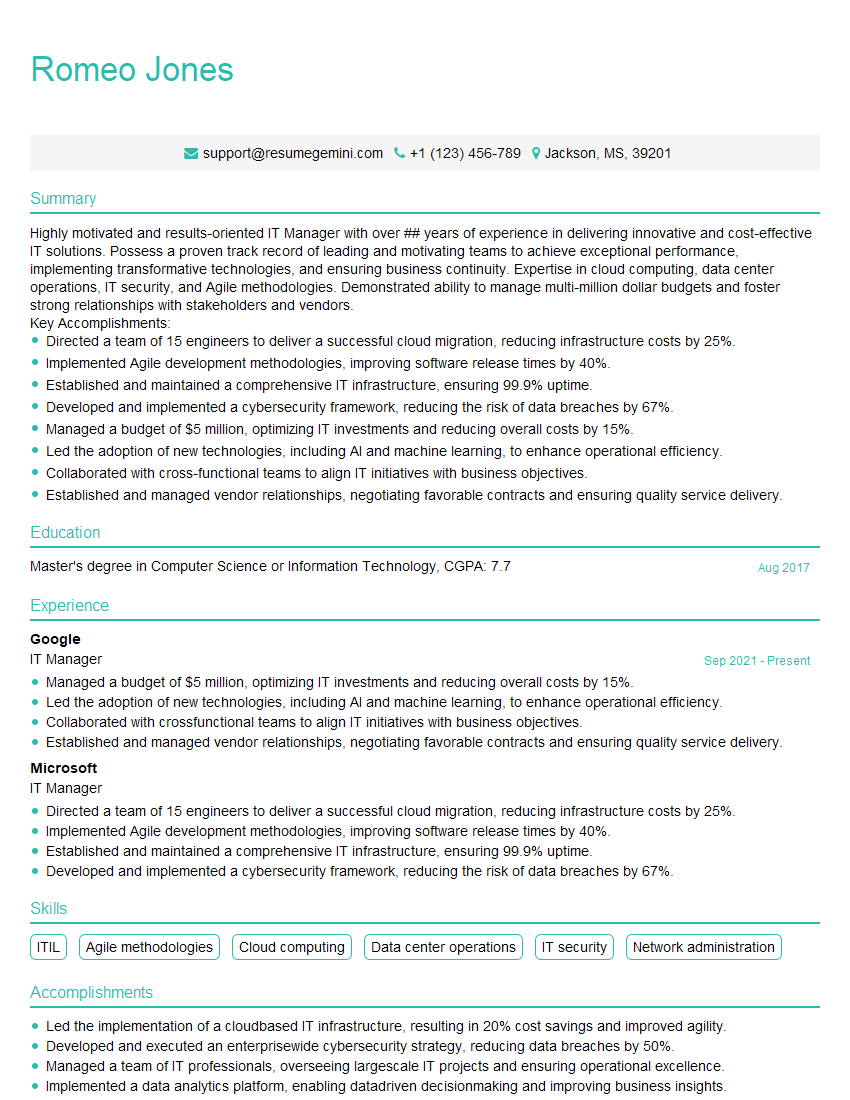
IT Manager Resume Sample
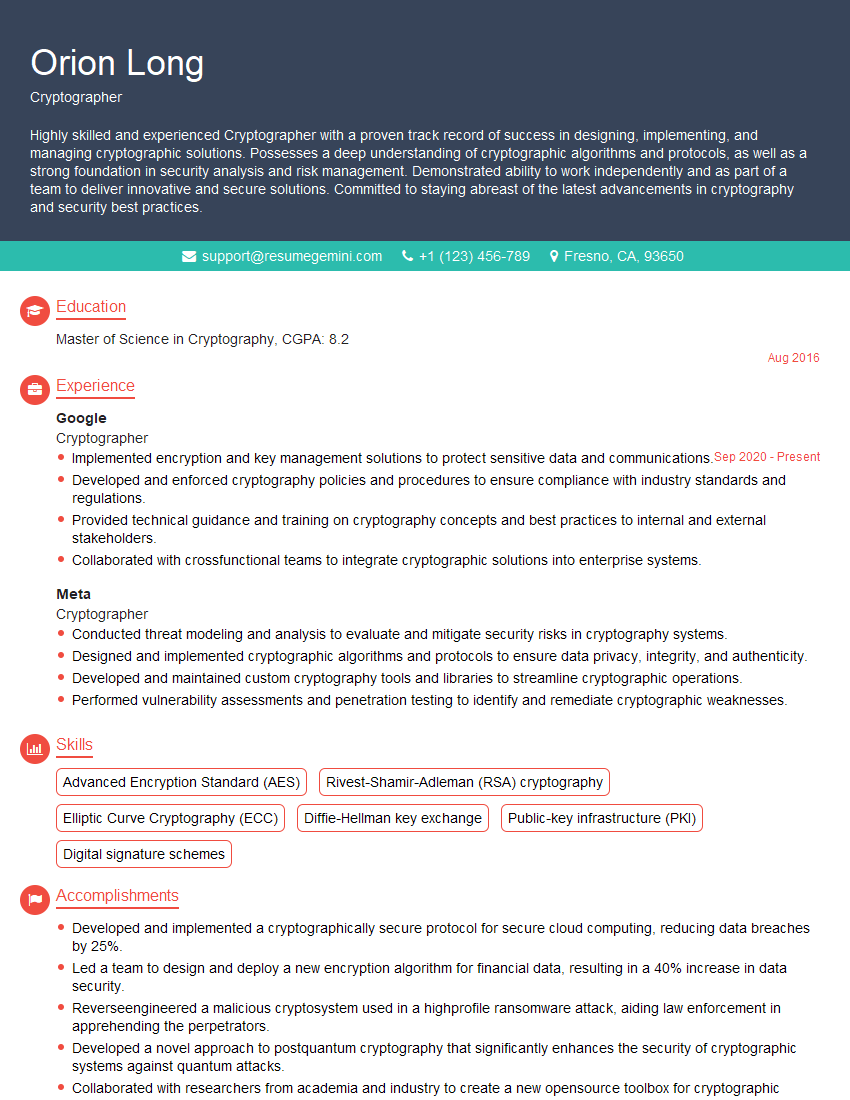
Cryptographer Resume Sample
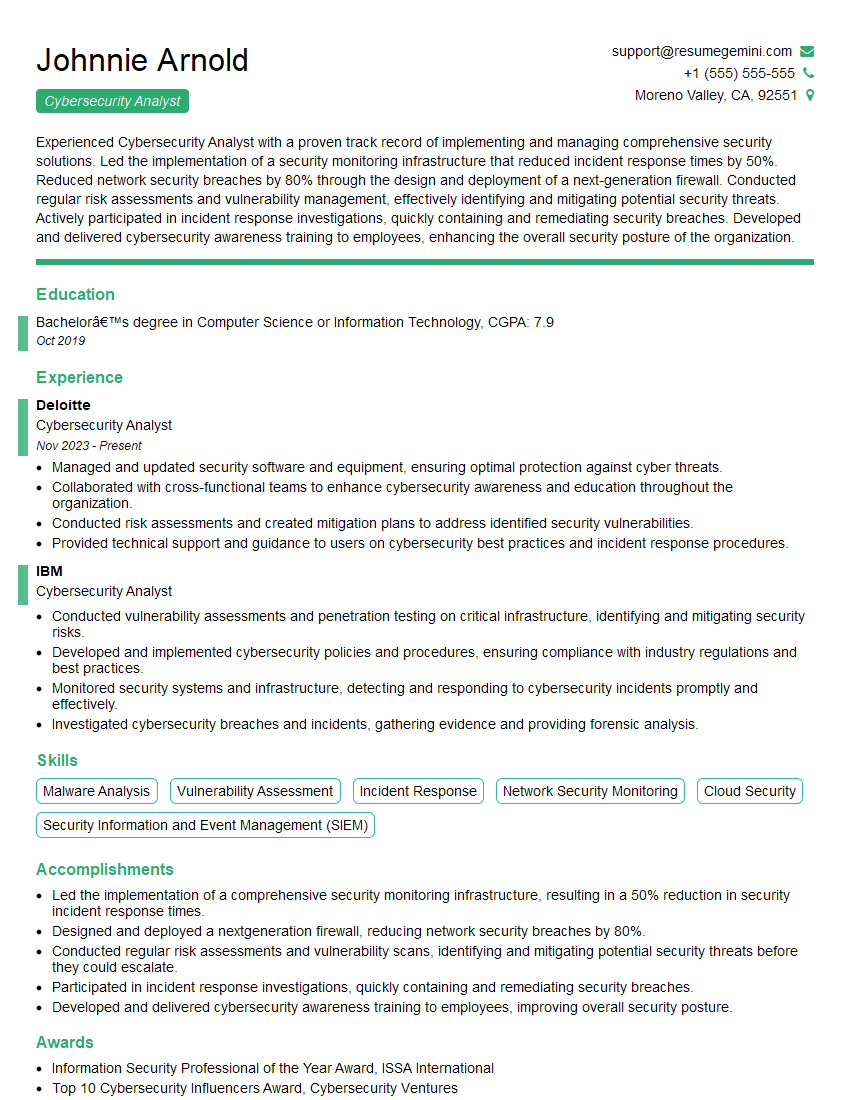
Cybersecurity Analyst Resume Sample
Explore more articles
Users Rating of Our Blogs
Share Your Experience
We value your feedback! Please rate our content and share your thoughts (optional).
What Readers Say About Our Blog
I Redesigned Spongebob Squarepants and his main characters of my artwork.
https://www.deviantart.com/reimaginesponge/art/Redesigned-Spongebob-characters-1223583608
IT gave me an insight and words to use and be able to think of examples
Hi, I’m Jay, we have a few potential clients that are interested in your services, thought you might be a good fit. I’d love to talk about the details, when do you have time to talk?
Best,
Jay
Founder | CEO