The thought of an interview can be nerve-wracking, but the right preparation can make all the difference. Explore this comprehensive guide to Threat Management interview questions and gain the confidence you need to showcase your abilities and secure the role.
Questions Asked in Threat Management Interview
Q 1. Explain the difference between a vulnerability and a threat.
A vulnerability is a weakness in a system that can be exploited by a threat. Think of it like a crack in a wall – it’s a flaw in the system’s design or implementation. A threat, on the other hand, is any potential danger that could exploit that vulnerability. It’s the person or thing that might try to break through that crack in the wall. For example, a vulnerable web application (the crack) with an SQL injection vulnerability might be exploited by a malicious actor (the threat) to gain unauthorized access to sensitive data. The vulnerability is the weakness, and the threat is the actor attempting to use it.
Q 2. Describe the MITRE ATT&CK framework and its applications.
The MITRE ATT&CK framework is a globally-accessible knowledge base of adversary tactics and techniques based on real-world observations. It catalogs the methods attackers use to compromise systems, making it an invaluable tool for threat intelligence, security operations, and incident response. It’s organized around tactics (what the attacker is trying to do, like ‘Initial Access’ or ‘Exfiltration’) and techniques (specific methods used, like ‘Spearphishing Attachment’ or ‘Data Staged’). Imagine it as a playbook for attackers – understanding this playbook helps defenders anticipate and counter threats.
Applications include:
- Proactive threat hunting: Using ATT&CK to identify gaps in your defenses based on known attacker techniques.
- Incident response: Mapping observed attacker behavior to ATT&CK to quickly understand the scope and nature of a breach.
- Security awareness training: Educating employees about common attacker techniques like phishing or social engineering.
- Red teaming and penetration testing: Using ATT&CK as a framework to plan and execute realistic simulations of attacks.
Q 3. What are the key components of a robust threat intelligence program?
A robust threat intelligence program needs several key components:
- Data Sources: This includes both internal data (security logs, vulnerability scans) and external data (threat feeds, open-source intelligence, threat actor reports). Diversity is crucial here.
- Analysis Processes: Structured processes for analyzing the gathered data, identifying patterns and threats, and assessing risk. This requires skilled analysts.
- Threat Intelligence Platform: A system to store, manage, analyze and distribute threat intelligence. This could be a commercial SIEM or a custom built platform.
- Communication and Dissemination: Effective ways to share intelligence with relevant teams (security operations, incident response, development) and to communicate the results of analysis in a clear and actionable manner.
- Feedback Loop: A mechanism for incorporating feedback from incident response and security operations to improve the accuracy and relevance of the threat intelligence.
- Collaboration: Sharing information with industry partners and peers through information sharing platforms and communities increases effectiveness.
Without a strong focus on all of these aspects, a threat intelligence program can become fragmented, ineffective, and ultimately useless.
Q 4. How do you prioritize threats based on risk assessment?
Threat prioritization based on risk assessment is crucial. It involves a multi-step process:
- Identify Assets: List your critical assets (data, systems, applications) and assign a value to each. Consider the impact of a breach.
- Identify Vulnerabilities: Determine weaknesses in your systems that could be exploited. Vulnerability scans and penetration testing are helpful.
- Identify Threats: Identify potential attackers (internal or external) and their likely attack vectors.
- Calculate Likelihood: Estimate the probability of each threat exploiting a vulnerability.
- Calculate Impact: Determine the potential impact of each threat successfully exploiting a vulnerability, considering financial loss, reputational damage, regulatory penalties.
- Calculate Risk: Risk = Likelihood x Impact. This gives a numerical value to each threat.
- Prioritize: Focus on threats with the highest risk scores first. This allows efficient allocation of resources.
For example, a low-likelihood, high-impact threat (like a sophisticated state-sponsored attack) might be prioritized alongside a high-likelihood, medium-impact threat (like a phishing campaign) due to the potentially catastrophic impact of the former.
Q 5. What are the common types of cyber threats faced by organizations?
Organizations face a wide range of cyber threats, including:
- Malware: Viruses, worms, ransomware, Trojans that can encrypt data, steal information, or disrupt operations.
- Phishing: Deceptive attempts to trick individuals into revealing sensitive information, such as usernames, passwords, and credit card details.
- Denial-of-Service (DoS) attacks: Attempts to make a machine or network resource unavailable to its intended users.
- SQL Injection: Exploiting vulnerabilities in databases to manipulate data or gain unauthorized access.
- Cross-Site Scripting (XSS): Injecting malicious scripts into websites to steal cookies or other sensitive data.
- Man-in-the-Middle (MitM) attacks: Intercepting communication between two parties to eavesdrop or modify the communication.
- Insider Threats: Malicious or negligent actions by employees or contractors.
- Advanced Persistent Threats (APTs): Sophisticated, long-term attacks often carried out by state-sponsored actors.
Q 6. Explain your experience with threat modeling.
I have extensive experience in threat modeling, employing various methodologies such as STRIDE (Spoofing, Tampering, Repudiation, Information Disclosure, Denial of Service, Elevation of Privilege) and PASTA (Process for Attack Simulation and Threat Analysis). In my previous role, I led the threat modeling efforts for a major financial institution’s new mobile banking application. We used a combination of STRIDE and PASTA, identifying potential vulnerabilities like insecure data storage, insufficient authentication, and insecure APIs. The process involved detailed diagraming of the application’s architecture, data flows, and user interactions to identify possible attack surfaces. This proactive approach allowed us to mitigate many risks before deployment, reducing the chances of a security breach.
My threat modeling approach includes not only identifying vulnerabilities but also prioritizing them based on risk and then recommending appropriate mitigations. I believe in fostering collaboration between developers, security engineers, and business stakeholders to ensure that security is integrated throughout the entire software development lifecycle.
Q 7. Describe your experience with Security Information and Event Management (SIEM) systems.
I have significant experience working with SIEM systems, specifically Splunk and QRadar. My responsibilities have included configuring, maintaining, and optimizing these systems to effectively collect, analyze, and correlate security logs from various sources, including network devices, servers, and applications. I’ve used SIEMs to detect and respond to security incidents, develop custom alerts and dashboards based on specific threat intelligence, and perform forensic analysis to understand the root cause of security events.
In a recent project, I utilized Splunk to develop a custom dashboard that visualized key security metrics, including the number of successful logins, failed login attempts, and anomalous network activity. This dashboard dramatically improved our ability to detect and respond to suspicious activity in real-time, allowing us to reduce the dwell time of attackers and minimize the impact of security breaches.
Beyond basic alert configuration, I’ve also utilized SIEM’s capabilities for advanced threat hunting, using machine learning algorithms and behavior analysis to proactively identify malicious activity that might evade traditional signature-based detection methods.
Q 8. How do you respond to a security incident?
Responding to a security incident is a crucial aspect of threat management, requiring a structured and methodical approach. My response follows a well-defined incident response plan, typically adhering to a framework like NIST’s Cybersecurity Framework. The process begins with Preparation, which involves establishing clear roles, communication protocols, and pre-defined escalation paths. This groundwork allows for a swift and efficient response when an incident occurs.
The next phase is Identification, where we detect and verify the existence of a security incident. This might involve analyzing logs, security information and event management (SIEM) alerts, or receiving reports from users. For example, if we detect unusual network traffic patterns, or a suspicious login attempt from an unexpected location, this triggers further investigation.
Containment is the critical step of isolating the affected systems or network segments to prevent further damage or spread of the threat. This could involve disconnecting infected machines from the network, blocking malicious IP addresses, or implementing temporary access restrictions.
Eradication follows containment, focusing on removing the threat entirely. This involves removing malware, patching vulnerabilities, and restoring compromised systems to their pre-incident state. A thorough forensic analysis is crucial here to understand the root cause of the incident and prevent recurrence.
Finally, the Recovery and Post-Incident Activity phases focus on restoring normal operations and reviewing the incident to identify weaknesses and improve future response capabilities. This includes documenting the entire incident response process, updating the incident response plan, and conducting security awareness training for employees.
Q 9. What are your preferred methods for vulnerability scanning and penetration testing?
My preferred methods for vulnerability scanning and penetration testing combine automated tools with manual verification to ensure comprehensive coverage. For vulnerability scanning, I utilize tools like Nessus, OpenVAS, and QualysGuard. These tools offer automated scanning capabilities, identifying known vulnerabilities in systems and applications based on publicly available vulnerability databases.
However, automated scans alone are not sufficient. Manual verification is crucial to validate the findings and assess the actual impact of vulnerabilities. I also use various penetration testing tools depending on the specific target and the scope of the test. For example, Metasploit is a powerful framework for exploiting vulnerabilities, allowing me to simulate real-world attacks to assess the effectiveness of security controls.
Beyond the tools, I emphasize a risk-based approach, prioritizing the most critical assets and vulnerabilities. This ensures efficient allocation of resources and focuses efforts on areas with the highest potential impact. I document all findings meticulously, providing detailed reports with prioritized recommendations for remediation.
Q 10. Describe your experience with incident response planning and execution.
My experience with incident response planning and execution encompasses the full lifecycle, from developing comprehensive plans to executing them during actual incidents. I have been involved in creating and maintaining incident response plans for various organizations, incorporating aspects such as communication protocols, escalation procedures, and roles and responsibilities. These plans are regularly tested and updated to adapt to evolving threats and changes in infrastructure.
In executing these plans, I’ve managed various incidents, ranging from minor phishing attempts to major data breaches. My approach is systematic, prioritizing containment and eradication while ensuring minimal disruption to business operations. A recent example involved a ransomware attack. Following our established plan, we immediately isolated the affected servers, initiated a forensic investigation, and engaged with specialist teams to decrypt the data and restore services. Post-incident, we reviewed our security controls and implemented additional layers of protection to prevent future attacks.
Q 11. How do you assess the effectiveness of security controls?
Assessing the effectiveness of security controls is an ongoing process, requiring a multi-faceted approach. It involves regular monitoring, testing, and auditing of controls to ensure they are functioning as intended and providing the expected level of protection. I use a combination of techniques, including:
- Vulnerability scanning and penetration testing: To identify weaknesses in systems and applications.
- Security audits: To assess the overall security posture and compliance with relevant standards and regulations.
- Log analysis: To detect and investigate anomalous activities.
- Metrics and key performance indicators (KPIs): To measure the effectiveness of controls in preventing and detecting threats (e.g., time to detect and respond to an incident).
These methods help in identifying gaps in security controls and recommending improvements. For example, by analyzing security logs, we might discover that a specific security control is not logging critical events, hindering our ability to detect and respond to threats effectively. This would prompt us to implement necessary changes to improve logging and monitoring capabilities. Continuous improvement is key to maintaining a strong security posture.
Q 12. Explain your experience with different threat intelligence sources (e.g., open source, commercial).
My experience with threat intelligence sources spans a wide range, including open-source and commercial offerings. Open-source intelligence (OSINT) provides valuable context, leveraging publicly available information like security advisories from vendors, vulnerability databases (e.g., NVD), threat feeds from security communities, and research reports from security researchers. This is complemented by commercial threat intelligence platforms that provide more curated and focused information, often offering deeper insights into threat actor behavior, tactics, and techniques.
For instance, I regularly use OSINT to stay updated on the latest vulnerabilities and exploit techniques. This helps us proactively patch systems and implement mitigations. On the other hand, commercial feeds offer insights into advanced persistent threats (APTs), providing early warnings of potential attacks targeting our organization. I integrate these diverse sources to build a comprehensive understanding of the threat landscape and tailor our security posture accordingly.
Q 13. How do you stay up-to-date on the latest threat landscape?
Staying up-to-date on the ever-evolving threat landscape is paramount. My approach combines several strategies:
- Subscription to threat intelligence feeds: I subscribe to various commercial and open-source threat intelligence feeds to receive regular updates on emerging threats and vulnerabilities.
- Following security blogs and researchers: I actively follow leading security researchers and blogs to stay informed on the latest research and discoveries.
- Participating in security conferences and webinars: Attending industry events provides valuable networking opportunities and exposure to the latest trends and technologies.
- Regularly reviewing security advisories and patching systems: Proactive patching of vulnerabilities is crucial to mitigating threats.
By combining these methods, I build a comprehensive understanding of the current threat landscape and ensure our security controls are aligned with the latest threats and vulnerabilities. This proactive approach is essential for effective threat management.
Q 14. Describe your experience with developing and implementing security policies and procedures.
Developing and implementing security policies and procedures is a critical aspect of establishing a robust security posture. My approach starts with a thorough risk assessment to identify the organization’s most valuable assets and the threats they face. Based on this, I develop clear and concise policies that outline acceptable use of systems, data security practices, and incident response procedures.
For example, I’ve developed policies covering areas such as password management, data encryption, remote access, and social engineering awareness. These policies are not just documents; they are integral to the organization’s culture. I ensure they are communicated effectively to all employees through training and awareness programs. The policies are reviewed and updated regularly to adapt to the changing threat landscape and technological advancements. I also create supporting procedures that provide step-by-step instructions on how to implement the policies, ensuring consistent and effective application across the organization.
Q 15. How do you measure the success of your threat management strategies?
Measuring the success of threat management strategies isn’t a one-size-fits-all approach. It requires a multi-faceted assessment focusing on both quantitative and qualitative indicators. We need to track key metrics to understand the effectiveness of our efforts.
- Reduction in Security Incidents: This is the most straightforward measure. We track the number and severity of successful attacks (e.g., ransomware infections, data breaches) before and after implementing our strategies. A significant decrease indicates success. For example, a drop from 10 security incidents per month to 2 per month would clearly demonstrate effectiveness.
- Mean Time To Detect (MTTD) and Mean Time To Respond (MTTR): These metrics showcase our ability to identify and neutralize threats quickly. Lower MTTD and MTTR values indicate improved responsiveness and proactive threat hunting capabilities.
- Improved Security Posture: We assess our security posture through vulnerability scanning and penetration testing. Regularly identifying and patching vulnerabilities reduces our attack surface and demonstrates progress.
- Employee Awareness and Training Effectiveness: We use metrics like phishing simulation results to gauge the effectiveness of security awareness training. Improved scores indicate better employee understanding and vigilance.
- Cost Savings: Successful threat management reduces the financial impact of security breaches, including legal fees, recovery costs, and reputational damage. We track these costs over time to quantify the return on investment (ROI) of our security measures.
Ultimately, a holistic view encompassing these metrics provides a comprehensive evaluation of our threat management strategies’ success. We also conduct regular post-incident reviews to identify areas for improvement and refine our strategies continually.
Career Expert Tips:
- Ace those interviews! Prepare effectively by reviewing the Top 50 Most Common Interview Questions on ResumeGemini.
- Navigate your job search with confidence! Explore a wide range of Career Tips on ResumeGemini. Learn about common challenges and recommendations to overcome them.
- Craft the perfect resume! Master the Art of Resume Writing with ResumeGemini’s guide. Showcase your unique qualifications and achievements effectively.
- Don’t miss out on holiday savings! Build your dream resume with ResumeGemini’s ATS optimized templates.
Q 16. What are the key elements of a strong security awareness training program?
A strong security awareness training program needs to be engaging, relevant, and repeated regularly. It shouldn’t be a one-time lecture but an ongoing process of education and reinforcement. Here are key elements:
- Engaging Content: Avoid dry presentations; use interactive modules, videos, games, and real-world examples to keep employees engaged. Imagine a short video depicting a realistic phishing scenario instead of a lengthy PowerPoint slide.
- Relevance: Tailor the training to the specific roles and responsibilities of employees. A software developer will face different threats than a receptionist.
- Regular Updates: Cyber threats evolve constantly, so training needs to be updated frequently to cover the latest attack vectors and best practices. Regular refresher courses and simulated phishing attacks help maintain vigilance.
- Practical Exercises: Include hands-on exercises and simulations to help employees practice identifying and responding to threats. Phishing simulations, where employees receive fake phishing emails to test their awareness, are highly effective.
- Clear Policies and Procedures: Training should clearly outline the organization’s security policies and procedures, including reporting procedures for suspected security incidents. Employees need to know who to contact if they suspect a breach.
- Metrics and Measurement: Track the effectiveness of training using metrics such as phishing simulation results, employee feedback, and the number of security incidents reported by employees.
A well-designed program fosters a security-conscious culture, transforming employees from potential vulnerabilities into active defenders of the organization.
Q 17. Explain your understanding of different threat actors (e.g., nation-state, hacktivist, criminal).
Threat actors vary significantly in their motivations, resources, and sophistication. Understanding their differences is crucial for effective threat management.
- Nation-State Actors: These are government-sponsored groups with advanced capabilities and resources, often motivated by espionage, political disruption, or economic gain. Their attacks are often highly sophisticated, persistent, and well-funded. For example, a nation-state actor might target a critical infrastructure organization to disrupt services or steal sensitive information.
- Hacktivists: These individuals or groups are motivated by political or ideological agendas. They often use their skills to deface websites, leak information, or launch denial-of-service attacks to promote their cause. Anonymous is a prime example of a hacktivist collective.
- Criminal Actors: These are financially motivated individuals or organized crime groups. They might engage in activities like ransomware attacks, data breaches, credit card fraud, or identity theft. Their primary goal is monetary gain.
- Insider Threats: These are individuals with legitimate access to an organization’s systems and data who misuse that access for malicious purposes. They can be disgruntled employees, negligent users, or even malicious insiders working with external threat actors.
Knowing the different types of threat actors allows us to tailor our defenses accordingly. For example, we’d employ more robust defenses against nation-state actors, focusing on advanced threat detection and incident response capabilities, while employee education and strong access controls would help mitigate the risk of insider threats.
Q 18. How do you analyze security logs to detect threats?
Analyzing security logs is a crucial part of threat detection. It involves examining event logs from various sources to identify suspicious patterns and behaviors that indicate potential threats.
The process usually involves these steps:
- Data Collection: Gather logs from various sources, including firewalls, intrusion detection systems (IDS), web servers, application servers, databases, and operating systems.
- Data Normalization and Aggregation: Convert logs into a common format and aggregate them for easier analysis. Tools like Elasticsearch, Logstash, and Kibana (ELK stack) are frequently used for this.
- Pattern Recognition: Use security information and event management (SIEM) systems or security orchestration, automation, and response (SOAR) platforms to detect unusual patterns. This might involve looking for anomalies like a large number of failed login attempts from a single IP address, unusual access times, or unexpected data transfers.
- Correlation: Correlate events across different log sources to gain a better understanding of the context. For instance, a failed login attempt followed by a successful login from a different location might indicate a compromised account.
- Threat Hunting: Proactively search for indicators of compromise (IOCs) even in the absence of alerts. This involves using known IOCs from threat intelligence feeds to search for malicious activity within logs.
For example, a spike in database queries from an unusual IP address followed by large data transfers could indicate a data exfiltration attempt. We’d investigate this further to determine if it was a legitimate activity or a malicious attack.
Effective log analysis requires a combination of automated tools and skilled security analysts who can interpret the data and identify subtle indicators of compromise.
Q 19. What are your preferred methods for communicating security risks to non-technical stakeholders?
Communicating security risks effectively to non-technical stakeholders requires translating complex technical concepts into clear, concise, and relatable terms. I employ several methods:
- Visualizations: Use charts, graphs, and infographics to illustrate key data points, such as the potential financial impact of a data breach or the probability of different threats. A simple bar chart showing the cost of different breach scenarios is far more impactful than a lengthy technical report.
- Analogies and Real-World Examples: Relate security risks to familiar scenarios, such as home security or car insurance, to make them more understandable. For example, “Imagine a burglar breaking into your house – that’s similar to a hacker compromising our systems.”
- Storytelling: Use real-life examples of security breaches and their consequences to highlight the importance of security measures. This adds a human element and makes the risks more tangible.
- Focus on Business Impact: Frame security risks in terms of their potential impact on business operations, reputation, and financial performance. Instead of saying “We have a vulnerability in our web application,” I might say, “A successful attack could cost us X dollars in lost revenue and damage our customer trust.”
- Executive Summaries: Provide concise executive summaries that highlight the key risks and recommended actions, allowing busy stakeholders to quickly grasp the essential information.
Regular communication, including updates on security incidents and the effectiveness of implemented controls, helps build trust and ensures that non-technical stakeholders remain informed and supportive of security initiatives.
Q 20. Explain your experience with different risk management frameworks (e.g., NIST, ISO 27001).
I have extensive experience working with various risk management frameworks, including NIST Cybersecurity Framework and ISO 27001. Both are valuable but cater to different needs.
- NIST Cybersecurity Framework (CSF): A flexible, voluntary framework that provides a comprehensive approach to managing cybersecurity risk. It focuses on five functions: Identify, Protect, Detect, Respond, and Recover. I’ve utilized the CSF to build a risk assessment process, align our security controls with industry best practices, and improve our overall cybersecurity posture. Its flexibility allows us to tailor it to the specific needs of our organization.
- ISO 27001: An internationally recognized standard that provides a framework for establishing, implementing, maintaining, and continually improving an information security management system (ISMS). My experience with ISO 27001 includes conducting risk assessments based on the standard, implementing security controls to address identified risks, and developing and maintaining ISMS documentation. It provides a robust structure for achieving and maintaining certifications, demonstrating our commitment to information security.
Both frameworks share similar goals but have different approaches. NIST CSF is more flexible and adaptable, while ISO 27001 provides a rigorous certification path. In practice, I’ve often found that a hybrid approach, leveraging the strengths of both frameworks, is most effective.
Q 21. Describe your experience with implementing security controls to mitigate specific threats.
Implementing security controls requires a thorough understanding of the specific threats and vulnerabilities. My approach involves a risk-based methodology, focusing on mitigating the most critical risks first.
Here are some examples of security controls I’ve implemented to mitigate specific threats:
- Mitigation of Phishing Attacks: Implemented multi-factor authentication (MFA) across all systems, provided comprehensive security awareness training on phishing techniques, and deployed a robust email filtering system to detect and block malicious emails.
- Mitigation of Ransomware Attacks: Implemented regular data backups to a geographically separate location, enforced strong password policies, restricted user permissions, and deployed endpoint detection and response (EDR) solutions to detect and contain ransomware infections quickly.
- Mitigation of Denial-of-Service (DoS) Attacks: Implemented a web application firewall (WAF) to filter malicious traffic, upgraded network infrastructure to handle increased traffic loads, and deployed distributed denial-of-service (DDoS) mitigation services.
- Mitigation of SQL Injection Attacks: Enforced secure coding practices, implemented parameterized queries to prevent SQL injection vulnerabilities, and regularly conducted vulnerability scans to identify and address any existing weaknesses.
The key is to tailor security controls to the specific threats faced by the organization. This requires a continuous cycle of risk assessment, control implementation, monitoring, and improvement, ensuring that our defenses remain effective against the ever-evolving threat landscape.
Q 22. What are some common indicators of compromise (IOCs)?
Indicators of Compromise (IOCs) are clues that a system or network has been compromised. Think of them as breadcrumbs left behind by attackers. They can be diverse and subtle, but identifying them is crucial for effective threat response.
Network IOCs: These relate to network activity. Examples include suspicious IP addresses (e.g., known command-and-control servers), unusual port activity (e.g., an unexpected port open for outbound communication), and high volumes of data transfer to unknown destinations. Imagine a thief leaving a trail of footprints – unusual network traffic patterns are similar.
System IOCs: These indicate compromises within a specific system. Examples include registry key modifications (e.g., unexpected changes to startup programs), unusual file creations (e.g., files with suspicious extensions in unexpected locations), and process anomalies (e.g., unfamiliar processes running with elevated privileges). Think of it as fingerprints or forced entry points on a compromised machine.
Malware IOCs: These are directly related to malicious software. Examples include malware hashes (unique digital fingerprints of malicious files), domain names (used for command-and-control), and URLs (leading to malicious websites). This is like finding the thief’s DNA at the scene of the crime.
Email IOCs: These relate to malicious email communications. Examples include suspicious email addresses, malicious attachments, and links to phishing websites. This is like intercepting the thief’s correspondence or a threat letter.
Effective threat hunting often involves correlating multiple IOCs to build a comprehensive picture of an attack. For instance, observing a suspicious IP address communicating with a compromised system via an unusual port, and finding malicious files related to that IP address, paints a strong case for a successful intrusion.
Q 23. How do you handle false positives in security alerts?
False positives – security alerts that indicate a threat when none exists – are a common challenge in threat management. They can overwhelm security teams and lead to alert fatigue, hindering the detection of genuine threats. Effective handling involves a multi-pronged approach.
Fine-tuning Alerts: The first step is to refine the security tools’ configurations. This might involve adjusting thresholds for certain alerts (e.g., reducing the sensitivity of a specific intrusion detection system rule), focusing on specific threat profiles, and leveraging machine learning to improve accuracy over time. Think of it as calibrating a sensitive scale to minimize inaccurate readings.
Contextual Analysis: Each alert should be examined within its context. This involves looking at the source of the alert, the affected system, the timing, and other related events. This detailed review allows analysts to distinguish between genuine threats and benign activity that triggered a false positive. Think of it like a detective carefully analyzing a crime scene to understand the sequence of events and eliminate false leads.
Correlation and Prioritization: Correlating alerts from multiple sources provides a more holistic view. A single alert may be suspicious on its own, but when correlated with other seemingly benign events, it might become clear that it’s a false positive. Prioritization helps security teams focus on the most critical threats first. Imagine a police department responding to multiple calls – prioritizing based on severity helps ensure the most dangerous situations are addressed first.
Automation and Orchestration: Automating tasks such as alert triage, investigation, and response can significantly reduce the burden on analysts and improve efficiency. Think of it as employing technology to assist in the investigation process, freeing up human resources to focus on complex issues.
Implementing these strategies helps minimize the impact of false positives and improves the overall effectiveness of the security operations center (SOC).
Q 24. How do you investigate and respond to phishing attacks?
Phishing attacks, which use deceptive emails or websites to trick users into revealing sensitive information, require a swift and comprehensive response. Investigation and response should follow a structured approach.
Containment: The first step is to contain the attack. This involves isolating any affected systems, blocking malicious URLs and email addresses, and preventing further spread within the organization. This limits the damage and prevents additional users from becoming victims. This is akin to quarantining an infected individual to prevent an epidemic.
Investigation: Investigation focuses on determining the extent of the breach. This includes identifying the source of the attack, the methods used, and the affected systems and data. This might involve analyzing logs, examining compromised systems, and conducting interviews with affected users. This is akin to meticulously gathering evidence to identify the perpetrator and understand the method of operation.
Remediation: Once the extent of the damage is understood, remediation efforts can begin. This involves restoring affected systems, patching vulnerabilities, resetting compromised accounts, and implementing stronger security controls to prevent future attacks. This is like restoring order after the crime scene has been investigated.
User Education: A crucial aspect is educating users on phishing techniques and best practices. This includes awareness training on identifying malicious emails, being cautious of suspicious links, and using strong passwords. This is similar to educating the public on safety measures to prevent future occurrences.
Post-Incident Analysis: After the immediate response, a post-incident analysis is crucial to identify weaknesses in the security posture. This review helps inform improvements to security controls and processes and prevents future similar incidents. This is the critical phase of learning from the experience and improving overall security.
A well-defined incident response plan is essential for effectively handling phishing attacks and minimizing their impact. Regular security awareness training is equally vital to educate users and reduce the success rate of these attacks.
Q 25. What are the ethical considerations related to threat management?
Ethical considerations are paramount in threat management. Balancing security with privacy and individual rights is a complex but crucial aspect. Here are some key considerations:
Privacy: Monitoring employee activity requires careful consideration of privacy laws and ethical implications. Clear policies and procedures must be in place to ensure monitoring is conducted legally and ethically. It’s crucial to strike a balance between protecting the organization and respecting individual privacy.
Data Security: Organizations have an ethical obligation to protect the data they collect and process. This includes implementing appropriate security controls to prevent data breaches and ensuring the confidentiality, integrity, and availability of data. This is about responsible data handling and upholding a high level of data integrity.
Transparency: Users should be informed about security practices and policies that may impact their privacy. Transparency builds trust and demonstrates a commitment to ethical behavior. Open communication about security efforts is vital.
Accountability: Clear lines of responsibility should be established for security incidents. This includes establishing procedures for reporting and investigating incidents and ensuring accountability for security breaches. It’s crucial to determine who is responsible and how to prevent future issues.
Legal Compliance: Security practices must comply with all relevant laws and regulations, including data privacy regulations (e.g., GDPR, CCPA). Adhering to these laws is not just a legal requirement, but also an ethical responsibility.
Ethical decision-making in threat management necessitates a careful balancing act between security needs, individual rights, and legal compliance. This requires a framework that prioritizes transparency, accountability, and respect for individual privacy.
Q 26. Describe your experience with cloud security threats and mitigation strategies.
Cloud security threats present unique challenges due to the shared responsibility model. While cloud providers handle the security *of* the infrastructure, organizations are responsible for security *in* the cloud. My experience encompasses various cloud security threats and mitigation strategies.
Data Breaches: Misconfigured storage services (e.g., accidentally public S3 buckets) and insecure APIs can lead to data breaches. Mitigation includes rigorous access control, encryption, and regular security audits.
Insider Threats: Malicious or negligent employees can pose significant risks. Mitigation involves strong access controls, multi-factor authentication, and robust monitoring of user activity.
Malware and Ransomware: Cloud environments are not immune to malware. Mitigation strategies involve robust security scanning, regular patching, and employing endpoint detection and response (EDR) solutions.
Denial-of-Service (DoS) Attacks: Distributed denial-of-service attacks can disrupt cloud services. Mitigation involves using cloud-based DDoS protection services and implementing robust traffic management.
Account Hijacking: Compromised credentials can grant attackers access to cloud resources. Mitigation involves multi-factor authentication, strong password policies, and regular security awareness training.
My experience includes working with cloud security posture management (CSPM) tools to assess and improve cloud security configurations. I’ve also used cloud access security brokers (CASBs) to monitor and control access to cloud resources. Effective cloud security requires a proactive and layered approach, combining technical controls with robust security policies and employee training.
Q 27. Explain your understanding of the different types of malware and their impact.
Malware encompasses a wide range of malicious software designed to disrupt, damage, or gain unauthorized access to computer systems. Understanding the different types and their impact is crucial for effective threat management.
Viruses: Self-replicating programs that require a host program to run. They can infect files and spread through various means, causing system instability or data loss. Think of it as a biological virus that infects and replicates itself within a host.
Worms: Self-replicating programs that spread independently across networks. Unlike viruses, they don’t need a host program to execute. They can quickly consume network bandwidth and disrupt services. They are like a rapidly spreading wildfire across a network.
Trojans: Disguised as legitimate software, they often grant attackers unauthorized access to systems. They can steal data, control systems, or install other malware. Imagine a Trojan horse, seemingly benign but containing hidden dangers.
Ransomware: Encrypts files and demands a ransom for their release. This can cause significant data loss and financial damage. It is like a digital extortion tactic that holds your data hostage.
Spyware: Secretly monitors user activity, collecting sensitive information like keystrokes, passwords, and browsing history. It compromises privacy and can be used for identity theft. It’s like a hidden surveillance device installed on your system.
Adware: Displays unwanted advertisements, often interrupting user activity. While less harmful than other types, it can be intrusive and lead to security risks if it installs additional malware. It’s the annoying digital equivalent of spam mail.
The impact of malware varies greatly depending on the type of malware and the extent of the infection. It can range from minor inconvenience to significant financial losses and reputational damage.
Q 28. Describe your experience working with different security tools and technologies.
My experience spans a variety of security tools and technologies, encompassing various layers of the security stack. I am proficient in using and managing several solutions.
Security Information and Event Management (SIEM): Tools like Splunk and QRadar for log aggregation, analysis, and security monitoring. I have experience in configuring alerts, developing correlation rules, and using SIEM data for threat hunting and incident response.
Endpoint Detection and Response (EDR): Tools like CrowdStrike and Carbon Black for monitoring endpoint activity, detecting malicious behavior, and responding to threats. I’ve utilized these for investigating malware infections, analyzing system logs, and taking proactive measures.
Intrusion Detection/Prevention Systems (IDS/IPS): Network-based systems like Snort and Suricata for detecting and preventing network intrusions. I’m familiar with configuring rules, analyzing alerts, and tuning these systems for optimal performance.
Vulnerability Scanners: Tools like Nessus and OpenVAS for identifying vulnerabilities in systems and applications. I have experience in performing vulnerability assessments, prioritizing remediation efforts, and working with development teams to address vulnerabilities.
Security Orchestration, Automation, and Response (SOAR): Platforms like Palo Alto Networks Cortex XSOAR and IBM Resilient for automating security workflows and improving incident response efficiency. I’ve used these for automating repetitive tasks, streamlining processes, and improving overall incident response times.
My experience extends to cloud-based security tools as well. I have worked with cloud access security brokers (CASBs), security information and event management (SIEM) tools specifically tailored to cloud environments, and cloud workload protection platforms (CWPPs). This broad experience allows me to effectively leverage different tools to ensure comprehensive security across diverse environments.
Key Topics to Learn for Threat Management Interview
- Risk Assessment & Analysis: Understanding methodologies for identifying, assessing, and prioritizing threats. Practical application includes conducting vulnerability assessments and developing risk mitigation strategies.
- Threat Modeling: Defining and applying various threat modeling frameworks (e.g., STRIDE, PASTA). Practical application includes creating threat models for specific systems or applications and using the models to inform security design decisions.
- Incident Response & Management: Developing and executing incident response plans. Practical application includes handling security incidents, conducting post-incident analysis, and improving security posture based on lessons learned.
- Security Architecture & Design: Understanding how security is integrated into system architecture. Practical application includes designing secure systems, implementing security controls, and ensuring compliance with relevant security standards.
- Vulnerability Management: Identifying and mitigating vulnerabilities in systems and applications. Practical application includes using vulnerability scanners, prioritizing remediation efforts, and tracking vulnerability fixes.
- Data Loss Prevention (DLP): Implementing strategies and technologies to prevent sensitive data breaches. Practical application includes defining data classification schemes, implementing data loss prevention tools, and monitoring data exfiltration attempts.
- Security Awareness Training: Understanding the importance of educating users about security threats. Practical application includes designing and delivering security awareness training programs and evaluating their effectiveness.
- Compliance & Regulations: Familiarity with relevant security standards and regulations (e.g., GDPR, HIPAA, PCI DSS). Practical application includes ensuring compliance with these regulations and adapting security practices to meet specific compliance requirements.
Next Steps
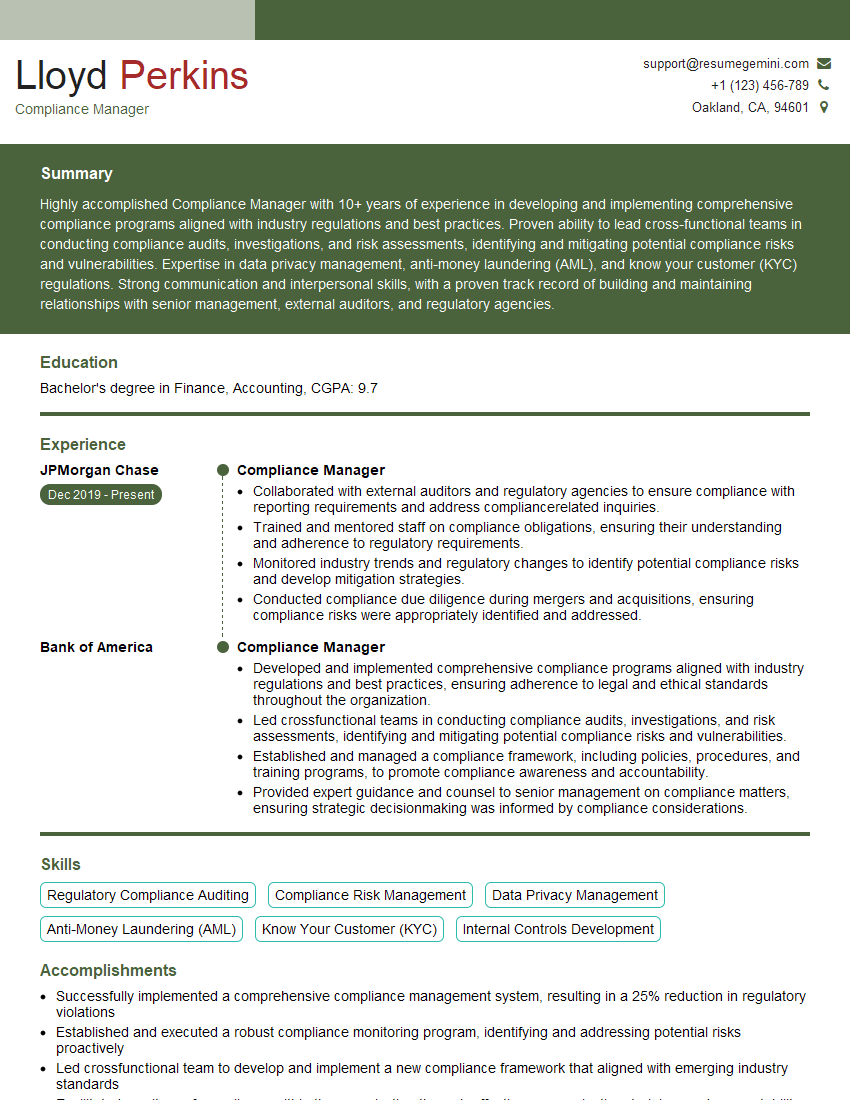
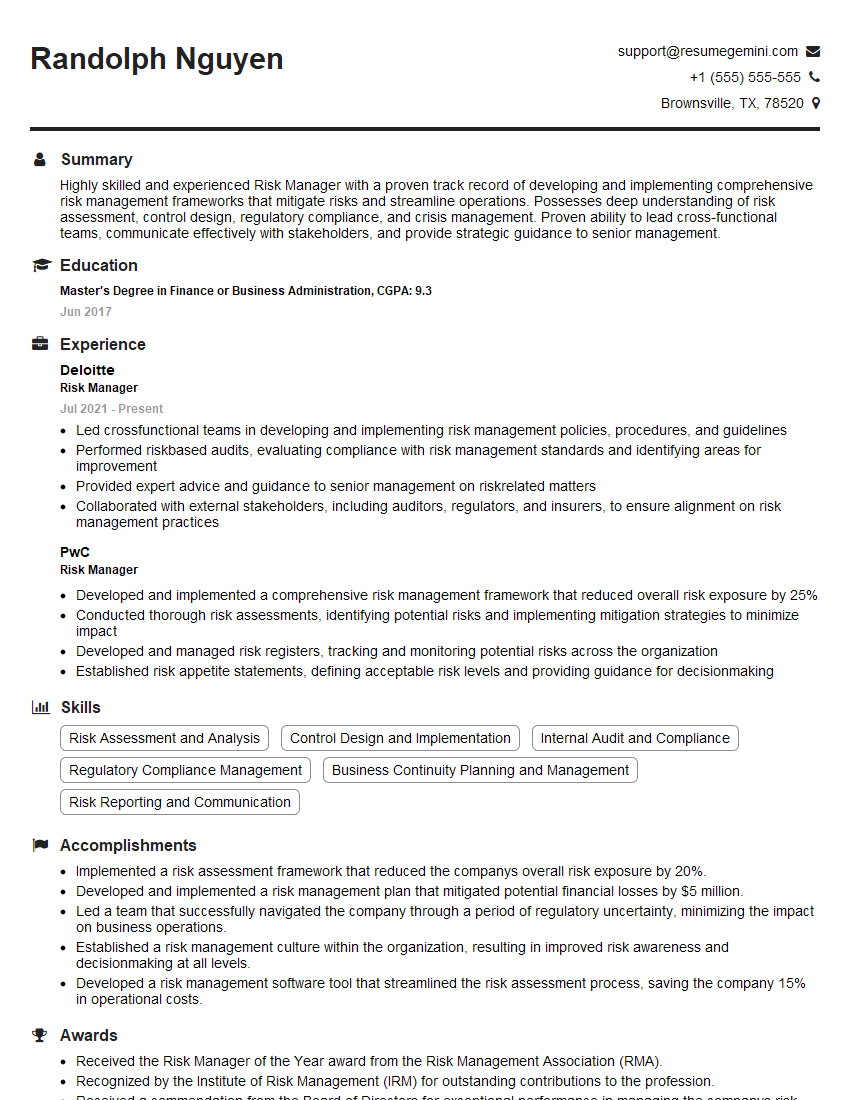
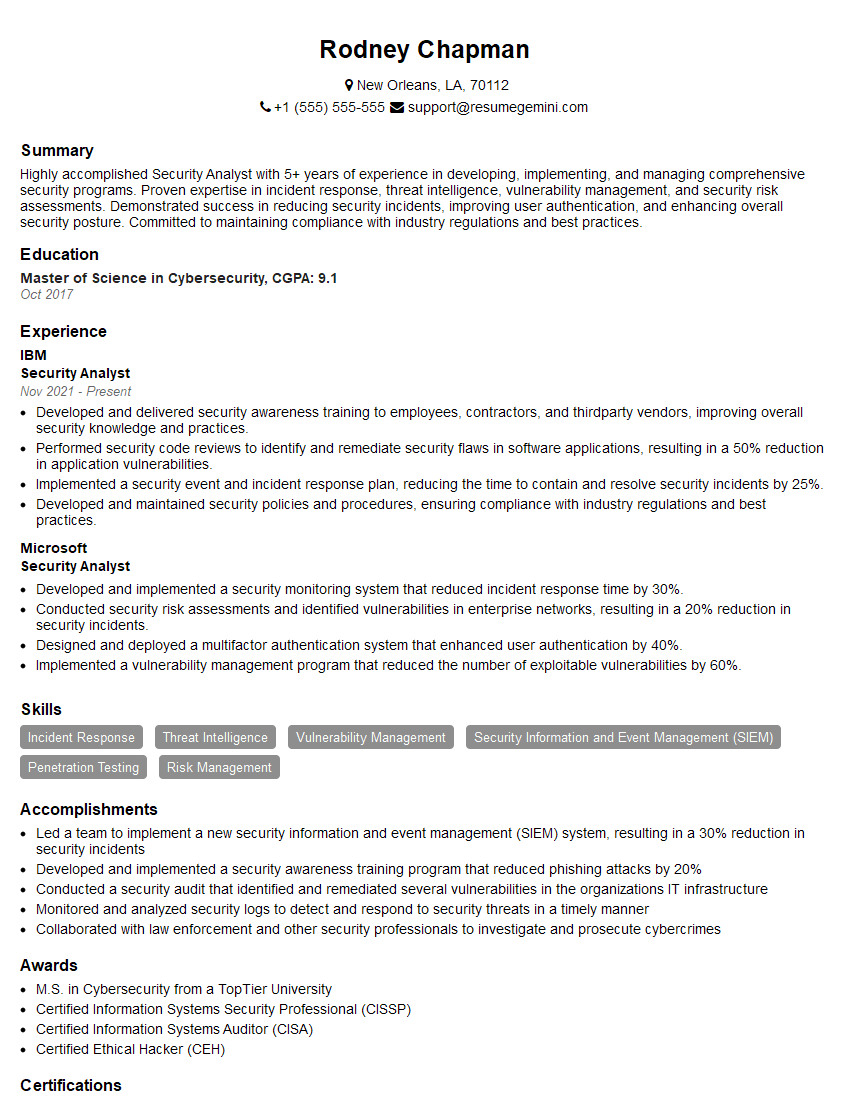
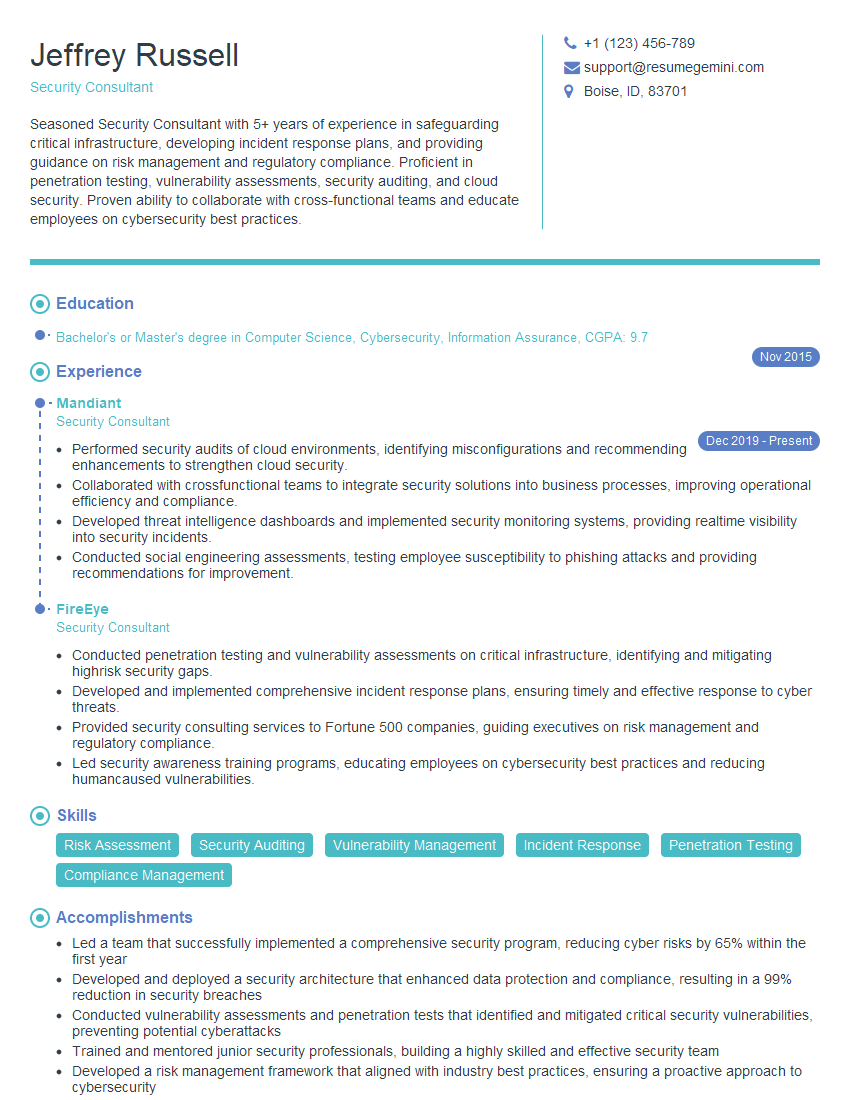
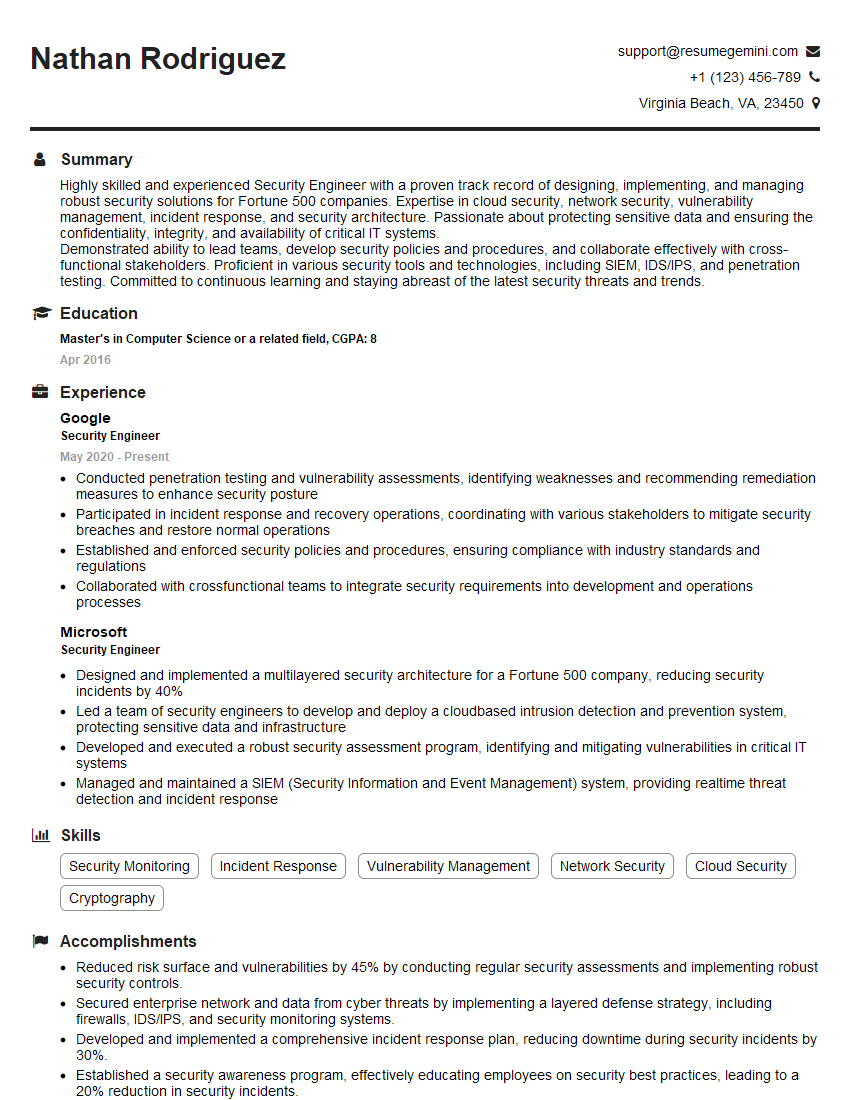
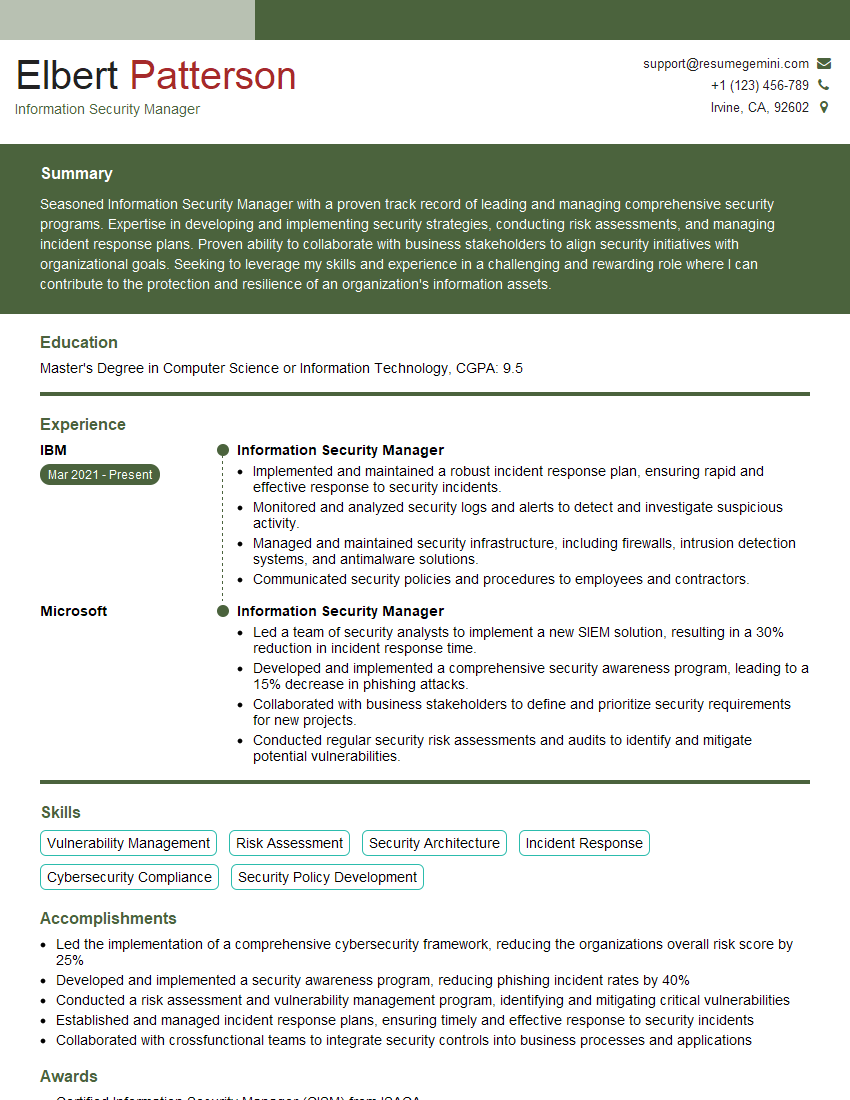
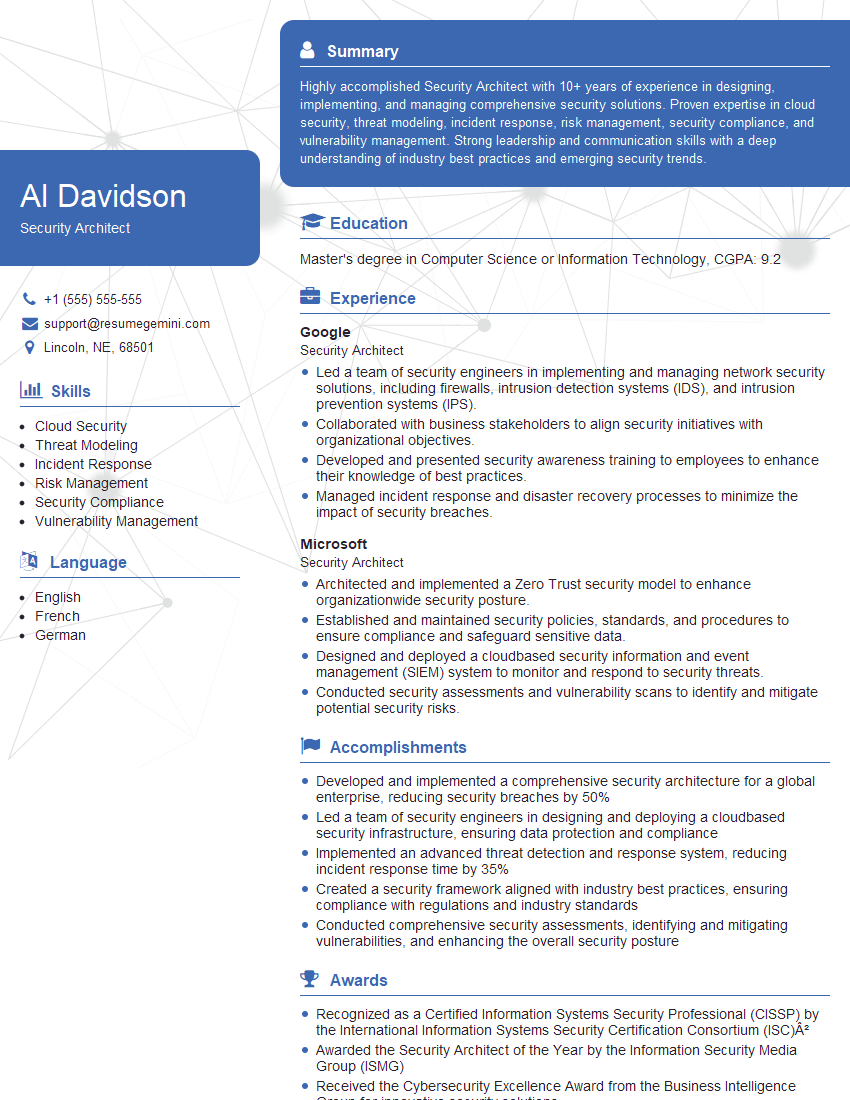
Mastering Threat Management is crucial for career advancement in today’s increasingly complex security landscape. Demonstrating a strong understanding of these concepts will significantly enhance your job prospects. To stand out, create an ATS-friendly resume that effectively showcases your skills and experience. ResumeGemini is a trusted resource to help you build a professional and impactful resume. Take advantage of their tools and resources, including examples of resumes tailored to Threat Management, to optimize your job search and land your dream role.
Explore more articles
Users Rating of Our Blogs
Share Your Experience
We value your feedback! Please rate our content and share your thoughts (optional).
What Readers Say About Our Blog
I Redesigned Spongebob Squarepants and his main characters of my artwork.
https://www.deviantart.com/reimaginesponge/art/Redesigned-Spongebob-characters-1223583608
IT gave me an insight and words to use and be able to think of examples
Hi, I’m Jay, we have a few potential clients that are interested in your services, thought you might be a good fit. I’d love to talk about the details, when do you have time to talk?
Best,
Jay
Founder | CEO