Are you ready to stand out in your next interview? Understanding and preparing for Ship Handling in Restricted Waterways interview questions is a game-changer. In this blog, we’ve compiled key questions and expert advice to help you showcase your skills with confidence and precision. Let’s get started on your journey to acing the interview.
Questions Asked in Ship Handling in Restricted Waterways Interview
Q 1. Explain the concept of ‘underway’ and ‘not underway’ in restricted waterways.
The terms ‘underway’ and ‘not underway’ are crucial for collision avoidance and safe navigation, especially in restricted waterways. A vessel is considered underway when she is not at anchor, made fast to the shore, or aground. This means she is moving or capable of moving through the water. Conversely, a vessel is not underway when she is at anchor, moored, or aground, and thus not capable of making way. This distinction is critical because the COLREGs (International Regulations for Preventing Collisions at Sea) apply differently to vessels in each state. For example, a vessel underway must maintain a proper lookout, while a vessel not underway might have different responsibilities regarding navigational lights and sound signals. In a narrow channel, knowing whether a vessel is underway or not directly impacts safe passage planning and risk assessment; a vessel that appears stationary might suddenly start moving.
Example: Imagine two vessels approaching each other in a narrow channel. If one vessel is underway and the other is moored, the underway vessel has the primary responsibility to take action to avoid a collision. This highlights the significance of accurately assessing the operational status of all vessels in the vicinity.
Q 2. Describe the use of tugs in assisting ship maneuvers in confined waters.
Tugs play a vital role in assisting ship maneuvers, particularly in confined waters where space is limited and precise control is essential. They provide additional thrust and maneuverability, helping large vessels navigate tight turns, berthing maneuvers, and challenging currents or wind conditions. The use of tugs reduces the risk of grounding or collision and improves the overall efficiency of port operations. They can be used in various configurations: a single tug for simpler maneuvers, or multiple tugs for more demanding situations like docking large tankers or container ships in strong winds.
Example: During a docking operation in a busy port, tugs can counteract the effects of wind and currents, allowing the captain to precisely control the ship’s speed and position. They assist with precise maneuvering into the berth, preventing damage to the vessel or the port infrastructure. The use of tugs allows for a smoother and more controlled operation, reducing the risk of accidents.
Q 3. What are the key factors to consider when planning a passage through a narrow channel?
Planning a passage through a narrow channel demands meticulous preparation and consideration of several key factors. These include:
- Chart Information: Detailed examination of nautical charts, including depth contours, channel width, turning circles, and any obstructions or hazards.
- Tide and Current: Careful analysis of tidal streams and currents, predicting their influence on the vessel’s speed and maneuvering capabilities.
- Weather Conditions: Assessing wind speed and direction, visibility, and sea state to anticipate potential challenges and limitations.
- Traffic Density: Evaluating the expected traffic density in the channel, considering the potential for encounters with other vessels.
- Vessel’s Characteristics: Understanding the vessel’s draft, maneuverability, and response time to steering inputs.
- Communication Plan: Establishing a clear communication plan with other vessels and port authorities using VHF radio.
Failing to consider even one of these factors can lead to dangerous situations. A thorough pre-planning process is critical for safe navigation in such challenging waters.
Q 4. How do you assess the risk of collision in restricted visibility within a harbor?
Assessing the risk of collision in restricted visibility within a harbor requires a layered approach. It begins with understanding the limitations imposed by reduced visibility and the increased need for caution. The assessment should include:
- Radar Use: Actively monitoring the radar for the presence of other vessels, paying particular attention to their course and speed. Understanding range and bearing limitations is crucial.
- Audible Signals: Utilizing sound signals like fog signals as per COLREGs to alert other vessels to your presence.
- AIS (Automatic Identification System): Utilizing AIS to receive information about nearby vessels, including their identity, course, speed, and position.
- Speed Reduction: Reducing speed to a safe level that allows for sufficient time to react to potential hazards. In many ports, there are speed limits imposed in low visibility conditions.
- Enhanced Lookout: Maintaining a constant and heightened lookout using all available means. This may include additional crew members on the bridge.
Example: In dense fog, a vessel might reduce speed to bare steerageway, meaning the minimum speed required to maintain steerage. This enhances the ability to respond quickly to any detected contact.
Q 5. Explain the importance of maintaining a proper lookout in restricted waterways.
Maintaining a proper lookout is paramount in restricted waterways due to the increased risk of collisions and groundings. It involves actively searching for other vessels, obstructions, and navigational hazards. In restricted waterways, the environment is often complex, with numerous vessels and potential obstacles in close proximity. A proper lookout goes beyond simply looking; it involves actively listening for audible warnings like fog signals or foghorns, monitoring navigational equipment like radar and AIS, and ensuring all bridge team members are attentive. Neglecting a proper lookout increases the risk of accidents dramatically.
Example: A vigilant lookout may notice a small fishing vessel drifting into the channel unnoticed on radar, giving the larger vessel time to take evasive action. This simple act of observation might prevent a major collision.
Q 6. Describe your experience with using electronic chart display and information systems (ECDIS) in confined waters.
ECDIS (Electronic Chart Display and Information System) is an invaluable tool for navigating confined waters. Its capabilities extend far beyond traditional paper charts. In my experience, ECDIS has proven indispensable for:
- Detailed Chart Information: Accessing high-resolution charts with up-to-date information on depth, aids to navigation, and other hazards.
- Route Planning: Planning safe and efficient routes, considering the vessel’s characteristics and the limitations of the waterway.
- Collision Avoidance: Utilizing the integrated AIS data to monitor the positions and movements of other vessels.
- Alarm Functions: Benefitting from ECDIS’s alarm functions that alert the crew to potential dangers, such as approaching shallow water or restricted areas.
- Data Overlay: Overlaying various data layers, such as tides and currents, to improve situational awareness.
Example: Using ECDIS, I’ve avoided potential groundings by visualizing the vessel’s position relative to the charted depths, especially during tidal changes. The system’s ability to provide an immediate warning if the vessel deviates from a pre-planned route has proven to be a valuable safety feature.
Q 7. How do you manage the risk of grounding in shallow waters?
Managing the risk of grounding in shallow waters requires a multi-faceted approach encompassing pre-voyage planning, navigational precision, and effective risk mitigation strategies. Here are some key steps:
- Thorough Chart Study: Carefully examining charts to identify shallow areas, shoals, and any potential hazards along the planned route. This includes understanding the effects of tides and currents on water depths.
- Accurate Depth Soundings: Utilizing echo sounders to continuously monitor the water depth beneath the vessel, ensuring sufficient clearance under the keel.
- Tide Predictions: Taking into account tidal changes and their impact on water depth. This is crucial in shallow areas where even small variations in tide can be significant.
- Under Keel Clearance (UKC): Maintaining a safe UKC at all times, leaving ample margin for errors and unexpected variations in depth.
- Speed Control: Adjusting speed to match the conditions and the available water depth. Slow speeds enhance the ability to react to any unexpected shallow areas.
- Emergency Procedures: Having established emergency procedures in place to manage potential grounding situations. This involves knowing the procedures for contacting port authorities and utilizing the vessel’s own emergency equipment.
Example: A vessel approaching a shallow area might reduce speed significantly and take frequent soundings to verify its position and depth. This proactive approach minimizes the risk of grounding.
Q 8. Explain your approach to handling strong currents and tides in a narrow channel.
Navigating strong currents and tides in narrow channels requires meticulous planning and precise execution. My approach begins with thorough pre-voyage planning, utilizing nautical charts, tide tables, and sailing directions to predict current strength and direction at the time of transit. I’d also consult real-time data sources, if available, for the most up-to-date information.
During the transit, I’d choose a course that minimizes exposure to the strongest currents. This often involves selecting a transit that aligns with, or slightly opposes, the current, rather than crossing it at a right angle. This minimizes the risk of being set off course or experiencing excessive leeway (the sideways drift of a vessel).
Speed control is crucial. I’d reduce speed to ensure good maneuverability and maintain sufficient headway to prevent losing steerage way (the ability to steer effectively). The chosen speed must account not only for the current, but also for the vessel’s turning circle and responsiveness. Think of it like driving a car in heavy rain – you slow down to maintain control.
Constant monitoring of the vessel’s position using GPS and other navigation tools is essential. Frequent checks against the planned route ensure that the vessel stays on course and that no unexpected deviations occur due to the current. Lastly, I maintain constant communication with the bridge team and, where applicable, harbor authorities, providing updates on the vessel’s progress and any observed changes in current strength or direction.
Q 9. What actions would you take if your vessel suffered a steering failure in a restricted waterway?
A steering failure in a restricted waterway is a serious emergency. My immediate actions would prioritize safety and preventing collision. First, I’d immediately alert the bridge team and the relevant authorities (e.g., coastguard, harbor master) via VHF radio, providing accurate position and details of the situation. The urgency of the situation should be clear in my communication – this isn’t a drill.
Next, I’d assess the immediate navigational hazards – are there other vessels, obstacles, or shallow water close by? I’d then use all available means to control the vessel. This might involve deploying anchors, using the engines to reduce speed and control drift, or attempting to regain limited steering using alternative means if available. It’s important to remember that the engines might still provide some control of direction.
Simultaneously, I’d initiate emergency procedures outlined in the vessel’s emergency plan, preparing for the possibility of grounding or collision. This might include preparing life-saving appliances and assessing the need for evacuation. The goal is to mitigate the impact of the steering failure, to protect the vessel, the crew, and the environment.
Once the immediate danger is mitigated, I’d focus on coordinating with tugs or other assistance to regain control and move the vessel to a safe location. This will involve clear and concise communication with the assisting vessels. Finally, a post-incident investigation would be necessary to determine the root cause of the failure and implement preventive measures.
Q 10. How do you communicate effectively with tug masters and other vessels in a congested port?
Effective communication in congested ports relies on clarity, precision, and adherence to established procedures. VHF radio is the primary tool, and I use standardized maritime phrases, as detailed in the International Code of Signals, to ensure clarity. For instance, I would use ‘Mayday’ for distress, ‘Pan Pan’ for urgent situations, or ‘Securité’ for important safety information.
Before entering a busy port, I ensure I have the port’s traffic scheme and contact details for the harbor master and relevant pilot services. It’s essential to confirm my intentions, position, and maneuver plans with the harbor master to coordinate with other vessels and avoid collisions.
During maneuvers, clear and concise messages are key. I would use specific language to describe my actions, such as ‘I am proceeding astern’ or ‘I am making a starboard turn’. Visual signals are also important, particularly in poor visibility – for example, using appropriate lights and shapes as defined in COLREGs.
With tug masters, prior coordination is vital. Pre-arrival discussions concerning the location of the tug’s connection point, planned maneuver, and the type of assistance required is imperative for a smooth and safe operation. The lines are then communicated throughout the maneuver, ensuring everyone is aware of the ship’s movements and intentions. Maintaining constant communication throughout the entire operation is critical.
Q 11. Describe your experience with using nautical publications like charts, sailing directions and tide tables.
Nautical publications are indispensable tools in my profession. I regularly consult charts to understand water depths, bottom contours, navigational hazards (rocks, wrecks, etc.), and aids to navigation (buoys, lighthouses). Charts serve as my primary map of the waterway, enabling safe passage planning. I utilize electronic charts (ECDIS) integrated with other navigation systems to enhance situational awareness.
Sailing directions provide supplementary information regarding details not visible on charts, such as local currents, tides, weather patterns, and port facilities. This contextual knowledge is critical for making informed decisions and adapting to changing conditions. For example, the sailing directions might highlight a tricky turn in a channel due to unpredictable currents.
Tide tables are essential for predicting the height and timing of tides. Accurate tide predictions are vital for safe navigation, especially in shallow or restricted areas, as the depth of water can significantly affect the vessel’s safe under keel clearance. The combination of charts, sailing directions, and tide tables provides a comprehensive understanding of the navigational environment.
Beyond these publications, I also utilize weather forecasts, notices to mariners (updates on chart corrections and hazards), and other relevant information sources. Using a combination of these resources allows for safe, well-informed, and well-planned voyages.
Q 12. What are the International Regulations for Preventing Collisions at Sea (COLREGs) relevant to restricted waterways?
The International Regulations for Preventing Collisions at Sea (COLREGs) are paramount for safe navigation, especially in restricted waterways. Several rules are particularly relevant:
- Rule 5 (Lookout): Maintaining a proper lookout is crucial in confined waters, where the risk of collision is increased. This includes visual and radar observations.
- Rule 6 (Safe speed): In restricted visibility or crowded conditions, speed must be reduced to ensure that the vessel can take proper and timely action to avoid danger. This rule is paramount in restricted waterways.
- Rule 9 (Narrow channels): A vessel proceeding along a narrow channel or fairway shall keep as near to the outer limit of the channel as is safe and practicable.
- Rule 10 (Traffic separation schemes): Respecting traffic separation schemes significantly reduces the risk of collisions, even in congested areas. These schemes are designed to organize vessel traffic efficiently.
- Rule 18 (Respecting other vessels): In narrow channels, proper consideration must be given to other vessels, particularly those constrained by their draught or maneuverability. It’s crucial to avoid impeding their safe passage.
Understanding and applying these COLREGs is vital for preventing collisions in restricted waterways.
Q 13. Explain the importance of understanding the vessel’s limitations in confined spaces.
Understanding a vessel’s limitations in confined spaces is crucial for safe navigation. This includes understanding the vessel’s:
- Turning circle: The diameter of the circle the vessel describes when turning at full rudder. In narrow channels, a vessel with a large turning circle might require more space to maneuver.
- Maneuverability: How quickly and easily the vessel responds to steering commands. Factors such as current, wind, and vessel design affect maneuverability. A sluggish response in a narrow channel can be very dangerous.
- Draft: The distance between the vessel’s keel and the waterline. Navigating shallow waters necessitates accurate knowledge of the vessel’s draft to avoid grounding.
- Length: A longer vessel requires more space to maneuver and to make turns in confined areas. Overestimating a vessel’s capabilities within a narrow channel is particularly dangerous.
Failure to understand these limitations can result in collisions, groundings, or other hazardous situations. Accurate planning, taking into account these limitations, is crucial in confined waterways. A good captain knows his vessel’s capabilities as intimately as he knows his own hands.
Q 14. How do you determine the safe speed for navigation in a restricted waterway?
Determining safe speed in a restricted waterway involves considering several factors. A ‘safe speed’ means a speed at which the vessel can be stopped within a distance appropriate to the prevailing circumstances and conditions.
Key factors include:
- Visibility: Reduced visibility requires a lower speed to increase reaction time. This is crucial in fog, heavy rain, or at night.
- Traffic density: Higher traffic density demands a lower speed to allow for greater separation between vessels.
- Channel width and depth: Narrower channels and shallower waters require slower speeds to maintain control and prevent grounding.
- Currents and tides: Strong currents and tides reduce maneuverability and increase the risk of being set off course, necessitating reduced speed.
- Vessel characteristics: A vessel’s maneuverability, turning circle, and response to steering affect the safe speed; smaller, more agile vessels can maintain slightly higher speeds in certain conditions.
Ultimately, the master is responsible for determining the safe speed. It’s not a fixed number, but a judgment call based on all factors in the given situation. Often, the decision is not just about physical constraints but also about maintaining situational awareness and having enough time to react.
Q 15. Describe your experience with ship handling simulations.
Ship handling simulations are invaluable tools for honing skills and practicing maneuvers in challenging environments, before encountering them in real-world scenarios. My experience encompasses a wide range of simulators, from basic bridge simulators focusing on individual vessel dynamics to advanced, full-mission simulators replicating complex traffic situations and environmental conditions in restricted waterways. I’ve used these simulators to practice maneuvering large vessels in narrow channels, negotiating locks, and responding to emergency situations such as engine failure or equipment malfunction. For instance, I’ve extensively used Kongsberg’s K-Sim Navigation simulator to practice navigating the Panama Canal, replicating its unique challenges like strong currents, tight turns, and the need for precise coordination with tugboats. These simulations allow for risk-free training and the development of crucial decision-making skills under pressure.
Specific examples of my training include practicing emergency procedures in confined spaces, improving my understanding of the effects of wind and currents on vessel behavior, and mastering the use of various propulsion and steering systems. This training has made me more proficient in real-world situations and greatly enhanced my overall seamanship.
Career Expert Tips:
- Ace those interviews! Prepare effectively by reviewing the Top 50 Most Common Interview Questions on ResumeGemini.
- Navigate your job search with confidence! Explore a wide range of Career Tips on ResumeGemini. Learn about common challenges and recommendations to overcome them.
- Craft the perfect resume! Master the Art of Resume Writing with ResumeGemini’s guide. Showcase your unique qualifications and achievements effectively.
- Don’t miss out on holiday savings! Build your dream resume with ResumeGemini’s ATS optimized templates.
Q 16. How do you handle unexpected events, such as a sudden change in wind or current?
Unexpected events are the norm, not the exception, in ship handling, especially in restricted waterways. My approach focuses on proactive risk management and quick, decisive action. A sudden change in wind, for instance, might push the vessel off course or increase the drift. My response would involve immediate adjustments to the rudder and engine speed to counteract the effect, potentially using the bow thruster for enhanced maneuverability in tight spaces. A strong unexpected current might require a similar immediate response along with a recalculation of the approach to the next waypoint.
For example, if I were entering a narrow channel and a sudden squall hit, I’d immediately reduce speed, adjust the rudder to compensate for the wind’s force, and potentially request assistance from tugboats if necessary. My priority is maintaining control and avoiding collisions. Regularly reviewing the weather forecast and communicating with pilotage services is crucial to minimizing the impact of such surprises. A comprehensive understanding of the vessel’s response characteristics and the specific environmental conditions of the area is also vital for a safe and effective response.
Q 17. How do you utilize aids to navigation (ATONs) effectively in a restricted waterway?
Aids to Navigation (ATONs) are critical for safe navigation, particularly in restricted waterways where margins for error are small. My effective use of ATONs involves a multi-layered approach, beginning with pre-voyage planning where I thoroughly study nautical charts, notices to mariners, and other relevant publications to understand the location and significance of each ATON. This includes buoys, lighthouses, beacons, and other navigational markers.
During the voyage, I constantly monitor my position relative to ATONs using GPS, radar, and electronic chart display and information systems (ECDIS). Understanding the lateral and cardinal systems of buoyage is paramount. For example, a red buoy with a topmark indicates the port side of a channel when approaching from seaward, allowing me to maintain the correct course. I would also actively monitor the depth sounder to ensure sufficient water under the keel, especially in shallow water areas where depths are indicated by ATONs. Proper ATON interpretation prevents groundings and collisions, and is an essential aspect of safe passage in confined waters.
Q 18. What are the environmental concerns associated with ship handling in sensitive areas?
Ship handling in sensitive areas raises several environmental concerns, primarily related to the risk of pollution and habitat damage. Spills of oil, chemicals, or ballast water can have devastating consequences for marine ecosystems. Noise pollution from vessel engines and propellers can disrupt marine life, particularly affecting species like whales and dolphins who rely on sound for communication and navigation.
Grounding or collisions can cause physical damage to sensitive habitats like coral reefs and seagrass beds. Wastewater discharge from vessels can introduce pollutants into the water column. To mitigate these risks, careful navigation, adherence to environmental regulations, and implementation of best practices like slow steaming in sensitive areas, effective ballast water management, and robust spill response plans are critical. The use of alternative fuels and the development of quieter propulsion systems are promising avenues for reducing the environmental footprint of shipping.
Q 19. Explain the procedure for entering and leaving a lock.
Entering and leaving a lock is a carefully orchestrated procedure requiring precise maneuvering and coordination with lock staff. Before entering, I would obtain clearance from the lock master, confirming the lock’s availability and receiving instructions on the appropriate approach speed and position. I’d use the vessel’s propulsion system and thrusters to accurately position the vessel against the lock walls, ensuring minimal contact and damage.
Once secured, I’d engage the mooring lines and wait for the lock gates to close and the water levels to equalize. Upon reaching the required level, the gates would open, and I’d carefully navigate the vessel out of the lock. Exiting requires controlled speed and precise steering to avoid damage to the lock structures and any other vessels present. Throughout the entire process, clear communication with the lock staff is crucial to ensure a smooth and safe passage. The procedure differs slightly depending on the lock’s design and the type of vessel. However, the principles of controlled movement and clear communication remain constant.
Q 20. Describe your understanding of the principles of ship maneuvering in shallow water.
Shallow water maneuvering presents unique challenges due to reduced water depth’s effects on vessel behavior. The most significant effect is increased frictional resistance between the hull and seabed, causing reduced maneuverability and increased drag. This leads to a phenomenon known as ‘squat,’ where the vessel sinks slightly deeper into the water under the influence of its own propulsion, reducing its ground clearance and potentially causing grounding.
Therefore, in shallow waters, I’d reduce speed considerably, use the engine in a way that optimizes maneuverability without causing excessive squat, and utilize a wider turning radius than in deeper water. I’d carefully monitor the depth sounder and pay close attention to charts to identify areas of shallower water. The use of additional aids such as tugs may be required to improve control and reduce the risk of grounding. Understanding the specific characteristics of the vessel and its limitations in shallow water is also critical. Improper shallow water navigation can lead to grounding, damage to the hull, and environmental damage.
Q 21. What is your experience with various types of mooring systems used in restricted areas?
My experience encompasses various mooring systems used in restricted areas, including the use of conventional mooring lines, anchor systems, and more sophisticated systems like dynamic positioning (DP). Conventional mooring lines are widely used, requiring careful planning and execution for safe and effective mooring, and accounting for factors such as tidal currents and wind forces. The selection of appropriate lines and securing methods is crucial. Anchor systems can provide additional security, particularly in areas with strong currents or exposed locations.
In recent years, dynamic positioning (DP) systems have become increasingly common in restricted areas, particularly for specialized vessels. DP allows vessels to maintain position and heading without the use of anchors or mooring lines, aided by a computer system that manages thrusters and propellers. This is particularly useful in areas where conventional mooring is difficult or impossible, such as for operations in close proximity to offshore structures or in highly congested ports. Proper selection and understanding of the most effective mooring system for a specific situation and vessel type, combined with appropriate safety procedures, are critical for safe operations in restricted areas.
Q 22. How do you ensure the safety of the crew and the vessel during ship handling operations in restricted waterways?
Ensuring crew and vessel safety during ship handling in restricted waterways is paramount. It’s a multi-layered approach encompassing meticulous planning, diligent execution, and constant vigilance.
- Pre-departure planning: Thorough familiarization with the waterway’s characteristics – depth, width, currents, tides, and potential hazards (bridges, bends, other vessels) – is crucial. We use nautical charts, sailing directions, and pilot information to create a detailed transit plan. This includes determining the optimal speed, course, and engine settings to account for any limitations.
- Crew Briefing: A comprehensive briefing to the bridge team and engine room personnel is essential. This outlines the plan, clarifies roles and responsibilities, and identifies potential challenges and contingency plans. Open communication and a clear understanding of the procedures are vital for effective teamwork.
- Continuous Monitoring: During transit, we maintain constant situational awareness, utilizing radar, GPS, and AIS to track our position, speed, and the movements of other vessels. This helps to prevent collisions and ensure we adhere to the transit plan. The use of dedicated lookouts significantly enhances overall safety.
- Strict adherence to regulations: We strictly adhere to all applicable navigational rules and regulations, particularly the International Regulations for Preventing Collisions at Sea (COLREGs). This includes proper use of sound signals and maintaining a safe speed at all times.
- Emergency Preparedness: We have readily accessible and well-rehearsed emergency procedures in place to address potential incidents, such as engine failure, loss of steering, or a collision threat.
For example, during a recent transit through a narrow channel, we encountered unexpected strong currents. By carefully adjusting our speed and course based on real-time observations, we safely navigated the challenging conditions, preventing any potential grounding or collision.
Q 23. How do you deal with difficult berthing conditions?
Difficult berthing conditions often involve strong winds, tides, restricted space, or poor visibility. Effective handling requires a combination of skillful maneuvering, precise control, and teamwork.
- Pre-berthing assessment: We carefully assess the berth’s characteristics (size, depth, fenders, and proximity to other vessels), the prevailing weather conditions (wind, current, and visibility), and the vessel’s draft and maneuverability.
- Engine control: Using precise engine control, we slow the vessel’s approach at the final stage of berthing. This allows for better control and reduces the risk of damage.
- Use of tugboats: In challenging conditions, we often engage tugboats to assist with maneuvering and positioning the vessel alongside the berth. Tugs provide added control and assist in managing wind and current effects.
- Communication: Clear and constant communication between the bridge team, engine room, and any assisting tugs is essential. This ensures everyone is informed of the situation and understands the planned maneuver.
- Use of fenders: Proper use of fenders protects the vessel and the berth from damage. We ensure fenders are deployed strategically to provide effective cushioning during contact.
I recall a berthing operation in a port with strong crosswinds. By coordinating the tugboat assistance, carefully using the engines, and employing a stern-first approach, we successfully berthed the vessel safely, avoiding any damage.
Q 24. What are the responsibilities of the officer in charge of the bridge during restricted waterways navigation?
The officer in charge of the bridge during restricted waterways navigation has immense responsibility for the safe and efficient passage of the vessel. Their duties include:
- Navigation Planning: Preparing and reviewing the navigation plan, considering all relevant factors (charts, tides, currents, weather, traffic).
- Bridge Teamwork: Managing the bridge team effectively, ensuring clear communication and coordination amongst all personnel.
- Navigation Execution: Executing the navigation plan safely and efficiently, constantly monitoring the vessel’s position, speed, and heading.
- Situational Awareness: Maintaining constant situational awareness, including traffic monitoring and potential hazards.
- Communication: Maintaining communication with other vessels, pilotage services, and port authorities.
- Compliance: Ensuring adherence to all applicable navigational rules and regulations (COLREGs).
- Risk Management: Identifying and mitigating potential risks to ensure safe navigation.
For instance, the officer must be prepared to alter the plan dynamically based on changes in weather, the appearance of unexpected obstacles, or unexpected traffic. The ability to swiftly adapt to unforeseen circumstances and make critical decisions is paramount.
Q 25. Describe the different types of restricted waterways and the specific challenges each presents.
Restricted waterways vary significantly in their nature and the challenges they pose. Some examples include:
- Narrow Channels: These present risks of grounding or collision due to limited maneuvering space. Precise speed and course control are essential. Consideration for tidal currents and their impact on the vessel’s movements becomes critical here.
- Shallow Waterways: Shallow depths require careful monitoring of the vessel’s draft and careful course planning to avoid grounding. Real-time depth information from the echo sounder is paramount.
- Rivers with Strong Currents: Strong currents can significantly impact the vessel’s maneuvering capabilities. Precise engine control and planning are critical to overcome these challenges.
- Canals with Locks and Bridges: These require precise maneuvering and communication with lock and bridge personnel to ensure safe transit. Accurate timing and coordination are key.
- Congested Waterways: High vessel traffic density increases the risk of collisions. Constant monitoring of radar, AIS, and maintaining a safe speed are essential.
Each type of restricted waterway requires a unique approach and understanding. Experience and training in handling diverse conditions are crucial to ensure safe navigation.
Q 26. How do you manage stress and maintain situational awareness in challenging ship handling scenarios?
Managing stress and maintaining situational awareness in challenging ship handling scenarios is a critical skill honed through experience and training. Here’s how I approach it:
- Prioritized Tasks: Breaking down complex situations into manageable tasks helps to reduce stress and improve focus. For example, prioritizing immediate concerns such as avoiding a collision before addressing long-term navigation issues.
- Delegation: Effectively delegating tasks to the bridge team is crucial in managing workload and maintaining a clear perspective.
- Effective Communication: Maintaining clear and concise communication with the bridge team, engine room, and external parties helps to reduce uncertainty and potential errors.
- Standard Operating Procedures (SOPs): Following established SOPs for various scenarios provides a structured approach to handling critical situations and reduces the need for spontaneous decisions under pressure.
- Regular Breaks: During long voyages, taking regular breaks helps to prevent fatigue and maintain alertness.
- Mindfulness Techniques: Practicing mindfulness techniques, such as deep breathing exercises, can help to manage stress and enhance concentration.
I find that a methodical and systematic approach to problem-solving reduces stress significantly, making sure to address one challenge at a time. A calm and controlled demeanor is crucial in reassuring the crew.
Q 27. Explain the role of the pilot in restricted waterways.
The pilot’s role in restricted waterways is indispensable. Pilots possess extensive local knowledge of the waterways, including their intricacies, hazards, and traffic patterns. Their expertise significantly enhances safety.
- Local Expertise: Pilots provide invaluable local knowledge, including details of currents, tides, depths, and any potential hazards not easily apparent on charts.
- Maneuvering Expertise: They are highly skilled in maneuvering vessels in confined spaces and challenging conditions.
- Communication: Pilots act as a vital link between the vessel and port authorities, ensuring smooth communication and coordination.
- Compliance: They ensure compliance with all local regulations and port procedures.
- Risk Mitigation: Their experience and knowledge enable them to identify and mitigate potential risks.
Essentially, the pilot serves as a crucial advisor and operational partner, their insight often making the difference between a safe and potentially hazardous passage through complex waterways.
Q 28. Discuss the use of ARPA (Automatic Radar Plotting Aid) in congested waterways.
ARPA (Automatic Radar Plotting Aid) is a critical tool in congested waterways. It provides automated tracking of other vessels, significantly enhancing situational awareness and collision avoidance.
- Target Tracking: ARPA automatically tracks the position and movement of other vessels, displaying their course, speed, and closest point of approach (CPA).
- Collision Avoidance: By analyzing target data, ARPA helps to predict potential collisions and alerts the navigator to take evasive action.
- Traffic Monitoring: ARPA allows for efficient monitoring of the surrounding traffic density, enabling the navigator to plan a safe and efficient route.
- Enhanced Situational Awareness: ARPA provides a comprehensive view of the vessel’s surroundings, reducing the workload on the navigator and improving overall situational awareness.
However, it’s crucial to remember that ARPA is a tool, and the navigator remains ultimately responsible for safe navigation. Human judgment and interpretation of ARPA data are paramount. Over-reliance on ARPA alone can be dangerous.
Key Topics to Learn for Ship Handling in Restricted Waterways Interview
- Understanding Waterways: Characteristics of restricted waterways (e.g., canals, rivers, harbors), including depth, width, currents, and navigational hazards.
- Maneuvering Techniques: Applying appropriate speed, rudder angle, and engine order adjustments in confined spaces. Practical application: Analyzing scenarios requiring precise maneuvering, such as berthing, unberthing, and passing other vessels.
- Navigation Rules and Regulations: In-depth knowledge of COLREGs (International Regulations for Preventing Collisions at Sea) and local regulations specific to restricted waterways. Practical application: Explaining how to prioritize safety and compliance in various scenarios.
- Risk Assessment and Mitigation: Identifying potential hazards (e.g., shallow water, strong currents, vessel traffic, bridge clearances) and developing strategies to mitigate risks. Practical application: Developing a safety plan for a specific restricted waterway transit.
- Communication Protocols: Effective communication with bridge teams, harbor pilots, and other vessels using VHF radio and other communication systems. Practical application: Demonstrating understanding of standard maritime phrases and communication protocols.
- Tides and Currents: Understanding the influence of tides and currents on ship handling and planning maneuvers accordingly. Practical application: Calculating the impact of tidal changes on vessel position and speed.
- Emergency Procedures: Knowledge of emergency procedures specific to restricted waterways, including engine failure, grounding, and collision avoidance. Practical application: Outlining a course of action in a simulated emergency situation.
- Ship’s Characteristics and Limitations: Thorough understanding of your vessel’s handling characteristics (turning radius, response time, etc.) and its limitations in restricted waters.
- Use of Aids to Navigation: Proficient use of charts, electronic charts, GPS, and other navigational aids in restricted waterways.
- Bridge Resource Management (BRM): Demonstrate understanding of effective teamwork and communication on the bridge.
Next Steps
Mastering ship handling in restricted waterways is crucial for career advancement, opening doors to more challenging and rewarding roles within the maritime industry. A strong resume is your first step towards securing these opportunities. Creating an ATS-friendly resume significantly increases your chances of getting noticed by potential employers. ResumeGemini is a trusted resource to help you build a professional and effective resume that highlights your skills and experience. Examples of resumes tailored to Ship Handling in Restricted Waterways are available to guide you through the process. Invest in your future – craft a compelling resume that showcases your expertise.
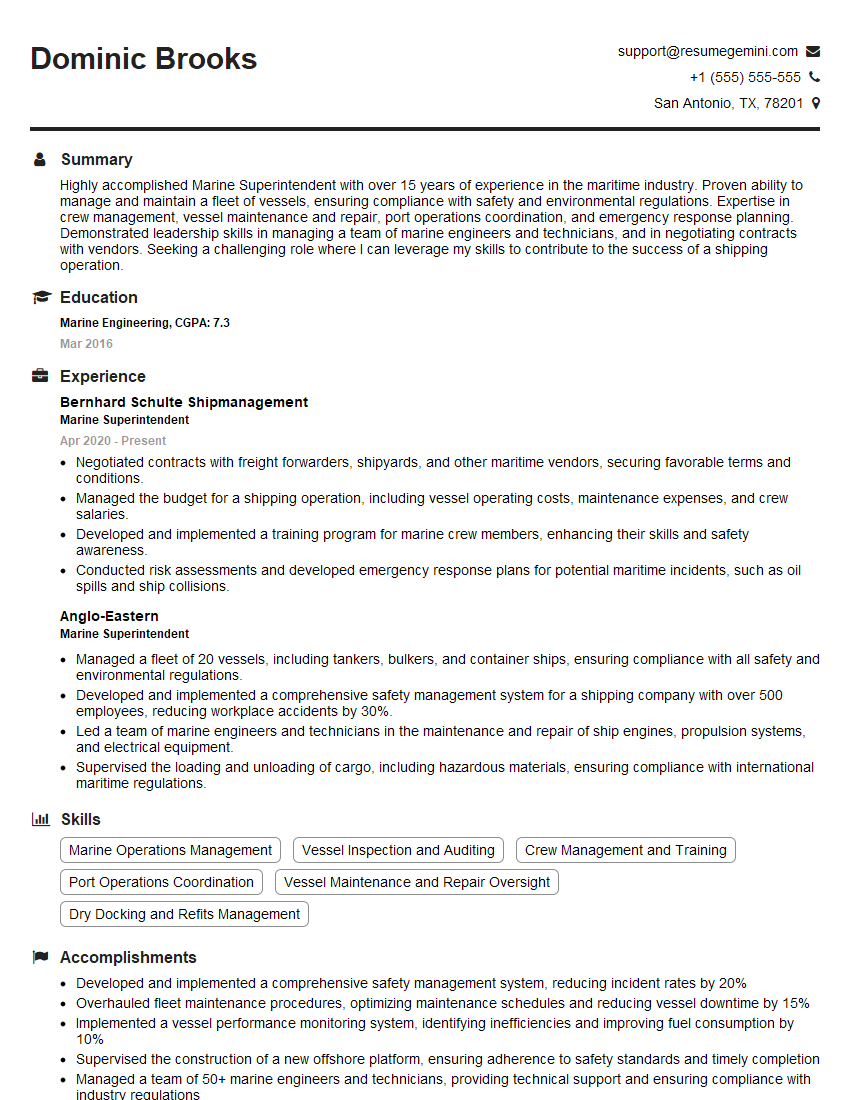
Marine Superintendent Resume Sample
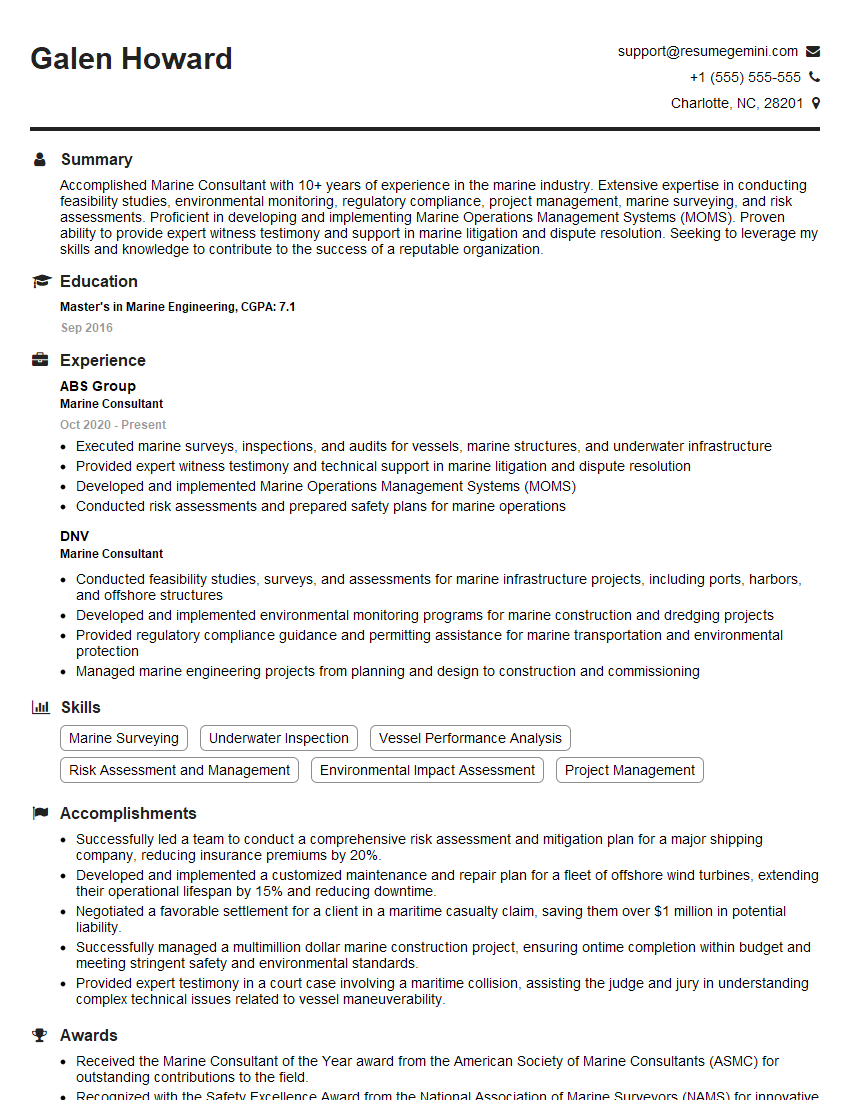
Marine Consultant Resume Sample
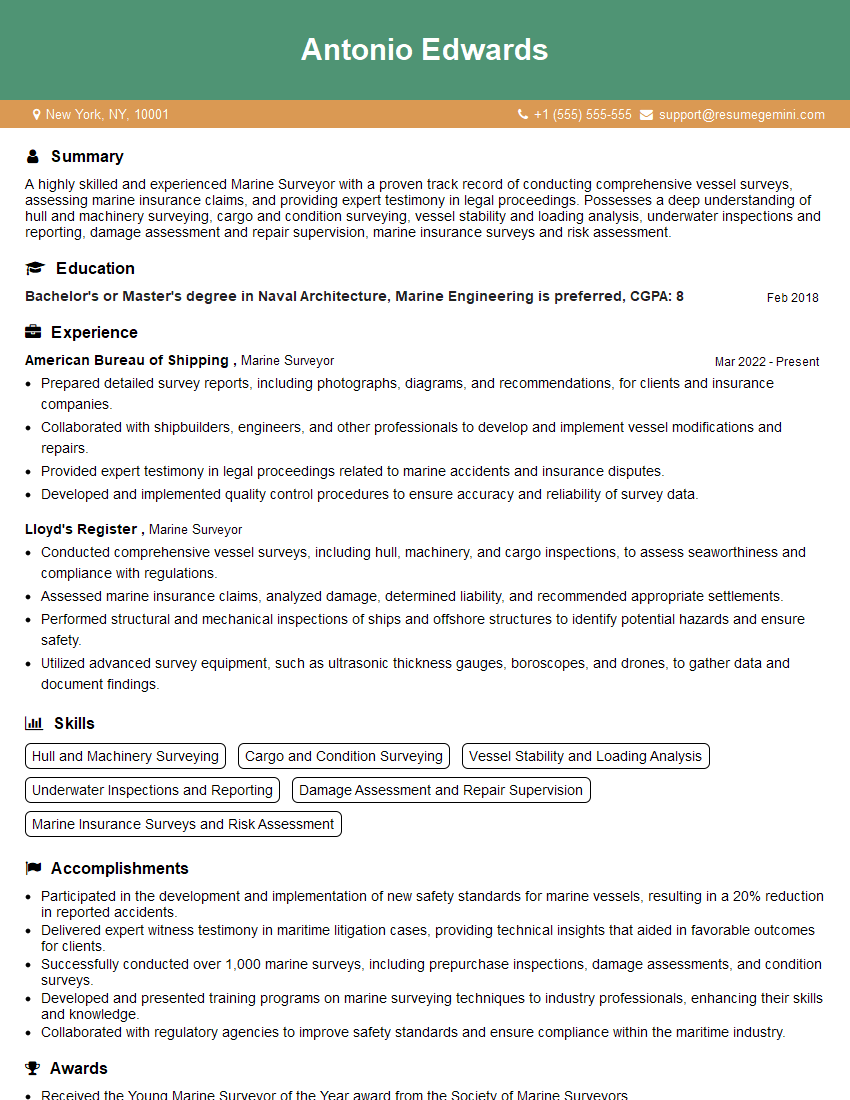
Marine Surveyor Resume Sample
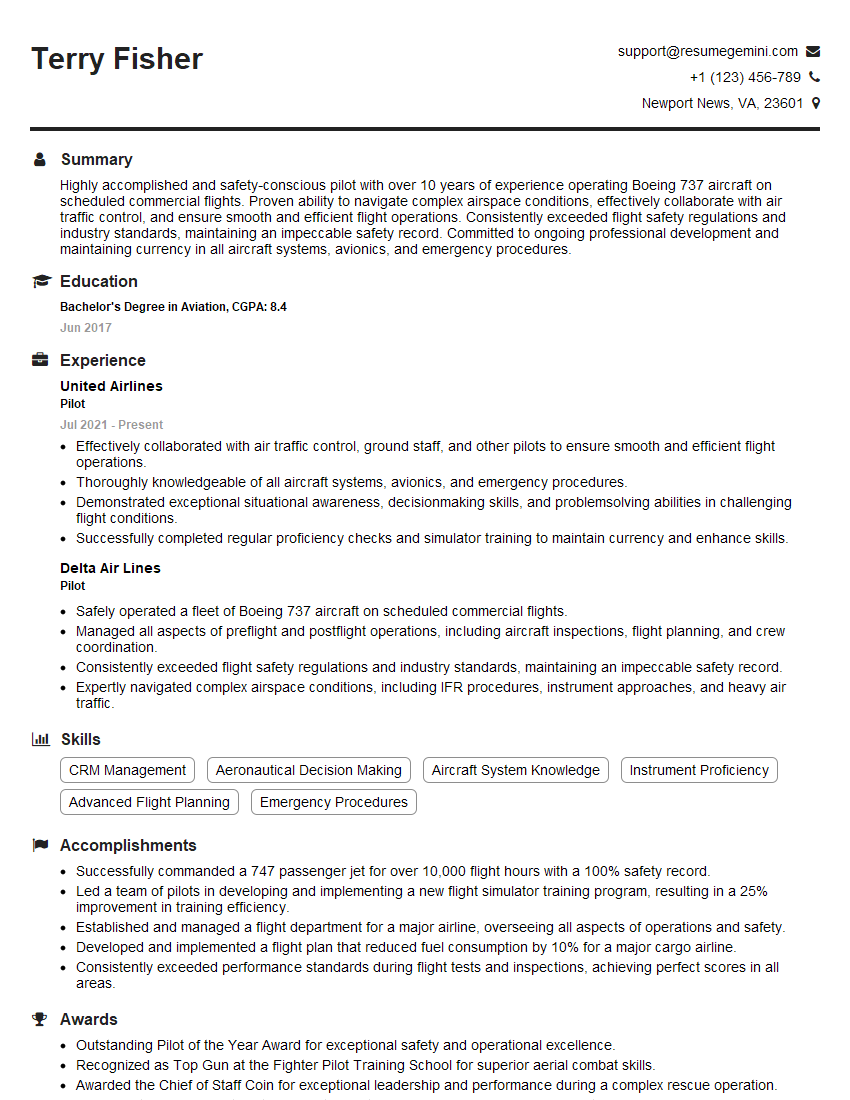
Pilot Resume Sample
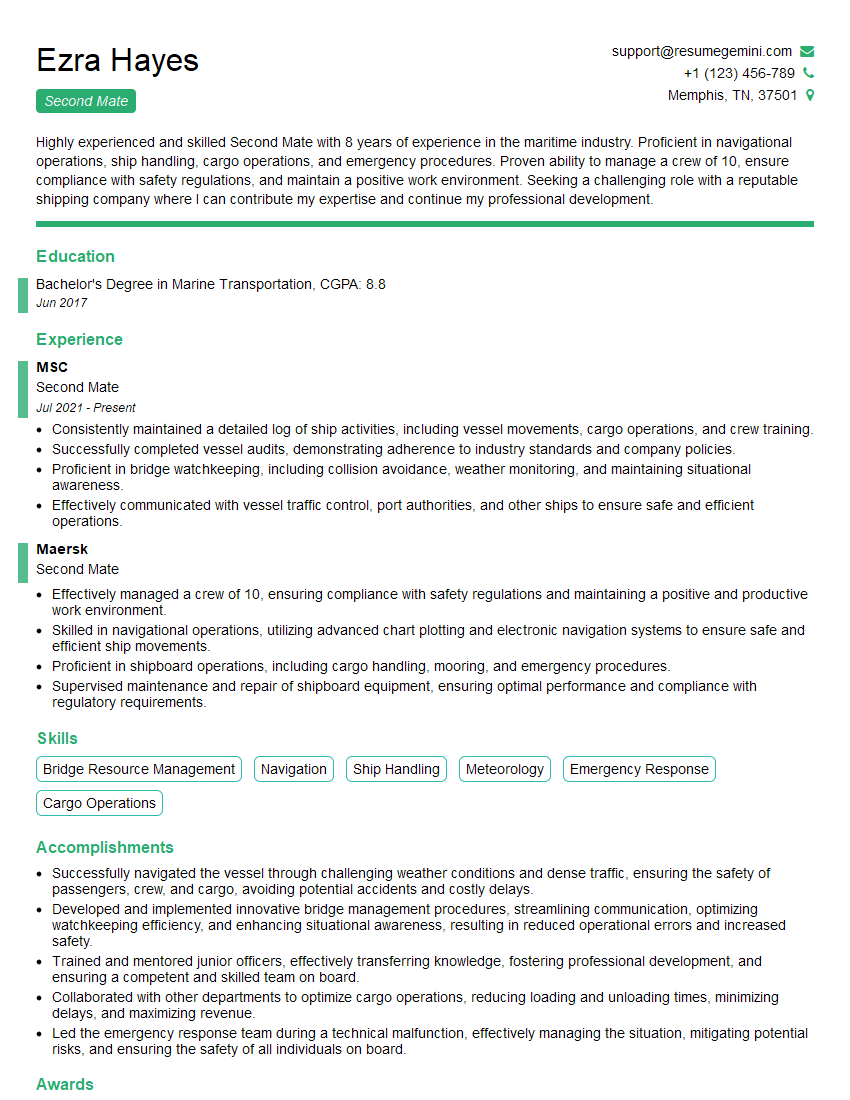
Second Mate Resume Sample
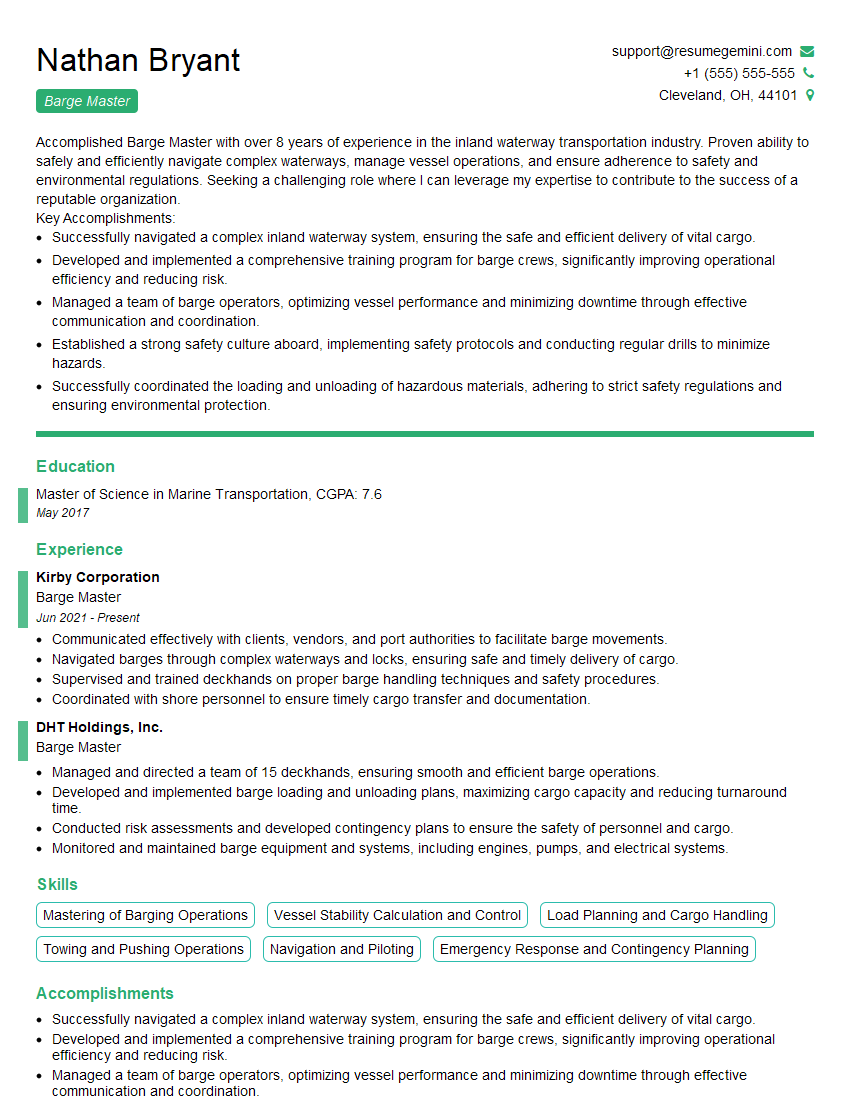
Barge Master Resume Sample
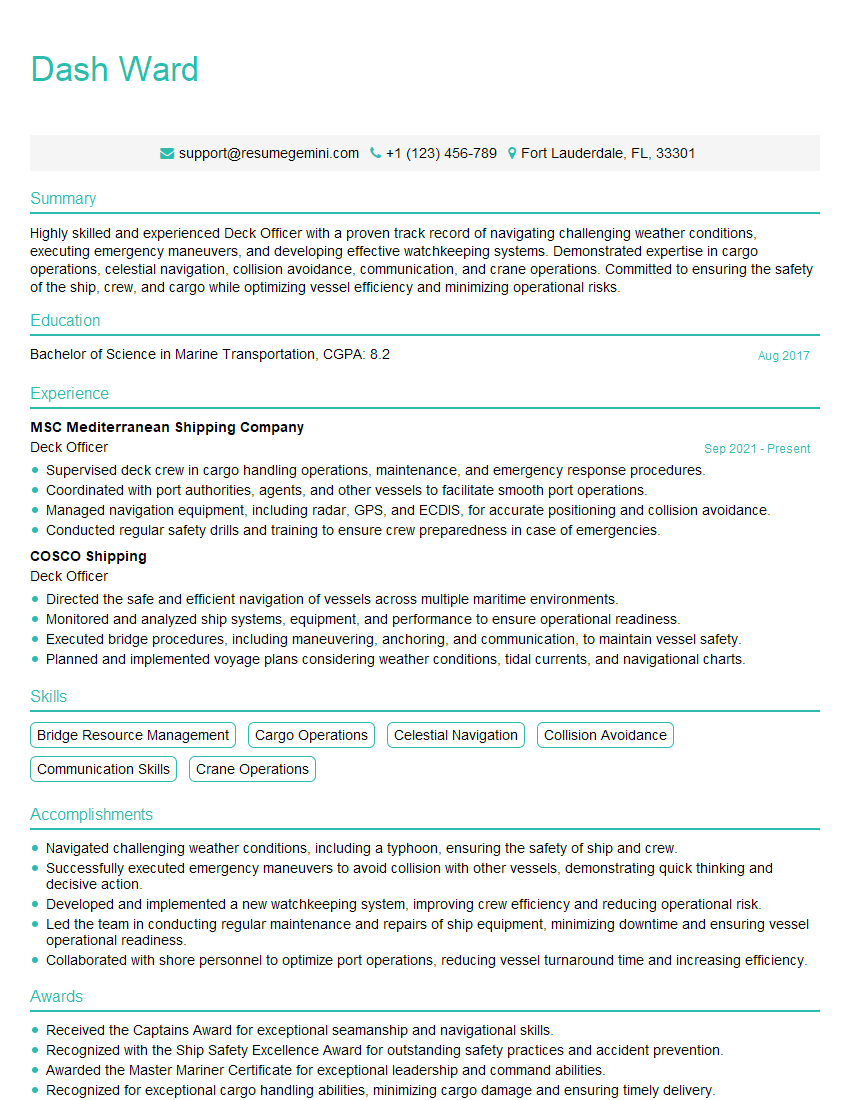
Deck Officer Resume Sample
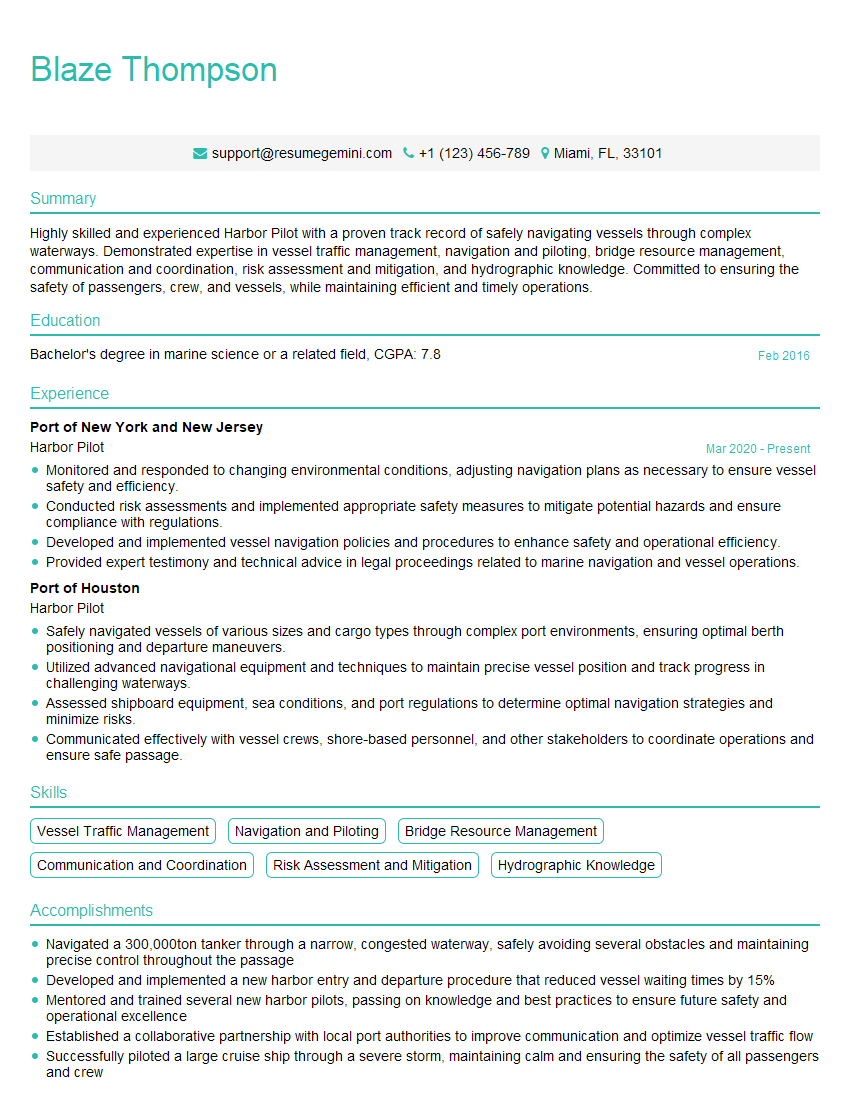
Harbor Pilot Resume Sample
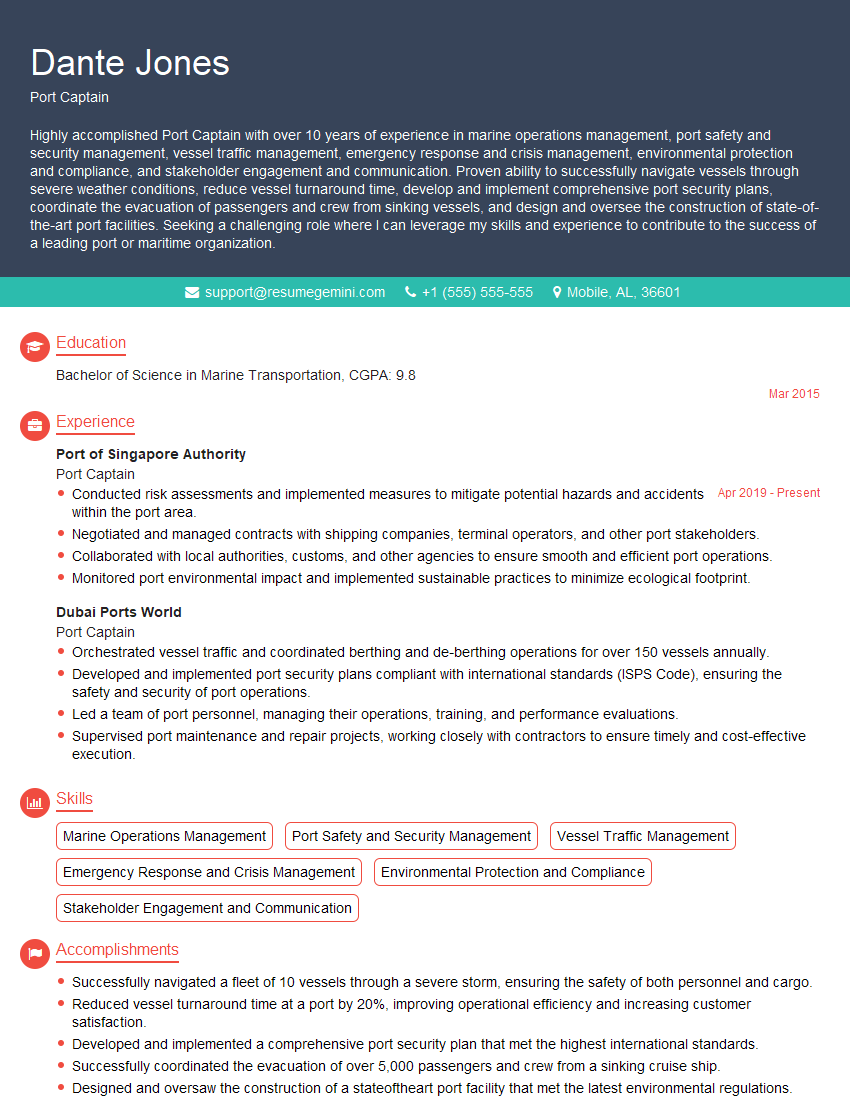
Port Captain Resume Sample
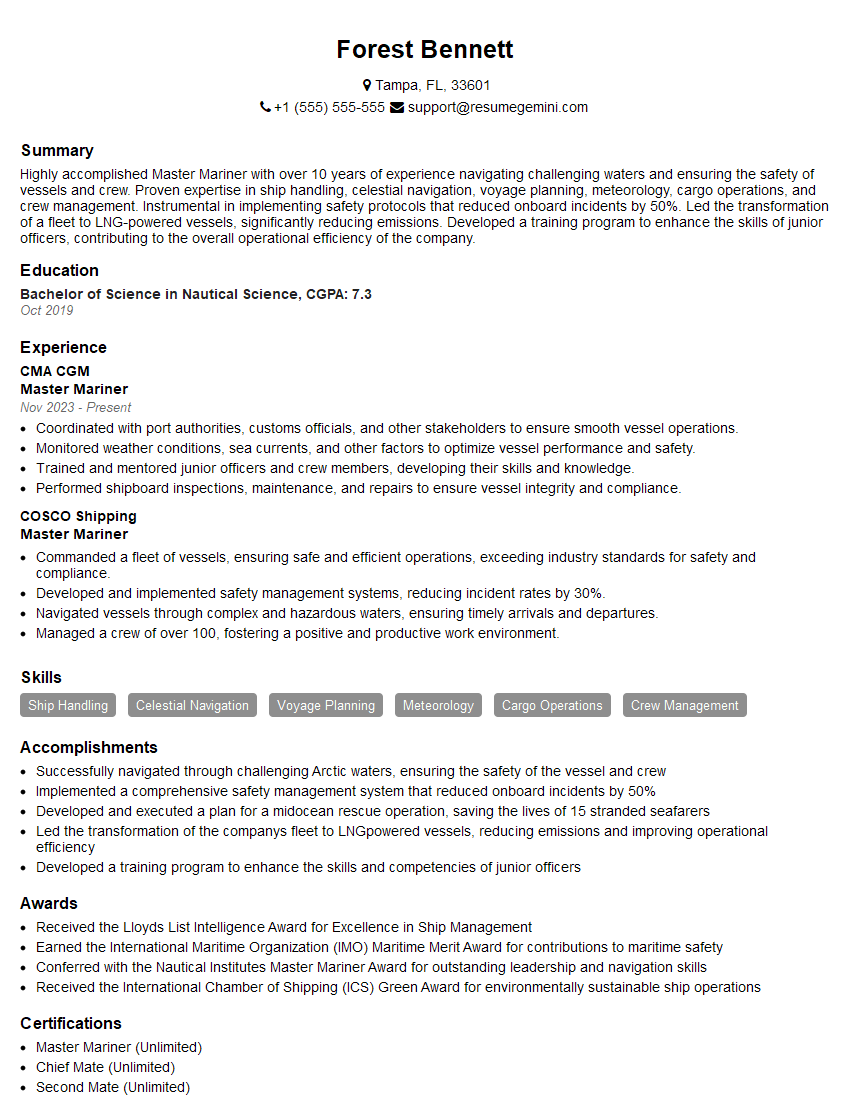
Master Mariner Resume Sample
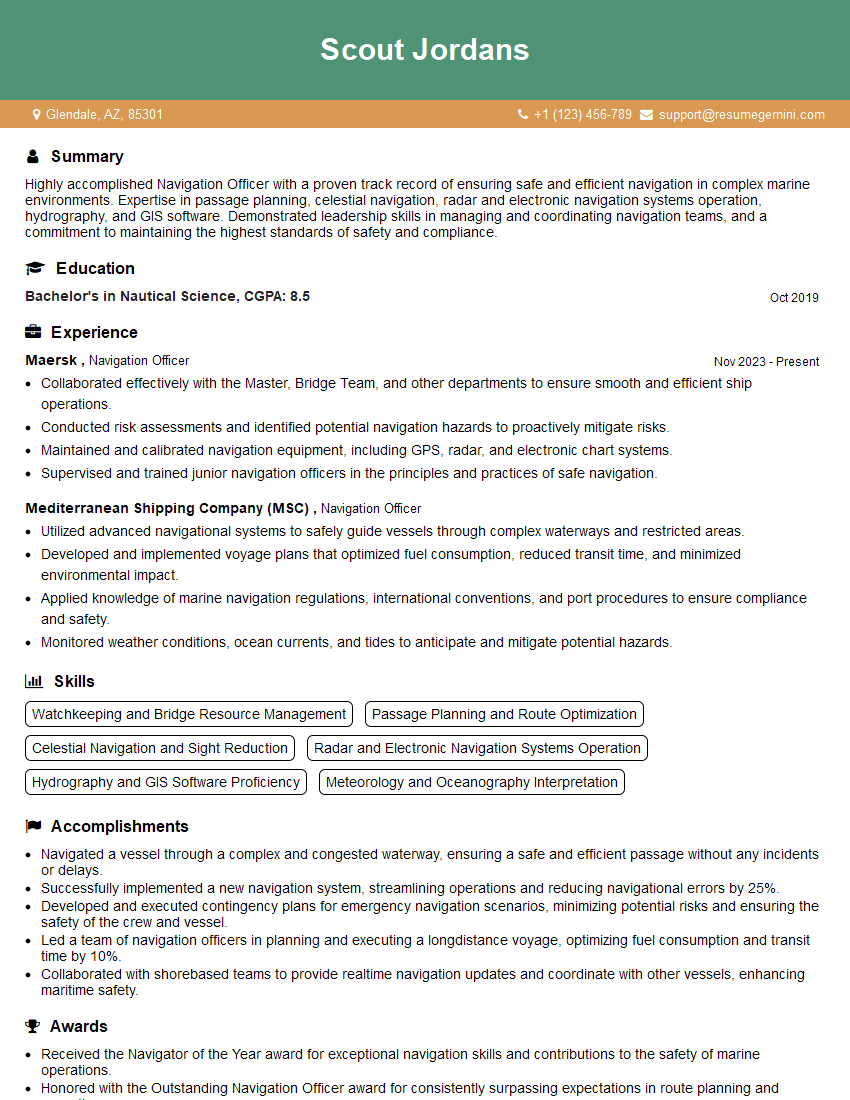
Navigation Officer Resume Sample
Explore more articles
Users Rating of Our Blogs
Share Your Experience
We value your feedback! Please rate our content and share your thoughts (optional).
What Readers Say About Our Blog
I Redesigned Spongebob Squarepants and his main characters of my artwork.
https://www.deviantart.com/reimaginesponge/art/Redesigned-Spongebob-characters-1223583608
IT gave me an insight and words to use and be able to think of examples
Hi, I’m Jay, we have a few potential clients that are interested in your services, thought you might be a good fit. I’d love to talk about the details, when do you have time to talk?
Best,
Jay
Founder | CEO