Cracking a skill-specific interview, like one for Language Acquisition and Development, requires understanding the nuances of the role. In this blog, we present the questions you’re most likely to encounter, along with insights into how to answer them effectively. Let’s ensure you’re ready to make a strong impression.
Questions Asked in Language Acquisition and Development Interview
Q 1. Explain the difference between first language acquisition and second language acquisition.
First language acquisition (L1) and second language acquisition (L2) are both processes of learning language, but they differ significantly in their contexts and mechanisms. L1 acquisition typically begins in infancy and unfolds naturally within a supportive environment, often involving implicit learning and immersion. Children acquire their first language effortlessly, mastering complex grammatical structures without explicit instruction. This is driven by innate abilities and constant exposure to the language. In contrast, L2 acquisition generally starts later in life and often involves formal instruction and conscious effort. Learners actively study grammar rules, vocabulary, and pronunciation. The process can be much slower and more challenging, with success varying depending on factors like motivation, learning strategies, and prior linguistic experience. Imagine a child naturally absorbing their mother tongue compared to an adult meticulously studying a foreign language – that’s the fundamental difference.
- L1: Unconscious, implicit learning; natural immersion; driven by innate capacity.
- L2: Conscious, explicit learning; often involves formal instruction; influenced by prior language knowledge and learning styles.
Q 2. Describe the critical period hypothesis in language acquisition.
The Critical Period Hypothesis (CPH) proposes that there’s a biologically determined time frame during childhood, typically from birth to puberty, when language acquisition is most efficient and effortless. After this period, it becomes progressively more difficult to achieve native-like fluency in a second language. This isn’t to say that L2 learning is impossible after puberty; it just becomes more challenging. The CPH is supported by observations that children exposed to a language during the critical period typically acquire it more fluently and with less effort than adults learning the same language. Evidence comes from studying individuals deprived of language input early in life or from cases of late language acquisition. Think of it like learning to play a musical instrument – starting young makes it easier to master the instrument at a higher level.
However, it’s important to note that the CPH is a subject of ongoing debate in the field. Some research suggests that while early exposure is advantageous, factors like motivation, learning strategies, and immersion can significantly impact L2 proficiency, even later in life. The ‘critical period’ might be more of a sensitive period, implying that optimal learning is easiest within a certain time frame, but is not necessarily impossible beyond it.
Q 3. What are some common theories of language acquisition?
Several influential theories attempt to explain language acquisition.
- Behaviorism: This theory posits that language learning occurs through imitation, reinforcement, and habit formation. Children learn language by repeating what they hear and receiving positive reinforcement for correct usage. This perspective, however, fails to fully account for the creativity and novelty in children’s language use.
- Innativism (Universal Grammar): Proposed by Noam Chomsky, this theory argues that humans possess an innate language faculty – Universal Grammar (UG) – a set of pre-programmed linguistic principles common to all languages. This innate knowledge guides language acquisition, allowing children to quickly learn the specific rules of their native language.
- Cognitivism: This perspective emphasizes the role of cognitive development in language acquisition. It suggests that language acquisition is tied to the child’s overall cognitive abilities, such as memory, attention, and problem-solving. Children’s language development reflects their broader intellectual growth.
- Interactionism/Constructivism: This approach blends aspects of both nativism and cognitivism. It highlights the interaction between innate abilities, cognitive development, and social interaction in the language learning process. Children actively construct their understanding of language through interactions with their environment and caregivers.
Each theory offers valuable insights but doesn’t entirely explain the complexity of language acquisition. A more comprehensive understanding likely involves integrating aspects from multiple perspectives.
Q 4. Discuss the role of input in language development.
Input plays a crucial role in language development. It refers to the language that a learner is exposed to. The quality and quantity of input significantly influence the speed and success of language acquisition. In L1 acquisition, caregivers provide a rich source of input, often modified to suit the child’s developmental stage (child-directed speech). This modified input is characterized by simpler vocabulary, slower speech rate, and exaggerated intonation, making it easier for children to process and learn. For L2 learners, the quality and type of input are equally important. Exposure to authentic language materials, such as books, movies, and conversations with native speakers, provides rich opportunities for language learning. However, input alone isn’t sufficient; learners need to actively engage with the input, process it, and use it to build their own linguistic competence. Imagine trying to learn a musical instrument by simply listening to music – that alone wouldn’t make you proficient.
The concept of ‘comprehensible input,’ proposed by Krashen, emphasizes the importance of input slightly beyond the learner’s current level of understanding (i+1). This slightly challenging input pushes learners to expand their linguistic horizons. Simply providing vast amounts of input that is too simple or far beyond the learner’s level may not be as effective.
Q 5. Explain the concept of Universal Grammar.
Universal Grammar (UG) is a theoretical framework in linguistics, primarily associated with Noam Chomsky’s innatist perspective on language acquisition. It proposes that humans are born with an innate predisposition for language, a genetically determined blueprint for language structure. This blueprint, UG, consists of a set of universal principles and parameters that govern the structure of all human languages. These principles are innate and don’t need to be learned, while the parameters are set based on the specific language a child is exposed to. For example, a principle might be the existence of subjects in sentences; a parameter might be whether a language requires overt subject expression (like English) or allows null subjects (like Spanish).
The idea is that children don’t learn grammar rules from scratch; they already possess the underlying framework (UG), which helps them quickly decipher the specific parameters of their native language through exposure. This explains how children can acquire complex grammatical structures with limited input. However, the exact nature and extent of UG remain topics of ongoing research and debate.
Q 6. What are some common challenges faced by second language learners?
Second language learners face numerous challenges.
- Interference from L1: Learners’ native language can interfere with their acquisition of the L2, leading to errors in pronunciation, grammar, and vocabulary. This is often referred to as ‘transfer’.
- Cognitive Load: Processing new linguistic information, while simultaneously managing pronunciation, grammar, and vocabulary, places a significant cognitive burden on learners.
- Motivation and Attitude: Learners’ motivation, attitudes, and beliefs towards the target language and culture significantly influence their learning success.
- Exposure and Opportunities: Limited exposure to authentic language input and opportunities for practice can hinder progress.
- Learning Styles and Strategies: Individual differences in learning styles and strategies impact learning outcomes. What works well for one learner may not be as effective for another.
- Affective Factors: Anxiety, fear of making mistakes, and lack of confidence can negatively impact performance.
Addressing these challenges requires a multifaceted approach involving tailored instruction, supportive learning environments, and effective learning strategies.
Q 7. How can you assess a child’s language development?
Assessing a child’s language development involves a comprehensive approach using multiple methods. Formal standardized tests can provide quantitative measures of language skills, comparing the child’s performance to age-matched norms. However, these tests don’t always capture the richness and complexity of a child’s language abilities. Therefore, informal assessments, like observation of natural language use in various contexts, play a vital role.
Here are some key areas to assess:
- Receptive Language: This refers to the child’s ability to understand language. Assessment might involve following instructions, identifying pictures, or responding to questions.
- Expressive Language: This focuses on the child’s ability to produce language. This can be assessed by evaluating vocabulary size, sentence complexity, and narrative skills.
- Pragmatics: This refers to the social aspects of language, such as using language appropriately in different contexts and understanding non-verbal cues. Observation of social interactions is important here.
- Phonology: This assesses the child’s articulation and ability to produce sounds correctly.
- Morphology and Syntax: This evaluates the child’s understanding and use of grammar rules, including word formation and sentence structure.
A combination of standardized tests, naturalistic observations, and language samples provides a holistic picture of a child’s language development. Early identification of delays or difficulties is crucial for timely intervention.
Q 8. Describe different language assessment methods.
Language assessment methods are crucial for understanding a learner’s strengths and weaknesses. They range from informal observations to standardized tests, each serving a different purpose.
- Informal Assessments: These are ongoing observations of a learner’s language use in natural settings, like the classroom. Examples include anecdotal records, checklists of skills, and portfolio assessments showcasing student work. They offer valuable insights into a student’s progress in a less stressful environment. For example, noting a student’s spontaneous use of new vocabulary during a class discussion is an informal assessment.
- Formal Assessments: These involve standardized tests or structured tasks designed to measure specific linguistic skills. Standardized tests like the TOEFL or IELTS provide a benchmark against other learners, while diagnostic tests pinpoint areas needing improvement. These are often used for high-stakes decisions, such as college admissions.
- Criterion-Referenced Tests: These tests assess a learner’s performance against a predefined set of criteria or learning objectives. They focus on whether a learner has achieved specific skills or knowledge. For instance, a test measuring proficiency in specific grammatical structures.
- Norm-Referenced Tests: These compare a learner’s performance to the average performance of a larger group. They often focus on ranking learners, rather than absolute proficiency. The SAT is a familiar example.
The choice of method depends on the learner’s age, language proficiency level, and the assessment’s purpose. A combination of informal and formal assessments usually provides the most comprehensive picture.
Q 9. What are some effective strategies for teaching vocabulary?
Effective vocabulary teaching involves more than just rote memorization; it’s about making connections and creating meaningful encounters with new words.
- Contextualized Learning: Introduce new words within engaging stories, videos, or real-life scenarios. This helps learners understand the word’s meaning and usage in context. For example, using a picture book to teach vocabulary related to animals.
- Active Recall Techniques: Encourage learners to actively retrieve vocabulary from memory, rather than passively reading definitions. Flashcards, games, and spaced repetition systems are effective tools. Think of using Quizlet to practice new words.
- Visual Aids: Pictures, diagrams, and realia (real-world objects) can greatly enhance vocabulary acquisition, particularly for younger learners or visual learners.
- Semantic Mapping & Word Associations: Help learners categorize and connect new words to their existing knowledge. For example, creating a mind map around the word ‘happy’ showing different synonyms and related emotions.
- Multi-Sensory Experiences: Incorporate different senses to enhance vocabulary learning. For example, acting out words, singing vocabulary songs, or using tactile materials.
Remember to cater to different learning styles and provide ample opportunities for learners to use the new vocabulary in communicative activities.
Q 10. Explain the importance of comprehensible input in language learning.
Comprehensible input, a cornerstone of Krashen’s Input Hypothesis, refers to language that is slightly beyond a learner’s current level but still understandable. Think of it as climbing stairs – each step is challenging but achievable.
Its importance lies in the fact that it stretches learners’ linguistic abilities without overwhelming them. When learners encounter input slightly beyond their current grasp, they are challenged to expand their linguistic knowledge to understand it. This process, facilitated by context and other cues, leads to acquisition, rather than mere learning.
For example, a learner might understand a simplified story about a dog, but by gradually incorporating more complex sentence structures and vocabulary in subsequent stories, their comprehension grows. The key is that the input remains understandable, thanks to contextual clues, visuals, or prior knowledge.
Providing comprehensible input requires careful planning of lessons, including the use of visuals, realia, clear explanations, and appropriate scaffolding techniques. The teacher’s role is crucial in making the input accessible and engaging.
Q 11. How can you adapt your teaching methods to accommodate diverse learners?
Accommodating diverse learners necessitates a differentiated approach to teaching. This means tailoring instructional strategies to meet the varied needs of students with different learning styles, backgrounds, and abilities.
- Multiple Learning Modalities: Employ various teaching methods – visual, auditory, kinesthetic – to cater to diverse learning preferences. For instance, incorporating hands-on activities for kinesthetic learners alongside visual aids for visual learners.
- Differentiated Instruction: Provide various levels of support and challenge to meet individual student needs. This could involve offering tiered activities or providing personalized learning plans based on individual assessments.
- Culturally Responsive Teaching: Incorporate culturally relevant materials and teaching strategies to create an inclusive and engaging learning environment that reflects the learners’ diverse backgrounds and experiences. It involves using authentic examples and materials that resonate with students’ cultures.
- Assistive Technology:Utilize technology to support learners with specific needs, such as speech-to-text software or text-to-speech programs.
- Collaboration and Peer Learning: Encourage collaborative learning activities, where students can learn from and support each other. Peer tutoring can be particularly beneficial.
Regular assessment and ongoing monitoring are essential to ensure that teaching strategies are effective and that all learners are making progress.
Q 12. Discuss the role of interaction in language acquisition.
Interaction plays a vital role in language acquisition. It provides learners with opportunities to practice their language skills, receive feedback, and negotiate meaning.
The interaction hypothesis suggests that meaningful interaction, where learners actively engage with others in communicative tasks, is crucial for language development. This interaction allows learners to receive feedback, clarify misunderstandings, and develop their communicative competence.
Consider a scenario where two learners are collaborating on a project. They’re forced to negotiate meaning, use a variety of linguistic strategies to express themselves, and to adjust their language based on the other’s feedback. This dynamic process is key for language development. The opportunity to ‘test’ their language skills and receive corrective feedback accelerates language learning. Without interaction, language acquisition is significantly hampered.
Q 13. What are some effective strategies for promoting fluency in a second language?
Promoting fluency in a second language requires a multi-faceted approach focusing on both accuracy and automaticity.
- Communicative Activities: Encourage learners to participate in activities that require them to use the language spontaneously, such as role-playing, debates, presentations, and discussions. These real-world applications foster fluent communication.
- Extensive Reading and Listening: Expose learners to a large amount of authentic language input through reading and listening materials appropriate to their level. This helps them internalize language patterns and develop a feel for the rhythm and flow of the language.
- Focus on Fluency over Accuracy (Initially): In early stages, prioritize getting learners to communicate effectively, even if this means making occasional grammatical errors. Accuracy can be refined later.
- Repetition and Practice: Provide ample opportunities for learners to practice speaking and listening. This may involve activities like tongue twisters, shadowing, or repeating sentences or phrases.
- Feedback Focused on Fluency: When providing feedback, focus on areas where fluency can be improved, rather than solely on grammatical accuracy. For instance, suggest smoother ways to phrase sentences or more natural intonation patterns.
Remember that fluency development is a gradual process. It requires consistent effort, practice, and a supportive learning environment.
Q 14. How do you address language learning difficulties?
Addressing language learning difficulties requires a thorough understanding of the learner’s specific challenges. These difficulties can stem from various factors, including learning disabilities, cognitive differences, and emotional factors.
- Diagnosis: Begin by conducting thorough assessments to identify the nature and severity of the difficulties. This might involve language tests, observation in the classroom, and interaction with the student.
- Individualized Support: Provide tailored instruction and support to address specific needs. This could involve modified learning materials, assistive technologies, or specialized teaching strategies.
- Collaboration with Professionals: Work closely with other professionals, such as speech-language pathologists, special education teachers, and psychologists, to develop a comprehensive support plan. A multidisciplinary approach is often the most effective.
- Addressing Emotional Factors: Create a supportive and encouraging learning environment to minimize anxiety and build confidence. Positive reinforcement and celebrating small successes are crucial.
- Adaptive Strategies: Utilize adaptive learning strategies such as visual aids, hands-on activities, and technology to enhance understanding and engagement.
Early intervention is essential. Addressing difficulties early can significantly improve a learner’s chances of success. The approach should always be sensitive and individualized to the learner’s specific needs.
Q 15. Explain the difference between explicit and implicit language learning.
Explicit language learning involves direct instruction, often in a classroom setting. Think of grammar rules explicitly taught and practiced through drills and exercises. For example, a teacher explicitly explaining the past tense formation in English (‘add -ed’) is explicit learning. Implicit learning, on the other hand, is subconscious. It happens through exposure and immersion in the language. Children learning their first language primarily do so implicitly; they absorb the patterns and structures through listening and interacting without formal lessons. Imagine a child learning to say ‘went’ without being explicitly told the past tense rule – that’s implicit learning. The key difference lies in the conscious awareness of the learning process: explicit is deliberate and conscious, while implicit is unconscious and often more intuitive.
Career Expert Tips:
- Ace those interviews! Prepare effectively by reviewing the Top 50 Most Common Interview Questions on ResumeGemini.
- Navigate your job search with confidence! Explore a wide range of Career Tips on ResumeGemini. Learn about common challenges and recommendations to overcome them.
- Craft the perfect resume! Master the Art of Resume Writing with ResumeGemini’s guide. Showcase your unique qualifications and achievements effectively.
- Don’t miss out on holiday savings! Build your dream resume with ResumeGemini’s ATS optimized templates.
Q 16. What are some common language disorders and how are they addressed?
Several common language disorders affect children and adults. Phonological disorders involve difficulty producing or perceiving speech sounds. For example, a child might consistently pronounce ‘rabbit’ as ‘wabbit.’ Articulation disorders are similar but focus on the precise movements needed for speech sound production. Language processing disorders, such as aphasia (often caused by brain injury) and specific language impairment (SLI), impact the ability to understand or use language. Children with SLI struggle with grammar, vocabulary, and comprehension despite normal intelligence. Stuttering is a fluency disorder characterized by interruptions in the flow of speech. Addressing these disorders typically involves a multidisciplinary approach. This includes speech-language therapy (SLT), which focuses on improving speech production, language comprehension, and communication skills; occupational therapy (OT) may help with fine motor skills impacting speech; and educational interventions tailored to the child’s specific needs.
Q 17. Describe different types of language assessment tools.
Language assessment tools vary depending on the age and needs of the individual. Standardized tests, like the Peabody Picture Vocabulary Test (PPVT) or the Clinical Evaluation of Language Fundamentals (CELF), provide a standardized score compared to a normative sample, allowing for identification of delays or disorders. Informal assessments, such as observations of spontaneous language use in natural settings or language samples, offer richer qualitative data, providing insight into the individual’s strengths and weaknesses. Dynamic assessment involves active participation of the assessor; they observe the individual’s response to feedback and instructional strategies to gauge their learning potential. Portfolio assessments collect samples of the learner’s work over time, allowing for tracking of progress. The choice of assessment tool depends on the specific purpose and context. For instance, standardized tests are helpful for initial screening, while language samples provide a more detailed picture of the individual’s linguistic abilities.
Q 18. How do you integrate technology into language learning?
Technology offers exciting opportunities in language learning. Interactive language learning apps (like Duolingo or Babbel) provide personalized feedback and gamified exercises. Speech recognition software can analyze pronunciation and provide immediate corrective feedback. Virtual reality (VR) environments can simulate immersive language experiences, such as ordering food in a foreign restaurant. Online forums and language exchange platforms connect learners with native speakers for practice and cultural exchange. Digital storytelling tools allow learners to create and share their own narratives, fostering creativity and language use. It’s crucial to use technology strategically and not just for the sake of it; integration should be purposeful and align with the learning goals.
Q 19. Discuss the role of motivation in language acquisition.
Motivation plays a crucial role in language acquisition. Learners who are intrinsically motivated—driven by personal interest and enjoyment—tend to achieve greater fluency and proficiency. Extrinsic motivation, driven by external rewards (like grades or job opportunities), can also be helpful but often less sustainable. Self-efficacy, the belief in one’s ability to learn and succeed, is also a significant factor. Learners with high self-efficacy are more likely to persevere through challenges. Creating a supportive and encouraging learning environment, setting attainable goals, providing opportunities for success and celebrating achievements, and fostering a sense of community among learners all contribute to boosting motivation.
Q 20. Explain the impact of sociocultural factors on language development.
Sociocultural factors significantly influence language development. The language(s) spoken at home and in the wider community directly impact the child’s exposure and opportunities to learn. Social interactions, both with peers and adults, provide essential input and feedback for language acquisition. Cultural values and beliefs about language use also affect the child’s language practices. For example, cultures that value verbal expression might foster greater verbal skills. Socioeconomic status impacts access to educational resources and opportunities to engage in stimulating language experiences. Exposure to diverse linguistic inputs early in life supports better language outcomes. The social context surrounding a child shapes the language they use and develop, making it an integral aspect of the process.
Q 21. What are some common errors made by second language learners and how can they be corrected?
Second language learners often make predictable errors. These can be categorized into several types: Interference errors occur when the learner’s first language influences their use of the second language. For example, a Spanish speaker might say ‘I have a car blue’ because Spanish word order differs from English. Developmental errors are similar to mistakes made by first language learners; these reflect the learner’s gradual acquisition of the target language system. Overgeneralization errors are also common, such as adding ‘-ed’ to all past tense verbs (e.g., ‘goed’ instead of ‘went’). Correcting these errors requires a sensitive and supportive approach. Focus on providing clear and comprehensible input, offering constructive feedback, and encouraging opportunities for meaningful communication. Explicit instruction might be useful for addressing specific grammatical structures, while providing plenty of opportunities for communication and practice helps learners internalize correct forms. Avoid direct correction when it interrupts the flow of communication; consider indirect strategies such as recasting (rephrasing the learner’s sentence correctly).
Q 22. How do you differentiate instruction for learners at different proficiency levels?
Differentiating instruction for learners at different proficiency levels is crucial for effective language acquisition. It’s about tailoring the learning experience to meet each student’s unique needs and abilities. This involves a careful assessment of their current skills and then providing appropriate challenges.
For beginner learners, I focus on building a strong foundation. This includes focusing on basic vocabulary, simple sentence structures, and pronunciation. Activities are highly interactive and visual, employing games, songs, and real-world objects. For instance, I might use flashcards with pictures and corresponding words, or role-play simple scenarios.
Intermediate learners need more challenging tasks to build fluency and accuracy. This could involve more complex grammar structures, advanced vocabulary, and discussions on diverse topics. Activities might include debates, creative writing prompts, and analyzing short texts. For example, I might have them write short stories, or engage in discussions about current events, gradually increasing the complexity of vocabulary and grammar used.
Advanced learners require opportunities to refine their skills and explore advanced concepts. This could involve in-depth analysis of literature, presentations on specialized topics, or participation in complex discussions. I would introduce advanced grammatical concepts, encourage independent research, and foster critical thinking skills. For example, students could engage in debates on complex social issues, or analyze the style and language used in literary works.
Q 23. Describe your experience with developing language learning materials.
I have extensive experience developing language learning materials, drawing on my knowledge of second language acquisition theories and best practices. My approach is always learner-centered, emphasizing engagement and meaningful interaction.
In one project, I developed a series of interactive online modules for teaching Spanish to adults. These modules incorporated various multimedia elements such as audio recordings, videos, and interactive exercises to cater to different learning styles. Each module progressively built upon previous knowledge, ensuring a gradual increase in difficulty. The modules also included self-assessment quizzes and progress tracking to monitor learner performance.
Another project involved creating a set of culturally-rich storybooks for young learners of English. These books used simple vocabulary and repetitive sentence structures to facilitate comprehension, with engaging illustrations to capture their attention. The accompanying teacher’s guide offered a variety of activities such as role-playing, vocabulary games, and creative writing prompts to enhance the learning experience.
Q 24. How do you use formative and summative assessment to monitor student progress?
Formative and summative assessments are essential for monitoring student progress and informing my instruction. Formative assessment is ongoing and provides feedback throughout the learning process. It helps identify areas where students are struggling and allows for timely adjustments to teaching strategies. Examples include quick quizzes, class discussions, and observation of student work during activities.
Summative assessment is used at the end of a learning unit or course to evaluate overall learning outcomes. This might involve written exams, presentations, or projects. Summative assessments provide a comprehensive overview of student achievement, identifying both strengths and weaknesses.
I use a variety of both formative and summative assessments to create a holistic view of student progress. I use formative assessments to inform my instruction during the learning process and use the results from summative assessments to plan for future instruction, identifying gaps in learning and adjusting accordingly.
Q 25. Explain your approach to differentiating instruction to meet the needs of diverse learners.
Differentiation for diverse learners is paramount. It means recognizing that students learn differently, and adapting my teaching to meet their individual needs. This might involve adjustments to content, process, product, or learning environment.
- Content Differentiation: Providing different levels of complexity in materials. For example, offering simplified texts for struggling readers or more challenging texts for advanced learners.
- Process Differentiation: Allowing students to choose how they demonstrate their understanding. Some might prefer writing essays, while others might prefer creating presentations or participating in discussions.
- Product Differentiation: Providing options for how students show what they’ve learned. For instance, allowing students to choose between a written report, a poster, or a multimedia presentation.
- Learning Environment Differentiation: Creating a supportive and inclusive classroom where all students feel comfortable participating. This might involve providing quiet spaces for students who need to focus or offering opportunities for collaborative learning.
I regularly assess student learning styles and preferences, and adjust my strategies accordingly. For students with learning disabilities, I collaborate with specialists to develop individualized education plans (IEPs).
Q 26. How do you collaborate with parents or caregivers to support language development?
Collaboration with parents or caregivers is vital for supporting language development. I regularly communicate with them, providing updates on their child’s progress, sharing strategies for supporting language learning at home, and seeking their input on the child’s learning needs.
I utilize various methods for communication. This includes regular parent-teacher conferences, email updates, and online platforms for sharing student work and resources. I might also provide suggestions for age-appropriate activities that parents can engage in with their children, such as reading aloud, playing language games, or engaging in conversations.
Building a strong home-school connection creates a consistent learning environment and increases the likelihood of success. I also provide parents with resources to supplement classroom learning and strategies to support their child’s language skills.
Q 27. Describe a situation where you had to adapt your teaching to meet a student’s specific needs.
I once had a student, Maria, who was struggling with English pronunciation due to her native language’s phonological system. Her sounds were often confused, which significantly impacted her communication. Initially, I tried standard pronunciation drills, but she wasn’t progressing.
I realized I needed a more individualized approach. I collaborated with a speech therapist, who helped identify the specific sounds Maria struggled with. Together we developed targeted exercises focusing on those sounds, using visual aids and mimicking techniques. I also incorporated more opportunities for Maria to practice speaking in a low-pressure environment, such as through role-playing and small group discussions.
This adapted approach, incorporating specialized support and a focus on her specific needs, significantly improved Maria’s pronunciation and boosted her confidence in speaking English. It reinforced the importance of individualized instruction and collaboration when addressing specific learning challenges.
Q 28. How do you stay current with the latest research and best practices in language acquisition and development?
Staying current in language acquisition and development is crucial. I actively engage in several strategies to keep my knowledge up-to-date.
- Professional Development: I regularly attend workshops, conferences, and seminars focused on language teaching and learning. These events expose me to the latest research, best practices, and innovative teaching techniques.
- Scholarly Journals and Publications: I subscribe to and read several peer-reviewed journals focusing on second language acquisition, linguistics, and applied linguistics. This helps me stay abreast of the latest research findings and theoretical advancements.
- Online Resources and Communities: I actively participate in online professional learning communities and utilize online resources to access the latest research and teaching materials. This provides an opportunity to learn from other educators and engage in discussions on current issues.
- Continuing Education Courses: I regularly enroll in online courses and workshops focused on specific areas of language teaching, such as technology integration, curriculum development, or assessment strategies.
This multifaceted approach helps ensure my teaching practices are informed by the most current research and best practices in the field, allowing me to adapt my instruction to meet the evolving needs of my students.
Key Topics to Learn for Language Acquisition and Development Interview
- Theoretical Frameworks: Understand major theories like Chomsky’s Universal Grammar, Vygotsky’s Sociocultural Theory, and Piaget’s cognitive development stages. Consider their strengths, weaknesses, and applications to different learning contexts.
- First and Second Language Acquisition: Differentiate between the processes involved in acquiring a native language versus learning a second or subsequent language. Explore the impact of age, aptitude, and learning environment.
- Language Development Milestones: Familiarize yourself with typical developmental stages in phonology, morphology, syntax, semantics, and pragmatics. Be prepared to discuss variations and potential delays.
- Assessment and Intervention: Understand various methods for assessing language skills in children and adults. Explore approaches to diagnosing and addressing language disorders and difficulties.
- Bilingualism and Multilingualism: Explore the cognitive and linguistic benefits of bilingualism, and discuss common challenges faced by multilingual speakers.
- Language Acquisition in Diverse Contexts: Consider the impact of sociocultural factors, including socioeconomic status, ethnicity, and access to quality education, on language development.
- Practical Applications: Think about how these theoretical concepts apply to real-world scenarios such as designing language curricula, developing assessment tools, or providing therapeutic interventions.
- Problem-Solving: Practice analyzing case studies involving language development challenges and proposing evidence-based solutions.
Next Steps
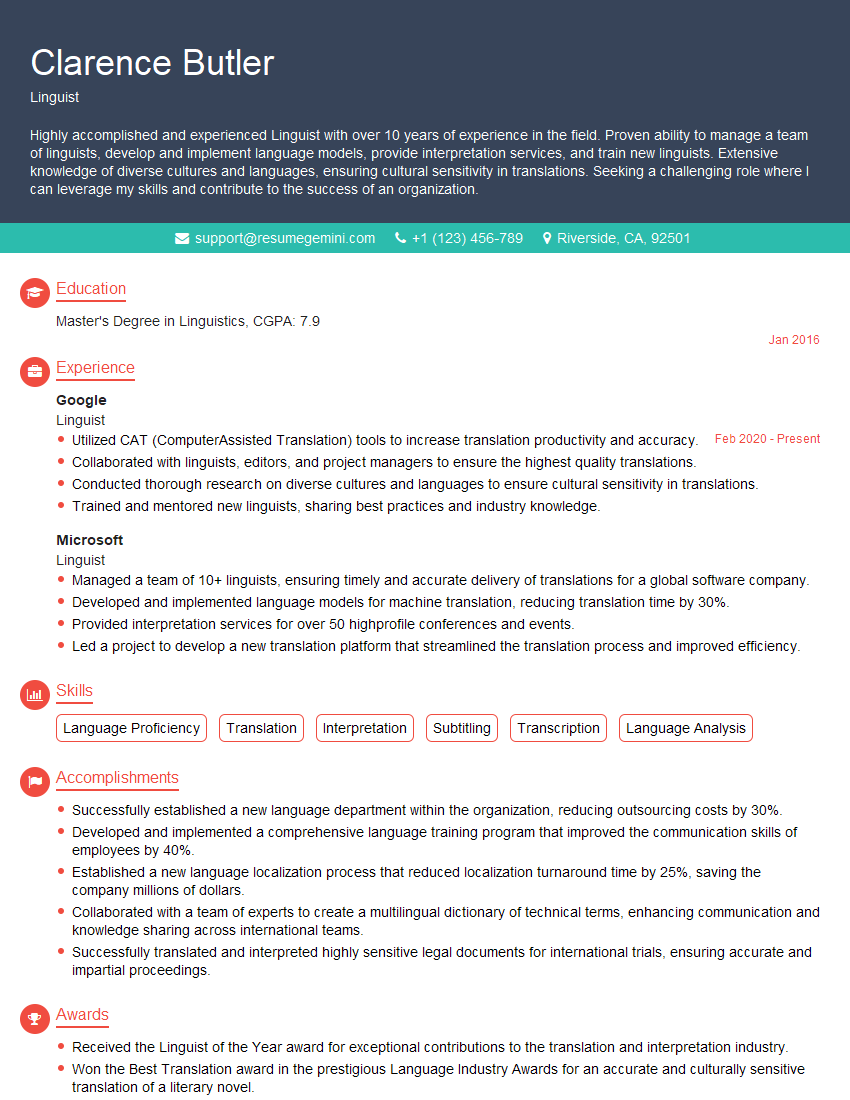
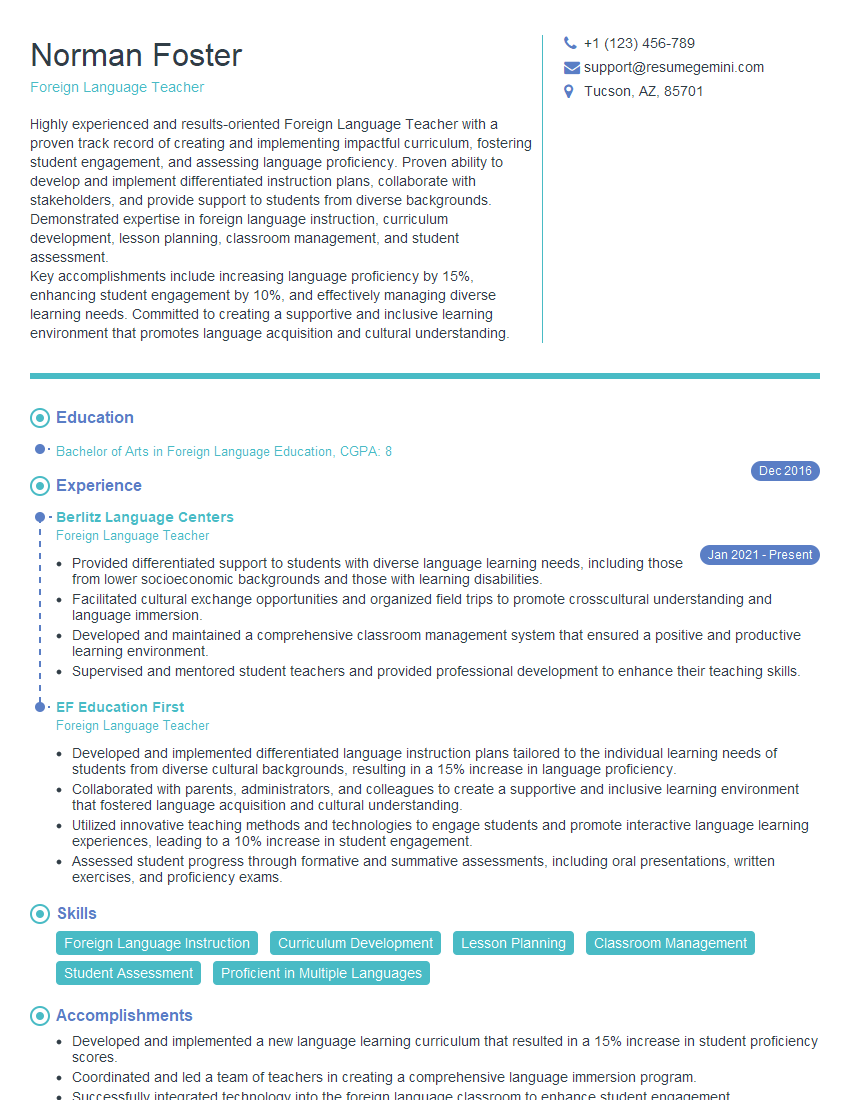
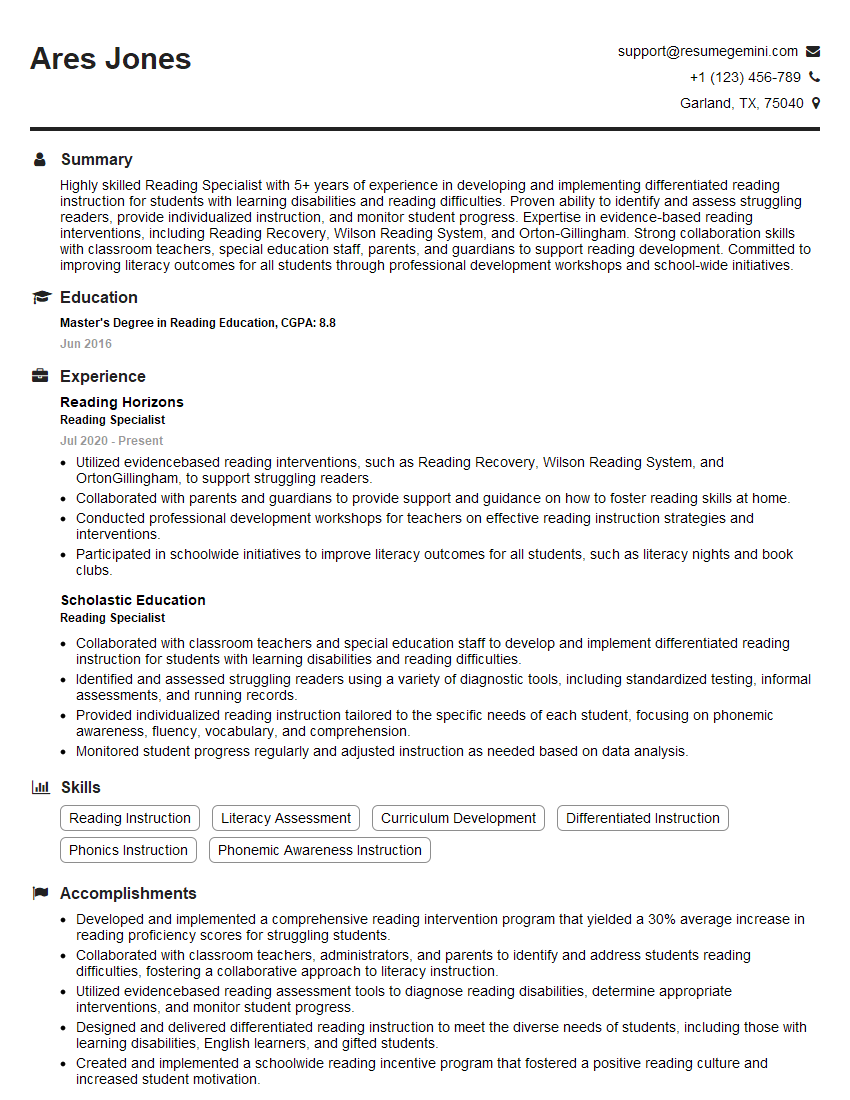
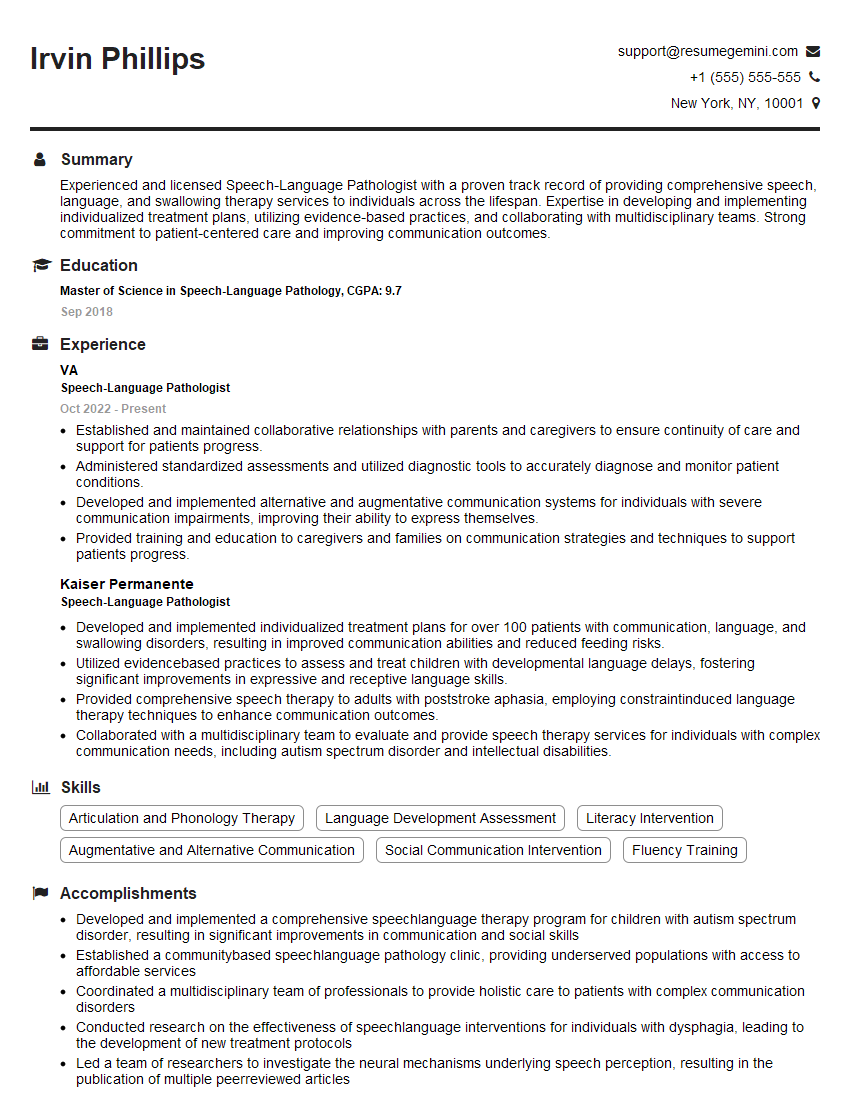
Mastering Language Acquisition and Development opens doors to diverse and rewarding careers in education, speech-language pathology, linguistics, and related fields. A strong resume is crucial for showcasing your skills and experience to potential employers. To maximize your job prospects, invest time in creating an ATS-friendly resume that highlights your key accomplishments and qualifications. ResumeGemini is a trusted resource to help you build a professional and impactful resume. They provide examples of resumes tailored to Language Acquisition and Development to guide your efforts, making your application stand out from the competition.
Explore more articles
Users Rating of Our Blogs
Share Your Experience
We value your feedback! Please rate our content and share your thoughts (optional).
What Readers Say About Our Blog
Really detailed insights and content, thank you for writing this detailed article.
IT gave me an insight and words to use and be able to think of examples