Every successful interview starts with knowing what to expect. In this blog, we’ll take you through the top Strong knowledge of grammar and punctuation interview questions, breaking them down with expert tips to help you deliver impactful answers. Step into your next interview fully prepared and ready to succeed.
Questions Asked in Strong knowledge of grammar and punctuation Interview
Q 1. What are the four main types of sentences?
English sentences are broadly categorized into four types based on their purpose: declarative, interrogative, imperative, and exclamatory.
- Declarative Sentences: These sentences make statements or declarations. They end with a period (.).
Example: The cat sat on the mat. - Interrogative Sentences: These sentences ask questions. They end with a question mark (?).
Example: Did the cat sit on the mat? - Imperative Sentences: These sentences give commands or requests. They often end with a period (.), though sometimes an exclamation point (!) can be used for emphasis.
Example: Sit down. Please close the door. - Exclamatory Sentences: These sentences express strong emotions or surprise. They end with an exclamation point (!).
Example: The cat jumped on the table!
Understanding these sentence types is crucial for effective communication, ensuring your writing conveys the intended tone and meaning.
Q 2. Explain the difference between a semicolon and a colon.
Both semicolons and colons are punctuation marks that indicate a pause, but they signal different relationships between clauses or ideas.
- Semicolon (;): A semicolon joins two closely related independent clauses (clauses that could stand alone as sentences). It suggests a closer connection than a period but a looser one than a conjunction.
Example: The storm raged; the trees swayed violently. - Colon (:): A colon introduces an explanation, example, or list that follows an independent clause. It signals that what follows is an elaboration or further detail.
Example: I need three things from the store: milk, eggs, and bread.
Think of the semicolon as a stronger pause than a comma but weaker than a period, while the colon acts like a signpost, pointing towards further information.
Q 3. When should you use a hyphen versus an en dash versus an em dash?
Hyphens, en dashes, and em dashes are all dashes, but they serve distinct purposes. The key lies in their length and usage:
- Hyphen (-): The shortest dash, used to connect compound words (
well-being), numbers (twenty-one), or prefixes (pre-existing). It’s also used for word breaks at the end of a line. - En Dash (–): Longer than a hyphen, it indicates a range or connection between two words or numbers (
pages 10–20,the London–Paris flight). It also shows a conflict or contrast (pro-choice–pro-life debate). - Em Dash (—): The longest dash, used to set off parenthetical information or create a dramatic pause for emphasis. It can also replace commas or parentheses in informal writing.
Example: My favorite author—who also happens to be my cousin—is coming to visit.
Choosing the correct dash is vital for clear and accurate communication. The length difference is subtle but significant.
Q 4. Define ‘subject-verb agreement’ and provide an example.
Subject-verb agreement means that the verb in a sentence must agree in number (singular or plural) with its subject. This means a singular subject takes a singular verb, and a plural subject takes a plural verb.
Example: The dog barks loudly. (Singular subject ‘dog,’ singular verb ‘barks’)
Example: The dogs bark loudly. (Plural subject ‘dogs,’ plural verb ‘bark’)
Incorrect agreement is a common grammatical error. For instance, The dog bark loudly is incorrect because the singular subject ‘dog’ doesn’t agree with the plural verb ‘bark’.
Q 5. What are the rules for comma usage in a list?
The Oxford comma (or serial comma) is the comma placed before the ‘and’ or ‘or’ in a list of three or more items. While style guides differ, the general rule is:
- Use the Oxford comma: This prevents ambiguity and ensures clarity, particularly in complex lists.
Example: I bought apples, bananas, and oranges. - Omit the Oxford comma (optional): Some style guides prefer to omit it, especially in shorter lists where ambiguity is less likely.
Example: I bought apples, bananas and oranges.
Consistency is key. Choose a style and stick to it throughout your writing to avoid inconsistencies. In professional writing, using the Oxford comma is generally preferred for clarity.
Q 6. What is the difference between ‘its’ and ‘it’s’?
These two words are easily confused, but they have distinct meanings:
- Its: This is the possessive form of ‘it,’ meaning ‘belonging to it.’
Example: The dog wagged its tail. - It’s: This is a contraction of ‘it is’ or ‘it has.’
Example: It's a beautiful day. It's been raining all week.
Remembering that ‘its’ shows possession and ‘it’s’ is a contraction can help avoid this common error.
Q 7. Explain the difference between ‘there,’ ‘their,’ and ‘they’re’.
These three words are homophones—they sound alike but have different meanings and spellings:
- There: This refers to a place or position.
Example: The book is over there. - Their: This is the possessive form of ‘they,’ meaning ‘belonging to them.’
Example: That's their car. - They’re: This is a contraction of ‘they are.’
Example: They're going to the park.
Understanding the distinct meanings helps to avoid confusion and ensures grammatical accuracy in your writing.
Q 8. Correct this sentence: ‘Me and him went to the store.’
The sentence ‘Me and him went to the store’ is grammatically incorrect because it uses the objective pronouns (‘me’ and ‘him’) in a subject position. Pronouns used as subjects need to be in the nominative case.
The correct sentence is: He and I went to the store.
Think of it this way: if you removed ‘him,’ you wouldn’t say ‘Me went to the store,’ right? You’d say ‘I went to the store.’ The same principle applies when both pronouns are used.
Q 9. What are the main types of grammatical errors?
Grammatical errors span various aspects of language. Some main types include:
- Subject-verb agreement: The verb must agree in number (singular or plural) with its subject. Example: Incorrect: ‘The dogs chase the ball.’ (singular verb with plural subject). Correct: ‘The dogs chase the ball.’
- Pronoun agreement: Pronouns must agree in number and gender with their antecedents (the nouns they refer to). Example: Incorrect: ‘Every student needs to bring their own book.’ (singular antecedent, plural pronoun). Correct: ‘Every student needs to bring his or her own book’ or ‘All students need to bring their own books.’
- Tense consistency: Maintaining consistent verb tenses throughout a piece of writing is crucial for clarity. Example: Incorrect: ‘I went to the store, and then I buy some milk.’ Correct: ‘I went to the store, and then I bought some milk.’
- Misplaced modifiers: Modifiers (words or phrases that describe other words) should be placed as close as possible to the words they modify to avoid ambiguity. Example: Incorrect: ‘Running down the street, the dog barked at me.’ (It sounds like the dog was running). Correct: ‘The dog, running down the street, barked at me.’
- Comma splices: Joining two independent clauses (complete sentences) with only a comma is incorrect. Example: Incorrect: ‘The sun was shining, it was a beautiful day.’ Correct: ‘The sun was shining, and it was a beautiful day.’ or ‘The sun was shining. It was a beautiful day.’
- Run-on sentences: Joining too many independent clauses without proper punctuation or conjunctions creates run-on sentences. These can be corrected using commas, semicolons, periods, or conjunctions.
- Fragment sentences: These are incomplete sentences that lack a subject or a verb, or both. Example: Incorrect: ‘Because it was raining.’ Correct: ‘Because it was raining, the game was cancelled.’
Q 10. How do you identify and correct misplaced modifiers?
Misplaced modifiers occur when a descriptive phrase or clause is not placed next to the word it modifies, leading to ambiguity or unintended meaning. To identify them, look for phrases that could logically modify more than one word in the sentence.
Here’s how to correct them:
- Locate the modifier: Identify the phrase or clause that is misplaced.
- Identify the intended target: Determine which word or phrase the modifier should describe.
- Reposition the modifier: Move the modifier as close as possible to the word it modifies.
Example: Incorrect: ‘I saw a bird flying in the car.’ (Implies the car was flying) Correct: ‘In the car, I saw a bird flying.’ or ‘I saw a bird flying in the car.’ (Here the modifier is correctly positioned)
Q 11. Explain the difference between active and passive voice. When should you use each?
Active voice emphasizes the subject performing the action. The structure is Subject + Verb + Object. Example: ‘The dog chased the ball.’
Passive voice emphasizes the action itself and the object receiving the action. The structure is Object + be verb + past participle + by + subject. Example: ‘The ball was chased by the dog.’
When to use each:
- Active voice: Use active voice most of the time. It is clearer, more concise, and more direct. It’s preferable in most professional writing and everyday communication.
- Passive voice: Use passive voice when the actor is unknown, unimportant, or needs to be de-emphasized. It’s also useful when focusing on the action rather than the actor. For example, in scientific writing, the focus is often on the experiment itself, not the researcher who performed it.
Q 12. What are the rules for using quotation marks?
Quotation marks indicate direct speech or quotations. Here’s a summary of the rules:
- Direct quotations: Enclose direct quotations within double quotation marks. Example: She said, “I’m going to the store.”
- Single quotation marks: Use single quotation marks for quotations within quotations. Example: He said, “She told me, ‘I’m leaving.'”
- Commas and periods: Place commas and periods inside the closing quotation marks.
- Colons and semicolons: Place colons and semicolons outside the closing quotation marks.
- Question marks and exclamation points: Place question marks and exclamation points inside the closing quotation marks if they are part of the quotation; otherwise, place them outside.
- Block quotes: For longer quotations (typically four lines or more), use block quotes (indented without quotation marks).
Q 13. Explain the use of apostrophes in contractions and possessives.
Apostrophes have two main uses:
- Contractions: Apostrophes replace missing letters in contractions (shortened forms of words). Example: can’t (cannot), it’s (it is), they’re (they are).
- Possessives: Apostrophes show possession. For singular nouns, add an apostrophe and an ‘s’ (‘s). For plural nouns ending in ‘s’, add only an apostrophe (s’). For plural nouns not ending in ‘s’, add an apostrophe and an ‘s’ (‘s). Examples: the cat’s toy, the dogs’ toys, the children’s books.
Important Note: Avoid using apostrophes with possessive pronouns (his, hers, its, ours, theirs, yours).
Q 14. How do you handle inconsistencies in style guides?
Inconsistencies in style guides can be frustrating, but they’re a common challenge. Here’s how to handle them:
- Identify the conflict: Pinpoint the specific style discrepancies between guides.
- Prioritize: Determine which style guide is most relevant to your project. For instance, a scientific journal will have stricter guidelines than a blog.
- Consult a style guide expert: If the discrepancy involves complex rules or high stakes, seek guidance from a professional editor or someone experienced with the relevant style guide.
- Maintain consistency: Once a decision is made, maintain consistency throughout the document. Inconsistency is far worse than picking one style and sticking with it.
- Document your choices: If you deviate from a specific guideline, note your reason. This makes the editing process more transparent.
Q 15. What resources do you use to verify grammatical rules?
Verifying grammatical rules requires a multi-faceted approach. I rely on a combination of established style guides and reputable reference works. For example, I frequently consult the Chicago Manual of Style, the AP Stylebook (depending on the context – journalistic vs. academic), and Merriam-Webster’s Dictionary for definitions and usage examples. These resources provide comprehensive guidelines and address nuances in grammar and punctuation. Beyond these foundational texts, I also utilize online grammar checkers, but with caution, always double-checking their suggestions against established style guides. It’s crucial to remember that grammar rules are not absolute; context and style play a significant role. The best resources offer detailed explanations, helping me understand *why* a rule exists, not just *what* the rule is.
Career Expert Tips:
- Ace those interviews! Prepare effectively by reviewing the Top 50 Most Common Interview Questions on ResumeGemini.
- Navigate your job search with confidence! Explore a wide range of Career Tips on ResumeGemini. Learn about common challenges and recommendations to overcome them.
- Craft the perfect resume! Master the Art of Resume Writing with ResumeGemini’s guide. Showcase your unique qualifications and achievements effectively.
- Don’t miss out on holiday savings! Build your dream resume with ResumeGemini’s ATS optimized templates.
Q 16. How would you edit this sentence for clarity and conciseness: ‘Due to the fact that it was raining, the game was postponed.’
The sentence ‘Due to the fact that it was raining, the game was postponed’ is unnecessarily wordy. We can make it more concise and direct. The phrase ‘due to the fact that’ is redundant; ‘because’ or ‘since’ conveys the same meaning more efficiently. Therefore, a revised version would be: ‘Because it was raining, the game was postponed.’ A further refinement might be: ‘Rain postponed the game.’
Q 17. Explain the difference between a phrase and a clause.
The difference between a phrase and a clause lies in the presence of a subject and a verb. A phrase is a group of related words that does not contain a subject and a verb. It functions as a single unit within a sentence. For instance, ‘walking the dog’ is a phrase; it’s a gerund phrase acting as a noun. A clause, on the other hand, does contain both a subject and a verb. It forms a complete thought, although it may not be a complete sentence on its own. For example, ‘because it was raining’ is a clause—a dependent clause, as it cannot stand alone. ‘The game was postponed’ is an independent clause, able to stand alone as a complete sentence.
Think of it this way: a clause is like a complete sentence, while a phrase is a supporting part of speech acting as a single unit, like a musical phrase within a song.
Q 18. Identify and correct the grammatical errors in this paragraph: (Provide a sample paragraph with several errors)
Let’s say the paragraph reads: ‘Their going to the store, them and me, was a mistake. We should of stayed home. It’s effects were devastating. Me and my brother was very upset.’
Here’s a corrected version:
Their going to the store, they and I, was a mistake. We should have stayed home. Its effects were devastating. My brother and I were very upset.
Corrections:
- ‘Their going’ changed to ‘Their going’: ‘Their’ is possessive; the original sentence needs a subject pronoun.
- ‘them and me’ changed to ‘they and I’: This is a pronoun case issue. ‘They’ and ‘I’ are subjective pronouns.
- ‘should of’ changed to ‘should have’: This is a common contraction error.
- ‘It’s’ changed to ‘Its’: ‘Its’ is the possessive form; ‘It’s’ is a contraction of ‘it is’.
- ‘Me and my brother’ changed to ‘My brother and I’: Pronoun case error. ‘I’ is the subjective pronoun.
- ‘was’ changed to ‘were’: Subject-verb agreement; ‘brother and I’ are plural.
Q 19. How do you proofread a document effectively?
Effective proofreading requires a systematic approach. I typically use a multi-stage process. First, I take a break from the document to clear my mind and approach it with fresh eyes. Then I read the document aloud, focusing on sentence structure and flow. This helps catch awkward phrasing and grammatical errors. Next, I read it backwards, sentence by sentence. This helps in spotting individual word errors and typos rather than getting lost in the flow of reading. I also use the ‘find and replace’ function in word-processing software to check for repetitive words or inconsistent formatting. Finally, a second proofread with a different perspective can often catch errors missed in the first pass. Using a style guide as a reference throughout the process helps ensure consistency.
Q 20. What are some common punctuation mistakes?
Common punctuation mistakes include:
- Incorrect comma usage: Overuse or underuse of commas in lists, before conjunctions, or in complex sentences. This includes the Oxford comma debate (whether or not to use a comma before the final item in a list).
- Misuse of semicolons and colons: Semicolons join related independent clauses, while colons introduce lists or explanations. Incorrect usage often leads to fragmented or unclear sentences.
- Apostrophe errors: Incorrect placement or omission of apostrophes in possessives and contractions. This is a frequent source of errors.
- Quotation mark problems: Inconsistent or incorrect use of single versus double quotation marks, especially with nested quotations.
- Dash vs. hyphen confusion: Dashes separate elements more strongly than hyphens, which generally connect words or parts of words.
Many errors stem from a lack of understanding of the rules or from carelessness. Careful reading and a handy style guide will help avoid these issues.
Q 21. What is parallel structure, and why is it important?
Parallel structure means using the same grammatical structure for items in a list or series. For example, instead of saying ‘She likes swimming, to hike, and biking,’ the parallel structure version would be ‘She likes swimming, hiking, and biking’. Each item uses the same grammatical form: a gerund (verb ending in -ing).
Parallel structure is crucial for clarity and readability. Inconsistent structures make sentences confusing and distract the reader. It ensures that items in a series have the same weight and grammatical function. Imagine a recipe list that reads: ‘First, boil the pasta. Then, slice the vegetables, and the cheese should be grated.’ The lack of parallelism is jarring. The correct parallel structure would be: ‘First, boil the pasta. Then, slice the vegetables, and grate the cheese.’
In professional settings, parallel structure shows attention to detail and enhances the overall professionalism of your writing.
Q 22. Explain the difference between a simple, compound, and complex sentence.
The differences between simple, compound, and complex sentences hinge on the number and type of clauses they contain. A clause is a group of words with a subject and a verb.
- Simple Sentence: Contains one independent clause. An independent clause can stand alone as a complete sentence. Example:
The dog barked. - Compound Sentence: Contains two or more independent clauses, often joined by coordinating conjunctions (e.g., and, but, or, nor, for, so, yet) or a semicolon. Example:
The dog barked, and the cat hissed.Another Example:The sun was shining; the birds were singing. - Complex Sentence: Contains one independent clause and one or more dependent clauses. A dependent clause cannot stand alone as a complete sentence; it relies on the independent clause for its meaning. Dependent clauses often begin with subordinating conjunctions (e.g., because, although, since, if, when) or relative pronouns (e.g., who, whom, which, that). Example:
Because it was raining, the dog stayed inside.Another Example:The book, which I borrowed from the library, was fascinating.
Understanding these sentence structures is crucial for writing clear and varied prose. Overuse of simple sentences can make writing monotonous, while overly complex sentences can be difficult to follow. A skillful writer uses a mix of all three sentence types to create a dynamic and engaging text.
Q 23. How do you handle ambiguous pronoun references?
Ambiguous pronoun references occur when a pronoun (e.g., he, she, it, they) doesn’t clearly refer to a specific noun or nouns. This creates confusion for the reader. To handle them, you need to ensure every pronoun has a clear and unambiguous antecedent (the noun the pronoun refers to).
Strategies for resolving ambiguous pronoun references:
- Rewrite the sentence: Often, the simplest solution is to restructure the sentence to eliminate the ambiguity. Example: Instead of
John told Bill that he was late(who was late?), rewrite asJohn told Bill, “You are late.”orJohn told Bill that Bill was late. - Add a noun or phrase: Clarify the antecedent by adding the specific noun the pronoun refers to. Example: Instead of
The car hit the tree, and it was damaged., rewrite asThe car hit the tree, and the car was damaged. - Replace the pronoun with a noun: Avoid using pronouns altogether if necessary for clarity. This is particularly helpful in complex sentences.
- Check for proximity: Ensure that the pronoun is close enough to its antecedent to avoid confusion. The closer the pronoun is to its antecedent, the more likely it is to be understood correctly.
Careful attention to pronoun references is vital for effective communication. Ambiguity can lead to misinterpretations and weaken the credibility of your writing. Remember to always reread your work and carefully examine every pronoun usage.
Q 24. What are some strategies for improving your own grammar and punctuation skills?
Improving grammar and punctuation skills is an ongoing process that requires consistent effort and practice. Here are some effective strategies:
- Read Widely: Immerse yourself in well-written materials. Pay attention to sentence structure, punctuation choices, and overall style. This will subtly improve your own writing.
- Study Grammar Rules: A solid foundation in grammar is essential. Utilize grammar textbooks, online resources, and style guides.
- Practice Writing Regularly: The more you write, the more opportunities you have to apply and refine your skills. Keep a journal, write short stories, or contribute to online forums.
- Seek Feedback: Share your writing with others and ask for constructive criticism. A fresh pair of eyes can identify errors you might have missed.
- Use Grammar and Style Checkers: Tools like Grammarly or ProWritingAid can provide valuable feedback, but remember that they are not perfect substitutes for human editing.
- Learn from Your Mistakes: Every error is a learning opportunity. Analyze your mistakes and understand why they occurred, actively preventing future repetitions.
Think of it like learning a musical instrument: Consistent practice, coupled with understanding the underlying theory (grammar rules), leads to mastery. It takes time and dedicated effort, but the payoff—clear, concise, and persuasive writing—is well worth it.
Q 25. Describe your experience using style guides such as AP, Chicago, or MLA.
My experience with style guides such as AP (Associated Press), Chicago (Chicago Manual of Style), and MLA (Modern Language Association) is extensive. I’ve used them extensively in various professional contexts, including academic writing, journalism, and corporate communication. Each style guide has its own unique conventions, and understanding these nuances is crucial for producing high-quality, consistent work.
- AP Style: Primarily used in journalism, it emphasizes conciseness and clarity. I am familiar with its specific rules for capitalization, number usage, and abbreviation.
- Chicago Style: Commonly used in academic publishing and other formal writing, it offers a more comprehensive and detailed set of rules. I’m adept at using its citation and bibliography formats (both notes and bibliography, and author-date).
- MLA Style: Primarily used in humanities and literature, its focus is on in-text citations and Works Cited pages. I have consistently applied its rules in academic papers and essays.
My proficiency extends beyond simply knowing the rules; I understand the rationale behind them, ensuring that I apply them correctly and consistently across different projects. Adapting to different style guides quickly and accurately is a key component of my professional skillset. It allows me to tailor my editing to suit the specific requirements of each project and audience.
Q 26. What is your preferred method for editing and proofreading digital documents?
My preferred method for editing and proofreading digital documents involves a multi-stage approach, leveraging technology to enhance accuracy and efficiency.
- First Pass (Automated Check): I begin with a grammar and style checker (like Grammarly or ProWritingAid) to identify obvious errors in grammar, spelling, punctuation, and style. This helps to catch the low-hanging fruit.
- Second Pass (Manual Review): I then conduct a thorough manual review, paying close attention to sentence structure, clarity, consistency, and flow. I read the document aloud to catch awkward phrasing or inconsistencies.
- Third Pass (Focus on Specific Issues): Based on the type of document, this final pass might focus on a particular element, such as citations (using a style guide’s guidelines) or consistent terminology.
- Use of Track Changes: When working on documents collaboratively or making substantial edits, I always use track changes so that all edits are visible and easily reviewed. This is crucial for accountability and transparency.
This systematic approach ensures a high level of accuracy and consistency. The combination of automated tools and meticulous manual review minimizes the chance of overlooking errors. My experience has taught me that a layered approach is the most effective way to ensure a polished final product.
Q 27. How would you approach editing a document with conflicting styles?
Editing a document with conflicting styles presents a challenge that demands careful consideration and decision-making. My approach involves a structured process:
- Identify the Conflicting Styles: The first step is to thoroughly examine the document and pinpoint all inconsistencies in style, including formatting, citations, and punctuation. This includes identifying which style guide (if any) is being inconsistently followed.
- Determine the Priority: Decide which style should take precedence. This might be determined by the client’s instructions, the publication’s style guide, or the overall context of the document. Sometimes, a compromise might be necessary.
- Create a Style Guide (if necessary): In cases where no single style guide is explicitly required, I would create a concise style guide based on the prevailing style to maintain consistency throughout the document.
- Consistent Application: Once a style is selected or created, apply it consistently throughout the document, ensuring uniformity in formatting, punctuation, and capitalization.
- Document Changes: Track all style changes clearly to allow for review and feedback from the client or other stakeholders. Explain the reasoning behind the stylistic choices.
The key is to create a unified and consistent style, even if it involves modifying parts of the original document. Transparency and clear communication about stylistic decisions are crucial for ensuring a positive outcome and avoiding potential misunderstandings.
Key Topics to Learn for Strong Knowledge of Grammar and Punctuation Interview
- Subject-Verb Agreement: Mastering the rules ensuring your subject and verb always agree in number (singular or plural). Practical application: Writing clear, concise sentences in your cover letter and resume that avoid grammatical errors.
- Tense Consistency: Maintaining a consistent verb tense throughout your writing to ensure clarity and avoid confusing the reader. Practical application: Presenting a cohesive narrative in your resume’s work experience section.
- Punctuation Mastery: Understanding the proper usage of commas, semicolons, colons, apostrophes, and hyphens to improve readability and prevent misinterpretations. Practical application: Crafting impactful bullet points that accurately reflect your accomplishments.
- Comma Splices and Run-on Sentences: Avoiding these common errors by understanding sentence structure and using appropriate punctuation. Practical application: Creating professional-sounding sentences in your cover letter that impress recruiters.
- Pronoun Agreement and Usage: Using pronouns correctly to avoid ambiguity and ensure clarity. Practical application: Ensuring clear and concise descriptions of your responsibilities in your resume.
- Parallel Structure: Maintaining parallel grammatical structure in lists and sentences for improved readability and flow. Practical application: Creating impactful bullet points in your resume that are easy to understand.
- Active vs. Passive Voice: Understanding when to use active versus passive voice to create more impactful and direct communication. Practical application: Writing strong action verbs in your resume to highlight achievements.
Next Steps
Mastering grammar and punctuation is crucial for career advancement. A polished and error-free resume and cover letter significantly increase your chances of landing an interview. An ATS-friendly resume, optimized for Applicant Tracking Systems, is essential for getting your application noticed. ResumeGemini is a trusted resource to help you build a professional and impactful resume. We provide examples of resumes tailored to showcasing strong grammar and punctuation skills – use them as inspiration to craft your best application yet!

Curriculum Developer Resume Sample
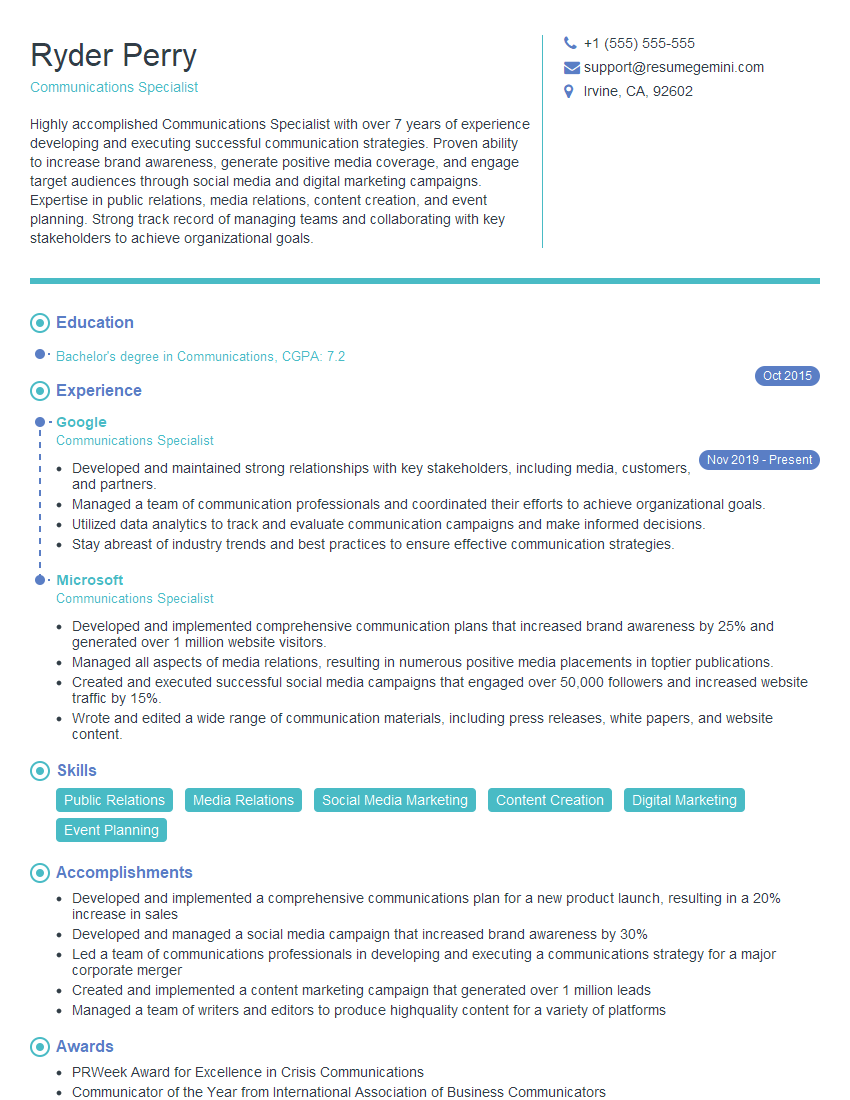
Communications Specialist Resume Sample
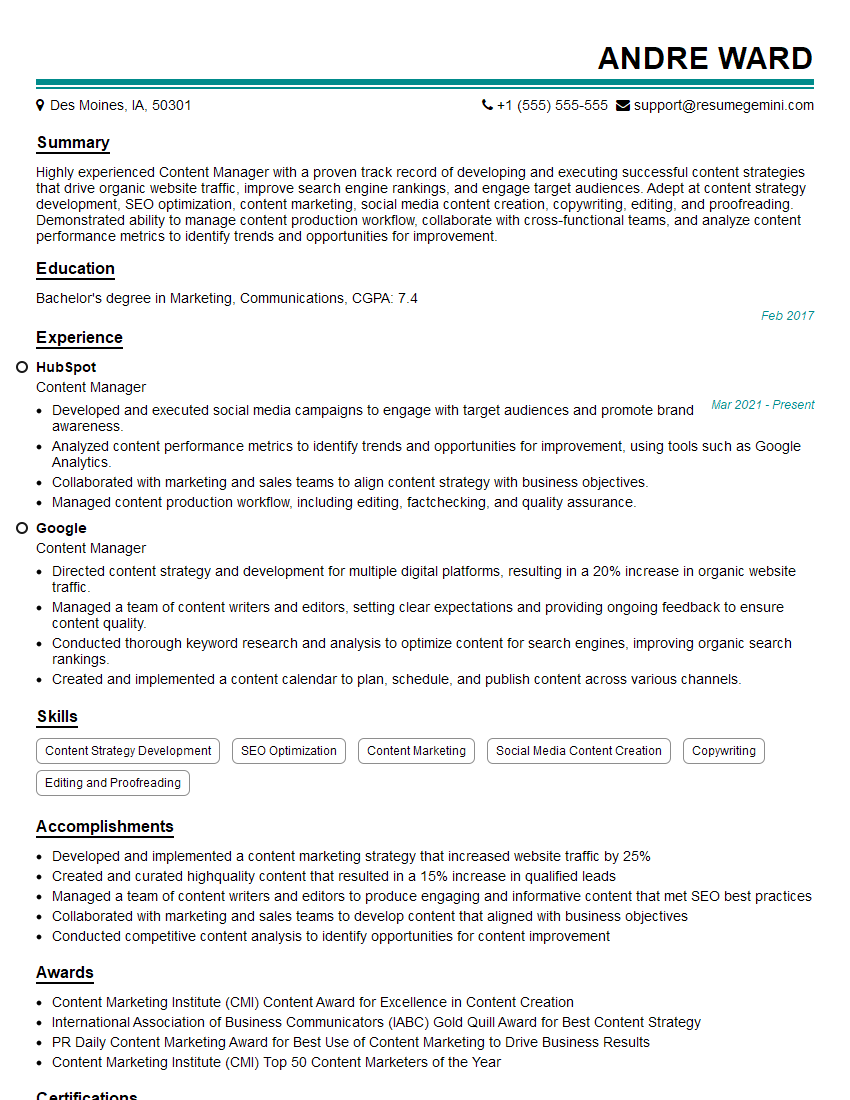
Content Manager Resume Sample
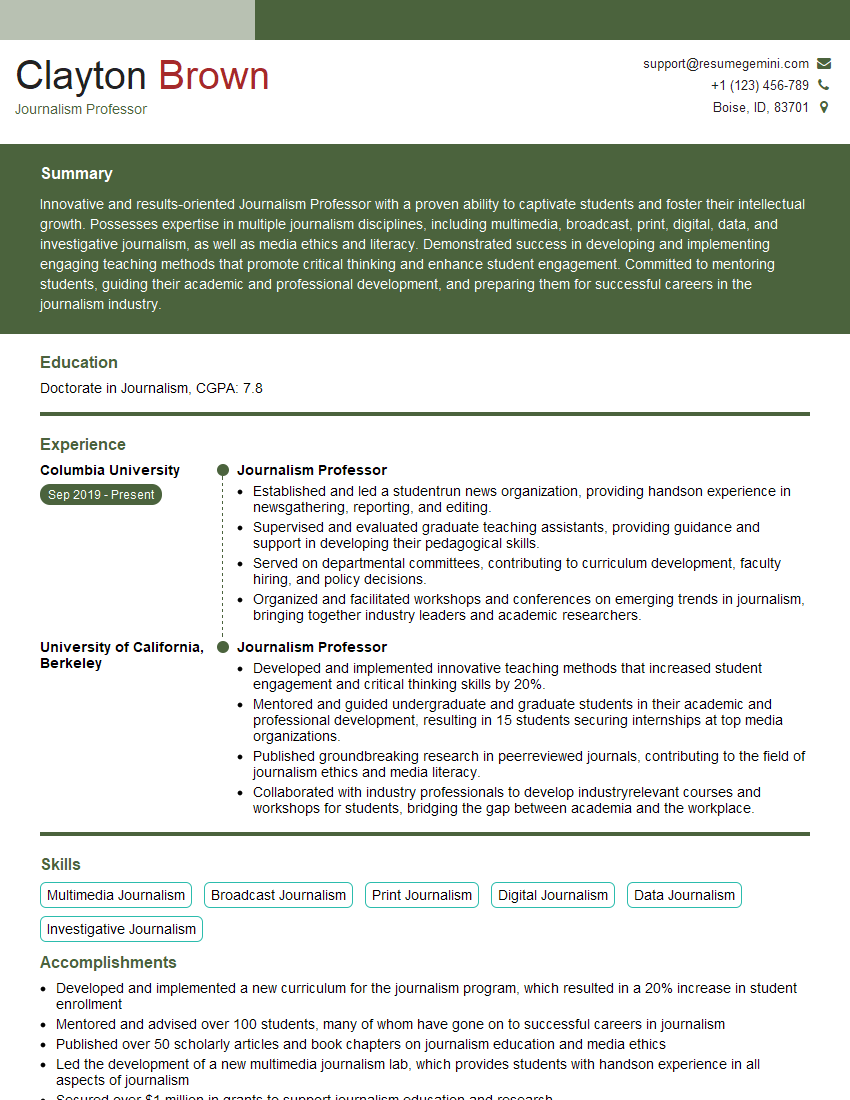
Journalism Professor Resume Sample
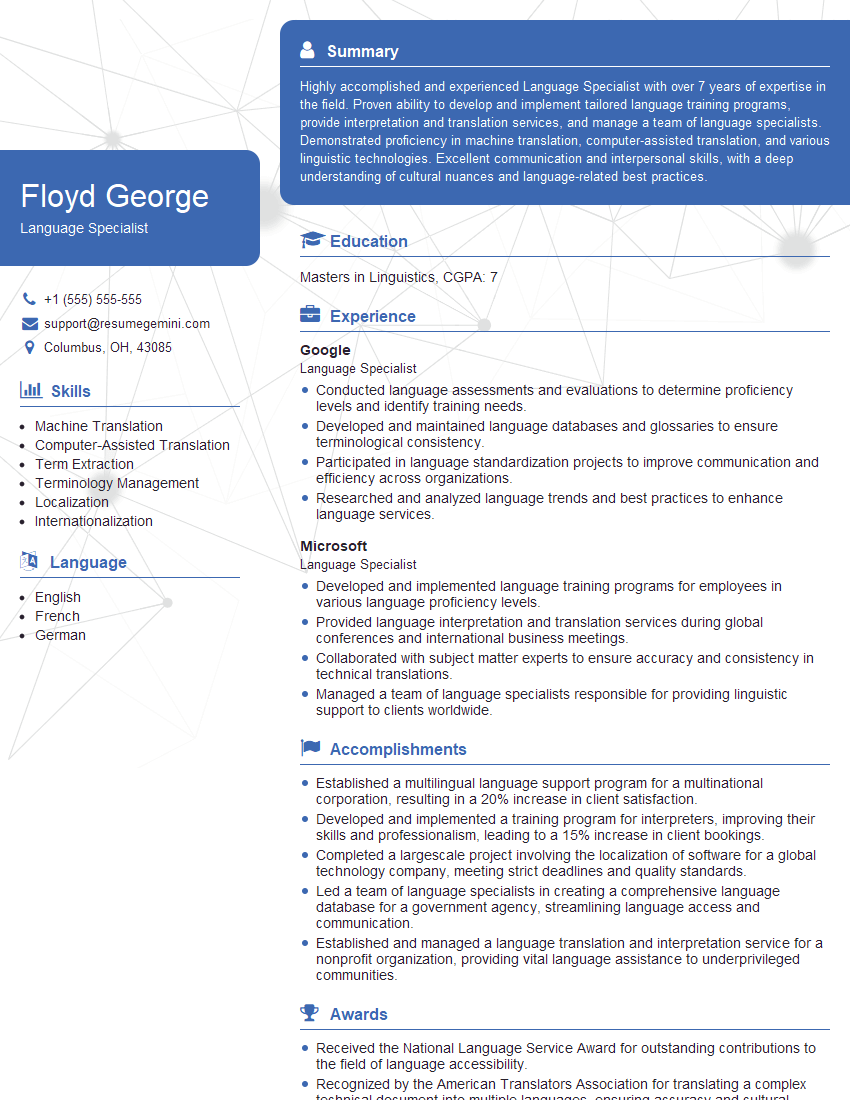
Language Specialist Resume Sample
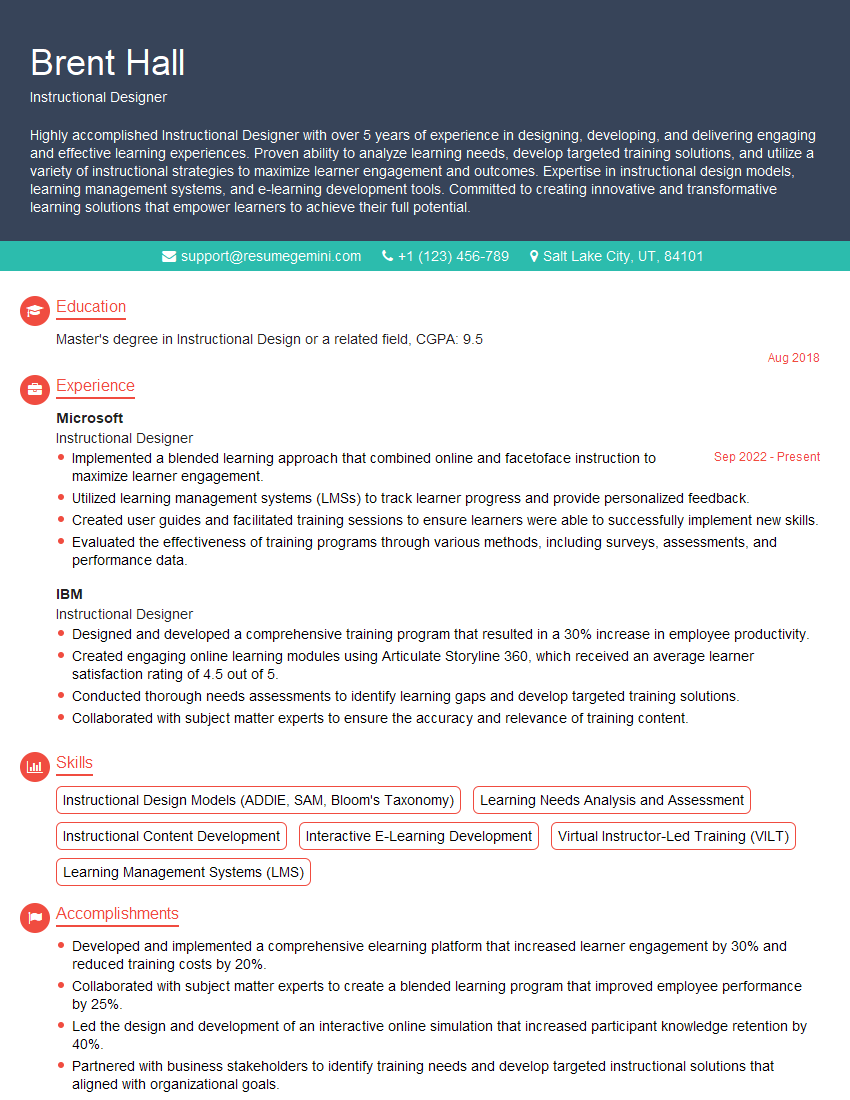
Instructional Designer Resume Sample
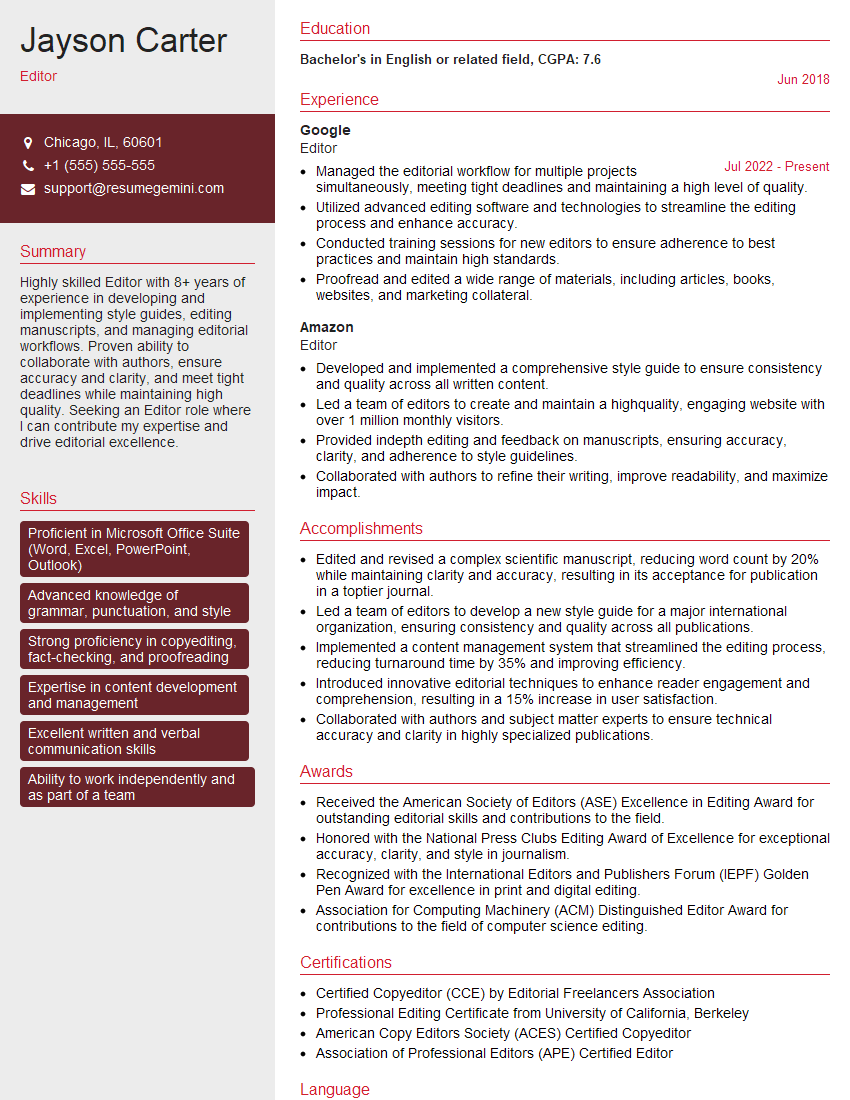
Editor Resume Sample
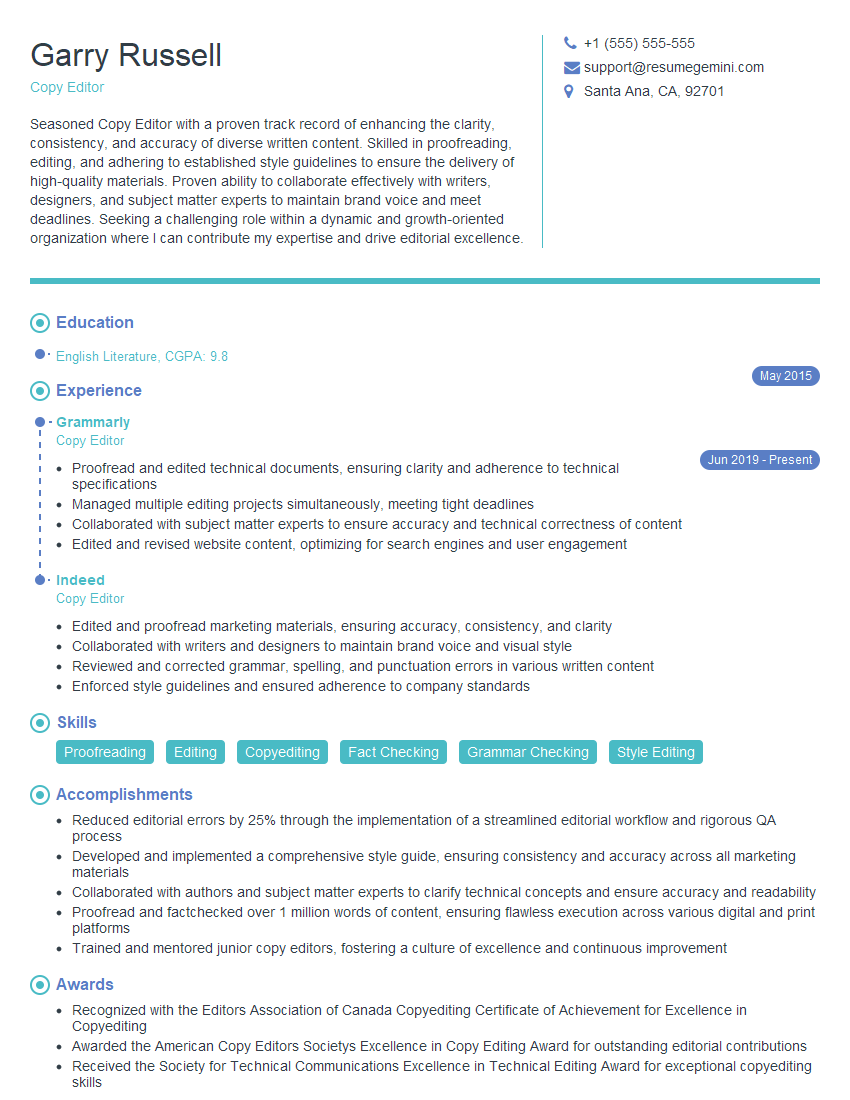
Copy Editor Resume Sample
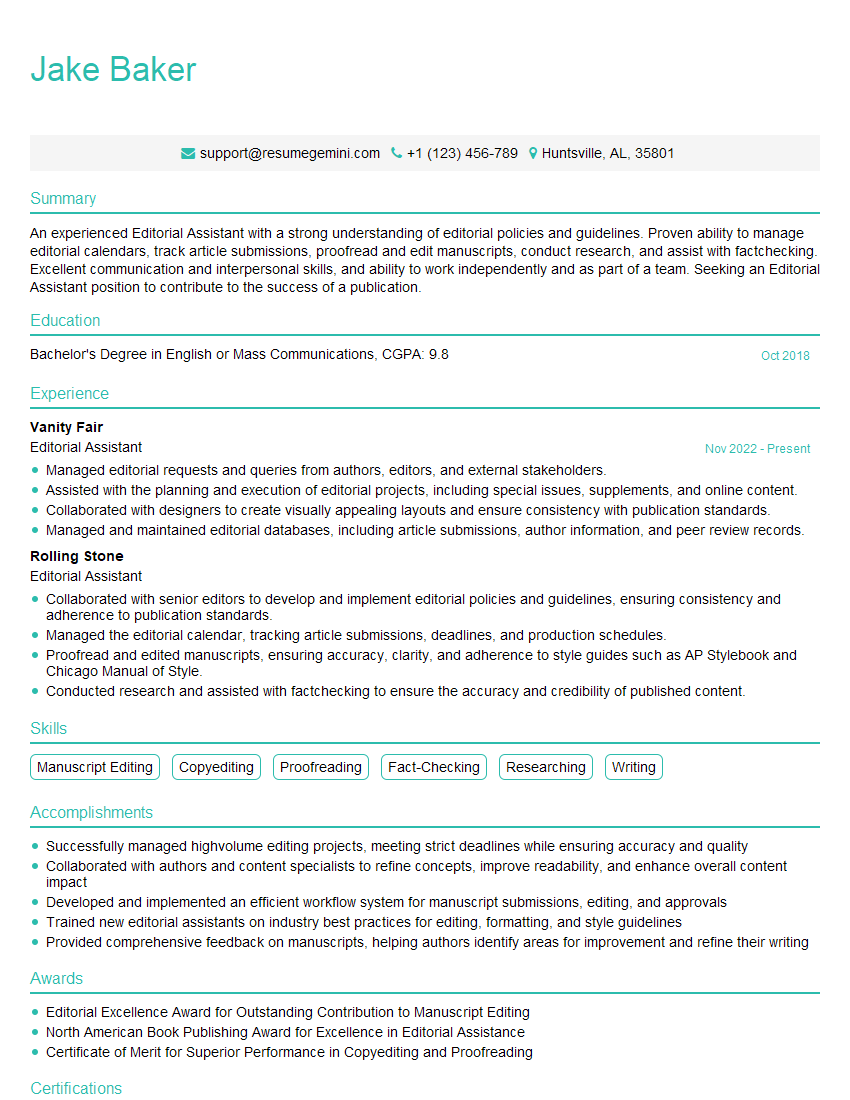
Editorial Assistant Resume Sample
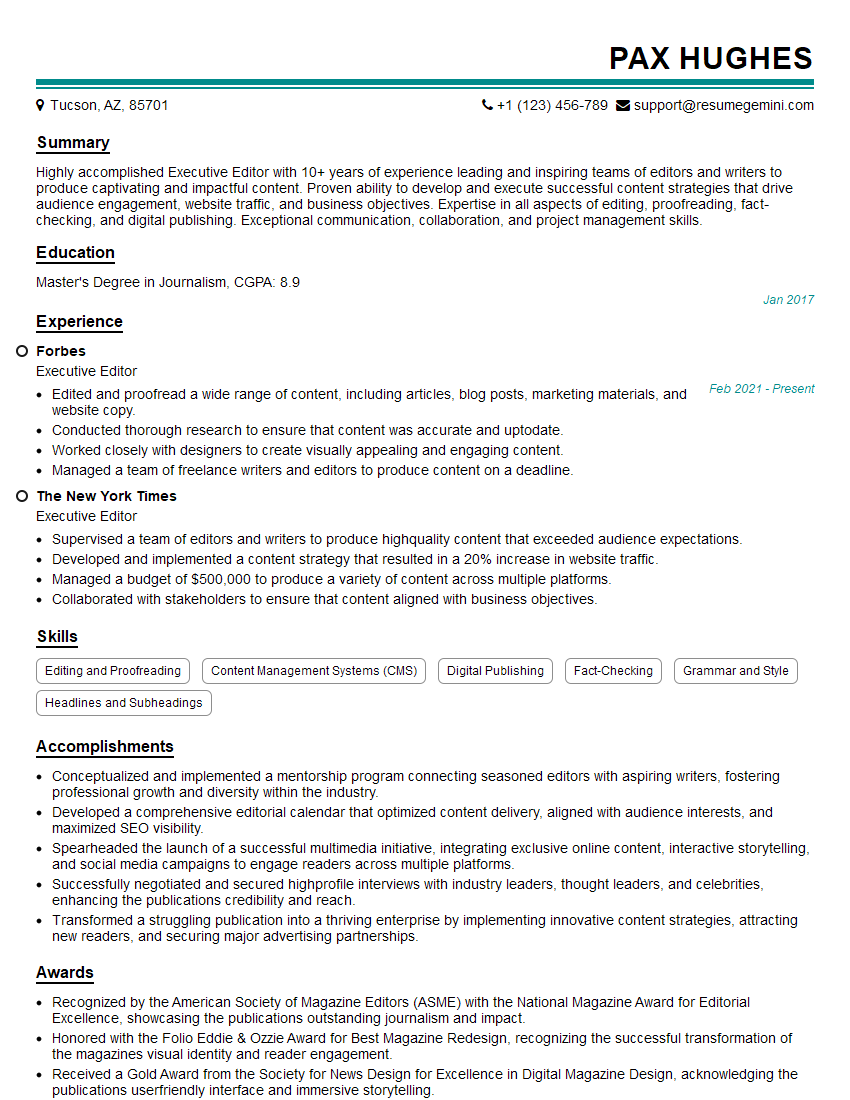
Executive Editor Resume Sample
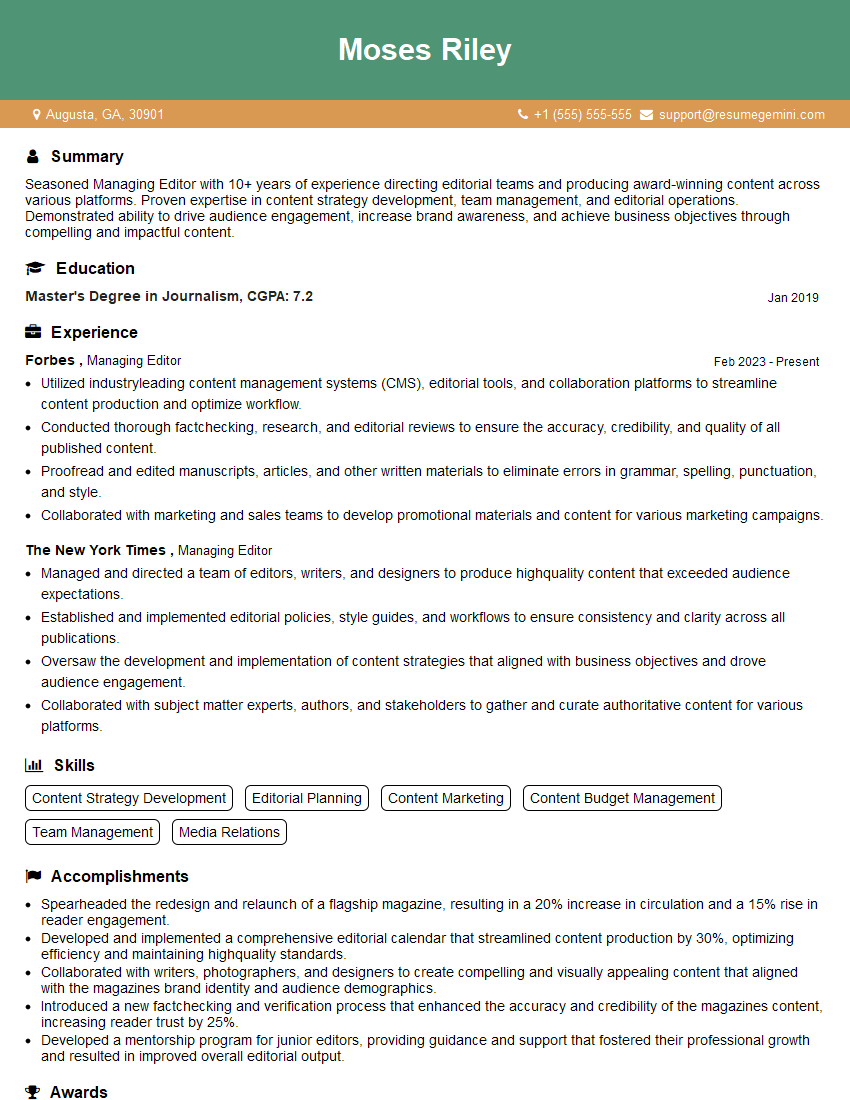
Managing Editor Resume Sample
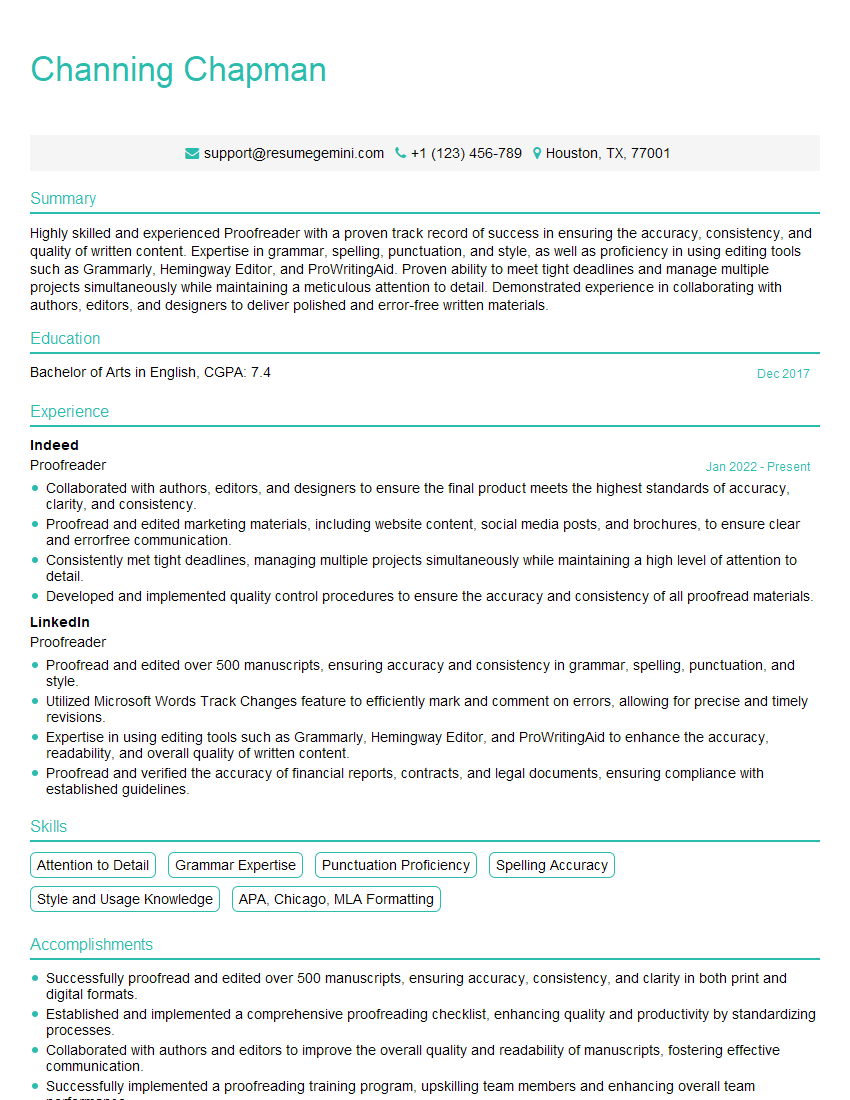
Proofreader Resume Sample
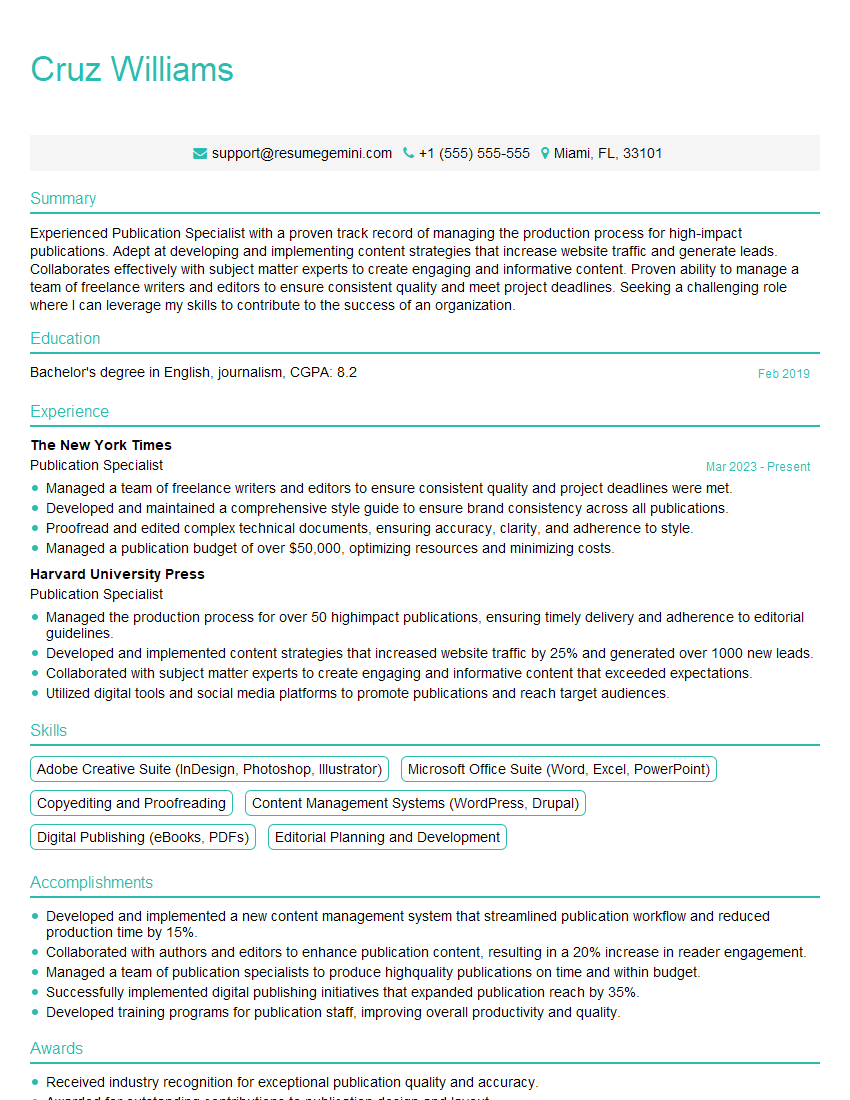
Publication Specialist Resume Sample

Technical Writer Resume Sample
Explore more articles
Users Rating of Our Blogs
Share Your Experience
We value your feedback! Please rate our content and share your thoughts (optional).
What Readers Say About Our Blog
I Redesigned Spongebob Squarepants and his main characters of my artwork.
https://www.deviantart.com/reimaginesponge/art/Redesigned-Spongebob-characters-1223583608
IT gave me an insight and words to use and be able to think of examples
Hi, I’m Jay, we have a few potential clients that are interested in your services, thought you might be a good fit. I’d love to talk about the details, when do you have time to talk?
Best,
Jay
Founder | CEO