Unlock your full potential by mastering the most common Instruction and Training interview questions. This blog offers a deep dive into the critical topics, ensuring you’re not only prepared to answer but to excel. With these insights, you’ll approach your interview with clarity and confidence.
Questions Asked in Instruction and Training Interview
Q 1. Explain your experience designing and delivering training programs.
Designing and delivering training programs is a multifaceted process that requires a blend of instructional design principles, subject matter expertise, and an understanding of adult learning theories. My experience spans various industries, including technology, healthcare, and finance. I’ve designed and delivered programs ranging from short, targeted workshops to extensive, multi-module learning pathways.
For example, at a previous role, I developed a comprehensive onboarding program for new software engineers. This included a blend of online modules, instructor-led training, and hands-on projects to ensure that new hires quickly became productive members of the team. I also designed a leadership development program for mid-level managers, focusing on communication skills, conflict resolution, and strategic thinking. This program involved role-playing exercises, case studies, and mentorship opportunities.
My approach always centers around identifying learning objectives, choosing appropriate delivery methods, creating engaging content, and consistently evaluating the effectiveness of the training. I consistently strive to create a positive and supportive learning environment, fostering learner interaction and collaboration wherever possible.
Q 2. Describe your process for needs analysis in instructional design.
Needs analysis is the cornerstone of effective instructional design. It’s the process of systematically identifying the gap between current performance and desired performance. This involves understanding the learner’s needs, the context of learning, and the learning objectives to be achieved. I typically employ a multi-faceted approach.
- Performance Gap Analysis: This involves comparing current performance data (e.g., metrics, observations, surveys) with desired performance levels. For example, if sales targets are consistently unmet, this could indicate a need for sales training.
- Learner Analysis: This focuses on the characteristics of the learners, such as their prior knowledge, skills, learning styles, and motivation. Understanding learner demographics and existing competencies is vital for tailoring the training accordingly.
- Task Analysis: This involves breaking down the tasks learners need to perform into smaller, manageable steps. This helps identify the specific knowledge and skills required for successful task completion. For example, a task analysis of creating a marketing campaign could involve breaking it down into research, content creation, strategy development, and implementation stages.
- Contextual Analysis: This involves examining the environment in which the training will be delivered and used. This includes considering factors such as available resources, technology, and the organizational culture.
The results of this analysis inform the design of the training program, ensuring that it addresses the specific needs and objectives identified.
Q 3. What instructional design models are you familiar with (e.g., ADDIE, SAM, AGILE)?
I’m proficient in several instructional design models, each with its strengths and weaknesses, and I select the model most appropriate for the specific project.
- ADDIE (Analysis, Design, Development, Implementation, Evaluation): This is a linear model that provides a structured framework for developing training programs. It’s effective for well-defined projects with clear objectives.
- SAM (Successive Approximation Model): This iterative model allows for flexibility and adjustments throughout the development process. It’s ideal for projects where requirements may change or evolve.
- Agile: This iterative and incremental approach emphasizes collaboration, flexibility, and continuous feedback. It’s particularly well-suited for projects with rapidly changing requirements or complex learning environments.
My choice of model depends heavily on the project scope, client needs, and the level of uncertainty involved. For example, a simple, well-defined training module might best suit the ADDIE model, while a complex, evolving project might benefit from the iterative approach of SAM or Agile.
Q 4. How do you assess the effectiveness of a training program?
Assessing training effectiveness is crucial to ensure that the program achieves its intended objectives and delivers a return on investment (ROI). My assessment strategies typically incorporate a mix of methods:
- Kirkpatrick’s Four Levels of Evaluation: This framework provides a comprehensive approach to evaluating training effectiveness. It includes assessing reaction (learner satisfaction), learning (knowledge gained), behavior (changes in on-the-job performance), and results (impact on organizational goals).
- Pre- and Post-tests: These measure knowledge and skills before and after training, allowing for a direct assessment of knowledge gained.
- Performance Metrics: These track changes in key performance indicators (KPIs) related to the training objectives. For example, improved sales figures after sales training.
- Observations and Feedback: These qualitative methods provide valuable insights into learner experiences and the impact of training on the workplace.
- Surveys and Focus Groups: Gather feedback from learners and stakeholders on the effectiveness of the program.
By using a combination of quantitative and qualitative data, I can gain a holistic understanding of training effectiveness and make data-driven improvements for future iterations.
Q 5. What experience do you have with eLearning platforms and authoring tools?
I have extensive experience with various eLearning platforms and authoring tools. My expertise includes:
- Learning Management Systems (LMS): I’m familiar with popular LMS platforms such as Moodle, Canvas, and Articulate 360, and I’m adept at using them to manage courses, track learner progress, and deliver training materials.
- Authoring Tools: I have experience creating engaging eLearning content using authoring tools like Articulate Storyline, Adobe Captivate, and Lectora. I’m proficient in developing interactive simulations, branching scenarios, and assessments.
For instance, I recently developed a series of interactive eLearning modules using Articulate Storyline for a client in the healthcare industry. These modules incorporated interactive exercises, gamified elements, and real-world case studies to enhance learner engagement and knowledge retention. The resulting program reduced training costs significantly while simultaneously improving learner satisfaction and knowledge acquisition.
Q 6. How do you handle diverse learning styles in your training programs?
Catering to diverse learning styles is paramount in effective instructional design. I employ several strategies to ensure inclusivity and accessibility:
- Multimodal Learning: I incorporate various modalities, such as visual, auditory, and kinesthetic learning elements. For example, a training program might include videos, presentations, interactive exercises, and hands-on activities.
- Differentiated Instruction: I tailor the content and delivery methods to accommodate different learning preferences. This could involve offering multiple pathways through the material, providing different types of assessments, or using a variety of teaching methods.
- Universal Design for Learning (UDL): I apply UDL principles to create flexible learning experiences that are accessible to all learners, regardless of their abilities or disabilities. This involves offering options for representation, action and expression, and engagement.
- Personalized Learning: Where feasible, I incorporate personalized learning elements such as adaptive assessments and individualized learning pathways to better cater to individual learner needs.
By employing these strategies, I strive to create a learning environment that is engaging and effective for learners with diverse backgrounds and preferences.
Q 7. Describe your experience developing training materials (e.g., presentations, manuals, videos).
Developing high-quality training materials is a crucial aspect of my role. I have a strong track record of creating a wide range of materials, including:
- Presentations: I use presentation software such as PowerPoint and Google Slides to create engaging and informative presentations. I prioritize clear visuals, concise text, and effective storytelling techniques.
- Manuals and Guides: I develop well-structured and easy-to-understand manuals and guides that serve as valuable resources for learners. These materials are often designed with clear navigation, visually appealing layouts, and searchable indexes.
- Videos: I use video editing software to produce engaging and informative videos, incorporating animation, screen recording, and interviews where appropriate. I always aim for high production quality to increase learner engagement.
- Interactive Exercises and Simulations: I create interactive exercises and simulations to enhance learner engagement and facilitate hands-on learning experiences. These can range from simple quizzes to complex scenarios requiring problem-solving skills.
In all my material development, I prioritize clarity, conciseness, and accessibility, ensuring that the materials are engaging, easy to understand, and readily usable by learners of diverse backgrounds and skill levels.
Q 8. How do you incorporate adult learning principles into your training design?
Incorporating adult learning principles is crucial for effective training. Adults are self-directed learners, bringing prior experience and a need for relevance to the table. My approach centers around the principles of andragogy, which contrasts with pedagogy (child-centered learning). I focus on:
- Experiential Learning: I prioritize hands-on activities, simulations, and case studies. For example, instead of just lecturing on conflict resolution, I might design a role-playing exercise where trainees practice handling difficult conversations.
- Relevance and Application: Training content is directly tied to the learners’ jobs and daily tasks. I ensure trainees understand why they’re learning something and how it will benefit them. For instance, if training is on a new software, I’ll showcase how it streamlines their current workflow.
- Self-Directed Learning: I provide resources and options for learners to progress at their own pace and explore topics that interest them most. This could involve offering supplementary materials, online forums, or mentoring opportunities.
- Collaborative Learning: Group work, peer discussions, and knowledge sharing among participants are encouraged. Learning from each other strengthens retention and builds community.
- Problem-Centered Approach: Training is designed to address specific problems or challenges learners face in their roles. We identify learning gaps and address them directly.
By focusing on these principles, I create engaging and impactful learning experiences that resonate with adult learners.
Q 9. What are some common challenges you’ve faced in instructional design, and how did you overcome them?
One common challenge is managing diverse learning styles and needs within a single training program. Some learners prefer visual aids, while others learn best through hands-on activities or discussions. To overcome this, I use a blended learning approach, incorporating various methods like videos, interactive exercises, group work, and individual assignments. I also provide learners with different ways to access information, such as text-based materials, audio recordings, and visual presentations. This caters to varied preferences and improves comprehension.
Another challenge is keeping learners engaged throughout the training. Long lectures or overly theoretical content can quickly lead to disengagement. My solution is to incorporate frequent breaks, interactive activities, and opportunities for real-time feedback. Game-based learning elements can also significantly boost engagement and motivation.
Finally, time constraints often create difficulties. Balancing comprehensive coverage with the available time requires careful planning and prioritization. I address this by focusing on the most critical learning objectives and utilizing microlearning techniques – short, focused learning modules that deliver key information efficiently.
Q 10. How do you stay current with trends in instructional design and technology?
Staying current is vital in instructional design. I actively engage in several strategies:
- Professional Development: I regularly attend conferences, workshops, and webinars focused on instructional design and emerging technologies. This allows me to network with peers and learn about cutting-edge approaches.
- Industry Publications and Research: I subscribe to relevant journals and online resources, keeping abreast of research findings and best practices.
- Online Communities and Forums: Participating in online communities allows me to exchange ideas with other instructional designers, learn from their experiences, and discuss challenges and solutions.
- Experimentation: I actively incorporate new technologies and methodologies into my projects. This hands-on experience allows me to evaluate their effectiveness and determine their suitability for various learning contexts. For instance, I recently experimented with integrating VR technology into a safety training program.
- Certifications: I actively pursue relevant certifications to demonstrate my commitment to professional development and stay abreast of emerging trends.
This multi-faceted approach ensures I remain informed and adapt my skills to the evolving landscape of instructional design.
Q 11. Describe your experience with creating and managing training budgets.
My experience with training budgets involves careful planning, resource allocation, and cost-effective decision-making. I begin by defining clear learning objectives and identifying the resources needed to achieve them. This includes estimating costs for:
- Instructor fees: If utilizing external instructors.
- Materials and supplies: Workbooks, handouts, technology, etc.
- Venue costs: Rental fees, catering, etc.
- Technology: Software licenses, online platforms, etc.
- Evaluation tools: Assessments, surveys, etc.
I then create a detailed budget proposal that outlines all anticipated expenses, justifying each cost. I regularly monitor expenses throughout the project lifecycle, ensuring adherence to the approved budget. Where possible, I explore cost-effective alternatives, like using freely available online resources or repurposing existing materials. My goal is to maximize the impact of the training while remaining fiscally responsible.
Q 12. How do you measure the ROI of a training program?
Measuring the ROI of a training program requires a multifaceted approach. It’s not just about the immediate cost savings but also the long-term benefits. I typically use a combination of quantitative and qualitative methods:
- Performance Improvement Metrics: Tracking improvements in employee performance, such as increased productivity, reduced errors, or improved sales figures. This can be achieved through pre- and post-training performance assessments.
- Cost Savings: Calculating the reduction in costs associated with errors, rework, accidents, or employee turnover.
- Employee Satisfaction Surveys: Gathering feedback from trainees on their satisfaction with the training program and its impact on their work.
- Return on Investment (ROI) Calculation: A numerical calculation comparing the total cost of the training program to the financial benefits it produces. The formula often looks something like:
(Benefits - Costs) / Costs * 100% - Qualitative Feedback: Gathering feedback through focus groups or interviews to understand the impact of training on employee morale, engagement, and job satisfaction.
By combining these methods, I can build a comprehensive picture of the training program’s value and demonstrate its impact on the organization’s bottom line.
Q 13. What are your preferred methods for evaluating trainee performance?
My preferred methods for evaluating trainee performance are diverse and depend on the training objectives. I generally use a combination of methods:
- Knowledge Tests: Written or online exams to assess understanding of key concepts and information.
- Skills Demonstrations: Practical exercises or simulations where trainees apply their new skills in a controlled environment.
- Performance Observations: Direct observation of trainees applying their skills on the job, often through a structured checklist or observation guide.
- 360-Degree Feedback: Collecting feedback from supervisors, peers, and subordinates to gain a holistic view of performance improvement.
- Projects and Portfolios: Requiring trainees to complete projects or build portfolios demonstrating their abilities.
The choice of evaluation method is tailored to the specific learning objectives and the nature of the skills being taught. Feedback is always provided in a constructive and supportive manner, focusing on improvement and future development.
Q 14. How do you adapt your training approach to different audiences and learning objectives?
Adapting my training approach to different audiences and learning objectives is crucial for success. I consider several factors:
- Audience Analysis: Thoroughly understanding the learners’ prior knowledge, experience, learning styles, and cultural backgrounds is paramount. This involves using needs assessments, surveys, and interviews.
- Learning Objectives: Clearly defining the specific skills, knowledge, and behaviors trainees should acquire after completing the training. These objectives guide content development and evaluation methods.
- Training Methods: Selecting appropriate training methods such as lectures, group discussions, simulations, or e-learning modules based on the learning objectives and audience characteristics. For example, a technical training for engineers might involve hands-on workshops, while a soft skills training for managers could use role-playing and case studies.
- Content Delivery: Tailoring the content and delivery style to resonate with the audience. This could involve adapting the language, examples, and pace of the training.
- Accessibility: Ensuring the training materials and methods are accessible to all learners, regardless of their abilities or disabilities.
By considering these factors, I can create targeted and effective training experiences that meet the specific needs of each audience and achieve the desired learning outcomes.
Q 15. Explain your experience with blended learning methodologies.
Blended learning combines online and offline learning methods to create a richer, more engaging learning experience. It leverages the strengths of both approaches. For example, online modules might deliver theoretical content, while in-person workshops focus on practical application and collaborative activities. In my experience, I’ve successfully implemented blended learning programs for various clients, tailoring the mix of online and offline components to meet specific learning objectives and learner needs.
For instance, I designed a blended learning program for a software company. The online component consisted of self-paced modules covering software features via video tutorials and interactive exercises. The offline component involved hands-on workshops where participants worked on real-world projects under my guidance, receiving personalized feedback. This approach resulted in significantly higher knowledge retention and skill acquisition compared to a purely online or offline approach. Another example includes a leadership training program where online modules covered theoretical leadership frameworks, followed by in-person simulations and group discussions, fostering crucial leadership skills.
- Increased engagement: Variety keeps learners motivated.
- Flexibility: Learners can access materials at their own pace and convenience.
- Personalized learning: Instructors can provide tailored support based on individual needs.
Career Expert Tips:
- Ace those interviews! Prepare effectively by reviewing the Top 50 Most Common Interview Questions on ResumeGemini.
- Navigate your job search with confidence! Explore a wide range of Career Tips on ResumeGemini. Learn about common challenges and recommendations to overcome them.
- Craft the perfect resume! Master the Art of Resume Writing with ResumeGemini’s guide. Showcase your unique qualifications and achievements effectively.
- Don’t miss out on holiday savings! Build your dream resume with ResumeGemini’s ATS optimized templates.
Q 16. What is your experience with learning management systems (LMS)?
My experience with Learning Management Systems (LMS) spans several platforms, including Moodle, Canvas, and Blackboard. I’m proficient in using LMS features for course creation, content delivery, assessment, and tracking learner progress. I understand the importance of designing engaging learning experiences within the constraints of the LMS platform. This includes carefully structuring content, utilizing multimedia resources, and incorporating interactive elements to prevent learners from feeling overwhelmed by the platform itself.
For example, in a recent project, I utilized Moodle to create a comprehensive training program for a healthcare organization. I integrated various learning activities, such as quizzes, discussion forums, and assignment submissions, to track learner performance and foster collaboration. I also utilized Moodle’s reporting features to track overall course completion rates and identify areas requiring improvement in the course design. Beyond basic functionality, I’m adept at customizing the LMS to reflect brand guidelines and ensure a cohesive user experience.
Q 17. How do you ensure accessibility in your training materials?
Accessibility is paramount in my instructional design process. I ensure all my training materials adhere to WCAG (Web Content Accessibility Guidelines) to accommodate learners with disabilities. This includes:
- Alternative text for images: Providing descriptive text for images helps visually impaired learners understand the content.
- Captions and transcripts for videos: Making videos accessible to deaf or hard-of-hearing learners.
- Keyboard navigation: Ensuring all interactive elements are navigable using only a keyboard.
- Sufficient color contrast: Using color combinations that are easily distinguishable for learners with visual impairments.
- Structured content: Using headings, lists, and other structural elements to make content easier to navigate and understand.
- Simplified language: Avoiding jargon and complex sentence structures.
For instance, in developing online training for a financial institution, I used screen readers to test the accessibility of all materials and made adjustments accordingly. This commitment ensured inclusivity and broadened the reach of our training programs. I see accessibility not just as a compliance issue, but a crucial step in creating high-quality training that serves all learners effectively.
Q 18. Describe your experience with instructional design software.
I’m experienced with various instructional design software, including Articulate Storyline, Adobe Captivate, and Lectora. These tools allow me to create interactive, engaging e-learning modules that go beyond simple text and images. My expertise includes using these tools to develop interactive simulations, branching scenarios, and assessments to foster active learning.
For example, I used Articulate Storyline to develop a gamified training module on safety procedures for a manufacturing plant. The module incorporated interactive elements such as drag-and-drop activities, quizzes, and a point-based system to maintain learner engagement. The use of these tools allows me to build visually appealing and effective training materials that cater to diverse learning styles and preferences. I’m also skilled in using these tools to create visually appealing materials that reflect the company’s brand identity.
Q 19. How do you facilitate effective group learning activities?
Facilitating effective group learning requires careful planning and execution. I employ various techniques to encourage active participation and collaboration. This includes:
- Clearly defined roles and responsibilities: Each group member should have a specific role to ensure everyone contributes.
- Structured activities: Using activities such as brainstorming sessions, case studies, or problem-solving exercises to guide group interaction.
- Collaborative tools: Utilizing online whiteboards or collaborative document editing tools to facilitate remote group work.
- Icebreaker activities: Starting with an icebreaker to help group members get to know each other and feel comfortable sharing their ideas.
- Constructive feedback: Providing timely and constructive feedback to help groups improve their performance.
In a recent team-building workshop, I used a collaborative problem-solving activity that required participants to work together to solve a complex puzzle. This fostered collaboration and communication while making the learning experience fun and engaging.
Q 20. How do you handle difficult or unmotivated learners?
Addressing difficult or unmotivated learners requires a multifaceted approach. I focus on understanding the root cause of their disengagement, and then tailoring my approach accordingly. This might involve:
- Individualized attention: Identifying their specific needs and providing personalized support and feedback.
- Relatable content: Connecting the learning content to their interests and experiences.
- Clear expectations: Setting clear goals and expectations for learning outcomes.
- Positive reinforcement: Recognizing and rewarding their efforts and achievements.
- Addressing underlying issues: If the unmotivation stems from personal issues, I would try to support them in finding resources or solutions.
- Variety of learning methods: Offering a blend of activities to cater to diverse learning styles.
For instance, I once worked with a learner who was struggling with a particular module due to prior negative experiences with similar concepts. I addressed this by revisiting the fundamental concepts, providing alternative explanations, and offering additional practice exercises. The key is patience and a willingness to adapt my teaching methods to meet individual needs.
Q 21. Describe your experience with performance support tools.
Performance support tools provide on-the-job assistance and guidance, enhancing knowledge retention and skill application. My experience includes developing and implementing various performance support tools, such as job aids, quick reference guides, and online help systems. These tools ensure learners can easily access information and support when they need it most, directly in their work environment.
For example, I developed a series of job aids for customer service representatives, providing them with quick access to troubleshooting procedures and product information. This reduced the need for constant training and improved the efficiency of their work. Creating effective performance support tools involves understanding the specific tasks and challenges faced by employees and designing resources that are easy to use and readily accessible. The goal is to empower employees to perform their jobs effectively and confidently.
Q 22. What is your experience with microlearning design?
Microlearning design focuses on delivering bite-sized, focused learning experiences, typically lasting 5-10 minutes. This contrasts with traditional, lengthy training modules. My experience involves designing microlearning modules using various formats such as short videos, interactive quizzes, infographics, and even short podcasts. For example, I once developed a series of microlearning modules for a healthcare company to train staff on new medication protocols. Each module focused on a single aspect of the protocol, making learning digestible and improving knowledge retention compared to a single, lengthy session.
I prioritize using a variety of media to keep learners engaged and cater to different learning styles. A strong emphasis is placed on clear learning objectives and knowledge checks at the end of each module to assess comprehension. The key to effective microlearning is to break down complex information into easily digestible chunks, making learning less daunting and more effective.
Q 23. How do you ensure consistency across multiple training programs?
Consistency across multiple training programs is crucial for a cohesive learning experience and to avoid learner confusion. My approach involves creating a comprehensive style guide that dictates everything from visual branding (logo usage, color palettes, font choices) to the language used in instructions and assessments. This style guide serves as a central reference point for all training materials.
Furthermore, I utilize a centralized learning management system (LMS) to house all training programs. This ensures consistency in delivery and tracking of learner progress. We also implement standardized templates for creating modules, ensuring consistency in structure and format. Finally, regular quality assurance checks throughout the development process help identify and rectify inconsistencies before launch.
Q 24. What is your approach to managing training logistics?
Managing training logistics requires meticulous planning and execution. My approach involves a phased approach: Firstly, I define clear objectives and target audiences to tailor the logistical elements (location, timing, resources). Then, I secure the necessary resources – including venues, equipment, materials, and instructors – well in advance. This involves negotiating contracts, booking venues, and ensuring all materials are produced and available on time.
Next, I create detailed schedules and agendas, communicating them clearly to all participants and stakeholders. Pre-training communication, including reminders and preparation instructions, is crucial. During the training, I manage the flow of activities, addressing any logistical issues promptly. Post-training, I gather feedback, analyze results, and document the entire process for future reference. Effective logistical management is crucial for a smooth and successful training experience.
Q 25. How do you use data analytics to inform your training decisions?
Data analytics plays a pivotal role in informing training decisions. I utilize data from various sources, including learner performance on assessments, completion rates, time spent on modules, and feedback surveys. This data allows me to identify areas where the training is effective and where improvements are needed.
For instance, if a significant number of learners struggle with a specific module, this signals a need for revision or additional support. Similarly, low completion rates may indicate issues with engagement or difficulty with the content. By analyzing this data, I can make data-driven decisions regarding content updates, instructional strategies, and even the overall training design. The key is to establish clear metrics at the outset and then track performance regularly, adapting the training accordingly.
Q 26. Describe your experience with developing training evaluation tools.
Developing robust training evaluation tools is essential for measuring the effectiveness of a training program. My approach involves creating a comprehensive evaluation plan that includes various tools and methods. This typically involves pre-training needs assessments to identify skill gaps, and post-training evaluations to assess knowledge gain, skill development, and behavioral changes.
I use a mix of assessment tools such as written tests, practical exercises, simulations, and observation checklists, tailored to the specific learning objectives. These tools are designed to measure different learning levels, from simple recall to higher-order thinking skills. I also include feedback mechanisms like surveys and interviews to gather learner perspectives and identify areas for improvement. The data collected informs future iterations of the training program ensuring its ongoing relevance and effectiveness.
Q 27. Explain your experience with creating gamified learning experiences.
Gamification can significantly enhance learner engagement and motivation. My experience involves incorporating game mechanics such as points, badges, leaderboards, and challenges into training programs. For example, I developed a gamified training program for a sales team where completing modules earned points that contributed towards achieving virtual badges and climbing a leaderboard. This friendly competition boosted engagement and encouraged learners to complete the training.
The key to successful gamification is to integrate game mechanics organically, ensuring they align with the learning objectives and not just be superficial additions. I carefully consider the target audience and their preferences to ensure the gamification elements resonate and contribute to learning outcomes. Storytelling, challenges, and rewards are powerful tools when used effectively to make learning fun and engaging.
Q 28. How do you ensure that your training materials are engaging and relevant?
Creating engaging and relevant training materials requires a deep understanding of the target audience and their needs. I start by conducting thorough needs assessments to identify the knowledge and skills gaps that the training aims to address. This involves analyzing job roles, reviewing performance data, and gathering feedback from learners and stakeholders.
Once the learning objectives are clearly defined, I focus on designing content that is interactive, visually appealing, and relevant to the learner’s daily work. I use a variety of media, including videos, interactive simulations, real-world case studies, and practical exercises, to keep learners engaged and maintain their attention. Regular feedback mechanisms during and after the training process enable continuous improvements and help to maintain relevancy.
Key Topics to Learn for Instruction and Training Interview
- Learning Theories and Models: Understand and apply various learning theories (e.g., adult learning principles, cognitive load theory) to design effective training programs. Consider how different learning styles impact your approach.
- Instructional Design Principles: Master the ADDIE model or similar instructional design frameworks. Be prepared to discuss the practical application of needs analysis, content development, evaluation, and revision.
- Training Delivery Methods: Showcase your familiarity with diverse delivery methods such as e-learning, workshops, on-the-job training, simulations, and blended learning. Be ready to discuss the strengths and weaknesses of each.
- Assessment and Evaluation Strategies: Explain your understanding of different assessment methods (e.g., pre-tests, post-tests, performance assessments) and how to measure the effectiveness of training programs using appropriate metrics.
- Technology Integration in Training: Discuss your experience with Learning Management Systems (LMS), authoring tools, and other technologies used to create and deliver training. Highlight your proficiency in adapting to new technologies.
- Curriculum Development and Management: Demonstrate your ability to develop comprehensive training curricula aligned with organizational goals and learning objectives. Consider how you would manage revisions and updates.
- Problem-Solving and Adaptability: Be prepared to discuss how you would handle challenges such as participant engagement, unexpected technical issues, or adapting training materials to diverse audiences.
Next Steps
Mastering Instruction and Training opens doors to rewarding careers with significant growth potential. Your expertise in designing and delivering impactful learning experiences will be highly valued in today’s dynamic work environment. To significantly improve your job prospects, create an ATS-friendly resume that highlights your skills and experience effectively. We strongly recommend using ResumeGemini to build a professional and compelling resume that showcases your unique qualifications. ResumeGemini provides examples of resumes tailored specifically to Instruction and Training roles, helping you present your abilities in the best possible light.
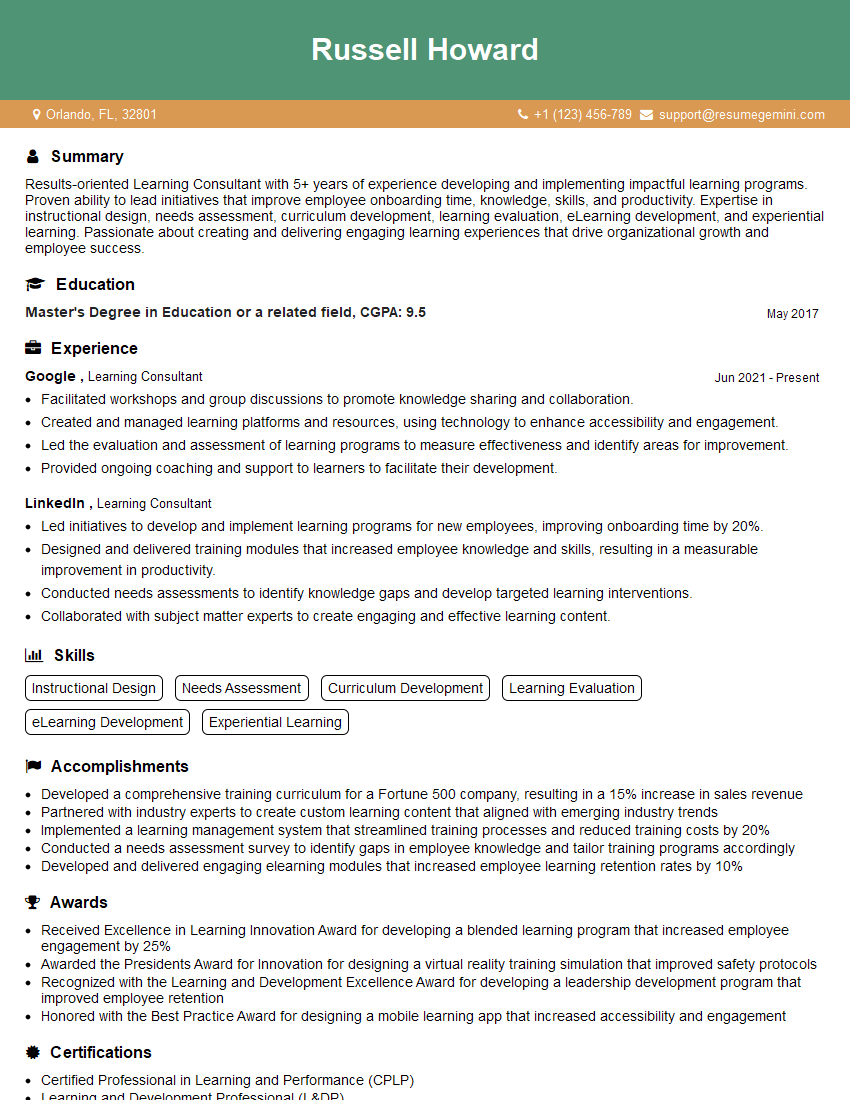
Learning Consultant Resume Sample
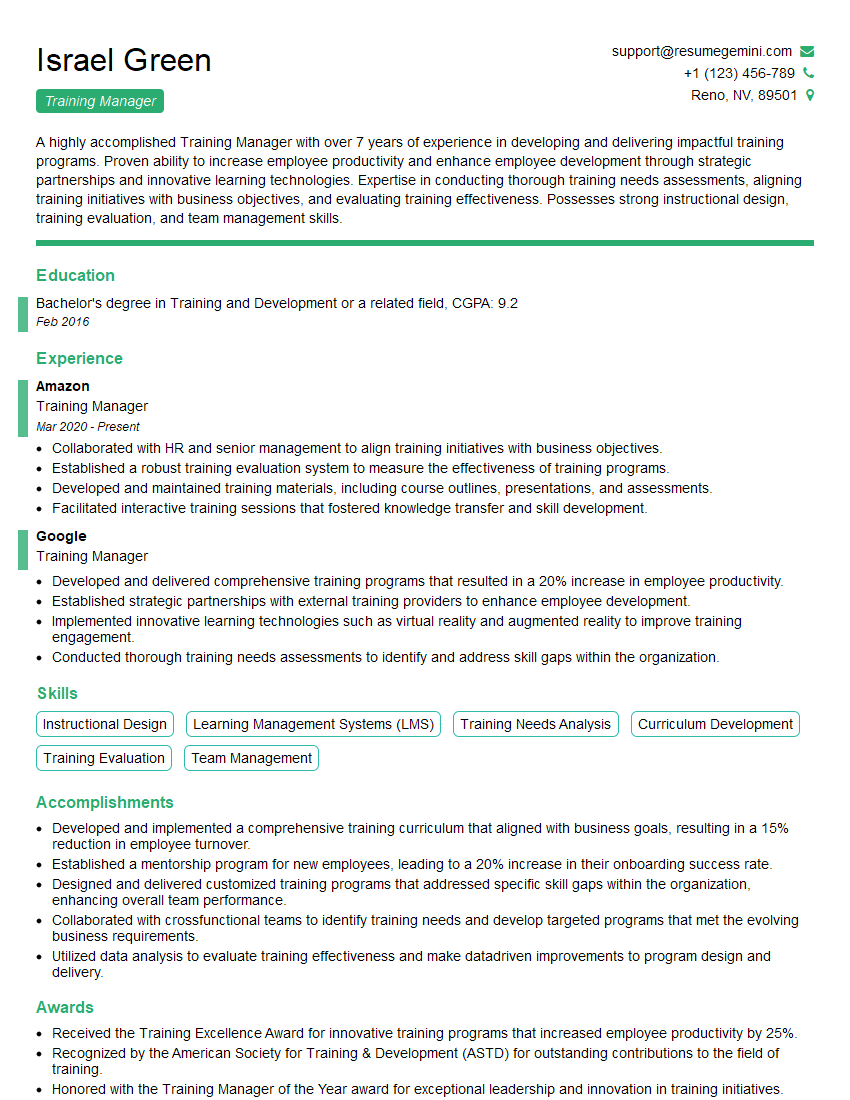
Training Manager Resume Sample
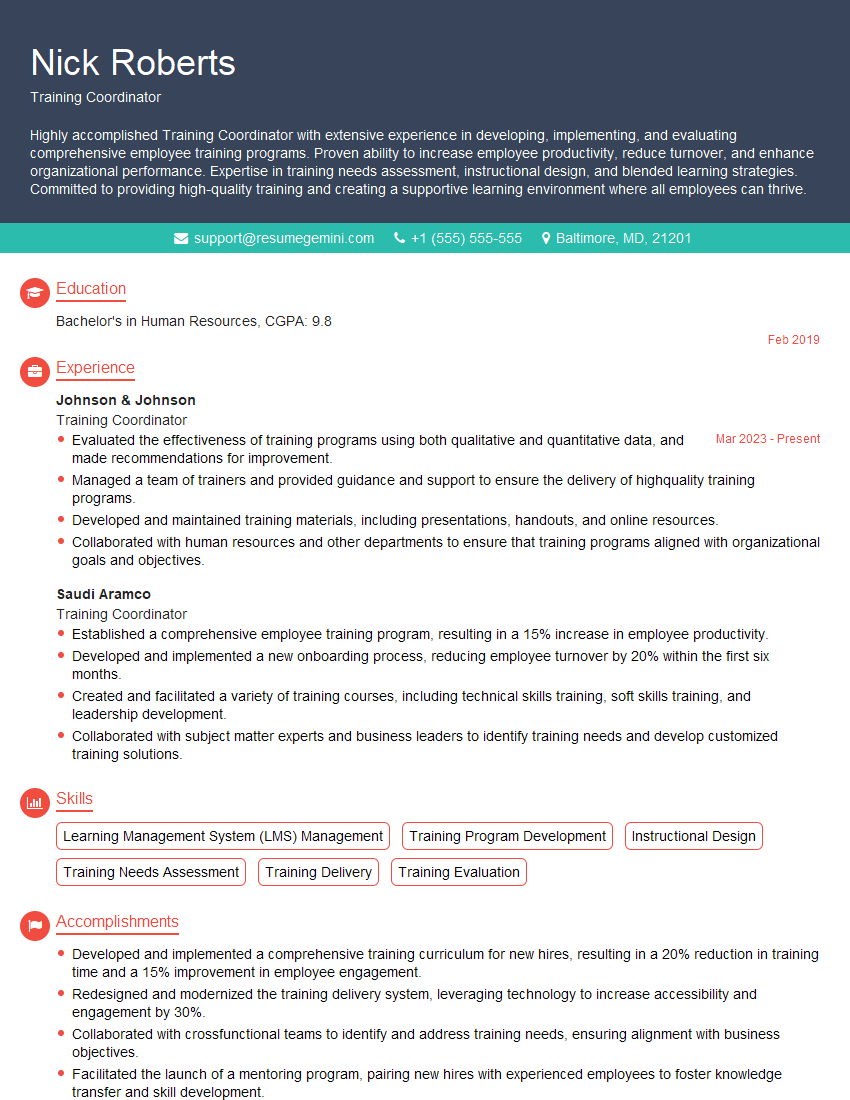
Training Coordinator Resume Sample
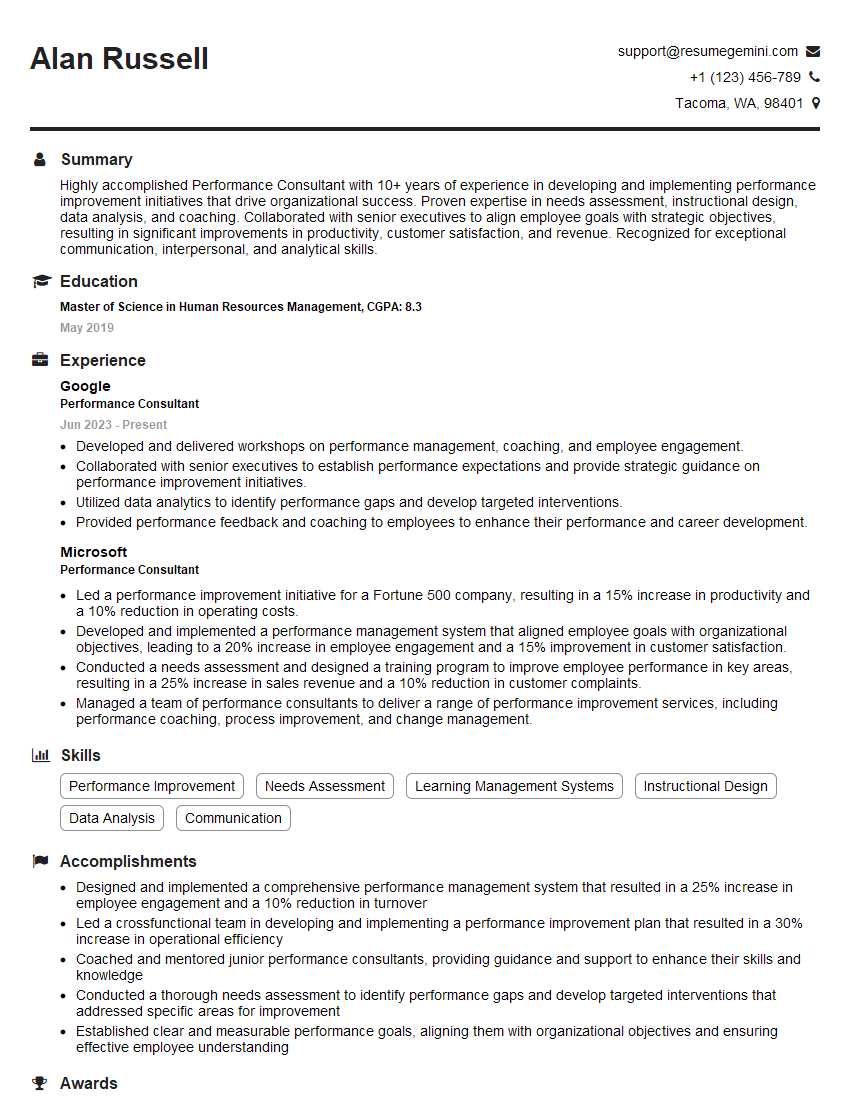
Performance Consultant Resume Sample
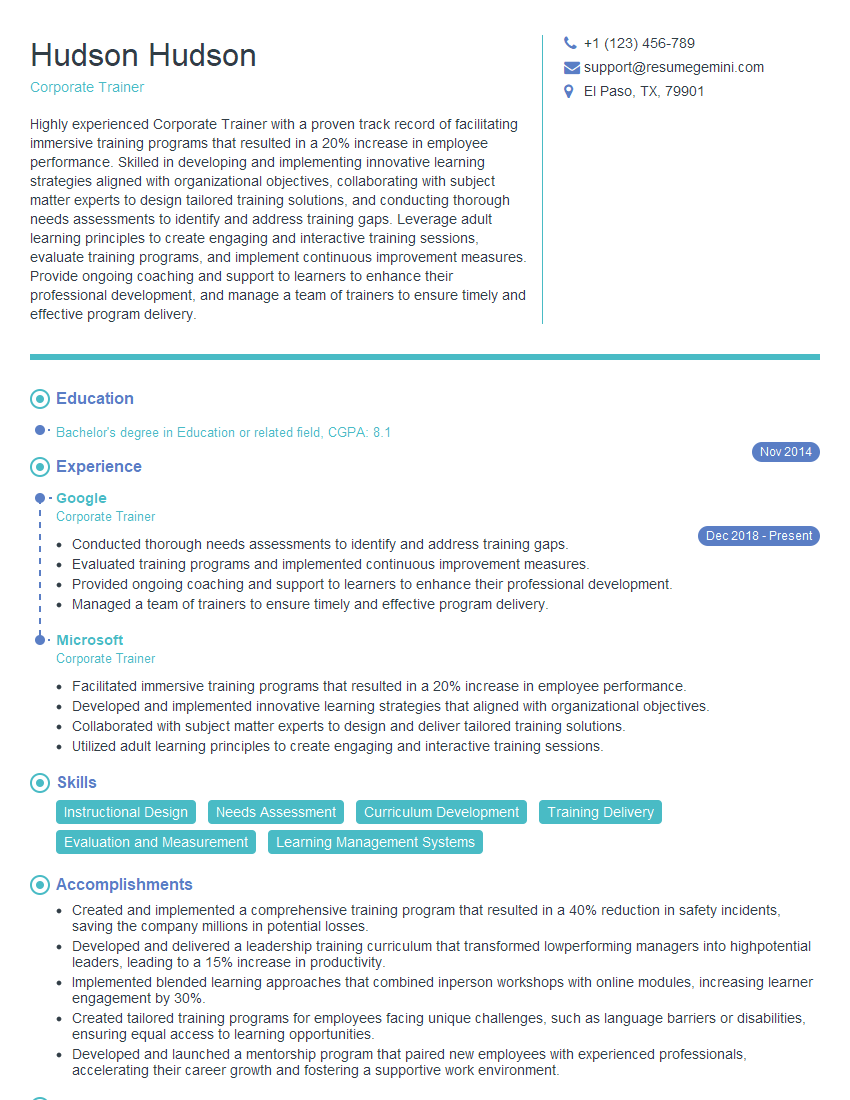
Corporate Trainer Resume Sample

Curriculum Developer Resume Sample
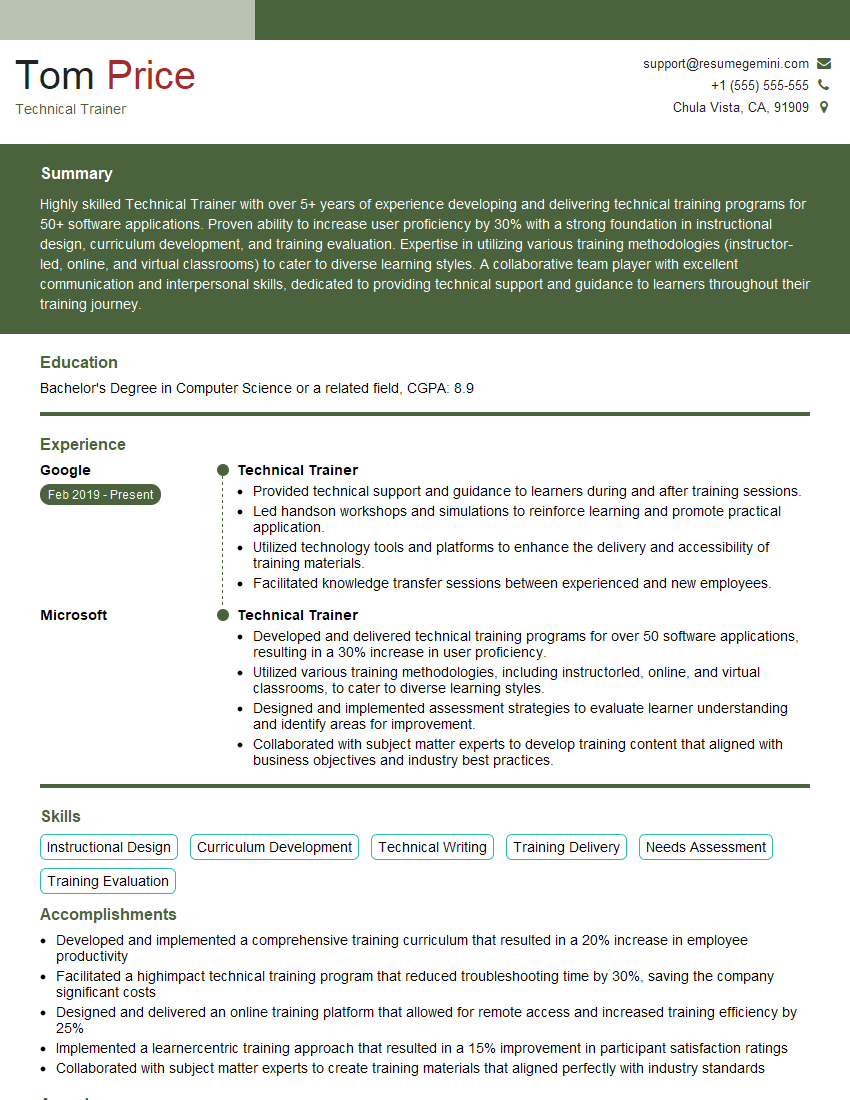
Technical Trainer Resume Sample

Training Specialist Resume Sample
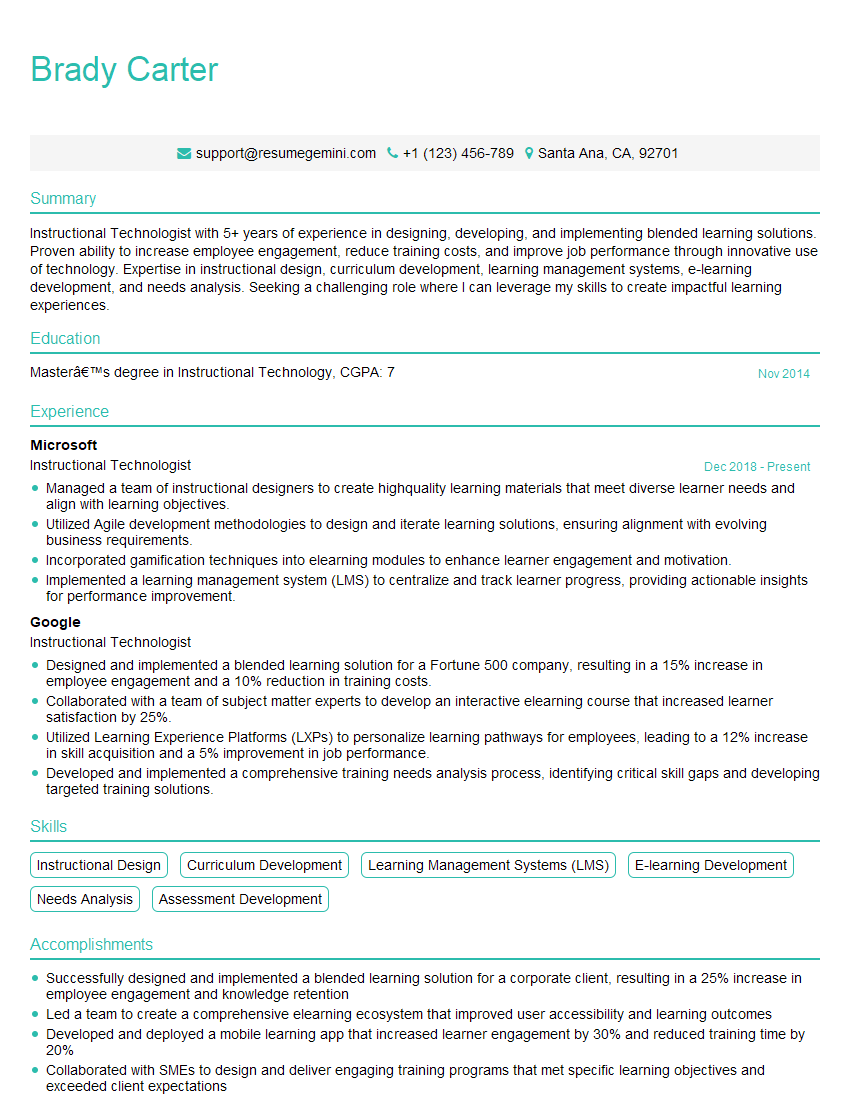
Instructional Technologist Resume Sample
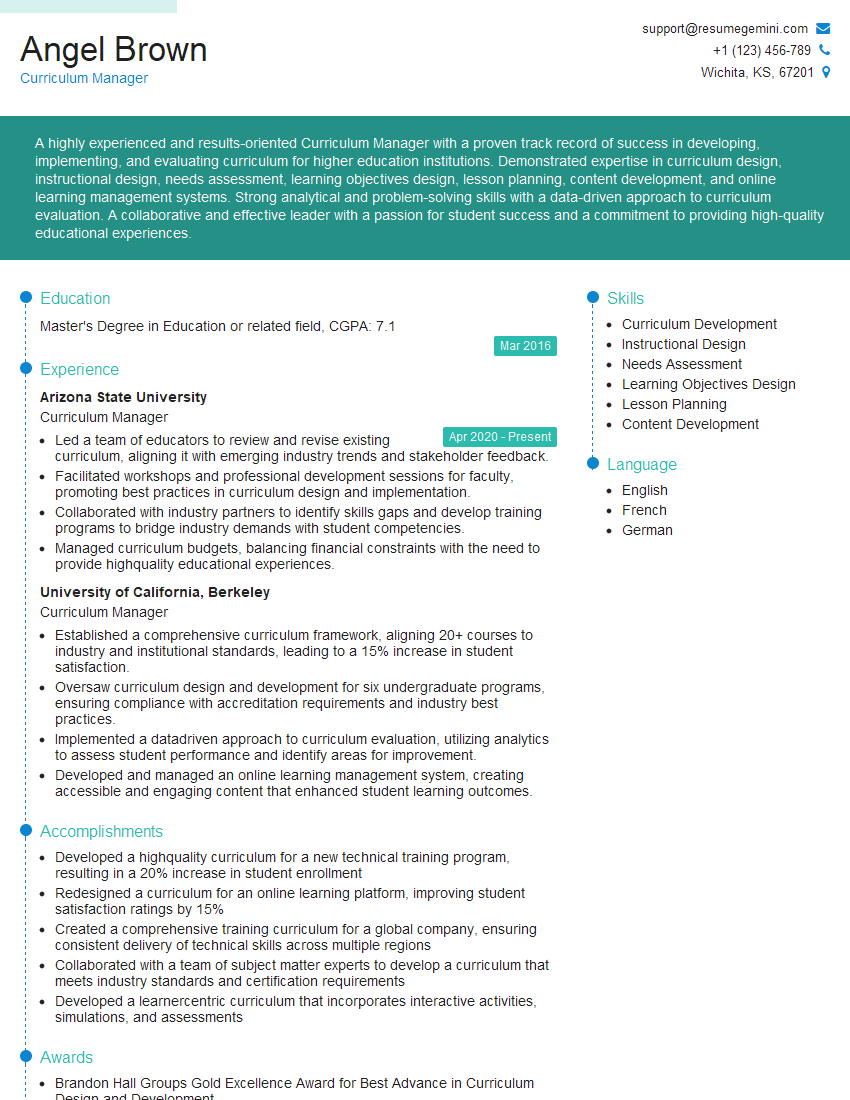
Curriculum Manager Resume Sample
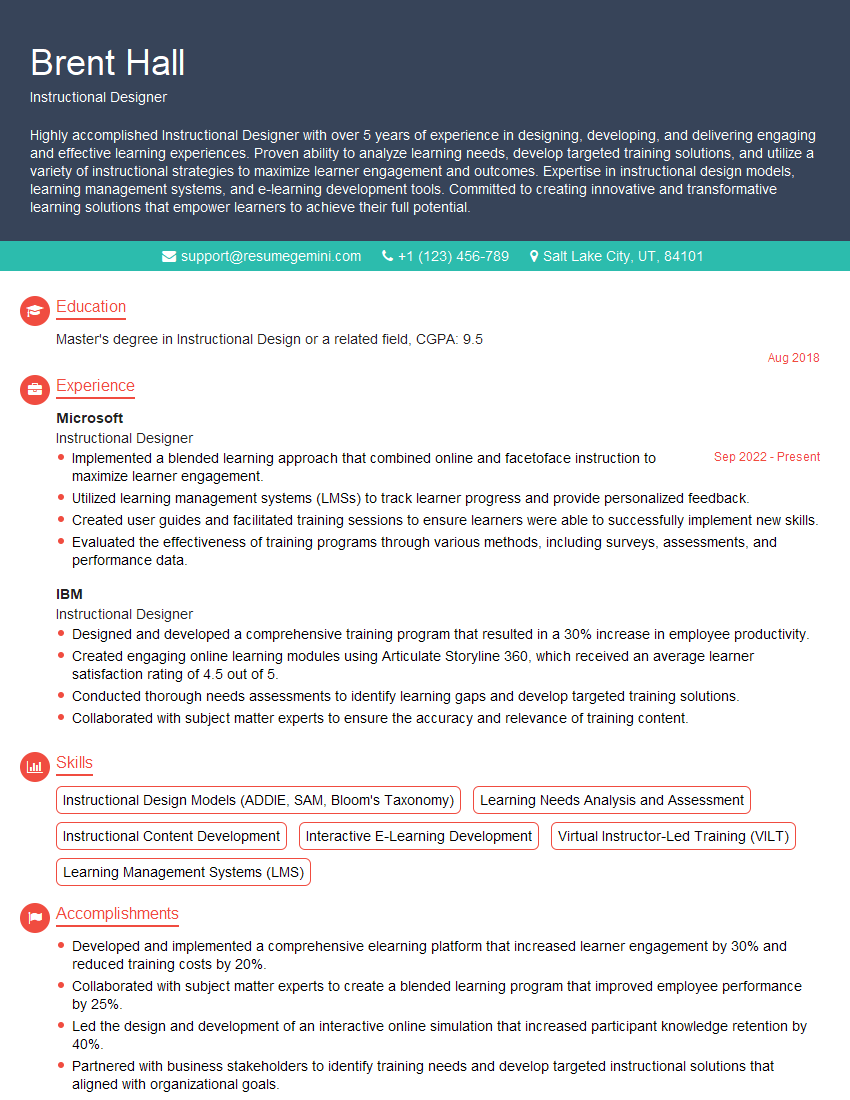
Instructional Designer Resume Sample
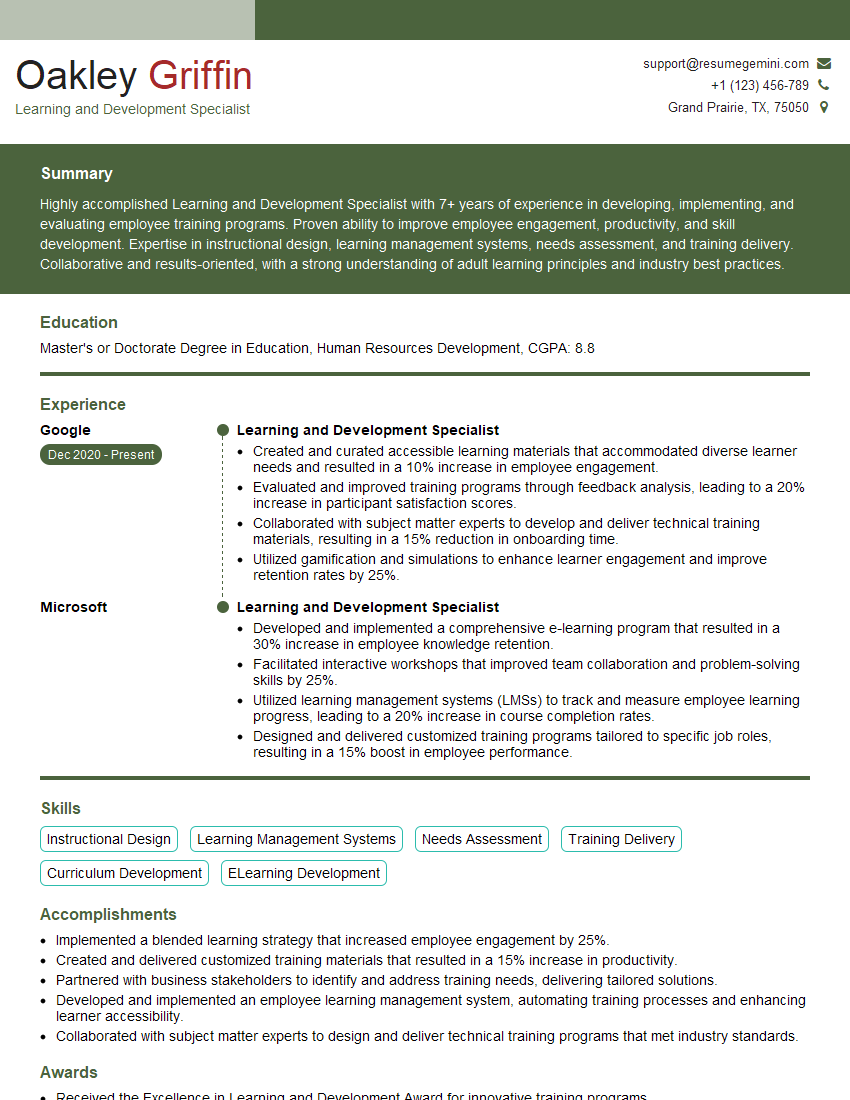
Learning and Development Specialist Resume Sample
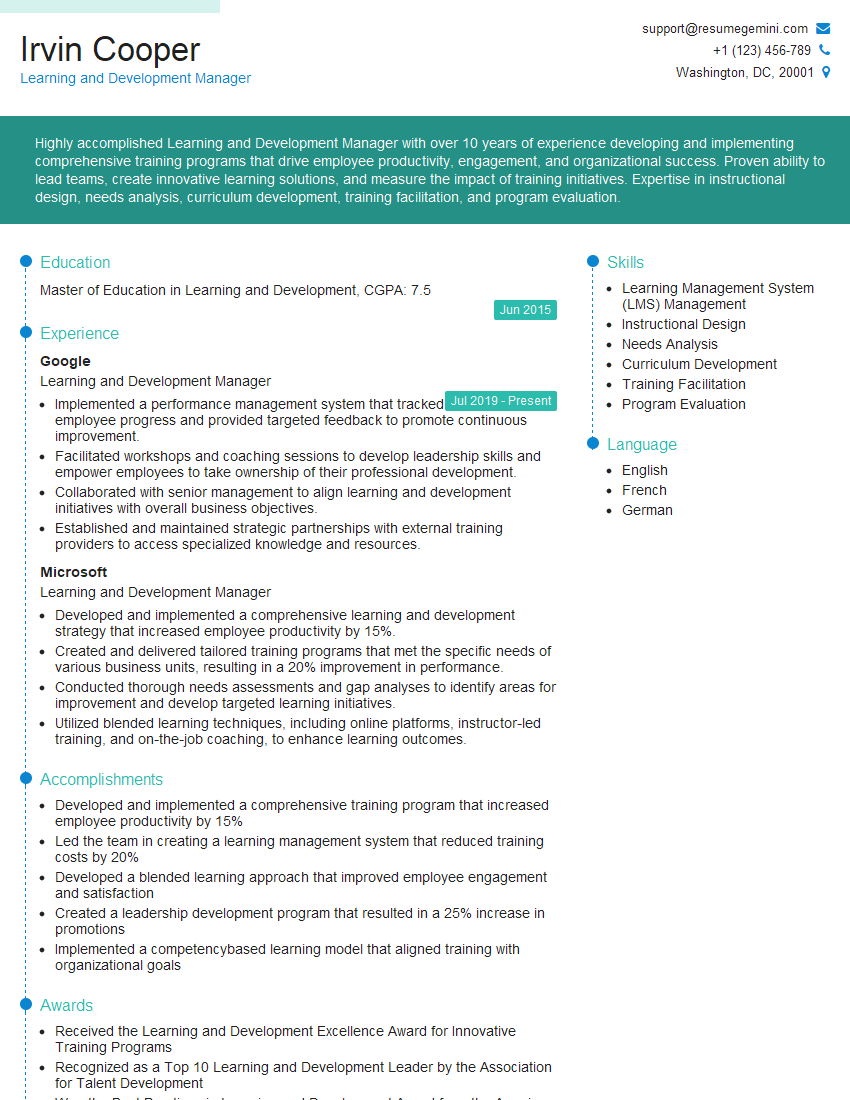
Learning and Development Manager Resume Sample
Explore more articles
Users Rating of Our Blogs
Share Your Experience
We value your feedback! Please rate our content and share your thoughts (optional).
What Readers Say About Our Blog
I Redesigned Spongebob Squarepants and his main characters of my artwork.
https://www.deviantart.com/reimaginesponge/art/Redesigned-Spongebob-characters-1223583608
IT gave me an insight and words to use and be able to think of examples
Hi, I’m Jay, we have a few potential clients that are interested in your services, thought you might be a good fit. I’d love to talk about the details, when do you have time to talk?
Best,
Jay
Founder | CEO