The thought of an interview can be nerve-wracking, but the right preparation can make all the difference. Explore this comprehensive guide to Cable Laying interview questions and gain the confidence you need to showcase your abilities and secure the role.
Questions Asked in Cable Laying Interview
Q 1. Describe the different types of cable used in cable laying projects.
Cable laying projects utilize a variety of cables, each chosen based on its intended application and environmental conditions. The selection process considers factors like voltage, current carrying capacity, installation environment (underground, aerial, underwater), and required lifespan.
- Power Cables: These transmit high-voltage electricity over long distances and are typically heavily insulated and armored for protection. Examples include high-voltage underground cables used in power grids and medium-voltage cables for local distribution.
- Communication Cables: These transmit data, voice, and video signals. Types include coaxial cables (used for cable television and older internet connections), fiber optic cables (offering high bandwidth for modern internet and telecommunications), and twisted-pair cables (commonly used in local area networks).
- Control Cables: These carry low-voltage signals for control and monitoring purposes in various industrial applications. They’re often multi-core cables with individually shielded conductors for noise reduction.
- Instrumentation Cables: Used for transmitting precise measurement data, these cables feature highly sensitive conductors and shielding to minimize interference.
- Submarine Cables: Designed for underwater deployment, these cables possess extra-robust armoring and insulation to withstand the pressure and corrosive environment of the ocean floor. They often include repeaters for signal amplification over vast distances.
Choosing the right cable type is crucial for ensuring reliable performance and longevity of the cable system.
Q 2. Explain the process of cable trenching and backfilling.
Cable trenching and backfilling are integral steps in underground cable installation. The process begins with careful planning to avoid damaging existing underground utilities.
- Trenching: This involves excavating a trench of the appropriate depth and width to accommodate the cable and provide sufficient cover. The method used depends on soil conditions and the project scale; this can range from hand digging for smaller projects to using specialized trenching machines for large-scale installations. Accurate depth control is critical to ensure adequate protection from damage and to meet safety standards.
- Cable Laying: Once the trench is prepared, the cable is carefully laid in the bottom. It’s essential to avoid kinking or sharp bends. For long runs, cable reels are utilized, and proper tension control is vital to prevent damage to the cable.
- Backfilling: After the cable is laid, it is covered with suitable backfill material, often the same material that was excavated. The backfill is compacted carefully, ensuring that the cable is properly protected and that the trench is restored to its original state to prevent settling or damage. The type of backfill material is selected based on factors such as soil type, stability, and environmental considerations.
Accurate surveying and marking are important to avoid the unexpected disruption of services from accidentally damaging other utilities.
Q 3. What safety precautions are essential during cable laying operations?
Safety is paramount in cable laying operations. Several precautions must be taken to protect workers and the public from injury or harm.
- Site Safety Planning: Thorough risk assessments, method statements, and site-specific safety plans are crucial. This involves identifying and mitigating potential hazards like trench collapse, electrocution, vehicle traffic, and striking underground utilities.
- Personal Protective Equipment (PPE): Workers must wear appropriate PPE, including hard hats, safety boots, high-visibility clothing, and gloves. Safety harnesses and fall protection systems are necessary when working at heights or in trenches.
- Trench Safety: Trenches must be adequately shored or supported to prevent collapse. Warning signs and barriers should be placed to prevent unauthorized access. Atmospheric monitoring is crucial in confined spaces to prevent asphyxiation.
- Electrical Safety: De-energization procedures must be followed before working on live cables. Lockout/Tagout systems must be in place to prevent accidental energization. Appropriate insulation and testing equipment should be used to ensure safety.
- Traffic Management: Traffic control measures are essential in areas with vehicular access. This may include road closures, traffic diversions, and flaggers to guide traffic around the work area.
Regular safety briefings and training are vital to ensure that all personnel understand and adhere to safety procedures.
Q 4. How do you ensure the proper grounding of cables?
Proper grounding is crucial for safety and reliable cable operation. It protects against voltage surges, lightning strikes, and ensures a safe path for fault currents.
Grounding is typically achieved by connecting the cable sheath or armor to a grounding electrode system that is driven deep into the earth. The electrode is made from materials that have low resistance to ground and is connected to the cable using suitable grounding conductors.
The resistance of the grounding connection is regularly tested to ensure that it remains within acceptable limits. High resistance can compromise the safety of the system. The grounding system should be designed to handle fault currents safely without causing damage to equipment or endangering personnel. It’s vital to adhere to relevant standards and regulations when designing and implementing grounding systems. A poorly grounded system can lead to equipment failure or serious injury.
Q 5. What are the common causes of cable faults and how are they diagnosed?
Cable faults can significantly disrupt services and require prompt diagnosis and repair. Common causes include:
- Physical Damage: This can result from excavation, rodent activity, or environmental stresses. Signs might include exposed conductors or a break in the cable sheath.
- Water Ingress: Water can degrade insulation, leading to short circuits or ground faults. This is particularly problematic in underground installations.
- Manufacturing Defects: Faulty insulation or conductor issues can lead to early failures.
- Overloading: Exceeding the cable’s rated current can cause overheating and insulation breakdown.
- Corrosion: Over time, corrosion can weaken cable components, potentially leading to failure.
Diagnosis involves using specialized testing equipment such as:
- Cable Fault Locators: These pinpoint the location of faults using various techniques like time-domain reflectometry (TDR).
- Insulation Testers: These measure the insulation resistance and identify weak points in the cable insulation.
- Earth Testers: These test the grounding resistance of the cable.
Systematic troubleshooting, combined with thorough testing, is essential to accurately identify the cause and location of the fault before initiating repairs.
Q 6. Explain the process of cable splicing and termination.
Cable splicing and termination are crucial for connecting cables to equipment or extending cable runs. Both involve careful preparation and precise execution to ensure reliable performance and to prevent potential problems.
- Splicing: This involves joining two cable ends together to form a continuous run. The process varies depending on the cable type. For fiber optic cables, this involves precisely aligning and fusing the fiber ends. For copper conductors, the conductors are carefully stripped, cleaned, twisted together, and soldered or crimped. Insulation and sheathing are then restored to provide complete protection. Splices should be mechanically strong and provide excellent electrical continuity.
- Termination: This involves preparing the cable end for connection to equipment. This might involve stripping insulation and attaching connectors using crimping tools. For high-voltage cables, specialized termination kits and techniques must be followed strictly. It’s crucial to ensure proper insulation and grounding to prevent shorts and prevent accidents.
Careful attention to detail during splicing and termination is paramount. Improperly executed work can lead to failures, signal degradation, and safety hazards. Qualified technicians should carry out these procedures according to established standards and best practices.
Q 7. Describe your experience with different cable laying techniques (e.g., plowing, directional drilling).
My experience encompasses a range of cable laying techniques, each with its own advantages and limitations.
- Trenching: This is a common method suitable for various soil conditions. I’ve managed projects employing both manual trenching for smaller projects and mechanized trenching using excavators and specialized cable-laying equipment for larger-scale infrastructure deployments. The choice is guided by factors such as the project’s size and the soil’s nature. I have extensive experience selecting the appropriate equipment and overseeing the process to meet the project’s needs.
- Plowing: This technique uses a specialized plow to bury cables directly into the ground, minimizing surface disruption. I’ve used this method successfully for installations in areas where minimizing ground disturbance is critical. I am experienced in selecting the correct plow type based on soil conditions and cable type.
- Directional Drilling: This allows for the precise placement of cables underground without extensive trenching. It’s particularly useful for crossing obstacles like roads, rivers, or other underground utilities. I’ve managed projects that employed this technique, which required close coordination with specialized drilling contractors and precise surveying to ensure accurate cable placement. My expertise in this area involves understanding the technical aspects of the drilling process, including bore path planning and accurate cable placement.
The selection of the most appropriate technique depends on several factors, including the project’s scope, soil conditions, budget, and environmental considerations. My experience allows me to make informed decisions about the optimal technique for specific projects.
Q 8. How do you manage cable slack during installation?
Managing cable slack is crucial for preventing damage and ensuring the cable’s longevity. Too little slack can lead to excessive tension, potentially causing breaks or premature failure, especially during thermal expansion and contraction. Too much slack creates a hazard, potentially snagging on obstacles or causing the cable to sag excessively. We manage slack through careful calculations based on factors like cable type, temperature variations, terrain, and installation method.
Methods include:
- Pre-calculated payout: Before laying, we precisely calculate the required slack using specialized software that considers all environmental factors. This ensures the correct amount of cable is paid out during installation.
- Payout monitoring: During the laying process, we constantly monitor the cable payout using tension meters and other monitoring equipment. This ensures the tension remains within the acceptable range.
- Slack storage: In challenging terrain or areas with significant temperature fluctuations, we may incorporate slack storage points along the cable route. These points allow for controlled adjustment of cable tension over time.
- Dynamic tensioning: For underwater installations, dynamic tensioning systems maintain optimal tension during cable laying, compensating for variations in water current and seafloor topography.
For example, on a recent project involving a high-voltage submarine cable, we used a dynamic tensioning system that continually adjusted the cable’s tension based on real-time data from sensors measuring water current and cable strain. This prevented over-tensioning and ensured a smooth, safe installation.
Q 9. What are the environmental considerations in cable laying?
Environmental considerations are paramount in cable laying, impacting both the installation process and the cable’s long-term performance. We must carefully consider:
- Marine environment: For submarine cables, we need to account for water depth, currents, seabed composition, and potential marine life impact. Appropriate cable protection and route planning are crucial to avoid damage from anchors, fishing gear, and other potential hazards.
- Terrestrial environment: On land, factors like soil type, ground conditions, weather conditions (temperature, rainfall, snow), and potential presence of underground utilities (water pipes, gas lines) require careful planning and mitigation strategies. We always conduct thorough site surveys before commencement.
- Regulatory compliance: We adhere strictly to environmental regulations and permits concerning marine and terrestrial ecosystems. This includes measures to protect sensitive habitats and minimize disruption to the environment.
- Climate change: We need to factor in the effects of rising sea levels and extreme weather events, selecting appropriate cable materials and installation techniques to ensure resilience against the impacts of a changing climate.
For instance, in a recent project across a coral reef, we utilized a remotely operated vehicle (ROV) to meticulously survey the seabed, ensuring the cable route avoided damaging the fragile coral ecosystem. We also worked with marine biologists to develop a mitigation plan to minimize any potential impact on marine life.
Q 10. Explain the use of cable locators and their importance.
Cable locators are essential tools used to identify the precise location of buried cables before excavation or any other ground-disturbing activities. They employ various technologies, such as electromagnetic induction, to detect the presence of conductive materials like cables. Their importance lies in preventing accidental damage to cables, which can lead to costly repairs, service disruptions, and even safety hazards.
Types of Cable Locators:
- Passive locators: These respond to the electromagnetic field emitted by the cable itself.
- Active locators: These transmit a signal into the cable, improving detection accuracy.
Importance:
- Safety: Preventing damage to power cables is paramount, preventing electrical shocks or fires.
- Cost-effectiveness: Avoiding costly repairs and service disruptions.
- Regulatory compliance: Meeting industry standards and legal requirements for utility locating.
In a recent project, a cable locator helped prevent damage to a high-speed fiber optic cable during road construction. The cable’s location was not accurately documented, but the locator quickly and precisely identified its position, allowing the work to proceed safely.
Q 11. How do you handle unexpected obstacles during cable laying?
Unexpected obstacles during cable laying are common and require quick, decisive action. The best approach involves a combination of proactive planning and reactive problem-solving.
Handling Unexpected Obstacles:
- Thorough Site Surveys: Conducting detailed site surveys using various technologies (ground-penetrating radar, etc.) to minimize surprises.
- Contingency Planning: Developing plans for potential scenarios, such as encountering underground utilities or unexpected terrain.
- Communication: Maintaining clear communication among the team, allowing for quick responses to unexpected situations.
- Problem Assessment: Carefully assessing the nature and extent of the obstacle before deciding on a course of action.
- Alternative Routing: If feasible, rerouting the cable around the obstacle.
- Specialized Equipment: Employing specialized equipment like directional drilling or trenchless technologies to bypass obstacles.
- Expert Consultation: Consulting with experts if the obstacle is complex or requires specialized knowledge.
For example, we once encountered an unexpected rock formation during a trenching operation. Instead of trying to remove it, we used directional drilling to navigate around the formation, minimizing disruption and maintaining the project schedule.
Q 12. Describe your experience with different cable testing equipment.
My experience encompasses a wide range of cable testing equipment, crucial for ensuring cable integrity and performance. This includes:
- Time Domain Reflectometers (TDRs): Used to locate faults, discontinuities, and impedance mismatches along the cable’s length.
- Cable Fault Locators: Precisely pinpoints the location of faults within a cable.
- High-voltage testers: Verify the insulation resistance of high-voltage cables.
- Optical Time-Domain Reflectometers (OTDRs): Measures attenuation and identifies faults in fiber optic cables.
- Cable testers: Assess various electrical characteristics, such as resistance, capacitance, and attenuation.
For instance, during the testing of a long-distance submarine communication cable, we employed OTDRs to meticulously analyze the signal propagation along the fiber, ensuring there were no significant signal losses or disruptions before commissioning.
Q 13. What are the key performance indicators (KPIs) for a successful cable laying project?
Key Performance Indicators (KPIs) for successful cable laying projects are multifaceted and must be tracked meticulously throughout the process. These include:
- On-time completion: Meeting the project’s scheduled completion date.
- Within-budget execution: Adhering to the allocated budget.
- Defect rate: Minimizing cable damage or installation errors.
- Safety record: Maintaining a safe work environment with zero accidents.
- Environmental compliance: Adhering to all environmental regulations and permits.
- Client satisfaction: Meeting or exceeding client expectations.
- Cable performance: Ensuring the laid cable meets its specified performance characteristics.
Regular monitoring and reporting on these KPIs allow for proactive adjustments, ensuring the project stays on track and meets all requirements. For example, tracking the defect rate allows us to identify any recurring issues in the installation process and implement corrective actions.
Q 14. How do you ensure the quality of cable installations?
Ensuring the quality of cable installations requires a multi-pronged approach, from initial planning to final testing and commissioning. This involves:
- Experienced Personnel: Employing highly skilled and experienced personnel who understand cable laying techniques.
- Quality Materials: Using high-quality cables and materials that meet all specifications.
- Proper Equipment: Using appropriate and well-maintained equipment.
- Adherence to Standards: Strictly adhering to industry standards and best practices.
- Thorough Inspections: Conducting regular inspections throughout the installation process.
- Rigorous Testing: Performing comprehensive testing before commissioning to verify the cable’s integrity.
- Documentation: Maintaining thorough and accurate documentation of all aspects of the project.
For example, regular visual inspections during the installation of a high-voltage power cable ensure that the cable is correctly laid, free from kinks or damage. Detailed documentation allows for future maintenance and repairs and ensures accountability throughout the process.
Q 15. Describe your experience with working at heights or in confined spaces during cable installation.
Working at heights and in confined spaces is commonplace in cable laying, particularly during aerial installations or when working in underground ducts. Safety is paramount. My experience involves rigorous adherence to safety protocols, including thorough risk assessments, the use of appropriate personal protective equipment (PPE) like harnesses, fall arrest systems, and respirators, and regular safety briefings. For example, during an aerial cable installation project, we employed a comprehensive system of rope access techniques and safety lines to ensure the safety of the team while working on elevated platforms. In confined spaces, such as manholes, we strictly followed confined space entry procedures, including atmospheric monitoring, ventilation, and having a standby person present. This involved regular checks on air quality using gas monitors before and during work, ensuring sufficient ventilation to prevent oxygen deficiency and the presence of toxic gases. I always prioritize a proactive approach to safety, anticipating potential hazards and implementing preventative measures.
Career Expert Tips:
- Ace those interviews! Prepare effectively by reviewing the Top 50 Most Common Interview Questions on ResumeGemini.
- Navigate your job search with confidence! Explore a wide range of Career Tips on ResumeGemini. Learn about common challenges and recommendations to overcome them.
- Craft the perfect resume! Master the Art of Resume Writing with ResumeGemini’s guide. Showcase your unique qualifications and achievements effectively.
- Don’t miss out on holiday savings! Build your dream resume with ResumeGemini’s ATS optimized templates.
Q 16. How do you manage cable laying projects within budget and timeline constraints?
Managing cable laying projects within budget and timeline constraints requires meticulous planning and execution. This starts with a detailed project scope, accurate cost estimation, and a realistic schedule. We use project management software to track progress, resources, and costs in real-time. For instance, we employed critical path method (CPM) scheduling to identify tasks critical to the project timeline. Any potential delays are identified early and mitigating actions implemented promptly. Regular progress meetings with the team and stakeholders keep everyone informed and address any emerging issues. Cost control involves careful procurement of materials, negotiating favorable terms with suppliers, and efficient resource allocation. If unforeseen circumstances arise, such as encountering unexpected ground conditions, I proactively communicate with the client to assess options for managing the increased cost and time required for the project. This often involves detailed reporting and justification for any changes to the initial project plan.
Q 17. Explain your experience with different types of cable protection systems.
My experience encompasses a wide range of cable protection systems, selected based on the specific application and environmental conditions. These include:
- Ducts and Conduits: Used for underground cable protection, offering physical and environmental safeguards. We’ve used HDPE (high-density polyethylene) and PVC conduits extensively.
- Direct Burial: Involves burying cables directly in the ground, often requiring the use of protective coatings and backfill materials to protect against damage and corrosion.
- Armoring: Metallic armoring, such as steel or aluminum, provides enhanced protection against physical damage and rodent intrusion, particularly in high-risk areas.
- Sleeving: Protective sleeves made of materials like polyethylene are often used to group and protect cables, especially in aerial applications.
Q 18. Describe your experience with working with various types of soil conditions.
Working with diverse soil conditions is an integral part of cable laying. Experience in handling various types is crucial. For instance, rocky terrain requires specialized excavation techniques and possibly the use of rock-breaking equipment. Clay soils can be challenging due to their stickiness and susceptibility to waterlogging. We have experience using techniques like trench shoring and ground stabilization to handle these complexities. Sandy soils require careful backfilling to avoid cable settlement and potential damage. Each type requires tailored approaches to excavation, cable laying, and backfilling to ensure the cable’s long-term integrity. We always conduct thorough site surveys to assess soil conditions before initiating the project, allowing for the inclusion of the appropriate equipment, tools and safety measures within the project plan. For example, a recent project in a highly unstable clay soil necessitated the implementation of additional trench support systems to prevent collapse and ensure worker safety.
Q 19. How do you coordinate with other crews and stakeholders during a cable laying project?
Effective coordination is key to successful cable laying projects. This involves regular communication and collaboration with various teams, including excavation crews, splicing crews, surveyors, and client representatives. We use a combination of daily progress meetings, formal reports, and digital communication tools like project management software to ensure everyone is on the same page. Clear communication channels prevent misunderstandings and potential delays. For example, we coordinate closely with excavation crews to ensure that trenches are dug to the correct depth and width, and that any underground utilities are avoided. We utilize detailed site plans and regular check-ins to ensure smooth workflows between all parties involved, this helps to ensure all parties are working safely and efficiently.
Q 20. How do you handle conflicts or disagreements with contractors or other teams?
Conflicts or disagreements are sometimes inevitable in large-scale projects. My approach is always professional and solution-oriented. I encourage open communication and try to understand the perspectives of all parties involved. I often facilitate discussions, aiming for a mutually acceptable solution. Documentation is crucial in resolving disagreements; detailed records of agreements, change orders, and communications help establish a clear understanding. If necessary, I escalate issues through established project management channels, always striving for a fair and equitable resolution. For instance, in a disagreement over the interpretation of a contract clause, I initiated a collaborative meeting involving all stakeholders, carefully referencing the contract and project specifications to reach a shared understanding. A collaborative approach to conflict management is always my preference.
Q 21. Describe your experience with documentation and reporting on cable laying projects.
Thorough documentation and reporting are essential for maintaining a clear audit trail and ensuring project success. This involves maintaining detailed records of all aspects of the project, including site surveys, design drawings, material specifications, daily progress reports, safety inspections, and as-built drawings. We use a combination of physical and digital documentation methods. We follow standardized reporting formats to ensure consistency and clarity. These records not only serve as a valuable reference throughout the project but also assist in future maintenance and troubleshooting. For example, we maintain a comprehensive database of cable locations and specifications, enabling easy retrieval of information for future reference and repairs, ensuring accurate and easily accessible documentation is always a top priority.
Q 22. Explain your understanding of relevant industry standards and regulations (e.g., NEC, OSHA).
Adherence to industry standards and regulations is paramount in cable laying. My understanding encompasses several key areas, including the National Electrical Code (NEC) and Occupational Safety and Health Administration (OSHA) guidelines. The NEC provides detailed specifications for safe and efficient electrical installations, covering aspects like cable types, grounding, and protection methods. For example, the NEC dictates the appropriate cable rating for a specific amperage and installation environment, preventing overheating and fire hazards. OSHA, on the other hand, focuses on worker safety, mandating practices like proper trenching and shoring techniques to prevent collapses, the use of Personal Protective Equipment (PPE) such as hard hats and safety glasses, and the implementation of lockout/tagout procedures to prevent accidental energization during maintenance or repairs. I also have experience with other relevant standards such as those provided by organizations like IEEE and ANSI for different types of cable installation. Failure to comply with these regulations can result in project delays, fines, and, most importantly, serious injury or fatality.
Q 23. How do you ensure the longevity and maintainability of cable installations?
Ensuring the longevity and maintainability of cable installations requires a multifaceted approach. Firstly, careful selection of cable type is crucial. For instance, using UV-resistant cables in outdoor applications or choosing cables with high tensile strength for high-stress environments directly impacts their lifespan. Secondly, proper installation techniques are vital. This includes adhering to manufacturer’s specifications, ensuring correct grounding, and providing adequate protection against environmental factors like moisture and corrosion. Regular inspection and maintenance are also key. This could involve visual checks for damage, thermal imaging to detect overheating, and testing cable continuity to ensure functionality. Proper documentation, including detailed as-built drawings and cable identification, makes future maintenance and repairs significantly easier. Think of it like building a house – using quality materials and employing skilled builders only goes so far; regular maintenance is essential for a long-lasting result.
Q 24. Describe your problem-solving skills and how you apply them to challenging cable laying situations.
Problem-solving is inherent to cable laying. I approach challenges systematically. I begin by thoroughly understanding the problem. This involves gathering all relevant information – site conditions, cable specifications, project constraints – then identifying the root cause. Once I have a clear picture, I develop multiple potential solutions, carefully weighing their pros and cons in terms of feasibility, cost, and safety. A recent example involved navigating a rocky terrain during a fiber optic cable installation. The initial plan was compromised by unexpected rock formations. Instead of abandoning the plan, I collaborated with the team to evaluate alternative trenching methods, ultimately opting for a combination of directional drilling and manual excavation to successfully complete the project on time and within budget. Effective communication and teamwork are essential throughout this process.
Q 25. What are the common challenges faced in submarine cable laying?
Submarine cable laying presents unique challenges. The marine environment introduces several complexities. Ocean currents, seabed topography, and marine life can all impact cable deployment and its long-term integrity. For instance, strong currents can cause cable damage during laying, while sharp rocks or uneven seabed can create stress points leading to breakage. Marine growth can also affect cable performance. Environmental considerations are paramount; minimizing environmental impact is a key focus, through careful route planning and the use of environmentally friendly materials. Accurate route surveying, using technologies like sonar and ROVs (Remotely Operated Vehicles), is crucial for preventing unforeseen obstacles. Repairing a damaged submarine cable is significantly more complex and costly than land-based repairs, so preventative measures are crucial.
Q 26. How familiar are you with GIS (Geographic Information Systems) in relation to cable laying?
I am highly proficient in using GIS (Geographic Information Systems) for cable laying projects. GIS allows for precise planning and management of cable routes, taking into account factors like existing infrastructure, environmental constraints, and regulatory boundaries. The software enables visualization of the entire project area, facilitating the creation of detailed maps illustrating the proposed cable route, and analyzing potential conflicts. Real-time data integration is particularly useful for tracking the cable laying progress and identifying potential issues. For example, GIS can help identify areas with high susceptibility to landslides or erosion, allowing us to adapt the laying strategy accordingly and potentially prevent costly repairs in the future. It’s essentially the digital equivalent of a detailed blueprint, adding efficiency and reducing risk throughout the entire cable laying process.
Q 27. Describe your experience with using specialized cable laying equipment (e.g., cable ploughs, directional drills).
My experience with specialized cable laying equipment is extensive. I am proficient in operating and maintaining various types of equipment, including cable ploughs, directional drills, and trenchers. Cable ploughs allow for efficient and minimally invasive burying of cables underground. Directional drills are invaluable for navigating obstacles and laying cables in difficult terrains, particularly under roads and waterways without extensive excavation. Trenchers provide a cost effective way of preparing the trench for cable laying. I understand the safety protocols and operational procedures for each piece of equipment and have a strong understanding of their capabilities and limitations. Proper maintenance and regular inspections are crucial to ensure operational safety and prevent costly breakdowns during projects.
Q 28. What are your salary expectations for this cable laying position?
My salary expectations for this cable laying position are commensurate with my experience and skills, and are in line with industry standards for similar roles. I am flexible and open to discussing a competitive compensation package that reflects my value to your organization. I am more interested in a long-term career opportunity with growth potential.
Key Topics to Learn for Your Cable Laying Interview
Ace your next Cable Laying interview by mastering these key areas. Understanding both the theory and practical application will set you apart.
- Cable Types and Properties: Understand the different types of cables (coaxial, fiber optic, etc.), their characteristics, and applications. Be prepared to discuss their strengths and weaknesses in various scenarios.
- Installation Techniques: Familiarize yourself with various cable laying methods (trenching, aerial, underground), including best practices for each. Consider the challenges and solutions associated with each method.
- Safety Procedures and Regulations: Demonstrate a thorough understanding of relevant safety regulations and procedures for cable laying, including working at heights, trench safety, and working around energized equipment.
- Troubleshooting and Repair: Be ready to discuss common cable faults, troubleshooting techniques, and repair methods. Highlight your problem-solving skills and experience in identifying and resolving issues efficiently.
- Equipment Operation and Maintenance: Showcase your knowledge of the machinery and tools used in cable laying, including their operation, maintenance, and safety protocols. Think about preventative maintenance and troubleshooting techniques.
- Project Management and Planning: Discuss your experience (if any) in planning and managing cable laying projects, including budgeting, scheduling, and resource allocation. This demonstrates broader skills valuable to employers.
- Understanding of Splicing and Termination: Detail your knowledge of connecting cables, ensuring signal integrity and quality. Explain different splicing techniques and their applications.
Next Steps: Secure Your Dream Cable Laying Job
Mastering cable laying techniques opens doors to a rewarding and consistently in-demand career path. Advancement opportunities abound for skilled professionals. To maximize your chances of landing your ideal role, focus on creating a compelling and ATS-friendly resume that showcases your skills and experience effectively.
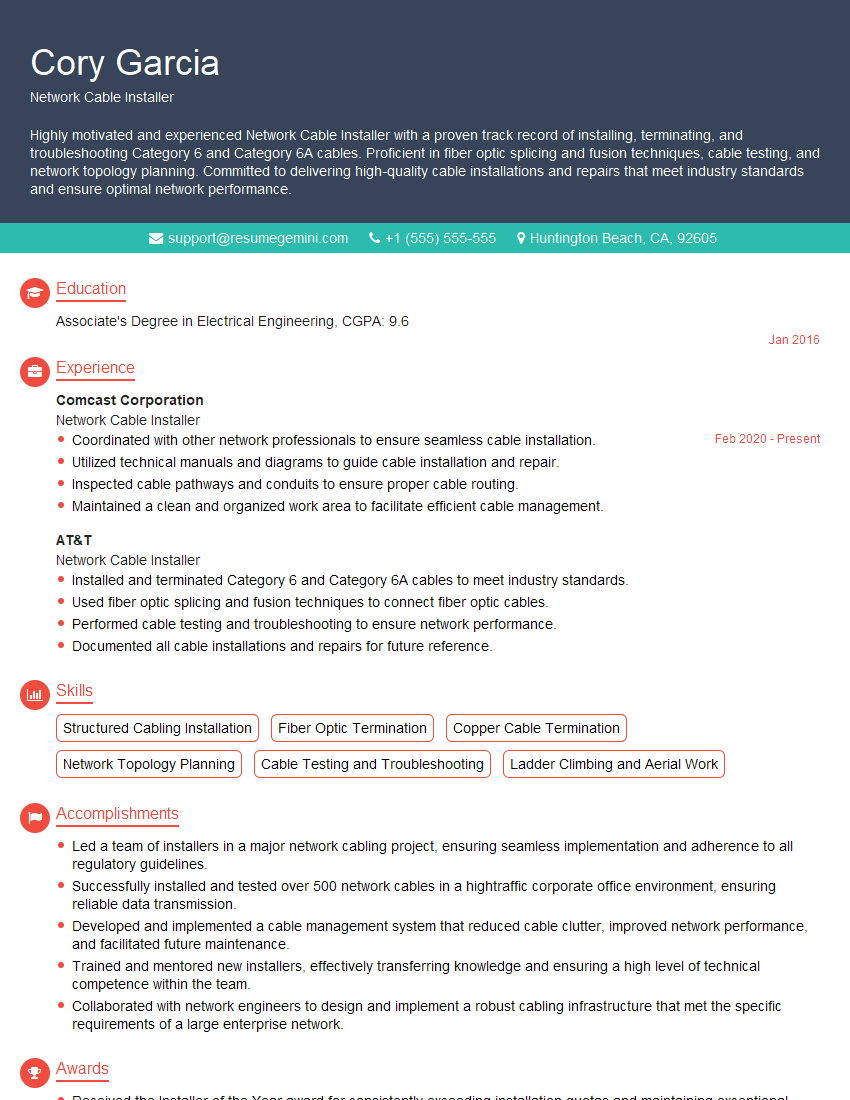
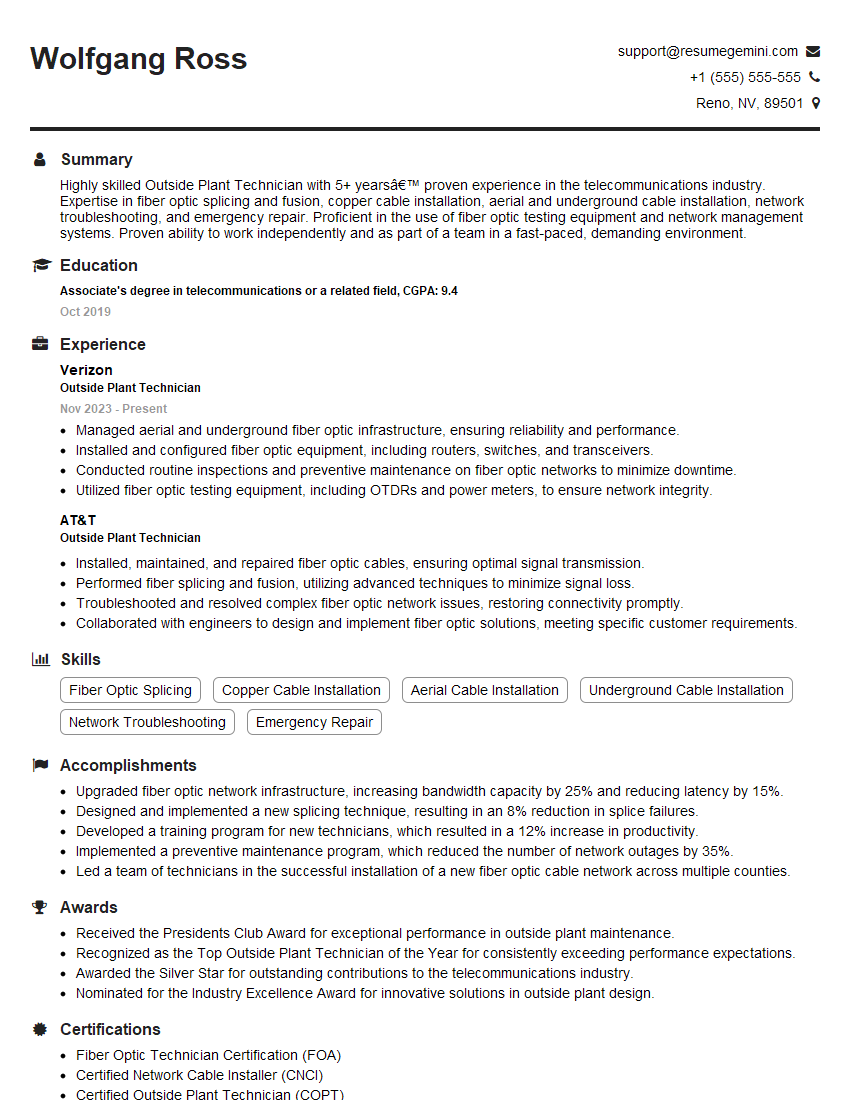
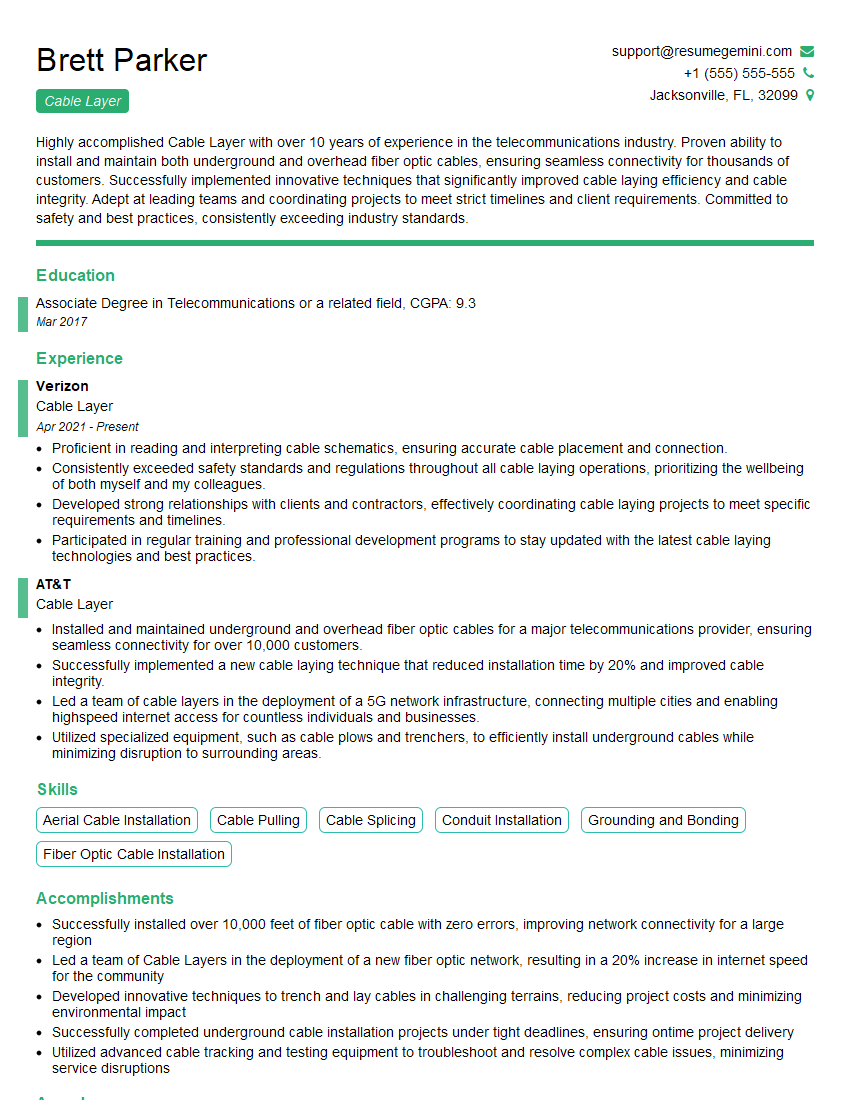
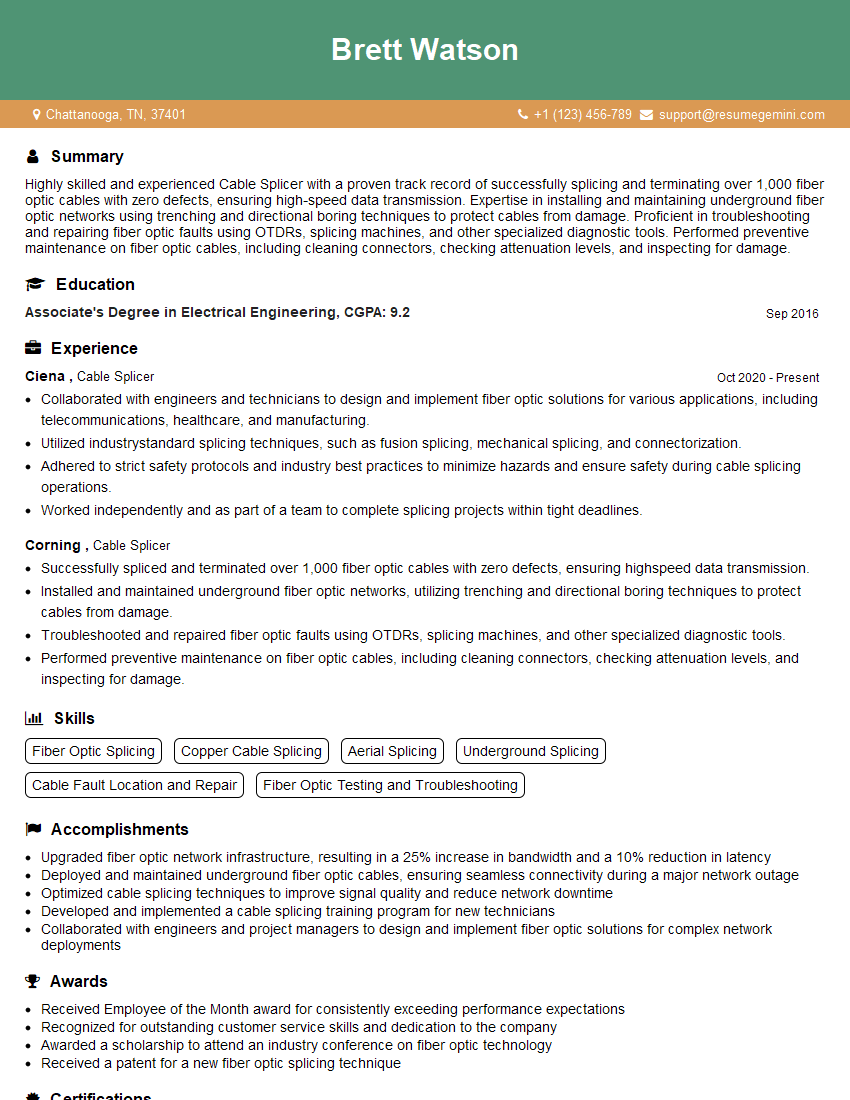
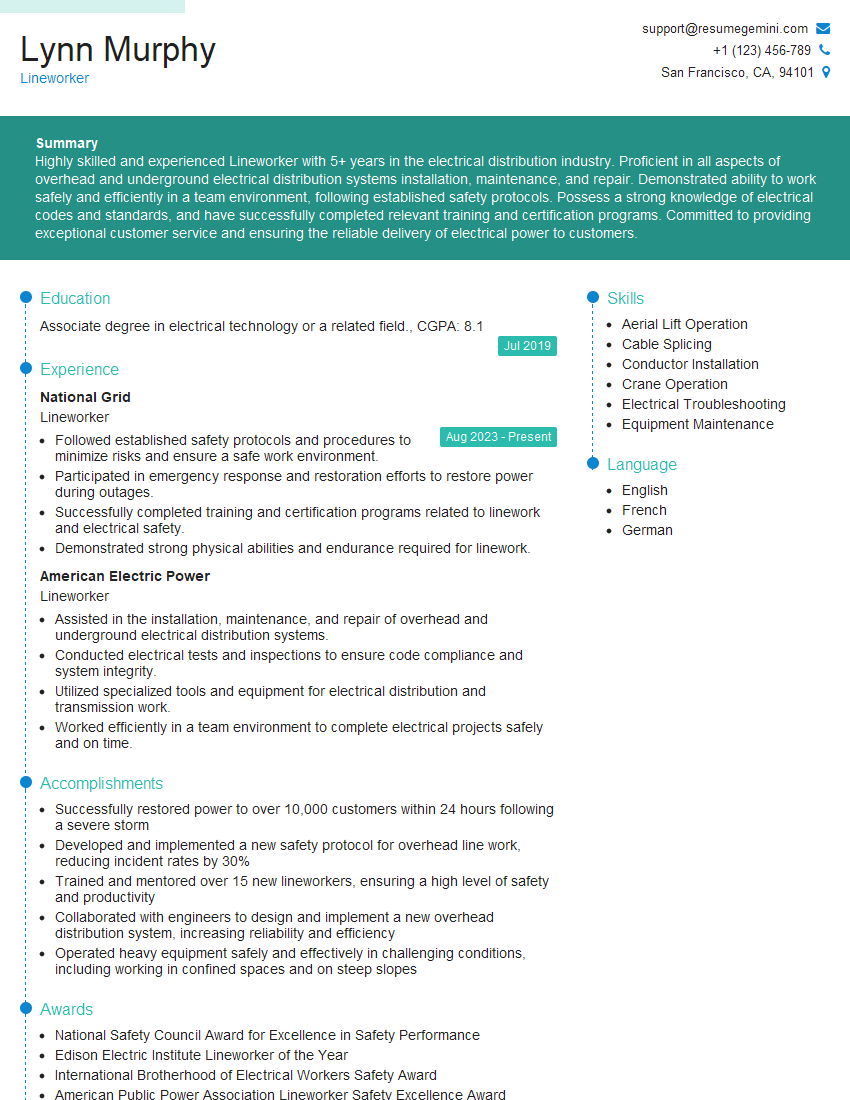
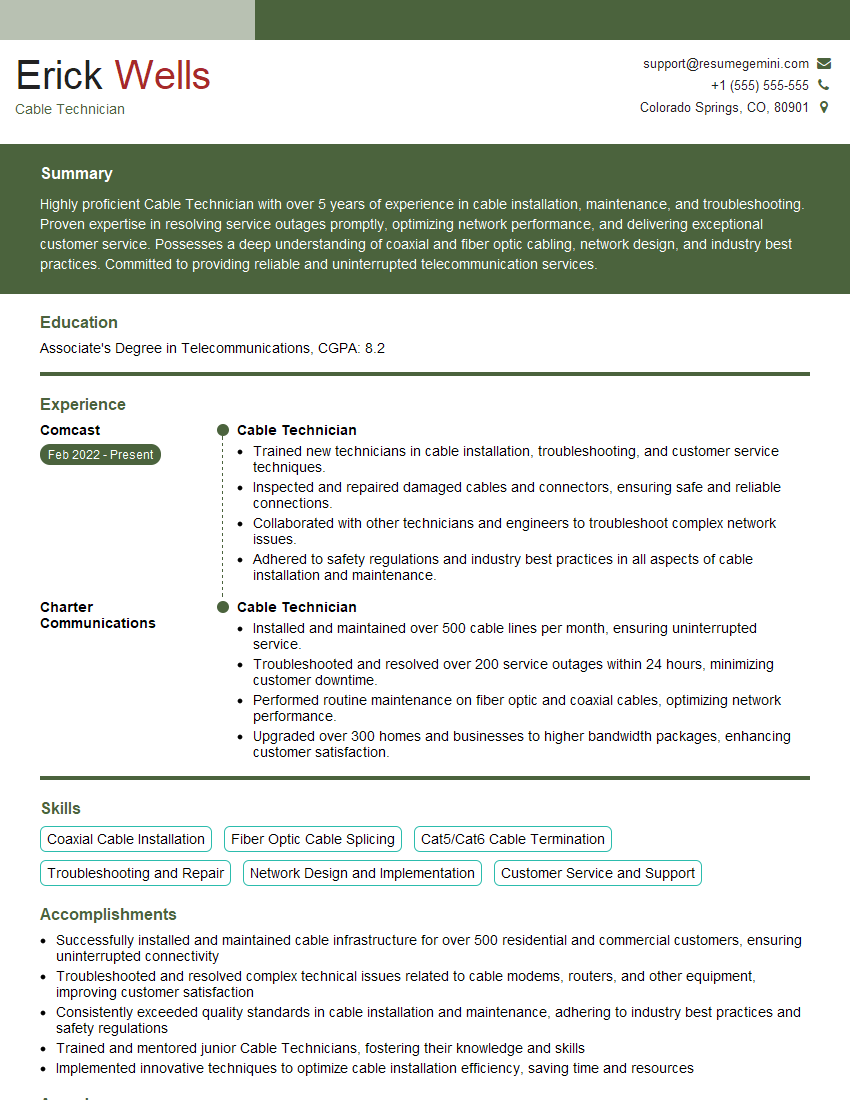
ResumeGemini is a trusted resource that can help you build a professional resume tailored to the Cable Laying industry. Leverage their expertise to create a document that highlights your qualifications and gets noticed by recruiters. Examples of resumes tailored to Cable Laying are available to guide your efforts.
Explore more articles
Users Rating of Our Blogs
Share Your Experience
We value your feedback! Please rate our content and share your thoughts (optional).
What Readers Say About Our Blog
I Redesigned Spongebob Squarepants and his main characters of my artwork.
https://www.deviantart.com/reimaginesponge/art/Redesigned-Spongebob-characters-1223583608
IT gave me an insight and words to use and be able to think of examples
Hi, I’m Jay, we have a few potential clients that are interested in your services, thought you might be a good fit. I’d love to talk about the details, when do you have time to talk?
Best,
Jay
Founder | CEO