Feeling uncertain about what to expect in your upcoming interview? We’ve got you covered! This blog highlights the most important Administrative Assistance interview questions and provides actionable advice to help you stand out as the ideal candidate. Let’s pave the way for your success.
Questions Asked in Administrative Assistance Interview
Q 1. What software programs are you proficient in (Microsoft Office Suite, Google Workspace, etc.)?
I’m highly proficient in the Microsoft Office Suite, particularly Word, Excel, PowerPoint, and Outlook. I also possess strong skills in Google Workspace, including Gmail, Google Calendar, Google Docs, Sheets, and Slides. My proficiency extends beyond basic functionality; I’m adept at using advanced features like macros in Excel for automation, creating professional-looking presentations in PowerPoint with animations and transitions, and managing complex email filters and rules in Outlook. For example, in my previous role, I created an automated Excel spreadsheet that tracked project timelines and flagged potential delays, saving my team significant time and improving our project management.
Q 2. Describe your experience managing calendars and scheduling appointments.
Managing calendars and scheduling appointments is a core competency for me. I’m experienced in using both Outlook Calendar and Google Calendar, understanding the nuances of time zones and recurring appointments. I prioritize understanding the individual needs and preferences of my executives and colleagues. For example, I’ve successfully managed the complex schedules of multiple executives, coordinating meetings across different time zones and considering their individual preferences for meeting lengths and scheduling patterns. This often involves juggling urgent requests while maintaining a proactive approach to prevent scheduling conflicts. My approach includes setting up reminders, sending out meeting invitations well in advance and confirming attendance, and maintaining detailed records of all scheduled meetings. I am also adept at managing conflicting requests, finding optimal times for meetings that satisfy everyone’s schedules.
Q 3. How do you prioritize tasks and manage your time effectively?
I utilize a combination of prioritization techniques to manage my time effectively. I often employ the Eisenhower Matrix (Urgent/Important), which helps me categorize tasks based on urgency and importance. This allows me to focus on high-impact activities first, and delegate or eliminate less important tasks. For example, if I have a deadline-driven project and several administrative tasks, I’ll focus on the project first, perhaps delegating or rescheduling the less critical admin tasks. Time blocking is another strategy I use; I allocate specific time slots for different tasks, helping me stay focused and avoid distractions. I’m also a strong believer in regularly reviewing my to-do list and adjusting priorities as needed. Finally, I regularly utilize productivity tools and techniques to optimize my workflow.
Q 4. How do you handle multiple projects simultaneously?
Handling multiple projects simultaneously requires a highly organized and adaptable approach. I use project management tools and techniques such as creating detailed to-do lists, assigning deadlines, and regularly tracking progress. Breaking down larger projects into smaller, manageable tasks is essential. I also prioritize tasks based on deadlines and importance. Furthermore, I regularly communicate with stakeholders to keep them informed of progress and any potential roadblocks. Think of it like juggling – each project is a ball, and my skill is in keeping all the balls in the air without dropping any. This involves constant monitoring, adjustment, and communication. For example, I once managed three major projects concurrently – preparing for a large-scale conference, coordinating a company-wide training program, and assisting with the launch of a new product line. Each required a different set of skills and timelines, and through careful planning and task management, I successfully completed all of them on time and within budget.
Q 5. Explain your experience with travel arrangements.
I have extensive experience arranging both domestic and international travel for executives and colleagues. This includes booking flights and accommodations, arranging ground transportation, preparing itineraries, and managing travel documentation. I’m familiar with various travel booking websites and tools, and I always strive to find the most cost-effective and efficient options. I also ensure that all travel arrangements comply with company policy. For instance, in a previous role, I organized a multi-city international trip for a team of five, coordinating flights, hotels, and visa requirements, ensuring seamless travel for all participants. It’s not just about booking; it’s about anticipating potential issues, such as flight delays or unexpected expenses, and having contingency plans in place.
Q 6. Describe your experience with expense reports and reconciliation.
I have a proven track record of accurately processing and reconciling expense reports. I’m adept at using various expense management software and ensuring compliance with company policies. This involves reviewing receipts, verifying expenses, and reconciling them with credit card statements. I’m meticulous in my attention to detail, ensuring accuracy and efficiency. I can also provide training and support to others on expense reporting procedures. For instance, I streamlined our expense report process by developing a comprehensive guide and template, which significantly reduced processing time and errors.
Q 7. How do you handle confidential information?
Handling confidential information is paramount in my role. I strictly adhere to company policies and best practices regarding data privacy and security. This includes securely storing sensitive documents, using strong passwords, and limiting access to confidential information to authorized personnel only. I also understand the importance of discretion and maintaining confidentiality in both verbal and written communication. I treat every piece of confidential information with the utmost care and respect. I understand the consequences of breaches and take all necessary precautions to prevent them. For example, I use secure file sharing methods and always shred documents containing sensitive information once they are no longer needed.
Q 8. How do you maintain organized filing systems (physical and digital)?
Maintaining organized filing systems, both physical and digital, is crucial for efficient workflow and easy retrieval of information. My approach involves a combination of structured methodologies and technological tools.
Physical Files: I utilize a color-coded, alpha-numeric system for physical files. For instance, client files might be organized alphabetically by last name, with a color-coded label indicating the client’s status (e.g., active, inactive, pending). Regular purging of outdated documents is essential to maintain a streamlined system. I also maintain a detailed index of all files for quick referencing. Think of it like a library catalog – it’s impossible to find a book without an organized system.
Digital Files: For digital files, I rely heavily on folder structures with clear and descriptive names. I utilize cloud-based storage like Google Drive or Dropbox for accessibility and collaboration, and leverage the robust search functions to locate specific files quickly. I categorize files into main folders (e.g., Projects, Clients, Finance), then sub-folders with specific project names or client names, utilizing date-based subfolders when needed (e.g., 2024, October). Regular backups are critical to prevent data loss. This approach mirrors physical filing but offers enhanced searchability and collaborative opportunities.
Q 9. What is your experience with minute taking and transcription?
Minute-taking and transcription are skills I’ve honed over several years. I’m proficient in taking accurate and concise notes during meetings, ensuring I capture key decisions, action items, and deadlines. My transcription skills extend to accurately converting audio recordings (meetings, interviews, etc.) into text documents. I use a combination of shorthand techniques (for faster note-taking) and careful listening skills for accuracy.
In a past role, I was responsible for transcribing board meetings, where accuracy and confidentiality were paramount. I developed a system where I would listen to the recording twice – once for a rough transcription and once for a final polish, checking for errors and ensuring clarity. I also used transcription software to aid with accuracy and speed, but it’s important to note that software cannot replace the human element of context and comprehension.
Q 10. Describe your experience with office equipment (printers, scanners, fax machines).
I am highly proficient with various office equipment, including printers, scanners, and fax machines. This includes not only the basic operational skills but also troubleshooting minor technical issues. For instance, I can resolve paper jams, replace ink cartridges, and scan documents efficiently using various settings depending on the required quality and format.
In my previous role, our office transitioned from traditional fax machines to digital faxing using online platforms. I took the initiative to learn this new system and train colleagues, significantly improving efficiency and minimizing paper usage. This reflects my adaptability and commitment to continuous learning within my field.
Q 11. How do you handle difficult or demanding clients/customers?
Handling demanding clients requires a calm and professional demeanor, active listening skills, and a problem-solving approach. My strategy focuses on empathy and understanding the client’s concerns, while clearly communicating solutions and expectations.
For example, if a client is upset about a delay, I start by actively listening to their concerns, acknowledging their frustration, and then clearly explaining the situation, outlining the steps being taken to resolve the issue, and setting realistic expectations about the timeline. I also proactively communicate updates, even if there is no major progress, to keep them informed and manage their expectations. Ultimately, I aim to transform a potentially negative interaction into a positive experience through clear communication and proactive problem-solving.
Q 12. What is your experience with data entry and data management?
I possess extensive experience in data entry and management. I’m proficient in accurately entering data into various systems while maintaining data integrity and consistency. I’m also skilled in using data management tools to organize, analyze, and report on data effectively. My experience extends to using spreadsheets (Excel, Google Sheets), databases (e.g., Access, SQL), and CRM systems.
In one role, I was responsible for entering and managing client data in our CRM system. This involved not only accurately entering information but also identifying and correcting inconsistencies, updating client information promptly, and generating reports on key metrics such as client demographics and sales performance. This required attention to detail, accuracy, and a sound understanding of data management principles.
Q 13. How do you resolve conflicts in the workplace?
Conflict resolution is an essential skill for any administrative professional. My approach centers around fostering open communication, understanding differing perspectives, and finding mutually agreeable solutions. I avoid taking sides and instead focus on facilitating a discussion where all parties can express their concerns and work toward a resolution.
I typically start by listening carefully to each party involved, identifying the root cause of the conflict, and clarifying any misunderstandings. I then guide them through a collaborative process to find common ground and develop a mutually acceptable solution. If necessary, I involve a supervisor or other appropriate personnel to assist in mediating a resolution. The goal is always to create a respectful and productive working environment where conflicts are resolved constructively.
Q 14. What is your experience with CRM software?
I have experience with several CRM (Customer Relationship Management) software platforms, including Salesforce and HubSpot. My skills extend beyond basic data entry and include report generation, contact management, and lead tracking. I understand how CRMs contribute to business efficiency by centralizing customer information and tracking interactions.
In a previous role, I used Salesforce to manage client interactions, track sales opportunities, and generate reports on sales performance. This involved creating custom reports, analyzing data to identify trends, and using that information to support sales strategies. This demonstrates my ability to not only use CRM systems but also to leverage their capabilities for strategic decision-making.
Q 15. Describe your experience with onboarding new employees.
Onboarding new employees is crucial for a smooth transition and successful integration into the team. My approach is multifaceted and focuses on both administrative tasks and fostering a welcoming environment. I begin by ensuring all necessary paperwork, including contracts, tax forms, and benefits enrollment materials, is prepared and explained clearly. I then provide a comprehensive overview of company policies, procedures, and IT systems, often using a combination of written materials and interactive sessions.
For example, at my previous role, I developed a welcome packet with a personalized welcome letter, an organizational chart, and a detailed schedule of the first week’s activities. This ensured new hires felt supported and informed from day one. I also schedule introductory meetings with key team members and facilitate shadowing opportunities to accelerate their understanding of daily operations. My goal is to create a structured yet flexible onboarding process tailored to each employee’s role and learning style, ensuring they feel confident and prepared to contribute effectively.
Career Expert Tips:
- Ace those interviews! Prepare effectively by reviewing the Top 50 Most Common Interview Questions on ResumeGemini.
- Navigate your job search with confidence! Explore a wide range of Career Tips on ResumeGemini. Learn about common challenges and recommendations to overcome them.
- Craft the perfect resume! Master the Art of Resume Writing with ResumeGemini’s guide. Showcase your unique qualifications and achievements effectively.
- Don’t miss out on holiday savings! Build your dream resume with ResumeGemini’s ATS optimized templates.
Q 16. How do you handle interruptions and maintain focus?
Maintaining focus in a busy administrative role requires discipline and strategic planning. I prioritize tasks using methods like Eisenhower Matrix (urgent/important), creating daily to-do lists, and utilizing time-blocking techniques. Interruptions are inevitable, so I’ve developed a system to manage them effectively. When interrupted, I politely acknowledge the request, briefly note it down, and then return to my previous task as soon as practically possible. I communicate clear expectations regarding my availability and encourage colleagues to schedule appointments or send emails for non-urgent matters. This proactive approach minimizes disruptions while ensuring that all requests receive timely attention.
For instance, I might politely say, “I’m currently working on a deadline, but I can address your query in 15 minutes. Would that work?” This demonstrates respect for their time while managing my own workload efficiently.
Q 17. What is your experience with preparing presentations and reports?
I have extensive experience preparing presentations and reports, utilizing various software like PowerPoint, Google Slides, and Microsoft Word. My approach involves meticulous research, data analysis, and clear communication of findings. I tailor the presentation or report’s style and content to the intended audience and purpose, ensuring it is both informative and engaging. I’m comfortable incorporating charts, graphs, and multimedia elements to enhance understanding and impact.
For example, when preparing a quarterly performance report for senior management, I would focus on key performance indicators (KPIs) and use clear, concise language, supported by visual aids illustrating trends and progress. In contrast, a presentation for a new client might emphasize the company’s value proposition and use a more visually appealing and storytelling approach.
Q 18. Describe your experience with event planning and coordination.
Event planning and coordination is a significant part of my administrative experience. I’ve managed everything from small team meetings to large-scale conferences, encompassing venue selection, budget management, catering, invitations, logistics, and post-event follow-up. My organizational skills and attention to detail ensure that events run smoothly and achieve their objectives. I excel at anticipating potential issues and proactively developing contingency plans.
For instance, when organizing a company retreat, I would create a detailed timeline, manage vendor contracts, track expenses, and coordinate travel arrangements. I also focus on creating a positive and memorable experience for attendees through careful planning and attention to detail.
Q 19. How do you communicate effectively with colleagues and clients?
Effective communication is paramount in any administrative role. I prioritize clear, concise, and professional communication, adapting my style to suit the audience and context. With colleagues, I maintain open and collaborative relationships, facilitating efficient teamwork and information sharing. With clients, I ensure prompt responses, accurate information, and a positive and helpful demeanor, building rapport and trust. I utilize various communication channels, including email, phone, and face-to-face interactions, selecting the most appropriate method for each situation.
For example, I might use email for routine updates or formal requests, while using the phone for urgent matters or more complex discussions requiring clarification. I always strive to be responsive and ensure any communication is clear and easily understood.
Q 20. How do you handle last-minute requests or urgent situations?
Handling last-minute requests or urgent situations requires quick thinking, prioritization, and resourcefulness. I remain calm under pressure, prioritize tasks based on urgency and impact, and communicate openly with relevant parties. I leverage my strong organizational skills and adaptability to manage unexpected challenges effectively. I also understand the importance of confirming all details and deadlines to prevent further complications.
For instance, if I receive a last-minute request for a presentation, I would quickly assess the situation, identify available resources, and delegate tasks where possible to complete it within the given timeframe. I would communicate clearly with the requester regarding potential constraints or adjustments.
Q 21. What is your experience with record keeping and compliance?
Record keeping and compliance are crucial aspects of my administrative work. I am proficient in maintaining accurate and organized records, both physical and digital, adhering to all relevant legal and company regulations. I understand the importance of data privacy and security, employing appropriate measures to protect sensitive information. I am familiar with different record management systems and can adapt to new technologies as needed. I also regularly review and update my knowledge of relevant compliance standards to ensure consistent adherence.
For example, I maintain meticulous records of financial transactions, contracts, and employee information, ensuring they are properly filed, accessible, and compliant with data privacy regulations such as GDPR. Regular audits are conducted and all necessary documentation is promptly submitted to satisfy regulatory requirements.
Q 22. How do you stay organized and efficient in a fast-paced environment?
In a fast-paced environment, organization and efficiency are paramount. I approach this by employing a multi-pronged strategy focusing on prioritization, time management, and leveraging technology.
Prioritization: I use methods like the Eisenhower Matrix (urgent/important) to categorize tasks. This helps me focus on high-impact activities first, ensuring crucial deadlines are met. For example, if I have both an urgent client request and a long-term project report, I’d prioritize the client request to maintain positive client relations.
Time Management: I utilize time-blocking techniques, scheduling specific blocks of time for dedicated tasks. This minimizes context switching and enhances focus. For instance, I might dedicate the first two hours of my day to responding to emails and the next two hours to working on a specific project.
Technology: I’m proficient in various productivity tools, including project management software (Asana, Trello), calendar applications (Google Calendar, Outlook), and note-taking apps (Evernote, OneNote). These tools help me track deadlines, collaborate effectively, and maintain a centralized repository of information.
By combining these techniques, I ensure that even in high-pressure situations, I remain organized and productive, consistently meeting deadlines and delivering high-quality work.
Q 23. Describe your experience with customer service.
Customer service is a core competency for any administrative professional. My experience encompasses a wide range of interactions, from handling inbound calls and emails to providing in-person support. I strive to provide prompt, accurate, and courteous service to every individual, understanding that each interaction reflects on the organization.
For example, in my previous role, I managed a high volume of client inquiries regarding billing and scheduling. By actively listening to client concerns, clearly explaining processes, and offering solutions promptly, I consistently achieved high client satisfaction ratings. I’m adept at resolving issues efficiently, escalating complex problems when necessary, and ensuring clients feel valued and heard.
I believe in building rapport with clients, treating each interaction as an opportunity to enhance their experience and strengthen the organization’s reputation.
Q 24. How familiar are you with various office procedures and protocols?
I am very familiar with a broad range of office procedures and protocols. My experience covers areas such as:
- Record Management: Maintaining accurate and organized filing systems (both physical and digital), ensuring compliance with data privacy regulations (e.g., GDPR, HIPAA).
- Meeting Management: Scheduling meetings, preparing agendas and presentations, taking minutes, and distributing follow-up materials.
- Communication Protocols: Following established guidelines for internal and external communication, ensuring proper etiquette and professionalism in all interactions (email, phone, in-person).
- Office Equipment: Proficient in using various office equipment, including printers, scanners, copiers, and fax machines.
- Travel Arrangements: Scheduling and arranging travel itineraries, including flights, hotels, and transportation.
I am a quick learner and readily adapt to new procedures and protocols. I also understand the importance of maintaining confidentiality and adhering to organizational policies.
Q 25. What is your experience with budget management?
My experience with budget management is primarily focused on assisting with expense tracking, invoice processing, and budget reconciliation. While I haven’t managed entire budgets independently, I have supported managers in various departments by tracking expenses against allocated budgets, identifying potential overspending, and ensuring timely submission of expense reports.
For example, in my previous role, I implemented a new system for tracking marketing expenses, which resulted in a 15% improvement in accuracy and efficiency. I’m comfortable using spreadsheet software (Excel, Google Sheets) to manage and analyze financial data, and I am always eager to learn more about budget management best practices.
Q 26. How do you proactively identify and solve potential problems?
Proactive problem-solving is a key strength of mine. I approach potential problems by employing a systematic approach.
Identification: I regularly review processes, anticipate potential bottlenecks, and monitor for any signs of inefficiency. This might involve reviewing upcoming schedules, anticipating potential conflicts, or paying close attention to client feedback.
Analysis: Once a potential problem is identified, I analyze its root cause, considering all contributing factors. I might gather data, consult colleagues, or research best practices.
Solution Development: Based on my analysis, I develop and propose solutions. This could involve streamlining processes, recommending new tools, or suggesting alternative approaches.
Implementation and Monitoring: I work to implement the chosen solution, keeping in mind potential challenges. I then monitor its effectiveness and make adjustments as needed.
For example, I noticed a recurring delay in processing invoices. By analyzing the process, I identified a bottleneck in the approval workflow. I proposed and implemented a solution that reduced the processing time by 25%.
Q 27. What are your salary expectations?
My salary expectations are in line with the industry standard for experienced administrative assistants with my skill set and experience in this region. I am flexible and open to discussing this further based on the specifics of the role and the overall compensation package.
Q 28. Do you have any questions for me?
Yes, I do have a few questions. I’d like to learn more about the specific responsibilities of this role, the team dynamics, and opportunities for professional development within the company.
Key Topics to Learn for Administrative Assistance Interview
- Organizational Skills & Time Management: Mastering calendar management, prioritization techniques, and efficient task delegation are crucial. Practical application includes demonstrating your ability to manage multiple projects simultaneously and meet deadlines effectively.
- Communication & Interpersonal Skills: Excellent written and verbal communication is essential. This involves professional email etiquette, effective phone communication, and building rapport with colleagues and clients. Consider how you’ve handled challenging communication situations in the past.
- Software Proficiency: Demonstrate familiarity with Microsoft Office Suite (Word, Excel, PowerPoint, Outlook), and any other relevant software used in administrative roles. Practical application includes showcasing your ability to create professional documents, spreadsheets, and presentations, and your experience managing emails efficiently.
- Record Keeping & Data Management: Understanding file management systems, database entry, and data organization is key. Consider how you’ve implemented efficient systems to ensure data accuracy and accessibility.
- Office Procedures & Policies: Familiarity with standard office practices, confidentiality protocols, and ethical considerations is vital. Explore how you’ve adhered to office policies in previous roles and your understanding of maintaining confidentiality.
- Problem-Solving & Decision-Making: Highlight your ability to identify and solve problems independently and proactively, demonstrating resourcefulness and initiative.
Next Steps
Mastering administrative assistance skills opens doors to diverse career paths and offers significant growth opportunities within organizations. Building a strong foundation in these skills is vital for career advancement. To increase your job prospects, focus on creating an ATS-friendly resume that highlights your key qualifications and achievements. ResumeGemini is a trusted resource that can help you build a professional and impactful resume. Examples of resumes tailored to Administrative Assistance are available to guide your process.
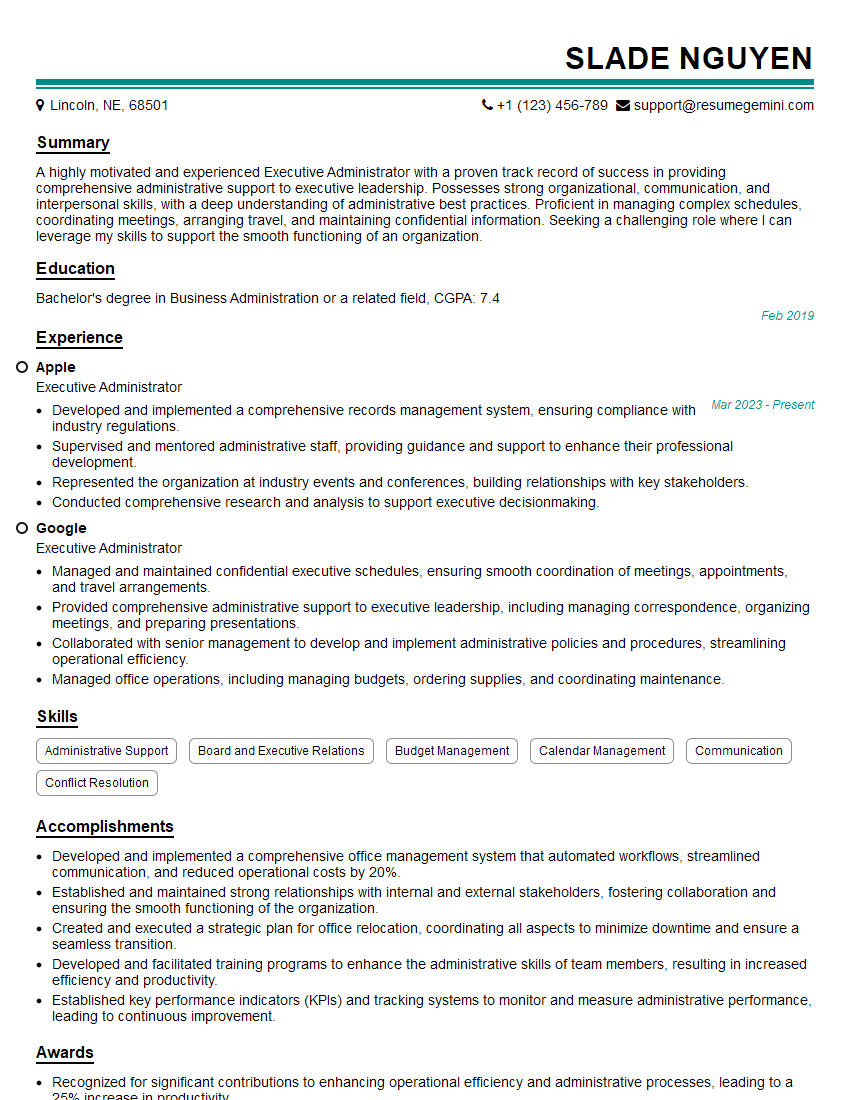
Executive Administrator Resume Sample
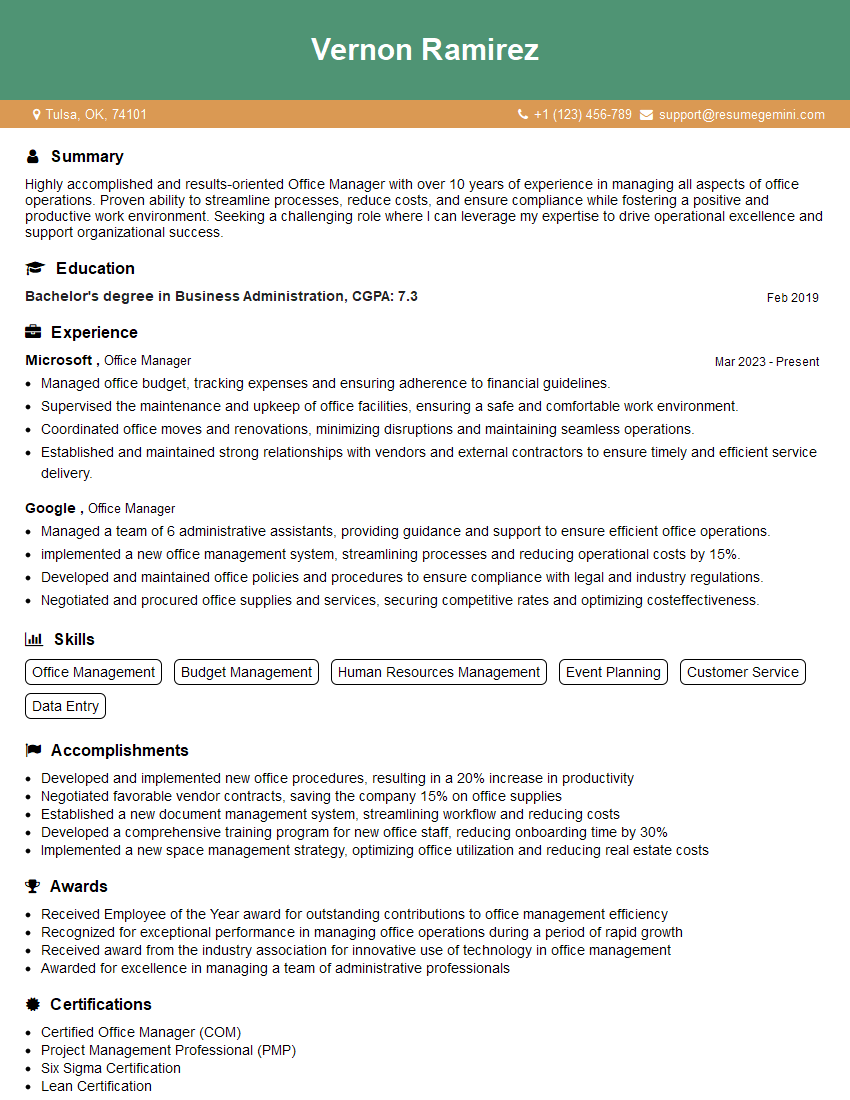
Office Manager Resume Sample
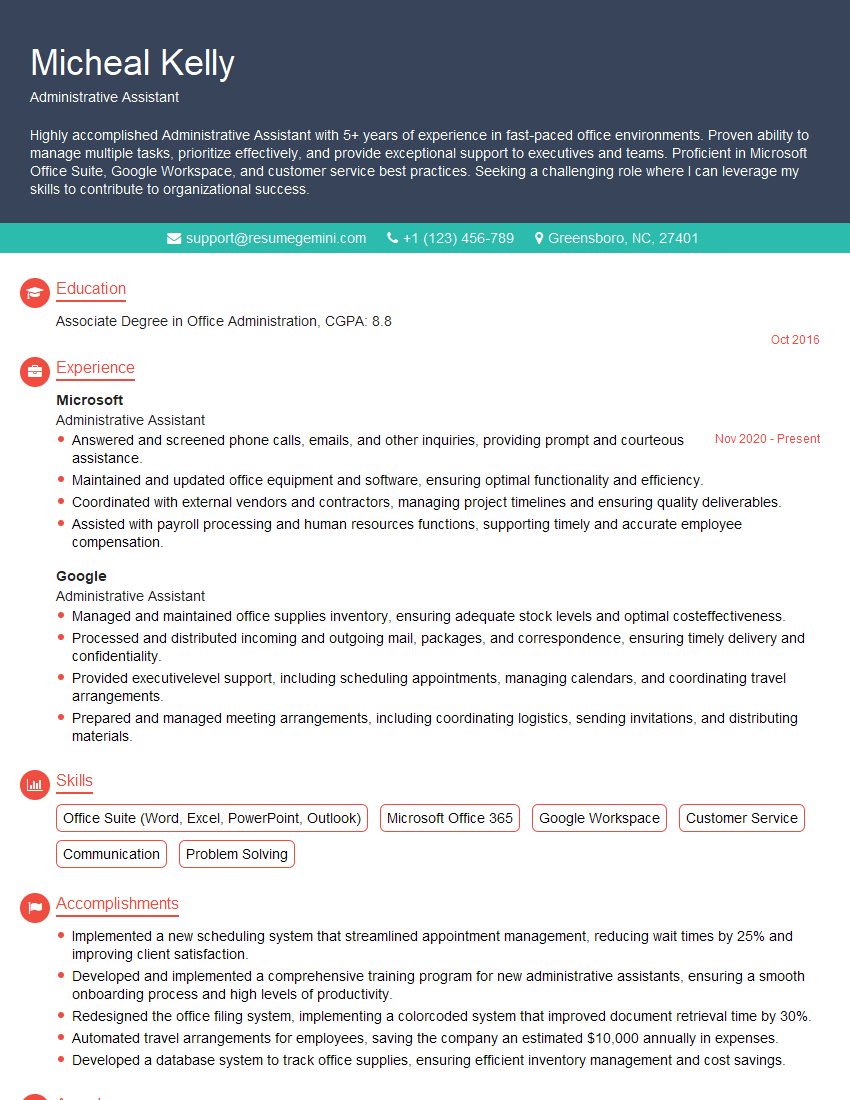
Administrative Assistant Resume Sample
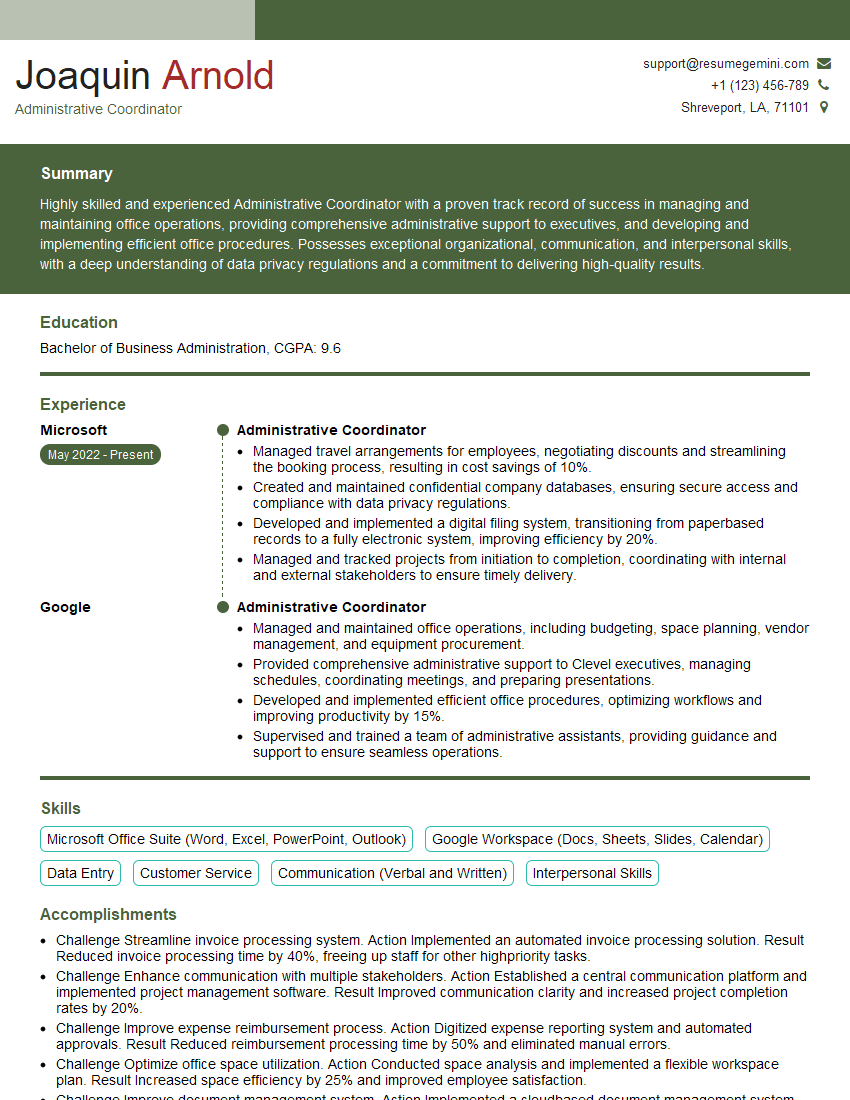
Administrative Coordinator Resume Sample
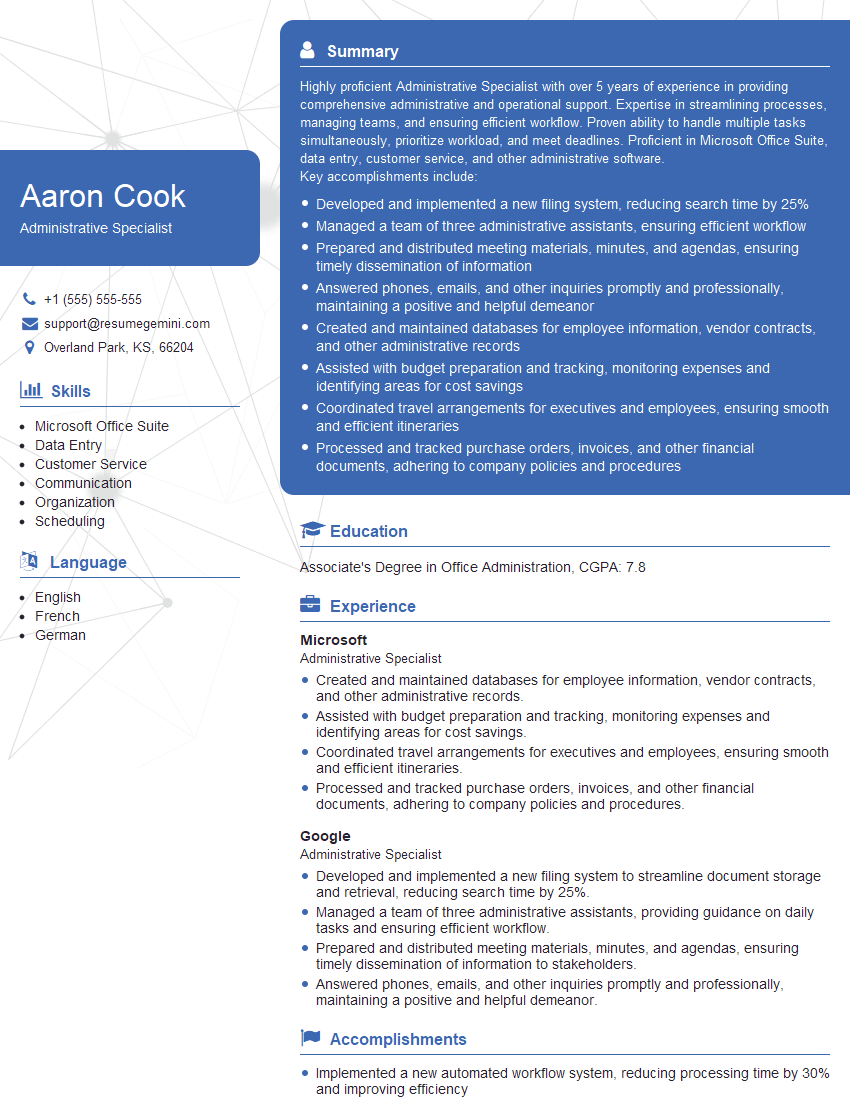
Administrative Specialist Resume Sample

Scheduling Coordinator Resume Sample
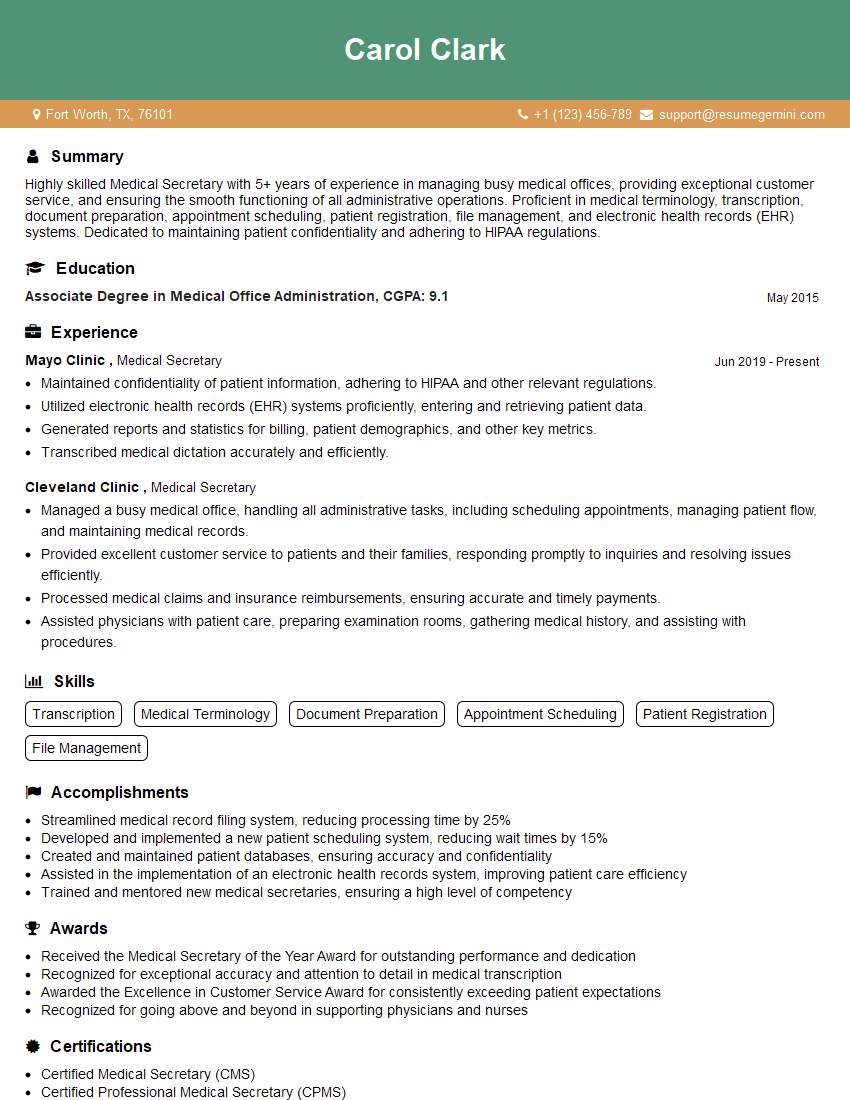
Medical Secretary Resume Sample

Personal Assistant Resume Sample
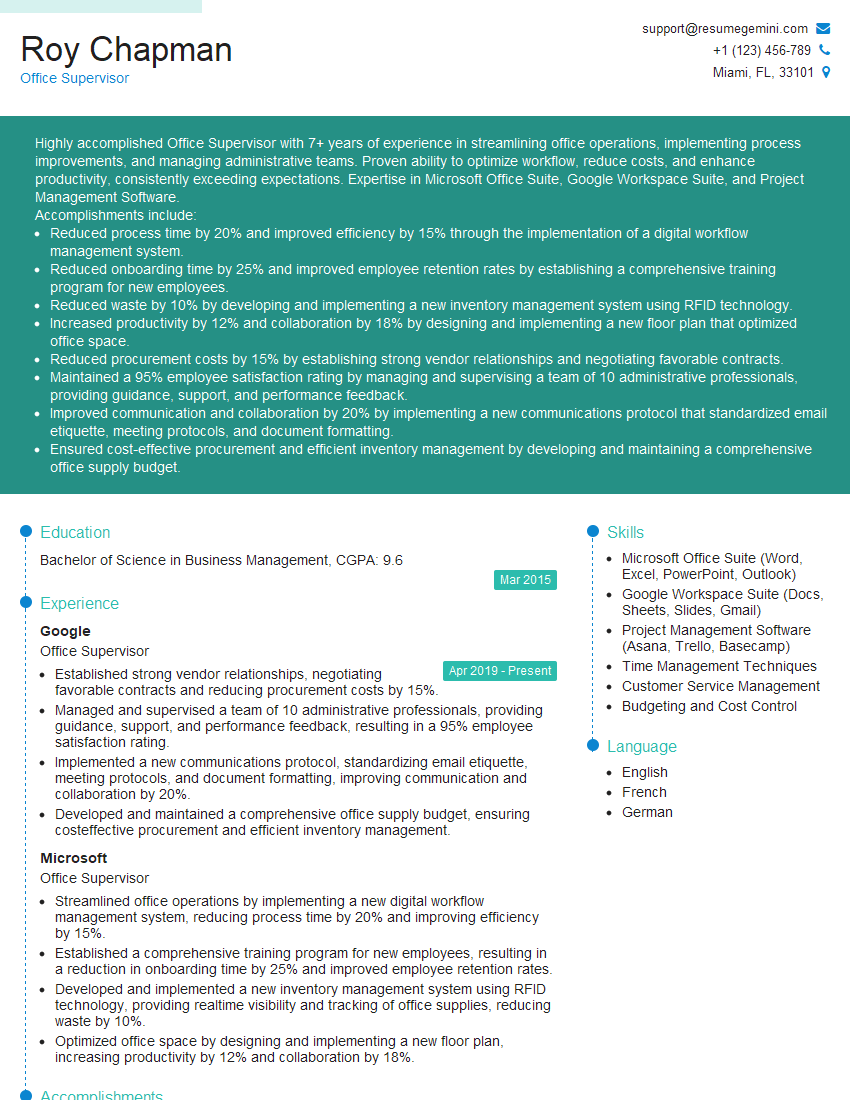
Office Supervisor Resume Sample
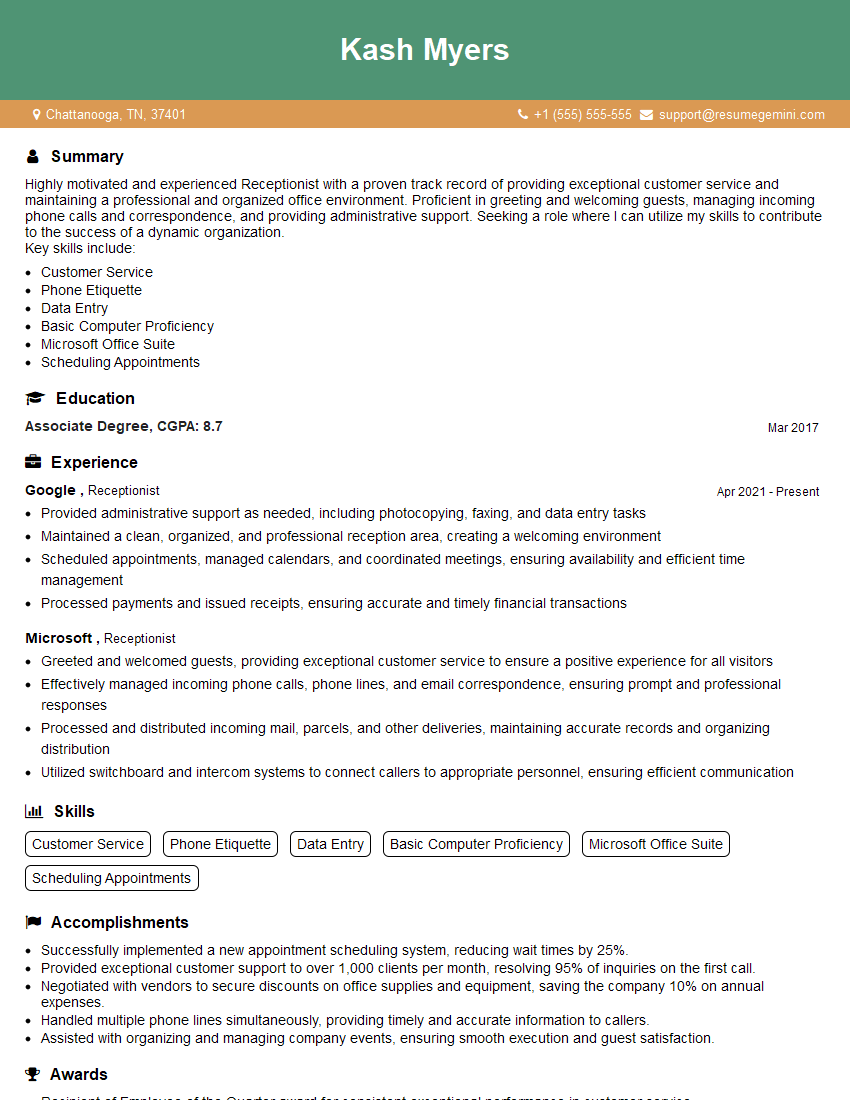
Receptionist Resume Sample
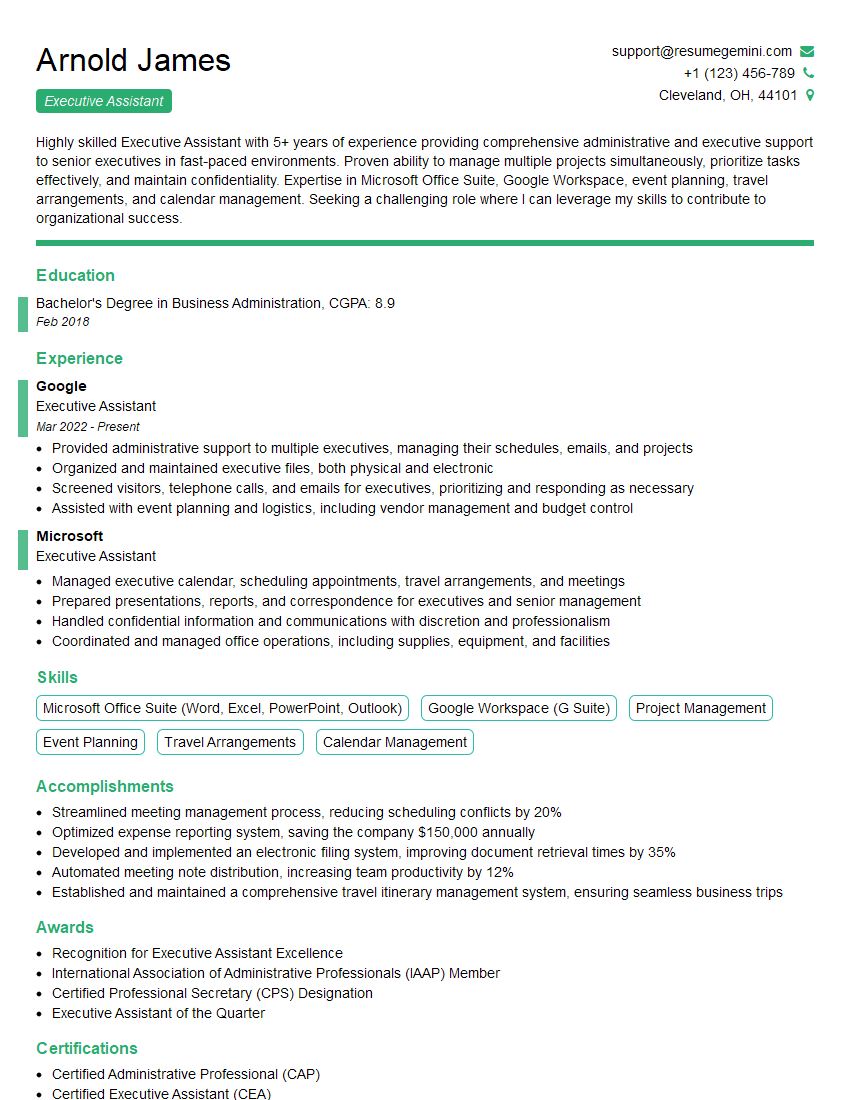
Executive Assistant Resume Sample
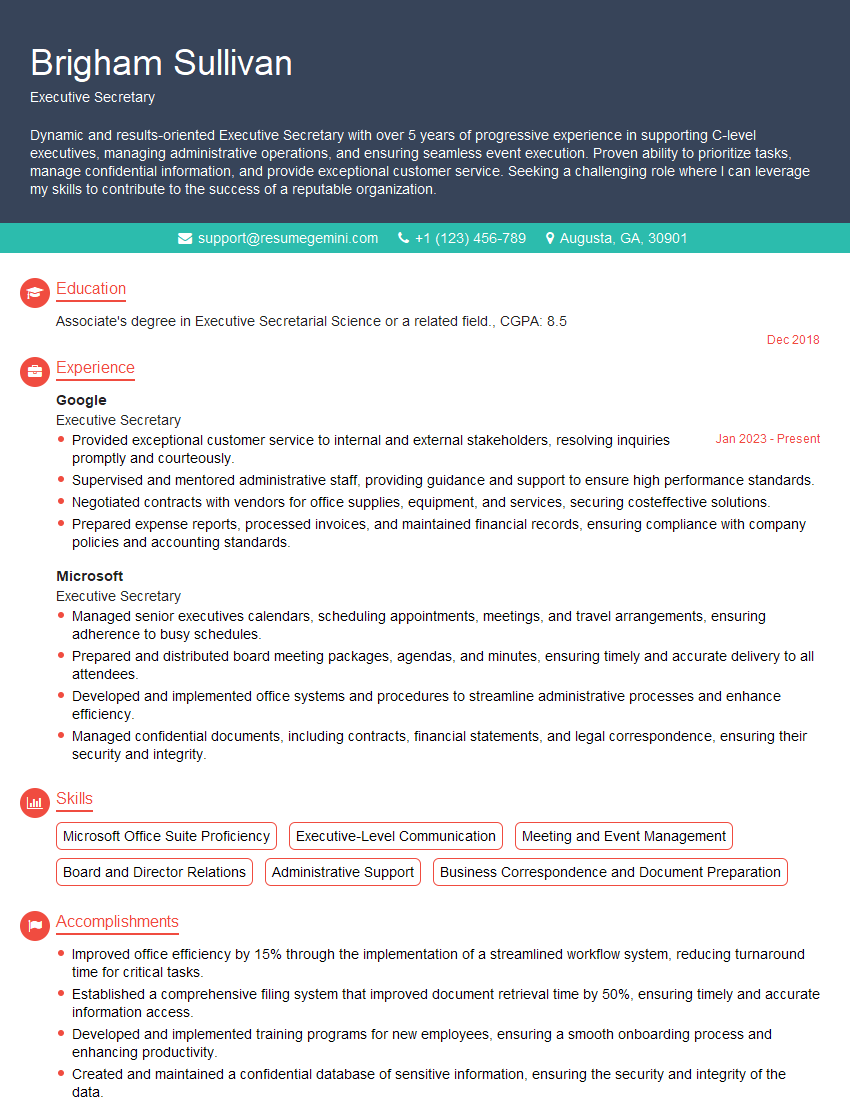
Executive Secretary Resume Sample
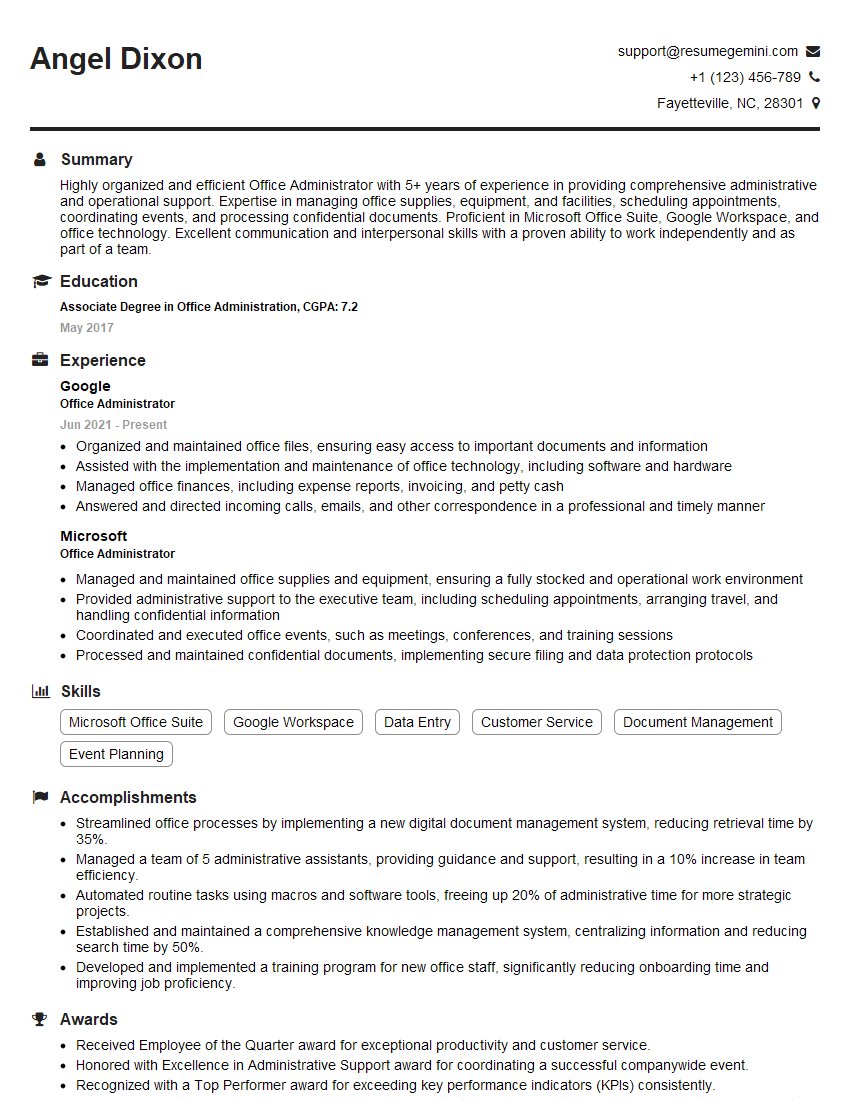
Office Administrator Resume Sample
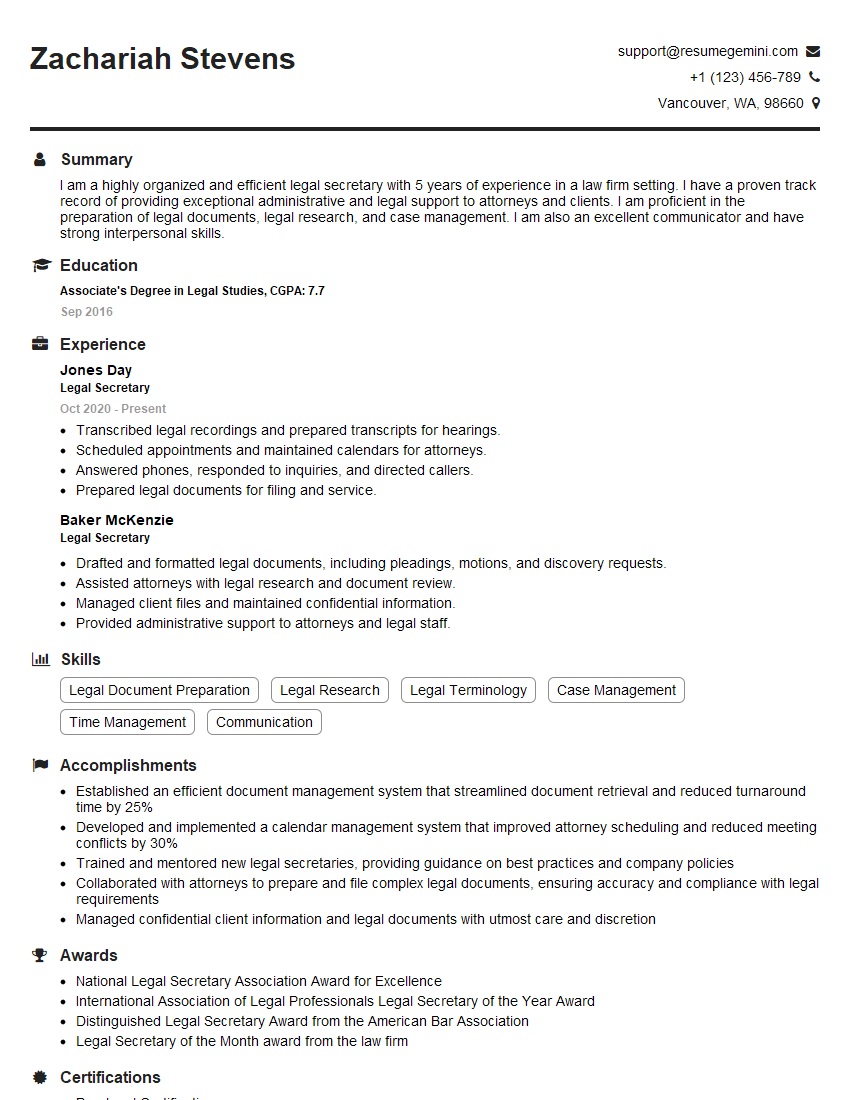
Legal Secretary Resume Sample
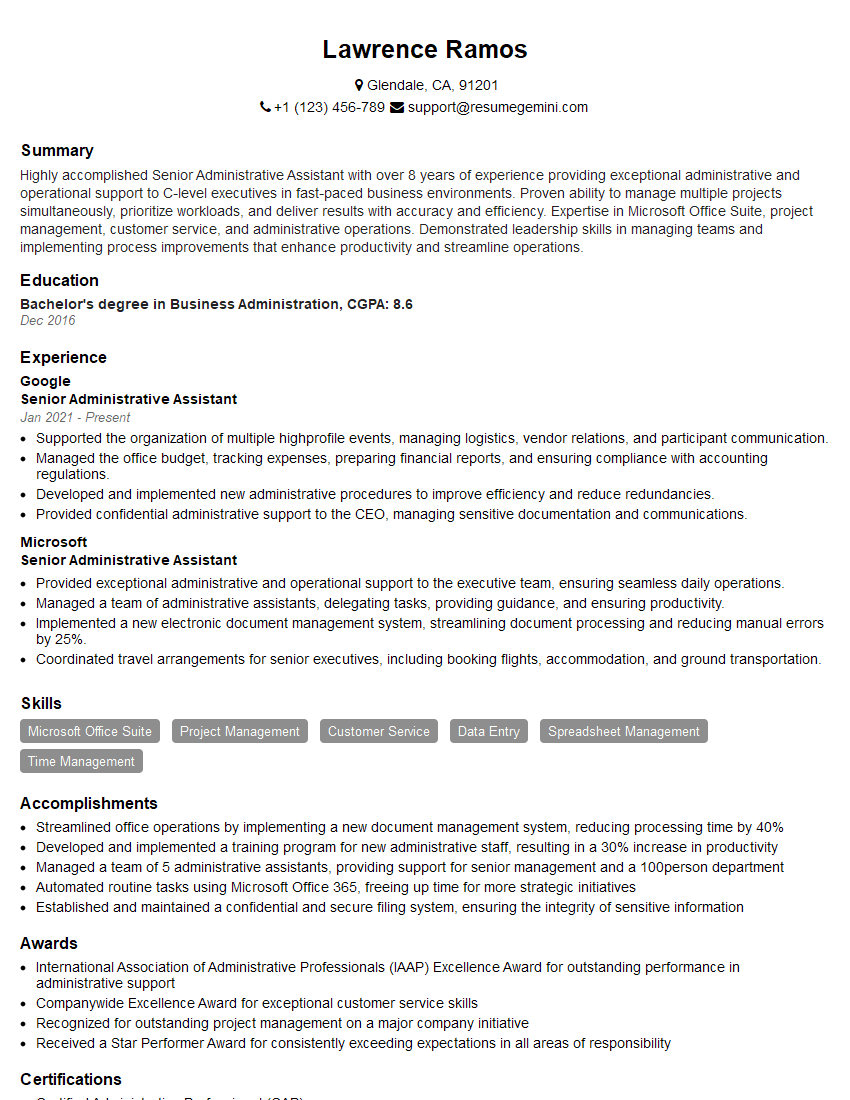
Senior Administrative Assistant Resume Sample
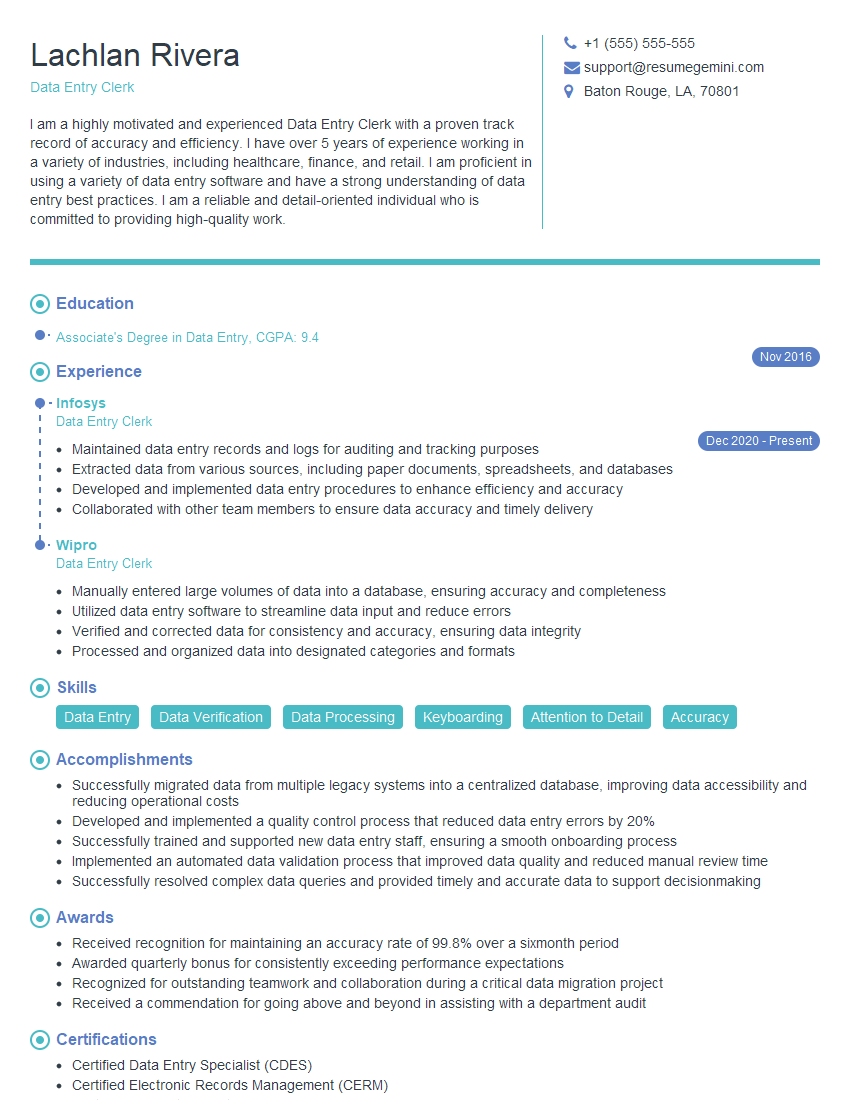
Data Entry Clerk Resume Sample
- Executive Administrator
- Office Manager
- Administrative Assistant
- Administrative Coordinator
- Administrative Specialist
- Scheduling Coordinator
- Medical Secretary
- Personal Assistant
- Office Supervisor
- Receptionist
- Executive Assistant
- Executive Secretary
- Office Administrator
- Legal Secretary
- Senior Administrative Assistant
- Data Entry Clerk
Explore more articles
Users Rating of Our Blogs
Share Your Experience
We value your feedback! Please rate our content and share your thoughts (optional).
What Readers Say About Our Blog
I Redesigned Spongebob Squarepants and his main characters of my artwork.
https://www.deviantart.com/reimaginesponge/art/Redesigned-Spongebob-characters-1223583608
IT gave me an insight and words to use and be able to think of examples
Hi, I’m Jay, we have a few potential clients that are interested in your services, thought you might be a good fit. I’d love to talk about the details, when do you have time to talk?
Best,
Jay
Founder | CEO