The right preparation can turn an interview into an opportunity to showcase your expertise. This guide to Functional vision assessment interview questions is your ultimate resource, providing key insights and tips to help you ace your responses and stand out as a top candidate.
Questions Asked in Functional vision assessment Interview
Q 1. Explain the difference between functional vision and visual acuity.
Visual acuity is a measure of the sharpness of vision, essentially how clearly someone can see details at a specific distance. Think of it like the resolution of a camera. A high visual acuity means sharp, clear vision, while low visual acuity indicates blurry vision. Functional vision, on the other hand, goes far beyond just visual acuity. It assesses how well someone uses their vision to perform everyday tasks. It’s about the practical application of vision, not just the ability to see clearly. For example, someone might have excellent visual acuity but struggle with reading due to difficulties with visual processing. They might see the letters clearly, but their brain struggles to interpret them into words. This is where functional vision assessment becomes crucial.
In short: Visual acuity is about *how well* you see, while functional vision is about *how well you use* what you see.
Q 2. Describe the process of conducting a functional vision assessment.
A functional vision assessment is a comprehensive process that involves a series of tests and observations designed to evaluate how effectively a person uses their vision in real-life situations. It begins with a thorough case history, understanding the patient’s concerns, daily activities, and medical background. This is followed by a standard visual acuity assessment, but it extends beyond this initial measure. We then assess visual fields (peripheral vision), oculomotor skills (eye movement and coordination), and visual perceptual skills (how the brain processes visual information).
The assessment also includes a detailed interview about the patient’s functional challenges. For example, we might observe the patient performing simulated activities, such as reading, writing, or using a computer, to see how their visual difficulties impact their performance in everyday life. Finally, we often conduct a home visit (or simulate this environment) to assess how the visual limitations affect their performance in their natural environment.
The whole process aims to identify the specific visual skills that are limiting the patient’s functional abilities, and to understand how these deficits impact their daily life and quality of life.
Q 3. What are the key components of a comprehensive functional vision evaluation?
A comprehensive functional vision evaluation comprises several key components:
- Case History: A detailed account of the patient’s visual history, medical conditions, current visual complaints, and daily activities.
- Visual Acuity: Measurement of the sharpness of vision.
- Visual Fields: Assessment of the extent of vision, both central and peripheral.
- Oculomotor Skills: Evaluation of eye movements, including tracking, convergence, and accommodation.
- Visual Perceptual Skills: Assessment of the ability to interpret and process visual information, including figure-ground perception, form constancy, visual closure, and spatial relations.
- Functional Vision Skills Assessment: Evaluation of how visual skills affect daily life activities, such as reading, writing, driving, and computer use.
- Low Vision Assessment (if needed): Evaluation of the patient’s suitability for and response to low vision aids.
- Recommendations and Intervention Planning: Development of a personalized plan to address the patient’s visual needs, which may include low vision aids, occupational therapy, and environmental modifications.
Q 4. How do you assess visual perceptual skills in children and adults?
Assessing visual perceptual skills involves a variety of standardized tests and observations, adapted to the age and cognitive abilities of the individual. For children, we often use play-based assessments, incorporating games and activities to evaluate skills like form discrimination, spatial awareness, and visual motor integration. Examples include using puzzles, building blocks, and copying shapes. We also utilize standardized tests designed specifically for children, taking into account developmental norms.
With adults, the assessment might involve more complex tasks such as reading tests, visual memory tasks, and tests of visual-spatial skills. We might use standardized tests like the Motor-Free Visual Perception Test (MVPT) or the Developmental Test of Visual-Motor Integration (VMI). For adults with cognitive impairments, we might need to simplify tests or use alternative methods to gather information, focusing on observable behaviors and functional performance.
In both cases, observation in natural settings is invaluable, noting how the individual interacts with their environment and performs everyday tasks. For example, I recently worked with a child who struggled with letter recognition but excelled at identifying objects. We adapted his learning approach to utilize his strengths, achieving positive outcomes.
Q 5. What are some common visual perceptual difficulties you encounter?
Common visual perceptual difficulties I encounter include:
- Form perception difficulties: Trouble recognizing and distinguishing shapes and objects.
- Figure-ground problems: Difficulty separating an object from its background (e.g., finding a specific object in a cluttered environment).
- Visual closure deficits: Inability to identify an object when only part of it is visible.
- Spatial relations issues: Difficulty understanding the spatial relationships between objects (e.g., judging distances, organizing items).
- Visual memory problems: Difficulty remembering visual information (e.g., remembering what was just read).
- Visual motor integration challenges: Trouble coordinating vision with motor skills (e.g., writing, drawing).
These difficulties can manifest differently across individuals and age groups, significantly impacting their daily activities and overall functioning. For example, a child with figure-ground problems might struggle to find their toys in a toy box, whereas an adult might struggle to read a menu in a busy restaurant.
Q 6. Describe your experience with different types of low vision aids and devices.
My experience encompasses a wide range of low vision aids and devices, including:
- Magnifiers: Handheld, stand magnifiers, and electronic magnifiers offering variable magnification and lighting options.
- Telescopes: For distance vision, improving the ability to see objects far away.
- Closed-circuit television (CCTV): Systems that magnify printed material onto a screen, greatly aiding reading.
- Optical devices: Spectacles with specialized lenses designed to correct specific visual impairments.
- Assistive technology: Screen readers, text-to-speech software, and other technologies that enhance access to information and computer use.
I consider many factors when recommending a specific aid, including the patient’s visual needs, their lifestyle, and their dexterity and cognitive abilities. For example, an elderly patient with limited dexterity may benefit from a large-button magnifier, while a young professional might prefer an electronic magnifier with portability features.
Q 7. How do you adapt assessment procedures for patients with various cognitive or physical impairments?
Adapting assessment procedures for patients with cognitive or physical impairments requires flexibility and creativity. For patients with cognitive impairments, I simplify instructions, use shorter assessment periods, and incorporate frequent breaks. I might use nonverbal cues or demonstration to convey instructions. For patients with severe cognitive impairments, I may rely more heavily on observation of functional performance in everyday tasks.
For patients with physical impairments, I adapt the testing environment to accommodate their limitations. This might involve using alternative positioning, adjusting the height of the examination table, or using assistive devices. For example, a patient with limited hand mobility might require adapted tools for performing visual tasks. The key is to ensure that the assessment is fair and reflects the patient’s true functional capabilities, without being unduly influenced by their physical or cognitive limitations. I always strive to create a comfortable and supportive environment, ensuring that the patient feels understood and respected throughout the process.
Q 8. How do you determine appropriate treatment goals based on functional vision assessment results?
Determining appropriate treatment goals after a functional vision assessment involves a holistic approach, focusing on the patient’s specific needs and limitations within their daily life. We don’t just address the visual deficit itself, but how it impacts their ability to function. This requires careful consideration of several factors.
- Identifying Key Deficits: The assessment reveals areas needing improvement, like reading speed, visual attention, or depth perception. For example, a patient struggling with reading might show poor visual tracking, reduced accommodation, or convergence insufficiency.
- Prioritizing Functional Goals: We prioritize goals based on the patient’s life roles and values. Is reading crucial for their job? Are they struggling with driving or navigating their home safely? This prioritization ensures that therapy is targeted and meaningful.
- Establishing Measurable Outcomes: Goals must be specific, measurable, achievable, relevant, and time-bound (SMART). For instance, instead of ‘improve reading,’ a SMART goal would be ‘increase reading speed by 20 words per minute in 8 weeks.’ This allows for tracking progress and adjusting the treatment plan.
- Collaboration and Patient Input: Treatment goals are always developed collaboratively with the patient. Their feedback is essential in ensuring that the therapy plan aligns with their priorities and expectations.
For example, a patient with a visual field deficit affecting their driving might prioritize improving visual search strategies for safer driving as their primary goal, while a student might focus on improving reading speed and comprehension for academic success.
Q 9. Explain your experience with vision therapy techniques and their applications.
My experience with vision therapy spans over [Number] years, encompassing a wide range of techniques for diverse conditions. Vision therapy isn’t a one-size-fits-all approach. It’s tailored to the specific visual deficits identified in the functional vision assessment.
- Eye Movement Training: This addresses issues like saccadic eye movements (rapid eye movements during reading), pursuits (smooth tracking), and convergence (inward turning of the eyes for near tasks). Techniques include using prisms, computer-based exercises, and activities involving visual tracking of objects.
- Accommodative and Convergence Training: This targets the ability to focus at different distances and the coordination between the eyes for near work. Exercises might involve focusing on objects at varying distances, using lenses, or performing near-point convergence exercises.
- Visual Perceptual Training: This is crucial for improving visual skills like figure-ground discrimination (separating an object from its background), visual spatial skills, and form perception. Activities can range from puzzles and mazes to computer-based exercises focusing on visual discrimination and spatial relationships.
- Visual-Cognitive Training: This focuses on higher-level visual skills like visual attention, visual memory, and visual processing speed. It often involves using computer programs that challenge these skills in engaging and interactive ways. I have utilized programs that involve scene searches, working memory tasks and visual scanning exercises.
For instance, a child with convergence insufficiency might benefit from near-point convergence exercises, while an adult with a traumatic brain injury might need a comprehensive program addressing multiple visual-cognitive deficits, including attention, visual scanning and visual memory.
Q 10. What are some common challenges in managing patients with acquired brain injury impacting vision?
Managing patients with acquired brain injury (ABI) impacting vision presents unique challenges due to the complex nature of brain damage and its varied effects. The visual impairments are often accompanied by other neurological deficits, making assessment and treatment more intricate.
- Variability of Visual Deficits: ABI can cause a wide array of visual problems, including visual field cuts, double vision (diplopia), oculomotor dysfunction, and visual perceptual deficits. The combination and severity of these deficits vary greatly from patient to patient.
- Cognitive and Perceptual Impairments: Often, ABI patients also experience cognitive and perceptual difficulties (attention, memory, processing speed) that interfere with vision therapy. It can be hard to isolate vision problems from other cognitive issues.
- Comorbidities and Medications: ABI patients may have other medical conditions (e.g., headaches, fatigue) or be on medications that further complicate their visual difficulties and treatment.
- Motivation and Compliance: The effects of ABI, such as fatigue, reduced attention span and cognitive challenges, can impact patients’ motivation and compliance with therapy.
For example, a patient with right parietal lobe damage might experience visual neglect, ignoring information in their left visual field. Treatment would involve strategies like anchoring, scanning training, and environmental modifications to compensate for this deficit. The challenge lies in addressing both the visual and cognitive aspects of the problem concurrently.
Q 11. How do you address the emotional and psychological impact of vision loss on patients?
Addressing the emotional and psychological impact of vision loss is crucial for successful rehabilitation. Vision loss profoundly affects a person’s sense of independence, self-esteem, and overall quality of life. It’s not just about restoring visual function but supporting the patient’s emotional well-being.
- Empathetic Listening and Validation: Creating a safe and supportive environment where patients feel heard and understood is paramount. I begin by actively listening to their concerns and validating their feelings.
- Education and Realistic Expectations: Educating patients about their condition, treatment options, and realistic expectations for improvement is essential for managing their anxieties. Transparency is key.
- Coping Strategies and Support Groups: I guide patients in developing effective coping mechanisms, such as stress reduction techniques, positive self-talk, and problem-solving strategies. Connecting them with support groups or support networks can provide additional emotional support.
- Referral to Mental Health Professionals: For patients struggling with severe emotional distress or psychological issues related to vision loss, I strongly advocate for referral to mental health professionals, such as psychologists or counselors.
For example, I had a patient who experienced significant anxiety after a sudden vision loss. Through supportive counseling and strategies to enhance her independence, her anxiety levels decreased, and she gained confidence in managing her daily tasks.
Q 12. Describe your experience with different types of visual field defects and their impact on daily living.
I have extensive experience with various visual field defects, understanding their profound impact on daily living. These defects affect the portion of space a person can see.
- Hemianopia: Loss of vision in one half of the visual field. This can significantly impact mobility, reading, and driving. Patients might bump into objects, miss information while reading, and have difficulty navigating unfamiliar environments.
- Quadrantanopia: Loss of vision in one quarter of the visual field. Similar to hemianopia, but less severe, still impacting daily life, particularly visual search and reading.
- Scotoma: A blind spot within the visual field. Its impact depends on location and size. Central scotomas disrupt reading and fine motor tasks, while peripheral scotomas can impair mobility and awareness of surroundings.
Effective management involves strategies like scanning training, utilizing visual aids (e.g., prisms or telescopic lenses), and adapting the environment to compensate for the visual field loss. For example, a patient with left homonymous hemianopia might benefit from placing important objects on their right side and learning to systematically scan their environment to avoid collisions or missed information.
Q 13. What strategies do you use to improve visual efficiency and reading skills?
Improving visual efficiency and reading skills is a core component of functional vision therapy. The strategies employed depend heavily on the underlying visual deficits identified in the assessment.
- Reading Strategies: For reduced reading speed or comprehension, strategies might include using colored overlays, adjusting font size and style, practicing visual tracking exercises, and using assistive technology like text-to-speech software.
- Visual Efficiency Training: This aims to reduce visual fatigue and increase visual processing speed. Techniques may include exercises focused on visual attention, scanning skills, and minimizing unnecessary eye movements during reading or other visual tasks.
- Adaptive Techniques: Providing training on adaptive techniques like using magnifiers, large-print materials, or electronic readers can help patients overcome visual limitations in daily life.
- Environmental Modifications: Adjusting the lighting, reducing glare, and organizing the environment can improve visual clarity and comfort.
For instance, a patient with macular degeneration might benefit from using large-print materials and electronic magnifiers, while a patient with dyslexia might require specialized reading strategies and visual perceptual training.
Q 14. How do you collaborate with other healthcare professionals (e.g., ophthalmologists, occupational therapists) in managing patients with functional vision problems?
Collaboration is essential in managing patients with functional vision problems. I actively work with ophthalmologists, occupational therapists, and other healthcare professionals to provide comprehensive care.
- Ophthalmologists: I collaborate with ophthalmologists to ensure that any underlying medical conditions are addressed. This includes managing refractive errors, cataracts, and other eye diseases that might be affecting functional vision.
- Occupational Therapists: Occupational therapists play a key role in adapting the patient’s environment and teaching compensatory strategies for daily living activities. We often work together to develop strategies for improving visual-motor skills, such as writing or dressing.
- Other Professionals: Depending on the patient’s specific needs, collaboration might extend to neurologists, neuropsychologists, and other specialists, particularly for patients with ABI, stroke, or other neurological conditions.
- Communication and Information Sharing: Regular communication and the sharing of assessment results and treatment plans among healthcare professionals are crucial for optimal patient outcomes.
For example, in the case of a patient with post-stroke visual neglect, I would collaborate closely with the neurologist to monitor their neurological recovery and with the occupational therapist to adapt their home environment and teach compensatory strategies for daily tasks.
Q 15. Describe your experience using specific assessment tools for functional vision (mention specific tools).
My experience with functional vision assessment tools is extensive. I routinely employ a range of instruments, tailoring my selection to the individual patient’s needs and suspected deficits. For example, I frequently use the Functional Acuity Score (FAS) to assess how well a patient performs everyday tasks requiring vision, like reading street signs or recognizing faces. The Reading Rate and Accuracy assessment is crucial for evaluating reading ability and efficiency. This goes beyond just visual acuity and considers factors such as reading speed, comprehension, and the type of text. For assessing visual field, I utilize automated perimetry devices providing a precise map of visual field loss. In cases of suspected oculomotor dysfunction, I use infrared video-oculography (IVOG) to analyze eye movements accurately. Finally, for assessing visual processing skills such as visual attention and visual memory, I might use standardized tests like the Test of Visual Perceptual Skills (TVPS) or other tailored assessments depending on the specific suspected problem. Each tool offers unique information which, combined, provides a comprehensive picture of the patient’s functional vision capacity.
Career Expert Tips:
- Ace those interviews! Prepare effectively by reviewing the Top 50 Most Common Interview Questions on ResumeGemini.
- Navigate your job search with confidence! Explore a wide range of Career Tips on ResumeGemini. Learn about common challenges and recommendations to overcome them.
- Craft the perfect resume! Master the Art of Resume Writing with ResumeGemini’s guide. Showcase your unique qualifications and achievements effectively.
- Don’t miss out on holiday savings! Build your dream resume with ResumeGemini’s ATS optimized templates.
Q 16. How do you assess and address oculomotor dysfunction in your patients?
Assessing oculomotor dysfunction involves a multi-step process. It begins with a thorough case history, understanding symptoms, onset, and potential causes. Then comes a comprehensive eye examination, focusing on eye alignment (tropias and phorias), eye movement (saccades, pursuits, vergence), and pupillary reflexes. I employ various methods, including the cover test to identify strabismus, and prism adaptation techniques for evaluating phorias. Infrared video-oculography (IVOG) allows for objective, quantitative analysis of eye movements, which may reveal subtle abnormalities missed through observation alone. If a problem is identified, I may prescribe corrective lenses, prism correction, or refer to a neuro-ophthalmologist for further investigation of potential neurological issues. Addressing the dysfunction depends on the specific condition. For example, if convergence insufficiency is detected, I might recommend vision therapy exercises to strengthen eye muscles and improve binocular coordination. For nystagmus (involuntary eye movements), strategies focus on maximizing visual stability and minimizing the effects of the nystagmus on daily functioning.
Q 17. Explain your understanding of different visual processing pathways and how they impact functional vision.
Understanding visual processing pathways is essential for effective functional vision assessment. Visual information travels through several pathways, each responsible for different aspects of vision. The geniculo-striate pathway, originating in the retina and traveling through the lateral geniculate nucleus (LGN) to the striate cortex (V1), is responsible for conscious visual perception, including form, color, and detail. The extra-geniculo-striate pathways involve several cortical areas beyond V1, processing higher-level visual information like motion, spatial awareness, and object recognition. Damage to these pathways can significantly impair functional vision. For instance, damage to the magnocellular pathway, primarily processing motion, can result in difficulties with navigation and tracking moving objects. Problems with the parvocellular pathway, important for detail and color, can lead to difficulties with reading and facial recognition. Therefore, a thorough understanding of these pathways is crucial for differentiating the types of visual deficits and tailoring interventions appropriately. We can think of these pathways as specialized processing units working together – a disruption in one affects the whole system’s efficiency, ultimately impacting daily functioning.
Q 18. What are the indicators of a patient needing low vision rehabilitation?
Several indicators suggest the need for low vision rehabilitation. These include significant visual impairment despite optimal correction (e.g., low visual acuity, severely constricted visual fields), difficulty performing daily activities due to vision loss, significant impact on quality of life, and the presence of co-morbid conditions affecting functional vision, like macular degeneration or glaucoma. Patients reporting frustration with everyday activities such as reading, driving, or recognizing faces are key indicators. A decline in independence and social engagement due to vision loss further highlights the need for intervention. It’s crucial to assess not only the visual impairment itself but also its impact on the patient’s daily life, their ability to perform their desired activities, and their overall well-being to determine if low vision rehabilitation is appropriate.
Q 19. How do you teach patients strategies for compensating for visual impairments in various activities of daily living (ADLs)?
Teaching patients compensatory strategies is a cornerstone of my practice. It’s about empowering individuals to maximize their remaining vision and regain independence. I use a highly individualized approach, focusing on the patient’s specific needs and daily activities. For example, a patient struggling with reading might benefit from learning to use magnification aids (e.g., large-print books, magnifying glasses, electronic magnifiers), strategies for organizing materials, and effective lighting. For someone with limited visual fields, we’d work on scanning techniques and environmental modifications to enhance safety and accessibility. Cooking, for instance, might require adapting the kitchen layout and utilizing tactile cues along with visual cues. Training in orientation and mobility, adaptive techniques for using computers and mobile devices, and appropriate lighting are essential aspects of the teaching process. The ultimate goal is to help patients develop a personalized ‘toolbox’ of strategies that improve their functional vision and quality of life.
Q 20. Describe your experience with different types of visual rehabilitation programs.
My experience spans various visual rehabilitation programs, tailored to meet the diverse needs of my patients. I use vision therapy programs addressing oculomotor dysfunction, such as convergence insufficiency or strabismus, using exercises designed to improve eye coordination and muscle strength. For individuals with low vision, I utilize adaptive techniques training, focusing on maximizing the use of remaining vision and utilizing assistive technology. This includes training in the use of low vision devices (magnifiers, telescopes) and adapting everyday activities. Orientation and mobility training assists patients with navigating their environment safely and independently. I also incorporate cognitive rehabilitation strategies, particularly in patients with neurological conditions, helping them improve visual attention, memory, and visual processing skills. Finally, I often utilize a multidisciplinary approach, collaborating with occupational therapists, physical therapists, and other specialists to create a comprehensive rehabilitation plan tailored to the individual’s needs. The program’s choice depends entirely on the patient’s needs and diagnostic findings.
Q 21. How do you measure the effectiveness of your intervention programs?
Measuring the effectiveness of my intervention programs involves a multifaceted approach. I utilize both subjective and objective measures. Subjective measures include patient-reported outcomes, such as questionnaires assessing quality of life, functional independence, and satisfaction with intervention. These provide valuable insight into the patient’s perception of improvement. Objective measures encompass reassessment of visual function using standardized tests (e.g., repeating the FAS, reading tests, visual field tests) to quantify changes in visual performance. I might also track the patient’s performance in specific activities of daily living (ADLs) using checklists or observational assessments. For example, I could measure the time taken to read a paragraph before and after intervention or quantify the number of errors during a simulated driving task. Regular follow-up appointments are crucial to monitor progress, adjust the intervention plan as needed, and ensure the chosen strategies are effectively improving functional vision and overall quality of life.
Q 22. How do you adapt your approach to patients with different cultural backgrounds or learning styles?
Cultural sensitivity is paramount in functional vision assessment. My approach involves understanding a patient’s unique background and adapting my communication and assessment methods accordingly. This starts with actively listening to understand their preferences and perspectives. For example, I might use visual aids that resonate with their culture, or adjust my language to be more inclusive and avoid jargon. I also consider learning styles; some patients prefer hands-on activities, while others learn better through verbal explanations. For a patient who primarily communicates through a family member, I would adapt my explanations and involve them appropriately, always respecting patient confidentiality. I utilize a range of assessment tools, ensuring flexibility to cater to diverse needs, employing both standardized tests and informal observations to gain a holistic understanding.
Consider a patient from a culture where direct eye contact is considered disrespectful. I would adjust my assessment to minimize direct eye contact, but still maintain clear communication and ensure engagement in the task. Similarly, a patient with a preference for visual learning might benefit from diagrams and illustrations during the explanation of exercises, while a patient who learns best kinetically would require more hands-on practice with assistive devices.
Q 23. Explain your understanding of the impact of lighting and contrast on functional vision.
Lighting and contrast significantly influence functional vision. Adequate lighting is essential for clear vision, reducing strain and improving visual acuity. Insufficient lighting, especially in low-vision individuals, exacerbates visual difficulties, leading to increased fatigue and reduced performance. Contrast refers to the difference in brightness between an object and its background. High contrast makes objects easier to see, especially for individuals with low vision or specific visual impairments like macular degeneration. Low contrast, on the other hand, makes it challenging to discern objects, especially in cluttered environments.
For example, a patient with age-related macular degeneration might struggle to read small print in dimly lit conditions. However, using high-contrast reading materials with larger fonts under brighter lighting would significantly improve their reading ability. Similarly, someone with cataracts might benefit from increased lighting levels and reduced glare to enhance their visual performance. Assessing lighting and contrast in a patient’s environment is crucial in developing an effective intervention plan. We might recommend specific lighting fixtures, modify the environment to increase contrast or suggest the use of specialized magnifiers or filters.
Q 24. Describe your experience working with different age groups (pediatrics, adults, geriatrics) in a vision rehabilitation setting.
My experience encompasses working with diverse age groups in vision rehabilitation. With pediatric patients, the approach is play-based and engaging, focusing on developing visual skills through interactive games and activities. For instance, I might use colorful blocks to improve visual tracking or puzzles to enhance spatial perception. Communication is tailored to the child’s developmental stage, and parental involvement is essential. Adults often present with specific functional needs related to their work or daily routines, so I focus on adaptive strategies for those tasks. For example, this might involve teaching efficient reading strategies, assistive technology use, or environmental modifications. Geriatric patients often have multiple health conditions impacting vision; a sensitive and empathetic approach is crucial, along with careful consideration of physical limitations. We might incorporate strategies to improve safety and independence, such as training in using mobility aids or adapting the home environment. My approach always involves flexibility and adaptation based on the individual’s unique needs and capabilities across all ages.
Q 25. How do you utilize technology in your functional vision assessment and rehabilitation?
Technology plays a vital role in modern functional vision assessment and rehabilitation. I utilize various technological tools to enhance accuracy, efficiency, and patient engagement. For instance, I use automated perimetry systems for detailed visual field assessment, providing objective data on the extent of visual impairment. Computerized low vision assessment tools help quantify visual capabilities and guide the selection of assistive devices. Furthermore, telehealth platforms enable remote monitoring, allowing me to provide ongoing support and adjustments to treatment plans. Patients benefit from accessible apps and software designed to improve daily life, such as screen readers, text-to-speech software, and magnification apps. Training on how to use these technologies is an integral part of the rehabilitation process.
Q 26. What ethical considerations do you take into account when assessing and treating patients with functional vision disorders?
Ethical considerations are central to my practice. Confidentiality is paramount, ensuring patient information is protected and shared only with those directly involved in their care. Informed consent is obtained before any assessment or treatment, providing patients with comprehensive information about procedures and potential risks. I strive to provide culturally sensitive and equitable care, avoiding bias in my assessments and recommendations. Honesty and transparency are vital; I communicate clearly and honestly with patients about their condition, prognosis, and available options, empowering them to make informed decisions. Objectivity is key, ensuring that all assessments are conducted fairly and free from personal biases. For instance, if I suspect a patient’s vision loss is being exacerbated by non-ocular issues, I would refer them for appropriate medical evaluations, rather than simply making assumptions about the cause of their vision difficulties.
Q 27. Describe a challenging case involving functional vision impairment and how you approached it.
A challenging case involved a young adult with acquired brain injury resulting in significant visual neglect. He was unaware of the left side of his visual field, impacting his ability to read, drive, and even navigate his own home. Standard assessments proved inadequate to fully capture the extent and impact of his neglect. I used a combination of standardized tests, such as visual field tests and line bisection tasks, along with functional assessments in his home and work environments. This involved observing his performance in everyday tasks, such as eating, dressing, and reading. We also utilized technology such as prism glasses to help refocus his attention towards the neglected side of the visual field. A critical aspect was collaborating with occupational therapists and neuropsychologists to design a holistic rehabilitation plan targeting not only his visual deficits but also compensatory strategies and environmental adaptations. His progress was slow but significant, emphasizing the importance of tailored treatment and multidisciplinary collaboration. His ability to perform daily tasks improved considerably through perseverance and a combination of therapy and technology.
Key Topics to Learn for Functional Vision Assessment Interview
- Visual Acuity and Refraction: Understanding the measurement and correction of refractive errors, and their impact on functional vision.
- Visual Fields: Comprehending the assessment methods and clinical significance of visual field defects in daily life activities.
- Binocular Vision and Eye Coordination: Mastering concepts like vergence, stereopsis, and their role in depth perception and hand-eye coordination.
- Color Vision: Knowing the different types of color vision deficiencies and their impact on various tasks and professions.
- Low Vision Rehabilitation: Familiarizing yourself with assistive devices and strategies to maximize functional vision for individuals with visual impairments.
- Practical Application: Understanding how to apply your knowledge to assess real-world functional vision challenges faced by patients, considering their specific needs and environments.
- Case Studies and Problem-Solving: Developing your ability to analyze case studies, identify underlying visual issues, and propose effective intervention strategies.
- Legal and Ethical Considerations: Understanding the importance of patient confidentiality, informed consent, and appropriate documentation practices.
Next Steps
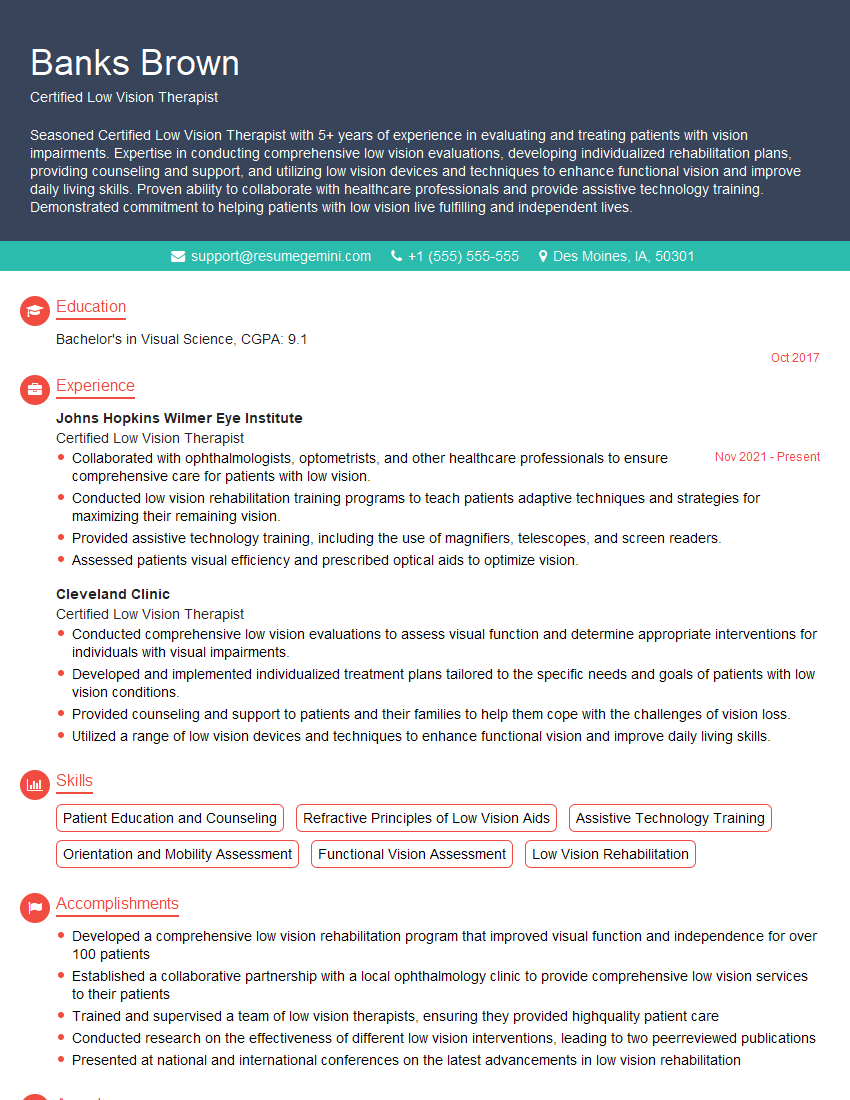
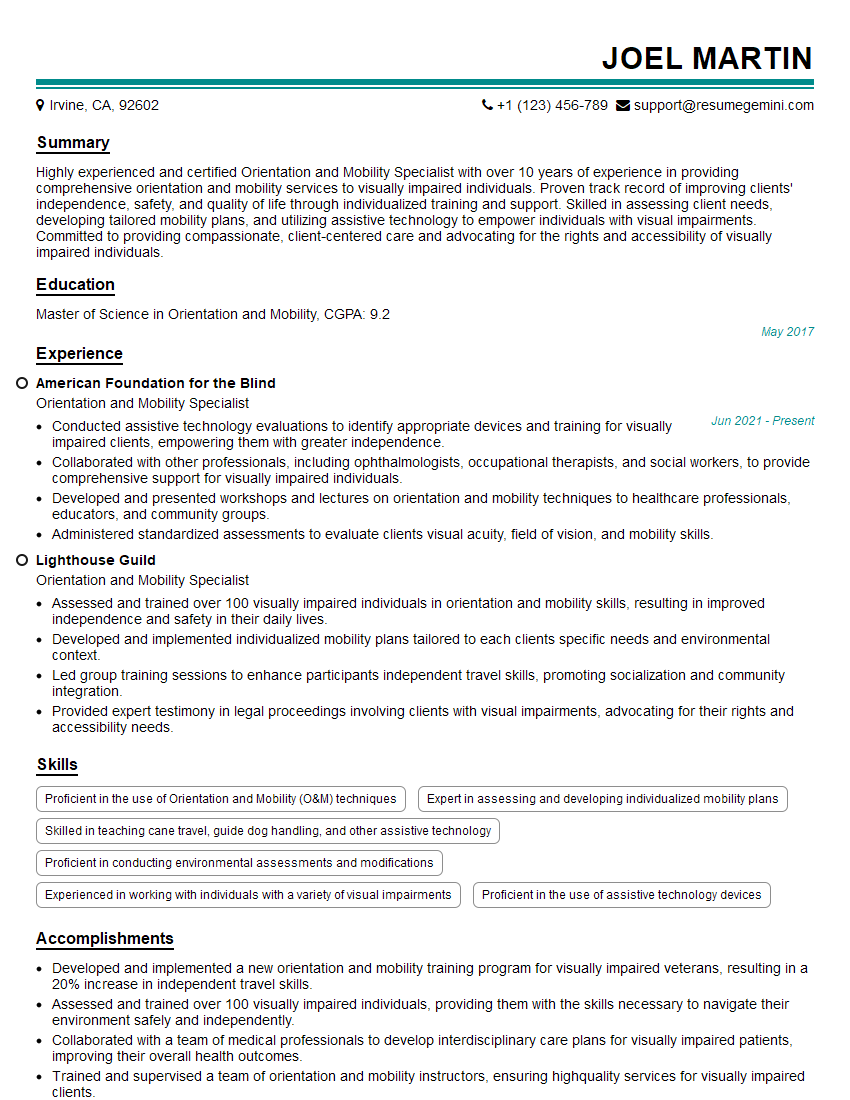
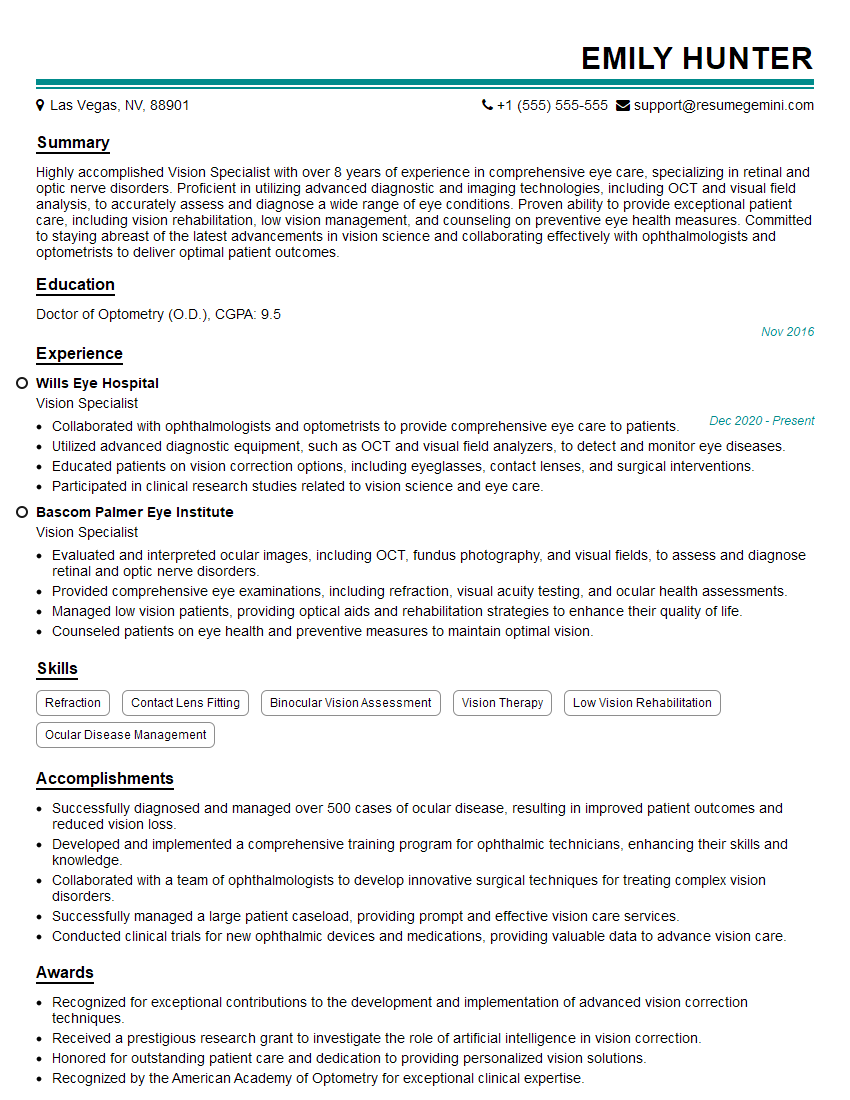
Mastering functional vision assessment is crucial for career advancement in optometry, ophthalmology, and related fields. A strong understanding of these principles demonstrates your expertise and ability to provide comprehensive patient care. To significantly increase your job prospects, create an ATS-friendly resume that highlights your skills and experience effectively. ResumeGemini is a trusted resource that can help you build a professional and impactful resume, ensuring your application stands out. We provide examples of resumes tailored to Functional Vision Assessment to guide you in creating the perfect application.
Explore more articles
Users Rating of Our Blogs
Share Your Experience
We value your feedback! Please rate our content and share your thoughts (optional).
What Readers Say About Our Blog
I Redesigned Spongebob Squarepants and his main characters of my artwork.
https://www.deviantart.com/reimaginesponge/art/Redesigned-Spongebob-characters-1223583608
IT gave me an insight and words to use and be able to think of examples
Hi, I’m Jay, we have a few potential clients that are interested in your services, thought you might be a good fit. I’d love to talk about the details, when do you have time to talk?
Best,
Jay
Founder | CEO