Preparation is the key to success in any interview. In this post, we’ll explore crucial Strong Knowledge of Disability Law and Regulations interview questions and equip you with strategies to craft impactful answers. Whether you’re a beginner or a pro, these tips will elevate your preparation.
Questions Asked in Strong Knowledge of Disability Law and Regulations Interview
Q 1. Explain the key provisions of the Americans with Disabilities Act (ADA).
The Americans with Disabilities Act (ADA) is a landmark civil rights law that prohibits discrimination based on disability. Its key provisions aim to ensure equal opportunities for individuals with disabilities in employment, state and local government services, public accommodations, commercial facilities, and transportation. Think of it as a legal shield protecting people with disabilities from unfair treatment.
- Title I: Employment: Prohibits employers with 15 or more employees from discriminating against qualified individuals with disabilities in all aspects of employment, from hiring and promotion to compensation and benefits. This includes requiring reasonable accommodations unless doing so would cause undue hardship.
- Title II: State and Local Government: Requires state and local governments to provide equal opportunities to individuals with disabilities in their programs, services, and activities. This includes making public transportation accessible and providing services in accessible formats.
- Title III: Public Accommodations: Requires private entities that are considered public accommodations (restaurants, hotels, theaters, etc.) to remove architectural barriers and provide other reasonable modifications to ensure accessibility for individuals with disabilities. Think ramps instead of stairs, braille menus, and accessible restrooms.
- Title IV: Telecommunications: Mandates that telephone companies provide relay services for individuals who are deaf or hard of hearing. This allows them to communicate effectively over the phone.
- Title V: Miscellaneous Provisions: Contains various provisions relating to the enforcement of the ADA, including provisions related to retaliation and the availability of remedies.
Q 2. Describe the reasonable accommodation process under the ADA.
The reasonable accommodation process under the ADA is an interactive dialogue between the employee and employer. It’s about finding solutions that allow a qualified individual with a disability to perform the essential functions of their job. It’s not a one-way street; both parties have responsibilities.
The process typically involves:
- Employee Request: The employee should request an accommodation, ideally in writing, explaining their disability and the needed accommodation. Sometimes, the employer might recognize a need for an accommodation before the employee formally requests it.
- Employer Inquiry: The employer can ask for documentation from a medical professional to verify the disability and the need for accommodation, but they cannot ask for unnecessary or intrusive information. The focus should remain on functional limitations.
- Interactive Process: The employer and employee engage in a discussion to explore potential accommodations. This could involve brainstorming sessions, exploring different options, and considering the practicality and feasibility of each suggestion.
- Selection of Accommodation: Once a suitable accommodation is identified, the employer must implement it unless it poses an undue hardship. This may involve modifying work schedules, providing assistive technology, or making physical changes to the workplace.
- Ongoing Evaluation: The effectiveness of the accommodation should be evaluated on an ongoing basis. If the accommodation is not effective, the process should restart.
Example: An employee with vision impairment might request a larger computer monitor and screen magnification software as a reasonable accommodation. The employer would engage with the employee to explore options and potentially implement the requested accommodations.
Q 3. What are the essential functions of a job, and how does this concept relate to ADA compliance?
Essential functions are the fundamental job duties that are the reason the job exists. They are the core tasks that must be performed to successfully carry out the position’s responsibilities. Understanding essential functions is crucial for ADA compliance because accommodations should focus on allowing an employee to perform these core duties, not on eliminating them entirely. Think of it like the main ingredients in a recipe; you can change the side dishes but not the core components.
Determining Essential Functions: Employers should determine essential functions through a variety of sources:
- Job descriptions
- Observation of other employees performing the same job
- Consultation with the employee holding the position
- Written or oral statements from supervisors
Relationship to ADA Compliance: If an employee with a disability cannot perform an essential function, even with a reasonable accommodation, the employer may not be obligated to hire or retain that employee. However, if the employee can perform the essential functions with a reasonable accommodation, the employer must provide that accommodation unless it causes undue hardship.
Example: For a firefighter, climbing ladders and carrying heavy equipment are likely essential functions. While an accommodation might modify some aspects of the training, it cannot eliminate the need to perform these crucial physical tasks. Conversely, a receptionist’s essential functions might not include lifting heavy boxes; accommodations could focus on other job duties if the lifting task proves impossible.
Q 4. How does the ADA define a disability?
The ADA defines disability broadly. A person is considered disabled if they have a physical or mental impairment that substantially limits one or more major life activities, have a record of such an impairment, or are regarded as having such an impairment. Let’s unpack this:
- Physical or Mental Impairment: This encompasses a wide range of conditions, including visual, hearing, mobility, and cognitive impairments, as well as mental health conditions such as depression or anxiety.
- Substantially Limits: This means the impairment significantly restricts the ability to perform a major life activity compared to most people in the general population. It’s not enough to simply experience an impairment; it must significantly affect your ability to do something.
- Major Life Activities: These are basic activities most people take for granted, such as walking, seeing, hearing, breathing, learning, caring for oneself, and working.
- Record of Impairment: This includes situations where someone has a history of a disability, even if they are currently not experiencing limitations. For example, someone who has recovered from cancer but has a record of it may still be protected under the ADA.
- Regarded As: Even if a person does not actually have a disability, they are protected if they are perceived by an employer to have a disability that would limit a major life activity. This protects individuals from misconceptions and stereotyping.
The definition is intentionally broad to capture a wide spectrum of individuals protected by the Act.
Q 5. What are the different types of discrimination prohibited under the ADA?
The ADA prohibits various types of discrimination based on disability, including:
- Disparate Treatment: This is intentional discrimination where an employer treats an individual differently because of their disability. For example, refusing to hire a qualified applicant solely because they use a wheelchair.
- Disparate Impact: This is unintentional discrimination where a seemingly neutral policy or practice disproportionately harms individuals with disabilities. For instance, a height requirement for a job may inadvertently exclude individuals with dwarfism.
- Failure to Provide Reasonable Accommodation: This occurs when an employer refuses to provide a reasonable accommodation that would enable a qualified individual with a disability to perform essential job functions.
- Retaliation: An employer cannot retaliate against an employee for opposing discriminatory practices or for filing a complaint under the ADA. This means they cannot punish, demote, or fire an employee for seeking accommodation or challenging discriminatory behavior.
- Harassment: Creating a hostile work environment based on disability is also prohibited. This includes verbal abuse, intimidation, and any other form of unwelcome behavior targeting an individual because of their disability.
These types of discrimination can occur in all areas covered by the ADA, including employment, state and local government services, and public accommodations.
Q 6. Explain the difference between direct threat and undue hardship.
Both direct threat and undue hardship are defenses that employers can raise against claims of disability discrimination, but they are distinct concepts.
- Direct Threat: A direct threat exists when an employee’s disability poses a significant risk of substantial harm to the health or safety of the employee or others. This risk must be demonstrably present and must be based on objective evidence, not just assumptions or fears. The determination must be made on a case-by-case basis.
- Undue Hardship: Undue hardship means the accommodation would impose a significant difficulty or expense on the employer. This is a higher bar than simply inconvenience or increased cost. Courts consider factors like the employer’s size, financial resources, and the nature and cost of the accommodation.
Key Differences: Direct threat focuses on the risk posed by the employee’s disability, while undue hardship focuses on the burden of the accommodation on the employer. A direct threat generally relates to the employee’s condition itself, while undue hardship relates to the accommodations needed. An employer can only deny an accommodation based on undue hardship, *not* simply because they find it inconvenient. Demonstrating direct threat often requires significant medical or safety documentation.
Example: An employee with a severe seizure disorder might pose a direct threat if their seizures could cause them to operate heavy machinery unsafely. However, providing them with a job that doesn’t involve operating machinery might not constitute an undue hardship.
Q 7. Describe the interactive process for determining reasonable accommodations.
The interactive process for determining reasonable accommodations is a collaborative effort between the employee and the employer. It’s a continuous dialogue, not a one-time event. The goal is to identify an accommodation that meets the employee’s needs while minimizing any burden on the employer. It should be open, honest, and respectful.
Steps in the Interactive Process:
- Employee’s Request: The employee initiates the process by informing their employer of their need for accommodation. This often involves providing information about their disability and its impact on their ability to perform job functions.
- Employer’s Inquiry: The employer can request relevant medical information from the employee to assess the nature and extent of their disability, but they cannot request overly personal information unrelated to job performance. They should be respectful of the employee’s privacy.
- Discussion and Brainstorming: The employer and employee discuss potential accommodations. This is a crucial step; both parties should actively participate in generating and exploring options.
- Assessment of Accommodations: The feasibility and effectiveness of potential accommodations are evaluated. This may involve considering various factors, such as cost, availability of resources, and potential impact on the workplace.
- Implementation and Review: Once a suitable accommodation is chosen, the employer implements it. The effectiveness of the accommodation should be reviewed regularly to ensure it continues to meet the employee’s needs.
Failure to Engage: The lack of a good-faith effort by either party can lead to ADA violations. Both the employer and the employee must actively participate in the interactive process to find a mutually agreeable solution.
Example: An employee with carpal tunnel syndrome and difficulty typing might initiate the process by requesting ergonomic keyboard and mouse. The employer and employee would then work together to explore other options like voice recognition software or adjusting their work schedule if necessary. The interaction is ongoing; if the initial accommodation is insufficient, further adjustments will be explored.
Q 8. What are the implications of failing to provide reasonable accommodations under the ADA?
Failing to provide reasonable accommodations under the Americans with Disabilities Act (ADA) can have significant legal and financial implications for employers and other covered entities. The ADA mandates that employers make reasonable modifications to policies, practices, and procedures, and provide reasonable accommodations to qualified individuals with disabilities, unless doing so would impose an undue hardship.
Implications include:
- Lawsuits: Individuals denied reasonable accommodations can sue for monetary damages, including back pay, compensatory damages for emotional distress, and punitive damages in cases of intentional discrimination.
- Injunctive Relief: Courts can order the employer to provide the reasonable accommodation and take other actions to prevent future discrimination.
- Attorney’s Fees: The prevailing party in an ADA lawsuit is typically entitled to recover their attorney’s fees.
- Reputational Damage: Negative publicity stemming from a lawsuit can damage an organization’s reputation and make it more difficult to attract and retain employees and customers.
- Department of Justice (DOJ) Investigations: The DOJ can investigate complaints of ADA non-compliance and impose significant fines or other penalties.
Example: An employer who refuses to provide a wheelchair-accessible workstation to an employee with mobility limitations, despite it posing no undue hardship, could face all of the above implications.
Q 9. Explain the process for filing a complaint under the ADA.
Filing an ADA complaint typically involves these steps:
- Attempt to Resolve the Issue Informally: Before filing a formal complaint, it’s often advisable to try to resolve the issue directly with the employer or other covered entity. This can sometimes lead to a quicker and more amicable resolution.
- File a Charge with the EEOC (Equal Employment Opportunity Commission): For employment-related issues, you must first file a charge of discrimination with the EEOC within 180 days (or 300 days in some states) of the discriminatory act. The EEOC will investigate your complaint.
- Right to Sue Letter: If the EEOC does not find reasonable cause to believe discrimination occurred, or if it does not resolve the complaint within 180 days, the EEOC will issue a “Right to Sue” letter. This allows the individual to file a private lawsuit in federal court.
- File a Complaint with the Department of Justice (DOJ): For ADA violations related to public accommodations (businesses, etc.) or state and local government services, a complaint can be filed directly with the DOJ.
- Litigation: If the matter isn’t resolved through conciliation or other means, the case will proceed to court.
Each step involves specific paperwork and deadlines, so it is highly recommended to seek legal counsel.
Q 10. What are the remedies available to an individual who has been discriminated against under the ADA?
Remedies available to individuals who have been discriminated against under the ADA can include:
- Back Pay: Compensation for lost wages and benefits due to discrimination.
- Compensatory Damages: Compensation for emotional distress, pain, and suffering.
- Punitive Damages: Punishment for employers who acted with malice or reckless indifference.
- Injunctive Relief: Court orders requiring the employer to take specific actions to correct discriminatory practices, such as providing reasonable accommodations or changing policies.
- Reinstatement: Restoration of the individual’s job if they were terminated due to discrimination.
- Attorney’s Fees: Reimbursement of legal costs incurred during the litigation process.
The availability and amount of these remedies depend on the specifics of the case and the court’s decision.
Q 11. Describe the key differences between the ADA and Section 504 of the Rehabilitation Act.
Both the ADA and Section 504 of the Rehabilitation Act prohibit discrimination based on disability, but they apply to different entities and have some key differences:
- Coverage: The ADA applies to employers with 15 or more employees, state and local governments, employment agencies, labor unions, and private entities that operate public accommodations. Section 504 applies to programs and activities receiving federal financial assistance, including schools, colleges, hospitals, and other organizations.
- Enforcement: The ADA is primarily enforced through the EEOC and the Department of Justice (DOJ). Section 504 is primarily enforced by the federal agencies that provide the financial assistance.
- Scope: While both laws aim to eliminate discrimination, the ADA has a broader scope covering employment, state and local government services, public accommodations, and commercial facilities. Section 504 focuses on programs and activities receiving federal funds.
- Reasonable Accommodation: Both require reasonable accommodations, but the definition and implementation may vary slightly in different contexts. The ADA emphasizes the interactive process between the employee and employer, while Section 504 often addresses accommodations in the context of program access.
Essentially, the ADA is broader in its application and covers more entities, while Section 504 is more targeted toward programs receiving federal funding.
Q 12. Explain the concept of ‘disparate impact’ in the context of disability discrimination.
Disparate impact, in the context of disability discrimination, refers to a seemingly neutral policy or practice that disproportionately harms individuals with disabilities, even if there’s no intent to discriminate. It’s not about proving intentional discrimination; it’s about demonstrating the negative impact on a protected group.
Example: A company requires all employees to lift 50 pounds as a job requirement. While this may seem neutral on its face, if it disproportionately excludes individuals with back injuries or other disabilities that affect their lifting capacity, it could be considered disparate impact discrimination. The company would need to justify the requirement as a business necessity and explore alternative solutions that don’t exclude qualified individuals with disabilities.
To prove disparate impact, one needs to demonstrate a statistically significant disparity between the affected group (individuals with disabilities) and a comparison group (individuals without disabilities) as a result of the specific policy or practice. The employer would then have to show that the policy is job-related and consistent with business necessity.
Q 13. What are the requirements for accessible websites under the ADA?
The ADA’s accessibility requirements for websites are still evolving and subject to ongoing legal interpretation. However, the general consensus is that websites must be accessible to individuals with disabilities, ensuring that users with visual, auditory, motor, and cognitive impairments can effectively navigate and use the website’s content and functionality. This is often referred to as WCAG (Web Content Accessibility Guidelines) compliance.
Key aspects of ADA-compliant websites include:
- Alternative text for images: Providing descriptive text for images allows screen readers to convey the image’s content to visually impaired users.
- Keyboard navigation: All website functionalities must be accessible using only a keyboard, eliminating the need for a mouse for users with motor impairments.
- Sufficient color contrast: Ensuring adequate color contrast between text and background improves readability for users with low vision.
- Captioning and transcripts for videos and audio: Providing captions and transcripts makes multimedia content accessible to users with hearing impairments.
- Clear and consistent structure: A well-structured website with logical navigation makes it easier for all users, including those with cognitive impairments, to find information.
While there isn’t a specific list of technical requirements, adherence to WCAG guidelines is widely considered a best practice for ADA compliance. The level of conformance (A, AA, or AAA) will impact the extent of the accessibility features necessary. The Department of Justice offers guidance on ADA compliance for web accessibility, though litigation is setting many of the precedents.
Q 14. What are the legal requirements for accessible physical spaces?
The ADA requires that physical spaces be accessible to individuals with disabilities. This involves adherence to the Americans with Disabilities Act Standards for Accessible Design (ADA Standards). These standards cover a wide range of design and construction requirements for both new and existing facilities.
Key aspects of accessible physical spaces include:
- Ramps and curb cuts: Providing ramps with appropriate slopes and curb cuts ensures wheelchair accessibility.
- Accessible entrances and exits: Entrances and exits must be wide enough to accommodate wheelchairs and other mobility devices.
- Accessible restrooms: Restrooms must include grab bars, adequate space, and other features for individuals with mobility impairments.
- Accessible parking: A sufficient number of accessible parking spaces, appropriately sized and located close to building entrances, are required.
- Accessible signage: Signage must be clear, legible, and placed at appropriate heights.
- Accessible routes of travel: Clear and unobstructed pathways leading to all areas of the building are essential.
- Accessible seating: Accessible seating options must be provided in places like auditoriums or theaters.
- Accessible drinking fountains and telephones: These features must be designed to be used by people with mobility impairments.
The specific requirements depend on the type and size of the facility and when it was built. The ADA Standards provide detailed technical specifications, and it’s often necessary to consult with accessibility experts to ensure compliance.
Q 15. How does the ADA protect individuals with mental health disabilities?
The Americans with Disabilities Act (ADA) broadly protects individuals with mental health disabilities by prohibiting discrimination in employment, state and local government services, public accommodations, and commercial facilities. This means employers cannot refuse to hire, fire, or otherwise discriminate against someone because of a mental health condition, provided it doesn’t prevent them from performing essential job functions with or without reasonable accommodation. The ADA covers a wide range of mental health conditions, including depression, anxiety disorders, schizophrenia, bipolar disorder, and PTSD. It’s crucial to understand that the ADA focuses on the individual’s ability to perform essential job functions, not on the presence of a disability itself. For example, an employer cannot refuse to hire a candidate with depression if they can adequately perform the job with reasonable accommodations like flexible work hours or a quiet workspace.
Reasonable accommodations are key. These are modifications or adjustments to the work environment, or to the manner or circumstances under which the position held or desired is customarily performed, that enable an individual with a disability to perform the essential functions of that position. Employers are required to engage in an interactive process with the employee to determine appropriate accommodations. This process should be collaborative, focused on finding solutions that work for both the employee and the employer.
Career Expert Tips:
- Ace those interviews! Prepare effectively by reviewing the Top 50 Most Common Interview Questions on ResumeGemini.
- Navigate your job search with confidence! Explore a wide range of Career Tips on ResumeGemini. Learn about common challenges and recommendations to overcome them.
- Craft the perfect resume! Master the Art of Resume Writing with ResumeGemini’s guide. Showcase your unique qualifications and achievements effectively.
- Don’t miss out on holiday savings! Build your dream resume with ResumeGemini’s ATS optimized templates.
Q 16. Explain the process for determining eligibility for Social Security Disability Insurance (SSDI).
The process for determining eligibility for Social Security Disability Insurance (SSDI) is multi-layered and rigorous. It begins with an application submitted to the Social Security Administration (SSA). After the initial application, the SSA will review the application to determine if the individual meets the non-medical requirements for disability. If they do, then the SSA will conduct a review to determine if the individual meets the medical requirements for disability. This involves medical evaluations, including examining physicians and possibly consultative examinations to verify the extent of the disability and its impact on the individual’s ability to work. If the SSA denies the application initially, the applicant can appeal the decision through several levels, ultimately leading to a hearing before an administrative law judge (ALJ). The ALJ will review all evidence and make a determination. The entire process can take many months, and even years, to complete.
Throughout the process, the applicant needs to provide substantial documentation to support their claim, including medical records, work history, and other evidence demonstrating their inability to work. Representation by an attorney specializing in Social Security Disability is often highly beneficial due to the complexity of the process and the significant amount of documentation required.
Q 17. What are the criteria for determining disability under the Social Security Administration’s guidelines?
The Social Security Administration (SSA) uses a five-step sequential evaluation process to determine disability. This process considers both the medical severity of the condition and the individual’s residual functional capacity (RFC). RFC refers to what a person can still do despite their limitations. The five steps are:
- Step 1: Is the person currently engaged in substantial gainful activity (SGA)? If yes, they are not disabled.
- Step 2: Does the person have a severe impairment? If no, they are not disabled.
- Step 3: Does the person’s impairment meet or equal a listed impairment in the SSA’s Blue Book (Listing of Impairments)? If yes, they are disabled. If no, proceed to step 4.
- Step 4: Does the person’s impairment prevent them from doing their past relevant work? If no, they are not disabled. If yes, proceed to step 5.
- Step 5: Considering the person’s age, education, work experience, and RFC, can they adjust to other work? If yes, they are not disabled. If no, they are disabled.
Each step requires substantial medical evidence and documentation. The SSA carefully examines medical records, physician opinions, and functional assessments to make a determination at each stage.
Q 18. Describe the different types of disability benefits available.
Several types of disability benefits are available through the Social Security Administration (SSA). The main types include:
- Social Security Disability Insurance (SSDI): This program provides benefits to individuals who have worked and paid Social Security taxes for a specific period and become disabled. Eligibility is based on work history and the severity of the disability.
- Supplemental Security Income (SSI): SSI is a needs-based program providing benefits to individuals with disabilities who have limited income and resources. It doesn’t require a work history.
The amount of benefits received varies based on several factors, including work history (for SSDI), income, and assets (for SSI). There are also other related benefits, such as Medicare coverage for those receiving SSDI benefits for a sufficient period.
Q 19. What are the implications of a denial of disability benefits?
A denial of disability benefits can have significant financial and emotional implications. Individuals may face financial hardship without income, impacting their ability to cover essential living expenses, including housing, food, and healthcare. The denial can also lead to emotional distress, feelings of hopelessness, and increased stress, exacerbating existing health problems. Furthermore, the appeals process can be lengthy and complicated, requiring considerable time, energy, and often legal assistance.
Importantly, a denial doesn’t necessarily mean the end of the process. Applicants have the right to appeal the decision through several levels, ultimately leading to a hearing before an administrative law judge. Seeking legal counsel is often advisable to navigate the appeals process effectively.
Q 20. How does the Family and Medical Leave Act (FMLA) intersect with disability laws?
The Family and Medical Leave Act (FMLA) and disability laws, such as the ADA, work together to protect employees experiencing serious health conditions. FMLA provides eligible employees with up to 12 weeks of unpaid, job-protected leave for specified family and medical reasons, including the employee’s serious health condition. A serious health condition under FMLA can often overlap with a disability under the ADA, though the standards are not identical.
For example, an employee with a severe mental health condition requiring treatment may be eligible for FMLA leave while simultaneously being protected from discrimination under the ADA in their workplace. The interplay requires careful consideration of both statutes’ requirements. It’s crucial to note that FMLA is focused on leave, while the ADA focuses on preventing discrimination and ensuring reasonable accommodation. An employee might use FMLA leave for treatment and then return to work with necessary accommodations under the ADA.
Q 21. What are the legal obligations of employers regarding employee medical information?
Employers have legal obligations regarding employee medical information, primarily governed by the ADA and the Health Insurance Portability and Accountability Act (HIPAA). The ADA restricts the type of medical information an employer can request and mandates confidentiality. Employers can only request medical information relevant to an employee’s ability to perform essential job functions and only after a need for accommodation has been identified or requested.
HIPAA further protects the privacy of employee health information. Employers must maintain the confidentiality of Protected Health Information (PHI), and unauthorized disclosure can lead to significant legal consequences. Employers should establish policies and procedures to comply with both the ADA and HIPAA, ensuring proper handling and storage of medical information. These regulations strike a balance between an employer’s legitimate need for information and an employee’s right to privacy.
Q 22. Explain the concept of ‘affirmative action’ in relation to disability employment.
Affirmative action, in the context of disability employment, goes beyond simply complying with anti-discrimination laws. It involves proactively recruiting, hiring, and promoting qualified individuals with disabilities. It aims to create a workforce that is truly representative of the broader population, actively addressing historical and systemic underrepresentation. This might involve targeted outreach to disability organizations, modifying recruitment processes to be more accessible, or providing specialized training programs.
For example, a company might actively seek out candidates with disabilities through partnerships with disability employment services. They might also adjust their interview process to accommodate various needs, such as providing large-print materials or extra time. The goal is not to lower standards, but to create equal opportunity by removing barriers that prevent qualified individuals with disabilities from competing fairly.
Q 23. How are reasonable accommodations handled in a workplace with a union?
When a union is involved, the process of handling reasonable accommodations becomes a collaborative effort between the employee, the employer, and the union. The collective bargaining agreement (CBA) will often outline procedures for addressing requests for accommodations. Typically, the employee will submit a request to their employer, often with documentation from their healthcare provider, explaining the need for an accommodation. The employer and union representatives will then work together to determine a reasonable accommodation that meets the employee’s needs without causing undue hardship to the employer.
The union’s role is crucial in protecting the employee’s rights and ensuring that the accommodation process is fair and equitable. They may participate in discussions about the feasibility of the accommodation, help the employee navigate the process, and advocate for the employee’s needs if necessary. If an impasse is reached, grievance procedures outlined in the CBA will typically be followed.
Q 24. What is the role of the Equal Employment Opportunity Commission (EEOC) in disability discrimination cases?
The Equal Employment Opportunity Commission (EEOC) is the federal agency responsible for enforcing federal laws prohibiting employment discrimination. In disability discrimination cases, the EEOC plays a vital role in investigating complaints, mediating disputes, and, if necessary, litigating cases in court. If an individual believes they have experienced disability discrimination, they can file a charge with the EEOC. The EEOC will then investigate the allegations, attempting to reach a resolution through mediation or conciliation.
If the EEOC determines that discrimination has occurred, they can file a lawsuit on behalf of the individual or issue a right-to-sue letter, allowing the individual to pursue legal action independently. The EEOC’s involvement helps to ensure that employers comply with the Americans with Disabilities Act (ADA) and other relevant federal laws protecting individuals with disabilities from employment discrimination.
Q 25. What is the difference between a disability and a medical condition?
While a medical condition can be a factor in determining whether someone has a disability, the two are not interchangeable. A medical condition is simply a diagnosis or impairment of bodily function. A disability, under the ADA, is a physical or mental impairment that substantially limits one or more major life activities. This means that the medical condition must significantly affect the individual’s ability to perform daily tasks.
For example, having diabetes is a medical condition. However, it only becomes a disability under the ADA if it substantially limits a major life activity, such as working, walking, or concentrating. The impact of the condition on an individual’s life is what determines whether it constitutes a disability.
Q 26. Describe the process of obtaining a reasonable accommodation for a student with a disability.
The process of obtaining a reasonable accommodation for a student with a disability typically begins with a referral to the institution’s disability services office. The student will need to provide documentation from a qualified healthcare professional demonstrating the need for accommodation. The student and the disability services office will then work together to develop an individualized accommodation plan that meets the student’s needs while ensuring academic integrity.
This plan might include accommodations such as extended time on exams, assistive technology, note-takers, or alternative testing environments. The process requires open communication and collaboration between the student and the institution. If a student is dissatisfied with the accommodations provided, they can typically appeal the decision through established university procedures.
Q 27. What are the legal responsibilities of educational institutions under the Individuals with Disabilities Education Act (IDEA)?
The Individuals with Disabilities Education Act (IDEA) mandates that educational institutions provide a free and appropriate public education (FAPE) to all eligible students with disabilities. This includes identifying, evaluating, and providing specialized instruction and related services to meet each student’s unique needs. Schools have a legal responsibility to ensure that students with disabilities have access to the same educational opportunities as their non-disabled peers, including appropriate curriculum, qualified teachers, and supportive services. They also have to develop and implement Individualized Education Programs (IEPs) tailored to the specific needs of each student.
Failure to comply with IDEA can result in legal action, including lawsuits and potential loss of federal funding. Schools must also comply with the procedural safeguards outlined in IDEA, ensuring parents’ rights to participate in the decision-making process regarding their child’s education.
Q 28. How does the IDEA protect the rights of students with disabilities?
IDEA protects the rights of students with disabilities in several ways. Firstly, it ensures that students receive a FAPE tailored to their individual needs through the IEP process. This means that the education provided is not only accessible but also designed to help them achieve their full potential. Secondly, IDEA guarantees procedural safeguards to protect parents’ rights, ensuring they have a voice in their child’s education and can participate in the decision-making process.
Furthermore, IDEA protects students from discrimination and ensures that they are educated in the least restrictive environment (LRE) – meaning they are included in general education classrooms to the maximum extent possible. IDEA also guarantees access to related services, such as speech therapy, occupational therapy, and counseling, as necessary to support the student’s educational progress.
Key Topics to Learn for a Strong Knowledge of Disability Law and Regulations Interview
- The Americans with Disabilities Act (ADA): Understand its key provisions, including employment, public accommodations, and state and local government requirements. Be prepared to discuss its impact on various aspects of business and daily life.
- Reasonable Accommodation: Explore the interactive process, the definition of reasonable accommodation, and how to assess the undue hardship standard. Practice analyzing case studies involving requests for reasonable accommodation.
- Disability Discrimination: Know the elements of a prima facie case, defenses employers may raise, and the remedies available to individuals who experience discrimination. Be ready to discuss different types of disability discrimination.
- Accessibility Standards: Familiarize yourself with accessibility guidelines for websites, physical spaces, and technology. Be able to discuss best practices for compliance.
- Rehabilitation Act of 1973: Understand its application to federal agencies and recipients of federal funding. Compare and contrast its provisions with those of the ADA.
- Case Law: Review significant Supreme Court and other relevant court cases that have shaped the interpretation and application of disability law. Be ready to discuss the implications of key precedents.
- State and Local Laws: Be aware that many states and localities have laws that provide additional protections beyond the ADA. Consider researching laws specific to your target job location.
- Problem-Solving Approach: Develop your ability to analyze complex scenarios involving disability law and propose practical solutions. Think critically about ethical considerations.
Next Steps
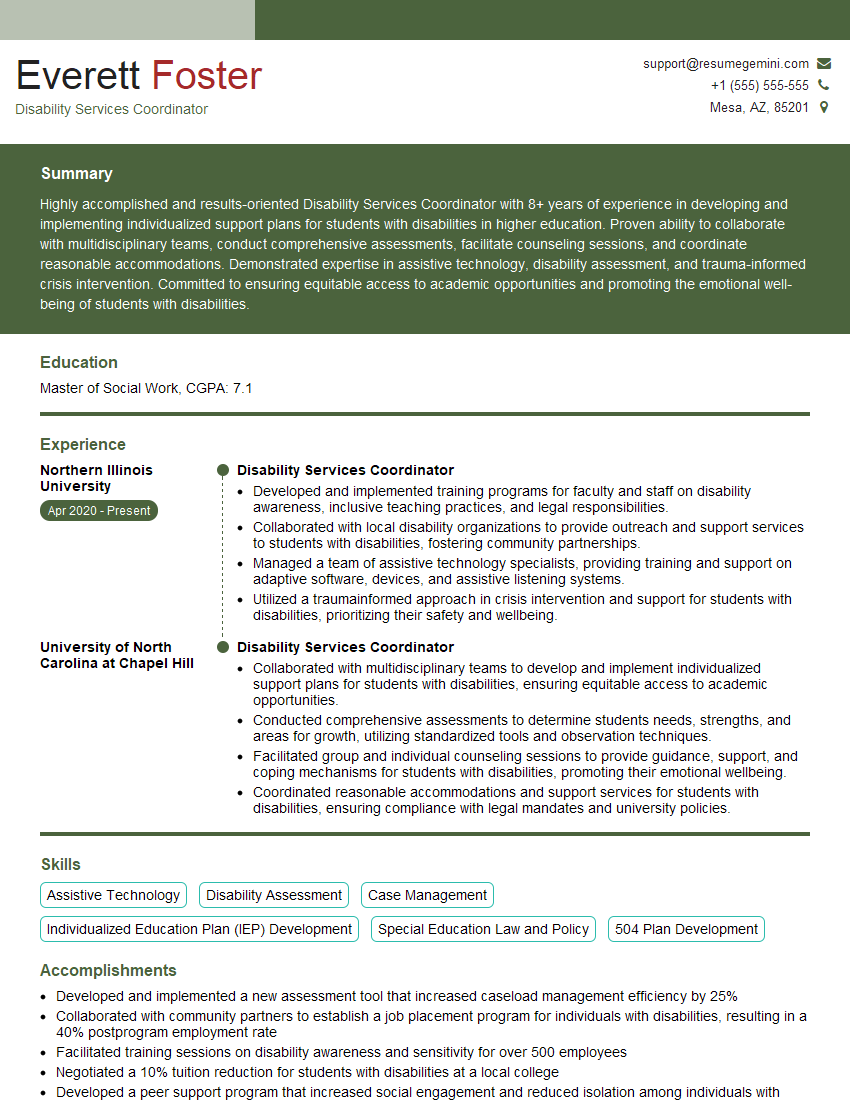
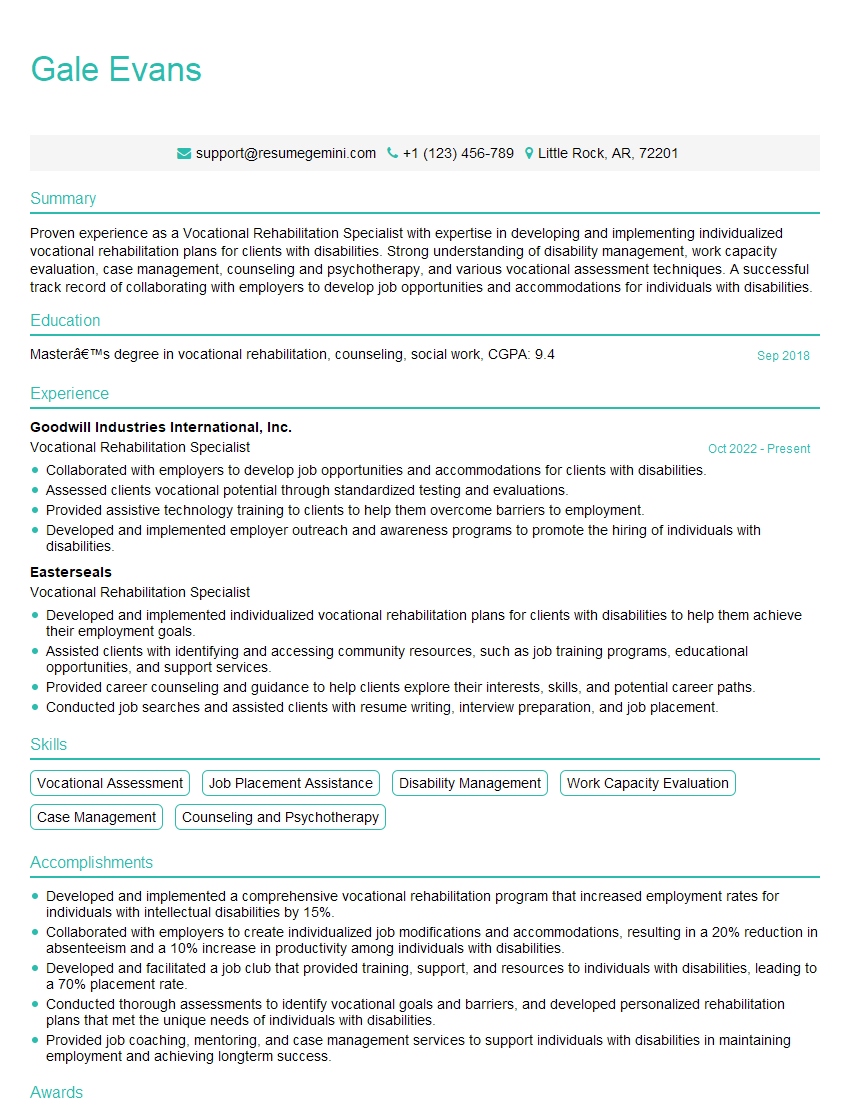
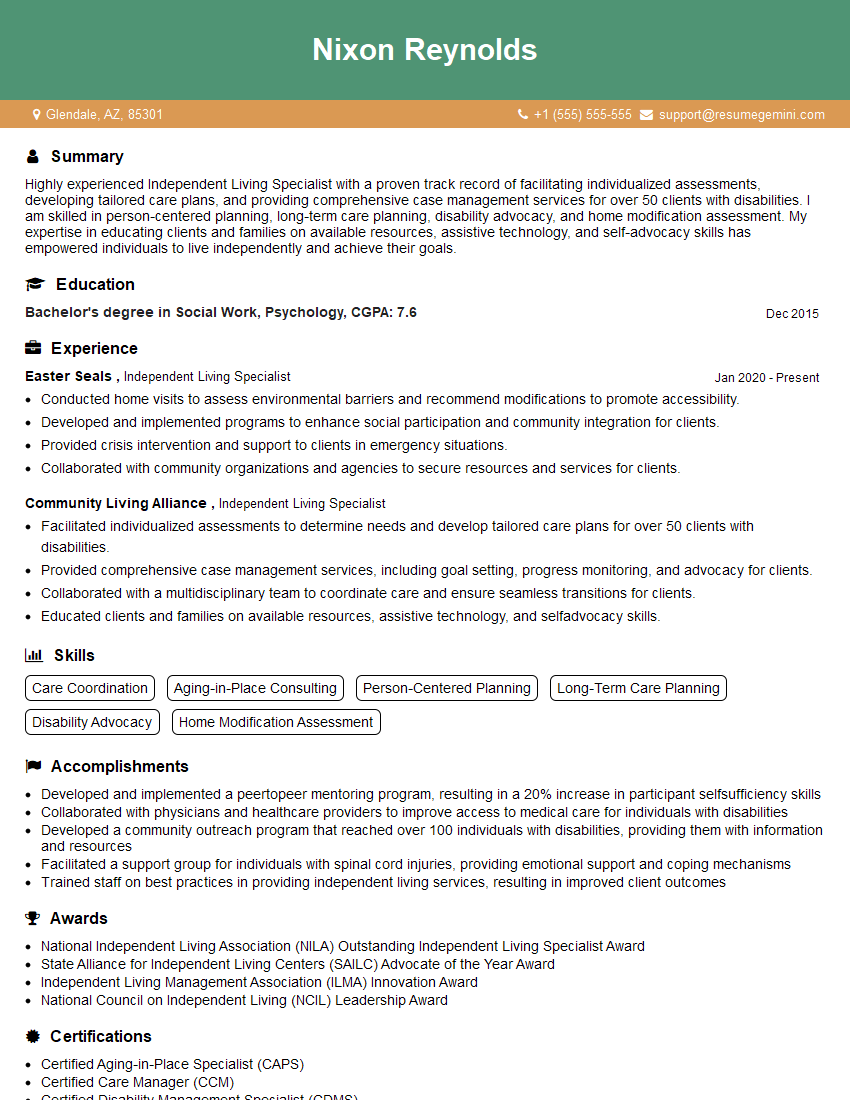
Mastering disability law and regulations is crucial for career advancement in this specialized field. A strong understanding of these concepts will significantly enhance your interview performance and open doors to exciting opportunities. To maximize your job prospects, creating an ATS-friendly resume is essential. ResumeGemini is a trusted resource that can help you build a professional resume that highlights your skills and experience effectively. ResumeGemini provides examples of resumes tailored to showcasing a strong knowledge of disability law and regulations, helping you present your qualifications compellingly to potential employers.

Explore more articles
Users Rating of Our Blogs
Share Your Experience
We value your feedback! Please rate our content and share your thoughts (optional).
What Readers Say About Our Blog
I Redesigned Spongebob Squarepants and his main characters of my artwork.
https://www.deviantart.com/reimaginesponge/art/Redesigned-Spongebob-characters-1223583608
IT gave me an insight and words to use and be able to think of examples
Hi, I’m Jay, we have a few potential clients that are interested in your services, thought you might be a good fit. I’d love to talk about the details, when do you have time to talk?
Best,
Jay
Founder | CEO