The thought of an interview can be nerve-wracking, but the right preparation can make all the difference. Explore this comprehensive guide to Literacy Interventions interview questions and gain the confidence you need to showcase your abilities and secure the role.
Questions Asked in Literacy Interventions Interview
Q 1. Explain the difference between phonological awareness and phonemic awareness.
Phonological awareness and phonemic awareness are both crucial aspects of reading development, but they operate at different levels. Think of it like this: phonological awareness is the broad umbrella, encompassing the understanding that spoken language is made up of smaller units. Phonemic awareness is a specific *subset* of phonological awareness, focusing solely on the individual sounds (phonemes) in words.
Phonological awareness includes a range of skills, such as rhyming, identifying syllables, and recognizing words that start with the same sound. For example, a child demonstrating phonological awareness might be able to identify that ‘cat’ and ‘hat’ rhyme or clap out the syllables in the word ‘banana’.
Phonemic awareness, on the other hand, is the ability to manipulate individual sounds within words. This includes tasks like identifying the beginning sound of a word (e.g., /c/ in ‘cat’), blending sounds to make a word (/c/ + /a/ + /t/ = cat), segmenting sounds in a word (breaking ‘cat’ into /c/ /a/ /t/), and substituting sounds to create new words (changing the /c/ in ‘cat’ to /h/ to make ‘hat’).
In essence, phonemic awareness is a more refined skill that builds upon the foundation of broader phonological awareness. Strong phonemic awareness is a particularly strong predictor of reading success.
Q 2. Describe three different assessment tools used to identify students with reading difficulties.
Identifying students with reading difficulties requires a multifaceted approach using a variety of assessment tools. Here are three examples:
- Informal Reading Inventories (IRIs): IRIs are individually administered assessments that provide a comprehensive picture of a student’s reading abilities. They typically involve oral reading passages at different levels of difficulty, followed by comprehension questions. This allows for the identification of strengths and weaknesses in decoding, fluency, and comprehension. For instance, an IRI might reveal a student struggles with multisyllabic words, indicating a need for specific phonics instruction.
- Phonological Awareness Tests: These tests directly assess a student’s ability to manipulate sounds in spoken language. They might involve tasks such as rhyming, blending, segmenting, and manipulating phonemes. A low score on a phonological awareness test can signal difficulties with early literacy skills and predict future reading challenges. For example, a student might struggle to identify the beginning sound in a series of words, highlighting a need for targeted phonemic awareness activities.
- Curriculum-Based Measurement (CBM): CBM involves the frequent and brief assessment of a student’s progress in reading using standardized passages from the curriculum. This provides ongoing data to monitor student growth and identify students who are not making adequate progress. For instance, if a student consistently scores below benchmark on CBM probes for fluency, it signals a need for intervention to improve reading rate and accuracy.
It’s crucial to remember that using a combination of these assessments provides a more complete and accurate picture of a student’s reading needs than any single assessment alone. The results should inform targeted interventions designed to address specific skill gaps.
Q 3. What are the key components of effective phonics instruction?
Effective phonics instruction is systematic, explicit, and multi-sensory. It focuses on building a strong foundation in letter-sound relationships and applying this knowledge to reading and spelling. Key components include:
- Systematic and Explicit Instruction: Students are taught letter-sound correspondences in a logical sequence, building from simple to more complex patterns. Explicit instruction means the teacher directly models the skill, providing clear explanations and examples. It’s not about implicit learning through immersion alone.
- Letter-Sound Correspondence: Students learn the sounds that each letter or letter combination makes, including common digraphs (e.g., ‘sh’, ‘ch’) and blends (e.g., ‘bl’, ‘st’). Instruction should encompass both consonants and vowels.
- Phoneme Manipulation: Students practice manipulating individual sounds within words (blending, segmenting, deleting, substituting) to build phonemic awareness. Activities like sound boxes or elkonin boxes are commonly used.
- Decoding and Encoding: Students practice reading (decoding) and writing (encoding) words using their phonics knowledge. This involves connecting letters and sounds to form words and applying phonics rules to read unfamiliar words.
- Multi-sensory Activities: Incorporating different senses (visual, auditory, kinesthetic) into instruction enhances learning and memory. Activities like tracing letters in sand, using letter tiles, or clapping out syllables are examples.
- Frequent Assessment and Progress Monitoring: Regularly assess students’ understanding and adjust instruction based on their progress. This allows for timely intervention and ensures that students are mastering the concepts.
By focusing on these key components, teachers can ensure that students develop the foundational skills needed for fluent and proficient reading.
Q 4. How do you differentiate instruction to meet the diverse needs of learners in literacy?
Differentiating instruction is crucial for meeting the diverse needs of learners in literacy. It involves tailoring instruction to meet individual students’ strengths and weaknesses. I use a variety of strategies:
- Pre-assessment to determine needs: I use informal and formal assessments to pinpoint individual student needs and learning styles. This helps me to group students for instruction or provide individual support.
- Flexible grouping: I group students based on their needs and learning styles, whether it’s small groups, pairs, or individual work. This allows for targeted instruction based on specific needs.
- Differentiated activities and materials: I offer a range of activities and materials to cater to various learning styles and reading levels. This might include providing different levels of reading passages, using varied manipulatives, or offering choice in assignments.
- Tiered assignments: I create assignments with varying levels of complexity to challenge students at different levels while still working on the same concept.
- Technology integration: I utilize technology to provide personalized learning opportunities. This might involve using educational apps, online games, or individualized reading programs.
- Collaboration with parents and specialists: I regularly communicate with parents and collaborate with specialists (e.g., special education teachers) to ensure a consistent and supportive learning environment.
For example, if I notice a student struggling with multisyllabic words, I might provide additional practice with word-part analysis and use visual aids to show syllable boundaries. For a student who excels, I might provide more advanced reading materials and encourage independent research projects.
Q 5. Explain your understanding of the Simple View of Reading.
The Simple View of Reading is a powerful model that posits that reading comprehension is the product of two fundamental skills: decoding and linguistic comprehension. Imagine building a house; decoding provides the bricks, and linguistic comprehension provides the architectural plan.
Decoding refers to the ability to translate written words into their spoken counterparts. This involves understanding letter-sound relationships, applying phonics rules, and recognizing sight words. A strong decoder can accurately and efficiently read words.
Linguistic comprehension encompasses the broader understanding of language. This includes vocabulary knowledge, background knowledge, and the ability to understand sentence structure, infer meaning, and make connections within and between texts. A student with strong linguistic comprehension can understand the meaning of what they are reading.
The Simple View of Reading suggests that strong reading comprehension is achieved by combining strong decoding and strong linguistic comprehension. Weaknesses in either area will negatively impact reading comprehension. For instance, a student who is a strong decoder but lacks linguistic comprehension might be able to read the words fluently, but not understand the meaning of the text. Similarly, a student with excellent linguistic comprehension but weak decoding skills may struggle to access the meaning of the text because they can’t decipher the words.
Understanding the Simple View of Reading helps educators identify the specific areas where students need support and tailor interventions accordingly.
Q 6. Describe your experience with implementing evidence-based literacy interventions.
Throughout my career, I’ve extensively implemented evidence-based literacy interventions, focusing primarily on programs with robust research support. I’ve used interventions targeting various skill deficits, such as:
- Systematic phonics interventions: I’ve implemented programs like Orton-Gillingham based approaches, emphasizing explicit and systematic instruction of phonics skills. I’ve seen significant gains in students’ decoding and reading fluency using these methods.
- Phonemic awareness interventions: I’ve used activities and games targeting phoneme isolation, blending, segmentation, and manipulation to improve phonemic awareness, a crucial precursor to reading. Activities like sound boxes and rhyming games have been particularly effective.
- Fluency interventions: I’ve employed repeated reading, choral reading, and partner reading to improve reading rate, accuracy, and expression. These techniques helped students build confidence and automate word recognition.
- Vocabulary interventions: I’ve used direct instruction, context clues, and vocabulary games to expand students’ vocabulary knowledge, which is directly related to comprehension.
- Comprehension interventions: I’ve used strategies like graphic organizers, questioning techniques, and summarizing to improve students’ ability to understand and make meaning of text.
In each instance, data-driven decision making was central. I regularly monitored student progress using CBM, and adjusted interventions based on the data to optimize outcomes. This iterative process allows for responsive and effective instruction. For instance, with one student struggling with fluency, I started with repeated reading, then transitioned to partner reading as their fluency improved, fostering both their skills and confidence.
Q 7. What strategies do you use to foster a positive and engaging literacy learning environment?
Creating a positive and engaging literacy learning environment is essential for fostering a love of reading. I use several strategies:
- Creating a print-rich classroom: I surround students with books, posters, word walls, and other print materials to create a stimulating and literacy-focused environment. This helps students see the relevance of reading in their everyday lives.
- Modeling a love of reading: I regularly read aloud to my students, choosing engaging and age-appropriate books. I share my own enthusiasm for reading, highlighting how much I enjoy it.
- Incorporating student choice and interest: I allow students to choose books they are interested in reading, which increases their engagement and motivation. Reading shouldn’t feel like a chore.
- Using interactive activities and games: I incorporate various activities and games to make learning fun and engaging. This might include word games, reading bingo, or dramatic readings.
- Celebrating student success: I regularly acknowledge and celebrate student progress, fostering their confidence and motivation. Positive reinforcement is crucial for developing a positive attitude towards reading.
- Creating a collaborative learning community: I encourage students to collaborate and share their learning experiences with one another, creating a supportive and inclusive environment.
For example, I’ve seen a significant impact when incorporating student choice into reading time. The students become more engaged, and their reading levels often improve as a result of this intrinsic motivation. A positive learning environment creates a safe space for risk-taking and experimentation, which is crucial for learning and growth in literacy.
Q 8. How do you collaborate with parents and other professionals to support students’ literacy development?
Collaboration with parents and other professionals is paramount in supporting students’ literacy development. It’s about building a strong, unified team focused on the student’s individual needs. I begin by establishing open communication channels. This includes regular meetings (either in-person or virtual), email updates, and even phone calls, depending on the family’s preference. I share progress reports that aren’t just about grades but highlight the student’s strengths, areas for growth, and specific strategies we’re employing.
For example, with parents, I explain the literacy interventions used in the classroom, providing resources they can use at home to reinforce learning. This might involve recommending specific reading materials aligned with their child’s reading level or suggesting engaging activities like reading aloud together. With other professionals, like special education teachers or speech therapists, collaboration involves sharing assessment data, coordinating interventions, and discussing the student’s overall progress, ensuring a cohesive approach.
I also involve parents in setting realistic goals and celebrating successes. This collaborative approach fosters a shared understanding of the student’s needs and empowers everyone to contribute effectively to their literacy journey. It’s crucial to remember that parent engagement is directly linked to student success, and a supportive home environment significantly impacts a child’s literacy skills.
Q 9. What are some common challenges faced by students with dyslexia, and how would you address them?
Students with dyslexia face unique challenges that require specialized interventions. Common difficulties include difficulties with phonological awareness (the ability to hear and manipulate sounds in words), decoding (breaking down words into sounds to read them), and spelling. They may also struggle with reading fluency and comprehension, even with adequate intelligence.
Addressing these challenges requires a multi-faceted approach. First, a comprehensive assessment is crucial to identify the specific areas of difficulty. Then, I implement structured literacy interventions focusing on explicit and systematic phonics instruction. This involves teaching letter-sound relationships, blending and segmenting sounds, and decoding skills in a highly structured way.
For example, I might use multi-sensory techniques, such as tracing letters in sand or using manipulatives to represent sounds, to help students connect with the material on multiple levels. I also employ techniques to improve reading fluency through repeated readings and focus on building vocabulary using engaging stories and activities. Finally, collaboration with the student’s parents and other professionals, such as an occupational therapist, to provide comprehensive support, both in school and at home, significantly impacts the student’s progress. Regular monitoring and adjustments to the intervention plan are vital to ensure its effectiveness.
Q 10. Describe your experience with using assistive technology to support students’ literacy learning.
Assistive technology plays a significant role in supporting students’ literacy learning, especially those with learning disabilities. I have extensive experience using various assistive technologies, tailoring their use to individual student needs. For instance, I’ve used text-to-speech software to support students with decoding difficulties, allowing them to hear words as they read along.
This technology helps improve reading fluency and comprehension. I’ve also used speech-to-text software to assist students with writing challenges, allowing them to dictate their thoughts and ideas without the frustration of handwriting or keyboarding. Another valuable tool is graphic organizers, available on various platforms, to help students structure their thinking and writing. These digital tools allow for easy collaboration and sharing of work.
Furthermore, I utilize digital audiobooks and e-readers with text-to-speech capabilities for students who struggle with print materials. The key is to integrate these technologies seamlessly into the classroom, ensuring students understand how to use them effectively and feel comfortable doing so. Regular training and support are given, ensuring successful adoption and integration of the tools.
Q 11. How do you monitor student progress and adjust instruction accordingly?
Monitoring student progress and adjusting instruction are continuous processes. I use a variety of formative and summative assessments to track student growth. Formative assessments, like quick checks, exit tickets, and observations during classroom activities, provide ongoing feedback and inform immediate instructional adjustments.
Summative assessments, such as unit tests and benchmark assessments, provide a more comprehensive picture of student learning and help to identify areas needing further attention. Data collected from these assessments is analyzed regularly, focusing on individual student performance as well as overall class trends. Based on this data, I adjust my instruction using data-driven decision-making. For instance, if I notice a significant number of students struggling with a particular skill, I might re-teach the concept using a different method, incorporating more hands-on activities or small group instruction.
Individual student progress is tracked closely. If a student consistently struggles with a particular concept, I might implement targeted interventions, using differentiated instruction to meet individual needs. This could involve providing extra practice, modifying assignments, or offering alternative assessment methods. The goal is to create a dynamic learning environment that responds to the unique needs of each student.
Q 12. What are some effective strategies for teaching vocabulary?
Teaching vocabulary effectively involves more than just memorizing definitions. It’s about building rich connections between words and their meanings. I use a variety of strategies to make vocabulary instruction engaging and meaningful.
One effective approach is to incorporate vocabulary into meaningful contexts through reading. Students encounter words within stories, which provides a natural and contextual understanding. I also use explicit instruction, defining and explaining the meaning of words in a clear and concise way, often providing multiple examples.
To enhance word retention, I engage students in activities such as creating vocabulary maps or using words in sentences, both written and spoken. Visual aids, such as pictures, diagrams, or real-world objects, also improve understanding and retention. For example, when teaching the word ‘ubiquitous,’ I might show pictures of something that’s common, like smartphones or coffee shops, to illustrate the word’s meaning. The goal is to foster deep understanding and application of new vocabulary in a variety of settings.
Q 13. How do you teach students to comprehend complex texts?
Teaching students to comprehend complex texts requires a multi-pronged approach that goes beyond simple decoding. It’s about building strong comprehension strategies that enable students to extract meaning from challenging texts. I begin by teaching students how to activate prior knowledge, connecting the text to what they already know.
Next, I emphasize the importance of monitoring comprehension and self-correcting. This involves encouraging students to pause and think about what they’re reading, checking for understanding and clarifying any confusion.
I also explicitly teach comprehension strategies such as summarizing, questioning, visualizing, and making inferences. For example, I might use graphic organizers to help students visualize the plot of a story or to compare and contrast different characters. I encourage collaborative reading and discussion to foster active engagement and deeper understanding of the text. By explicitly teaching these strategies and providing ample opportunities for practice, students can successfully navigate complex texts.
Q 14. What are your strategies for teaching writing skills?
Teaching writing skills involves fostering not only the mechanics of writing, like grammar and spelling, but also the creative and critical thinking processes involved in crafting effective writing. My approach emphasizes a process-oriented model, moving beyond simple memorization of rules.
I start by modeling the writing process, demonstrating how to brainstorm ideas, create outlines, draft, revise, and edit. Students actively participate in these steps, receiving feedback at each stage.
I also integrate various writing genres, encouraging students to explore different forms of expression such as narrative, descriptive, persuasive, and expository writing. I use various prompts and activities to spark creativity and enhance their understanding of the stylistic features of different genres. Providing ample opportunities for writing practice, both independently and collaboratively, is critical. Furthermore, I provide constructive feedback emphasizing both the strengths and areas for improvement in their writing. This feedback focuses on the writing process and content, not just grammar and mechanics.
Q 15. Explain the role of fluency in reading comprehension.
Reading fluency is the ability to read accurately, quickly, and with expression. It’s not just about decoding words; it’s about effortlessly processing text to understand its meaning. Think of it like this: a fluent reader is like a skilled musician playing a piece of music – smooth, accurate, and expressive. A non-fluent reader is like someone struggling to read the notes, stumbling over each one. Fluency plays a crucial role in comprehension because if a student is struggling to decode words, they’re using so much cognitive energy on the decoding process that they don’t have enough left to actually understand what they’re reading. Without fluency, comprehension suffers significantly. A student might be able to decode each word individually, but miss the overall meaning and relationships between ideas.
For example, imagine a student reading, “The quick brown fox jumps over the lazy dog.” A fluent reader reads this smoothly, understanding the action and the descriptive words. A non-fluent reader might stumble over each word, taking a long time to decode, and losing the overall picture of the sentence’s meaning. They might not even fully grasp the relationship between ‘quick’ and ‘jumps’. Therefore, strong fluency acts as a bridge, paving the way for deeper comprehension.
Career Expert Tips:
- Ace those interviews! Prepare effectively by reviewing the Top 50 Most Common Interview Questions on ResumeGemini.
- Navigate your job search with confidence! Explore a wide range of Career Tips on ResumeGemini. Learn about common challenges and recommendations to overcome them.
- Craft the perfect resume! Master the Art of Resume Writing with ResumeGemini’s guide. Showcase your unique qualifications and achievements effectively.
- Don’t miss out on holiday savings! Build your dream resume with ResumeGemini’s ATS optimized templates.
Q 16. How do you address students who are struggling with reading fluency?
Addressing students struggling with reading fluency requires a multi-faceted approach, focusing on both accuracy and rate. First, I conduct a thorough assessment to pinpoint the specific areas of difficulty. Is the problem primarily with decoding individual words, or is it more about their reading rate and prosody (expression)?
- Repeated Reading: I often use repeated reading, where students read the same passage multiple times. This helps build automaticity and improve speed and accuracy. I might also use paired reading, where students read aloud with a partner.
- Guided Oral Reading: I work with students one-on-one or in small groups to model fluent reading. I provide immediate feedback and support, focusing on correcting errors and modeling expressive reading.
- Technology-Assisted Interventions: Software programs and apps can provide opportunities for repeated practice and track progress. These tools offer personalized feedback and often include engaging activities.
- Focus on Prosody: I work with students on their expression, intonation, and phrasing to improve the overall quality of their reading. We might read aloud together, focusing on pausing and stressing words for meaning.
- Addressing Underlying Issues: Sometimes, fluency problems stem from other issues like phonological awareness deficits. If necessary, I collaborate with specialists to address these underlying concerns. For example, we might incorporate activities to strengthen phonemic awareness skills.
Progress monitoring is key. I regularly assess student progress to adjust interventions as needed and celebrate their successes to maintain motivation. For example, I might use informal reading inventories or running records to track their reading rate and accuracy over time.
Q 17. What are some effective strategies for teaching reading comprehension?
Effective reading comprehension instruction involves teaching students strategies to actively engage with the text and construct meaning. It’s not just about decoding words, but about understanding the author’s message and connecting it to their prior knowledge.
- Before Reading Activities: Activating prior knowledge through discussions or pre-reading activities like KWL charts (Know, Want to know, Learned) sets the stage for comprehension. Previewing vocabulary and discussing the text’s purpose also helps.
- During Reading Activities: Students need to be taught how to actively engage with the text. This includes strategies like visualizing, questioning, summarizing, and making connections to their own experiences. Think-alouds, where I model my thinking process while reading, are extremely useful.
- After Reading Activities: Following reading, students need time to process and reflect on what they have read. Activities like retelling the story, answering comprehension questions, engaging in discussions, or creating graphic organizers help consolidate their understanding.
- Differentiated Instruction: Not all students learn in the same way, so I adapt my instruction to meet individual needs. Some students benefit from more visual aids, while others learn better through auditory or kinesthetic activities. Providing various opportunities for engagement is crucial.
- Vocabulary Instruction: A rich vocabulary is fundamental for comprehension. Explicitly teaching vocabulary, using context clues, and providing opportunities for students to use new words in their own writing and speaking is essential.
For example, when teaching a story about a desert, I might start by activating prior knowledge about deserts, then model visualising techniques while reading, and finally, ask them to draw a picture of their favorite part of the story, consolidating their comprehension through artistic expression.
Q 18. Describe your experience with Response to Intervention (RTI) models.
Response to Intervention (RTI) is a multi-tiered framework for providing support to struggling learners. I have extensive experience implementing RTI models in various settings. In my experience, successful RTI models involve:
- Tier 1: Universal Screening and Prevention: All students receive high-quality, evidence-based instruction in the general education classroom. We use universal screening tools to identify students who might need additional support.
- Tier 2: Targeted Interventions: Students who don’t respond adequately to Tier 1 instruction receive more intensive interventions in small groups, usually with a specialist. These interventions are monitored closely to track progress.
- Tier 3: Intensive Interventions: Students who continue to struggle despite Tier 2 interventions receive individualized support, often involving specialized instruction, such as one-on-one tutoring or specialized interventions like assistive technology.
Data-based decision-making is central to RTI. Regular monitoring of student progress guides decisions about intervention intensity and whether students need to move up or down a tier. Effective communication between teachers, specialists, and parents is essential for successful RTI implementation. For instance, I have used RTI to effectively support a student struggling with decoding who initially failed to respond to Tier 1 intervention. By moving her to Tier 2, providing targeted phonics instruction in a small group, and closely monitoring her progress, we saw a marked improvement in her reading abilities, and she was able to successfully return to the Tier 1 learning environment.
Q 19. What are the key indicators of reading difficulties in early elementary grades?
Early identification of reading difficulties is crucial for successful intervention. Key indicators in early elementary grades include:
- Difficulty with letter and sound recognition: Struggling to identify letters or match sounds to letters.
- Limited phonological awareness: Inability to manipulate sounds in words (e.g., rhyming, blending, segmenting).
- Slow or inaccurate reading: Reading slowly, making frequent errors, or losing place while reading.
- Poor reading fluency: Lack of expression, appropriate pacing, and automaticity in reading.
- Limited vocabulary: Having a smaller vocabulary than expected for their age.
- Difficulty with reading comprehension: Struggling to understand what they are reading, even when reading accurately.
- Avoidance of reading activities: Showing a dislike or avoidance of reading activities.
A combination of these indicators, not just one in isolation, often signals potential reading difficulties. It’s important to note that some students may struggle with specific aspects of reading, while excelling in others. A comprehensive assessment is needed to gain a clear picture of their strengths and weaknesses. For example, a student might decode words accurately but struggle significantly with reading comprehension. This points to a need for focused instruction on comprehension strategies, rather than just decoding.
Q 20. Explain your understanding of the stages of reading development.
Reading development is a gradual process, often characterized by distinct stages. While the exact ages can vary, these stages generally include:
- Emergent Literacy (Preschool – Kindergarten): Children develop foundational literacy skills, such as print awareness (understanding that print carries meaning), phonological awareness, and letter recognition. They begin to understand the connection between spoken and written words.
- Early Reading (Kindergarten – Grade 1): Children learn to decode words, blending sounds together to read simple words. They also begin to develop their reading fluency and comprehension skills, focusing on simple texts.
- Transitional Reading (Grades 1-3): Children become more proficient in decoding and reading increasingly complex texts. They begin to develop strategies for reading comprehension, including summarizing, making inferences, and identifying the main idea.
- Fluent Reading (Grades 3-5): Students become fluent readers who can easily decode words and read with expression. Their comprehension skills continue to develop, and they can read and understand more complex texts.
- Reading to Learn (Grades 4+): Students use reading to learn new information across various subjects. Reading becomes a tool for learning, extending beyond basic literacy to mastering increasingly challenging content in all academic areas.
It’s important to remember that these stages are not rigid. Students may progress at different rates, and some may require additional support to reach their full potential. Also, students may exhibit different levels of development across various aspects of literacy (e.g., a student might be a fluent reader but struggle with reading comprehension). A holistic approach that caters to individual needs and learning styles is essential for promoting reading development across all stages.
Q 21. How do you adapt your instruction for students with diverse learning styles?
Adapting instruction for diverse learning styles is essential for maximizing student success. I use a variety of approaches, ensuring that students have multiple opportunities to engage with the material in ways that suit their individual learning preferences. Here’s how I adapt my instruction:
- Visual Learners: I use visual aids like charts, diagrams, graphic organizers, and videos to present information in a clear, concise manner. For example, a mind map of key story elements can help visual learners understand the plot structure better.
- Auditory Learners: I incorporate activities like read-alouds, discussions, and audio recordings. For instance, recorded audiobooks can provide repeated exposure to the text.
- Kinesthetic Learners: I incorporate hands-on activities, such as role-playing, acting out scenes, or using manipulatives. For example, using blocks to represent characters or events in a story helps kinesthetic learners engage in a concrete way.
- Multimodal Learning: I frequently combine different learning modalities in my lessons. For instance, I might start with a read-aloud (auditory), followed by a graphic organizer (visual) and then a hands-on activity (kinesthetic) related to the book.
Regular assessment and monitoring are vital for observing student response to different teaching strategies. I use formative assessments, such as observations, informal quizzes, and exit tickets, to gather information about individual student progress, adapting my approach to better meet their needs. For instance, if a student demonstrates difficulty understanding a text despite multiple strategies, I’d consult their IEP or learning support team to explore further solutions, potentially incorporating assistive technologies or alternative assessment methods.
Q 22. What are some effective methods for teaching struggling readers?
Effective literacy interventions for struggling readers hinge on differentiated instruction tailored to individual needs. This means moving beyond a ‘one-size-fits-all’ approach and focusing on the specific areas where the student is struggling. We need to identify the root cause of the reading difficulty – is it phonological awareness (understanding sounds in words), fluency (reading smoothly and accurately), vocabulary, or comprehension?
- Explicit Phonics Instruction: For students struggling with decoding, systematic and explicit phonics instruction is crucial. This involves teaching letter-sound relationships, blending sounds to read words, and segmenting words into sounds. For example, I might use multi-sensory techniques like tracing letters in sand or using manipulatives to represent sounds.
- Repeated Reading: Improving fluency requires practice. Repeated reading of passages at the student’s instructional level allows them to build confidence and automaticity. I often pair this with a focus on prosody (expression and intonation).
- Targeted Vocabulary Instruction: A rich vocabulary is essential for comprehension. I incorporate vocabulary activities like semantic mapping (connecting words with related meanings) and providing rich contextual clues within engaging texts.
- Comprehension Strategies: Students need to be explicitly taught comprehension strategies, such as predicting, questioning, visualizing, summarizing, and making connections. Think-alouds, where I model my own thinking process as I read, are highly effective.
- Use of Graphic Organizers: Visual aids like story maps, character charts, and KWL charts help students organize information and improve their understanding of texts.
I always work closely with parents and other educators to ensure consistency and support across learning environments.
Q 23. What are your strategies for promoting independent reading habits?
Promoting independent reading habits requires creating a classroom culture that celebrates reading and provides students with choices and opportunities to engage with texts they find interesting. It’s not just about *making* them read, but about *making them want* to read.
- Choice and Access: Students are far more likely to read independently if they have access to a wide variety of books that cater to their interests. This includes genres, reading levels, and formats (e.g., graphic novels, audiobooks).
- Classroom Library: A well-stocked classroom library, inviting and easily accessible, is key. Regularly updating the collection and incorporating student recommendations keeps things fresh and exciting.
- Reading Time: Scheduled independent reading time during the school day is crucial. This isn’t just silent reading; it’s a time for students to explore books independently, and perhaps participate in book talks or other activities which foster a sense of community around reading.
- Book Talks & Recommendations: I encourage students to share their favorite books and recommend them to classmates. This can be done informally, or through more structured activities like book reviews or presentations.
- Reader’s Workshops: These allow students to choose books at their instructional level and practice reading strategies in a low-stakes environment.
- Connecting Reading to Other Subjects: I integrate reading into other subject areas, demonstrating the relevance and value of reading across the curriculum.
For example, I’ve had success with a ‘classroom book club’ where students choose a book together, then meet to discuss it. This fosters a sense of community and shared experience around reading. It’s also important to celebrate successes, no matter how small, and foster a positive attitude toward reading.
Q 24. How do you incorporate technology into literacy instruction?
Technology can be a powerful tool in literacy instruction, providing engaging and personalized learning experiences. However, it’s crucial to use technology thoughtfully and purposefully, integrating it strategically to enhance, not replace, effective teaching practices.
- Interactive Whiteboards: These provide a dynamic platform for modeling reading strategies, demonstrating phonics concepts, and engaging students in collaborative activities.
- Educational Apps and Software: Many high-quality apps cater to specific skill needs, like phonics or vocabulary. I carefully select apps that align with my curriculum and provide opportunities for differentiated instruction.
- E-books and Digital Texts: These offer accessibility and personalized features like text-to-speech and adjustable font sizes. This is particularly beneficial for students with learning differences.
- Online Reading Platforms: Platforms providing access to a vast library of age-appropriate texts can supplement classroom resources and cater to diverse interests.
- Educational Games: Many engaging educational games reinforce literacy skills in a fun and interactive way. For example, I use online games to practice spelling, vocabulary, or reading comprehension.
It’s important to remember that technology is a tool. Its effectiveness depends on how well it’s integrated into a well-structured literacy program, and it should always be used in conjunction with, not in place of, direct instruction and interaction.
Q 25. Describe your experience with formative and summative assessments in literacy.
Formative and summative assessments are integral to effective literacy instruction. They provide crucial data for informing teaching decisions and tracking student progress.
- Formative Assessments: These are ongoing, low-stakes assessments used to monitor student learning and adjust instruction accordingly. Examples include: observation during reading activities, analyzing student work samples, quick quizzes, and exit tickets. I use this data to identify areas where students need more support and adjust my instruction accordingly.
- Summative Assessments: These are high-stakes assessments used to evaluate student learning at the end of a unit or term. Examples include: unit tests, reading portfolios, and standardized tests. Summative assessments provide a broader picture of student achievement and can be used to inform future instruction and program planning.
The balance between formative and summative assessments is crucial. While summative assessments measure overall learning outcomes, formative assessments inform the process itself. Both are essential for understanding student strengths and weaknesses and adapting teaching practices to maximize student growth. I often use a variety of assessment methods, making sure they are aligned with the curriculum objectives.
Q 26. What professional development activities have you undertaken to enhance your literacy expertise?
Throughout my career, I’ve actively sought professional development opportunities to enhance my literacy expertise. My goal is to remain at the forefront of effective literacy practices.
- Workshops and Conferences: I regularly attend workshops and conferences focusing on current research and best practices in literacy instruction. This allows me to network with other educators and learn about new techniques and approaches.
- Graduate Courses: I’ve pursued graduate-level coursework in reading intervention and literacy education, deepening my understanding of the science of reading and effective instructional strategies.
- Mentorship and Collaboration: I actively participate in mentoring programs and collaborative professional learning communities. These opportunities provide valuable insights and support from experienced educators.
- Online Courses and Webinars: I utilize online resources like professional organizations’ websites to access current research and best practices.
For instance, recently I completed a workshop on implementing evidence-based interventions for students with dyslexia. This training provided me with new tools and strategies that I’m now actively incorporating into my classroom practices.
Q 27. How do you stay current with research and best practices in the field of literacy?
Staying current with research and best practices in literacy is crucial for effective teaching. The field is constantly evolving, so continuous learning is essential.
- Professional Journals and Publications: I regularly read peer-reviewed journals such as The Reading Teacher and Journal of Literacy Research to keep up with the latest research findings.
- Professional Organizations: Membership in professional organizations, such as the International Literacy Association (ILA), provides access to resources, publications, and conferences.
- Online Databases and Resources: I utilize online databases like ERIC (Education Resources Information Center) to access research articles and reports.
- Collaboration and Networking: I actively participate in professional learning communities and discussions with colleagues to share ideas and stay informed about new developments in the field.
I also regularly review new literacy materials and technologies and attend webinars presented by literacy experts. By engaging in continuous learning, I can ensure that my instruction is based on the most current and effective research.
Key Topics to Learn for Literacy Interventions Interview
- Phonemic Awareness: Understanding the sounds of language and how they relate to letters and words. Practical application: Developing and implementing activities to improve students’ ability to segment and blend sounds.
- Phonics: The relationship between letters and sounds. Practical application: Teaching decoding and encoding skills, differentiating between various phonics approaches (e.g., synthetic phonics, analytic phonics).
- Fluency: Reading accurately, quickly, and with expression. Practical application: Implementing strategies to improve reading rate, accuracy, and prosody; using fluency assessments to monitor progress.
- Vocabulary: Understanding and using a wide range of words. Practical application: Employing direct and indirect vocabulary instruction methods; using context clues and dictionaries.
- Reading Comprehension: Understanding the meaning of text. Practical application: Teaching comprehension strategies such as predicting, questioning, visualizing, summarizing, and making inferences; selecting appropriate texts for students’ reading levels.
- Assessment and Data Analysis: Utilizing various assessment tools to identify student needs and monitor progress. Practical application: Interpreting assessment data to inform instructional decisions; utilizing data-driven instruction to improve student outcomes.
- Differentiated Instruction: Adapting instruction to meet the diverse needs of learners. Practical application: Designing and implementing lessons that cater to different learning styles and abilities; utilizing various instructional strategies (e.g., small group instruction, one-on-one tutoring).
- Collaboration and Communication: Working effectively with colleagues, parents, and other stakeholders. Practical application: Participating in professional learning communities; communicating effectively with parents about student progress.
- Evidence-Based Practices: Implementing research-based interventions and strategies. Practical application: Staying up-to-date on current research in literacy; selecting interventions that align with best practices.
Next Steps
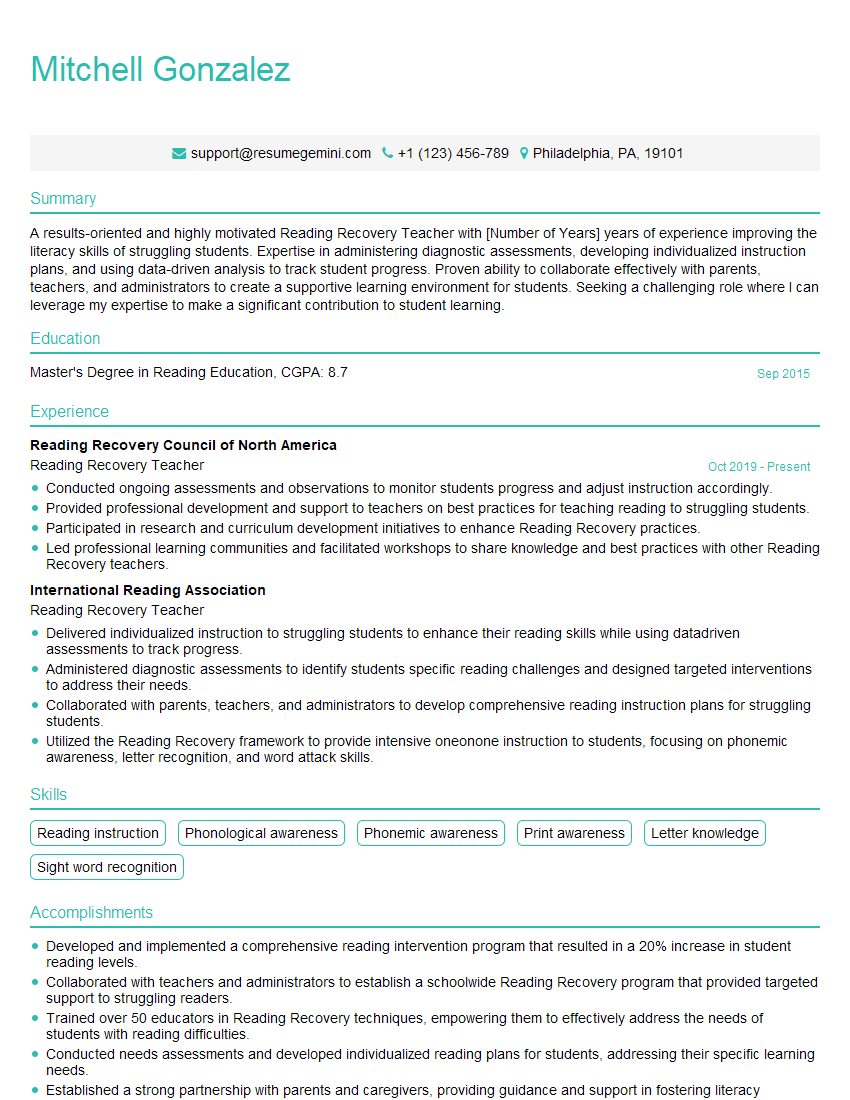
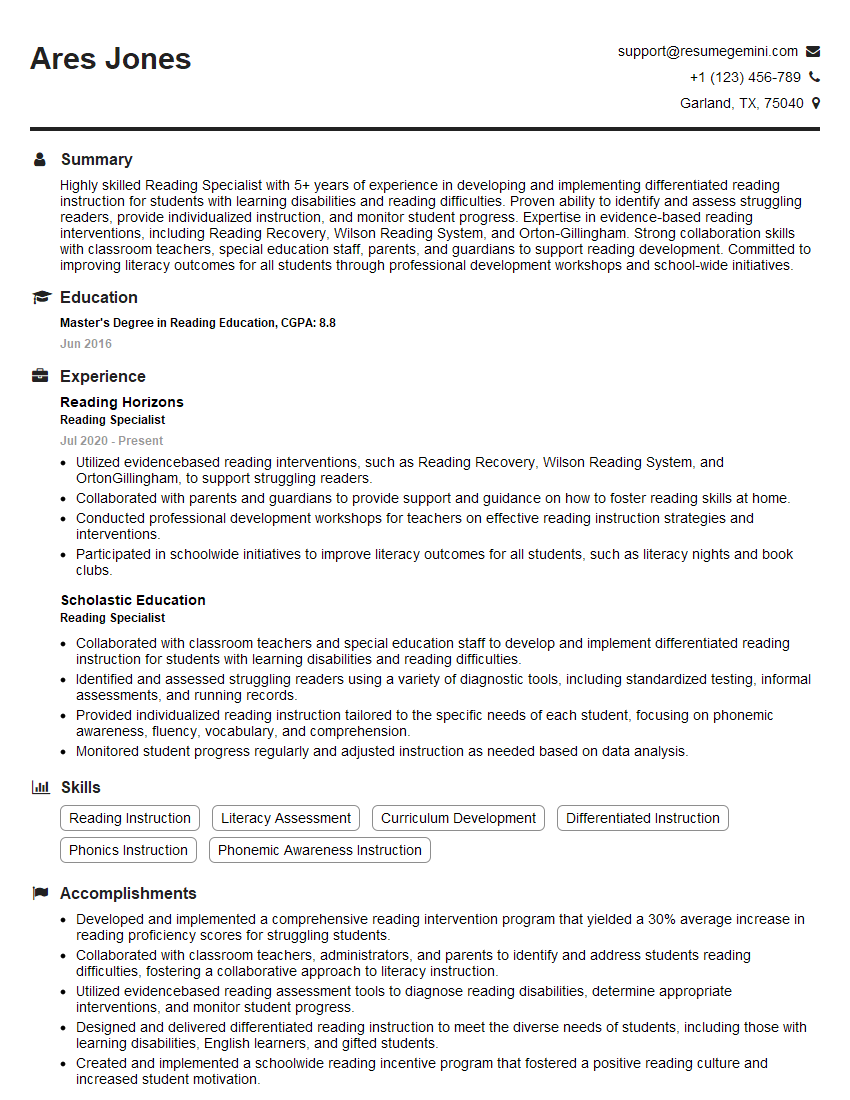
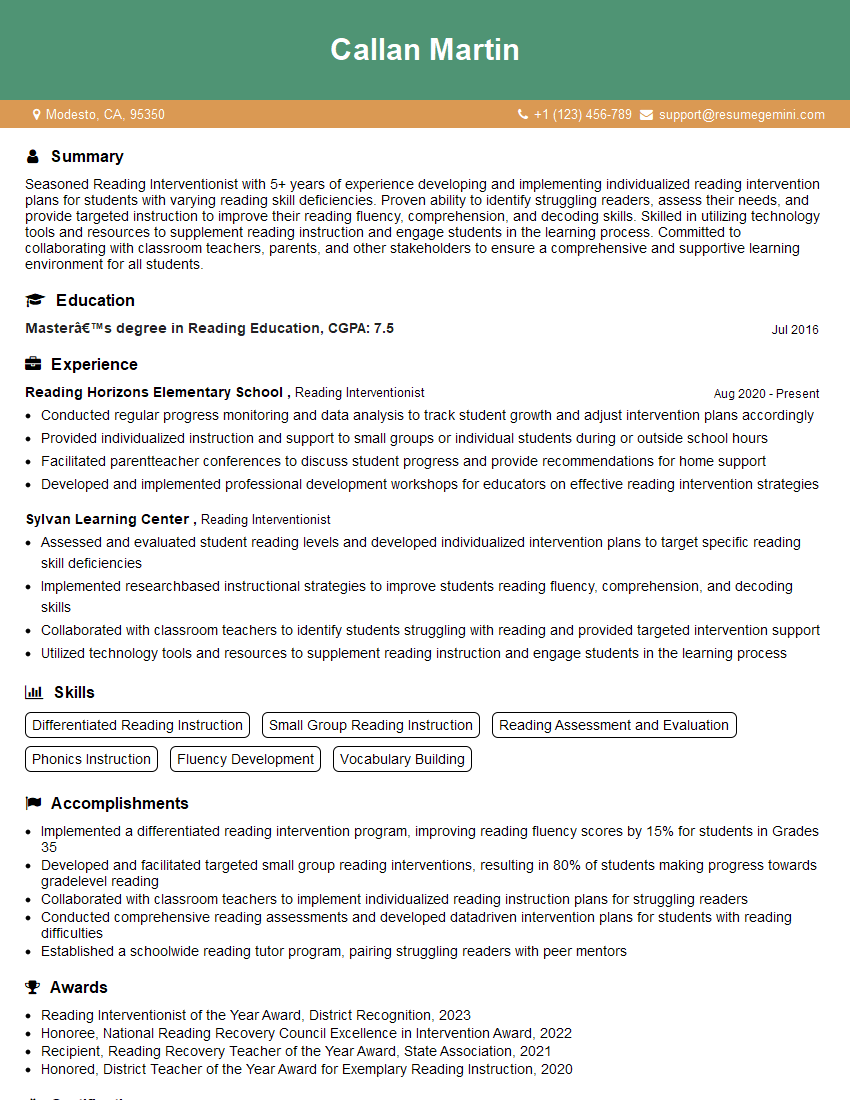
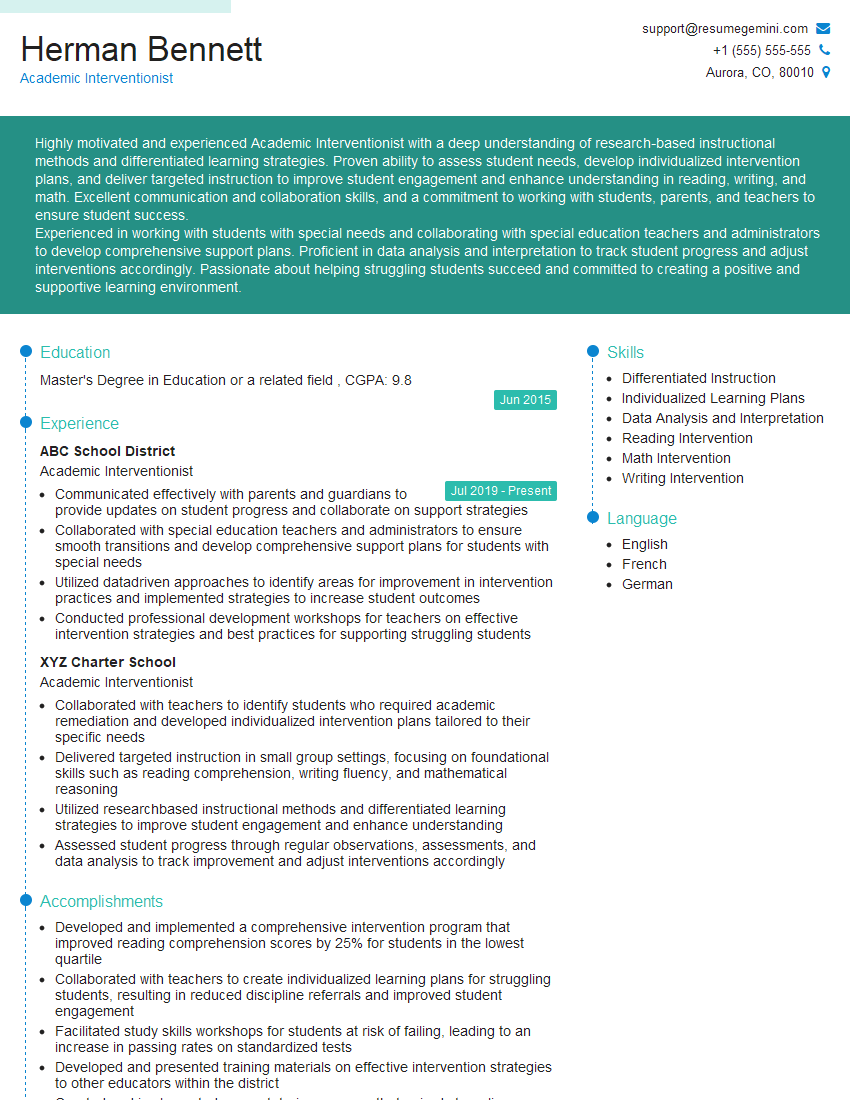
Mastering Literacy Interventions is crucial for a successful and rewarding career in education. A strong understanding of these key areas will significantly enhance your job prospects and allow you to make a real difference in the lives of your students. To stand out from the competition, it’s essential to create a compelling and ATS-friendly resume that showcases your skills and experience. ResumeGemini is a trusted resource that can help you build a professional resume tailored to the specific requirements of Literacy Interventions roles. Examples of resumes specifically designed for this field are available to help guide you.
Explore more articles
Users Rating of Our Blogs
Share Your Experience
We value your feedback! Please rate our content and share your thoughts (optional).
What Readers Say About Our Blog
I Redesigned Spongebob Squarepants and his main characters of my artwork.
https://www.deviantart.com/reimaginesponge/art/Redesigned-Spongebob-characters-1223583608
IT gave me an insight and words to use and be able to think of examples
Hi, I’m Jay, we have a few potential clients that are interested in your services, thought you might be a good fit. I’d love to talk about the details, when do you have time to talk?
Best,
Jay
Founder | CEO