Unlock your full potential by mastering the most common Transcription Accuracy interview questions. This blog offers a deep dive into the critical topics, ensuring you’re not only prepared to answer but to excel. With these insights, you’ll approach your interview with clarity and confidence.
Questions Asked in Transcription Accuracy Interview
Q 1. What software programs are you proficient in for transcription?
My transcription proficiency spans a range of software, each tailored to different needs. I’m highly proficient in industry-standard tools like Trint and Otter.ai for their speed and accuracy features, especially helpful for large volumes of audio. For more detailed work requiring precise formatting, I utilize Express Scribe, known for its foot pedal compatibility and advanced editing capabilities. I also have experience with specialized software for legal transcription, such as CaseClerk, focusing on accurate rendering of legal terminology and formatting requirements. Finally, I’m comfortable using general-purpose audio editing software like Audacity for pre-processing audio to improve clarity before transcription.
Q 2. Describe your experience with different audio file formats.
My experience encompasses a wide array of audio file formats, including the most common ones like MP3, WAV, and M4A. I am also familiar with less common formats such as WMA and OGG. Understanding the nuances of each format is crucial. For instance, WAV files are generally uncompressed, offering the best audio quality but larger file sizes. MP3 files, being compressed, can sometimes lead to audio degradation, necessitating careful listening and potentially increased editing time. My workflow incorporates the ability to handle these variations effectively. I adapt my strategies based on the quality of the audio file, ensuring optimal accuracy regardless of the format.
Q 3. Explain your process for handling difficult audio or accents.
Handling challenging audio or accents involves a multi-step process. First, I carefully listen to the audio multiple times, paying close attention to the speech patterns and accents. I might use playback speed controls to slow down difficult passages. For strong accents, I frequently utilize online resources like dictionaries and pronunciation guides to verify unfamiliar words. When dealing with background noise, I may employ audio editing software to reduce or filter out distractions. If the audio is extremely poor, I employ active listening techniques and context clues to make informed educated guesses. I always clearly mark ambiguous sections with brackets, explaining the uncertainty in a separate note, ensuring transparency and maintaining accuracy to the best of my ability. For instance, if I’m unsure of a word, I’ll transcribe it as [inaudible] or [unclear] followed by a descriptive note in the comments. This strategy safeguards against inaccuracies and ensures clarity for the client.
Q 4. How do you ensure the accuracy of your transcriptions?
Accuracy is paramount. My process incorporates several quality control measures. Firstly, I always listen to the audio multiple times; a first pass for general understanding, followed by subsequent passes for accuracy and detail. I meticulously verify proper names, numbers, and technical terminology. I then employ a rigorous proofreading process, checking for grammatical errors, spelling mistakes, and punctuation issues. Finally, I use a variety of tools and techniques including grammar checkers and spell-checkers, to further enhance accuracy. I also actively seek feedback from clients to continually refine my approach and identify areas for improvement.
Q 5. What is your typical word-per-minute (WPM) transcription speed?
My typical transcription speed varies depending on the audio quality and complexity of the content. For clear, single-speaker audio, I can reach a speed of 100-120 words per minute (WPM) with a high degree of accuracy. However, complex audio, including multiple speakers, background noise, or strong accents, significantly reduces the speed. Maintaining accuracy is prioritized over speed, ensuring a high-quality final product rather than compromising on precision.
Q 6. How do you handle ambiguous speech or inaudible sections?
Ambiguous speech and inaudible sections require careful handling. I always indicate these sections clearly in the transcript using brackets such as [inaudible], [unclear], or [speech overlapping]. I avoid guessing and instead rely on context clues to clarify the meaning, if possible. If the ambiguity significantly impacts the understanding of the content, I add a comment explaining the uncertainty. For instance, if a speaker mumbles a name, I will write “Name [unclear], possibly [possible name].” This transparency is vital for maintaining integrity and allows the client to make informed decisions about any necessary follow-up.
Q 7. What are some common errors in transcription, and how do you avoid them?
Common transcription errors include spelling mistakes, punctuation errors, incorrect use of homophones (e.g., ‘their’ vs. ‘there’), and inaccurate representation of speaker changes. I avoid these errors through a multi-faceted approach. This includes careful listening and multiple proofreading passes. Using a variety of tools and techniques, I minimize human error, incorporating spellcheckers, grammar checkers, and time-stamped verification. I also maintain a detailed style guide to ensure consistency across all my work. Regular self-reflection on past transcriptions to identify and learn from mistakes is crucial to continuous improvement. Finally, seeking feedback from clients and peers allows for identification of any systemic errors or areas requiring more attention. This continuous feedback loop ensures an ongoing improvement of my accuracy and reduces common errors over time.
Q 8. Explain your quality control methods for your work.
My quality control process is multi-layered and starts even before the transcription begins. First, I carefully review the audio or video file for clarity and potential issues like background noise or multiple speakers. This pre-transcription assessment helps me adjust my approach and anticipate challenges.
During transcription, I employ several techniques including listening multiple times, using playback speed controls to catch nuances, and referring to any available supporting materials like presentation slides or speaker notes.
Post-transcription, I implement a rigorous self-review, checking for accuracy, consistency in spelling and punctuation, and overall clarity. I use tools like a spell checker and grammar checker, but I always trust my human judgment for the most nuanced issues. Finally, I use a standardized quality control checklist and often utilize a second pair of eyes, whether through peer review or utilizing transcription software with comparison features. This final check ensures that all aspects of the transcription are accurate and meet the highest standards. Imagine it like baking a cake – you wouldn’t just bake it once, you’d taste it, adjust the sweetness, and let others try it before declaring it perfect!
Q 9. How do you maintain consistency in your transcription style?
Maintaining a consistent transcription style is critical for professional deliverables. I adhere to a predefined style guide – often provided by the client – which dictates things like punctuation, capitalization, and the handling of speech errors (e.g., umms, ahs).
For instance, a legal transcript might demand verbatim transcription, capturing every hesitation and interruption, unlike a corporate video that might favor an intelligent verbatim style where minor hesitations and filler words are omitted.
Consistency is achieved through a combination of attention to detail, the use of style guides, and the development of personal transcription habits. I regularly refer back to style guides throughout the transcription process, ensuring uniformity across the entire document. Think of it as writing a book – you wouldn’t use different spellings for the same word across different chapters.
Q 10. How do you handle conflicting information from audio and video sources?
When discrepancies arise between audio and video, I prioritize the audio. This is because the audio is usually the primary source of information, and visual cues might be misleading or incomplete. However, I don’t dismiss the video entirely.
For example, if the audio is unclear but the video shows a speaker presenting a specific chart, I’ll use that visual information to inform the transcription, noting that the audio was unclear. I would include a notation like [inaudible] or [unclear] in the transcript itself along with a brief summary of what was visible in the video.
I document these discrepancies and report them to the client to ensure transparency. It’s akin to using both your ears and eyes when solving a puzzle. One source might be incomplete but combining both can lead to a complete picture.
Q 11. Describe your experience with medical, legal, or other specialized transcription.
I have significant experience in medical transcription, specifically handling doctor’s notes, patient records, and medical dictation. This requires a deep understanding of medical terminology, abbreviations, and the nuances of medical language. Accuracy is paramount here, as misinterpretations can have serious consequences. I’m also proficient in legal transcription, focusing on court proceedings, depositions, and legal hearings. This necessitates a thorough understanding of legal jargon and procedures. I follow strict protocols for maintaining confidentiality and ensuring the integrity of the legal record. This type of work requires an extremely high degree of attention to detail.
I understand the importance of maintaining strict confidentiality and following established ethical guidelines in both medical and legal transcription, something I have demonstrably done throughout my career.
Q 12. How do you deal with tight deadlines and high-volume workloads?
Managing tight deadlines and high-volume workloads necessitates efficient workflow management and prioritization. I utilize time management techniques like breaking down large projects into smaller, manageable tasks and creating realistic schedules. I also employ keyboard shortcuts and transcription software to improve my efficiency. This allows me to focus on speed without sacrificing quality.
Prioritization is key; I focus on urgent and high-priority projects first, utilizing a task management system and keeping open communication with clients to ensure realistic expectations and adapt as needed. I see this as a marathon, not a sprint – maintaining a consistent pace and efficient process is more sustainable in the long run.
Q 13. Explain your familiarity with different transcription styles (e.g., verbatim, intelligent, non-verbatim).
I’m familiar with various transcription styles, including:
- Verbatim: This involves transcribing everything spoken, including filler words (ums, ahs), repetitions, and false starts. It’s like creating a precise written replica of the spoken word.
- Intelligent Verbatim: This style is similar to verbatim but omits minor repetitions, hesitations, and filler words. It aims to present a more concise and readable transcript while maintaining the essence of the original speech. It’s like cleaning up a slightly messy original text while keeping the true message clear.
- Non-verbatim: This involves summarizing the main points of a speech or conversation without capturing every word. It’s more like taking notes on a key concept during a meeting instead of creating a detailed record of the entire conversation.
My experience allows me to adapt to the specific requirements of each project and deliver a transcript that precisely aligns with the client’s needs. The style choice is guided by the client’s instructions and the purpose of the transcription.
Q 14. How do you prioritize accuracy versus speed?
While speed is important, accuracy is always paramount, particularly in sensitive fields like medical and legal transcription. Accuracy trumps speed. A fast but inaccurate transcript is far less useful than a slightly slower but perfectly accurate one.
I maintain a balance by using efficient transcription techniques, but never compromising accuracy. I would rather deliver a slightly later but flawless transcript than a fast, flawed one. Think of it like building a house – you wouldn’t rush the foundation to save time; a solid base ensures a stable structure.
Q 15. How do you improve your transcription accuracy over time?
Improving transcription accuracy is an ongoing process that involves continuous learning and refinement of skills. It’s like learning a musical instrument – the more you practice, the better you become. My approach involves a multi-pronged strategy:
- Regular practice: Consistent transcription practice across diverse audio types (interviews, lectures, meetings) builds familiarity with various accents, speech patterns, and audio qualities.
- Feedback and self-assessment: I regularly review my work, comparing it to the original audio to identify areas for improvement. Seeking feedback from colleagues or supervisors is also invaluable.
- Targeted skill development: I actively work on areas where I struggle, such as distinguishing similar-sounding words or transcribing fast speech. This might involve focused exercises, listening to specific audio examples, or consulting transcription style guides.
- Staying updated: The transcription field evolves, with new software and techniques emerging. I stay informed by reading industry blogs, attending webinars, and engaging in online communities.
For example, I initially struggled with transcribing accented English. By focusing on listening exercises with different accents and comparing my transcriptions with those from experienced transcribers, I significantly improved my accuracy in this area.
Career Expert Tips:
- Ace those interviews! Prepare effectively by reviewing the Top 50 Most Common Interview Questions on ResumeGemini.
- Navigate your job search with confidence! Explore a wide range of Career Tips on ResumeGemini. Learn about common challenges and recommendations to overcome them.
- Craft the perfect resume! Master the Art of Resume Writing with ResumeGemini’s guide. Showcase your unique qualifications and achievements effectively.
- Don’t miss out on holiday savings! Build your dream resume with ResumeGemini’s ATS optimized templates.
Q 16. What resources do you use to improve your transcription skills?
Improving my transcription skills relies on a combination of resources:
- Transcription software: I use industry-standard software like Trint, Otter.ai, and Descript, leveraging their features like timestamping, speaker identification, and audio enhancement tools.
- Style guides and dictionaries: Reference materials such as the Chicago Manual of Style and specialized dictionaries help me maintain consistency and accuracy in punctuation, capitalization, and terminology.
- Online courses and tutorials: Platforms like Coursera and Udemy offer courses on transcription techniques, audio editing, and specialized areas like medical or legal transcription.
- Professional networks and communities: Engaging with other transcribers through online forums and professional organizations allows me to share experiences, learn new techniques, and seek advice.
- Audio samples and practice exercises: I regularly practice with diverse audio samples from various sources, focusing on challenging aspects like background noise, overlapping speech, or mumbled words.
For instance, a recent course on medical terminology significantly improved my accuracy when transcribing doctor-patient consultations.
Q 17. Describe your experience with transcription editing software.
I have extensive experience with various transcription editing software, including Trint, Otter.ai, Descript, and Express Scribe. My proficiency extends beyond basic functionality; I leverage advanced features to enhance both speed and accuracy.
- Foot pedal control: I utilize foot pedals for playback control, allowing for hands-free navigation and efficient editing.
- Timestamping and speaker identification: These features are crucial for organizing and clarifying longer audio files, especially those with multiple speakers.
- Audio enhancement tools: I’m proficient in using noise reduction and audio normalization tools to improve the clarity of challenging audio files. This includes adjusting playback speed and applying filters.
- Customization: I tailor software settings to my preferences and the specific requirements of each project, ensuring optimal workflow and accuracy.
For example, using Descript’s audio waveform visualization combined with its transcription capabilities allows me to pinpoint and correct even minor inaccuracies quickly and efficiently.
Q 18. How do you manage time effectively during transcription?
Effective time management in transcription is paramount. My strategy incorporates:
- Realistic scheduling: I estimate transcription time based on audio length, audio quality, and speech complexity. I avoid overcommitting and build in buffer time for unexpected challenges.
- Prioritization: I tackle the most urgent or challenging projects first, allocating adequate time to ensure accuracy.
- Organized workflow: I maintain a structured system for managing audio files, transcriptions, and client communications. This reduces wasted time searching for materials.
- Batch processing: When possible, I batch similar projects together to optimize my workflow and maintain consistency in style and format.
- Regular breaks: Taking short, regular breaks helps maintain focus and prevent burnout, ultimately increasing efficiency and accuracy.
I often use the Pomodoro Technique – working in focused bursts with short breaks – to maintain concentration and prevent fatigue.
Q 19. What’s your strategy for handling noisy audio?
Handling noisy audio requires a multifaceted approach:
- Audio enhancement tools: I utilize software features such as noise reduction, equalization, and compression to improve audio clarity. The goal is to minimize background noise without sacrificing the intelligibility of the speech.
- Careful listening: I pay close attention to the audio, focusing on identifying patterns and distinguishing speech from background noise. Sometimes, repeated listening helps to isolate key words and phrases.
- Contextual clues: When parts of the audio are unintelligible, I utilize contextual clues from surrounding sentences to infer meaning and fill in gaps responsibly. I always make it clear when I’ve made an educated guess, using bracketed notes such as [inaudible] or [unclear].
- Collaboration (if applicable): If dealing with particularly challenging audio, I might seek clarification from the client or speaker.
For instance, transcribing a meeting recording with significant background chatter might involve using noise reduction software, combined with careful listening to decipher the crucial parts of the conversation and note unintelligible sections accordingly.
Q 20. Have you ever had to transcribe a highly technical or specialized subject?
Yes, I have extensive experience transcribing highly technical and specialized subjects. This includes medical consultations, legal proceedings, scientific research presentations, and financial reports. My approach is systematic:
- Research and preparation: Before beginning the transcription, I familiarize myself with relevant terminology and concepts to ensure accuracy and understanding. This might involve researching specific jargon or consulting dictionaries and reference materials.
- Careful listening and note-taking: I listen attentively, paying close attention to technical details and unusual terminology. I take detailed notes to help me clarify any uncertainties.
- Consistent terminology: I maintain consistent use of terminology throughout the document, consulting style guides or reference materials as needed.
- Accuracy and clarity: I prioritize accuracy and clarity over speed, ensuring the final transcription is clear, concise, and reflects the nuance of the specialized subject matter.
One particularly challenging project involved transcribing a complex medical lecture. By researching the relevant medical terminology beforehand, I was able to ensure the final transcription was both accurate and easily understandable for a lay audience.
Q 21. How do you maintain professionalism when dealing with challenging audio?
Maintaining professionalism when dealing with challenging audio is crucial. My approach focuses on:
- Maintaining composure: Even with frustrating audio, I maintain a calm and professional demeanor. This prevents errors stemming from stress or frustration.
- Accuracy and thoroughness: I always prioritize accuracy and completeness, even if it requires extra time and effort. I don’t cut corners due to time constraints or audio quality.
- Clear communication: If I encounter issues or ambiguities, I communicate them to the client clearly and professionally. I explain any uncertainties or limitations clearly, while offering possible solutions.
- Confidentiality: I handle all audio files and transcriptions with the utmost confidentiality, adhering to all relevant ethical guidelines and data protection regulations.
For example, when faced with a particularly mumbled recording, I would carefully transcribe what I could understand, explicitly noting areas of uncertainty to ensure transparency and avoid misinterpretations.
Q 22. Explain your experience with using foot pedals or other transcription hardware.
Foot pedals are indispensable tools for efficient transcription. My experience spans several years using them, primarily with Express Scribe software. They allow for hands-free control, significantly boosting my speed and accuracy. I can play, pause, rewind, and fast-forward audio recordings without ever touching the mouse or keyboard, keeping my focus solely on the content. This is particularly helpful with lengthy or complex audio files, preventing repetitive hand movements and reducing fatigue. For instance, I utilize the foot pedal to precisely navigate through challenging sections of an interview, ensuring I capture every nuance. Furthermore, I’m proficient in adjusting the speed settings on my foot pedal to optimize my workflow depending on the audio quality and speaker’s pace.
Beyond foot pedals, I’ve also worked with various keyboard shortcuts for efficient navigation and playback control, offering alternative methods for streamlining the transcription process when a foot pedal isn’t available or appropriate.
Q 23. How familiar are you with different audio editing tools?
I’m highly familiar with a range of audio editing tools, including Audacity, Adobe Audition, and the built-in editing functions within Express Scribe. Audacity, for example, is excellent for basic noise reduction and audio cleanup, particularly helpful when dealing with background noise or poor audio quality. I often use its ‘noise reduction’ and ‘amplify’ features to improve the clarity of the audio before beginning transcription. Adobe Audition provides more advanced capabilities for audio restoration and manipulation, which are essential when working with challenging audio. I know how to use its spectral frequency editing tools for more detailed noise reduction and even audio repair. My proficiency in these tools extends to efficiently managing audio files, trimming unnecessary sections, and improving overall audio quality to aid transcription accuracy.
Q 24. Describe a time you had to correct a significant error in a transcription.
In one instance, I was transcribing a legal deposition. The speaker used a very similar-sounding name repeatedly – ‘Miller’ and ‘Muller.’ Initially, I transcribed them interchangeably, leading to a significant error in the context of the legal proceedings. I only realized the mistake after a thorough review. To rectify this, I systematically reviewed the audio, closely listening to the pronunciation each time. I also used the audio editing software to zoom in on the relevant portions. After confirming the correct spellings based on the subtle pronunciation differences and any visual cues from accompanying documents, I corrected every instance of the misspelling, ensuring the final transcript accurately reflected the speaker’s intended meaning. This careful and thorough approach to error correction is crucial for maintaining accuracy and avoiding misinterpretations. The client appreciated the thoroughness and accuracy of my revisions.
Q 25. How do you handle feedback on your work and incorporate it to improve?
Feedback is essential for continuous improvement. I actively seek and welcome feedback on my work. My approach involves carefully considering each comment, understanding the underlying concerns, and analyzing how I can enhance my skills. For example, if a client points out inconsistencies in formatting, I’ll review the style guide and adjust my workflow to prevent such issues in future projects. If feedback addresses accuracy, I’ll use that as an opportunity to hone my listening skills and improve my ability to discern difficult-to-hear words or accents. I document the feedback received and proactively implement the changes, viewing criticism as a constructive tool for professional growth. I always strive to respond to feedback professionally and make any necessary changes promptly.
Q 26. How familiar are you with HIPAA regulations (for medical transcription)?
HIPAA regulations are extremely important to me, particularly in the context of medical transcription. I understand that I must adhere to strict confidentiality standards, protecting the Protected Health Information (PHI) of patients. This involves ensuring the security of any data I handle, from the audio recordings to the final transcripts. I’m familiar with the regulations related to the storage, access, and disposal of PHI. I’m trained in secure data handling practices and am always up to date on current compliance requirements. I would never share any information outside of the designated channels and would immediately report any breach in confidentiality.
Q 27. What is your understanding of the importance of confidentiality in transcription?
Confidentiality is paramount in transcription. The information I handle is often sensitive and private, and it’s my ethical and professional obligation to maintain its secrecy. This extends to all aspects of the work, from securing audio files to securely storing and disposing of the completed transcripts. I understand that even seemingly insignificant details could have serious consequences if disclosed improperly. Maintaining confidentiality builds trust with clients and protects the privacy of individuals, which is essential for professional integrity.
Q 28. How do you adapt to new transcription requirements or client preferences?
Adaptability is key in transcription. I’m comfortable adjusting to new requirements or client preferences by carefully reviewing any provided style guides or specific instructions. If a client prefers a certain formatting style or requires a specific level of detail, I adapt my workflow accordingly. I always ask clarifying questions if there are any ambiguities to ensure I completely understand the expectations before I begin. My experience with various transcription software and editing tools allows me to adapt quickly to new platforms or file formats as needed. Continuous learning and professional development are integral to my adaptability, which I continually enhance to meet the evolving demands of the industry.
Key Topics to Learn for Transcription Accuracy Interview
- Understanding Different Audio Types: Learn to identify and adapt your approach to various audio qualities (clear, noisy, accented speakers, etc.) and formats (mp3, wav, etc.).
- Mastering Transcription Software & Tools: Gain proficiency in popular transcription software and familiarize yourself with features like foot pedals, playback controls, and timestamp accuracy. Practical application: Practice using at least one industry-standard software.
- Punctuation & Grammar Expertise: Demonstrate a strong command of grammar, punctuation, and spelling. This is crucial for producing accurate and professional transcripts.
- Vocabulary & Terminology: Build your vocabulary, especially related to potential industry-specific jargon relevant to your target roles. Practical application: Create a vocabulary list relevant to your field of interest within transcription.
- Effective Listening & Note-Taking Skills: Sharpen your active listening skills and develop efficient note-taking strategies to capture key information accurately. This includes understanding the difference between homophones.
- Accuracy vs. Speed: Understand the balance between speed and accuracy and the importance of prioritizing accuracy in professional transcription. Practical application: Practice timed transcriptions to find your optimal balance.
- Handling Challenging Audio: Develop strategies for handling difficult audio including background noise, overlapping speech, and mumbled words. Practical application: Find audio samples with varying levels of challenge and practice transcribing them.
- Formatting & Style Guides: Familiarize yourself with different formatting styles and guidelines (e.g., legal, medical, business) and the importance of adhering to them consistently.
- Proofreading & Editing Techniques: Develop strong proofreading and editing skills to identify and correct errors effectively. Practical application: Practice peer review and self-editing of your transcripts.
Next Steps
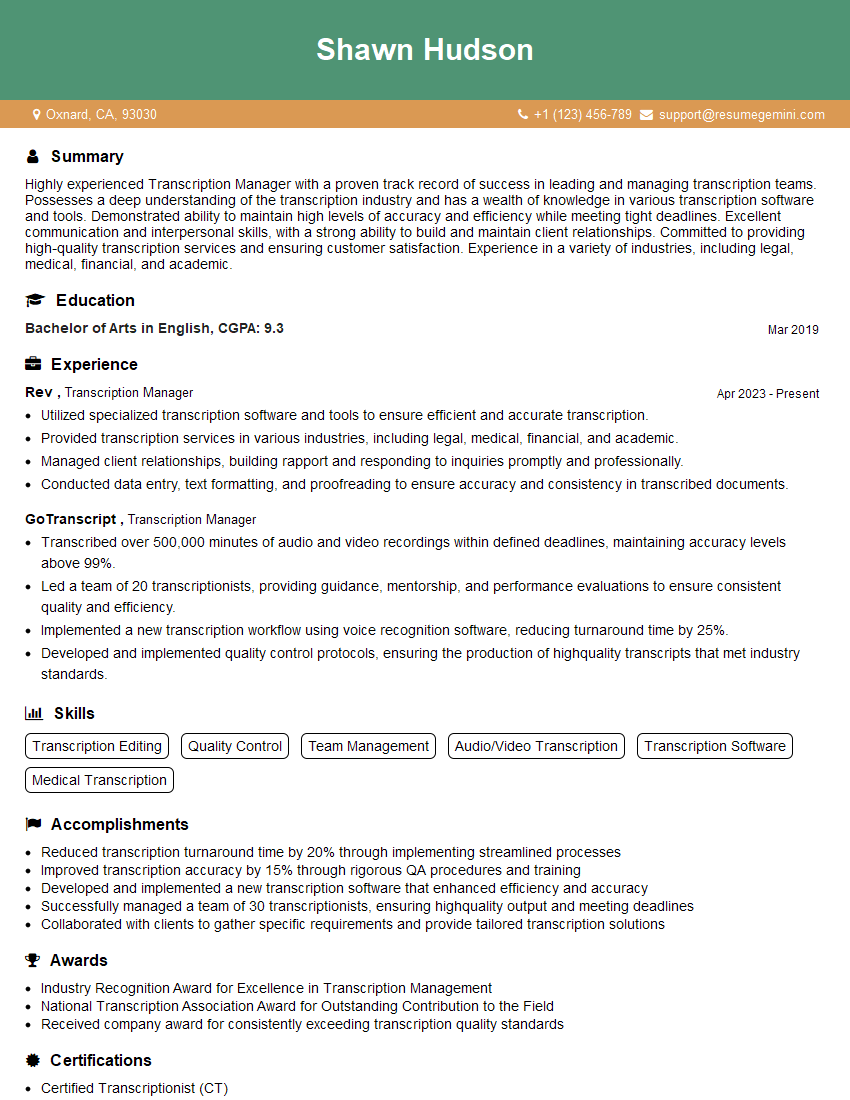
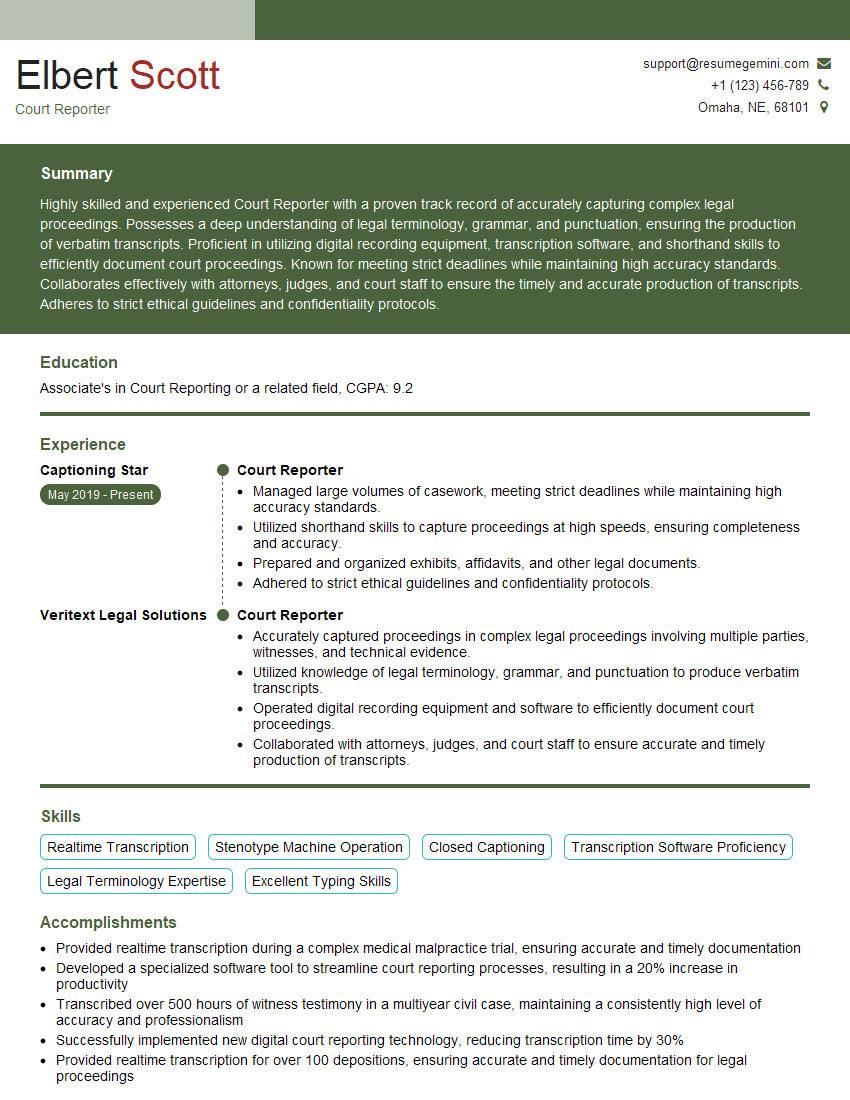
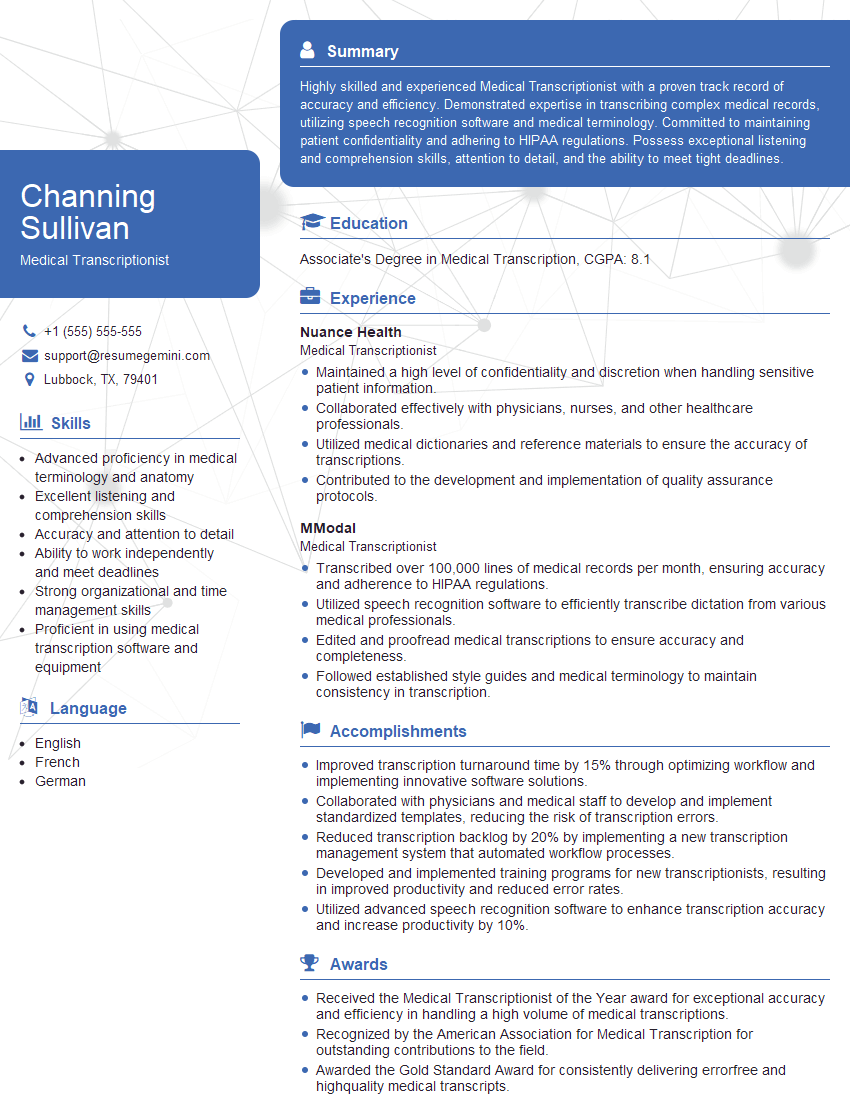
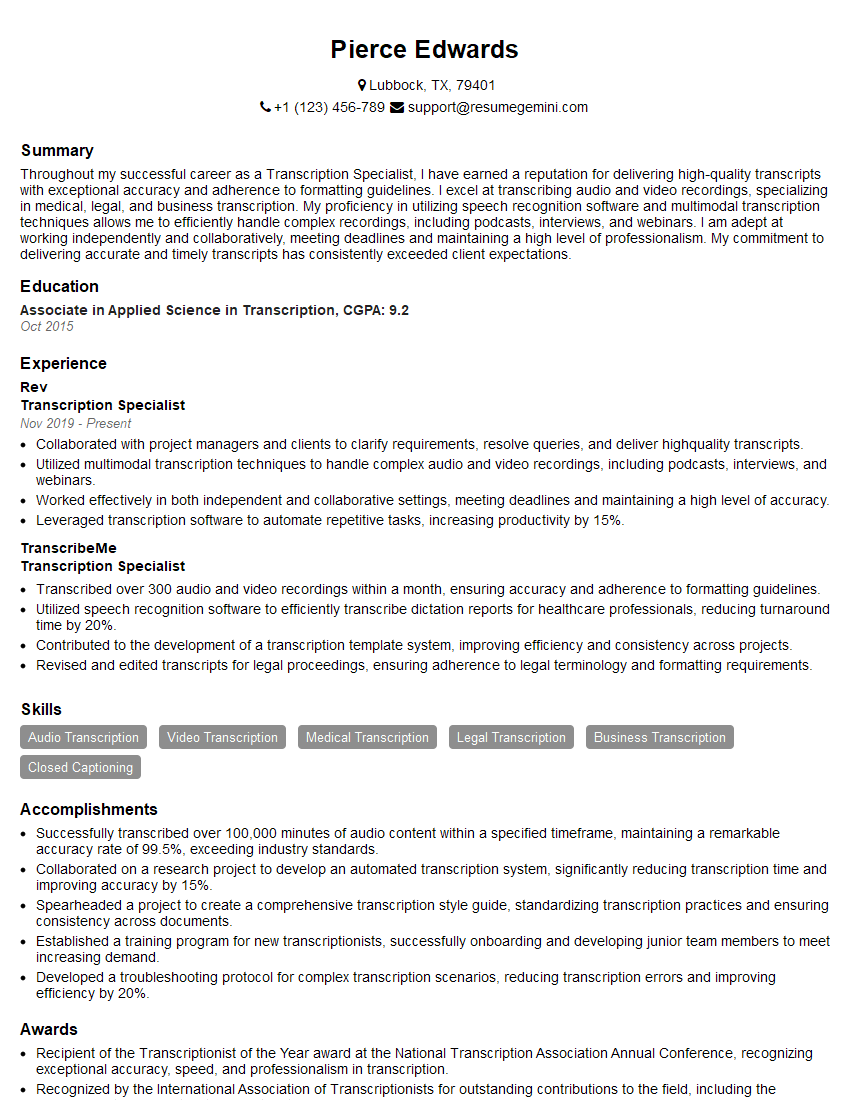
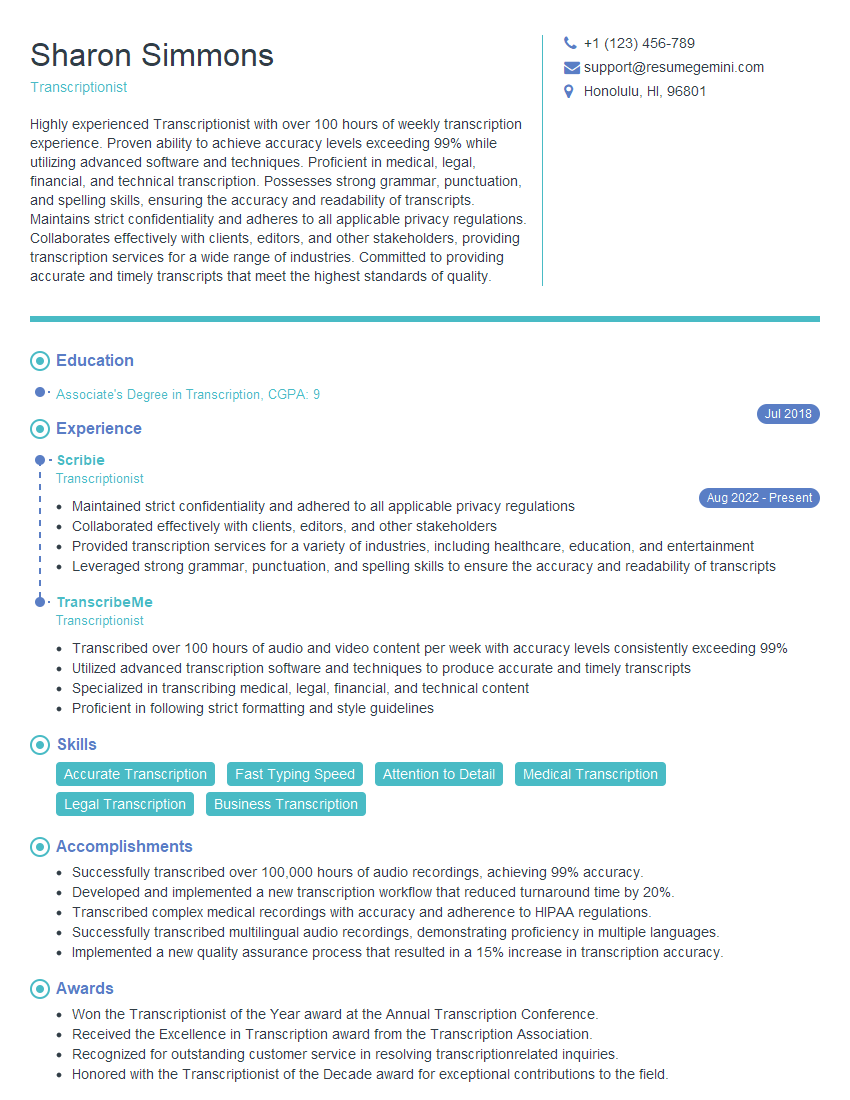
Mastering transcription accuracy is vital for career advancement in this rapidly growing field. A strong command of these skills opens doors to higher-paying roles and increased responsibility. To maximize your job prospects, create an ATS-friendly resume that highlights your skills and experience effectively. ResumeGemini is a trusted resource for building professional resumes, and we provide examples of resumes tailored to Transcription Accuracy to help you get started.
Explore more articles
Users Rating of Our Blogs
Share Your Experience
We value your feedback! Please rate our content and share your thoughts (optional).
What Readers Say About Our Blog
I Redesigned Spongebob Squarepants and his main characters of my artwork.
https://www.deviantart.com/reimaginesponge/art/Redesigned-Spongebob-characters-1223583608
IT gave me an insight and words to use and be able to think of examples
Hi, I’m Jay, we have a few potential clients that are interested in your services, thought you might be a good fit. I’d love to talk about the details, when do you have time to talk?
Best,
Jay
Founder | CEO