The right preparation can turn an interview into an opportunity to showcase your expertise. This guide to Deck Maintenance and Repair interview questions is your ultimate resource, providing key insights and tips to help you ace your responses and stand out as a top candidate.
Questions Asked in Deck Maintenance and Repair Interview
Q 1. Describe your experience with different types of deck materials (wood, composite, etc.).
My experience encompasses a wide range of deck materials, each with its own set of advantages and disadvantages. Let’s start with wood: I’m proficient in working with various species, from pressure-treated pine (a cost-effective choice, but prone to rot if not properly maintained) to cedar and redwood (naturally rot-resistant, but more expensive). Understanding the grain, density, and natural tendencies of each wood type is crucial for successful deck construction and repair. For example, knot placement significantly impacts structural integrity.
Then there are composite materials. These are increasingly popular due to their low-maintenance nature and resistance to rot and insect damage. However, they can be more expensive upfront and might require specialized tools and techniques for repairs. I’ve worked extensively with Trex and other leading brands, understanding their specific composition and how to address common issues like fading or delamination. Finally, I’m also familiar with PVC decking, known for its exceptional durability and longevity but demanding a different approach to fastening and repair compared to wood or composite.
Q 2. How do you assess the structural integrity of a deck?
Assessing a deck’s structural integrity involves a thorough visual inspection and, in some cases, more invasive tests. I start by examining the foundation – checking for levelness, signs of settling, and proper support. Then I carefully inspect all the structural components: joists, beams, posts, and ledger boards. I look for signs of rot, cracks, insect damage, and loose connections. I check the spacing of joists and the type of fasteners used; improper spacing or rusty nails can compromise the whole structure.
Beyond visual inspection, I might use a moisture meter to detect hidden rot within seemingly sound wood. If there are concerns about the structural load-bearing capabilities, I might recommend a more in-depth inspection by a structural engineer.
Think of it like examining the skeleton of a building: if the bones are weak, the entire structure is at risk. My goal is to identify potential weaknesses before they cause a major problem.
Q 3. What are the common signs of deck rot or damage?
Recognizing the signs of deck rot and damage is key to preventative maintenance. Common indicators include:
- Soft or spongy wood: This is a clear sign of rot, often accompanied by a change in color (darker, often grayish).
- Cracks or splits in boards: These can be caused by weathering, improper installation, or excessive weight.
- Sagging or uneven surfaces: This suggests problems with the underlying structure, such as failing joists or beams.
- Loose or missing fasteners: Nails and screws that are pulling out or missing indicate a weakening of the structure.
- Insect infestation: Evidence of termites, carpenter ants, or other wood-boring insects is a serious threat that necessitates immediate action.
- Fading or discoloration: While not necessarily structural damage, it indicates a need for restaining or resealing.
Spotting these problems early allows for timely intervention, preventing further damage and costly repairs.
Q 4. Explain your process for repairing damaged deck boards.
Repairing damaged deck boards is a multi-step process. First, I assess the extent of the damage. Minor damage might only require sanding and resealing. For more significant rot, I’ll carefully remove the affected section, ensuring I get back to solid wood. This often involves using a reciprocating saw or chisel, making precise cuts to minimize damage to surrounding boards.
Next, I prepare a replacement board. I ensure it’s properly sized and matches the existing boards. If using a composite material, I carefully follow manufacturer’s instructions for cuts and fastenings. I install the replacement board, using appropriate fasteners (stainless steel is preferred for its resistance to rust). Finally, I sand the repaired area smooth and apply a weather-resistant sealant or stain, matching the existing finish.
Imagine it like a woodworking puzzle: I carefully remove the damaged piece and replace it with a precision-cut match, ensuring a seamless and sturdy repair.
Q 5. How do you handle deck repairs in various weather conditions?
Weather is a significant factor in deck repairs. I always check the forecast before scheduling a job. Working in extreme heat can lead to fatigue and dehydration, and working in rain can compromise the quality of the repair.
For example, I avoid working in direct sunlight during the hottest parts of the day. If rain is imminent, I reschedule to ensure the materials and the repair itself are adequately protected. In cold weather, I’ll need to take extra precautions to ensure adhesives and sealants cure properly. I may use specialized products formulated for colder temperatures or adjust my work schedule to allow sufficient drying time. Ultimately, safety and quality work are my priorities, and that involves adapting to the weather conditions.
Q 6. What safety precautions do you take while working on a deck?
Safety is paramount in deck repair. I always use appropriate personal protective equipment (PPE), including safety glasses, work gloves, and hearing protection. I make sure the work area is clear of obstructions and that I have a stable and safe working platform.
Before starting any work, I carefully inspect the deck structure for any potential hazards, and I regularly check the condition of my tools. If working at height, I use appropriate fall protection equipment, including harnesses and safety lines. I also maintain awareness of surroundings and warn others in the vicinity of potential dangers. Essentially, I approach each project with a mindset focused on preventing accidents before they happen.
Q 7. Describe your experience with deck staining and sealing techniques.
My experience with deck staining and sealing techniques is extensive. I understand the importance of proper surface preparation, which typically involves cleaning the deck thoroughly, removing loose debris, and addressing any minor damage. The choice of stain and sealant depends on the type of wood or composite material, desired aesthetic, and level of protection required.
I’m skilled in applying stains using various methods, including brushes, rollers, and sprayers. Each has its advantages and disadvantages, and the best technique depends on the project’s scope and my specific needs. I always follow the manufacturer’s instructions for application and drying times, and I ensure even coverage to maximize protection and aesthetics. A well-stained and sealed deck not only looks great, but also significantly extends its lifespan.
Q 8. What types of fasteners are best for deck construction and repair?
Choosing the right fasteners is crucial for a durable and safe deck. For deck construction and repair, I prioritize hot-dipped galvanized or stainless steel fasteners. These materials resist corrosion, a major threat to deck longevity, especially in outdoor environments.
- Hot-dipped galvanized fasteners: These are cost-effective and provide excellent corrosion resistance. The galvanization process creates a thick zinc coating, protecting the steel core from rust.
- Stainless steel fasteners: These are more expensive but offer superior corrosion resistance, especially in harsh coastal climates or areas with high humidity. They also boast greater strength.
- Avoid: Regular steel fasteners will rust and fail relatively quickly, compromising the structural integrity of your deck.
For example, when replacing a damaged deck board, I always use stainless steel screws to ensure a secure and lasting repair, especially in areas prone to moisture, like near railings or the ground.
Q 9. How do you prevent water damage to a deck?
Preventing water damage is paramount for deck longevity. It’s a multi-pronged approach involving proper construction and regular maintenance.
- Proper Drainage: Ensure the deck is sloped slightly away from the house (at least 1/4 inch per foot) to prevent water pooling. Properly graded ground around the deck also helps direct water away.
- Water-Resistant Materials: Choosing treated lumber or composite materials reduces water absorption and rot. Using stainless steel or hot-dipped galvanized fasteners also helps prevent rust stains from seeping through.
- Flashing and Caulking: Carefully seal all joints and gaps between deck boards, railings, and the house using high-quality exterior-grade caulk. Flashing around any penetrations (like pipes) prevents water entry.
- Regular Cleaning: Regularly sweeping and pressure washing the deck removes debris and prevents buildup that can trap moisture.
- Sealing and Staining: Applying a high-quality sealant or stain creates a protective barrier against water damage. I always recommend following the manufacturer’s instructions for optimal application and drying time.
For instance, I recently worked on a deck where water was pooling. By adjusting the grade and adding flashing around the house connection, I significantly reduced the risk of future water damage.
Q 10. Explain your knowledge of deck building codes and regulations.
Understanding and adhering to building codes and regulations is critical for safe and legal deck construction. Codes vary by location (city, county, state), but common elements include:
- Load Capacity: The deck must support a specified weight based on its size and intended use. This dictates the size and spacing of support beams, joists, and footings.
- Guardrails and Balusters: Specific requirements govern the height, spacing, and strength of railings to prevent falls.
- Fastener Requirements: Codes often specify the type and number of fasteners required for various deck components.
- Permitting: Most jurisdictions require permits for deck construction, particularly for larger or more complex projects.
- Accessibility: If the deck is accessible to the public, it might need to meet specific requirements for ramps and handrails compliant with ADA guidelines.
I always research local codes before starting any project and ensure all construction meets or exceeds these standards. This protects both the client and myself from potential liability.
Q 11. What is your experience with pressure washing decks?
Pressure washing decks is a vital part of maintenance, but it requires careful technique. I use a pressure washer with adjustable pressure settings to avoid damaging the wood.
- Proper Pressure: Too much pressure can gouge the wood or remove the protective finish. I always start with a lower pressure setting and gradually increase it as needed.
- Correct Nozzle: A wide-fan nozzle is best for cleaning decks, as it distributes pressure more evenly.
- Cleaning Solution: A deck cleaning solution can help remove stubborn dirt and mildew. I choose environmentally friendly solutions whenever possible.
- Rinse Thoroughly: After cleaning, I always thoroughly rinse the deck with clean water to remove any cleaning solution residue.
I recently pressure-washed a cedar deck. By using a low-pressure setting and a wide-fan nozzle, I efficiently cleaned the deck without causing any damage. The homeowner was very pleased with the results.
Q 12. How do you handle customer concerns and complaints regarding deck repairs?
Handling customer concerns is a crucial aspect of my business. I always aim for open communication and transparency.
- Active Listening: I begin by carefully listening to the customer’s concerns without interruption. I aim to understand their perspective fully.
- Thorough Inspection: I then conduct a thorough inspection of the deck to identify the problem accurately. This helps avoid misunderstandings.
- Clear Explanation: I explain my findings clearly and concisely, using non-technical language whenever possible.
- Proposed Solutions: I present several potential solutions, outlining the pros, cons, and costs of each option.
- Timely Resolution: I provide a realistic timeline for completing the repairs and keep the customer informed of my progress.
In one instance, a customer complained about loose deck boards. After inspecting the deck, I explained that the problem was due to inadequate fastening during the original construction. We discussed repair options, and I completed the repairs quickly and efficiently, leaving the customer satisfied.
Q 13. Describe your experience with different types of deck finishes.
I have experience with various deck finishes, each with its own advantages and disadvantages.
- Stains: Stains penetrate the wood, enhancing its natural grain while offering some protection from UV rays and moisture. They require more frequent reapplication.
- Sealants: Sealants create a protective film on the surface, offering excellent water resistance. However, they can sometimes hide the wood’s natural beauty.
- Solid-Color Coatings: These are paint-like finishes that completely cover the wood, offering maximum protection but hiding the wood grain. They usually require more prep work before application.
- Oil-Based Finishes: These offer good water resistance and penetration into the wood, enriching the color. However, they may take longer to dry and require proper ventilation during application.
- Water-Based Finishes: These are environmentally friendly, low-odor options that offer good protection and are easier to clean up. However, they might not offer the same durability as oil-based finishes.
The best choice depends on factors like the type of wood, the desired aesthetic, and the budget. I always discuss the options with the customer to ensure they make an informed decision. For example, on a redwood deck, I’d often recommend a semi-transparent stain to accentuate the grain while providing protection.
Q 14. What are the common problems associated with composite decks?
Composite decks offer many benefits, but they’re not without potential problems:
- Fading: Composite decking can fade over time due to sun exposure. Choosing a higher-quality composite with UV inhibitors can mitigate this.
- Scratching and Staining: Composite decking can scratch or stain more easily than wood. Regular cleaning and careful use can minimize these issues.
- Expansion and Contraction: Like wood, composite decks expand and contract with temperature changes. Proper installation techniques, including adequate spacing between boards, are crucial.
- Mold and Mildew: Although less susceptible than wood, composite decks can still develop mold and mildew if not properly cleaned and maintained.
- Cost: Composite decks are usually more expensive than wood decks.
For example, I’ve encountered cases where inadequate spacing between composite boards led to buckling due to expansion in hot weather. Proper installation is vital to prevent such issues. I always educate customers on proper maintenance to keep their composite decks looking their best.
Q 15. How do you address issues with deck railings and balusters?
Addressing issues with deck railings and balusters involves a thorough inspection to identify the problem – whether it’s loose connections, rotted wood, damaged posts, or failing fasteners. For loose connections, tightening existing fasteners is often sufficient. However, if wood is rotted, replacing the affected balusters or sections of railing is necessary. This often involves carefully removing the damaged pieces, ensuring accurate measurements for replacements, and using appropriate fasteners like exterior-grade screws and construction adhesive for a strong, lasting bond. For damaged posts, depending on the severity, repair may involve filling in minor cracks with epoxy, or complete post replacement might be required. Always prioritize safety; if working at heights, use proper fall protection.
For example, I once repaired a deck railing where several balusters were loose due to weathering. Instead of replacing the entire section, I carefully tightened the existing screws and then reinforced the connections with exterior-grade wood glue, resulting in a robust and cost-effective solution.
Career Expert Tips:
- Ace those interviews! Prepare effectively by reviewing the Top 50 Most Common Interview Questions on ResumeGemini.
- Navigate your job search with confidence! Explore a wide range of Career Tips on ResumeGemini. Learn about common challenges and recommendations to overcome them.
- Craft the perfect resume! Master the Art of Resume Writing with ResumeGemini’s guide. Showcase your unique qualifications and achievements effectively.
- Don’t miss out on holiday savings! Build your dream resume with ResumeGemini’s ATS optimized templates.
Q 16. Describe your experience with deck demolition and removal.
Deck demolition and removal requires meticulous planning and execution. It begins with a thorough assessment to understand the deck’s structure, identifying materials and potential hazards like buried utilities. Safety is paramount; this involves proper personal protective equipment (PPE), including gloves, safety glasses, and hard hats. Demolition starts by disconnecting the deck from the house, carefully removing railings and other attachments. We use a combination of hand tools (saws, hammers, pry bars) and power tools (reciprocating saws, demolition hammers) to dismantle the deck systematically, ensuring minimal damage to surrounding areas. Disposing of debris according to local regulations is crucial. I’ve handled numerous demolition projects, ranging from small, simple decks to large, complex structures, always prioritizing a safe and efficient process.
In one project, we faced an unexpected challenge: a section of the deck was built over a buried gas line. Careful planning and coordination with the gas company allowed us to safely remove the deck section around the line without incident, highlighting the importance of thorough pre-demolition investigation.
Q 17. What tools and equipment are essential for deck maintenance and repair?
Essential tools and equipment for deck maintenance and repair vary depending on the project’s scope, but a well-equipped professional will have a range of hand and power tools. Hand tools include hammers, screwdrivers (Phillips and flathead), measuring tapes, levels, pry bars, chisels, and various sizes of wrenches. Power tools essential for deck work include a circular saw, reciprocating saw, drill/driver (cordless is preferred for mobility), and potentially a nail gun. Safety gear is non-negotiable and includes safety glasses, work gloves, hearing protection, and potentially a respirator, especially when working with stain or sealant. Other useful items are a post hole digger for new footings, a ladder or scaffolding for safe working at heights, and clamps for securing materials during assembly or repair. For larger projects, specialized equipment like a pressure washer might be needed.
Q 18. How do you plan and budget for deck repair projects?
Planning and budgeting for deck repair projects begins with a detailed assessment of the damage. This includes identifying all areas needing repair, specifying the materials required (lumber type, fasteners, sealant, etc.), and estimating labor costs. Next, we create a detailed scope of work document outlining each step, from material acquisition to cleanup. This allows for a more accurate material cost calculation. We then factor in labor costs based on the estimated time required for each task. Contingency funds (10-15%) should be included to account for unforeseen issues. Finally, providing a detailed breakdown of costs – materials, labor, and contingency – to the client ensures transparency and allows for informed decision-making. Accurate cost estimation is crucial to prevent project overruns.
For instance, a recent project involved replacing several rotted deck boards. By carefully measuring the affected areas and factoring in the cost of lumber, fasteners, and labor, we provided a precise estimate that allowed the client to budget accordingly and avoid any surprises during the project.
Q 19. What is your experience with working from heights?
I have extensive experience working from heights, adhering strictly to safety regulations. This includes using appropriate fall protection equipment, such as harnesses, lanyards, and anchor points. I’m proficient in setting up and using scaffolding and ladders safely, understanding weight limitations and proper setup procedures. I always inspect equipment before use and follow all OSHA safety guidelines. My experience encompasses a wide range of heights and working conditions, always prioritizing safety over speed. Safety training is regularly updated to maintain compliance with the latest standards.
Q 20. Explain your understanding of different types of deck footings.
Deck footings are crucial for stability and longevity. Different types are used depending on soil conditions and the deck’s size and weight. Common types include:
- Concrete Piers/Footings: These are poured concrete cylinders set deep into the ground, providing excellent support for heavier decks, especially in unstable soil.
- Sonotubes: These are cylindrical forms filled with concrete, offering a cost-effective alternative to poured piers.
- Pressure-Treated Wood Posts: These are suitable for lighter decks and stable soil conditions; however, they require proper treatment against rot and insect damage.
- Metal Posts: These offer strength and durability, often used with adjustable bases for uneven terrain. They need proper corrosion protection.
Q 21. How do you determine the appropriate size and type of lumber for deck repairs?
Determining the appropriate size and type of lumber for deck repairs depends on several factors, including the existing deck’s construction, the load it needs to support, and local building codes. The most commonly used lumber for decks is pressure-treated lumber, offering resistance to rot and insect damage. We use pressure-treated lumber meeting appropriate grading standards for structural strength. When choosing lumber, we carefully assess the load-bearing requirements of the specific area being repaired; larger beams and joists are necessary for areas with higher loads. The lumber’s dimensions (width, thickness, and length) should match the original construction for consistency and structural integrity. We always consult local building codes to ensure compliance with all regulations.
For example, if repairing a damaged joist, we’d carefully measure the existing joist’s dimensions and replace it with lumber of the same size and type, ensuring the new joist provides the same load-bearing capacity. Using undersized lumber can compromise the deck’s structural integrity.
Q 22. Describe your experience with using different types of deck screws.
Choosing the right deck screw is crucial for longevity and structural integrity. My experience encompasses a wide range, from basic galvanized steel screws to more advanced options like stainless steel, coated screws (like zinc or Kynar), and even composite screws. Each type has its strengths and weaknesses.
- Galvanized Steel: These are cost-effective but susceptible to rust in harsh climates, limiting their lifespan. I’ve used them extensively on budget projects where aesthetics aren’t paramount and the environment is relatively dry.
- Stainless Steel: Superior corrosion resistance makes these ideal for coastal areas or consistently wet environments. However, they are more expensive. I prefer using Type 316 stainless steel for maximum durability in these demanding conditions.
- Coated Screws: Zinc and Kynar coatings provide additional corrosion protection, extending the life of steel screws. The Kynar coating, in particular, is exceptionally durable and color-fast, making it a favorite for high-end projects. I often specify these for clients concerned about aesthetics and long-term maintenance.
- Composite Screws: Made from materials like plastic or engineered wood, these are strong and resist corrosion, but their performance can vary depending on the manufacturer and specific application. I use them judiciously, primarily in situations where minimal metal is desired.
Screw selection involves careful consideration of the wood type, climate, budget, and desired lifespan. I always discuss these options with clients to ensure we choose the most appropriate solution for their needs.
Q 23. What are the environmental considerations when working on a deck?
Environmental considerations are paramount in deck building and maintenance. My approach prioritizes minimizing environmental impact through responsible material selection, waste management, and adherence to local regulations.
- Material Selection: I favor sustainably sourced lumber, like pressure-treated wood certified by the Forest Stewardship Council (FSC), or reclaimed wood whenever feasible. This reduces the demand on virgin forests. For fasteners, I select options with minimal environmental impact, considering their manufacturing process and recyclability.
- Waste Management: Proper disposal of construction debris is vital. I work closely with waste management companies to ensure materials are recycled or disposed of responsibly, minimizing landfill waste. We sort materials like metal, wood, and plastic to maximize recycling efforts.
- Water Runoff: Deck design should consider water runoff to avoid soil erosion and pollution. Proper grading and the use of permeable materials can minimize these impacts. I regularly assess site drainage and recommend solutions to prevent water damage to the structure and the surrounding environment.
- Local Regulations: I’m always aware of local building codes and environmental regulations. This includes permits, waste disposal requirements, and potential restrictions on specific materials.
Incorporating these practices isn’t just environmentally responsible; it also strengthens the project’s long-term value by promoting durability and reducing maintenance requirements.
Q 24. How do you ensure the longevity of a repaired or maintained deck?
Ensuring a deck’s longevity involves a multifaceted approach, focusing on proactive maintenance and careful repair practices.
- Regular Cleaning: Annual cleaning removes dirt, debris, and mildew, preventing damage and preserving the deck’s appearance. Power washing is effective, but needs to be done carefully to avoid damage to the wood.
- Sealing and Staining: Applying a high-quality sealant or stain protects the wood from moisture damage, UV degradation, and insect infestation. The frequency depends on the product and climate, but typically ranges from every 2-5 years.
- Prompt Repairs: Addressing minor issues like loose boards or damaged railings immediately prevents them from escalating into larger, more expensive problems. I emphasize preventative measures in my recommendations to clients.
- Proper Fasteners: Using high-quality, corrosion-resistant fasteners (as discussed earlier) is essential. Over-tightening screws should be avoided to prevent splitting the wood.
- Wood Choice: Selecting the right type of wood for the specific climate and application is critical. Pressure-treated lumber is a good choice for many applications but there are other suitable options as well.
By combining these strategies, we significantly extend the life of the deck and minimize the need for costly repairs down the line.
Q 25. Explain your problem-solving approach when encountering unexpected issues during a deck repair.
Unexpected issues are inevitable in deck repair. My problem-solving approach is systematic and focuses on thorough investigation, careful analysis, and creative solutions.
- Identify the Problem: The first step is a careful assessment of the issue, including its location, extent, and potential causes. I take detailed notes and photographs for documentation.
- Gather Information: Research the potential causes. Is it rot, insect damage, structural failure, or something else? I might consult technical references, industry standards, and even contact colleagues for advice.
- Develop Solutions: Based on the diagnosis, I develop several potential solutions, weighing their cost, effectiveness, and feasibility. I always present options to the client, explaining the pros and cons of each.
- Implement the Solution: After client approval, the chosen solution is implemented meticulously. I pay close attention to detail to ensure the repair is structurally sound and aesthetically pleasing.
- Evaluate the Results: Finally, I assess the success of the repair, looking for any lingering issues or signs of future problems. This allows for proactive adjustments or follow-up actions.
For example, I once encountered unexpected rot in a seemingly sound joist. By carefully excavating the area, I discovered termite infestation. This necessitated a more extensive repair than initially planned, but by addressing the root cause, I prevented future damage.
Q 26. How do you manage your time and prioritize tasks on a deck repair project?
Effective time management is essential for completing deck repair projects efficiently and within budget. I use a combination of strategies to prioritize tasks and manage my time.
- Detailed Planning: Before starting, I create a detailed plan outlining all tasks, materials required, and estimated timelines. This involves careful measurement and assessment of the project’s scope.
- Task Prioritization: Tasks are prioritized based on urgency and impact. Critical structural repairs come first, followed by cosmetic improvements. This ensures the project stays on track and addresses the most pressing needs.
- Scheduling & Sequencing: I sequence tasks logically to minimize wasted time and material handling. For example, demolition is done before reconstruction.
- Realistic Time Estimates: I’m careful to develop realistic time estimates, accounting for potential delays and unforeseen issues. I always build in a buffer for unexpected challenges.
- Communication: Regular communication with clients keeps them informed and ensures the project remains aligned with their expectations. This also allows for adjustments to the schedule if needed.
This organized approach minimizes wasted time, keeps the project flowing smoothly, and ensures that deadlines are met.
Q 27. Describe your experience with working with different types of deck hardware.
My experience with deck hardware is broad, ranging from simple to complex components crucial for safety and structural integrity.
- Fasteners: As discussed earlier, I’m experienced with various types of screws, including galvanized steel, stainless steel, and coated options. The choice depends on the specific application and environmental factors.
- Connectors: I utilize a variety of metal connectors, such as joist hangers, post bases, and beam straps, to create strong and secure connections between structural elements. Choosing the right connectors ensures proper load transfer and stability.
- Railing Hardware: Experience includes working with various railing systems and their associated hardware, including balusters, posts, and handrails. I’m familiar with code requirements for railing design and installation to ensure safety.
- Decking Hardware: This encompasses hidden fasteners, clips, and other specialized hardware designed to enhance the aesthetic appeal of the deck and improve longevity by reducing wood exposure.
Understanding the different properties and functionalities of these hardware components is crucial for ensuring the safety, stability, and longevity of the deck.
Q 28. What are your strategies for maintaining a clean and organized worksite?
Maintaining a clean and organized worksite is paramount for safety, efficiency, and professionalism. My strategies focus on proactive planning and consistent attention to detail.
- Pre-Project Planning: Before starting, I designate clear areas for material storage, tool organization, and waste disposal. This helps prevent clutter from the outset.
- Daily Cleanup: At the end of each workday, I thoroughly clean the work area, removing debris, organizing tools, and securing materials. This prevents accidents and makes the next day more productive.
- Material Organization: Materials are carefully organized and labeled to ensure easy access and prevent mix-ups. This helps streamline the work process and reduces wasted time searching for items.
- Waste Management: Waste is sorted and disposed of properly throughout the project. This keeps the site clean and reduces the risk of environmental hazards.
- Tool Maintenance: Tools are regularly cleaned, maintained, and stored appropriately to ensure they remain in good working condition. This contributes to both safety and efficiency.
A clean and organized worksite not only enhances the quality of the work but also conveys professionalism to clients and demonstrates respect for the property.
Key Topics to Learn for Deck Maintenance and Repair Interview
- Wood Types and Properties: Understanding different wood types (e.g., cedar, redwood, pressure-treated lumber) and their strengths, weaknesses, and maintenance requirements is crucial. This includes recognizing signs of rot, warping, and insect damage.
- Deck Construction Techniques: Familiarize yourself with various deck framing methods, fastener types, and structural components. Be prepared to discuss different foundation types and their suitability for various projects.
- Repairing Damaged Components: Mastering techniques for repairing rotted boards, replacing damaged joists, and fixing loose railings is essential. Understand the importance of proper structural support and safety regulations.
- Surface Preparation and Finishing: Learn the steps involved in cleaning, sanding, and staining or sealing a deck. Understanding the different types of finishes and their application methods is key. Consider the environmental impact of different stain choices.
- Safety Procedures and Regulations: Demonstrate knowledge of safe working practices, including proper use of tools and equipment, fall protection, and adherence to relevant building codes and safety regulations.
- Troubleshooting Common Deck Problems: Be ready to discuss common issues like squeaky boards, uneven surfaces, and water damage, and explain how to diagnose and address these problems effectively.
- Estimating Materials and Labor: Understanding how to accurately estimate the materials needed for a project and calculate labor costs is crucial for successful project management.
Next Steps
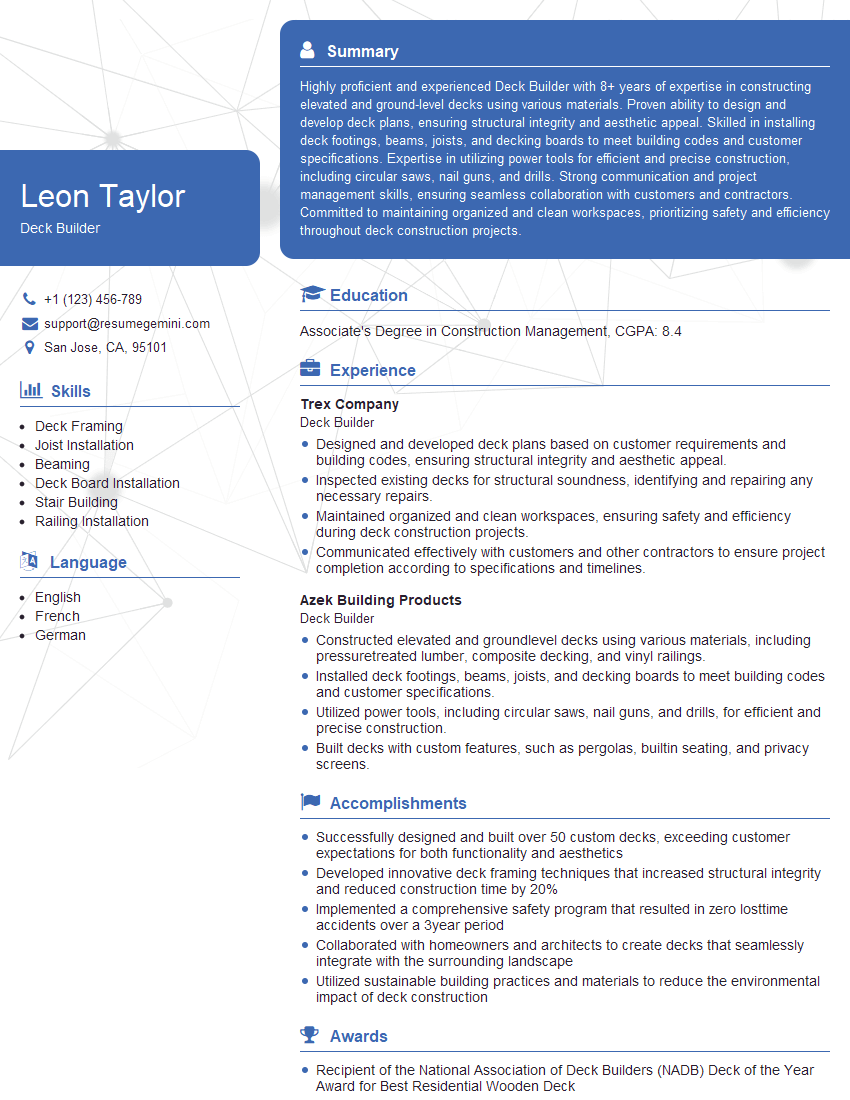
Mastering deck maintenance and repair opens doors to a rewarding career with opportunities for growth, from independent contractor to project management roles. Building a strong resume is critical to showcasing your skills and experience to potential employers. An ATS-friendly resume increases your chances of getting noticed by Applicant Tracking Systems used by many companies. We highly recommend using ResumeGemini to craft a professional and effective resume that highlights your abilities. ResumeGemini offers valuable tools and resources, including examples of resumes tailored specifically to Deck Maintenance and Repair, to help you present yourself in the best possible light.
Explore more articles
Users Rating of Our Blogs
Share Your Experience
We value your feedback! Please rate our content and share your thoughts (optional).
What Readers Say About Our Blog
Really detailed insights and content, thank you for writing this detailed article.
IT gave me an insight and words to use and be able to think of examples