Cracking a skill-specific interview, like one for Proficient in docking and undocking procedures, requires understanding the nuances of the role. In this blog, we present the questions you’re most likely to encounter, along with insights into how to answer them effectively. Let’s ensure you’re ready to make a strong impression.
Questions Asked in Proficient in docking and undocking procedures Interview
Q 1. Describe the different types of docking systems you are familiar with.
Docking systems vary greatly depending on the type of vessel and the facility. I’m familiar with several, including:
- Automated Mooring Systems (AMS): These systems use advanced technologies like hydraulic winches and sensors to automate the mooring process, reducing manual labor and improving efficiency. Think of large container ships utilizing these for precise and quick docking in busy ports.
- Conventional Mooring Systems: These rely on manual operation of winches, ropes, and fenders. This is common in smaller ports and for vessels without sophisticated automation. It requires highly skilled personnel for safe and effective execution.
- Dynamic Positioning (DP) Systems: Used for vessels operating in areas where traditional mooring isn’t feasible, such as offshore platforms or during offshore operations. These systems use computer-controlled thrusters to maintain the vessel’s position and heading, allowing precise docking in challenging environments.
- Side-Tie Docking: This method involves tying up alongside a quay or another vessel. It requires careful maneuvering and coordination with harbor staff.
- Stern-Tie Docking: Involves securing the vessel’s stern to a dock, allowing for easier access to cargo handling equipment. This is quite common for tankers and bulk carriers.
Each system presents unique challenges and requires specific expertise in its operation and maintenance.
Q 2. Explain the process of pre-docking checks and preparations.
Pre-docking checks and preparations are crucial for a safe and efficient operation. They typically involve:
- Weather conditions assessment: Checking wind speed and direction, currents, and visibility to ensure safe docking conditions. High winds or strong currents can significantly impact maneuverability.
- Vessel condition check: Verifying the functionality of all mooring equipment, including winches, ropes, and fenders. Ensuring proper functioning of the vessel’s propulsion and steering systems is paramount.
- Dock condition assessment: Checking the dock’s structural integrity, availability of mooring points, and ensuring the absence of obstacles that might hinder the docking process. A damaged dock can lead to serious accidents.
- Communication check: Ensuring clear communication channels with harbor pilots, tugboats, and other personnel involved in the docking operation. Miscommunication can have catastrophic consequences.
- Navigation planning: Planning the docking route, taking into account factors such as water depth, currents, and the vessel’s draft. This involves careful chart review and often simulation using navigational software.
- Crew briefing: Briefing the crew on the planned docking procedure, emergency procedures, and assigning specific roles and responsibilities. A well-informed crew is a safe crew.
These checks are not just formalities; they are vital safety measures designed to anticipate and mitigate potential risks.
Q 3. What safety procedures are critical during docking and undocking operations?
Safety is paramount during docking and undocking. Critical procedures include:
- Strict adherence to safety regulations: Following all established procedures and regulations related to docking and undocking. This includes rules concerning speed restrictions, communication protocols, and emergency procedures.
- Use of Personal Protective Equipment (PPE): Ensuring all personnel involved are wearing appropriate PPE, including life jackets, safety shoes, and gloves. PPE minimizes the risk of injury from falling objects or contact with equipment.
- Emergency response preparedness: Having a clearly defined emergency response plan and ensuring all personnel are aware of their roles and responsibilities in the event of an emergency. This might include situations like sudden equipment failure or a medical emergency.
- Proper use of fenders and mooring lines: Using fenders to protect the vessel and dock from damage during contact, and ensuring mooring lines are correctly secured and regularly inspected. Incorrect mooring can lead to damage or even capsizing.
- Constant monitoring: Continuous monitoring of the vessel’s position, speed, and surrounding environment using various navigational tools, including radar, GPS, and visual observation. Awareness of surroundings is key to prevent accidents.
- Tugboat assistance (where applicable): Effective coordination with tugboats to assist with maneuvering the vessel, especially in challenging conditions. Tugboats are invaluable in ensuring precise and safe docking, particularly in adverse weather.
A proactive safety culture is essential; it’s not enough to simply follow regulations – anticipating potential hazards and implementing preventative measures is crucial.
Q 4. How do you handle unexpected events or emergencies during docking?
Unexpected events during docking require swift and decisive action. My approach involves:
- Immediate assessment: Quickly assessing the nature and severity of the event. This might involve a sudden change in wind conditions, equipment malfunction, or a collision threat.
- Communication: Immediately communicating the situation to all relevant personnel, including the bridge, harbor control, and tugboats. Clear and concise communication is vital.
- Execution of emergency plan: Implementing the pre-determined emergency plan for the specific scenario. This could involve securing the vessel, activating emergency equipment, or seeking immediate assistance.
- Risk mitigation: Focusing on mitigating further risks while implementing corrective actions. This might involve adjusting the docking procedure, using additional resources, or seeking additional assistance.
- Post-incident review: Conducting a thorough post-incident review to identify contributing factors, lessons learned, and implement corrective actions to prevent recurrence. This is critical for continuous improvement.
For example, if a mooring line snaps during docking, I would immediately communicate the issue, secure the vessel using remaining lines, request assistance from tugboats, and assess the damage to determine the safest course of action.
Q 5. What are the key factors to consider when selecting a docking location?
Selecting a docking location requires careful consideration of several factors:
- Water depth and draft: Ensuring sufficient water depth for the vessel’s draft to prevent grounding. This requires detailed knowledge of the waterway’s bathymetry.
- Dock facilities: Assessing the availability of adequate mooring points, fenders, and other docking facilities to ensure safe and efficient docking.
- Weather conditions: Considering prevailing wind and current conditions to avoid exposure to harsh weather during the docking process. High winds or strong currents could make docking extremely dangerous.
- Space and maneuverability: Ensuring adequate space for maneuvering the vessel without obstructing other traffic or posing a risk to nearby structures. Limited space can severely restrict movement.
- Cargo handling facilities: If cargo handling is involved, verifying the availability and suitability of cranes, gantry systems, or other equipment required for loading or unloading. This is crucial for efficient cargo operations.
- Safety features: Evaluating the presence of safety features such as emergency response systems, lighting, and navigation aids. Well-lit and clearly marked docks are safer.
A poor choice of docking location can significantly increase the risk of accidents and delays, highlighting the importance of a thorough evaluation process.
Q 6. Explain the role of communication in successful docking procedures.
Effective communication is the backbone of successful docking procedures. It involves:
- Clear and concise communication: Using clear and concise language to convey information accurately and promptly. Ambiguity can lead to misinterpretations and accidents.
- Multiple communication channels: Utilizing multiple communication channels, such as VHF radio, hand signals, and dedicated communication systems, to ensure redundancy and reliability. Radio failure requires backup communication methods.
- Designated communication personnel: Assigning specific personnel to handle communication tasks to avoid confusion and ensure clear lines of responsibility. This keeps communication streamlined and efficient.
- Standard communication protocols: Following standard communication protocols to maintain consistency and clarity in information exchange. This is vital in emergency situations.
- Regular communication checks: Performing regular communication checks to ensure the integrity of communication channels and to verify that all parties involved are receiving and understanding the information being relayed. Regular checks prevent communication breakdowns.
Imagine a scenario where a tugboat captain misinterprets a command; the consequences could range from minor delays to serious accidents. Therefore, clear, consistent, and redundant communication is non-negotiable.
Q 7. How do you ensure the safe handling of cargo during docking and undocking?
Safe cargo handling during docking and undocking involves:
- Secure cargo lashing: Ensuring that all cargo is securely lashed and secured to prevent shifting or damage during movement. Proper securing techniques minimize damage to the cargo itself and to the vessel.
- Inspection of cargo securing: Regularly inspecting cargo securing arrangements to ensure they remain intact and effective throughout the docking and undocking process. Regular inspection prevents cargo shifts.
- Planned cargo handling sequence: Implementing a planned cargo handling sequence to minimize risk of accidents and to ensure the safe and efficient flow of cargo. Well-planned operations reduce risk.
- Proper equipment use: Using appropriate lifting equipment and employing safe lifting techniques to avoid damage to cargo and equipment. This minimizes risks of injury or damage.
- Environmental protection: Following environmental regulations to prevent cargo spills or leaks that might pollute the surrounding waters. Environmental protection is a key consideration.
- Trained personnel: Ensuring all personnel involved in cargo handling are properly trained and competent to handle the specific type of cargo being transported. Qualified professionals reduce risks.
Neglecting these procedures can lead to cargo damage, environmental pollution, and potential injury. Thus, a comprehensive, well-planned approach is essential for safe cargo handling.
Q 8. What are the common causes of docking accidents and how can they be prevented?
Docking accidents, unfortunately, are not uncommon. They stem from a variety of factors, often a combination of human error and environmental conditions. Common causes include misjudgment of speed and distance, inadequate communication between crew members, poor understanding of tidal currents, equipment malfunction, and insufficient pre-docking planning.
- Misjudgment of speed and distance: Approaching the dock too quickly or miscalculating the vessel’s turning radius can lead to collisions. This can be exacerbated by strong winds or currents.
- Communication breakdown: Clear, concise communication between the captain, deckhands, and anyone assisting with lines is critical. Misunderstandings about commands or line handling can quickly escalate into accidents.
- Tidal currents: Ignoring or misjudging the strength and direction of tidal currents can dramatically affect the vessel’s maneuverability, leading to unexpected movements and potential collisions.
- Equipment malfunction: A failure in the propulsion system, steering gear, or mooring equipment can significantly compromise control and increase the risk of accidents.
- Inadequate planning: Insufficient pre-docking planning, failing to account for wind, currents, and the vessel’s specific characteristics, is a major contributor to accidents. A thorough plan, including alternate approaches, is essential.
Prevention involves comprehensive training, rigorous adherence to safety procedures, meticulous planning, and regular equipment maintenance. Effective communication, using standardized terminology and clear signals, is vital. Utilizing simulation and practical exercises to rehearse docking maneuvers in various conditions is extremely beneficial.
Q 9. Describe your experience with different types of vessels and their docking requirements.
My experience encompasses a broad range of vessels, from small yachts and fishing boats to large tankers and container ships. Each presents unique challenges in terms of docking requirements. Smaller vessels, while seemingly simpler to manage, require precision and awareness of their limited maneuverability. Larger vessels demand advanced planning, coordination, and the utilization of sophisticated equipment like tugs and specialized mooring systems.
For example, docking a yacht involves a careful approach, often utilizing fenders and careful line handling to protect the hull. In contrast, docking a large tanker necessitates a coordinated effort between the vessel’s crew, harbor pilots, and tugboats, with precise attention paid to wind, currents, and the availability of berthing space. Container ships require even more precise positioning due to the high density of cargo and potential damage during collision.
I’ve also gained experience with diverse docking facilities – from sheltered marinas with calm waters to exposed harbors with significant currents and wave action. Adaptability to these varying conditions is crucial for safe and efficient docking.
Q 10. How do you manage the coordination of multiple vessels during docking?
Coordinating multiple vessels during docking is a complex but essential task. It demands clear communication, precise timing, and a thorough understanding of each vessel’s capabilities and limitations. The process typically starts with a pre-docking briefing, where all involved parties (captains, tugboat masters, harbor authorities) establish a shared understanding of the plan, including roles and responsibilities.
We often use VHF radio for real-time communication, relaying commands, reporting progress, and addressing any unforeseen issues. Visual signals, such as hand signals and lights, are also used to reinforce verbal communication, particularly in high-noise environments. The use of a docking plan diagram, including vessel positions and movement instructions, is standard practice. Experience allows for anticipation of potential difficulties and prompt adaptation to changing conditions.
For instance, in a situation where two vessels need to dock alongside each other, a designated leader will guide the maneuvers, relaying instructions to the other vessel’s captain while monitoring the distances and angles to prevent collision. Tugboats are often instrumental in precise positioning and providing additional control, especially during challenging conditions.
Q 11. Explain your understanding of tidal influences on docking operations.
Tidal influence is a paramount consideration in docking operations. Tides significantly affect water depth, current strength, and direction, all of which impact vessel maneuverability and safety. A rising tide can create stronger currents, making it harder to control vessel movements, especially when docking stern-to. Conversely, a falling tide can leave insufficient water depth, causing grounding or difficulties in accessing the dock.
Before any docking operation, I meticulously consult tidal charts and predictions to understand the current and projected conditions. This allows for the planning of docking windows to capitalize on favorable tidal flows and avoid periods with challenging currents. The speed and direction of tidal currents are incorporated into the docking plan, allowing for adjustments in approach speed, angle, and the use of tugs for assistance. For example, if a strong current is expected, we might need to approach the dock at a wider angle and utilize tugs to help counter the current’s influence.
Q 12. How do you use nautical charts and other navigational aids during docking?
Nautical charts are indispensable tools for safe and effective docking. They provide crucial information about water depths, obstructions, and the layout of the harbor or marina. In addition to charts, I use various navigational aids, including GPS, radar, and electronic charting systems (ECS). The process starts with a thorough review of the charts to identify potential hazards, safe water depths, and suitable docking locations.
During the approach, the GPS provides precise positioning information, while radar helps to monitor other vessels and potential obstacles. ECS displays real-time position and overlays crucial navigational data onto the chart, enhancing situational awareness. Precise navigation is key to selecting a safe, efficient, and easily accessible approach and dock position. I often use range markers or buoys to confirm position and align the vessel correctly before commencing the final approach.
Q 13. Describe your experience with using mooring lines and other equipment.
Proficient use of mooring lines and other equipment is fundamental to successful docking. This involves knowledge of different types of lines (nylon, polyester, etc.), their strengths, and their proper handling techniques. I have extensive experience with various mooring systems, including spring lines, breast lines, head lines, and stern lines. The correct application of each line, based on the vessel’s position and the wind and current conditions, is crucial for securing the vessel safely and preventing damage.
Beyond mooring lines, I’m also experienced with fenders, which protect the vessel’s hull from damage during contact with the dock or other vessels. Proper fender placement is essential to distribute the impact force evenly. I’ve also worked extensively with docking equipment like winches and capstans, understanding their capabilities and limitations. Safe and efficient line handling and the appropriate use of all equipment are vital to ensuring a smooth docking operation.
Q 14. What are the limitations of different docking systems?
Different docking systems have inherent limitations. For example, automated docking systems, while offering increased precision, rely on sensor data and algorithms that can be affected by adverse weather conditions or equipment malfunction. If sensors fail or the system encounters unexpected circumstances, manual intervention is necessary, sometimes under pressure.
Traditional docking, while relying on the captain’s skill and judgment, is limited by human error. The captain’s skill level and experience directly affect the safety and efficiency of the docking operation. Poor weather conditions, strong currents, and limited visibility can severely restrict the effectiveness of both manual and automated systems. A robust plan including backup methods and contingency plans is crucial to minimize the impact of any system limitations.
Q 15. How do you assess weather conditions and their impact on docking safety?
Assessing weather conditions before and during docking is crucial for safety. I use a multi-faceted approach, combining meteorological reports with on-site observations. This includes checking wind speed and direction (crucial for managing vessel drift), visibility (important for safe navigation and communication), and wave height and period (affecting the vessel’s stability and maneuverability).
For example, strong winds could significantly impact the vessel’s approach and require adjustments to the docking plan, perhaps needing more tug assistance or a different docking approach altogether. Poor visibility would necessitate extra caution and reliance on radar and other navigational aids. High waves can create difficulties in controlling the vessel and increase the risk of collision with the dock or other vessels. I always consult detailed weather forecasts and, importantly, rely on my own judgment interpreting real-time conditions at the dock.
Career Expert Tips:
- Ace those interviews! Prepare effectively by reviewing the Top 50 Most Common Interview Questions on ResumeGemini.
- Navigate your job search with confidence! Explore a wide range of Career Tips on ResumeGemini. Learn about common challenges and recommendations to overcome them.
- Craft the perfect resume! Master the Art of Resume Writing with ResumeGemini’s guide. Showcase your unique qualifications and achievements effectively.
- Don’t miss out on holiday savings! Build your dream resume with ResumeGemini’s ATS optimized templates.
Q 16. Explain your experience with emergency response procedures during docking incidents.
Emergency response during docking is something I take very seriously. My training includes comprehensive drills covering various scenarios, from engine failure to collisions. During one instance, a sudden and unexpected surge in wind caused the vessel to lose its directional control as we were approaching the dock. We immediately activated the emergency procedures. This involved halting the docking operation, utilizing emergency braking systems, and engaging the tugs to stabilize the vessel. Clear, concise communication among the bridge team, tug masters, and port authorities was critical in preventing an accident. The situation underscored the importance of constant situational awareness and rapid response.
My experience also includes handling situations where equipment malfunctions occurred. Once, the mooring winch malfunctioned requiring quick thinking and a switch to backup systems while maintaining safe communication with the shore team to prevent further hazards. A well-rehearsed emergency plan is essential and regular training ensures that everyone knows their role and responsibilities, keeping everyone safe.
Q 17. Describe your knowledge of port regulations and safety guidelines.
My knowledge of port regulations and safety guidelines is extensive. I am familiar with the International Maritime Organization (IMO) codes, the local port regulations, and the specific safety procedures of each port I’ve worked with. This includes understanding the rules related to vessel traffic services (VTS), pilotage requirements, and the use of designated channels and berths.
For instance, I understand the importance of proper signaling during docking, following designated speed limits within the port, and maintaining proper communications with other vessels. Compliance with these regulations is paramount in ensuring a safe and efficient docking procedure. I always ensure all relevant permits and documentation are in place before the operation begins.
Q 18. How do you handle communication with different stakeholders during docking?
Communication during docking is a complex process involving multiple stakeholders. It’s crucial to use clear and concise language, and employ various communication methods, such as VHF radio, hand signals, and dedicated docking communication systems. I’ve worked effectively with harbor masters, tugboat captains, dockworkers, and other vessel crews, always ensuring that everyone understands the plan and their role.
For example, before starting the procedure, I hold a pre-docking briefing to clarify responsibilities and expectations. During the operation, I continuously update everyone on the vessel’s position and progress. This clear and transparent communication helps prevent misunderstandings and ensures everyone remains aware of changing conditions. I also ensure that all communication is logged properly for later review.
Q 19. What software or technology have you used to support docking operations?
Throughout my career, I have utilized a range of software and technology to aid in docking operations. This includes sophisticated navigational systems like Electronic Chart Display and Information Systems (ECDIS) which provide real-time information on the vessel’s position, depth, and surrounding environment. I’ve also used vessel traffic management systems (VTMS) to coordinate movements with other vessels and port authorities. Furthermore, I’m experienced with ship-handling simulators, which are invaluable for practicing complex maneuvers in a risk-free environment.
I’m also proficient with various docking software packages that allow for advanced planning and prediction of the vessel’s behavior in different conditions. These tools enhance accuracy, safety, and efficiency of the docking process.
Q 20. How do you calculate the required distance and time for docking maneuvers?
Calculating the required distance and time for docking maneuvers is a complex task that involves several factors, including vessel speed, current, wind, and the size and characteristics of the vessel and the berth. I use a combination of navigational calculations, experience, and sophisticated software to determine this.
For example, I’ll use the vessel’s speed and the distance to the dock to calculate the time needed to reach it. Then I’ll account for the impact of wind and current, often using mathematical models or simulation software to refine the estimate. A higher current or stronger wind might require a longer approach distance and more time. I always build in a safety margin to account for unforeseen circumstances.
Q 21. Describe your experience with different types of mooring techniques.
I’m experienced with various mooring techniques, including using spring lines, breast lines, head lines, and stern lines. The choice of technique depends on the vessel’s size, the type of berth, and environmental conditions. For instance, in a strong crosswind, we might use more spring lines to better control the vessel’s sideways movement.
I’m also familiar with using various mooring equipment such as bollards, cleats, and mooring winches. I ensure that all lines are properly secured and regularly inspected to prevent damage or failure. My experience includes using both manual and automated mooring systems, adapting my techniques as needed based on the specific circumstances and equipment available. Safety is always the paramount concern when choosing and executing a mooring technique.
Q 22. Explain your understanding of fender systems and their role in docking.
Fender systems are crucial for protecting vessels and docks during docking operations. They act as buffers, absorbing the impact energy to prevent damage. Think of them as giant cushions strategically placed to minimize contact between the ship’s hull and the dock or other vessels.
A typical fender system includes various types of fenders, such as cylindrical, pneumatic, and Yokohama fenders, each designed for different applications and impact levels. The selection depends on factors like the vessel’s size, the dock’s structure, and the expected impact forces. Their placement is also critical; they need to be positioned at strategic points of contact to distribute the impact evenly.
- Cylindrical fenders are common and offer good energy absorption.
- Pneumatic fenders are inflatable and adjustable, allowing for customization.
- Yokohama fenders are highly durable and effective for larger vessels.
Properly designed and maintained fender systems are essential for preventing costly repairs to both the vessel and the dock infrastructure.
Q 23. How do you ensure the structural integrity of the dock during docking operations?
Ensuring the structural integrity of the dock during docking is paramount. This involves a multi-faceted approach, beginning with regular inspections to identify potential weaknesses. We look for signs of deterioration like cracks in concrete, damage to pilings, or rust on steel supports. Regular maintenance, including repairs and repainting, is crucial.
Before any docking operation, a thorough assessment of the dock’s condition is performed. This often involves visual inspections and sometimes specialized structural assessments. During the docking process itself, we monitor the forces exerted on the dock by the vessel. This often involves using specialized equipment to measure stress and strain. In extreme cases, we might even restrict the weight or size of the vessels that can dock to ensure the dock’s safety.
Knowing the dock’s load-bearing capacity is critical. Exceeding this limit can lead to serious structural failure. Proper planning and communication with dock managers and structural engineers are integral aspects of this process.
Q 24. What are the environmental considerations during docking and undocking?
Environmental considerations are increasingly important in docking and undocking. We must minimize our impact on the surrounding ecosystem. This includes:
- Water quality: Preventing oil spills and other forms of pollution is crucial. We use containment booms and implement strict procedures to manage bilge water and other potential pollutants.
- Noise pollution: Docking and undocking operations can generate significant noise. We often schedule these activities during less sensitive times to minimize disturbance to marine life and nearby communities.
- Marine life: We must be mindful of potential impacts on marine habitats and wildlife. This involves careful maneuvering to avoid collisions and adherence to regulations that protect endangered species.
- Air quality: Exhaust fumes from vessels can contribute to air pollution. We aim for efficient engine operation to minimize emissions.
Adhering to environmental regulations and best practices is not just a legal obligation; it’s a crucial part of responsible maritime operations.
Q 25. Describe your experience with piloting vessels into tight spaces.
Piloting vessels into tight spaces requires a high level of skill, experience, and precision. It’s a challenge that demands a thorough understanding of the vessel’s handling characteristics, the environmental conditions, and the intricacies of the docking area. I’ve had extensive experience maneuvering large vessels in confined areas, such as congested ports and narrow waterways. This involved careful planning, precise thruster control, and effective communication with the tugboats and dock personnel.
Accurate calculations of the vessel’s momentum and the use of various maneuvering techniques, like using bow and stern thrusters effectively, are vital. Constant monitoring of the vessel’s position and speed using sophisticated navigation systems is crucial. Anticipating potential problems, such as strong currents or wind gusts, is essential to preventing accidents. Safety is the top priority in such situations, and a cautious approach is always preferred.
For example, during one particularly challenging operation, I had to dock a large container ship in a port with strong crosswinds and limited visibility. By carefully adjusting speed and thruster use, and maintaining constant communication with the tugboats, we successfully completed the docking without incident.
Q 26. How do you maintain accurate records of docking procedures and activities?
Maintaining accurate records of docking procedures is crucial for safety, accountability, and continuous improvement. We utilize a combination of methods to ensure the thorough documentation of all docking and undocking activities.
This includes:
- Detailed logs: We maintain comprehensive logs documenting the time, date, location, weather conditions, vessel particulars, personnel involved, and any unusual events. These logs are often electronic and include GPS data for accurate position tracking.
- Pre-docking checklists: We follow standardized checklists to ensure all necessary preparations are completed before beginning the operation.
- Post-docking reports: After each docking operation, we prepare detailed reports summarizing the procedure, noting any difficulties encountered and any lessons learned. This is often used to improve our procedures.
- Digital data acquisition: Many modern vessels are equipped with sophisticated systems that automatically record parameters such as vessel speed, position, and thruster settings. This provides valuable data for analysis and future improvements.
These records are essential for analyzing trends, identifying potential hazards, and improving safety protocols.
Q 27. Explain your experience with training others in safe docking practices.
I’ve had significant experience training others in safe docking practices. My approach is to combine classroom instruction with hands-on practical training. Classroom sessions cover theoretical aspects like maneuvering techniques, fender system usage, and emergency procedures. Hands-on training involves simulating docking scenarios using ship simulators or, when possible, actual vessels in a controlled environment.
My training sessions emphasize:
- Risk assessment: Identifying potential hazards and developing mitigation strategies.
- Communication protocols: Effective communication between the bridge team, tugboat operators, and dock personnel.
- Emergency procedures: Establishing clear protocols for handling unexpected situations.
- Practical exercises: Providing opportunities for trainees to practice docking maneuvers under various conditions.
I believe in fostering a safety-conscious culture through effective training, emphasizing the importance of continuous learning and adaptation to different conditions.
Q 28. Describe a challenging docking situation you encountered and how you resolved it.
One of the most challenging docking situations I faced involved docking a large tanker during a severe storm. High winds and heavy seas created extremely difficult conditions. The vessel was tossed around significantly, making precise maneuvering extremely difficult.
My approach involved:
- Close communication: Maintaining constant contact with tugboat captains and the bridge team was essential to coordinate our efforts.
- Adjusting strategy: We had to continually adapt our approach to the changing weather conditions. This included using multiple tugboats and adjusting speed and positioning to counter the strong winds and waves.
- Prioritizing safety: Given the severe weather, the primary focus was on the safety of the vessel, crew, and dockside personnel. We considered delaying the docking if conditions worsened significantly.
Through careful coordination and a decisive response to the dynamic conditions, we successfully docked the vessel without incident. This experience highlighted the importance of adaptability, quick decision-making, and effective communication during challenging docking scenarios.
Key Topics to Learn for Proficient in Docking and Undocking Procedures Interview
- Safety Procedures: Understanding and applying all relevant safety regulations and protocols during docking and undocking operations. This includes emergency procedures and risk mitigation strategies.
- Equipment Knowledge: Demonstrating a thorough understanding of the equipment involved, including its capabilities, limitations, and operational procedures. This extends to both the vessel and any supporting equipment.
- Maneuvering Techniques: Mastering the skills necessary for precise maneuvering during docking and undocking, considering factors like wind, currents, and vessel characteristics.
- Communication Protocols: Effectively communicating with bridge crew, harbor masters, and other relevant personnel throughout the entire process using established communication channels.
- Troubleshooting and Problem-Solving: Knowing how to identify and address potential problems that may arise during docking and undocking, including mechanical failures or unexpected environmental conditions.
- Navigation and Chart Interpretation: Proficiently using charts, navigation systems, and other tools to ensure safe and efficient docking and undocking procedures.
- Legal and Regulatory Compliance: Understanding and adhering to all applicable laws, regulations, and industry best practices related to docking and undocking.
Next Steps
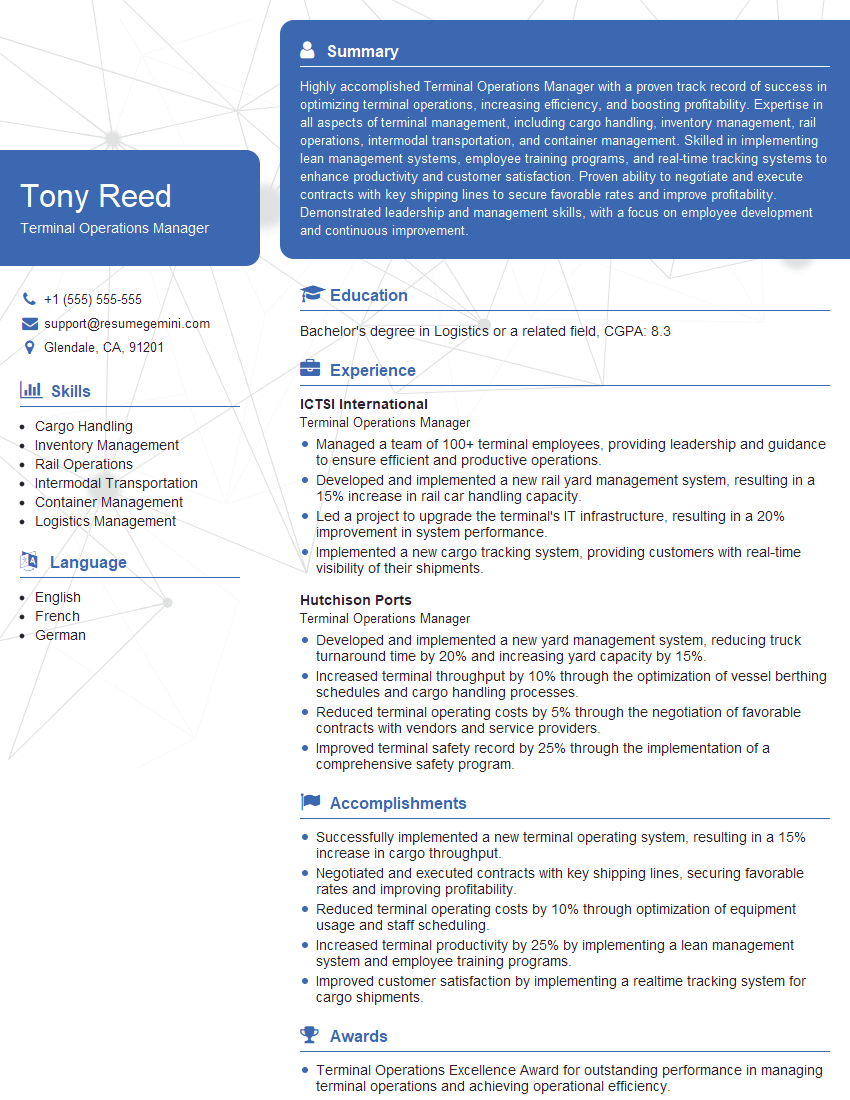
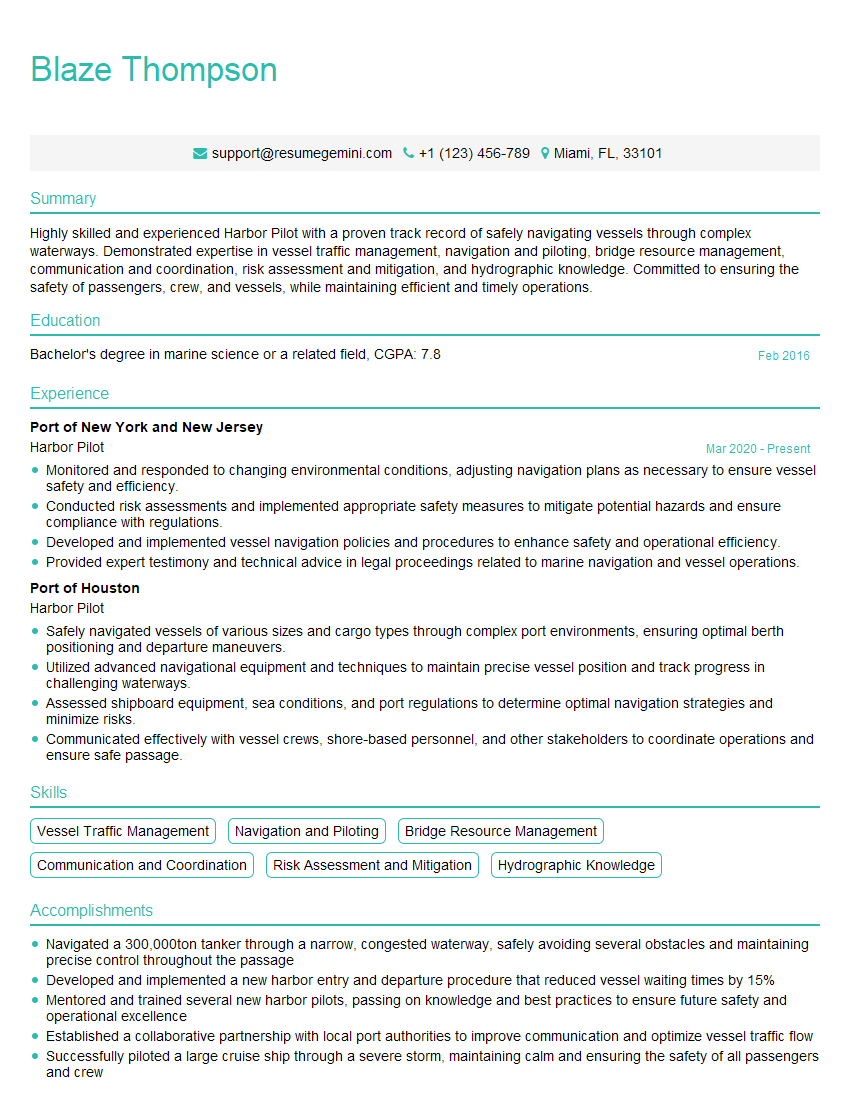
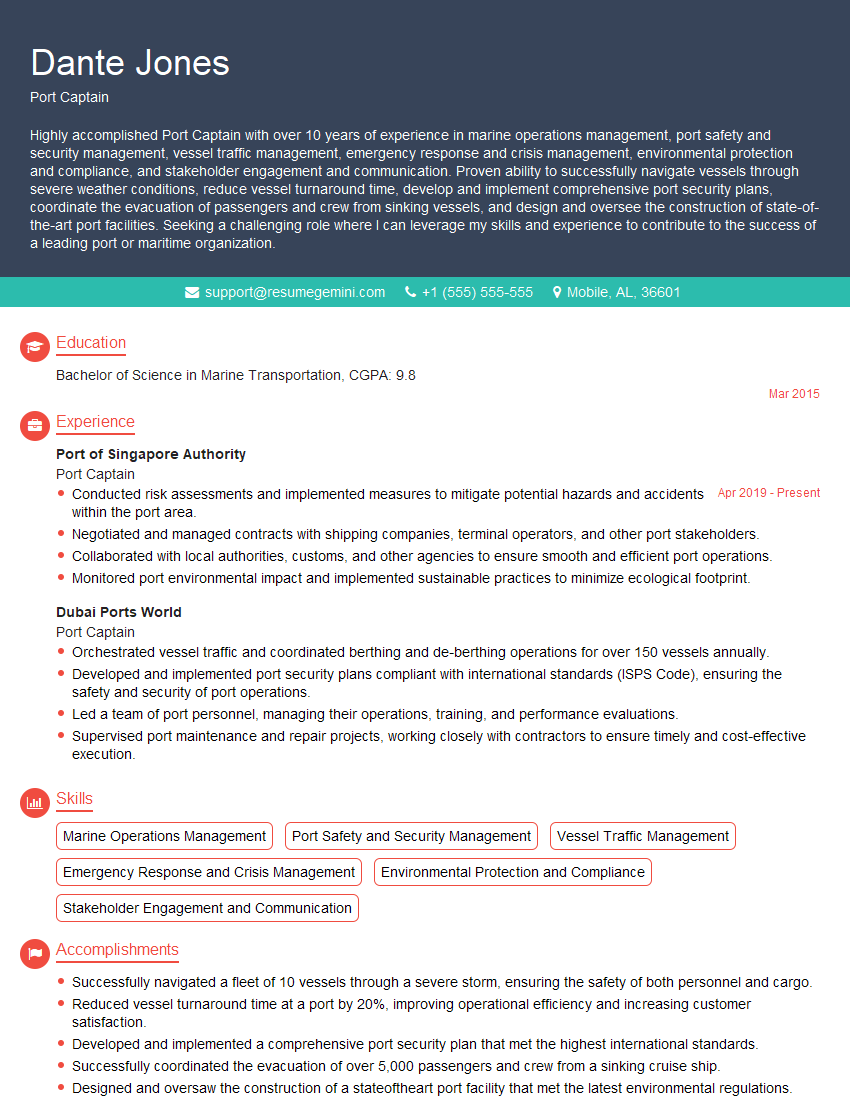
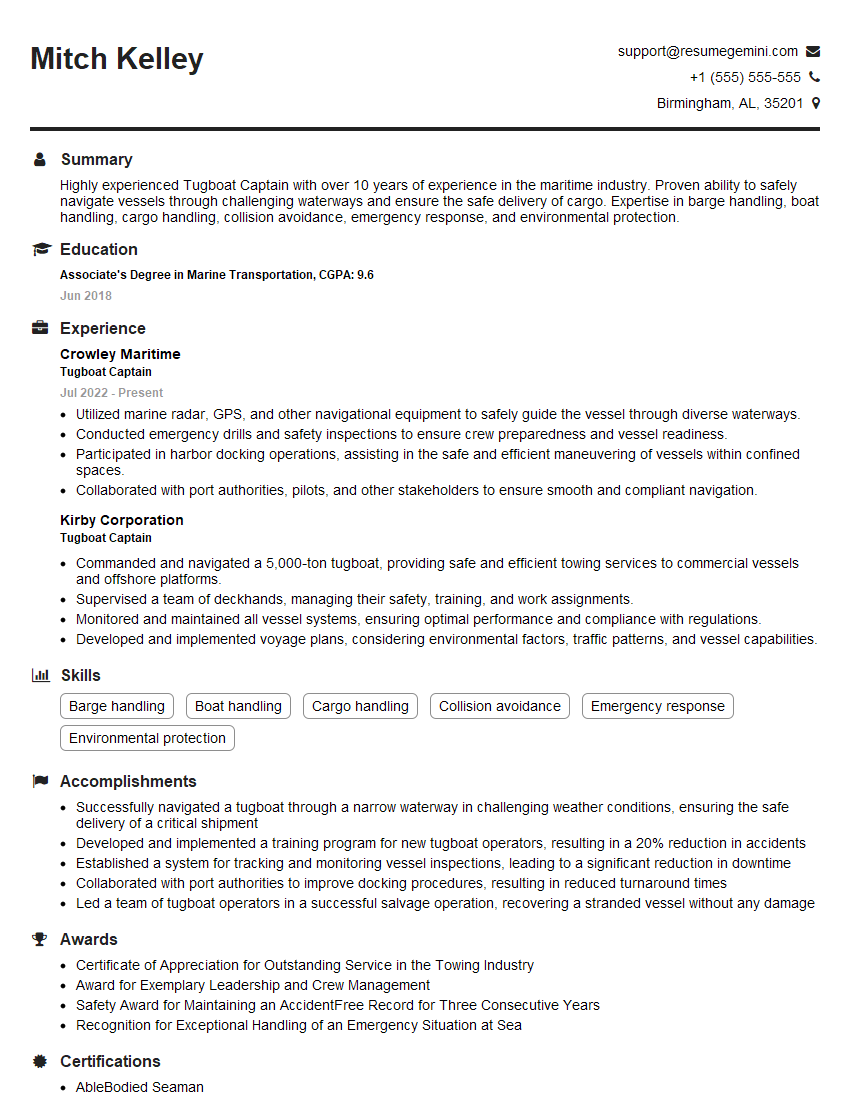
Mastering proficient docking and undocking procedures is crucial for career advancement in maritime industries. It demonstrates a high level of skill and responsibility, opening doors to more challenging and rewarding roles. To maximize your job prospects, it’s essential to present your expertise effectively. Creating an ATS-friendly resume is key to getting your application noticed. ResumeGemini can help you build a professional and impactful resume that highlights your skills and experience in docking and undocking. We provide examples of resumes tailored to this specific area of expertise to guide you in crafting a compelling application. Take the next step towards your dream career today!
Explore more articles
Users Rating of Our Blogs
Share Your Experience
We value your feedback! Please rate our content and share your thoughts (optional).
What Readers Say About Our Blog
I Redesigned Spongebob Squarepants and his main characters of my artwork.
https://www.deviantart.com/reimaginesponge/art/Redesigned-Spongebob-characters-1223583608
IT gave me an insight and words to use and be able to think of examples
Hi, I’m Jay, we have a few potential clients that are interested in your services, thought you might be a good fit. I’d love to talk about the details, when do you have time to talk?
Best,
Jay
Founder | CEO