The right preparation can turn an interview into an opportunity to showcase your expertise. This guide to Strong Knowledge of GDPR and CCPA interview questions is your ultimate resource, providing key insights and tips to help you ace your responses and stand out as a top candidate.
Questions Asked in Strong Knowledge of GDPR and CCPA Interview
Q 1. Explain the key differences between GDPR and CCPA.
The GDPR (General Data Protection Regulation) and CCPA (California Consumer Privacy Act) are both landmark privacy laws, but they differ significantly in scope and application. GDPR, a European Union regulation, applies to any organization processing the personal data of EU residents, regardless of the organization’s location. CCPA, on the other hand, is a California state law applying only to businesses that meet specific criteria regarding revenue and data collection practices within California. Think of it like this: GDPR has a much wider net, covering personal data of EU citizens globally, while CCPA focuses specifically on California consumers and businesses operating within that state.
Here’s a table summarizing key differences:
| Feature | GDPR | CCPA |
|---|---|---|
| Geographic Scope | EU residents, regardless of business location | California residents, businesses meeting specific criteria |
| Data Subject Rights | More extensive, including the right to be forgotten | Includes rights to access, delete, and opt-out of sale |
| Enforcement | Data Protection Authorities (DPAs) in each EU member state, hefty fines | California Attorney General, civil penalties |
| Business Size Applicability | Applies to all businesses processing personal data of EU residents, regardless of size. | Applies only to large businesses meeting specific thresholds. |
Essentially, GDPR is broader in scope, stricter in requirements, and carries more substantial penalties. CCPA is more targeted geographically and has a less stringent enforcement mechanism.
Q 2. What are the core principles of GDPR?
The GDPR’s core principles are designed to ensure the lawful and fair processing of personal data. They act as a guiding framework for organizations handling such data. These principles are:
- Lawfulness, fairness, and transparency: Data processing must have a legal basis, be fair, and be transparent to the data subject.
- Purpose limitation: Data should be collected for specified, explicit, and legitimate purposes and not further processed in a manner incompatible with those purposes.
- Data minimisation: Only data necessary for the specified purposes should be collected.
- Accuracy: Data should be accurate and kept up to date.
- Storage limitation: Data should only be kept for as long as necessary for the specified purposes.
- Integrity and confidentiality: Data should be processed in a manner that ensures appropriate security, including protection against unauthorized or unlawful processing and against accidental loss, destruction, or damage.
- Accountability: Data controllers are responsible for demonstrating compliance with the GDPR principles.
Imagine building a house – these principles are like the foundation ensuring the house (data processing) is strong and secure.
Q 3. Describe the process for a data subject access request (DSAR) under GDPR.
A Data Subject Access Request (DSAR) under GDPR allows individuals to access their personal data held by an organization. The process generally involves these steps:
- Request Submission: The data subject submits a request to the organization, usually in writing, clearly stating their identity and the specific information they want to access.
- Verification: The organization verifies the identity of the data subject to prevent unauthorized access to personal data. This might involve providing proof of identity, like a passport copy.
- Response Time: The organization must respond to the request within one month. This timeframe can be extended by two further months in complex cases.
- Information Provision: The organization must provide the requested information in a commonly used electronic format, unless otherwise requested by the data subject. They should provide a clear and comprehensive response.
- Free of Charge: The organization should provide the information free of charge, except in cases of manifestly unfounded or excessive requests.
For example, if a customer wants to know what information a company holds about them, they submit a DSAR. The company verifies their identity and then provides the requested data within the stipulated time frame.
Q 4. What are the rights of data subjects under CCPA?
Under the CCPA, California consumers have several key rights regarding their personal information:
- Right to Know: Consumers can request to know what personal information a business collects about them, the sources of that information, the purposes for collecting it, and the categories of third parties with whom the business shares it.
- Right to Delete: Consumers can request that a business delete their personal information, subject to certain exceptions.
- Right to Opt-Out of Sale: Consumers can opt-out of the sale or sharing of their personal information. This is crucial, as ‘sale’ has a broader definition in the CCPA.
- Right to Non-Discrimination: Businesses can’t discriminate against consumers for exercising their CCPA rights.
Imagine a scenario where a California consumer wants to know what information an online retailer has collected about them. Under the CCPA, they have the right to make this request, and the retailer must respond within a set timeframe.
Q 5. Explain the concept of ‘legitimate interest’ under GDPR.
Under GDPR, ‘legitimate interest’ is a legal basis for processing personal data. It means processing personal data is necessary for the purposes of the legitimate interests pursued by the controller or by a third party, except where such interests are overridden by the interests or fundamental rights and freedoms of the data subject. It’s a balancing act.
For legitimate interest to be valid, it must be:
- Necessary: The processing must be necessary for the pursuit of the legitimate interests.
- Proportionate: The processing must be proportionate to the legitimate interests pursued.
- Not override fundamental rights: The legitimate interest cannot override the data subject’s fundamental rights and freedoms.
For example, a company might use customer data for targeted advertising, arguing it’s in their legitimate interest to promote their products. However, if this overrides a customer’s right to privacy by using highly sensitive data, it wouldn’t be considered a valid legitimate interest.
Q 6. How does CCPA define ‘personal information’?
CCPA defines ‘personal information’ broadly as information that identifies, relates to, describes, is reasonably capable of being associated with, or could reasonably be linked, directly or indirectly, with a particular consumer or household. This includes things like:
- Identifiers: Names, Social Security numbers, email addresses, etc.
- Commercial information: Records of personal property, products or services purchased, obtained, or considered.
- Internet activity: Browsing history, search history, online activity.
- Geolocation data: Precise location information.
- Inferences: Conclusions drawn about a consumer based on their personal information.
Essentially, if information can be linked back to a specific individual or household, it’s likely considered personal information under the CCPA. This broad definition underscores the Act’s comprehensive approach to consumer privacy.
Q 7. What are the penalties for non-compliance with GDPR?
Penalties for non-compliance with GDPR can be substantial. The maximum fine is the higher of €20 million or 4% of the total worldwide annual turnover of the preceding financial year. The level of the fine depends on the severity of the breach and the organization’s culpability. Factors such as the nature of the violation, whether it was intentional or negligent, and the organization’s cooperation with the investigation all influence the fine amount.
Imagine a company experiencing a large-scale data breach due to negligence. If the breach affects a significant number of individuals and involves sensitive data, the GDPR fine could reach millions of Euros, significantly impacting the organization’s financial stability.
Q 8. What are the penalties for non-compliance with CCPA?
The California Consumer Privacy Act (CCPA) doesn’t prescribe fixed monetary penalties like GDPR. Instead, it focuses on civil penalties imposed by the Attorney General. These penalties are determined on a case-by-case basis, considering factors like the nature and extent of the violation, the company’s culpability, and any remedial actions taken. A particularly egregious violation, involving intentional disregard or a pattern of neglecting consumer rights, could result in a penalty of up to $7,500 per violation. For example, a company that knowingly fails to honor a consumer’s right to delete their data could face multiple penalties, one for each individual whose data was not properly deleted.
Beyond the Attorney General’s actions, consumers can also bring private right of action lawsuits against businesses that fail to comply with CCPA, seeking injunctive relief and potentially statutory damages between $100 and $750 per violation. This creates a strong incentive for businesses to prioritize CCPA compliance.
Q 9. Explain the concept of data minimization.
Data minimization is the principle of only collecting and processing the minimum amount of personal data necessary for specified, explicit, and legitimate purposes. It’s a cornerstone of both GDPR and CCPA, promoting privacy and security. Think of it like this: if you only need a person’s name and email address to send them a newsletter, you shouldn’t also collect their phone number, address, or purchase history. That extra data is unnecessary and increases the risk of a breach.
Practical implications include carefully defining the purpose of data collection before starting any project, regularly reviewing data retention policies, and implementing processes to prevent unnecessary data accumulation. For instance, if a company is collecting data for marketing, it should only collect data relevant to marketing efforts and not data about the user’s health or financial situation. Any data collected beyond the minimum should be justified with a clear legal basis and strong security measures.
Q 10. How do you ensure data security in compliance with GDPR and CCPA?
Ensuring data security under GDPR and CCPA requires a multifaceted approach. It’s not about one single solution, but a robust strategy incorporating various security controls. This includes:
- Data encryption: Encrypting data both in transit (using HTTPS) and at rest helps protect it even if a breach occurs.
- Access control: Implementing strict access control measures ensures only authorized personnel can access sensitive data, using the principle of least privilege.
- Regular security assessments and penetration testing: Identifying vulnerabilities before malicious actors can exploit them is crucial. This involves regular security audits and penetration testing to simulate real-world attacks.
- Incident response plan: Having a well-defined incident response plan allows for swift and effective action in the event of a data breach, minimizing the damage.
- Employee training: Educating employees about security best practices, including password management and phishing awareness, is crucial. Human error is often the weakest link in security.
- Data loss prevention (DLP) tools: These tools monitor data movement and prevent sensitive information from leaving the organization’s control unauthorized.
For example, implementing multi-factor authentication (MFA) adds an extra layer of security, making it significantly harder for unauthorized individuals to access accounts. Regular patching of software and systems is also essential to mitigate vulnerabilities.
Q 11. Describe your experience with data breach notification procedures.
My experience with data breach notification procedures involves developing and implementing comprehensive response plans, coordinating with legal counsel, and engaging with relevant regulatory authorities. I’ve managed the entire breach lifecycle, from initial detection and investigation to notification of affected individuals and regulatory reporting. This involves:
- Immediate containment: Containing the breach to prevent further damage and data loss.
- Forensic investigation: Determining the root cause of the breach and its scope.
- Notification: Notifying affected individuals and relevant authorities within the legally mandated timeframe (varying by jurisdiction).
- Remediation: Implementing corrective measures to prevent future breaches.
- Reporting: Compiling detailed reports for internal and external stakeholders, including regulatory bodies.
In one instance, I guided a company through a phishing-related breach affecting customer payment information. This involved rapid investigation, notification to affected customers within 72 hours as required, and working with credit monitoring agencies to provide affected customers with credit protection services. The experience highlighted the importance of proactive security measures and a well-rehearsed response plan.
Q 12. Explain the role of a Data Protection Officer (DPO).
The Data Protection Officer (DPO) is a key figure in ensuring GDPR compliance. They are responsible for monitoring compliance, advising the organization on data protection matters, and acting as a point of contact for supervisory authorities and data subjects. Their role is crucial, especially for organizations processing large amounts of personal data or engaging in high-risk data processing activities.
The DPO’s responsibilities include:
- Monitoring compliance: Regularly assessing the organization’s data processing activities to ensure they comply with GDPR.
- Providing advice: Advising the organization on data protection matters, including data processing activities and data security measures.
- Acting as a point of contact: Serving as the primary point of contact for supervisory authorities and data subjects regarding data protection matters.
- Training: Educating employees about data protection principles and practices.
- Developing and implementing data protection policies: Creating and enforcing robust data protection policies.
Essentially, the DPO acts as an internal champion for data protection, ensuring the organization prioritizes and respects individual privacy rights.
Q 13. How do you handle cross-border data transfers under GDPR?
Handling cross-border data transfers under GDPR requires careful consideration of data protection standards in the recipient country. The GDPR doesn’t prohibit such transfers, but it demands they meet specific requirements to ensure an adequate level of data protection. This can be achieved through several mechanisms:
- Adequacy decisions: If the recipient country has been deemed to have adequate data protection laws by the European Commission, the transfer is straightforward.
- Appropriate safeguards: If no adequacy decision exists, the transfer must be protected by appropriate safeguards, such as standard contractual clauses (SCCs) approved by the European Commission, binding corporate rules (BCRs), or certification mechanisms.
- Derogations: In limited circumstances, transfers may be possible based on specific derogations, such as when necessary for the performance of a contract or to protect the vital interests of the data subject.
For example, if a European company wants to transfer data to the US, it could use the SCCs or rely on a certification mechanism like the Privacy Shield framework (although its validity has faced scrutiny). The key is to ensure the recipient country offers equivalent protection to that provided under the GDPR.
Q 14. What is a Privacy Impact Assessment (PIA) and how is it conducted?
A Privacy Impact Assessment (PIA) is a systematic process to identify and assess the privacy risks associated with a project, system, or process involving the processing of personal data. It helps organizations proactively address privacy concerns before implementing a new system or project. It’s a proactive risk management tool, not just a compliance box-checking exercise.
Conducting a PIA typically involves:
- Defining the scope: Clearly defining the project, system, or process under review.
- Identifying data flows: Mapping the flow of personal data, including where it’s collected, processed, and stored.
- Identifying risks: Assessing the potential privacy risks associated with the processing activities, such as unauthorized access, disclosure, or modification.
- Evaluating risks: Determining the likelihood and severity of each identified risk.
- Developing mitigation strategies: Proposing and implementing measures to mitigate identified risks.
- Monitoring and review: Regularly monitoring the effectiveness of the implemented mitigation strategies.
For instance, before launching a new mobile application that collects user location data, a PIA would identify the privacy risks associated with such data collection, propose security and privacy safeguards (such as encryption and user consent mechanisms), and incorporate these safeguards into the application’s design and functionality.
Q 15. Explain the concept of ‘consent’ under GDPR and CCPA.
Both GDPR and CCPA center on the concept of consent as a crucial element for lawful processing of personal data. However, there are key differences. Under GDPR, consent must be freely given, specific, informed, and unambiguous. This means individuals must understand what data is being collected, how it will be used, and have a clear choice to consent or refuse. It must be as easy to withdraw consent as it was to give it. CCPA, while also requiring consent for certain processing activities (like selling personal information), has a less stringent definition. It focuses more on the consumer’s right to opt-out of the ‘sale’ of their data, rather than requiring affirmative consent for every data processing activity.
Example: Imagine a website collecting user data. Under GDPR, a clear, concise, and easily accessible privacy policy explaining data collection practices, along with a checkbox for consent that’s separate from other terms and conditions, is required. Under CCPA, the website might need a prominent ‘Do Not Sell My Personal Information’ link, allowing users to opt-out of data sale.
Career Expert Tips:
- Ace those interviews! Prepare effectively by reviewing the Top 50 Most Common Interview Questions on ResumeGemini.
- Navigate your job search with confidence! Explore a wide range of Career Tips on ResumeGemini. Learn about common challenges and recommendations to overcome them.
- Craft the perfect resume! Master the Art of Resume Writing with ResumeGemini’s guide. Showcase your unique qualifications and achievements effectively.
- Don’t miss out on holiday savings! Build your dream resume with ResumeGemini’s ATS optimized templates.
Q 16. What are the requirements for cookie consent under GDPR?
GDPR’s cookie consent requirements are stringent. Websites must obtain freely given, specific, informed, and unambiguous consent before placing non-essential cookies on a user’s device. This means users must be clearly informed about what cookies are being used, their purpose, and how long they will be stored. Consent must be granular; users should have the option to accept or reject different categories of cookies separately. Simply having a blanket ‘Accept all cookies’ button is insufficient.
Key Requirements:
- Transparency: Clear and accessible information about cookies used.
- Granularity: Users can choose to accept or reject individual categories of cookies.
- Easy Withdrawal: Simple mechanism for users to revoke their consent.
- Prior Consent: Consent must be obtained before placing non-essential cookies.
Implementation: This often involves using a cookie banner that provides information about cookies and allows for granular consent management. The banner must be easily accessible and meet accessibility standards.
Q 17. How do you implement a data retention policy that aligns with GDPR and CCPA?
A data retention policy compliant with GDPR and CCPA needs to specify the purpose for which data is collected, the duration for which it’s necessary to keep that data to fulfill that purpose, and a process for securely deleting the data once it is no longer needed. This requires careful consideration of legal obligations, business needs, and data minimization principles. The policy must be regularly reviewed and updated.
Steps for Implementation:
- Data Mapping: Identify all personal data collected, its purpose, and the legal basis for processing.
- Retention Schedule: Determine the necessary retention period for each data category based on legal requirements, contractual obligations, and business needs. Consider factors like statute of limitations, and specific legal requirements pertaining to data types.
- Secure Deletion: Implement secure data deletion procedures to ensure that data is permanently removed or anonymized once the retention period expires.
- Documentation: Thoroughly document the data retention policy, including retention schedules and data deletion processes.
- Regular Review: Review and update the policy regularly to ensure it remains aligned with current legal and business requirements.
Example: Customer data used for order processing might be retained for seven years for tax purposes, while marketing data with consent might be kept only for the duration of the consent.
Q 18. Explain the differences between opt-in and opt-out consent.
The core difference between opt-in and opt-out consent lies in the initial action required from the individual. Opt-in requires the individual to actively give their consent (e.g., checking a box or clicking a button) before data processing can begin. This is the preferred and often legally required method under GDPR. Opt-out means data processing is already taking place, and individuals must actively take a step to object or withdraw their consent (e.g., unchecking a box or clicking a link). While CCPA allows for opt-out regarding the ‘sale’ of personal data, opt-out is generally not considered sufficient for obtaining valid consent under GDPR for most data processing activities.
Example: An email marketing campaign using an opt-in approach requires users to explicitly subscribe. Opt-out would see users subscribed by default, with the option to unsubscribe.
Q 19. How do you ensure compliance with GDPR and CCPA in a cloud environment?
Ensuring GDPR and CCPA compliance in a cloud environment necessitates a multi-faceted approach. You must select cloud providers with robust security and privacy controls, implement data encryption both in transit and at rest, maintain meticulous records of data processing activities, and establish clear contracts with cloud providers that outline responsibilities regarding data protection. Data localization requirements must also be carefully considered.
Key Considerations:
- Data Mapping: Thoroughly identify all personal data stored in the cloud and where it resides.
- Provider Due Diligence: Choose cloud providers with strong security certifications (e.g., ISO 27001, SOC 2).
- Contractual Clauses: Include strong data protection clauses in contracts with cloud providers.
- Access Control: Implement granular access controls to restrict data access to authorized personnel only.
- Data Encryption: Encrypt data both in transit and at rest.
- Data Loss Prevention (DLP): Implement DLP measures to prevent unauthorized data exfiltration.
- Regular Audits: Conduct regular security and privacy audits to ensure ongoing compliance.
Q 20. What are the key provisions of the California Consumer Privacy Act (CCPA)?
The California Consumer Privacy Act (CCPA) grants California residents several key rights concerning their personal information. These include:
- Right to Know: Consumers can request to know what personal information a business collects, uses, and shares.
- Right to Delete: Consumers can request the deletion of their personal information.
- Right to Opt-Out of Sale: Consumers can opt-out of the sale of their personal information.
- Right to Non-Discrimination: Businesses cannot discriminate against consumers who exercise their CCPA rights.
The CCPA defines ‘personal information’ broadly and includes identifiers, characteristics of protected classifications, commercial information, internet activity, geolocation data, inferences drawn from personal information, etc. Businesses must provide a clear and conspicuous privacy policy detailing their data practices, and establish mechanisms for consumers to exercise their rights.
Q 21. Describe your experience with implementing data privacy management programs.
Throughout my career, I’ve been actively involved in implementing and overseeing data privacy management programs for various organizations. This has included developing and implementing comprehensive data privacy policies and procedures, conducting data protection impact assessments (DPIAs), managing data breach response plans, conducting employee training programs on data privacy best practices, and working closely with legal counsel to ensure compliance with evolving regulations.
Example: In a previous role, I led the implementation of a GDPR compliance program for a large financial institution. This involved a thorough assessment of data processing activities, the creation of a comprehensive register of processing activities, and the development of detailed consent mechanisms and data retention policies. We also implemented robust technical and organizational measures to safeguard personal data and successfully navigated several audits.
My experience extends to working with various technologies, such as data masking and anonymization tools, and implementing privacy-enhancing technologies to minimize risks while effectively managing data. I’m adept at creating practical solutions that meet regulatory demands and align with business objectives, and I regularly stay updated on the evolving landscape of data privacy regulations.
Q 22. How would you handle a situation where a company is facing a data breach?
Responding to a data breach requires a swift and coordinated effort. Think of it like a fire drill – you need a well-rehearsed plan to minimize damage. The first step is containment: immediately isolating the affected systems to prevent further data exposure. Next comes investigation: identifying the breach’s source, scope, and affected data. This often involves forensic analysis. Simultaneously, we need to notify affected individuals and relevant authorities (like data protection authorities) within the legally mandated timeframe – this varies depending on the jurisdiction (e.g., 72 hours in some states under CCPA). We also need to remediate the vulnerabilities that allowed the breach, implementing stronger security measures. Finally, we conduct a post-incident review to learn from the experience and improve our security posture. Documentation throughout this entire process is crucial, and this forms a significant part of the breach response plan.
For example, imagine a company experiences a phishing attack leading to the exposure of customer credit card details. Following the steps above, they would immediately shut down affected servers, engage cybersecurity experts to trace the attack, notify affected customers and credit card companies, and patch the security vulnerability used by the attackers. They would also review internal processes to prevent similar incidents in the future.
Q 23. Explain the concept of data mapping.
Data mapping is like creating a detailed inventory of your company’s personal data. It’s a process of identifying what personal data you collect, where it’s stored, how it’s processed, who has access to it, and where it’s transferred. Think of it as a comprehensive map showing the flow of personal data throughout your organization. This map is crucial for compliance with GDPR and CCPA because it helps you understand your data processing activities, identify potential risks, and demonstrate your commitment to data protection to regulators. It’s not just about listing data; it also involves understanding the legal basis for processing each type of data, security measures in place, and retention policies.
For instance, a data map might reveal that a company collects customer names and addresses for shipping purposes, email addresses for marketing communications, and browsing history for personalization. The map would detail where this data resides (e.g., CRM, marketing automation platform, website server), how it’s protected (e.g., encryption, access controls), and how long it’s retained.
Q 24. How would you develop and implement a GDPR/CCPA compliance training program?
Developing a GDPR/CCPA compliance training program starts with a needs assessment – identifying who needs training and their specific knowledge gaps. The program should then be designed to be interactive, engaging, and tailored to the audience’s roles and responsibilities. It should cover key concepts such as data subject rights, lawful bases for processing, data minimization, security measures, and breach notification procedures. Different training methods can be utilized, including e-learning modules, workshops, and interactive simulations, catering to diverse learning styles. The program should also include regular refresher training and assessments to ensure continued understanding and compliance. Documentation of training completion is vital.
For example, a training program for sales staff might focus on the right to access and the handling of customer data during sales calls. For IT staff, the emphasis might be on data security protocols and incident response. Regular quizzes and updates ensure knowledge stays current with any regulatory changes.
Q 25. What is your understanding of the ‘right to be forgotten’ under GDPR?
The ‘right to be forgotten,’ or the ‘right to erasure’ under GDPR, allows individuals to request the deletion of their personal data under certain circumstances. This isn’t an absolute right; it depends on whether the data is still necessary for a lawful purpose. If the data is no longer needed, the controller (the organization holding the data) must erase it without undue delay. This right is significant because it empowers individuals to control their personal data and prevents indefinite data retention. However, there are exceptions; for instance, data may not be erased if it’s necessary for legal compliance or exercising freedom of expression.
Imagine a user requests deletion of their profile from a social media platform. The platform must assess if deleting the profile violates any other legal obligations or is required for archiving. If not, the data must be erased, including their posts, messages, and associated data.
Q 26. Describe your experience working with privacy regulations in different jurisdictions.
My experience spans various jurisdictions, including the EU, California, and parts of Asia. I’ve worked with companies navigating the complexities of GDPR, CCPA, and other regional privacy laws like the LGPD (Brazil). This involves advising on data transfer mechanisms, cross-border compliance, and adapting data processing activities to meet diverse regulatory demands. I’m well versed in the nuances of each jurisdiction’s specific requirements, including differences in definitions, enforcement mechanisms, and exceptions. This understanding allows me to provide tailored solutions and ensure compliance across multiple jurisdictions. A significant part of my work includes creating and implementing policies and procedures that ensure data protection across all these regions, aligning them with the overarching requirements of international best practices.
Q 27. How do you balance data privacy with business needs?
Balancing data privacy with business needs is a delicate act of finding the optimal point between safeguarding personal data and leveraging it for legitimate business purposes. It’s not about choosing one over the other; it’s about designing processes that incorporate privacy by design and default. This means integrating data protection considerations from the outset of any project, rather than as an afterthought. Implementing robust data minimization principles, using appropriate security measures, and being transparent about data processing activities are crucial steps. It also involves conducting regular Privacy Impact Assessments (PIAs) to evaluate the risks associated with specific data processing activities and implementing mitigating measures. Ultimately, the goal is to build trust with customers and stakeholders while remaining operationally efficient.
For example, a company might collect user data for personalized advertising, but it needs to obtain explicit consent and offer users granular control over their data preferences. This demonstrates that business goals and privacy protection are not mutually exclusive.
Q 28. What are some emerging trends in data privacy and security?
Several emerging trends are shaping the data privacy landscape. One key trend is the increasing focus on Artificial Intelligence (AI) and its ethical implications. Regulators are exploring how to govern the use of AI in processing personal data, especially concerning bias and transparency. We’re also seeing a rise in privacy-enhancing technologies (PETs), such as differential privacy and federated learning, which aim to enable data processing while minimizing privacy risks. Furthermore, the growth of the metaverse and decentralized technologies (like blockchain) presents new challenges and opportunities for data privacy, requiring new regulatory approaches. Finally, there’s a growing emphasis on data subject rights enforcement, with more robust regulatory bodies and increased penalties for non-compliance.
Key Topics to Learn for a Strong Knowledge of GDPR and CCPA Interview
- GDPR & CCPA Fundamentals: Understand the core principles, objectives, and key differences between GDPR and CCPA. This includes data subject rights, lawful bases for processing, and the concept of consent.
- Data Mapping & Inventory: Learn how to conduct a thorough data mapping exercise to identify personal data, its location, and processing activities. Understand the practical implications of this for compliance.
- Data Security & Breach Notification: Grasp the security measures required under both regulations to protect personal data. Familiarize yourself with procedures for handling data breaches and notification requirements.
- Privacy by Design & Default: Explore the principles of incorporating privacy considerations into the design and development lifecycle of systems and processes. Understand how to build privacy into the default settings.
- Cross-Border Data Transfers: Understand the complexities of transferring personal data across borders, including appropriate safeguards and legal mechanisms.
- Data Subject Access Requests (DSARs): Learn how to handle DSARs efficiently and effectively, ensuring compliance with timelines and legal requirements.
- Practical Application: Consider real-world scenarios and case studies to understand how GDPR and CCPA principles apply in diverse situations. Think about how you would approach a compliance challenge.
- Vendor Management & Contracts: Understand how to assess and manage the privacy risks associated with third-party vendors and ensure contractual compliance with data protection regulations.
- Enforcement & Penalties: Be familiar with the potential penalties for non-compliance under both GDPR and CCPA. Understand the different enforcement agencies involved.
Next Steps
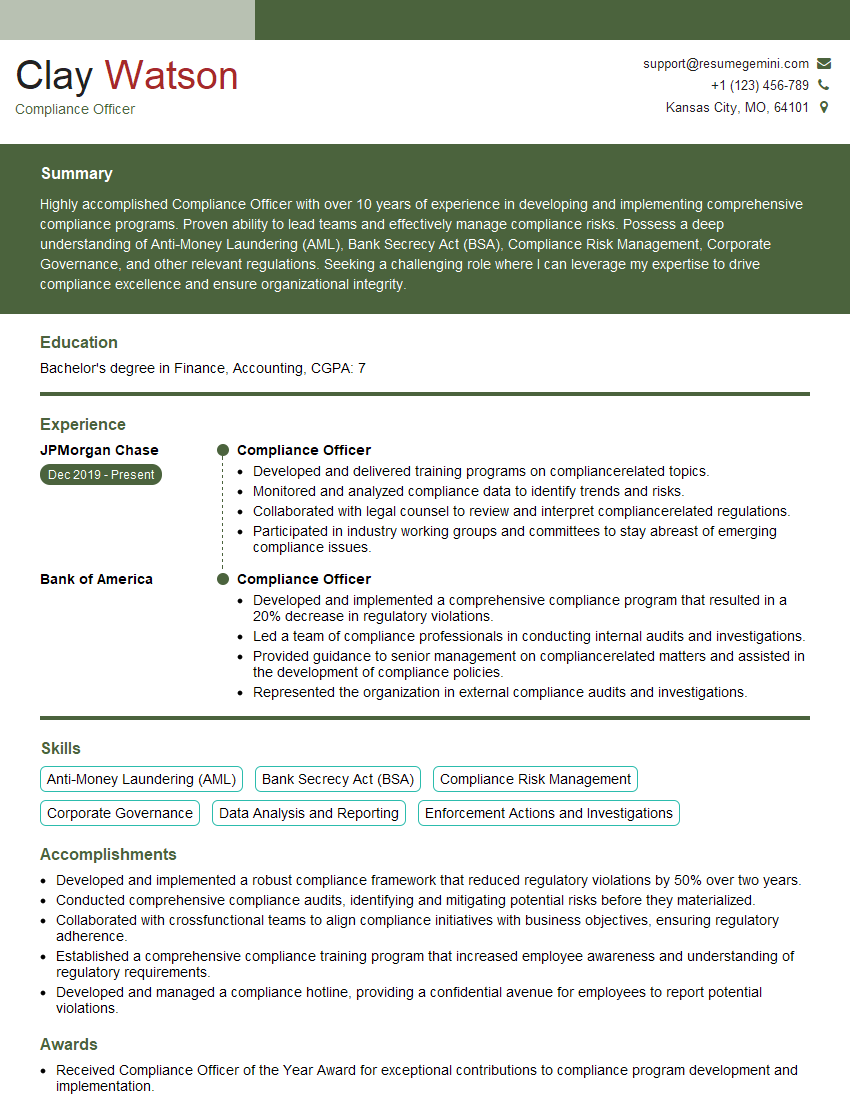
Mastering GDPR and CCPA is crucial for career advancement in today’s data-driven world. Demonstrating a strong understanding of these regulations significantly enhances your value to potential employers. To maximize your job prospects, creating an ATS-friendly resume is essential. ResumeGemini is a trusted resource that can help you build a professional and impactful resume, showcasing your expertise in GDPR and CCPA. Examples of resumes tailored to highlight this specific skillset are available on ResumeGemini to help guide your preparation.
Explore more articles
Users Rating of Our Blogs
Share Your Experience
We value your feedback! Please rate our content and share your thoughts (optional).
What Readers Say About Our Blog
Really detailed insights and content, thank you for writing this detailed article.
IT gave me an insight and words to use and be able to think of examples