Are you ready to stand out in your next interview? Understanding and preparing for Creative and Innovative Cooking Techniques interview questions is a game-changer. In this blog, we’ve compiled key questions and expert advice to help you showcase your skills with confidence and precision. Let’s get started on your journey to acing the interview.
Questions Asked in Creative and Innovative Cooking Techniques Interview
Q 1. Describe your experience with molecular gastronomy techniques.
Molecular gastronomy is a fascinating field that explores the physical and chemical transformations of ingredients during cooking. My experience encompasses a wide range of techniques, from spherification – creating caviar-like spheres – to emulsification, where we create stable mixtures of oil and water, like a luxurious mayonnaise. I’ve extensively used nitrogen for creating instant foams and sous vide for perfectly tender proteins. For instance, I once created a dessert featuring spherified mango puree, encapsulated in a light coconut foam, showcasing the textural contrasts molecular gastronomy allows.
Beyond the techniques themselves, I understand the science behind them. Understanding how proteins denature, starches gelatinize, and sugars caramelize allows me to precisely control the final product’s texture, flavor, and appearance. This scientific approach allows for incredible precision and creativity.
Q 2. Explain your approach to developing a new signature dish.
Developing a new signature dish is a journey, not a sprint. It begins with brainstorming, often inspired by seasonal ingredients or a specific flavor profile I want to highlight. For example, my recent signature dish was inspired by the earthy notes of autumn. I started by selecting a key ingredient – pumpkin – and then explored various flavor pairings and cooking techniques to highlight its unique qualities.
Next comes experimentation. I’ll meticulously test different combinations, adjusting cooking times, temperatures, and techniques until I achieve the desired balance of flavors and textures. I document every step, meticulously noting the results. This iterative process often involves discarding several unsuccessful attempts before arriving at the perfect version. Finally, plating and presentation are crucial; the visual appeal of the dish is just as important as its taste.
- Concept Development: Brainstorming, ingredient selection, flavor profile
- Experimentation: Testing various techniques and combinations, precise measurements
- Refinement: Iterative adjustments, taste testing, documentation
- Presentation: Plating and visual appeal
Q 3. How do you incorporate sustainable practices into your culinary creations?
Sustainability is paramount in my culinary philosophy. It’s about minimizing waste, sourcing ingredients responsibly, and reducing our environmental footprint. I prioritize locally sourced, seasonal ingredients, reducing transportation emissions and supporting local farmers. I minimize food waste by creatively using every part of an ingredient; for example, vegetable scraps might become a flavorful stock.
I also focus on reducing energy consumption by utilizing efficient cooking methods like sous vide, which requires less energy than traditional high-heat cooking. Additionally, I advocate for compostable packaging and minimize the use of single-use plastics in my kitchen. Ultimately, sustainable practices translate to fresher, more flavorful dishes and a healthier planet.
Q 4. What innovative cooking methods have you experimented with recently?
Recently, I’ve been experimenting with techniques like reverse spherification, which creates thin, fragile spheres with a burst of intense flavor, and also with the use of 3D food printing for creating intricate and customized designs. Reverse spherification is perfect for encapsulating liquids within a delicate membrane, creating a unique sensory experience, while 3D printing opens up exciting new possibilities for artistic plating and creating personalized culinary experiences. I’m also exploring the use of ultrasonic techniques for enhancing the texture of certain ingredients.
Q 5. Describe a time you had to overcome a culinary challenge using creative problem-solving.
During a high-pressure catering event, the main course’s sauce unexpectedly curdled. Instead of panicking, I quickly assessed the situation. I realized the problem stemmed from the temperature fluctuations during transportation. My solution was to incorporate the curdled sauce into a creamy polenta, transforming what was initially a setback into a surprisingly delicious and texturally complex side dish. This taught me the importance of adaptability and creative problem-solving in high-stakes culinary environments.
Q 6. How do you stay updated on the latest culinary trends and techniques?
Staying current in the culinary world is an ongoing process. I regularly read culinary magazines, attend industry conferences, and follow leading chefs and food scientists on social media. I also participate in workshops and masterclasses focusing on cutting-edge techniques and technologies. Furthermore, I actively engage in culinary communities, exchanging ideas and learning from my peers. Continuous learning is key to remaining at the forefront of innovative cooking.
Q 7. Explain your understanding of flavor pairing and its role in innovative cooking.
Flavor pairing is the art of combining ingredients with complementary or contrasting flavors to enhance the overall culinary experience. It’s based on the understanding of how different flavor compounds interact with each other, creating harmonious or unexpected combinations. For example, the classic pairing of chocolate and chili relies on the shared chemical compounds that create a sense of richness and warmth.
In innovative cooking, flavor pairing is essential for creating unique and memorable dishes. By thoughtfully considering the flavor profiles of ingredients, I can create complex and nuanced flavors that surprise and delight the palate. This involves understanding flavor families, considering the intensity and persistence of flavors, and considering textural contrasts in conjunction with the flavor pairings.
Q 8. How do you balance creativity with the practical constraints of a kitchen environment?
Balancing creativity and practicality in the kitchen is like composing a symphony. You have a brilliant melody in mind (your creative vision), but you need to consider the limitations of your instruments (available equipment, ingredients, time constraints).
First, I thoroughly assess my resources. What ingredients are in season? What equipment is readily available and functional? What’s my budget and timeline? This initial assessment helps ground my creative impulses. For instance, if I want to create a complex dish requiring liquid nitrogen, but lack access to it, my creativity needs to adapt to utilize dry ice or explore alternative textural techniques.
Next, I prioritize. I identify the core elements of my culinary concept—the flavors, textures, and visual appeal—and find creative ways to achieve them within the constraints. Perhaps a complicated sauce can be simplified with a clever reduction, or an elaborate garnish substituted with something equally impressive but easier to execute.
Finally, I embrace iterative development. I don’t expect perfection on the first try. I’m comfortable with experimenting, making adjustments along the way, and learning from both successes and failures. This iterative approach allows me to refine my creative vision within the practical confines of the kitchen environment.
Q 9. Describe your experience with food plating and presentation techniques.
Food plating and presentation are paramount. They’re the final flourish, transforming a delicious meal into a captivating experience. My approach is holistic, considering the entire visual narrative—the color palette, the textures, the height and balance of the components, and the overall harmony of the plate.
I’ve extensively studied classic plating techniques, from the elegant simplicity of French cuisine to the vibrant layering of Asian-inspired dishes. I utilize various tools, like tweezers, offset spatulas, and piping bags, to create meticulous details and precise arrangements.
Beyond technique, I also draw inspiration from art and design, considering concepts such as negative space, symmetry, and asymmetry. For example, a vibrant red sauce might be strategically placed to contrast against a clean white plate, or a delicately arranged garnish could provide a focal point. Each element is carefully chosen to complement not only the flavor profile but also the visual appeal of the dish.
My experience also includes understanding the importance of the context. A casual bistro setting may call for a more rustic and approachable presentation, while a fine dining establishment would demand a more refined and intricate approach. I always strive to create presentations that are both visually stunning and appropriate for their setting.
Q 10. How do you incorporate different culinary traditions into your cooking?
Incorporating different culinary traditions is a cornerstone of my cooking philosophy. It’s about embracing the diversity of flavors, techniques, and ingredients from around the world, and blending them in unexpected and exciting ways. I see it as a form of culinary exploration, a journey of discovery.
For instance, I might take the spice blend of a traditional Moroccan tagine and use it to season a modern Australian lamb dish. Or, I might incorporate the delicate techniques of Japanese sushi preparation into a deconstructed ceviche. These fusions aren’t just about combining disparate elements; it’s about understanding the underlying principles of each tradition and using them to create something new and innovative.
My approach involves thorough research and a deep appreciation for the cultural context of each cuisine. I avoid mere superficial mimicry and instead aim for meaningful integration, always respecting the original culinary heritage while pushing creative boundaries. This necessitates understanding the historical, cultural, and regional significance of particular ingredients and techniques.
Q 11. Explain your understanding of food safety regulations and their impact on creative cooking.
Food safety is not just a regulatory matter; it’s an ethical imperative. It’s foundational to my cooking practice. I understand and rigorously adhere to all relevant regulations, including HACCP (Hazard Analysis and Critical Control Points) principles, to ensure the safety of every dish I create.
These regulations dictate safe temperature control, proper hygiene practices (handwashing, sanitation of equipment), and the prevention of cross-contamination. For example, I use separate cutting boards for raw meats and vegetables, maintain meticulous temperature logs during cooking and storage, and adhere to strict FIFO (First-In, First-Out) inventory management to reduce the risk of spoilage.
While creativity is crucial, it can never compromise safety. Innovative cooking techniques, such as sous vide, require a particularly keen understanding of food safety protocols due to the extended holding times. For example, improper sous vide execution can lead to bacterial growth even at precise temperatures. Thus, meticulous adherence to temperature and time parameters is paramount.
Q 12. How would you adapt a classic recipe to make it more modern and innovative?
Adapting a classic recipe for a modern twist involves understanding its essence and then reimagining it with contemporary techniques and flavors. Take the classic Beef Bourguignon, for example.
Instead of a traditional braise, I might utilize a sous vide technique for more precise temperature control and an exceptionally tender result. I could also replace some of the traditional vegetables with more modern selections, like parsnips or salsify, for added complexity. The classic red wine reduction could be elevated with a touch of balsamic vinegar or a hint of smoked paprika.
The presentation could be modernized as well. Instead of a rustic stew, I might create individual servings, garnished with microgreens and a foam of reduced red wine, emphasizing elegance and refinement. The core elements – rich beef, earthy mushrooms, and a deep red wine sauce – would remain, but the method, ingredients, and presentation would be given a distinctly modern aesthetic. It’s about respecting tradition while pushing creative boundaries.
Q 13. What are your thoughts on using sous vide techniques in a professional kitchen?
Sous vide is an invaluable tool in a professional kitchen, offering unparalleled precision in cooking. Its ability to maintain consistent temperature throughout the cooking process results in incredibly tender and evenly cooked meats, fish, and vegetables. It allows for greater creativity and consistency, reducing the risk of overcooking or uneven doneness.
However, it’s crucial to understand that sous vide is not a replacement for traditional cooking techniques; it’s a complementary tool. For instance, I might sous vide a piece of salmon to perfection, then sear it quickly in a hot pan for a crispy skin and enhanced flavor. This combines the benefits of precise temperature control with the delightful textural contrast of a seared crust.
Furthermore, I’m aware of the inherent safety considerations associated with sous vide. Precise temperature control and careful monitoring are critical to prevent bacterial growth. Proper chilling and rapid cooling after sous vide is essential before storage.
Q 14. How do you handle criticism of your culinary creations?
Criticism, constructive or otherwise, is a valuable opportunity for growth. I view it as feedback that can inform and improve my culinary endeavors. I don’t take criticism personally; instead, I analyze it objectively, seeking to understand the perspective of the critic.
If the criticism is constructive—offering specific suggestions for improvement—I carefully consider those suggestions. I might re-evaluate my techniques, ingredients, or presentation based on the feedback. Even negative criticism, while potentially less helpful, can highlight areas where I need to refine my skills or revisit my assumptions.
Ultimately, my goal is not simply to create dishes that I like, but dishes that resonate with others. Constructive criticism, even when harsh, is essential for achieving that goal. I always aim to learn and adapt, striving to improve and evolve as a chef.
Q 15. Describe your experience with developing vegetarian/vegan menu options.
Developing vegetarian and vegan menus requires a deep understanding of flavor profiles and culinary techniques that go beyond simply replacing meat with vegetables. It’s about creating dishes that are satisfying, exciting, and showcase the inherent deliciousness of plant-based ingredients.
My approach focuses on building layers of flavor through thoughtful ingredient combinations. For example, instead of a simple mushroom risotto, I might incorporate earthy porcini mushrooms, creamy cashew cream, and bright lemon zest to create a complex and sophisticated dish. I also emphasize textures – contrasting crunchy roasted vegetables with smooth purees or creamy sauces. I frequently utilize innovative techniques like sous vide cooking to enhance the tenderness of vegetables and fermentation to add depth and complexity to sauces. I draw inspiration from global cuisines, adapting traditional recipes to create exciting vegan interpretations. For example, I’ve developed a stunning vegan version of a classic French Boeuf Bourguignon using hearty mushrooms and lentils, slow-cooked to perfection.
- Focus on Umami: I leverage ingredients rich in umami, like mushrooms, seaweed, tomatoes, and miso, to create savory depth without relying on meat.
- Textural Variety: I pay close attention to textural contrast, ensuring a balanced eating experience that engages all the senses.
- Global Inspiration: I draw inspiration from cuisines worldwide to create unique and exciting dishes.
Career Expert Tips:
- Ace those interviews! Prepare effectively by reviewing the Top 50 Most Common Interview Questions on ResumeGemini.
- Navigate your job search with confidence! Explore a wide range of Career Tips on ResumeGemini. Learn about common challenges and recommendations to overcome them.
- Craft the perfect resume! Master the Art of Resume Writing with ResumeGemini’s guide. Showcase your unique qualifications and achievements effectively.
- Don’t miss out on holiday savings! Build your dream resume with ResumeGemini’s ATS optimized templates.
Q 16. Explain your approach to menu planning and cost control.
Menu planning and cost control are intertwined. It’s not enough to create beautiful dishes; they must also be profitable and sustainable. My approach begins with a deep understanding of market pricing and seasonal availability. I prioritize locally sourced ingredients whenever possible, which often translates to both cost savings and superior quality.
I use specialized software to track ingredient costs and analyze menu profitability. I also implement portion control strategies to minimize waste and maximize yield. For example, I’ll meticulously measure the appropriate amount of ingredients for each dish, minimizing unnecessary excess. I constantly review and adjust the menu, removing less profitable items and replacing them with new, exciting options. I also strategize around purchasing – buying in bulk when economically viable, negotiating with suppliers, and exploring creative ways to utilize leftover ingredients to minimize waste.
One practical strategy is to build a menu around core ingredients. If I’m buying a large quantity of root vegetables, for instance, I can create several menu items – a soup, a roasted vegetable platter, and a puree – maximizing their usage and minimizing waste.
Q 17. How do you train and mentor junior chefs in innovative cooking techniques?
Mentoring junior chefs is crucial for fostering a culture of creativity and innovation. My approach is hands-on and focuses on building a strong foundation in culinary fundamentals before introducing advanced techniques. I start with demonstrations, allowing them to observe my techniques firsthand. Then, I provide guided practice, offering personalized feedback and adjustments.
I encourage experimentation within a framework of safety and hygiene. This involves providing clear guidelines, setting challenges, and offering constructive criticism. I also introduce them to various cooking techniques, including molecular gastronomy, modernist cuisine, and traditional methods. We regularly discuss flavor profiles, ingredient sourcing, and presentation, fostering a holistic understanding of the culinary process. I encourage them to document their experiments – successes and failures alike – in recipe notebooks, fostering a habit of continuous learning and improvement. Regular tasting sessions, where we discuss flavors and textures and explore improvements, further enhance their learning.
Q 18. Describe your experience with managing food waste in a kitchen.
Managing food waste is a crucial aspect of sustainable kitchen operations. My approach is multifaceted and begins with meticulous planning and portion control. We track inventory closely, using first-in, first-out (FIFO) methods to ensure that older ingredients are used before they expire.
Composting is a key element of our waste reduction strategy. We compost all organic waste, including vegetable scraps, coffee grounds, and eggshells. We also utilize leftover ingredients creatively. For example, vegetable scraps are often used to create flavorful stocks, while leftover bread might become croutons. We have also implemented a system to repurpose otherwise discarded items. We work closely with local organizations to donate excess food that is still safe for consumption.
Regular inventory checks and employee training are crucial. Employees are educated about the importance of minimizing waste and given clear procedures for storing and handling ingredients. This involves clearly labeling and dating all ingredients.
Q 19. How would you incorporate technology (e.g., 3D printing) into your culinary processes?
Technology offers exciting possibilities in the culinary world. 3D printing, for instance, allows for the creation of intricate and customized dishes with unparalleled precision. I envision using 3D printing to create edible garnishes, personalized desserts, and even complex, multi-layered structures.
Beyond 3D printing, I am exploring the use of sous vide machines for precise temperature control, resulting in perfectly cooked dishes every time. Smart kitchen technology, such as sensors and scales, can help optimize inventory management and reduce food waste. Software programs can be invaluable in menu planning and cost control. I also see the potential for incorporating augmented reality (AR) for training and educational purposes, offering immersive experiences for chefs in training.
The key is to integrate technology seamlessly into existing processes, enhancing efficiency and creativity without compromising the core elements of culinary artistry and the human touch.
Q 20. Explain your process for developing a new menu item from concept to execution.
Developing a new menu item is a meticulous process. It begins with conceptualization, often inspired by seasonal ingredients, travel experiences, or culinary trends. Once I have a basic concept, I experiment with different flavor combinations and techniques.
This experimentation phase involves multiple iterations of recipe testing and refinement. I meticulously document each iteration, noting adjustments and their impact on flavor and texture. Once I am satisfied with the flavor profile, I focus on presentation, ensuring that the dish is visually appealing. I test the recipe in various settings – testing batches for scalability and consistency.
After thorough testing and refinement, I conduct a taste test with a select group of colleagues and/or customers to gather feedback. This feedback is crucial in making final adjustments before the item is ready for menu launch. I document this whole process in detail and incorporate photos for future reference.
Q 21. How do you evaluate the success of a new culinary creation?
Evaluating the success of a new culinary creation involves a multi-faceted approach. First, I track its sales performance. Consistent high sales indicate customer appeal. However, sales alone are insufficient. I also gather customer feedback through surveys, online reviews, and direct interactions. I carefully analyze this feedback, looking for both positive comments and constructive criticism.
Beyond customer feedback, I assess the dish’s profitability. A profitable dish contributes to the restaurant’s overall financial health. Finally, I evaluate the dish’s operational efficiency. Is it easy to prepare? Does it require specialized equipment or ingredients? A dish that is both delicious and efficient to prepare ensures sustainability.
By combining quantitative data (sales figures, cost analysis) and qualitative data (customer feedback), I obtain a comprehensive evaluation of the dish’s overall success.
Q 22. Describe your experience with working in a high-pressure kitchen environment.
High-pressure kitchen environments are the crucible where culinary skills are truly forged. I’ve thrived in these demanding settings, working in Michelin-starred restaurants and during large-scale catering events. The key isn’t just speed, but organized efficiency and calm problem-solving. For instance, during a particularly busy service, we experienced a sudden equipment malfunction – the main oven went down. Instead of panicking, I immediately reorganized the cooking sequence, prioritizing dishes that could be finished on the remaining equipment and delegating tasks effectively to the team. We improvised, using sous vide techniques for certain items, and ultimately served all orders on time, maintaining quality.
This experience highlighted the importance of meticulous planning, strong teamwork, and the ability to adapt quickly under pressure. It’s about thinking strategically, not just reacting. Proactive problem-solving, such as pre-preparing components and having backup plans, is crucial. Maintaining clear communication within the team is paramount – a well-oiled machine always runs smoother than a chaotic one.
Q 23. How do you adapt your culinary style to different dietary needs and preferences?
Adapting to diverse dietary needs is a cornerstone of modern culinary practice. It’s not merely about substitutions; it’s about creative reimagining. For example, a vegan customer might order a dish originally featuring beef. Instead of simply replacing it with a plant-based patty, I’d explore the dish’s core flavors and textures to create something unique. I might utilize mushrooms for their umami depth, combining them with lentils for heartiness, and employing specific techniques like slow-roasting or pan-searing to achieve a satisfying texture.
- Allergies: I meticulously check for allergies and cross-contamination risks, ensuring strict separation of ingredients and equipment.
- Intolerances: I offer alternatives like lactose-free dairy, gluten-free flour blends, and refined sugar substitutes, ensuring the flavor profile isn’t compromised.
- Preferences: I always accommodate specific preferences, such as vegetarian, pescatarian, or specific cultural dietary restrictions. Understanding the ‘why’ behind preferences helps me craft truly personalized meals.
Adapting to dietary requirements isn’t a limitation; it’s an opportunity for creative problem-solving. The challenge is to transform constraints into innovative culinary solutions.
Q 24. What are your thoughts on the role of social media in promoting innovative cooking?
Social media plays a crucial role in disseminating innovative cooking techniques, transforming it from a largely private practice to a globally accessible art form. Platforms like Instagram, TikTok, and YouTube have democratized culinary creativity. It allows chefs to share their unique approaches, experiment with new techniques, and engage directly with a vast audience. For example, the rise of sous vide cooking and advanced fermentation techniques can be partly attributed to this widespread sharing of knowledge.
However, it’s essential to be discerning. While social media offers incredible potential for showcasing creativity, it’s also important to critically evaluate the information shared, ensuring it aligns with established culinary principles and food safety standards. I personally use social media not just to showcase my work but also to engage in constructive dialogues with other culinary professionals and enthusiasts, fostering a collective learning environment.
Q 25. How do you maintain a balance between creativity and consistency in your cooking?
Balancing creativity and consistency in cooking is a delicate art. Creativity is the spark, the inspiration – but consistency is the foundation upon which a reputation is built. I achieve this balance through a structured approach.
- Mastering Fundamentals: A strong base in classic techniques allows me to freely experiment without compromising quality or consistency. I can confidently deviate from established methods, knowing I have the foundational knowledge to make it work.
- Recipe Development Process: I approach recipe development methodically, starting with a core concept and meticulously testing variations, documenting every step. This ensures both creativity and repeatability.
- Standardized Procedures: In a professional kitchen, maintaining consistency across a large volume of dishes requires standardized procedures. This involves precise measurements, defined cooking times, and clear communication within the team.
The creative process shouldn’t be chaotic. Structure and discipline amplify creativity, not stifle it. It’s about harnessing creativity within a framework of consistency.
Q 26. Describe your experience with using different types of cooking equipment.
My experience spans a wide range of cooking equipment, from traditional methods to cutting-edge technology. I’m proficient with various stovetops (gas, induction), ovens (conventional, convection, wood-fired), and specialized equipment like sous vide circulators, immersion blenders, and rotary evaporators. Each piece of equipment brings a unique set of capabilities.
- Traditional Techniques: I have a deep appreciation for classic techniques, recognizing the nuances and subtleties they offer. The art of mastering a simple pan-fry or a perfectly roasted chicken is as important as using advanced technology.
- Modern Technology: I embrace modern technology to enhance efficiency and precision, but I always prioritize understanding the ‘why’ behind the technology. Using a sous vide circulator, for instance, requires a strong understanding of temperature control and its impact on protein denaturation.
- Adaptive Skills: The ability to adapt to different equipment is crucial. Whether it’s a well-equipped professional kitchen or a limited home setup, I can adjust my approach to achieve the desired outcome.
The ideal scenario is having a well-rounded understanding of both traditional and modern tools, allowing for a versatile and innovative approach.
Q 27. How do you handle pressure when faced with unexpected culinary challenges?
Unexpected challenges are inevitable in any kitchen, but how we react defines our success. My approach is systematic and relies on a combination of preparation, problem-solving, and teamwork.
- Assess the Situation: Remain calm and analyze the challenge objectively. What’s the issue? What’s the impact? What resources are available?
- Develop Solutions: Brainstorm possible solutions, considering the available resources and time constraints. Involve the team in this process; multiple perspectives are invaluable.
- Prioritize and Execute: Prioritize the solutions based on their impact and feasibility. Execute the chosen solution methodically, delegating tasks effectively as needed.
- Adapt and Learn: If the initial solution isn’t effective, adjust your approach and learn from the experience. Document what went wrong and how it can be avoided in the future.
Pressure is unavoidable, but panic is a choice. A calm, systematic approach, combined with proactive planning, is the most effective way to navigate unexpected challenges.
Q 28. What are your career goals related to creative and innovative cooking?
My career goals center around pushing the boundaries of creative and innovative cooking. I aspire to establish a culinary research and development program focusing on sustainable and ethical food practices while exploring novel flavor combinations and cooking techniques. I’m particularly interested in using technology to enhance culinary creativity, such as exploring the applications of AI in recipe development and personalized nutrition. This goes beyond simply creating new dishes; it’s about advancing the entire culinary landscape by incorporating technology, sustainability, and ethical sourcing into every stage of the process.
Ultimately, I want to inspire and educate others, sharing my knowledge and passion through workshops, collaborations, and possibly even my own culinary school. The goal is not just personal success, but a collaborative effort to enhance culinary excellence while minimizing its environmental impact.
Key Topics to Learn for Creative and Innovative Cooking Techniques Interview
- Molecular Gastronomy: Understanding techniques like spherification, foams, and emulsions; their practical application in creating unique textures and presentations; troubleshooting common issues in molecular gastronomy techniques.
- Culinary Deconstruction: Analyzing classic dishes and reimagining them with innovative techniques and presentations; practical application in developing signature dishes; understanding the balance of flavors and textures in deconstructed plates.
- Flavor Pairing and Sensory Science: Exploring flavor profiles and their interactions; applying principles of sensory science to create balanced and exciting dishes; understanding how to create unexpected and harmonious flavor combinations.
- Sustainable and Ethical Sourcing: Understanding the importance of sustainable ingredients and ethical sourcing practices; practical application in menu planning and ingredient selection; showcasing commitment to responsible culinary practices.
- Food Styling and Presentation: Mastering visual appeal in plating and presentation techniques; understanding the psychology of food presentation and its impact on the dining experience; practical application in creating visually stunning dishes.
- Advanced Cooking Methods: Proficiency in techniques like sous vide, smoking, and fermentation; understanding the scientific principles behind these techniques and their impact on flavor and texture; troubleshooting issues related to advanced cooking methods.
- Innovation and Trend Forecasting: Staying current with culinary trends and emerging technologies; developing innovative approaches to menu development and culinary creation; understanding consumer preferences and adapting to changing market demands.
Next Steps
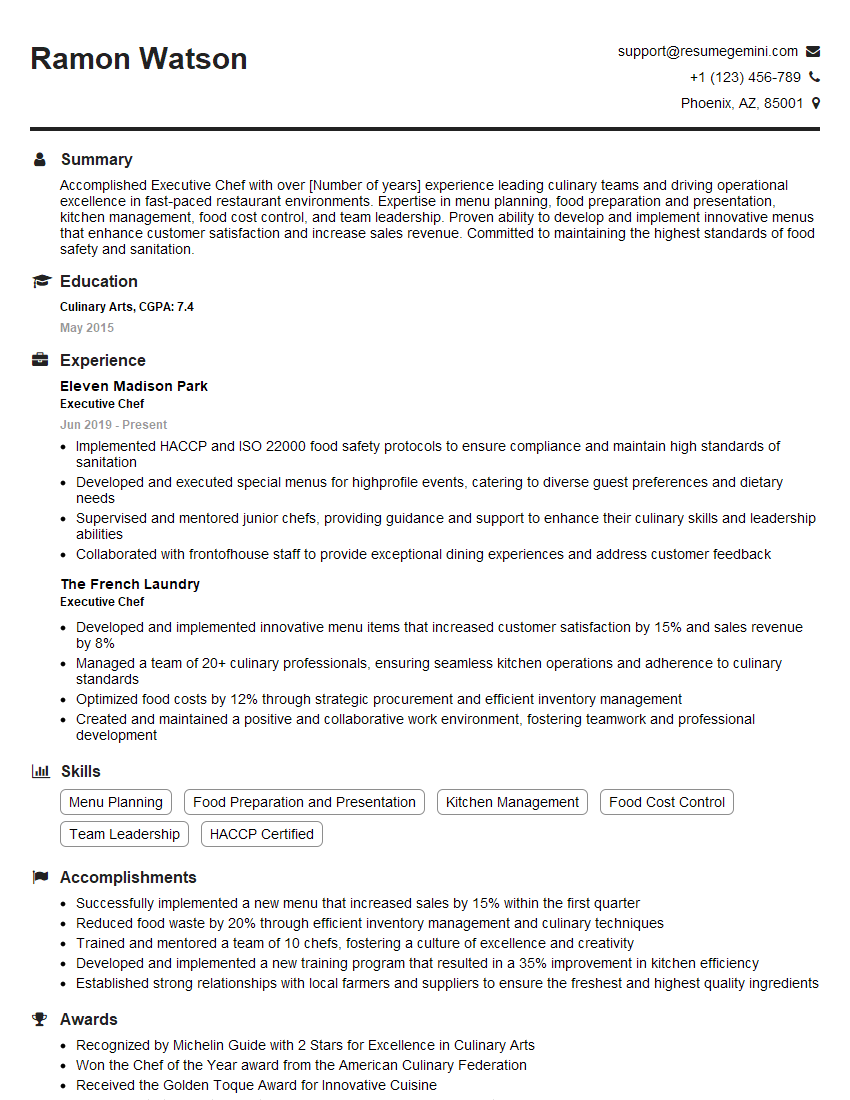
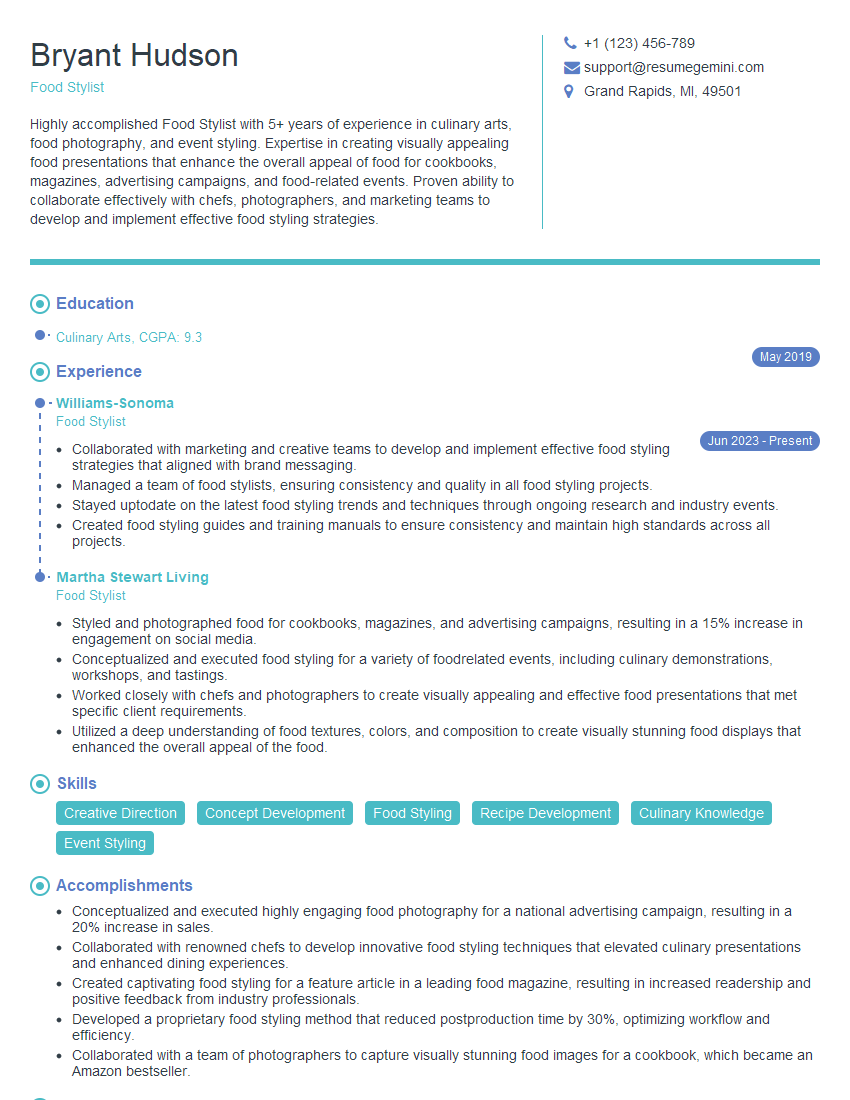
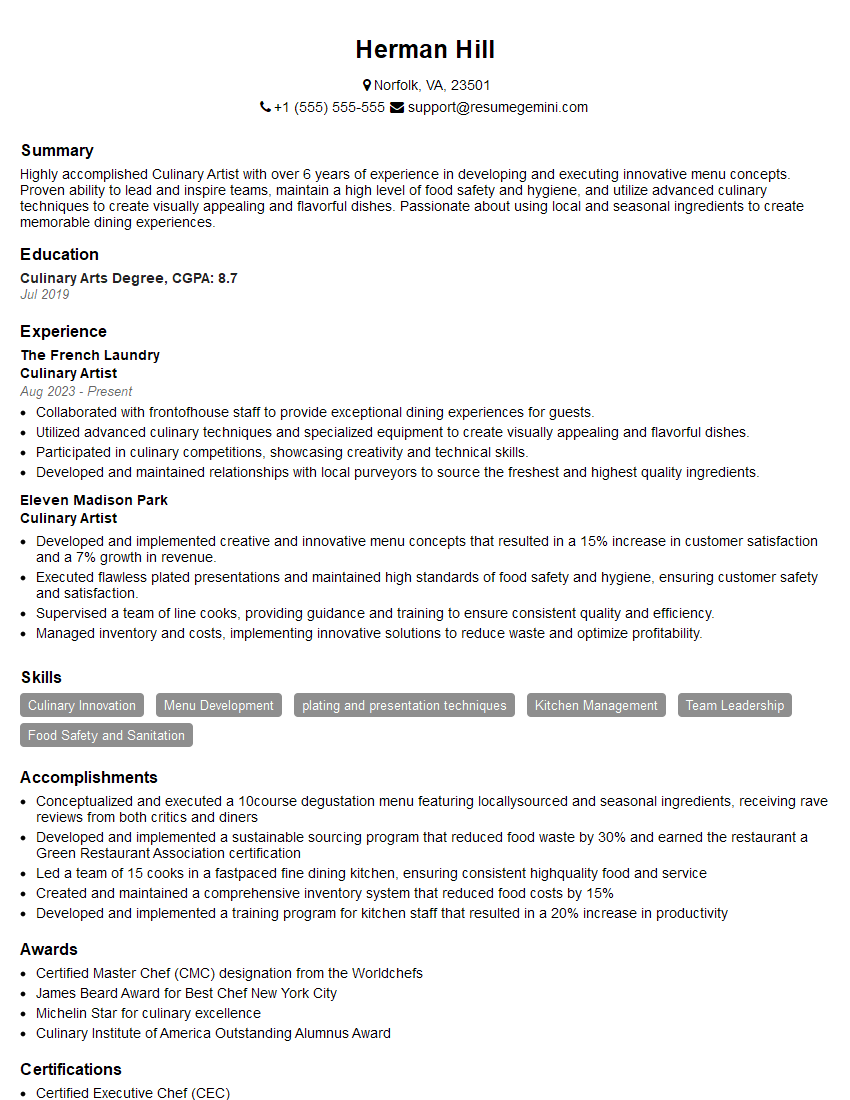
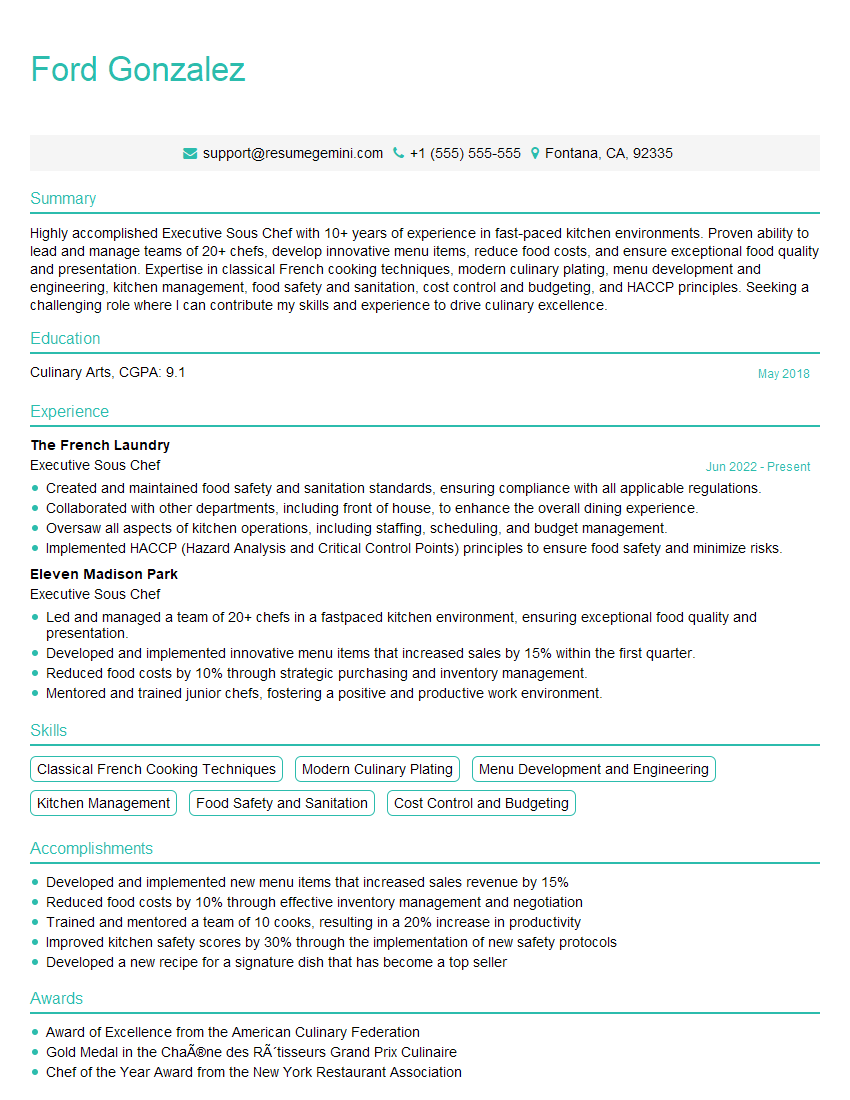
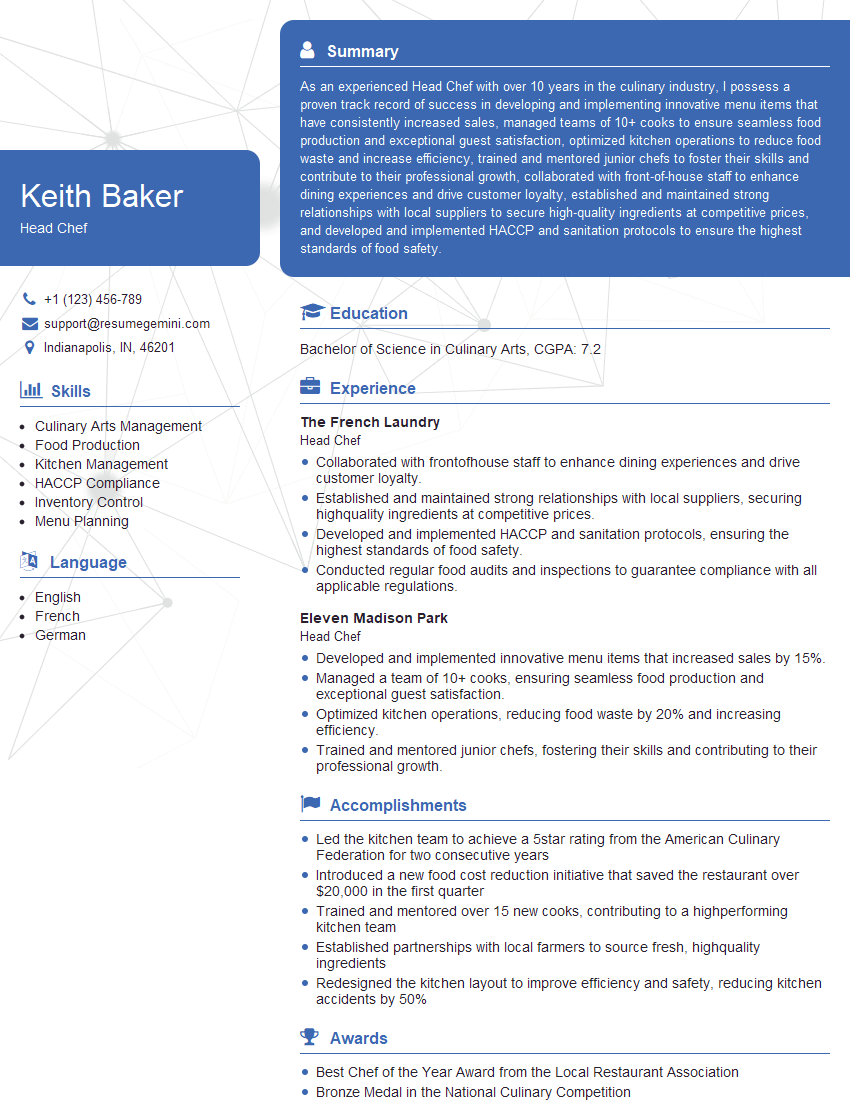
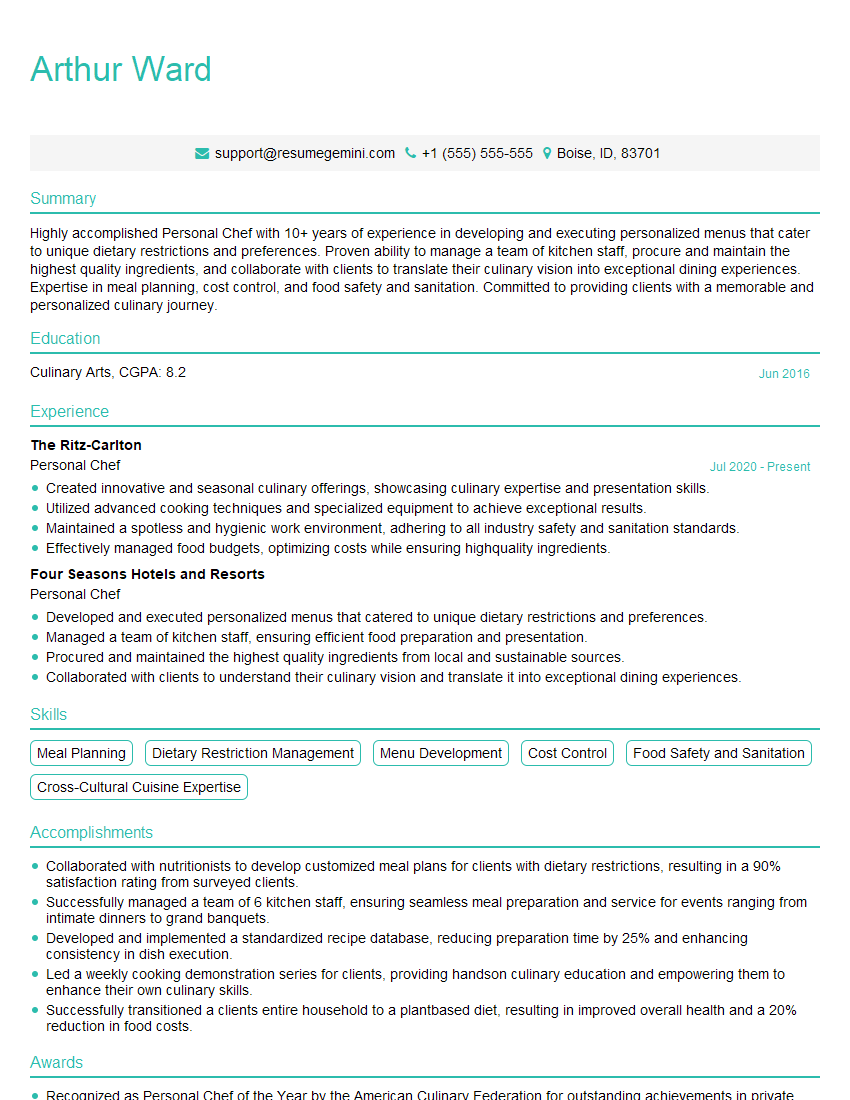
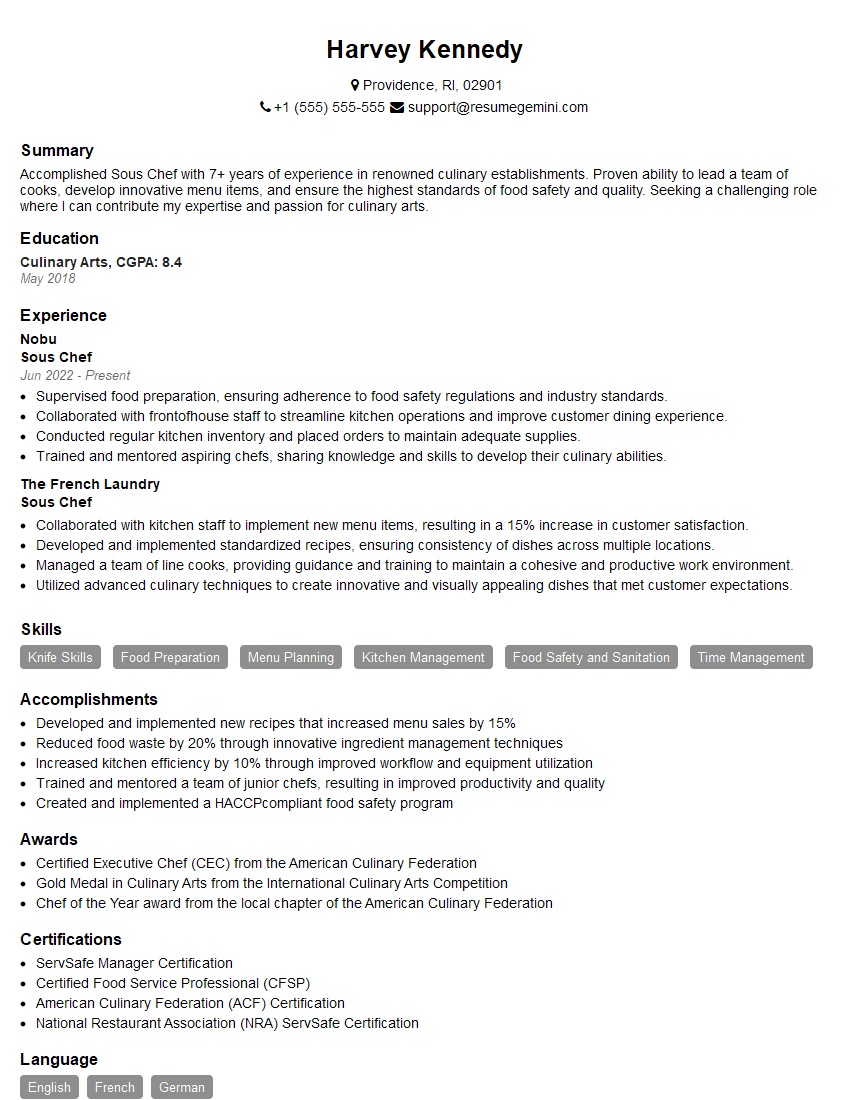
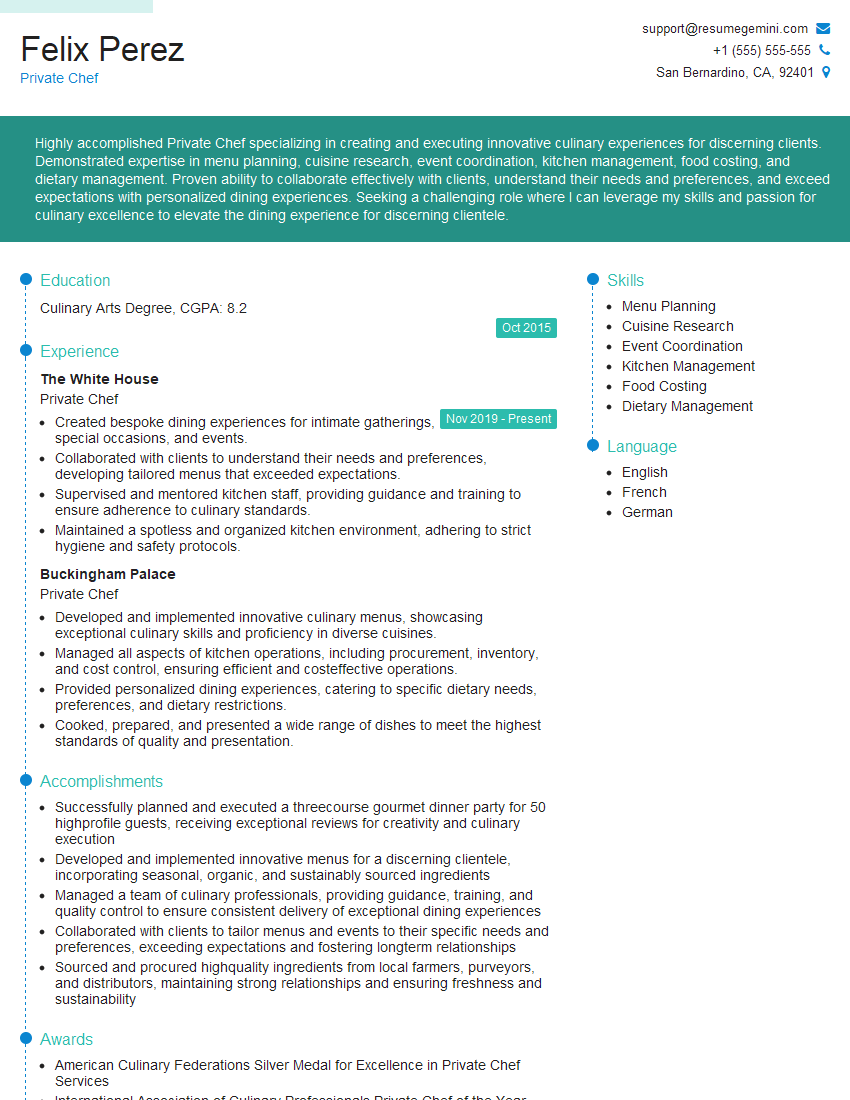
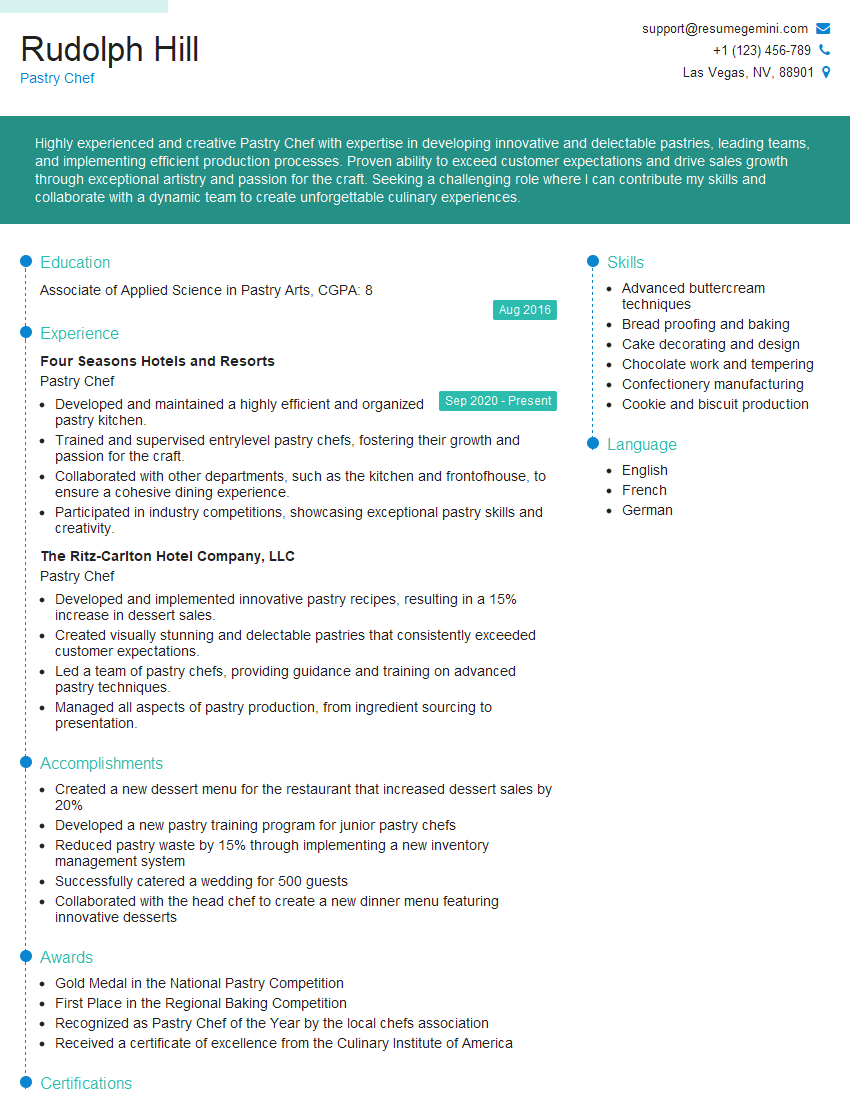
Mastering Creative and Innovative Cooking Techniques is crucial for career advancement in the culinary industry. It demonstrates a commitment to excellence, innovation, and a deep understanding of culinary science. To stand out from other candidates, a strong, ATS-friendly resume is essential. This will ensure your application is seen by recruiters and highlights your key skills effectively. ResumeGemini is a trusted resource to help you create a professional and impactful resume that showcases your abilities. Examples of resumes tailored to Creative and Innovative Cooking Techniques are available to help guide you in this process.
Explore more articles
Users Rating of Our Blogs
Share Your Experience
We value your feedback! Please rate our content and share your thoughts (optional).
What Readers Say About Our Blog
Really detailed insights and content, thank you for writing this detailed article.
IT gave me an insight and words to use and be able to think of examples