Every successful interview starts with knowing what to expect. In this blog, we’ll take you through the top Retail Sales and Marketing interview questions, breaking them down with expert tips to help you deliver impactful answers. Step into your next interview fully prepared and ready to succeed.
Questions Asked in Retail Sales and Marketing Interview
Q 1. Describe your experience with implementing a successful retail sales promotion.
One successful sales promotion I implemented involved a tiered loyalty program for a mid-sized clothing retailer. We identified a decline in repeat purchases and a lack of engagement with our existing customer base. Our solution was a three-tiered loyalty program offering increasing benefits with higher spending levels.
Phase 1: Planning & Design We segmented our customer database to understand purchase frequency and value. Based on this analysis, we designed three tiers: Bronze, Silver, and Gold, each with escalating rewards (discounts, early access to sales, exclusive events). We also leveraged a marketing automation platform to send targeted emails based on customer tier and purchase history.
Phase 2: Implementation & Marketing The program launch involved a multi-channel approach: in-store signage, email marketing, social media campaigns, and print advertisements. We highlighted the program benefits clearly and made it easy to enroll.
Phase 3: Monitoring & Optimization We closely monitored key performance indicators (KPIs) such as enrollment rates, customer engagement, repeat purchase rates, and overall sales growth. We used A/B testing on email campaigns and promotional offers to optimize results. Data analysis revealed that the Gold tier was particularly effective at driving higher sales and loyalty.
Results: The loyalty program resulted in a 25% increase in repeat purchases within six months and a 15% overall increase in sales. This success demonstrated the importance of a well-structured loyalty program that rewards customer behavior and creates a sense of exclusivity and appreciation.
Q 2. How would you analyze sales data to identify areas for improvement?
Analyzing sales data is crucial for identifying improvement areas. I use a multi-faceted approach, starting with a thorough understanding of the data available. This includes sales figures, product performance, customer demographics, and marketing campaign data.
Step 1: Data Aggregation & Cleaning: I begin by consolidating sales data from various sources (POS systems, e-commerce platforms, etc.) into a centralized database. Cleaning the data is critical, ensuring accuracy and consistency.
Step 2: Trend Analysis: I then analyze sales trends over time, identifying periods of high and low performance. This helps pinpoint seasonal variations, promotional effectiveness, and potential external factors influencing sales.
Step 3: Product Performance Analysis: I delve into individual product performance, assessing sales volume, profit margins, and inventory turnover. Slow-moving products might require price adjustments, promotional strategies, or even discontinuation.
Step 4: Customer Segmentation Analysis: Understanding customer segments (demographics, purchasing behavior, etc.) allows me to tailor marketing efforts and product offerings. For example, identifying high-value customers enables targeted loyalty programs.
Step 5: Correlation Analysis: I examine correlations between sales and external factors (e.g., marketing campaigns, economic conditions, competitor activity) to understand their impact. This is crucial for evaluating the ROI of marketing investments.
Step 6: Reporting and Recommendations: Finally, I present my findings in clear, concise reports, providing actionable recommendations for improvements. These could include new product development, improved marketing strategies, enhanced customer service, or operational changes.
Q 3. Explain your understanding of key retail marketing metrics (e.g., conversion rate, ROI).
Key retail marketing metrics are essential for evaluating the effectiveness of marketing strategies and overall business performance. They provide quantifiable measures of success. Let’s explore some examples.
- Conversion Rate: This metric measures the percentage of website visitors or store customers who complete a desired action, such as making a purchase. A high conversion rate indicates effective marketing and a compelling customer experience. For instance, a conversion rate of 5% means that 5 out of every 100 website visitors make a purchase.
- Return on Investment (ROI): ROI is a fundamental metric that shows the profitability of a marketing campaign or investment. It’s calculated by dividing the net profit by the cost of the investment and multiplying by 100%. A higher ROI signifies a more effective investment.
- Average Order Value (AOV): AOV measures the average amount spent per transaction. Increasing AOV can significantly boost revenue. Strategies like upselling and cross-selling can improve this metric.
- Customer Acquisition Cost (CAC): CAC represents the cost of acquiring a new customer. It’s crucial for determining the efficiency of marketing efforts. Keeping CAC low while maintaining a healthy conversion rate is ideal.
- Customer Lifetime Value (CLTV): CLTV predicts the total revenue a business expects to generate from a single customer throughout their relationship. This metric is essential for long-term planning and customer relationship management.
By monitoring these metrics, retailers gain valuable insights into their marketing effectiveness, enabling data-driven decisions to optimize campaigns and enhance profitability.
Q 4. How do you handle customer complaints and resolve conflicts?
Handling customer complaints requires empathy, professionalism, and a solution-oriented approach. My process follows these steps:
- Active Listening: I begin by actively listening to the customer’s complaint without interruption. This demonstrates respect and allows me to fully understand their concerns.
- Empathy and Validation: I acknowledge the customer’s feelings and validate their experience. Even if I don’t agree with their perspective, showing empathy helps de-escalate the situation.
- Information Gathering: I gather all necessary information to understand the root cause of the problem. This might involve asking clarifying questions and reviewing relevant documentation (e.g., receipts, order confirmations).
- Solution Development: Based on the information gathered, I develop a solution that addresses the customer’s concerns. This could involve a refund, replacement, store credit, or other appropriate compensation.
- Communication and Follow-Up: I clearly communicate the solution to the customer and follow up to ensure they are satisfied. This reinforces a commitment to customer service and helps build trust.
For example, if a customer complains about a faulty product, I would first apologize for the inconvenience. Then, depending on the retailer’s return policy, I would offer a replacement, repair, or refund. Finally, I would follow up to ensure the replacement or refund was processed correctly. This approach aims to convert a negative experience into a positive one, strengthening customer relationships.
Q 5. What strategies would you use to increase customer loyalty?
Increasing customer loyalty requires a strategic approach focused on building strong, lasting relationships. My strategies include:
- Personalized Communication: Using customer data, I create tailored communication, such as personalized email campaigns and targeted offers based on individual purchase history and preferences.
- Loyalty Programs: Implementing a tiered loyalty program, as described earlier, incentivizes repeat purchases and rewards customer engagement.
- Exceptional Customer Service: Providing friendly, efficient, and helpful service creates a positive brand experience and encourages customer loyalty. This includes prompt issue resolution and proactive customer support.
- Exclusive Events and Experiences: Organizing exclusive events, early access to sales, and VIP experiences creates a sense of community and appreciation among loyal customers.
- Feedback Collection and Action: Actively soliciting customer feedback through surveys and reviews enables identifying areas for improvement and showing that their opinions matter.
- Community Building: Creating a strong brand community through social media, online forums, and in-store events fosters customer engagement and loyalty.
By focusing on providing value and creating a positive brand experience, retailers can cultivate strong customer loyalty, driving repeat business and positive word-of-mouth referrals. A satisfied customer is more likely to become a loyal customer.
Q 6. Describe your experience with visual merchandising and its impact on sales.
Visual merchandising plays a critical role in driving sales by enhancing the in-store shopping experience and influencing purchasing decisions. It’s all about strategically presenting products to maximize their visual appeal and attract customers. My experience encompasses several key aspects:
- Store Layout and Design: I work with store layouts that are both visually appealing and customer-friendly, creating easy navigation and clear product displays.
- Product Placement: Strategically placing products in high-traffic areas, eye-level positions, and end-caps increases visibility and sales. Impulse buys are often placed near checkout points.
- Signage and Displays: Clear, attractive signage and displays inform customers about product features, prices, and promotions. This includes attractive point-of-sale materials (POSM).
- Color and Lighting: Using color psychology and lighting to create a visually inviting and mood-appropriate environment that matches brand image and target customer profile.
- Thematic Displays: Creating themed displays or window displays that relate to current events or seasonal trends generates customer interest and captures attention.
In one instance, I redesigned the store layout of a small bookstore, improving product visibility and placement. Sales of featured titles rose by 18% within two months, demonstrating the significant impact visual merchandising can have on sales.
Q 7. How familiar are you with different sales techniques (e.g., SPIN selling, consultative selling)?
I’m proficient in several sales techniques, adapting my approach based on the customer, product, and sales situation. Let’s examine two common approaches:
- SPIN Selling: This technique focuses on asking strategic questions to understand customer needs and guide them towards a solution. The acronym stands for Situation, Problem, Implication, Need-Payoff. It’s particularly effective for complex, high-value sales.
- Consultative Selling: This approach involves acting as a trusted advisor, understanding the customer’s challenges, and providing tailored solutions. It builds rapport and focuses on long-term relationships. It emphasizes understanding the customer’s context and goals.
For instance, using SPIN selling for software sales would involve asking questions about the customer’s current workflow (Situation), identifying pain points (Problem), highlighting the implications of not solving those problems (Implication), and then showing how the software addresses these issues (Need-Payoff). In contrast, consultative selling might involve a financial advisor discussing long-term investment strategies with a client, tailoring recommendations to their financial goals and risk tolerance.
My adaptability allows me to leverage the most appropriate technique to achieve successful sales outcomes while fostering strong customer relationships.
Q 8. How would you manage a team of retail sales associates?
Managing a retail sales team requires a blend of leadership, training, and motivation. My approach focuses on creating a positive and productive work environment where each associate feels valued and empowered.
- Clear Expectations and Goals: I begin by clearly outlining individual and team goals, ensuring everyone understands their role in achieving overall sales targets. This involves setting Key Performance Indicators (KPIs) like average transaction value, conversion rates, and customer satisfaction scores.
- Effective Training and Development: Ongoing training is crucial. This includes product knowledge, sales techniques (like suggestive selling and handling objections), and customer service best practices. I would utilize role-playing, shadowing experienced associates, and online training modules to ensure consistent skill development.
- Empowerment and Delegation: I believe in empowering my team. This means delegating tasks based on individual strengths, providing autonomy within defined guidelines, and fostering a culture of open communication and feedback. For instance, I might empower a particularly strong salesperson to mentor newer associates.
- Motivation and Recognition: Recognizing and rewarding good performance is key to boosting morale and productivity. This could include bonuses, public acknowledgement, promotions, or even small gestures like handwritten thank-you notes.
- Regular Feedback and Coaching: I would conduct regular one-on-one meetings with each associate to provide constructive feedback, address concerns, and offer coaching and support. This includes both positive reinforcement and constructive criticism delivered in a supportive manner.
- Performance Monitoring and Analysis: I use data-driven insights to track individual and team performance, identifying areas for improvement. This involves analyzing sales figures, customer feedback, and other relevant metrics to make data-driven decisions.
For example, during a slow period, I might implement a team-based sales challenge with incentives to boost motivation and collaborate on innovative sales strategies.
Q 9. How do you stay current with retail industry trends and best practices?
Staying current in the dynamic retail landscape requires a multi-pronged approach. I actively engage with several resources to ensure I’m up-to-date on the latest trends and best practices.
- Industry Publications and Research: I regularly read industry publications like Retail Dive, Chain Store Age, and Women’s Wear Daily, as well as reports from firms like McKinsey and Bain & Company. This provides insights into emerging technologies, consumer behavior shifts, and successful strategies.
- Conferences and Trade Shows: Attending industry conferences and trade shows offers valuable networking opportunities and allows me to learn from experts and see new technologies firsthand. This is where I often discover new marketing channels and innovative retail solutions.
- Networking and Peer Groups: Connecting with other retail professionals through networking events, online communities, and professional organizations provides opportunities to share best practices and learn from others’ experiences.
- Competitor Analysis: I regularly analyze the strategies and performance of competitors. This allows me to identify opportunities and potential threats and helps us remain competitive.
- Data and Analytics: Utilizing customer data and sales analytics provides crucial insights into consumer preferences and market trends, guiding strategic decisions.
For instance, I recently attended a conference focused on omnichannel retail strategies, which provided valuable insights into effectively integrating online and offline shopping experiences.
Q 10. What is your experience with CRM systems and their application in retail?
CRM systems are indispensable in modern retail. My experience encompasses leveraging CRM platforms to enhance customer relationships, personalize marketing efforts, and improve operational efficiency.
- Data Management and Customer Profiling: I’ve utilized CRMs like Salesforce and HubSpot to manage customer data, creating detailed customer profiles that include purchase history, preferences, and interaction details. This allows for targeted marketing and personalized communications.
- Customer Segmentation and Targeting: CRMs enable precise segmentation of customer bases based on demographics, purchase behavior, or other relevant criteria. This facilitates the creation of tailored marketing campaigns that resonate with specific customer segments.
- Lead Management and Sales Pipeline Tracking: I’ve used CRM functionalities to manage leads, track sales opportunities, and monitor the sales pipeline. This ensures efficient follow-up and improved conversion rates.
- Marketing Automation: I have experience in utilizing CRM features for marketing automation, automating tasks such as email marketing, targeted advertising, and personalized communications, significantly improving efficiency and effectiveness.
- Customer Service and Support: CRMs often integrate with customer service platforms, allowing for seamless tracking of customer interactions and improved resolution of issues.
For example, using a CRM, I successfully implemented a loyalty program that boosted repeat purchases by 20% by segmenting customers based on their spending habits and offering personalized rewards.
Q 11. Describe your experience with developing and implementing a marketing plan.
Developing and implementing a marketing plan requires a strategic and methodical approach. My experience involves defining objectives, identifying target audiences, developing strategies, and measuring results.
- Market Research and Analysis: I begin by conducting thorough market research to understand the competitive landscape, consumer behavior, and market trends. This often involves surveying customers, analyzing sales data, and studying competitor activities.
- Defining Marketing Objectives: Clear, measurable, achievable, relevant, and time-bound (SMART) objectives are essential. These might include increasing brand awareness, driving sales, or improving customer engagement.
- Target Audience Identification: Defining the target audience is crucial for effective messaging. This involves segmenting the market based on demographics, psychographics, and buying behavior.
- Marketing Strategy Development: I develop a comprehensive marketing strategy encompassing various channels (e.g., social media, email, print, in-store promotions). This involves creating compelling messaging and visual content aligned with the brand’s identity and the target audience’s preferences.
- Budget Allocation and Resource Management: Efficient budget allocation is critical. I carefully allocate resources to different marketing channels based on their potential return on investment (ROI).
- Implementation and Monitoring: The plan’s implementation involves coordinating marketing activities across different channels and monitoring progress regularly. Adjustments are made based on performance data and emerging trends.
In a previous role, I developed and implemented a social media marketing campaign that increased brand awareness by 35% and generated a 15% increase in website traffic within three months.
Q 12. How would you measure the effectiveness of a marketing campaign?
Measuring the effectiveness of a marketing campaign requires a data-driven approach that focuses on relevant key performance indicators (KPIs). The specific KPIs depend on the campaign’s objectives.
- Website Analytics: Track website traffic, bounce rates, time on site, and conversion rates to assess the campaign’s impact on online engagement and sales.
- Sales Data: Analyze sales data to determine if the campaign led to increased sales and revenue. This involves comparing sales figures before, during, and after the campaign.
- Social Media Analytics: Monitor social media engagement metrics such as likes, shares, comments, and reach to gauge the campaign’s effectiveness in generating social buzz and brand awareness.
- Email Marketing Metrics: Track email open rates, click-through rates, and conversion rates to evaluate the effectiveness of email marketing efforts.
- Customer Surveys and Feedback: Gather customer feedback through surveys and reviews to understand customer perceptions and satisfaction levels.
- Return on Investment (ROI): Calculate the ROI of the campaign by comparing the cost of the campaign to the revenue generated. This provides a quantifiable measure of the campaign’s success.
For example, I once tracked a social media campaign’s ROI by comparing the cost of the ads to the increase in sales driven by those ads, which allowed me to optimize future campaigns for maximum impact.
Q 13. What is your understanding of target market segmentation?
Target market segmentation is the process of dividing a broad consumer or business market, known as a mass market, into sub-groups of consumers based on some type of shared characteristics. This allows for more effective marketing and resource allocation.
- Demographic Segmentation: Dividing the market based on factors like age, gender, income, education, occupation, family size, and ethnicity.
- Geographic Segmentation: Dividing the market based on location, such as region, country, climate, urban/rural, or population density.
- Psychographic Segmentation: Dividing the market based on lifestyle, values, attitudes, interests, and personality traits.
- Behavioral Segmentation: Dividing the market based on consumer behavior, such as purchase frequency, brand loyalty, product usage, and benefits sought.
For instance, a clothing retailer might segment its market by age (teens, adults, seniors), lifestyle (active, casual, formal), and income level (budget-conscious, mid-range, luxury) to tailor its marketing efforts to each segment’s specific needs and preferences.
Q 14. How familiar are you with social media marketing strategies for retail?
Social media marketing is crucial for retail success. My understanding encompasses using various platforms to reach target audiences, build brand awareness, and drive sales.
- Platform Selection: Identifying the most relevant social media platforms for the target audience is key. For example, Instagram might be ideal for visual products, while Facebook is better for broader demographics.
- Content Strategy: Developing engaging and high-quality content, including images, videos, and text, that resonates with the target audience is crucial. This includes incorporating user-generated content and interactive features.
- Paid Advertising: Utilizing paid advertising on platforms like Facebook, Instagram, and Pinterest allows for targeted reach and measurable results. This allows for precise targeting based on demographics, interests, and behaviors.
- Influencer Marketing: Partnering with relevant influencers can significantly increase brand awareness and reach a wider audience. This works best when influencers align with the brand’s values and target audience.
- Community Building: Engaging with followers, responding to comments and messages, and fostering a sense of community helps build brand loyalty and advocacy. This can include running contests, polls, and Q&A sessions.
- Analytics and Optimization: Tracking key metrics, such as engagement, reach, and conversions, to measure campaign success and optimize strategies over time is crucial.
For example, a recent campaign I managed involved leveraging Instagram influencer marketing to promote a new product line, resulting in a 25% increase in sales and a significant boost in brand awareness amongst our target demographic.
Q 15. How would you manage a retail store’s budget?
Managing a retail store’s budget requires a strategic approach that balances profitability with operational needs. It’s not just about tracking expenses; it’s about proactively managing resources to maximize return on investment.
My approach begins with a thorough understanding of the store’s financial goals, including sales targets, profit margins, and overall growth objectives. Then, I’d develop a detailed budget, broken down into categories such as:
- Cost of Goods Sold (COGS): This includes the direct cost of purchasing inventory.
- Operating Expenses: This encompasses rent, utilities, salaries, marketing, and other operational costs.
- Marketing and Advertising: This section allocates funds for promotional activities, both online and offline.
- Salaries and Wages: This covers employee compensation, including hourly wages, commissions, and benefits.
I would use budgeting software to track expenses against the budget in real-time, allowing for proactive adjustments. For example, if marketing campaigns are underperforming, I’d analyze the data and reallocate resources to more effective channels. Regular budget reviews (monthly, at least) are crucial to identify areas of overspending or underperformance and to make necessary corrections. I’d also employ variance analysis to compare actual results against the budget, helping pinpoint areas needing attention. Finally, forecasting future budgets based on sales trends and market analysis is essential for long-term financial planning.
Career Expert Tips:
- Ace those interviews! Prepare effectively by reviewing the Top 50 Most Common Interview Questions on ResumeGemini.
- Navigate your job search with confidence! Explore a wide range of Career Tips on ResumeGemini. Learn about common challenges and recommendations to overcome them.
- Craft the perfect resume! Master the Art of Resume Writing with ResumeGemini’s guide. Showcase your unique qualifications and achievements effectively.
- Don’t miss out on holiday savings! Build your dream resume with ResumeGemini’s ATS optimized templates.
Q 16. What is your experience with inventory management and forecasting?
Effective inventory management and forecasting are critical for profitability and customer satisfaction. My experience involves using a combination of techniques to optimize stock levels and minimize waste.
I’ve worked extensively with inventory management systems (IMS) to track stock levels, monitor sales trends, and predict future demand. This includes using tools that generate reports on:
- Sales velocity: How quickly products are selling.
- Stock turnover rate: How efficiently inventory is being replenished.
- Lead times: The time it takes to receive new inventory from suppliers.
Forecasting is crucial. I utilize a combination of methods, including:
- Time series analysis: Studying historical sales data to identify patterns and trends.
- Statistical modeling: Using software to predict future demand based on historical data and external factors (e.g., seasonality, promotions).
- Qualitative forecasting: Incorporating expert opinion and market intelligence to refine predictions.
For example, in a previous role, I successfully implemented a just-in-time (JIT) inventory system, reducing storage costs while maintaining sufficient stock to meet customer demand. This involved close collaboration with suppliers and the use of advanced forecasting models to accurately predict sales.
Q 17. How do you handle pressure and meet sales targets?
Handling pressure and consistently meeting sales targets requires a proactive and organized approach. It’s a combination of strategic planning, effective execution, and a positive mindset.
Firstly, I focus on setting realistic, yet challenging, goals. I break down large targets into smaller, achievable milestones, making the overall goal feel less daunting. Secondly, I constantly monitor progress, using sales dashboards and key performance indicators (KPIs) to track performance against targets. This allows for timely interventions if underperformance is detected.
When facing pressure, I rely on my problem-solving skills. I analyze the situation, identify the root cause of any shortfall, and develop solutions. This might involve adjusting marketing strategies, improving sales processes, or providing additional training to staff. Furthermore, I believe in building strong relationships with my team. A supportive and collaborative environment reduces stress and fosters a sense of shared responsibility in achieving goals. Open communication and regular feedback are key elements of this approach.
Finally, continuous learning and professional development are vital. Staying updated on industry best practices and emerging trends enhances my ability to adapt and overcome challenges.
Q 18. How would you adapt your sales approach to different customer types?
Adapting my sales approach to different customer types is crucial for maximizing sales and building customer loyalty. I believe in understanding customer needs and preferences before presenting solutions. My approach involves:
- Active listening: Paying attention to what customers say and observing their body language to understand their needs and concerns.
- Needs-based selling: Focusing on understanding the customer’s needs and offering solutions tailored to those needs, rather than simply pushing products.
- Tailored communication style: Adapting my communication style to suit the customer. Some customers prefer a friendly, informal approach, while others prefer a more formal and professional tone.
For instance, a younger customer might respond well to a more casual, tech-savvy approach, while an older customer might prefer a more patient and detailed explanation. By being observant and adapting my approach, I can build rapport and create a positive buying experience, leading to increased sales and repeat business.
Q 19. Describe your experience with negotiating with vendors.
Negotiating with vendors is a key aspect of retail management, focusing on securing favorable terms and prices while building strong relationships. My approach is collaborative, aiming for win-win outcomes.
Before negotiations, I meticulously research market prices and competitor offerings to determine a fair price range. I also clearly define my needs and requirements, including volume discounts, payment terms, and delivery schedules. During negotiations, I emphasize mutual benefit, highlighting the value we bring as a customer (e.g., consistent orders, strong brand reputation). I’m prepared to discuss different scenarios and compromise where appropriate, but I always strive to secure the best possible deal for my store.
For example, I once negotiated a significant discount with a key vendor by highlighting our projected sales volume and offering to commit to a larger order quantity in exchange for reduced pricing. This resulted in substantial cost savings for our store without compromising product quality or delivery times. Building trust and long-term relationships with vendors is important; a collaborative approach ensures fair pricing and reliable supply chains.
Q 20. How would you use data analytics to inform retail strategy?
Data analytics plays a vital role in informing retail strategy and driving profitable growth. By analyzing sales data, customer behavior, and market trends, I can make data-driven decisions to optimize various aspects of the business.
I’ve used data analytics to:
- Identify top-performing products and categories: This information helps inform inventory management, merchandising decisions, and marketing campaigns.
- Understand customer behavior: By analyzing customer purchase history and demographics, I can segment customers and tailor marketing messages to specific groups.
- Optimize pricing strategies: Analyzing price elasticity and competitor pricing enables me to set optimal prices that maximize revenue.
- Measure the effectiveness of marketing campaigns: Tracking key metrics like conversion rates and return on investment (ROI) allows me to evaluate the success of marketing initiatives and refine future campaigns.
Tools like Google Analytics, CRM systems, and specialized retail analytics platforms are invaluable for collecting, analyzing, and visualizing data. For instance, by analyzing sales data, I once discovered a seasonal surge in demand for a particular product line. This allowed me to proactively increase inventory levels and avoid stockouts, resulting in increased sales and revenue.
Q 21. How familiar are you with different retail channels (e.g., online, in-store)?
I’m very familiar with the various retail channels, understanding their strengths and weaknesses and how to effectively integrate them for a holistic approach to sales and marketing.
In-store retail provides a direct customer experience, fostering personal interaction and immediate gratification. However, it has limitations in reach and scalability. Online retail offers wider reach, 24/7 availability, and lower overhead costs, but it lacks the personal touch of in-store shopping and relies heavily on effective website design and digital marketing. Omnichannel retail integrates both channels, providing seamless customer experience regardless of whether they shop online or in-store. This approach enhances customer loyalty and maximizes sales opportunities.
I have experience managing both in-store and online retail operations, including managing e-commerce platforms, optimizing website conversion rates, and coordinating inventory across different channels. I understand the importance of consistent branding, messaging, and customer service across all channels to create a unified and positive customer experience. The goal is to provide customers with the flexibility to shop when and where they prefer, creating a seamless and personalized shopping journey.
Q 22. How would you create a compelling customer experience?
Creating a compelling customer experience is about exceeding expectations at every touchpoint. It’s not just about a smooth transaction; it’s about building a relationship and fostering loyalty. This involves a multi-faceted approach.
- Personalization: Understanding individual customer preferences through data analysis (purchase history, browsing behavior, etc.) allows for tailored recommendations and offers, making the customer feel valued.
- Convenience: Streamlining the shopping journey, whether online or in-store, is key. This includes easy navigation, efficient checkout processes, various payment options, and flexible return policies.
- Exceptional Service: Well-trained, knowledgeable, and friendly staff are crucial. Empowering employees to solve problems and go the extra mile creates positive memories.
- Omnichannel Integration: A seamless experience across all channels (online, mobile, in-store) is essential. Customers should be able to start a purchase online and finish it in-store, or vice versa, with no friction.
- Brand Storytelling: Connecting with customers on an emotional level through authentic storytelling builds brand affinity and loyalty.
For example, a retailer might personalize email marketing based on past purchases, offer in-store pickup for online orders, or provide personalized styling advice.
Q 23. What is your experience with using market research to guide retail decisions?
Market research is fundamental to informed retail decision-making. In my previous role, we used a variety of research methods to guide strategic choices.
- Quantitative Research: We conducted customer surveys, analyzing data on purchase patterns, demographics, and satisfaction levels to identify trends and unmet needs. For example, analyzing sales data revealed a significant increase in demand for sustainable products, prompting us to expand our eco-friendly offerings.
- Qualitative Research: Focus groups and in-depth interviews allowed us to understand the ‘why’ behind customer behavior. This provided insights into customer motivations, pain points, and preferences. One example involved focus groups that helped us redesign our website to improve user experience and conversion rates.
- Competitive Analysis: We regularly monitored competitors’ pricing strategies, product offerings, and marketing campaigns to identify opportunities and threats. This helped us adjust our own strategies accordingly, such as introducing a loyalty program in response to a competitor’s successful one.
By combining these methods, we developed a clear understanding of our target market and their needs, enabling us to make data-driven decisions about product assortment, pricing, promotions, and store layout.
Q 24. Describe your experience with competitor analysis.
Competitor analysis is a continuous process that involves systematically studying competitors to identify strengths, weaknesses, opportunities, and threats (SWOT analysis).
- Identifying Key Competitors: First, we define our direct and indirect competitors. Direct competitors offer the same products or services, while indirect competitors offer substitutes.
- Analyzing Competitor Strategies: This involves examining their pricing, product range, marketing channels, customer service, and overall brand positioning. Tools like market research reports and competitor websites provide valuable data.
- SWOT Analysis: We create a SWOT analysis for each key competitor to summarize their strengths, weaknesses, opportunities, and threats. This provides a structured overview of their competitive landscape.
- Competitive Advantage: Based on the analysis, we identify our own competitive advantage and areas where we can differentiate ourselves. This could involve superior customer service, unique product offerings, or more effective marketing.
For example, analyzing a competitor’s successful loyalty program may lead us to develop a more comprehensive or innovative program of our own. Understanding their pricing strategies can help us optimize our own pricing to remain competitive while maximizing profitability.
Q 25. How would you implement a new retail technology?
Implementing new retail technology requires a phased approach to ensure successful adoption and integration.
- Needs Assessment: Begin by identifying the specific business needs the technology aims to address. What problem are we trying to solve? Increased efficiency? Improved customer experience? Enhanced data analysis?
- Technology Selection: Research and evaluate various technology options, considering factors like cost, scalability, compatibility with existing systems, and vendor support.
- Pilot Program: Implement the technology on a small scale (pilot program) to test its effectiveness and identify potential challenges before a full-scale rollout.
- Training and Support: Provide comprehensive training to employees on how to use the new technology effectively. Ongoing technical support is crucial for addressing any issues that may arise.
- Monitoring and Evaluation: Continuously monitor the technology’s performance and measure its impact on key metrics (e.g., sales, customer satisfaction, operational efficiency). Make adjustments as needed.
For example, before implementing a new POS (Point of Sale) system, we’d conduct a pilot test in one store, train staff, and then gradually roll it out to other locations based on the pilot’s success.
Q 26. How would you manage a retail store’s online presence?
Managing a retail store’s online presence requires a holistic strategy encompassing several key areas.
- Website Optimization: Ensure the website is user-friendly, visually appealing, and mobile-responsive. Optimize it for search engines (SEO) to improve visibility. High-quality product photography and detailed descriptions are essential.
- Social Media Marketing: Engage with customers on relevant social media platforms, sharing engaging content, responding to comments and messages, and running targeted advertising campaigns. Consistent branding across all platforms is vital.
- Email Marketing: Build an email list and send targeted email campaigns promoting new products, sales, and other relevant information. Personalization and segmentation are key to maximizing effectiveness.
- Online Advertising: Utilize paid advertising channels (e.g., Google Ads, social media ads) to reach a wider audience and drive traffic to the website.
- Customer Reviews and Ratings: Actively encourage customers to leave reviews and ratings, addressing both positive and negative feedback promptly and professionally.
For example, running targeted Facebook ads based on customer demographics can significantly improve campaign ROI. Responding promptly to negative reviews on platforms like Yelp can mitigate reputational damage and demonstrate customer care.
Q 27. How would you handle a situation where sales are significantly below targets?
When sales are significantly below targets, a systematic approach is crucial to identify the root cause and implement corrective actions.
- Data Analysis: Begin by analyzing sales data to identify specific areas underperforming (e.g., particular product categories, geographic regions, or time periods).
- Market Research: Conduct additional market research to understand changing consumer preferences, competitor activities, and overall economic conditions that might be affecting sales.
- Operational Review: Examine store operations, including staffing levels, inventory management, customer service, and store layout to identify potential inefficiencies.
- Marketing Campaign Evaluation: Assess the effectiveness of current marketing campaigns and identify areas for improvement. This may involve adjustments to messaging, targeting, or channels.
- Pricing Strategy Review: Review the pricing strategy, ensuring it is competitive and aligns with customer perceptions of value.
- Corrective Actions: Based on the findings, implement corrective actions. This might involve adjusting pricing, running promotions, improving customer service, enhancing marketing efforts, or making changes to store layout or product assortment.
For instance, if data shows a decline in sales of a particular product category, we might offer discounts, redesign marketing materials, or introduce new products within that category to stimulate demand.
Q 28. What is your salary expectation for this role?
My salary expectation for this role is commensurate with my experience, skills, and the responsibilities of the position. Considering my background in retail sales and marketing, including my proven track record of success in [mention specific achievements, e.g., increasing sales by X%, launching successful marketing campaigns], I am seeking a salary range of [mention a specific salary range]. However, I am open to discussing this further based on a detailed understanding of the role and the company’s compensation structure.
Key Topics to Learn for Retail Sales and Marketing Interview
- Understanding the Customer Journey: Analyze the various stages a customer goes through from initial awareness to post-purchase engagement. Consider how marketing efforts influence each stage.
- Sales Techniques and Strategies: Explore different sales approaches, such as consultative selling and needs-based selling. Practice applying these techniques in realistic scenarios, focusing on building rapport and addressing customer objections.
- Marketing Channels and Strategies: Learn about various marketing channels (e.g., social media, email marketing, in-store promotions) and how to develop integrated marketing campaigns to reach target audiences. Consider budgeting and ROI.
- Data Analysis and Interpretation: Understand key performance indicators (KPIs) like conversion rates, customer acquisition cost (CAC), and return on investment (ROI). Practice analyzing sales data to identify trends and opportunities for improvement.
- Visual Merchandising and Store Presentation: Learn the principles of effective visual merchandising to maximize sales and enhance the customer experience. Understand the impact of store layout, product placement, and signage.
- Inventory Management and Supply Chain: Grasp the importance of efficient inventory management and its impact on sales and customer satisfaction. Understand basic supply chain concepts and their role in retail success.
- Pricing Strategies and Promotions: Explore various pricing strategies (e.g., cost-plus pricing, value-based pricing) and the effective use of promotions to drive sales and increase profitability.
- Brand Building and Storytelling: Understand the importance of building a strong brand identity and crafting compelling brand narratives to connect with customers on an emotional level.
- Competitive Analysis and Market Research: Learn how to analyze competitors, understand market trends, and use this information to inform marketing and sales strategies.
- Ethical Sales and Marketing Practices: Understand and adhere to ethical guidelines and regulations in sales and marketing. This includes transparency, honesty, and responsible data handling.
Next Steps
Mastering Retail Sales and Marketing opens doors to diverse and rewarding career paths, offering opportunities for growth and advancement within dynamic organizations. To significantly enhance your job prospects, creating an ATS-friendly resume is crucial. ResumeGemini is a trusted resource that can help you build a professional and impactful resume, maximizing your chances of landing your dream job. Examples of resumes tailored to Retail Sales and Marketing roles are provided to guide you through the process.
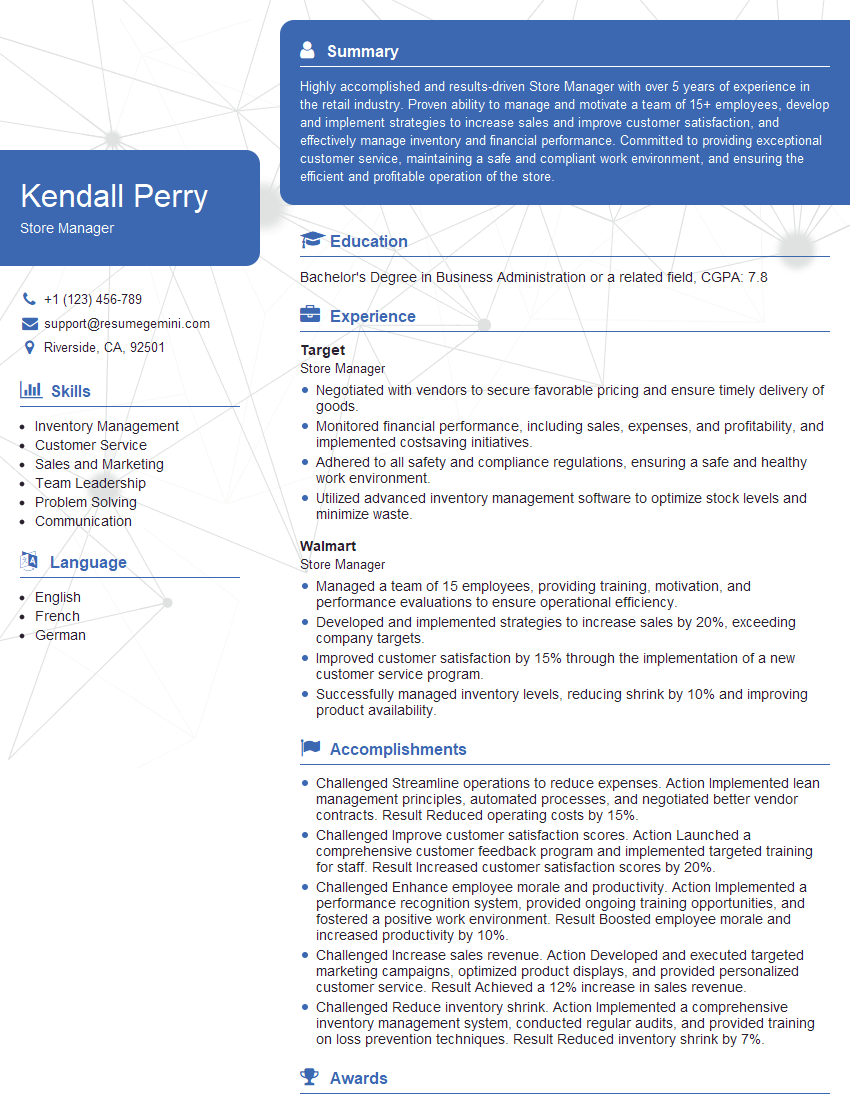
Store Manager Resume Sample
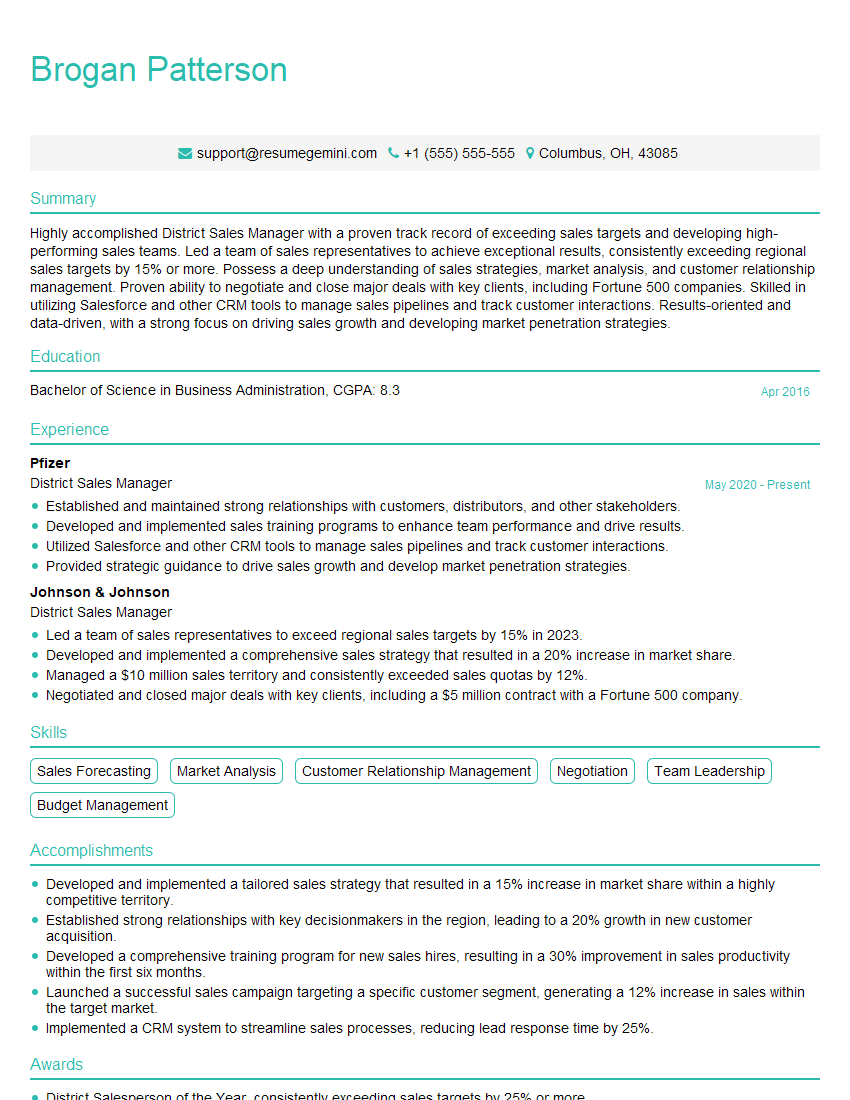
District Sales Manager Resume Sample
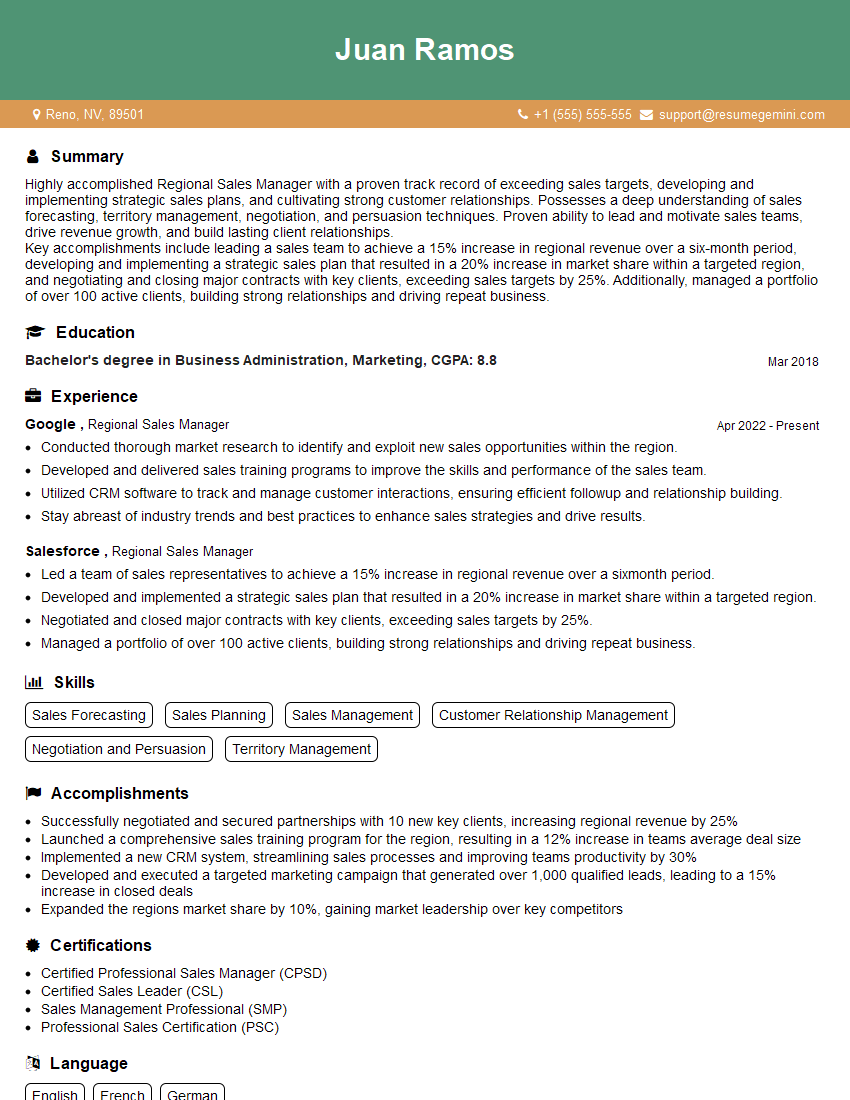
Regional Sales Manager Resume Sample
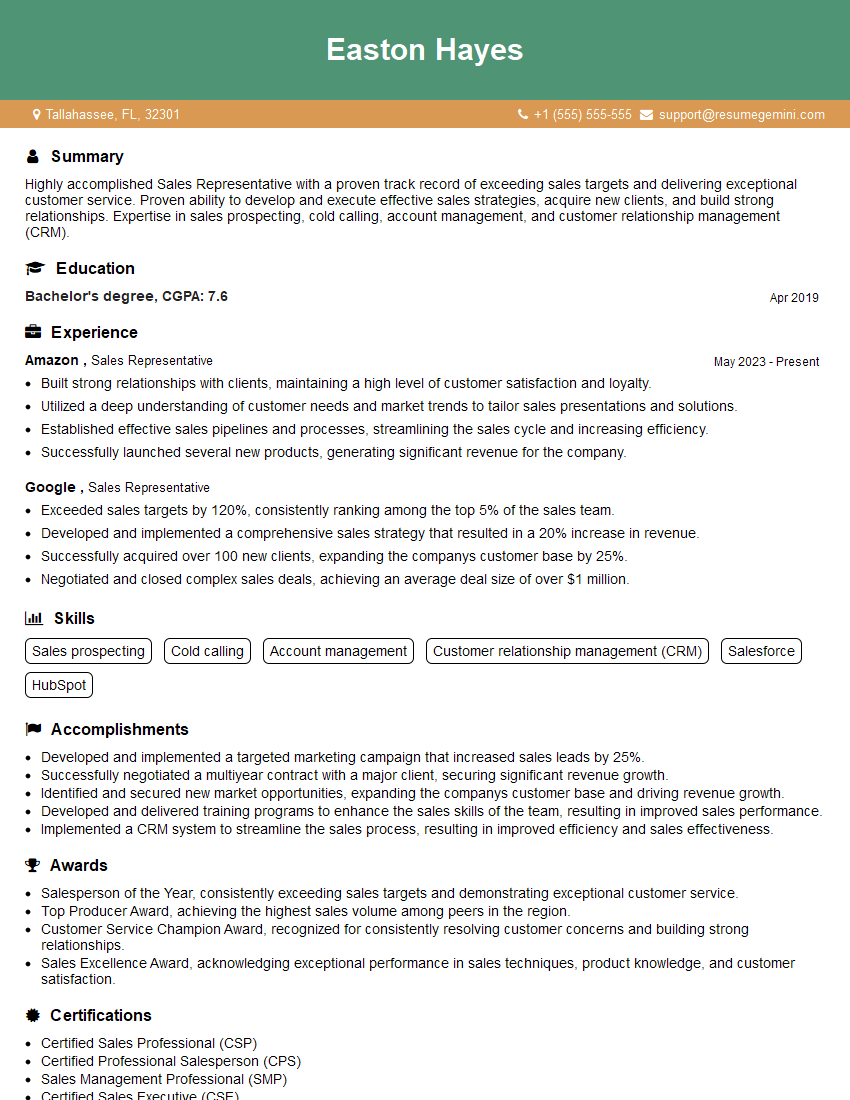
Sales Representative Resume Sample
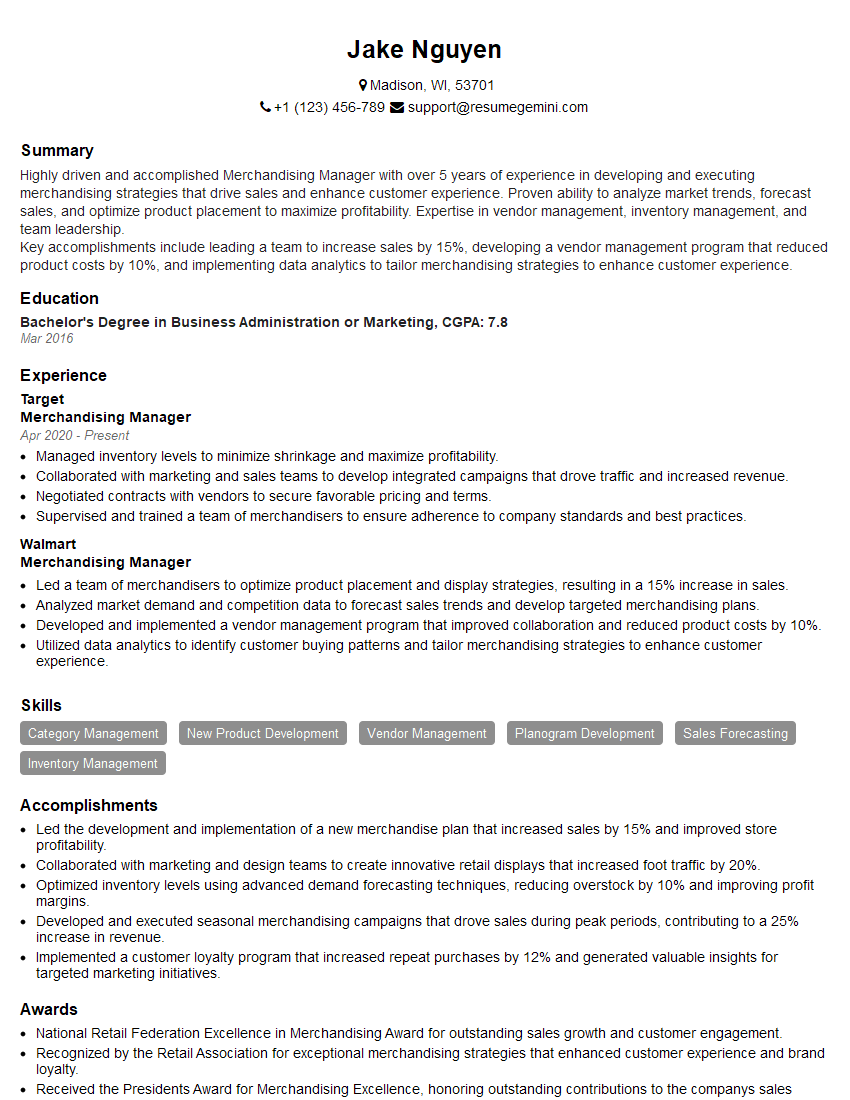
Merchandising Manager Resume Sample
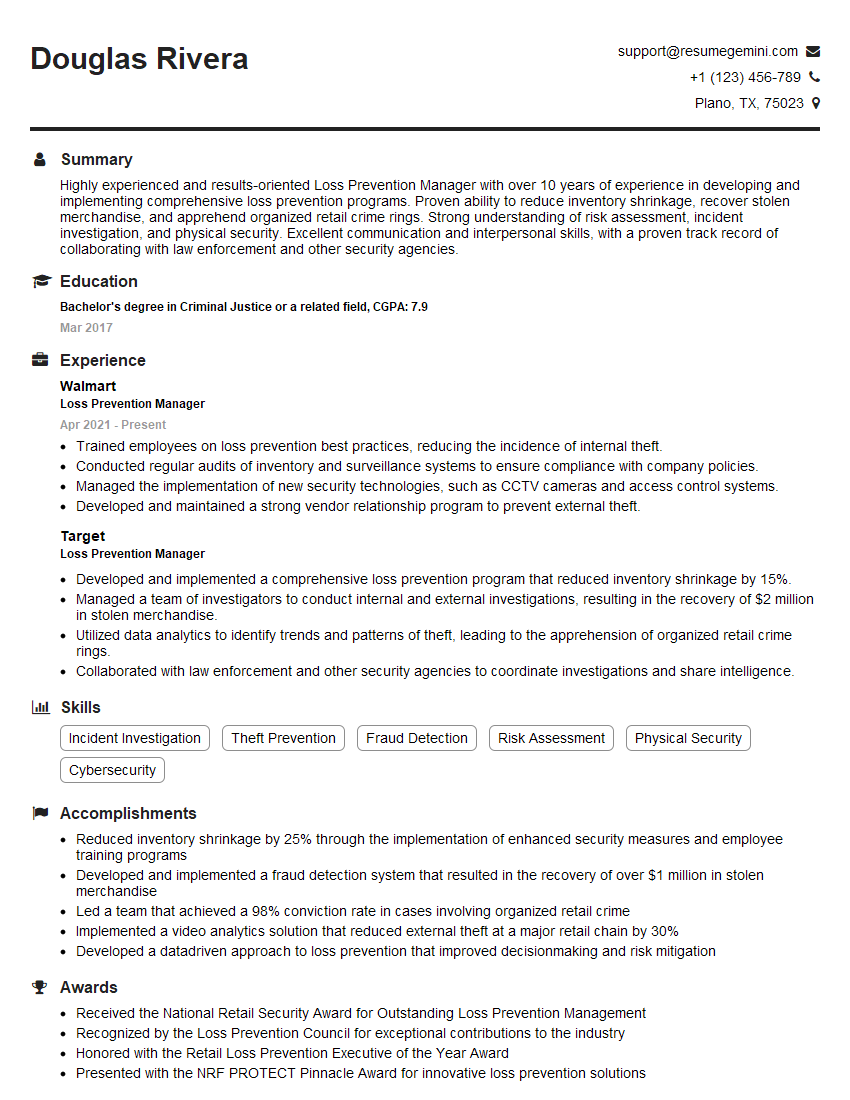
Loss Prevention Manager Resume Sample
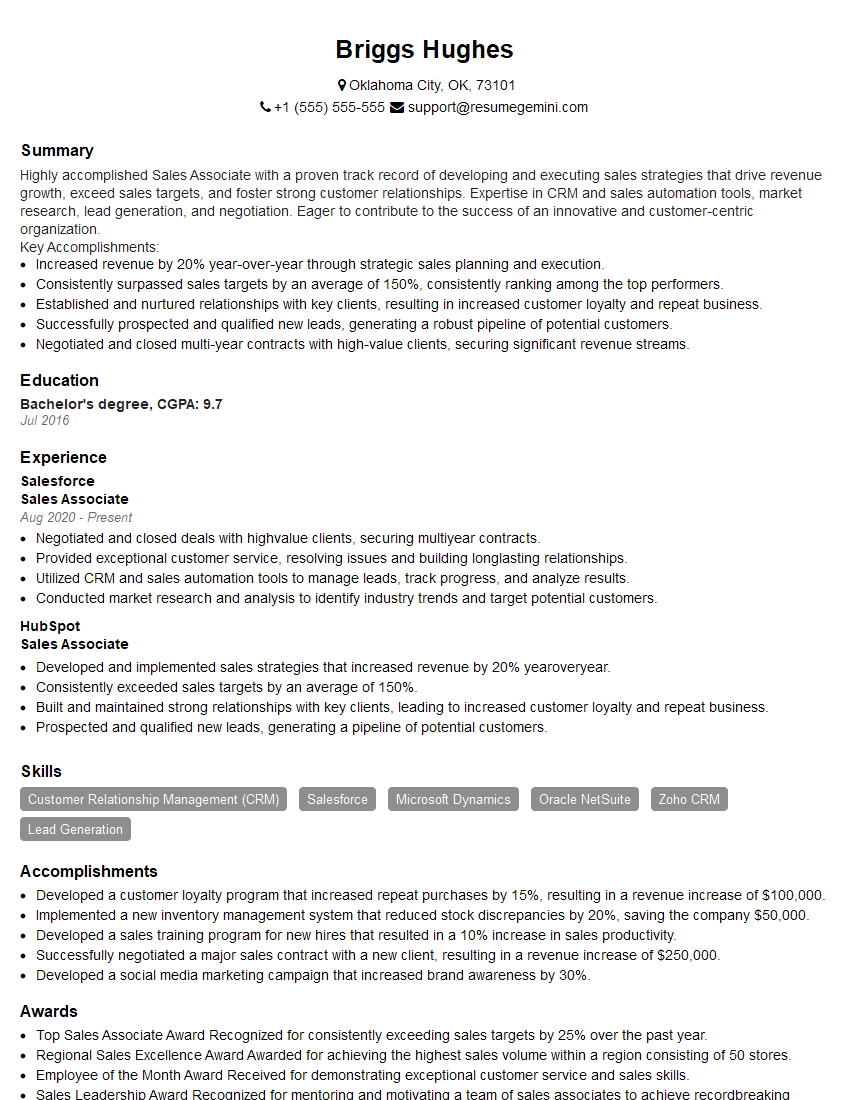
Sales Associate Resume Sample
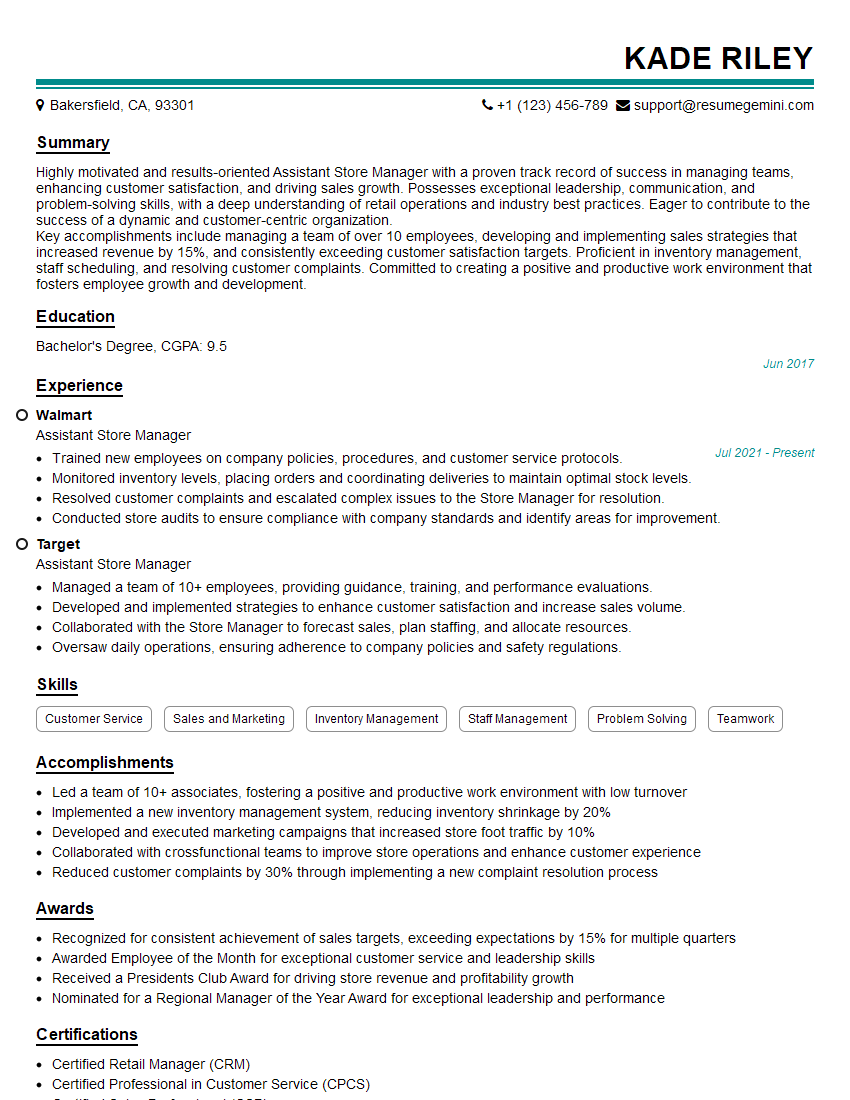
Assistant Store Manager Resume Sample
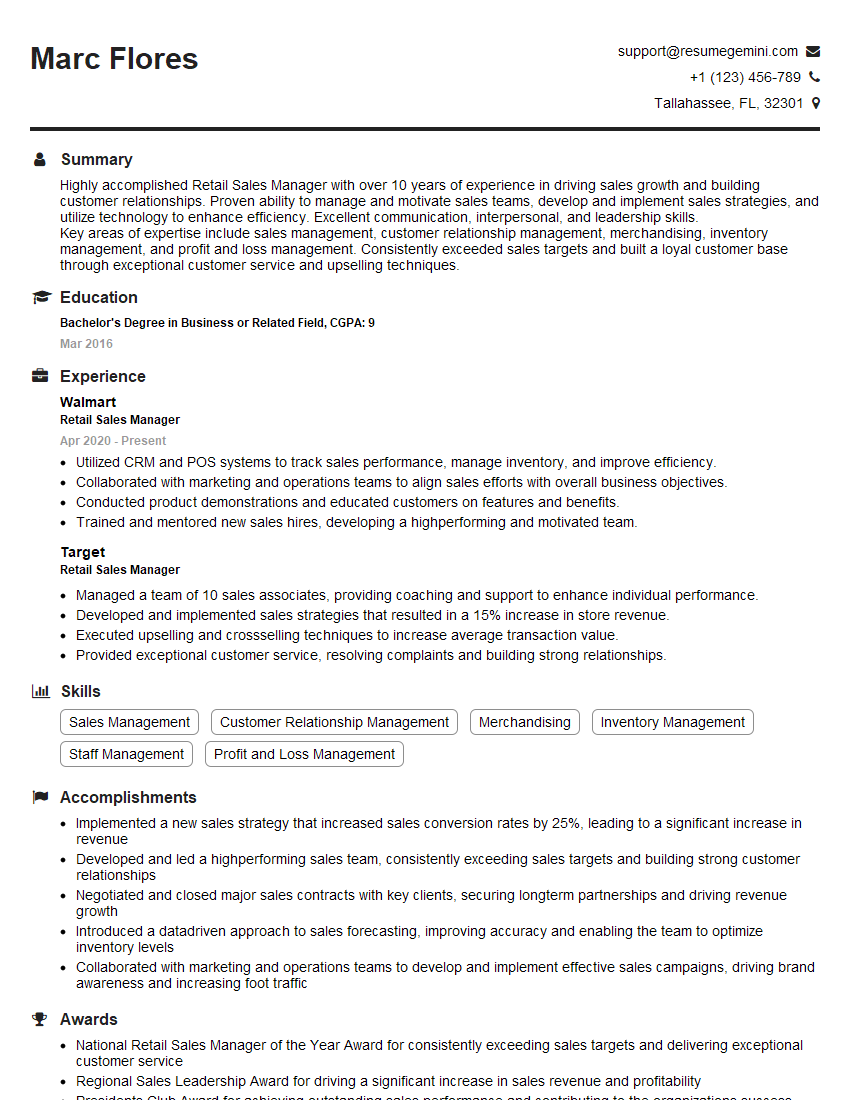
Retail Sales Manager Resume Sample
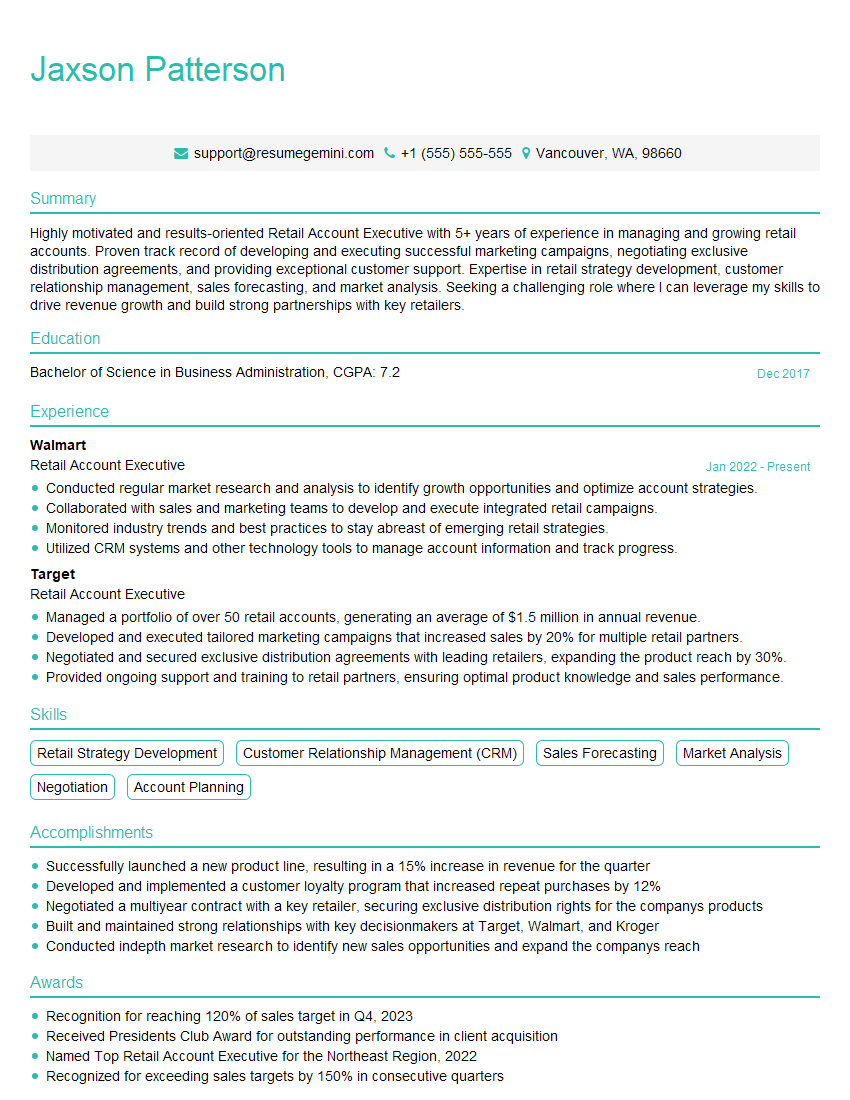
Retail Account Executive Resume Sample
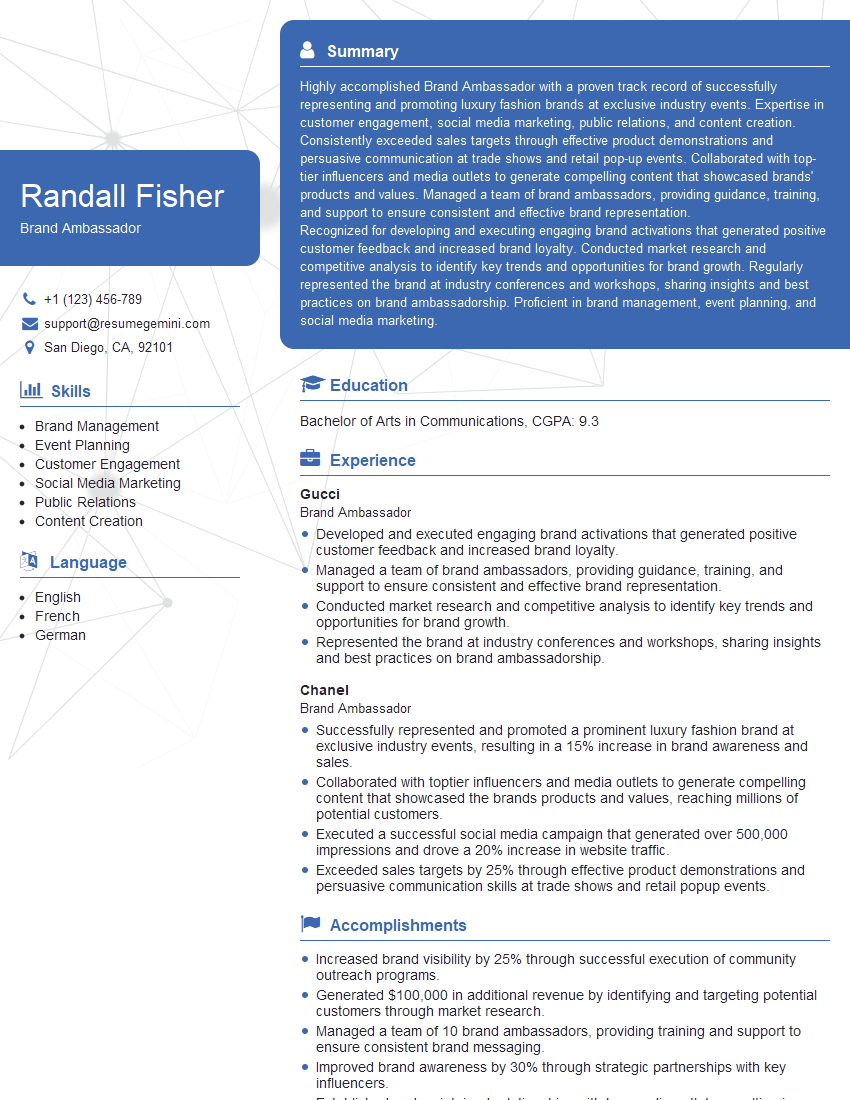
Brand Ambassador Resume Sample
Explore more articles
Users Rating of Our Blogs
Share Your Experience
We value your feedback! Please rate our content and share your thoughts (optional).
What Readers Say About Our Blog
I Redesigned Spongebob Squarepants and his main characters of my artwork.
https://www.deviantart.com/reimaginesponge/art/Redesigned-Spongebob-characters-1223583608
IT gave me an insight and words to use and be able to think of examples
Hi, I’m Jay, we have a few potential clients that are interested in your services, thought you might be a good fit. I’d love to talk about the details, when do you have time to talk?
Best,
Jay
Founder | CEO