Unlock your full potential by mastering the most common Knowledge of Mail Fraud and Counterfeit Detection Techniques interview questions. This blog offers a deep dive into the critical topics, ensuring you’re not only prepared to answer but to excel. With these insights, you’ll approach your interview with clarity and confidence.
Questions Asked in Knowledge of Mail Fraud and Counterfeit Detection Techniques Interview
Q 1. Explain the different types of mail fraud schemes.
Mail fraud encompasses a wide range of schemes designed to defraud victims through the postal service or other mail delivery systems. These schemes often exploit trust and manipulate victims into sending money or valuable information. Here are some common types:
- Advance-fee fraud: Victims are promised a large sum of money or a valuable item in exchange for an upfront payment (often for processing fees, taxes, or shipping costs). The promised reward never materializes.
- Lottery or prize scams: Victims are notified of a lottery win or prize they never entered, and are asked to send money to claim their winnings. This is often coupled with requests for personal financial information.
- Credit card fraud: This involves using stolen or fraudulent credit card information to make purchases through the mail.
- Check kiting: Perpetrators write checks on accounts with insufficient funds, depositing them into different accounts to create a false impression of having sufficient funds before the checks clear. This is often facilitated through multiple mail drops.
- Phishing scams: Emails (or seemingly official mail) are used to trick victims into revealing personal information such as bank account details, credit card numbers, or social security numbers.
- Ponzi schemes: Investors are promised high returns, paid from money invested by new investors rather than from actual profits. These schemes often operate through mail communications.
Understanding the diverse tactics used in mail fraud is crucial for effective prevention and detection. For example, identifying consistent patterns in mailing addresses or the use of anonymous return addresses can be critical indicators.
Q 2. Describe common methods used to detect counterfeit currency.
Detecting counterfeit currency involves a multi-faceted approach utilizing both visual inspection and technological aids. Authenticity can be verified through several methods:
- Visual Inspection: Examine the paper’s texture (it should feel crisp and distinct, not flimsy); check for the watermark, security thread, and the presence of microprinting (tiny text visible under magnification); look for the 3D security ribbon which shifts color when the note is tilted; observe the color-shifting ink that changes color when viewed from different angles.
- Feel Test: Genuine bills have a unique texture due to the cotton and linen blend used in their printing. Counterfeit bills often feel flimsy or smoother.
- Tilt Test: This test reveals the color-shifting ink and the 3D security ribbon, which moves when the note is tilted.
- Ultraviolet (UV) Light: Certain security features, including threads and ink, glow under UV light.
- Magnification: Examine the microprinting and other intricate details visible only under magnification.
- Counterfeit Detection Pens: These pens contain iodine, which reacts with the starch in counterfeit currency (which often uses cheaper paper). A color change (usually dark brown or black) indicates a possible counterfeit.
While these methods are effective, advanced counterfeits can be increasingly difficult to detect visually. Financial institutions and law enforcement often use specialized equipment for advanced analysis, such as spectrometers and other advanced forensic tools.
Q 3. What are the key elements of a successful mail fraud investigation?
A successful mail fraud investigation hinges on meticulous evidence gathering and analysis. Key elements include:
- Identifying the victim(s): Determining the scope and scale of the fraud is paramount. This often involves collecting victim statements and analyzing patterns in the fraudulent communications.
- Tracing the mail: Tracking the postal route, identifying the sender’s address (even if fraudulent), and recovering any physical mail evidence is crucial.
- Financial analysis: Examining bank records, transaction details, and the flow of funds to identify the perpetrators’ accounts and trace the proceeds of the crime.
- Digital forensics: If electronic communication is involved (e.g., phishing emails), digital forensic techniques may uncover hidden information or identify the sender’s IP address.
- Witness statements: Gathering statements from individuals with firsthand knowledge of the fraudulent activity can provide valuable insights.
- Collaboration: Law enforcement agencies often collaborate with postal inspectors, financial institutions, and cybersecurity experts to effectively investigate these crimes.
For example, in a check kiting scheme, a meticulous examination of the checks themselves, bank statements, and mailing records would be crucial to identify the perpetrators and establish their pattern of activity.
Q 4. How do you identify and analyze fraudulent financial transactions?
Identifying and analyzing fraudulent financial transactions requires a keen eye for anomalies and a systematic approach. This involves:
- Data Mining and Pattern Recognition: Identifying unusual patterns in transaction data, such as unusually large transactions, frequent small transactions, or transactions occurring outside of normal business hours.
- Benford’s Law: Applying this statistical law, which states that the digit ‘1’ appears more frequently as the leading digit in numerical datasets, can detect anomalies in financial data. Deviations from Benford’s Law could signal fraudulent activity.
- Variance Analysis: Comparing actual financial data with projected or budgeted figures to identify significant deviations that may indicate fraud.
- Ratio Analysis: Calculating financial ratios (e.g., debt-to-equity ratio, profit margins) and monitoring them over time to detect trends that suggest fraudulent activity.
- Network Analysis: Mapping out the relationships between individuals and entities involved in the transactions to uncover hidden connections or patterns.
For instance, a sudden surge in cash withdrawals from a company account accompanied by unexplained increases in expenses would raise serious red flags requiring further investigation.
Q 5. Explain your understanding of forensic accounting principles.
Forensic accounting applies accounting principles and investigative techniques to identify and resolve financial disputes or crimes. Key principles include:
- Objectivity and Independence: Maintaining impartiality and neutrality throughout the investigation.
- Due Diligence: Thoroughly investigating all aspects of the financial data and transactions.
- Audit Trails: Following the audit trail of transactions to track their origin and destination.
- Data Integrity: Ensuring the accuracy and reliability of the financial data used in the analysis.
- Chain of Custody: Maintaining a detailed record of the handling and preservation of evidence.
- Professional Skepticism: Approaching the investigation with a critical and questioning mind, not accepting information at face value.
Forensic accounting often relies on reconstructing financial records, identifying hidden assets, and tracing the flow of funds to uncover fraudulent activities. This demands a strong understanding of generally accepted accounting principles (GAAP) and the ability to interpret complex financial data.
Q 6. What software or tools are you familiar with for fraud detection?
My experience encompasses a range of software and tools for fraud detection, including:
- Data Analysis Software: I am proficient in using statistical software such as R and Python (with libraries like Pandas and Scikit-learn) for data mining, pattern recognition, and anomaly detection.
- Database Management Systems (DBMS): I am experienced with SQL and NoSQL databases to effectively manage and analyze large volumes of financial data.
- Spreadsheet Software: Proficiency in Excel, including advanced functions for data analysis, pivot tables, and macros, is essential.
- Forensic Accounting Software: I have experience utilizing specialized forensic accounting software for data extraction, analysis, and presentation of findings.
- Visualization Tools: Tools like Tableau and Power BI enable effective communication of findings through visual representations of data.
The choice of tools often depends on the specific nature of the investigation and the available data. Combining different tools enables a comprehensive and effective approach to fraud detection.
Q 7. Describe your experience with analyzing financial statements for irregularities.
Analyzing financial statements for irregularities involves a meticulous review of various financial reports, including the balance sheet, income statement, and cash flow statement. My approach involves:
- Comparative Analysis: Comparing current financial statements with previous periods or industry benchmarks to identify significant deviations or trends.
- Ratio Analysis: Calculating key financial ratios (liquidity, profitability, solvency) and monitoring changes over time to detect potential problems.
- Trend Analysis: Identifying unusual trends in revenues, expenses, or other key performance indicators.
- Scrutinizing journal entries: Examining individual journal entries to identify unusual or unsupported transactions.
- Reconciliation of accounts: Verifying that balances in different accounts agree with each other and with supporting documentation.
For instance, a significant increase in accounts receivable without a corresponding increase in sales might indicate fraudulent revenue recognition. Similarly, unusual fluctuations in inventory levels could be a symptom of theft or other irregularities. A systematic review, combined with a thorough understanding of the business, allows for effective detection of such anomalies.
Q 8. How do you handle sensitive and confidential information during an investigation?
Handling sensitive information is paramount in fraud investigations. My approach follows strict protocols to ensure confidentiality and compliance with all relevant regulations. This begins with understanding the sensitivity levels of different data points. For example, Personally Identifiable Information (PII) requires the highest level of protection, often stored in encrypted databases and accessed only through secure channels with strict access control. I meticulously document every access and use of sensitive information, adhering to a strict chain-of-custody principle. This detailed logging provides an auditable trail and helps prevent unauthorized disclosure.
Furthermore, I utilize secure communication methods, such as encrypted email and secure messaging platforms, to transmit sensitive information. Physical documents are stored in locked, secure facilities with restricted access. In collaboration with IT and legal departments, we regularly review and update our security protocols to combat evolving threats. For instance, recently we implemented multi-factor authentication for all systems containing sensitive investigative data. This layered approach ensures that even if one security measure is compromised, others remain in place, safeguarding sensitive information throughout the investigative process.
Q 9. What is your experience with interviewing witnesses and suspects?
Interviewing witnesses and suspects requires a blend of empathy, effective questioning techniques, and a keen observation of body language. My approach is built on establishing rapport before delving into the specifics. I begin by acknowledging the individual’s situation, creating a space where they feel comfortable sharing information. Open-ended questions are my go-to, allowing individuals to freely recount events. This method often yields more detailed and reliable information than leading questions, which can inadvertently influence responses. I also carefully document every detail, including verbal and non-verbal cues, within detailed interview notes.
For instance, during an investigation into a complex email phishing scam, I interviewed a victim who was initially hesitant to share details. By carefully listening and validating their feelings about being defrauded, I built trust, leading to them recalling crucial information about the fraudulent email, helping us identify the perpetrators. Similarly, when interviewing suspects, I remain neutral, presenting facts objectively, and using active listening to gauge their credibility. Careful observation of their responses, combined with verifying statements against physical and digital evidence, helps construct a robust and accurate account of events.
Q 10. How do you prioritize multiple investigations simultaneously?
Managing multiple investigations effectively requires strategic prioritization. I utilize a risk-based approach, prioritizing cases based on factors like potential financial loss, legal implications, and the urgency of the situation. High-priority cases, such as those involving significant financial fraud or imminent threats, are allocated more resources and immediate attention. I use project management tools to track progress on each investigation, setting deadlines and milestones to ensure timely completion. This includes regular review meetings to assess progress and re-prioritize as needed.
For example, I might be working on a large-scale insurance fraud case simultaneously with a smaller-scale embezzlement investigation. The insurance fraud case, with its higher potential financial impact, would receive priority in terms of resource allocation and investigative time. However, I ensure that the smaller case doesn’t get neglected by scheduling dedicated time slots for both. Clear communication with all stakeholders, including management and other investigators, is essential to maintaining transparency and preventing conflicts in resource allocation.
Q 11. Describe your experience with report writing and documentation.
Detailed and accurate report writing is essential for conveying investigative findings clearly and concisely. My reports follow a consistent structure, including a clear statement of the problem, methodology employed, evidence gathered, analysis of findings, and conclusions. I use plain language avoiding technical jargon where possible, ensuring accessibility to a wider audience, including those without specialized knowledge. Supporting evidence, such as email headers, financial statements, or interview transcripts, is meticulously documented and referenced within the report.
I understand the importance of using visual aids like charts and graphs to present complex data effectively. For instance, in a case involving a complex money laundering scheme, I created a flow chart illustrating the movement of funds, making it easy for investigators and legal teams to understand the intricate network involved. Each report is reviewed for accuracy and clarity before submission, ensuring that it meets the highest standards of professional reporting.
Q 12. Explain your understanding of relevant laws and regulations (e.g., Sarbanes-Oxley Act).
My understanding of relevant laws and regulations is comprehensive, encompassing a wide range of acts and statutes related to fraud and financial crimes. This includes the Sarbanes-Oxley Act (SOX), designed to protect investors by improving the accuracy and reliability of corporate disclosures. SOX mandates specific internal controls and corporate governance practices. Understanding SOX is crucial for identifying potential violations and conducting thorough investigations in publicly traded companies. Other relevant laws include the False Claims Act, which addresses fraudulent activities against the government, and various state and federal laws pertaining to specific types of fraud, such as wire fraud and mail fraud.
In practice, knowledge of these laws directly informs my investigations. For example, when investigating a potential SOX violation, I carefully examine the company’s internal controls and financial reporting processes to identify any deficiencies or manipulative practices. My understanding of the relevant legal framework ensures that my investigations are legally sound and that the findings can be effectively utilized in legal proceedings.
Q 13. How do you stay updated on the latest fraud schemes and techniques?
Staying current with the latest fraud schemes and techniques is critical in this ever-evolving landscape. I employ a multi-faceted approach to continuous learning. This includes regularly attending industry conferences and workshops, participating in professional development programs, and networking with other professionals in the field. I actively subscribe to industry publications and journals, keeping abreast of emerging trends and research. Further, I actively participate in online forums and communities dedicated to fraud detection, exchanging insights and best practices with other experts.
For example, the recent rise in sophisticated deepfake technology has led me to dedicate time in understanding the techniques used to create these fraudulent media and how to identify them in investigations. This proactive approach ensures that I’m equipped with the knowledge and skills needed to effectively detect and address the latest fraudulent activities.
Q 14. What is your experience with data analysis and statistical methods in fraud detection?
Data analysis and statistical methods are fundamental to effective fraud detection. My experience encompasses various techniques, including anomaly detection, data mining, and predictive modeling. I’m proficient in using statistical software packages like R and Python to analyze large datasets, identifying patterns and outliers that could indicate fraudulent activity. For instance, I might use regression analysis to identify unusual spending patterns in a company’s financial records or employ clustering techniques to group similar fraudulent transactions.
In a recent case involving credit card fraud, I utilized data mining techniques to uncover hidden patterns in transaction data. By analyzing variables such as transaction amount, location, and time, I was able to identify clusters of fraudulent transactions that would have been missed through traditional methods. These analytical skills allow for more efficient and effective investigations, leading to quicker identification and resolution of fraudulent activities. I always prioritize data visualization to aid in the presentation of complex analytical findings, making it easier to explain the results to both technical and non-technical audiences.
Q 15. Describe your experience with using forensic software or tools.
My experience with forensic software and tools is extensive. I’m proficient in using a range of applications, from digital forensic tools like EnCase and FTK Imager for examining hard drives and recovering deleted data, to specialized software for analyzing financial transactions and identifying patterns indicative of fraud. For example, I’ve used EnCase to recover deleted emails in a mail fraud case, revealing crucial evidence that implicated the perpetrators. I also have experience with software designed to detect counterfeit currency, such as those analyzing the unique security features of banknotes. Furthermore, I’m familiar with various document examination tools, allowing me to analyze documents for alterations and forgeries. My expertise includes not only the technical use of these tools but also interpreting the results within the broader context of an investigation.
Career Expert Tips:
- Ace those interviews! Prepare effectively by reviewing the Top 50 Most Common Interview Questions on ResumeGemini.
- Navigate your job search with confidence! Explore a wide range of Career Tips on ResumeGemini. Learn about common challenges and recommendations to overcome them.
- Craft the perfect resume! Master the Art of Resume Writing with ResumeGemini’s guide. Showcase your unique qualifications and achievements effectively.
- Don’t miss out on holiday savings! Build your dream resume with ResumeGemini’s ATS optimized templates.
Q 16. How do you validate the authenticity of documents and signatures?
Validating document and signature authenticity involves a multi-faceted approach. For documents, I examine several factors, starting with the paper itself – its age, type, and watermarks. I then analyze the printing techniques, ink, and any security features present, comparing them against known genuine samples. For example, inconsistencies in ink density or the presence of unusual paper fibers can suggest counterfeiting. Regarding signatures, I employ several methods including comparing the questioned signature to known genuine specimens using a variety of techniques to analyze the pressure, stroke order, and flow of the writing. Advanced techniques like graphological analysis can reveal subtle variations. Technological tools like digital signature verification software can also play a crucial role. Ultimately, the process involves a meticulous comparison and analysis to determine if any discrepancies exist. If discrepancies are discovered, this helps determine if the document is potentially fraudulent.
Q 17. How do you assess the risk of fraud within an organization?
Assessing fraud risk involves a holistic approach, combining qualitative and quantitative methods. I start by understanding the organization’s structure, operations, and internal controls. This involves reviewing financial statements, examining internal audit reports, and conducting interviews with key personnel. I identify potential vulnerabilities by mapping out the organization’s processes and pinpointing areas susceptible to fraudulent activity – for example, weaknesses in segregation of duties or inadequate authorization procedures. I then quantify the risk by assigning probabilities and potential impacts to identified vulnerabilities. For instance, if the organization lacks proper inventory controls, the probability of theft and the potential financial loss are assessed. This enables me to prioritize areas needing immediate attention, allowing the organization to develop focused mitigation strategies.
Q 18. Explain your understanding of internal controls and their role in preventing fraud.
Internal controls are crucial for preventing fraud by establishing a system of checks and balances. They are designed to mitigate risks by providing safeguards that ensure transactions are authorized, recorded, and processed accurately. Examples of strong internal controls include: segregation of duties (preventing one person from having too much control over a process), authorization procedures (ensuring all transactions are properly authorized), regular reconciliations (comparing financial records to physical assets), and independent audits (providing an external check on the internal controls). The strength of an organization’s internal control framework directly influences its susceptibility to fraud. A robust system of internal controls acts as a deterrent, making it significantly harder for fraudsters to operate undetected. Think of internal controls as layers of security; the more layers in place, the more difficult it becomes to penetrate the defense.
Q 19. What is your experience with conducting background checks and due diligence?
I have extensive experience in conducting background checks and due diligence, which are integral components of fraud prevention and risk mitigation. My work involves using various resources, including public records databases, credit reports, and professional reference checks, to verify the identities and backgrounds of individuals and entities. For instance, in cases involving potential money laundering, due diligence helps verify the legitimacy of the source of funds and the identities of the parties involved. Furthermore, I’m skilled in identifying any red flags, such as past criminal convictions or bankruptcies, that could indicate increased fraud risk. My approach is thorough and systematic, ensuring that all relevant information is gathered and analyzed to make informed decisions.
Q 20. How do you handle pressure and stress during an investigation?
Fraud investigations can be incredibly demanding, often involving long hours and intense pressure. My approach involves staying organized, prioritizing tasks, and maintaining a clear focus on the objectives of the investigation. I regularly debrief with my team, ensuring open communication and support. Recognizing the importance of self-care, I maintain a healthy work-life balance, employing stress-management techniques such as exercise and mindfulness to avoid burnout. Time management and a systematic approach to problem-solving are key components of my success in navigating the pressures of a complex investigation.
Q 21. Describe a challenging fraud case you investigated and how you resolved it.
One challenging case involved a sophisticated email phishing scheme targeting a large financial institution. The perpetrators used highly convincing emails to trick employees into revealing sensitive credentials, allowing them to access and transfer significant funds. The challenge lay in the complexity of the scheme and the fact that the perpetrators meticulously covered their tracks. My approach involved a collaborative effort with the IT department to analyze network logs and server data, tracing the origin of the phishing emails. We also analyzed financial records, identifying unusual patterns in transactions. By carefully correlating this data and employing advanced forensic techniques, we were able to identify the perpetrators and recover a significant portion of the stolen funds. This case highlighted the importance of robust security protocols and employee training in preventing such attacks.
Q 22. What are some common red flags that indicate potential mail fraud?
Mail fraud, unfortunately, is prevalent. Identifying potential cases requires vigilance. Common red flags include unsolicited mail offering incredible returns on investments or prizes; requests for immediate payment via unusual methods like wire transfers or gift cards; suspicious addresses or return addresses that don’t match the sender’s purported identity; poor grammar and spelling in official-looking correspondence; unusually urgent requests for personal information; and excessive use of pressure tactics to compel immediate action.
For example, a letter promising a large inheritance in exchange for upfront legal fees should immediately raise suspicion. Similarly, an email from a seemingly legitimate company urging you to update your account information via a non-secure link is a clear warning sign.
- Unrealistic promises: Too good to be true offers.
- Unusual payment methods: Avoid wire transfers or gift cards unless dealing with established, trustworthy entities.
- Suspicious communication style: Poor grammar, excessive urgency.
- Requests for personal information: Legitimate organizations rarely ask for sensitive data via email or mail.
Q 23. What are some best practices for preventing mail fraud within an organization?
Preventing mail fraud within an organization involves a multi-pronged approach focusing on education, process improvement, and security measures. Employee training is paramount – teaching staff to identify and report suspicious mail, emails, and phone calls. Implement robust procedures for handling sensitive information, including secure document storage and disposal. Regularly review and update your organization’s security protocols. Establish clear guidelines for accepting and processing payments.
For instance, implement a policy requiring verification of all payments received, especially large sums. Regular security audits can also pinpoint vulnerabilities in your systems. A strong internal control system, with segregation of duties, can significantly reduce fraud risk.
- Employee training: Regular awareness programs on mail fraud schemes.
- Secure document handling: Proper storage and disposal of sensitive information.
- Payment verification procedures: Verifying all payments and their sources.
- Regular security audits: Identifying and addressing vulnerabilities.
- Strong internal controls: Segregation of duties to prevent collusion.
Q 24. How do you distinguish between legitimate and counterfeit documents?
Distinguishing between legitimate and counterfeit documents requires a keen eye for detail and a familiarity with security features. Legitimate documents often incorporate sophisticated security features like watermarks, microprinting, special inks that react to UV light, and holograms. Counterfeits usually lack these features or have poorly reproduced imitations. Careful examination under magnification can reveal inconsistencies in printing, paper quality, or ink.
For instance, compare a suspected counterfeit driver’s license to a genuine one. Check for inconsistencies in the photo quality, the alignment of printed elements, or the feel of the plastic. A genuine bill will have a distinct feel and specific security features like embedded threads or a watermark. Always refer to official resources for guidance on authentication.
- Security features: Watermarks, microprinting, holograms, special inks.
- Paper quality: Legitimate documents typically use high-quality paper.
- Printing quality: Examine for inconsistencies in font, alignment, and overall sharpness.
- Feel and texture: Authentic documents have a unique texture and feel.
Q 25. Describe your understanding of chain of custody in forensic investigations.
Chain of custody in forensic investigations refers to the meticulous documentation of every person who has handled or had access to evidence from the moment it’s collected to its presentation in court. Maintaining an unbroken chain of custody is critical because it ensures the integrity and admissibility of evidence. Any break in the chain can compromise the evidence’s credibility and potentially lead to its inadmissibility.
Imagine a scenario where a fraudulent check is found. The investigator meticulously documents who collected it, when, where, and how it was stored and transported. Every transfer of the check to another person or location is carefully recorded, along with the date, time, and the person’s signature acknowledging receipt. This detailed record ensures that no tampering or unauthorized access occurred.
- Detailed documentation: Recording every person who handled the evidence.
- Secure storage: Storing evidence in a tamper-proof manner.
- Chain of custody log: A formal log tracking the evidence’s movement.
- Signatures and timestamps: Each transfer documented with signatures and timestamps.
Q 26. What is your experience with presenting evidence in court?
I have extensive experience presenting evidence in court, focusing on clarity, accuracy, and maintaining a professional demeanor. My approach involves structuring my testimony to be easily understood by the jury, while remaining technically accurate. I always prepare thoroughly, anticipating potential cross-examination questions. I’ve presented evidence in various settings, from preliminary hearings to jury trials, and consistently maintained a high standard of professionalism and credibility.
A typical courtroom presentation would involve explaining the chain of custody, showcasing the evidence using clear visual aids, and answering questions from both the prosecution and the defense in a concise and factual manner. Maintaining objectivity and avoiding speculation is crucial.
- Thorough preparation: Reviewing all relevant documents and anticipating questions.
- Clear communication: Presenting information in a concise and understandable manner.
- Use of visual aids: Employing charts, photographs, or other aids to clarify complex points.
- Maintaining objectivity: Presenting facts without speculation or personal opinions.
Q 27. Explain your understanding of different types of counterfeit items (e.g., IDs, currency).
Counterfeit items encompass a wide range of products, from currency and identification documents to luxury goods and pharmaceuticals. Counterfeit currency is often produced using inferior printing techniques or materials, sometimes lacking crucial security features found on genuine banknotes. Counterfeit IDs, such as driver’s licenses or passports, are frequently poorly printed and lack proper security features like watermarks or holograms. The quality of counterfeits varies greatly, with some sophisticated forgeries being very difficult to detect without specialized equipment.
For example, counterfeit designer handbags might have slight imperfections in stitching or logos, while counterfeit medications could contain the wrong dosage or harmful substances. The potential dangers associated with counterfeit products extend beyond financial loss, encompassing health risks with counterfeit pharmaceuticals or security risks with fraudulent identity documents.
- Counterfeit currency: Lacking security features, inferior printing quality.
- Counterfeit IDs: Poor printing, missing security features.
- Counterfeit luxury goods: Substandard materials and craftsmanship.
- Counterfeit pharmaceuticals: Incorrect dosage or harmful ingredients.
Q 28. How do you collaborate with law enforcement agencies during investigations?
Collaboration with law enforcement agencies is crucial in mail fraud and counterfeit investigations. This collaboration involves sharing information, providing expert testimony, and coordinating investigative efforts. I maintain a professional and cooperative relationship with agencies, providing them with my expertise in identifying fraudulent schemes and analyzing evidence. This often involves briefing investigators, assisting with searches, and providing expert reports for their investigations.
For instance, I might work with postal inspectors to trace the origin of fraudulent mailings or assist detectives in identifying counterfeit goods in a retail raid. Effective communication and timely information sharing are key components of this collaborative process, ensuring a smooth flow of information between all parties involved.
- Information sharing: Providing expert knowledge and findings to law enforcement.
- Joint investigations: Collaborating with agencies on investigations.
- Expert testimony: Providing testimony in court proceedings.
- Evidence analysis: Assisting in the analysis of evidence obtained during investigations.
Key Topics to Learn for Knowledge of Mail Fraud and Counterfeit Detection Techniques Interview
- Types of Mail Fraud: Understanding various schemes like advance-fee fraud, phishing scams, and identity theft through mail, including their common characteristics and red flags.
- Counterfeit Detection Methods: Familiarizing yourself with techniques for identifying counterfeit currency, checks, and other financial instruments, including visual inspection, tactile examination, and the use of specialized equipment.
- Investigative Techniques: Exploring the process of investigating mail fraud cases, including evidence collection, witness interviews, and tracing financial transactions.
- Legal Frameworks: Gaining knowledge of relevant laws and regulations concerning mail fraud and counterfeiting, understanding penalties and legal procedures.
- Forensic Analysis: Learning about forensic techniques used in mail fraud investigations, such as document examination, handwriting analysis, and digital forensics.
- Risk Assessment and Prevention: Understanding strategies for assessing the risk of mail fraud and implementing preventative measures to mitigate potential threats.
- Technology and Mail Fraud: Exploring how technology plays a role in both perpetrating and detecting mail fraud, including email scams, online banking fraud, and data breaches.
- International Mail Fraud: Understanding the complexities and challenges involved in investigating and preventing mail fraud that crosses international borders.
- Case Studies and Problem Solving: Analyzing real-world case studies to develop critical thinking and problem-solving skills in identifying and addressing mail fraud and counterfeiting scenarios.
Next Steps
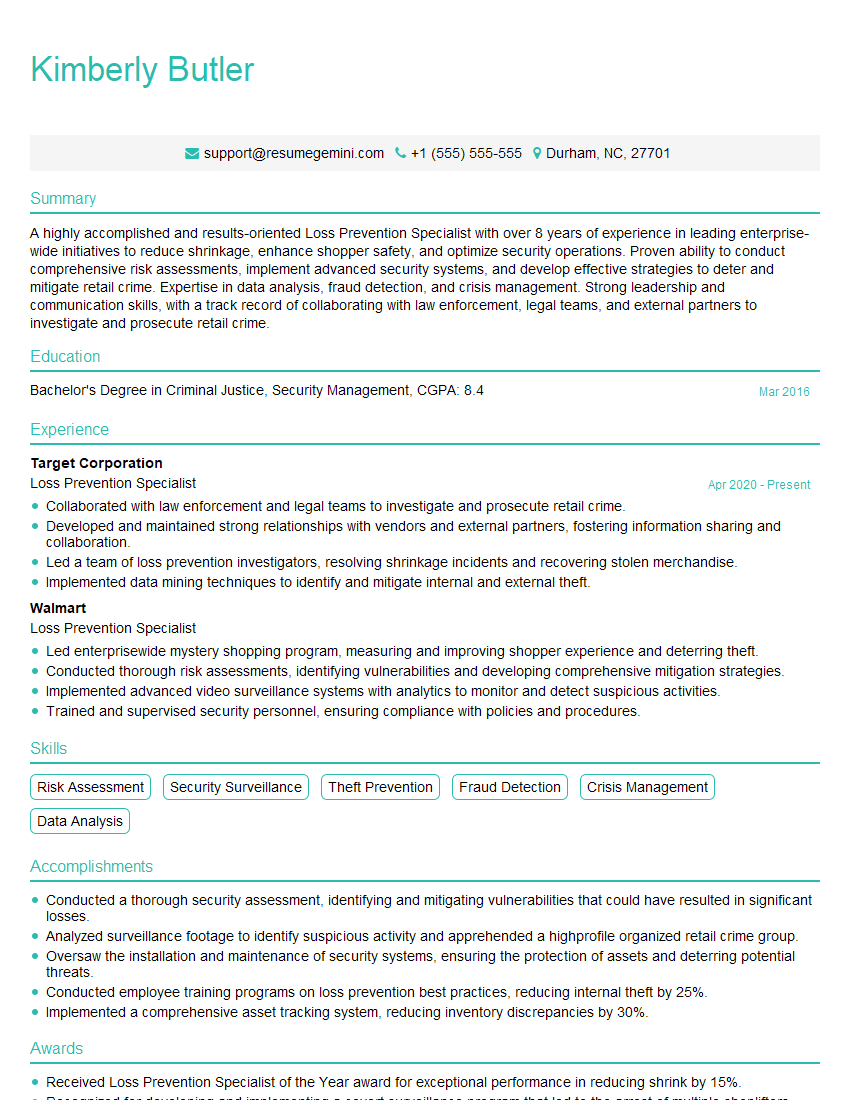
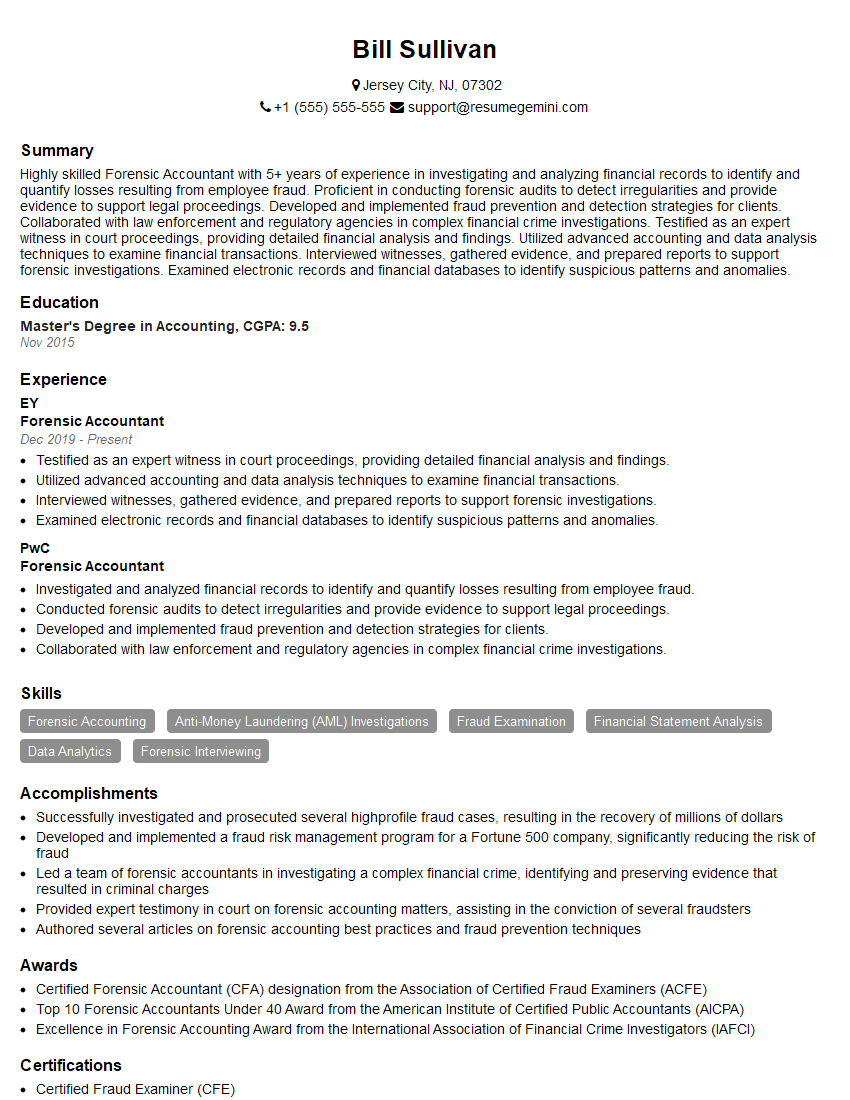
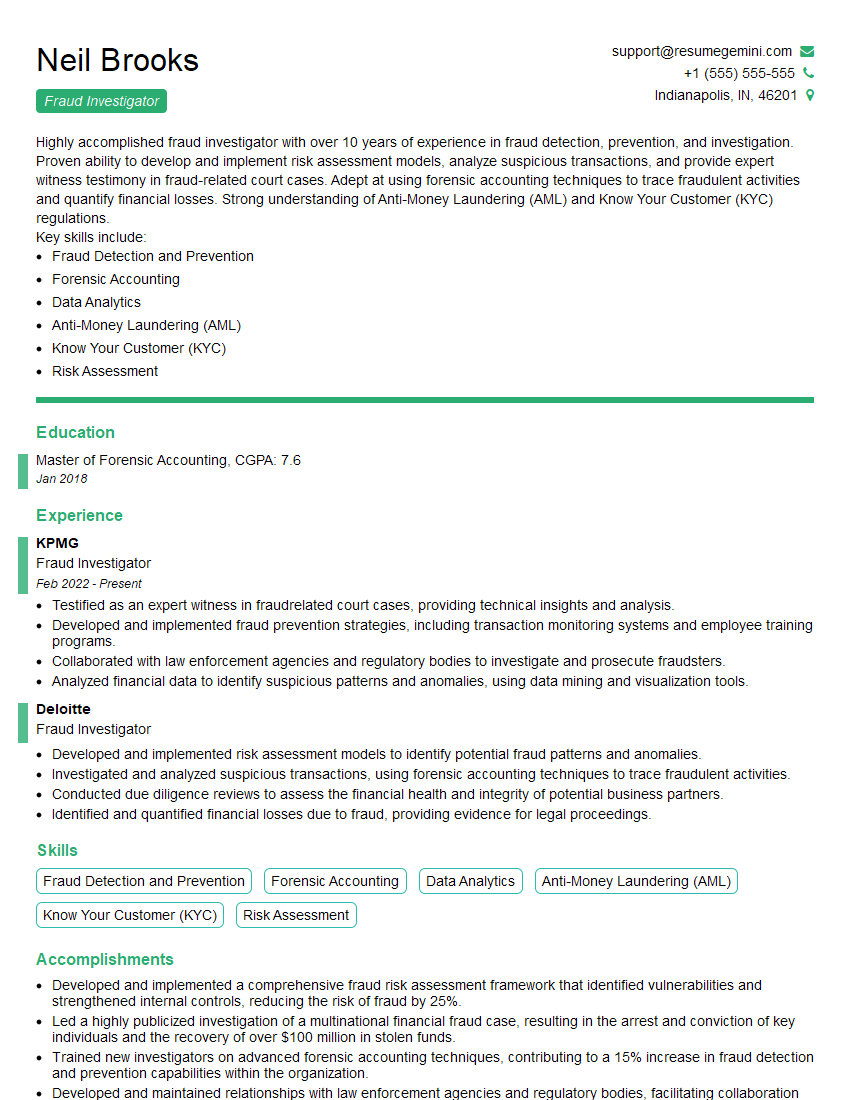
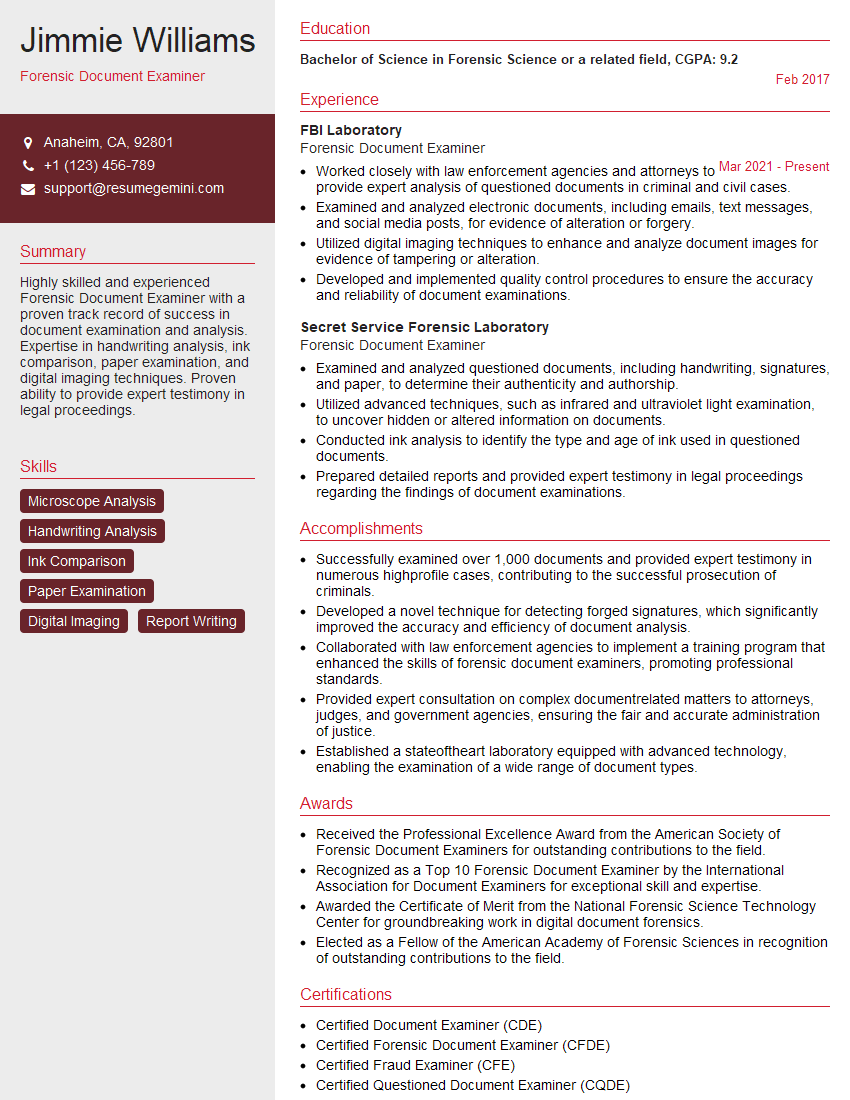
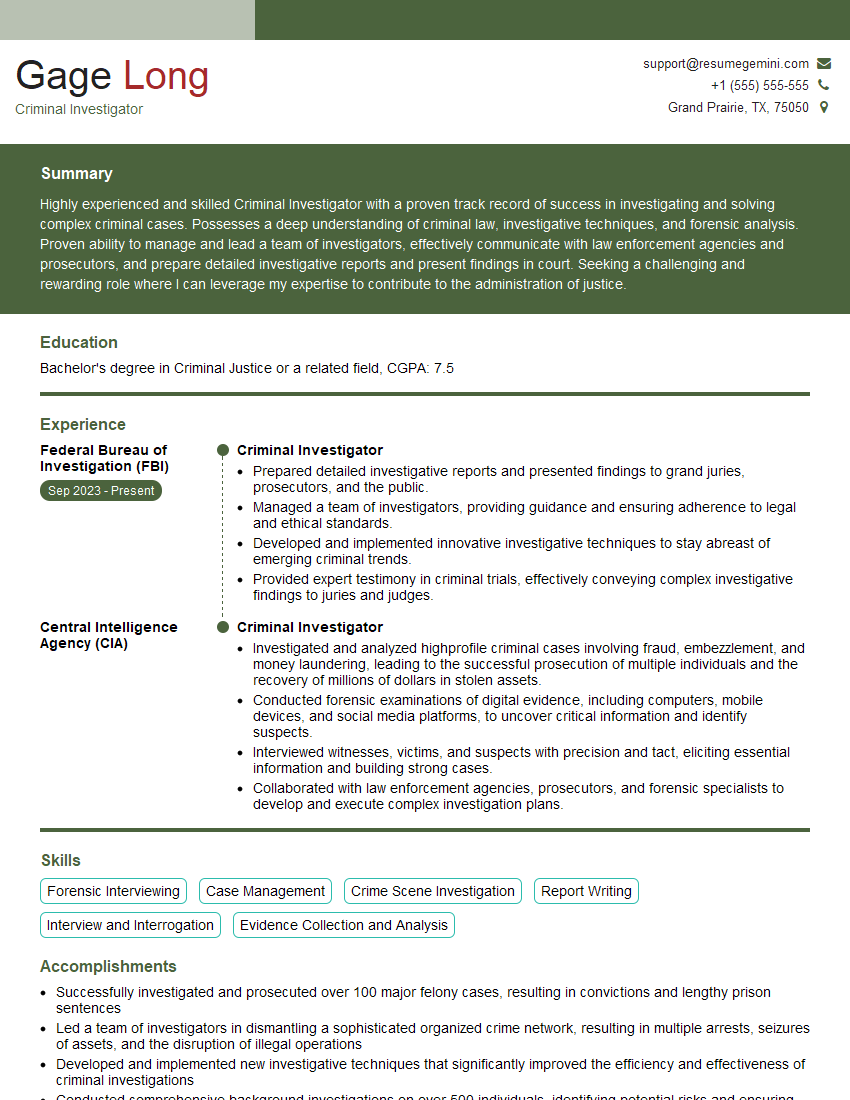
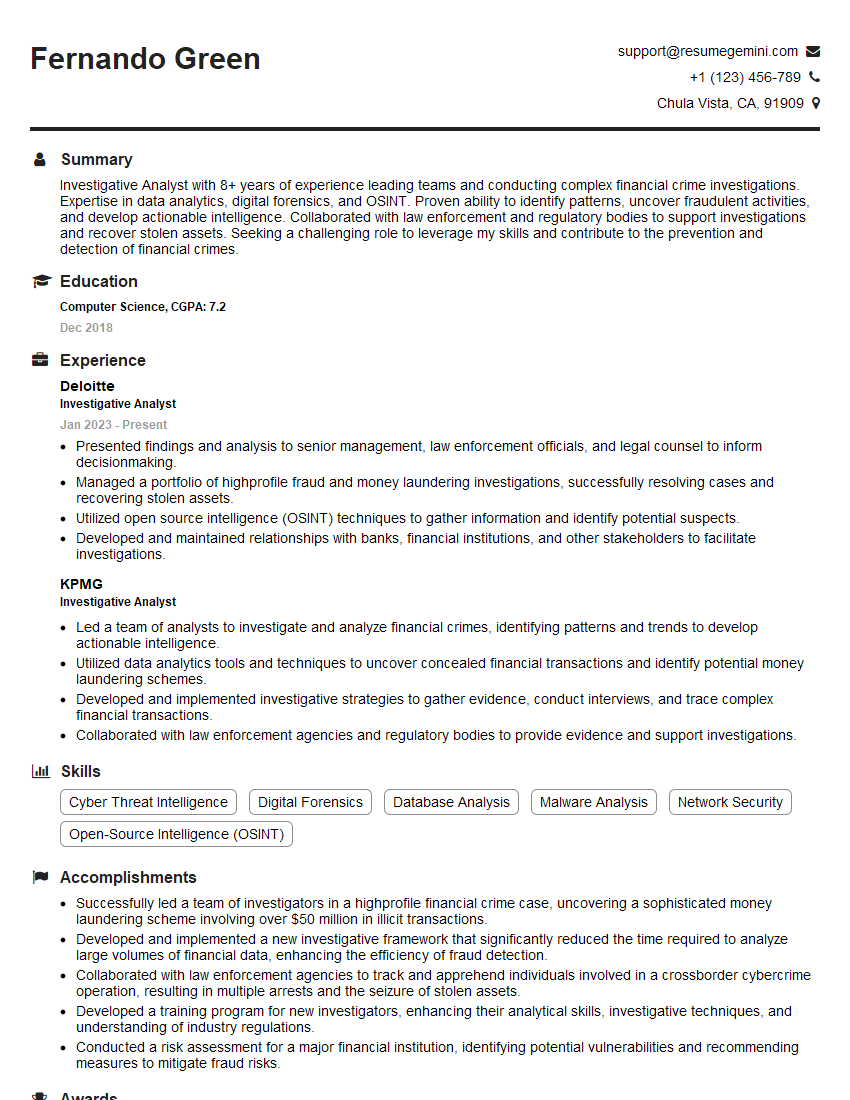
Mastering Knowledge of Mail Fraud and Counterfeit Detection Techniques significantly enhances your career prospects in law enforcement, financial institutions, and security sectors. A strong understanding of these techniques demonstrates a crucial skillset highly valued by employers. To maximize your job search success, focus on creating an ATS-friendly resume that effectively showcases your expertise. ResumeGemini is a trusted resource to help you build a professional and impactful resume that stands out. We offer examples of resumes tailored to highlight expertise in Knowledge of Mail Fraud and Counterfeit Detection Techniques to help you get started. Take the next step towards your dream career today!
Explore more articles
Users Rating of Our Blogs
Share Your Experience
We value your feedback! Please rate our content and share your thoughts (optional).
What Readers Say About Our Blog
I Redesigned Spongebob Squarepants and his main characters of my artwork.
https://www.deviantart.com/reimaginesponge/art/Redesigned-Spongebob-characters-1223583608
IT gave me an insight and words to use and be able to think of examples
Hi, I’m Jay, we have a few potential clients that are interested in your services, thought you might be a good fit. I’d love to talk about the details, when do you have time to talk?
Best,
Jay
Founder | CEO