Interviews are opportunities to demonstrate your expertise, and this guide is here to help you shine. Explore the essential Scholarship Application Assistance interview questions that employers frequently ask, paired with strategies for crafting responses that set you apart from the competition.
Questions Asked in Scholarship Application Assistance Interview
Q 1. Explain your process for researching suitable scholarships for students.
My scholarship research process is multifaceted and highly personalized. It begins with a thorough understanding of the student’s profile: academic record, extracurricular activities, intended major, career goals, and financial need. This information forms the foundation for targeted searches. I utilize a combination of strategies:
- Scholarship Databases: I leverage comprehensive databases like Fastweb, Scholarships.com, and Peterson’s to filter results based on specific criteria (major, GPA, ethnicity, etc.).
- Targeted Searches: I conduct targeted Google searches using keywords derived from the student’s profile (e.g., “nursing scholarships for women,” “computer science scholarships for minority students”).
- Institutional Resources: I explore scholarships offered directly by the student’s high school, college, or university, including merit-based and need-based awards.
- Professional Organizations: Many professional organizations offer scholarships to students pursuing careers in their respective fields. I research these organizations based on the student’s interests.
- Local and Community Scholarships: I investigate local scholarships offered by businesses, foundations, and community groups, which often have less competition.
The entire process is iterative. I continuously refine my search based on the results obtained, ensuring we explore every viable opportunity.
Q 2. How do you identify a student’s eligibility for a specific scholarship?
Determining eligibility involves a careful review of each scholarship’s specific requirements. This is often a meticulous process, as eligibility criteria can vary widely. I examine the following:
- GPA Requirements: Many scholarships specify a minimum GPA. I verify if the student meets or exceeds this threshold.
- Major/Field of Study: Some scholarships are restricted to students pursuing specific majors or fields. I confirm the student’s alignment with these requirements.
- Demographic Criteria: Scholarships often target specific demographics, such as ethnicity, gender, or socioeconomic background. I cross-reference the student’s background with the stated criteria.
- Extracurricular Activities: Certain scholarships prioritize students with significant involvement in extracurricular activities or volunteer work. I assess the student’s participation and leadership roles.
- Essay Requirements: Many scholarships require compelling essays that demonstrate the student’s qualifications and potential. I evaluate the student’s ability to articulate their experiences and aspirations effectively.
- Financial Need: Need-based scholarships require documentation of financial circumstances. I assist students in gathering the necessary financial documents (tax returns, bank statements).
I create a detailed eligibility matrix for each scholarship, comparing the student’s qualifications against the specific criteria to eliminate those for which the student is ineligible. This ensures we focus our efforts on scholarships where the chances of success are significantly higher.
Q 3. Describe your experience in editing and proofreading scholarship essays.
My experience in editing and proofreading scholarship essays involves more than just correcting grammatical errors. I view it as a crucial opportunity to enhance the student’s voice and strengthen their application. My approach includes:
- Clarity and Conciseness: I ensure the essay is clear, concise, and easy to understand, eliminating any ambiguity or wordiness.
- Grammar and Mechanics: I meticulously correct grammatical errors, spelling mistakes, punctuation flaws, and inconsistencies in formatting.
- Style and Tone: I refine the essay’s style and tone to ensure it’s appropriate for the specific scholarship and audience. The tone should be professional but also reflect the student’s unique personality.
- Content and Structure: I assess the essay’s content and structure, suggesting improvements in organization, flow, and argumentation. This may involve reorganizing paragraphs, adding supporting evidence, or strengthening the conclusion.
- Authenticity and Voice: I prioritize preserving the student’s authentic voice and perspective while ensuring the essay is polished and professional.
I often employ iterative editing, providing feedback and revisions until the essay reflects the student’s best work and effectively communicates their qualifications. For example, I recently helped a student refine their essay on overcoming adversity, focusing on specific examples and highlighting their resilience. The result was a compelling narrative that significantly improved their chances of securing the scholarship.
Q 4. What strategies do you use to help students overcome the challenges of scholarship applications?
The scholarship application process can be daunting. I employ various strategies to help students overcome the challenges, fostering resilience and confidence. These strategies include:
- Personalized Guidance: I provide individualized support tailored to each student’s needs and strengths. This often involves one-on-one coaching and mentoring.
- Organized Approach: I help students develop a structured timeline and checklist to manage deadlines and track progress. We use shared calendars and task management tools to stay on track.
- Skill-Building Workshops: I conduct workshops focused on essay writing, crafting compelling personal statements, and effective financial aid application strategies.
- Mock Interviews: For scholarships requiring interviews, I conduct mock interviews to help students practice and build confidence.
- Stress Management Techniques: I teach stress management techniques and encourage students to prioritize self-care during the application process.
- Positive Reinforcement: I provide positive reinforcement and celebrate successes along the way, boosting their morale and motivation.
For instance, I helped a student who lacked confidence in their writing skills. Through personalized feedback, practice essays, and constructive criticism, we transformed their application from average to exceptional.
Q 5. How do you handle conflicting deadlines for multiple scholarship applications?
Managing conflicting deadlines requires a proactive and organized approach. I utilize several techniques:
- Centralized Calendar: I use a shared calendar (Google Calendar, for instance) to track all deadlines for all scholarship applications.
- Prioritization Matrix: I develop a prioritization matrix that ranks scholarships based on factors like award amount, likelihood of success, and student’s interest. This helps us focus on the most promising opportunities first.
- Staggered Approach: I strategically stagger the application submission dates to avoid overwhelming the student with multiple deadlines in a short timeframe.
- Time Blocking: We allocate specific blocks of time for each application, breaking down the task into manageable chunks. This avoids feeling overwhelmed by the sheer volume of work.
- Delegate Tasks: Where possible, I delegate tasks like gathering supporting documents or proofreading to streamline the process.
Through effective time management and strategic planning, we ensure that all deadlines are met without compromising the quality of the applications. For example, I recently managed the applications for five scholarships with overlapping deadlines, using this system successfully.
Q 6. How do you prioritize scholarship opportunities for students with varying needs?
Prioritizing scholarship opportunities for students with varying needs requires a nuanced understanding of their individual circumstances. My approach involves:
- Need-Based vs. Merit-Based: I differentiate between need-based and merit-based scholarships. Students with significant financial need are prioritized for need-based opportunities, while those with exceptional academic records are targeted for merit-based scholarships.
- Specific Needs: I consider specific student needs, such as those related to disability, ethnicity, or geographic location. We focus on scholarships that align with these needs.
- Long-Term Goals: I evaluate the alignment between the scholarship and the student’s long-term academic and career goals. This ensures the financial aid supports their overall aspirations.
- Realistic Expectations: I discuss realistic expectations with the students, focusing on opportunities with a higher probability of success rather than those with low chances but high reward.
- Continuous Monitoring: I continuously monitor the student’s progress and adjust the strategy as needed. This allows for flexibility and responsiveness to changing circumstances.
For instance, I recently worked with a low-income student from a rural area. We prioritized need-based scholarships specifically targeting students from rural backgrounds, maximizing the chances of securing financial aid.
Q 7. What software or tools do you use to manage scholarship applications?
To effectively manage scholarship applications, I leverage various software and tools:
- Spreadsheet Software (Google Sheets, Excel): I utilize spreadsheets to track scholarship deadlines, eligibility criteria, application status, and award amounts. This provides a centralized overview of all applications.
- Project Management Software (Trello, Asana): For complex cases, I use project management software to assign tasks, monitor progress, and ensure timely completion of each step in the application process.
- Calendar Applications (Google Calendar, Outlook Calendar): Shared calendars are essential for managing deadlines and coordinating activities with the student.
- Cloud Storage (Google Drive, Dropbox): Cloud storage facilitates easy access and sharing of documents, ensuring seamless collaboration between myself and the student.
- Grammar and Style Checkers (Grammarly): These tools assist in proofreading and refining essays to ensure high-quality writing.
The specific tools employed depend on the individual needs of the student and the complexity of the application process. The key is to select tools that enhance efficiency, organization, and collaboration.
Q 8. Describe your experience working with diverse student populations.
My experience spans a wide range of student backgrounds, including socioeconomic status, academic performance, cultural heritage, and learning styles. I’ve worked with students from underprivileged communities, first-generation college students, international students, and students with disabilities. Understanding these diverse needs is crucial to effectively guiding them through the scholarship application process. For example, I’ve tailored my approach to help a first-generation college student understand the nuances of the FAFSA process, while simultaneously assisting an international student navigate the complexities of visa requirements and scholarship eligibility criteria. This involved not just explaining the processes but also providing emotional support and encouragement to navigate potentially unfamiliar situations.
- Socioeconomic Differences: I adjust my communication style to be sensitive to financial constraints, offering free resources and explaining different funding options clearly and patiently.
- Academic Needs: I provide customized support, offering essay review tailored to individual strengths and weaknesses, and guiding students on selecting scholarships that align with their academic achievements.
- Cultural Awareness: I’m mindful of cultural differences in communication styles and ensure my approach is inclusive and respectful of diverse perspectives.
Q 9. How do you maintain confidentiality regarding student financial information?
Maintaining student confidentiality is paramount. I adhere to strict privacy regulations, such as FERPA (Family Educational Rights and Privacy Act) in the US, and any equivalent regulations in other regions. This means I never share a student’s financial information with anyone not directly involved in their application process, including parents or other students, without their explicit consent. I use secure platforms for storing and transmitting sensitive data. All documents are stored in password-protected files and only accessed on secure devices. For example, if discussing a student’s financial aid package, I’d only do so in a private setting, such as a closed office, and never in a public space. Furthermore, all digital records are deleted according to established retention policies once the scholarship process concludes.
Q 10. How do you explain complex financial aid terms to students and parents?
Explaining complex financial aid terms requires clear, concise communication, free from jargon. I use analogies and real-world examples to make abstract concepts easily understandable. For instance, instead of saying “Expected Family Contribution (EFC),” I explain it as an estimate of what your family is expected to contribute towards your education based on your income and assets. I often break down complicated forms and processes into manageable steps. I also create visual aids such as flowcharts or summaries to enhance comprehension. A visual aid summarizing the steps in applying for federal aid greatly assists students who are better visual learners. Finally, I encourage students and parents to ask questions and provide ample opportunities for clarifying any uncertainties.
Q 11. What is your experience with different types of scholarships (merit-based, need-based, etc.)?
My experience encompasses all major scholarship types: merit-based, need-based, and those with specific criteria. Merit-based scholarships reward academic achievement, talent, or extracurricular involvement. I help students highlight these achievements through compelling essays and application materials. Need-based scholarships consider financial need, assisting students from low-income families. I guide them through the FAFSA process and other need-based application forms. Scholarships with specific criteria may focus on areas like majors, demographics, or community involvement. For example, I’ve worked with students applying for scholarships specifically for STEM majors or those from underrepresented minority groups. In each case, I tailor my guidance to the specific requirements of the scholarship opportunity.
Q 12. How do you stay updated on current scholarship opportunities and guidelines?
Staying updated is crucial. I utilize various resources to track scholarship opportunities and guidelines. This includes subscribing to scholarship search engines (such as Scholly, Fastweb), following scholarship organizations on social media, and regularly checking educational websites for announcements. I also network with educational professionals to receive updates on newly released opportunities. Additionally, I regularly review changes to eligibility criteria and application processes to ensure the advice I provide is current and accurate. This proactive approach ensures students have access to the most relevant and up-to-date information.
Q 13. Explain your approach to mentoring students throughout the scholarship application process.
My mentoring approach focuses on building a supportive and collaborative relationship with each student. I provide guidance throughout the entire process, from brainstorming scholarship ideas to polishing the final application. This includes:
- Initial Consultation: Assessing the student’s academic profile, goals, and interests to identify suitable scholarships.
- Essay Development: Providing constructive feedback and guidance on crafting compelling essays that highlight their strengths.
- Application Review: Proofreading applications for errors in grammar, spelling, and formatting, ensuring they are polished and professional.
- Deadline Management: Establishing a timeline to ensure applications are submitted on time.
- Ongoing Support: Offering encouragement and motivation throughout the application process.
I believe in empowering students to take ownership of their applications. I act as a guide, not a ghostwriter. My goal is to equip students with the skills and confidence to succeed on their own.
Q 14. How do you track the progress of scholarship applications and communicate with students?
I use a combination of methods to track applications and communicate with students. I maintain a spreadsheet to record deadlines, application statuses, and relevant notes for each student. This spreadsheet serves as a central hub for tracking progress. I also utilize email and scheduling tools to communicate with students, sending reminders about deadlines, providing feedback on drafts, and sharing updates on their applications. For students who prefer other communication methods, I’m happy to accommodate their preferences, such as scheduled phone calls or in-person meetings. Regular updates, even if just to acknowledge receipt of materials or offer encouragement, are vital in maintaining a strong mentor-mentee relationship.
Q 15. Describe a time you successfully helped a student secure significant funding.
One student I worked with, let’s call her Sarah, dreamed of studying marine biology at a prestigious university with incredibly high tuition fees. Her academic record was exceptional, but her family faced significant financial hardship. We meticulously researched scholarships aligning with her major and interests. I helped her craft compelling essays that showcased her passion, highlighting specific research opportunities at the university and connecting her experiences to the scholarship’s values. We also focused on perfecting her application materials, ensuring they were polished and error-free. The result? Sarah secured a full-tuition scholarship and a significant grant, totaling over $75,000! This success demonstrated the power of targeted research, persuasive writing, and meticulous attention to detail.
Career Expert Tips:
- Ace those interviews! Prepare effectively by reviewing the Top 50 Most Common Interview Questions on ResumeGemini.
- Navigate your job search with confidence! Explore a wide range of Career Tips on ResumeGemini. Learn about common challenges and recommendations to overcome them.
- Craft the perfect resume! Master the Art of Resume Writing with ResumeGemini’s guide. Showcase your unique qualifications and achievements effectively.
- Don’t miss out on holiday savings! Build your dream resume with ResumeGemini’s ATS optimized templates.
Q 16. How do you address situations where a student is unsuccessful in obtaining scholarships?
Unsuccessful scholarship applications are unfortunately a reality. My approach involves a three-step process: First, we analyze the application materials to identify areas for improvement. This could involve strengthening her essays, refining her resume, or clarifying her goals. Second, we explore alternative funding opportunities. This might include smaller scholarships, grants, work-study programs, or loans. Finally, and critically, we offer encouragement and support. It’s crucial to emphasize that setbacks are learning opportunities. We reflect on the process, identify valuable lessons, and build a stronger strategy for future applications. For example, if a student missed a deadline, we’d incorporate a stricter calendar into their subsequent applications. If their essays lacked specificity, we’d focus on crafting more impactful narratives. This approach turns failure into fuel for future success.
Q 17. How do you handle discrepancies in scholarship application materials?
Discrepancies in application materials are serious and need immediate attention. My approach prioritizes thorough verification. I cross-reference information across all documents – transcripts, resumes, essays, recommendation letters – to ensure consistency. If discrepancies exist, I directly contact the student to clarify the information. It’s essential to understand the context before making any changes. Sometimes a discrepancy is a simple oversight; other times, it requires a more nuanced explanation. For example, a slight difference in GPA might be due to a recalculation. However, a significant disparity in work experience requires careful examination. Transparency and open communication are key here. We work collaboratively to rectify any inaccuracies, ensuring the application reflects the student’s qualifications accurately. This approach minimizes risks and upholds academic integrity.
Q 18. What is your familiarity with FAFSA and other financial aid applications?
I’m highly familiar with the FAFSA (Free Application for Federal Student Aid) and other financial aid applications. I understand the complexities of completing the FAFSA form, including the required documentation (tax returns, W-2s, etc.) and the process of submitting it. I can also guide students through various state and institutional aid applications. My experience includes helping students understand their Expected Family Contribution (EFC) and navigating the complexities of different aid packages, including grants, loans, and work-study programs. Furthermore, I’m well-versed in resources like the College Board’s financial aid website and other tools that help students understand their options. My goal is to ensure students are informed and prepared to maximize their financial aid opportunities.
Q 19. How do you assess a student’s financial need and recommend appropriate aid options?
Assessing a student’s financial need is a multi-faceted process. I begin by gathering comprehensive information, including family income, assets, and number of dependents. We’ll utilize the FAFSA data and other relevant financial documents. Next, I carefully analyze the student’s cost of attendance (tuition, fees, room and board, books, etc.). By comparing the student’s EFC to the cost of attendance, I can determine their financial need. Then, I can recommend appropriate aid options, which might include federal grants (like Pell Grants), state grants, institutional aid, scholarships, and loans. The goal is to create a personalized financial aid plan that minimizes student debt while ensuring access to education. I guide students through the various options, explaining their implications and helping them make informed decisions.
Q 20. Describe your experience with writing compelling scholarship recommendation letters.
Writing compelling scholarship recommendation letters requires a deep understanding of the applicant and the scholarship criteria. My approach is to start with a thorough conversation with the student, understanding their academic achievements, personal qualities, and aspirations. I then tailor each letter to the specific scholarship’s requirements, highlighting relevant experiences and skills. I avoid generic statements, instead using concrete examples to demonstrate the student’s abilities. For instance, instead of saying ‘a hard worker,’ I’ll describe a specific project where the student demonstrated exceptional dedication and perseverance. The tone should be professional yet personal, showcasing the student’s unique strengths while maintaining the integrity of my recommendation. I always proofread carefully before submission, ensuring the letter is free of errors and presents a strong case for the student’s candidacy.
Q 21. What is your understanding of various types of grants and their application processes?
My understanding of various grants encompasses different funding sources and application processes. I’m familiar with federal grants (like Pell Grants and TEACH Grants), state grants, and privately funded grants from organizations focused on specific fields or demographics. Each grant has its own eligibility requirements, application procedures, and deadlines. For example, a research grant might require a detailed research proposal and letters of support, while a need-based grant might focus more on financial documentation. I guide students in identifying grants aligned with their academic pursuits and personal circumstances. This involves using online grant databases, researching specific organizations, and carefully reviewing each grant’s requirements to ensure the student is eligible and can present a competitive application. Understanding the unique application processes for different grants is critical to success. I break down each step of the process, providing guidance and support to streamline their efforts.
Q 22. How do you help students navigate the appeals process for rejected scholarship applications?
Appealing a rejected scholarship application can feel daunting, but a structured approach significantly increases the chances of success. My strategy involves a thorough review of the rejection letter, identifying the specific reasons for denial. This often includes factors like GPA, essay quality, or missing documents.
Next, I work with the student to address these weaknesses. If the rejection was due to a low GPA, we explore ways to highlight academic improvement, such as increased grades in subsequent semesters or successful completion of challenging coursework. For essay weaknesses, we refine the narrative, focusing on stronger storytelling and demonstrating a clear understanding of the scholarship’s criteria. If documents were missing, we immediately rectify this.
Finally, a well-crafted appeal letter is crucial. This isn’t just a re-submission of the original application; it’s a targeted response directly addressing the reasons for rejection. We highlight the student’s growth, renewed commitment, and any mitigating circumstances. I also emphasize the student’s continued alignment with the scholarship’s goals and values. I’ve had numerous successful appeals where a well-structured letter demonstrating significant improvement, coupled with genuine reflection, persuaded the selection committee to reconsider.
Q 23. How do you utilize data and analytics to inform scholarship application strategies?
Data and analytics play a vital role in optimizing scholarship application strategies. I analyze historical data on successful applications, including factors like GPA, test scores, extracurricular activities, and essay themes. This allows me to identify trends and patterns that correlate with success. For example, I might discover that scholarships focused on community service favor applicants with extensive volunteer experience, or that specific essay topics resonate more strongly with certain selection committees.
This data-driven approach informs my guidance to students. I can suggest focusing on specific areas of their profiles based on the likelihood of success with a particular scholarship. I also use this data to tailor application materials, refining essays and resumes to align better with successful applications. Furthermore, I track application outcomes to continuously refine my strategies, ensuring they remain relevant and effective. For instance, if a particular type of essay consistently yields positive results, I encourage more students to adapt that approach, always emphasizing originality and authenticity.
Q 24. How do you build and maintain relationships with scholarship providers?
Building and maintaining relationships with scholarship providers is paramount. This isn’t merely about submitting applications; it’s about establishing a genuine connection. I initiate contact with providers, not just to inquire about opportunities but to learn about their mission and priorities. This allows me to better match students with scholarships that truly align with their values and aspirations.
I regularly attend scholarship provider events and conferences, networking with representatives to gain insights into their selection criteria and preferences. I maintain consistent communication, sharing student success stories and providing feedback on the application process. This proactive approach fosters trust and mutual understanding. By demonstrating a genuine commitment to both the students and the providers, I build lasting relationships that benefit both parties. For example, a strong relationship with a foundation can lead to preferential consideration for promising applicants, or even exclusive opportunities.
Q 25. What is your experience with budgeting and financial planning for students?
Budgeting and financial planning are essential for students navigating the complexities of higher education. My approach begins with a comprehensive assessment of the student’s financial situation, including tuition fees, living expenses, and potential sources of income. I guide students through the process of creating a realistic budget, prioritizing essential expenses and identifying areas where savings can be made.
We explore various financing options, including federal and private student loans, grants, scholarships, and work-study programs. I explain the terms and conditions of each option, helping students make informed decisions. I also teach students about responsible debt management, emphasizing the importance of understanding interest rates and repayment schedules. I often use budgeting tools and apps to create visual representations of their financial plan, making the process clearer and more manageable. A case study: I helped a student create a budget that incorporated a part-time job and reduced non-essential spending, significantly improving their financial stability.
Q 26. Describe your experience in developing and delivering financial literacy workshops.
I have extensive experience developing and delivering engaging financial literacy workshops for students. My workshops are designed to be interactive and relatable, covering topics such as budgeting, saving, investing, debt management, and credit scores. I use a variety of teaching methods, incorporating case studies, group activities, and real-world examples to keep participants engaged.
I tailor the workshops to the specific needs and learning styles of the audience, ensuring the information is accessible and relevant. For example, I might use gamification techniques for younger students or focus on advanced investment strategies for older students. My workshops also incorporate technology to enhance engagement, using interactive tools and simulations to make financial concepts more concrete. I consistently receive positive feedback and have seen a marked improvement in participants’ financial knowledge and confidence.
Q 27. How do you adapt your approach to accommodate different learning styles among students?
Adapting my approach to accommodate different learning styles is crucial for effective scholarship application assistance. I use a multi-faceted strategy to cater to visual, auditory, and kinesthetic learners. For visual learners, I provide clear and concise written materials, using charts, graphs, and other visual aids to illustrate key concepts. Auditory learners benefit from detailed explanations and discussions, while kinesthetic learners engage best through hands-on activities and simulations.
I utilize a variety of teaching methods, including one-on-one consultations, group workshops, and online tutorials. I encourage students to identify their preferred learning styles and tailor our sessions accordingly. For instance, I might use visual aids extensively when working with a visual learner, focusing on verbal explanations with auditory learners, and incorporating role-playing or simulations for kinesthetic learners. This personalized approach ensures all students receive support that aligns with their individual needs and learning preferences.
Q 28. How do you ensure the ethical and responsible use of student information in the scholarship process?
Ethical and responsible use of student information is paramount. I adhere strictly to all relevant privacy regulations, ensuring student data is handled with the utmost confidentiality. This includes secure storage of documents, limited access to sensitive information, and transparent communication about data usage. I never share student information without their explicit consent.
My practice involves obtaining informed consent before collecting or using any personal data. All student information is treated with the strictest confidence, and I use strong security measures to prevent unauthorized access. I regularly review and update my practices to align with evolving privacy standards. Maintaining trust and respecting student privacy is fundamental to my work, and I prioritize ethical conduct in all aspects of my scholarship application assistance.
Key Topics to Learn for Scholarship Application Assistance Interview
- Understanding Funding Sources: Explore diverse scholarship opportunities – from institutional to external, merit-based to need-based. This includes researching eligibility criteria and deadlines.
- Application Strategy & Process: Learn to effectively manage multiple applications, prioritizing based on likelihood of success and personal goals. This involves creating a robust application tracking system.
- Essay Writing & Storytelling: Master crafting compelling narratives that highlight achievements, skills, and aspirations. Practice showcasing personal impact and aligning with scholarship values.
- Financial Aid Navigation: Develop a strong understanding of FAFSA, CSS, and other financial aid forms. Learn how to effectively combine scholarships with other aid options.
- Communication & Client Interaction: Practice effectively communicating with students, addressing their concerns, and providing clear guidance throughout the application process. This includes active listening and empathetic communication.
- Data Management & Organization: Learn effective strategies for organizing student information, tracking application progress, and maintaining confidentiality. This includes secure data handling practices.
- Problem-Solving & Conflict Resolution: Develop skills in addressing common application challenges (e.g., missing documents, conflicting deadlines) and resolving student concerns effectively.
Next Steps
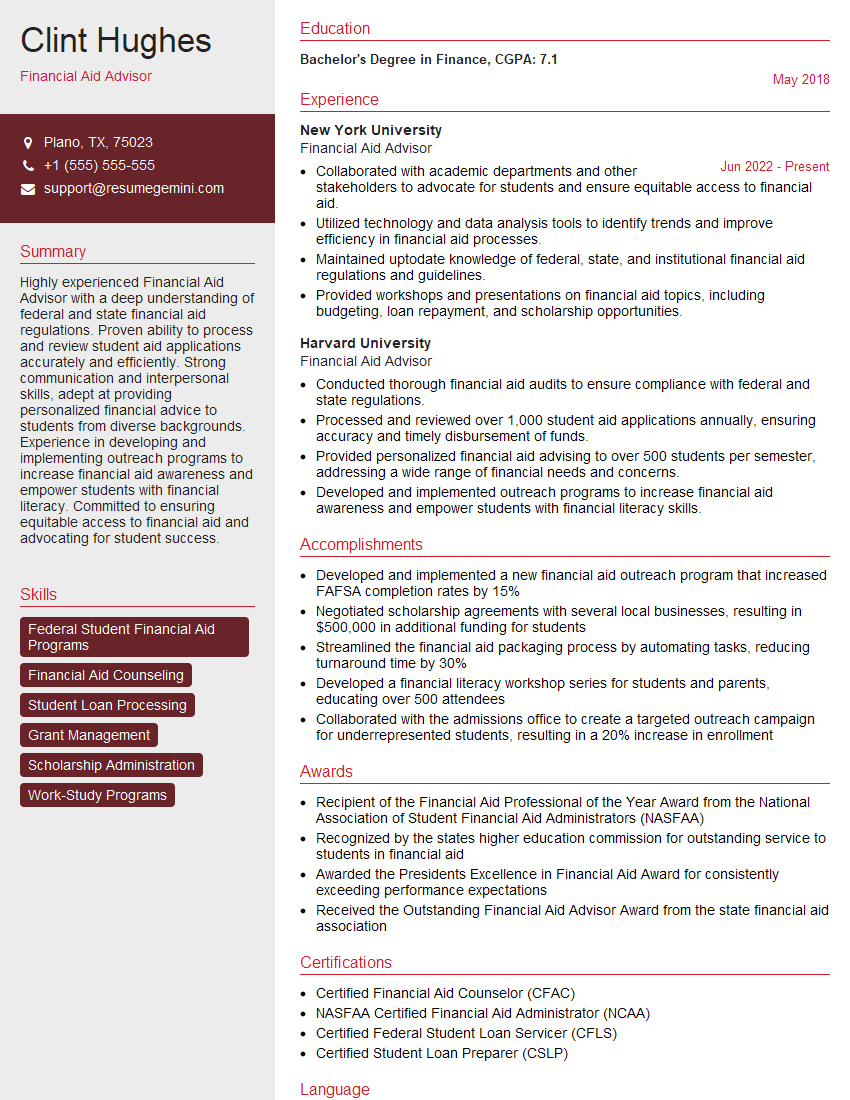
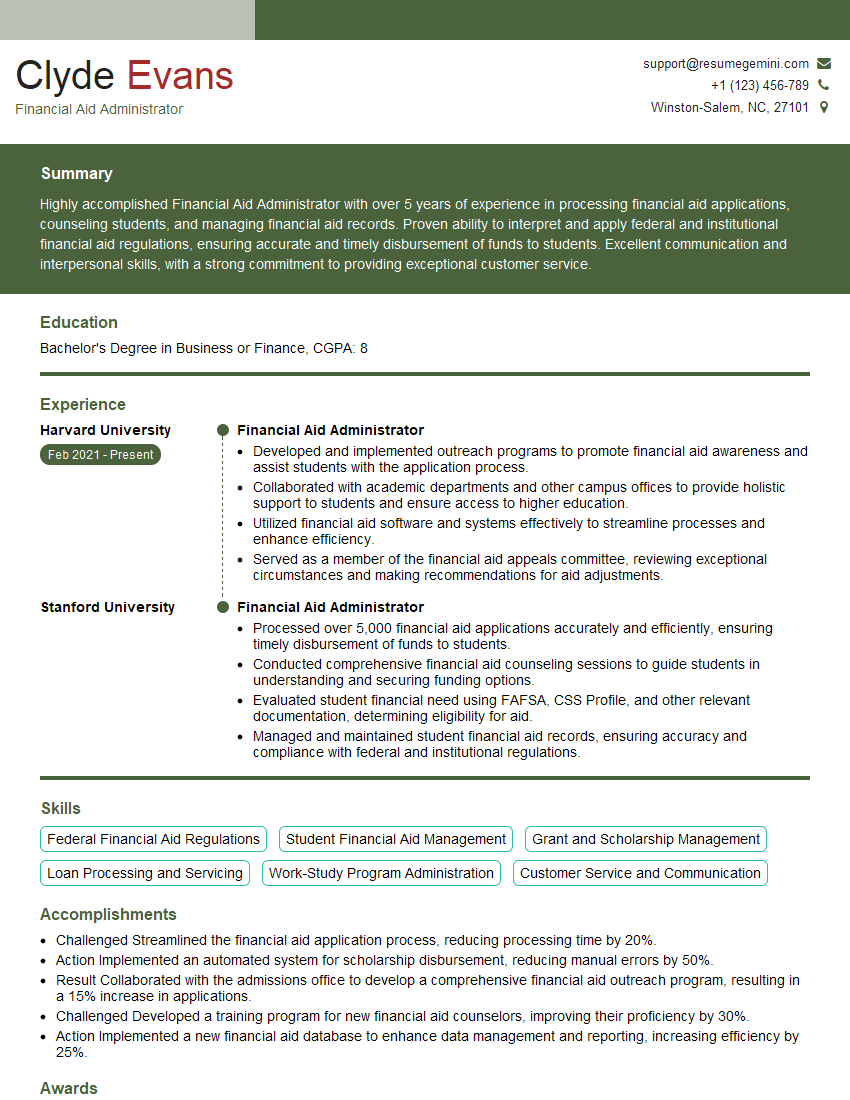
Mastering Scholarship Application Assistance opens doors to rewarding careers in education, student services, and non-profit organizations. It demonstrates a valuable skillset – organization, communication, and empathy – highly sought after by employers. To boost your job prospects, create an ATS-friendly resume that effectively highlights your qualifications. ResumeGemini is a trusted resource to help you build a professional and impactful resume. Examples of resumes tailored to Scholarship Application Assistance are available to guide you in this process.
Explore more articles
Users Rating of Our Blogs
Share Your Experience
We value your feedback! Please rate our content and share your thoughts (optional).
What Readers Say About Our Blog
I Redesigned Spongebob Squarepants and his main characters of my artwork.
https://www.deviantart.com/reimaginesponge/art/Redesigned-Spongebob-characters-1223583608
IT gave me an insight and words to use and be able to think of examples
Hi, I’m Jay, we have a few potential clients that are interested in your services, thought you might be a good fit. I’d love to talk about the details, when do you have time to talk?
Best,
Jay
Founder | CEO