Preparation is the key to success in any interview. In this post, we’ll explore crucial Stay up-to-date with the latest technical advancements interview questions and equip you with strategies to craft impactful answers. Whether you’re a beginner or a pro, these tips will elevate your preparation.
Questions Asked in Stay up-to-date with the latest technical advancements Interview
Q 1. Describe your process for staying current with the latest advancements in your field.
Staying current in the rapidly evolving tech landscape requires a multi-pronged approach. It’s not just about passively consuming information; it’s about actively engaging with the field.
- Targeted Reading: I subscribe to several reputable tech publications and newsletters focusing on specific areas like AI, cloud computing, and cybersecurity. This ensures I receive curated content relevant to my expertise, rather than being overwhelmed by the sheer volume of information available.
- Active Participation in Online Communities: I actively participate in online forums, such as Stack Overflow and Reddit communities dedicated to my field. This allows me to learn from others, contribute my knowledge, and stay abreast of emerging issues and solutions. It’s a great way to see practical applications of new technologies.
- Conferences and Webinars: Attending industry conferences and webinars (both online and in-person) provides invaluable exposure to cutting-edge research and practical applications. The networking aspect is crucial for building connections with experts and learning from their experiences.
- Hands-on Experimentation: I dedicate time to experimenting with new tools and technologies. This practical application solidifies my understanding and highlights potential advantages and disadvantages in real-world scenarios. Building personal projects is also a great way to explore new technologies.
- Continuous Learning Platforms: Platforms like Coursera, edX, and Udemy offer excellent resources for learning new skills and deepening my existing knowledge. I actively participate in relevant online courses to refresh my skills and explore emerging technologies.
Q 2. What are some of the most significant recent advancements in your area of expertise?
The tech world is constantly evolving, but some recent advancements stand out:
- Generative AI: The rapid progress in large language models (LLMs) and their applications in various fields (e.g., content creation, code generation, drug discovery) is transformative. The ability to generate human-quality text, images, and even code has opened up new possibilities in many sectors.
- Quantum Computing: While still in its nascent stages, quantum computing holds the potential to revolutionize fields such as medicine, materials science, and cryptography. The development of more stable and powerful quantum computers is accelerating.
- Edge Computing: The shift towards edge computing is addressing the limitations of cloud-centric architectures by processing data closer to its source. This is crucial for applications requiring low latency, like autonomous vehicles and IoT devices.
- Advances in Cybersecurity: With the growing sophistication of cyber threats, advancements in AI-driven security, zero trust architectures, and blockchain-based security solutions are crucial for protecting sensitive data.
These advancements, and others, are not isolated events but interconnected threads that weave together to shape the technological landscape.
Q 3. How do you evaluate the credibility and reliability of new technical information?
Evaluating the credibility of technical information requires a critical and discerning approach. I follow several key steps:
- Source Verification: I assess the reputation and expertise of the source. Is it a peer-reviewed journal, a respected research institution, a known expert in the field, or an unknown blog? The source’s credibility is paramount.
- Evidence-Based Claims: I look for evidence to support the claims made. Are there citations, data, or empirical evidence presented? Anecdotal evidence alone is insufficient.
- Peer Review and Replication: Has the research or information undergone peer review? Can the results be replicated independently? These factors greatly enhance credibility.
- Cross-Referencing: I compare the information with other sources to see if there’s a consensus or conflicting viewpoints. This helps identify potential biases or inaccuracies.
- Date of Publication: The recency of the information is vital, especially in a rapidly evolving field like technology. Older information may be outdated or superseded.
This multi-faceted approach helps me filter out unreliable information and focus on trustworthy sources.
Q 4. Explain a time you had to quickly learn a new technology to solve a problem.
During a recent project involving the integration of a new API, I needed to quickly learn how to use a specific authentication protocol – OAuth 2.0 – that I hadn’t used before. The deadline was tight, and our system wouldn’t function without proper integration.
My approach was systematic:
- Consult the API Documentation: The first step was to thoroughly read the API’s official documentation on OAuth 2.0. This provided the foundational knowledge I needed.
- Online Tutorials and Examples: I then searched for online tutorials and code examples demonstrating the use of OAuth 2.0 with the specific API we were integrating. This allowed me to see practical implementations.
- Trial and Error: I implemented the OAuth 2.0 integration in a test environment, iteratively testing and debugging the code based on the errors I encountered. This hands-on experience was crucial for understanding the nuances of the protocol.
- Community Support: When faced with a particularly challenging issue, I sought help on relevant online forums. The collective knowledge of the community helped me overcome the obstacle quickly.
Within two days, I successfully integrated the API, demonstrating the power of focused learning and leveraging available resources.
Q 5. What resources (publications, websites, conferences) do you regularly use to stay updated?
I utilize a diverse range of resources to stay up-to-date:
- Publications: IEEE Spectrum, Communications of the ACM, MIT Technology Review
- Websites: Ars Technica, TechCrunch, ZDNet, various vendor-specific blogs (e.g., AWS, Google Cloud)
- Conferences: O’Reilly conferences, RSA Conference, Black Hat, various cloud computing summits
The key is variety. Each source offers a slightly different perspective and level of technical depth, allowing me to build a comprehensive understanding.
Q 6. How do you identify emerging technologies relevant to your work?
Identifying emerging technologies relevant to my work is a continuous process. I employ several strategies:
- Trend Analysis: I regularly analyze industry reports, market research, and analyst predictions to identify potential technological shifts.
- Patent Research: Exploring patents provides insight into the future direction of technology and highlights innovations before they become widely known.
- News and Social Media Monitoring: Keeping track of tech news and engaging in relevant online discussions (Twitter, LinkedIn) exposes me to emerging ideas and trends.
- Networking: Networking with colleagues, attending conferences, and engaging in online communities provides valuable perspectives and early insights into upcoming technologies.
- Venture Capital Activity: Monitoring venture capital investments in new technologies can indicate promising areas.
By combining these methods, I build a picture of the emerging technological landscape and identify potential opportunities and challenges for my work.
Q 7. Describe a situation where you had to adapt to a significant technological shift.
The shift from on-premise data centers to cloud computing presented a significant technological shift that required substantial adaptation. Initially, there was resistance to the change due to concerns about security, vendor lock-in, and the learning curve associated with new cloud platforms.
To adapt, I took a phased approach:
- Education and Training: I invested time in learning the fundamentals of cloud computing, different cloud providers (AWS, Azure, GCP), and best practices for cloud migration.
- Proof-of-Concept Projects: We conducted proof-of-concept projects to test the viability and feasibility of migrating specific applications to the cloud. This allowed us to mitigate risks and identify potential challenges early on.
- Gradual Migration: Instead of a ‘big bang’ approach, we migrated applications incrementally, starting with less critical systems. This allowed us to refine our processes and gain experience.
- Team Training and Collaboration: We provided training to the entire team on cloud technologies and best practices. Collaboration and knowledge sharing were crucial for a successful transition.
This carefully managed approach allowed us to smoothly transition to the cloud, leveraging its benefits while minimizing disruption and risk.
Q 8. What are some of the ethical considerations surrounding the rapid pace of technological change?
The breakneck speed of technological advancement presents a complex web of ethical dilemmas. We’re facing challenges we couldn’t have foreseen even a decade ago. Consider the implications of AI, for example. The potential for bias in algorithms leading to discriminatory outcomes is a significant concern. Similarly, the use of facial recognition technology raises serious privacy issues, as does the collection and use of vast amounts of personal data by tech companies. Job displacement due to automation is another crucial ethical consideration, requiring proactive solutions like retraining programs and social safety nets. Furthermore, the development of autonomous weapons systems presents existential threats requiring careful global regulation. Ultimately, responsible innovation requires a constant dialogue between technologists, ethicists, policymakers, and the public to ensure that technology serves humanity’s best interests.
- Bias in algorithms: AI systems trained on biased data can perpetuate and amplify existing societal inequalities.
- Privacy concerns: The pervasive collection and use of personal data raise questions about surveillance, consent, and data security.
- Job displacement: Automation necessitates strategies for mitigating the economic and social impacts of job losses.
- Autonomous weapons: The development and deployment of lethal autonomous weapons systems raise profound ethical and security concerns.
Q 9. How do you incorporate continuous learning into your daily workflow?
Continuous learning is woven into the fabric of my daily workflow. It’s not a separate activity, but an integrated part of how I approach my work. I dedicate a specific portion of each day, usually the first hour, to focused learning. This might involve reading research papers, exploring new open-source projects, or taking online courses. I also actively participate in online communities and forums, engaging in discussions and learning from the experiences of others. I subscribe to relevant newsletters and podcasts to stay abreast of emerging trends. Crucially, I apply what I learn immediately. This hands-on approach helps solidify my understanding and identifies any gaps in my knowledge. For example, if I read about a new machine learning technique, I’ll try implementing it in a small project to solidify my understanding.
Beyond dedicated learning time, I actively seek out opportunities for learning in my daily tasks. When encountering a challenging problem, I don’t just seek a quick solution, I delve into the underlying principles. This process often leads to further research and learning.
Q 10. How do you differentiate between hype and genuine advancements in technology?
Differentiating hype from genuine advancements requires a critical and evidence-based approach. I start by examining the underlying technology. Is it based on sound scientific principles? Are there peer-reviewed publications or independent verification supporting its claims? Hype often relies on exaggerated promises and lacks concrete evidence. Genuine advancements, on the other hand, are typically backed by data, rigorous testing, and demonstrable results. I also look for objective metrics. Can the technology’s performance be quantified and compared to existing solutions? Hype tends to focus on buzzwords and superficial benefits, while genuine advancements highlight tangible improvements and real-world applications. For example, claims of a revolutionary AI that can solve any problem should be treated with skepticism unless the underlying methodology and concrete results are presented.
Q 11. What are some of the key challenges in keeping up with technological advancements?
Keeping up with technological advancements is a constant challenge, requiring dedication and strategic planning. The sheer volume of new information is overwhelming. The rapid pace of innovation means that what’s cutting-edge today might be obsolete tomorrow. Another challenge is the specialization within different technological fields. It’s impossible to be an expert in everything, so prioritizing areas relevant to one’s work is crucial. Furthermore, accessing reliable and high-quality information can be difficult, with misinformation and biased sources prevalent online. Finally, applying new knowledge effectively takes time and practice. It’s not just about learning the theoretical aspects; it’s about mastering the practical implementation. The constant evolution of tools and frameworks also presents a significant challenge.
Q 12. How do you prioritize learning new technologies given limited time?
With limited time, prioritizing learning new technologies is crucial. I use a framework based on relevance, impact, and feasibility. I prioritize technologies that directly address current projects or future goals (relevance). I assess the potential impact of each technology on my work and my organization (impact). Finally, I consider the time and resources needed to learn and implement the technology, choosing those that are feasible within my constraints (feasibility). This approach allows me to focus my efforts on technologies with the highest return on investment (ROI) in terms of productivity and professional development. I frequently use a Kanban board to visualize my learning tasks, and I regularly reassess priorities based on evolving needs and opportunities. For example, I might decide to prioritize learning a new cloud platform if it significantly improves the efficiency of a major project.
Q 13. Describe your experience with specific technologies (e.g., cloud computing, AI, blockchain).
I have extensive experience with several key technologies. In cloud computing, I’m proficient with AWS, Azure, and GCP, having designed and deployed several applications on these platforms. I understand the nuances of serverless computing, containerization (Docker, Kubernetes), and infrastructure-as-code (Terraform). In the realm of AI, my experience includes working with various machine learning algorithms for tasks such as image recognition, natural language processing, and predictive modeling. I’m familiar with frameworks like TensorFlow and PyTorch. Finally, in blockchain, I have experience developing smart contracts using Solidity and exploring its applications in supply chain management and data security. I’ve also worked on projects using Hyperledger Fabric, which provides a more enterprise-focused approach to blockchain technology.
Q 14. Explain your understanding of [Specific Emerging Technology – e.g., Serverless Computing].
Serverless computing is a cloud computing execution model where the cloud provider dynamically manages the allocation of computing resources. Instead of managing servers, developers write and deploy code as individual functions, often referred to as “functions-as-a-service” (FaaS). The cloud provider then automatically scales these functions based on demand, handling all infrastructure management tasks such as provisioning, scaling, patching, and monitoring. This eliminates the need for developers to worry about server management, allowing them to focus on writing code and business logic. Key benefits include reduced operational overhead, cost savings through pay-per-use pricing, and improved scalability and resilience. A common example would be a backend function triggered by a new user registration in a web application. The function handles user data processing and database updates without requiring a constantly running server. Popular serverless platforms include AWS Lambda, Azure Functions, and Google Cloud Functions. They’re often used for event-driven architectures, microservices, and tasks where resource demands fluctuate significantly.
//Example pseudocode for a serverless function (AWS Lambda): exports.handler = (event, context, callback) => { //Process event data (e.g., user registration) //Perform database operations callback(null, { message: 'User registered successfully' }); };Q 15. What are the limitations and potential risks associated with [Specific Technology]?
Let’s consider the limitations and risks associated with Artificial Intelligence (AI), specifically focusing on large language models (LLMs). While LLMs offer incredible potential, several limitations and risks exist. One key limitation is their reliance on training data: biased or incomplete data leads to biased or inaccurate outputs. For example, an LLM trained primarily on text from a specific region might generate outputs reflecting only that region’s perspective, neglecting global viewpoints. This can have serious consequences in applications like legal or medical advice.
Another significant risk is the potential for misuse. Malicious actors could exploit LLMs to generate convincing disinformation campaigns or phishing emails. The lack of transparency in how some LLMs operate also poses a challenge – it’s difficult to understand why a model arrives at a particular conclusion, making it hard to identify and correct errors or biases. Finally, the environmental impact of training these large models cannot be overlooked; the energy consumption is substantial.
Further risks include:
- Hallucinations: LLMs may confidently generate factually incorrect information.
- Security vulnerabilities: LLMs can be vulnerable to adversarial attacks, where carefully crafted inputs can elicit undesired outputs.
- Ethical concerns: Issues around job displacement and the amplification of existing societal biases are significant concerns.
Career Expert Tips:
- Ace those interviews! Prepare effectively by reviewing the Top 50 Most Common Interview Questions on ResumeGemini.
- Navigate your job search with confidence! Explore a wide range of Career Tips on ResumeGemini. Learn about common challenges and recommendations to overcome them.
- Craft the perfect resume! Master the Art of Resume Writing with ResumeGemini’s guide. Showcase your unique qualifications and achievements effectively.
- Don’t miss out on holiday savings! Build your dream resume with ResumeGemini’s ATS optimized templates.
Q 16. How do you apply new technologies to improve efficiency and productivity?
Applying new technologies to improve efficiency and productivity involves a strategic approach. It starts with identifying areas where current processes are inefficient or bottlenecks exist. For instance, in a software development team, manual testing might be a bottleneck. Introducing automated testing tools using a framework like Selenium or Cypress can significantly improve testing efficiency and free up developers to focus on coding.
Another example: in a marketing team, manual data analysis can be time-consuming. Implementing business intelligence (BI) tools like Tableau or Power BI can automate data analysis and visualization, allowing marketers to gain insights more quickly and make data-driven decisions faster. This requires a thorough understanding of the technology’s capabilities and limitations and a careful planning process.
The process typically involves:
- Needs assessment: Identifying areas for improvement.
- Technology selection: Choosing suitable tools and technologies.
- Implementation: Integrating the new technology into existing workflows.
- Training and support: Ensuring users are comfortable with the new technology.
- Monitoring and evaluation: Measuring the impact on efficiency and productivity.
Q 17. How do you stay informed about industry best practices?
Staying informed about industry best practices is crucial for maintaining a competitive edge. I use a multi-pronged approach. I actively participate in online communities such as Stack Overflow, Reddit (relevant subreddits), and professional networking sites like LinkedIn, engaging in discussions and learning from experts’ experiences. I also regularly attend webinars, conferences, and workshops relevant to my field. This provides opportunities to network with peers and learn about the latest innovations firsthand.
Beyond that, I subscribe to industry-leading publications and newsletters, keeping abreast of the latest research papers and technical articles. I also follow influential individuals and organizations on social media platforms (Twitter, for example) to gain insights into emerging trends and best practices. Finally, I dedicate time to reading books and technical documentation related to my field.
Q 18. How do you evaluate the impact of new technologies on existing systems?
Evaluating the impact of new technologies on existing systems is a multifaceted process. I start by conducting a thorough risk assessment, identifying potential compatibility issues, security vulnerabilities, and integration challenges. For example, introducing a cloud-based solution might necessitate changes to existing security protocols and data management strategies.
Next, I perform a cost-benefit analysis, weighing the potential improvements in efficiency, productivity, and cost savings against the investment required for implementation, training, and ongoing maintenance. This often involves creating a proof-of-concept (POC) to test the new technology in a controlled environment before full-scale deployment. I also assess the impact on existing workflows and personnel, ensuring a smooth transition and providing adequate training and support. Finally, I establish key performance indicators (KPIs) to track the success of the implementation and make adjustments as needed.
Q 19. Describe your experience with open-source technologies and communities.
I have extensive experience with open-source technologies and communities. I’ve contributed to several open-source projects on platforms like GitHub, primarily focusing on [mention specific area, e.g., improving documentation, bug fixing, or feature development]. This involvement has allowed me to collaborate with developers globally, learn from diverse perspectives, and enhance my understanding of collaborative software development. I actively participate in open-source forums and discussions, offering support and sharing my knowledge.
The open-source community has provided invaluable learning opportunities. Contributing to projects like [mention specific project] has honed my skills in [mention specific skills, e.g., version control, code review, testing]. I appreciate the transparency, collaborative spirit, and continuous improvement philosophy inherent in open-source projects.
Q 20. How do you contribute to the technological advancement of your team or organization?
I contribute to the technological advancement of my team by proactively identifying opportunities to improve efficiency and productivity through the adoption of new technologies. For instance, I recently introduced a new project management tool [mention specific tool] that has streamlined our workflow, improved collaboration, and reduced project completion times. I also lead internal workshops and training sessions to educate my colleagues on emerging technologies and best practices.
Furthermore, I actively participate in knowledge-sharing initiatives within the organization, presenting on new technologies and best practices at team meetings and company-wide events. I mentor junior team members, helping them to develop their technical skills and stay abreast of the latest industry developments. By fostering a culture of continuous learning and innovation, I strive to improve the overall technological capability of my team.
Q 21. What new technology are you excited about learning more about?
I am particularly excited about learning more about advancements in quantum computing. The potential of quantum computing to solve complex problems currently intractable for classical computers is truly transformative. Areas like drug discovery, materials science, and cryptography stand to benefit immensely from this technology’s development. While still in its nascent stages, the rapid progress in this field is fascinating, and I am eager to delve deeper into its algorithms, applications, and the challenges associated with its widespread adoption.
Q 22. How do you manage information overload related to new technologies?
Managing information overload in the tech world is crucial. It’s like trying to drink from a firehose! My approach is multi-pronged. Firstly, I prioritize based on relevance to my current projects and long-term career goals. I use RSS feeds and curated newsletters to receive only the most pertinent updates, rather than passively browsing endless articles. Secondly, I leverage technology to my advantage. Tools like Raindrop.io help me categorize and tag articles for later review, preventing information from getting lost in the shuffle. Finally, I actively engage in discussions and knowledge sharing. Participating in online communities and attending conferences allows me to filter the signal from the noise, getting valuable insights from experts and peers.
For example, if I’m working on a project involving AI model optimization, I’d focus on publications and forums specializing in that niche, ignoring broader tech news that’s less directly applicable. This focused approach ensures that I’m learning efficiently, instead of getting bogged down by irrelevant information.
Q 23. What strategies do you employ to avoid falling behind in your field?
Staying ahead in this rapidly evolving field requires continuous learning and adaptation. I use a combination of strategies. I dedicate specific time each week to exploring new technologies. This could involve reading research papers, watching educational videos on platforms like Coursera or edX, or experimenting with new tools and frameworks. I also actively seek out mentorship and collaboration opportunities. Networking with peers and experts provides insights and helps identify emerging trends earlier. Finally, I participate in online communities and contribute to open-source projects. This hands-on experience solidifies my learning and exposes me to diverse approaches and challenges.
For instance, I recently started learning about quantum computing by taking an online course and participating in discussions on relevant forums. The hands-on experience of implementing even a basic quantum algorithm significantly boosted my understanding compared to just reading about it.
Q 24. Can you describe a time you successfully implemented a new technology?
In a previous role, we needed to improve our data processing pipeline’s efficiency. We were using a legacy system that was slow and prone to errors. After thorough research, I proposed migrating to Apache Kafka, a distributed streaming platform. This involved several steps: a proof-of-concept phase to test Kafka’s performance in our environment, developing custom connectors to integrate Kafka with our existing systems, and comprehensive training for the team on using the new technology.
The implementation was successful because we prioritized thorough planning and risk mitigation. We broke down the migration into manageable phases, allowing for continuous monitoring and adjustments along the way. This resulted in a 70% increase in processing speed and a significant reduction in errors. The success was measured by comparing key performance indicators (KPIs) before and after the implementation, specifically focusing on throughput, latency, and error rates.
Q 25. What are some common pitfalls to avoid when adopting new technologies?
Adopting new technologies presents several potential pitfalls. One common mistake is underestimating the implementation complexity. A technology might look appealing on paper, but integrating it into an existing system can be far more challenging than anticipated. Another pitfall is neglecting adequate training and support for the team. A new technology is useless if the people using it don’t understand how to use it effectively. Finally, insufficient planning and failing to account for potential risks can lead to costly delays and setbacks. For instance, not considering data migration strategies or security implications can create major problems later.
A practical example: rushing to implement a new CRM system without proper training for the sales team resulted in user frustration, data inconsistencies, and ultimately a failed implementation in a previous project I witnessed. Thorough planning and a phased rollout would have significantly improved the outcome.
Q 26. How do you measure the success of implementing a new technology?
Measuring the success of a new technology implementation requires a clear definition of success criteria upfront. These criteria should align with overall business goals. We typically use a combination of qualitative and quantitative metrics. Quantitative metrics might include improvements in speed, efficiency, cost savings, or error reduction. For instance, measuring the decrease in customer support tickets after implementing a new chatbot. Qualitative metrics assess user satisfaction, team adoption rates, and overall improvements in work processes. For example, conducting employee surveys to gather feedback about the usability and effectiveness of the new system.
A holistic approach, combining both types of metrics, provides a comprehensive picture of the implementation’s success. A technology may improve efficiency but if the team hates using it, its overall success is diminished.
Q 27. How do you ensure that new technologies align with business goals?
Aligning new technologies with business goals is paramount. It begins with a clear understanding of the business objectives. What are the organization’s strategic priorities? How can technology contribute to achieving those goals? A technology assessment should evaluate how well each candidate technology addresses those objectives and aligns with the overall business strategy. This requires a strong collaborative effort between IT, business units, and stakeholders to establish clear requirements, evaluate potential solutions, and set realistic expectations.
For example, if the company aims to improve customer engagement, adopting a new CRM or marketing automation platform might be justified. But if the primary goal is cost reduction, cloud migration or process automation might be more suitable. The chosen technology should directly contribute to measurable progress towards the stated business goals.
Q 28. Describe your approach to learning a completely new programming language or framework.
Learning a new programming language or framework is a structured process. I start with the fundamentals: syntax, data structures, and basic programming concepts. I use online resources like interactive tutorials, documentation, and online courses. I build small projects to practice the concepts I’m learning. This could be anything from a simple calculator to a more complex application, depending on the language and my level of experience. I also actively engage in the community by participating in online forums, attending workshops, and contributing to open-source projects. This provides exposure to real-world applications and helps me learn from experienced developers.
For example, when I started learning Go, I began by building a simple web server to handle HTTP requests, then moved on to more complex projects involving database interactions and concurrency. This hands-on approach solidified my understanding and built my confidence far more effectively than just reading documentation.
Key Topics to Learn for Staying Up-to-Date with the Latest Technical Advancements Interview
- Emerging Technologies: Understand the current trends and potential impact of technologies like AI, Machine Learning, Cloud Computing, Blockchain, and the Internet of Things (IoT). Explore their theoretical foundations and practical applications in various industries.
- Software Development Methodologies: Familiarize yourself with Agile, DevOps, and other modern development practices. Understand their benefits, challenges, and how they contribute to efficient software development lifecycles.
- Cybersecurity Best Practices: Grasp fundamental concepts in cybersecurity, including threat modeling, vulnerability management, and data protection. Be prepared to discuss how you stay informed about the latest security threats and vulnerabilities.
- Data Analysis and Visualization: Develop proficiency in data analysis techniques and tools for extracting insights from large datasets. Understand how to effectively visualize data to communicate findings clearly.
- Problem-Solving and Critical Thinking: Practice your ability to approach complex technical problems systematically. Demonstrate your critical thinking skills by breaking down problems, identifying solutions, and evaluating their effectiveness.
- Continuous Learning Strategies: Discuss your approaches to staying current with technological advancements. Highlight your preferred methods for learning new technologies (e.g., online courses, conferences, independent research).
Next Steps
Mastering the latest technical advancements is crucial for career growth in today’s dynamic technology landscape. It demonstrates your commitment to professional development and your ability to adapt to evolving industry demands. To enhance your job prospects, focus on creating an ATS-friendly resume that effectively highlights your skills and experience. ResumeGemini is a trusted resource that can help you build a professional and impactful resume. We provide examples of resumes tailored to showcase expertise in staying up-to-date with the latest technical advancements, helping you present yourself effectively to potential employers.
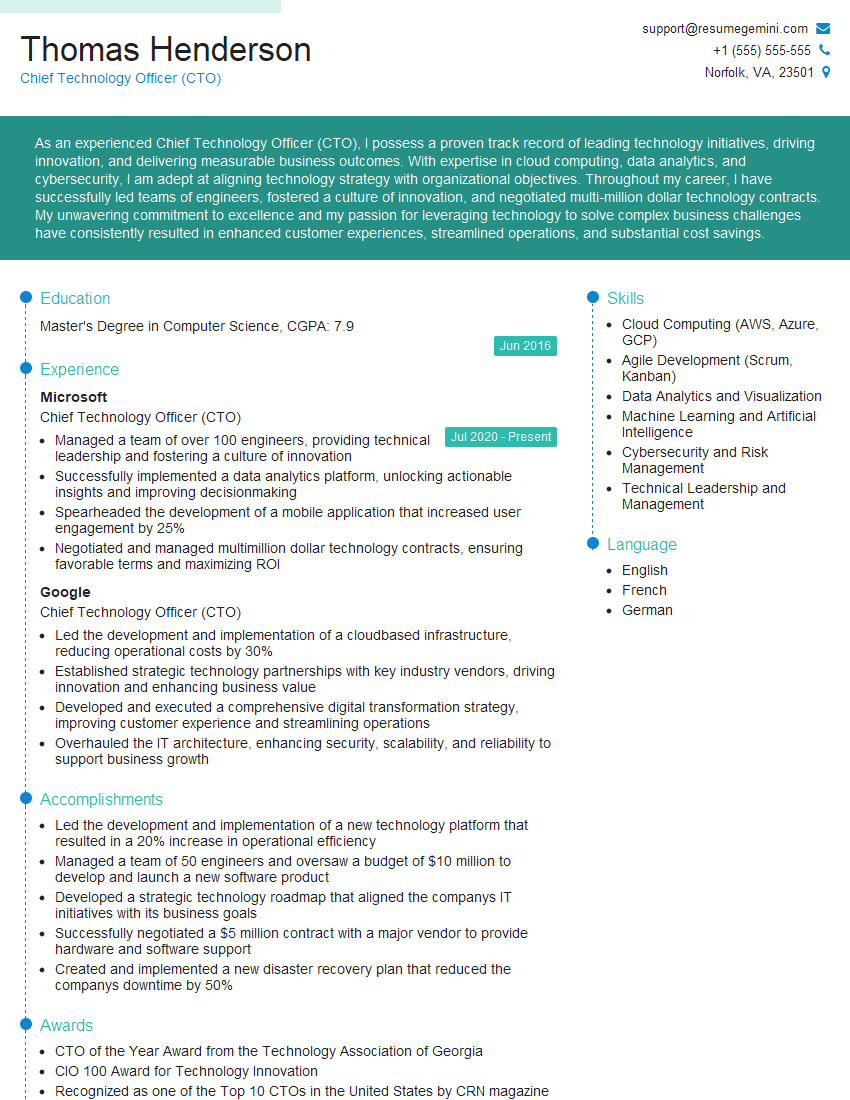
Chief Technology Officer (CTO) Resume Sample
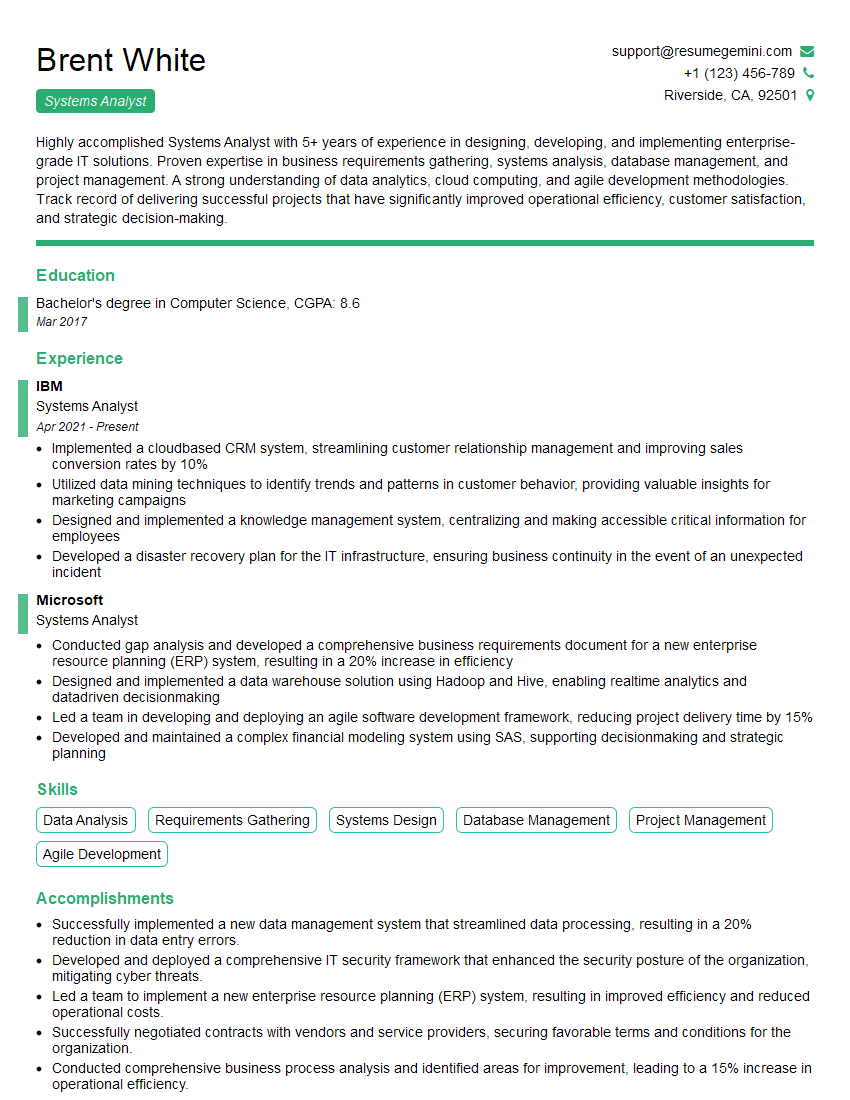
Systems Analyst Resume Sample
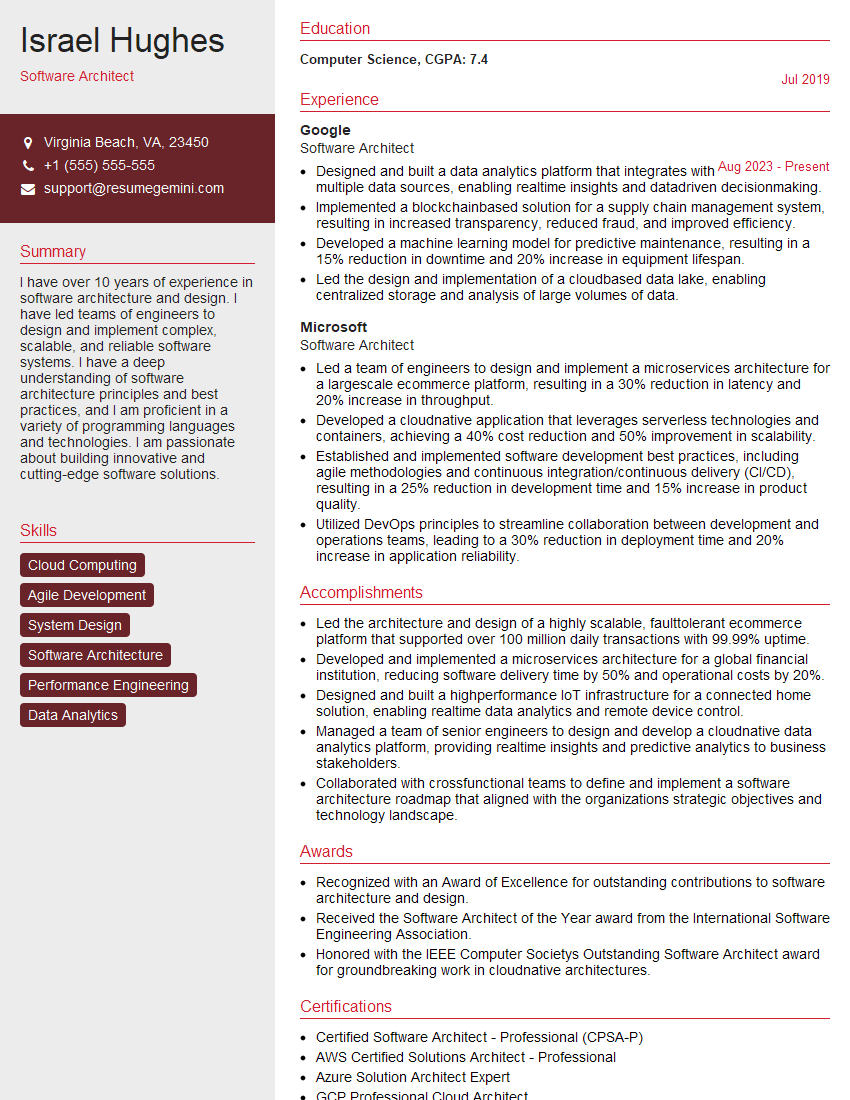
Software Architect Resume Sample
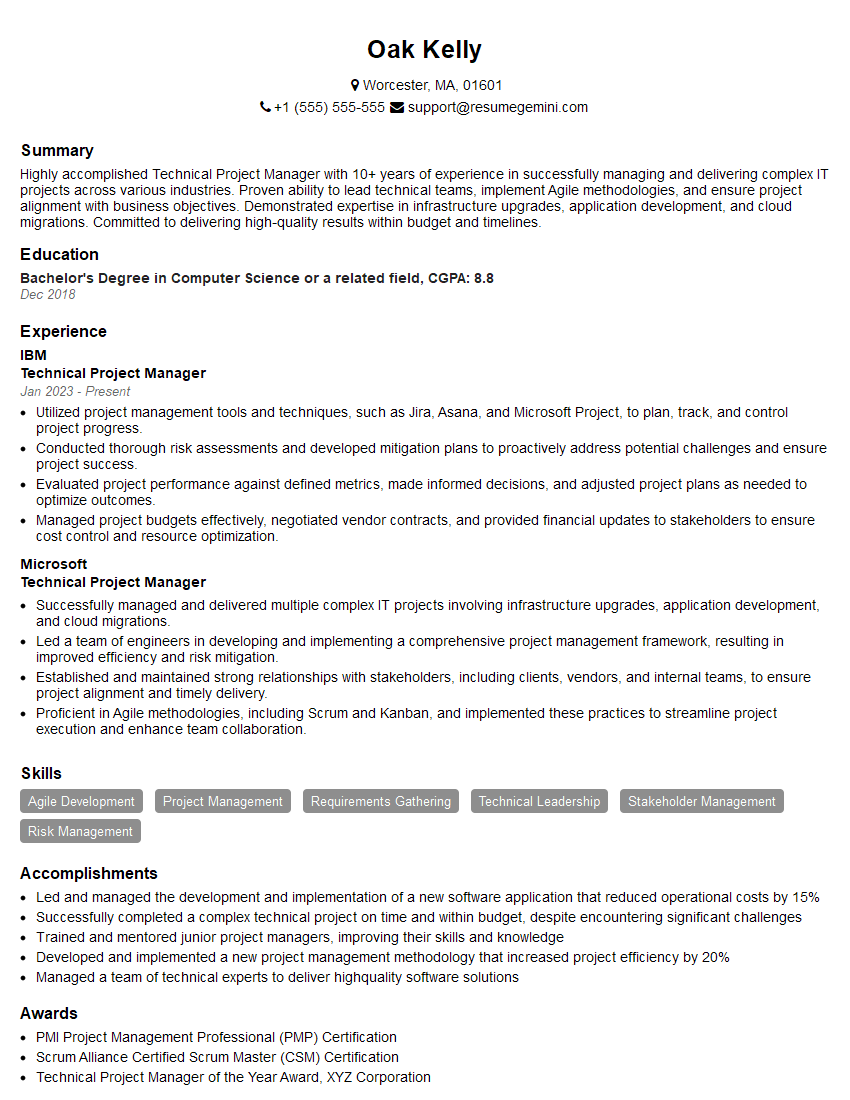
Technical Project Manager Resume Sample
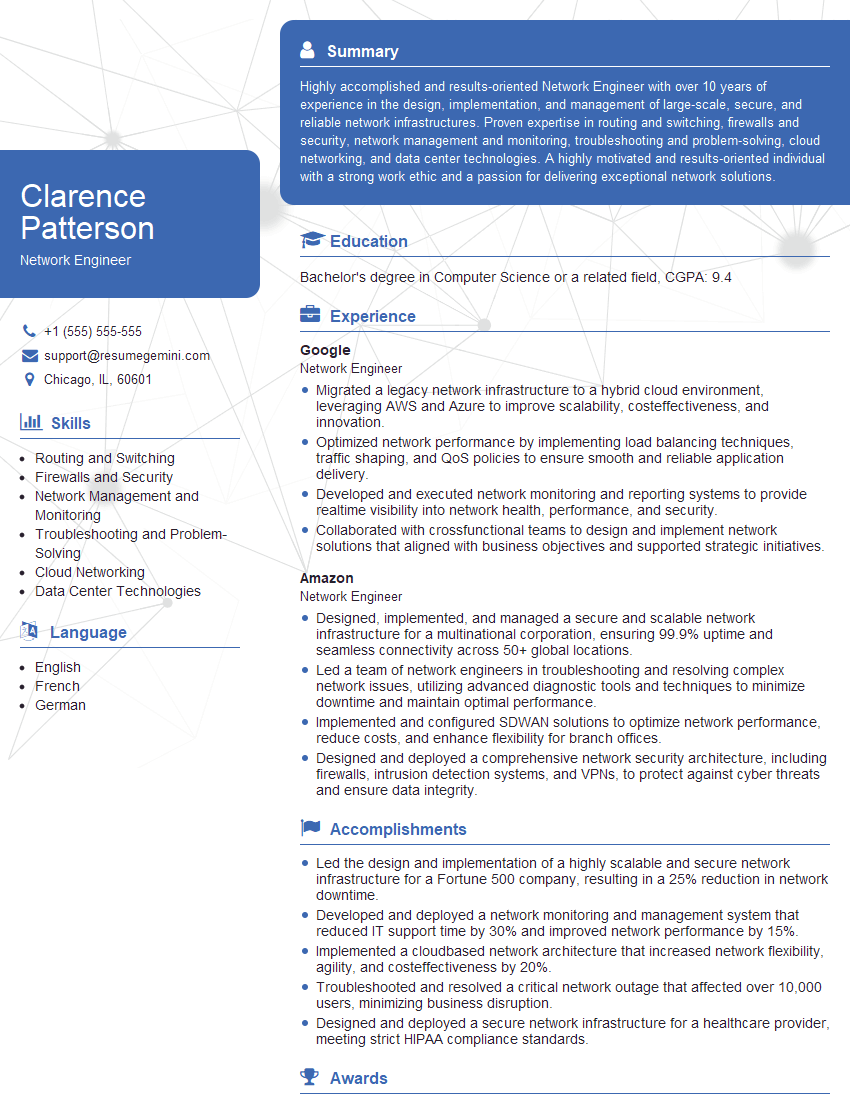
Network Engineer Resume Sample
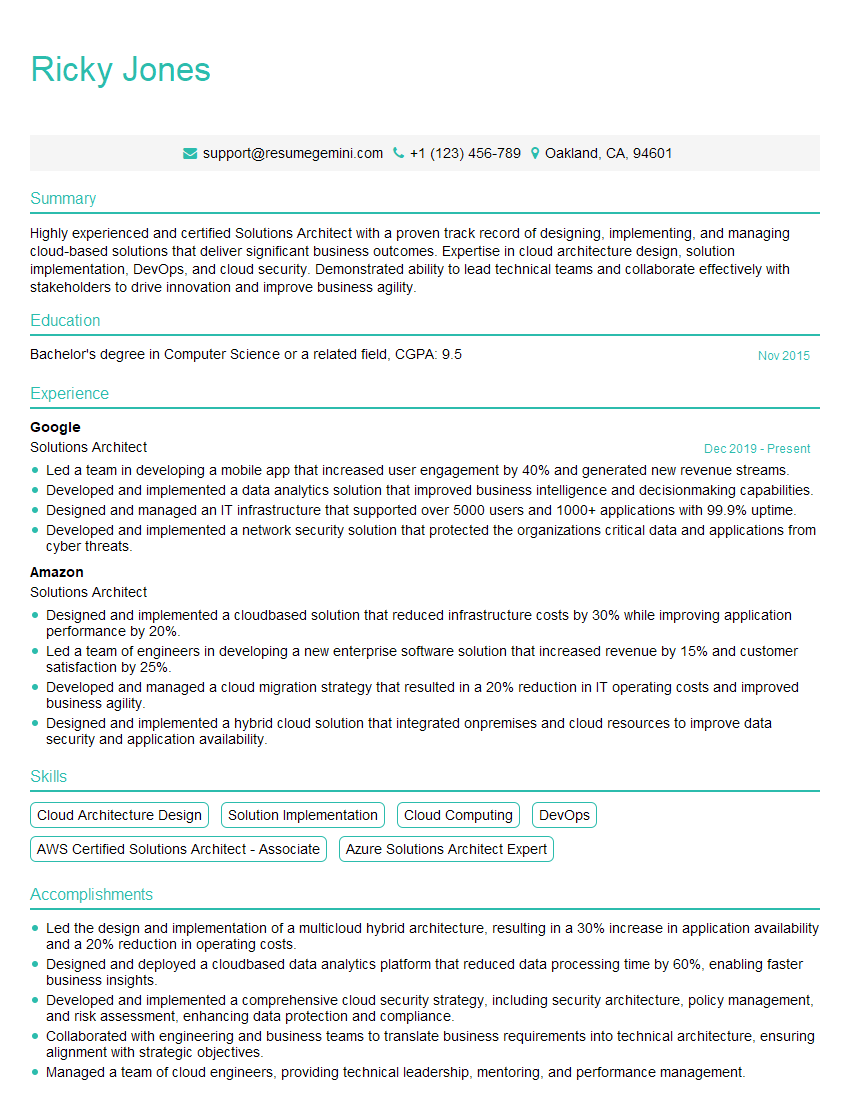
Solutions Architect Resume Sample

Senior Software Engineer Resume Sample
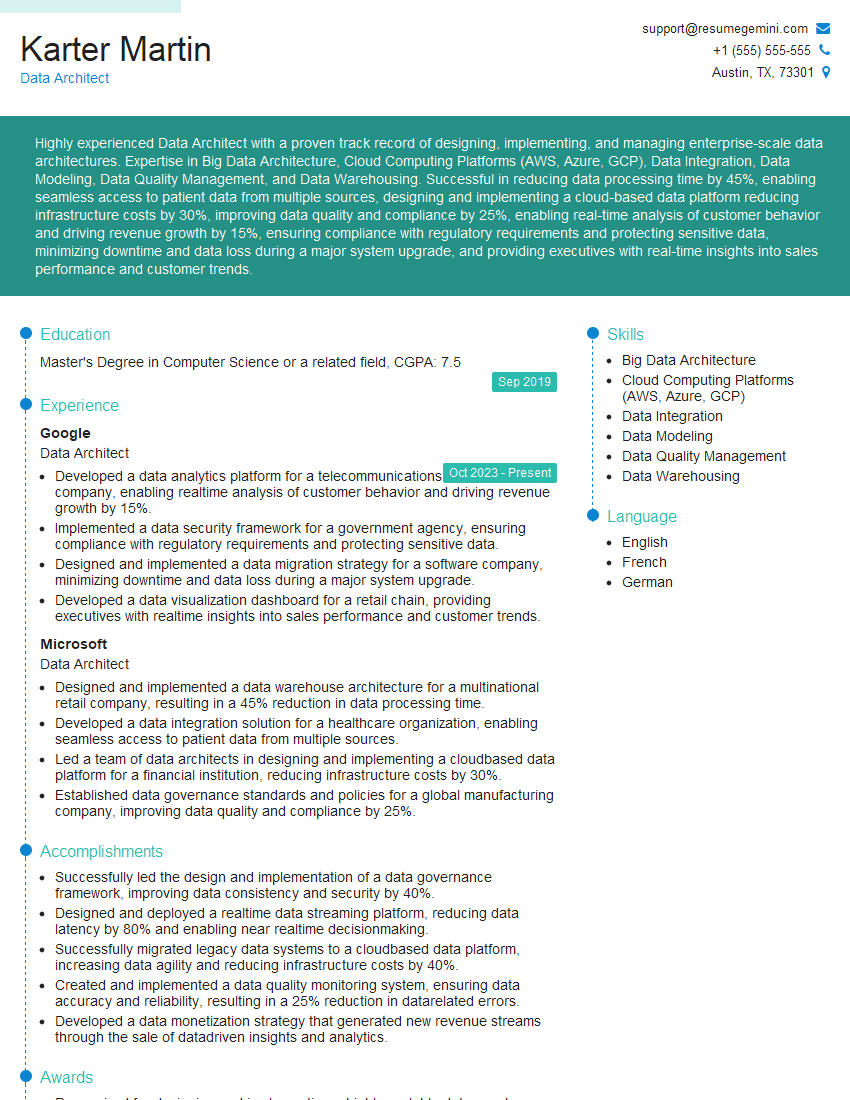
Data Architect Resume Sample
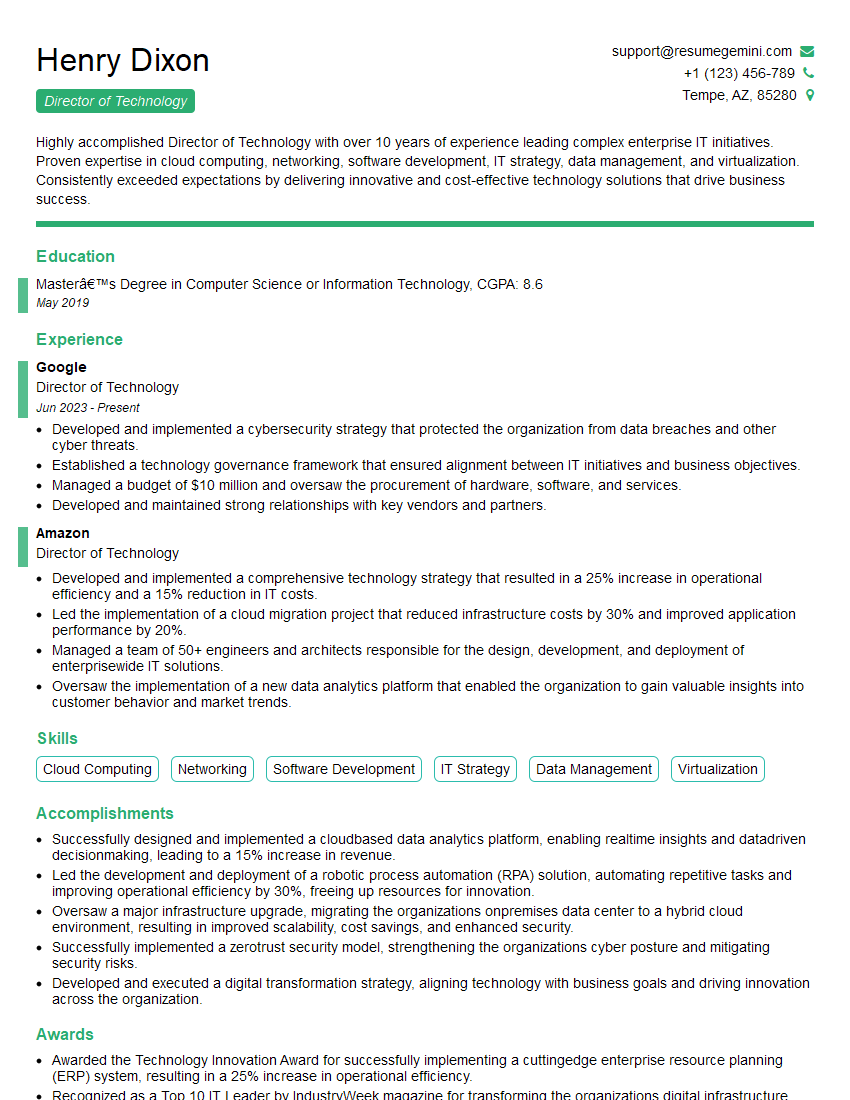
Director of Technology Resume Sample
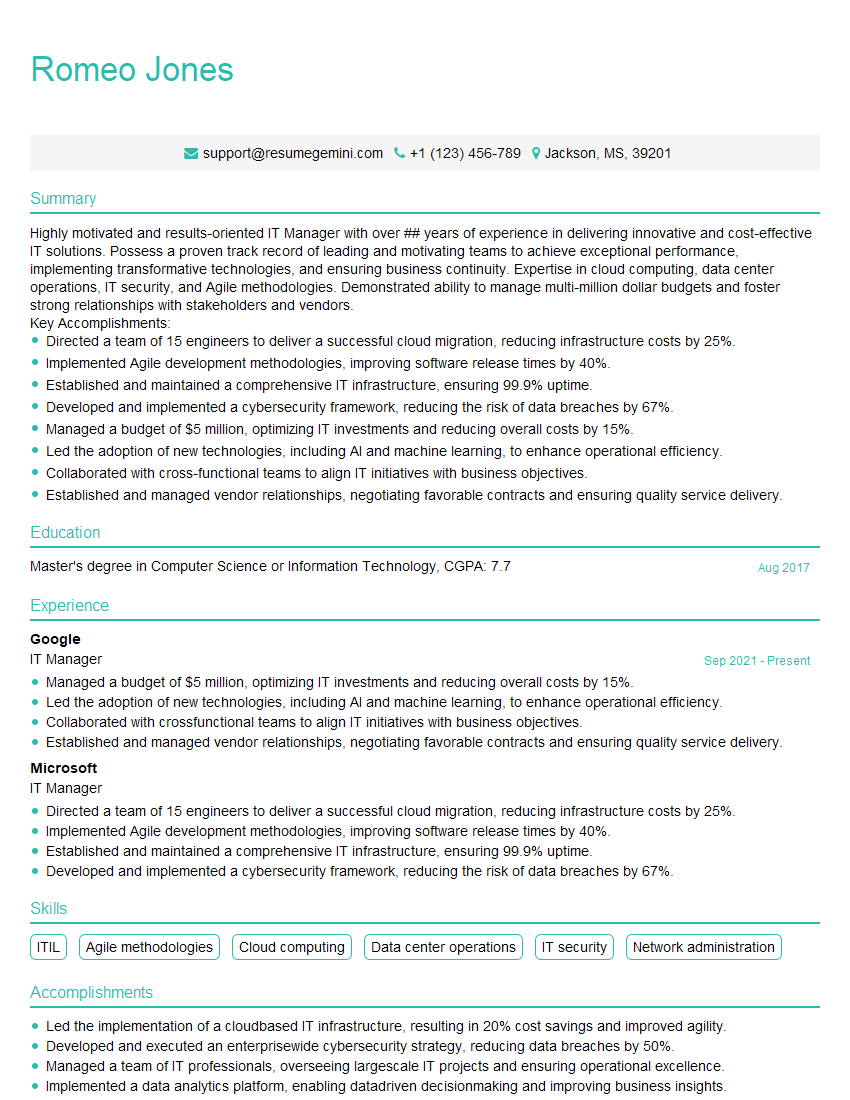
IT Manager Resume Sample

Technical Writer Resume Sample
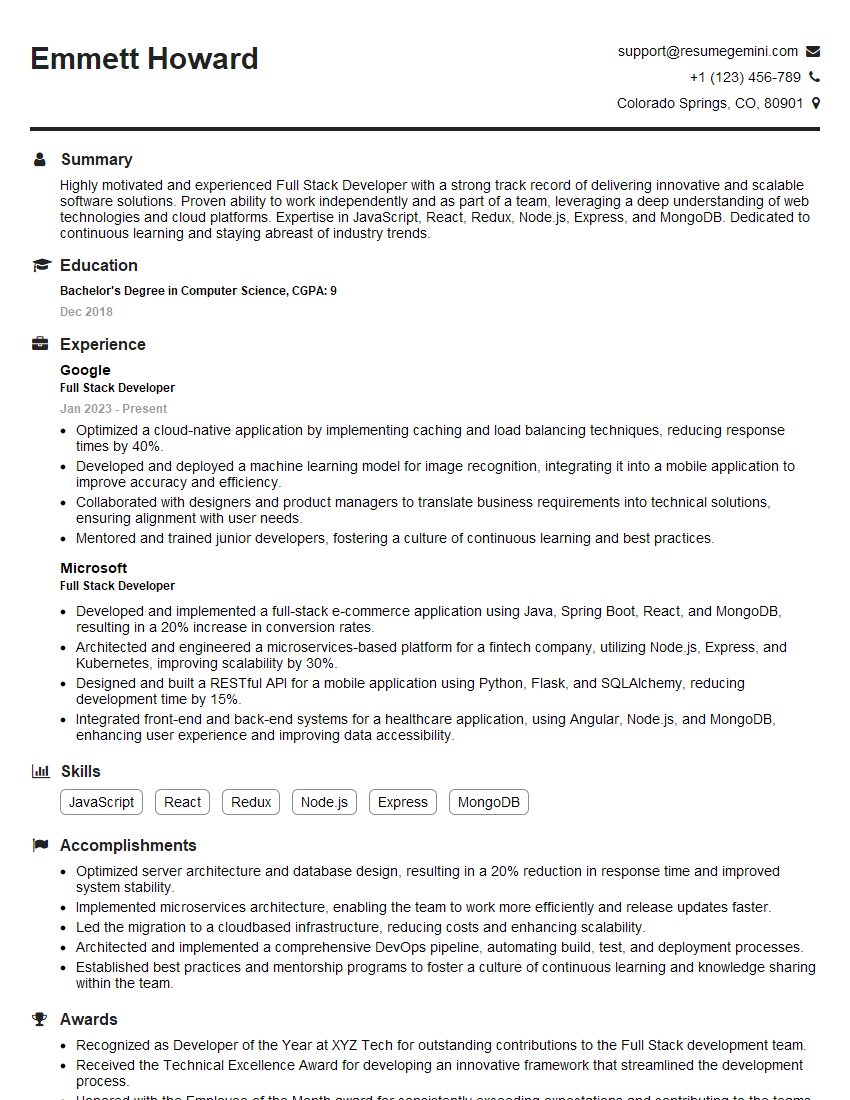
Full Stack Developer Resume Sample
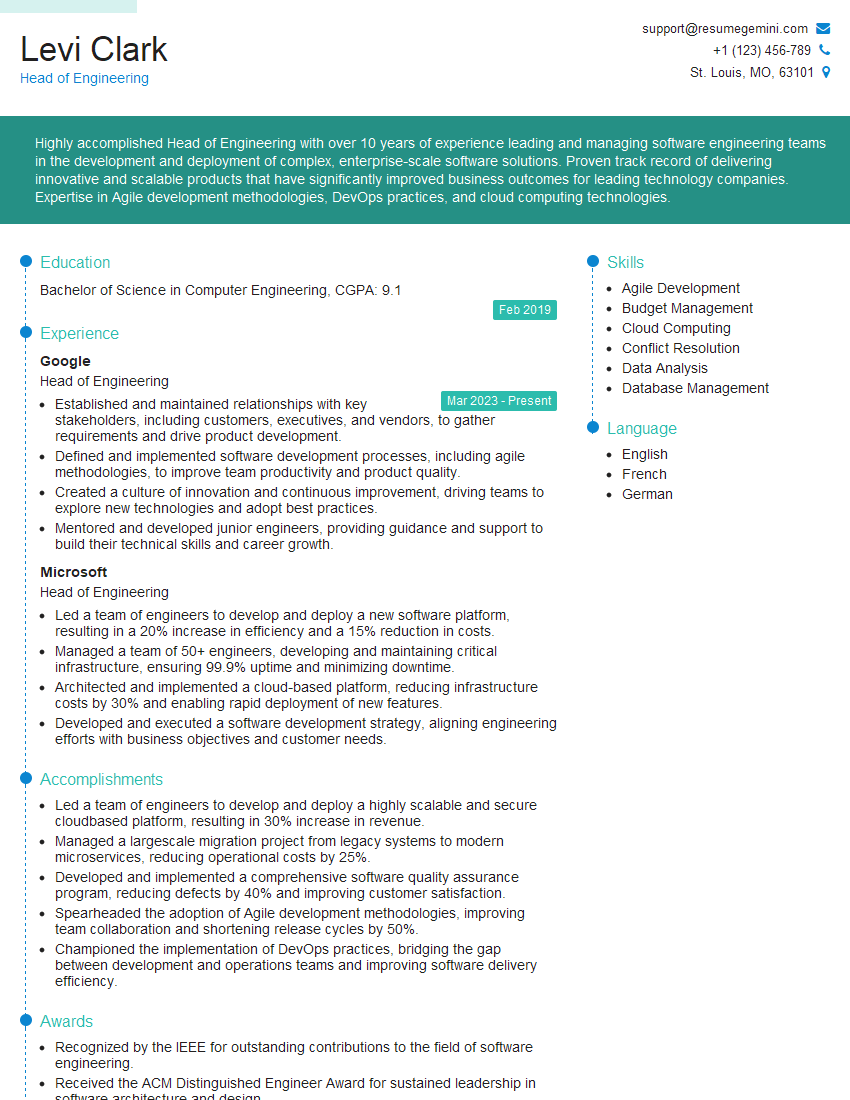
Head of Engineering Resume Sample
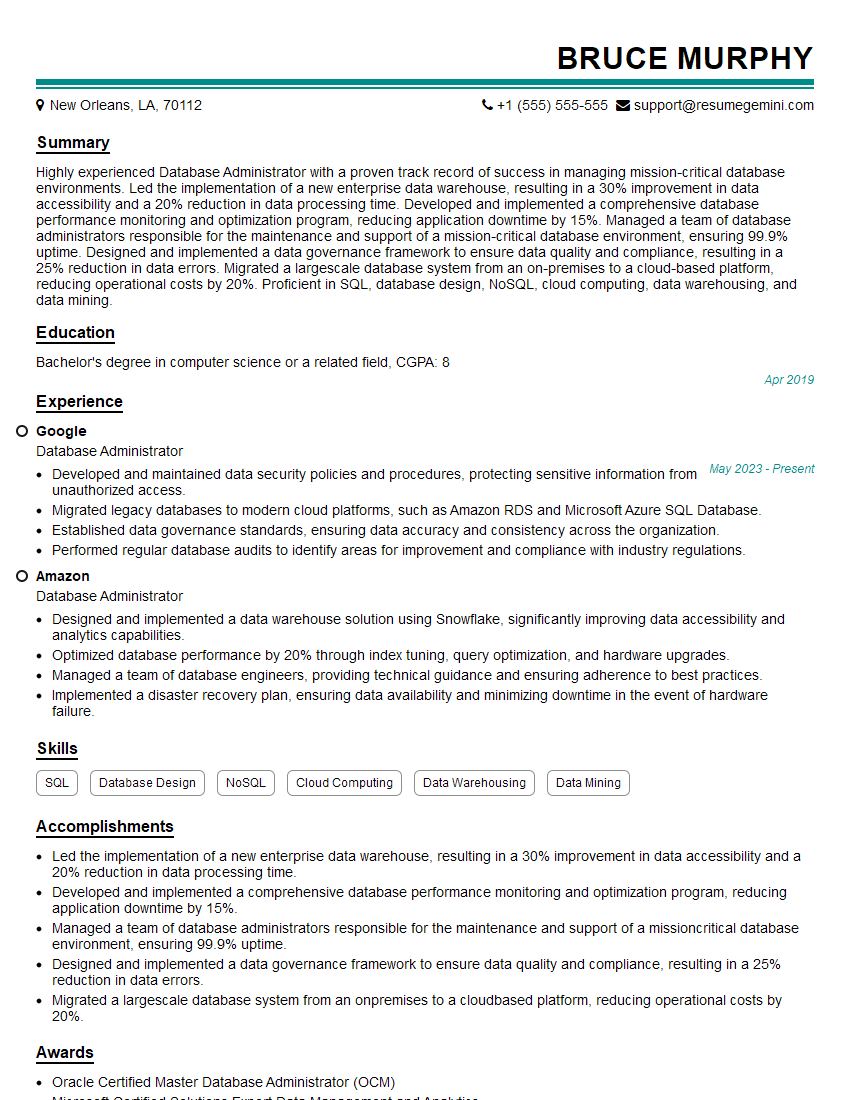
Database Administrator Resume Sample
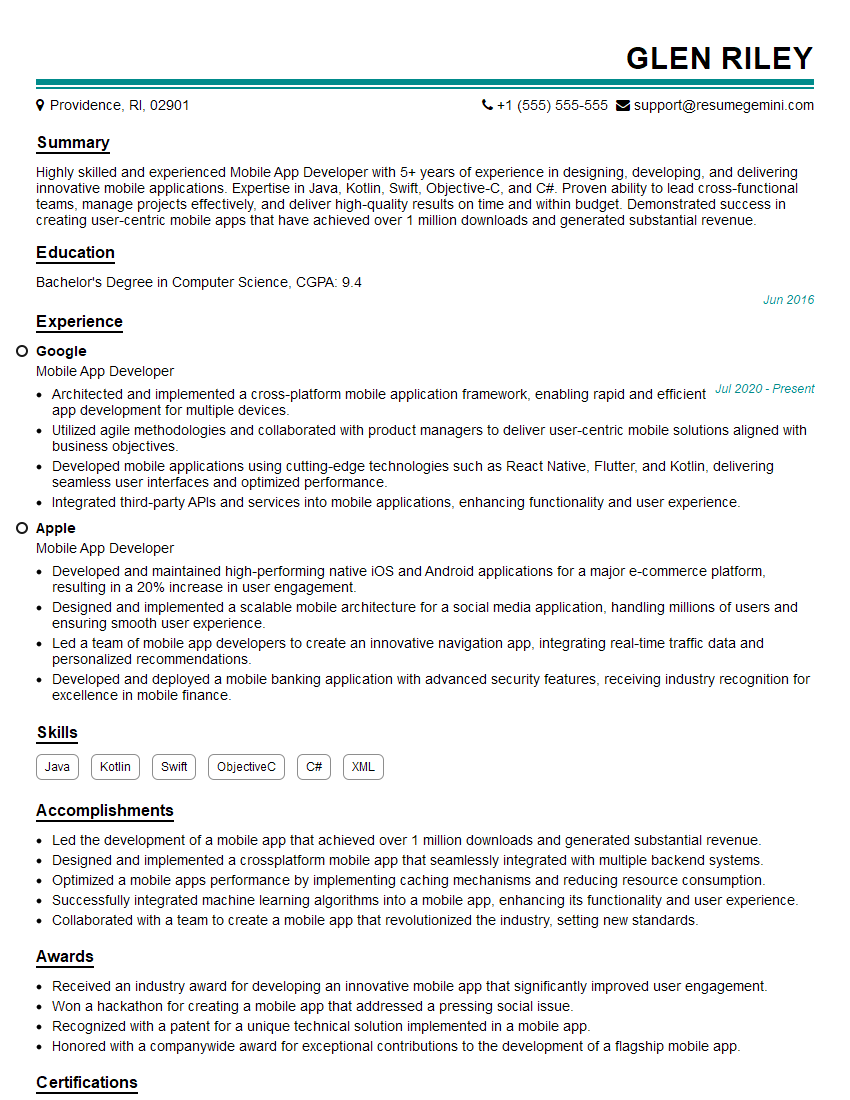
Mobile App Developer Resume Sample
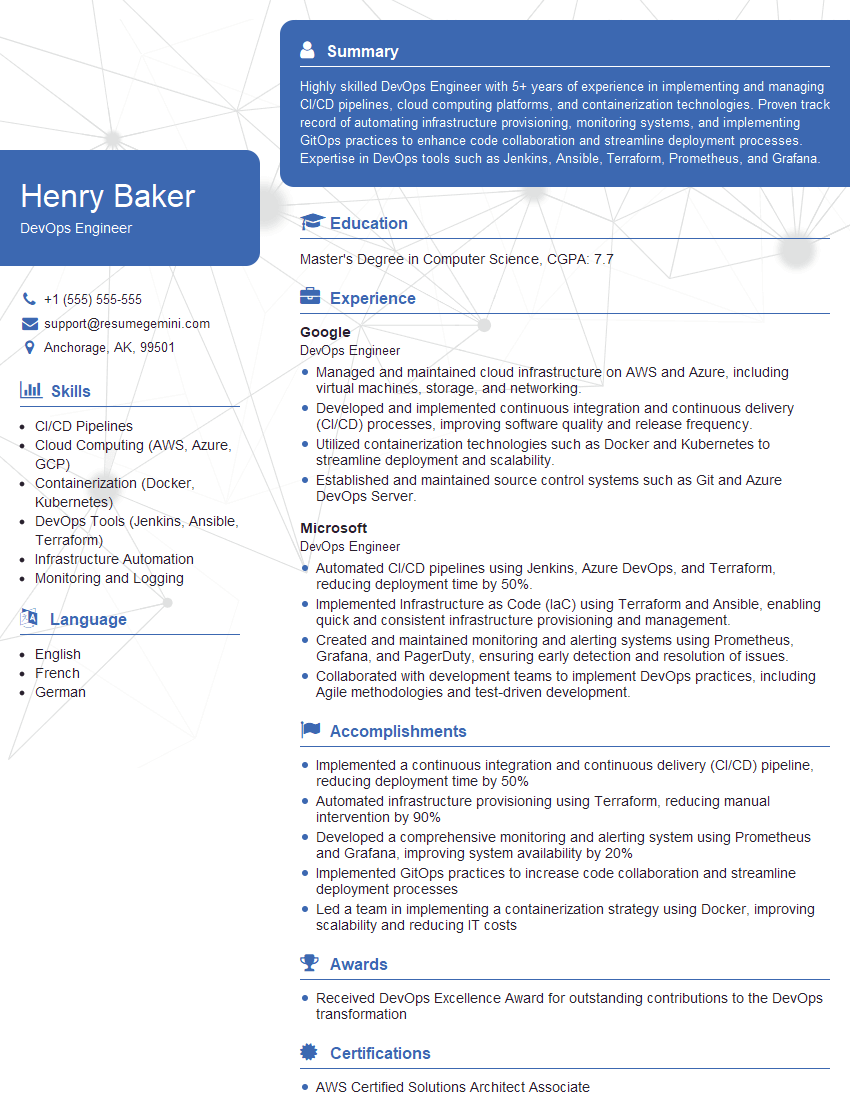
DevOps Engineer Resume Sample
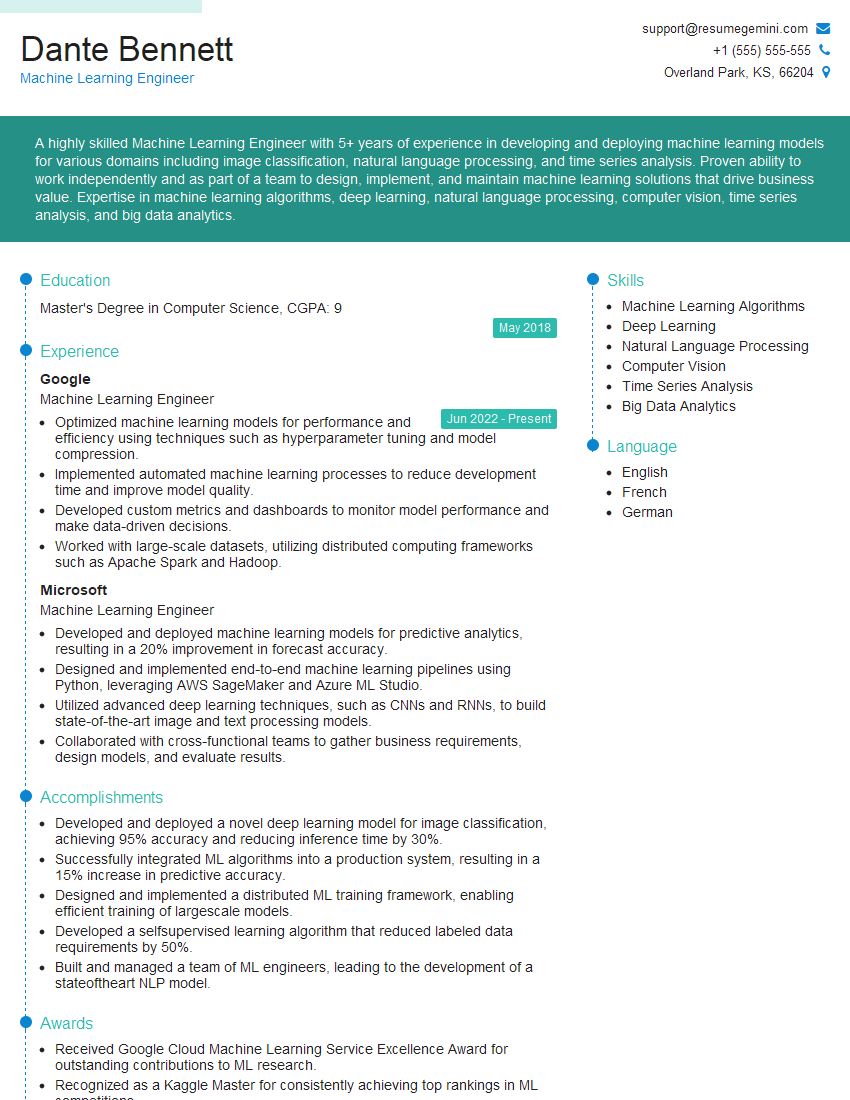
Machine Learning Engineer Resume Sample
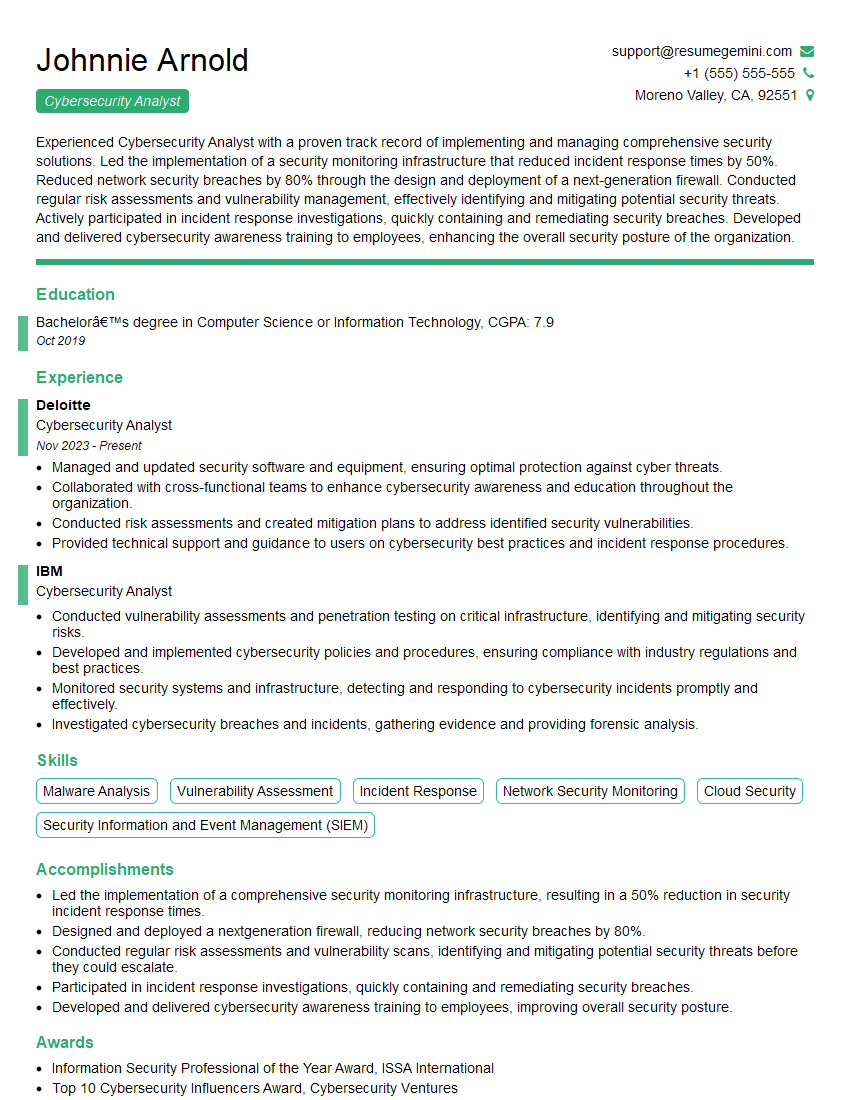
Cybersecurity Analyst Resume Sample
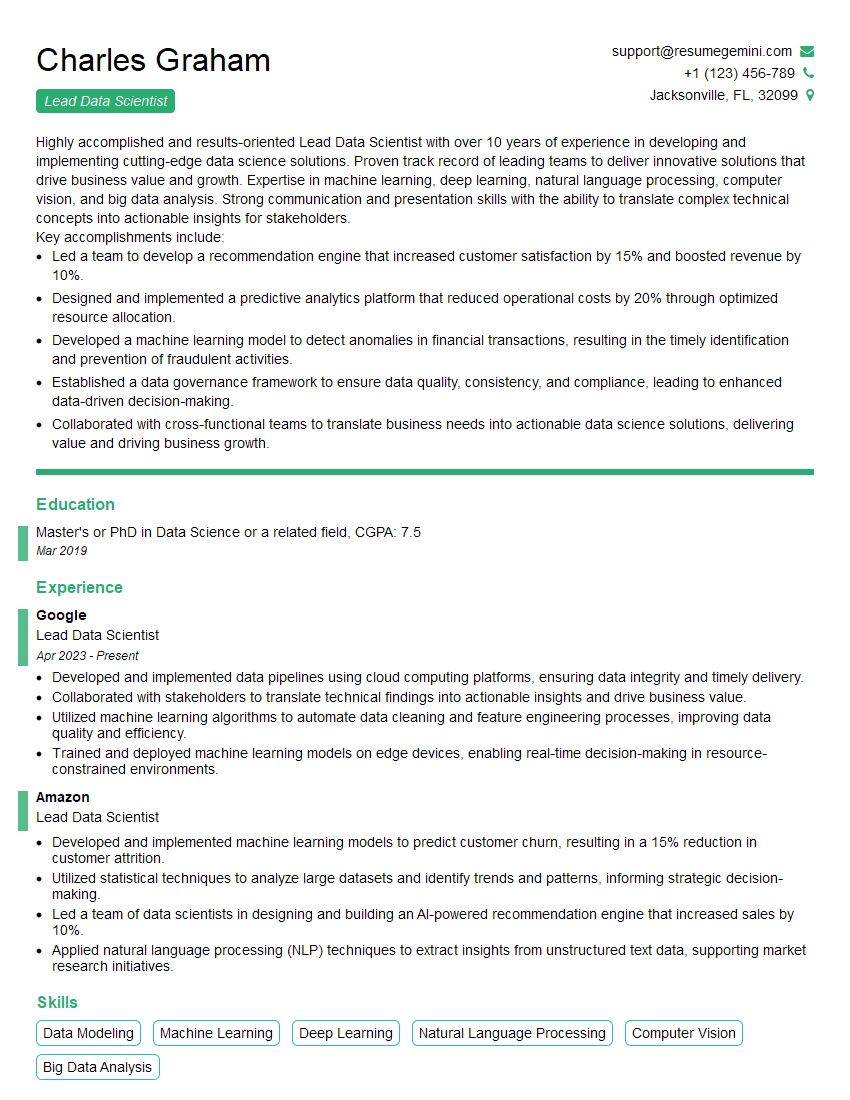
Lead Data Scientist Resume Sample
- Chief Technology Officer (CTO)
- Systems Analyst
- Software Architect
- Technical Project Manager
- Network Engineer
- Solutions Architect
- Senior Software Engineer
- Data Architect
- Director of Technology
- IT Manager
- Technical Writer
- Full Stack Developer
- Head of Engineering
- Database Administrator
- Mobile App Developer
- DevOps Engineer
- Machine Learning Engineer
- Cybersecurity Analyst
- Lead Data Scientist
Explore more articles
Users Rating of Our Blogs
Share Your Experience
We value your feedback! Please rate our content and share your thoughts (optional).
What Readers Say About Our Blog
I Redesigned Spongebob Squarepants and his main characters of my artwork.
https://www.deviantart.com/reimaginesponge/art/Redesigned-Spongebob-characters-1223583608
IT gave me an insight and words to use and be able to think of examples
Hi, I’m Jay, we have a few potential clients that are interested in your services, thought you might be a good fit. I’d love to talk about the details, when do you have time to talk?
Best,
Jay
Founder | CEO