The thought of an interview can be nerve-wracking, but the right preparation can make all the difference. Explore this comprehensive guide to Traffic Volume Analysis interview questions and gain the confidence you need to showcase your abilities and secure the role.
Questions Asked in Traffic Volume Analysis Interview
Q 1. Explain the difference between AADT and ADT.
Both AADT and ADT represent average daily traffic, but they differ in the timeframe they consider. AADT (Annual Average Daily Traffic) represents the average daily traffic volume over an entire year, providing a long-term perspective on traffic patterns. Think of it like calculating your average daily spending over a whole year – it smooths out seasonal fluctuations. ADT (Average Daily Traffic), on the other hand, represents the average daily traffic volume over a shorter period, typically a month or a season. This is like calculating your average daily spending for just the summer months – it shows a snapshot of traffic during that specific period. Using AADT helps in long-term planning for infrastructure improvements, while ADT is useful for understanding short-term traffic conditions and potential congestion issues.
Q 2. What are the common methods for collecting traffic volume data?
Collecting traffic volume data involves a variety of methods, each with its strengths and weaknesses. Common methods include:
- Manual Counts: Trained personnel physically count vehicles passing a specific point during a defined period. This is simple and inexpensive for small-scale studies but labor-intensive and prone to human error.
- Automatic Traffic Recorders (ATRs): These electronic devices use various technologies like inductive loops, radar, or video image processing to automatically count and classify vehicles. ATRs provide more accurate and continuous data than manual counts, but they have higher initial costs and require maintenance.
- Pneumatic Road Tubes: These tubes are placed across a roadway and detect the pressure changes caused by passing vehicles. They are effective but can be disruptive to road surfaces and less effective in differentiating vehicle types.
- Vehicle Detection Systems (VDS): Sophisticated systems using various sensor technologies to detect and classify vehicles, offering a detailed understanding of traffic characteristics. This method is typically integrated into advanced traffic management systems.
- Data from GPS devices: Aggregated and anonymized GPS data from smartphones and navigation systems can provide valuable insights into overall traffic patterns and flow, especially in urban areas.
The choice of method depends on factors such as budget, required accuracy, study scope, and available infrastructure.
Q 3. Describe different traffic counting techniques (e.g., manual counts, automatic traffic recorders).
Traffic counting techniques range from simple manual methods to sophisticated automated systems:
- Manual Counts: As mentioned before, this involves observers visually counting vehicles and classifying them by type (cars, trucks, buses, etc.). While inexpensive, it’s time-consuming, prone to errors, and suitable only for short durations or low-traffic volumes. Think of a student volunteer counting cars during a science fair project – simple but not very comprehensive.
- Automatic Traffic Recorders (ATRs): These use various technologies. Inductive loop detectors are embedded in the road surface and detect the change in magnetic field caused by passing vehicles. Radar detectors use electromagnetic waves to detect vehicles. Video image processing systems analyze video footage to count and classify vehicles. ATRs provide continuous, automated data collection, reducing errors but require initial investment and maintenance.
The choice between manual and automated counting depends on the project’s scale, budget, and required level of detail. For example, a small-scale study of a local road might use manual counts, while a large-scale study of a highway system would necessitate ATRs.
Q 4. How do you handle missing data in traffic volume datasets?
Missing data in traffic volume datasets is a common problem. Effective strategies for handling this include:
- Identifying the cause of missing data: Understanding why data is missing (e.g., equipment malfunction, data transmission errors) can guide the choice of imputation method.
- Data imputation techniques: Methods like mean/median imputation (replacing missing values with the average or median of the available data), linear interpolation (estimating missing values based on neighboring data points), and more advanced statistical methods (e.g., multiple imputation) can be employed. The best method depends on the nature and extent of the missing data.
- Using external data sources: If possible, missing data can sometimes be supplemented with data from neighboring locations or similar road segments.
- Flagging missing data: Instead of imputing, missing data can be flagged and analyzed separately to understand potential biases or systematic errors.
It’s crucial to document the methods used to handle missing data to maintain transparency and allow for better interpretation of the results. Inappropriate handling of missing data can lead to biased or inaccurate conclusions.
Q 5. What are some common sources of error in traffic volume data?
Several sources can introduce errors into traffic volume data:
- Equipment malfunctions: ATRs can malfunction due to power outages, sensor failures, or software glitches. This leads to missing data or inaccurate counts.
- Human error: Manual counts are subject to human error, such as miscounting or misclassifying vehicles.
- Data processing errors: Errors can occur during data cleaning, validation, and analysis. For example, incorrect data entry or faulty algorithms can skew results.
- Obstructions: Physical obstructions like parked vehicles or construction can block the view of sensors or prevent accurate vehicle detection.
- Environmental factors: Weather conditions (e.g., heavy rain, snow) can affect the performance of some sensors, resulting in inaccurate counts.
- Data aggregation issues: Errors can arise from the way data is aggregated over time or space.
Implementing quality control measures, regular equipment calibration, and careful data validation are crucial to minimize these errors.
Q 6. Explain the concept of traffic density and its relationship to traffic volume.
Traffic density refers to the number of vehicles occupying a given length of roadway at a specific time. It’s often expressed as vehicles per kilometer or mile. Traffic volume, on the other hand, represents the total number of vehicles passing a point on a roadway during a specific time interval (e.g., hourly, daily). While distinct, they are closely related. High traffic volume often leads to high traffic density, especially during peak hours. However, traffic density can be high even with moderate volume if vehicles are traveling slowly and closely spaced (congestion). Think of a highway: high volume implies many cars passing a point, while high density means many cars packed together in a specific section, often resulting in slower speeds.
Understanding both volume and density is crucial for traffic management. High density, regardless of volume, signifies congestion requiring intervention.
Q 7. How do you calculate traffic flow rate?
Traffic flow rate, also known as traffic speed, is the average rate at which vehicles pass a given point on a roadway during a specific time interval. It’s typically expressed in vehicles per hour (vph) or vehicles per minute (vpm). The calculation is straightforward:
Flow Rate (vph) = Total number of vehicles / Time interval (hours)
For example, if 1200 vehicles pass a point in one hour, the flow rate is 1200 vph. This value is crucial for assessing the efficiency of roadways, identifying bottlenecks, and designing effective traffic management strategies.
Q 8. What is Peak Hour Factor (PHF) and how is it used?
The Peak Hour Factor (PHF) is a crucial concept in traffic engineering representing the ratio of the total hourly volume to the peak 15-minute flow rate within that hour. In simpler terms, it shows how much the traffic flow during the busiest 15 minutes of an hour deviates from the average flow rate for the entire hour. A PHF of 1.0 implies that the peak 15-minute flow is exactly one-quarter of the hourly volume; and the traffic flow is perfectly distributed across the hour.
How it’s used: PHF is used to estimate the peak-hour volume from an hourly volume count. Since continuous counting of peak 15-minute traffic is often impractical, PHF provides a valuable adjustment factor. For instance, if an hourly volume is 1200 vehicles and the PHF is 0.9, the peak-hour volume is estimated as 1200 / 0.9 ≈ 1333 vehicles. This is important for designing roadways and traffic management strategies, as engineers need to account for peak demand.
Example: A highway count shows an hourly volume of 1000 vehicles. If the PHF for that location and time of day is 0.85, the peak-hour volume is estimated as 1000 / 0.85 ≈ 1176 vehicles. This higher value is then used in capacity analysis to ensure the highway can adequately handle the peak traffic demand.
Q 9. Describe different traffic volume distribution patterns (e.g., normal, skewed).
Traffic volume distribution patterns describe how traffic flow varies over time. They are often visualized using histograms or time-series plots. Common patterns include:
- Normal Distribution: This represents a balanced distribution where the majority of the traffic volume occurs near the average, with gradual decreases on either side. Think of a bell curve. This is relatively rare in real-world traffic.
- Skewed Distribution: This indicates an imbalance, where the peak traffic occurs earlier or later than the average, with a long tail on one side. A right-skewed distribution means the peak occurs earlier with a longer tail of lower traffic volumes extending later. A left-skewed distribution shows the opposite – the peak is later, with a longer tail of lower traffic preceding it. Many urban areas exhibit a right-skewed distribution due to morning commutes.
- Bimodal Distribution: This shows two peaks in the traffic volume, potentially indicating separate peak periods, such as morning and evening commutes. This might be observed on highways with commuting traffic in both directions.
- Uniform Distribution (Rare): This would indicate consistent traffic volume throughout the day, a very unusual scenario.
Understanding these patterns is vital for efficient traffic management. A skewed distribution, for example, requires different strategies compared to a normal or bimodal one.
Q 10. How do you interpret traffic volume data to identify trends and patterns?
Interpreting traffic volume data involves a combination of descriptive and analytical techniques. First, we visualize the data using charts and graphs (line graphs for time series, histograms for distributions) to identify immediate trends. Then, we use statistical methods to discover deeper patterns.
- Trend Analysis: Looking for overall increases or decreases in traffic volume over time (e.g., year-over-year growth or decline).
- Seasonal Variation: Identifying fluctuations due to time of year (e.g., higher traffic during summer vacation).
- Day-of-Week Variation: Comparing traffic volumes on weekdays vs. weekends.
- Time-of-Day Variation: Recognizing the typical peak and off-peak hours.
- Correlation Analysis: Examining relationships between traffic volume and other factors (e.g., weather conditions, special events).
- Statistical Modeling: Applying time series models (ARIMA, etc.) to forecast future traffic volumes.
Example: Analyzing traffic data for a new highway might reveal a steady increase in volume during the first year, indicating successful adoption. However, seasonal variation could show lower volumes during winter months due to weather conditions.
Q 11. Explain the use of traffic volume data in transportation planning.
Traffic volume data is the cornerstone of effective transportation planning. It’s used to:
- Highway Design: Determining appropriate lane widths, intersection designs, and overall capacity based on projected traffic levels.
- Network Planning: Identifying congested areas and planning new roads, public transit routes, or other improvements.
- Signal Timing Optimization: Adjusting traffic signal timings to minimize delays and improve overall traffic flow.
- Intelligent Transportation Systems (ITS) Development: Providing data for the development and implementation of ITS technologies, such as adaptive traffic control systems and traffic information systems.
- Funding Prioritization: Justifying funding for transportation projects by demonstrating the need based on traffic data.
Example: Data showing consistently high traffic volumes on a particular arterial road might justify the construction of a new bypass to alleviate congestion.
Q 12. How do you use traffic volume data to assess the effectiveness of transportation improvements?
Assessing the effectiveness of transportation improvements using traffic volume data involves comparing ‘before’ and ‘after’ conditions. This is usually a comparative analysis.
- Before-After Studies: Collecting traffic volume data both before and after the implementation of an improvement (e.g., adding a lane, installing a new traffic signal). This shows the impact of the improvements.
- Performance Measures: Using metrics such as average speed, delay, queue length, and level of service to quantitatively evaluate the effectiveness of the improvement.
- Statistical Significance Tests: Employing statistical tests (t-tests, paired t-tests, etc.) to determine if the observed changes in traffic volume are statistically significant and not just due to random variation.
Example: If adding a lane to a highway resulted in a statistically significant reduction in average delay and an increase in average speed during peak hours, it would demonstrate the effectiveness of the improvement.
Q 13. What are the different types of traffic models used for forecasting?
Several traffic models are used for forecasting, categorized broadly as:
- Time Series Models: These models analyze historical traffic data to predict future trends. Examples include ARIMA (Autoregressive Integrated Moving Average) models, which account for autocorrelation and trend in the data.
- Regression Models: These models explore the relationship between traffic volume and other factors (e.g., population density, economic activity). Multiple linear regression is a common example.
- Simulation Models: These sophisticated models replicate the traffic flow in a network, considering various factors such as driver behavior and vehicle interactions. Examples include microscopic and macroscopic simulation models.
- Agent-Based Models: These models simulate individual driver behavior and interactions to predict traffic flow in a network, offering insights into complex traffic dynamics.
The choice of model depends on the available data, the desired level of detail, and the forecasting horizon.
Q 14. Explain the concept of traffic simulation and its applications.
Traffic simulation involves creating a computer model that replicates the behavior of traffic flow in a network. It uses algorithms to simulate vehicle movements, driver decisions, and interactions between vehicles and infrastructure. There are two main types:
- Microscopic Simulation: Simulates each vehicle individually, capturing detailed movements and interactions. It requires extensive data and computational resources but provides greater accuracy.
- Macroscopic Simulation: Models traffic flow as aggregated streams, focusing on overall traffic patterns rather than individual vehicles. It’s less computationally intensive but sacrifices some detail.
Applications:
- Evaluating Transportation Plans: Assessing the impact of new roads, traffic signals, or other infrastructure improvements before construction.
- Optimizing Traffic Control Strategies: Evaluating different signal timing plans or ramp metering strategies.
- Incident Management: Simulating the effects of accidents or other incidents on traffic flow to plan emergency responses.
- Education and Training: Providing a virtual environment for traffic engineers and planners to learn about traffic dynamics.
Example: A city might use microscopic traffic simulation to evaluate the effectiveness of a proposed bus rapid transit system by modeling bus movements, passenger boarding/alighting, and their impact on surrounding traffic flow.
Q 15. What software packages are you familiar with for traffic volume analysis (e.g., Vissim, Aimsun, TransCAD)?
My expertise in traffic volume analysis encompasses several leading software packages. I’m proficient in using Vissim for microscopic simulation, modeling individual vehicle movements to analyze complex intersections and network behaviors. This is especially useful for evaluating the impact of proposed traffic management strategies. I also have extensive experience with Aimsun, a macroscopic simulation tool ideal for large-scale network analysis and long-term traffic planning. Aimsun’s strength lies in its ability to handle vast datasets and project future traffic conditions. Finally, I’m familiar with TransCAD, a powerful GIS-integrated software package that excels in data management, visualization, and spatial analysis of traffic data. The choice of software depends heavily on the specific project requirements and the scale of the network being analyzed.
Career Expert Tips:
- Ace those interviews! Prepare effectively by reviewing the Top 50 Most Common Interview Questions on ResumeGemini.
- Navigate your job search with confidence! Explore a wide range of Career Tips on ResumeGemini. Learn about common challenges and recommendations to overcome them.
- Craft the perfect resume! Master the Art of Resume Writing with ResumeGemini’s guide. Showcase your unique qualifications and achievements effectively.
- Don’t miss out on holiday savings! Build your dream resume with ResumeGemini’s ATS optimized templates.
Q 16. How do you analyze traffic volume data using statistical methods?
Statistical methods are crucial for extracting meaningful insights from raw traffic volume data. I typically begin by exploring descriptive statistics – calculating measures like mean, median, and standard deviation of traffic counts to understand the central tendency and variability of traffic flow. Then, I delve into inferential statistics to test hypotheses and draw conclusions about the data. For instance, I might use t-tests to compare traffic volumes between different time periods or locations. Time series analysis techniques, such as ARIMA modeling, are invaluable for identifying trends and seasonality in traffic data. This allows us to predict future traffic patterns with greater accuracy. Regression analysis is another powerful tool, enabling me to understand the relationship between traffic volume and other factors, like time of day, day of the week, or weather conditions. For example, I might use regression to model the impact of a new shopping mall on traffic volumes in the surrounding area. Finally, data mining techniques help to identify patterns and anomalies in the data that may not be apparent through conventional statistical methods.
Q 17. Describe your experience with different data visualization techniques for traffic volume data.
Effective data visualization is key to communicating complex traffic volume data clearly and concisely. I utilize a variety of techniques, choosing the most appropriate method depending on the specific information I need to convey. Line graphs are excellent for showing trends in traffic volume over time. Bar charts are useful for comparing traffic volumes across different locations or time periods. Heatmaps provide a visual representation of traffic density across a geographical area, instantly highlighting congestion hotspots. Choropleth maps are useful for showing variations in traffic volume across different zones or administrative regions. Interactive dashboards, developed using tools like Tableau or Power BI, enable dynamic exploration of the data, allowing stakeholders to filter and drill down into specific aspects of the data. For example, I might use a dashboard to allow a city planner to explore traffic volume data based on time of day, day of week, and different weather scenarios. The goal is always to create visualizations that are intuitive, insightful, and readily understood by both technical and non-technical audiences.
Q 18. How do you identify bottlenecks in a transportation network using traffic volume data?
Identifying bottlenecks is a critical aspect of traffic volume analysis. I use a multi-faceted approach. First, I analyze traffic flow indices like speed, density, and occupancy. Significant drops in speed or increases in density and occupancy often indicate bottlenecks. Second, I use visualization techniques, such as heatmaps and network flow diagrams, to visually identify areas with persistently high congestion. Third, I leverage simulation models (like Vissim or Aimsun) to test different scenarios and determine how specific locations influence overall network performance. For example, a consistently low speed on a particular highway segment, accompanied by high density, points to a potential bottleneck. Simulations can then reveal the root causes, whether it’s insufficient lane capacity, poor signal timing, or an accident-prone location. Finally, I analyze incident data to determine if recurring incidents at specific points are contributing to bottlenecks. By using these methods in combination, I can pinpoint and diagnose bottlenecks in a robust and accurate way.
Q 19. How do you predict future traffic volumes based on historical data?
Predicting future traffic volumes is a complex task, but crucial for effective transportation planning. I primarily rely on time series forecasting methods, using historical traffic volume data as the foundation. ARIMA models are widely used to capture the temporal dependencies and seasonality inherent in traffic data. More advanced techniques, such as SARIMA (Seasonal ARIMA) models, explicitly account for seasonal fluctuations. I also utilize machine learning algorithms, such as regression trees or neural networks, which can capture more complex non-linear relationships in the data. These algorithms often outperform simpler models when significant external factors, such as economic trends or construction projects, influence traffic. For increased accuracy, I often incorporate external data such as land use changes, population growth projections, and planned infrastructure developments into the predictive models. The key is to select the appropriate forecasting method based on the characteristics of the data and the desired prediction horizon.
Q 20. What are the limitations of using historical data for future traffic volume prediction?
While historical data is invaluable for traffic volume prediction, it has inherent limitations. First, historical data may not accurately reflect future conditions. Significant changes, such as new developments, major infrastructure projects, or shifts in economic activity, can drastically alter traffic patterns. Second, unforeseen events, like natural disasters or unexpected road closures, can severely impact traffic volume and are difficult to incorporate into predictive models. Third, data quality is crucial. Inaccurate or incomplete historical data will lead to unreliable predictions. Finally, the accuracy of predictions decreases as the prediction horizon extends. Short-term predictions (e.g., next hour or day) are generally more accurate than long-term predictions (e.g., next year or decade). It’s essential to acknowledge these limitations and incorporate appropriate uncertainty measures into the predictions.
Q 21. How do you incorporate land use data into traffic volume analysis?
Land use data is a crucial component of comprehensive traffic volume analysis. It provides essential context for understanding traffic generation and distribution patterns. I integrate land use data by associating traffic counts with specific land use categories (residential, commercial, industrial, etc.). This allows me to quantify the contribution of each land use type to traffic volume. For example, a higher density of commercial establishments might correlate with greater traffic volumes during peak hours. I use spatial analysis techniques, commonly integrated within GIS software, to overlay traffic data with land use maps. This helps visualize the relationship between land use patterns and traffic flow, identifying areas of potential congestion or areas that may benefit from traffic mitigation strategies. Furthermore, land use forecasts can be incorporated into future traffic volume predictions, allowing for more accurate projections of traffic growth based on anticipated land use changes.
Q 22. Explain the relationship between traffic volume and Level of Service (LOS).
Level of Service (LOS) is a qualitative measure describing operational conditions within a traffic stream. It’s directly related to traffic volume because higher volumes generally lead to poorer LOS. Think of it like a crowded restaurant: low traffic volume (few diners) means excellent service (high LOS), while high traffic volume (many diners) may result in slow service and long wait times (low LOS).
Specifically, LOS is determined by factors including speed, density, and delay. As traffic volume increases, speeds decrease, density increases, and delays become more significant, resulting in a downgrade in LOS. The Highway Capacity Manual (HCM) provides specific criteria for determining LOS based on various roadway types and traffic characteristics. For example, a freeway might have an LOS A (free flow) at low volumes but an LOS F (extremely congested) during peak hours with high traffic volume. Different agencies may use slightly different methodologies, but the underlying principle remains the same: higher volume, typically worse LOS.
Q 23. How do you evaluate the capacity of a roadway section using traffic volume data?
Evaluating roadway section capacity using traffic volume data involves several steps. First, we need to define the relevant parameters, such as the number of lanes, lane width, presence of shoulders, and traffic control devices. This is because these factors directly influence a roadway’s capacity. Then we utilize the Highway Capacity Manual (HCM) guidelines. The HCM provides formulas and procedures to calculate capacity based on these factors and the observed or predicted traffic volume.
For example, a simple approach for a basic two-lane road might involve comparing the observed hourly volume to the theoretical capacity for a two-lane road obtained from HCM equations. If the hourly volume exceeds the capacity, then congestion is likely. This calculation needs to account for various factors such as truck percentages, peak hour factor (PHF), and directional distribution. More sophisticated methods may incorporate simulation software to model traffic flow and better predict capacity under varied conditions. A key output is the Volume-to-Capacity (V/C) ratio; a V/C ratio exceeding 1.0 indicates that the roadway’s capacity is exceeded.
Q 24. Describe your experience working with large traffic datasets.
Throughout my career, I’ve consistently worked with extensive traffic datasets, often exceeding terabytes in size. In one project, we analyzed loop detector data from a major metropolitan area, encompassing several years’ worth of 15-minute interval counts from over 500 detectors. This involved managing data from various sources, ensuring data consistency, and developing efficient processing pipelines. Another project required analyzing data from floating car data (FCD) and GPS traces to understand traffic patterns in a large highway system. This involved working with large, unstructured data, requiring data cleaning, preprocessing, and advanced analytical techniques. In both instances, my experience with big data technologies (Hadoop, Spark, etc.) was critical for efficient storage and processing.
Q 25. How do you manage and organize large amounts of traffic data?
Managing large traffic datasets requires a structured approach. I typically employ a combination of database management systems (DBMS) like PostgreSQL or cloud-based solutions such as AWS S3 and Snowflake for data storage. These systems enable efficient querying and retrieval. Data organization usually involves establishing a clear schema that includes relevant attributes like date, time, location, volume, speed, and other relevant traffic parameters. Furthermore, metadata management is crucial—carefully documenting data sources, processing steps, and any relevant assumptions. For instance, I use a system of well-defined folders and naming conventions, and I generate detailed documentation that is stored with the data itself. This is to ensure both quality and long-term accessibility.
Q 26. How do you ensure the accuracy and reliability of traffic volume data?
Ensuring data accuracy and reliability is paramount. My approach involves a multi-step process. Firstly, data validation is performed immediately after acquisition. This involves checking for inconsistencies, missing values, outliers, and plausibility. For example, checking for negative traffic counts or volumes significantly exceeding the theoretical capacity would indicate errors. Secondly, data cleaning methods such as outlier removal, imputation of missing data (using appropriate statistical techniques), and data transformation might be used to improve accuracy. Thirdly, quality control checks are performed at each stage. These checks often involve visual inspections of data plots, statistical analysis, and comparisons with data from other sources. Finally, using data from multiple independent sources whenever possible helps to improve accuracy through cross-validation and consistency checks.
Q 27. What are some emerging trends in traffic volume analysis?
Several emerging trends are shaping traffic volume analysis. One significant trend is the increased use of connected vehicle data (CVD) and the integration of various data sources, including social media feeds and mobile phone location data. This allows for more precise and granular analysis of traffic patterns in real-time. Another is the application of advanced analytics techniques, such as machine learning and deep learning algorithms, for traffic prediction, anomaly detection, and optimization of traffic management systems. These powerful tools help anticipate congestion, optimize traffic flow, and improve travel times. For example, predictive modeling is increasingly used to forecast traffic volumes based on historical data, weather patterns, and special events. Finally, the rise of smart cities is driving the need for more sophisticated and integrated traffic management solutions. This is requiring advancements in traffic modeling and data integration strategies.
Q 28. Explain your experience with traffic data validation and quality control.
My experience with traffic data validation and quality control is extensive. I regularly employ techniques such as range checks, consistency checks (comparing data from different sources), plausibility checks, and outlier analysis. In one project, I identified significant errors in loop detector data due to sensor malfunctions. Through careful analysis of the data and cross-referencing it with video footage, I was able to isolate the affected detectors and correct the data. I also have experience with developing automated quality control procedures to identify and flag potential errors in real-time. This ensures that only reliable data is used in the analysis. Data quality reports are regularly generated, documenting findings and outlining the steps taken to ensure data integrity. This comprehensive approach ensures the reliability of our analysis and the validity of our conclusions.
Key Topics to Learn for Traffic Volume Analysis Interview
- Fundamental Concepts: Understanding traffic flow theory, including concepts like traffic density, speed, and flow rate, and their interrelationships.
- Data Collection and Analysis Techniques: Familiarize yourself with various methods for collecting traffic data (e.g., loop detectors, video image processing, manual counts) and analyzing this data using statistical methods and software tools.
- Traffic Volume Forecasting Models: Learn about different forecasting models (e.g., time series analysis, regression models) used to predict future traffic volumes and their implications for infrastructure planning.
- Practical Applications: Understand how traffic volume analysis informs decisions related to highway design, traffic signal timing optimization, and transportation planning in general. Be prepared to discuss real-world examples.
- Capacity Analysis and Level of Service: Grasp the concepts of road capacity, level of service (LOS), and how traffic volume impacts these metrics. Be ready to discuss their practical significance.
- Microscopic and Macroscopic Simulation: Develop an understanding of the differences and applications of microscopic and macroscopic traffic simulation models. Consider their strengths and limitations.
- Incident Management and Impact Analysis: Explore how traffic volume analysis helps in understanding the impact of incidents (accidents, road closures) and developing effective incident management strategies.
- Data Visualization and Reporting: Practice effectively communicating your findings through clear and concise data visualizations and reports. This is crucial for conveying complex information.
Next Steps
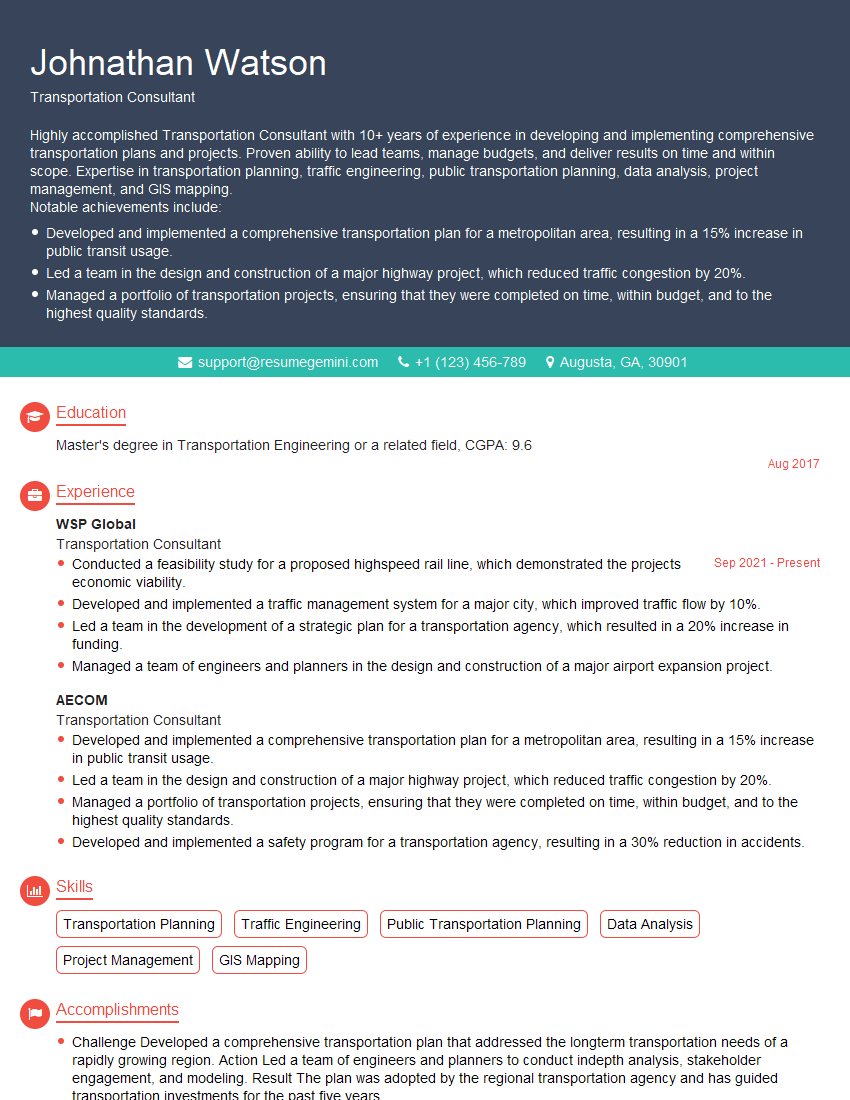
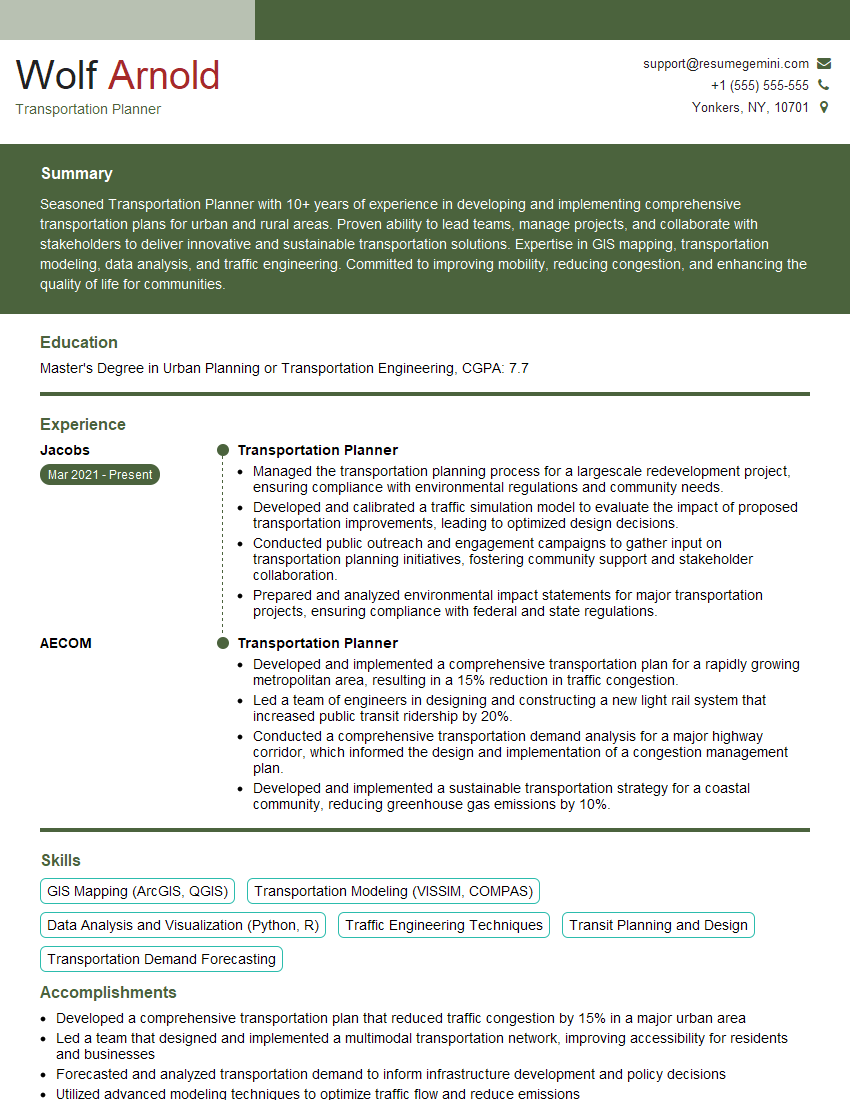
Mastering Traffic Volume Analysis opens doors to exciting career opportunities in transportation planning, engineering, and research. A strong understanding of these concepts is highly sought after by employers. To maximize your chances of landing your dream job, creating a compelling and ATS-friendly resume is crucial. ResumeGemini is a trusted resource that can help you build a professional resume tailored to showcase your skills and experience effectively. Examples of resumes tailored to Traffic Volume Analysis are available to guide you in crafting your perfect application. Take the next step towards a successful career – start building your resume today!

Explore more articles
Users Rating of Our Blogs
Share Your Experience
We value your feedback! Please rate our content and share your thoughts (optional).
What Readers Say About Our Blog
I Redesigned Spongebob Squarepants and his main characters of my artwork.
https://www.deviantart.com/reimaginesponge/art/Redesigned-Spongebob-characters-1223583608
IT gave me an insight and words to use and be able to think of examples
Hi, I’m Jay, we have a few potential clients that are interested in your services, thought you might be a good fit. I’d love to talk about the details, when do you have time to talk?
Best,
Jay
Founder | CEO