Are you ready to stand out in your next interview? Understanding and preparing for Maintenance Inspection interview questions is a game-changer. In this blog, we’ve compiled key questions and expert advice to help you showcase your skills with confidence and precision. Let’s get started on your journey to acing the interview.
Questions Asked in Maintenance Inspection Interview
Q 1. Describe your experience with different types of maintenance inspections (preventative, predictive, corrective).
My experience encompasses all three primary types of maintenance inspections: preventative, predictive, and corrective. Preventative maintenance involves scheduled inspections and servicing to prevent equipment failures before they occur. Think of it like regular car maintenance – oil changes, tire rotations – to avoid breakdowns. I’ve performed numerous preventative inspections on industrial machinery, including lubrication checks, visual inspections for wear and tear, and functional testing of safety mechanisms. Predictive maintenance utilizes advanced techniques like vibration analysis, oil analysis, and thermal imaging to identify potential failures *before* they manifest as symptoms. For example, I’ve used vibration analysis to detect imbalances in rotating equipment, allowing for proactive repairs and avoiding costly downtime. Finally, corrective maintenance addresses failures that have already occurred. This involves troubleshooting, repair, and replacement of faulty components. I’ve handled everything from simple electrical repairs to complex hydraulic system overhauls, meticulously documenting each step for future reference and root cause analysis.
- Preventative: Regularly scheduled checks on conveyor belts for wear and tear, preventing unexpected stoppages.
- Predictive: Utilizing infrared thermography to identify hot spots in electrical panels, indicating potential insulation failure.
- Corrective: Repairing a broken pump after it failed, analyzing the cause of failure to prevent recurrence.
Q 2. Explain your understanding of root cause analysis in a maintenance context.
Root cause analysis (RCA) is crucial for preventing equipment failures from recurring. It’s not just about fixing the immediate problem but understanding *why* the problem happened in the first place. I typically use the ‘5 Whys’ technique, repeatedly asking ‘why’ to drill down to the underlying cause. For instance, if a pump fails, the initial answer might be ‘because the bearings seized.’ But then we ask ‘Why did the bearings seize?’ – perhaps due to insufficient lubrication. ‘Why was there insufficient lubrication?’ – maybe because the lubrication system was faulty. Continuing this process helps uncover systemic issues rather than just addressing surface-level problems. Beyond the ‘5 Whys,’ I also leverage fault tree analysis and fishbone diagrams to visualize potential causes and their interrelationships. The goal is always to implement corrective actions that address the root cause, preventing future similar failures and ultimately improving overall equipment effectiveness (OEE).
For example, imagine a repeated failure of a specific component. A surface-level fix might be just replacing the component. However, root cause analysis might reveal that improper installation procedures are the underlying problem. The solution would then be retraining technicians and implementing stricter quality control measures.
Q 3. How do you prioritize maintenance inspections based on criticality and risk?
Prioritizing maintenance inspections involves a risk-based approach, considering both the criticality of the equipment and the associated risk of failure. Criticality refers to the impact of equipment failure on operations; high-criticality equipment (e.g., main production line) requires more frequent and thorough inspections than low-criticality equipment (e.g., office lighting). Risk assesses the probability and severity of failure. I use a risk matrix, often combining a criticality rating with a probability/severity assessment, to rank inspections. Equipment with high criticality and high risk of failure receives top priority. This matrix might be visually represented as a heatmap, allowing for easy identification of critical areas. The CMMS system often plays a critical role in scheduling inspections based on this prioritized list, ensuring that critical assets are inspected as frequently as needed. I also take into account factors like equipment age, operating conditions, and historical failure data when finalizing the inspection schedule.
Q 4. What are the key indicators of equipment failure you look for during inspections?
During inspections, I focus on several key indicators that signal potential equipment failure. These include:
- Visual signs of wear and tear: Cracks, corrosion, excessive vibration, misalignment, leaks (oil, water, air), unusual noises, loose bolts or connections.
- Performance degradation: Reduced output, increased energy consumption, changes in operating parameters (temperature, pressure, flow rate).
- Sensor readings: Monitoring data from sensors (temperature sensors, pressure gauges, vibration sensors) helps identify deviations from normal operating parameters.
- Abnormal vibrations: Using vibration analyzers helps detect imbalances in rotating equipment and early signs of bearing failure.
- Oil and lubricant analysis: Testing oil samples can detect contamination, degradation, and the presence of metallic particles indicating wear.
Identifying these indicators allows for early intervention, preventing catastrophic failures and extending equipment lifespan.
Q 5. Describe your experience with using CMMS (Computerized Maintenance Management System) software.
I have extensive experience using CMMS software, including planning and scheduling inspections, managing work orders, tracking maintenance costs, and generating reports. I’m proficient in using systems such as [mention specific CMMS software, e.g., IBM Maximo, SAP PM]. I’ve used the software to generate preventative maintenance schedules based on equipment criticality and manufacturer recommendations, as well as to track the history of repairs and maintenance activities for each piece of equipment. This historical data is invaluable for predicting future failures and improving maintenance strategies. The CMMS software also helps in managing inventory, ensuring that necessary spare parts are available when needed. Moreover, many CMMS systems allow for the integration of sensor data for real-time equipment monitoring and predictive maintenance applications.
Q 6. How do you document and report your inspection findings?
Documentation and reporting are critical aspects of my work. Inspection findings are meticulously documented using standardized checklists and forms, which are integrated with our CMMS system. These forms capture details such as date, time, equipment ID, inspector’s name, observed condition, measurements (temperature, pressure, vibration levels), photos, and videos. After completing the inspection, I generate comprehensive reports outlining findings, recommended actions, and associated priorities. These reports are typically distributed to relevant stakeholders, including maintenance technicians, engineering staff, and management. The CMMS system allows for electronic signatures and creates an auditable trail of all inspection activities, crucial for regulatory compliance and demonstrating due diligence. Reports also incorporate metrics like equipment uptime, maintenance costs, and mean time between failures (MTBF), providing valuable insights into overall equipment performance and maintenance efficiency.
Q 7. Explain your knowledge of relevant safety regulations and standards.
My understanding of safety regulations and standards is comprehensive, covering relevant OSHA (Occupational Safety and Health Administration) guidelines, local and national regulations, and industry-specific best practices. I am well-versed in lockout/tagout procedures, ensuring that equipment is safely de-energized before performing maintenance. I am also familiar with personal protective equipment (PPE) requirements, and I consistently prioritize safety during inspections and maintenance activities. Compliance with these regulations is paramount and forms a foundational part of all my maintenance activities. Regular training and ongoing awareness of safety updates are essential to maintaining a safe and efficient working environment. My experience includes participating in safety audits and contributing to the development of safety procedures within the organization.
Q 8. How do you handle discrepancies or non-conformances found during inspections?
Handling discrepancies or non-conformances found during inspections is crucial for ensuring safety and preventing equipment failure. My approach is systematic and follows a well-defined process. First, I meticulously document the discrepancy, including location, severity, type of non-conformity, and supporting evidence (photos, videos). Then, I assess the risk associated with the non-conformance, considering its potential impact on safety, operation, and production. This risk assessment guides the urgency of corrective action. For minor discrepancies, I may recommend immediate corrective action by the maintenance team. For major non-conformances, I elevate the issue to management and recommend a thorough investigation. This might involve root cause analysis to prevent future occurrences. Finally, I track the corrective actions until their completion and verification, ensuring that the non-conformances are resolved and documented accordingly. This whole process is documented in a formal report for audit trails and future reference.
For example, during a recent inspection of a high-pressure pipeline, I found a minor dent. While it wasn’t immediately critical, I documented it with photographs and recommended immediate visual inspection during subsequent shifts. A separate, more significant crack in another section required immediate shutdown and a more extensive investigation involving non-destructive testing.
Q 9. Describe your experience with different inspection methods (visual, non-destructive testing, etc.).
My experience encompasses a wide range of inspection methods, tailored to the specific asset and inspection objective. Visual inspection forms the foundation, providing a quick assessment of surface conditions, wear and tear, and obvious defects. I’m proficient in using various non-destructive testing (NDT) methods, including ultrasonic testing (UT) to detect internal flaws in materials, magnetic particle inspection (MPI) for detecting surface and near-surface cracks in ferromagnetic materials, and liquid penetrant testing (LPT) for surface-breaking defects. I also utilize infrared thermography (IRT) for detecting overheating components that might indicate underlying problems. The choice of method depends on the type of asset, material, and the specific concerns. For instance, UT is ideal for inspecting welds in pipelines, while MPI is effective for inspecting critical components in rotating equipment. I also have experience with using advanced techniques like phased array UT for detailed inspection of complex geometries.
Q 10. What are your skills in using inspection tools and equipment?
Proficiency with inspection tools and equipment is critical to my role. My skills include operating and maintaining a variety of equipment, ranging from basic tools like calipers and micrometers for precise measurements to advanced NDT equipment. This includes ultrasonic flaw detectors, magnetic particle inspection units, liquid penetrant test kits, infrared cameras, and borescopes for internal inspections. I am also experienced in using specialized software for data acquisition, analysis, and report generation. I’m familiar with the calibration procedures and safety regulations associated with each piece of equipment and ensure all equipment is properly calibrated and maintained before each inspection. I’m comfortable training others on the safe and effective use of this equipment as well.
Q 11. How do you ensure the accuracy and reliability of your inspection data?
Ensuring accuracy and reliability of inspection data is paramount. I follow a multi-pronged approach. Firstly, I meticulously follow standardized procedures and checklists for each inspection type, minimizing human error. Secondly, I regularly calibrate all inspection equipment to ensure precision and accuracy of measurements. Thirdly, I use multiple inspection methods where appropriate to corroborate findings and improve confidence in the results. For example, if a crack is detected visually, I might use MPI to confirm its presence and extent. I maintain detailed records of all calibration procedures and inspection activities. Finally, I ensure that all data is documented properly, including photographs, videos, and detailed descriptions, providing a complete audit trail. This methodical approach assures that my inspection data is both credible and reliable.
Q 12. How do you communicate inspection findings to maintenance personnel and management?
Effective communication of inspection findings is essential for prompt corrective action. I prepare comprehensive reports that clearly summarize the inspection findings, including photographs, diagrams, and a concise interpretation of the data. For minor issues, I communicate directly with the maintenance team, providing clear instructions on the required corrective actions. For more significant issues, I present my findings to management during formal meetings, emphasizing the risk assessment and recommending appropriate corrective actions. I always ensure that my communication is clear, concise, and easily understandable, avoiding technical jargon whenever possible. In addition to formal reports, I utilize regular briefings and visual aids to enhance comprehension and improve collaboration with the maintenance personnel.
Q 13. How do you stay current with industry best practices and new technologies in maintenance inspection?
Staying current with industry best practices and new technologies is an ongoing commitment. I regularly attend industry conferences and workshops to learn about the latest advancements in inspection techniques and equipment. I actively participate in professional organizations and subscribe to industry publications to stay abreast of the latest research and best practices. I also leverage online resources and training programs to enhance my technical skills and knowledge. Keeping up-to-date ensures I use the most efficient and effective methods, ultimately contributing to better equipment reliability and safety.
Q 14. Describe a challenging maintenance inspection you faced and how you overcame it.
One challenging inspection involved a large industrial furnace that was experiencing unexplained temperature fluctuations. Initial visual inspections yielded no obvious cause. The challenge was identifying the root cause of the problem without shutting down the furnace, which would have resulted in significant production losses. I systematically approached the problem using a combination of methods. I used infrared thermography to identify localized overheating areas within the furnace’s refractory lining. This led to a more focused inspection using borescopes, which revealed minor cracking within the refractory. This cracking, although small, was sufficient to cause the temperature inconsistencies. I then presented my findings and recommendations to management, emphasizing the necessity of a planned shutdown for repair to prevent catastrophic failure. The timely detection and prompt repair prevented a costly production disruption and potential safety hazard. This experience reinforced the importance of using multiple inspection methods and the need for detailed analysis to address complex problems.
Q 15. Explain your experience with developing and implementing maintenance inspection procedures.
Developing and implementing maintenance inspection procedures involves a systematic approach ensuring equipment functionality and safety. It begins with a thorough understanding of the equipment’s operational requirements, potential failure modes, and relevant safety regulations. I start by conducting a detailed risk assessment to identify critical components and potential hazards. This assessment informs the creation of a comprehensive inspection checklist, detailing specific checks, acceptance criteria, and the frequency of inspections.
For instance, in my previous role at a manufacturing plant, we implemented a new inspection procedure for our automated packaging line. This involved creating a checklist encompassing mechanical, electrical, and safety components. The checklist included specific checks for sensor functionality, motor alignment, emergency stop mechanisms, and the proper functioning of safety guards. We then incorporated this checklist into our computerized maintenance management system (CMMS) for easier tracking and reporting. The implementation involved training all maintenance personnel on the new procedure and utilizing visual aids to improve understanding and compliance. This led to a significant reduction in unplanned downtime and improved overall safety.
Following implementation, regular review and updates are crucial. This includes analyzing inspection data to identify trends, areas for improvement, and potential modifications to the procedures. This iterative approach ensures the procedures remain effective and adapt to changing equipment or regulatory requirements.
Career Expert Tips:
- Ace those interviews! Prepare effectively by reviewing the Top 50 Most Common Interview Questions on ResumeGemini.
- Navigate your job search with confidence! Explore a wide range of Career Tips on ResumeGemini. Learn about common challenges and recommendations to overcome them.
- Craft the perfect resume! Master the Art of Resume Writing with ResumeGemini’s guide. Showcase your unique qualifications and achievements effectively.
- Don’t miss out on holiday savings! Build your dream resume with ResumeGemini’s ATS optimized templates.
Q 16. How do you contribute to a safe working environment during maintenance inspections?
Safety is paramount during maintenance inspections. My contribution begins with a thorough risk assessment before any inspection takes place. This includes identifying potential hazards such as electrical shock, moving parts, confined spaces, and hazardous materials. Based on this assessment, I develop and implement appropriate control measures, including lockout/tagout procedures (LOTO), personal protective equipment (PPE) requirements, and safe work permits.
For example, before inspecting a high-voltage electrical panel, I would ensure that the power is completely isolated and locked out, using LOTO procedures to prevent accidental energization. I would also wear appropriate PPE, such as insulated gloves and safety glasses. Throughout the inspection, communication is key. I ensure clear communication with other personnel working in the area to prevent any accidents. Furthermore, I always document any safety concerns or near misses, initiating corrective actions to prevent similar incidents in the future. This proactive approach helps to foster a culture of safety and reduces the risk of workplace accidents.
Q 17. What is your experience with creating inspection checklists and reports?
Creating effective inspection checklists and reports is crucial for efficient maintenance. Checklists are designed to be comprehensive, ensuring all critical components are inspected. I use a structured approach, including clear instructions, specific acceptance criteria (e.g., ‘lubrication level within acceptable range’), and space for recording findings. I tailor these checklists to the specific equipment and its risk profile, prioritizing critical components.
Reports are equally vital for summarizing inspection findings, identifying deficiencies, and tracking maintenance history. I design reports to be clear, concise, and actionable. They typically include the date, equipment ID, inspector’s name, findings (including photos or videos where appropriate), and recommended actions. I utilize CMMS software to automate report generation and ensure efficient data management. This allows for easier trend analysis and identification of recurring issues. For instance, if repeated lubrication issues are identified in a report, it would highlight the need for enhanced training or a modification of the lubrication schedule.
Q 18. Describe your understanding of preventative maintenance schedules and their importance.
Preventative maintenance schedules are crucial for maximizing equipment lifespan, minimizing downtime, and improving safety. These schedules outline routine inspections, lubrication, cleaning, and other tasks to prevent equipment failure. They are based on factors like equipment type, operating conditions, manufacturer recommendations, and historical data. The importance lies in proactive problem identification and mitigation, thereby preventing catastrophic failures and their associated costs.
For example, a well-defined preventative maintenance schedule for a pump would include regular checks of its bearings, seals, and vibration levels. By adhering to the schedule, potential issues can be detected and addressed early, preventing a complete pump failure that could disrupt production. The schedule also helps optimize resource allocation, minimizing wasted time and resources on emergency repairs.
Q 19. Explain how you would assess the risk associated with a particular piece of equipment.
Assessing the risk associated with a piece of equipment is a systematic process. I typically use a risk assessment matrix, considering factors such as the likelihood of failure and the severity of the consequences. The likelihood is assessed based on factors like equipment age, usage frequency, operating environment, and previous maintenance history. Severity considers the potential impact on production, safety, and the environment.
For example, a high-pressure hydraulic press with a history of leaks and operating in a wet environment would be assessed as high risk. A low likelihood of failure but with severe consequences (e.g., a major environmental spill) might also be considered high risk. The matrix assigns a risk level (low, medium, high) to each potential failure mode. This assessment guides the development of maintenance procedures, inspection frequencies, and the use of safety controls to mitigate the identified risks. The result is a tailored approach to maintenance, focusing resources on the most critical equipment.
Q 20. How familiar are you with different types of maintenance strategies (e.g., RCM, TPM)?
I am familiar with various maintenance strategies, including Reliability-Centered Maintenance (RCM) and Total Productive Maintenance (TPM). RCM focuses on identifying the functions of equipment and prioritizing maintenance based on their criticality and potential consequences of failure. It emphasizes proactive maintenance to prevent failures and maintain reliability. TPM, on the other hand, involves the entire workforce in maintenance activities, empowering operators to perform basic checks and participate in continuous improvement efforts.
In practice, I’ve used elements of both RCM and TPM. For instance, using RCM principles, we identified critical components of a bottling line, resulting in a more targeted preventative maintenance schedule focusing resources on those components most likely to cause significant downtime. Incorporating elements of TPM, we trained operators on basic checks, such as visual inspections and lubrication tasks, increasing their involvement in equipment maintenance and fostering a culture of ownership.
Q 21. Describe your experience with interpreting maintenance data and identifying trends.
Interpreting maintenance data and identifying trends is a crucial aspect of improving maintenance effectiveness. I use CMMS data to track equipment performance, maintenance activities, and downtime. I regularly analyze this data, identifying patterns and trends that could indicate potential problems. This includes using data visualization techniques (charts, graphs) to spot unusual spikes in downtime, recurring repairs on specific components, or a gradual decline in equipment performance.
For example, if we notice a consistent increase in bearing failures on a specific machine over time, it might suggest a problem with lubrication, alignment, or a need to replace the bearings with a more durable type. By identifying these trends early, we can implement preventative measures to avoid future failures, extending equipment life and reducing costs. Statistical analysis techniques can be used to better understand and predict these trends, leading to more proactive and efficient maintenance strategies.
Q 22. How do you ensure that your inspection reports are complete, accurate, and easy to understand?
Ensuring complete, accurate, and easily understandable inspection reports is paramount. My approach is multifaceted and begins even before the inspection itself. I meticulously plan each inspection, defining the scope, required data points, and the intended audience of the report. This pre-planning minimizes omissions and ensures I collect the necessary information.
During the inspection, I use standardized checklists and forms to maintain consistency and avoid overlooking crucial details. I take clear, well-labeled photographs and videos to supplement written observations. I also utilize digital data capture methods where possible, minimizing manual transcription errors.
After the inspection, I carefully review all collected data, ensuring consistency and accuracy. The report itself is structured logically, starting with a clear summary of findings, followed by detailed observations organized by system or area inspected. I use plain language, avoiding technical jargon where possible, and include visual aids like diagrams or charts to aid understanding. Finally, I always ensure the report is reviewed by a peer before distribution for an extra layer of quality control. For instance, in a recent inspection of a power generation plant, I discovered a minor crack in a critical weld. My report included a high-resolution photograph clearly showing the defect, along with precise location details and recommendations for further non-destructive testing.
Q 23. How do you handle situations where your inspection findings are challenged?
Challenged inspection findings are an opportunity to demonstrate professionalism and analytical rigor. My approach involves a calm and collaborative discussion with the challenging party. I first review my own findings and supporting evidence, verifying the accuracy and completeness of my data collection and analysis. I then clearly and respectfully explain my methodology, highlighting the objective basis of my conclusions. This often involves presenting the original data, photographs, and any relevant standards or regulations that support my observations.
If the discrepancy persists after a thorough review and explanation, I advocate for a joint site visit or a further independent assessment. This approach allows for a neutral examination of the situation and fosters a shared understanding. For instance, in a recent audit, my findings on a particular piece of equipment’s maintenance schedule were disputed. By presenting the manufacturer’s recommendations and our own risk assessment, which clearly justified the more frequent inspection interval I had advocated for, we reached a consensus on the corrective actions.
Q 24. What is your experience with auditing maintenance procedures and practices?
I have extensive experience in auditing maintenance procedures and practices, both internally and externally. My audits cover a wide range of aspects, including compliance with regulations and standards, the effectiveness of preventative maintenance programs, the accuracy of maintenance records, and the overall efficiency of maintenance operations.
My auditing methodology follows a structured approach that typically includes a review of documentation, site walkthroughs, and interviews with personnel. I use checklists and standardized forms to ensure consistency and completeness. I analyze data to identify trends and patterns and to assess the root causes of problems. My audit reports always include clear findings, recommendations for improvement, and a follow-up plan. For example, a recent audit of a manufacturing plant identified significant deficiencies in their lubrication program. My report outlined the problems, suggested improved training and scheduling for lubrication technicians, and proposed a more robust lubrication management system.
Q 25. How familiar are you with various types of non-destructive testing (NDT) methods?
I am familiar with a variety of Non-Destructive Testing (NDT) methods, including visual inspection, liquid penetrant testing (LPT), magnetic particle testing (MT), ultrasonic testing (UT), radiographic testing (RT), and eddy current testing (ECT). My familiarity extends beyond theoretical knowledge; I’ve had hands-on experience in applying these techniques in various industrial settings. I understand the limitations and applications of each method and can select the appropriate NDT technique based on the specific material, component, and potential defect.
For instance, I’ve used LPT to detect surface cracks in castings, UT to assess the thickness of pipe walls and detect internal flaws, and RT to inspect welds for internal defects. I’m also proficient in interpreting NDT results and generating reports that are clear, concise, and easy to understand. Understanding the underlying principles of each technique is crucial to ensure accurate interpretation of the results and to communicate the findings effectively.
Q 26. What is your proficiency in using relevant software for inspection planning and reporting?
I’m proficient in several software applications used for inspection planning and reporting. My experience includes using Computerized Maintenance Management Systems (CMMS) such as IBM Maximo and SAP PM to schedule inspections, track assets, and generate reports. I’m also adept at using specialized inspection software for data acquisition and analysis, such as those used for ultrasonic testing and radiographic testing. Additionally, I am comfortable working with Microsoft Office Suite (Word, Excel, PowerPoint) to prepare comprehensive reports and presentations.
My skills extend to using data analysis tools to extract meaningful insights from large datasets generated during inspections. For example, I have used Excel to analyze historical inspection data to identify trends and patterns in equipment failures, which then informed preventative maintenance strategies. In this way, the software becomes a tool to not only document but also improve our maintenance strategies.
Q 27. Describe your experience working with cross-functional teams during maintenance activities.
Cross-functional collaboration is essential in effective maintenance activities. My experience includes working closely with engineering, operations, procurement, and safety teams during maintenance projects. I believe effective communication and a shared understanding of goals are key to successful collaboration.
I’ve found that proactively engaging with other teams, providing regular updates on inspection findings and addressing their concerns promptly, significantly improves coordination and problem-solving. I also actively participate in meetings and workshops to ensure alignment of maintenance activities with the overall organizational goals. For example, in a recent project involving a major plant overhaul, I worked closely with the engineering team to ensure the inspection results informed their design modifications, leading to a more efficient and safer plant operation.
Q 28. How do you prioritize your workload when faced with multiple urgent inspection requests?
Prioritizing multiple urgent inspection requests requires a systematic approach. My strategy involves assessing the risk associated with each request, considering factors such as the criticality of the equipment, the potential consequences of failure, and regulatory requirements. I use a risk matrix to objectively weigh these factors and assign priority levels. This matrix might rank inspections based on potential for safety hazards, production downtime, or regulatory non-compliance.
Once priorities are established, I communicate them transparently to all stakeholders, explaining the rationale behind the prioritization. Where possible, I look for ways to optimize the inspection process, such as combining inspections of related equipment or streamlining reporting. In situations where immediate action is critical, I allocate resources and adjust schedules accordingly, keeping stakeholders informed of progress. For instance, when facing simultaneous requests for inspections of a critical pump and a less critical conveyor system, I prioritize the pump due to its higher risk of causing a production shutdown and safety hazards.
Key Topics to Learn for Maintenance Inspection Interview
- Preventive Maintenance Schedules: Understanding the creation and implementation of preventative maintenance schedules, including risk assessments and prioritization of tasks.
- Inspection Techniques and Methodologies: Mastering various inspection methods (visual, non-destructive testing, etc.), documenting findings accurately and efficiently, and using appropriate tools and equipment.
- Regulatory Compliance: Familiarity with relevant safety regulations, industry standards (e.g., OSHA, ISO), and legal requirements related to maintenance inspections and reporting.
- Defect Identification and Reporting: Developing a keen eye for detail to identify potential defects, accurately classifying their severity, and reporting them using clear, concise language and appropriate documentation methods.
- Data Analysis and Reporting: Understanding how to collect, analyze, and present inspection data effectively using reports, spreadsheets, or other relevant software. This includes interpreting trends and identifying areas for improvement.
- Root Cause Analysis: Applying problem-solving techniques to determine the underlying causes of recurring maintenance issues and implementing corrective actions to prevent future occurrences.
- Maintenance Management Systems (CMMS): Experience using CMMS software for scheduling, tracking, and reporting maintenance activities. Understanding data entry, report generation, and work order management.
- Safety Procedures and Protocols: Demonstrating a strong understanding of and commitment to safety protocols during inspections, including the use of personal protective equipment (PPE) and hazard identification.
- Communication and Teamwork: Highlighting your ability to effectively communicate findings to supervisors, technicians, and other stakeholders, and work collaboratively within a team environment.
Next Steps
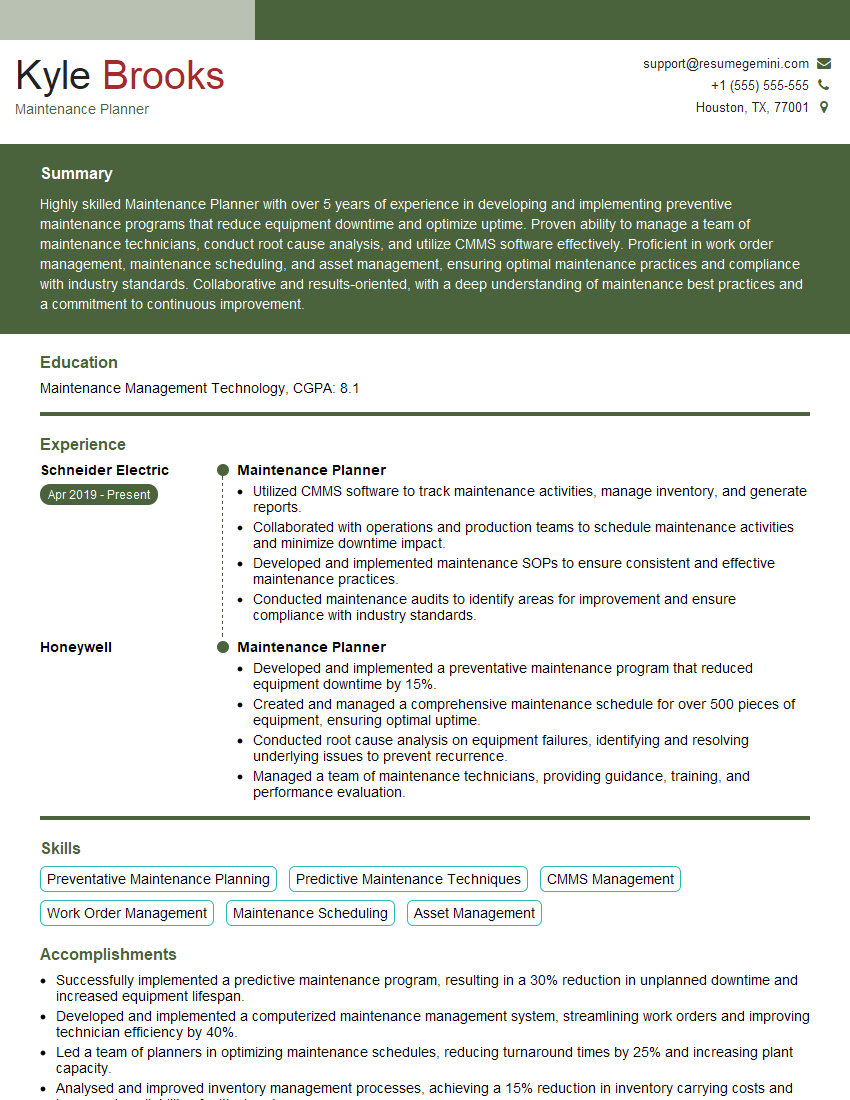
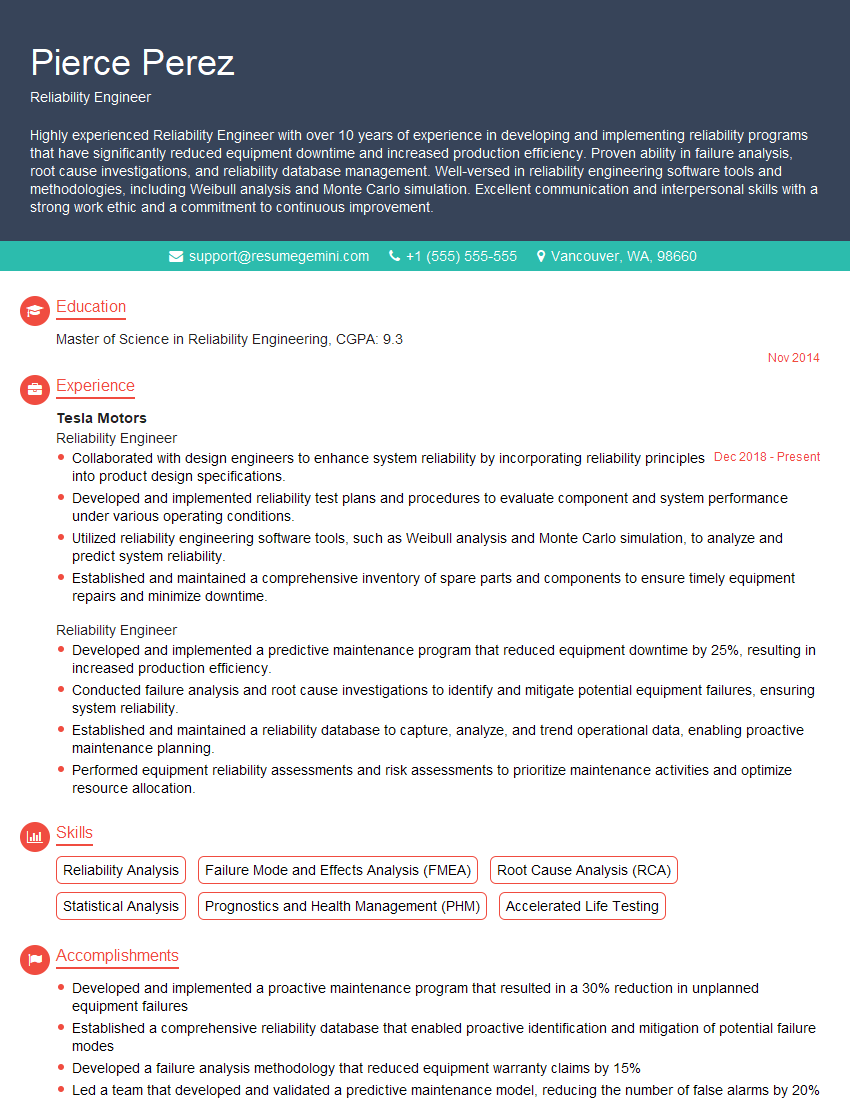
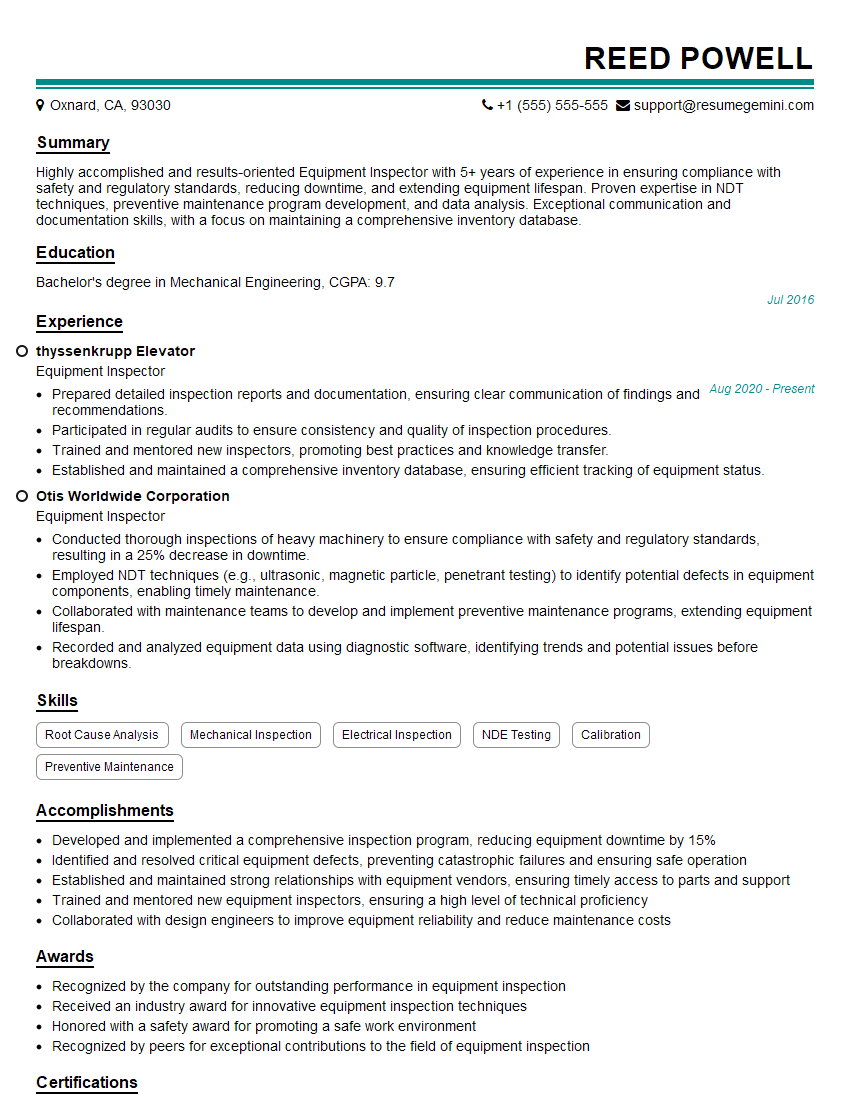
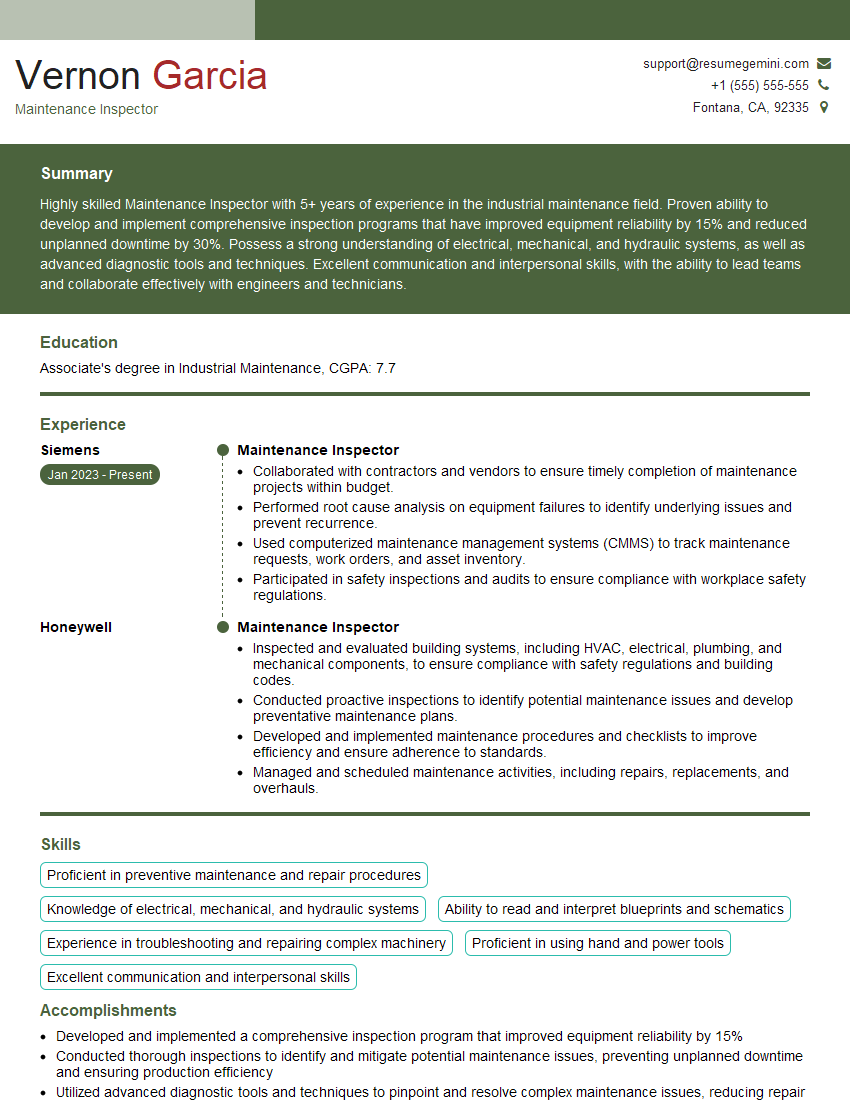
Mastering Maintenance Inspection is crucial for career advancement in many industries. A strong understanding of these concepts opens doors to higher-level roles and increased responsibility. To maximize your job prospects, a well-crafted, ATS-friendly resume is essential. ResumeGemini is a trusted resource to help you build a professional resume that highlights your skills and experience effectively. We provide examples of resumes tailored to Maintenance Inspection to guide you in creating a compelling application. Take the next step towards your dream job today!
Explore more articles
Users Rating of Our Blogs
Share Your Experience
We value your feedback! Please rate our content and share your thoughts (optional).
What Readers Say About Our Blog
I Redesigned Spongebob Squarepants and his main characters of my artwork.
https://www.deviantart.com/reimaginesponge/art/Redesigned-Spongebob-characters-1223583608
IT gave me an insight and words to use and be able to think of examples
Hi, I’m Jay, we have a few potential clients that are interested in your services, thought you might be a good fit. I’d love to talk about the details, when do you have time to talk?
Best,
Jay
Founder | CEO